Denis Devlin, one of the major figures and influences of modern and modernist Irish poetry, dies in Dublin on August 21, 1959. Along with Samuel Beckett and Brian Coffey, he is one of the generation of Irish modernist poets to emerge at the end of the 1920s. He is also a career diplomat.
Devlin is born in Greenock, Scotland of Irish parents on April 15, 1908. His family returns to live in Dublin in 1918. He studies at Belvedere College and, from 1926, as a seminarian for the Roman Catholicpriesthood at Clonliffe College. As part of his studies, he attends a degree course in modern languages at University College Dublin (UCD), where he meets and befriends Brian Coffey. Together they publish a joint collection, Poems, in 1930.
Devlin joins the Irish Diplomatic Service in 1935 and spends a number of years in Rome, New York and Washington, D.C. During this time, he meets the French poet Saint-John Perse, and the Americans Allen Tate and Robert Penn Warren. He goes on to publish a translation of Exile and Other Poems by Saint-John Perse, and Tate and Warren edit his posthumous Selected Poems.
Denis Devlin dies suddenly at the age of 51 in Dublin on August 21, 1959. Since his death, there have been two Collected Poems published; the first in 1964 is edited by Coffey and the second in 1989 by J.C.C. Mays.
The Annals of the Kingdom of Ireland or the Annals of the Four Masters, chronicles of medieval Irish history, are completed on August 10, 1636. The entries span from the Deluge, dated as 2,242 years after creation to 1616 AD.
The annals are mainly a compilation of earlier annals, although there is some original work, and are one of the principal Irish language sources for Irish history up to 1616. They are compiled between 1632 and 1636 at a Franciscan friary near the Drowes River in County Leitrim, on the border with County Donegal and County Sligo. The patron of the project is Fearghal Ó Gadhra, MP, a Gaelic lord in Coolavin, County Sligo. While many of the early chapters are essentially lists of names and dates, the later chapters, dealing with events of which the authors have first-hand accounts, are much more detailed.
The chief compiler of the annals is BrotherMícheál Ó Cléirigh from Ballyshannon, who is assisted by, among others, Cú Choigcríche Ó Cléirigh, Fearfeasa Ó Maol Chonaire and Peregrine Ó Duibhgeannain. Although only one of the authors, Mícheál Ó Cléirigh, is a Franciscan friar, they become known as “The Four Friars” or in the original Irish, Na Ceithre Máistrí. The Anglicized version of this is “The Four Masters,” the name that has become associated with the annals themselves.
Due to the criticisms by Irish historian Tuileagna Ó Maol Chonaire, the text is not published during the lifetime of any of the participants. The first substantial English translation (starting at 1171 AD) is published by Owen Connellan in 1846. The Connellan translation includes the annals from the eleventh to the seventeenth centuries. The only version to have a four-colour frontispiece, it includes a large folding map showing the location of families in Ireland. This edition, neglected for over 150 years, is republished in the early twenty-first century. The original Connellan translation is followed several years later by a full translation by the historian John O’Donovan. The translation is funded by a government grant of £1,000 obtained by the notable mathematician Sir William Rowan Hamilton while he is president of the Royal Irish Academy.
The reliability and usefulness of the Annals as a historical source has sometimes been questioned on the grounds that they are limited to accounts of the births, deaths and activities of the Gaelic nobility of Ireland and often ignore wider social trends or events. On the other hand, the Annals, as one of the few prose sources in Irish from this period, also provide a valuable insight into events such as the Desmond Rebellions and the Nine Years’ War from a Gaelic Irish perspective.
The early part of this work is based upon the Lebor Gabála Érenn. Today, most scholars regard the Lebor Gabála Érenn as primarily myth rather than history. It appears to be mostly based on medieval Christian pseudo-histories, but it also incorporates some of Ireland’s native pagan mythology. Scholars believe the goal of its writers was to provide an epic history for Ireland that could compare to that of the Israelites or the Romans, and which reconciled native myth with the Christian view of history.
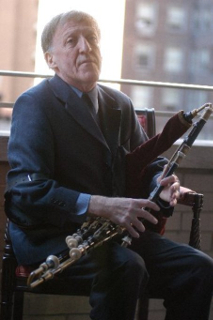
Paddy Moloney, musician, composer and producer who is the founder and leader of the Irish musical group The Chieftains, is born at Donnycarney, Dublin on August 1, 1938. He has played on every one of The Chieftains albums.
Moloney’s mother purchases him a tin whistle when he is six years old, and he starts to learn the Uilleann pipes at the age of eight. In addition to the tin whistle and the Uilleann pipes, he also plays button accordion and bodhrán.
Together with Garech de Brun (anglicised to Garech Browne) of Luggala, Moloney founds Claddagh Records in 1959. In 1968 he becomes a producer for the label and supervises the recording of 45 albums.
Moloney is married to artist Rita O’Reilly and has three children, Aonghus Moloney, Padraig Moloney and actress producer Aedin Moloney. He is a fluent speaker of the Irish language.
On September 13, 2012, Moloney receives Mexico‘s Ohtli Award, the country’s highest cultural award.
O’Curry is born at Doonaha, near Carrigaholt, County Clare, the son of Eoghan Ó Comhraí, a farmer, and his wife Cáit. Eoghan has spent some time as a traveling peddler and has developed an interest in Irish folklore and music. Unusual for someone of his background, he is literate and is known to possess a number of Irish manuscripts. It is likely that Eoghan is primarily responsible for his son’s education.
Having spent some years working on his father’s farm and as a school teacher, O’Curry moves to Limerick in 1824 and spends seven years working there at a psychiatric hospital. He marries Anne Broughton, daughter of John Broughton of Killaderry near Broadford, County Limerick on October 3, 1824. He is a supporter of Catholic emancipation and in 1828 writes a poem congratulating Daniel O’Connell on his election as an MP.
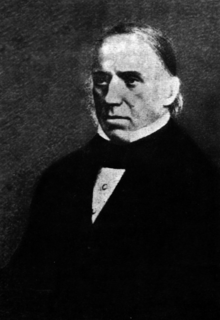
During this period O’Curry is establishing a reputation for his knowledge of the Irish language and Irish history, and, by 1834, is in correspondence with the antiquary John O’Donovan. He is employed, from 1835 to 1842, on O’Donovan’s recommendation, in the topographical and historical section of Ordnance Survey Ireland. O’Donovan goes on to marry O’Curry’s sister-in-law, Mary Anne Broughton, in 1840. O’Curry spends much of the remainder of his life in Dublin and earns his living by translating and copying Irish manuscripts. The catalogue of Irish manuscripts in the British Museum (1849) is compiled by him for a fee of £100. He is responsible for the transcripts of Irish manuscripts from which O’Donovan edits the Annals of the Four Masters between 1848 and 1851.
In 1851 O’Curry is elected a member of the Royal Irish Academy and, on the founding of the Catholic University of Ireland in 1854, he is appointed professor of Irish history and archaeology. He works with George Petrie on the Ancient Music of Ireland (1855). In 1852, he and O’Donovan propose the Dictionary of the Irish Language, which is eventually begun by the Royal Irish Academy in 1913 and finally completed in 1976.
O’Curry’s lectures are published by the university in 1860, and give a better knowledge of Irish medieval literature than can be obtained from any other one source. Three other volumes of lectures are published posthumously, under the title On the Manners and Customs of the Ancient Irish (1873). His voluminous transcripts, notably eight huge volumes of early Irish law, testify to his unremitting industry. The Celtic Society, of the council of which he is a member, publishes two of his translations of medieval tales.
Eugene O’Curry dies of a heart attack at his home in Dublin on July 30, 1862, and is survived by two sons and two daughters. He is buried at Glasnevin Cemetery in Dublin. O’Curry Road in the Tenters area of Dublin 8 is named in his honour.
Brian Merriman, Irish languagepoet and teacher, dies in County Limerick on July 27, 1805. His single surviving work of substance, the 1000-line long Cúirt An Mheán Oíche (The Midnight Court) is widely regarded as the greatest comic poem in the history of Irish literature.
Merriman teaches at various schools in the area for about twenty years, first at Kilclaran and later in a school near his farm. The teaching profession in those days attracts those with a taste for literature. Many of the Irish poets of the 18th and 19th centuries are school teachers. It allows them to exist while they write. Later on he becomes resident tutor to the families of the local gentry.
This may be where Merriman gets the subject matter for his poem Cúirt an Mhéan Óiche. It is likely that he has access to books of European literature which give him ideas for the theme. His famous poem, written in his native Irish language, has well over a thousand lines. It has been translated into English as The Midnight Court by many translators. The principal themes are the plight of young women who lack husbands, clerical celibacy, free love, and the misery of a young woman married to a withered old man. It is written in the form of a vision or aisling. Merriman falls asleep on the shores of Lough Graney near Feakle in East Clare and finds himself present at a fairy court where the women of Ireland are discussing their great problems. It is believed that he writes the poem as a result of certain frustrations he has or of some complex he suffers from. His vigour, fluency and earthy humour make his poem widely popular and while he is still alive numerous manuscript copies are circulated.
Merriman marries around 1787 and has two daughters. In 1797, the Royal Dublin Society awards him two prizes for his flax crop. Around 1800 he moves to County Limerick, where he runs a school until his death on July 27, 1805. He is buried in Feakle. His grave has not been located but a plaque honouring his memory has been erected in Feakle churchyard.
In commemoration of Merriman’s poetic works an Annual Merriman Summer School is held each year in County Clare.
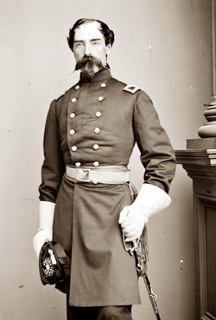
When the unit is originally mustered out of service, the 90-day enlistment terms having expired, Nugent accepts a commission as a captain in the regular army. He is immediately assigned to the 13th Infantry Regiment whose commanding officer, Colonel William Tecumseh Sherman, personally requests. Taking a leave of absence to return to New York, he assists Thomas Francis Meagher in organizing the Irish Brigade. The newly reformed 69th Infantry Regiment is the first unit assigned to the Irish Brigade and, with Nugent as its colonel, he leads the “Fighting 69th” at the Battles of Fair Oaks, Gaines’ Mill, Savage’s Station, White Oak Swamp, Glendale and Malvern Hill.
Nugent is shot in the stomach at the Battle of Fredericksburg and is eventually forced to resign his command. He is appointed acting assistant provost marshal for the southern district of New York, which includes New York City and Long Island, by the United States War Department. An Irishman and Democrat, his appointment is thought to assure the Irish American population that conscription efforts would be carried out fairly. The Irish American, a popular Irish language newspaper, writes that the selection is a “wise and deservedly popular one.” He encounters resistance from city officials wanting to remain uninvolved, however by mid-June reports to his superior officer and provost marshal general Colonel James Barnet Fry that conscription efforts are “nearing completion without serious incident.”
Understanding the seriousness of the situation, Nugent attempts to keep the draft selections quiet and in isolated parts of the city. In Manhattan however, lotteries are placed in the heart of Irish tenement and shanty neighborhoods where the draft is most opposed.
In the ensuing New York City draft riots, Nugent takes command of troops and attempts to defend the city against the rioters. Despite issuing the cancellation of the draft, the riots continue for almost a week. His home on West 86th Street is looted and burned by the rioters during that time, his wife and children barely escaping from their home. Upon breaking into his house, furniture is destroyed, and paintings of Nugent and Meagher are slashed, although a painting of Brigadier General Michael Corcoran is reportedly left untouched.
Nugent is brevetted Brigadier General for distinguished leadership of the 69th Regiment on March 13, 1865. The veterans of the Irish Brigade are honorably discharged and mustered out three months later. Nugent remains in the regular U.S. Army for the next twenty years, a formidable “Indian fighter” during the American Indian Wars with the 13th and 24th Infantry Regiments. In 1879, he retires at the rank of major and resides in New York where he is involved in the Grand Army of the Republic, the War Veterans’ Association of the 7th Regiment and an honorary member of The Old Guard.
Nugent becomes ill in his old age, complications arising from his wounds suffered at Fredericksburg, and remains bedridden for two months before his death at his McDonough Street home in Brooklyn on June 20, 1901. In accordance with his last wishes, he is buried at Cypress Hills National Cemetery.
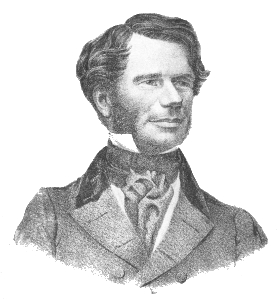
Although a Protestant country-gentleman, O’Brien supports Catholic emancipation while remaining a supporter of British-Irish union. In 1843, in protest against the imprisonment of Daniel O’Connell, he joins O’Connell’s anti-union Repeal Association.
Three years later, O’Brien withdraws the Young Irelanders from the association. In January 1847, with Thomas Francis Meagher, he founds the Irish Confederation, although he continues to preach reconciliation until O’Connell’s death in May 1847. He is active in seeking relief from the hardships of the famine. In March 1848, he speaks out in favour of a National Guard and tries to incite a national rebellion. He is tried for sedition on May 15, 1848, but is not convicted.
On July 29, 1848, O’Brien and other Young Irelanders lead landlords and tenants in a rising in three counties, with an almost bloodless battle against police at Ballingarry, County Tipperary. In O’Brien’s subsequent trial, the jury finds him guilty of high treason. He is sentenced to be hanged, drawn, and quartered. Petitions for clemency are signed by 70,000 people in Ireland and 10,000 people in England. In Dublin on June 5, 1849, the sentences of O’Brien and other members of the Irish Confederation are commuted to transportation for life to Van Diemen’s Land (Tasmania in present-day Australia).
O’Brien attempts to escape from Maria Island off Tasmania but is betrayed by the captain of the schooner hired for the escape. He is sent to Port Arthur where he meets up with John Mitchel.
O’Brien is a founding member of the Ossianic Society, which is founded in Dublin on St. Patrick’s Day 1853, whose aim is to further the interests of the Irish language and to publish and translate literature relating to the Fianna. He writes to his son Edward from Van Diemen’s Land, urging him to learn the Irish language. He himself studies the language and uses an Irish-language Bible and presents to the Royal Irish Academy Irish-language manuscripts he has collected.
In 1854, after five years in Tasmania, O’Brien is released on the condition he never returns to Ireland. He settles in Brussels. In May 1856, he is granted an unconditional pardon and returns to Ireland that July. He contributes to the Nation newspaper but plays no further part in politics.
In 1864 he visits England and Wales, with the view of rallying his failing health, but no improvement takes place, and he dies at Bangor, in Wales on June 16, 1864.
A statue of William Smith O’Brien stands in O’Connell Street, Dublin. Sculpted in Portland limestone, it is designed by Thomas Farrell and erected in D’Olier Street, Dublin, in 1870. It is moved to its present position in 1929.
In 1972, Linehan wins a Jacob’s Award for her RTÉ Radio comedy series Get an Earful of This. She is the recipient of the Lifetime Achievement Award at the Irish Theatre Awards in 2008.
Linehan and her husband live in Dublin and have four children and eight grandchildren. Her father Daniel McMenamin was a Teachta Dála for Donegal from 1927 to 1961.
Augusta is born at Roxborough, County Galway, the youngest daughter of the Anglo-Irish gentry family Persse. She is educated at home, and her future career is strongly influenced by the family nanny, Mary Sheridan, a Catholic and a native Irish speaker, who introduces her to the history and legends of the local area.
Augusta marries Sir William Henry Gregory on March 4, 1880, in St Matthias’ Church, Dublin. He is a well-educated man with many literary and artistic interests, and the house at Coole Park houses a large library and extensive art collection. He also owns a house in London, where the couple spends a considerable amount of time, holding weekly salons frequented by many leading literary and artistic figures of the day, including Robert Browning, Lord Tennyson, John Everett Millais and Henry James.
Augusta’s earliest work to appear under her own name is Arabi and His Household (1882), a pamphlet in support of Ahmed Orabi Pasha, leader of what has come to be known as the Urabi Revolt. In 1893 she publishes A Phantom’s Pilgrimage, or Home Ruin, an anti-Nationalist pamphlet against William Ewart Gladstone‘s proposed second Home Rule Act.
Augusta continues to write prose during the period of her marriage. She also writes a number of short stories in the years 1890 and 1891, although these never appear in print. A number of unpublished poems from this period have also survived. When Sir William Gregory dies in March 1892, Lady Gregory goes into mourning and returns to Coole Park. There she edits her husband’s autobiography, which she publishes in 1894.
A trip to Inisheer in the Aran Islands in 1893 re-awakes for Lady Gregory an interest in the Irish language and in the folklore of the area in which she lives. She organises Irish lessons at the school at Coole and begins collecting tales from the area around her home. This activity leads to the publication of a number of volumes of folk material, including A Book of Saints and Wonders (1906), The Kiltartan History Book (1909) and The Kiltartan Wonder Book (1910).
With William Butler Yeats and Edward Martyn, she co-founds the Irish Literary Theatre and the Abbey Theatre and writes numerous short works for both companies. Lady Gregory produces a number of books of retellings of stories taken from Irish mythology. Born into a class that identifies closely with British rule, she turns against it. Her conversion to cultural nationalism, as evidenced by her writings, is emblematic of many of the political struggles to occur in Ireland during her lifetime.
Lady Gregory, whom George Bernard Shaw once described as “the greatest living Irishwoman” dies at home at the age of 80 from breast cancer on May 22, 1932. She is buried in the New Cemetery in Bohermore, County Galway. The entire contents of Coole Park are auctioned three months after her death, and the house is demolished in 1941.
Lady Gregory is mainly remembered for her work behind the Irish Literary Revival. During her lifetime her home at Coole Park in County Galway serves as an important meeting place for leading Revival figures. Her early work as a member of the board of the Abbey Theatre is at least as important as her creative writings for that theatre’s development. Lady Gregory’s motto is taken from Aristotle: “To think like a wise man, but to express oneself like the common people.”
At the time of his death Cotter is seen, like his father before him, as the natural leader of the Catholics of Cork. He is also a prominent patron of poetry and other literature in the Irish language. The Irish text Párliament na mBan or ‘The Parliament of Women’ is dedicated by its author, Domhnall Ó Colmáin,’ to a young James Cotter in 1697. As one of the few major landowners of the Catholic faith remaining in Ireland, and as a man of known Jacobite and Tory sympathies he is distrusted by the authorities. He is also held in suspicion by those of his landed neighbours who are part of the Protestant Ascendancy and of Whiggish political views. Amongst his overt political actions, he is believed to play a leading part in the instigation of the election riots of 1713 in Dublin. His trial, ostensibly for rape, is a cause célèbre at the time and widely seen as an example of judicial murder.
Though married, Cotter has a reputation as a ladies’ man. His wealth allows him to flaunt his independence of the Protestant ruling class and anti-Catholic laws of Ireland. These characteristics, allied to his political activities, lead to his downfall. He makes an enemy of a powerful neighbour, Alan Brodrick, 1st Viscount Midleton. Brodrick, it appears, arranges that Cotter be accused of abducting and raping a young Quaker woman named Elizabeth Squibb, reported by some to have been Cotter’s mistress. When news of this trumped-up or exaggerated charge reaches Cork City, the Quakers of the town live in fear of their lives for many weeks. Believing the charge cannot hold up in court, Cotter gives himself up to the Cork sheriff.
The judge presiding on the case is Sir St. John Brodrick who, as a close relative of James Cotter’s accuser, is hardly impartial. The jury has also been packed as all twelve of its members are justices of the peace. The trial takes place in a period of heightened rumour of Jacobite invasion. A large number of arms for cavalry are found in Cork which triggers a scare until it is discovered that they are government owned and intended for a local militia unit. James Cotter is held in jail, though bail has been granted, and is convicted of the crime.
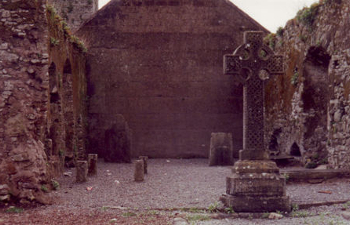
A bizarre element in Cotter’s downfall are the pleas for mercy expressed by both the jury which has convicted him and Elizabeth Squibb, his alleged victim. Attempts to gain a pardon in Dublin are proceeding and a stay of execution is sent, however, the hanging is deliberately brought forward, and the stay does not arrive in time. Cotter has attempted to escape and spends the night before his execution in chains. The gallows erected for the execution are destroyed by some of the citizens of Cork and the hanging is extemporised using a rope attached to a metal staple in a vertical post. James Cotter is hanged in Cork City on May 7, 1720. News of his execution triggers widespread riots on a national scale. He is buried in his family’s vault at Carrigtwohill.
Some have seen the death of James Cotter as the working of a family feud. His father had been intimately involved in the assassination of the regicideJohn Lisle in Switzerland (1664). The wife of the Lord Lieutenant of Ireland at the time of James Cotter’s trial is a granddaughter of John Lisle.
Up to twenty poems in Gaelic survive which reflect the widespread dismay felt at James Cotter’s execution, including ones by Éadbhard de Nógla, son of his close friend, the lawyer Patrick Nagle.
(Pictured: The Cotter Family burial vault in Carrigtwohill)





 seamus dubhghaill