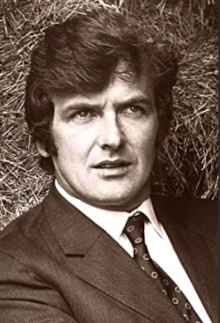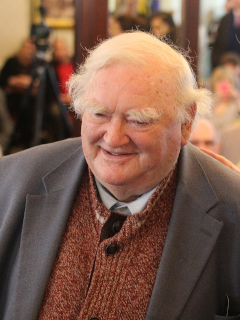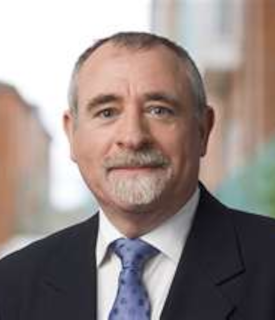
He is elected in 1985 as a Workers’ Party member of Dublin City Council for Crumlin–Kimmage area, and is re-elected at subsequent local elections until 2011, when he is forced to resign his seat due to dual mandate. He is finally elected at the 1989 Irish general election. He joins with Workers’ Party members who form Democratic Left in 1992. He unexpectedly loses his seat at the 1992 Irish general election. Labour’s Pat Upton is unexpectedly returned on the first count, with Byrne finally losing the last seat to Fianna Fáil‘s Ben Briscoe by five votes after a marathon 10-day count.
He loses his seat again at the 1997 Irish general election. Although the Labour Party and the Democratic Left merge in 1999, he is not selected to contest the Dublin South-Central by-election which follows Pat Upton‘s death later that year. Upton’s sister Mary is elected for the Labour Party.
Byrne contests the 2002 Irish general election on the Labour Party ticket as Mary Upton’s running-mate but is unsuccessful. Along with Upton, he contests the Dublin South-Central constituency at the 2007 Irish general election advocating a Labour Party/Fine Gael government but misses the final seat by 69 votes. He is nominated by the Labour Party to contest the Seanad election in the Labour panel but is not elected. In 2009, he is re-elected to Dublin City Council. At the 2011 Irish general election he is re-elected to the Dáil, after a fourteen-year absence.
In January 2015, Byrne becomes involved in an altercation with Sinn Féin TD, Jonathan O’Brien. During ministers’ questions, O’Brien criticises TánaisteJoan Burton over homelessness in Ireland, citing the experiences of his brother, a recovering heroin addict. Byrne asks of O’Brien, “Why doesn’t his good family give him a home?” This infuriates O’Brien. The Irish TimesjournalistMiriam Lord criticizes Byrne, remarking that “You sense the relief rising in the chamber. They don’t like it when the real world intrudes. These sort of things don’t really happen to TDs.”
The mid-19th-century is a difficult time for the Irish. Under British subjugation, and amidst the vice-grip of the Great Famine, Ireland and its people are in desperate need for optimism, and something to bring the nation together.
News of the recent French Revolution has reached Irish ears and there is a growing belief that the path to independence is an achievable one.
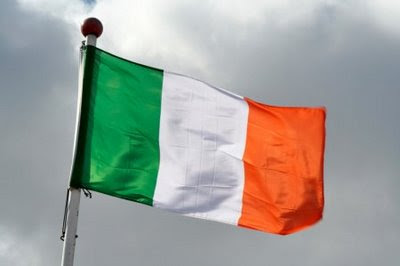
During a trip to Paris with an Irish delegation sent to congratulate the French republicans on their successful revolution, Meagher is inspired to create a design for the Irish tricolour, similar to the French flag, with the help of a small group of French women sympathetic to the Irish cause.
The new flag has green, white and orange stripes – the colours symbolising the unification of two traditions into one nation – Catholics (green) and Protestants (orange). Few realise however, that Meagher’s original flag has the orange stripe closest to the staff, a design now used by Ivory Coast.
As Meagher outlines later, “The white in the centre signifies a lasting truce between Orange and Green and I trust that beneath its folds the hands of Irish Protestants and Irish Catholics may be clasped in generous and heroic brotherhood.”
At a meeting in Waterford on March 7, 1848, Meagher first publicly unveils the flag from a second-floor window of the Wolfe Tone Club as he addresses a gathered crowd on the street below who are present to celebrate another revolution that has just taken place in France.
From March of that year the Irish tricolour appears side-by-side with the French tricolour at meetings held all over the country.
On April 14 and 15, the flag is paraded around the country. Political journalistJohn Mitchel says at the time, “I hope to see that flag one day waving, as our national banner.”
During this time, support for Meagher’s design grows, and following the events of the 1916 Easter Rising, it is resurrected by the Irish Volunteers and later by Sinn Féin and is unofficially adopted as the flag of Ireland. With the green stripe closest to the staff, Meagher’s tricolour becomes the official flag of the 26 counties of the Irish Republic.
In 1937, the design achieves constitutional status as the official Irish flag.
Until recently, display of the tricolour flag is illegal in the six occupied counties of Northern Ireland.
(From: “On this day in 1848: Ireland’s new flag is shown to public for first time” by Harry Brent, The Irish Post, http://www.irishpost.com, April 15, 2021)
O’Connor is one of five children of Irish Republican Brotherhood (IRB) Supreme Council member and later MPJames O’Connor. He is IRB treasurer in 1870 and party to the discussions on the New Departure, a collaboration between constitutional and physical force nationalists, the open and the secret movements. Her uncle, John O’Connor, is a leading member of the Supreme Council.
In 1890, when O’Connor’s father is a journalist, her mother, Mary O’Connor, and four of her sisters – Annie, Aileen, Kathleen and Norah – die after eating contaminated mussels gathered on the seashore near where they lived in what became known as the Seapoint tragedy. She becomes violently ill, but survives.
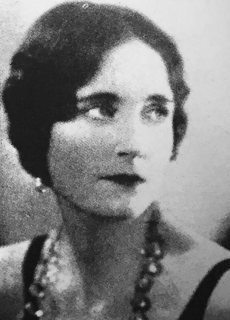
O’Connor travels to London after a falling out with her stepmother six years later. She finds work as a civil servant and a paid speaker for the Liberal Party, through which she meets Crompton Llewelyn Davies, adviser to David Lloyd George and solicitor to the General Post Office, brother of Arthur Llewelyn Davies and uncle of the boys who inspire the creation of Peter Pan. They marry on December 8, 1910. The marriage produces two children: Richard and Catherine.
Davies is an orthodox home ruler but is radicalised by the 1916 Easter Rising. Davies and her husband raise funds for Roger Casement‘s legal defence and later lobby for his death sentence to be commuted. She is saluted as one of the “fond ones” in a letter from Casement to Margaret Gavan Duffy on the eve of his August 3, 1916, execution in Pentonville Prison.
Following the Easter Rising, Davies takes her two children to Ireland and purchases Furry Park, a crumbling mansion near Dublin. She collaborates with Michael Collins during the Irish War of Independence and her home in Clontarf becomes one of Collins’ many safe houses as he directs the war. She is arrested and imprisoned in 1920. Collins also stays at her Portmarnock house, using it as a safe house.
Davies says in later life that she and Michael Collins had been lovers, but the historian Peter Hart claims her to be a stalker. It has been suggested that Collins is the father of her son Richard. Historian Meda Ryan denies this saying “Letters from him and a phone call confirmed that he was born December 24, 1912, before his mother met Collins.”
Historian Tim Pat Coogan in his book Michael Collins says that Davies claimed on the night that Collins learned that Éamon de Valera was going to reject the Anglo-Irish Treaty “he was so distressed that I gave myself to him.” Coogan refuses to give a source and in the footnotes, he says, “Confidential source.”
Davies makes a lasting contribution to Irish literature with a translation, with George Thomson, of the Muiris Ó Súilleabháin book Fiche Bliain faoi Bhláth as Twenty Years a-Flowering. She is thought to have helped Collins write his book The Path to Freedom.
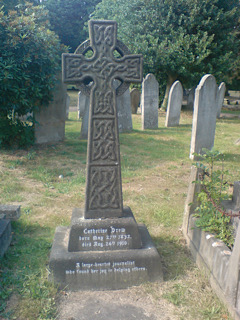
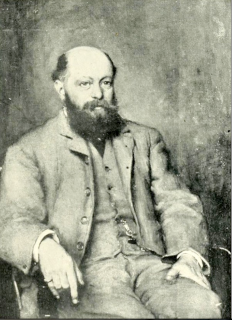
Drew is born on September 18, 1838, in Victoria Place, Belfast, into the large family of Rev. Thomas Drew, son of a Limerick grocer, and Isabella Drew (née Dalton). He is one of four sons and eight daughters of the couple, although most of the children die young. His sister, Catherine Drew, is a prominent Londonjournalist and an early champion of women’s rights.
Drew is educated in Belfast and in 1854 articled to the Antrimcounty surveyor and architect Sir Charles Lanyon, before moving to work in Dublin in 1862, where he becomes principal assistant to William George Murray. In 1865, he becomes the diocesan architect of the united dioceses of Down, Connor and Dromore. From this point forward, church architecture is his principal activity. He is consulting architect for both St. Patrick’s Cathedral and Christ Church Cathedral in Dublin.
Drew marries Adelaide Anne, sister of William George Murray, in 1871.
Among other projects, Drew is responsible for the design of the Ulster Bank on Dame Street, Rathmines Town Hall and the Graduates’ Building at Trinity College Dublin (TCD). He takes an interest in historic buildings and is the first to draw serious attention to the architectural and historic importance of the St. Audoen’s Church, Dublin’s oldest parish church, in 1866. He produces detailed plans of the church for which he wins the Fitzgerald medal from the Royal Institute of the Architects of Ireland (RIAI), carries out excavations and draws up a paper on the church and its history.
From 1885 to 1892, Richard Orpen works with Drew as a managing assistant. Drew’s most significant work in Belfast is St. Anne’s Cathedral, completed in 1899.
From 1879 onward Drew lives in Gortnadrew, one half of a pair of semi-detached houses of his own design, on Alma Road in Monkstown, County Dublin. For many years he serves as a commissioner of the local township of Blackrock, Dublin. He dies on March 13, 1910, a month after an unsuccessful operation for appendicitis. He is buried in Dean’s Grange Cemetery in the suburban area of Deansgrange in Dún Laoghaire–Rathdown, County Dublin.
Drew is commemorated in a memorial brass in Christ Church Cathedral, Dublin. His wife survives him by three years and in her will bequeaths back to the RIAI the loving cup presented to her husband in commemoration of his knighthood, and to the Belfast Municipal Museum and Art Gallery (Ulster Museum since 1962) an 1852 portrait of his father Thomas. A portrait of Drew by Walter Osborne is held in the National Gallery of Ireland (NGI) in Dublin.
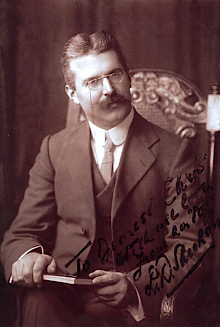
As a member of the Irish Parliamentary Party (IPP), Harrington represents Westmeath from February 1883 to November 1885. In 1885 he is elected for the new constituency of Dublin Harbour, which he represents until his death. He serves as Lord Mayor of Dublin three times from 1901 to 1904.
Harrington owns two newspapers, United Ireland and the Kerry Sentinel, and is a member of the so-called Bantry band of prominent nationalist politicians from the Bantry vicinity. They are also more pejoratively known as the Pope’s brass band. Tim Healy is another prominent member of this unofficial group.
In 1884, Harrington publishes a pamphlet, “Maamtrasna Massacres – Impeachment of the Trials,” in which he dismantles the Crown Prosecution’s case against the eight men accused of the murders of the Joyce family on August 17, 1882. He provides evidence that Crown Prosecutor George Bolton had deliberately suppressed evidence that would have acquitted Maolra Seoighe (English: Myles Joyce), who was hanged, and four men who were sentenced to twenty years of penal servitude.
Thereafter Harrington becomes excluded from Redmond’s closed circle of confidants, retains sympathy with O’Brien, and represents the interests of the tenant farmers at the 1902 Land Conference negotiations which lead to the enactment of the unprecedented WyndhamLand Purchase (Ireland) Act 1903.
On September 7, 1901, as the Lord Mayor of Dublin, Harrington kicks off at the official ceremony to open Bohemian F.C.‘s new home, Dalymount Park.
Harrington retains the party nomination for the Dublin Harbour constituency in the January 1910 United Kingdom general election, largely because of local divisions about who should succeed him and because an O’Brienite offer to pay his election expenses deters rivals from going to the polls. He decides that the finely balanced result of the general election means that every nationalist vote would be required at Westminster. He therefore travels to London, but shortly after attending the parliamentary party meeting on February 23 he suffers a stroke. After some days’ recuperation he is brought home to Dublin, but his condition deteriorates and he dies on March 12, 1910, at his home, 70 Harcourt Street. He is buried near the Parnell circle at Glasnevin Cemetery.
Harrington is celebrated by a statue erected in 2001 at the east end of Castletownbere near the Millbrook bar.
O’Faolain describes her early life as growing up in a Catholic country which, in her view, fears sexuality and forbids her even information about her body. In her writings she often discusses her frustration at the sexism and rigidity of roles in Catholic Ireland that expect her to marry and have children, neither of which she does.
O’Faolain becomes internationally well known for her two volumes of memoir, Are You Somebody? and Almost There; a novel, My Dream of You; and a history with commentary, The Story of Chicago May. The first three are all featured on The New York Times Best Seller list. Her posthumous novel Best Love, Rosie is published in 2009.
O’Faolain’s formative years coincide with the emergence of the women’s movement, and her ability to expose misogyny in all its forms is formidable, forensic and unremitting. However, her feminism stems from a fundamental belief in social justice. Unlike most commentators, who maintain a detached, lofty tone, she places herself at the centre of things, a high-risk strategy that works because of her broad range of erudition, worn lightly, her courage and a truthfulness that sometimes borders on the self-destructive.
O’Faolain is engaged at least once but never marries. In Are You Somebody? she speaks candidly about her fifteen-year relationship with the journalist Nell McCafferty, who publishes her own memoir, Nell. From 2002 until her death, she lives much of the time with Brooklyn-based attorney John Low-Beer and his daughter Anna. They are registered as domestic partners in 2003.
O’Faolain splits her time between Ireland and New York City. She is diagnosed with metastaticcancer and is interviewed on the Marian Finucane radio show on RTÉ Radio 1 on April 12, 2008, in relation to her terminal illness. She tells Finucane, “I don’t want more time. As soon as I heard I was going to die, the goodness went from life.”
In a last attempt to grasp as much of life as she can, O’Faolain holidays with family members in Sicily and visits Berlin with a group of friends to hear music and see art. She previously tended to avoid Berlin because, through contact with Jewish friends and lovers, she associated it with the Holocaust. She dies at the Blackrock Hospice, Dublin, on May 9, 2008.
O’Faolain wins a Jacob’s Award in 1985 for her work as the producer of the RTÉ One television programme Plain Tales. In 2006, she wins the Prix Femina étranger, a French literary award, for The Story of Chicago May.
O’Faolain is the subject of a film documentary, Nuala: A Life and Death (2011), directed by Patrick Farrelly and Kate O’Callaghan, and produced and narrated by Marian Finucane. Hugo Hamilton‘s novel Every Single Minute (2014) is based on his experiences when accompanying O’Faolain to Berlin shortly before her death.
A series of riots in Dublin on February 25, 2006, is precipitated by a proposed march down O’Connell Street of a unionist demonstration. The disturbances begin when members of the Garda Síochána attempt to disperse a group of counterdemonstrators blocking the route of the proposed march. The situation escalates as local youths join forces with the counterdemonstrators.
The march of this group in Dublin is viewed as provocative by some Irish nationalists and many Irish republicans, particularly in the context of an Orange Order march. The Orange Order is accused of being a sectarian organisation known for its anti-Catholicism. The right to march is supported by the main Irish political parties and the march is authorised by the Garda Síochána. Love Ulster had organised a similar rally in Belfast in October 2005.
At previous FAIR rallies, a picture of an Ulster Volunteer Force (UVF) member who was allegedly involved in the murder of 26 people in Dublin in the 1974 Dublin and Monaghan bombings, and who was himself killed by the Provisional Irish Republican Army in 1976, had been displayed. An organiser of the Love Ulster demonstration tells a republican newspaper that he cannot guarantee that images of the murder suspect will not be displayed during the demonstration.
Sinn Féin, an Irish republican political party, does not organise a protest and says that the march should be allowed to go ahead, calling for republicans to ignore the march. Republican Sinn Féin, a splinter political party no longer affiliated with Sinn Féin, has an organised presence.
Their protest blocks the northeastern junction of O’Connell Street and Parnell Street. The small Republican Sinn Féin group (and some activists from the Irish Republican Socialist Party) are joined by several hundred local youths. Before the violence breaks out, they chant republican chants. Several thousand bystanders are also on the scene but take no part in the subsequent rioting. When the marchers form up at the top of Parnell Square and their bands begin to play in anticipation of the start of the march, gardaí attempt to disperse the protest at around 12:45 p.m. At this point, scuffles break out between protesters and Gardaí.
After the failure of the initial garda effort to disperse the protesters, the violence escalates. The Garda Public Order Unit is deployed, and stones and metal railings are thrown at gardaí by protesters, as are fireworks, bricks, crude petrol bombs, and other missiles. As the rioting continues, the ranks of the rioters are swelled by many local teenagers who had not taken part in the initial protest. Several barricades are constructed from building materials on the street to impede the march and the Gardaí. The march is due to start at 12:30 p.m., but as the violence goes on the gardaí decide against trying to escort the marchers through O’Connell Street. At about 1:30 p.m. the assembled marchers return to the coaches that had brought them to Dublin from Northern Ireland. The three coaches are then driven to Leinster House, where a small parade is carried out, and a letter is handed to Irish Minister for Justice, Michael McDowell. They are then escorted out of the city. One of the coaches is attacked by stone throwers on the way home.
Violence continues sporadically on O’Connell Street for another hour or so. The Gardaí, advancing from the northern end of the street gradually push the rioters back southward. The most sustained violence takes place around the General Post Office building, where the rioters initially sit down in protest and then, after several of them have been batoned, regroup behind burning barricades and throw rocks, paving slabs and one or possibly two petrol bombs at Gardaí. Several Gardaí, protesters and a number of journalists from RTÉ and TV3 are injured.
While the standoff on O’Connell Street is still going on, several hundred rioters follow the Unionist coaches to the Nassau Street area where they set a number of cars on fire and damage several businesses. Further skirmishes break out around the River Liffey at O’Connell Bridge, Aston Quay, Fleet Street and Temple Bar, as the Gardaí retake O’Connell street, before the rioters disperse.
Having dispersed the rioters, the gardaí then closes O’Connell Street to facilitate a cleanup of the scene by building workers. Media reports estimate the cost of the cleanup job at €50,000, and Dublin Chamber of Commerce places loss of earnings for businesses in the city due to the riots at €10,000,000.
Estimates for the number of unionist marchers before the event are predicted to be over 1,000. However, only eight coach loads turn up in Dublin, indicating a far smaller number, possibly 300 to 400. Estimates for the number of counterdemonstrators vary between 300 and 7,000. The number is made much more difficult to determine by the presence of the several thousand bystanders at the scene who do not take part. Most of the rioters appear to be local youths, though some who brandished leaflets and other political literature are clearly political activists.
A total of 14 people, including six gardaí and a small number of journalists and photographers, are hospitalised as a result of the rioting. A further 41 people are arrested, according to RTÉ news. As of February 27, 2006, thirteen have been charged. Twenty-six people are convicted in January 2009 for their part in the disturbances and given sentences of up to five years. Two are described as “alcoholics.” One of them and a teenage boy are “homeless.” Three are not Irish – a Georgian, a Romanian and a Moldovan are convicted of looting shops on O’Connell Street. Two have travelled from County Offaly, one from County Galway and one from County Donegal for the riot. All the rest come from Dublin.
(Pictured: The Public Order Unit on O’Connell Street during the 2006 Dublin Riots)
O’Donnell is the youngest among six sons and three daughters of Biddy and James O’Donnell. He is greatly influenced by his upbringing in the Rosses, in northwest Donegal, one of the poorest and most remote parts of Ireland. His father, a popular local fiddler, earns a living through his smallholding, seasonal labouring in Scotland, and winter work in a local corn mill. His mother, who comes from a radical labour and nationalist political background, works in a local cooperative store. He attends Rampart national school and Roshine national school, near Burtonport, where he is a monitor for four years. In 1911 he wins a scholarship to attend St. Patrick’s College in Drumcondra, Dublin, and returns in 1913 to the Rosses, where he spends two years teaching on the islands of Inishfree. In 1915 he is appointed head of Derryhenny national school, near Dungloe, and the following year becomes principal of a national school on the island of Arranmore, where he begins to write.
O’Donnell had long been concerned by the poor conditions of the local ‘tatie-hokers’ (potato pickers) who migrate annually to Scotland. In the summer of 1918, he travels there to help organise the Scottish Farm Servants’ Union. While there he is influenced by left-wing radicals such as Willie Gallacher, later a communistMember of Parliament (MP), and Emanuel ‘Manny’ Shinwell, later Baron Shinwell. In September 1918, against a background of rising labour militancy, he leaves teaching to become a full-time organiser for the Irish Transport and General Workers’ Union (ITGWU) in the west Ulster area. The following year he organises one of Ireland’s first “soviets” when the attendants and nurses of the Monaghan District Lunatic Asylum occupy the grounds and appoint O’Donnell as governor until their demands are met.
In early 1919 O’Donnell joins the Irish Republican Army (IRA) in Monaghan, resigning from the ITGWU for full-time IRA service in late 1920. He leads the 2nd Battalion, Donegal IRA, from the summer of 1920. In December 1920 he goes “on the run” and leads a flying column in west Donegal until May 1921, when he is wounded. Regarded as insubordinate and militarily inexperienced, he is unpopular among the other senior officers of the 1st Northern Division. He, in turn, is disappointed by the lack of social radicalism among the nationalist leadership. He opposes the Anglo-Irish Treaty, is placed in command of the minority anti-treaty 1st Northern Division and is a member of the IRA executive that occupies the Four Courts in Dublin in defiance of the provisional government.
Arrested in June 1922, O’Donnell shares a prison cell with Liam Mellows and influences his radical “Notes from Mountjoy,” an important document for subsequent left-wing republicans. He spends the next two years in various prisons and internment camps. His execution is widely expected to follow those of December 8, 1922. In August 1923, he is elected as a Sinn FéinTeachta Dála (TD) for Donegal in the general election called after the end of the Irish Civil War. He goes on hunger strike for forty-one days in late 1923 and succeeds in escaping from the Curragh in March 1924. In June 1924, while on the run, he marries Lile O’Donel, a wealthy Cumann na mBan activist who had smuggled communications for republican prisoners. O’Donel, a radical and member of the Communist Party, is the daughter of Ignatius O’Donel, a prominent landowner from Mayo. They have no children but raise their nephew, Peadar Joe, as their own son after the death in New York of O’Donnell’s brother Joe.
O’Donnell begins writing seriously while in jail and remains a prolific writer, journalist, and editor until the 1960s. His first novel, Storm, set in the Irish War of Independence, is published in 1925. One of his most highly regarded books, Islanders, is published in 1928. Adrigoole, like Islanders a story of poverty and starvation in rural Ireland, is published the following year. The Knife (1930) and On the Edge of the Stream (1934) soon follow. The most significant of his later novels is probably The Big Windows (1954). Foremost among his qualities as a writer is his empathy for the people, life, and landscape of rural Ireland. But his novels have been criticised for their slow pace, excessive detail, and didactic nature. He claims his writing is incidental to his political activism. His trilogy of autobiographical non-fiction, The Gates flew Open (1932), Salud! An Irishman in Spain (1936), and There Will Be Another Day (1963), which respectively concern the Irish Civil War, his activism during the Spanish Civil War, and his role in the land annuities agitation, remain highly regarded. His other important literary achievement is with The Bell, an innovative literary and political magazine which plays a useful dissenting role in an insular and conservative period. He founds The Bell with the writer Seán Ó Faoláin in 1940 and edits it from 1946 until it ceases publication in 1954.
O’Donnell exercises an influential role in the interwar IRA, particularly through his editorship of An Phoblacht (1926–29), which he attempts to divert from militarism to socialist agitation. His ultimate aim is for a thirty-two-county socialist republic. His most successful campaign is organising small farmers against the payment of land annuities to the government in the late 1920s and early 1930s. This campaign is later adopted by Fianna Fáil and contributes to their electoral success in 1932. He is less successful in radicalising the IRA. After the failure of Saor Éire, a left-wing IRA front which provokes clerical and popular hostility against the IRA, increasing tensions between the IRA’s left-wing and the leadership lead O’Donnell, along with Frank Ryan and George Gilmore, to split from the IRA to establish the short-lived Republican Congress in 1934.
Although O’Donnell claims he was never a Communist Party member, he plays a central role in forging links between republicans and the revolutionary left both in Ireland and internationally and invariably supports the communist party line at critical junctures. After the failure of Republican Congress, he takes up the cause of the Spanish republic. His championing of unpopular causes such as communism and Spain entail a good deal of frustration. He is physically attacked at political meetings and in 1932, despite having never visited the Soviet Union, loses a high-profile libel action against the Dominican Irish Rosary, which claim he had studied in Moscow‘s Lenin College. He is banned from entering the United States for several decades, although he maintains: “My relations with all the great powers continue to be friendly.”
O’Donnell continues to support radical campaigns until his death. He is an outspoken advocate of Irish emigrants. He is prominent in the Irish Campaign for Nuclear Disarmament and serves as its president in the early 1960s. He is a leading protester against the Vietnam War and a supporter of African anti-colonial movements such as that against apartheid. In later years he is involved in the “Save the west” campaign, highlighting the problems of the west of Ireland.
After several months of ill-health following a heart attack, O’Donnell dies in Dublin, aged 93, on May 13, 1986. He leaves instructions that there are to be “no priests, no politicians and no pomp” at his funeral, and those wishes are granted. He is cremated in Glasnevin Cemetery and his ashes are buried at his wife’s home in Swinford, County Mayo. Although he once remarked that every cause he fought for was a failure, he is now regarded as one of the most influential socialist republican theorists and an important voice of dissent in twentieth-century Ireland.
(From: “O’Donnell, Peadar” by Fearghal McGarry, Dictionary of Irish Biography, http://www.dib.ie)
Connolly travels to Russia on several occasions in 1920 and 1921 and forms a close association with Vladimir Lenin and is hugely influenced by the Soviet leader. He is a delegate to the Second Congress of the Communist International (Comintern) as a delegate of the Industrial Workers of the World (IWW) in June 1920. It is here he meets Lenin at just 19 years of age following an introduction from journalistJohn Reed. According to Connolly, Lenin speaks English with a Rathmines accent which he acquired from his Irish tutor.
Connolly helps form and becomes President of the first Communist Party of Ireland (CPI) in October 1921. He is editor of the CPI newspaper, The Workers’ Republic. He opposes the 1921 Anglo-Irish Treaty between the representatives of the Irish Republic and the British state, and fights in the Irish Civil War on the anti-treaty side. The CPI is the first Irish political party to oppose the Treaty and urges the Irish Republican Army (IRA) to adopt socialist policies to defeat the new Irish Free State government. The CPI is dissolved in 1924 by the Comintern but in 1926, Connolly helps set up a second Marxist party, the Irish Workers’ Party. He is the party leader and editor of its journal, The Hammer and Plough. This party too is dissolved in 1927.
Connolly enters a semi-retirement between the mid-1950s and mid-1960s, but in the late 1960s, he begins a comeback. He is elected as party chairman in 1971 and holds this position until 1978. During his time as chairman, he oversees the expulsion of the Socialist Labour Alliance in 1971, some of whose members go on to form the Socialist Workers Network (SWN), which in turn eventually establishes People Before Profit (PBP).
In 1921, Connolly marries Jessica Maidment, a socialist activist in England and chartered accountant, who from 1928 works for Russian Oil Products in Dublin. She dies in 1930 from blood poisoning arising from an operation. He is survived by his second wife, Peggy, whom he marries in 1937, sons, and daughters. His recreations include chess and bridge; highly adept at both, he learns the former from Seán Mac Diarmada as prisoners after the Easter rising and is international bridge correspondent for the Irish Independent.
(Pictured: Roddy Connolly during an interview conducted for the RTÉ Television project “Portraits 1916” on January 9, 1966)
Madden is born at Wormwood Gate, Dublin, on August 22, 1798, to Edward Madden, a silk manufacturer, and his wife Elizabeth (née Corey). His father marries twice and fathers twenty-one children.
In 1828, Madden marries Harriet Elmslie, daughter of John Elmslie of Jamaica, a slave-owner. He then practises medicine in Mayfair, London, for the next five years.
Madden becomes a recruit to the abolitionist cause. The transatlantic slave trade has been illegal in the British Empire since 1807, but slavery itself remains legal.
From 1833, Madden is employed in the British civil service, first as a justice of the peace in Jamaica, where he is one of six Special Magistrates sent to oversee the eventual liberation of Jamaica’s slave population, according to the terms of the Slavery Abolition Act 1833. From 1835 he is Superintendent of the freed Africans in Havana, Cuba. In 1839 he leaves Cuba for New York, where he provides important evidence for the defense of the former slaves who had taken over the slave ship La Amistad.
In 1840 Madden becomes Her Majesty’s Special Commissioner of Inquiry into the British Settlements on the West Coast of Africa. His task is to investigate how the slave trade is continuing to operate on the west coast of Africa, despite the shipping of African slaves across the Atlantic Ocean now being illegal. He finds that London-based merchants (including WhigMPMatthew Forster) are actively helping the slave traders, and that crudely disguised forms of slavery exist in all the coast settlements. He particularly condemns the actions of George Maclean, the Governor of Gold Coast.
In 1847 Madden becomes the Colonial Secretary of Western Australia and arrives in the colony in 1848. After receiving news of their oldest son’s death back in Ireland, he and Harriet return to Dublin in 1849. In 1850 he is named secretary of the Office for Loan Funds in Dublin.
Madden also campaigns against slavery in Cuba, speaking to the General Anti-Slavery Convention in London on the topic of slavery in Cuba.
Madden dies at his home in Booterstown, just south of Dublin, on February 5, 1886, and is interred in Donnybrook Cemetery.
Besides several travel diaries (Travels in Turkey, Egypt etc. in 1824–27, 1829, and others (1833)), his works include the historically significant book The United Irishmen, their lives and times (1842-1860, 11 Vols.), which contains numerous details on the Irish Rebellion of 1798, including testimonies collected from veteran rebels and from family members of deceased United Irishmen.