seamus dubhghaill

Promoting Irish Culture and History from Little Rock, Arkansas, USA


Leave a comment

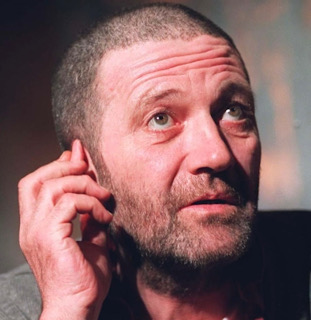
Death of Donal McCann, Stage, Film & Television Actor

Donal McCann, Irish stage, film, and television actor, dies from pancreatic cancer in Dublin on July 17, 1999. He is best known for his roles in the works of Brian Friel and for his lead role in John Huston‘s last film, The Dead (1987). In 2020, he is listed as number 45 on The Irish Times list of Ireland’s greatest film actors.

McCann is born on May 7, 1943, in Terenure, Dublin. His father is John J. McCann, a playwright and politician who serves twice as Lord Mayor of Dublin. Although he acts in a production of his father’s Give Me a Bed of Roses at Terenure College in 1962, he briefly studies architecture before taking a job as a trainee sub-editor at the Evening Press which allows him to pursue part-time acting classes at the Abbey School of Acting at the same time. He joins the Abbey Players in the late 1960s.

Among his most important early roles are Cú Chulainn in W. B. Yeats‘s On Baile Strand (1966), and as Estragon in a seminal production of Samuel Beckett‘s Waiting for Godot, partnering with Peter O’Toole as Vladimir (1969).

McCann’s career includes parts in many plays from the Irish literary canon, including Tarry FlynnThe Shaughran, and the Gate Theatre‘s highly acclaimed production of Seán O’Casey‘s classic Juno and the Paycock in the 1980s (McCann plays the “Paycock” (Captain Boyle) opposite Geraldine Plunkett as Juno and John Kavanagh as Joxer Daly) as well as a subsequent production of O’Casey’s The Plough and the Stars.

McCann develops a particularly fruitful relationship with the playwright Brian Friel. He plays the role of Gar O’Donnell, the public figure, in a film adaptation of Philadelphia, Here I Come! in 1970 and, despite popular belief, he never plays either public or private Gar on stage. He gives a landmark performance as Frank Hardy, the title character, in Faith Healer in 1980 (a role he reprised in 1994), continuing his relationship with Friel through productions of Translations (1988) and Wonderful Tennessee (1993).

Friel says that McCann’s work “contains extraordinary characteristics that go beyond acting … it is deeply spiritual.” Perhaps McCann’s most renowned role is as Thomas Dunne in Sebastian Barry‘s The Steward of Christendom. He wins the London Critics’ Circle Theatre Award (Drama Theatre) as best actor for this role in 1995. He reprises this role in a 1996 production at the Gate Theatre, Dublin and, following a twelve-week run at the Brooklyn Academy of Music in 1997, his “performance of unarguable greatness” (The New York Observer) had Newsweek hailing him as “a world-class star,” and The New York Times referring to this “astonishing Irish actor…widely regarded as the finest of them all.”

On the London stage, McCann plays in Prayer for My Daughter opposite Antony Sher (1978), and is Jean to Dame Helen Mirren‘s Julie in Miss Julie (1971). This is filmed for the BBC, and he much later plays Judge Brack with Fiona Shaw in the title role of Henrik Ibsen‘s Hedda Gabler, a production filmed for the BBC in 1993.

McCann begins his film career early, in 1966, in Walt Disney Pictures’s The Fighting Prince of Donegal (this later becomes a TV series). More significant roles include the title character’s father Shamie in Cal and one of the feuding brothers in Thaddeus O’Sullivan‘s December Bride (1990). He works a number of times with Neil Jordan (in AngelThe Miracle and High Spirits).

His best-known film role is as Gabriel Conroy in The Dead (1987), starring opposite Anjelica Huston and directed by her father, John Huston. Significant late roles include Bernardo Bertolucci‘s Stealing Beauty (1996) and in John Turturro‘s Illuminata (released in 1999, after McCann’s death).

McCann’s television work includes the featured role of Phineas Finn in the BBC’s serialised adaptation of Anthony Trollope‘s The Pallisers, Willie Burke in RTÉ‘s Prix Italia drama entry The Burke Enigma (1979) and Barney Mulhall in RTÉ’s Strumpet City (1980), as well as many one-off parts.

McCann plays in Bob Quinn‘s Irish language film Poitín (1979) and in Quinn’s somewhat experimental The Bishop’s Story (1995). After hearing that McCann is ill, Tom Collins asks Quinn to make a TV documentary about McCann for RTÉ called It Must Be Done Right (1999), after a remark by McCann on his craft. The film airs on RTÉ a week before McCann’s death.

In his private life, McCann is a quiet and unassuming man, but he battles both depression and alcoholism all his life. He has many friends in Irish theatre and artistic circles but also across all strata of life. His hobbies include sketching and he is passionate about horse racing.

Remembering McCann on the 25th anniversary of his death, Gerald Smyth writes, “In the melancholy of that life-worn voice could be heard the cadences of a lyric heart.”

Leave a comment

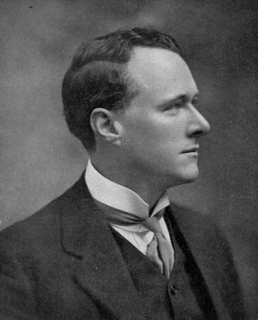
Death of James Bernard Fagan, Actor, Producer & Playwright

James Bernard Fagan, Irish-born actor, theatre manager, producer and playwright in England, dies of a heart attack in Hollywood, Los Angeles, California, on February 17, 1933, following a bout of influenza.

Fagan is born in Belfast on May 18, 1873, the eldest of the five children of Sir James Fagan, a surgeon at the Belfast Royal Hospital and an inspector of Irish reformatories, and Mary Catherine Fagan (née Hughes). He attends Clongowes Wood College near Clane, County Kildare and then moves to England. Initially interested in a career in the church, he begins studying law at Trinity College, Oxford in 1892 but leaves in 1893 without a degree. He works for a time in the Indian Civil Service but abandons this career for the stage.

Fagan begins his career as an actor with the company of Sir Frank Benson for two years, then joining, from 1895 to 1899, the company of Herbert Beerbohm Tree at Her Majesty’s Theatre. There he appears in Katherine and Petruchio, A Man’s Shadow, Julius Caesar, The Musketeers and Carnac Sahib. He starts writing plays in 1899, with The Rebels, for the time forsaking acting. In 1913, he returns to the stage touring as the Rt. Hon. Denzil Trevena in his own play, The Earth. He next writes The Fourth of August (1914) and Doctor O’Toole (1917). In 1917 he produces his first play, his own adaptation of the Eugène Brieux play Damaged Goods at St. Martin’s Theatre. He next produces The Wonder Tales and The Little Brother at the Ambassadors Theatre in London.

Fagan takes over the Court Theatre in London’s Sloane Square as a Shakespearean playhouse in 1920. The Times calls his revivals of Twelfth Night, The Merchant of Venice, Henry the Fourth (Part Two) and A Midsummer Night’s Dream “memorable for their freshness, sanity and distinction, and [deserving of] a place in theatrical history.” At the Court, he revives Damaged Goods and, in 1921, with the assistance of the author, produces George Bernard Shaw‘s Heartbreak House, with Edith Evans as “Lady Utterwood.” In 1922 he produces his play The Wheel at the Apollo Theatre. Its success allows him to repay his creditors. Even more successful is his adaptation of Treasure Island at the Savoy Theatre with Arthur Bourchier as “Long John Silver,” which opens December 26, 1922. It is revived every Christmas until the outbreak of World War II.

Fagan is persuaded by Jane Ellis, the actress who with Alfred Ballard founds the Oxford Playhouse “Red Barn” in 1923, to be its first manager. His first production at the Oxford Playhouse is a restaging of Shaw’s Heartbreak House and numbered Shaw among the audience. He produces The Cherry Orchard, at various theatres, to favourable reviews, popularising Anton Chekhov in Britain. From November 16, 1925, with Dennis Eadie, he presents Juno and the Paycock at the Royalty Theatre, thus bringing Seán O’Casey to the attention of London’s theatre-going public. O’Casey’s The Plough and the Stars follows the next year.

Fagan receives little support from the University of Oxford or the play-going public and resigns in 1929. His successor is Stanford Holme, who broadens its appeal and, despite the straitened times, makes it financially viable. In 1929, he is a director of the Festival Theatre, Cambridge, where his friend Terence Gray is director. He also produces many works for the Irish Players.

Beginning in the 1920s, several of Fagan’s plays are adapted for film. He moves to Hollywood in 1929 for the filming by Paramount Pictures of his play The Wheel as The Wheel of Life. Other film work includes his co-adaptation of the screenplay for the 1932 film Smilin’ Through, and he co-writes Paramount’s Forgotten Commandments the same year. His play Bella Donna is filmed four times, including posthumously in 1946, and a 1936 film, The Improper Duchess is based on his 1931 play of the same name.

James Bernard Fagan dies in Hollywood, California, on February 17, 1933, at the age of 59 of a heart attack following a bout of influenza.


Leave a comment

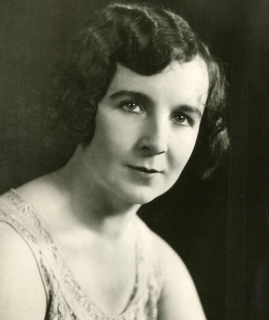
Birth of Pauline Flanagan, Stage & Television Actress

Pauline Flanagan, Irish-born actress who has a long career on stage, is born in Sligo, County Sligo, on June 29, 1925. She is best known in the United States for her role as Annie Colleary, on the television soap opera Ryan’s Hope in 1979 and again in 1981. She later returns to the show as Sister Mary Joel.

Flanagan is born to Patrick and Elizabeth (née Mulligan) Flanagan, who are strongly nationalist and republican, and support the Republican Anti-Treaty during the Irish Civil War, both serving as Lord Mayor of Sligo. Her paternal family, originally from County Fermanagh, are driven out by anti‐Catholic pogroms and resettle in Sligo, where her parents manage a retail business. She is good friends with fellow Irish actresses Joan O’Hara and Paddy Croft. She spends much of the early 1950s touring with Anew McMaster, where she meets Harold Pinter at the Gate’s Pinter Festival.

Flanagan appears in many Broadway plays, making her debut in 1957 in the first Main Stem production of Dylan Thomas‘s Under Milk Wood. She stars as Mrs. Grose in the 1976 Broadway revival of the William Archibald play The Innocents. She also appears on Broadway in Brian Friel‘s play Philadelphia, Here I Come! in 1994.

Flanagan also acts in Off-Broadway productions on several occasions with the Irish Repertory Theatre, including Harold Prince‘s Grandchild of Kings (1992), Seán O’Casey‘s Juno and the Paycock (1995). and Hugh Leonard‘s A Life (2001). For her performance in Grandchild of Kings, she receives the 1992 Outer Critics Circle Awards nomination for Best Actress. Other Off-Broadway work includes Yeats! A Celebration by William Butler Yeats.

Flanagan appears as Myra White in Hugh Leonard’s play Summer (1974), both in the original production at the Olney Theatre Center in Olney, Maryland, and at the Olympia Theatre in the Dublin Theatre Festival.

Flanagan is nominated for the 1982 Drama Desk Award for Outstanding Featured Actress in a Play for Medea in which she performs on Broadway in 1982.

In 1997, Flanagan wins the Barclays Theatre Awards for Best Actress in a Supporting Role for her role in Jennifer Johnston‘s The Desert Lullaby: A Play in Two Acts, at the Lyric Theatre, Belfast. The Barclays Theatre Awards are for outstanding regional theatre (including opera and dance) in the United Kingdom.

In 2001, Flanagan wins a Laurence Olivier Award for Best Actress in a Supporting Role, for her performance in Frank McGuinness‘s Dolly West’s Kitchen at The Old Vic in Waterloo, London.

A resident of Glen Rock, New Jersey, Flanagan dies at The Valley Hospital in Ridgewood, New Jersey, on June 28, 2003, one day before her 78th birthday, of heart failure following a battle with lung cancer. She is survived by her husband, George Vogel (whom she married in 1958), a sister, Maura McNally, and her daughters Melissa Brown and Jane Holtzen.


2 Comments

Birth of Eileen Crowe, Stage & Film Actress

Eileen Aice Izabella Crowe, Irish actress, is born at Carlingford Terrace in Drumcondra, Dublin, on March 2, 1899.

Born Alice Izabella, she is one of ten children born to grocer Moses Crowe and Therese Eglinton. From an early age, she shows an interest in the theatre, and regularly attends productions in both the Gaiety and Abbey theatres. Having completed her education, she joins a convent but soon after abandons the idea of becoming a nun. In October 1921, she enters the Abbey School of Acting. She has a career with the Abbey Theatre from 1921 to 1970.

Upon her entry to the Abbey School of Acting, Crowe makes her debut in 1921 in the play The Revolutionist, taking the lead role of Nora Mangan. She plays her last role of Miss Hatty in Grogan and the Ferret, after which she retires. During nearly five decades, she stars in many plays, some of which include The Marriage of Columbine (1921) and Juno and the Paycock (1924). Between 1931 and 1953, she appears in the Abbey Theatre productions of plays by Irish playwright Teresa Deevy including A Disciple (1931), Katie Roche (1936, 1937, 1949, 1953), Temporal Powers (1932, 1937) and The Reapers (1930).

Following her film debut in 1925 in The Land of Her Fathers, Crowe appears in many films between 1936 and 1964 including The Plough and the Stars (1937), The Quiet Man (1952), Home is the Hero (1959) and Girl with Green Eyes (1964), her last film appearance.

Also in 1964, Crowe appears in the Aldwych Theatre‘s production of Juno and the Paycock in London. She works in the Abbey for the vast majority of her career, except for when she is on a six-month tour for Peg O’ My Heart, touring Northern Ireland and England.

In 1924, when the play Grasshopper is being produced, Crowe meets her husband, Peter Judge, also known as F. J. McCormick. They are married in 1925 and the marriage produces a daughter and a son.

Crowe dies at her home in Upper Rathmines Road, Dublin, on May 8, 1978, at the age of 79. She is buried beside her husband in Dean’s Grange Cemetery in Deansgrange, Dún Laoghaire–Rathdown, County Dublin.


Leave a comment

Death of Gerard Dillon, Painter and Artist

Gerard Dillon, Irish painter and artist, dies following a second stroke on June 14, 1971.

Dillon is born in Belfast in 1915 or 1916. He leaves school at the age of fourteen and for seven years works as a painter and decorator, mostly in London. From an early age he is interested in art, cinema, and theatre. About 1936 he starts out as an artist.

Dillon’s Connemara landscapes provide the viewer with context, portraits of the characters who work the land, atmosphere and idiosyncratic colour interpretations. At the age of 18, Dillon goes to London, initially working as a decorator. With the outbreak of World War II, he returns to Belfast. Over the next five years he develops as a painter in Dublin and Belfast. His works during this period are more than simple depictions of the life and people around him, they are reactions and interactions in paint.

In 1942, Dillon’s first solo exhibition is opened by his friend and fellow artist, Mainie Jellett, at The Country Shop, St. Stephen’s Green, Dublin. “Father, Forgive Them Their Sins” features depicting his concerns about the new war that had broken out. Despite a growing reputation, he has to return to London in 1944 to work on demolition gangs to restore his finances. In the late 1940s and during the 1950s, he finds himself favouring the town of Roundstone, Connemara. In 1951 he is introduced to Noreen Rice by her piano teacher. She has no formal training and she takes Dillon and George Campbell as her mentors for decades and her work is of a similar surrealistic and primitive style.

In 1958, Dillon has the double honour of representing Ireland at the Guggenheim International, and Great Britain at the Pittsburg International Exhibition. He and his sister, Mollie, have a property on Abbey Road in 1958. They let out part of the house to Arthur Armstrong and they let a flat to Noreen Rice and her brother. He and Noreen tour junk yards to find objects like leather and string that they include in their artwork.

Dillon travels widely in Europe and teaches for brief periods in the London art schools.

In 1967, Dillon suffers a stroke and spends six weeks in hospital. From this time his work changes direction. A notion of imminent death sends his work almost into another world, a realm of dreams and paintings intimating his death. In 1968 he is back in Dublin, where he helps to design sets and costumes for Seán O’Casey‘s play Juno and the Paycock. He continues to paint and also to make tapestries, sitting at his Singer sewing machine.

In 1969, Dillon pulls his artworks from the Belfast leg of the Irish Exhibition of Living Art in purported protest during the Troubles against the “arrogance of the Unionist mob.” However, he does send work to Ulster when he donates work to Sheelagh Flanagan who had organised an exhibition for the relief of victims of the Belfast riots, in October 1969. His picture is hanged alongside the donated works of T. P. Flanagan, William Scott, F. E. McWilliam, Deborah Brown and Carolyn Mulholland as well as more than twenty others. Michael Longley retorts in a further letter, “Belfast needed creativity, it needed people like Gerard Dillon.” During his last years, he is invited to be involved in a children’s art workshop in the National Gallery of Ireland.

Dillon dies of a second stroke at the age of 55 on June 14, 1971. His grave, as requested, is unmarked in Belfast’s Milltown Cemetery. Danlann Gerard Dillon/The Gerard Dillon Gallery in Cultúrlann McAdam Ó Fiaich is named in his honour.

In his biography of the artist, James White briefly touches on the artists homosexuality: “such was his religious feeling that although he was drawn to people of that type, if he once had an encounter I believe that it never occurred again.” The artist’s nephew, Martin Dillon, recalls that after his uncle’s death he found a diary entry describing a homosexual encounter with a sense of guilt, but the author Gerard Keenan insists he was “a very well-adjusted homosexual.” Reihill expands on this, pointing to a probably unrequited love for the painter Daniel O’Neill and also highlighted Dillon’s association with Basil Rákóczi and The White Stag Group‘s Kenneth Hall both strong gay connections. Pictures with both overt and covert references are known.

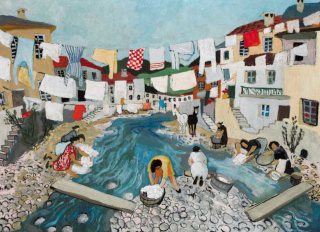
(Pictured: “Washing Day” by Gerard Dillon)


Leave a comment

Birth of Shelah Richards, Actress, Manager, Director & Producer

Shelah Geraldine Richards, Irish actress, manager, director and producer, is born in Dublin on May 23, 1903.

Richards is born to John William Richards, a lawyer, and Adelaide Roper, suffragist who had chained herself to the railings in St. Stephen’s Green. She goes to school at Alexandra College, Dublin, and after that she attends a finishing school in Paris. Though her family is not in the arts, her godmother is Beatrice Elvery. Shes attends Elvery’s salons with her parents as a child. She meets W. B. Yeats when she is sixteen. Her niece, Geraldine Fitzgerald, daughter of her sister, Edith Catherine Richards, is also one of Ireland’s pre-eminent actresses.

Richards’s acting career starts while attending the Dublin drama league and she is asked at short notice to replace Eileen Crowe in Juno and the Paycock, playing the role of Mary Boyle in the Abbey Theatre production. Richards gets the role of Nora Clithero in the 1926 production of The Plough and the Stars, Seán O’Casey‘s next production. This role means that she ends up with police protection for the duration of the run due to the disturbances the play engenders. Another important role is to take on playing the lead in The Player Queen by Yeats. Maire O’Neill had previously made the role her own and Yeats had let no one perform the part since then so taking on such a challenge is intimidating. Richards continues to take on leading roles with the Abbey Theatre but in 1926 she also begins to direct.

On December 28, 1928, Richards marries playwright Denis Johnston in St. Anne’s Church in Dublin. She tours the United States with the Abbey players in 1932 and with the Irish Players in the mid 1930s. A role in 1938 in Molly Keane‘s Spring Meeting starring Gladys Cooper and A. E. Matthews takes her to Broadway in New York City. War in Europe breaks out while the run is still going on and Richards is advised to stay in the United States. However, by then she has two children, producer Micheal and novelist Jennifer Johnston, so she returns to Dublin. There she runs her own theater company at the Olympia Theatre with Nigel Heseltine. Her marriage to Johnston, broken in 1938, ends with divorce in February 1945.

Richards next challenge is to take over the Abbey School of Acting. During her time there one of the designers she works with is Louis le Brocquy. With Siobhán McKenna she produces The Playboy of the Western World in Edinburgh to huge success allowing her to stage it in London and Dublin and later in Toronto‘s Library Theater. She brings Marcel Marceau to Dublin for the first time. She continues to act and has some film roles.

In 1961 Ireland launches its first television service, Raidió Teilifís Éireann. Richards is one of the first producers, recommended to the station by Hilton Edwards. She is one of the few women in the new station. The first Irish play produced during the opening week is directed by her and she is nominated for a Best Actress award in another production, Inquiry at Lisieux. She works as producer on a wide number of programs for the station including documentaries, soap operas and religious programming. Both Tolka Row and The Riordans are produced by her as well as Denis Johnston’s The Moon on the Yellow River, George Bernard Shaw‘s Arms and the Man and John Millington Synge‘s Riders to the Sea.

Richards retires from her RTÉ career in the early 1970s though she continues to raise funds for the Gate Theatre through the Edwards–MacLiammóir Playhouse Society. In 1983, for her 80th birthday, the Abbey puts on a party for her which includes a special rendition of “Nora” from The Plough and the Stars. Richards is the last living member of the original 1926 cast. The song is repeated at her funeral in 1985. She died in Ballybrack, County Dublin, on January 19, 1985. Her funeral is held in St. Anne’s Church in Dublin and she is cremated in Glasnevin Cemetery.


Leave a comment

Birth of Arthur Armstrong, Landscape & Still Life Painter

Arthur Armstrong, landscape and still life painter who often works in a Cubist style, is born in Carrickfergus, County Antrim, Northern Ireland, on January 12, 1924. A prolific painter, completing up to 300 paintings a year, in oils, watercolour and mixed media, he regards himself first and foremost as an abstract artist.

Armstrong is the son of a house painter and attends Strandtown Primary School. Later he studies architecture at Queen’s University Belfast, but after two years he moves to study art at Belfast School of Art. The influence of Cubism and the School of Paris can be clearly seen in his work, which takes him to England, France and Spain. He also travels and paints in the west of Ireland and Connemara inspires some of his best work. In 1950 his work is exhibited in the Grafton Gallery in Dublin, and subsequent exhibitions take place in England, Spain and the United States, as well as in Belfast and Dublin. In 1957 he is awarded a travelling scholarship from the Council for the Encouragement of Music and the Arts (CEMA), a forerunner of the Arts Council of Great Britain, and goes to Spain. He eventually settles in Dublin in 1962 and begins showing work at the Royal Hibernian Academy.

In 1968 Armstrong is awarded the Douglas Hyde Gold Medal at the Oireachtas Exhibition. In 1969 he designs sets, with George Campbell and Gerard Dillon, for the Seán O’Casey play, Juno and the Paycock, at the Abbey Theatre in Dublin. He becomes a member of the Royal Hibernian Academy in 1972 and in 1973 he is awarded the Art in Context prize from the Arts Council of Northern Ireland. He becomes a member of Aosdána in 1981, the same year that a retrospective exhibition of his work from 1950 to 1980 is held by the Arts Council of Northern Ireland.

From 1971 Armstrong lives at 28 Chelmsford Avenue, Ranelagh, Dublin, in a house he shares with Gerard Dillon. A bachelor, Armstrong dies in a Dublin hospital on January 13, 1996. The contents of his studio are sold February 3, 1998.

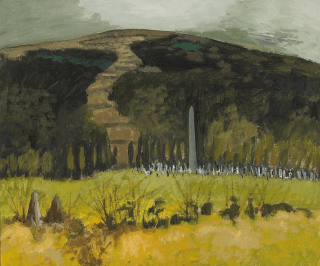
(Pictured: “Glendalough” by Arthur Armstrong, oil on board)


Leave a comment

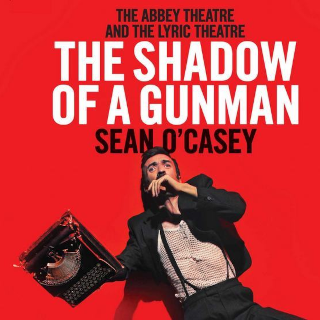
Abbey Theatre Premiere of “The Shadow of a Gunman”

The Shadow Of A Gunman, a 1923 tragicomedy play by Seán O’Casey, premieres at the Abbey Theatre in Dublin on April 12, 1923.

The play is the first in O’Casey’s “Dublin Trilogy” – the other two being Juno and the Paycock (1924) and The Plough and the Stars (1926). It is set in Dublin in May 1920 during the Irish War of Independence and centres on the mistaken identity of a building tenant who is thought to be an Irish Republican Army (IRA) assassin. Each act takes place in Seumus Shield’s room in a tenement in Hilljoy Square.

Donal Davoren is a poet who has come to room with Seumus Shields in a poor, Dublin tenement slum. Many of the residents of the tenement mistake Donal for an IRA gunman on the run. Donal does not refute this notoriety, especially when it wins him the affection of Minnie Powell, an attractive young woman in the tenement. Meanwhile, Seumus’ business partner, Mr. Maguire, drops a bag off at Seumus’ apartment before participating in an ambush in which he is killed. Seumus believes the bag to contain household items for re-sale. The city is put under curfew as a result of the ambush. The Black and Tans raid the tenement and, at that point, Donal and Seumus discover the bag is full of Mills bombs. Minnie Powell takes the bag and hides it in her own room. The Black and Tans find nothing of note in Seumus’ room, but arrest Minnie Powell, who is later shot and killed trying to escape.

The first performance of The Shadow of a Gunman in England is given in 1958 at the Progress Theatre in Reading, Berkshire.

A 1972 televised version of The Shadow of a Gunman stars Frank Converse and Academy Award winner Richard Dreyfuss. In 1973, Alvin Rakoff directs a televised version for BBC Two starring Stephen Rea, Sinéad Cusack and Donal McCann. In 1992 Kenneth Branagh, Stephen Rea and Bronagh Gallagher star in an adaption as part of the 1992 BBC Two Performance series.

In the music video for Northern Irish rock/pop band The Adventures song “Send My Heart” (1984), the lead character is seen trying out for a version of the play.


Leave a comment

Birth of Architect Michael Scott

michael-scott

Michael Scott, Irish architect whose buildings include the Busáras building in Dublin, Cork Opera House, the Abbey Theatre and both Tullamore and Portlaoise Hospitals, is born in Drogheda on June 24, 1905.

Scott’s family originates in the province of Munster. His father, William Scott, is a school inspector from near Sneem on the Iveragh Peninsula in County Kerry. His mother is from County Cork. He is educated at Belvedere College in Dublin. There he first demonstrates his skills at painting and acting. Initially he wants to pursue a career as a painter, but his father points out that it might make more financial sense to become an architect.

Scott becomes an apprentice for the sum of £375 per annum to the Dublin architectural firm Jones and Kelly. He remains there from 1923 until 1926, where he studies under Alfred E. Jones. In the evenings after work, he also attends the Metropolitan School of Art and the Abbey School of Acting, and appears in many plays there until 1927, including the first productions of Seán O’Casey’s Juno and the Paycock and The Plough and the Stars. On completing his pupilage, he becomes an assistant to Charles James Dunlop and then has a brief spell as an assistant architect in the Office of Public Works.

In 1931 Scott partners with Norman D. Good to form Scott and Good, and they open an office in Dublin. They design the hospital at Tullamore (1934–1937) and Portlaoise General Hospital (1935). Between 1937 and 1938, he is the President of the Architectural Association of Ireland (AAI). He founds his company, Michael Scott Architects, in 1938. That same year he also designs his house Geragh, at Sandycove, County Dublin.

Scott’s most important pre-war commission is the Irish Pavilion for the 1939 New York World’s Fair. He produces a shamrock shaped building constructed in steel, concrete and glass. It is selected by an international jury as the best building in the show. As a result, he is presented with a silver medal for distinguished services and given honorary citizenship of the city of New York by then Mayor Fiorello H. La Guardia. Other better-known architects who design national pavilions for this World Fair include Alvar Aalto of Finland and Oscar Niemeyer of Brazil.

Scott has three major commissions from the Córas Iompair Éireann CIÉ, the Inchicore Chassis Works, the Donnybrook Bus Garage and, most famously, the Dublin Central Bus Station, to be known as àras Mhic Dhiarmada or Busáras. Though initially controversial, Busáras wins Scott the Royal Institute of the Architects of Ireland Triennial Gold Medal for Architecture.

Later, Ronnie Tallon and Robin Walker become partners, and the firm is renamed Scott Tallon Walker in 1975, shortly after the firm wins the Royal Institute of British Architects (RIBA) Royal Gold Medal.

Scott, who spends most of his life living at Sandycove Point, just south of Dún Laoghaire in south Dublin, dies in Dublin on January 24, 1989, and is buried near Sneem in County Kerry.


Leave a comment

Death of Architect Michael Scott

michael-scott

Michael Scott, Irish architect whose buildings include the Busáras building in Dublin, Cork Opera House, the Abbey Theatre and both Tullamore and Portlaoise Hospitals, dies on January 24, 1989.

Scott is born in Drogheda on June 24, 1905. His family originates in the province of Munster. His father, William Scott, is a school inspector from near Sneem on the Iveragh Peninsula in County Kerry. His mother is from County Cork. He is educated at Belvedere College in Dublin. There he first demonstrates his skills at painting and acting. Initially he wants to pursue a career as a painter, but his father points out that it might make more financial sense to become an architect.

Scott becomes an apprentice for the sum of £375 per annum to the Dublin architectural firm Jones and Kelly. He remains there from 1923 until 1926, where he studies under Alfred E. Jones. In the evenings after work, he also attends the Metropolitan School of Art and the Abbey School of Acting, and appears in many plays there until 1927, including the first productions of Seán O’Casey’s Juno and the Paycock and The Plough and the Stars. On completing his pupilage, he becomes an assistant to Charles James Dunlop and then has a brief spell as an assistant architect in the Office of Public Works.

In 1931 Scott partners with Norman D. Good to form Scott and Good, and they open an office in Dublin. They design the hospital at Tullamore (1934–1937) and Portlaoise General Hospital (1935). Between 1937 and 1938, he is the President of the Architectural Association of Ireland (AAI). He founds his company, Michael Scott Architects, in 1938. That same year he also designs his house Geragh, at Sandycove, County Dublin.

Scott’s most important pre-war commission is the Irish Pavilion for the 1939 New York World’s Fair. He produces a shamrock shaped building constructed in steel, concrete and glass. It is selected by an international jury as the best building in the show. As a result, he is presented with a silver medal for distinguished services and given honorary citizenship of the city of New York by then Mayor Fiorello H. La Guardia. Other better-known architects who design national pavilions for this World Fair include Alvar Aalto of Finland and Oscar Niemeyer of Brazil.

Scott has three major commissions from the Córas Iompair Éireann CIÉ, the Inchicore Chassis Works, the Donnybrook Bus Garage and, most famously, the Dublin Central Bus Station, to be known as àras Mhic Dhiarmada or Busáras. Though initially controversial, Busáras wins Scott the Royal Institute of the Architects of Ireland Triennial Gold Medal for Architecture.

Later, Ronnie Tallon and Robin Walker become partners, and the firm is renamed Scott Tallon Walker in 1975, shortly after the firm wins the Royal Institute of British Architects (RIBA) Royal Gold Medal.

Scott, who spends most of his life living at Sandycove Point, just south of Dún Laoghaire in south Dublin, dies in Dublin on January 24, 1989, and is buried near Sneem in County Kerry.