Pery is born into one of Limerick’s most politically influential families, elder son of the Rev. Stackpole Pery and Jane Twigge. His maternal grandfather is William Twigg, Archdeacon of Limerick.
A trained barrister, Pery becomes a member of the Irish House of Commons for the Wicklow Borough constituency in 1751. On the dissolution of the house following the death of George II, he is elected for the constituency of Limerick City and serves from 1761 until 1785, becoming Speaker of the House in 1771. In 1783, he stands also for Dungannon, however chooses to sit for Limerick City. He is considered one of the most powerful politicians in Ireland in his time, leading a faction which includes his nephew, the future Earl of Limerick, and his relatives by marriage, the Hartstonges. Following his resignation, he is created Viscount Pery, of Newtown Pery, near the City of Limerick, in the Peerage of Ireland, entitling him to a seat in the Irish House of Lords. As he has no male heirs, his title becomes extinct on his death on February 24, 1806.
Pery is also noted for his part in the history of the architecture of Limerick. In 1765, he commissions the engineer Davis Ducart to design a town plan for land that he owns on the southern edge of the existing city, which leads to the construction of the Georgian area of the city later known as Newtown Pery. He is also commemorated in the naming of Pery Square.
Pery marries Patricia (Patty) Martin of Dublin in 1756, who dies a year later, and secondly Elizabeth Vesey, daughter of John Vesey, 1st Baron Knapton, and Elizabeth Brownlow. He and Elizabeth have two daughters:
O’Brien is born Ellen Lucy O’Brien on June 4, 1864, at Cahirmoyle, County Limerick. She is the eldest child of Edward William O’Brien and Mary O’Brien (née Spring Rice). Her siblings are Lucy and Dermod, with Dermod also becoming an artist. Her father is a landowner, and her mother is a sculptor and painter and sister of Thomas Spring Rice. Her grandfather is William Smith O’Brien.
While a young child, O’Brien spends two years living on the French Riviera from 1866 to 1868. Her mother later dies of tuberculosis, and the three children are raised by their aunt, the writer and nationalist, Charlotte Grace O’Brien. Their father remarries in 1880, to Julia Marshall, with whom he has two sons and two daughters.
O’Brien attends school in England from 1879, and later enrolls to study painting at the Slade School of Fine Art. She meets Walter Osborne through her brother Dermod, and considers herself engaged to him, but Osborne dies on April 24, 1903. A portrait of O’Brien by Osborne is held in the Hugh Lane Gallery.
O’Brien returns to Ireland and begins to paint miniatures on ivory using a magnifying glass. She also paints watercolour landscapes. Her first exhibition with the Royal Hibernian Academy (RHA) is in 1896, where she shows three works including Sketch near Malahide. She exhibits with the RHA on and off until 1922. During some of her time in Dublin, she lives with her half-brother, Edward Conor Marshall O’Brien, on Mount Street.
As part of an exhibition of Irish painters, O’Brien exhibits a number of portrait miniatures at the London Guildhall in 1904. The 1906 Oireachtas na Gaeilge features a number of her paintings, and in the same year she becomes honorary secretary of a newly established art committee. At the Munster–Connacht exhibition in Limerick of 1906, she exhibits a miniature of William Smith O’Brien amongst her 12 works on show. She produces many portraits, including one of Douglas Hyde, which is exhibited by the RHA in 1916.
O’Brien is an early member of the Gaelic League, being present at its first Oireachtas na Gaeilge in 1897 and founding the Craobh na gCúig gCúigí (Branch of the Five Provinces). In 1905, she writes a long letter in defence of Douglas Hyde and the Gaelic League in The Church of Ireland Gazette. She holds meetings of Craobh na gCúig gCúigí in her flat at 7 St. Stephen’s Green every Saturday night in 1907. In 1911, she founds Coláiste Eoghain Uí Chomhraí (O’Curry Irish College) in Carrigaholt, County Clare, which is named in honour of Eugene O’Curry, with the help of her cousin and friend Mary Spring Rice.
One of her ultimate goals is to create a national Irish church, which would unite Protestants and Catholics through the Irish language. To this end, she establishes the Irish Guild of the Church with Seoirse de Rút in 1914. The aim of the organisation is to provide a communal union for members of the Church of Ireland who are dedicated to “Irish Ireland” ideals.
Acting as a representative for the Gaelic League, she travels to the United States with Fionan MacColuim in 1914 to 1915, to fund raise and promote Irish art and industries. At Coláiste Eoghain Uí Chomhraí, she stresses the importance of the Irish language in the home, as well as the skills of housewives and those in domestic service in strengthening the language and Irish culture.
O’Brien notes that she initially thought that the 1916 Easter Rising was “in the nature a demonstration against conscription as it had been announced that the volunteers would resist disarmament.” She is staying with the Hydes at 1 Earlsfort Place during the Rising, as her flat at College Park Chambers had been destroyed. She protests the conscription bill in Ireland as a mass meeting of women at the Mansion House in 1918. She launches the Gaelic Churchman in 1919 as the official publication of the Irish Guild of the Church. In one article entitled A plea for the Irish services, she promotes her campaign for Irish language services in Protestant churches. In her capacity of vice-president of the guild, she invites Éamon de Valera to attend one of their meetings in 1921.
O’Brien dies suddenly on April 1, 1925, while visiting Dermod at 66 Elm Park Gardens, London. She is buried at the family plot in Cahirmoyle.
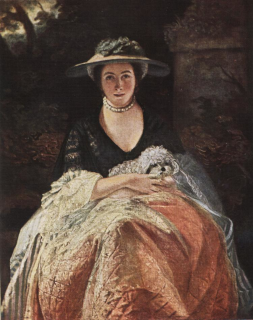
(Pictured: Nelly O’Brien by Sir Joshua Reynolds, 1723-1792)
Following a local primary education, Newman attends St. Munchin’s College, Limerick. He studies for the priesthood at St. Patrick’s College, Maynooth, and is ordained there on June 18, 1950.
In 1953 Newman is appointed Professor of Sociology at St. Patrick’s College, Maynooth, succeeding Peter McKevitt. It is an institution he remains within, and eventually leads with distinction, until he is appointed Bishop of Limerick in May 1974. He publishes two books about the college: Maynooth and Georgian Ireland (1979) followed by Maynooth and Victorian Ireland (1983).
Newman arrives in Limerick with a strong reputation for reform having served a number of years as President of Maynooth where he adapted and shaped the college to the new challenges of the 1970s. His academic background in sociology gives him an informed understanding of the changing dynamic in Irish life, especially rural life which he has been writing about since the early 1960s, especially the dangers of depopulation.
Newman often makes comment on national matters particularly about church-state relations which has been his special area of study for over 20 years. He takes what might be called a broadly ‘conservative’ approach which, as time goes on, jars with wider public opinion especially as Ireland faces a number of constitutional referenda in the 1980s. At least one modern author has quoted the epithet alleged to have been conferred on Newman by Conor Cruise O’Brien, The Mullah of Limerick, for articulating a neo-conservative position more commonly associated with the United States.
Newman’s later years are dogged by periodic bouts of ill-health, and he dies in office on April 3, 1995, of hepatoma. He is buried in St. John’s Cathedral, Limerick. He is the subject of many obituaries not least because of his extensive public statements in his years as Bishop of Limerick. The Tablet suggests he was most “well known for his conservatism and taste for controversial remarks” before quoting the homily by Cardinal Cahal Daly that “he seemed to have a strange sense of inadequacy; and, for one who was so lovable, he seemed to have difficulties in believing that others respected and admired and indeed loved him.” The Irish Times obituary says he was a man “who kept fighting the battles of long ago.”
Newman is succeeded as Bishop of Limerick by Bishop Donal Murray.
Limerick City Library holds an extensive set of newspaper articles about Bishop Jeremiah Newman which have been made available online.
Mary Ellen Cregan is born to Morgan Cregan and Ellen O’Shea. Her father is a stonemason from Limerick. The family are strong believers in the Gaelic revival movement and Cregan herself learns the Irish language and performs songs at Gaelic League concerts. Although she goes to primary school locally, she goes away to secondary school to St. Louis Convent in Carrickmacross, County Monaghan. After finishing school, she becomes a teacher, working in Goresbridge, County Kilkenny from 1911 to 1914.
In September 1914 Cregan goes to Dublin to study music in the Leinster School of Music, under Madame Coslett Heller. It is while she is in Dublin that she becomes friends with the Ryan family, who are strong nationalists as well as interested in the Gaelic League and Sinn Féin. She begins to sing for concerts which are fundraisers for the Irish Volunteers. The last concert is just two weeks before the Easter Rising.
During Easter week Cregan is sent to Tralee with “automatics and ammunition” by Seán Mac Diarmada. While she is carrying a violin case of munitions, she is also carrying details for the wireless technology needed for communicating with the SS Aud, the boat which is carrying more weapons for the rebellion. The communications with the SS Aud go wrong when the car carrying the Volunteers goes off a pier and the occupants are drowned. She is still in the area to assist with the surviving Volunteer, who unfortunately knows nothing of the details for the SS Aud. She is not easily able to get back to Dublin, because owing to the Rising the city is cut off. By the time she gets back, her friends have been arrested.
When Cregan is going to school in Dublin she is also working in a school in Rathmines. Like many of the teachers, she loses her job after the rising because of her connection to the rebels. However, she is able to get new positions over the next few years in both Ballyshannon and Portstewart until she marries. In Ballyshannon she experiences the early expressions of support and sympathy, but Portstewart is a Unionist enclave with many houses flying union flags on polling day in 1918.
Cregan is a member of Cumann na mBan and with them is active during the Irish War of Independence. She is given a medal for her participation. On July 23, 1919, she marries Dr. James Ryan in Athenry, County Galway. His entire family had been deeply involved in the Easter Rising, as well as the Irish War of Independence and the Irish Civil War. They have three children, Eoin, who becomes a Senator, Nuala (Colgan) and Seamus.
The family is initially based in Wexford during the War. The house is often raided when the British soldiers are looking for her husband and Cregan herself is arrested in February 1921 for refusing to put up martial law posters. Later the family sells the house and remains mobile while she works for the Sinn Féin government, and her husband is in prison. It is during this time that she works as a courier to the continent and to London. After the war, they purchase Kindlestown House in Delgany, County Wicklow, where they remain for the rest of their lives.
Cregan’s first book for children is Old John and gains her considerable international success and attention. Sean Eoin is also published in Irish and is illustrated by Jack Butler Yeats. Her work is also aired on the BBC and RTÉ. Rathina wins the Downey Award in the United States in 1943. She also writes two plays: Hunger strike (1933), based on experience of her husband’s involvement in such a strike, which is broadcast on Radio Éireann on May 5, 1936, and Curlew’s call (1940).
Cregan dies on November 9, 1975, in St. Vincent’s Hospital, Dublin, and is buried in Redford cemetery near her home in County Wicklow.
(Pictured: Máirín Cregan and her husband, Dr. James Ryan)
McGrath is born in Dublin on August 12, 1888. By 1916 he is working with his brother George at Craig Gardiner & Co., a firm of accountants in Dawson Street, Dublin. He works with Michael Collins, a part-time fellow clerk and the two strike up a friendship. In his spare time he works as secretary for the Volunteer Dependents’ Fund.
McGrath soon joins the Irish Republican Brotherhood. He fights in Marrowbone Lane in the 1916 Easter Rising. He is arrested after the rising, and jailed in Wormwood Scrubs and Brixton prisons in England. In the 1918 Irish general election, he is elected as Sinn Féin TD for the Dublin St. James’s constituency, later sitting in the First Dáil. He is also a member of the Irish Republican Army (IRA), and successfully organises many bank robberies during the Irish War of Independence (1919–1921), where a small percentage of the proceeds is retained as a reward by him and his fellow-soldiers. During this time he is interred briefly at Abercorn Barracks but escapes by dressing in army uniform and walking out of the gate with soldiers going on leave. He is eventually recaptured and spends time in jail in Belfast.
In October 1921 McGrath travels with the Irish Treaty delegation to London as one of Michael Collins’ personal staff. When the Provisional Government of Ireland is set up in January 1922, he is appointed Minister for Labour. In the Irish Civil War of 1922–1923, he takes the pro-Treaty side and is made Director of Intelligence, replacing Liam Tobin. In a strongly worded letter, written in red ink, he warns Collins not to take his last, ill-fated trip to County Cork.
McGrath is later put in charge of the police Intelligence service of the new Irish Free State, the Criminal Investigation Department (CID). It is modelled on the London Metropolitan Police department of the same name, but is accused of the torture and killing of a number of republican (anti-Treaty) prisoners during the civil war. It is disbanded at the war’s end with the official reason given that it is unnecessary for a police force in peacetime. He goes on to serve as Minister for Labour in the Second Dáil and the Provisional Government of Ireland. He also serves in the 1st and 2nd Executive Councils holding the Industry and Commerce portfolio.
In September 1922 McGrath uses strikebreakers to oppose a strike by Trade Unionists in the Post Office service, despite having threatened to resign in the previous March of the same year when the government threatened to use British strikebreakers.
McGrath resigns from office in April 1924 because of dissatisfaction with the government’s attitude to the Army Mutiny officers and as he says himself, “government by a clique and by the officialdom of the old regime.” By this he means that former IRA fighters are being overlooked and that the Republican goals on all Ireland has been sidelined. He and eight other TDs, who had resigned from Cumann na nGaedheal, resign their seats in the Dáil and form a new political party, the National Party. However, the new party does not contest the subsequent by-elections for their old seats. Instead, Cumann na nGaedheal wins seven of the seats and Sinn Féin wins the other two.
In 1927, McGrath takes a libel case against the publishers of The Real Ireland by poet Cyril Bretherton, a book that claims he is responsible for the abduction and murder of Noel Lemass, the brother of Seán Lemass, in June 1923 during the civil war, as well as a subsequent coverup. He wins the court case. During the 1930s, he and Seán Lemass reconcile and regularly play poker together.
Following his political career, McGrath goes on to become involved in the building trade. In 1925 he becomes labour adviser to Siemens-Schuckert, German contractors for the Shannon hydroelectric scheme near Limerick. He founds the Irish Hospitals’ Sweepstake in 1930, and the success of its sweepstakes makes him an extremely wealthy man. He has other extensive and successful business interests always investing in Ireland and becomes Ireland’s best-known racehorse owner and breeder, winning The Derby with Arctic Prince in 1951.
McGrath dies at his home, Cabinteely House, in Ballsbridge, Dublin on March 26, 1966. Cabinteely House is donated to the state in 1986 and the land is developed as a public park. His son, Patrick W. McGrath, inherits many of his father’s business interests, and also serves as Fine Gael Senator from 1973 to 1977.
(Pictured: Screenshot of a film of Irish politician Joseph McGrath shot in 1922)
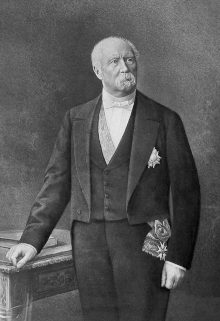
Patrice de MacMahon, a descendant of an Irish family, resigns as president of France on January 30, 1879, and retires to private life. His resignation comes after he dissolves the Chamber of Deputies, resulting in public outrage and a Republican electoral victory earlier in the month.
Born Marie Edme Patrice Maurice de MacMahon on July 13, 1808, in Sully, France, he serves as Marshal of France and second president of the French Third Republic. During his presidency the Third Republic takes shape, the new constitutional laws of 1875 are adopted, and important precedents are established affecting the relationship between executive and legislative powers.
MacMahon begins his army career in 1827 in Algeria and distinguishes himself during the Siege of Constantine (1837) and in the Crimean War (1853–56). The climax of his military career comes in the Italian campaign of 1859, when his victory at Magenta results in his being created Duke of Magenta. In 1864 he becomes Governor General of Algeria. Commanding the I Army Corps in Alsace during the Franco-Prussian War (1870–71), he is wounded and defeated at the Battle of Wörth. After a short convalescence at Sedan, he is appointed head of the army of the French Third Republic, which defeats the Paris Commune revolt in May 1871.
When Adolphe Thiers resigns as president of the republic on May 24, 1873, French rightists turn to MacMahon as his successor. He is elected president the same day. On November 20, 1873, the National Assembly passes the Law of the Septennate, conferring upon him presidential power for seven years. He assumes his presidential duties somewhat reluctantly, for he dislikes publicity and lacks an understanding of the complex political issues of his day.
During MacMahon’s term the French Constitutional Laws of 1875 are promulgated. The National Assembly dissolves itself, and the elections of 1876 returns a large majority of republicans to the new chamber. The first crisis comes in December 1876, when the republican chamber compels him to invite the moderate republican Jules Simon to form a government. The conservative Senate disapproves of Simon because he had purged some rightist officials, and, on May 16, 1877, MacMahon posts a letter to Simon that is tantamount to dismissal. Premier Simon’s resignation precipitates the crise du seize mai. When MacMahon commissions conservative Albert de Broglie to form a ministry and wins the Senate’s assent to dissolve the chamber on June 25, 1877, the question of whether the President or Parliament would control the government is squarely posed.
The new elections to the chamber return a majority of republicans, and the de Broglie ministry is given a vote of “no confidence.” The succeeding ministry, headed by Gaëtan de Rochebouët, also collapses. By December 13, 1877, MacMahon gives in to the extent of accepting a ministry led by conservative republican Jules Dufaure and composed mostly of republicans. On January 5, 1879, the republicans gain a majority in the Senate, and MacMahon resigns on January 30. The constitutional crisis during his presidency is resolved in favour of parliamentary as against presidential control, and thereafter during the Third Republic the office of president becomes largely an honorific post.
From 1887 to 1893, MacMahon directs the Société de secours aux blessés militaires (S.S.B.M) – Rescue Society of Wounded Military, which in 1940 becomes the French Red Cross.
Luis Roberto de Lacy, a Spanish professional soldier of Irish descent who serves in the Spanish and French Imperial armies, is born on January 11, 1775, in San Roque, Cádiz, Spain.
De Lacy is born to Lieutenant-Colonel Patrick de Lacy, an officer in the Ultonia or Ulster Regiment, a foreign unit or Infantería de línea extranjera of the Spanish army. Patrick dies sometime before 1785 and his wife, Antonia, remarries Jean Gautier, another Ultonia officer. His grandfather, General Patrick de Lacy y Gould, came from Limerick. Along with many relatives, he was part of the post-1691 Irish diaspora known as the Flight of the Wild Geese.
De Lacy is commissioned into the Ultonia regiment when he is ten, although his age is recorded as thirteen to satisfy minimum requirements. Issuing commissions to children is not unusual, as they are considered private investments and often used to provide pensions for orphans. Although by now the Ultonia is no longer “Irish,” many of the officers are Spanish-born descendants of the original Irish emigrants, including his uncle Francis and various cousins.
In 1789, de Lacy joins an expedition to Puerto Rico, accompanied by his stepfather. They apparently quarrel and, on their return, de Lacy walks to Porto, in Portugal, intending to take ship to the Maluku Islands, before his stepfather brings him home.
Promoted captain, de Lacy takes part in the War of the Pyrenees against France, which ends with the April 1795 Peace of Basel. He is posted to the Canary Islands in 1799, where he fights a duel with the local Capitán-General. Despite being transferred to El Hierro, he continues their feud. He is court-martialed as a result and sentenced to one year in the Royal Prison at the Concepción Arsenal at Cádiz.
De Lacy’s jailers allegedly consider him mentally unbalanced. As a result, he is stripped of his commission and barred from re-enlisting in the Spanish army. He moves to France in order to continue his career and is appointed captain in the Irish Legion, a French army unit formed in Brittany and intended to support an Irish rising. Although many of its officers are Irish exiles or of Irish descent, the rank and file are mostly Polish.
De Lacy arrives in Madrid shortly before the May 1808 revolt known as the Dos de Mayo. He deserts and is reinstated in the Spanish army as colonel of the Burgos regiment.
In July 1809, de Lacy is given command of the Isla de León, an important defensive position in Cádiz, home of the Regency Council that rules Spain in Ferdinand’s absence. He leads the 1st Division at the Battle of Ocaña on November 19, 1809. The collapse of the Spanish cavalry under Manuel Freire de Andrade exposes him to a flank attack that practically annihilates his division. A second defeat at Alba de Tormes on November 29 leaves the Spanish unable to confront the French in open battle and they resort to guerrilla tactics.
Although Cádiz is besieged by the French from February 1810 to August 1812, support from the Royal Navy allows the Council to send small amphibious expeditions intended to bolster resistance elsewhere. De Lacy leads landings in Algeciras, Ronda, Marbella and Huelva and although unable to hold them, this absorbs French resources. In March 1811, his troops support an Anglo-Spanish attempt to break the siege of Cádiz. The resulting Battle of Barrosa is a significant victory, although command failures mean the siege continues.
After the loss of Tarragona in June 1811, de Lacy replaces the Marquess of Campoverde as Capitán-General of Catalonia, a position held by his uncle Francis from 1789 to 1792. French efforts to capture Valencia weaken them elsewhere and provide the Spanish opportunities for partisan warfare. He leads a series of incursions into the French departments of Haute-Garonne and Ariège. These restore local morale and force the French to send reinforcements.
Most major towns, including Barcelona, Tarragona and Lleida, remain in French hands and in early 1812, Napoleon makes Catalonia part of France. The focus on guerrilla tactics lead to an increasingly bitter war of reprisals and executions by both sides, which severely impact the civilian population. Many of the partisan bands are beyond central control and their operations often indistinguishable from simple brigandage. This leads to conflict between de Lacy and local Catalan leaders and in January 1813, he moves to Santiago de Compostela as Captain General of the Kingdom of Galicia. He assumes command of the Reserva de Galicia, which he focuses on disciplining and reorganising. Following Allied victory at Vitoria in June 1813, the French withdraw from Spain and Ferdinand returns to Madrid in April 1814.
Ferdinand rejects a previous commitment to accept the Spanish Constitution of 1812 and establishes an absolutist regime. Spain also faces colonial wars in the Americas, which begin in 1810 and continue until 1833. This destabilises the regime and leads to a series of attempted coups, by military officers like de Lacy backed by progressive civilian elements, often linked by Freemasonry.
Following failed attempts in 1815 and 1816, de Lacy returns to Barcelona and assisted by a former subordinate, Francisco Milans del Bosch, plan another. This begins on April 5, 1817, but quickly collapses. De Lacy is captured, court-martialed, and sentenced to death. Following public protests against the sentence, he is secretly taken to Palma de Mallorca, held at Bellver Castle and executed there by firing squad on July 5, 1817.
In 1820, a revolt led by Colonel Rafael del Riego forces Ferdinand to restore the 1812 Constitution. This begins the Trienio Liberal, a period of liberalisation that ends in 1823, when a French army allows Ferdinand to re-assert control. However, in 1820 the reconstituted Cortes Generales declares de Lacy a martyr. Along with others including Riego, he is commemorated on a plaque in the Palacio de las Cortes, Madrid, which can still be seen today. De Lacy is buried at the Cementiri de Sant Andreu, in Barcelona.
At the outbreak of the First English Civil War, Ireton joins the Parliamentary army, commanding a cavalry force in the indecisive Battle of Edgehill in October 1642, and at the Battle of Gainsborough in July 1643. In 1643 he meets and befriends Oliver Cromwell, then a colonel in the army of eastern England. Cromwell appoints him deputy governor of the Isle of Ely in 1644, and he fights at the Parliamentary victories in the Battle of Marston Moor (July 1644), and the Battle of Naseby (June 1645). In the summer of 1646, he marries Cromwell’s eldest daughter, Bridget. The marriage brings Ireton’s career into parallel with Cromwell’s.
Although Ireton’s military record is distinguished, he earns his fame in politics. Elected to Parliament in 1645, he looks on while a conflict develops between the Independents in the army and the Presbyterians who control the House of Commons. In 1647 he presents his “Heads of the Proposals,” a constitutional scheme calling for division of political power among army, Parliament, and king and advocating religious tolerance for Anglicans and Puritans. These proposals for a constitutional monarchy are rejected by the king. At the same time, they are attacked by the Levellers, a group that calls for manhood suffrage and an unfettered liberty of conscience in matters of religion.
Ireton then turns against the king. When the Independents in the army triumph over Parliament during the second phase of the Civil War, his “Remonstrance of the Army” provides the ideological foundation for the assault on the monarchy. He helps to bring Charles I to trial and is one of the signatories of the king’s death warrant. From 1649 to 1651 he prosecutes the government’s case against Roman Catholic rebels in Ireland, becoming Lord Deputy of Ireland and acting commander in chief in 1650.
In early June 1650, Ireton mounts a counter-guerrilla expedition into the Wicklow Mountains to secure his lines of supply for the Siege of Waterford in southeast Ireland. Thomas Preston surrenders Waterford after a three-month siege. Ireton then advances to Limerick by October but has to call off the siege due to cold and bad weather. He returns to Limerick in June 1651 and besieges the city for five months until it surrenders in October 1651. At the same time, parliamentarian forces conduct the Siege of Galway, and he rides to inspect the command of Charles Coote, who is blockading that city. The physical strain of his command takes hold, and he falls ill.
After the capture of Limerick, Ireton has dignitaries of Limerick hanged for their defence of the city, including Alderman Thomas Stritch, Bishop Terence O’Brien, and an English Royalist officer, Colonel Fennell. He also wants the Irish commander, Hugh Dubh O’Neill hanged, but Edmund Ludlow cancels the order after Ireton’s death.
Ireton falls ill of the plague that is raging through the town and dies on November 26, 1651. His loss reportedly “struck a great sadness into Cromwell” and he is considered a great loss to the administration. At his funeral in Westminster Abbey, John Watson and others wear new tabards that replace the royal arms with the new arms of the commonwealth.
On January 30, 1661, following the Restoration of the English monarchy of 1660, Charles II has Ireton’s corpse exhumed from Westminster and mutilated in a posthumous execution, along with those of Cromwell and John Bradshaw, in retribution for signing his father’s death warrant. The date is symbolic, being the 12th anniversary of the execution of Charles I.
(Pictured: Painting of Henry Ireton, circa 1650, National Portrait Gallery: NPG 3301)
Cleeve is the second of three sons to Charles Edward Cleeve and his wife Josephine (née Talbot). His father, who was born in Limerick, County Limerick, is a scion of a famous and wealthy family that runs several successful Irish enterprises in the late-nineteenth and early twentieth centuries. His mother is a native of Essex. The Cleeves came from Canada originally and emigrated to Ireland in the mid-nineteenth century. As a result of labour troubles and the effects of the Irish Civil War, the Cleeve business fails, and the family moves to England.
Cleeve’s mother dies in 1924 and his maternal grandparents, Alfred and Gertrude Talbot, take over responsibility for his upbringing. At age eight, he is sent as a boarder to Selwyn House in Kent, followed at age 12 by three years at St. Edward’s School, Oxford. He is by nature a free-thinker and rejects the assumptions and prejudices that are then part of upper-middle class English life. His unwillingness to conform means that school life is very difficult for him. In the late summer of 1938, he decides not to return to St. Edward’s for his final year. Instead, he runs away to sea.
In 1945, Cleeve takes an Irish passport and comes to Ireland where, in the space of three weeks, he meets and marries Veronica McAdie. A year later, they leave Ireland with baby daughter Berenice on a protracted odyssey that takes them to London, Sweden, the West Indies, and finally South Africa. In 1948, the family settles in Johannesburg where they set up their own perfume business. A second daughter, Tanga, is born to the couple there in 1953. As a result of his friendship with Fr. Trevor Huddleston, he witnesses the conditions in which the black population has to live in townships such as Sophiatown. He becomes an outspoken critic of Apartheid, and, in 1954, he is branded by the authorities as a ‘political intractable’ and ordered to leave South Africa. He returns to Ireland where he lives for the remainder of his life.
Cleeve starts writing poems in his teens, a few of which are published in his school paper, the St. Edward’s Chronicle. During the war he continues to produce poems of a spiritual or metaphysical nature, most of which are never published. In 1945, he turns to novel-writing. After his first two attempts are rejected, his third novel, The Far Hills, is published in 1952. Two further novels about South Africa follow and their unvarnished descriptions of the reality of life for the native population probably contributes to his eventual expulsion from the country.
In the mid-1950s, Cleeve begins to concentrate on the short story form. During the next 15 years over 100 of his short stories are published in magazines and periodicals across five continents. He sells nearly thirty to The Saturday Evening Post alone. In 1966, his story Foxer is honoured with a scroll at the annual Edgar Awards.
During the 1960s and 1970s, Cleeve returns to writing novels with considerable success. He produced a series of well-received mystery and spy thrillers that do not sacrifice character to plot. In 1971, he publishes Cry of Morning, his most controversial and successful novel to date. It is a panoramic depiction of the economic and social changes that affected Ireland during the 1960s as seen through the eyes of a disparate collection of well-drawn characters. He subsequently achieves even greater commercial success, especially in the United States, with a number of historical novels featuring a strong female character as protagonist.
Cleeve also writes several works of non-fiction, principally the Dictionary of Irish Writers. This is a 20-year project to provide to scholars and the general public alike a comprehensive resource on Irish writers at an affordable price. It is a labour of love that consumes a great deal of his time and is effectively subsidised by his more commercial pursuits. The last edition is published in 1985.
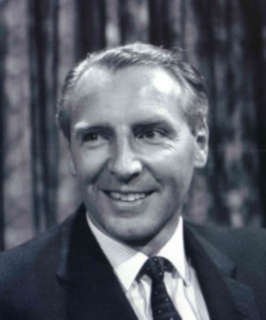
On December 31, 1961, Telefís Éireann is launched as the Republic of Ireland‘s first indigenous television station. Cleeve joins the station as a part-time interviewer on the current affairs programme, Broadsheet. Following appearances on two additional programmes, Telefís Éireann does not renew his contract when it expires in 1973.
Following his wife’s death in 1999, Cleeve moves to the village of Shankill, Dublin. His health deteriorates rapidly following a series of small strokes. In November 2001, he marries his second wife, Patricia Ledwidge, and she cares for him during his final months. He suddenly dies of a heart attack on March 11, 2003. His body now lies under a headstone bearing the inscription “Servant of God.”
Pearse follows his brother into the Irish Volunteers and the republican movement. He takes part in the Easter Rising in 1916, always staying at his brother’s side at the General Post Office. Following the surrender, he is court-martialed and sentenced to death. It has been said that as he is only a minor player in the struggle it is his surname that condemns him. However, at his court martial he emphasizes his involvement.
On May 3, 1916, Pearse is granted permission to visit his brother in Kilmainham Gaol, to see him for the final time. However, while he is en route, Patrick is executed. He is executed on May 4. He and his brother are the only two brothers to be executed after the Easter Rising.
There are many more public commemorations of Patrick Pearse than of William. In 1966, Dublin’s Westland Row railway station is renamed Dublin Pearse railway station to honour both brothers. Pearse Square and Pearse Street in Dublin are renamed in honour of both, Pearse Street (then Great Brunswick Street) having been their birthplace. Many streets and roads in Ireland bear the name Pearse. Few name William, but there is a Pearse Brothers Park in Rathfarnham. The bridge over the River Dodder on the Rathfarnham Road, between Terenure and Rathfarnham is named after them and carries a plaque depicting the brothers in profile.
Brothers Pearse Athletic Club, founded in Rathfarnham, is named after the two brothers. A number of Gaelic Athletic Association clubs and playing fields are named after both Pearses, and at least one after William.