A party of eighteen armed B-Specials, a part-time auxiliary police force which is almost 100% Protestant, when traveling by train to Enniskillen, are stopped at Clones railway station in County Monaghan by an IRA group. The B-Specials react immediately by shooting Commander Fitzpatrick. His colleagues retaliate by fatally shooting four Specials and arresting the survivors. Trouble in the North is at a boiling point and in the three days after the Clones incident thirty people are murdered in Belfast.
Collins and James Craig, Prime Minister of Northern Ireland, have further discussions in Dublin in early February 1922 but the meeting breaks down over the question of the boundary revision. Craig informs reporters that he has the assurance of the British Government that the Boundary Commission will make only slight changes. He complains that the maps which Collins had produced led him to the assumption that Collins had already been promised almost half of Northern Ireland. Craig agrees to minor changes but if North and South fail to agree, there will be no change at all. Collins issues a statement which refuses to admit any ambiguity and says that majorities must rule.
The British and the Provisional Government finally agreed that an Irish Free State Agreement Bill will legalise the Treaty and the transfer of power to the Provisional Government and will authorise the election of a Provisional Parliament to enact the Free State Constitution. Final ratification of the Treaty is deferred until the British confirm the Free State Constitution. Only then will Northern Ireland be allowed to exclude itself formally from the Free State.
(From: “OTD in 1922 – The IRA Kidnaps More Than Forty Loyalists Activists and ‘B’ Specials,” Stair na hÉireann | History of Ireland, https://stairnaheireann.net | Picture: Colour image of the IRA patrolling Grafton Street, Dublin, during the Irish Civil War in 1922, 1916 Easter Revolution in Colour)
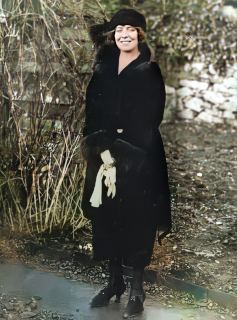
Kiernan is born to Peter Kiernan and Bridget (née Dawson). She is educated at Loreto Convent, County Wicklow. Hers is a very comfortably off merchant family with five sisters and one brother. Her parents enjoy a happy marriage, and life in the Kiernan home is joyous until Kitty reaches her teens. On November 27, 1907, her sister, Elizabeth Mary (a twin), dies at the age of eighteen of pulmonary tuberculosis, while Elizabeth’s twin sister, Rose, apparently dies the same year in Davos, Switzerland, which would also indicate tuberculosis as a cause of death. Her mother dies on November 29, 1908, of apoplexy, while her father dies almost exactly a year later, on November 9, 1909, of pneumonia. The Kiernan family owns the Greville Arms Hotel in the town, as well as a grocery shop, a hardware store, a timber and undertaking business and also a bar. Around the corner from the hotel, they operate a bakery which supplies the town and most of the surrounding countryside. All the family works in one capacity or another.
Michael Collins, one of the principal founders of the independent Irish state, is introduced to the vivacious Kiernan sisters by his cousin Gearóid O’Sullivan, who is already dating Maud Kiernan. Collins initially falls for the captivating Helen Kiernan, but she is already engaged to someone else. He then turns his interests to Kitty, who has already captured the interest of Collins’ friend Harry Boland. However, it is Collins to whom Kitty becomes engaged, with plans to marry Collins in a November 1922 double ceremony to include the nuptials of Maud and Gearóid. Collins’ assassination four months earlier, on August 22, 1922, near Béal na Bláth, County Cork, results in a single wedding taking place.
On June 10, 1925, Kiernan marries Felix Cronin, who is Quartermaster General in the Irish Army. They have two sons, Felix Jnr. and Michael Collins Cronin. Felix Jnr. and his son Rex are interred with his parents in Glasnevin Cemetery.
Kiernan dies, aged 52, of a cerebral hemorrhage on July 24, 1945, and her grave is close to that of Collins. Felix Cronin dies suddenly on October 22, 1961, while playing golf at Woodbrook Golf Club and is also buried in Glasnevin.
Kiernan and Michael Collins keep up a lengthy correspondence and while Collins is in London during the Anglo-Irish Treaty negotiations, he writes to her every day. The bulk of these letters are written between 1919 and 1922, and through their almost daily contact emerges a picture of the dreams and aspirations of the man often called Ireland’s “lost leader” and the woman with whom he wanted to share a “normal” life. These letters are the subject of a book written by Leon Ó Broin entitled In Great Haste. In 2000, some of the 300 letters sent by Kiernan and Collins to each other go on permanent display at the Cork Public Museum. These letters give a great insight into her attitude to life and into the political events of this time.
Former Fine Gael minister Peter Barry donates his collection of historic letters to the Lord Mayor of Cork, on behalf of the municipal museum. The collection, purchased from the Cronin family in 1995, is conserved at the Delmas bindery at Marsh’s Library in Dublin. The letters are also catalogued and then returned to the Cork Public Museum. The Peter Barry collection also contains letters from Harry Boland, a friend of Collins and former suitor of Kiernan.
In the 1996 film Michael Collins, Kiernan is played by American actress Julia Roberts though some reviewers are critical of the character’s development.
O’Donoghue is born in Rathmore, County Kerry, on July 22, 1894, the son of farmer Patrick O’Donoghue and Margaret Cronin. He moves to Cork in 1910, where he works as an apprentice in the drapery trade.
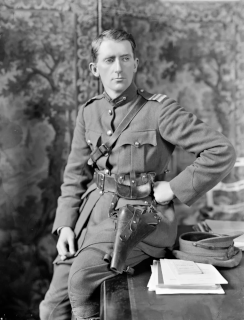
The 1916 Easter Rising is a watershed in O’Donoghue’s life. In December 1916, he joins the Cork branch of the Irish Volunteers. In early 1917, he is elected unanimously First Lieutenant of the Cyclist Company and as a result devotes all his spare time to Volunteer work. He begins writing weekly for two years for TheIrish World newspaper. By May 1917, he is sworn into the Irish Republican Brotherhood (IRB) and in October, Tomás Mac Curtain appoints him head of communications of the Cork Brigade. He replaces Pat Higgins as Brigade Adjutant in February 1917. He is a key organiser in the sensational jailbreak of Captain Donnchadh Mac Niallghuis on Armistice Day 1918 and takes personal responsibility for his protection. Michael Collins is the last officer from Volunteers General Headquarters to visit Cork shortly after Christmas 1919, until the truce in 1921.
O’Donoghue builds up an intelligence network and agents which includes his future wife, Josephine Marchment. She is head female clerk at the 6th Division Headquarters at Victoria Barracks, Cork, and passes on secret British Army correspondence to him. He recruits people to open letters, tap phone lines and intercept telegrams. The Irish Republican Army has 2,000 active members in Cork which are also used for intelligence gathering. By March 1920, after killing a Royal Irish Constabulary (RIC) Inspector, he is on the run and serving full-time in the IRA. In November of that year, the Cork Brigade kills six British Army officers and executes five Cork civilians on suspicion of spying.
After two and a half years of fighting, a truce is agreed upon on July 11, 1921. When the Dáil approves the Anglo-Irish Treaty, in January 1922, the IRA splits into pro- and anti-Treaty camps. Over the coming months and after being elected onto the army’s executive as Adjutant General, O’Donoghue warns of the dangers of an Irish Civil War. In June 1922, he resigns from the army’s national executive and a month later, on July 3, 1922, from the army. Civil war does break out on June 28, 1922 between pro- and anti-Treaty factions, much to his dismay.
During the Irish Civil War, O’Donoghue remains neutral and tries to organise a truce to end the fighting. In December 1922, he forms a group called the “Neutral IRA”, along with Seán O’Hegarty, composed of pro-truce IRA men. He claims he has 20,000 members in this group. He campaigns for a month’s truce between the two sides, so that a political compromise could be reached. However, his efforts come to nothing and in March 1923, he winds up the “Neutral IRA,” judging that its objectives cannot be achieved. The Irish Civil War ends on May 24, 1923.
O’Donoghue serves as major in the Irish Army from 1939-1946. He forms a Supplementary Intelligence Service that is to remain behind enemy lines in the event of an invasion. He also teaches guerrilla warfare tactics to new army recruits.
O’Donoghue marries Josephine Brown (née Marchment) in April 1921 and they have four children. The couple also adopts two children from Josephine’s first marriage, including Reggie Brown, whom O’Donoghue kidnaps from his grandparents in Wales in 1920. He becomes a rate collector and remains outside politics.
In later years O’Donoghue becomes a respected historian. While in the army he edits An Cosantóir, the Irish Army’s magazine. He convinces Éamon de Valera to establish the Bureau of Military History to record personal accounts from the Irish War of Independence. He is a recording officer until 1948. His most famous work is his biography on Liam Lynch, entitled No Other Law.
O’Donoghue dies on December 18, 1967, and Tom Barry gives the graveside oration. His papers are in the National Library of Ireland (NLI) and his statement to the Bureau of Military History is in the Military Archives.
Mulcahy is born in Manor Street, Waterford, County Waterford, on May 10, 1886, the son of post office clerk Patrick Mulcahy and Elizabeth Slattery. He is educated at Mount Sion Christian Brothers School and later in Thurles, County Tipperary, where his father is the postmaster.
Mulcahy is second-in-command to Thomas Ashe in an encounter with the armed Royal Irish Constabulary (RIC) at Ashbourne, County Meath, during the 1916 Easter Rising, one of the few stand-out victories won by republicans in that week and generally credited to Mulcahy’s grasp of tactics. In his book on the Rising, Charles Townshend principally credits Mulcahy with the defeat of the RIC at Ashbourne, for conceiving and leading a flanking movement on the RIC column that had engaged with the Irish Volunteers. Arrested after the Rising, he is interned at Knutsford and at the Frongoch internment camp in Wales until his release on December 24, 1916.
Mulcahy and Michael Collins are largely responsible for directing the military campaign against the British during the Irish War of Independence. During this period of upheaval in 1919, he marries Mary Josephine (Min) Ryan, sister of Kate and Phyllis Ryan, the successive wives of Seán T. O’Kelly. Her brother is James Ryan. O’Kelly and Ryan both later serve in Fianna Fáil governments.
Mulcahy supports the Anglo-Irish Treaty of December 1921. Archive film shows that Mulcahy, as Minister of Defence, is the Irish officer who raises the Irish tricolour at the first hand-over of a British barracks to the National Army in January 1922. He is defence minister in the Provisional Government on its creation and succeeds Collins, after the latter’s assassination, as Commander-in-Chief of the Provisional Government’s forces during the subsequent Irish Civil War.
Mulcahy earns notoriety through his order that anti-Treaty activists captured carrying arms are liable for execution. A total of 77 anti-Treaty prisoners are executed by the Provisional Government. He serves as Minister for Defence in the new Free State government from January 1924 until March 1924, but resigns in protest because of the sacking of the Army Council after criticism by the Executive Council over the handling of the “Army Mutiny,” when some National Army War of Independence officers almost revolt after he demobilises many of them at the end of the Irish Civil War. He re-enters the cabinet as Minister for Local Government and Public Health in 1927.
After the resignation of W. T. Cosgrave as Leader of Fine Gael in 1944, Mulcahy becomes party leader while still a member of the Seanad. Thomas F. O’Higgins is parliamentary leader of the party in the Dáil at the time and Leader of the Opposition. Facing his first general election as party leader, Mulcahy draws up a list of 13 young candidates to contest seats for Fine Gael. Of the eight who run, four are elected. He is returned again to the 12th Dáil as a TD for Tipperary at the 1944 Irish general election. While Fine Gael’s decline had been slowed, its future is still in doubt.
Following the 1948 Irish general election Mulcahy is elected for Tipperary South, but the dominant Fianna Fáil party finishes six seats short of a majority. However, it is 37 seats ahead of Fine Gael, and conventional wisdom suggests that Fianna Fáil is the only party that can possibly form a government. Just as negotiations get underway, however, Mulcahy realises that if Fine Gael, the Labour Party, the National Labour Party, Clann na Poblachta and Clann na Talmhan band together, they would have only one seat fewer than Fianna Fáil and, if they can get support from seven independents, they will be able to form a government. He plays a leading role in persuading the other parties to put aside their differences and join forces to consign the then Taoiseach and Fianna Fáil leader Éamon de Valera, to the opposition benches.
Mulcahy initially seems set to become Taoiseach in a coalition government. However, he is not acceptable to Clann na Poblachta’s leader, Seán MacBride. Many Irish republicans had never forgiven him for his role in the Irish Civil War executions carried out under the Cosgrave government in the 1920s. Consequently, MacBride lets it be known that he and his party will not serve under Mulcahy. Without Clann na Poblachta, the other parties would have 57 seats between them — 17 seats short of a majority in the 147-seat Dáil. According to Mulcahy, the suggestion that another person serve as Taoiseach comes from Labour leader William Norton. He steps aside and encourages his party colleague John A. Costello, a former Attorney General of Ireland, to become the parliamentary leader of Fine Gael and the coalition’s candidate for Taoiseach. For the next decade, Costello serves as the party’s parliamentary leader while Mulcahy remained the nominal leader of the party.
Mulcahy goes on to serve as Minister for Education under Costello from 1948 until 1951. Another coalition government comes to power at the 1954 Irish general election, with Mulcahy once again stepping aside to become Minister for Education in the Second Inter-Party Government. The government falls in 1957, but he remains as Fine Gael leader until October 1959. In October the following year, he tells his Tipperary constituents that he does not intend to contest the next election.
Mulcahy dies from natural causes at the age of 85 in Dublin on December 16, 1971. He is buried in Littleton, County Tipperary.
O’Connor is educated in St. Mary’s College, Dublin, and then in Clongowes Wood College, County Kildare, a public school run by the Jesuit order. It is also attended by the man who later condemns O’Connor to death, his close friend Kevin O’Higgins. He studies experimental physics, logic, and metaphysics. He also attends the College of Science, Merrion Street. He takes a BA (1906) and receives a B.Eng (1911). In 1910, he takes his Bachelor of Engineering and Bachelor of Arts degrees at University College Dublin (UCD), then known as the National University. Prominent in the university’s Literary and Historical Society, he advocates militant constitutional nationalism as one of the many society members active in the Young Ireland branch of the United Irish League.
During the subsequent Irish War of Independence (1919-21) O’Connor is Director of Engineering of the Irish Republican Army (IRA), a military organisation descended from the Irish Volunteers. The specialist skills of engineering and signaling are essential to the development of the 5th Battalion, Dublin Brigade. Its men are forbidden frontline duty as their contribution is regarded as vital, their number too small. But units only expand on an incremental local basis, disappointing General Richard Mulcahy.
O’Connor is also involved in the Republican breakout from Strangeways Prison in Manchester, England, on October 25, 1919. Michael Collins takes a particular interest in the escape and actually visits Austin Stack in the prison under a false name to finalise the arrangements. IRA men hold up traffic while a ladder is propped up against the outside of a prison wall. In all six prisoners escape, among them Piaras Beaslaí.
O’Connor refuses to accept the Anglo-Irish Treaty of 1921, which establishes the Irish Free State. It is ratified by a narrow vote in Dáil Éireann, the Irish parliament. He and many like him feel that the Treaty copper-fastens the partition of the six counties of Northern Ireland and undermines the Irish Republic declared in 1916.
On January 10, a meeting is held at O’Connor’s home in Monkstown, Dublin. In attendance are all senior anti-Treaty IRA officers except Liam Mellows. O’Connor is appointed to chair this grouping, known as the Republican Military Council. It is agreed that an IRA convention should be called without delay; failing this, a separate GHQ will be formed. At a further meeting in O’Connor’s office on March 20, a temporary IRA GHQ staff is elected under Liam Lynch as chief of staff. O’Connor remains in charge of engineering.
On March 26, 1922, the anti-Treaty officers of the IRA hold a convention in Dublin, in which they reject the Treaty and repudiate the authority of the Dáil. However, they are prepared to discuss a way forward. The convention meets again on April 9. It creates a new army constitution and places the army under a newly elected executive of 16 men, including O’Connor, that are to choose an army council and headquarters staff. Asked by a journalist if this development means the anti-Treatyites ware proposing a “military dictatorship” in Ireland, O’Connor replies, “You can take it that way if you want.”
On April 14, 1922, O’Connor is one of a number of IRA leaders in a 200-strong force that occupies the Four Courts building in the centre of Dublin in defiance of the Provisional Government. They intend to provoke the British troops, who are still in the country, into attacking them, which they believe will restart the war with Britain and re-unite the IRA against their common enemy. They also occupy other smaller buildings regarded as being associated with the former British administration, such as the Ballast Office and the Freemasons‘ Hall in Molesworth Street, but the Four Courts remains the focus of interest. On June 15, O’Connor sends out men to collect the rifles that belong to the mutineers of the Civic Guards.
Michael Collins tries desperately to persuade the IRA men to leave the Four Courts. At the Third IRA Convention on June 18, the Executive is split over whether the Irish Government should demand that all British troops leave within 72 hours. A motion to this effect, opposed by Lynch, is narrowly defeated, whereupon O’Connor and others leave the meeting to set up a separate GHQ. The IRA effectively splits into two factions opposed to the government.
On June 22, 1922, Sir Henry Wilson is assassinated in London by two IRA men, Reginald Dunne and Joseph O’Sullivan, each a former British soldier. Some now argue that this was done on the orders of Michael Collins, who had been a close friend of Dunne’s in the London Irish Republican Brotherhood (IRB). Prime MinisterDavid Lloyd George writes an angry letter to Collins, which includes the line “…still less can Mr. Rory O’Connor be permitted to remain his followers and his arsenal in open rebellion in the heart of Dublin… organizing and sending out from this centre enterprises of murder not only in the area of your Government…”
On June 28, 1922, after the Four Courts garrison has kidnapped J. J. “Ginger” O’Connell, a general in the National Army, Collins gives orders for the shelling of the Four Courts with borrowed artillery lent by Winston Churchill. The shelling leads to the Four Courts catching fire, damaging parts of the building in addition to destroying numerous government documents. O’Connor is one of 130 men that surrender on June 30, some of whom are arrested and imprisoned in Mountjoy Prison. This incident marks the official start of the Irish Civil War, as fighting breaks out openly around the country between pro- and anti-Treaty factions.
On December 8, 1922, along with three other republicans, Liam Mellows, Richard Barrett and Joe McKelvey, captured with the fall of the Four Courts, O’Connor is executed by firing squad in reprisal for the anti-Treaty IRA’s killing of Free State Teachta Dála (TD) Sean Hales. The execution order is signed by Kevin O’Higgins. O’Connor had been best man at O’Higgins’s wedding on October 27, 1921. Their deaths remain a symbol of the bitterness and division of the Irish Civil War. O’Connor, one of 77 republicans executed by the Provisional Government, is seen as a martyr by the Republican movement in Ireland.
On O’Connor’s execution, the equestrienne Joan de Sales La Terriere, a close friend of his, names her son in his honour. “Rory O’Connor Place” in Arklow is named in his honour. There is also a pub in Crumlin, Dublin, named after him and a housing estate near Dún Laoghaire, County Dublin, called “Rory O’Connor Park.” A Sinn Féincumann (UCD) is named after him.
(Pictured: Rory O’Connor addressing members of the IRA’s Dublin City Brigade at Smithfield, April 1922)
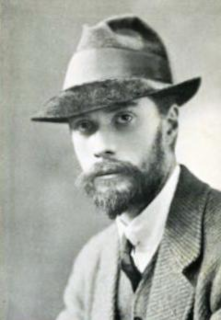
Darrell Edmund Figgis, Irish writer, Sinn Féin activist and independent parliamentarian in the Irish Free State, dies in London on October 27, 1925. The little that has been written about him has attempted to highlight how thoroughly his memory and works have been excised from Irish popular culture.
Figgis is born at Glen na Smoil, Palmerstown Park, Rathmines in Dublin, on September 17, 1882, the son of Arthur William Figges, tea merchant, and Mary Anne Deane. While still an infant, his family emigrates to Calcutta, India. There his father works as an agent in the tea business, founding A. W. Figgis & Co. They return when he is ten years of age, though his father continues to spend much of his time in India. As a young man he works in London at the tea brokerage owned by his uncle, and it is at this time that he begins to develop his interest in literature and literary criticism.
In 1910 Figgis, with the help of G. K. Chesterton, who wrote the introduction to his first book of verse, joins the Dent publishing company. He moves to Achill Island in 1913 to write, learn the Irish language and gain an appreciation of Irish culture, as perceived by many of his contemporaries to uniquely exist on the western seaboard. On his detention following the 1916 Easter Rising, he and the publishing house parted company. Subsequently, he establishes his own firm in which he republishes the works of William Carleton and others.
Figgis joins the Irish Volunteers in Dublin in 1913 and organises the original Battalion of Volunteers in Achill, where he had built a house. While in London, he is contacted by The O’Rahilly, who acquaints him with the arms dealers who had supplied the Ulster Volunteers. In this way he becomes part of the London group that discusses the financing and supply of German rifles for the Volunteers. He travels with Erskine Childers, initially to Belgium and from there to Germany, to make the purchase of the army surplusMauser rifles. He then charters the tug Gladiator, from which the arms are transferred at sea to the Childers’ yacht Asgard and Conor O’Brien‘s Kelpie.
At this time the Royal Navy is patrolling the Irish Sea in anticipation of imminent war with Germany, and Figgis is tasked with taking a motorboat to Lambay Island to signal to the Asgard the all-clear. By his own account, he is unable to persuade the skipper of the pilot vessel to put to sea as one of the worst storms in many years is raging. Due to luck and the skill of the crews, the three over-laden yachts arrive at their destinations. Figgis, accompanied by Seán McGarry, watch Asgard helplessly from Howth pier until Erskine decides to take a calculated risk and sails into the harbour. Against the odds, the conspiracy to buy rifles in Germany and land them safely in Ireland has succeeded. A large party of Volunteers, on their way to Dublin with rifles and ammunition is confronted by a detachment of the King’s Own Scottish Borderers and Dublin Metropolitan Police. With their route blocked, Figgis and Thomas MacDonagh engage the officers in an attempt to distract them.
Although Figgis does not participate in the 1916 Easter Rising, he is arrested and interned by the British authorities between 1916 and 1917 in Reading Gaol. After his release, he returns to Ireland. At the 1917 Sinn Féin Ardfheis he and Austin Stack are elected Honorary Secretaries of the party. The conference sees Éamon de Valera replace Arthur Griffith as President of the party. Shortly after, Figgis is one of four recently released internees who travels to the South Longford constituency to campaign for Joseph McGuinness in the by-election caused by the death of John Phillips. The overwhelming victory of the Sinn Féin candidate over the Irish Parliamentary Party (IPP) nominee marks the beginning of the eclipse of the latter party by the former party. In May 1918, Figgis is arrested for his alleged part in the spurious German Plot a second time and again deported to England. In 1918, he becomes editor of the newspaper The Republic.
From September 1919 to 1921 Figgis heads the Commission of Inquiry into the Resources and Industries of Ireland. At this time a serious rift between Figgis and Michael Collins, then Minister for Finance, becomes a matter of public record. This close attention of Collins will pursue Figgis in his later activities on the Constitution Committee. While he is participating in a Dáil Court at Carrick-on-Shannon, the proceedings are interrupted by a British Army raid. An officer named Captain Cyril Crawford summarily condemns Figgis and Peadar Kearney to be hanged. He orders rope for the purpose, but another officer intervenes and Keaney and Figgis are set free.
Figgis supports the Anglo-Irish Treaty. He is extremely critical of the Collins/De Valera Pact for the June 1922 Irish general election which is an attempt to avoid a split in the Sinn Féin party and, more importantly, in the Irish Republican Army (IRA). On May 25, 1922, he attends a meeting of the executive council of the Farmers’ Union and representatives, of business interests, and encourages them to put forward candidates in constituencies where anti-Treaty candidates might otherwise head the poll. As he is a member of the Sinn Féin Ard Chomhairle National Executive at the time, he is expelled from the party.
Soon after the signing of the Treaty, the necessity of quickly drafting a constitution for the proposed Free State becomes apparent. It is intended by Arthur Griffith that Figgis will chair the Constitution Committee, but this proposal is vetoed by Collins who nominates himself for the position specifically to minimise Figgis’ influence. The animosity between Collins and Figgis remained an undercurrent of the project. In the end, Collins decides the job should go to Captain David Robinson, but this did nothing to heal the rift between Figgis and James G. Douglas.
In December 1923, it is decided that a committee be established to investigate the means by which a public radio broadcasting service should be operated in the Free State. A central issue of contention is whether the service should be run and controlled directly by the State or operated commercially by an Irish Broadcasting Company. The latter option, it is suggested, would follow the model adopted in the UK by the establishment of the BBC. Figgis is co-opted onto the committee, and this decision leads to a series of allegations resulting in the new State’s first corruption scandal of which Figgis himself is the focus. The allegations result in his resignation from the Broadcasting committee and the launching of a second enquiry. He strenuously denies any impropriety.
On November 18, 1924, Figgis’s wife Millie commits suicide in the back of a taxi in Rathfarnham using a Webley revolver given to them by Collins following the 1922 assault. A year later, his new love, a 21-year-old Catholic woman named Rita North, dies due to complications when a doctor tries to surgically remove an already dead child. The court, after investigating her death, determines that she died due to peritonitis, an inflammation in the lining of the abdominal cavity. The public, however, jumps to the conclusion that she died in a failed illegal abortion.
Figgis himself commits suicide in a London boarding house in Granville Street on October 27, 1925, just a week after giving evidence at North’s inquest. He had been staying at the Royal Automobile Club until the day before his death, as is usual when he visits London. A small group of mourners comprising close family and friends attend his interment at the Hampstead Cemetery in West Hampstead, London.
The Second Dáil (Irish: An Dara Dáil) is Dáil Éireann as it convenes on August 16, 1921, following the dissolution of the First Dáil. The Second Dáil runs until June 8, 1922.
From 1919 to 1922, Dáil Éireann is the revolutionary parliament of the self-proclaimed Irish Republic. The Second Dáil consists of members elected at the 1921 Irish elections, but with only members of Sinn Féin taking their seats. On January 7, 1922, it ratifies the Anglo-Irish Treaty by 64 votes to 57 which ends the Irish War of Independence and leads to the establishment of the Irish Free State on December 6, 1922.
Since 1919, those elected for Sinn Féin at the 1918 Irish general election had abstained from the House of Commons and established Dáil Éireann as a parliament of a self-declared Irish Republic, with members calling themselves Teachtaí Dála or TDs. In December 1920, in the middle of the Irish War of Independence, the British Government passes the Government of Ireland Act 1920, which enacts partition by establishing two home rule parliaments in separate parts of Ireland. These provisions arise out of discussions held at the Irish Convention held in 1917, from which Sinn Féin abstains. In May 1921 the first elections to the House of Commons of Northern Ireland and the House of Commons of Southern Ireland are held, by means of the single transferable vote. On May 10, 1921, the Dáil passes a resolution that the elections scheduled to take place later in the month in both parts of the country will be “regarded as elections to Dáil Éireann.”
In the elections for Southern Ireland, all seats are uncontested, with Sinn Féin winning 124 of the 128 seats, and Independent Unionists winning the four seats representing the Dublin University. In the 1921 Northern Ireland general election, the Ulster Unionist Party (UUP) wins 40 of the 52 seats, with Sinn Féin and the Nationalist Party winning 6 seats each. Of the six seats won by Sinn Féin in Northern Ireland, five are held by people who had also won seats in Southern Ireland.
The Second Dáil responds favourably to the proposal from King George V on June 22, 1921, for a truce, which becomes effective from noon on July 11, 1921. This is upheld by nearly all of the combatants while the months-long process of arranging a treaty gets under way. The Truce allows the Dáil to meet openly without fear of arrest for the first time since September 1919, when it had been banned and driven underground.
On September 14, 1921, the Dáil ratifies the appointment of Arthur Griffith, Michael Collins, Robert Barton, Eamonn Duggan and George Gavan Duffy as envoys plenipotentiary for the peace conference in England. These envoys eventually sign the Anglo-Irish Treaty on December 6. The debate on the Treaty starts on December 14 and continues until January 7, 1922. On that date, the Dáil approves the treaty by 64 in favour to 57 against. As the leader of the anti-Treaty minority, de Valera resigns as President. He allows himself to be nominated again but is defeated on a vote of 60–58. He is succeeded as president by Arthur Griffith. The anti-Treaty deputies continue to attend the Dáil, with de Valera becoming the first Leader of the Opposition in the Dáil.
The ratification specified by the Treaty is by “a meeting summoned for the purpose of the members elected to sit in the House of Commons of Southern Ireland.” The Dáil vote does not fulfil this because four unionists are absent and one Northern Ireland member is present. The requisite approval comes at a separate meeting on January 14, 1922, attended by the unionists and boycotted by anti-Treaty TDs. The meeting also approves a Provisional Government led by Collins, which runs in parallel to Griffith’s Dáil government and with overlapping membership. The Government of Ireland Act 1920 requires the Commons to be summoned by the Lord Lieutenant and its members to take an oath of allegiance to the king, whereas the meeting on January 14 is summoned by Griffith and the members present do not take an oath.
Under the terms of the Treaty, a Constituent Assembly is to be elected to draft a Constitution for the Irish Free State to take effect by December 6, 1922. The assembly is also to serve as a “Provisional Parliament” to hold the Provisional Government responsible. This election is held on June 16, 1922, pursuant to both a resolution by the Second Dáil on May 20 and a proclamation by the Provisional Government on 27 May 27.
The Third Dáil is elected at the general election held on June 16, 1922. This election is required to be held under the Anglo-Irish Treaty signed on December 6, 1921.
(Pictured: Some members of the Second Dáil at the Grosvenor Hotel in London, seated (L to R) Éamon de Valera and Arthur Griffith, National Library of Ireland, NPA-RPH-10)
On July 30, 1919, the first assassination authorised by Michael Collins is carried out by The Squad, also known as the Twelve Apostles, when Detective Sergeant “the Dog” Smith is shot near Drumcondra, Dublin.
On April 10, 1919, the First Dáil announces a policy of ostracism of Royal Irish Constabulary (RIC) men. At the time Sinn Féin official policy is against acts of violence. Boycotting, persuasion and mild intimidation succeed against many officers. However, others escalate their activities against republicans and in March 1920 Collins asks Dick McKee to select a small group to form an assassination unit.
When The Squad is formed, it comes directly under the control of the Director of Intelligence or his deputy and under no other authority. The Squad is commanded by Mick McDonnell.
The original “Twelve Apostles” are Mick McDonnell, Tom Keogh, Jimmy Slattery, Paddy Daly, Joe Leonard, Ben Barrett, Vincent Byrne, Sean Doyle, Paddy Griffin, Eddie Byrne, Mick Reilly and Jimmy Conroy. After some time, The Squad is strengthened with members Ben Byrne, Frank Bolster, Mick Keogh, Mick Kennedy, Bill Stapleton and Sam Robinson. Owen Cullen, a member of 2nd Battalion, is driver for a short time, and Paddy Kelly of County Clare for a short time. They are employed full-time and received a weekly wage.
Sometimes, as occasion demands, The Squad is strengthened by members of the IRA Intelligence Staff, the Active Service Unit, munition workers and members of the Dublin Brigade, TipperaryFlying Column men, Dan Breen, Séumas Robinson, Seán Treacy and Seán Hogan, and also Mick Brennan and Michael Prendergast of County Clare. The IRA Intelligence Staff consists of the Director of Intelligence Michael Collins, the Deputy Director of Intelligence Liam Tobin, the Second Deputy Director of Intelligence Tom Cullen, the Third Director of Intelligence Frank Thornton, and members Joe Dolan, Frank Saurin, Ned Kelleher, Joe Guilfoyle, Paddy Caldwell, Paddy Kennedy, Charlie Dalton, Dan McDonnell and Charlie Byrne. The munitions workers include Mat Furlong, Sean Sullivan, Gay McGrath, Martin O’ Kelly, Tom Younge and Chris Reilly.
Other members include Mick Love, Gearoid O’Sullivan, Patrick Caldwell, Charlie Dalton, Mick O’Reilly, Sean Healy, James Ronan, Paddy Lawson, John Dunne, Johnny Wilson and James Heery. Seán Lemass and Stephen Behan, the father of Irish writers Brendan and Dominic Behan, have also been listed as members of the Apostles. There is no hard evidence to support the inclusion of many of the names, but those who subsequently serve in the Irish Army have their active service recorded in their service records held in the Military Archives Department in Cathal Brugha Barracks, Rathmines. Andrew Cooney is also reported to have been associated with The Squad. Stephen Behan’s involvement is first made public in 1962, when the BBC broadcasts an episode of This Is Your Life dedicated to Behan. During the broadcast, remaining members of the squad joined Behan on the set of the show.
Following “The Dog” Smith’s assassination, The Squad continues to target plainclothes police, members of the G Division of the Dublin Metropolitan Police, and, occasionally, problematic civil servants. Organisationally it operates as a subsection of Collins’ Intelligence Headquarters. Two of the executions by The Squad are the killing on January 21, 1920, of RIC Inspector William Redmond of the DMP “G” Division and on March 2, 1920, a British double agent John Charles Byrnes.
One of the Apostles’ particular targets is the Cairo Gang, a deep-cover British intelligence group, so called since it has either been largely assembled from intelligence officers serving in Cairo or from the Dublin restaurant called The Cairo, which the gang frequents. Sir Henry Wilson brings in the Cairo Gang in the middle of 1920, explicitly to deal with Michael Collins and his organization. Given carte blanche in its operations by Wilson, the Cairo Gang adopts the strategy of assassinating members of Sinn Féin unconnected with the military struggle, assuming that this will cause the IRA to respond and bring its leaders into the open.
The most well-known operation executed by the Apostles occurs on what becomes known as Bloody Sunday, November 21, 1920, when British MI5 officers, linked to the Cairo Gang and significantly involved in spying, are shot at various locations in Dublin with fourteen killed and six wounded. In addition to the The Squad, a larger number of IRA personnel are involved in this operation. The only IRA man captured during the operation is Frank Teeling. In response to the killings, the Black and Tans retaliate by shooting up a Gaelic football match between Dublin and Tipperary at Croke Park, the proceeds from which are for the Irish Republican Prisoners Fund. Fourteen civilians are killed including one of the players, Michael Hogan, and 68 are wounded. The Hogan stand at Croke Park is named after Hogan.
The elimination of the Cairo Gang is seen in Dublin as an intelligence victory, but British Prime MinisterDavid Lloyd George comments dismissively that his men “… got what they deserved, beaten by counterjumpers…”. Winston Churchill adds that they were “.. careless fellows … who ought to have taken precautions.”
Some members of The Squad are hanged in 1921 for the killings on Bloody Sunday, including Thomas Whelan and Patrick Moran. Moran had killed a vet, Patrick MacCormack, who seems to have been an innocent victim.
In May 1921, after the IRA’s Dublin Brigade takes heavy casualties during the burning of the Custom House, The Squad and the Brigade’s Active Service Unit are amalgamated into the Dublin Guard, under Paddy Daly. Under the influence of Daly and Michael Collins, most of the Guard take the Free State side and join the National Army in the Irish Civil War of 1922–23. During this conflict some of them are attached to the Criminal Investigation Department and are accused of multiple assassinations of Anti-Treaty fighters. They are also involved in several atrocities against Republican prisoners, particularly after the death of Collins, due to many of them having personal ties with him.
Bill Stapleton goes on to become a director in Bord na Móna, Charles Dalton and Frank Saurin become directors in the Irish Sweepstakes. In October 1923, Commandant James Conroy is implicated in the murder of two Jewish men, Bernard Goldberg and Emmanuel ‘Ernest’ Kahn. He avoids arrest by fleeing to Mexico, returning later to join the Blueshirts. A later application for an army pension is rejected. The killings are the subject of a 2010 investigative documentary by RTÉ, CSÍ: Murder in Little Jerusalem.
The Irish Citizen Army also becomes involved in the battle, supporting the anti-Treaty IRA in the O’Connell Street area. The fighting begins with an assault by Provisional Government forces on the Four Courts building and ends in a decisive victory for the Provisional Government.
On April 14, 1922, about 200 Anti-Treaty IRA militants, with Rory O’Connor as their spokesman, occupy the Four Courts in Dublin, resulting in a tense stand-off. They want to spark a new armed confrontation with the British, which they hope will bring down the Anglo-Irish Treaty, unite the two factions of the IRA against their former common enemy and restart the fight to create an all-Ireland Irish Republic. At the time the British Army still has thousands of soldiers concentrated in Dublin, awaiting evacuation.
Winston Churchill and the British cabinet have been applying pressure on the Provisional Government to dislodge the rebels in the Four Courts, as they consider their presence a violation of the Treaty. Such pressure falls heaviest on Michael Collins, President of the Provisional Government Cabinet and effective head of the regular National Army. Collins, a chief IRA strategist during the War of Independence from Britain, has resisted giving open battle to the anti-Treaty militants since they occupied Four Courts in April. His colleagues in the Provisional Government Cabinet, including Arthur Griffith, agree that Collins must mount decisive military action against them.
In June 1922 the Provisional Government engages in intense negotiations with the British Cabinet over a draft Constitution that seeks to avert the impending civil war. They particularly seek to remove the requirement of an oath to the British Crown by all members of the Dublin government, a key point of contention with anti-Treaty partisans. However, the conservative British Cabinet refuses to cooperate. The pro-treaty element of Sinn Féin wins the elections on June 16.
Following the assassination of Sir Henry Wilson in London on June 22, 1922, and the arrest by Four Courts troops of National Army Deputy Chief of Staff Gen. J. J. “Ginger” O’Connell, British pressure on the Provisional Government intensifies. The British now threaten to invade and re-occupy all of Ireland. On June 27 the Provisional Government Cabinet agrees on an ultimatum to the Four Courts garrison to evacuate or face immediate military action.
Churchill offers a loan of British artillery for use by the National Army, along with 200 shells from their store of 10,000 at Kilmainham, three miles away. It is possible that some British special troops are also covertly loaned. Two 18-pounder field guns are placed on Bridge Street and Winetavern Street, across the River Liffey from the Four Courts complex. After an ultimatum is delivered to the anti-Treaty garrison in the early hours of June 28, the National Army commences the bombardment of Four Courts.
No authoritative record exists regarding the order to commence bombardment. Historians tend to attribute the order to Collins, but some biographers dispute this. Anti-Treaty survivors allege that they are preparing for an 8:00 a.m. evacuation when the bombardment begins at 4:00 a.m.
Inside the building are 12 members of the Irish Republican Army Executive, including Chief of StaffJoe McKelvey, Director of Engineering Rory O’Connor, Quartermaster General Liam Mellows and Director of Operations Ernie O’Malley. The garrison consists of roughly 180 men drawn from the 1st and 2nd Battalions of the IRA’s 1st Dublin Brigade, commanded by Commandant Paddy O’Brien, armed for the most part only with small arms apart from one captured armoured car, which they name “The Mutineer.” The members of the IRA Army Executive are the political leaders of the garrison but serve as common soldiers under the command of O’Brien. The Anti-Treaty side fortifies the Four Courts to some extent, planting mines around the complex and barricading the doors and windows, but their leadership orders them not to fire first, in order to retain the moral high ground, and so the Free State troops are allowed to surround the Four Courts.
After the first day’s bombardment proves ineffective, the British give the Free State two more 18-pounder cannon and proffer 60-pounder howitzers along with an offer to bomb the Four Courts from the air. Collins turns down the latter two offers because of the risk of causing heavy civilian casualties. On June 29, Free State troops storm the eastern wing of the Four Courts, losing three killed and 14 wounded and taking 33 prisoners. The republicans’ armoured car is disabled and abandoned by its crew. Early the next day O’Brien is injured by shrapnel and O’Malley takes over military command in the Four Courts. By this time the shelling has caused the Four Courts to catch fire. In addition, orders arrive from Oscar Traynor, the anti-treaty IRA commander in Dublin, for the Four Courts garrison to surrender, as he cannot reach their position to help them. O’Malley rules this order invalid, as the Four Courts is a GHQ operation. However, in view of the rapidly deteriorating situation, at 3:30 p.m. on June 30, O’Malley surrenders the Four Courts to Brigadier GeneralPaddy Daly of the Free State’s Dublin Guard unit. Three of the republican garrison die in the siege.
Several hours before the surrender, the Public Record Office of Ireland (PRO) block located in the western block of the Four Courts, which is used as an ammunition store by the Four Courts garrison, is the centre of a huge explosion, destroying Irish state records going back to the Anglo-Norman conquest. Forty advancing Free State troops are badly injured. Assigning blame for the explosion remains controversial. It is alleged by the National Army Headquarters that the Anti-treaty forces deliberately booby-trapped the PRO to kill advancing Free State troops. Tim Healy, a government supporter, later claims that the explosion is the result of land mines laid before the surrender, which explode after the surrender. However, a study of the battle concludes that the explosion is caused by fires ignited by the shelling of the Four Courts, which eventually reach two truckloads of gelignite in the munitions factory. A towering mushroom cloud rises 200 feet over the Four Courts.
At this stage in the battle troops on each side still have a sense of kinship with the other, as most of them had fought together in the Irish Republican Army during the Irish War of Independence. By appealing to friends on the Free State side, several anti-Treaty leaders among the Four Courts garrison, notably Ernie O’Malley and Seán Lemass, escape from captivity to continue the fight.
Despite the Free State force’s success in taking the Four Courts, fighting continues in Dublin until July 5. On June 29 anti-Treaty IRA units from the Dublin Brigade led by Oscar Traynor have occupied O’Connell Street, part of Parnell Square, York Street and some of other locations to try to distract Free State attention from their attack on the Four Courts. Not all the IRA units in the capital are prepared to fight against the new Irish government, however, and their numbers are probably about 500 throughout the city. Their numbers are supplemented by about 150 Citizen Army men and women who bring with them arms and ammunition dumped since the insurrection of Easter 1916.
The republicans occupy the northeastern part of O’Connell Street, with their strong point at “the block,” a group of buildings that the Anti-Treatyites had connected by tunneling through the walls. They had also taken over the adjoining Gresham, Crown, Granville and Hammam hotels. Their only position on the western side of the street is in the YMCA building. Additionally, they have an outpost south of the River Liffey at the Swan Pub on Aungier Street. Oscar Traynor apparently hopes to receive reinforcements from the rest of the country, but only Anti-Treaty units in Belfast and Tipperary reply and both of them arrive too late to take part in the fighting.
The Provisional Government troops, commanded by General Tom Ennis, start by clearing out the outlying anti-treaty garrisons, which is accomplished by July 1. They then draw a tighter cordon around O’Connell Street. Artillery is used to drive the Anti-Treaty fighters out of positions on Parnell Street and Gardiner Street, which gives the Free State troops a clear field of fire down O’Connell Street.
The republican outpost in the YMCA is eliminated when Free State troops tunnel underneath it and detonate a bomb. Traynor’s men in “the block” hold out until artillery is brought up, under the cover of armored cars, to bombard them at point-blank range. Incendiary bombs are also planted in the buildings. Traynor and most of his force make their escape when the buildings they are occupying catch fire. They mingle with civilian crowds and make their way to Blessington.
Left behind is Republican leader Cathal Brugha and a rear guard of 15 men, who stay behind in the Hammam Hotel after Traynor, and most other IRA men have left. At 5:00 p.m. on July 5, when the fires make the hotel untenable, Brugha orderes his men to surrender. He, however, stays behind, only to emerge from the building alone, armed with a revolver. He is shot in the thigh by Free State troops and dies later from blood loss. There are some further sporadic incidents of fighting around the city as Free State troops disperse anti-treaty IRA groups.
Cathal Brugha is the last casualty in the Battle of Dublin, which costs the lives of at least 80 people (15 anti-Treaty IRA Volunteers, 29 National Army soldiers, one British Royal Air Force serviceman and 35 civilians) and over 280 wounded. In addition, the Free State takes over 450 Republican prisoners. The high civilian casualties are doubtless the result of the use of heavy weapons, especially artillery, in a densely populated urban area.
When the fighting in Dublin dies down, the Free State government is left firmly in control of the Irish capital and the anti-treaty forces disperse around the country. Roundups after the fighting result in more Republican prisoners and the death of prominent anti-Treaty activist Harry Boland who is shot dead in Skerries, Dublin, on July 31.
Oscar Traynor, Ernie O’Malley and the other anti-Treaty fighters who escape the fighting in Dublin regroup in Blessington, around 30 km southwest of the city. An anti-Treaty IRA force from County Tipperary had arrived there but too late to participate in the Dublin fighting. Instead, this force heads south and takes a string of towns, including Enniscorthy and Carlow, but quickly abandons them when faced with superior Free State forces. Most of the Republicans then retreat further south to the so-called Munster Republic, territory southwest of a line running from Limerick to Waterford. This in turn is taken by the Free State in an offensive from July to August 1922.
Four of the Republican leaders captured in the Four Courts, Rory O’Connor, Liam Mellows, Joe McKelvey and Richard Barrett, are later executed by the government in reprisal for the Anti-Treaty side’s killing of TDSeán Hales. The street where Cathal Brugha is killed is later renamed Cathal Brugha Street in his honour.
Béaslaí is born Percy Frederick Beazley in Liverpool, England on February 15, 1881, to Irish Catholic parents, Patrick Langford Beazley, originally from Killarney, County Kerry, and Nannie Hickey, from Newcastle West, County Limerick. During his summer holidays in his younger years, he spends time in Ireland (near Kenmare, County Kerry) with his paternal uncle, Father James Beazley, where he begins to learn the Irish language. He is educated at St. Francis Xavier’s College in Liverpool, where he develops his keen interest in Irish. By the time he is aged 17 his Irish proficiency is exceptional.
After finishing his education at St. Francis Xavier’s, Béaslaí is encouraged to begin Irish poetry by Tadhg Ó Donnchadha. He follows his father’s footsteps into journalism, initially working for the local Wallasey News. In 1906 he moves to Dublin, and within a year becomes a freelance writer for the Irish Peasant, Irish Independent, Freeman’s Journal and Express. He is offered a permanent position with Independent Newspapers, as assistant leader writer and special reporter for the Dublin Evening Telegraph. He writes regularly for the Freeman’s Journal, including a daily half-column in Irish.
After his early introduction to Irish poetry Béaslaí becomes involved in staging Irish-language amateur drama at the Oireachtas annual music festival. He begins to write both original works and adaptations from foreign languages. One of these works, Eachtra Pheadair Schlemiel (1909), is translated from German into Irish.
Later Béaslaí continues to write poetry, such as the collection “Bealtaine 1916” agus Dánta Eile (1920), and short stories such as “Earc agus Aine agus Scéalta Eile.” Between 1913 and 1939 he writes many plays, including Cliuche Cartaí (1920), An Sgaothaire agus Cúig Drámaí Eile (1929), An Danar (1929) and An Bhean Chródha (1931). He writes two books about his comrade Michael Collins: Michael Collins and the Making of a New Ireland (2 volumes, 1926) and Michael Collins: Soldier and Statesman (1937).
Béaslaí’s works revolve around the Irish language movement and the Irish Republican Army (IRA), focusing on the independence struggle of Ireland. He writes about these topics in newspapers such as the Standard and The Kerryman. His most notable work in newspapers during his later life includes his contribution to the Irish Independent, which publishes a section called ‘A Veteran Remembers’ five days a week from May 16 to June 1957, as well as a weekly section called ‘Moods and Memories’ on Wednesdays from May 24, 1961, to June 16, 1965.
One of the awards Béaslaí gains during his career is on August 14, 1928, a gold medal at the Tailteann Literary Awards. While in Dublin, he joins the Keating Branch of the Gaelic League, and after he moves to Ireland, he begins using the Irish form of his name, Piaras Béaslaí, rather than Percy Beazley.
Béaslaí is a founding member of the Irish Volunteers in 1913. In January 1916 he serves as a courier for political activist and revolutionary leader Seán Mac Diarmada. By the time of the Easter Rising that year, he is deputy commanding officer of the 1st Dublin Battalion. In an audio recording to which he contributes in 1958, he details his experience in the Rising, describing the rebels assembling before noon in Blackhall Street at battalion headquarters. After midday they march out to the Four Courts, erecting barricades as they do so. The Four Courts is his main station.
In the audio, Béaslaí recalls a green flag with a gold harp in the centre. This is the non-Sinn Féin flag at the time. He is in direct charge of the Four Courts area, and at one point during the fight he orders a complete blackout. He recalls, “things were going badly for the English soldiers” and describes the whole event as “a weird experience.” He remembers the streets being lit up with fires in the darkness as if it were bright as day. He speaks of the intensity of the firing line and then how it suddenly ceases on the Friday. He remembers falling asleep and when he awakens being presented with Patrick Pearse‘s order to surrender. The rebels are brought to Richmond Barracks. He then spends fifteen months in English prisons.
Béaslaí serves three years of penal servitude divided between a stringent HM Prison Portland and a more lenient HM Prison Lewes. He is then imprisoned two times within four months during 1919, both terms ending in celebrated escapes. After his final prison release, Michael Collins approaches him about editing An tOglach, the Irish Volunteer newspaper. This sees communication between GHQ and local volunteers drastically improve.
Later, Béaslaí becomes director of publicity for the Irish Republican Army, and at the 1918 Irish general election he is elected to the First Dáil as Sinn Féin MP for East Kerry. Sinn Féin MPs elected in the Westminster elections of 1918 refuse to recognise the Parliament of the United Kingdom, and instead assemble the following January at the Mansion House in Dublin as a revolutionary parliament, Dáil Éireann. Béaslaí is noted for his translation of the democratic programme of the First Dáil, which he reads aloud at the inaugural sitting.
Béaslaí and Con Collins share the distinction of having been elected in three Irish general elections unopposed by any other candidates.
During Béaslaí’s time in London, he gives a lot of his time to the Gaelic League. In the Keating branch of the league, in Ireland, he develops an interest in the IRB. Cathal Brugha, a branch member, asks him to join the IRB. The Keating branch is where Béaslaí meets Michael Collins, eventually introducing Collins to his cousin and fellow branch member, Elizabeth Mernin. He is also instrumental in establishing An Fáinne, an Irish-speaking league whose members vow to speak solely Irish among themselves and wear a membership badge of a circle. This coincides with his involvement in the IRB. His love of the Irish language gives him an opportunity to delve into his other hobbies. He writes for Banba, an Irish journal published by the Gaelic League. He is able to express his love for theatre, in the Gaelic League, forming a group of men called “Na hAisteoirí.”