seamus dubhghaill

Promoting Irish Culture and History from Little Rock, Arkansas, USA


Leave a comment

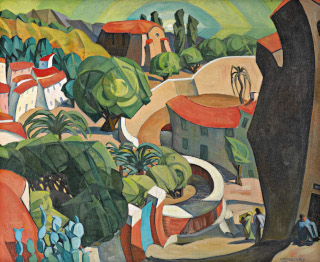
Birth of Mary Swanzy, Landscape & Genre Artist

Mary Swanzy, Irish landscape and genre artist, is born in Dublin on February 15, 1882. Noted for her eclectic style, she paints in many styles including cubism, futurism, fauvism, and orphism, she is one of Ireland’s first abstract painters.

Swanzy is the second of three daughters of Sir Henry Rosborough Swanzy, an eye surgeon, and his wife Mary (née Denham). She attends Alexandra College, Earlsfort Terrace, a finishing school at the Lycée in Versailles, France, and a day school in Freiburg, Germany. This education means that she is fluent in French and German. She goes on to take art classes at Mary Manning‘s studio, under the direction of John Butler Yeats. Manning encourages her to study modelling with John Hughes at the Dublin Metropolitan School of Art.

Living within walking distance of the National Gallery of Ireland, she spends a lot of time studying and copying the great masters. Her first exhibition is with the Royal Hibernian Academy (RHA) in 1905 with Portrait of a child, continuing to exhibit portraits every year until 1910. In 1905 she goes to Paris and works at the Académie Delécluse, an atelier-style art school. She goes on to attend the studio of Antonio de La Gándara in 1906 and takes classes at Académie de la Grande Chaumière and Académie Colarossi. While in Paris she is exposed to the works of Gauguin, Matisse, and Picasso, which make a lasting impression on her.

On her return to Dublin, Swanzy paints portraits and genre scenes and holds her first show at Mill’s Hall, Merrion Row in 1913. She holds another show there in 1919, where she exhibits nearly 50 pieces. This exhibition is reviewed by Sarah Purser who notes the lack of melancholy and light optimism in Swanzy’s Irish landscapes. Swanzy paints in a number of styles, often reflecting the major art developments in Paris.

After the deaths of her parents, she is financially independent and can travel, spending her time between Dublin and Saint-Tropez during World War I while continuing to paint. She also exhibits with the Société des Artistes Indépendants in 1914 and 1916, being elected to the committee in 1920. While visiting her sister who is involved with the Protestant relief mission in Yugoslavia and Czechoslovakia, she paints landscapes, village life, and peasant scenes. These works are shown in the autumn of 1921 in the Dublin Painters’ Gallery with six other artists including Jack Butler Yeats, Paul Henry, and Clare Marsh with whom she shares a studio.

Swanzy begins to travel to more exotic countries from the 1920s, Honolulu around 1923, and later Samoa. As a result, she paints local tropical flowers, trees, and native women, with a palette and style similar to that of Fauvism. She stays for a time in Santa Barbara, California, working in a local studio and exhibiting some of her Samoan work at the Santa Barbara Arts Club Gallery. She returns to Ireland in February 1925 and exhibits three of her Samoan paints at the RHA, and 14 at her one-woman show in the Galerie Bernheim-Jeune, Paris in October 1925. Gertrude Stein writes her to congratulate her on her Paris exhibition.

In the mid 1920s Swanzy settles in Blackheath, London, making regular trips to Dublin and abroad. In 1932 Purser holds an exhibition of Swanzy’s work for invited guests in her house. At this time her painting is influenced by orphism and is reviewed positively. Her work becomes more allegorical in later years, with The message in the Hugh Lane Gallery demonstrating this. During World War II she stays with her sister in Coolock for three years. In 1943, she holds a one-woman show at the Dublin Painters’ Gallery, and is also featured at the first Irish Exhibition of Living Art. She is exhibited at St. George’s Gallery, London in 1946 along with Henry Moore, Marc Chagall, and William Scott.

Swanzy is made an honorary member of the RHA in 1949, showing with them in 1950 and 1951. She does not exhibit in Ireland for a number of years, but the Hugh Lane Gallery holds a major retrospective of her work in 1968. Following this she holds two one-woman shows at the Dawson Gallery in 1974 and 1976. In 1975 she is featured at the Cork ROSC art exhibition and resumes showing with the RHA. She continues to paint until her death at her home in London on July 7, 1978.

In 1982 the Taylor Galleries holds an exhibition to mark the centenary of Swanzy’s birth. More recently she is featured in the Irish Museum of Modern Art (IMMA) 2013 exhibition Analysing Cubism. From October 2018-February 2019, also in IMMA, she is the subject of the solo exhibition Mary Swanzy Voyages.

(Pictured: Sunlit Landscape, oil-on-canvas, by Mary Swanzy)


Leave a comment

Death of Artist Harry Aaron Kernoff

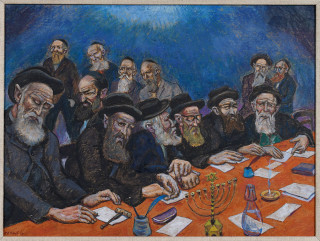
Harry Aaron Kernoff, Irish artist in oils and woodcuts, dies in Dublin on December 25, 1974. Of London/Russian extraction, he is primarily remembered for his sympathetic interest in Dublin and its people. He depicts street and pub scenes, as well as Dublin landmarks with sympathy and understanding. This is particularly evident in his woodcuts.

Born in London on January 10, 1900 to a Russian Jewish father and Spanish mother, Kernoff moves to Dublin in 1914 and becomes a leading figure in Irish modernism. While working as an apprentice in his father’s furniture business, which leads to his woodcuts, he takes night classes at the Dublin Metropolitan School of Art. There, in 1923, he wins the Taylor scholarship and goes on to exhibit at the Royal Hibernian Academy (RHA) every year from 1926. He is elected RHA in 1936.

Influenced by Seán Keating, he paints the Irish landscape, genre scenes, and portraits. His work is part of the painting event in the art competition at the 1928 Summer Olympics in Amsterdam. In 1930, he visits the Soviet Union as part of an Irish delegation from the friends of Soviet Russia led by Hanna Sheehy-Skeffington. While visiting, he is influenced by the Association of Artists of Revolutionary Russia.

Kernoff is famously associated with Davy Byrne’s pub. His paintings and woodcuts of Davy Byrne’s pub are documents of his friendship with the original owner. While living in his adopted Dublin Jewish community he produces picture illustrations of his local scenes for a neighbourhood writer and friend, Nick Harris, for his book called Dublin’s Little Jerusalem.

Outside Kernoff’s home in Dublin, where he lives with two unmarried sisters, there is a long-standing sign in the front garden which says “Descendants of the Abravanels.” The Abravanel (or Abrabanel) family is one of the most famous Sephardic Jewish families in history, noted for their large quotas of rabbis, scholars, and members of a variety of scientific and artistic fields, dating from about the 13th century in Lisbon. The emergence of the famous philosopher and scholar Don Isaac Abravanel in the middle of the 16th century brings his works to greater universal recognition.

Kernoff spends the vast majority of his life unappreciated and makes little or nothing from his paintings until a few years before his death, when he begins to be appreciated by contemporary critics. He never marries.


Leave a comment

Death of Irish Artist Sarah Henrietta Purser

sarah-purser-by-john-butler-yeats

Sarah Henrietta Purser, Irish artist mainly noted for her work with stained glass, dies in Dublin on August 7, 1943.

The Purser family had come to Ireland from Gloucestershire in the eighteenth century. Purser is born in Kingstown (now Dún Laoghaire) in County Dublin on March 22, 1848. She is raised in Dungarvan, County Waterford, one of the numerous children of Benjamin Purser, a prosperous flour miller and brewer, and his wife Anne Mallet. She is related to Sir Frederic William Burton, RHA (1816-1900), who is a son of Hannah Mallet. Two of her brothers, John and Louis, become professors at Trinity College Dublin. Her niece Olive Purser, daughter of her brother Alfred, is the first woman scholar at Trinity.

At thirteen Purser attends the Moravian school, Institution Evangélique de Montmirail, Switzerland where she learns to speak fluent French and begins painting. In 1873 her father’s business fails and she decides to become a full-time painter. She attends classes at the Dublin Metropolitan School of Art and joins the Dublin Sketching Club, where she is later appointed an honorary member. In 1874 she distinguishes herself in the National Competition. In 1878 she again contributes to the Royal Hibernian Academy, and for the next fifty years becomes a regular exhibitor, mainly portraits, and shows an average of three works per show.

In 1878-1879, Purser studies at the Académie Julian in Paris where she meets the German painter Louise Catherine Breslau, with whom she becomes a lifelong friend.

Purser becomes wealthy through astute investments, particularly in Guinness, for which several of her male relatives have worked over the years. She is very active in the art world in Dublin and is involved in the setting up of the Municipal Gallery of Modern Art, persuading the Irish government to provide Charlemont House in Parnell Square to house the gallery.

Purser works mostly as a portraitist. Through her talent and energy and owing to her friendship with the Gore-Booths, she is very successful in obtaining commissions. When the Lord Lieutenant of Ireland commissions her to portray his children in 1888, his choice reflects her position as the country’s foremost portraitist. Various portraits painted by Purser are held in the National Gallery of Ireland.

Purser finances An Túr Gloine (The Tower of Glass), a stained-glass cooperative, at 24 Upper Pembroke and runs it from its inauguration in 1903 until her retirement in 1940. Michael Healy is the first of a number of distinguished recruits, such as Catherine O’Brien, Evie Hone, Wilhelmina Geddes, Beatrice Elvery and Ethel Rhind. She is determined the stained-glass workshop should adhere to true Arts and Crafts philosophy. An Túr Gloine archive is held in the Centre for the Study of Irish Art, National Gallery of Ireland.

Purser does not produce many items of stained glass herself. Most of the stained-glass works are painted by other members of the co-operative, presumably under her direction. Two early works are St. Ita (1904) for St. Brendan’s Cathedral, Loughrea and The Good Shepard (1904) for St. Columba’s College, Dublin. Her last stained-glass work is believed to be The Good Shepard and the Good Samaritan (1926) for the Church of Ireland at Killucan, County Westmeath.

Until her death Purser lives for many years in Mespil House, a Georgian mansion with beautiful plaster ceilings on Mespil Road, on the banks of the Grand Canal. Here she is “at home” every Tuesday afternoon to Dublin’s writers and artists. Her afternoon parties are a fixture of Dublin literary life.

Purser dies in Dublin on August 7, 1943, and is buried in Mount Jerome Cemetery beside her brothers John and Louis. Mespil House is demolished after her death and developed into apartments.

Purser is the second woman to sit on the Board of Governors and Guardians, National Gallery of Ireland, 1914-1943. She is made an Honorary Member of the Royal Hibernian Academy in 1890, becoming the first female Associate Member in 1923 and the first female Member in 1924. Also, in 1924 she initiates the movement for the launching of the Friends of the National Collection of Ireland. Archives relating to Sarah Purser are housed in the Centre for the Study of Irish Art, National Gallery of Ireland.

(Pictured: Portrait of Sarah Purser by John Butler Yeats, c. 1880–1885)


2 Comments

Birth of Irish Artist Charles Harper

skellig-arrival-by-charles-harper

Irish artist Charles Harper is born on July 30, 1943, on Valentia Island in County Kerry. He studies at the National College of Art and Design, Limerick School of Art and Design and the Graphic Studio in Dublin. He is taught by Maurice MacGonigal and Seán Keating. He also studies filmmaking in Germany.

Harper exhibits regularly in Ireland and abroad. His paintings are well known for their metaphoric themes, including boats, the human form, landscape and angels usually in painterly expressive form.

Harper is influenced by Francis Bacon and David Hockney which is apparent in his portrait work. In his treatment of the human head, the influence of Bacon is obvious as is the work of the Irish artist Louis Le Brocquy. He is also influenced by the Irish artist Patrick Collins. For Harper the actual act of painting is what matters as he sees the actual process as one of exploration and discovery. He says, “the process, the making excites me more than any end product.”

Harper represents Ireland at International Biennials in many countries throughout his career. He receives many national awards for his painting, including first prize for his work commemorating the 1916 Easter Rising at the Municipal Gallery of Modern Art in Dublin, the Carrols Open Award at the Irish Exhibition of Living Art in Dublin and The Arts councils Bonn an Uachtarain de Hide at the Oireachtas Art Exhibition. More recently he is awarded the BulBulia Award at the Royal Hibernian Academy in 2008.

Harper’s work is included in many important public and private collections including the San Francisco Museum of Modern Art, the Irish Museum of Modern Art and the Irish Arts Council. He is also a member of Aosdána and the Royal Hibernian Academy.

“Painting being a cultural and creative activity should be accessible to all. Though it may also confuse the viewer. I find this totally understandable and acceptable, as art should challenge our perception and established aesthetic.”

(Pictured: Skellig Arrival, acrylic on linen by Charles Harper)


Leave a comment

Birth of Dónal Lunny, Irish Folk Musician & Producer

donal-lunny

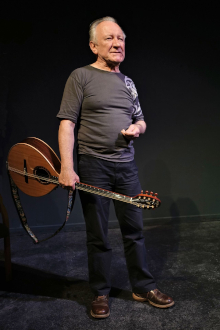
Dónal Lunny, Irish folk musician and producer, is born on March 10, 1947, in Tullamore, County Offaly. He plays left-handed guitar and bouzouki, as well as keyboards and bodhrán. As a founding member of popular bands Planxty, The Bothy Band, Moving Hearts, Coolfin, Mozaik, LAPD, and Usher’s Island, he has been at the forefront of the renaissance of Irish traditional music for over five decades.

Lunny attends secondary school at Newbridge College and, in 1963, joins the Patrician Brothers’ school for the Intermediate Certificate year. As a teenager, he joins an occasional trio called Rakes of Kildare, with his elder brother Frank and Christy Moore. They play mostly in pubs and are also booked for a couple of gigs, one at Hugh Neeson’s pub in Newbridge for Easter Monday in 1966.

In 1965, Lunny enrolls at Dublin‘s National College of Art & Design where he studies Basic Design and Graphic Design. He also develops an interest in metalwork leading him to become a skilled gold-and-silversmith, although he only practises the craft for a short time before devoting his energies fully to music. During his time in Dublin, he plays in a band called The Parnell Folk, with Mick Moloney, Sean Corcoran, Johnny Morrissey and Dan Maher.

When Moving Hearts breaks up in 1985, Lunny diversifies and becomes a producer. He is closely involved in the establishment of a new Irish record label, Mulligan Records (acquired in 2008 by Compass Records), and produces and plays on many of its early releases.

Lunny is the producer and music director of the soundtrack of Bringing It All Back Home, a BBC Television documentary series charting the influence of Irish music throughout the world. He produces albums for Paul Brady, Elvis Costello, Indigo Girls, Sinéad O’Connor, Clannad, Maurice Lennon, Baaba Maal, and Five Guys Named Moe. He appears on the compilation albums The Gathering (1981) and Common Ground (1996). In 1994, he produces Irish Australian singer/songwriter Mairéid Sullivan’s first recording, Dancer.

Lunny pushes new boundaries with his band Coolfin (1998) which includes uilleann piper John McSherry. He appears at the 2000 Cambridge Folk Festival, and the album that commemorates it. In 2001 he collaborates with Frank Harte on the album My Name is Napoleon Bonaparte. He produces the album Human Child (2007) by Faeroese Eivør Pálsdóttir, which is published in two versions, one English and one Faeroese.

As an arranger, Lunny works for The Waterboys, Fairground Attraction and Eddi Reader. Journey (2000) is a retrospective album. During 2003–2005, he is part of the reunited Planxty concert tour. He also produces Jimmy MacCarthy‘s album entitled Hey-Ho Believe, which is released on November 12, 2010.

Lunny is the brother of musician and producer Manus Lunny. He has a son, Shane, whose mother is singer Sinéad O’Connor.

(Pictured: Dónal Lunny at the Craiceann Bodhrán Festival 2016, Inis Oirr)


Leave a comment

Birth of Grace Gifford Plunkett, Artist & Irish Republican

grace-gifford-plunkett

Grace Evelyn Gifford Plunkett, artist and cartoonist who is active in the Republican movement, is born in Rathmines, Dublin on March 4, 1888. She marries her fiancé, Joseph Plunkett, in Kilmainham Gaol only a few hours before he is executed for his part in the 1916 Easter Rising.

Gifford is the second youngest of 12 children born to Frederick Gifford, a solicitor and a Roman Catholic, and Isabella Julia Burton Gifford, a Protestant. The boys are baptised as Catholics and the girls as Protestant, but effectively the children are all raised as Protestants with the girls attending Alexandra College in Earlsfort Terrace.

At the age of 16, Gifford goes to the Dublin Metropolitan School of Art, where she studies under the Irish artist William Orpen. Orpen regards her as one of his most talented pupils. Around this time, her talent for caricature is discovered and developed. In 1907 she attends the course in Fine Art at the Slade School of Fine Art, London.

Gifford returns to Dublin in 1908 and, with great difficulty, tries to earn a living as a caricaturist, publishing her cartoons in The Shanachie, Irish Life, Meadowstreet and The Irish Review, which is edited from 1913 by Joseph Plunkett. She considers emigrating but gives up the idea. Nora Dryhurst, a journalist from London, brings her to the opening of the new bilingual school Scoil Éanna in Ranelagh, Dublin. It is here that she meets Plunkett for the first time. He is a friend of her brother-in-law, another of the future leaders of the 1916 Easter Rising, Thomas MacDonagh, who is married to her sister Muriel.

Gifford’s growing interest in the Roman Catholic religion leads to the deepening of Gifford and Plunkett’s relationship as she begins to discuss Catholic mystical ideas with him. Plunkett proposes to her in 1915, and she accepts and takes formal instruction in Catholic doctrine. She is received into the Catholic Church in April 1916. The couple plans to marry on Easter Sunday that year, in a double wedding with his sister and her fiancé.

After the Rising, Gifford’s brother-in-law Thomas MacDonagh is shot with Patrick Pearse and Thomas Clarke by firing squad on May 3. That day, she hears that Plunkett is to be shot at dawn. She purchases a ring in a jeweler’s shop in Dublin and, with the help of a priest, persuades the military authorities to allow them to marry. She and Joseph are married on the night of May 3 in the chapel of Kilmainham Gaol, a few hours before he is executed.

Grace Plunkett decides to devote herself through her art to the promotion of Sinn Féin policies and resumes her commercial work to earn a living. She is elected to the Sinn Féin executive in 1917.

During the Irish Civil War, Plunkett is arrested with many others in February 1923 and interned at Kilmainham Gaol for three months. She paints pictures on the walls of her cell, including one of the Blessed Virgin and the Christ Child. She is released in May 1923.

When the Civil War ends, Plunkett has no home of her own and little money. Like many Anti-Treaty Republicans, she is the target of social ostracism and has difficulty finding work. Her talent as an artist is her only real asset and her cartoons are published in various newspapers and magazines. She moves from one apartment to another and eats in the city-centre restaurants but has no wish to remarry. Her material circumstances improve in 1932 when she receives a Civil List pension from Éamon de Valera‘s Fianna Fáil government. She lives for many years in a flat in Nassau Street with a balcony overlooking the sports ground of Trinity College.

Plunkett’s in-laws refuse to honour her husband’s will, in which he leaves everything to his widow. Legally, the will is invalid because there is only one witness, rather than the required two, and the marriage takes place after the will is made, automatically revoking it. For years she receives nothing, so she begins legal proceedings against her in-laws in 1934. The Count and Countess Plunkett settle out of court, and she is paid £700, plus costs.

At around this time Plunkett joins the Old Dublin Society, where she meets the noted Irish harpsichord maker Cathal Gannon. When Cathal marries, she gives him and his wife Margaret a present of two single beds and a picture. From the late 1940s onwards, her health declines. In 1950 she is brought to St. Vincent’s Hospital. She convalesces in a nursing home, which she does not like, mainly because it restricts her freedom.

Grace Gifford Plunkett dies suddenly on December 13, 1955, in her apartment in South Richmond Street, Portobello. Her body is removed to St. Kevin’s Church, Harrington Street and among the attendees at her funeral is President Seán T. O’Kelly. She is buried with full military honours close to the republican plot in Glasnevin Cemetery.


Leave a comment

Death of Paul Funge, Painter & Arts Enthusiast

paul-funge

Paul Funge, internationally respected painter and arts enthusiast, dies at Loughlinstown Hospital in the south Dublin suburb of Loughlinstown on February 21, 2011, after a short illness.

A native of Gorey, County Wexford, Funge is a founder of the Project Arts Centre in Dublin and the founder of Gorey Arts Centre in 1970. He is also a founder of the Belltable Arts Centre in Limerick while the regional arts officer for the midwest. In addition, he establishes the Gorey Arts Festival, a three-week summer arts festival, and runs it for more than fifteen years. He is remembered as the man who brought U2 to play at the Gorey Arts Festival in the days before they became an international success.

A painter of portraits and landscapes, Funge teaches art in many schools including Clongowes Wood College and Newbridge College. He also lectures at the National College of Art and Design (NCAD), the University of California, and Kunsthistorisch Instituut in Amsterdam. He is also an inspector for art in the Department of Education for a number of years.

As a portrait artist Funge’s sitters included U2’s Adam Clayton, Frank McGuinness and Colm Tóibín as well as many ministers and academics.

Funge suffers a fall before Christmas 2010, badly fracturing his leg and he is admitted to St. Vincent’s Hospital. On January 6, he transfers from Vincent’s to recuperate at a nursing home in Bray. In early February he takes a turn and develops chest problems. His condition deteriorates and he is admitted to the ICU in Loughlinstown Hospital. Initially he appears to be making a reasonable recovery, but his condition deteriorates again in the days prior to his death.

Following Funge’s death, Eamon Carter, director of Gorey School of Art, pays tribute to him as a visionary who felt passionate about decentralising the arts to areas outside of Dublin.

Carter adds that it had just been announced that the Gorey School of Art is linking up with NCAD to provide a masters in fine arts and it is sad that in the week it receives such good news it also receives the sad news of Funge’s death. “I’m saddened that he wasn’t here to see that because he would have been chuffed obviously,” he said.


Leave a comment

Birth of Painter Harry Aaron Kernoff

harry-aaron-kernoff

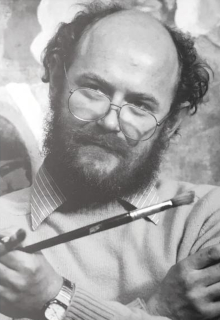
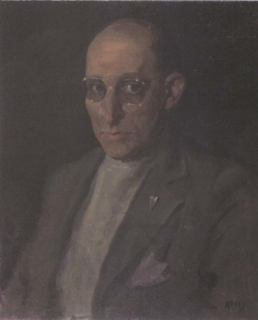
Harry Aaron Kernoff, Irish painter of London/Russian extraction, is born in London on January 10, 1900. He is primarily remembered for his sympathetic interest in Dublin and its people.

Kernoff’s family moves to Dublin when he is 14 years old where he ultimately becomes a leading figure in Irish modernism. He studies drawing and painting during night classes at the Metropolitan School of Art. In 1923, he wins the Taylor Scholarship and becomes a full-time art student. During his studies he meets and is encouraged by fellow artists Patrick Tuohy (1894-1930), Seán Keating (1889-1977), and Maurice MacGonigal (1900-79).

Influenced by Keating, he paints the Irish landscape, genre scenes, portraits, street and pub scenes, as well as Dublin landmarks with sympathy and understanding. This is particularly evident in his woodcuts. While living in his adopted Dublin Jewish community he produces picture illustrations of his local scenes for a neighbourhood writer and friend Nick Harris for his book entitled Dublin’s Little Jerusalem.

In 1930, Kernoff visits the Soviet Union as part of an Irish delegation from the friends of Soviet Russia led by Hanna Sheehy-Skeffington. While visiting, he is influenced by the Association of Artists of Revolutionary Russia. He is famously associated with Davy Byrne’s pub. His paintings and woodcuts of Davy Byrne’s pub are documents of his friendship with the original owner.

Kernoff spends the vast majority of his life unappreciated, and makes little or nothing from his paintings until a few years before his death, when he begins to be appreciated by contemporary critics. He never marries.

Outside his home in Dublin, where he lives with two unmarried sisters, there is a long-standing sign in the front garden which says “… Descendants of the Abravanels…” The Abravanel (or Abrabanel) family is one of the most famous Sephardic Jewish families in history, noted for their large quotas of Rabbis, scholars, and members of a variety of scientific and artistic fields, dating from about the 13th century in Lisbon. The emergence of the famous philosopher and scholar Don Isaac Abravanel in the middle of the 16th century brings his works to greater universal recognition.

Kernoff dies in Dublin on December 25, 1974.

(Pictured: Portrait of Harry Aaron Kernoff, Oil on Canvas by John F. Kelly)


Leave a comment

Birth of Artist & Illustrator Harry Clarke

harry-clarke

Henry Patrick (Harry) Clarke, Irish stained-glass artist and book illustrator, is born in Dublin on March 17, 1889. He is a leading figure in the Irish Arts and Crafts movement.

Clarke is the younger son and third child of Joshua Clarke and Brigid Clarke (née MacGonigal). Church decorator Joshua Clarke moves to Dublin from Leeds in 1877 and starts a decorating business, Joshua Clarke & Sons, which later incorporates a stained-glass division. Through his work with his father, Clarke is exposed to many schools of art but Art Nouveau in particular.

Clarke is educated at the Model School in Marlborough Street, Dublin and Belvedere College, which he leaves in 1905. After his mother’s death in 1903, he is apprenticed into his father’s studio and attends evening classes in the Metropolitan College of Art and Design. His The Consecration of St. Mel, Bishop of Longford, by St. Patrick wins the gold medal for stained glass work in the 1910 Board of Education National Competition. At the art school in Dublin, he meets fellow artist and teacher Margaret Crilley. They marry on October 31, 1914.

Clarke moves to London to seek work as a book illustrator. Picked up by London publisher George G. Harrap and Co., he starts with two commissions which are never completed. Difficulties with these projects makes Fairy Tales by Hans Christian Andersen his first printed work, in 1916. It includes 16 colour plates and more than 24 halftone illustrations. This is followed by illustrations for an edition of Edgar Allan Poe‘s Tales of Mystery and Imagination, the second version of which, published in 1923, makes his reputation as a book illustrator. His work can be compared to that of Aubrey Beardsley, Kay Nielsen, and Edmund Dulac. His final book, Selected Poems of Algernon Charles Swinburne, is published in 1928.

Clarke also continues to work in stained-glass, producing more than 130 windows. His glass is distinguished by the finesse of its drawing and his use of rich colours. He is especially fond of deep blues. His use of heavy lines in his black-and-white book illustrations echoes his glass techniques.

Clarke’s stained-glass work includes many religious windows, including the windows of the Honan Chapel in University College Cork. He also produces much secular stained glass such as a window illustrating John KeatsThe Eve of St. Agnes (now in the Hugh Lane Gallery in Dublin) and the Geneva Window, (now in the Wolfsonian Museum, Miami Beach, Florida). Perhaps his most seen works are the windows he creates for Bewley’s on Dublin’s Grafton Street.

Clarke is plagued with ill health, in particular respiratory problems. He is diagnosed with tuberculosis in 1929 and goes to a sanatorium in Davos, Switzerland. Fearing that he will die abroad, he begins his journey back to Dublin in 1931, but dies on this journey on January 6, 1931, in Chur where he is buried. A headstone is erected but local law requires that the family pledge to maintain the grave 15 years after the death. This is not explained to the Clarke family and Harry Clarke’s remains are disinterred in 1946 and reburied in a communal grave.


Leave a comment

Birth of Irish Artist Nano Reid

nano-reid-crumphan-achill

Nano Reid, Irish landscape artist, figure painter and portraitist, is born in Drogheda, County Louth on March 1, 1900. An individual, expressionistic artist, Reid is acknowledged to be one of the finest Irish woman painters of twentieth-century visual art in Ireland. Her works are represented in many public collections throughout Ireland.

In 1920, Reid wins a scholarship to study fine art painting and drawing at the Dublin Metropolitan School of Art, now the National College of Art and Design, under Harry Clarke. At the time, she is, in the words of fellow student Hilda van Stockum, “a fierce redhead…uncompromising and looking for truth.” In 1925 she starts showing at the Royal Hibernian Academy (RHA), submitting a total of 42 canvases until the late 1960s.

In 1928, Reid goes to Paris and enrolls briefly at the Académie de la Grande Chaumière, after which she spends a year in London studying fine art at the Central School of Arts and Crafts under Bernard Meninsky. She returns to Ireland in 1931 and once more begins exhibiting her landscape painting at the RHA.

In 1950, with Norah McGuinness, Reid represents Ireland at the Venice Biennale. This is followed by the Exhibition of Contemporary Irish Art in Aberystwyth, Wales (1953), and the Mostra Internazionale di Bianco e Nero in Lugano, Switzerland (1956), the Guggenheim International Award Exhibition in New York City (1960) and the Twelve Irish Painters show in New York City (1963). In 1974, the Arts Council and the Arts Council of Northern Ireland stage a major retrospective of Reid’s artworks.

Nano Reid dies in Drogheda in 1981. Retrospectives are held at Taylor Galleries in Dublin (1984), Droichead Arts Centre in Drogheda (1991), and at Linenhall Arts Centre in Castlebar, County Mayo (1999).

(Pictured: “Crumphan, Achill,” oil on canvas)