seamus dubhghaill

Promoting Irish Culture and History from Little Rock, Arkansas, USA


Leave a comment

Birth of Playwright Thomas Cornelius Murray

thomas-cornelius-murray

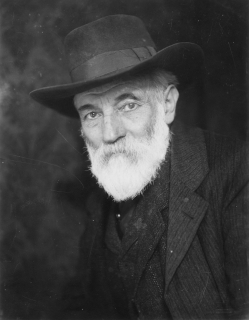
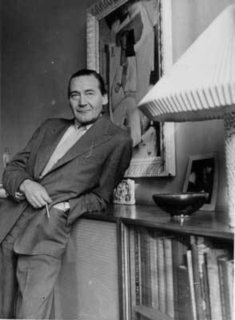
Thomas Cornelius Murray, Irish dramatist who is closely associated with the Abbey Theatre, is born in Macroom, County Cork on January 17, 1873.

Murray is educated at St. Patrick’s Teacher Training College in Drumcondra, Dublin. He works as a schoolteacher and in 1900 is appointed headmaster of the national school in Rathduff, County Cork. His first play, The Wheel of Fortune, is produced in 1909 by the Little Theatre in Cork, a theatre he had co-founded with Daniel Corkery, Con O’Leary and Terence MacSwiney. The play is revised and renamed Sovereign Love in 1913. In 1915, he moves to Dublin as headmaster of the Model Schools at Inchicore, where he remains until his retirement from teaching in 1932.

Murray’s play Birthright is performed in the Abbey Theatre in 1910 and establishes him as a writer of force. In all, he writes fifteen plays, all of which are produced by the Abbey. His two most highly regarded works are Maurice Harte (1912) and Autumn Fire (1924). Both of these and Birthright are performed in New York City on Broadway, with Autumn Fire having a run of 71 performances. He also writes an autobiographical novel Spring Horizon (1937).

It has been stated both by A. DeGiacomo and by R. Allen Cave that, in the Art competitions at the 1924 Summer Olympics in Paris, France, Murray is awarded a bronze medal for his play Birthright. However, according to the official record for the games, although Murray is a participant in the literature category with this play and also with Maurice Harte, he does not win a medal.

T. C. Murray dies in Dublin on March 7, 1959.


Leave a comment

Birth of Sister Maura John Clarke

sister-maura-clarke

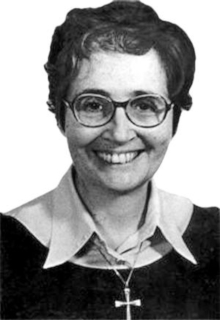
Sister Maura John Clarke, Irish American Catholic Maryknoll sister who serves as a missionary in Nicaragua and El Salvador, is born Mary Elizabeth Clarke in Queens, New York on January 13, 1931, the eldest of three children.

Clarke’s parents, both born in Ireland, settle in Belle Harbor, Queens, New York in the late 1920s. She enters Maryknoll in 1950 and makes her first vows in 1953. Initially, she is attracted to Maryknoll by a deep desire “to become closer to God and to serve Him.”

After graduation from Maryknoll Teachers College in 1954, Sister Clarke is assigned to teach at St. Anthony’s Parish School in The Bronx. In 1959 her growing desire “to serve Him” is further strengthened with her assignment to Siuna, Nicaragua, as a teacher and then superior of the little community. She is in Managua from 1970 to 1976 where she ministers to the people, sharing with them in the cataclysmic earthquake of 1972. With them she works tirelessly, helping them rebuild their homes and establish basic Christian communities.

In 1977 Sister Clarke returns to the Center to serve on a Maryknoll Sisters World Awareness Team, working primarily along the East Coast of the United States. She is the same everywhere she serves – friendly, loving, generous, gentle, using her gifts and abilities tirelessly, and trusting that with God’s help she can do what is needed. When her term with the World Awareness Team ends early in 1980, she decides to return to Nicaragua.

In August 1980 emergency needs in El Salvador call Sister Clarke and she spends her first weeks there in Santa Ana. However, after Sister Carol Piette’s death, she volunteers immediately to accompany Sister Ita Ford in Chalatenango to minister to the poor and oppressed and the imprisoned.

When Sister Clarke comes to the Regional Assembly the day before Thanksgiving, November 26, 1980, she feels not only willing to return to El Salvador, but convinced that Chalatenango is the place where she can and will serve Christ’s poor. With Sister Ford she searches out the missing, prays with the families of prisoners, buries the dead, and works with the people in their struggle to break out of the bonds of oppression, poverty, and violence. Their days are filled with difficulty and fearful danger at times.

Sister Clarke returns with Sister Ford to El Salvador late in the afternoon of December 2, 1980. Two of their good friends and collaborators in mission meet them at the airport to take them back to Chalatenango. A few hours later she is beaten, raped, and murdered along with three fellow missionaries — Sister Ita Ford, Sister Dorothy Kazel and missionary Jean Donovan — by members of the military of El Salvador. She is buried in Chalatenango, El Salvador.


Leave a comment

Birth of Poet & Linguist Michael O’Siadhail

michael-o-siadhail

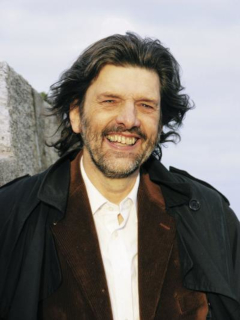
Micheal O’Siadhail, poet and linguist, is born in Dublin on January 12, 1947. Among his awards are The Marten Toonder Prize and The Irish American Culture Institute Prize for Literature.

O’Siadhail is born into a middle-class Dublin family. His father, a chartered accountant, is born in County Monaghan and works most of his life in Dublin, and his mother is a Dubliner with roots in County Tipperary. Both of them are portrayed in his work in several poems such as “Kinsmen” and “Promise”. From the age of twelve, he is educated at the Jesuit boarding school Clongowes Wood College, an experience he is later to describe in a sequence of poems “Departure” (The Chosen Garden).

At Clongowes O’Siadhail is influenced by his English teacher, the writer Tom MacIntyre, who introduces him to contemporary poetry. At thirteen he first visits the Aran Islands. This pre-industrial society with its large-scale emigration has a profound impact on him. His earlier work reflects this tension between his love of his native Dublin and his emotional involvement with those outlying communities and which features in the sequence “Fists of Stone” (The Chosen Garden).

O’Siadhail studies at Trinity College Dublin (1964–68) where his teachers include David H. Greene and Máirtín Ó Cadhain. He is elected a Scholar of the College and takes a First-Class Honours Degree. His circle at Trinity includes David McConnell (later professor of genetics), Mary Robinson and David F. Ford (later Regius Professor of Divinity at the University of Cambridge). He subsequently embarks on a government exchange scholarship studying folklore and the Icelandic language at the University of Oslo. He retains lifelong contacts with Norwegian friends and sees Scandinavian literature as a major influence.

In 1970 O’Siadhail marries Bríd Ní Chearbhaill, who is born in Gweedore, County Donegal. She is for most of her life a teacher and later head mistress in an inner-city Dublin primary school until her retirement in 1995 due to Parkinson’s disease. She is a central figure in his oeuvre celebrated in the sequence “Rerooting” in The Chosen Garden and in Love Life, which is a meditation on their lifelong relationship. One Crimson Thread travels with the progression of her Parkinson’s Disease. She dies on June 17, 2013.

For seventeen years, O’Siadhail earns his living as an academic; firstly, as a lecturer at Trinity College (1969–73) where he is awarded a Master of Letters degree in 1971 and then as a research professor at the Dublin Institute for Advanced Studies. During these years he gives named lectures in Dublin and at Harvard University and Yale University and is a visiting professor at the University of Iceland in 1982. In 1987 he resigns his professorship to devote himself to writing poetry which he describes as “a quantum leap.”

During his years as an academic, O’Siadhail, writing under the Irish spelling of his name, published works on the linguistics of Irish and a textbook for learners of Irish.

O’Siadhail serves as a member of the Arts Council of the Republic of Ireland (1987–93), of the Advisory Committee on Cultural Relations (1989–97) and is editor of Poetry Ireland Review. He is the founding chairman of ILE (Ireland Literature Exchange). As a founder member of Aosdána (Academy of Distinguished Irish Artists) he is part of a circle of artists and works with his friend the composer Seóirse Bodley, the painters Cecil King and Mick O’Dea and in 2008 gives a reading as part of Brian Friel‘s eightieth birthday celebration.

O’Siadhail represents Ireland at the Poetry Society‘s European Poetry Festival in London in 1981 and at the Frankfurt Book Fair in 1997. He is writer-in-residence at the Yeats Summer School in 1991 and writer in residence at the University of British Columbia in 2002.

O’Siadhail is now married to Christina Weltz, who is a native of New York, and Assistant Professor of surgical oncology at Mount Sinai Hospital. They reside in New York.


Leave a comment

Death of Padraic Colum, Poet & Novelist

padraic-colum

Padraic Colum, Irish-born American poet, novelist, biographer, playwright, and children’s author whose lyrics capture the traditions and folklore of rural Ireland, dies in Enfield, Connecticut on January 11, 1972. He is one of the leading figures of the Irish Literary Revival.

Colum was born on December 8, 1881, in Columcille, County Longford, the first of eight children born to Patrick and Susan Columb. In 1892, the family moves to Glasthule, near Dublin and he attends the local national school. He starts writing after he finishes school and meets a number of the leading Irish writers of the time, including W. B. Yeats, Lady Gregory and Æ. He also joins the Gaelic League and is a member of the first board of the Abbey Theatre. He becomes a regular user of the National Library of Ireland, where he meets James Joyce and the two become lifelong friends.

Influenced by the literary activity of the Celtic revival centered in Dublin at the turn of the century, Colum publishes the collection of poetry Wild Earth (1907). He co-founds The Irish Review in 1911, then three years later settles permanently in the United States. His varied literary output includes volumes of poetry including Dramatic Legends (1922) and Creatures (1927), plays such as Broken Soil (first performed 1903) and The Land (1905), novels, anthologies of folklore and children’s books. The reminiscence Our Friend James Joyce (1959) is written with his wife Mary (Maguire), a well-known literary critic.

The Colums spent the years from 1930 to 1933 living in Paris and Nice, where Padraic renews his friendship with James Joyce and becomes involved in the transcription of Finnegans Wake. After their time in France, the couple moves to New York City, where they do some teaching at Columbia University and City College of New York. He is a prolific author and publishes a total of 61 books, not counting his plays. While in New York, he writes the screenplay for the 1954 stop-motion animated film Hansel and Gretel: An Opera Fantasy. It is his only screenplay.

Mary dies in 1957, and Colum completes Our Friend James Joyce, which they had worked on together. It is published in 1958. He divides his later years between the United States and Ireland. In 1961 the Catholic Library Association awards him the Regina Medal.

Padraic Colum dies on January 11, 1972, at the age of 90, in Enfield, Connecticut. He is buried in St. Fintan’s Cemetery in Sutton, Dublin.


Leave a comment

Death of William Sampson, United Irishman, Author & Lawyer

william-sampson

William Sampson, member of the Society of United Irishmen, author and Irish Protestant lawyer known for his defence of religious liberty in Ireland and the United States, dies in New York City on December 28, 1836.

Sampson is born in Derry, County Londonderry, to an affluent Anglican family. He attends Trinity College Dublin and studies law at Lincoln’s Inn in London. In his twenties, he briefly visits an uncle in North Carolina. In 1790 he marries Grace Clark, and they have two sons, William and John, and a daughter, Catherine Anne.

Admitted to the Irish Bar, Sampson becomes Junior Counsel to John Philpot Curran and helps him provide legal defences for many members of the Society of United Irishmen. A member of the Church of Ireland, he is disturbed by anti-Catholic violence and contributes writings to the Society’s newspapers. He is arrested at the time of the Irish Rebellion of 1798, imprisoned, and compelled to leave Ireland for exile in Europe.

Shipwrecked at Pwllheli in Wales, Sampson makes his way to exile in Porto, Portugal, where he is again arrested, imprisoned in Lisbon, and then expelled. After living some years in France, and then Hamburg, he flees to England ahead of the approach of Napoleon‘s armies where he is re-arrested. After unsuccessfully petitioning for a return to Ireland, he arrives in New York City on July 4, 1806.

In the United States, Sampson successfully continues his career in the law, eventually sending for his family. He sets up a business publishing detailed accounts of the court proceedings in cases with popular appeal. In 1809 he reports on the case of a Navy Lieutenant Renshaw prosecuted for dueling. That same year he handles a case against Amos and Demis Broad, accused of brutally beating their slave, Betty, and her 3-year-old daughter where Sampson succeeded in having both slaves manumitted. The authorities in Ireland had disbarred Sampson, which causes him some bitter amusement, as it does not affect his work in the United States.

Sampson’s most important case in the United States is in 1813 and is referred to as “The Catholic Question in America.” Police investigating the misdemeanor of receiving stolen goods question the suspects’ priest, the Reverend Mr. Kohlman. He declines to give any information that he has heard in confession. The priest is called to testify at the trial in the Court of General Sessions in the City of New York. He again declines. The issue whether to compel the testimony is fully briefed and carefully argued on both sides, with a detailed examination of the common law. In the end, the confessional privilege is accepted for the first time in a court of the United States.

William Sampson dies on December 28, 1836, and is buried in the Riker Family graveyard on Long Island in what is now East Elmhurst, Queens, New York. He is later reinterred in Green-Wood Cemetery in Brooklyn, where he is now buried in the same plot as Matilda Witherington Tone and William Theobald Wolfe Tone, the wife and son of the Irish revolutionary Wolfe Tone, and his daughter Catherine, the wife of William Theobald Wolfe Tone.


Leave a comment

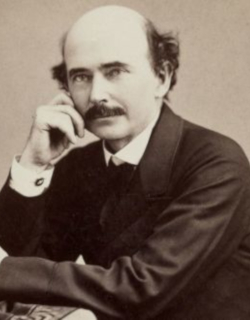
Birth of Dion Boucicault, Playwright & Actor

dionysius-boucicault

Dionysius Lardner “Dion” Boucicault, Irish American playwright and actor and a major influence on the form and content of American drama, is born in Dublin on December 26, 1820.

Educated in England, Boucicault begins acting in 1837 and in 1840 submits his first play to Lucia Elizabeth Vestris at Covent Garden, however it is rejected. His second play, London Assurance (1841), which foreshadows the modern social drama, is a huge success and is frequently revived into the 20th century. Other notable early plays were Old Heads and Young Hearts (1844) and The Corsican Brothers (1852).

In 1853 Boucicault and his second wife, Agnes Robertson, arrive in New York City, where his plays and adaptations are long popular. He leads a movement of playwrights that produces in 1856 the first copyright law for drama in the United States. His play The Poor of New York, based on the panics of 1837 and 1857, has a long run at Wallack’s Theatre in 1857 and is presented elsewhere as, for example, The Poor of Liverpool. The Octoroon (1859) causes a sensation with its implied attack on slavery.

Boucicault and his actress wife join Laura Keene’s theatre in 1860 and begin a series of his popular Irish plays — The Colleen Bawn, or The Brides of Garryowen (1860), Arrah-na-Pogue (1864), The O’Dowd (1873), and The Shaughraun (1874). Returning to London in 1862, he provides Joseph Jefferson with a successful adaptation of Rip Van Winkle (1865). In 1872 he returns to the United States, where he remains, except for a trip to Australia that results in his third marriage (for which he renounced the legitimacy of his second marriage). Among his associates in the 1870s is the young David Belasco. At the time of his death on September 18, 1890, in New York City, he is a poorly paid teacher of acting. He is buried in Mount Hope Cemetery, Hastings, Westchester County, New York.

About 150 plays are credited to Boucicault, who, as both writer and actor, raises the stage Irishman from caricature to character. To the American drama he brings a careful construction and a keen observation and recording of detail. His concern with social themes prefigures the future development of drama in both Europe and America.

(Pictured: Dionysius Boucicault, taken 1890 or before. Photograph: Harvard Theatre Collection/Wikimedia Commons)


Leave a comment

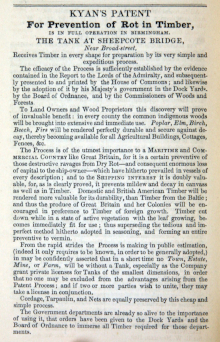
Birth of John Kyan, Inventor in Wood Preservation

kyans-patent

John Howard Kyan, inventor of the ‘kyanising’ process for preserving wood, is born on November 27, 1774, in Dublin. His father, also John Howard Kyan, is the owner of valuable copper mines in County Wicklow. He is educated to take part in the management of the mines, but soon after he enters the company its fortunes decline, and in 1804 his father dies almost penniless.

For a time, Kyan is employed at some vinegar works at Newcastle upon Tyne, but subsequently removes to London. The decay of the timber supports in his father’s copper mines had already directed his attention to the question of preserving wood, and as early as 1812 he begins experiments with a view to discovering a method of preventing the decay. Eventually he finds that bichloride of mercury or corrosive sublimate, as it is commonly called, gives the best results and, without revealing the nature of the process, he submits a block of oak impregnated with the substance to the Admiralty in 1828. It is placed in the ‘fungus pit’ at Woolwich, where it remains for three years exposed to all the conditions favourable to decay. When taken out in 1831, it is found to be perfectly sound, and after further trials it still remains unaffected.

Kyan patents his discovery in 1832 (Nos. 8263 and 6309), extending the application of the invention to the preservation of paper, canvas, cloth, cordage, etc. A further patent is granted in 1836 (No. 7001).

The process attracts great attention. Michael Faraday chooses it as the subject of his inaugural lecture at the Royal Institution on February 22, 1833, on his appointment as Fullerian professor of chemistry. Dr. George Birkbeck gives a lecture upon it at the Royal Society of Arts on December 9, 1834, and in 1835 the Admiralty publishes the report of a committee appointed by the board to inquire into the value of the new method.

In 1836, Kyan sells his rights to the Anti-Dry Rot Company, an Act of Parliament being passed which authorises the raising of a capital of £250,000. Tanks are constructed at Grosvenor Basin, Pimlico, at the Grand Surrey Canal Dock, Rotherhide, and at the City Road Basin.

Among the early applications of the process is the kyanising of the palings around the Inner Circle, Regent’s Park, which is carried out in 1835 as an advertisement with small brass plates being attached to the palings at intervals stating that the wood has been submitted to the new process. The plates soon disappear, but the original palings still remain in good condition.

The timber used in building the Oxford and Cambridge Club, British Museum, Royal College of Surgeons, Westminster Bridewell, the new roof of the Temple Church, and the Ramsgate harbour works is also prepared by Kyan’s process. When wooden railway ties become general, a very profitable business for Kyan’s company is anticipated, and for a time these hopes are realised.

It becomes evident that iron fastenings cannot be used in wood treated with corrosive sublimate, on account of the corrosive action, and it is said that the wood becomes brittle. The salt is somewhat expensive and Sir William Burnett‘s method of preserving timber by zinc chloride, and afterwards the application of creosote for that purpose, proves severe competitors. Doubts begin to be expressed as to the real efficiency of kyanising, and the process gradually ceases to be employed.

John Kyan dies on January 5, 1850, in New York City, where he is engaged on a plan for filtering the water supplied to that city by the Croton Aqueduct.


Leave a comment

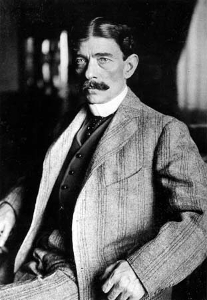
Birth of Alistair Cooke, Journalist & Broadcaster

alistair-cooke

Alistair Cooke, British journalist, television personality, and broadcaster, who describes himself as a “Lancastrian Irishman,” is born in Salford, Lancashire, England on November 20, 1908. He is best known for his lively and insightful interpretations of American history and culture.

The son of Samuel Cooke, a Wesleyan Methodist lay preacher, and Mary Elizabeth (Byrne) from County Sligo, He is educated at Blackpool Grammar School, Blackpool and wins a scholarship to Jesus College, Cambridge, where he gains an honours degree in English. Later he wins a Commonwealth Fund fellowship to study in the United States, first at Yale University (1932–33), then at Harvard University (1933–34). His cross-country travels during the summers of these years have a profound influence on his professional life.

Following a brief period as a scriptwriter in Hollywood, Cooke returns to England to become a film critic for the British Broadcasting Corporation (BBC) and later serves as London correspondent for the National Broadcasting Company (NBC) of the United States. In 1937 he returns to the United States, settles in New York City, and becomes an American citizen in 1941.

From the late 1930s, Cooke reports and comments on American affairs for BBC Radio and several major British newspapers. His weekly 15-minute program, Letter from America, broadcast from 1946 to 2004, is one of the longest-running series on radio. The texts of many broadcasts are collected in One Man’s America (1952) and Talk About America (1968). From 1956 to 1961 he hosts and narrates the weekly television “magazine” Omnibus, which wins numerous broadcasting awards.

Cooke’s interpretation of the American experience culminates in his BBC-produced television series America: A Personal History of the United States (1972–1973). In thirteen installments, filmed on location throughout the United States, he surveys some 500 years of American history in an eclectic and personal but highly coherent narrative. Alistair Cooke’s America (1973), the book based on the award-winning program, is a best-seller in the United States. From the 1970s to the early 1990s, as host of Masterpiece Theatre, he serves as an interpreter of British culture through the presentation of BBC dramatic television programming to American audiences.

Cooke’s other works include the critical biography Douglas Fairbanks: The Making of a Screen Actor (1940), Generation on Trial: The USA v. Alger Hiss (1950), based on his coverage of a celebrated Congressional investigation, The Vintage Mencken (1955), The Patient Has the Floor (1986), America Observed (1988), Memories of the Great and the Good (2000) and, with Robert Cameron, The Americans (1977).

On March 2, 2004, at the age of 95, following advice from his doctors, Cooke announces his retirement from Letter from America—after 58 years, the longest-running speech radio show in the world.

Alistair Cooke dies at midnight on March 30, 2004 at his home in New York City. He had been ill with heart disease, but dies of lung cancer, which had spread to his bones. He is cremated and his ashes are clandestinely scattered by his family in New York’s Central Park.


Leave a comment

Death of Margaret Brown, “The Unsinkable Molly Brown”

margaret-brown

Margaret Brown (née Tobin), an American socialite and philanthropist posthumously known as “The Unsinkable Molly Brown”, dies in New York City on October 26, 1932. She is best remembered for unsuccessfully encouraging the crew in Lifeboat No. 6 to return to the debris field of the 1912 sinking of RMS Titanic to look for survivors. During her lifetime, her friends called her “Maggie”, but even by her death, obituaries refer to her as the “Unsinkable Mrs. Brown.” The reference is further reinforced by a 1960 Broadway musical based on her life and its 1964 film adaptation which are both entitled The Unsinkable Molly Brown.

Tobin is born in a hospital near the Mississippi River in Hannibal, Missouri, on what is now known as Denkler’s alley. Her parents are Irish Catholic immigrants. At age 18, she relocates to Leadville, Colorado, with her siblings Daniel Tobin, Mary Ann Collins Landrigan and Mary Ann’s husband John Landrigan. Margaret and her brother Daniel share a two-room log cabin and she finds a job in a department store.

In Leadville, she meets and marries James Joseph “J.J.” Brown (1854–1922), an enterprising, self-educated man, in Leadville’s Annunciation Church on September 1, 1886. They have two children.

The Brown family acquires great wealth when in 1893 J.J.’s mining engineering efforts prove instrumental in the production of a substantial ore seam at the Little Jonny Mine of his employers, Ibex Mining Company, and he is awarded 12,500 shares of stock and a seat on the board. In Leadville, Margaret helps by working in soup kitchens to assist miners’ families.

In 1894, the Browns purchase a $30,000 Victorian mansion in Denver and in 1897 they build a summer house, Avoca Lodge in Southwest Denver near Bear Creek, which gives the family more social opportunities. Margaret becomes a charter member of the Denver Woman’s Club, whose mission is the improvement of women’s lives by continuing education and philanthropy. After 23 years of marriage, Margaret and J.J. privately sign a separation agreement in 1909. Although they never reconcile, they continue to communicate and care for each other throughout their lives.

Brown spends the first months of 1912 traveling in Egypt as part of the John Jacob Astor IV party, until she receives word from Denver that her eldest grandchild, Lawrence Palmer Brown Jr., is seriously ill. She immediately books passage on the first available liner leaving for New York, the RMS Titanic. Originally her daughter Helen is supposed to accompany her, but she decides to stay on in Paris, where she is studying at the Sorbonne.

The RMS Titanic sinks in the early morning hours of April 15, 1912, after striking an iceberg. Brown helps others board the lifeboats but is finally persuaded to leave the ship in Lifeboat No. 6. Brown is later called “The Unsinkable Molly Brown” by authors because she helps in the ship’s evacuation, taking an oar herself in her lifeboat and urging that the lifeboat go back and save more people. After several attempts to urge Quartermaster Robert Hichens to turn back, she threatens to throw him overboard. Sources vary as to whether the boat goes back and if they find anyone alive. Brown’s efforts seal her place in history, regardless.

Upon being rescued by the RMS Carpathia, Brown proceeds to organize a survivors’ committee with other first-class survivors. The committee works to secure basic necessities for the second- and third-class survivors and even provides informal counseling.

Brown runs for the United States Senate in 1914 but ends her campaign to return to France to work with the American Committee for Devastated France during World War I.

During the last years of her life, Brown is an actress. She dies in her sleep on October 26, 1932, at the Barbizon Hotel in New York City, New York. Subsequent autopsy reveals a brain tumor. She is buried on October 31 alongside her husband in the Cemetery of the Holy Rood in Westbury, New York, following a small ceremony attended only by family members. There is no eulogy.


Leave a comment

Mo Mowlam Presented International Woman of the Year Award

mo-mowlan

Marjorie “Mo” Mowlam, English Labour Party politician, is presented with the International Woman of the Year Award at a ceremony in Dublin on October 23, 2001. United Nations High Commissioner for Human Rights Mary Robinson wins the Overall Award at the Irish Tatler Women of the Year Awards.

Mowlam is born on September 18, 1949 in Watford, Hertfordshire, England but grows up in Coventry. She starts her education at Chiswick Girls’ grammar school in West London, then moves to Coundon Court school in Coventry which, at the time, is one of the first comprehensive schools in the country. She then studies at Trevelyan College, Durham University, reading sociology and anthropology. She joins the Labour Party in her first year.

Mowlam becomes the Secretary of the Durham Union Society in 1969 and later goes on to become the Vice-President of the Durham Student’s Union. She works for then-MP Tony Benn in London and American writer Alvin Toffler in New York, moving to the United States with her then-boyfriend and studying for a PhD in political science at the University of Iowa.

Mowlam is a lecturer in the Political Science Department at the University of Wisconsin–Milwaukee in 1977 and at Florida State University in Tallahassee from 1977 to 1979. During her time in Tallahassee, someone breaks into her apartment. She suspects that it is Ted Bundy, the serial killer and rapist who is thought to have murdered at least 35 young women and attacked several others. She returns to England in 1979 to take up an appointment at the University of Newcastle upon Tyne.

Having failed to win selection for the 1983 general election, Mowlam is selected as Labour candidate for the safe seat of Redcar after James Tinn stands down. She takes the seat in the 1987 general election, becoming the Labour spokesperson on Northern Ireland later that year. Together with Shadow Chancellor John Smith, she is one of the architects of Labour’s “Prawn Cocktail Offensive” dedicated to reassuring the UK’s financial sector about Labour’s financial rectitude.

Mowlam joins the Shadow Cabinet when John Smith becomes leader of the Labour Party in 1992, holding the title of Shadow Secretary of State for National Heritage. During this time, she antagonises both monarchists and republicans by calling for Buckingham Palace to be demolished and replaced by a “modern” palace built at public expense. Later, her willingness to speak her mind, often without regard to the consequences, is seen as her greatest strength by her supporters.

Following Smith’s death in 1994, Mowlam, alongside Peter Kilfoyle, becomes a principal organiser of Tony Blair‘s campaign for the Labour leadership. After his victory, Blair makes her Shadow Secretary of State for Northern Ireland. She initially resists being appointed to the position, preferring an economic portfolio, but, after accepting it, she throws her weight into the job.

Mowlam oversees the negotiations which lead to the 1998 Good Friday Agreement. She is successful in helping to restore an Irish Republican Army (IRA) ceasefire and including Sinn Féin in multi-party talks about the future of Northern Ireland. In an attempt to persuade the Ulster loyalists to participate in the peace process, she pays an unprecedented and potentially dangerous visit to loyalist prisoners in HM Prison Maze, meeting convicted murderers face-to-face and unaccompanied.

Mowlam witnesses the Good Friday Agreement signing in 1998, which leads to the temporary establishment of a devolved power-sharing Northern Ireland Assembly. However, an increasingly difficult relationship with Unionist parties means her role in the talks is ultimately taken over by Tony Blair and his staff.

Mowlam’s deteriorating relationship with Unionists is the key reason she is replaced by Peter Mandelson as Northern Ireland Secretary in October 1999. Her move to the relatively lowly position of Minister for the Cabinet Office possibly involves other factors, notably her health and her popularity. On September 4, 2000, she announces her intention to retire from Parliament and relinquishes her seat at the 2001 general election.

Five months before the 1997 general election, Mowlam is diagnosed with a brain tumor, a fact that she tries to keep private. She appears to suffer from balance problems as a result of her radiotherapy. According to her husband, she falls on July 30, 2005, receiving head injuries and never regaining consciousness. Her living will, in which she asks not to be resuscitated, is honoured. On August 12, 2005, Mowlan is moved to Pilgrims Hospice in Canterbury, Kent, where she dies seven days later, on August 19, 2005, aged 55.

Mowlam is an atheist and is cremated in Sittingbourne on September 1, 2005 at a non-religious service conducted by Reverend Richard Coles, formerly of the 1980s band The Communards. Half of her ashes were scattered at Hillsborough Castle, the Secretary of State for Northern Ireland’s official residence, and the other half in her former parliamentary constituency of Redcar.