seamus dubhghaill

Promoting Irish Culture and History from Little Rock, Arkansas, USA


Leave a comment

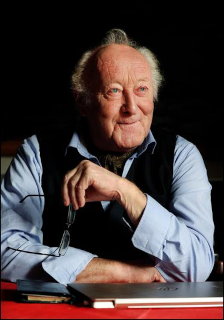
Birth of Mícheál Ó Muircheartaigh, Gaelic Games Commentator

Mícheál Ó Muircheartaigh, an Irish Gaelic games commentator for the Irish national radio and television, RTÉ, is born in Doonshean just outside Dingle, County Kerry, on August 20, 1930. In a career that spans six decades he comes to be regarded as the “voice of Gaelic games.” He has been described as a national treasure. His prolific career earns him a place in Guinness World Records.

Ó Muircheartaigh grows up on the family farm and is educated locally in Dingle. In September 1945, he begins studying at Coláiste Íosagáin in Ballyvourney in the County Cork Gaeltacht where he trains to be a teacher. It is at this all-Irish language school that his name changes from Michael Moriarty to the Irish version Mícheál Ó Muircheartaigh. He says that Irish is his stronger language. In September 1948, he begins the final year of his teacher training at St. Patrick’s College of Education in Drumcondra, Dublin.

In early March 1949, Ó Muircheartaigh, along with ten other students from the college, and several from other colleges, do a test commentary on a hurling match at Croke Park. Each student has to commentate for five minutes in Irish and the most successful is to be selected for further commentary work. Up to this point, he has never seen a game of hurling before in his life. He is the one selected and his first assignment is to provide an all-Irish commentary on the 1949 Railway Cup final on Saint Patrick’s Day.

Ó Muircheartaigh graduates from St. Patrick’s College a little later and also completes a Bachelor of Arts degree from University College Dublin (UCD) in 1952. He also completes a Higher Diploma in Education in 1953. He teaches economics, accountancy and Irish in both primary and secondary schools throughout Dublin, the majority of which are run by the Christian Brothers. He continues teaching up until the 1980s, when he becomes a full-time broadcaster with RTÉ.

For the early part of his broadcasting career, Ó Muircheartaigh commentates on Minor GAA matches, in the Irish language. He also replaces the legendary Michael O’Hehir when he is not available to commentate. Eventually when O’Hehir is forced to retire in the mid-1980s Ó Muircheartaigh takes over as the station’s premier radio commentator. He develops his own inimitable style of commentary, and his accent is unmistakably that of a native Irish speaker. He is a true lover of Gaelic Athletic Association, and it is reflected in the enthusiasm he brings to matches. His unusual turn of phrase makes him a much-loved broadcaster and often imitated character. He becomes particularly famous in Ireland for his unusual turns of phrase in the heat of the moment while commentating. Towards the end of his life, he commentates on RTÉ Radio 1. In 2004, he publishes his autobiography, From Dún Sion to Croke Park.

On March 5, 1988, Ó Muircheartaigh presents the Saturday Live show on RTÉ 1. In 1990, he holds an impromptu interview with Britain’s Prince Edward, after his greyhound had won at the English Greyhound Derby qualifier when he was commentating.

Ó Muircheartaigh’s commentaries for RTÉ Radio 1’s Sunday Sport show win him a Jacob’s Award in 1992. He is also the Parade Grand Marshal for the 2007 St. Patrick’s Festival, having been given the honour by the chairman of the festival in recognition and appreciation of his unique contribution to Irish culture. He is the Parade Grand Marshal for the 2011 St. Patrick’s Parade in Toronto, Ontario, Canada, also in recognition and appreciation of his unique contribution to Irish culture.

On September 16, 2010, Ó Muircheartaigh announces his retirement from broadcasting. The last All-Ireland he commentates on is the 2010 All-Ireland Senior Football Championship Final on September 19, 2010.

On October 29, 2010, it is announced that the 2nd International Rules test at Croke Park would be Ó Muircheartaigh’s final broadcast as commentator on RTÉ Radio 1. The following day he commentates his final commentary alongside RTÉ’s pundit and former Meath footballer Bernard Flynn.

Ó Muircheartaigh is contracted to officiate at the 2011–2012 Volvo Ocean Race finish in Galway where he commentates on the finish to the round-the-world race, giving it a uniquely Irish conclusion. Sailing is his longtime hobby.

Ó Muircheartaigh writes a weekly sports column for Foinse, the Irish-language newspaper free with the Irish Independent each Wednesday. He is invited to read out a piece in Irish and in English at an event called “Laochra” in Croke Park on April 24, 2016, to commemorate the 100th anniversary of the Easter Rising.

In 2007, Ó Muircheartaigh is awarded the UCD Foundation Day Medal. His nephew by marriage, John McGuire, has presented several programmes on RTÉ.

Ó Muircheartaigh dies in hospital in Dublin at the age of 93 on June 25, 2024.

Ó Muircheartaigh is awarded an honorary doctorate by NUI Galway in 1999 for his lifetime service to broadcasting. Shortly after his 90th birthday, he is awarded the only GAA GPA All Stars Award of 2020. No further All Stars can be awarded as competition is suspended due to the COVID-19 pandemic and only completed that December.


Leave a comment

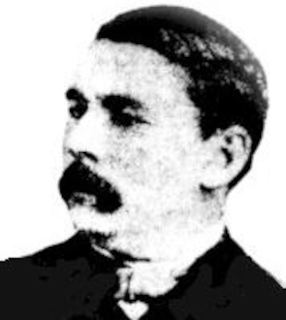
Death of Joseph M. Scriven, Irish-Born Canadian Poet

Joseph Medlicott Scriven, an Irish-born Canadian poet best known as the writer of the poem which becomes the hymnWhat a Friend We Have in Jesus,” drowns on August 10, 1886, in Bewdley, Northumberland County, Ontario, Canada.

Scriven is born on September 10, 1819, of prosperous parents in Banbridge, County Down. He graduates with a degree from Trinity College Dublin in 1842. His fiancée accidentally drowns in 1843, the night before they are to be married. In 1844, at the age of 25, he leaves his native country and migrates to Canada, settling in Woodstock, Ontario. He leaves his country feeling a spiritual calling to serve the Lord in his Plymouth Brethren faith. He remains in Canada only briefly after becoming ill but returns for good in 1847.

For two or three years Scriven conducts a private school at Brantford. In 1855, while staying with James Sackville in Bewdley, Ontario, north of Port Hope, he receives news from Ireland of his mother being terribly ill. He writes a poem to comfort his mother called “Pray Without Ceasing.” It is later set to music and renamed by Charles Crozat Converse, becoming the hymn “What a Friend We Have in Jesus.” Scriven does not have any intentions nor dream that his poem would be published in the newspaper and later become a favorite hymn among the millions of Christians around the world.

About 1857, Scriven moves near to Port Hope, Ontario. Here he again falls in love and is due to be married, but in August 1860 his fiancée becomes ill with pneumonia and dies. He then devotes the rest of his life to tutoring, preaching and helping others.

In 1869, Scriven publishes a collection of 115 hymns entitled Hymns and other verses which does not include “What a Friend We Have in Jesus.”

Scriven drowns at age 66 on August 10, 1886. At the time of his death, he is very ill with fever and has been brought to a friend’s home to recover. It is a very hot night, and he goes outside possibly to cool down or to get a drink of cold water from the spring. His friend reports, “We left him about midnight. I withdrew to an adjoining room to watch and pray. You may imagine my surprise and dismay when upon visiting his room I found it empty. All search failed to find a trace of the missing man, until a little after noon his body was discovered in the nearby river, lifeless and cold in death.” To this day, no one knows for certain if his death is an accident or a suicide. He is buried next to his second fiancée in her family cemetery, Pengelley Family Cemetery, at Pengelly Landing, Peterborough County, Ontario, Canada.

A tall obelisk is built upon his grave with the words from the song and the following inscription:

This monument was erected to the memory of Joseph M. Scriven, B.A., by lovers of his hymn, which is engraved hereon, and is his best memorial. Born at Seapatrick, Co. Down, Ireland, 10 Sept. 1819, emigrated to Canada 1844. Entered into rest at Bewdley, Rice Lake, 10 August 1886, and buried here. Blessed are the pure in heart for they shall see God.

A plaque can be found on the Port Hope-Peterborough Highway with the following inscription:

Four miles north, in the family Pengelley Cemetery, lies the philanthropist and author of this great masterpiece, written at Port Hope, 1857. The composer of the music, Charles C. Converse, was a well-educated versatile and successful Christian, whose talents ranged from law to professional music. Under the pen name of Karl Reden, he wrote numerous scholarly articles on many subjects. Though he was an excellent musician and composer with many of his works performed by the leading American orchestras and choirs of his day, his life is best remembered for this simple music so well suited to Scriven’s text.

Lukas Media LLC releases the full-length documentary Friends in Jesus, The stories and Hymns of Cecil Frances Alexander and Joseph Scriven in 2011. The 45-minute documentary movie details the life of Scriven and his influence on popular hymns.


Leave a comment

Birth of Thomas Paterson, Historian & Museum Curator

Thomas George Farquhar Paterson, local historian, folklore collector and museum curator, is born on February 29, 1888, in or near Toronto, Ontario, Canada.

Paterson is the eldest child in a family of seven sons and one daughter born to John and Rachel (née Farquhar) Paterson. His parents had emigrated from County Armagh, in what is now Northern Ireland. Their first three children are born in Canada, but the family returns to Ireland in the early 1890s, to the family farm in Cornascreeb, five miles south of Portadown, County Armagh. Also known as George, he attends Aghory national school, and leaves at age 14 to be apprenticed to a grocer in Portadown. In 1911, he takes a position in Couser’s, the leading grocery and wine merchant’s business in Armagh. In time becoming the manager, he is acquainted with the local gentry and clergy.

However, the grocery trade is never Paterson’s main interest. From an early age, he is fascinated by the history and folklore of his native place. He becomes an expert on the genealogy of the gentry as well as of the farming families around Armagh, and also collects material on many aspects of Armagh life. His notebooks eventually contain well over a million words of notes on history, archaeology, dialect, folkways and natural history, as well as drawings and plans of traditional houses, fireside accoutrements and farm implements. His knowledge of history, archaeology and natural history is widely recognised, and in 1931 Armagh County Council asks him to become honorary curator of the small museum established by the Armagh Natural History and Philosophical Society. Four years later, he leaves Couser’s and becomes full-time curator of the museum, re-named the Armagh County Museum. He greatly augments and improves the collections, and in the late 1950s oversees the enlargement of the building. His life’s work culminates in the opening of the new building in 1962. He retires a year later at the age of 75.

Paterson’s work wins the respect of scholars, including Emyr Estyn Evans, a lifelong friend, and material that he records has been cited in a wide variety of books and journal articles. Over one hundred citations are listed in a posthumous bibliography in 1972, and since then hundreds of scholarly works have drawn on his published and unpublished material. His manuscripts are in Armagh County Museum, where they form an important resource.

Paterson publishes a book, Country Cracks: Old Tales from the County of Armagh (1939), and a very large number of articles in newspapers and journals, especially in Seanchas Ardmhacha, Ulster Journal of Archaeology and Ulster Folklife. He sometimes uses the pseudonym “Cornascreeb.” He greatly assists researchers interested in the Armagh background of Alexander Campbell and his father Thomas Campbell and is made an honorary member of the Disciples of Christ Historical Society, based in Nashville, Tennessee.

Paterson is a founder member of the committee that re-establishes the Ulster Journal of Archaeology. He is active in local history societies, and for many years is a member of the Ancient Monuments Advisory Council. He records many local sites for the register of ancient monuments. He is a member of the Northern Ireland committee of the National Trust and seeks to preserve Armagh’s architectural heritage and local industrial archaeology. He donates much important archive material to the Public Record Office of Northern Ireland. He describes and collects folk artefacts, at least thirty years before most academic historians are interested in such objects, and he is a foundation trustee of the Ulster Folk Museum in Cultra, County Down. He is also a member of the first board of the Institute of Irish Studies in Queen’s University Belfast (QUB), from 1965.

Membership of the Royal Irish Academy is an honour not often accorded to someone who has not had a university education, still less to someone who leaves school at the age of 14, but Paterson is elected MRIA in 1941. He is conferred with an honorary MA by QUB in 1944. His service on many public bodies is acknowledged by the award of an Order of the British Empire (OBE).

Paterson never marries and dies in Armagh on April 6, 1971. Hundreds of people contribute to a memorial fund. Some of the money subscribed is used to purchase nineteenth-century drawings for the county museum, and in 1975 the memorial committee also publishes Harvest home: the last sheaf: a selection from the writings of T. G. F. Paterson relating to County Armagh, edited by Emyr Estyn Evans.


Leave a comment

Birth of Pete St. John, Irish Folk Singer-Songwriter

Peter Mooney, Irish folk singer-songwriter known professionally as Pete St. John, is born in Inchicore, Dublin on January 31, 1932. He is best known for composing “The Fields of Athenry.”

St. John is the eldest of six children born to Tommy and Lottie Mooney. He is educated at Scoil Muire Gan Smál and Synge Street CBS. He emigrates to Ontario, Canada in 1958 where he takes what labouring jobs he can find. Within six months he meets a woman named Gert Gorman who has an electrical contracting company in the United States. She and her husband sponsor him to move to Washington, D.C., where he is able to work as an electrician. He marries his sweetheart, Susie Bourke, who is from a well-known Dublin theatrical family with links to both the Gaiety and the Olympia theatres. They have two sons, Kieron and Brian. He travels widely and becomes involved in the peace movement and the civil rights movement. He remains in the United States until 1970, returning to settle in Collins Avenue in north Dublin.

The Dublin city that St. John returns to is a changed place from the one he had grown up in and proves to be the spur that inspires his songwriting. He chooses “St. John” as his nom de plume, inspired by a middle name he had been given while at school when all the boys in his class were assigned saints’ names. In 1975, he is running a theatre in Petticoat Lane on Marlborough Street, and while fixing an alarm outside a window on the first floor, the ledge on which he is leaning gives way, resulting in a bad fall. He breaks his elbow and hip and spends six months in the hospital recuperating. It is during this time that he takes to songwriting in earnest.

St. John is an extrovert who loves people. He is a voracious reader with a particular interest in Irish history. His son Kieron recalls his father writing “The Rare Aul Times” during this recovery period and singing it to his family. The Dublin City Ramblers is the first band to cover the song, but it is Danny Doyle’s version that achieves a real breakthrough, spending eleven weeks in the Irish Singles Chart, reaching No. 1 in 1978.

In 1978, St. John writes “The Fields of Athenry,” a tale of a man exiled to Botany Bay for stealing food to feed his family during the Famine. It has been recorded by several artists, charting in the Irish Singles Chart on a number of occasions. A recording by Paddy Reilly, which is released in 1982, remains in the Irish charts for 72 weeks.

St. John pays close attention to the melding of lyric and melody and has particular form in writing memorable melodies that sound timeless, resonating deeply with listeners across all walks of life. His songs sometime express regret for the loss of old certainties, for example, the loss of Nelson’s Pillar and the Metropole Ballroom, two symbols of old Dublin, as progress makes a “city of my town.”

St. John describes his chosen craft with affection. “Songs are magic carpets. They can tell a story over and over again without boring the pants off the listener and maybe take us out of ourselves for a few moments of peaceful escapism. With easy to remember melody lines, the words can tell of times and events in our daily lives that are worth noting or remembering.”

St. John’s songbook consists of hundreds of compositions, including “The Ferryman,” “Waltzing on Borrowed Time” and “The Furey Man” and are recorded by over 2,500 artists. He is a founding member of the Irish Music Rights Organisation (IMRO) and is always generous and supportive of younger writers, some of whom he continues to mentor well into his 80s.

St. John is surprised and delighted at the affiliation that emerges between “The Fields of Athenry” and rugby and football sporting events. He is present in Croke Park in 2007 when Ireland beats England in the Six Nations, and where the song is sung three times over. It is a song often heard in Anfield in Liverpool, and at Glasgow Celtic games, and reverberates around the stadium at Chicago’s Soldier Field when Ireland beats the All Blacks on November 5, 2016.

St. John wins several awards, including the Irish Music Rights Organisation “Irish Songwriter of the Year.”

St. John lives life to the fullest, and while he suffers ill health in his later years with both diabetes and Parkinson’s disease, he never loses his zest for life. His son Kieron describes his father with affection as a man who had nine lives and lived them all to the fullest. He lives independently at home until his admission to Beaumont Hospital in Dublin. He dies peacefully there at the age of 90 on March 12, 2022. After his funeral, Paddy Reilly and Glen Hansard perform “The Fields of Athenry” at Beaumont House in Dublin as a tribute.


Leave a comment

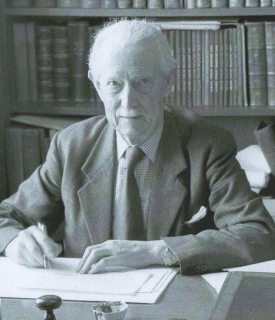
Death of Musicologist Francis Llewellyn Harrison

Francis Llewellyn Harrison, better known as “Frank Harrison” or “Frank Ll. Harrison” and one of the leading musicologists of his time and a pioneering ethnomusicologist, dies in Canterbury, England, on December 29, 1987.

Initially trained as an organist and composer, he turns to musicology in the early 1950s, first specialising in English and Irish music of the Middle Ages and increasingly turning to ethnomusicological subjects in the course of his career. His Music in Medieval Britain (1958) is still a standard work on the subject, and Time, Place and Music (1973) is a key textbook on ethnomusicology.

Harrison is born in Dublin on September 29, 1905, the second son of Alfred Francis Harrison and Florence May (née Nash). He becomes a chorister at St. Patrick’s Cathedral, Dublin in 1912 and is educated at the cathedral grammar school and Mountjoy School. A competent organist, he is deputy organist at St. Patrick’s from 1925 to 1928. In 1920, he also begins musical studies at the Royal Irish Academy of Music, where he studies with John Francis Larchet (composition), George Hewson (organ) and Michele Esposito (piano). In 1926, he graduates Bachelor of Music at Trinity College Dublin and is awarded a doctorate (MusD) in 1929 for a musical setting of Psalm 19. He then works in Kilkenny for one year, serving as organist at St. Canice’s Cathedral and music teacher at Kilkenny College.

In 1930, Harrison emigrates to Canada to become organist at Westminster Presbyterian Church in New Glasgow, Nova Scotia. In 1933, he studies briefly with Marcel Dupré in France but returns to Canada in 1934 to become organist at Knox Presbyterian Church in Ottawa. In 1935, he takes a position as organist and choirmaster at St. George’s Cathedral in Kingston, Ontario, as well as taking up the newly created post of “resident musician” at Queen’s University at Kingston. His duties include giving lectures, running a choir and an orchestra, and conducting concerts himself. His course in the history and appreciation of music is the first music course to be given for full credit at Queen’s. He resigns from St. George’s in 1941 to become assistant professor of music at Queen’s in 1942. During his years in Canada he still pursues the idea of remaining a performing musician and composer, winning three national composition competitions: for Winter’s Poem (1931), Baroque Suite (1943) and Night Hymns on Lake Nipigon (1945).

On a year’s leave of absence from Queen’s, Harrison studies composition with Paul Hindemith at Yale University, also taking courses in musicology with Leo Schrade. In 1946, he takes up a position at Colgate University in Hamilton, New York, and then moves on to Washington University in St. Louis as head of the new Department of Music (1947–1950).

In 1951, Harrison takes the degrees of Master of Arts (M.A.) and Doctor of Music (DMus) at Jesus College, Oxford, and becomes lecturer (1952), senior lecturer (1956), and reader in the history of music (1962–1970) there. In 1965, he is elected Fellow the British Academy and Senior Research Fellow at Oxford. From 1970 to 1980, he is Professor of Ethnomusicology at the University of Amsterdam in the Netherlands, retiring to part-time teaching in 1976.

Harrison also holds Visiting Professorships in musicology at Yale University (1958–1959), Princeton University (spring 1961 and 1968–1969), and Dartmouth College (winter 1968 and spring 1972). He also briefly returns to Queen’s University at Kingston as Queen’s Quest Visiting Professor in the fall of 1980 and is Visiting Andrew W. Mellon Professor of Music at the University of Pittsburgh for the calendar year 1981.

Harrison’s honorary titles also include Doctor of Laws at Queen’s University, Kingston (1974), Corresponding Member of the American Musicological Society (1981), and Vice President and Chairman of the Plainsong and Medieval Music Society (1985). At Queen’s also, the new Harrison-LeCaine Hall (1974) is partly named in his honour.

Harrison dies in Canterbury, England on December 29, 1987.

In 1989, Harry White appreciates Harrison as “an Irish musicologist of international standing and of seminal influence, whose scholarly achievement, astonishingly, encompassed virtually the complete scope of the discipline which he espoused.” David F. L. Chadd writes of him “He was above all things an explorer, tirelessly curious and boyishly delighted in the pursuit of knowledge, experience and ideas, and totally heedless of artificially imposed constraints and boundaries.”

Since 2004, the Society for Musicology in Ireland (SMI) awards a bi-annual Irish Research Council Harrison Medal in his honour to distinguished international musicologists.


Leave a comment

Birth of Edna O’Brien, Novelist, Playwright & Poet

Edna O’Brien, novelist, memoirist, playwright, poet and short story writer, is born in Tuamgraney, County Clare on December 15, 1930. Philip Roth describes her as “the most gifted woman now writing in English,” while the former President of Ireland Mary Robinson cites her as “one of the great creative writers of her generation.” Her works often revolve around the inner feelings of women, and their problems in relating to men, and to society as a whole.

O’Brien is the youngest child of “a strict, religious family.” From 1941 to 1946 she is educated by the Sisters of Mercy, a circumstance that contributes to a “suffocating” childhood. “I rebelled against the coercive and stifling religion into which I was born and bred. It was very frightening and all pervasive. I’m glad it has gone.” She is fond of a nun as she deeply misses her mum and tries to identify the nun with her mother.

In 1950, O’Brien is awarded a licence as a pharmacist. In Ireland, she reads such writers as Leo Tolstoy, William Makepeace Thackeray, and F. Scott Fitzgerald. In 1954, she marries, against her parents’ wishes, the Irish writer Ernest Gébler and the couple moves to London. They have two sons, but the marriage is dissolved in 1964. Gébler dies in 1998.

In London, O’Brien purchases Introducing James Joyce, with an introduction written by T. S. Eliot. When she learns that James Joyce‘s A Portrait of the Artist as a Young Man is autobiographical, it makes her realise where she might turn, should she decide to write herself. In London she starts work as a reader for Hutchinson, where on the basis of her reports she is commissioned, for £50, to write a novel. Her first novel, The Country Girls (1960), is often credited with breaking silence on sexual matters and social issues during a repressive period in Ireland following World War II.

This novel is the first part of a trilogy of novels which includes The Lonely Girl (1962) and Girls in Their Married Bliss (1964). Shortly after their publication, these books are banned and, in some cases burned, in her native country due to their frank portrayals of the sex lives of their characters. Her novel A Pagan Place (1970) is about her repressive childhood. Her parents are vehemently against all things related to literature and her mother strongly disapproves of her daughter’s career as a writer.

O’Brien is a panel member for the first edition of the BBC‘s Question Time in 1979. In 2017, she becomes the sole surviving member.

In 1980, she writes a play, Virginia, about Virginia Woolf, and it is staged originally in June 1980 at the Stratford Festival, Ontario, Canada and subsequently in the West End of London at the Theatre Royal Haymarket with Maggie Smith and directed by Robin Phillips. It is staged at The Public Theater in New York City in 1985.

Other works include a biography of James Joyce, published in 1999, and one of the poet Lord Byron, Byron in Love (2009). House of Splendid Isolation (1994), her novel about a terrorist who goes on the run, marks a new phase in her writing career. Down by the River (1996) concerns an under-age rape victim who seeks an abortion in England, the “Miss X case.” In the Forest (2002) deals with the real-life case of Brendan O’Donnell, who abducts and murders a woman, her three-year-old son, and a priest, in rural Ireland.

O’Brien now lives in London. She receives the Irish PEN Award in 2001. Saints and Sinners wins the 2011 Frank O’Connor International Short Story Award, the world’s richest prize for a short story collection. Faber and Faber publishes her memoir, Country Girl, in 2012. In 2015, she is bestowed Saoi by Aosdána.


Leave a comment

Birth of Surgeon Andrew Rynne

Andrew Rynne, retired Irish surgeon, medical practitioner and founder of Clane General Hospital in County Kildare, is born on May 18, 1942, at Downings House in Prosperous, County Kildare. He is the chairperson of the Irish Family Planning Association (IFPA) and the Republic of Ireland‘s first vasectomy specialist. He is known for his liberal approach to birth control.

Rynne’s father is Stephen Rynne, a writer, broadcaster, author and wit, while his mother, Alice Curtayne, is a writer, hagiographer, lecturer, linguist and scholar. He attends Prosperous National School from 1947 to 1951 and Ring College Waterford from 1951 do 1952. From 1961 to 1968, he attends the Royal College of Surgeons in Ireland. After graduation, he emigrates to Canada with an internship with Hamilton Civic Hospital.

Rynne starts his general practise in Mitchell, Ontario, from 1968 to 1973, where he is introduced to vasectomy. In 1970, he is appointed as the coroner for Perth County, Ontario. In January 1974, he returns to Ireland and establishes a general practise in Clane, County Kildare.

In 1975, Rynne joins Irish Family Planning Association and starts doing vasectomies for them. In 1984, he sells condoms as an act of civil disobedience and gets fined £500. In the following year, he becomes the Chairman of IFPA. In the same year, he founds Clane General Hospital with the opposition from the Catholic Church and the local supporters.

In 1990, Rynne is shot by a man on whom he had carried out a vasectomy eight years previously. According to Rynne, the gunman fires six or seven times with a .22 Long Rifle and shoots him in the right hip. The incident is the subject of a short film The Vasectomy Doctor by Paul Webster.


Leave a comment

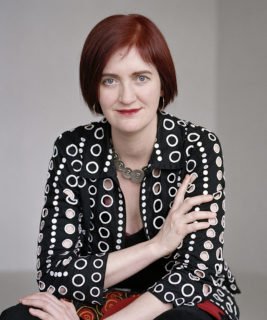
Birth of Emma Donoghue, Playwright, Historian, Novelist & Screenwriter

Emma Donoghue, an Irish Canadian playwright, literary historian, novelist, and screenwriter, is born in Dublin on October 24, 1969. Her 2010 novel Room is a finalist for the Man Booker Prize and an international best-seller. Her 1995 novel Hood wins the Stonewall Book Award and Slammerkin (2000) wins the Ferro-Grumley Award for Lesbian Fiction. She is a 2011 recipient of the Alex Awards. Room is adapted by Donoghue into a film of the same name. For this, she is nominated for the Academy Award for Best Adapted Screenplay.

Donoghue is the youngest of eight children, the daughter of Frances (née Rutledge) and academic and literary critic Denis Donoghue. She has a first-class honours Bachelor of Arts degree from University College Dublin (UCD) in English and French as well as a PhD in English from Girton College, Cambridge. While at Cambridge she lives in a women’s co-operative, an experience which inspires her short story “The Welcome.” Her thesis is on friendship between men and women in 18th-century fiction.

At Cambridge, she meets her future wife, Christine Roulston, a Canadian who is now professor of French and Women’s Studies at the University of Western Ontario. They move permanently to Canada in 1998 and Donoghue becomes a Canadian citizen in 2004. She lives in London, Ontario, with Roulston and their two children.

Donoghue has spoken of the importance of the writing of Emily Dickinson, of Jeanette Winterson‘s novel The Passion and Alan Garner‘s Red Shift in the development of her work. She says that she aims to be “industrious and unpretentious” about the process of writing, and that her working life has changed since having children.

Donoghue’s novels include Stir Fry (1994), a finalist for the Lambda Literary Award in 1994, Slammerkin (2000), a finalist in the 2001 Irish Times Irish Literature Prize for Fiction and winner of the 2002 Ferro-Grumley Award for Lesbian Fiction, Landing (2007), The Sealed Letter (2008), joint winner of the 2009 Lambda Literary Award for Lesbian Fiction, Room (2010), winner of the Irish Book Award 2010, Frog Music (2014), The Wonder (2016), shortlisted for the Scotiabank Giller Prize, Akin (2019), The Pull of the Stars (2020), longlisted for the Giller Prize in 2020, and Haven (2022).


Leave a comment

The Fenian Invasion of Canada

On June 1, 1866, a group of Fenian soldiers cross the border from the United States into Canadian territory. The events of the so-called Fenian invasion of Canada leave the organisation utterly discredited and cause much dismay among Irish American communities.

The roots of the invasion go back to 1865 when the Fenians in the United States break into two factions, one headed by William Roberts and the other by John O’Mahony, a founding member of the Fenian Brotherhood in the United States. It is the Roberts wing which proposes a Fenian invasion of Canada. A number of facts are put forward by Roberts and others in support of this plan. In 1865 there are tens of thousands of battle-hardened Irish veterans of the American Civil War, as well as many officers from both the Union and Confederate armies. It is initially proposed to utilise these soldiers for an incursion into Canada that would be timed to coincide with a revolution in Ireland, thus causing Great Britain to be engaged in two widely separated theatres of war.

When it becomes apparent that the hoped-for rising in Ireland is not going to take place, the goal of the invasion is changed. The Fenians now hope that they can engineer a border incident that will entangle British forces in a war with the United States.

At the time the U.S. Government has a fractious relationship with their British counterparts, a remnant of the British Empire‘s partiality towards the Confederacy during the American Civil War. During the war the British Government comes close to granting diplomatic recognition to the Confederacy and British shipyards provide raiding vessels such as the notorious USS Alabama to the South. While this ill-feeling is unlikely to lead to full-scale conflict, the U.S. Government is in no mood to provide any aid to the British in Canada. President Andrew Johnson is aware of the Fenian’s plans but does little to hinder them.

The two competing Fenian factions launch separate operations. In April 1866, the O’Mahony wing attempts to seize Campobello Island near New Brunswick but the Fenian attackers are easily dispersed by U.S. naval forces. The Roberts wing launches its attack on Canada under the command of a civil war veteran, General John Charles O’Neill, on June 1, 1866.

General O’Neill leads a force of over one thousand men into Canadian territory near Fort Erie, Ontario. His invading army has some initial success, winning two engagements including the so-called Battle of Ridgeway with around ten fatalities (with a similar number on the Canadian side). O’Neill’s troops keep their discipline and local civilians are respected, as are Canadian prisoners of war. One soldier, Lance Corporal William Ellis, later writes, “the Fenians treatment of myself and the other prisoners was kind and considerate in the extreme.”

Yet, O’Neill is aware that far larger Canadian forces are approaching and on June 3 feels it prudent to take his army back to American territory, while they await reinforcements. However, the U.S. government is now fearful that events are spiralling out of control. Once back across the border, O’Neill’s army is met by American troops who intervene to prevent the Fenians from making any further attacks. Over the following days the Fenian army is broken up by American forces. O’Neill is arrested by U.S. Marshals and temporarily incarcerated. A second, smaller, incursion into Canada follows on June 6 but this, too, makes little headway. This second Fenian army is also broken up by U.S. forces when back on American soil. By June 8 the Fenian invasion of Canada is over.

The whole invasion demonstrates the futility of the Fenian strategy. It proves that the Canadians would fight to preserve their territory and that they could mobilise thousands of their population to do so. There is little hope that the Fenians could muster the required number of troops necessary to seize and then to hold Canadian territory. Most importantly, there could be no doubt now that the U.S. Government would not, despite its tempestuous relationship with the British Empire, offer any support to a Fenian invasion. Nor would the U.S. Government allow itself to be embroiled in a border war with British or Canadian forces. Nevertheless, these lessons are ignored by some Fenians for whom the idea of attacking Canada is a worthwhile objective over the following few years.

In 1870 another convention takes place amid more internal wrangling within the Brotherhood. There, a decision is made to launch a new attack on Canada. Once again John O’Neill commands the Fenians, among whose army is John Boyle O’Reilly, a young journalist. O’Reilly makes detailed reports on the invasion, an event that proves disastrous for Fenianism in the United States.

(From: “The Fenian Invasion Of Canada, 1866” by Ian Kenneally, The Irish Story, http://www.theirishstory.com)


Leave a comment

Birth of Robert Horatio George Minty, Officer in the U.S. Union Army

Robert Horatio George Minty, a Brevet Major General in the Union Army during the American Civil War, is born in Westport, County Mayo, on December 4, 1831.

In 1836, Minty’s father, also named Robert, is promoted to lieutenant in the 1st West India Regiment of Foot, which is a regiment of black enlisted men with white officers. The whole family leaves Ireland and travels with him through Minty’s later childhood and teenage years. They move all around the Caribbean and West Africa ultimately being sent to Sierra Leone.

Minty’s father becomes judge advocate general in Jamaica in 1846 but dies after falling victim to yellow fever in 1848. Though he is only 17 at the time, he is allowed to take over his father’s commission in the regiment. After serving five years in the regiment he resigns his commission, possibly because he nearly becomes a victim of a tropical disease himself.

Minty immigrates to Ontario, Canada, where his mother and the family had moved after his father’s death. He is hired by the Great Western Railroad Company at a time when the railroad business is exploding in both the United States and Canada. He is involved with railroads for the rest of his life, with time out for the American Civil War.

Minty is commissioned as Major of the 2nd Michigan Cavalry Regiment on October 2, 1862, but holds that duty for only a month before he is transferred to the 3rd Michigan Cavalry Regiment and promoted to Lieutenant Colonel. His time with the new regiment is again relatively brief, for in March 1862 he is given the task of recruiting another regiment that becomes the 4th Michigan Cavalry Regiment.

Promoted to Colonel and officially given command of the unit on July 21, 1862, Minty leads it as it fights in Kentucky, Tennessee, Georgia and the Carolinas, taking part in the Battle of Chickamauga and the Battle of Atlanta. He is brevetted Brigadier General, U.S. Volunteers and Major General, U.S. Volunteers on March 13, 1865, for “gallant and meritorious services during the war.”

Minty and the men under his command are noted as being the regiment that captures the fleeing President of the Confederate States of America, Jefferson Davis, at Irwinville, Georgia on May 9, 1865, as the Confederacy collapses.

Minty is honorably mustered out of the Union Army on April 15, 1865, at Nashville, Tennessee, and becomes a successful railroad executive in his post-war career. He dies at the age of 74 on August 24, 1906, in Jerome, Arizona. He is buried at Aultorest Memorial Park in Ogden, Utah.