seamus dubhghaill

Promoting Irish Culture and History from Little Rock, Arkansas, USA


Leave a comment

Birth of Pádraig de Brún, Catholic Priest & Linguist

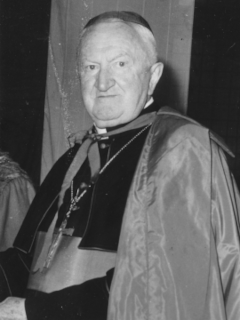
Pádraig de Brún, also called Patrick Joseph Monsignor Browne, a Roman Catholic priestlinguistClassicist, and Celticist, is born in Grangemockler, County Tipperary, on October 13, 1889. With regard to his contribution to modern literature in Irish, he, who Louis de Paor terms in 2014 “one of the most distinguished literary figures of his time,” is also a writer of Irish poetry in the Irish language and the literary translator of many of the greatest works of the Western canon into Modern Irish. He serves as President of University College, Galway (UCG), and is known in friendly and informal circles as Paddy Browne.

De Brún is the son of a primary school teacher, Maurice Browne. He is educated locally, at Rockwell CollegeCashel, and at Holy Cross College, Drumcondra, Dublin (at both he is tutored in mathematics by Éamon de Valera). In 1909, he is awarded a BA from the Royal University of Ireland. He is awarded an MA degree by the National University of Ireland, and wins a traveling scholarship in mathematics and mathematical physics, enabling him to pursue further studies in Paris. He is ordained as a Catholic priest at the Irish College in Paris in 1913, the same year he earns his D.Sc. in mathematics from the University of Paris under Émile Picard.

After a period at the University of Göttingen, de Brún is appointed professor of mathematics at St. Patrick’s Pontifical University, Maynooth, in 1914. In April 1945, he is elected by the Senate of the National University of Ireland to succeed John Hynes as President of University College, Galway, an office he holds until his retirement in 1959. His friend Thomas MacGreevy refers to de Brún as, “Rector Magnificus,” and praises his, “Olympian capacity to appreciate the most exalted works of art and literature, ancient and modern.”

The School of Mathematics, Mathematical Physics and Statistics is based in Áras de Brún, a building named in de Brún‘s honour. He subsequently becomes Chairman of the Arts Council of Ireland, a position he holds until his death in 1960. He also serves as chairman of the Council of the Dublin Institute for Advanced Studies (DIAS).

De Brún is close friend of 1916 Easter Rising leader Seán Mac Diarmada and is deeply affected by the latter’s execution.

De Brún was a prolific writer of Irish poetry in the Irish language, including the well-known poem “Tháinig Long ó Valparaiso.” He further translates into Modern Irish many great works of the Western canon, including Homer‘s Iliad and OdysseySophocles‘ Antigone and Oedipus Rex, and Plutarch‘s Parallel Lives, as well as French stage plays by Jean Racine and Dante Alighieri‘s Divine Comedy. With regards to his importance to modern literature in Irish, he is recently termed “one of the most distinguished literary figures of his time.”

The French Government awards de Brún the title of Chevalier of the Legion d’Honneur in 1949, and in 1956, the order Al Merito della Repubblica Italiana is conferred on him by the President of Italy. He is created a Domestic Prelate (a Monsignor) by Pope Pius XII in 1950.

De Brún purchases land at Dunquin in the Dingle Peninsula Gaeltacht. In the 1920s, he also builds a house there known as Tigh na Cille, where his sister and her children often visit and stay at length. Through his literary mentorship of his niece, the future poet Máire Mhac an tSaoi, he has been credited with having an enormous influence upon the future development of modern literature in Irish.

After suffering a heart attack at his house at Seapoint, Dún Laoghaire, into which he had recently moved, de Brún dies on June 5, 1960, in St. Vincent’s nursing home, Leeson Street, Dublin.


Leave a comment

Death of Seán T. O’Kelly, Second President of Ireland

Seán Thomas O’Kelly (Irish: Seán Tomás Ó Ceallaigh), the second President of Ireland, dies on November 23, 1966, at the Mater Private Nursing Home in Dublin, after an illness of sixteen months. He serves two terms as President from 1945 to 1959. He is a member of Dáil Éireann from 1918 until his election as President. During this time, he serves as Minister for Local Government and Public Health (1932–1939) and Minister for Finance (1939–1945). He serves as Vice-President of the Executive Council from 1932 until 1937 and is the first Tánaiste from 1937 until 1945.

O’Kelly is born on August 25, 1882, on Capel Street in the north inner-city of Dublin. He joins the National Library of Ireland in 1898 as a junior assistant. That same year, he joins the Gaelic League, becoming a member of the governing body in 1910 and General Secretary in 1915.

In 1905 O’Kelly joins Sinn Féin who, at the time, supports a dual monarchy. He is an honorary secretary of the party from 1908 until 1925. In 1906 he is elected to Dublin Corporation, which is Dublin’s city council. He retains the seat for the Inns Quay Ward until 1924.

O’Kelly assists Patrick Pearse in preparing for the Easter Rising in 1916. After the rising, he is jailed, released, and jailed again. He escapes from detention at HM Prison Eastwood Park in Falfield, South Gloucestershire, England and returns to Ireland.

O’Kelly is elected Sinn Féin MP for Dublin College Green in the 1918 Irish general election. Along with other Sinn Féin MPs he refuses to take his seat in the British House of Commons. Instead, they set up an Irish parliament, called Dáil Éireann, in Dublin. O’Kelly is Ceann Comhairle (Chairman) of the First Dáil. He is the Irish Republic’s envoy to the post-World War I peace treaty negotiations at the Palace of Versailles, but the other countries refuse to allow him to speak as they do not recognise the Irish Republic.

O’Kelly is a close friend of Éamon de Valera, and both he and de Valera oppose the Anglo-Irish Treaty of December 1921. When de Valera resigns as President of the Irish Republic on January 6, 1922, O’Kelly returns from Paris to try to persuade de Valera to return to the presidency but de Valera orders him to return to Paris.

During the Irish Civil War, O’Kelly is jailed until December 1923. Afterwards he spends the next two years as a Sinn Féin envoy to the United States.

In 1926 when de Valera leaves Sinn Féin to found his own republican party, Fianna Fáil, O’Kelly follows him, becoming one of the party’s founding members. In 1932, when de Valera is appointed President of the Executive Council of the Irish Free State, he makes O’Kelly the Minister for Local Government and Public Health. He often tries to publicly humiliate the Governor-General of the Irish Free State, James McNeill, which damages O’Kelly’s reputation and image, particularly when the campaign backfires.

In 1938, many believe that de Valera wants to make O’Kelly the Fianna Fáil choice to become President of Ireland, under the new Irish constitution, Bunreacht na hÉireann. When Lord Mayor of Dublin, Alfie Byrne, says he wants to be president there is an all-party agreement to nominate Douglas Hyde, a Protestant Irish Senator, Irish language enthusiast and founder of the Gaelic League. They believe Hyde to be the only person who might win an election against Alfie Byrne. O’Kelly is instead appointed Minister of Finance and helps create Central Bank in 1942.

O’Kelly leaves the cabinet when he is elected President of Ireland on June 18, 1945, in a popular vote of the people, defeating two other candidates. He is re-elected unopposed in 1952. During his second term he visits many nations in Europe and speaks before the United States Congress in 1959. He retires at the end of his second term in 1959, to be replaced by his old friend, Éamon de Valera. Following his retirement, he is described as a model president by the normally hostile newspaper, The Irish Times. Though controversial, he is widely seen as genuine and honest, but tactless.

O’Kelly’s strong Roman Catholic beliefs sometimes cause problems. Éamon de Valera often thinks that O’Kelly either deliberately or accidentally leaks information to the Knights of Saint Columbanus and the Church leaders. He ensures that his first state visit, following the creation of the Republic of Ireland in 1949, is to the Vatican City to meet Pope Pius XII. He accidentally reveals the Pope’s private views on communism. This angers the Pope and Joseph Stalin and is why he is not given the papal Supreme Order of Christ which is given to many Catholic heads of state.

On his retirement O’Kelly gives a series of radio talks about his early life and the independence movement. These form the basis of an account serialised in The Irish Press (July 3 to August 9, 1961) and subsequently translated into Irish and published as Seán T. (1963), echoing the nickname by which he is commonly known. The book relies heavily on memory and its accuracy on points of detail has been questioned by scholars such as F. X. Martin. In retirement he lived at his home, Roundwood Park in County Wicklow.

O’Kelly dies at the Mater Private Nursing Home in Dublin on November 23, 1966, at the age of 84, fifty years after the Easter Rising that first brought him to prominence. He is buried in Glasnevin Cemetery, Glasnevin, Dublin. His perceived unctuousness and his opportunistic tendencies in his later career should not efface his significance as a separatist organiser and an effective populist politician, who played a major role in the establishment of Fianna Fáil political hegemony.


Leave a comment

Birth of John D’Alton, Cardinal of the Roman Catholic Church

John Francis D’Alton, Irish Cardinal of the Roman Catholic Church who serves as Archbishop of Armagh and thus Primate of All Ireland from 1946 until his death, is born in Claremorris, County Mayo, on October 11, 1882. He is elevated to the cardinalate in 1953.

D’Alton is born to Joseph D’Alton and his wife Mary Brennan, at the height of the Land Wars in Ireland. He is baptised four days later, on October 15, 1882, with Michael and Mary Brennan acting as his godparents. His mother has a daughter, Mollie Brennan, from a previous marriage, she remarries again after the Cardinal’s father dies in 1883.

D’Alton obtains an extensive education at Blackrock College, Holy Cross College in Drumcondra, University College Dublin (UCD) and the Irish College in Rome. He is a contemporary of Éamon de Valera, whom he befriends at Blackrock College. In his first year in Blackrock, de Valera beats D’Alton in two subjects – Maths, which he later goes on to teach, and Religion.

D’Alton is ordained to the priesthood on April 18, 1908, for service in the Archdiocese of Dublin. He undertakes further postgraduate studies in Rome from 1908 to 1910, gaining a Doctor of Divinity and is appointed to teach Ancient Classics, Latin, and Greek at St. Patrick’s College, Maynooth.

D’Alton occupies important roles at the National Seminary and is successively Professor of Ancient Classics (1912), Greek (1922), Vice-President (1934), and President (1936). He is raised to the rank of Monsignor on June 27, 1938.

On April 25, 1942, D’Alton is appointed coadjutor bishop of Meath and titular bishop of Binda. He receives his episcopal consecration on the following June 29 from Cardinal Joseph MacRory, with Bishops Edward Mulhern and William MacNeely serving as co-consecrators, in the chapel of St. Patrick’s College. He succeeds Thomas Mulvany as Bishop of Meath on June 16, 1943.

D’Alton is named Archbishop of Armagh and thus Primate of All Ireland on June 13, 1946, and is created Cardinal Priest of Sant’ Agata de’ Goti in Rome by Pope Pius XII in the consistory of January 12, 1953. As a cardinal elector in the 1958 papal conclave, he gives a hint of the difficulties involved in that papal conclave and achieving unanimity in the voting.

D’Alton is a member of the Central Preparatory Commission of the Second Vatican Council but lives long enough to attend only the Council’s first session in 1962.

One highlight of D’Alton’s time in Armagh is the Patrician Year Celebrations in 1961, marked by the Irish Catholic hierarchy as the 1,500th anniversary of the death of Saint Patrick and as such an opportunity to promote the “spiritual empire” created by the Irish Catholic church in the wider anglophone world. He writes a pastoral letter to mark the occasion.

Cardinal D’Alton is seen to be more ecumenical in outlook than other members of the Irish hierarchy. He tries to broker talks between the Irish Free State and the United Kingdom to ease the tensions between both countries, even going so far as to address the situation regarding the Irish ports, but to little avail.

In 1952, D’Alton becomes the first individual from the Republic of Ireland to receive an honorary degree from Queen’s University Belfast (QUB), when he is conferred with a Doctorate in Literature. He already possesses a Doctor of Divinity, so this degree is a recognition of his earlier works such as Horace and His Age: A Study in Historical Background (1917), Roman Literary Theory and Criticism: A Study in Tendencies (1931), and Selections from St. John Chrysostom (1940).

D’Alton dies from a heart attack in Dublin at age 80 on February 1, 1963, and is buried on the grounds of St. Patrick’s Cathedral, Armagh. He is succeeded by his auxiliary bishop, William Conway.

In D’Alton’s hometown of Claremorris, the Dalton Inn Hotel and Dalton Street (formerly Church Street) are named after him. A plaque commemorating him is unveiled at the Dalton Inn Hotel on September 28, 2023. Plans to canonise him have been discussed.


Leave a comment

Birth of Michael J. Browne, Bishop of Galway and Kilmacduagh

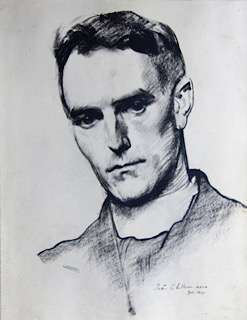
Michael J. Browne, an Irish prelate of the Roman Catholic Church, is born in Westport, County Mayo, on December 20, 1895. He serves as Bishop of Galway and Kilmacduagh for almost forty years from 1937 to 1976.

Browne is an important and outspoken member of the Irish hierarchy. His time as Bishop has been described by the historian James S. Donnelly Jr. as “far-reaching and … controversial,” while the historian of Irish Catholicism John Henry Whyte claims that Browne’s “readiness to put forward his views bluntly is welcome at least to the historian.”

Browne is ordained to the priesthood on June 20, 1920, for the Archdiocese of Tuam. He later serves as professor of moral theology at St. Patrick’s College, Maynooth.

On August 6, 1937, at the relatively young age of 41, Browne is appointed Bishop of Galway and Kilmacduagh by Pope Pius XI, receiving his episcopal consecration from Archbishop Thomas Gilmartin on the following August 10. He supports Taoiseach Éamon de Valera‘s defence of arrests and police searches for cached Irish Republican Army (IRA) arms, declaring, “Any Irishman who assists any foreign power to attack the legitimate authority of his own land is guilty of the most terrible crime against God’s law, and there can be no excuse for that crime – not even the pretext of solving partition or of securing unity.”

In 1939, Browne is selected by Éamon de Valera to chair the Commission on Vocational Organisation.

Browne is attentive to the state of public morality in the diocese, and James S. Donnelly Jr. has noted his role in directing episcopal and clerical censorship of newsagents and county librarians. He is also concerned about public intoxication and other misconduct at the Galway Races, controversies over dancing and the commercial dance halls, as well as immodesty in dress and the closely related issue of so-called “mixed bathing” in Galway and Salthill.

Like other members of the Irish Catholic hierarchy, Browne regularly condemns communism in his pastoral letters. When Cardinal József Mindszenty is detained by Hungary‘s post-war communist government, Browne in 1949 forwards protest resolutions from Galway Corporation, Galway County Council and the University College Galway student body to Pope Pius XII. He also frequently condemns the Connolly Association, an Irish republican socialist group in Britain close to the Communist Party of Great Britain.

In 1957, in response to a growing tension between Catholics and Protestants at Fethard-on-Sea, including the Fethard-on-Sea boycott, Browne says, “non-Catholics do not protest against the crime of conspiring to steal the children of a Catholic father, but they try to make political capital when a Catholic people make a peaceful and moderate protest.”

The most enduring monument or physical legacy of Browne’s time as Bishop is the Cathedral of Our Lady Assumed into Heaven and St Nicholas, commonly known as Galway Cathedral, which is dedicated in 1965 by Cardinal Richard James Cushing of Boston, Massachusetts. The site of the old jail had come into the possession of the diocese in 1941 and Browne leads the campaign to construct a new Cathedral. This includes a 1957 audience with Pope Pius XII where the plans are approved.

Browne attends the Second Vatican Council from 1962 to 1965 and retires in 1976. He dies four years later, at the age of 84, on February 24, 1980.

Browne is parodied in Breandán Ó hÉithir`s novel Lig Sinn i gCathu, which fictionalises late 1940s Galway as “Baile an Chaisil” and Browne as “An tEaspag Ó Maoláin.”

The Irish cabinet minister Noël Browne (no known relation) in his 1986 memoir Against the Tide describes the physical attributes of his episcopal namesake:

“The bishop had a round soft baby face with shimmering clear cornflower-blue eyes, but his mouth was small and mean. Around his great neck was an elegant glinting gold episcopal chain with a simple pectoral gold cross. He wore a ruby ring on his plump finger and wore a slightly ridiculous tiny scullcap on his noble head. The well-filled semi-circular scarlet silk cummerbund and sash neatly divided the lordly prince into two.”
Leave a comment

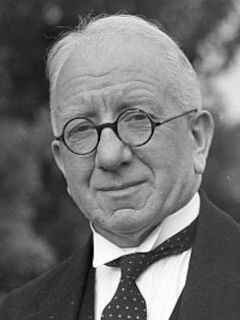
Seán Thomas O’Kelly Elected Second President of Ireland

Seán Thomas O’Kelly (Irish: Seán Tomás Ó Ceallaigh) is elected the second President of Ireland on June 18, 1945. He serves two terms from 1945 to 1959. He is a member of Dáil Éireann from 1918 until his election as President. During this time, he serves as Minister for Local Government and Public Health (1932–1939) and Minister for Finance (1939–1945). He serves as Vice-President of the Executive Council from 1932 until 1937 and is the first Tánaiste from 1937 until 1945.

O’Kelly is born on August 25, 1882, on Capel Street in the north inner-city of Dublin. He joins the National Library of Ireland in 1898 as a junior assistant. That same year, he joins the Gaelic League, becoming a member of the governing body in 1910 and General Secretary in 1915.

In 1905 O’Kelly joins Sinn Féin who, at the time, supports a dual monarchy. He is an honorary secretary of the party from 1908 until 1925. In 1906 he is elected to Dublin Corporation, which is Dublin’s city council. He retains the seat for the Inns Quay Ward until 1924.

O’Kelly assists Patrick Pearse in preparing for the Easter Rising in 1916. After the rising, he is jailed, released, and jailed again. He escapes from detention at HM Prison Eastwood Park in Falfield, South Gloucestershire, England and returns to Ireland.

O’Kelly is elected Sinn Féin MP for Dublin College Green in the 1918 Irish general election. Along with other Sinn Féin MPs he refuses to take his seat in the British House of Commons. Instead, they set up an Irish parliament, called Dáil Éireann, in Dublin. O’Kelly is Ceann Comhairle (Chairman) of the First Dáil. He is the Irish Republic’s envoy to the post-World War I peace treaty negotiations at the Palace of Versailles, but the other countries refuse to allow him to speak as they do not recognise the Irish Republic.

O’Kelly is a close friend of Éamon de Valera, and both he and de Valera oppose the Anglo-Irish Treaty of December 1921. When de Valera resigns as President of the Irish Republic on January 6, 1922, O’Kelly returns from Paris to try to persuade de Valera to return to the presidency but de Valera orders him to return to Paris.

During the Irish Civil War, O’Kelly is jailed until December 1923. Afterwards he spends the next two years as a Sinn Féin envoy to the United States.

In 1926 when de Valera leaves Sinn Féin to found his own republican party, Fianna Fáil, O’Kelly follows him, becoming one of the party’s founding members. In 1932, when de Valera is appointed President of the Executive Council of the Irish Free State, he makes O’Kelly the Minister for Local Government and Public Health. He often tries to publicly humiliate the Governor-General of the Irish Free State, James McNeill, which damages O’Kelly’s reputation and image, particularly when the campaign backfires.

In 1938, many believe that de Valera wants to make O’Kelly the Fianna Fáil choice to become President of Ireland, under the new Irish constitution, Bunreacht na hÉireann. When Lord Mayor of Dublin, Alfie Byrne, says he wants to be president there is an all-party agreement to nominate Douglas Hyde, a Protestant Irish Senator, Irish language enthusiast and founder of the Gaelic League. They believe Hyde to be the only person who might win an election against Alfie Byrne. O’Kelly is instead appointed Minister of Finance and helps create Central Bank in 1942.

O’Kelly leaves the cabinet when he is elected President of Ireland on June 18, 1945, in a popular vote of the people, defeating two other candidates. He is re-elected unopposed in 1952. During his second term he visits many nations in Europe and speaks before the United States Congress in 1959. He retires at the end of his second term in 1959, to be replaced by his old friend, Éamon de Valera. Following his retirement, he is described as a model president by the normally hostile newspaper, The Irish Times. Though controversial, he is widely seen as genuine and honest, but tactless.

O’Kelly’s strong Roman Catholic beliefs sometimes cause problems. Éamon de Valera often thinks that O’Kelly either deliberately or accidentally leaks information to the Knights of Saint Columbanus and the Church leaders. He ensures that his first state visit, following the creation of the Republic of Ireland in 1949, is to the Vatican City to meet Pope Pius XII. He accidentally reveals the Pope’s private views on communism. This angers the Pope and Joseph Stalin and is why he is not given the papal Supreme Order of Christ which is given to many Catholic heads of state.

O’Kelly dies in Blackrock, Dublin on November 23, 1966, at the age of 84, fifty years after the Easter Rising that first brought him to prominence. He is buried in Glasnevin Cemetery, Glasnevin, Dublin.


Leave a comment

Death of Cardinal John Joseph Glennon

Cardinal John Joseph Glennon, prelate of the Roman Catholic Church, dies on March 9, 1946, in Dublin. He serves as Archbishop of St. Louis from 1903 until his death. He is elevated to the cardinalate in 1946.

Glennon is born on June 14, 1862, in Kinnegad, County Westmeath, to Matthew and Catherine (née Rafferty) Glennon. After graduating from St. Finian’s College, he enters All Hallows College near Dublin in 1878. He accepts an invitation from Bishop John Joseph Hogan in 1882 to join the newly erected Diocese of Kansas City in the United States. After arriving in Missouri in 1883, he is ordained to the priesthood by Bishop Hogan on December 20, 1884.

Glennon is then assigned to St. Patrick’s Church in Kansas City and, briefly returning to Europe, furthers his studies at the University of Bonn in Germany. Upon his return to Kansas City, he becomes rector of the Cathedral of the Immaculate Conception. He is later made vicar general (1892) and apostolic administrator (1894) for the diocese.

On March 14, 1896, Glennon is appointed Coadjutor Bishop of Kansas City and Titular Bishop of Pinara by Pope Leo XIII. He receives his episcopal consecration on the following June 29 from Archbishop John Joseph Kain, with Bishops Maurice Francis Burke and John Joseph Hennessy serving as co-consecrators. At age 34, he becomes one of the youngest bishops in the world.

Glennon is named Coadjutor Archbishop of St. Louis on April 27, 1903. He succeeds Archbishop Kain as the fourth Archbishop of St. Louis upon the latter’s death on October 13 of that year. Realizing the Cathedral of St. Louis can no longer accommodate its growing congregation, he quickly begins raising funds for a new cathedral, the cornerstone of which is later laid on October 18, 1908.

Glennon opens the new Kenrick Seminary in 1915, followed by the minor seminary in Shrewsbury. He delivers the eulogy at the funeral of Cardinal James Gibbons and is appointed an Assistant at the Pontifical Throne on June 28, 1921. He opposes British rule in Ireland and supports the leaders of the Easter Rising. He is an outspoken opponent of divorce, condemns gambling games, and prohibits dancing and drinking at church-sponsored events. He sometimes throws the opening ball for the St. Louis Cardinals, but does not play any sports himself, once saying, “I once tried golf, but I so disfigured the scenery that I never played again, in fear of public indignation and reprisal.”[2]

Despite a rather popular tenure, as Archbishop of St. Louis Glennon opposes racial integration in the city’s Catholic schools, colleges, and universities. During the early 1940s, many local priests, especially Jesuits, challenge the segregationist policies at the city’s Catholic schools. The St. Louis chapter of the Midwest Clergy Conference on Negro Welfare, formed locally in 1938, pushes the all-female Webster College to integrate first. However, in 1943, Glennon blocks the enrollment of a young black woman at the college by speaking privately with the Kentucky-based superior of the Sisters of Loretto, which staffs the college. When approached directly by pro-integration priests, he calls the integration plan a “Jesuit ploy,” and quickly transfers one of the complaining priests away from his mission at an African American parish.

The Pittsburgh Courier, an African American newspaper with national circulation, discovers Glennon’s intervention and runs a front-page feature on the Webster incident. In response, Father Claude Heithaus, professor of Classical Archaeology at the Catholic Saint Louis University, delivers an angry sermon accusing his own institution of immoral behavior in its segregation policies. Saint Louis University begins admitting African American students that summer when its president, Father Patrick Holloran, manages to secure approval from the reluctant Archbishop Glennon. Nevertheless, St. Louis maintains one of the largest numbers of African American parishes and schools in the country.

On Christmas Eve 1945, it is announced that the 83-year-old Glennon will be elevated to the College of Cardinals. He originally thinks himself too old to make the journey to Rome, but eventually joins fellow Cardinals-elect Francis Spellman and Thomas Tien Ken-sin on their flight, during which time he contracts a cold from which he does not recover. Pope Pius XII creates him Cardinal Priest of San Clemente al Laterano in the consistory of February 18, 1946.

During the return trip to the United States, Glennon stops in his native Ireland, where he is received by President Seán T. O’Kelly and Taoiseach Éamon de Valera. While in Dublin, he is diagnosed with uremic poisoning and dies on March 9, 1946, ending a 42-year tenure as Archbishop. The Cardinal’s body is returned to St. Louis and then buried at the Cathedral.

Glennon is the namesake of the community of Glennonville, Missouri. The only diocesan hospital for children, Cardinal Glennon Children’s Hospital, affiliated with Saint Louis University Hospital, is created in his name.

(Pictured: Cardinal John J. Glennon, photo by the St. Louis Dispatch)


Leave a comment

Birth of Peadar Ó Dubhda, Translator & Teacher of Irish Language

peadar-o-dubhda

Peadar Ó Dubhda, novelist, playwright, musician, teacher and translator of the Irish language, is born in Dundalk, County Louth on June 29, 1881. He is the author of many plays, stories and manuscripts over the years and in his youth is a noted high jumper competing at local events.

Ó Dubhda leaves the local primary school at the age of twelve with only the most basic of an education, but when he goes to work as a delivery boy driving around the roads of North Louth on his horse and cart, he always has his O’Growney grammar book at his side, perfecting his knowledge of the Irish language. As a youth he joins the local brass band, where he is taught the cornet, but such is the depth of his intellect and his love for music he is an accomplished violinist, flautist and pianist in a very short time.

From his youth stretching into early manhood Ó Dubhda’s love of the Irish language is evident. He helps found a Gaelic League branch in Dundalk and perfects his use of the language by visiting Gaeltacht areas in the west of Ireland and Omeath. He is awarded a certificate to teach Irish by the Patrick Pearse and is a teacher in St. Mary’s College in Dundalk for over 20 years from 1915.

Ó Dubhda leaves teaching when he is offered his own children’s hour on Radio Éireann, a programme that lasts for over 30 years and through which a generation of Irish youth come to know and love his stories.

Ó Dubhda’s major work is the translation of the entire Douay version of the bible into Irish. The work takes twelve years and involves the deciphering of over three million words. The work is presented to the Irish nation in 1955 and is held in the National Museum of Ireland.

In 1950 Ó Dubhda is presented with the Papal medal, Pro Ecclessia el Pontifice by Pope Pius XII, to mark his 50th year as a member of his St. Malachy’s choir and one of his most prized possessions is a personal letter from Pope John XXIII praising him for his work for the church.

Peadar Ó Dubhda is just a month shy of his 90th birthday when he passes away in the loving care of his nieces in their Park Drive home on May 26, 1971. He is buried in Dundalk and his funeral is attended by President Éamon De Valera.


Leave a comment

Birth of Bing Crosby

bing-crosby

Harry Lillis “Bing” Crosby Jr., American singer and actor and descendant of Irish immigrants, is born on May 3, 1903, in Tacoma, Washington. His trademark warm bass-baritone voice makes him one of the best-selling recording artists of all time, selling over one billion analog records and tapes, as well as digital compact discs and downloads around the world.

Crosby’s parents are Harry Lillis Crosby Sr. (1870–1950), a bookkeeper of English descent, and Catherine Helen “Kate” (née Harrigan; 1873–1964), a second-generation Irish American. An ancestor, Simon Crosby, emigrates to America in the 17th century, and one of his descendants marries a descendant of Mayflower passenger William Brewster.

The first multimedia star, from 1931 to 1954 Crosby is a leader in record sales, radio ratings, and motion picture grosses. His early career coincides with technical recording innovations such as the microphone. This allows him to develop a laid-back, intimate singing style that influences many of the popular male singers who follow him, including Perry Como, Frank Sinatra, Dick Haymes, and Dean Martin. Yank, the Army Weekly magazine says that he is the person who has done the most for American soldiers’ morale during World War II.

The biggest hit song of Crosby’s career is his recording of Irving Berlin‘s “White Christmas,” which he introduces on a Christmas Day radio broadcast in 1941. The song then appears in his 1942 movie Holiday Inn. His record hits the charts on October 3, 1942, and rises to No. 1 on October 31, where it stays for eleven weeks.

In 1948, American polls declare him the “most admired man alive,” ahead of Jackie Robinson and Pope Pius XII. Also in 1948, Music Digest estimates that his recordings fill more than half of the 80,000 weekly hours allocated to recorded radio music.

Crosby wins an Academy Award for Best Actor for his role as Father Chuck O’Malley in the 1944 motion picture Going My Way and is nominated for his reprise of the role in The Bells of St. Mary’s opposite Ingrid Bergman the next year, becoming the first of six actors to be nominated twice for playing the same character. In 1963, he receives the first Grammy Global Achievement Award. He is one of 33 people to have three stars on the Hollywood Walk of Fame, in the categories of motion pictures, radio, and audio recording.

Crosby influences the development of the postwar recording industry. After seeing a demonstration of an early Ampex reel-to-reel tape recorder he places a large order for their equipment and convinces ABC to allow him to tape his shows. He becomes the first performer to pre-record his radio shows and master his commercial recordings onto magnetic tape. Through the medium of recording, he constructs his radio programs with the same directorial tools and craftsmanship (editing, retaking, rehearsal, time shifting) used in motion picture production, a practice that becomes an industry standard. In addition to his work with early audio tape recording, he helps to finance the development of videotape, purchases television stations, breeds racehorses, and co-owns the Pittsburgh Pirates baseball team.

On October 13, 1977, Crosby flies alone to Spain to play golf and hunt partridge. The following day, at the La Moraleja Golf Course near Madrid, he plays 18 holes of golf. As Crosby and his party head back to the clubhouse, Crosby says, “That was a great game of golf, fellas.” At about 6:30 PM, he collapses about 20 yards from the clubhouse entrance and dies instantly from a massive heart attack. At Reina Victoria Hospital he is administered the last rites of the Catholic Church and is pronounced dead. On October 18, following a private funeral Mass at St. Paul’s Catholic Church in Westwood, he is buried at Holy Cross Cemetery in Culver City, California. A plaque is placed at the golf course in his memory.


Leave a comment

Fifth Amendment of the Constitution of Ireland

constitution-of-ireland-2

The Fifth Amendment of the Constitution of Ireland, which is effected by the Fifth Amendment of the Constitution Act, 1972, is approved by referendum on December 7, 1972, and signed into law on January 5, 1973.

The amendment deletes the entirety of Article 44.1.2 which allowed the State to recognise the special position of the Holy Catholic Apostolic and Roman Church as the guardian of the Faith professed by the great majority of the citizens.

Also deleted by the amendment is Article 44.1.3 which allowed the State to also recognise the Church of Ireland, the Presbyterian Church in Ireland, the Methodist Church in Ireland, the Religious Society of Friends in Ireland, as well as the Jewish Congregations and the other religious denominations existing in Ireland at the date of the coming into operation of this Constitution.

In drafting the Irish constitution in 1936 and 1937, Éamon de Valera and his advisers choose to reflect what has been a contemporary willingness by constitution drafters and lawmakers in Europe to mention and in some ways recognise religion in explicit detail. This contrasts with many 1920s constitutions, notably the Constitution of the Irish Free State of 1922, which, following the secularism of the initial period following World War I, simply prohibits any discrimination based on religion or avoids religious issues entirely.

De Valera, his advisers, and the men who put words to de Valera’s concepts for the constitution face conflicting demands in his drafting of the article on religion. In contemporary terms, the Amendment marks a defeat for conservative Catholics and Pope Pius XI explicitly withholds his approval from it.

Though perceived in retrospect as a sectarian article, Article 44 is praised in 1937 by leaders of Irish Protestant churches, notably the Church of Ireland Archbishop of Dublin, and by Jewish groups. Conservative Catholics condemn it as “liberal.”

When the contents of Article 44 are put to Pope Pius XI by Cardinal Eugenio Pacelli, then Cardinal Secretary of State, later Pope Pius XII, the pope states in diplomatic language, “We do not approve, nor do we not disapprove – we will remain silent.” It is said that the Vatican is privately more appreciative of the constitution, and Pius XII later praises it.

The Fifth Amendment is introduced by the Fianna Fáil government of Jack Lynch and supported by every other major political party. The Catholic Church does not voice any objection to the amendment, but it is opposed by some conservative Catholics. Some leading members of the Church of Ireland and the Jewish Community say during the campaign that while they appreciate the Article’s recognition of their existence in 1937, it is no longer needed in the 1970s and has lost its usefulness.

The referendum on the amendment occurs on the same day as the referendum on the Fourth Amendment which lowers the voting age to eighteen. The Fifth Amendment is approved by 721,003 (84.4%) in favour and 133,430 (15.6%) against.

Having completed its passage through the Oireachtas and been adopted by the people, it is enacted by being signed into constitutional law by the President of Ireland, the man who had drafted the original article, Éamon de Valera.


Leave a comment

Birth of Cardinal Joseph MacRory in County Tyrone

cardinal-joseph-macrory

Joseph MacRory, an Irish Cardinal of the Roman Catholic Church who serves as Archbishop of Armagh from 1928 until his death in 1945, is born in Ballygawley, County Tyrone, on March 19, 1861.

MacRory is one of ten children of Francis MacRory, a farmer, and his wife, Rose Montague. He studies at St. Patrick’s College, Armagh, and St. Patrick’s Pontifical University, Maynooth. He is ordained to the priesthood on September 13, 1885, and serves as the first president of St. Patrick’s Academy, Dungannon from 1886 to 1887. MacRory teaches Scripture and Modern Theology at St. Mary’s College, Oscott in England until 1889, when he is appointed Professor of Scripture and Oriental Languages at his alma mater of Maynooth College. In 1906, he co-founds the Irish Theological Quarterly. In 1912, he is made Vice-President of Maynooth.

On August 9, 1915, MacRory is appointed Bishop of Down and Connor by Pope Benedict XV and receives his episcopal consecration on November 14 from Cardinal Michael Logue. During his tenure, his life is threatened repeatedly due to the turbulent atmosphere in Belfast. He is a member of the Irish Convention from 1917 to 1918.

MacRory is promoted to Archbishop of Armagh and thus Primate of All Ireland on June 22, 1928, in succession to Patrick O’Donnell. He is elevated to the cardinalate on December 16, 1929, by Pope Pius XI.

MacRory is the papal legate at the 1933 laying of the foundation stone of Liverpool Metropolitan Cathedral in England. He also serves as one of the cardinal electors who participate in the 1939 papal conclave which ultimately selects Pope Pius XII.

MacRory is a strenuous opponent of social injustice, National Socialism, Protestantism, and the Partition of Ireland. It is MacRory who suggests to Eoin O’Duffy that he raise an Irish Brigade to aid Generalissimo Francisco Franco during the Spanish Civil War. In 1940, he voices strong objections to conscription in the North.

MacRory is a supporter of the Gaelic League. Errigal Ciarán GAC, one of the most famous GAA clubs in Ireland, plays at Cardinal MacRory Park in Dunmoyle, County Tyrone, which is built in 1956 in his honour.

After a brief illness, Cardinal MacRory dies on October 13, 1945, at the age of 84 from a heart attack at Ara Coeli, the residence in Armagh. He is interred in St. Patrick’s Cathedral Cemetery, Armagh.