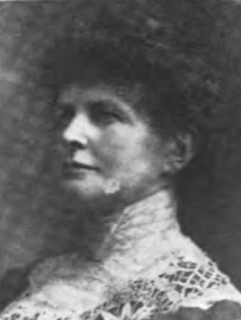
Shannon is the eldest child of solicitor George William Shannon and Emily Shannon (née Goodman). She has two sisters and two brothers. She attends Alexandra College, and later lectures for women at Trinity College Dublin (TCD). On July 27, 1875, she marries Maurice Dockrell, eldest son of Thomas Dockrell, a well known Dublin merchant, and Anne Morgan Dockrell (née Brooks). The couple has seven children, one daughter and six sons. She goes on to become a director and member of the board of her husband’s family company: Messrs Thomas Dockrell & Sons & Co. Ltd.[1]
Dockrell is an active member of the committee of the Dublin Women’s Suffrage and Local Government Association, later known as the Irish Women’s Suffrage and Local Government Association (IWSLGA), founded in 1876 to promote women’s suffrage by democratic methods. She attends international women’s suffrage conferences in Stockholm in 1911 and Budapest in 1913. She is also a committee member of the London Women’s Suffrage Society, speaking on the role of women in local government at the International Congress of Women in London in 1899. The Irish Citizen lists her as a suitable woman candidate to run for the senate seat proposed by the Home rule bill in 1912.
Dockell is a member of the National Union of Women Workers, sitting as a member of its public services committee. Like many of her contemporaries, she believes that women are best placed to address issues around health, societal moral well-being, and housing. From 1898, the Local Government (Ireland) Act, allows women to be candidates for local government elections. Dockrell first runs as a candidate in the Urban District Council (UDC) of the Monkstown ward of Blackrock, Dublin in the 1898 local elections, where she is returned as the third of nine elected, becoming one of only four women councillors elected in Ireland.
Dockrell describes herself as a unionist and a Protestant, sitting as a council on the Blackrock UDC until her death. She is the only woman councillor on that UDC until 1925 and the election of Ellen O’Neill. She is also the first woman chair of a UDC when she is elected to the position in 1906.
Despite the political and societal turmoil of the early 20th century in Ireland and the establishment of the Irish Free State, Dockrell continues in her commitment to local politics. This includes being the first woman to be elected to a Dublin county council in 1920. Despite remaining a committed unionist, she works with the Free State government. Following her husband’s knighthood, she is also known as Lady Dockrell.
From the late 1960s until the late 1990s, Northern Ireland undergoes a conflict known as the Troubles, in which more than 3,500 people are killed. More than 700 of those killed are British military personnel, deployed as part of Operation Banner. The vast majority of these British military personnel are killed by the Provisional Irish Republican Army (IRA), which wages an armed campaign to force the British to negotiate a withdrawal from Northern Ireland. In 1997, the IRA calls a final ceasefire and in 1998 the Good Friday Agreement is signed. This is widely seen as marking the end of the conflict.
However, breakaway groups of dissident Irish republicans oppose the ceasefire and continue a low-level armed campaign against the British security forces in Northern Ireland. The main group involved is an IRA splinter group known as the Real IRA. In 2007, the British Army formally ends Operation Banner and greatly reduces its presence in Northern Ireland.
The low-level dissident republican campaign continues. In January 2009, security forces have to defuse a bomb in Castlewellan, County Down, and in 2008 three separate incidents see dissident republicans attempt to kill PSNI officers in Derry, Castlederg and Dungannon. In all three cases, PSNI officers are seriously wounded. Two of the attacks involve firearms while the other involves an under-car booby-trap bomb.
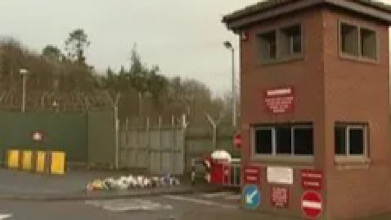
At about 9:40 p.m. on the evening of Saturday, March 7, four off-duty British soldiers of the Royal Engineers walk outside the barracks to receive a pizza delivery from two delivery men. As the exchange is taking place, two masked gunmen in a nearby car open fire with PM md. 63assault rifles. The firing lasts for more than 30 seconds with more than 60 shots being fired. After the initial burst of gunfire, the gunmen walk over to the wounded soldiers lying on the ground and fire again at close range, killing two of them. Those killed are Sappers Mark Quinsey from Birmingham and Patrick Azimkar from London. The other two soldiers and two deliverymen are wounded. The soldiers are wearing desert fatigues and were to be deployed to Afghanistan the following day. A few hours later, the stolen car involved is found abandoned near Randalstown, eight miles (13 km) from the barracks.
A Dublin-based newspaper, the Sunday Tribune, receives a phone call from a caller using a recognised Real IRA codeword. The caller claims responsibility for the attack on behalf of the Real IRA, adding that the civilian pizza deliverymen were legitimate targets as they were “collaborating with the British by servicing them.”
The shootings are the first British military fatalities in Northern Ireland since Lance Bombardier Stephen Restorick was shot dead by the Provisional IRA in February 1997, during the Troubles. The attack comes days after a suggestion by Northern Ireland’s police chief, Sir Hugh Orde, that the likelihood of a “terrorist” attack in Northern Ireland is at its highest level in several years.
Civilian security officers belonging to the Northern Ireland Security Guard Service are criticised for not opening fire during the incident, as a result of which plans are made to retrain and rearm them.
The morning after the attack, worshippers come out of St. Comgall’s Church after mass and keep vigil near the barracks. They are joined by their priest and clerics from the town’s other churches. On March 11, 2009, thousands of people attend silent protests against the killings at several venues in Northern Ireland.
The killings are condemned by all mainstream political parties in Northern Ireland, as well as the Irish government, the United States government and Pope Benedict XVI. Sinn Féin condemns the killings, but is criticised for being less vehement than others in its condemnation.
On March 14, 2009, the PSNI arrests three men in connection with the killings, one of whom is former IRA prisoner Colin Duffy. He had broken away from mainstream republicanism and criticised Sinn Féin’s decision to back the new PSNI. On March 25, 2009, after a judicial review of their detention, all the men are ordered to be released by the Belfast High Court. Duffy is immediately re-arrested on suspicion of murder. On March 26, 2009, Duffy is charged with the murder of the two soldiers and the attempted murder of five other people. The following day he appears in court for indictment and is remanded in custody to await trial after it is alleged that his full DNA profile had been found on a latex glove inside the vehicle used by the gunmen. There is also soil found in the car they drove that matches the soil on the ground in front of the barracks.
Brian Shivers, a cystic fibrosis sufferer, is charged with the soldiers’ murders and the attempted murder of six other people. He is also charged with possession of firearms and ammunition with intent to endanger life. He is arrested in Magherafelt, County Londonderry, in July 2009.
In January 2012, Shivers is convicted of the soldiers’ murders, but Duffy is acquitted. In January 2013, Shivers’s conviction is overturned by Northern Ireland’s highest appeals court. A May 2013 retrial finds Shivers not guilty. He is cleared of all charges and immediately released from jail. The judge questions why the Real IRA would choose Shivers as the gunman, with his cystic fibrosis and his engagement to a Protestant woman.
The barracks are shut down in 2010 as part of the reduction of the British Army presence in Northern Ireland.
The Abercorn Restaurant bombing is a bomb attack that takes place in a crowded city centre restaurant and bar in Belfast, Northern Ireland, on March 4, 1972. The bomb explosion claims the lives of two young women and injures over 130 people. Many of the injuries are severe and include the loss of limbs and eyes. The Provisional Irish Republican Army is blamed, although no organisation ever claims responsibility and nobody is ever charged in connection with the bombing. According to Ed Moloney, an Irish journalist who has written extensively about the IRA, republican sources have unofficially confirmed the group’s involvement.
The Abercorn is on 7-11 Castle Lane in central Belfast and houses a ground-floor restaurant and upstairs bar. It is owned by 45-year-old Bill O’Hara, a Catholic businessman. On Saturday, March 4 1972, it is packed with late afternoon shoppers when an anonymous caller issues a bomb warning to 999 at 4:28 p.m. The caller does not give a precise location, but advises that a bomb will go off in Castle Lane in five minutes’ time. The street, located in the busy Cornmarket area, mills with crowds of people shopping and browsing as is typical on a Saturday in Belfast.
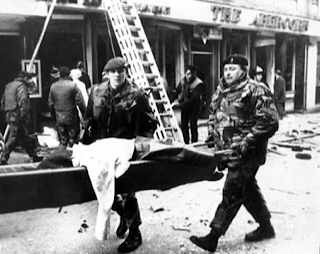
Two minutes later, at 4:30 p.m., a handbag containing a five-pound gelignite bomb explodes under a table inside the ground-floor restaurant. Two young Catholic friends are killed outright: Anne Owens (22), who is employed at the Electricity Board, and Janet Bereen (21), a hospital radiographer. The young women have been out shopping together and have stopped at the Abercorn to have coffee. They are seated at the table nearest the bomb and take the full force of the blast. Owens had survived a previous bombing at her workplace. More than 130 are injured in the explosion, which overturns tables and chairs, and brings the ceiling crashing down onto the ground floor restaurant. Many people are severely maimed. Some have their limbs blown off while others suffer terrible head and facial injuries, burns, deep cuts and perforated eardrums. Three have eyes destroyed by shards of flying glass. Two sisters, Jennifer and Rosaleen McNern (one of whom is due to be married), are both horrifically mutilated. Jennifer loses both legs and Rosaleen, the bride-to-be, loses her legs, right arm and one eye.
Witnesses describe a scene of panic and chaos as the bloodied survivors stumble through the smoke, broken glass, blood, and rubble, crawling over one another to get away, while firemen attempt to bring out the injured, many of whom lay with their bodies mangled, unable to move. A Royal Ulster Constabulary (RUC) officer is one of the first people to arrive on the scene. He describes the carnage that greets him as something he will never forget. “All you could hear was the moaning and squealing and the people with limbs torn from their bodies.”
A woman who had been inside the restaurant before the blast later tells an inquest that she had seen two teenaged girls walk out of the Abercorn leaving a handbag behind shortly before the explosion. This same woman was waiting at a bus stop when the bomb went off. A detective-sergeant establishes that the explosion’s epicentre is to the right of the table where the two girls had been sitting. The bomb is reportedly left behind inside a handbag.
Nobody is ever charged in connection with the bombing and no paramilitary organisation ever claims responsibility for it. Both wings of the IRA deny involvement and condemn the bombing. However, the RUC and British Military Intelligence blame the Provisional IRA First Battalion Belfast Brigade and it is now widely accepted that it was responsible. There is a public backlash against the organisation in Irish nationalist and Catholic areas such as West Belfast. The two dead women were both Catholic, along with many of the injured including the McNern sisters, and the Abercorn Bar was a popular venue with many young Catholics and nationalists.
Provisional IRA Chief of StaffSeán Mac Stíofáin claims the bombing is the work of loyalist paramilitaries. According to Mac Stíofáin, the Woodvale Defence Association (WDA) had made threats against the Abercorn in its weekly newsletter after the Abercorn management refused to play the British national anthem. The WDA denies the allegations, adding that one of its members had a friend who was badly injured in the blast. The day after the bombing, a leaflet allegedly circulated by the loyalist Vanguard Unionist Progressive Party (VUPP) declares: “We make no apologies for Abercorn. No apologies were made for Aldershot […] These premises were being used extensively by Southern Irish shoppers for the transmission of information vital to the terrorist campaign…” Vanguard leader Rev. Martin Smyth dismisses the statement as fake.
According to Ed Moloney in his book Voices from the Grave, IRA sources have since confirmed, albeit unofficially, that the Provisional IRA was responsible. Moloney suggests that, based on eyewitness accounts, two teenaged IRA girls were probably the bombers. Unnamed republican sources suggest that the Abercorn was targeted because the upstairs bar was frequented by off-duty British Army soldiers.
The detonation of a bomb in a city centre restaurant on a Saturday afternoon packed with shoppers, and the severity of the injuries—inflicted on mostly women and children—ensures that the attack causes much revulsion and leaves a lasting impression on the people of Belfast. It is condemned by both unionist and Irish nationalist politicians and also by church leaders. Ian Paisley calls on the government “to mobilise and arm every able-bodied volunteer to meet the enemy.” The extent of the injuries the blast inflicts results in the Royal Victoria Hospital implementing a “disaster plan” for the first time.
The sculptor F. E. McWilliam produces a series of bronzes (1972–73) known as Women of Belfast in response to the Abercorn bombing.
Unrelated to the bombing, the Abercorn features in a sectarian attack in July 1972, when Michael McGuigan, a Catholic working in the bar, is abducted by loyalist paramilitaries, shot and left for dead, but survives. He had been dating a Protestant waitress who also worked in the Abercorn, which is why the loyalist group targets him.
The Abercorn is demolished in 2007.
(Pictured: A victim’s body being removed from the scene by members of the security forces following the bomb explosion)
Hanna is born on February 25, 1821, near Dromara, County Down, the eldest among three sons and two (possibly three) daughters of Peter Hanna, of Dromara farming stock, and his wife Ellen (née Finiston), whose father served in the Black Watch regiment during the Napoleonic Wars. In the 1820s, leaving their children behind, his parents move to Belfast, where his father establishes a business turing out horse–cars. Hanna does not join them until the mid-1830s. His education reflects the modest nature of his upbringing. It is patchy and always combined with paid employment. In the 1830s he attends Bullick’s Academy, a privately run commercial college in Belfast. In the 1840s, seemingly with the intention of preparing for the Presbyterian ministry, he takes classes at Belfast Academical Institution. In 1847, he enters the general assembly’s newly established Theological College and, after some absences, obtains his licence to preach in 1851. During this time he works, first as a woolen draper‘s assistant in High Street and then, after 1844, as a teacher in the national school associated with Townsend Street Presbyterian Church, where he is a member. He resigns his teaching post in January 1852, only a month before being ordained to full-time ministry. On August 25, 1852, he marries Frances (‘Fanny’) Spence Rankin, daughter of James Rankin, a Belfast salesman. Together they have four daughters and two sons.
Hanna’s first, and only, pastorate is in a congregation that emerges out of the evangelistic efforts he and other Townsend Street members had conducted among the working people of north Belfast. In 1852, they begin meeting in the old Berry Street church and quickly grow from 75 to over 750 families. By 1869 a new building is essential and in 1870 the foundation stone for St. Enoch’s church is laid in Carlisle Circus, on property purchased from the Belfast Charitable Society. Opened in 1872 at a cost of nearly £10,000, it seats over 2,000 people and has two galleries. With 800 families and 2,500 Sunday-school scholars, it is one of the largest congregations in Belfast.
Hanna’s influence as the leader of such a large flock is not translated into advancement within the Presbyterian church. Although he serves as the Presbyterian chaplain to the Belfast garrison (1869–91) and as moderator of the presbytery (1879) and synod (1870–71) of Belfast, he does not achieve any position of note within the denomination as a whole. This is most likely because of his penchant for public controversy. Letters to the newspapers, calls for action in presbytery, and public platform debates over issues such as public-house licensing laws, Sabbath observance and property rights, brand him a destablising force. It is no doubt for this reason, rather than for his open-air preaching, of which he does very little, that he acquires his famous sobriquet, “Roaring Hugh.” His aggressive manner in debate is noted by the Belfast News Letter early in his career.
Hanna’s political views contribute to his reputation as an intolerant firebrand. He is part of a small group of Presbyterian clergy, led by the Rev. Henry Cooke, who are staunch defenders of the Protestant interest and active supporters of the conservative cause. He hosts ”anti-popery” lectures in his church and joins the Orange Order, serving briefly, in 1871, as the deputy grand chaplain for Belfast (County Grand Lodge). His determination to uphold the “right” of Protestants to preach in the open air sparks a series of violent sectarian riots and a government inquiry in Belfast in 1857. As the century progresses, and as the Presbyterian community’s political allegiances begin to shift, he becomes one of a group of prominent figures associated with two populist campaigns: opposition in the 1860s to the disestablishment of the Church of Ireland and subsequently to the introduction of home rule. In 1886, as one of the honorary secretaries of the Ulster Constitutional Club, he helps to found the Ulster Loyalist Anti-Repeal Union, a forerunner of what eventually becomes the Ulster Unionist Party.
Such activity overshadows Hanna’s impressive contribution to education. Within St. Enoch’s he establishes an enormous network of Sunday schools and evening classes, including a training institute for teachers. As a former teacher, and later as a commissioner of national education (1880–92), he is a firm advocate of the national system, and sets up six national schools in north and west Belfast.
Hanna receives only two honours: a Doctor of Divinity (DD) from the theological faculty of the Presbyterian Church in Ireland (1885) and a Doctor of Laws (LL.D.) from Galesville University in Galesville, Wisconsin (1888). In good health throughout his life, he dies suddenly of a heart attack on February 3, 1892. Buried with much fanfare in Balmoral Cemetery, Belfast, he is clearly held in high regard by surviving friends and colleagues. In 1892, the Orange Order approves the naming of LOL 1956 as the “Hanna Memorial,” and in 1894 a bronze statue depicting him in full ecclesiastical garb is erected in Carlisle Circus. Since then, his achievements have fallen on hard times. In March 1970, an Irish Republican Army bomb blast topples his statue from its plinth; several high-profile attempts to re-erect it fail. After an arson attack in 1985, and with falling numbers, the decision is taken in 1992 to demolish St. Enoch’s and unite with the neighbouring Duncairn church in a new, much smaller, building on the site.
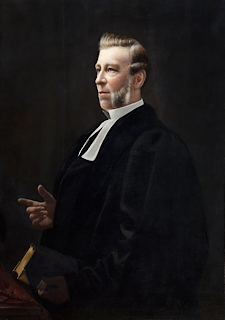
(From: “Hanna, Hugh” by Janice Holmes, Dictionary of Irish Biography, http://www.dib.ie, October 2009 | Pictured: Portrait of Reverend Hugh Hanna by Augustus George Whichelo in 1876, which is part of the collection owned by the National Museums Northern Ireland and is located in the Ulster Museum)
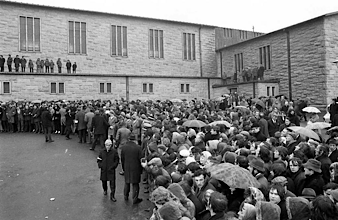
The funerals of eleven of those killed on Bloody Sunday take place on February 2, 1972. Prayer services are held across Ireland. In Dublin, over 30,000 march to the British Embassy, carrying thirteen replica coffins and black flags. They attack the Embassy with stones and bottles followed by petrol bombs. The building is eventually burned to the ground.
On the morning of Bloody Sunday, January 30, 1972, the 1st Battalion of the British Parachute Regiment enters Derry to assume their positions. The planned march is due to start at Bishop’s Field in the Cregganhousing estate and continue to the Guildhall in the city center, where the day is to end in a peaceful rally. Ten to fifteen thousand people set off at 2:45 p.m.
The march makes its way down William Street, but when it approaches the city center, the protestors find their way blocked by the British Army. At approximately 3:45 p.m., the organizers tell the protestors to change the direction of the march to go down Rossville Street, intending to hold the rally at Free Derry Corner instead. Most of the marchers follow the organizers’ instructions. At this point, some protestors break away from the march and start throwing stones at the soldiers handling the barriers. The soldiers fire rubber bullets, tear gas, and water cannons at the breakaway contingent. At this stage, witnesses report that the discord is no more violent than usual. Some of the rioters continue throwing rocks at the soldiers, but they are not close enough to the military men to inflict any damage. At about 3:55 p.m., the paratroopers start firing at the protestors. More than one hundred rounds are fired by the soldiers, who do not issue a warning before they open fire. In total, of the 26 civilians who are shot, 13 died that day, and one dies more than four months later.
On February 2, 1972, the funerals of eleven of the dead are held. Thousands of mourners gather at St. Mary’s Church for a mass funeral, with Northern IrelandMPBernadette Devlin in attendance. The event is a significant demonstration of the civil rights movement’s commitment to the cause of the victims and their families. The funeral procession is a symbol of the ongoing struggle for civil rights and justice in Northern Ireland.
The Republic of Ireland holds a national day of mourning, while a general strike is held the same day. The strike is the largest that Europe has seen since World War II in relation to the size of Ireland’s population. Catholic and Protestant churches as well as synagogues hold memorial services across Ireland. In Dublin, between 30,000 and 100,000 march to the British Embassy carrying thirteen coffins and black flags. A crowd later attacks the embassy, burning the Chancery down to the ground.
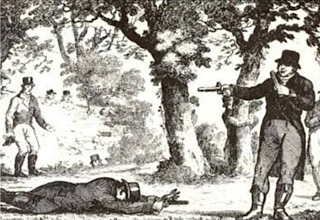
Daniel O’Connell (1775-1847) kills John D’Esterre in a duel on February 1, 1815.
O’Connell is sometimes referred to as an equivalent to Martin Luther King, Jr. or Mahatma Gandhi. Like King and Gandhi, O’Connell attempts to change the circumstances of his people, Irish Catholics in this case, through the use of nonviolence. He can take a great deal of credit for the passage of the Roman Catholic Relief Act 1829, which revokes the remaining discriminatory Penal Laws. This political success is achieved in significant part through mass protest and is notable for the absence of violence. O’Connell, however, is not always non-violent. He is known for being hot-tempered and capable of violence in his early days.
Rosmanagher Bridge and Toll Gate are built by D’Esterre in 1784 at his own expense. The large inscription stone on the bridge commemorates this piece of engineering. He owns extensive lands in the region and the Ratty River hinders both farming and communication, especially as the nearest bridge is at Sixmilebridge, County Clare. Despite objections that the structure will interfere with navigation on the river, he builds his bridge and then tries to recover his costs by erecting toll gates on the western side of the river. O’ Connell refuses to pay the toll according to local tradition and this leads to his famous duel with D’Esterre, a Limerick-born Protestant and former marine who is also a member of the Dublin Corporation. D’Esterre takes exception to O’Connell’s description of the Corporation as being “beggarly.”
D’Esterre is in difficult financial circumstances at the time of the duel. Some thought indicates that he is possibly encouraged into violent confrontation by influential figures who wish to break the forty-year-old O’Connell’s growing political power. Regardless of the motivation, the crack shot D’Esterre arranges to meet O’Connell to settle the matter on February 1, 1815, at the Bishopscourt estate in County Kildare.
D’Esterre shoots first and misses. O’Connell returns fire, wounding his opponent in the groin. The wound proves to be fatal two days later. It seems O’Connell is distressed by the deadly outcome and offers D’Esterre’s widow a pension as compensation. The offer is refused, but an allowance for D’Esterre’s daughter is accepted. O’Connell fulfills this obligation for the subsequent 30 years of his life.
(From: “OTD: O’Connell – D’Esterre Duel – 1815” by Martin Nutty, Irish Stew Podcast, http://www.irishstewpodcast.com, February 1, 2022)
Fitzgibbon is an early and extremely militant opponent of Catholic emancipation. The Earl is possibly the first person to suggest to King George III that granting royal assent to any form of Catholic Emancipation will violate his coronation oath.
FitzGibbon is born in 1748 near Donnybrook, Dublin, the son of John FitzGibbon of Ballysheedy, County Limerick, and his wife Isabella Grove, daughter of John Grove, of Ballyhimmock, County Cork. His father is born a Catholic but converts to the state religion in order to become a lawyer, and amasses a large fortune. He has three sisters, Arabella, Elizabeth, and Eleanor.
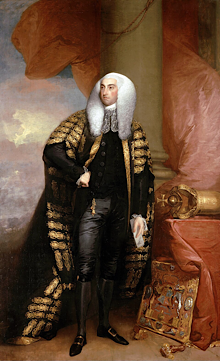
When appointed Lord Chancellor for Ireland in 1789, FitzGibbon is granted his first peerage as Baron FitzGibbon, of Connello Lower in County Limerick, in the peerage of Ireland that year. This does not entitle him to a seat in the British House of Lords, only in the Irish House of Lords. His later promotions come mostly in the peerage of Ireland, being advanced to a Viscountcy (1793) and the Earldom of Clare in 1795. He finally achieves a seat in the British House of Lords in 1799 when created Baron FitzGibbon, of Sidbury in the County of Devon, in the Peerage of Great Britain.
FitzGibbon is a renowned champion of the Protestant Ascendancy and an opponent of Catholic emancipation. He despises the Parliament of Ireland‘s popular independent Constitution of 1782. He is also personally and politically opposed to the Irish politician Henry Grattan who urges a moderate course in the Irish Parliament, and is responsible for defeating Grattan’s efforts to reform the Irish land tithe system (1787–1789) under which Irish Catholic farmers (and all non-Anglican farmers) are forced to financially support the minority Anglican Church of Ireland. These are not fully repealed until 1869 when the Church of Ireland is finally disestablished, although Irish tithes are commuted after the Tithe War (1831–1836).
FitzGibbon opposes the Irish Roman Catholic Relief Act 1793, for which, in a “magnificently controlled vituperation in vigorous, colloquial heroic couplets,” The Gibbonade, he is pilloried by the satirist Henrietta Battier. But acceding to pressure exerted through the Irish executive by government of William Pitt in London, intent, in advance of war with the new French Republic, to placate Catholic opinion, he is persuaded to recommend its acceptance in the Irish House of Lords. Pitt, and King George III, who had been petitioned by delegates from the Catholic Committee in Dublin, expects Ireland to follow the British Roman Catholic Relief Act 1791 and admit Catholics to the parliamentary franchise (although not to Parliament itself), enter the professions and assume public office.
FitzGibbon’s role in the recall, soon after his arrival, of the popular pro-Emancipation Lord Lieutenant of Ireland, William Fitzwilliam, 4th Earl Fitzwilliam, is debatable. Although he is probably politically opposed to the Lord Lieutenant of Ireland, Fitzwilliam is recalled, apparently due to his own independent actions. Fitzwilliam is known to be friendly to the Ponsonby family (he is married to one of their daughters), and is generally a Foxite liberal Whig. His close association with and patronage of Irish Whigs led by Grattan and Ponsonby during his short tenure, along with his alleged support of an immediate effort to secure Catholic emancipation in a manner not authorized by the British cabinet is probably what leads to his recall. Thus, if any is to blame in the short-lived “Fitzwilliam episode” it is the great Irish politician Henry Grattan and the Ponsonby brothers – presumably William Ponsonby, later Lord Imokilly, and his brother John Ponsonby—not to mention Lord Fitzwilliam himself. Irish Catholics at the time and later naturally see things very differently and blame hardline Protestants such as FitzGibbon.
Irish Catholics and FitzGibbon agree on one point apparently – Irish political and economic union with Great Britain, which eventually takes place in 1801. Pitt wants Union with Ireland concomitantly with Catholic emancipation, commutation of tithes, and the endowment of the Irish Catholic priesthood. Union is opposed by most hardline Irish Protestants, as well as liberals such as Grattan. FitzGibbon has been a strong supporter of the Union since 1793 but refuses to have Catholic emancipation with the Union.
In a speech to the Irish House of Lords on February 10, 1800, FitzGibbon elucidates his point of view on union: “I hope and feel as becomes a true Irishman, for the dignity and independence of my country, and therefore I would elevate her to her proper station, in the rank of civilised nations. I wish to advance her from the degraded post of mercenary province, to the proud station of an integral and governing member of the greatest empire in the world.”
In the end, FitzGibbon’s views win out, leading to the Union of Ireland with Great Britain to form the United Kingdom of Great Britain and Ireland without any concessions for Ireland’s Catholic majority (or for that matter, Catholics in the rest of the new United Kingdom). He later claims that he had been duped by the way in which the Act was passed with the new Viceroy Charles Cornwallis, 1st Marquess Cornwallis, promising reforms to Irish Catholics, and is bitterly opposed to any concessions during the short remainder of his life.
The role of the Earl of Clare (as FitzGibbon becomes in 1795) as Lord Chancellor of Ireland during the period of the Irish Rebellion of 1798 is questionable. According to some, he supports a hardline policy which uses torture, murder and massacre to crush the rebellion, or that as Lord Chancellor, he has considerable influence on military affairs, and that martial law cannot be imposed without his consent. Others allege that as Lord Chancellor, he has no say in military affairs and the Encyclopædia Britannica states that he is “neither cruel nor immoderate and was inclined to mercy when dealing with individuals.” However, the same source also states that “(FitzGibbon)… was a powerful supporter of a repressive policy toward Irish Catholics”. His former side is displayed by sparing the lives of the captured United Irish leaders, “State prisoners,” in return for their confession of complicity and provision of information relating to the planning of the rebellion. However, this willingness of the prisoners to partake of the agreement is spurred by the execution of the brothers John and Henry Sheares on July 14, 1798.
In contrast to the leniency shown to the largely upper-class leadership, the full weight of military repression is inflicted upon the common people throughout the years 1797–98 with untold thousands suffering imprisonment, torture, transportation and death. FitzGibbon is inclined to show no mercy to unrepentant rebels and, in October 1798, he expresses his disgust upon the capture of Wolfe Tone that he has been granted a trial, and his belief that Tone should be hanged as soon as he set foot on land.
FitzGibbon is quick to recognise that sectarianism is a useful ally to divide the rebels and prevent the United Irishmen from achieving their goal of uniting Protestant, Catholic and Dissenter, writing in June 1798, “In the North nothing will keep the rebels quiet but the conviction that where treason has broken out the rebellion is merely popish.”
Another anecdote is to the effect of FitzGibbon’s callousness. Supposedly, upon being informed during a debate in the Irish Parliament that innocent as well as guilty are suffering atrocities during the repression, he replies, “Well suppose it were so…,” his callous reply purportedly shocking William Pitt.
FitzGibbon is noted by some as a good, improving landlord to both his Protestant and Catholic tenants. Some claim that the tenants of his Mountshannon estate call him “Black Jack” FitzGibbon. There is, however, no evidence to support this claim, although there is little to no evidence on his dealings as a landlord. Irish nationalists and others point out that while he might be interested in the welfare of his own tenants on his own estate, he treats other Irish Catholics very differently. Without further evidence, his role as a Protestant landowner in mainly Catholic Ireland is of little importance against his known dealings as Lord Chancellor.
FitzGibbon dies at home, 6 Ely Place near St. Stephen’s Green, Dublin, on January 28, 1802, and is buried in St. Peter’s Churchyard. A hero to Protestant hardliners, but despised by the majority Catholic population, his funeral cortege is the cause of a riot and, according to a widespread story, a number of dead cats are thrown at his coffin as it departs Ely Place.
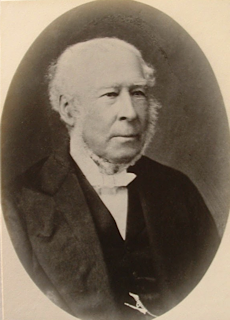
Babington is born on September 1, 1804, to the Rev. Richard Babington and his wife Mary Boyle, both members of the Anglo-Irishlanded gentry. His father, the rector of Lower Comber (Diocese of Derry), leads an extravagant lifestyle and leaves debts of £40,000 on his death in 1831, aged 66, equivalent to some £4.1 million as of 2019. His father’s debt is paid off by his two brothers Richard (1795-1870) and Anthony of Creevagh (1800-1869). Another brother is Major GeneralWilliam Babington. He is educated at Trinity College Dublin (TCD).
Babington begins his career as a curate of Lower Cumber, where his father is rector, in 1827. He becomes rector of Moviddy in 1833, at the age of 29. As rector, he carries out improvements worth the equivalent of £166,766 in 2019. As a clergyman he is part of a wave toward secular education in Ireland in the 1800s. In this capacity he is remembered as a “very forward thinking individual.” He is one of the signatories of a progressive booklet titled Declaration in Favour of United Secular Education in Ireland in 1866. The declaration notes, on behalf of the united Church of England and Ireland, “We entirely admit the justice and policy of the rule which protects scholars from interference with their religious principles and thus enables members of different denominations, to receive together in harmony and peace, the benefits of a good education.”
Babington is also, notably, in 1843, an addressee of the “Crookstown letter,” a famous incident at the time covered by The Cork Examiner and Cork Commercial Courier. He publishes, in the Cork Constitution, the contents of a threatening letter he had received in which it threatens him, among others, with murder if he does not become a repealer of the Acts of Union 1800 and with making a bonfire of hay in his farmyard if he does not show the letter to its other addresses. The letter is allegedly to have been written by a Roman Catholic resident of Crookstown, County Cork. The Roman Catholic parish priest, Fr. Daly, and parishioners refute the allegation that the letter had been authored by a Roman Catholic and claim that, conversely, the letter is an invention of a local Protestant who wrote “repeal or die” on the Crookstown Bridge. A local magistrate, J. B. Warren, to whom the letter has also been addressed, pledges to carry out an investigation but Babington does not hand over the original letter, causing the local Roman Catholic population to regard his publication of the letter in the press as “prejudiced, premature and defamatory of the character of the people whose industry he derives his income.” Babington states that he has always been on friendly terms with the Roman Catholic parish priest and his Roman Catholic parishioners and has no intention of offending them but is in fact pushing to publish it by local magistrates. He continues as rector of Moviddy for another 43 years following this incident.
Babington is also involved with the Society for Promoting the Education of the Poor of Ireland.
In 1836, Babington marries Esther, daughter of Richard Nettles, Esq., JP, of Nettleville, County Cork, with whom he has five sons and eight daughters.
Babington dies at the age of 81 on January 23, 1886, at Moviddy Rectory, County Cork. He is buried with his wife, Esther, who died at the age of 70 on August 29, 1878.
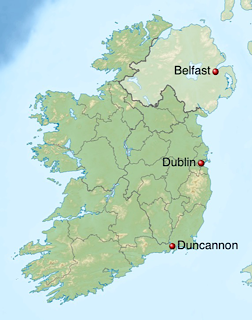
At the outbreak of the Irish Rebellion of 1641, most of south-eastern Ireland falls to the Catholic insurgents. Roughly 1,000 rebels blockade Duncannon, which is heavily fortified and contains an English garrison of about 300 men. Around 150 of the English troops are killed in forays against the Irish at nearby Redmond’s Hall, but without siege artillery, or expertise in siege warfare, the rebels are unable to take Duncannon.
Hostilities continue throughout 1642, as the Irish, now organised as the Irish Confederacy raid the town’s hinterland. As in much of Ireland, the conflict is bitter. In one incident, Laurence Esmonde, 1st Baron Esmonde, the Royalist commander, hangs 16 Irish prisoners who have been taken at nearby Ramsgrange. In response, the Irish execute 18 English prisoners whom they have been holding.
In 1643, because of his need for troops to fight in the English Civil War, Charles I signs a ceasefire with the Irish Confederates. As a result, hostilities between Duncannon and the Catholic-held surrounding area are suspended.
However, in 1644, the English garrison of Cork, under Murrough O’Brien, 1st Earl of Inchiquin, unhappy with the Royalist truce with the Irish Confederates, declares for the English Parliament, who are to remain hostile to Irish Catholic forces throughout the 1640s. Esmonde, under pressure from elements of his garrison, also changes to the side of Parliament and effectively re-declares war on the Catholic Confederates. His motives are unclear: though he is a Protestant convert, the Esmonde family are Anglo-IrishRoman Catholics, and he owes his entire advancement to the Crown.
Duncannon is a strategically important town for two reasons. Firstly, it has formidable defences. Secondly and more importantly, its guns overlook the sea route to Waterford and New Ross, two of the most important Catholic-held towns and also ports at which the Confederates receive military aid from Catholic Europe.
Needing to keep this channel open and also fearing the presence of an English garrison deep in their territory, the Confederates’ Supreme Council in Kilkenny despatches Thomas Preston, general of their Leinster Army, to take Duncannon in January 1645. Preston has at his disposal 1,300 men, four cannons and a mortar. The mortar, the first of its kind to be used in Ireland has been donated by Spain the previous year and is commanded by a French military engineer named Nicholas La Loue. La Loue had served with Preston in Flanders and is chief of engineering in the Leinster Army.
Duncannon possesses formidable defences. For one thing, it is located on a peninsula and can only be approached from the north, the other three sides jutting out into the sea. Just off the town are docked four Parliamentarian ships, which are supplying Duncannon with food and reinforcements. Secondly, it possesse two lines of fortifications, the outer line being a more modern low deep rampart protected by a dry ditch and the inner wall being a medieval curtain wall, complete with three towers. However, it has two grave weaknesses, first, it is overlooked by a hill to the north, from which an attacker can fire into the town and, secondly, the water supply is located outside the walls.
Preston arrives at Duncannon on January 20 and proceeds to construct a ring of trenches which cut off Duncannon on its landward side. From the hill that overlooks the town to the north, his guns are able to fire on a squadron of four Parliamentarian ships that are docked off Duncannon and providing the town with supplies. The flagship, the Great Louis, is badly damaged, its mast wrecked by cannon fire, and it takes several more hits from the mortar as it tries to get away. The ship sinks in deep water, drowning its crew and 200 soldiers who are on board.
Having cut off Duncannon’s supply from the sea, Preston proceeds to dig saps closer to the walls, the ultimate aim being to bring his cannon close enough to the walls in order to blast a breach and open the way for an assault. His engineers also dig a mine underneath one of the town’s bastions. All the while, the town’s defenders are kept under a bombardment by the mortar and, as the Confederate troops get closer to the walls, by sharpshooters. On March 12, one such sniper kills the fort’s second in command, one Captain Lurcan, who is hit in the head by a bullet.
On March 16, by which time the Irish trenches are “within pistol shot of the walls,” Preston orders the mine to be exploded, opening a breach in Duncannon’s outer walls. The Irish infantry then assault the town, but are beaten off with some losses. The following day, Saint Patricks Day, Preston tries again and this time his troops succeed in taking the town’s outer, more modern walls but are stopped at Duncannon’s inner, medieval ramparts. They succeed in occupying one of the town’s towers for an hour before being beaten back. Geoffrey Baron, a Confederate politician, who keeps a diary of the siege, reports that 24 Irish soldiers are killed in the two assaults.
At this point, Preston summons Esmonde to surrender, before he has to “proceed to extremities.” This is a delicate threat, implying that if the town falls to an assault, its defenders will be put to the sword – as is customary in contemporary siege warfare. Esmonde is also advised to surrender by the Parliamentarian vice admiral, William Smith, who is anchored offshore with seven ships, but cannot break through to relieve the town. In a letter that reaches Esmonde on March 11, Smith warns him that “if the rebels take the fort by storming it, they will undoubtedly put you all to death…you should agree with thy adversary while thou art in the way.” Esmond has Smith’s letter publicly read to his troops after the assaults of March 16-17 to discourage those who favour holding out.
Alongside the risk of massacre, the English garrison is also very low on gunpowder and water. The town’s only source of fresh water, a well, is behind the Confederate siege lines.
In light of these facts, Esmonde formally surrenders Duncannon to Preston on March 18. The Confederates take possession of the town but its garrison is allowed to march away to Youghal, which is in Protestant hands. However, they have to leave behind the town’s 18 artillery pieces. Esmonde himself dies a feways after the end of the siege. Preston goes on to briefly besiege Youghal, but bad weather, a lack of supplies and squabbling with James Tuchet, 3rd Earl of Castlehaven, the Confederate Munster general, puts an end to his campaign for the winter.
The siege is of importance in that it reopens the sea route into Waterford and eliminates a hostile English garrison in Confederate territory. Preston, who had for many years been the Spanish military governor of Leuven, is highly experienced in siege warfare and his conduct of the siege draws widespread praise. Not only does he take the town, but he does so at a relatively low cost. Sixty-seven Confederate soldiers die in the siege, of whom roughly 30 die of disease. Given that the campaign is conducted in mid-winter, in an age when disease routinely kills many more soldiers than combat, this represents a considerable logistical achievement on the part of the Irish general.
The Great Lewis, the Parliamentarian ship sunk during the siege, is rediscovered in 1999 and raised in 2004.
Cruise O’Brien follows his cousin Owen into Sandford Park School, which has a predominantly Protestant ethos despite objections from Catholic clergy. He subsequently attends Trinity College Dublin (TCD) before joining the Irish diplomatic corps.
Although he is a fierce advocate of his homeland, Cruise O’Brien is a strong critic of Irish Republican Army (IRA) violence and of what he considers the romanticized desire for reunification with Northern Ireland. His collection of essays Maria Cross: Imaginative Patterns in a Group of Modern Catholic Writers (1952; written under the pseudonym Donat O’Donnell) impresses UN Secretary-GeneralDag Hammarskjöld, who in 1961 appoints him UN special representative in the Congo, later the Democratic Republic of the Congo. He orders UN peacekeeping forces into the breakaway Katanga province, and the resulting scandal forces him out of office. Despite UN objections, he writes To Katanga and Back (1963) to explain his actions.
After serving as vice-chancellor of the University of Ghana (1962–65) and Albert Schweitzer Professor of Humanities at New York University (1965–69), Cruise O’Brien enters Irish politics. He holds a Labour Party seat in Dáil Éireann from 1969 to 1977 and then in the Senate from 1977 to 1979, representing Trinity College, of which he is pro-chancellor (1973–2008).
In 1979, Cruise O’Brien is named editor in chief of the British Sunday newspaper The Observer, but he leaves after three tumultuous years. He remains an active newspaper columnist, especially for the Irish Independent until 2007. His books include States of Ireland (1972) and On the Eve of the Millennium (1995), as well as perceptive studies of Charles Stewart Parnell, Edmund Burke, and Thomas Jefferson.
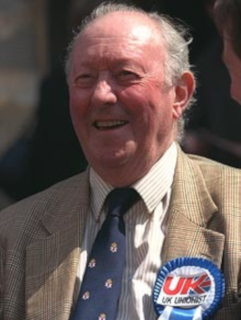
In early July 1996, in the period of Cruise O’Brien’s involvement as a UK Unionist Party (UKUP) representative in talks at Stormont, he suffers a mild stroke. He recovers well, but is left with anxiety about his recall of names. His last public appearance is on September 7, 2006, to deliver an address on the ninetieth anniversary of the death of Tom Kettle, in the old House of Lords chamber of the Bank of Ireland on College Green.

 seamus dubhghaill