seamus dubhghaill

Promoting Irish Culture and History from Little Rock, Arkansas, USA


1 Comment

Birth of Ivana Bacik, Labour Party Politician

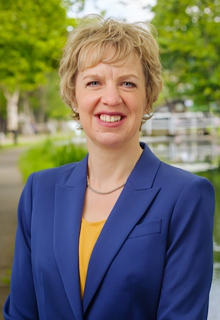
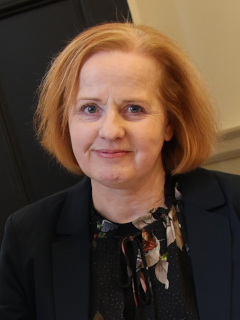
Ivana Catherine Bacik, Irish politician who has been the Leader of the Labour Party since March 24, 2022 and a Teachta Dála (TD) for the Dublin Bay South constituency since winning a by-election on July 9, 2021, is born in Dublin on May 25, 1968. She comes to prominence due to her abortion rights campaigning from the 1980s onward.

Bacik’s paternal grandfather, Charles Bacik, was a Czech factory owner who moved to Ireland in 1946. He eventually settled in Waterford, County Waterford, and in 1947 was involved in the establishment of Waterford Crystal. Her mother’s side of the family are Murphys from County Clare. Her father is an astronomer and is employed in a number of locations. As a result, she lives in London and South Africa, before moving to Crookstown, County Cork, at the age of six, when he becomes a physics lecturer in the Cork Institute of Technology. She attends the nearby national school in Cloughduv. When she is 11 years old, her family moves to the Sunday’s Well area of Cork city. At the age of 14, she moves to Dublin.

Bacik wins a scholarship to board at Alexandra College in Milltown, Dublin, and is awarded a sizarship at Trinity College Dublin. She has an LL.B. from Trinity and an LL.M. from the London School of Economics.

Bacik contests the Seanad Éireann elections in 1997 and 2002 as an independent candidate for the Dublin University constituency but is not successful.

She runs as a Labour Party candidate at the 2004 election to the European Parliament in the Dublin constituency. She runs with sitting MEP Proinsias De Rossa, who is also the party president, on the same ticket. She polls 40,707 first preference votes (9.6%) but is not elected.

In 2004, Bacik’s book Kicking and Screaming: Dragging Ireland into the 21st Century, is published by The O’Brien Press.

In 2007, she contested the Seanad Éireann elections for the third time in the Dublin University constituency, and is elected to the third seat, behind sitting Independent senators Shane Ross and David Norris. She initially sits as an Independent senator.

In February 2009, Bacik is included in an ‘All Star Women’s Cabinet’ in the Irish Independent. In March 2009, she confirmed claims made on a TV programme that she had taken two voluntary pay cuts of 10% in addition to a pension levy. In June 2009, she is the Labour Party candidate for the Dublin Central by-election. She comes in third with 17% of the first preference votes. She joins the Labour Party group in the Seanad in September 2009, and becomes Labour Party Seanad spokesperson for both Justice and Arts, Sports and Tourism. In November 2009, a feature by Mary Kenny of the Irish Independent includes Bacik in a list of women who “well deserved their iconic status.”

In May 2010, Bacik seeks Labour’s nomination to contest the next election in the Dublin South-East constituency but is not selected. In December 2010, she is added to the ticket as the second candidate beside Labour Party leader, Eamon Gilmore, in the Dún Laoghaire constituency for the 2011 Irish general election. Gilmore tops the poll, with Bacik receiving 10.1% of first preference votes but she is not elected. She is re-elected to Seanad Éireann at the subsequent election, after which she becomes Deputy Leader of the Seanad. She holds her seat in the Seanad in 2016 and in 2020.

On April 27, 2021, after the resignation of Eoghan Murphy from his Dáil seat in Dublin Bay South, Bacik announces her intention to stand in the upcoming by-election. She campaigns with an emphasis on providing affordable housing, as well as improving healthcare and childcare, tackling climate change, and achieving “a true republic in which church and state are separated.” During the campaign, she describes herself as having “more bills passed into law than any other Senator, on issues such as workers’ conditions, women’s health rights, and LGBT equality”. She also campaigns on increasing the number of sports amenities for children in the area, calling for unused Defence Forces football fields at the Cathal Brugha Barracks to be freed up for local sports, with the suggestion rejected by Fine Gael Minister for Defence Simon Coveney. Fine Gael complains to RTÉ after she features prominently on National Treasures, a prime-time TV show broadcast by RTÉ during the campaign. RTÉ has strict rules about fair coverage of candidates during campaigns. The national broadcaster blames an “inadvertent error” for the programme being shown three days before the election. A steering group within the broadcaster tells Fine Gael that “the broadcast should not have happened.” Consequentially, RTÉ has to show a special report on the by-election on Prime Time to “ensure fair coverage is given to all candidates.”

Bacik wins this election, receiving 8,131 (30.2%) first-preference votes. It is her fourth attempt as a Labour candidate, and she expresses her delight at the success at the count centre in the RDS. Following the election, she is described by The Irish Times as “a formidable activist and public intellectual” and that Fine Gael’s perceived antipathy towards their former TD, Kate O’Connell, may have contributed to the surge in support to Bacik from women voters. The newspaper claims that her election is “a long overdue morale boost” for Labour.

In August 2021, Bacik apologises for attending Katherine Zappone‘s controversial party in the Merrion Hotel, Dublin, in July of that year. She states that she believed that it took place within existing COVID-19 pandemic restrictions.

In March 2022, Bacik confirms she will run to succeed Alan Kelly as Labour Party leader. Kelly states that he believes that Bacik will succeed him. On March 24, 2022, she is confirmed as Labour Party leader unopposed at a party conference in Dublin. In a speech, she says she will focus on the rising cost of living and the serious and global problems facing the country. She pledges that Labour will fight the next election as a “standalone party” rather than joining any left-wing alliance.

At the 2024 Irish general election, Bacik is re-elected to the Dáil.

Bacik lives with husband Alan Saul and their two daughters in Portobello, Dublin.


Leave a comment

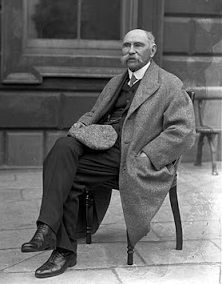
Birth of Richard Mulcahy, Fine Gael Politician & Army General

Richard James Mulcahy, Irish Fine Gael politician and army general, is born in Manor Street, Waterford, County Waterford, on May 10, 1886, the son of post office clerk Patrick Mulcahy and Elizabeth Slattery. He is educated at Mount Sion Christian Brothers School and later in Thurles, County Tipperary, where his father is the postmaster.

Mulcahy joins the Royal Mail (Post Office Engineering Dept.) in 1902, and works in Thurles, Bantry, Wexford and Dublin. He is a member of the Gaelic League and joins the Irish Volunteers at the time of their formation in 1913. He is also a member of the Irish Republican Brotherhood.

Mulcahy is second-in-command to Thomas Ashe in an encounter with the armed Royal Irish Constabulary (RIC) at Ashbourne, County Meath, during the 1916 Easter Rising, one of the few stand-out victories won by republicans in that week and generally credited to Mulcahy’s grasp of tactics. In his book on the Rising, Charles Townshend principally credits Mulcahy with the defeat of the RIC at Ashbourne, for conceiving and leading a flanking movement on the RIC column that had engaged with the Irish Volunteers. Arrested after the Rising, he is interned at Knutsford and at the Frongoch internment camp in Wales until his release on December 24, 1916.

On his release, Mulcahy immediately rejoins the republican movement and becomes commandant of the Dublin Brigade of the Irish Volunteers. He is elected to the First Dáil in the 1918 Irish general election for Dublin Clontarf. He is then named Minister for Defence in the new government and later Assistant Minister for Defence. In March 1918, he becomes Irish Republican Army (IRA) chief of staff, a position he holds until January 1922.

Mulcahy and Michael Collins are largely responsible for directing the military campaign against the British during the Irish War of Independence. During this period of upheaval in 1919, he marries Mary Josephine (Min) Ryan, sister of Kate and Phyllis Ryan, the successive wives of Seán T. O’Kelly. Her brother is James Ryan. O’Kelly and Ryan both later serve in Fianna Fáil governments.

Mulcahy supports the Anglo-Irish Treaty of December 1921. Archive film shows that Mulcahy, as Minister of Defence, is the Irish officer who raises the Irish tricolour at the first hand-over of a British barracks to the National Army in January 1922. He is defence minister in the Provisional Government on its creation and succeeds Collins, after the latter’s assassination, as Commander-in-Chief of the Provisional Government’s forces during the subsequent Irish Civil War.

Mulcahy earns notoriety through his order that anti-Treaty activists captured carrying arms are liable for execution. A total of 77 anti-Treaty prisoners are executed by the Provisional Government. He serves as Minister for Defence in the new Free State government from January 1924 until March 1924, but resigns in protest because of the sacking of the Army Council after criticism by the Executive Council over the handling of the “Army Mutiny,” when some National Army War of Independence officers almost revolt after he demobilises many of them at the end of the Irish Civil War. He re-enters the cabinet as Minister for Local Government and Public Health in 1927.

During Mulcahy’s period on the backbenches of Dáil Éireann his electoral record fluctuates. He is elected as TD for Dublin North-West at the 1921 and 1922 Irish general elections. He moves to Dublin North for the election the following year and is re-elected there in four further elections: June 1927, September 1927, 1932, and 1933.

Dublin North is abolished for the 1937 Irish general election, at which Mulcahy is defeated in the new constituency of Dublin North-East. However, he secures election to Seanad Éireann as a Senator, the upper house of the Oireachtas, representing the Administrative Panel. The 2nd Seanad sits for less than two months, and at the 1938 Irish general election he is elected to the 10th Dáil as a TD for Dublin North-East. Defeated again in the 1943 Irish general election, he secures election to the 4th Seanad by the Labour Panel.

After the resignation of W. T. Cosgrave as Leader of Fine Gael in 1944, Mulcahy becomes party leader while still a member of the Seanad. Thomas F. O’Higgins is parliamentary leader of the party in the Dáil at the time and Leader of the Opposition. Facing his first general election as party leader, Mulcahy draws up a list of 13 young candidates to contest seats for Fine Gael. Of the eight who run, four are elected. He is returned again to the 12th Dáil as a TD for Tipperary at the 1944 Irish general election. While Fine Gael’s decline had been slowed, its future is still in doubt.

Following the 1948 Irish general election Mulcahy is elected for Tipperary South, but the dominant Fianna Fáil party finishes six seats short of a majority. However, it is 37 seats ahead of Fine Gael, and conventional wisdom suggests that Fianna Fáil is the only party that can possibly form a government. Just as negotiations get underway, however, Mulcahy realises that if Fine Gael, the Labour Party, the National Labour Party, Clann na Poblachta and Clann na Talmhan band together, they would have only one seat fewer than Fianna Fáil and, if they can get support from seven independents, they will be able to form a government. He plays a leading role in persuading the other parties to put aside their differences and join forces to consign the then Taoiseach and Fianna Fáil leader Éamon de Valera, to the opposition benches.

Mulcahy initially seems set to become Taoiseach in a coalition government. However, he is not acceptable to Clann na Poblachta’s leader, Seán MacBride. Many Irish republicans had never forgiven him for his role in the Irish Civil War executions carried out under the Cosgrave government in the 1920s. Consequently, MacBride lets it be known that he and his party will not serve under Mulcahy. Without Clann na Poblachta, the other parties would have 57 seats between them — 17 seats short of a majority in the 147-seat Dáil. According to Mulcahy, the suggestion that another person serve as Taoiseach comes from Labour leader William Norton. He steps aside and encourages his party colleague John A. Costello, a former Attorney General of Ireland, to become the parliamentary leader of Fine Gael and the coalition’s candidate for Taoiseach. For the next decade, Costello serves as the party’s parliamentary leader while Mulcahy remained the nominal leader of the party.

Mulcahy goes on to serve as Minister for Education under Costello from 1948 until 1951. Another coalition government comes to power at the 1954 Irish general election, with Mulcahy once again stepping aside to become Minister for Education in the Second Inter-Party Government. The government falls in 1957, but he remains as Fine Gael leader until October 1959. In October the following year, he tells his Tipperary constituents that he does not intend to contest the next election.

Mulcahy dies from natural causes at the age of 85 in Dublin on December 16, 1971. He is buried in Littleton, County Tipperary.


Leave a comment

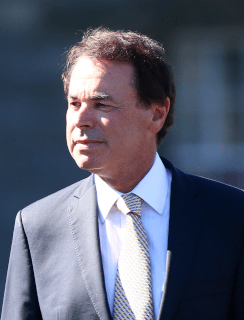
Birth of Eric Byrne, Former TD and Labour Party Politician

Eric Joseph Byrne, former Labour Party politician who serves as a Teachta Dála (TD) for the Dublin South-Central constituency from 1989 to 1992, 1994 to 1997 and 2011 to 2016, is born in Dublin on April 21, 1947. He is formerly a member of Official Sinn Féin, the Workers’ Party and Democratic Left.

Byrne is educated at Synge Street CBS and the Bolton Street College of Technology. A carpenter before entering politics, he stands unsuccessfully for election to Dáil Éireann as a Workers’ Party candidate for Dublin Rathmines West at the 1977 Irish general election and Dublin South-Central at the 1981, February 1982, November 1982 and 1987 Irish general elections.

He is elected in 1985 as a Workers’ Party member of Dublin City Council for CrumlinKimmage area, and is re-elected at subsequent local elections until 2011, when he is forced to resign his seat due to dual mandate. He is finally elected at the 1989 Irish general election. He joins with Workers’ Party members who form Democratic Left in 1992. He unexpectedly loses his seat at the 1992 Irish general election. Labour’s Pat Upton is unexpectedly returned on the first count, with Byrne finally losing the last seat to Fianna Fáil‘s Ben Briscoe by five votes after a marathon 10-day count.

Byrne is elected to the 27th Dáil at a by-election on June 9, 1994, following the resignation of long-serving Fianna Fáil TD John O’Connell, who had previously been a Labour TD for the same constituency. He is a backbench supporter of the Rainbow government led by Fine Gael‘s John Bruton.

He loses his seat again at the 1997 Irish general election. Although the Labour Party and the Democratic Left merge in 1999, he is not selected to contest the Dublin South-Central by-election which follows Pat Upton‘s death later that year. Upton’s sister Mary is elected for the Labour Party.

Byrne contests the 2002 Irish general election on the Labour Party ticket as Mary Upton’s running-mate but is unsuccessful. Along with Upton, he contests the Dublin South-Central constituency at the 2007 Irish general election advocating a Labour Party/Fine Gael government but misses the final seat by 69 votes. He is nominated by the Labour Party to contest the Seanad election in the Labour panel but is not elected. In 2009, he is re-elected to Dublin City Council. At the 2011 Irish general election he is re-elected to the Dáil, after a fourteen-year absence.

In January 2015, Byrne becomes involved in an altercation with Sinn Féin TD, Jonathan O’Brien. During ministers’ questions, O’Brien criticises Tánaiste Joan Burton over homelessness in Ireland, citing the experiences of his brother, a recovering heroin addict. Byrne asks of O’Brien, “Why doesn’t his good family give him a home?” This infuriates O’Brien. The Irish Times journalist Miriam Lord criticizes Byrne, remarking that “You sense the relief rising in the chamber. They don’t like it when the real world intrudes. These sort of things don’t really happen to TDs.”

Byrne loses his seat at the 2016 Irish general election.


Leave a comment

Birth of Ruth Coppinger, Socialist Party TD for Dublin West

Ruth Coppinger, Irish politician and member of the Socialist Party, and Teachta Dála (TD) for the Dublin West constituency, is born in Dublin on April 18, 1967.

Coppinger is a member of Fingal County Council for the Mulhuddart local electoral area from 2003 to 2014. She is co-opted to the council in 2003, replacing Joe Higgins, and is elected in 2004 and re-elected in 2009. She is an unsuccessful candidate for the Socialist Party at the 2011 Dublin West by-election.

Following victory in the 2014 Dublin West by-election, Coppinger joins her party colleague Joe Higgins in the Dáil. After being elected, she calls for a mass campaign of opposition to water charges being implemented by the Fine GaelLabour Party coalition.

In November 2014, Coppinger calls for the gradual nationalisation of U.S. multinationals to prevent job losses. In response, Fianna Fáil’s jobs spokesperson Dara Calleary calls the idea “reckless and ludicrous,” as it would “place a massive burden on taxpayers and the public finances.”

In September 2015, Coppinger joins homeless families from Blanchardstown, in occupying a NAMA-controlled property as part of a campaign to raise awareness of the housing crisis. In October 2015, she joins families in their occupation of a show house in her constituency, to protest the lack of availability of affordable social housing. She also supports the tenants of Tyrrelstown, who are made homeless when a Goldman Sachs vulture fund sells their houses.

Coppinger is re-elected to the Dáil at the 2016 Irish general election, this time under the Anti-Austerity Alliance–People Before Profit banner. On March 10. 2016, at the first sitting of the 32nd Dáil, she nominates Richard Boyd Barrett for the office of Taoiseach, quoting James Connolly from a hundred years previously when she says, “The day has passed for patching up the capitalist system. It must go,” and declaring, “We will not vote for the identical twin candidates” of Fine Gael and Fianna Fáil after they “imposed austerity.” On April 6, 2016, following the failure of the Dáil to elect a Taoiseach at that first sitting, she is nominated for the role of Taoiseach, becoming the first female nominee in the history of the state.

In 2018 Coppinger praises the MeToo movement for exposing patterns of abuse and systemic inequality. However, she also notes the limitations of achieving justice through traditional channels and calls for a stronger focus on combating intimate partner violence and societal tolerance of such abuse.

In April 2018, in the lead-up to the repeal of the Eighth Amendment, Coppinger, along with her colleague Paul Murphy, holds up a Repeal sign during leader’s questions and is reprimanded by the Ceann Comhairle. She is an advocate for abortion rights in Ireland, and is a founding member of ROSA, a movement for reproductive justice in Ireland. Earlier, in 2016, she tables the private members’ motion to repeal the Eighth Amendment.

In November 2018, Coppinger protests in the Dáil against the conduct of a rape trial in Ireland. During the trial, the defence team, as part of their argument that the sex had been consensual, states that the 17-year-old victim had worn a thong with a lace front. The defendant is subsequently found not guilty. During a sitting of the Dáil, Coppinger holds up a similar pair of underwear and admonishes the conduct of the trial, suggesting victim blaming tactics had been used and suggests this is a routine occurrence in Irish courts. She calls on Taoiseach Leo Varadkar to support her party’s bill that would increase sex education in Irish schools and provide additional training to the Irish judiciary and jurors on how to handle cases of rape. Varadkar responds that victims should not be blamed for what happens to them, irrespective of how they are dressed, where they are or if they have consumed alcohol.

In 2019 Coppinger sponsors a private member’s bill – the Domestic Violence (No-contact order) (Amendment) Bill 2019. The bill lapses with the dissolution of the Dáil and Seanad.

At the general election in February 2020, Coppinger is defeated in the Dublin West constituency. She unsuccessfully contests the 2020 Seanad election for the National University of Ireland constituency.

In June 2024, Coppinger is elected to Fingal County Council for the Castleknock local electoral area on the 7th Count. At the 2024 Irish general election, she is re-elected to the Dáil.

Coppinger is an advocate of secularism and believes in abolishing both the Angelus and the Dáil prayer, viewing them as relics of an outdated intertwining of religion and governance. She supports the separation of Church and State, criticising the Catholic Church‘s historical influence in education and health, as well as its financial privileges, including exemptions from accountability under regulations like SIPO. She has called for the requisitioning of Church lands and property, citing the Church’s failure to meet commitments to abuse victims and the necessity of addressing historical injustices.

On drug policy, Coppinger supports decriminalisation and endorses the Portuguese model, which treats addiction as a health issue rather than a criminal matter. She emphasises the hypocrisy of criminalising drug use while overlooking the societal harm caused by alcohol and advocates for expanding access to medicinal cannabis, criticising the political inertia in addressing this need.

In 2013, during referendum to abolish the Irish senate, Coppinger campaigns for a yes vote, calling the institution elitist and undemocratic. However, in 2020, following the loss of her Dáil seat, she runs unsuccessfully for a seat in the Senate. Challenged by the Irish Examiner on this, she states that so long as the Senate continues to exist, it should be used to further progressive causes.

Coppinger lives in Mulhuddart and is a secondary school teacher. Her eldest brother, Eugene Coppinger, serves on Fingal County Council from 2011 to 2019.


Leave a comment

Birth of Alan Shatter, Lawyer, Author & Fine Gael Politician

Alan Joseph Shatter, Irish lawyer, author and former Fine Gael politician who serves as Minister for Justice and Equality and Minister for Defence (2011-14), is born into a Jewish family in Dublin on February 14, 1951. He also serves as a Teachta Dála (TD) for the Dublin South constituency (1981-2002, 2007-16). He leaves Fine Gael in early 2018 and unsuccessfully contests the 2024 Irish general election as an independent candidate for Dublin Rathdown.

Shatter is the son of Reuben and Elaine Shatter, an English couple who meet by chance when they are both on holiday in Ireland in 1947. He is educated at The High School, Dublin, Trinity College Dublin (TCD) and the Europa Institute of the University of Amsterdam. In his late teens, he works for two months in Israel on a kibbutz. He is a partner in the Dublin law firm Gallagher Shatter (1977-2011). As a solicitor he acts as advocate in many seminal and leading cases determined both by the Irish High and Supreme Courts. He is the author of one the major academic works on Irish family law which advocates substantial constitutional and family law reform.

Shatter enters politics at the 1979 Irish local elections, winning a seat on Dublin County Council for the Rathfarnham local electoral area. He retains this seat until 1999, becoming a member of South Dublin County Council in 1994. He is first elected to Dáil Éireann in 1981 as a Fine Gael TD and is re-elected at each subsequent election until he loses his seat in the 2002 Irish general election. He is re-elected at the 2007 Irish general election.

Shatter is Fine Gael Front Bench spokesperson on Law Reform (1982, 1987–88), the Environment (1989–91), Labour (1991), Justice (1992–93), Equality and Law Reform (1993–94), Health and Children (1997–2000), Justice, Law Reform and Defence (2000–02), Children (2007–10) and Justice and Law Reform (2010–11).

On March 9, 2011, Shatter is appointed by Taoiseach Enda Kenny as both Minister for Justice and Equality and Minister for Defence.

Under Shatter’s steerage, a substantial reform agenda is implemented with nearly 30 separate pieces of legislation published, many of which are now enacted including the Personal Insolvency Act 2012, Criminal Justice Act 2011, DNA Database Act, and the Human Rights and Equality Commission Act.

Under Shatter’s guidance, major reforms are introduced in 2011 into Ireland’s citizenship laws and a new Citizenship Ceremony is created. He both devises and pilots Ireland’s first ever citizenship ceremony which takes place in June 2011 and a new inclusive citizenship oath which he includes in his reforming legislation. During his time as Minister, he clears an enormous backlog of citizenship applications, and 69,000 foreign nationals become Irish citizens. Some applications had lain dormant for 3 to 4 years. He introduces a general rule that save where there is some real complication, all properly made citizenship applications should be processed within a six-month period. He also takes steps to facilitate an increased number of political refugees being accepted into Ireland and creates a special scheme to facilitate relations of Syrian families already resident in Ireland who are either caught up in the Syrian civil war, or in refugee camps elsewhere as a result of the Syrian civil war, to join their families in Ireland.

Shatter enacts legislation before the end of July 2011 to facilitate access to financial documentation and records held by third parties in investigations into banking scandals and white-collar crime. The legislation is first used by the Gardaí in September 2011.

During Ireland’s Presidency of the Council of the European Union in 2013, Shatter chairs the Justice and Home Affairs Council (JHA) meetings and, in January 2013, in Dublin Castle, the meeting of EU Defence Ministers. Under his guidance, Ireland plays a more active role than in the past in EU defence matters and in deepening Ireland’s participation in NATO’s partnership for peace. During the Irish Presidency, substantial progress is made at the European Union level in the adoption and development of new legislation and measures across a broad range of Justice and Home Affairs issues.

Shatter implements substantial reform in the Department of Defence and restructures the Irish Defence Forces. He is a strong supporter of the Irish Defence Forces participation in international peacekeeping and humanitarian engagements and is an expert on the Middle East. As a member of the Irish Parliament and as Minister on many occasions, he visits Irish troops participating in United Nations (UN) missions in the Middle East. Under his watch contracts are signed for the acquisition of two new naval vessels with an option to purchase a third. All three naval vessels are now part of the Irish Naval Service and have been actively engaged in recent years in rescuing drowning refugees in the Mediterranean Sea attempting to enter Europe.

As Minister for Defence he enacts legislation to grant a pardon and an amnesty to members of the Irish Defence Forces who deserted during World War II to fight on the allied side against Nazi Germany and gives a state apology for their post-war treatment by the Irish State.

Shatter is the minister responsible for two amendments to the Constitution of Ireland which are passed in referendums: the Twenty-ninth Amendment in 2011 to allow for the reduction of judges’ pay, and the Thirty-third Amendment in 2013 to establish a Court of Appeal. Just prior to his resignation from government, the draft legislation to create the court is published and the court is established and sitting by October 2014.

The jurisdictions of the courts are extended for the first time in 20 years and the maximum civil damages payable for the emotional distress of bereaved relations following a negligent death is increased.

As a politician, Shatter plays a lead role in effecting much of the constitutional and legislative change he advocates. He is a former chairperson of FLAC (the Free Legal Advice Centres), a former chairperson of CARE, an organisation that campaigns for childcare and children’s legislation reform in the 1970s and a former President of the Irish Council Against Blood Sports.

Shatter is a founder member of the Irish Soviet Jewry Committee in 1970 and pioneers a successful all party Dáil motion on the plight of Soviet Jewry (1984) and visits various refuseniks in Moscow in 1985. He is a former chairperson of the Oireachtas Foreign Affairs Committee (1996-97) and initiates the creation of an Ireland/Israel Parliamentary Friendship group in 1997, leading a number of visits to Israel by members of the Dáil Éireann and Seanad Éireann.

Shatter is the author of the satirical book Family Planning Irish Style (1979), and the novel Laura (1989). In 2017 his biography, Life is a Funny Business, is published by Poolbeg Press and in 2019 Frenzy and Betrayal: The Anatomy of a Political Assassination is published by Merrion Press. In 2023, his book Cyril’s Lottery of Life, a comedic book with an English solicitor from a small town as its protagonist, is published.


Leave a comment

Birth of Margaret Pearse, Politician & Mother of Patrick Pearse

Margaret Pearse (née Brady), Irish politician and mother of Patrick and Willie Pearse, who are both executed after the 1916 Easter Rising, is born in Dublin on February 12, 1857.

Margaret Brady is born to Patrick Brady, a coal merchant whose family are from County Meath, and Brigid Brady (née Savage) of Oldtown, Dublin. She is baptised in St. Lawrence O’Toole’s parish. At the time, her parents are living at 1 Clarence Street. She has three known siblings and is educated by the Sisters of St. Vincent de Paul. She is employed as a stationery shop assistant where she meets her future husband, James Pearse.

In 1877, she marries James Pearse at St. Agatha’s Church, off the North Strand. James is born in Bloomsbury, Middlesex, on December 8, 1839, and later lives in Birmingham. He comes to Ireland to work as a sculptor in the late 1850s with his first wife, Emily Susanna Fox, who dies in 1876. They have four children together. The first three children are Margaret Mary (born on August 4, 1878), Patrick (born on November 10, 1879) and William (born on November 15, 1881). All three children are born while the family lives in 27 Great Brunswick Street. Their youngest child, Mary Brigid, is born on September 29, 1888, by which time the family has moved to Newbridge Avenue, Sandymount. Pearse’s aunt, Margaret Brady, an Irish speaker, is a frequent visitor to the family home and encourages the children’s interest in the Irish language and culture. Her husband dies in 1900. Pearse does not permit her children to play with other children, however, she supports her children in all their aspirations. She has a very strong relationship and consequent effect on her eldest son, Patrick, who founds St. Enda’s School in 1908 and is the headmaster up until the time of his execution. She takes over the responsibility of Housekeeper at the school.

Pearse supports her sons’ political beliefs. After their execution, she wishes to maintain their legacy and becomes involved in political life. She joins Sinn Féin after the Rising and gives support and endorsement to candidates during the 1918 Westminster election. During the 1920 Poor Law Elections for the Rathmines area of Dublin, she stands as a Sinn Féin candidate and is elected on the first count. She is elected to Dáil Éireann as a Sinn Féin Teachta Dála (TD) for the Dublin County constituency at the 1921 Irish elections.

Pearse strongly opposes the Anglo-Irish Treaty, as do all the female TDs. She states during the Treaty debate that:

“I rise to support the motion of our President for the rejection of the Treaty. My reasons for doing so are various, but my first reason for doing so I would like to explain here today is my son’s account. It has been said here on several occasions that Patrick Pearse would have accepted this Treaty. I deny it. As his mother I deny it, and on his account, I will not accept it.”

Later she continues in a similar vein:

“Always we had to be on the alert. But even the Black and Tans alone would not frighten me as much as if I accepted this Treaty; because I feel in my heart – and I would not say it only I feel it – that the ghosts of my sons would haunt me.”

Following the ratification of the Treaty Pearse leaves the Dáil with the other anti-Treaty deputies. She is defeated at the 1922 Irish general election. She supports those who oppose the Treaty during the Irish Civil War and continues to be a member of Sinn Féin until 1926. In 1926 she leaves the party conference with Éamon de Valera and becomes a founder member of Fianna Fáil. She never stands for election again.

At the launch of The Irish Press newspaper, Pearse is asked to press the button to start the printers rolling. At many public occasions she states that were her sons alive they too would have joined Fianna Fáil. Accordingly, Patrick Pearse is recognised as the spiritual figurehead of the party to this day.

After Patrick’s death, the responsibility for running the school falls to Pearse and her two daughters. As Patrick Pearse had died without a will, the school is left in a precarious financial position. In May 1924, when she is aged 70, she undertakes a trip to the United States to raise funds for the school, alongside showing support for Éamon de Valera and the Irish Republic. At an event in Brooklyn on May 19, 1924, when referencing the execution of her two sons, she declares herself the “proudest mother in Ireland.” She also states that Michael Collins had attempted to “bribe” her with an offer to subsidise the school, which she refused. During a meeting in Seattle on August 11, 1924, she again discusses her sons and how she believes “the best way to honour their memory was to carry on their work for Ireland.” She raises over $10,000 in donations for the school during the trip. Notwithstanding her fundraising activities, St. Enda’s continues to decline and eventually closes in 1935. Great Brunswick Street, where she and the Pearse family originally lived, is renamed Pearse Street in 1920 by a resolution passed at the Dublin City Council meeting.

Pearse dies on April 22, 1932. She is honoured with a large state funeral and a motion is passed at the meeting of Dublin City Council expressing sympathy with the Pearse family. On April 26, 1932, sizeable crowds pay their respects as her funeral procession makes its way through the streets of Dublin. At the General Post Office (GPO), where Patrick and William fought during the Easter Rising, the funeral cortege pauses for a minute of silence before proceeding to Glasnevin Cemetery. Éamon de Valera gives an oration as she is laid to rest, which praises her inspiring courage, charity and cheerfulness during the years after her son’s death.

After Pearse’s death, her daughter, Mary Margaret, continues to reside at St. Enda’s. She also joins Fianna Fáil, and serves as a TD from 1933 to 1937 and later serves in Seanad Éireann as a Senator from 1938 until her death in 1968. Upon her death, as per her mother’s request, she passes St. Enda’s on to the people of Ireland.


Leave a comment

Birth of Roddy Connolly, Socialist, Trade Unionist & Politician

Roderick James Connolly, socialist, trade unionist, and politician, is born on February 11, 1901, at 54 Pimlico, Dublin. He is also known as “Roddy Connolly” and “Rory Connolly.”

Connolly is the only son and sixth among seven children of Irish socialist James Connolly and Lillie Connolly. A lieutenant in the Irish Citizen Army (ICA) boys’ corps, he is involved in the 1916 Easter Rising. At the age of 15, he serves in the General Post Office (GPO) under his father. He joins the Socialist Party of Ireland in 1917.

Connolly travels to Russia on several occasions in 1920 and 1921 and forms a close association with Vladimir Lenin and is hugely influenced by the Soviet leader. He is a delegate to the Second Congress of the Communist International (Comintern) as a delegate of the Industrial Workers of the World (IWW) in June 1920. It is here he meets Lenin at just 19 years of age following an introduction from journalist John Reed. According to Connolly, Lenin speaks English with a Rathmines accent which he acquired from his Irish tutor.

Connolly helps form and becomes President of the first Communist Party of Ireland (CPI) in October 1921. He is editor of the CPI newspaper, The Workers’ Republic. He opposes the 1921 Anglo-Irish Treaty between the representatives of the Irish Republic and the British state, and fights in the Irish Civil War on the anti-treaty side. The CPI is the first Irish political party to oppose the Treaty and urges the Irish Republican Army (IRA) to adopt socialist policies to defeat the new Irish Free State government. The CPI is dissolved in 1924 by the Comintern but in 1926, Connolly helps set up a second Marxist party, the Irish Workers’ Party. He is the party leader and editor of its journal, The Hammer and Plough. This party too is dissolved in 1927.

Connolly joins the Irish Labour Party in 1928 and in 1934 participates in the last socialist initiative of Inter-War Ireland, the Irish Republican Congress. He is imprisoned twice in 1935. At the 1943 Irish general election, he is elected to Dáil Éireann as a Labour Party Teachta Dála (TD) for Louth. He loses his seat at the 1944 Irish general election, but is re-elected at the 1948 Irish general election, before losing once more at the 1951 Irish general election. He is also financial secretary of the party from 1941 to 1949.

Connolly enters a semi-retirement between the mid-1950s and mid-1960s, but in the late 1960s, he begins a comeback. He is elected as party chairman in 1971 and holds this position until 1978. During his time as chairman, he oversees the expulsion of the Socialist Labour Alliance in 1971, some of whose members go on to form the Socialist Workers Network (SWN), which in turn eventually establishes People Before Profit (PBP).

Connolly also sits in Seanad Éireann from 1975 to 1977 on the Cultural and Educational Panel. He is a supporter of the Labour Party–Fine Gael coalition government that is in power from 1973 to 1977 and defends the coalition from left-wing critics by reminding them his father, James Connolly, had allied with the likes of Patrick Pearse in 1916.

Connolly dies of pneumonia and stomach cancer in St. Michael’s Hospital, Dún Laoghaire, on December 16, 1980. He is buried in Glasnevin Cemetery, Dublin.

In 1921, Connolly marries Jessica Maidment, a socialist activist in England and chartered accountant, who from 1928 works for Russian Oil Products in Dublin. She dies in 1930 from blood poisoning arising from an operation. He is survived by his second wife, Peggy, whom he marries in 1937, sons, and daughters. His recreations include chess and bridge; highly adept at both, he learns the former from Seán Mac Diarmada as prisoners after the Easter rising and is international bridge correspondent for the Irish Independent.

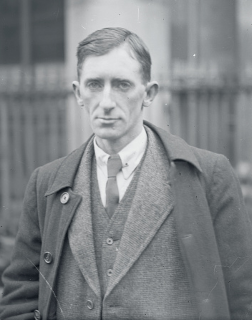
(Pictured: Roddy Connolly during an interview conducted for the RTÉ Television project “Portraits 1916” on January 9, 1966)


Leave a comment

Death of Gordon Lambert, Businessman, Senator & Art Collector

Charles Gordon Lambert, Irish businessman, senator and art collector, dies in a Dublin hospital on January 27, 2005.

Lambert is born on April 9, 1919, in the family home at Highfield Road, Rathmines, Dublin, the youngest of four sons of Robert James Hamilton Lambert, a veterinarian and renowned cricketer, and his wife Nora (née Mitchell). His eldest brother, Noel Hamilton “Ham” Lambert, is a versatile sportsman and noted veterinary practitioner.

Lambert is educated at Sandford Park School, Dublin, and at Rossall School, Lancashire. He is steered by his mother toward a career in accountancy for which he prepares by studying commerce at Trinity College Dublin (TCD). Graduating in 1940, he joins the accounting firm Stokes Brothers and Pim, qualifying Associate Chartered Accountant in 1943. In 1944, after auditing biscuit manufacturers W. & R. Jacob and Co. Ltd, one of Ireland’s largest and most prestigious industrial companies, he is offered and accepts a £300 a year job at Jacob’s as assistant accountant.

In 1953, Lambert becomes Jacob’s chief accountant as the management grooms him for an executive career. During 1948–56, Jacob’s suffers from profit and price controls, lack of capital investment and complacency brought about by the absence of competition. The entry of Boland’s Bakery into the Irish biscuit market in 1957 is exploited by Lambert who urges the alarmed board, which has long regarded advertising as vulgar, to market its products more vigorously. This assertiveness yields his advancement to the position of commercial manager in 1958. A year later he becomes the first non-member of the Bewley and Jacob families to be appointed to the board.

Between 1959 and 1970, biscuit consumption in Ireland doubles for which Lambert can claim much credit. Recognising that the advent of self-service stores means that manufacturers can no longer rely on retailers to sell their products, he pioneers advanced promotional techniques in Ireland, particularly the use of marketing surveys and of mass advertising in newspapers, on radio and on the emerging medium of television. To further accord with retailers’ preferences, Jacob’s drives the widespread packaging of biscuits in airtight packets rather than tins and also introduces a striking red flash logo for its packets. His interest in contemporary art enables him to contribute directly to Jacob’s packaging designs.

Lambert is appointed to the board of the Electricity Supply Board (ESB) in 1964, a position he holds until 1977, and serves as president of the National Agricultural and Industrial Development Association (NAIDA) in 1964–65, spearheading a “Buy Irish” campaign. His involvement with NAIDA dates to the mid-1950s and leads to his friendship with Jack Lynch, Minister for Industry and Commerce. This relationship and his admiration for Seán Lemass incline him toward Fianna Fáil. He also believes the party is the one most likely to deliver economic growth.

In 1977, Lambert is appointed to Seanad Éireann by Taoiseach Jack Lynch. He sits as an independent but assures Lynch he will broadly support the government. Dismayed by Ireland’s economic uncompetitiveness, he uses this platform to bemoan the state’s financial profligacy and failure to control inflation, and the indifference of Irish politicians towards the business community, contending that Irish industrialists suffer and need to learn from the expert lobbying of the indigenous agricultural sector and of large multi-national companies based in Ireland. He also articulates his social liberalism, desire for peaceful reconciliation in Northern Ireland and support for cultural and environmental causes. But his commitment to the Seanad wanes as he grasps its irrelevance. When Lynch resigns in December 1979, Lambert joins the Fianna Fáil party in a futile bid to preserve his political influence.

Following Jacob’s takeover of Boland’s Bakery in 1966, Lambert becomes joint managing director of a new entity, Irish Biscuits Ltd, the manufacturing and trading company for the Boland’s and Jacob’s biscuits operations. W. & R. Jacob and Co. Ltd becomes a holding company. In 1968, he becomes the sole managing director. From 1977 he begins withdrawing from the active administration of the company, relinquishing his managing directorship in 1979 to become chairman.

Initially, Lambert views art as a hobby but he comes to see it as a calling, drawing inspiration from Sir William Basil Goulding, his predecessor as Ireland’s leading collector and advocate of modern art. From the late 1970s he serves as head of the Contemporary Irish Art Society (CIAS) and on the Arts Council of Northern Ireland, the advisory committee of the Dublin Municipal Gallery, the board of the National Gallery of Ireland, the editorial board of the Irish Arts Review and the international council of the Museum of Modern Art (MoMA) in New York City.

The Irish Museum of Modern Art (IMMA) opens in 1991 and receives through the medium of the Gordon Lambert Trust some 212 works, which form the centerpiece of its collection. Thereafter Lambert gifts another 100 works to IMMA. He sits on IMMA’s board from 1991, and the west wing of the museum is named after him in 1999.

Despite being diagnosed with Parkinson’s disease in 1988, Lambert remains relatively active and plays golf into his 80s. In 1999 he receives an honorary LLD from TCD. From 1997, he relies increasingly on Anthony Lyons, an acquaintance of longstanding, to care for him. His last years are overshadowed by the collapse in autumn 2002 of his close but complex relationship with his family. Thereafter he shuns his relations and changes his will, granting Lyons a substantial portion of his estate while curtailing the amount to be received by his family. He dies in a Dublin hospital on January 27, 2005. Relatives challenge his final will in the High Court in 2009, but it is upheld.

(Pictured: Photograph of director of Jacob’s Biscuits, Gordon Lambert, speaking from a podium at the first Jacob’s Television Awards. The Lord Mayor of Dublin, James O’Keefe, is sitting behind Lambert. The awards ceremony takes place at the Bishop Street factory, Dublin.)


Leave a comment

Birth of Fiona O’Malley, Former Irish Politician

Fiona O’Malley, Irish former politician, is born in Limerick, County Limerick, on January 19, 1968. She serves as a Senator from 2007 to 2011, after being nominated by the Taoiseach. She serves as a Teachta Dála (TD) for the Dún Laoghaire constituency from 2002 to 2007.

O’Malley comes from a political family. Her father, Desmond O’Malley, is a former Fianna Fáil cabinet minister and founder of the Progressive Democrats. Her granduncle, Donogh O’Malley, is a Fianna Fáil minister in the 1960s. She is also a cousin of another former Progressive Democrats TD, Tim O’Malley.

A graduate of Trinity College Dublin and City, University of London, O’Malley works as an Arts Administrator before entering politics and as a personal assistant to Liz O’Donnell from 1998 to 2000. Her first political position is as elected member of the Dún Laoghaire–Rathdown County Council from 1999. She is elected to Dáil Éireann for the Dún Laoghaire constituency at the 2002 Irish general election. She resigns her council seat in 2003 when the dual mandate comes into effect.

O’Malley is a member of the Oireachtas Committee on Arts, Sports and Tourism and the Oireachtas Committee on Health and Children. She is also a member of the Dáil All-Party group concerned with matters of sexual and reproductive health. She has traveled to South America and South Africa with the United Nations Population Fund and has spoken extensively of the need for a clear safe sex message both in Ireland and in the developing world.

O’Malley loses her Dáil seat at the 2007 Irish general election, but is nominated by the Taoiseach, Bertie Ahern, to the Seanad in August 2007. She is narrowly defeated in the race to become the leader of the Progressive Democrats by Ciarán Cannon.

O’Malley is an independent politician from the dissolution of the Progressive Democrats in 2009. She is an independent candidate at the 2011 Seanad election for the Dublin University constituency but is not elected.


Leave a comment

Death of Justin Keating, Politician, Broadcaster & Journalist

Justin Pascal Keating, Irish Labour Party politician, broadcaster, journalist, lecturer and veterinary surgeon, dies at Ballymore Eustace, County Kildare, on December 31, 2009. In later life he is president of the Humanist Association of Ireland.

Keating is twice elected to Dáil Éireann and serves in Liam Cosgrave‘s cabinet as Minister for Industry and Commerce from 1973 to 1977. He also gains election to Seanad Éireann and is a Member of the European Parliament (MEP). He is considered part of a “new wave” of politicians at the time of his entry to the Dáil.

Keating is born in Dublin on January 7, 1930, a son of the noted painter Seán Keating and campaigner May Keating. He is educated at Sandford Park School, and then at University College Dublin (UCD) and the University of London. He becomes a lecturer in anatomy at the UCD veterinary college from 1955 until 1960 and is senior lecturer at Trinity College Dublin from 1960 until 1965. He is RTÉ‘s head of agricultural programmes for two years before returning to Trinity College in 1967. While at RTÉ, he scripts and presents Telefís Feirme, a series for the agricultural community, for which he wins a Jacob’s Award in 1966.

In the 1950s and 1960s Keating is a member of the communist Irish Workers’ Party. He is first elected to the Dáil as a Labour Party Teachta Dála (TD) for the Dublin County North constituency at the 1969 Irish general election. From 1973 to 1977 he serves in the National Coalition government under Liam Cosgrave as Minister for Industry and Commerce. In 1973 he is appointed a Member of the European Parliament from the Oireachtas, serving on the short-lived first delegation.

During 1975 Keating introduces the first substantial legislation for the development of Ireland’s oil and gas. The legislation is modelled on international best practice and intended to ensure the Irish people would gain substantial benefit from their own oil and gas. Under his legislation the state could by right acquire a 50% stake in any viable oil and gas reserves discovered. Production royalties of between 8% and 16% with corporation tax of 50% would accrue to the state. The legislation specifies that energy companies would begin drilling within three years of the date of the issue of an exploration license.

Keating loses his Dáil seat at the 1977 Irish general election but is subsequently elected to Seanad Éireann on the Agricultural Panel, serving there until 1981. He briefly serves again in the European Parliament from February to June 1984 when he replaces Séamus Pattison.

In the aftermath of President of Iran Mahmoud Ahmadinejad‘s “World Without Zionism” speech in 2005, Keating publishes an op-ed in The Dubliner magazine, expressing his views on Israel. The article starts by claiming that “the Zionists have absolutely no right in what they call Israel.” He then proceeds to explain why he thinks Israel has no right to exist, claiming that the Ashkenazi Jews are descended from Khazars.

Keating dies at Ballymore Eustace, County Kildare, on December 31, 2009, at the age of 79, one week before his 80th birthday. Tributes come from the leaders of the Labour Party and Fine Gael at the time of his death, Eamon Gilmore and Enda Kenny, as well as former Fine Gael leader and Taoiseach John Bruton.