seamus dubhghaill

Promoting Irish Culture and History from Little Rock, Arkansas, USA


Leave a comment

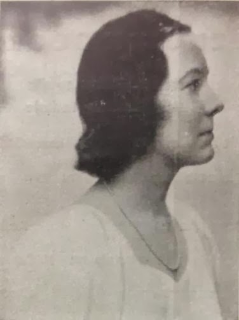
Birth of Clare Marsh, Still Life & Portrait Artist

Clare Marsh, still life and portrait artist, is born Emily Cecil Clare Marsh on January 13, 1875, at New Court, Bray, County Wicklow, the house of her maternal grandfather, Andrew McCullagh, a wine merchant.

Marsh’s parents are Arthur and Rachel Marsh (née McCullagh). She has four siblings. Her family is descended from the Anglo-Irish aristocracy, specifically from Francis Marsh of Edgeworth, Gloucestershire, with his wife the great-aunt of James II‘s first wife. The family later moves to Raheen, Clondalkin, and later to Cappaghmore, Clondalkin. There is little information about her early life although she is involved in the suffrage movement.

Marsh meets Mary Swanzy at Mary Manning‘s art classes, with Swanzy remembering Marsh as being from “a background of impecuniosity, which did not apparently worry them in spite of a more affluent upbringing.” She is influenced artistically by her aunt and John Butler Yeats, with whom she becomes close friends. In the summer of 1898, Yeats paints Marsh’s portrait at Manning’s studio. She is more drawn to the work of Yeats than of his son, Jack, and models her portraits on that of the older Yeats. He mentors her, encouraging her to see other artists’ work as much as possible and saying, “to produce a picture will force you to think.” He urges her to paint more industriously. She exhibits with the Royal Hibernian Academy (RHA) for the first time in 1900 with East wind effect and Roses. Yeats later claims that Marsh helped him with “line drawing or sketching, by putting him on the track of bulk drawing.”

Alongside Manning’s classes, Marsh takes night classes in sculpture with John Hughes and Oliver Sheppard at the Metropolitan School of Art. Aside from a trip to Paris in 1910 or 1911, she is taught exclusively in Dublin throughout her 20s. She takes a course at Norman Garstin‘s studio in Penzance, and stays in North Wales in 1914, painting two Trearddur Bay scenes. She paints still life and portraits, including one of Lily Yeats. It appears that her portraits of children and dogs are popular based on her submitted works to the RHA, exhibiting without a break from 1900 to 1921. The Hugh Lane Gallery holds her portrait of Lord Ashbourne, which demonstrates her painting style of loose brush strokes with an air of informality. Yeats suggests that she spend some time in the United States, where he is living at the time. She spends two months in New York City, staying with cousins at White Plains and then moves into a room neighbouring that of Yeats in Petitpas. Her uncle strongly disproves of this living arrangement, so she leaves and returns to Ireland in January 1912, which upsets Yeats greatly.

Upon her return from New York, Marsh starts holding classes at her studio at South Anne Street which Swanzy recalls are “well liked and always full,” with Susan Yeats becoming a pupil. She becomes the Professor of Fine Arts at Alexandra College in 1916. In the same year, she paints the fires and destruction of the 1916 Easter Rising. She paints a portrait of Jack Butler Yeats in 1918, which is now held by the Highlanes Gallery. John Butler Yeats later sympathises with her in a letter that she and other women are not elected members of the RHA. Knowing that Yeats is in financial difficulty, she sells some of his drawings and sends the money to him. It appears that over time, she works more with colour, as demonstrated in her portrait of Susan Yeats. Her final paintings are night studies, some of which show a possible influence from Swanzy with whom she shares a studio in the autumn of 1920. She is also believed to be one of the founding members of the Society of Dublin Painters.

Marsh dies on May 5, 1923. A posthumous exhibition of her work is held in October 1923. Due to her early death, she largely falls into obscurity until one of her works is included in the 1987 “Irish Women Artists from the Eighteenth Century to the Present Day” exhibition and publication from the National Gallery of Ireland. The National Gallery of Ireland holds a selection of sketches and paintings by Marsh, and a sketch of her by Swanzy. She is included in an exhibition of art by women artists at the Highlanes Gallery in 2012.

(Pictured: “Self-Portrait” by Clare Marsh, oil on canvas, circa 1900, National Gallery of Ireland)


1 Comment

The Film Premiere of “Angela’s Ashes”

Despite the controversy over the book, people in Frank McCourt‘s hometown of Limerick turn out in huge numbers to attend the sold-out film premiere of Angela’s Ashes on January 12, 2000. A simultaneous premiere takes place in Dublin.

The 1999 drama film is based on McCourt’s memoir Angela’s Ashes: A Memoir, published in 1996. An international co-production between the United States, the United Kingdom, and Ireland, it is co-written and directed by Alan Parker, and stars Emily Watson, Robert Carlyle, Joe Breen, Ciaran Owens, and Michael Legge, the latter three playing the young, middle aged, and older Frank McCourt, respectively.

Although set in Limerick, many street scenes are filmed in Cork. For example, the “fleas in the mattress” scene is filmed at Farren Street, Blackpool, and other scenes are shot at Roche’s Buildings, Lower John Street and Barrack Street.

With an estimated $25 million budget, the film grosses only $13,042,112 in the United States, making it a box-office bomb.

On Rotten Tomatoes, the film has an approval rating of 52%, based on reviews from 87 critics, with an average rating of 5.8/10. The site’s consensus states: “In spite of its attempts to accurately record Frank McCourt’s memoirs, the onscreen adaptation fails to capture any of the drama or humor of his life.” On Metacritic, the film has a score of 54 out of 100, based on reviews from 32 critics, indicating “mixed or average reviews.”

Michael Legge is praised for his portrayal of the adolescent Frank. In particular, he is said to excel in his role as an innocent teenager growing up with typical coming of age rites involving sexuality, maturity and peer pressure in a Catholic Irish setting.

Despite the low approval ratings with the critics, the film captures several awards: Best Picture and Best Costume Design at the Irish Film & Television Awards, Best Director at the Karlovy Vary International Film Festival, Best Original Score from the Las Vegas Film Critics Society, and Best Actress (Emily Watson) from the London Film Critics’ Circle.

(Pictured: Film poster for Angela’s Ashes, © Paramount Pictures)


Leave a comment

Stephen Moylan Appointed Colonel in the Continental Army

Stephen Moylan, Irish American patriot leader during the American Revolutionary War, is appointed colonel in the Continental Army on January 5, 1777. He has several positions in the Continental Army including Muster-Master General, Secretary and Aide to General George Washington, 2nd Quartermaster General, Commander of The Fourth Continental Light Dragoons and Commander of the Cavalry of the Continental Army.

Moylan is born to a Catholic family in Cork, County Cork, in 1737. His father, John Moylan, is a well-to-do merchant in Shandon, County Cork. His older brother Francis becomes Bishop of Cork. His family sends him to be educated in Paris. He then works in Lisbon for three years in the family shipping firm. He settles in Philadelphia in 1768 to organize his own firm. He is one of the organizers of the Friendly Sons of St. Patrick, an Irish American fraternal organization, and serves as its first president.

Moylan joins the American Continental Army in 1775 and upon the recommendation of John Dickinson, is appointed Muster-Master General on August 11, 1775. His brother John acts as United States Clothier General during the war. His experience in the shipping industry affords the United States a well-qualified ship outfitter, who helps fit out the first ships of the Continental Navy. On March 5, 1776, he becomes secretary to General George Washington with the rank of lieutenant colonel. He is appointed Quartermaster General in the American Continental Army on June 5, 1776, succeeding Thomas Mifflin. He resigns from this office on September 28, 1776. However, he continues to serve as a volunteer of General Washington’s staff through December 1776.

In January 1776, Moylan writes a letter using the term “United States of America,” the earliest known use of that phrase.

Moylan then raises a troop of light dragoons, the 4th Continental Light Dragoons, also known as Moylan’s Horse, on January 3, 1777, at Philadelphia. The regiment is be noted for taking the field in captured British red coats. However, they see action in green coats at the Battle of Brandywine on September 11, 1777, and the Battle of Germantown on October 4, 1777, and end the year by protecting the Cantonment at Valley Forge. He succeeds General Casimir Pulaski as Commander of the Cavalry in March 1778. Moylan’s Horse sees action at the Battle of Monmouth on June 28, 1778.

In the campaign of 1779 Moylan and the 4th Dragoons are stationed at Pound Ridge, New York, and see action when the British raid Norwalk, Connecticut, on July 11, 1779. He and the 4th Dragoons take part in the Battle of Springfield in New Jersey, on June 23, 1780, and General Anthony Wayne‘s expedition at Bull’s Ferry, New Jersey, on July 20, 1780. He commands his Dragoons at the Siege of Yorktown in October 1781, after which he is to take the cavalry to the Southern Campaign. However, his failing health causes him to leave the field and return to Philadelphia, where he constantly appeals to the Continental Congress to man, equip and maintain the Continental Dragoon Regiments.

Moylan is rewarded for his service by being breveted to brigadier general on November 3, 1783.

Moylan is married to Mary Ricketts Van Horne on September 12, 1778, and has two daughters, Elizabeth Catherine, and Maria. His two sons die as children. He dies in Philadelphia on April 11, 1811, and is buried there in the churchyard at St. Mary’s Roman Catholic Church.


Leave a comment

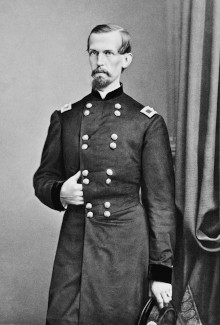
Death of Michael Corcoran, General in the Union Army

Michael Corcoran, Irish American general in the Union Army during the American Civil War and a close confidant of President Abraham Lincoln, dies on December 22, 1863, of a fractured skull after being thrown from a runaway horse.

Corcoran is born in Carrowkeel, near Ballymote, County Sligo, on September 21, 1827. As its colonel, he leads the 69th Infantry Regiment (New York) to Washington, D.C. and is one of the first to serve in the defense of Washington by building Fort Corcoran. He then leads the 69th into action at the First Battle of Bull Run. After promotion to brigadier general, he leaves the 69th and forms the Corcoran Legion, consisting of at least five other New York regiments.

Corcoran is the only child of Thomas Corcoran, an officer in the British Army, and Mary McDonagh. Through his mother, he claims descent from Patrick Sarsfield, hero of the Williamite War in Ireland and leader of the Wild Geese. In 1846 he takes an appointment to the Revenue Police, enforcing the laws and searching for illicit stills and distilling activities in Creeslough, County Donegal. He also joins a guerrilla group called the Ribbonmen.

On August 30, 1849, Corcoran emigrates from Sligo to the United States and settles in New York City where he finds work as a clerk in the tavern owned by John Heaney, whose niece, Elizabeth, he marries in 1854.

Corcoran enlists as a Private in the 69th New York Militia. By 1859 he is appointed colonel of the regiment. The regiment is a state militia unit at the time composed of citizens, not soldiers, and is involved in the maintenance of public order. On October 11, 1860, he refuses to march the regiment on parade for the 19-year-old Prince of Wales, who is visiting New York City at the time, protesting the British imposition of the Irish Famine. He is removed from command and a court martial is pending over that matter when the Civil War begins.

Corcoran also becomes involved in Democratic politics at Tammany Hall. He becomes district leader, a member of the judicial nominations committee, an elected school inspector for his ward, and a member of the Fourteenth Ward General Committee. He is one of the founders of the Fenian Brotherhood in America.

With the outbreak of war, the court martial is dropped and Corcoran is restored to his command because he had been instrumental in bringing other Irish immigrants to the Union cause. He leads the 69th to Washington, D.C. and serves for a while in the Washington defenses building, Fort Corcoran. In July 1861 he leads the regiment into action at the First Battle of Bull Run and is taken prisoner.

While Corcoran is imprisoned, the United States makes threats to execute captured Confederate privateers. Corcoran and several other Union prisoners are selected by lot for execution if the United States carries out its threats against the privateers. This event is known as the Enchantress Affair, but no executions are ever carried out by either side. Corcoran is then offered a parole under the conditions that he does not take up arms against the Confederacy. Intending to resume his place in the Union army upon his release he refuses the offer of parole. He is appointed Brigadier General of volunteers in July and exchanged in August 1862. His role in the Enchantress Affair and his refusal for parole gains him some attention and upon his release he is invited to dinner with President Abraham Lincoln.

In April 1863 Corcoran is involved in an incident that ends with Corcoran shooting and killing Edgar A. Kimball, commander of the 9th New York Volunteer Infantry Regiment. Corcoran attempts to pass through the 9th New York’s area without giving the required password after receiving the challenge from a sentry. When Kimball intervenes on the side of the sentry, Corcoran shoots him. Corcoran is not charged with a crime or reprimanded and continues to serve.

Corcoran returns to the army and sets about recruiting more Irish volunteers. He raises and takes command of what becomes known as the Corcoran Legion. Placed in command of the 1st Division, VII Corps he is engaged in the Battle of Deserted House and takes part in the Battle of Suffolk. In late 1863 he is placed in command of a division in the XXII Corps and returns to serve in the Washington defenses. While riding alone in Fairfax, Virginia he is thrown from a runaway horse and suffers a fractured skull. He dies at the age of 36 at the William Gunnell House on December 22, 1863.

New York City Mayor Michael Bloomberg unveils Ireland’s national monument to the Fighting 69th in Ballymote on August 22, 2006. The monument is sculpted by Philip Flanagan. The inscription around the top of the monument reads “Michael Corcoran 1827–1863” Around the base is inscribed “New York Ballymote Creeslough Bull Run.” Underneath the monument is a piece of steel from the World Trade Center, donated by the family of Michael Lynch, who died in the tower on September 11, 2001. Lynch’s family are also from County Sligo.


Leave a comment

Death of James Hoban, Irish American Architect

James Hoban, Irish American architect best known for designing the White House in Washington, D.C., dies in Washington, D.C., on December 8, 1831.

Hoban is a Roman Catholic raised on the Desart Court estate belonging to the Earl of Desart near Callan, County Kilkenny. He works there as a wheelwright and carpenter until his early twenties, when he is given an “advanced student” place in the Dublin Society‘s Drawing School on Lower Grafton Street. He studies under Thomas Ivory. He excels in his studies and receives the prestigious Duke of Leinster‘s medal for drawings of “Brackets, Stairs, and Roofs” from the Dublin Society in 1780. He is an apprentice to Ivory, from 1779 to 1785.

Following the American Revolutionary War, Hoban emigrates to the United States, and establishes himself as an architect in Philadelphia, Pennsylvania, in 1785.

Hoban is in South Carolina by April 1787, where he designs numerous buildings including the Charleston County Courthouse (1790–92), built on the ruins of the former South Carolina Statehouse, which was burned in 1788. President George Washington admires Hoban’s work on his Southern Tour and may have met with him in Charleston in May 1791. Washington summons the architect to Philadelphia, the temporary national capital, in June 1792.

In July 1792, Hoban is named winner of the design competition for the White House. His initial design has a 3-story facade, nine bays across, like the Charleston courthouse. Under Washington’s influence, he amends this to a 2-story facade, eleven bays across, and, at Washington’s insistence, the whole presidential mansion is faced with stone. It is unclear whether any of Hoban’s surviving drawings are actually from the competition.

It is known that Hoban owns at least three slaves who are employed as carpenters in the construction of the White House. Their names are recorded as “Ben, Daniel, and Peter” and appear in a James Hoban slave payroll.

Hoban is also one of the supervising architects who serves on the United States Capitol, carrying out the design of Dr. William Thornton, as well as with The Octagon House. He lives the rest of his life in Washington, D.C., where he works on other public buildings and government projects, including roads and bridges.

Local folklore has it that Hoban designed Rossenarra House near the village of Kilmoganny in County Kilkenny in 1824.

Hoban’s wife, Susanna “Susan” Sewall, is the sister of the prominent Georgetown City Tavern proprietor, Clement Sewall, who enlists as a sergeant at age 19 in the Maryland Line during the Revolutionary War, is promoted six months later to ensign and then severely wounded at the Battle of Germantown.

After the District of Columbia is granted limited home rule in 1802, Hoban serves on the twelve-member city council for most of the remainder of his life, except during the years he is rebuilding the White House. He is also involved in the development of Catholic institutions in the city, including Georgetown University, St. Patrick’s Parish, and the Georgetown Visitation Monastery founded by another Kilkenny native, Teresa Lalor of Ballyragget.

Hoban dies in Washington, D.C., on December 8, 1831. He is originally buried at Holmead’s Burying Ground, but is disinterred and reburied at Mount Olivet Cemetery in Washington, D.C. His son, James Hoban, Jr., said to closely resemble his father, serves as district attorney of the District of Columbia.

(Pictured: Portrait of James Hoban, Irish architect, wax bas-relief on glass, attributed to John Christian Rauschner, circa 1800)


2 Comments

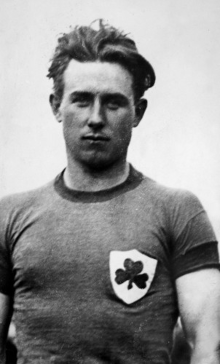
Death of Patrick O’Callaghan, Olympic Gold Medalist

Patrick “Pat” O’Callaghan, Olympic gold medalist and world record holder, dies on December 1, 1991, in Clonmel, County Tipperary.

O’Callaghan is born on September 15, 1905, at Derrygallon, Kanturk, County Cork. He attends the Royal College of Surgeons in Ireland (RCSI) in Dublin and qualifies as a doctor at the age of 20. He joins the Royal Air Force Medical Services in 1926 on a short-service engagement, before moving to Clonmel in 1931 to work as an assistant medical officer in St. Luke’s Hospital, later setting up as a general practitioner in the town. He continues to practise there until the late 1980s.

While in university, O’Callaghan develops an interest in the hammer, having seen the country’s top hammer-throwers practise at the University College Dublin (UCD) grounds, then at Terenure College. At home in Cork for the summer, he does not have access to a hammer, so he collects an old cannon ball from Macroom Castle which he feels might approximate to the required 16 lb. (7.25 kg) weight, has it drilled at a foundry in Mallow and fitted with a handle and wire, and uses it to train at the family farm. In 1926 he wins the Munster title in the 56 lb. (25.4 kg) shot and follows that with an Irish hammer title in 1927. Victory the following year in that same championship qualifies him for the 1928 Summer Olympics in Amsterdam, which he enters as a complete unknown with a previous best of 166 ft. 11 in. (50.87 m), as against three other contenders who have each thrown well over 170 ft. (51.8 m). The hammer event is staged on July 30, 1928, and, lying third after four rounds, he throws 168 ft. 7 in. (51.38 m) with his penultimate attempt, to defeat the Swedish favourite, Ossian Skiöld, by 4 inches (10 cm), with the American contenders Edmund Black and Frank Conner, still further behind. He becomes the first athlete from the Irish Free State to be crowned Olympic champion. Less than a fortnight later, he wins the Tailteann Games with an Irish record throw of 170 ft. 2 in. (51.87 m).

Over the following years O’Callaghan wins events across Ireland and Europe and continues to achieve pioneering feats, not least in 1931, when he wins six Irish titles in one afternoon: hammer, shot put, discus, high jump, 56 lbs. without follow, and 56 lbs. over-the-bar. On August 1, 1932, he defends his Olympic title at the 1932 Summer Olympics in Los Angeles. With just one throw left in the competition, he trails second behind the Finnish champion, Ville Pörhölä. With his last throw, he claims the event with a distance of 176 ft. 11 in. (53.92 m), becoming the only Irish person in history to win two gold medals at the Olympic games. He seems in prime condition to defend his title for a third time at the 1936 Summer Olympics in Berlin, but a dispute in the athletics world brings the suspension of the National Athletic and Cycling Association of Ireland (NACAI) by the International Amateur Athletic Federation (IAAF). The subsequent decision not to send a team to Berlin by the Irish Olympic Council denies him the opportunity to win a hat-trick of gold medals.

O’Callaghan remains a dominant force in athletic circles, however. In 1934 he sets the record for the hammer on European soil with a throw of 186 ft. 10 in. (56.95 m) at Enniscorthy, County Wexford. He later achieves an unofficial world record in the hammer in 1937 in Fermoy, County Cork, with a remarkable throw of 195 ft. 5 in. (59.55 m), breaking the old record by more than 6 ft. (1.83 m). As the IAAF still refuses to sanction the NACAI, the record is not ratified, ensuring that the then twenty-four-year-old record of his compatriot, Patrick Ryan, who competes for the United States, remains in place. In total, as well as his two Olympic gold medals, he also wins six Irish championships in the hammer, four Irish championships in the 56 lb. shot, three Irish championships throwing the 56 lb. weight over-the-bar, and one Irish championship in the discus. He also wins the American hammer championship in 1933 and the British championship in the same event the following year. Despite his size, he jumps 6 ft. 2 in. (1.88 m) in the high jump and is Irish champion on three consecutive occasions (1929–31).

After an accident in which a child is killed by a flying hammer, O’Callaghan emigrates to the United States just before World War II and takes up professional wrestling. Attempts are made to set up a match with world wrestling champion Dan O’Mahoney, but this never occurs. He has a high profile, however. Samuel Goldwyn offers him the film role of Tarzan and he plays handball with Bing Crosby before returning home to Clonmel, where he becomes a prominent member of Clonmel Commercials Gaelic football club and manages that club’s senior team to three county championships (1965–67). He is later chairman and honorary president of the club. In 1984 he is made a Freeman of Clonmel, a town where he is known as “the doc” or “Dr. Pat” and revered as a humble, charming, jovial man, with a reputation for particular kindness to his poorer patients. At 6 ft. 1 in. (1.855 m) and sixteen stone (101.6 kg), he is a larger-than-life figure and the focal point of innumerable stories confirming his status as a living legend. In 1960 he is the first person voted into the newly conceived Texaco Hall of Fame. He lives for many years at Roseville, Western Road, Clonmel, and dies there on December 1, 1991.

O’Callaghan is survived by three sons and one daughter. His younger brother Con represents Ireland in the decathlon at the 1928 Olympic games and wins that event at the third Tailteann games in 1932.

(From: “O’Callaghan, Patrick (‘Pat’)” by Paul Rouse, Dictionary of Irish Biography, http://www.dib.ie)


Leave a comment

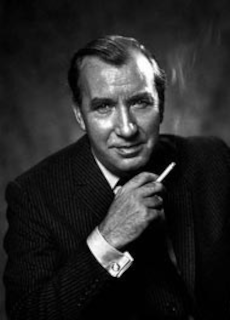
Death of Cornelius Ryan, Irish American Journalist & Author

Cornelius Ryan, Irish American journalist and author mainly known for his writings on popular military history, dies in Manhattan on November 23, 1974. He is especially known for his World War II books The Longest Day: 6 June 1944 D-Day (1959), The Last Battle (1966), and A Bridge Too Far (1974).

Ryan is born in Dublin on June 5, 1920. He is educated at Synge Street CBS, Portobello, Dublin. He is an altar boy at St. Kevin’s Church, Harrington Street and studies the violin at the Irish Academy of Music in Dublin. He is a boy scout in the 52nd Troop of the Catholic Boy Scouts of Ireland and travels on their pilgrimage to Rome on the liner RMS Lancastria in 1934. He moves to London in 1940 and becomes a war correspondent for The Daily Telegraph in 1941.

Ryan initially covers the air war in Europe, flying along on fourteen bombing missions with the Eighth and Ninth United States Army Air Forces (USAAF). He then joins General George S. Patton‘s Third Army and covers its actions until the end of the European war. He transfers to the Pacific theater in 1945 and then to Jerusalem in 1946.

Ryan emigrates to the United States in 1947 to work for Time, where he reports on the postwar tests of atomic weapons carried out by the United States in the Pacific. He then reports for Time on the Arab-Israeli war in 1948. This is followed by work for other magazines, including Collier’s Weekly and Reader’s Digest.

Ryan marries Kathryn Morgan, a novelist, and becomes a naturalized citizen of the United States in 1951.

On a trip to Normandy in 1949 Ryan becomes interested in telling a more complete story of Operation Overlord than has been produced to date. He begins compiling information and conducting over 1,000 interviews as he gathers stories from both the Allies and the Germans, as well as the French civilians.

In 1956 Ryan begins to write down his World War II notes for The Longest Day: 6 June 1944 D-Day, which tells the story of the D-Day Invasion of Normandy, published three years later in 1959. It is an instant success, and he assists in the writing of the screenplay for the 1962 film of the same name. Darryl F. Zanuck pays the author U.S.$175,000 for the screen rights to the book.

Ryan’s 1957 book One Minute to Ditch! is about the successful ocean ditching of a Pan American Boeing 377 Stratocruiser. He had written an article about the ditching for Collier’s in their December 21, 1956, issue and then expanded it into the book.

Ryan’s next work is The Last Battle (1966), about the Battle of Berlin. The book contains detailed accounts from all perspectives: civilian, American, British, Russian and German. It deals with the fraught military and political situation in the spring of 1945, when the forces of the western allies and the Soviet Union contend for the chance to liberate Berlin and to carve up the remains of Germany.

This work was followed by A Bridge Too Far (1974), which tells the story of Operation Market Garden, the ill-fated assault by allied airborne forces on the Netherlands culminating in the Battle of Arnhem. It is made into a major 1977 film of the same name.

Ryan is awarded the French Legion of Honour and an honorary Doctor of Literature degree from Ohio University, where the Cornelius Ryan Collection is housed in the Alden Library. He is diagnosed with prostate cancer in 1970 and struggles to finish A Bridge Too Far during his illness. He dies in Manhattan on November 23, 1974, while on tour promoting the book, only two months after publication. He is buried in the Ridgebury Cemetery in northern Ridgefield, Connecticut.

Four years after his death, Ryan’s struggle with prostate cancer is detailed in A Private Battle, written by his widow, from notes he had secretly left behind for that purpose.


Leave a comment

Birth of Justin McCarthy, Historian, Novelist & Politician

Justin McCarthy, Irish nationalist and Liberal historian, novelist and politician, is born in Cork, County Cork on November 22, 1830. He is a Member of Parliament (MP) from 1879 to 1900, taking his seat in the House of Commons of the United Kingdom of Great Britain and Ireland.

McCarthy is educated in Cork. He begins his career as a journalist at the age of 18 in Cork. From 1853 to 1859 he is in Liverpool, on the staff of the Northern Daily Times. In March 1855, he marries Charlotte Ailman. In 1860 he moves to London, as parliamentary reporter to the Morning Star, of which he becomes editor in 1864. He gives up his post in 1868 and, following a lecturing tour in the United States, joins the staff of The Daily News as leader-writer in 1870. In this capacity he becomes one of the most useful and respected upholders of the liberal politics of the time. He lectures again in America in 1870–71 and in 1886–87.

McCarthy is first elected to Parliament at a by-election on April 4, 1879, when he is returned unopposed as a Home Rule League MP for Longford. He is re-elected unopposed as a Parnellite Home Ruler in 1880, and when the two-seat Longford constituency is split into two divisions under the Redistribution of Seats Act 1885, he is elected as an Irish Parliamentary Party member for the new single-seat North Longford constituency. His sole opponent, James Mackay Wilson of the Irish Conservative Party, wins only 6% of the votes.

At the 1886 United Kingdom general election, McCarthy is returned unopposed in North Longford, but also stands in Londonderry City, where he is declared the loser to the Irish Unionist Alliance candidate by the narrow margin of 1778 votes to 1781. However, the result is later overturned on petition and McCarthy opts to sit for Londonderry City. During the divorce controversy surrounding Charles Stewart Parnell in November 1890, the British Prime Minister William Ewart Gladstone expresses a warning, given to McCarthy as intermediary, that if Parnell retains leadership of the Irish Parliamentary Party, it will mean the loss of the next election, the end of their alliance and Home Rule. When the annual party leadership election meeting is called later that month, the threat is somehow not conveyed to the members, who re-elect Parnell leader of the Party.

After a further historical meeting of the Irish Party MPs in early December, Parnell refuses to retire and the Party divides. McCarthy becomes chairman of the Anti-Parnellite group, the Irish National Federation, for a year in 1891–92. His nationalism is of a temperate and orderly kind, and though his personal distinction singles him out for the chairmanship during the party dissensions of this period, he is in no active sense the political leader.

At the 1892 United Kingdom general election, McCarthy again stands both in North Longford and in Londonderry City. In each seat there is a two-way contest between the Anti-Parnellite McCarthy and a Unionist candidate, but the narrow Unionist victory in Londonderry is not overturned, and McCarthy sits for North Longford, where he wins over 93% of the votes. He is returned unopposed for North Longford in 1895 United Kingdom general election in Ireland and stands down from Parliament at the 1900 United Kingdom general election In Ireland.

It is claimed that McCarthy’s true vocation is literature. His earliest publications are novels, some of which, such as A Fair Saxon (1873), Dear Lady Disdain (1875), Miss Misanthrope (1878), and Donna Quixote (1879), attain considerable popularity. His most important work is his History of Our Own Times, which treats of the period between Queen Victoria‘s accession and her Diamond Jubilee. He begins a History of the Four Georges (1884–1901) and the latter half is written by his son, Justin Huntly McCarthy.

Justin McCarthy dies at the age of 81 in Folkestone, Kent, England on April 24, 1912.

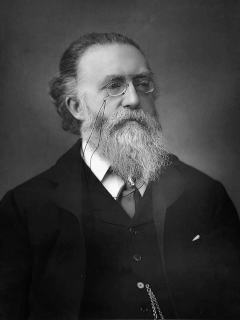
(Pictured: Portrait style photograph of Irish politician Justin McCarthy, taken in 1891 by Herbert Rose Barraud)


Leave a comment

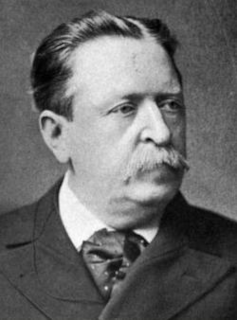
Birth of John Russell Young, Journalist, Author & Diplomat

John Russell Young, Irish American journalist, author, diplomat, and the seventh Librarian of the United States Congress from 1897 to 1899, is born on November 20, 1840, in County Tyrone. He is invited by Ulysses S. Grant to accompany him on a world tour for purposes of recording the two-year journey, which he publishes in a two-volume work.

Young is born in County Tyrone but as a young child his family emigrates to Philadelphia, Pennsylvania. He enters the newspaper business as a proofreader at age fifteen. As a reporter for The Philadelphia Press, he distinguishes himself with his coverage of the First Battle of Bull Run. By 1862 he is managing editor of the Press and another newspaper.

In 1865 Young moves to New York City, where he becomes a close friend of Henry George and helps to distribute his book, Progress and Poverty. He begins writing for Horace Greeley‘s New York Tribune and becomes managing editor of that paper. He also begins working for the government, undertaking missions to Europe for the U.S. Department of State and the U.S. Department of the Treasury. In 1872, he joins the New York Herald and reports for them from Europe.

Young is invited to accompany President Ulysses S. Grant on Grant’s famous 1877-79 world tour, chronicled in Young’s book Around the World with General Grant. He impresses Grant, especially in China where he strikes up a friendship with Li Hongzhang. Grant persuades President Chester A. Arthur to appoint Young minister to China in 1882. In this position he distinguishes himself by mediating and settling disputes between the United States and China and France and China. Unlike many other diplomats, he opposes the policy of removing Korea from Chinese suzerainty.

In 1885 Young resumes working for the New York Herald in Europe. In 1890 he returns to Philadelphia. In 1897 President William McKinley appoints him Librarian of Congress, the first librarian confirmed by Congress. During his tenure, the library begins moving from its original home in the United States Capitol building to its own structure, an accomplishment largely the responsibility of his predecessor, Ainsworth Rand Spofford. Spofford serves as Chief Assistant Librarian under Young. Young holds the post of librarian until his death.

Young dies in Washington, D.C. on January 17, 1899, and is interred at Mount Moriah Cemetery in Philadelphia, Pennsylvania.

Young’s brother is Congressman James Rankin Young. His son is Brigadier General Gordon Russell Young, who is Engineer Commission of the District of Columbia from 1945-51 and a recipient of the Distinguished Service Medal and the Legion of Merit.


Leave a comment

Birth of Novelist Pamela Hinkson

Pamela Hinkson, novelist, is born on November 19, 1900, in Ealing, London, England, the only daughter among five children of Katharine Tynan Hinkson, novelist and poet, and Henry Albert Hinkson, a novelist, barrister, and classical scholar.

Married in 1893, Hinkson’s parents initially settle in England, where he studies law and is called to the Inner Temple in 1902. After suffering the loss of their first two sons in infancy, they have two more sons in addition to their daughter, Pamela. During this time her mother earns the main family income, and it is likely that she determines their return to Ireland in 1911. The Hinksons initially settle in Dalkey, County Dublin, before moving to a house called Clarebeg in Shankill. When Henry Hinkson is appointed resident magistrate for south Mayo (Castlebar) in October 1914, the family moves to Claremorris, County Mayo.

Hinkson is educated privately in England and on the Continent, and in Ireland attends a local convent day-school. She is exposed to her mother’s literary milieu which includes prominent writers of the Irish revival, including George William Russell, James Stephens, and Padraic Colum. Her mother’s memoir, The Years of the Shadow (1919), recalls Pamela’s developing talent for writing poetry and her predilection for war themes, as evidenced by The Blind Soldier, one of her first published poems. By the time she turns her hand to short stories, her earnings from writing enable her to buy the latest fashions.

Two key events that consumed Hinkson’s life and later spark her creativity are World War I and the Easter Rising. H. G. Wells describes in the foreword to his war novel Mr. Britling Sees It Through (1916) a conversation he had with her when she was 12, recalling how she had boldly set him straight on the “Irish question.” Her parents send her away to boarding school in County Wicklow in the hope that she will be distracted from her gloomy preoccupations, which are accentuated by the absence of her brothers, serving in the British Army. After the war she is deeply concerned by the redundancy experienced by demobilised and often maimed soldiers and contributes to the welfare work of the Irish servicemen’s Shamrock Club in London. These issues inform two early novels, The Victors (1925) and Harvest (1926), both written in the guise of an ex-serviceman under the pseudonym “Peter Deane.” By masking her identity, she avoids the possibility of her works being discredited because of her gender and lack of first-hand experience of war. Subsequently she writes under her own name for thirty years.

In contrast to her close relationship with her mother, Hinkson deeply dislikes her father. With the exception of her beloved brother Giles A. Hinckson, a correspondent for The Times in Buenos Aires and Santiago, she never meets a man who matches her high ideals. Though briefly engaged to be married, she is ultimately disillusioned by all men, dismissing them as she had her father. After his death early in 1919, she and her mother are left in financial difficulties, and have to resort to friends and boarding houses for accommodation. Without the financial means to embark on a university degree, she remains at her mother’s side. Though she continues to write, she leads a somewhat stifled life. From 1922 onwards they spend several years on the Continent.

Hinkson’s first novel, The End of All Dreams (1923), addresses the decline of the “big house” amid the revolutionary upheavals of recent Irish history, a theme to which she returns in later works, such as The Deeply Rooted (1935) and her last book, The Lonely Bride (1951). During the 1920s she writes much girls’ school fiction, while her novel Wind from the West (1930) is informed by a period spent in France, where she works as a governess. Her transcription of the memoirs of Lady Fingall (Elizabeth Burke-Plunkett), published under the title Seventy Years Young (1937), illustrates the decline of the Anglo-Irish ascendancy. Informed by war and the Irish troubles, her novels characteristically are solemn, and reflect her ambivalent relationship with Ireland. Inspired by the Irish landscape, but never an ardent supporter of Irish independence, she maintains an abiding attachment to England.

The death of Hinkson’s mother in 1931 is a devastating blow that triggers her most forceful and first truly successful novel, The Ladies’ Road (1932). Documenting the lives of the Irish and English ascendancies before, during, and after World War I, this novel, without being explicitly autobiographical, contains many motifs that resonate with her own life story. When published in the United States in 1946 it proves a massive success, selling 100,000 copies in the Penguin Books edition, a rare feat for a World War I novel appearing immediately after World War II. Other notable works are The Light on Ireland (1935) and her sketches of Irish life, Irish Gold (1939), written while she lodges with friends near Lough Derg, County Tipperary.

Hinkson’s visit to India in the late 1930s as a guest of the viceroy, which she recounts in Indian Harvest (1941), results in her appointment to the Ministry of Information in London (1939–45). She lectures on India in the United States during World War II, and also lectures to British troops and local audiences in Germany (1946–47), broadcasts on radio, and contributes to The Observer, The Spectator, New Statesman, The Manchester Guardian, and Time and Tide. Her novel Golden Rose (1944), written in London during The Blitz, romanticises the British colonial presence in India. Forthright in the expression of her numerous strongly held opinions, she argues ardently and controversially for women’s rights, animal welfare, and retention of Northern Ireland in the UK. Devout in her Catholicism, she is none the less critical of certain Catholic precepts.

Hinkson returns to Ireland in 1959 where she suffers poor health for twenty years until her death in Dublin on May 26, 1982.

(From: “Hinkson, Pamela” by Jessica March, Dictionary of Irish Biography, http://www.dib.ie)