On March 21, 1881, the Peace Preservation (Ireland) Act of 1881, a significant piece of legislation, is enacted by the British Parliament, led by Prime MinisterWilliam Ewart Gladstone, during a period of political turbulence in Ireland.
This act is part of a series of legislative measures introduced by the British government to address the rise of agrarian agitation and unrest in Ireland, particularly in response to the activities of the Irish National Land League. The Act grants extensive powers to the authorities to combat perceived threats to public order and security. It allows for the arrest and detention of individuals suspected of being involved in agrarian crimes, as well as the suppression of public meetings and the imposition of curfews in troubled areas. It is part of the broader response by the British government to the Land War, a period of agrarian agitation and tenant-landlord conflicts in Ireland during the late 19th century. The legislative measures during this time are controversial and lead to increased tensions between the Irish population and the British authorities.
William Ewart Gladstone, a member of the Liberal Party, is the prime minister of the United Kingdom of Great Britain and Ireland on four separate occasions between 1868 and 1894. He is noted for his moralistic leadership and his emphasis on world peace, economical budgets, political reform and efforts to resolve the Irish question.
Gladstone sees himself as a national leader driven by a political and almost religious mission, which he tries to validate through elections and dramatic appeals to the public conscience. His approach sometimes divides the Liberal Party, which he dominates for three decades. Finally, he splits his party on the issue of Irish Home Rule, which he sees as mandated by the true public interest regardless of the political cost.
In 1881, Gladstone is convinced that to pass a Land Bill for Ireland, law and order should be restored. In February 1881, the government therefore passes the Peace Preservation (Ireland) Act 1881 which gives the Lord Lieutenant of Ireland powers to suspend habeas corpus, and gives him in effect the power to lock up anyone he likes for as long as he likes. This is the Act used to arrest Irish Nationalist leader Charles Stewart Parnell.
On August 22, 1881, Parliament passes the Land Law (Ireland) Act 1881 which gives Irish tenants “the three Fs”: fair rent, fixity (security) of tenure, and the right to freely sell their holdings.
Gladstone’s government also passes the Arrears of Rent (Ireland) Act 1882, which cancels rent arrears for Irish tenants occupying land worth less than £30 per annum who were unable to pay.
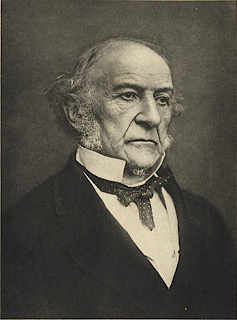
(From: “The Peace Preservation Act, Controlling Possession and Importation of Arms, Is Enacted,” Today In Celtic History, http://www.todayinceltichistory.com | Pictured: William Ewart Gladstone, Prime Minister of the United Kingdom)
The Irish Catholic Hierarchy formally endorses Home Rule on February 16, 1886, a significant moment in the Irish political landscape.
The Home Rule movement, led by Charles Stewart Parnell (pictured) and the Irish Parliamentary Party (IPP), seeks to establish a separate Irish parliament to handle domestic affairs while remaining within the British Empire. The campaign gains significant momentum throughout the late 19th century, but opposition from the British government and Irish unionists make progress difficult. Up to this point, the Catholic Church in Ireland had largely remained cautious about taking an overtly political stance on Home Rule. However, their endorsement on this day in 1886 changes the dynamic of the movement, giving it an unprecedented boost in legitimacy and support among the Irish people.
The Catholic Church plays a central role in Irish society, wielding immense influence over the daily lives of the majority Catholic population. Many of the clergy are already sympathetic to nationalist aspirations, but an official endorsement from the hierarchy signals a unified front that cannot be ignored. By formally backing Home Rule, the bishops strengthen nationalist demands and provide moral authority to the movement, reinforcing the argument that Home Rule is not just a political necessity but also a just and rightful cause.
This endorsement comes at a critical time. British Prime MinisterWilliam Ewart Gladstone is preparing to introduce the Government of Ireland Bill 1886, commonly known as the First Home Rule Bill, in April 1886, a legislative measure that, if passed, would grant Ireland limited self-government. The backing of the Catholic hierarchy is instrumental in rallying public support and reinforcing Parnell’s leadership. While the bill ultimately fails in the House of Commons on June 8, 1886, due to strong opposition from Conservative and Unionist factions, the Catholic Church’s stance ensures that Home Rule remains a dominant political issue for decades to come.
Despite the failure of the 1886 bill, the endorsement by the Catholic bishops has long-term implications. It solidifies a powerful alliance between Irish nationalism and the Church, an influence that persists well into the 20th century. The endorsement also helps to counteract Protestant unionist claims that Home Rule is merely a radical or sectarian endeavor, presenting it instead as a moderate and just political cause with widespread backing.
Over the following years, Home Rule remains a contentious issue, with subsequent attempts to pass similar legislation met with resistance. The Government of Ireland Bill 1893, commonly known as the Second Home Rule Bill, is again defeated in the House of Lords, and it is not until the Government of Ireland Act 1914, commonly referred to as the Third Home Rule Bill, that significant progress is made. Even then, implementation is delayed by World War I and ultimately overshadowed by the 1916 Easter Rising and the Irish War of Independence.
Looking back, the Catholic Church’s endorsement of Home Rule on February 16, 1886, is a defining moment in Ireland’s political history. It reinforces the nationalist cause, legitimizes the demand for self-governance, and plays a crucial role in shaping Ireland’s path toward eventual independence. While Home Rule itself is never fully realized in the form originally envisioned, its legacy influences the Irish Free State’s establishment in 1922 and Ireland’s eventual emergence as a fully independent republic.
(From: “February 16, 1886 – The Catholic Church Embraces Home Rule,” by Bagtown Clans, This Day in Irish History Substack, http://www.thisdayinirishhistory.substack.com, February 2025)
Christian is considered one of the best Irish lawyers of his time, but as a judge, he regularly courts controversy. His bitter and sarcastic temper and open contempt for most of his colleagues leads to frequent clashes both in Court and in the Press. Though he is rebuked for misconduct several times by the House of Commons, no serious thought is given to removing him from office.
Christian’s early years at the Bar are not successful, and he admits to being near to despair at times about his prospects. His practice lays in the Court of Chancery, with procedures that are extremely complex and he finds at first almost unintelligible. Gradually he masters the intricacies of Chancery practice becoming a leader of the Bar, and took silk in 1841. It is said that his expertise in Chancery procedures leave even the Lord Chancellor himself quite unable to argue with him.
Christian is appointed Law Adviser to the Lord Lieutenant of Ireland, an influential post which involves assisting the Attorney-General and Solicitor-General in advising the Crown in 1850, but resigns after only a few months on the grounds that it interferes with his private practice. He is appointed Third Sergeant later the same year but resigns in 1855, allegedly because he is disappointed at not receiving further promotion. Promotion does in time come his way. He is appointed Solicitor-General the following year and a judge of the Court of Common Pleas in 1858. He is unusual in having no strong political loyalty; it is said that his political allegiance is known only to himself.
As a judge of the Court of Common Pleas, Christian gets on well with his colleagues, and any dissenting judgements he writes are short and courteous. It is after his appointment as a Lord Justice of Appeal in Chancery in 1867 that his behaviour begins to attract unfavourable comment, as he goes out of his way to court controversy on a wide variety of topics.
His criticisms of legal rulings and arguments are invariably delivered in the form of a personal attack. Such exchanges are frequently continued through the letters page of The Times. Conservative in politics, he objects to the appointment of Thomas O’Hagan as Lord Chancellor in December 1868, dismissing him as a liberal “political necessity.” He goes to great lengths to point out legal flaws in the Landlord and Tenant (Ireland) Act 187, to the great annoyance of the Prime Minister, William Ewart Gladstone. His final public diatribe comes in 1877 when he launches an attack on the quality of law reporting, dismissing the contents of the Irish Reports as “a mass of utterly worthless rubbish.” He is vilified in the legal press and is the subject of cartoons in Dublin satirical journals. Pleading deafness, he retires in December 1878.
Moran’s parents are Patrick and Alicia Cullen Moran. Of his three sisters, two become nuns, one of whom dies nursing cholera patients. His parents die by the time he is 11 years old. In 1842, at the age of twelve, he leaves Ireland in the company of his uncle, Paul Cullen, rector of the Pontifical Irish College in Rome. There he studies for the priesthood, first at the minor seminary and then at the major seminary.
Moran is considered so intellectually bright that he gains his doctorate by acclamation. By The age of 25 he speaks ten languages, ancient and modern. He focuses on finding and editing important documents and manuscripts related to Irish ecclesiastical history. Some editions of his works remain important source materials to this day.
Moran is appointed vice-rector at the Pontifical Irish College and also takes the chair of Hebrew at Congregation for the Evangelization of Peoples (CEP). He is also some-time vice-rector of the Scots College in Rome. In 1866, he is appointed secretary to his mother’s half-brother, Cardinal Paul Cullen of Dublin. He is also appointed professor of scripture at Holy Cross College, Dublin. He founds the Irish Ecclesiastical Record (on which he later models the Australasian Catholic Record).
In 1869, Moran accompanies Cardinal Cullen to the First Vatican Council, a council also attended by Melbourne‘s then-first archbishop, James Alipius Goold. According to Michael Daniel, it is generally agreed that the definition of the Catholic doctrine of papal infallibility is based on Cullen’s proposal, and Ayres suggests that there is strong evidence that Cullen’s proposal is largely drafted by Moran. While in Rome and Ireland he is very active politically in opposing English Benedictine plans for monastic foundations undergirding the Catholic Church in Australia.
Moran is appointed coadjutor bishop of Ossory on December 22, 1871, and is consecrated on March 5, 1872 in Dublin by his uncle, Cardinal Paul Cullen. On the death of Bishop Edward Walsh, he succeeds as Bishop of Ossory on August 11, 1872. He champions Home Rule and is consulted by William Ewart Gladstone prior to the introduction of his Home Rule Bills.
Moran is personally chosen and promoted by Pope Leo XIII to head the Archdiocese of Sydney – a clear policy departure from the previous English Benedictine incumbents, John Bede Polding and Roger Vaughan, who were experiencing tension leading the predominantly Irish Australian Catholics. In the archbishop’s farewell audience with Leo XIII, it is evident that the intrigues of parties, the interference of government agencies and the influence of high ecclesiastics had made the matter almost impossible to decide by Propaganda. In the presence of others, the Pope says clearly: “We took the selection into our own hands. You are our personal appointment.” Moran is appointed to Australia on January 25, 1884, and arrives on September 8, 1884. He is created cardinal-priest on July 27, 1885, with the title of St. Susanna. The new Irish Australian cardinal makes it his business to make his presence and leadership felt.
Moran begins transforming the SydneySaint Patrick’s Day festivities by inaugurating the celebration of a Solemn Mass at St. Mary’s Cathedral on Saint Patrick’s Day 1885. Over time the day’s events change from an Irish nationalist and political day into an occasion “for the demonstration of Irish Catholic power and respectable assimilation” as well as “for the affirmation of Irish Catholic solidarity.”
In 1886, it is estimated that Moran travels 2,500 miles over land and sea, visiting all the dioceses of New Zealand. In 1887, he travels 6,000 miles to consecrate fellow Irishman Matthew Gibney at Perth. He also travels to Ballarat, Bathurst, Bendigo, Hobart, Goulburn, Lismore, Melbourne and Rockhampton for the consecration of their cathedrals. Following the 1891 encyclical Rerum Novarum, he supports the right of labourers to better their conditions.
During his episcopate, Moran consecrates 14 bishops (he is the principal consecrator of William Walsh, Michael Verdon, Patrick Vincent Dwyer, Armand Olier and also assists in consecrating Patrick Clune, among others). He ordains nearly 500 priests, dedicates more than 5,000 churches and professes more than 500 nuns. He makes five journeys to Rome on church business between 1885 and 1903, but does not participate in the papal conclave of 1903 because of the relatively short notice and the distance, making it impossible for him to reach Rome within 10 days of the death of Pope Leo.
Moran is a strong supporter of Federation, and in November 1896 attends the People’s Federal Convention in Bathurst. In March 1897, he stands as a candidate election of ten delegates from New South Wales to the Australasian Federal Convention. Although he states he will not attend the Convention in any official capacity, but in a solely individual one, his candidacy sparks a sectarian reaction. Twenty-nine per cent of voters give one of their ten votes to Moran, but he comes only thirteenth in number of total votes and is not elected.
From 1900 to 1901, Moran’s leadership survives a crisis when his personal secretary, Denis O’Haran, is named as co-respondent in the divorce case of the cricketer Arthur Coningham. Moran vigorously defends O’Haran and a jury finds in his favour.
Moran dies in Manly, Sydney, on August 16, 1911, aged 80. A quarter of a million people, the largest crowd ever to gather in Australia prior to that date, witness his funeral procession through the centre of Sydney. He is buried in St. Mary’s Cathedral, Sydney.
The 1886 Belfast riots are a series of intense riots that begin in Belfast on June 4, 1886, and continue throughout the summer and autumn of 1886.
In the late 19th century, Catholics began to migrate in large numbers to the prosperous city of Belfast in search of work. By the time of the riots, Catholics make up over one-third of the population of the city. This migration brings with it sectarian tensions as Catholics and Protestants competed for jobs. As the minority, Catholics find themselves discriminated against in this area and are kept at the lower end of the labour market.
At this time there is a real possibility that the British government will establish a devolved Irish parliament (see Irish Home Rule Movement). Belfast Catholics believe that a devolved Irish government will be sympathetic to their situation and end the discrimination. Belfast Protestants believe this as well, and fear the end of their privileged position.
The introduction of the Bill leads to renewed sectarian tensions in Belfast. On June 3, a Catholic navvy sneers to a Protestant co-worker that under an Irish government Protestants will never get hired, even in Belfast. This represents the very worst fears of Protestants towards Home Rule and the story quickly spreads throughout Belfast. This leads to clashes between Protestant and Catholic shipyard labourers.
The riots intensif on June 8, the day that the Home Rule Bill is defeated in parliament. Celebrations are held throughout the city to celebrate the defeat. Some of the revellers attack Catholic homes and businesses. The police find themselves unable to cope with the situation. Reinforcements are sent in from other parts of Ireland. Most of the reinforcements are Catholic. A rumour that the reinforcements have been sent by Gladstone to punish Belfast Protestants for opposing Home Rule spreads throughout the city. It is encouraged by popular preachers such as Hugh Hanna and his Church of Ireland counterpart, the city’s Orange Order Grand Master, Rev. Richard Rutledge Kane. In the midst of the disorder, Kane declares that unless the police are disarmed, 200,000 armed Orangemen will relieve them of their weapons. The rioters thus begin to attack the police, and later the soldiers. Running battles between security forces and rioters lasts until June 14.
On June 22, the reinforcements are sent home by the city government, although some are kept as trouble is expected on July 12, the date of annual Protestant celebrations. Trouble does indeed erupt on the 12th and, contrary to the expectations of the government, the police find themselves overwhelmed by the Protestant attackers. Reinforcements have to be sent into Belfast again, and the threat of over 2,000 police officers and soldiers descending on the city causes the rioters to quit by July 14.
On the last Saturday of July, Hanna holds his annual outing for the Protestant children of Belfast. This outing usually involves a trip to the countryside, with marching and drumming along the way. Hanna agrees to comply with the city’s request that he forgo the drumming and marching due to the tense situation. As the outing makes its way through Belfast, disappointed local Protestants join in to march with their own drums and anti-Catholic banners. Marchers deliberately provoke the Catholics by marching into Catholic areas. Taunting quickly gives way to heavy street fighting between Catholics, Protestants and police. Bloody clashes on par with the riots in June last for a few days, but low-intensity rioting continues until September.
Officially thirty-one people are killed in the riots, although George Foy, who makes surgical reports on the riots, reckons that the real death toll might be as high as fifty. Hundreds are injured. Over four hundred arrests are made. An estimated £90,000 worth of property damage is incurred, and local economic activity is significantly compromised.
Downing is the second son of Eugene Downing, a local merchant, and his wife, Helena, daughter of Timothy McCarthy of Kilfadamore, County Kerry. They have two other sons and two daughters. He is apprenticed in 1830 to his elder brother, Francis Henry, who practises as a solicitor at Killarney. Once admitted as a solicitor himself in 1836, he moves to Skibbereen, County Cork, where he practises until the mid-1860s, making from his practice a large fortune. By the mid-1870s he owns 4,067 acres in Cork and Kerry valued at £1,413.
Downing is prominent locally in public affairs, supporting the repeal campaign of Daniel O’Connell and the temperance campaign of Fr. Theobald Mathew. He is the first chairman of Skibbereen town commissioners, from 1862 to 1879. He later helps James Stephens and Michael Doheny escape to France in 1849. After Jeremiah O’Donovan Rossa and other members of the Phoenix National and Literary Society are arrested on December 5, 1858, he acts as their solicitor. His chief clerk, Mortimer Moynahan, a member of the society, unwittingly takes on as an assistant a man who proves to be an informer.
Downing involves himself in the National Association of Ireland, the political pressure group formed by the CatholicArchbishop of Dublin, Paul Cullen, and succeeds in getting tenant-right added to its demands in March 1865. He is elected as one of the two MPs for County Cork on November 30, 1868, and is reelected without a contest on February 5, 1874. Nominally a liberal, he draws his main support from the Catholic bishops and most of the parish clergy and, more significantly, from the tenant farmer class. The farmers’ interests he vigorously pursues in parliament and outside.
After the passing of William Ewart Gladstone‘s first land act, Downing plays a prominent part in the formation of the Home Rule League under the leadership of Isaac Butt. He is always a moderate on the home-rule issue – he opposes the pledging of home-rule MPs always to act together and later the obstructive tactics of fellow home-rulers Joseph Gillis Biggar and Charles Stewart Parnell. He is one of the nine members of the standing committee of Butt’s Irish Parliamentary Party (1874–79) and proves a stalwart of Butt particularly in disputes with Parnell. It is he who draws to the attention of the House of Commons the condition of tenants on the Buckley estate in the foothills of the Galtee Mountains at Skeheenarinky in County Tipperary in March 1877. In Butt’s absence Downing introduces an Irish land tenure bill on February 6, 1878, which is, however, quickly defeated.
Downing dies January 10, 1879, at his residence, Prospect House, Skibbereen, a deputy lieutenant of County Cork. The cortège that follows his body to the Old Caheragh Graveyard, Skibbereen, for burial is said to be four miles long. In Emmet Larkin‘s judgement, “it was not altogether unlikely, if he had survived, that he would have eventually succeeded Butt as chairman of the Irish party.”
In 1837, Downing marries Jane, youngest daughter of Daniel McCarthy of Ave Hill, Dromore, County Cork, and with her has four sons and three daughters. His younger brother, Washington, is a parliamentary reporter and later the Rome correspondent for The Daily News of London, and husband of Mary McCarthy Downing.
(From: “Downing, Timothy McCarthy” by C.J. Woods, Dictionary of Irish Biography, http://www.dib.ie, October 2009)
The Irish National Land League is an Irish political organisation of the late 19th century which organises tenant farmers in their resistance to exactions of landowners. Its primary aim is to abolish landlordism in Ireland and enable tenant farmers to own the land they work on. The period of the Land League’s agitation is known as the Land War.
The Irish National Land League is founded at the Imperial Hotel in Castlebar, County Mayo, on October 21, 1879. At that meeting Charles Stewart Parnell, the prominent Home RuleMember of Parliament, is elected president of the league. Andrew Kettle, Michael Davitt and Thomas Brennan are appointed as honorary secretaries. This unites practically in a single organisation all the different strands of land agitation and tenant rights movements on the nationalist side of the increasingly frozen sectarian-political divide in Ireland.
The government had introduced the Landlord and Tenant (Ireland) Act 1870, the first Land Act, which proves largely ineffective. It is followed by further marginally more effective Irish Land Acts of 1880 and 1881. These establish the Irish Land Commission that starts to reduce some rents. The passage of the second Land Act in 1881 fails to mollify many of the leaders of the Land League, mainly due to the fact that close to 300,000 tenants behind in their rents are excluded from its benefits. Parnell together with all of his party lieutenants, including Father Eugene Sheehy, known as “the Land League priest,” go into a bitter verbal offensive.
William Ewart Gladstone has them arrested and imprisoned in Kilmainham Gaol in October 1881 under the Irish Coercion Act for “sabotaging the Land Act,” from where the No Rent Manifesto is issued, calling for a national tenant farmer rent strike until “constitutional liberties” are restored, and the prisoners freed. It has a modest success In Ireland and mobilizes financial and political support from the Irish diaspora. Many other leaders of the League, including Michael Davitt, whose name is added to the bottom of the document by others, and other moderate elements in Ireland oppose this move.
Perhaps sensing weakness in the League organization, the government outlaws the League on October 20, 1881, but the work of the League is then continued by the Ladies’ Land League, which had been founded earlier by Parnell’s sister Anna. In 1882, Parnell is released from jail after reaching a written compact with the government, which extends the benefits of the Land Act to those excluded earlier, while Parnell pledges to help end land-agitation violence in Ireland and cooperate with Gladstone’s Liberal party.
In October 1882, Parnell forms the Irish National League, replacing the Land League. The Land League passes into history, but it has helped show Irish peasants that if they all stand together there is strength in numbers.
(Pictured: Irish land League poster dating from the 1880s)
Sinclair’s parents are Thomas (1811–1867), merchant and ship-owner, and Sarah Sinclair (née Archer) (1800–1849). His father goes into business with his brother John (1808–1856), setting up a provisions and general merchant store at 5–11 Tomb Street, Belfast. John marries Eliza Pirrie, a relative of the prominent ship builder William Pirrie, 1st Viscount Pirrie. After the death of his father in 1867, Sinclair inherits £35,000 as his mother, brother and sister are all deceased.
In 1876, Sinclair marries Mary Duffin of Strandtown Lodge, Belfast. They have a daughter, Frances Elizabeth Crichton, and a son. She dies in 1879. He marries Elizabeth Richardson in 1882. She is the niece of John Grubb Richardson and the widow of Sinclair’s cousin, John M. Sinclair. They have three sons and two daughters.
Sinclair attends Royal Belfast Academical Institution and Queen’s College Belfast, graduating with a BA with gold medal for mathematics in 1856, and an MA with gold medals in logic, political economy, and English literature in 1859. After his father’s death, he takes over running the family business. He expands and grows it by merging it with another large provisions business with American branches, Kingan & Co. He is related to the Kingans through his cousin Sarah, who is married to the owner, Samuel Kingan.
Despite numerous requests, Sinclair never stands for parliament, instead serving as deputy lieutenant, justice of the peace, president of the Ulsterchamber of commerce in 1876 and 1902, and privy councilor in 1896. Having been a supporter of William Ewart Gladstone, he joins the Ulster Liberal Party in 1868, supporting the land acts of 1870 and 1881. Following the home rule bill of 1886, he convenes a meeting in the Ulster Hall of liberals on April 30, 1886, which passes a resolution in condemnation of the bill. Forming the Ulster Liberal Unionist Association, of which he is chair, he organises the Ulster Convention in Belfast. Held on June 17, 1892, it sees 11,879 Ulster unionists meet to protest home rule. Nine months after the convention, he is appointed to the executive committee of the new unionist clubs, which are founded to protect the union. The defeat of the British Liberal Party in 1895 significantly decreases the threat of home rule, leading to the unionists’ clubs being suspended, and Sinclair returning to his activities in liberal reform. He is the leading Ulster member of the recess committee from 1895, which is founded by Horace Plunkett. He supports Plunkett’s backing of T. P. Gill as secretary of the Irish Agricultural Organisation Society (IAOS) in 1899, in the face of strong protest by conservative unionists.
Despite his unionist politics, Sinclair is nonsectarian, and during his time as chairman of the convocation of the Queen’s University he defends the core non-sectarian principles of the institution and refuses to allow any form of denominational teaching. Through his work with the recess committee, he ensures that the new Department of Agriculture’s vocational and technical education will remain secular.
By 1904 and the devolution crisis, Sinclair sides with conservative unionists, being of the 30 members of the standing committee of the Ulster Unionist Council on its foundation in December 1904. He proposes that all suspended unionist clubs be reestablished in January 1911, with the purpose of increasing their membership and responsibilities. This results in the clubs taking up arms, with over 80 groups drilling by April 1911, which goes on to form the core of the Ulster Volunteers. On September 25, 1911, he is appointed to a five-man commission tasked with writing a constitution for a provisional government of Ulster. He is one of the contributors to the 1912 collection of essays from the unionist party, Against home rule. He identifies the six county Ulster, proffering the idea of a two-nation island, warning that Ulster will never form part of an independent Ireland. Later in 1912, he is tasked with drafting Ulster’s Solemn League and Covenant, a pledge for signatories to oppose and defeat home rule and never recognise an Irish parliament.
Sinclair dies from kidney failure on February 14, 1914, at his home, Hopefield House, Belfast. His funeral procession on February 18 is headed by 200 UVF officers. The Ulster Museum holds a portrait of Sinclair by Frank McKelvey, and QUB holds one by Henrietta Rae (pictured above). A memorial window at Church House, the headquarters of the Presbyterian Church, is unveiled in his memory on June 8, 1915, and there is a Sinclair Memorial Hall opened in his honour on September 10, 1915. A blue plaque is erected to him on the Duncairn Centre for Arts & Culture.
The Sinclair Ward in the Royal Victoria Hospital, Belfast, is originally funded by Sinclair’s father, in honour of his wife Sarah under the Sinclair Memorial Fund. The surgeon and politician Thomas Sinclair is also a relative.
Gray is the third son of John and Elizabeth Gray of Mount Street. He is educated at Trinity College Dublin and obtains the degree of M.D. and Master of Surgery at the University of Glasgow in 1839. Shortly before his marriage in the same year, he settles in Dublin and takes up a post at a hospital in North Cumberland Street. He is admitted as a licentiate of the Royal College of Physicians in due course.
Gray is publicly minded and contributes to periodicals and the newspaper press. In 1841, he becomes joint proprietor of the Freeman’s Journal, a nationalist paper which is then published daily and weekly. He acts as political editor of the Journal for a time, before becoming sole proprietor in 1850. As owner, he increases the newspaper’s size, reduces its price and extends its circulation.
Gray enters politics at a relatively young age and attaches himself to Daniel O’Connell‘s Repeal Association. As a Protestant Nationalist, he supports the movement for the repeal of the Acts of Union with Britain. In October 1843, he is indicted with O’Connell and others in the Court of the Queen’s Bench in Dublin on a charge of sedition and “conspiracy against the queen.” The following February, he, together with O’Connell, is condemned to nine months imprisonment, but in early September 1844 the sentence is remitted on appeal. The trial has a strong element of farce, as the hot-tempered Attorney-General for Ireland, Sir Thomas Cusack-Smith, challenges Gray’s counsel, Gerald Fitzgibbon, to a duel, for which he is sternly reprimanded by the judges. From then on Gray is careful to distance himself from the advocacy of violence in the national cause, though he is sympathetic to the Young Ireland movement without being involved in its 1848 rebellion. Through the growing influence of the Freeman’s Journal, he becomes a significant figure in Dublin municipal politics. He is also active in national politics during an otherwise quiet period of Irish politics up until 1860. With the resurgence of nationalism after the famine, he helps to organise the Tenant’s League founding conference in 1850, standing unsuccessfully as the League’s candidate for Monaghan in the 1852 United Kingdom general election.
Later Gray originates and organises the “courts of arbitration” which O’Connell endeavours to substitute for the existing legal tribunals of the country. Following O’Connell’s death, in 1862 he inaugurates an appeal for subscriptions to build a monument to O’Connell on Sackville Street (now O’Connell Street). Independent from O’Connell, he continues to take a prominent part in Irish politics and in local affairs.
In municipal politics, Gray is elected councillor in 1852 and alderman of Dublin Corporation and takes an interest in the improvement of the city. As chairman of the committee for a new water supply to Dublin, he actively promotes what becomes the “Vartry scheme.” The Vartry Reservoir scheme involves the partial redirection and damming of the River Vartry in County Wicklow, and the building of a series of water piping and filtering systems (and related public works) to carry fresh water to the city. This work is particularly important in the improvement of conditions in the city, and to public health, as it improves sanitation and helps reduce outbreaks of cholera, typhus and other diseases associated with contaminated water. On the opening of the works on June 30, 1863, he is knighted by the Earl of Carlisle, then Lord Lieutenant of Ireland. Partially in recognition of these efforts, he is later be nominated for the position of Lord Mayor of Dublin for the years 1868–69, but he declines to serve.
In national politics, the Liberal government at the time is keen to conciliate an influential representative of the moderate nationalists to support British Liberalism and who will resume O’Connell’s constitutional agitation. In an unusual alliance with the CatholicArchbishop of Dublin, Paul Cullen, a man devoted to O’Connell’s memory, Gray’s newspaper exploits this shift in government policy. It supports the archbishop’s creation, the National Association of Ireland, established in 1864 with the intention of providing a moderate alternative to the revolutionary nationalism of the Fenians. The Freeman’s Journal adopts the aims of the Association as its own: it advocates the disestablishment of the AnglicanChurch of Ireland, reform of the land laws, educational aspirations of Irish Catholicism and free denominal education.
In the 1865 United Kingdom general election Gray is elected MP for Kilkenny City as a Liberal candidate. In this capacity he campaigns successfully at Westminster and in Ireland for the reforms also advocated in his paper. His newspaper’s inquiry into the anomalous wealth of the established church amidst a predominately Catholic population contributes considerably to William Ewert Gladstone‘s Irish Church Act 1869. He helps to furnish the proof that Irish demands are not to be satisfied by anything other than by radical legislation. He fights for the provision in the new Landlord & Tenant (Ireland) Act 1870 for fixity of tenure, which Gladstone eventually concedes. The Act’s other weaknesses, however, result in its failure to resolve the “land question,” the accompanying coercion, the disappointment with Gladstone’s handling of the university question and national education, causing Gray to deflect from the Liberals and become mistrusted in Britain. In the 1874 United Kingdom general election he is re-elected as a Home Rule League MP for Kilkenny, joining its Home Rule majority in the House of Commons, and holds his seat until his death the following year.
Gray dies at Bath, Somerset, England, on April 9, 1875. His remains are returned to Ireland, and he is honoured with a public funeral at Glasnevin Cemetery. Almost immediately afterwards public subscriptions are sought for the erection in O’Connell Street, of a monument to Gray. The monument is completed in 1879 and is dedicated to the “appreciation of his many services to his country, and of the splendid supply of pure water which he secured for Dublin.” His legacy also includes his contributions to the passage of the Irish Church and Land Bills, his advocacy for tenant’s rights and his support of the Home Rule movement.
(Pictured: Statue to Sir John Gray on Dublin’s O’Connell Street, designed by Thomas Farrell and unveiled on June 24, 1879. Photo credit: Graham Hickey)
Kavanagh’s mother insists that he be brought up and have opportunities like any other child and places him in the care of the doctor Francis Boxwell, who believes that an armless and legless child can live a productive life. Kavanagh learns to ride horses at the age of three by being strapped to a special saddle and managing the horse with the stumps of his arms. With the help of the surgeon Sir Philip Crampton, Lady Harriet has a mechanical wheelchair constructed for her son, and encourages him to ride horses and engage in other outdoor activities. He also goes fishing, hunting, draws pictures and writes stories, using mechanical devices supplementing his physical capacities. His mother teaches him how to write and paint holding pens and brushes in his mouth.
In 1846, Lady Harriet takes three of her children, Thomas, Harriet and Arthur, traveling to the Middle East for two years. Kavanagh nearly drowns in the Nile when he falls in while fishing and is rescued by a local antiquities salesman who dives in to pull him out.
In 1849, Kavanagh’s mother discovers that he has been having affairs with girls on the family estate, so she sends him into exile to Uppsala, and then to Moscow with his brother and a clergyman, whom he comes to hate. He travels extensively in Egypt, Anatolia, Persia, and India between 1846 and 1853. In India, his letter of credit from his mother is cancelled when she discovers that he has spent two weeks in a harem, so he persuades the East India Company to hire him as a despatch rider. Other sources say that this is due to the death of his eldest brother, Charles, of tuberculosis in December 1851, which leaves him with only 30 shillings.
Kavanagh dies of pneumonia in London at the age of 58 on December 25, 1889. He is buried in Ballicopagan cemetery. He is succeeded in the title of The MacMurrough by his son, Walter MacMurrough Kavanagh, who also serves as MP for County Carlow from 1908 to 1910. The 1901 novel The History of Sir Richard Calmady, written by Lucas Malet (pseudonym of Mary St. Leger Kingsley), is based on his life.
Kavanagh marries his cousin, Mary Frances Forde-Leathley, in 1855. Assisted by his wife, he is a philanthropic landlord, active county magistrate, and chairman of the board of guardians. Together, they have seven children.



 seamus dubhghaill