seamus dubhghaill

Promoting Irish Culture and History from Little Rock, Arkansas, USA


Leave a comment

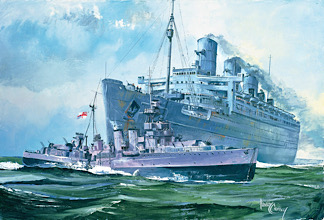
RMS Queen Mary Collides with HMS Curacoa

Twenty miles off the coast of County Donegal on October 2, 1942, the luxury Cunard liner RMS Queen Mary, converted into a troop carrier for World War II, smashes into her escort ship, the British Royal Navy cruiser HMS Curaçoa (D41). The HMS Curacoa, which had connected with the RMS Queen Mary to escort her for the final two hundred miles to the port of Greenock, Scotland, sinks with the loss of 338 men. As are his orders, Captain Cyril Illingworth of the RMS Queen Mary, which is carrying an estimated 15,000 U.S. troops, does not stop to mount a rescue operation.

On a near perfect afternoon, the RMS Queen Mary is off the Irish coast. The vessel is setting a zigzag course to help evade U-boats and long-range German bombers. The RMS Queen Mary has caught up with her 4,290 tonne escort vessel, the HMS Curacoa, and is set to overtake her.

Aboard the HMS Curacoa, seaman Ernest Watson is admiring the RMS Queen Mary’s majestic lines when he notices the bow is swinging toward the cruiser. To his horror, she continues to swing and is soon on a collision course. The gap narrows inexorably as the stunned Watson finally finds his vocal cords and screams, “She’s going to ram us.” Later Watson describes how many of his mates are so shocked they cannot move.

Within seconds, there is a screech of twisted metal followed by the hiss of steam and the screams of those injured or trapped below. The RMS Queen Mary, twenty times larger than the cruiser, has been traveling at top revs giving her a speed of 28.5 knots. The impact swings the HMS Curacoa broadside on and the troopship slices through her 10 cm armour plating. It is all over in seconds, and the troopship continues on her zigzag course leaving the HMS Curacoa cut in two with the forward and aft sections separated by 100 metres of ocean.

At the moment of impact, as the HMS Curacoa reels in the water, Watson and many other seaman on deck are thrown into the freezing water. Even as they surface they watch in horror as the stern quickly sinks, taking with it the men trapped behind the water-tight doors. The forward section follows soon after, leaving the men in the murky water surrounded by debris, oil and drowned or mutilated bodies. It is every man for himself as survivors cling to floating wreckage. They are about 20 nautical miles off the Irish coast which, had boats or rafts been launched, would put them within easy reach of safety.

The survivors believe the RMS Queen Mary will turn back to pick them up, however, it is with obvious despair that they watch her disappear over the horizon. To sail on is probably the toughest decision Captain Illingworth ever has to make. The World War I veteran has many years of experience by the time he has risen to become Cunard-White Star Line’s senior commander and master of the RMS Queen Mary. He is obeying orders that under no circumstances is he to stop until the RMS Queen Mary has safely delivered the troops to Britain. His only option is to signal nearby British destroyers to rescue survivors.

Two destroyers react to Captain Illingworth’s message and steam toward the wreckage where two hours after the collision, they find many bodies of sailors who have died of hypothermia. Only the hardiest live long enough to land in Londonderry, County Londonderry, Northern Ireland, the next day. Of the HMS Curacoa’s 430 personnel, only 99 seamen and two officers survive. Because of war-time security the official inquiry is delayed until the war in Europe is over. Then, in June 1945, only a few weeks after VE Day, the Admiralty Commissioners sued Cunard-White Star Line claiming the RMS Queen Mary had been responsible.

It appears to be a clear-cut case. The HMS Curacoa’s captain, John Boutwood, gives evidence to a Royal Navy inquiry and is acquitted without a reprimand. Later he gains the Distinguished Service Order (DSO). Boutwood says the HMS Curacoa steamed at some 3 knots slower than the larger vessel which had been in the process of overtaking at the time of the collision. He says he had been amazed when the troopship continued turning to starboard and closed the gap between the vessels. When the collision occurred he, and all others on the bridge, had clung to whatever was nearest.

At first, Boutwood vainly hopes the damaged ship will stay afloat. He also says it was impossible to give orders because of the noise of escaping steam from the boiler room. The RMS Queen Mary’s first officer gives evidence that he had taken over the helm less than two minutes before she rams the cruiser. She is about 500m away and on the starboard bow. He is unconcerned at the narrow gap because he expects HMS Curacoa to take evasive action. He believes the cruiser, a more manoeuvrable vessel, would change course.

The first officer had also been reassured by Captain Illingworth, that the cruiser was “experienced in escorting and would keep out of the way.” At a later hearing some months after the opening, Illingworth says he had felt a bump at the time of the collision and had asked the quartermaster if they had been hit by a bomb. The answer was: “No sir, we have hit the cruiser.”

The judge holds the cruiser responsible saying the normal rules of an overtaking vessel keeping clear of the other does not apply in this case. He says the cruiser could have avoided the collision up to seconds before it occurred. The Admiralty, faced with huge compensation to the families of the dead sailors, appeals. In appeal the ruling is that the cruiser was responsible for two-thirds of the damage and the RMS Queen Mary for one-third. Still not satisfied, the case goes to the House of Lords where the verdict of the Appeal Court is upheld in February 1949. No survivor comes out unscathed but above all others, Illingworth has to live with the memory of leaving British sailors to fight for their lives in the ocean.

However, when asked at the first hearing if he felt Illingworth had made the right decision, the captain of the HMS Curacoa says, “I would say, yes.” The RMS Queen Mary continues as a troopship until August 11, 1945. The vessel is now a floating attraction at Long Beach, California.

(From: “SS Queen Mary & the loss of HMS Curacoa 1942” by A. N. Other and NHSA Webmaster, Naval Historical Society of Australia, https://navyhistory.au)


Leave a comment

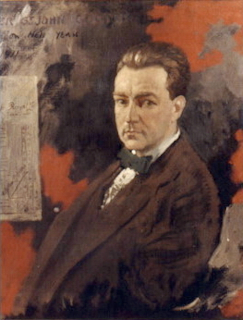
Death of Oliver St. John Gogarty, Poet, Author, Athlete & Politician

Oliver Joseph St. John Gogarty, Irish poet, authorotolaryngologist, athlete, politician, and well-known conversationalist, dies in New York City on September 22, 1957. He serves as the inspiration for Buck Mulligan in James Joyce‘s novel Ulysses.

Gogarty is born on August 17, 1878, in Rutland SquareDublin. In 1887, his father dies of a burst appendix, and he is sent to Mungret College, a boarding school near Limerick. He is unhappy in his new school, and the following year he transfers to Stonyhurst College in LancashireEngland, which he likes little better, later referring to it as “a religious jail.” He returns to Ireland in 1896 and boards at Clongowes Wood College while studying for examinations with the Royal University of Ireland. In 1898, he switches to the medical school at Trinity College Dublin (TCD), having failed eight of his ten examinations at the Royal.

A serious interest in poetry and literature begins to manifest itself during his years at TCD. In 1900, he makes the acquaintance of W. B. Yeats and George Moore and begins to frequent Dublin literary circles. In 1904 and 1905 he publishes several short poems in the London publication The Venture and in John Eglinton‘s journal Dana. His name also appears in print as the renegade priest Fr. Oliver Gogarty in George Moore’s 1905 novel The Lake.

In 1905, Gogarty becomes one of the founding members of Arthur Griffith‘s Sinn Féin, a non-violent political movement with a plan for Irish autonomy modeled after the Austro-Hungarian dual monarchy.

In July 1907, his first son, Oliver Duane Odysseus Gogarty, is born, and in autumn of that year he leaves for Vienna to finish the practical phase of his medical training. Returning to Dublin in 1908, he secures a post at Richmond Hospital, and shortly afterward purchases a house in Ely Place opposite George Moore. Three years later, he joins the staff of the Meath Hospital and remains there for the remainder of his medical career.

As a Sinn Féiner during the Irish War of Independence, Gogarty participates in a variety of anti-Black and Tan schemes, allowing his home to be used as a safe house and transporting disguised Irish Republican Army (IRA) volunteers in his car. Following the ratification of the Anglo-Irish Treaty, he sides with the pro-Treaty government and is made a Free State Senator. He remains a senator until the abolition of the Seanad in 1936, during which time he identifies with none of the existing political parties and votes according to his own whims.

Gogarty maintains close friendships with many of the Dublin literati and continues to write poetry in the midst of his political and professional duties. He also tries his hand at playwriting, producing a slum drama in 1917 under the pseudonym “Alpha and Omega,” and two comedies in 1919 under the pseudonym “Gideon Ouseley,” all three of which are performed at the Abbey Theatre. He devotes less energy to his medical practice and more to his writing during the twenties and thirties.

With the onset of World War II, Gogarty attempts to enlist in the Royal Air Force (RAF) and the Royal Army Medical Corps (RAMC) as a doctor. He is denied on grounds of age. He then departs in September 1939 for an extended lecture tour in the United States, leaving his wife to manage Renvyle House, which has since been rebuilt as a hotel. When his return to Ireland is delayed by the war, he applies for American citizenship and eventually decides to reside permanently in the United States. Though he regularly sends letters, funds, and care-packages to his family and returns home for occasional holiday visits, he never again lives in Ireland for any extended length of time.

Gogarty suffers from heart complaints during the last few years of his life, and in September 1957 he collapses in the street on his way to dinner. He dies on September 22, 1957. His body is flown home to Ireland and buried in Cartron Church, Moyard, near Renvyle, County Galway.

(Pictured: 1911 portrait of Oliver St. John Gogarty painted by Sir William Orpen, currently housed at the Royal College of Surgeons in Ireland)


Leave a comment

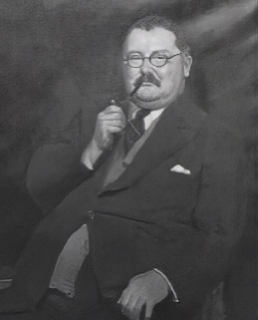
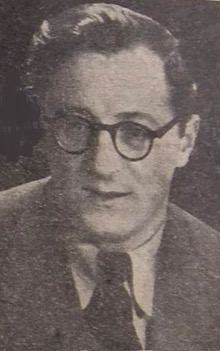
Death of R. M. “Bertie” Smyllie, Editor of “The Irish Times”

Robert Maire Smyllie, known as Bertie Smyllie, editor of The Irish Times for twenty years, dies on September 11, 1954.

Smyllie is born on March 20, 1893, at Hill Street, ShettlestonGlasgowScotland. He is the eldest of four sons and one daughter of Robert Smyllie, a Presbyterian printer originally from Scotland who is working in Sligo, County Sligo, at the time, and Elisabeth Follis, originally from Cork, County Cork. His father marries in Sligo on July 20, 1892, and later becomes proprietor and editor of the unionist Sligo Times. Smyllie attends Sligo Grammar School in 1906 and enrolls at Trinity College Dublin (TCD) in 1911.

After two years at TCD, Smyllie’s desire for adventure leads him to leave university in 1913. Working as a vacation tutor to an American boy in Germany at the start of World War I, he is detained in Ruhleben internment camp, near Berlin, during the war. As an internee, he is involved in drama productions with other internees. Following his release at the end of the war, he witnesses the German revolution of 1918–1919. During this period, he encounters revolutionary sailors from Kiel who temporarily make him a representative of the Workers’ and Soldiers’ Council, and he observes key events including the looting of the Kaiser’s Palace and violent clashes between rival factions in Berlin. It is also during this period that he secures a personal interview with David Lloyd George at the Paris Convention of 1919. This helps Smyllie gain a permanent position with The Irish Times in 1920, where he quickly earns the confidence of editor John Healy. Together, they take part in secret but unsuccessful attempts to resolve the Irish War of Independence.

Smyllie contributes to the Irishman’s Diary column of the paper from 1927. In 1927, he publishes an exclusive report outlining a draft government including both Labour Party and Fianna Fáil TDs, signaling the volatile politics of the early state years.

Smyllie’s knowledge of languages (particularly the German he had learned during his internment) led to numerous foreign assignments. His reports on the rise of National Socialism in 1930s Germany are notably prescient and instill in him a lasting antipathy towards the movement.

When Healy dies in 1934, Smyllie becomes editor of The Irish Times and also takes on the role of Irish correspondent for The Times (London), a position that brings significant additional income. Under Healy’s leadership, The Irish Times shifted from representing the Anglo-Irish ascendancy to becoming an organ of liberal, southern unionism, and eventually becomes a critical legitimising force in the Irish Free State. Smyllie enthusiastically supports this change. He establishes a non-partisan profile and a modern Irish character for the erstwhile ascendancy paper. For example, he drops “Kingstown Harbour” for “Dún Laoghaire.” He also introduces the paper’s first-ever Irish-language columnist. He is assisted by Alec Newman and Lionel Fleming, recruits Patrick Campbell and enlists Flann O’Brien to write his thrice-weekly column “Cruiskeen Lawn” as Myles na gCopaleen. As editor, he introduces a more Bohemian and informal style, establishing a semi-permanent salon in Fleet Street’s Palace Bar. This becomes a hub for journalists and literary figures and a source of material for his weekly column, Nichevo.

One of Smyllie’s early political challenges as editor concerns the Spanish Civil War. At a time when Irish Catholic opinion is strongly pro-Franco, he ensures The Irish Times coverage is balanced and fair, though advertiser pressure eventually forces the withdrawal of the paper’s young reporter, Lionel Fleming, from the conflict. His awareness of the looming European crisis earns him the Order of the White Lion of Czechoslovakia in 1939. However, during World War II, he clashes with Ireland’s censorship authorities, especially under Minister Frank Aiken. He challenges their views both publicly and privately, though his relationship with the editor of the Irish Independent, Frank Geary, is cold, reducing the effectiveness of their joint opposition to censorship.

During the 1943 Irish general election, Smyllie uses the paper to promote the idea of a national government that could represent Ireland with authority in the postwar world. He praises Fine Gael’s proposal for such a government and criticises Éamon de Valera for dismissing it as unrealistic. This leads to a public exchange between de Valera and Smyllie, with the latter defending The Irish Times’s role as a constructive voice for Ireland’s future rather than a partisan interest.

Following the war, Smyllie’s editorial stance shifts toward defending Ireland’s neutrality and diplomatic position. When Winston Churchill accuses de Valera of fraternising with Axis powers, Smyllie counters by revealing Ireland’s covert collaboration with the Allies, such as military and intelligence cooperation, despite official neutrality. In the same period, he continues to oppose censorship, particularly the frequent banning of Irish writers by the Censorship of Publications Board. This opposition features prominently in a controversy on The Irish Times letters page in 1950, later published as the liberal ethic. The paper also adopts a critical stance toward the Catholic Church, notably during the 1951 resignation of Minister for Health Noël Browne amid opposition from bishops and doctors to a national Mother and Child Scheme. His editorials suggest the Catholic Church is effectively the government of Ireland, though he maintains a cordial relationship with Archbishop of DublinJohn Charles McQuaid, who invites him annually for dinner.

Smyllie is also wary of American foreign policy, showing hostility particularly during the Korean War. American diplomats in Dublin allege that Smyllie is “pro-communist“. Despite growing readership among an educated Catholic middle class, The Irish Times’s circulation in 1950 remains under 50,000, far below the Irish Independent and the Fianna Fáil-aligned The Irish Press.

In later years, Smyllie’s health declines, prompting a quieter lifestyle. He moves from his large house in Pembroke Park, Dublin, to DelganyCounty Wicklow. As he does not drive, he becomes less present in the newspaper office in D’Olier Street, contributing to a decline in the paper’s dynamism. His health deteriorates further, resulting in frequent absences from his editorial duties, though he retains his position despite management attempts to limit his authority, especially over finances. He dies of heart failure on September 11, 1954.

In 1925, Smyllie marries Kathlyn Reid, eldest daughter of a County Meath landowner. They have no children.

Smyllie is an eccentric: he hits his tee shots with a nine iron, speaks in a curious mix of Latin phrases and everyday Dublin slang, and weighs 22 stone (308 lbs.; 140 kg) yet still cycles to work wearing a green sombrero.


Leave a comment

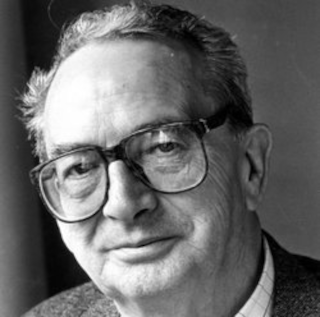
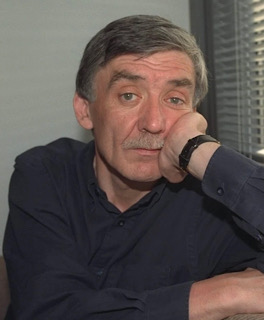
Birth of Seán Cronin, Journalist & Irish Army Officer

Seán Gerard Croninjournalist and former Irish Army officer and twice Chief of Staff of the Irish Republican Army (IRA), is born in Dublin on August 29, 1922.

Cronin is the only son among three children of Con Cronin, a member of the Irish Republican Army (IRA), and his wife Kate. After his father’s death, his mother works as a cook in a boarding school while the children are brought up by relatives in Ballinskelligs in the County Kerry Gaeltacht. Educated locally, he is deeply influenced by his Gaeltacht childhood; his later writings often refer to the hypocrisy of a state that romanticises the Gaeltacht while neglecting its social problems.

During World War II, Cronin’s sisters emigrate to England to train as nurses while he works as a labourer for Kerry County Council. In December 1941, he joins the Irish Army and is selected in 1943 for an officers’ training course, on which he forms a lifelong friendship with the future theatre director Alan Simpson. He is commissioned and remains in the army until 1948.

Shortly thereafter Cronin emigrates to New York City, where he finds work as a journalist writing for The Advocate, an Irish American newspaper. He is strongly influenced by interviewing 1916 veterans for The Advocate and by contact with left-wing Irish American associates of Michael Quill, who played leading roles in the foundation of the Transport Workers Union of America. He becomes active in the semi-secret separatist organisation Clan na Gael, and in autumn 1955 returns to Ireland with the aim of helping the IRA to prepare for another military campaign.

Cronin begins work as a sub-editor with the Evening Press and also contributes summaries of world affairs to The Irish Times.

Cronin establishes contact with the IRA, and his military experience leads to his rapid assignment to GHQ staff. He is initially placed in charge of training and instruction, composing a manual on guerrilla warfare and twelve lectures on battlefield training. He teaches new military techniques and new recruits, such as the future IRA Chief of Staff Ruairí Ó Brádaigh, find him deeply impressive.

Cronin becomes a leading advocate of an early IRA campaign against Northern Ireland and becomes the chief strategist for Operation Harvest, a campaign which sees the carrying out of a range of military operations from direct attacks on security installations to disruptive actions against infrastructure. He is arrested on January 8, 1957, near the border in County Cavan. He is imprisoned several times over the course of the campaign (1956–1962).

Most of the IRA and Sinn Féin leadership are interned by the Dublin government on July 6, 1957. Cronin, one of the few to escape, becomes IRA Chief of Staff. He also acts for a time as editor of the movement’s newspaper, United Irishman. He tries to secure weapons from various sources, leading an unsuccessful raid on a British Army base at Blandford Camp in Dorset on February 16, 1958, and through contacts with Spanish republican exiles in Paris. The Irish American community remains the IRA’s main source of external support.

Cronin is arrested on September 30, 1958, and interned, causing considerable disarray, as he had been running much of the campaign single-handed. When the internees are released in March 1959, he resumes his position as Chief of Staff after a factional dispute causes the resignations of Tomás Óg Mac Curtain and the former Chief of Staff Tony Magan. He continues to argue that a sustained guerrilla campaign might yet succeed, but in June 1960 is again arrested and imprisoned for six months.

In November 1960, the Irish Freedom Committee (IFC), a Clan na Gael splinter group, accuses Cronin of being a communist and a “Free State agent,” supposedly implicated in the 1944 execution of Charlie Kerins. The IRA supports Cronin, but he nevertheless decides to resign successively as Chief of Staff, as a member of the Army Council, and as an IRA volunteer, on the grounds that his presence endangers the American support necessary for the continuance of the campaign. He then secures a job as a journalist on the Irish Independent. He withdraws his resignation in November 1961 after the Irish government reinstates military tribunals to try suspected IRA men. He is subsequently sentenced to six months’ imprisonment by a military tribunal and is in prison when the border campaign ends on February 26, 1962. Released on amnesty on April 19, 1962, he finally resigns from the IRA the next day.

By February 1966, Cronin has returned to the United States, where he resides for the remainder of his life, with regular visits to Ireland. He works as a journalist on the Newark Evening News and the Dow Jones News Service and is the U.S. correspondent of The Irish Times from 1967 to 1991, becoming that paper’s first Washington, D.C. correspondent.

In the 1970s Cronin takes a degree at New York University, then teaches and studies for a doctorate at The New School for Social Research in New York under Hans Morgenthau. His dissertation forms the basis for his magnum opusIrish nationalism: its roots and ideology (1980). Although limited by its colonial model and socialist-republican intellectual framework, this historically oriented account draws on his extensive research and personal contacts to some effect.

Cronin is the author of a dozen books and pamphlets, including a biography of republican Frank RyanWashington’s Irish Policy 1916-1986: independence, partition, neutrality (1987), an authoritative account of Irish-US relations, Our Own Red Blood: The Story of the 1916 Rising (1966), and a number of works on guerrilla strategy, including an early Sinn Féin pamphlet Resistance under the pseudonym of J. McGarrity.

After the death of his first wife in 1974, Cronin marries Reva Rubinstein, a toxicologist. In 1980 they move to Washington, D.C. He has no children by either marriage, though his second wife brings him a stepson. After several years of illness, he dies in Baltimore, Maryland, on March 9, 2011. He is survived by his second wife, Reva Rubenstein Cronin.


Leave a comment

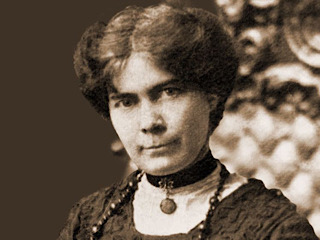
Death of Teresa Brayton, Irish Republican & Poet

Teresa Brayton, an Irish republican and poet who uses the pen name T. B. Kilbrook, dies in Kilbrook, a small village near Kilcock, County Kildare, on August 19, 1943.

Brayton is born Teresa Coca Boulanger in Kilbrook, the youngest daughter and fifth child of Hugh Boylan and Elizabeth Boylan (née Downes). Her family are long-time nationalists, with her great grandfather previously leading a battalion of pikesmen at the Battle of Prosperous.

Brayton later becomes a notable member of Irish national parties, the United Irish League and Cumann na mBan. She is described as “a patriot, but never in the vulgar sense a politician” in The Irish Times. She is closely associated with leaders of the 1916 Easter Rising, and writes poems in honour of Irish patriots including Charles Stewart ParnellRoger Casement and Patrick Pearse.

Brayton is educated from the age of 5 in Newtown National School. She writes her first poem at the age of twelve, and soon after wins her first literary award. Later on, she trains to be a teacher, and then becomes an assistant teacher to her older sister Elizabeth in the same school she received her education.

Brayton’s father is a tenant farmer, and from a young age she witnesses the effects of the land wars in Ireland. She is a supporter of Parnell, the Irish National Land League and the Irish Home Rule movement. Her work is largely influenced by her family history and Irish nationalism.

In September 1895, Brayton emigrates to the United States at the age of 27. She first lives in Boston, Chicago, and later moves to New York City. She meets Richard H. Brayton, a French-Canadian who works as an executive in the Municipal Revenue Department, who she then marries. She looks after their home and focuses on her career as a freelance journalist. She lives in the United States for 40 years and becomes well known in Irish American circles as a prominent figure in the Celtic Fellowship. It was in the United States that her reputation is established.

In the 1880s, Brayton begins her career as a poet, writing poetry for both national and provincial Irish newspapers, including Young Ireland and the King’s County Chronicle. She uses the pseudonym “T. B. Kilbrook” while contributing to these papers.

Brayton continues writing under the pseudonym until moving to the United States, where she becomes an acclaimed writer and continues to contribute to papers including the Boston newspaper The PilotNew York Monitor and Rosary Magazine. Her target audience is the Irish immigrant population of the United States. After establishing herself she releases her poetry in collections including Songs of Dawn (1913) and The Flame of Ireland (1926).

Brayton makes return trips to Ireland regularly and develops a relationship with nationalist peers, and the leaders of the Easter Rising. Upon returning to the United States, she becomes an activist for the Irish Republic and participates in organising the distribution of information to the Irish population through pamphlets and public speaking. Her contribution is acknowledged by Constance Markievicz. Her patriotism to Ireland admit her to the Celtic Fellowship in America, where she shares her poetry at events.

Brayton’s best-known poem is “The Old Bog Road,” which is later set to music by Madeline King O’Farrelly. It has since been recorded and released by many Irish musicians including Finbar FureyDaniel O’Donnell and Eileen Donaghy, among many others. Many more of her best-known ballads include, The Cuckoo’s CallBy the Old Fireside and Takin’ Tea in Reilly’s.

Brayton makes her permanent return to Ireland at the age of 64 following the death of her husband in 1932 and continues her career as a journalist writing for Irish newspapers and publishes religious poetry in the volume Christmas Verses in 1934. A short story called The New Lodger written by Brayton is published by the Catholic Trust Society in 1933. She dedicates much of her work to the exiled Irish living in the United States, incorporating themes of nostalgia, the familiarity of home and religion throughout her poetry.

Initially upon moving back to Ireland, she lives for a few years with her sister in Bray, County Wicklow. She then moves to Waterloo Avenue, North StrandCounty Dublin. Here, she witnesses the bombing of the North Strand on May 31, 1941 during World War II. Shortly after the bombing, she eventually settles back in Kilbrook, where she was born, and lives there for the rest of her life. She spends a brief period of time in the Edenderry Hospital before her death. During her stay there she becomes a good friend with Padraig O’Kennedy, the “Leinster Leader,” who is able to reveal to her something that is linked to a family member of his. A copy of her The Old Bog Road which had been set to music and autographed by her while she was living in the United States. She had it sent to O’Kennedy’s eldest son and on it she wrote the words: “To the boy who sings the Old Bog Road so sweetly.”

Two years after her return to Kilbrook, on August 19, 1943, Brayton dies in the same room where her mother had given birth to her over 75 years previously. She is buried at the Cloncurry cemetery in County Kildare. Her funeral is attended by many, including the then TaoiseachÉamon de Valera.

From the vivid imagery she speaks of in her poetry, Brayton, both a poet and a novelist, is described by some as “the poet of the homes of Ireland.” Such scenes include the vivid imagery of the fireside chats, the sound of her latch lifting as neighbours in to visit at night from her poem “The Old Boreen” and about her home cooking and work from “When the Leaves Begin to Fall.” Such images can be compared to most Irish households and can depict a vivid picture to those reading her poetry.

Brayton’s poetry leaves a lasting sense of Irish beauty and community. This can be seen in such poems as “A Christmas Blessing” where she speaks of “taking and giving in friendship” during Christmas. Since her passing she has continued to keep an audience from overseas from Boston and New York primarily, this as a result of the reminder her poems give to Irish exiles of Irish traditions and music which was close to them. While her poems are more often serious, some portray an almost comical undertone tone. In an article in The Irish Times, her poetry is also said to have a racy feel to them.


Leave a comment

Death of Leslie Daiken, Copywriter, Editor & Writer

Leslie Herbert Daiken, an Irish advertising copywriter, editor, and writer on children’s toys and games, dies in London on August 15, 1964.

Born Leslie Yodaiken into a RussianJewish family in Portobello, Dublin, Daiken is the son of Samuel and Rosa Yodaiken. His father is a dealer in rubber and scrap metal, with premises in Dublin and Glasgow, and he is educated at two independent fee-paying schools, St. Andrew’s College and Wesley College, and then in 1930 he enters Trinity College Dublin. In his first year, one of his lecturers in French literature was Samuel Beckett. He is an active member of the Dublin University Socialist Society and a founding member of the college’s Gaelic Society.

In 1932, and again in 1933, as Yodaiken he wins the Vice-Chancellor’s Prize for English Prose, and while at Trinity, he publishes short stories and verse in ChoiceThe Dublin Magazine, and The New English Weekly.

In 1933, Daiken is present at the house of Charlotte Despard in Eccles Street, Dublin, also used as a Workers’ College, when it is attacked by a mob of Blueshirts. He leads the immediate defence of the building, which is saved on that occasion by the intervention of Irish Republican Army (IRA) men posing as the police.

In 1934, as Yodaiken, he graduates with a BA from Trinity in English and French Literature, with a Second Class degree. After graduating, Daiken works briefly as a schoolteacher in Dublin. In April 1935, his short story “Angela” is published in The New English Weekly under the pen name of Ned Kiernan. That year, he migrates to London.

Soon after his arrival in London, Daiken is one of the three founders of a duplicated publication called Irish Front, together with two other poets, Charles Donnelly and Ewart Milne.

In England, Daiken starts to shorten his surname from Yodaiken to Daiken, for his publications, but he does not make this change formally until doing so by deed poll in 1943.

In December 1935, The Irish Times reviews a production in Camden Town of Ireland Unfree, a stage version by Daiken of Patrick Pearse’s poem “The Rebel.” It states that “Mr. Daiken carries Pearse’s theme beyond his idealistic conclusion to the revolutionary viewpoint of the Irish workers.”

Daiken keeps up his links with leftist Irish writers and dissidents and edits the collection of working-class political verse Goodbye Twilight: songs of the struggle in Ireland (1936), illustrated by Harry KernoffThe Irish Press describes this as “forty young poets with blazing eyes and clenched fists.” In another review, Louis MacNeice calls the book a “collection of proletarian poems – some communist, some Irish republican, and all written in a defiant spirit of opposition … a violent reaction against Yeats and all that he stood for.”

Daiken does not go to fight in the Spanish Civil War, although his Irish Front colleague Charles Donnelly does, and is killed; but he is active in fundraising for the Connolly Column, the Irish section of the International Brigades. He is also a contributor to the branch of Republican Congress in London, an Irish republican and Marxist-Leninist pressure group which aims to engage Irish emigrants working in the city on socialist issues.

In 1939, Mairin Mitchell is highly critical of the Irish leftists, and in particular Daiken, for their views on the Molotov–Ribbentrop Pact, and writes to Desmond Ryan in September, “Brian O’Neill, Bloomsbury, and Daiken will sing Russia right or wrong.”

In October 1939, at the time of the wartime National Registration Act, Daiken is living in a studio at Old Castle Wharf, Twickenham, and describes himself as “Script-writer and advertising copywriter.”

During World War II, Daiken enlists in the Corps of Signals of the Irish Army, a neutral force, and also works for Reuters as a correspondent on education. In 1944, he edits They Go, the Irish, a collection of essays, including one from Seán O’Casey. In 1945, a collection of his verse is published under the title Signatures of All Things. In the summer of that year, Samuel Beckett gives Daiken his unpublished novel Watt, in the hope that he can find a publisher for it, but he fails to do so. They continue to write to each other and meet in London and Paris in the 1950s. He also keeps up with another friend from Trinity, Con Leventhal.

After he becomes a father in 1945, Daiken’s main interest moves on from political activism to children’s games and toys, and by 1951 the basement of his London home has become a toy museum. He writes on the subject and makes television and radio programmes for the BBC about it. His film One potato, two potato, a compilation of children’s street rhymes, wins the Festival Mondial du Film prize in 1958. His radio play The Circular Road is about a Jewish-Irish child.

In the 1950s Daiken founds the National Toy Museum and Institute of Play, today part of the Toy Collection at Hove Museum of Creativity.

Daiken returns to Ireland many times as a visitor. In the early 1960s he completes a radio play about the Jewish community of Dublin in the 1920s, which is broadcast on RTÉ.

In October 1963, Conor Cruise O’Brien, Vice Chancellor of the University of Ghana, recruits Daiken as a lecturer in education, and not long before his death he makes a film called The Piano about teaching white and black children in a school in Africa. He dies on August 15, 1964, while spending the summer vacation at home in London, leaving an estate valued at £3,865. He is cremated. His widow survives him until 1981.

In a tribute to Daiken, his 1930s communist associate Brian O’Neill writes, “He was always busy, always with a half dozen irons in the fire, always trying to give a hand to some Irish writer who needed it.”

In the early 1990s, Katrina Goldstone interviews Daiken’s brother, Aubrey Yodaiken, and later reports: “I was left with a faint sense of melancholy, as my interviewee had become distressed speaking about his brother, Leslie Daiken, and recalling his irrepressible and exasperating personality, his many projects, half-started novels…”

Aubrey Yodaiken is distressed by the lack of appreciation of his brother’s many cultural efforts and by the fact that his “scattershot literary endeavours” seem to have come to naught.

The National Library of Ireland holds a collection of Daiken’s papers, in particular his publications and correspondence, presented to it in 1995 by his elder daughter, by then Melanie Cuming, and his younger brother, Aubrey Yodaiken. The papers are mostly in English, French, German, Dutch, Italian, Hebrew, and Irish.


Leave a comment

Death of Wilhelmina Geddes, Stained Glass Artist

Wilhelmina Geddes, Irish stained glass artist who is an important figure within the Irish Arts and Crafts movement and also the twentieth-century British stained glass revival, dies in London, England, on August 10, 1955. Her notable works include windows at St. Bartholomew’s Anglican Church (Ottawa, Canada), St. Peter’s Church (LampeterWales), and the King Albert Memorial Window, St. Martin’s Cathedral (Ypres, Belgium).

Geddes is born on her maternal grandparent’s farm at Drumreilly Cottage in Leitrim, County Leitrim, on May 25, 1887. She is the eldest of four children, three girls and a boy, of William Geddes and his wife Eliza Jane Stafford. The family, who migrates to Ireland from Scotland, has mainly been farmers. Her father, a Methodist, who is born near his father’s farm at TandrageeCounty Armagh, emigrates to the United States as a young man, working as a labourer for the railway construction business. This serves a useful purpose as he had worked as a site engineer at the Cavan, Leitrim and Roscommon Railway Company. When she is still an infant her parents move to their native home in Belfast, so her father can set up in business as a building contractor.

Geddes begins drawing subjects from life and nature from the age of four. She learns first how to draw from the school mistress in Ayrshire, where her father occasionally goes shooting. She begins her studies at Methodist College Belfast along with her three younger sisters. She later moves to the Belfast School of Art. She is encouraged by Rosamond Praeger, a sculptor from County Down, to continue with her studies. She is accepted as a student to study at the Belfast School of ArtUlster University. This is where she adapts and improves her style and is introduced to a professional standard of art work.

While still studying at the Belfast School of Art, Geddes takes part in the Arts and Crafts Society of Ireland‘s fourth exhibition. For this exhibition, she contributes a glowingly coloured illustration of the book Cinderella Dressing the Ugly Sister (Dublin City Gallery), which she had created. It is at this exhibition that her work is spotted by Sarah Purser, a well established painter seeking newly trained students to introduce to stained glass artistry. Purser, who goes on to be her lifelong mentor, invites the young Geddes to join her in Dublin, working under the established stained glass artist William Orpen.

Geddes contributes a watercolour illustration of a Ballad Seller with the Belfast Art Society in 1907. She is elected as an Associate of the Belfast Art Society’s successor, the Ulster Academy of Arts, in 1933 before promotion to Honorary Academician in 1935. She shows five illustrations in the 1911 Oireachtas Exhibition. It is some twenty-one years before she returns to the Oireachtas when she exhibits three cartoons and three sketches for stained glass in 1932.

Geddes joins Purser at the acclaimed stained glass workshop called An Túr Gloine in 1910. The workshop is held in Dublin’s Metropolitan School of Art. It is here that she discovers her passion for the craftsmanship of stained glass artistry and creates her most important works.

During her early years at An Túr Gloine, Geddes’s originality shines, and important commissions come from St. Ann’s Church, Dawson Street, Dublin and the Presbyterian church in Rathgar. Dogged by illness, she returns to Belfast before 1916 and lives between there and Dublin until moving in 1925, as she has long wanted, to work in London at The Glass House, Fulham. While working at The Glass House, she instructs the Irish painter and stained glass artist Evie Hone.

Geddes’s work is considered pioneering and represents a rejection of the Late Victorian approach. She creates a new view of men in stained glass windows, portraying them with close-shaven crew cuts. The muscularity and tension of her portraiture is matched by the radical design of her constructions. Ambitious large-scale projects, as at the cathedral in Ypres, are equalled by the drama of smaller-scale work at Wallasey (Lancashire) and Wallsend (Northumberland), or war memorial windows in obscure country churches.

Despite the hardships of living in London during World War II, poverty, and ill health, Geddes designs seventeen full-scale stained glass masterpieces, sixteen of which she completes.

Geddes dies on August 10, 1955 in London of a pulmonary embolism. She is buried in Carnmoney Cemetery, County Antrim, along with her mother and sister Ethel. Even after moving to London, she claims that her native identity never wavered as she says she was always “a Belfast woman.”


3 Comments

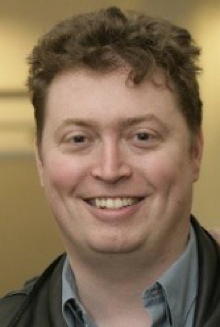
Brendan Foley, Writer, Film Producer & Director

Brendan Foley is a Northern Irish writerfilm producer and director. Raised in Belfast, Northern Ireland, he has written feature film and TV series scripts for producers and studios in the United Kingdom, Ireland, Hollywood, Canada, Denmark, Finland, Poland, South Africa, China and Thailand. He writes and produces the 2005 action-thriller Johnny Was, starring Vinnie JonesEriq La Salle and Patrick Bergin. The film wins awards including Audience Awards and Best Feature Awards from six film festivals.

Foley’s most recent work includes Cold Courage, a TV series thriller for LionsgateViaplay and Luminoir shot in Europe in 2019 and The Man Who Died, a series for Elisa-Viaplay.

Foley writes, produces and directs The Riddle in 2006, starring Jones, Sir Derek Jacobi and Vanessa Redgrave. In September 2007, The Riddle becomes the world’s first feature film to be released as a DVD premiere by a national newspaper. The UK’s The Mail on Sunday buys UK DVD rights and distributes 2.6 million copies, making the film one of the most widely watched independent films in the UK.

During 2006–07, Foley writes and directs Assault of Darkness, a satirical horror film set in rural Ireland, starring Jones, Jason Barry and Nora-Jane Noone. It is released by Lionsgate in the United States on DVD in 2009. He co-creates and is a writer on Shelldon, a children’s environmental animated TV series on NBC (2010–12) and Byrdland (five seasons of animated TV series in Asia with GMM Grammy).

In 2015, Foley starts developing a new TV detective series for BBC TelevisionFarmoor (makers of The Fall) and Northern Ireland Screen (UK home of Game of Thrones) and, in 2016, he develops Tunnel Kings, a mini-series on World War II POW “escape-artists” for the Canadian Broadcasting Corporation and Dream Street, Canada. He completes pilot scripts for SOS, a new eco-thriller series by Finnish producers Luminoir, and Kvenland, set in the Dark Ages. Previously he writes the pilot for drama Dr. Feelgood for Monday TV (Denmark).

Cold Courage, described as a Nordic noir series involving Finnish characters in present-day London made by Finnish producers Luminoir for Lionsgate and Viaplay, shot in London, Dublin, Belgium and Finland in 2019. Actor John Simm tells Variety that he is attracted to the series by the quality of the writing and the fact that it is a pan-European thriller.

In 2019, Foley is attached to produce an adaptation of Freeman Wills Crofts‘ Inspector French novels.

In 2025, Foley is Writer-Creator and Executive Producer for Sherlock & Daughter, a drama series starring David Thewlis and Blu Hunt for The CW, WarnerBrosDiscovery UK, Federation, Starlings and StoryFirst (UK).

Foley has written books for U.S. and UK publishers. Under The Wire, a World War II POW escape drama, which he writes along with its subject, pilot William Ash, is published by  Random House, London and St. Martin’s Press, New York, in 2005 and 2006. It becomes a best-seller, reaching number one on Amazon UK‘s history and biography charts. In 2018/19, a related TV series is developed as a future miniseries by CBC in Canada and Northern Ireland Screen.

Foley’s next book, Archerfield, a novel, published in 2015, covers 16,000 years of history in one square mile of Scotland.

Foley is a member of the Writers’ Guild of Great Britain, a Fellow of the British Association of Communicators in Business, and is made an honorary life member of the National Union of Journalists in June 2006.


Leave a comment

Birth of E. M. O’R. Dickey, Wood Engraver & Painter

E. M. O’R. Dickeywood engraver and oil painter who is active at the beginning of the twentieth century, is born Edward Montgomery O’Rorke Dickey in Belfast on July 1, 1894. He is a founder member of the Society of Wood Engravers.

Dickey is the son of Edward O’Rorke Dickey. He later marries Eunice Emmeline Howard and they have one son, Daniel. He is educated at Wellington College and Trinity College, Cambridge. He studies painting under Harold Gilman at the Westminster School of Art.

Dickey is art master at Oundle School in OundleNorthamptonshireEngland, and then becomes professor of fine art and director of King Edward VII School of Art, Armstrong College, Durham University from 1926 to 1931. He is then staff inspector of art from 1931 to 1957 for the Ministry of Education.

At the beginning of World War II Dickey is seconded from the Ministry of Information and, from 1939 to 1942, is secretary of the War Artists’ Advisory Committee. He is a full member of the committee from 1942 to 1945. During this period he establishes a close relationship with Eric Ravilious. He is appointed a CBE in 1952.

Dickey becomes the first curator of The Minories in ColchesterEssex, a post he holds for five years from 1957 to 1962.

Dickey is a founder member of the Society of Wood Engravers in 1920, and exhibits with them from 1920 to 1924. He is at his most active in the early 1920s and virtually all his engravings date from this period.

In 1922 Dickey contributes a wood engraving to Contemporary English Woodcuts, an anthology of wood engravings produced by Thomas Balston, a director at Gerald Duckworth and Company and an enthusiast for the new style of wood engravings. Campbell Dodgson, Keeper of Prints and Drawings at the British Museum, writes about him in his introduction to the book Mr. Hagreen and Mr. Dickey are among the engravers who rely very much upon the effective use of white lines and spaces. This is a limited edition of 550 copies, as is the only book that he illustrates with wood engravings, Workers by the Irish writer Richard Rowley, published by Balston at Duckworth in 1923.

Dickey devotes more time to working in oils. He is one of the most experimental painters in Ireland technically and stylistically. He paints extensively on the continent, and shows at the Royal Academy of Arts and the New English Art Club. He is elected to the London Group in 1920. He has several one-man exhibitions, at the Leicester Galleries in 1923, at the Manchester City Art Gallery in 1924, and the Beaux Arts Gallery in 1935.

Dickey dies on August 12, 1977. There are a number of examples of his oil paintings in public collections.

Dickey’s lasting legacy, rather than his wood engravings and oils, is his distinguished contribution to arts administration and art education.

(Pictured: “Kentish Town Railway Station” by Edward Montgomery O’Rorke Dickey, oil on canvas, 1919, Hollytrees Museum, United Kingdom)


Leave a comment

Birth of William Joyce, Last Person Executed for Treason in the UK

William Brooke Joyce, an American-born fascist and Nazi propaganda broadcaster during World War II, is born on Herkimer Street in Brooklyn, New York, on April 24, 1906. He has the distinction of being the last person to be executed for treason in the United Kingdom.

Joyce is the eldest of three sons of Michael Joyce, an Irish Catholic from a family of tenant farmers in Ballinrobe, County Mayo, and his wife, Gertrude (née Brooke), who although born in Shaw and Crompton, Lancashire, is from a well-off Anglican Anglo-Irish family of physicians associated with County Roscommon. The Joyces return to Ireland in 1909. William, a precocious child, attends Coláiste Iognáid SJ, a Jesuit school in County Galway, from 1915 to 1921. At the age of fourteen, he abandons Catholicism for Anglicanism, apparently after being told that all non-Catholics, including his mother, would be damned. In adult life he is nominally anglican, though his adherence to Christianity is tenuous.

The Joyces are unionists and teach their children fervent imperialism. During the Irish War of Independence, Joyce openly associates with the Black and Tans and acts as a scout for them. An acquaintance claims that his views are so extreme even loyalists dislike him. On December 9, 1921, he flees to England to join the Worcestershire Regiment and is followed to England in 1923 by the rest of the family. When he enlists, he claims to be eighteen, but after he contracts rheumatic fever, his age is discovered, and he is discharged in March 1922. For a time, he studies mathematics and chemistry at Battersea Polytechnic Institute as a pre-medical student (1922–23), but he leaves of his own accord, with a reputation for laziness and violent political views. His studies in English and history at Birkbeck College are more successful. He is a brilliant linguist and mathematician and graduates BA with first-class honours in 1927. He publishes an academic article on philology and considers progressing to an MA. He later falsely claims that his research had been plagiarised by a Jewish academic. In 1932, he enrolls at King’s College, London, for a Ph.D. in educational psychology.

Joyce is disturbed by the difference between depressed post-war Britain and the imperial ideal that he had imbibed in Galway and is mocked for his outspoken patriotism and obvious Irishness. He identifies strongly with Thomas Carlyle, an earlier angry anti-liberal from the provinces. His life is marked by repeated episodes of hero worship, followed by disillusion and bitter denunciation. In 1923, he joins the British Fascists, an organisation that has a significant Irish loyalist membership, and in 1924 he allies himself with a militant splinter group, the National Fascists. Most British fascists see themselves as Tory auxiliaries, and they often provide a security presence at conservative meetings. On October 22, 1924, while stewarding a meeting addressed by a Jewish conservative candidate, he has his face slashed and is left with a prominent scar across his right cheek. He joins the Conservative Party in 1928 and is active in the Chelsea constituency until 1930, when he is forced out because of his eccentricities and sexual misbehaviour. On April 30, 1927, he marries Hazel Kathleen Barr. They have two daughters but separate in 1935, largely because of his infidelities, heavy drinking, and temper. The marriage is dissolved in 1937.

In November 1933, Joyce abandons his Ph.D. studies to work for Sir Oswald Mosley‘s British Union of Fascists (BUF). By early 1934 he has become its paid publicity director, traveling throughout Britain to organise meetings. He is a powerful, rabble-rousing speaker, driven by an instinctive awareness that vitriolic verbal abuse gives speaker and audience a sense of power and solidarity. MI5 sees him as a compelling, though deranged, personality. On February 8, 1937, he marries Margaret Cairns White, a BUF activist from Lancashire, with whom he had cohabited since 1936.

Joyce leads a BUF faction that favours a recruitment strategy based on uncompromising ideological assertion. This is challenged by populists who prioritise marches and displays and hold that indoctrination should follow membership. In February 1937, he is BUF candidate for the London County Council in Shoreditch. The party wins 14 percent of the vote. In March 1937, he, along with many full-time BUF staff, are sacked when the BUF cuts expenses. But his dismissal also reflects Mosley’s awareness that his obsessive rhetoric repels “respectable” recruits and that he is no longer a biddable, slavish admirer of “the Leader.” He later falsely claims near-exclusive credit for the BUF’s escalating antisemitism, a view that Mosley eventually finds it convenient to adopt in order to evade his own responsibility.

In April 1937, Joyce founds the National Socialist League, helped by a wealthy patron. He supports himself as a private tutor, refusing to take Jewish pupils. He is active in various antisemitic and pro-Nazi groups such as the Right Club and engages in “peace” campaigns based on the view that British interests lay with Germany against Russia. Political marginalisation intensifies his admiration for Nazi Germany and hero worship of Adolf Hitler. By the time of the Munich crisis in 1938, he has decided that if war comes, he will go to Germany, though he also considers moving to Ireland. He renews his British passport for one-year terms in August 1938 and August 1939.

On August 26, 1939, Joyce and his wife leave London for Berlin. He is allegedly tipped off about his impending arrest and internment by an MI5 officer, to whom he had supplied information on communists. His siblings, whom he recruited into his fascist organisations, are variously penalised for his activities. At a loose end in Berlin, he is persuaded by a British associate to become a radio announcer with the English-language service of the Reichs-Rundfunk-Gesellschaft (RRG). He makes his first broadcast on September 6, 1939, and receives a contract in October. He finds in radio an outlet for his forceful style and delight in saying the unsayable, and in the early years of the war takes an exultant pride in recounting Nazi victories. His performances are admired by Joseph Goebbels, whom Joyce, to his regret, never meets. On September 26, 1940, he acquires German citizenship.

The novel experience of hearing the enemy in one’s own living room attracts wide audiences in Britain. Joyce’s practice of naming newly captured prisoners of war in his broadcasts is also a compelling motive for listening. In fact, he tries to recruit British prisoners of war as collaborators. The name “Lord Haw-Haw,” invented by the Daily Express radio critic in September 1939, initially applies to several English-language broadcasters but in time becomes associated with Joyce. He is initially a figure of fun, imitated by comedians, but there are sinister undercurrents of terrifying omnipotence, intensified by his sneering, gloating delivery and his delighted deployment of the “big lie” technique. It is widely believed that British-based fifth columnists supply him with information, that he predicts air raids, and shows minute local knowledge. In time, fear and his growing notoriety feed popular hatred of him in Britain, though his anti-British taunts allegedly win appreciative Irish audiences. He exults that he is daily committing treason and rendering himself liable to the death penalty.

In 1940, Joyce publishes a commissioned self-justifying propaganda work, Twilight over England. His representation of himself echoes that of Hitler in Mein Kampf – the provincial patriot, whose martial sacrifices are betrayed by corrupt elites, learning through poverty the hollowness of bourgeois patriotism and the need to synthesise socialism with nationalism. He shares with his hero a paranoid belief in his own ability to create an alternative reality through language and obstinacy. He dreams of becoming the English Führer.

In Berlin, the Joyces’ marriage comes under increasing strain, marked by drunken rows, domestic violence, and infidelity on both sides, though they retain a fierce mutual fascination. They divorce on August 12, 1941, but remarry on February 11, 1942, while continuing their previous behaviour. As the Axis powers begin to fail, his broadcasts become more defensive, focusing on the Soviet threat. On October 14, 1944, he is awarded the German War Merit Cross, first class. On October 22, he is sworn into the Volkssturm (territorial army) and begins drilling. The Joyces are evacuated from Berlin in March 1945, initially to Apen near the Dutch border and then to Hamburg, where he makes a last, drunken, defiant broadcast on April 30, 1945, the day of Hitler’s death. After an unsuccessful attempt to escape to Sweden, the Joyces hide at Flensburg near the Danish border. On May 28, 1945, he is shot and captured while gathering firewood.

Joyce is brought back to Britain on June 16 after Parliament passed legislation simplifying treason trial procedures. At his September 17-20 trial, he proves his American citizenship, but the court holds that his illegally acquired British passport incurred duties of allegiance. His appeals are rejected by the Court of Appeal and the House of Lords. His fate is influenced by British public opinion, and possibly by a desire to avoid antagonising the Soviet Union. In his death cell he blames the defeat of national socialism on German limitations. He also fantasises that he could have saved Hitler from his incompetent subordinates.

Joyce is hanged by Albert Pierrepoint at Wandsworth Prison on January 3, 1946. Unlike most of his fellow Nazis, he proclaims to the end his allegiance to national socialism and hatred of Jews. He corresponds cheerfully with Margaret, joking evasively about the death camps and expressing a belief that his spirit will survive, watch over her, and continue his work. To neo-Nazis he becomes a martyr. Even among those to whom his activities had been repellent, a significant body of opinion holds he should not have been condemned on a questionable and innovative technicality. The historian A. J. P. Taylor maintains that Joyce was executed for making a false declaration to obtain a passport, a misdemeanour that normally incurs a £2 fine.

In 1976, Joyce is reinterred in Galway as it is feared that a grave in England might become a fascist shrine. Thomas Kilroy‘s play Double Cross (1986) juxtaposes Joyce and Brendan Bracken as Irishmen who reinvented themselves through fantasies of Britishness. The BBC Sound Archive has recordings of some of Joyce’s broadcasts and transcripts of others, collected during the war as evidence for a future treason trial.

(From: “Joyce, William Brooke (‘Lord Haw-Haw’)” by Patrick Maume, Dictionary of Irish Biography, http://www.dib.ie, October 2009)