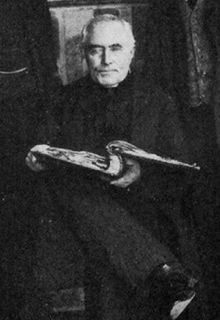
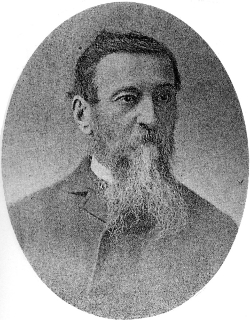
Hogan’s works include Distinguished Irishmen of the 16th Century (1894), the Irish Phrase Book (1899) and Onomasticon Goedelicum: An Index to Irish Names of Places and Tribes (1910), a standard reference based on the research of John O’Donovan, The Irish Wolfhound, A Description of Ireland in 1598 and Chronological list of the Irish members of the Society of Jesus, 1550-1814. He also contributes to the editing and compilation of other works in his field.
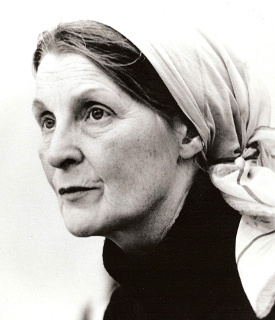
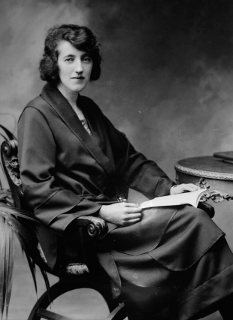
Joan Denise Moriarty, Irish ballet dancer, choreographer, teacher of ballet and traditional Irish dancer and musician, dies on January 24, 1992. She is a key figure in the development of both amateur and professional ballet in Ireland.
Little is known of Moriarty’s early life. Her year of birth is estimated between 1910 and 1913 but no documentation has been found. The place of her birth is also unknown, and even the country is uncertain. She grows up as the daughter of Michael Augustus Moriarty, an alumnus of Stonyhurst College and contemporary of Sir Arthur Conan Doyle, and his wife, Marion (née McCarthy). The Moriartys are originally from Mallow, County Cork, where her grandfather John Moriarty was a successful solicitor.
Moriarty is brought up in England. She studies ballet until her early teens with Dame Marie Rambert. She is an accomplished Irish step-dancer and traditional musician and becomes the champion Irish step-dancer of Britain on April 24, 1931. She also wins a swimming championship. She is a member of the Liverpool branch of the Conradh na Gaeilge.
In the autumn of 1933 Moriarty returns with her family to their native Mallow in County Cork. In 1934, she sets up her first school of dance there. From 1938 she also gives weekly classes in Cork in the Gregg Hall and Windsor School. During the 1930s she takes part in the Cork Feis, annual arts competitions with a focus on traditional dance and music, competing in Irish step-dancing, warpipes and operatic solo singing. She performs on the warpipes in various public concerts and gives at least two broadcasts. In 1938 she is invited by Seán Neeson, lecturer in Irish music at University College Cork, to perform at a summer school which the Music Department organises for primary school teachers.
Moriarty’s mother dies in February 1940. The following November she moves to Cork where she sets up the Moriarty School of Dancing. The early years during the war are very difficult financially. In the early 1940s she performs with her dancers in musicals and variety shows at the Cork Opera House.
In 1945 the composer Aloys Fleischmann invites Moriarty to perform in his Clare’s Dragoons for baritone, war pipes, choir and orchestra, which had been commissioned by the national broadcasting company, Radio Éireann, for the Thomas Davis centenary. Moriarty agrees on condition that his Cork Symphony Orchestra would play for her Ballet Company’s annual performances, which marks the beginning of a lifelong collaboration.
Branches of the Moriarty School of Dance are established in Bandon, Clonmel, Fermoy, Killarney, Mallow, Tralee, Waterford, and Youghal. Moriarty bequeaths her Cork school to Breda Quinn, a long-standing member of the Cork Ballet Company, who runs it with another Moriarty student, Sinéad Murphy, who creates a new dance school, Cork School of Dance, after Breda’s death in 2009.
Moriarty founds the Cork Ballet Group in 1947, the members recruited from her school. It gives its first performance in June of that year at the Cork Opera House. In 1954 the group is registered as a company under the name “Cork Ballet Company.” The company’s final season is 1993, the year following Moriarty’s death.
Irish Theatre Ballet is founded by Moriarty in the summer of 1959, and gives its first performance in December 1959. It is a small touring company of 10 to 12 dancers, which travels all over Ireland, going to some 70 venues annually with extracts from the classical ballets, contemporary works and folk ballets. In an attempt to resolve the constant financial difficulties, the Arts Council in 1963 insists on a merger with Patricia Ryan’s Dublin National Ballet. The amalgamation does not bring a solution to the financial problems besetting both companies and, after one joint season, the amalgamated company, Irish National Ballet, has to be disbanded in March 1964.
In 1973, the Irish government decides to fund a professional ballet company, the Irish Ballet Company, and entrusts it to Moriarty. Like Irish Theatre Ballet, it is a touring company which travels all over Ireland in two annual seasons. The company has a number of striking successes between 1978 and 1981. In 1983 the name of the company is changed to Irish National Ballet. The severe recession in Ireland during the 1980s and shrinking funds force the Irish National Ballet to disband in 1989.
Moriarty spends almost 60 years working for ballet in Ireland. Her amateur Cork Ballet Company is still the longest-lasting ballet company the country’s history. Her two professional touring companies bring ballet to all parts of Ireland for 21 years. She receives numerous awards for her work, among them an honorary doctorate from the National University of Ireland in 1979.
During the last years of her life, Moriarty suffers ill-health, but continues her work with the Cork Ballet Company, bringing the shows to towns in the county. She dies on January 24, 1992, in Dublin.
O’Brien moves with his family to Dublin in 1897 and quickly becomes involved in the Irish Socialist Republican Party (ISRP). He is described as “a very significant figure in the ISRP” by ISRP historian David Lynch. He is a member of the Socialist Party of Ireland, serving on its executive.
An important figure in the Labour Party in Ireland in its formative days, O’Brien resists James Larkin‘s attempt to gain control of the Party on release from prison. Taking Larkin to court over his occupation of ITGWU headquarters, the Larkin-O’Brien feud results in a split within the labour and trade union movements, and the formation of the Irish Congress of Trade Unions.
In 1930, O’Brien seeks to have Leon Trotsky granted asylum in Ireland, but the head of the Free State government, W. T. Cosgrave, refuses to allow it.
Active in politics and the trade union movement into his 60s, O’Brien retires in 1946 and dies on October 31, 1968.
With a reign of 63 years, seven months and two days, she is the longest-reigning British monarch and the longest-reigning queen regnant in world history until her great-great-granddaughter Elizabeth II surpasses her on September 9, 2015. She restores dignity to the English monarchy and ensures its survival as a ceremonial political institution. Edward VII accedes to the throne upon her death.
Born on May 24, 1819, in Kensington Palace, London, Victoria comes to the throne after the death of her uncle, King William IV, in 1837. As a young woman ascending to the throne, her future husband describes her “as one whose extreme obstinacy was constantly at war with her good nature.” Her first prime minister, William Lamb, 2nd Viscount Melbourne, becomes her close friend and adviser, and she succeeds in blocking his replacement by Tory leader Sir Robert Peel in 1839. Two years later, however, an election results in a Tory majority in the House of Commons, and she is compelled to accept Peel as prime minister. Never again does she interfere so directly in the politics of democratic Britain.
In 1839, her first cousin Albert, a German prince, comes to visit the English court at Windsor, and Victoria proposes to him five days after his arrival. Prince Albert accepts, and they are married in February 1840. He soon becomes the dominant influence in her life and serves as her private secretary. Among his greatest achievements as Prince Consort is his organization of The Great Exhibition of 1851, the first world’s fair, in the Crystal Palace in London. He also steers her support away from the Whigs to the conservative Tories. She later is a vocal supporter of Benjamin Disraeli, leader of the Conservative Party.
Victoria and Albert build royal residences at Osborne House on the Isle of Wight and at Balmoral Castle in Scotland and become increasingly detached from London. They have nine children, including Victoria, later the empress of Germany, and the Prince of Wales, later King Edward VII. In 1861, Albert dies, and Victoria’s grief is such that she does not appear in public for three years. She never entirely gets over the loss and, until the end of her life, has her maids nightly lay out Albert’s clothes for the next day and in the morning replace the water in the basin in his room.
Disraeli coaxes Victoria out of seclusion, and she is impressed by his efforts to strengthen and expand the British Empire. In 1876, he has her made “empress of India,” a title which pleases her and makes her a symbol of imperial unity. During the last few decades of her life, her popularity, which had suffered during her long public absence, increases greatly. She never embraces the social and technological advances of the 19th century but accepts the changes and works hard to fulfill her ceremonial duties as head of state.
Following a custom she maintains throughout her widowhood, Victoria spends the Christmas of 1900 at Osborne House on the Isle of Wight. Rheumatism in her legs has rendered her lame and her eyesight is clouded by cataracts. Through early January, she feels weak and unwell, and by mid-January she is drowsy, dazed and confused. She dies in the early evening of Tuesday, January 22, 1901, at the age of 81. Her son and successor King Edward VII, and her eldest grandson, Emperor Wilhelm II of Germany, are at her deathbed. Her favourite pet Pomeranian, Turi, is laid upon her deathbed as a last request.
Victoria’s funeral is held on Saturday, February 2, in St. George’s Chapel, Windsor Castle, and after two days of lying-in-state, she is interred beside Prince Albert in Frogmore Mausoleum at Windsor Great Park. When she dies, she has 37 surviving great-grandchildren, and their marriages with other monarchies give her the name “grandmother of Europe.”
On Friday, January 21, 1921, eight men from the 1st Battalion IRA, set out to stage an ambush at Binn’s Bridge on Lower Drumcondra Road. The plan is to attack a Royal Irish Constabulary (RIC) patrol which uses the road to travel from their base at Gormanston, County Meath, near Drogheda.
Led by Lieutenant Francis “Frank” Flood (19), Michael Francis ‘Mick’ Magee (24) Patrick Doyle (29), Thomas Bryan (24), Bernard ‘Bertie’ Ryan (21) and Dermott O’Sullivan (17) set off at 8:30 AM for Binn’s Bridge. They are to ambush RIC Auxiliaries (Black and Tans) travelling into Dublin from Gormanston. However, the Auxiliaries do not arrive. The witness statement of Harry Colley, former Adjutant, IRA Dublin Brigade 1920-21, says “they had actually been sent to carry out the ambush at Binn’s Bridge, but for some reason of their own, when they reached the position, moved up beyond Tolka Bridge, to Clonturk Park.” According to Dermott O’Sullivan, the only survivor, when it appears that the Black and Tans will not be coming their way, the party leaves the Binn’s Bridge site and heads to Tolka Bridge in Drumcondra.
However, the police receive a tip-off from Sergeant Singleton of the Dublin Metropolitan Police (DMP). It is also said, that as the British army unit is approaching the bridge over the River Tolka in Drumcondra, they are warned by a man by the name Robert Pike from Tolka Cottages.
The ambushers commence an attack upon two lorries of RIC constables, who return fire until the vehicles are able to accelerate out of range. Then the Black and Tans arrive in motor lorries and an armored car at the rear of their position to cut off their escape. Some volunteers manage to dash across fields to safety but others are arrested as they attempted to seek refuge in houses in the vicinity. All of the prisoners are found in possession of revolvers and ammunition, and Frank Flood is also found to have a grenade in his pocket.
In an attempt to escape the Auxiliaries, Michael Magee and Séan Burke run across a field of garden allotments in Clonturk Park. The Auxiliaries shoot Magee, mortally wounding him in the legs and lower torso. Magee is captured but soon dies of his wounds.
So at the end of the day, of the eight men involved in the action at Drumcondra, two men, Burke and Dunne, escape the scene. The five remaining, Frank Flood, Thomas Bryan, Bernard Ryan, Patrick Doyle and Dermot O’Sullivan are captured and Magee dies of his wounds. The captives are tried by a court-martial that lasts two days. All of the accused are convicted of High Treason and sentenced to death.
On March 14, 1921, all of the men, save Dermot O’Sullivan, are hanged at Mountjoy Prison. Citing his age of only 17 years, the British commute O’Sullivan’s sentence to life in prison. He is released from Portland Gaol at the end of August 1921.
“Whiskey in the Jar” is the tale of a highwayman or footpad who, after robbing a military or government official, is betrayed by a woman. Whether she is his wife or sweetheart is not made clear. Various versions of the song take place in County Kerry, Kilmoganny, Cork, Sligo, and other locales throughout Ireland. It is also sometimes placed in the American South, in various places among the Ozarks or Appalachians, possibly due to Irish settlement in these places. Names in the song change, and the official can be a Captain or a Colonel, called Farrell or Pepper among other names. The protagonist’s wife or lover is sometimes called Molly, Jenny, Emzy, or Ginny among various other names. The details of the betrayal are also different, being either betraying him to the person he robbed and replacing his ammunition with sand or water, or not, resulting in his killing the person.
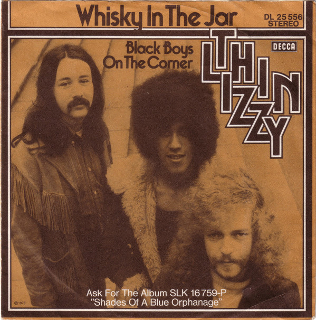
The song’s exact origins are unknown. The song first gains wide exposure when the Irish folk band The Dubliners perform it internationally as a signature song and record it on three albums in the 1960s. In the United States, the song is popularized by The Highwaymen, who record it on their 1962 album Encore. Building on their success, the Irish rock band Thin Lizzy hits the Irish and British pop charts with the song in 1973. In 1990 The Dubliners re-record the song with The Pogues with a faster rocky version charting at No.4 in Ireland and No.63 in the UK. The American metal band Metallica brings it to a wider rock audience in 1998 by playing a version very similar to that of Thin Lizzy’s, though with a heavier sound, winning a Grammy Award for the song in 2000 for Best Hard Rock Performance.
Thin Lizzy’s 1972 single stays at the top of the Irish charts for 17 weeks, and the British release stays in the top 30 for 12 weeks, peaking at No. 6, in 1973. This version has since been covered by U2, Pulp (first released on a 1996 various artist compilation album Childline and later on deluxe edition of Different Class in 2006), Smokie, Metallica (Garage Inc. 1998, which wins a Grammy), Belle and Sebastian (The Blues Are Still Blue EP 2006), Gary Moore (2006), Nicky Moore (Top Musicians Play Thin Lizzy 2008), Simple Minds (Searching for the Lost Boys 2009), and Israeli musician Izhar Ashdot. The song is also on the Grateful Dead live compilation So Many Roads(1965-1995) disc five.
Deevy is born on January 21, 1894, in Waterford. She is the youngest of 13 siblings, all girls. Her mother is Mary Feehan Deevy and her father is Edward Deevy who passes away when she is two years old.
Deevy attends the Ursuline Convent in Waterford and in 1913, at the age of 19, she enrolls in University College Dublin, to become a teacher. However, that same year, she becomes deaf through Ménière’s disease and has to relocate to University College Cork so she can receive treatment in the Cork Ear, Eye, and Throat Hospital, while also being closer to the family home. In 1914 she goes to London to learn lip reading and returns to Ireland in 1919. She starts writing plays and contributing articles and stories to the press around 1919.
In 1930 Deevy has her first production at the Abbey Theatre, Reapers. Many more follow in rapid succession, such as In Search of Valour, Temporal Powers, The King of Spain’s Daughter and Katie Roche, the play she is perhaps best known for. Her works are generally very well received with some of them winning competitions, becoming headline performances, or being revived numerous times. After a number of plays staged in the Abbey, her relationship with the theater sours over the rejection of her play, Wife to James Whelan in 1937.
After Deevy stops writing plays for the Abbey, she mainly concentrates on radio, a remarkable feat considering she had already become deaf before radio had become a popular medium in Ireland in the mid-to-late 1920s. She has a prolific output for twenty years on Raidio Éireann and on the BBC.
Deevy is elected to the prestigious Irish Academy of Letters in 1954, as a recognition to her contribution to the Irish theater. Her sister, Nell, with whom she had lived in Dublin, dies in the same year, so she returns to Waterford. She becomes a familiar figure in Waterford as she cycles around the city on her “High Nelly” bike.
When Deevy’s health begins to fail she is eventually admitted to the Maypark Nursing Home in Waterford. She dies there on January 19, 1963, at the age of 68, two days before her birthday.
Sackville serves twice as Lord Lieutenant of Ireland, from 1731 to 1737 and again from 1751 to 1755. In 1739, at the foundation of the Foundling Hospital, he is one of that charity’s original governors. His first term as Lord Lieutenant is uneventful. His second takes place at a time of acute political tension between the two main factions in the Irish Government, one led by Henry Boyle, the Speaker of the Irish House of Commons, the other by George Stone, the Anglican Archbishop of Armagh. Sackville, now heavily influenced by his son George Sackville, makes the mistake of openly backing the archbishop. He is unable to oust Boyle from power and is accused of being the archbishop’s tool. He becomes extremely unpopular, leading to his eventual recall.
Sackville’s last years are uneventful, apart from a riot in 1757 caused by the passage of the Militia Act to raise an army for the Seven Years’ War, in which he narrowly escapes injury. He dies at Knole, a country house in west Kent, on October 9, 1765, and is buried at Withyham in East Sussex.
(Pictured: Oil on canvas Portrait of Lionel Sackville, 1st Duke of Dorset (1688-1765) by Godfrey Kneller (1646-1723), 1719, currently displayed at Commonwealth Secretariat, Marlborough House, London)
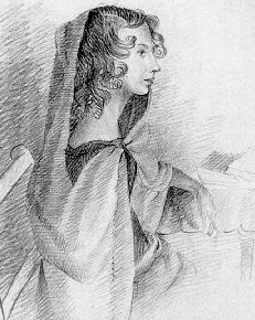
Brontë is the youngest of six children of Patrick Brontë, a poor Irish clergyman in the Church of England, and Marie Brontë. She lives most of her life with her family at the parish of Haworth on the Yorkshire moors and is taught in the family’s Haworth home and at Roe Head School. With her sister Emily, she invents the imaginary kingdom of Gondal, about which they write verse and prose, the latter now lost, from the early 1830s until 1845.
Brontë takes a position as governess briefly in 1839 and then again for four years, 1841–45, with the Robinsons, the family of a clergyman, at Thorpe Green, near York. There her irresponsible brother, Branwell, joins her in 1843, intending to serve as a tutor. Anne returns home in 1845 and is followed shortly by her brother, who has been dismissed, charged with making love to his employer’s wife.
In 1846 Brontë contributes 21 poems to Poems by Currer, Ellis and Acton Bell, a joint work with her sisters Charlotte and Emily. Her first novel, Agnes Grey, is published together with Emily’s Wuthering Heights in three volumes, of which Agnes Grey is the third, in December 1847. The reception to these volumes, associated in the public mind with the immense popularity of Charlotte’s Jane Eyre (October 1847), lead to quick publication of Anne’s second novel, again as Acton Bell, The Tenant of Wildfell Hall, published in three volumes in June 1848. It sells well.
Emily’s death in December 1848 deeply affects Brontë and her grief undermines her physical health. Over Christmas, she comes down with influenza. Her symptoms intensify and her father sends for a Leeds physician in early January. The doctor diagnoses her condition as consumption (tuberculosis) and intimates that it is quite advanced, leaving little hope of recovery. Anne meets the news with characteristic determination and self-control.
In February 1849, Brontë seems somewhat better and decides to make a return visit to Scarborough in the hope that the change of location and fresh sea air might initiate a recovery. On May 24, 1849, she sets off for Scarborough with Charlotte and Ellen Nussey. However, it is clear that Anne has little strength left.
On Sunday, May 27, Brontë asks Charlotte whether it would be easier if she returned home to die instead of remaining in Scarborough. A doctor, consulted the next day, indicates that death is close. Conscious and calm, she dies in the afternoon of Monday, May 28, 1849, at the age of 29. She is buried in Scarborough in St. Mary’s churchyard, beneath the castle walls, overlooking the bay.
Her novel Agnes Grey, probably begun at Thorpe Green, records with limpidity and some humour the life of a governess. George Moore calls it “simple and beautiful as a muslin dress.” The Tenant of Wildfell Hall presents an unsoftened picture of the debauchery and degradation of the heroine’s first husband and sets against it the Arminian belief, opposed to Calvinist predestination, that no soul shall be ultimately lost. Her outspokenness raised some scandal, and Charlotte deplored the subject as morbid and out of keeping with her sister’s nature, but the vigorous writing indicates that Brontë found in it not only a moral obligation but also an opportunity of artistic development.
(Pictured: A sketch of Anne Brontë by sister Charlotte, circa 1834)
Luby is the son of a Church of Ireland clergyman from Templemore, County Tipperary, his mother being a Catholic. He is educated at Trinity College Dublin where he studies law and puts in the necessary number of terms in London and Dublin where he acquires a reputation as a scholar and takes his degree. He goes on to teach at the college for a time.
In 1851 Luby travels to France, where he hopes to join the French Foreign Legion to learn infantry tactics but finds the recruiting temporarily suspended. From France he goes to Australia for a year before returning to Ireland. From the end of 1855 he edits the Tribune newspaper founded by John E. Pigot who had been a member of The Nation group. During this time, he remains in touch with the small group of ’49 men including Philip Gray and attempts to start a new revolutionary movement. Luby’s views on social issues grow more conservative after 1848 which he makes clear to James Stephens whom he meets in 1856.
In the autumn of 1857 Owen Considine arrives with a message signed by four Irish exiles in the United States, two of whom are John O’Mahony and Michael Doheny. The message conveys the confidence they have in Stephens and asks him to establish an organisation in Ireland to win national independence. Considine also carries a private letter from O’Mahony to Stephens which is a warning, and which is overlooked by Luby and Stephens at the time. Both believe that there is a strong organisation behind the letter, only later to find it is rather a number of loosely linked groups. On December 23 Stephens dispatches Joseph Denieffe to America with his reply which is disguised as a business letter dated and addressed from Paris. In his reply, Stephen’s outlines his conditions and his requirements from the organisation in America.
On March 17, 1858, Denieffe arrives in Dublin with the acceptance of Stephens’s terms by the New York Committee and the eighty pounds. On that very evening the Irish Republican Brotherhood is established in Peter Langan’s timberyard in Lombard Street.
In mid-1863 Stephens informs his colleagues he wishes to start a newspaper, with financial aid from O’Mahony and the Fenian Brotherhood in America. The offices are established at 12 Parliament Street, almost at the gates of Dublin Castle. The first issue of the Irish People appears on November 28, 1863. The staff of the paper along with Luby are Charles J. Kickham and Denis Dowling Mulcahy as the editorial staff. Jeremiah O’Donovan Rossa and James O’Connor have charge of the business office, with John Haltigan being the printer. John O’Leary is brought from London to take charge in the role of Editor.
On July 15, 1865, American-made plans for a rising in Ireland are discovered. Superintendent Daniel Ryan, head of the G Division of the Dublin Metropolitan Police at Dublin Castle, has an informer within the offices of the Irish People who supplies him with an “action this year” message on its way to the IRB unit in Tipperary. With this information, Ryan raids the offices of the Irish People on Thursday, September 15, followed by the arrests of Luby, O’Leary and O’Donovan Rossa. Kickham is caught after a month on the run. Stephens is also caught with the support of Fenian prison warders. The last number of the paper is dated September 16, 1865.
After his arrest and the suppression of the Irish People, Luby is sentenced to twenty years of penal servitude. He is released in January 1871 but is compelled to remain away from Ireland until the expiration of his sentence.
Upon his release Luby goes first to the Continent and later settles in New York City. He lectures all over the country for years and writes for a number of Irish newspapers on political topics. At the memorial meeting on the death of John Mitchel, he delivers the principal address in Madison Square Garden.
Thomas Clarke Luby dies at 109½ Oak Street, Jersey City, New Jersey of paralysis, on November 29, 1901, and is buried in a grave shared with his wife in Bayview Cemetery in Jersey City. His epitaph reads: “Thomas Clarke Luby 1822–1901 He devoted his life to love of Ireland and quest of truth.”




 seamus dubhghaill