seamus dubhghaill

Promoting Irish Culture and History from Little Rock, Arkansas, USA


Leave a comment

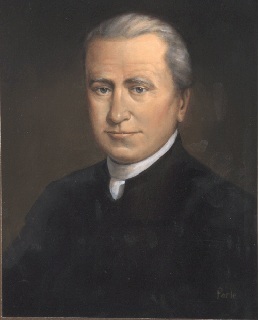
Birth of Irish Novelist John Banim

John Banim, Irish novelist, short story writer, playwright, poet and essayist, sometimes called the “Scott of Ireland,” is born in Kilkenny, County Kilkenny on April 3, 1798. He also studied art, working as a painter of miniatures and portraits, and as a drawing teacher, before dedicating himself to literature.

At age four, Banim’s parents send him to a local school where he learns the basics of reading and grammar. At age five, he is sent to the English Academy at Kilkenny where his older brother Michael (1796–1874) is a student. After five years at the English Academy, he is sent to a seminary run by a Reverent Magrath, considered to be the finest Roman Catholic school in Ireland. After a year at the seminary, he transfers to another academy run by a teacher named Terence Doyle. Throughout his school years, he reads avidly and writes his own stories and poems. When he is ten, he visits the poet Thomas Moore, bringing along some of his own poetry in manuscript. Moore encourages him to continue writing and gives him a season ticket to his private theatre in Kilkenny.

At the age of 13, Banim enters Kilkenny College and devotes himself specially to drawing and miniature painting. He pursues his artistic education for two years in the schools of the Royal Dublin Society, and afterwards teaches drawing in Kilkenny, where he falls in love with one of his pupils, a 17-year-old girl named Anne. His affection is returned, but her parents disapprove of their relationship and send her out of town. Anne dies two months later of tuberculosis. Her death makes a deep impression on him and his health suffers severely and permanently.

In 1820 Banim goes to Dublin and settles finally to the work of literature. He publishes a poem, The Celt’s Paradise, and his play Damon and Pythias is performed at Covent Garden in 1821. During a short visit to Kilkenny he marries, and in 1822, in conjunction with Michael, plans a series of tales illustrative of Irish life, which should be for Ireland what the Waverley Novels are for Scotland. The influence of his model is distinctly traceable in his writings.

Banim then sets out for London, and supports himself by writing for magazines and for the stage. A volume of miscellaneous essays is published anonymously in 1824, called Revelations of the Dead Alive. The first series of Tales of the O’Hara Family appears in April 1825, which achieves immediate and decided success. One of the most powerful of them, Crohoore of the Bill Hook, is by Michael Banim.

In 1826, a second series is published, containing the Irish novel, The Nowlans. Banim’s health has given way, and the next effort of the “O’Hara family” is almost entirely the production of his brother Michael. The Croppy, a Tale of 1798 (1828), a novel of the Irish Rebellion of 1798, is hardly equal to the earlier tales, though it contains some wonderfully vigorous passages.

The Mayor of Windgap, and The Ghost Hunter (both by Michael Banim), The Denounced (1830) and The Smuggler (1831) follow in quick succession, and are received with considerable favour. Most of these deal with the darker and more painful phases of life, but the feeling shown in his last, Father Connell, is brighter and tenderer. Banim, meanwhile, suffers from illness and consequent poverty. In 1829, he goes to France, and while he is abroad a movement to relieve his wants is set on foot by the English press, headed by John Sterling in The Times. A sufficient sum is obtained to remove him from any danger of actual want.

Banim returns to Ireland in 1835, taking up residence in Dublin. On meeting him again in August, Michael Banim finds his brother’s condition to be that of a complete invalid. He is often in pain and has to use opiates to sleep, but during the short intervals between the attacks of his illness, he is able to enjoy conversation and the company of his brother and friends. In September he returns to Kilkenny and is received with an address from the citizens of Kilkenny showing their appreciation of him, and a subscription from them of £85. After a short stay in his childhood home, he settles in Windgap Cottage, then a short distance from Kilkenny. He passes the remainder of his life there, dying on August 13, 1842.

Michael Banim acquires a considerable fortune which he loses in 1840 through the bankruptcy of a firm with which he had business relations. After this disaster he writes Father Connell (1842), Clough Fionn (1852), and The Town of the Cascades (1862). He dies at Booterstown.

An assessment in the Encyclopædia Britannica Eleventh Edition (1911) reads:

“The true place of the Banims in literature is to be estimated from the merits of the O’Hara Tales; their later works, though of considerable ability, are sometimes prolix and are marked by too evident an imitation of the Waverley Novels. The Tales, however, are masterpieces of faithful delineation. The strong passions, the lights and shadows of Irish peasant character, have rarely been so ably and truly depicted. The incidents are striking, sometimes even horrible, and the authors have been accused of straining after melodramatic effect. The lighter, more joyous side of Irish character, which appears so strongly in Samuel Lover, receives little attention from the Banims.”


Leave a comment

Launch of Irish Language Radio Station RTÉ Raidió na Gaeltachta

RTÉ Raidió na Gaeltachta, abbreviated RnaG, an Irish language radio station owned and operated by Raidió Teilifís Éireann (RTÉ), goes on the air for the first time on April 2, 1972, launched by President Éamon de Valera. The station is available on FM in Ireland and via satellite and on the Internet. The station’s main headquarters are in Casla, County Galway with major studios also in Gweedore, County Donegal and Dingle, County Kerry.

After the Irish Free State is formed and the Irish Civil War is concluded, the new state sets up a single radio channel named 2RN in 1926, launched by Douglas Hyde. The channel, operating out of Dublin, largely serves the Anglosphere population and at best reaches as far as County Tipperary, a situation that does not change until more powerful transmitters are adopted in the 1930s at Athlone.

In 1943, de Valera, at the time serving as Taoiseach and whose wife Sinéad Ní Fhlannagáin is a keen Conradh na Gaeilge activist, promotes the idea of a Gaeltacht station, but there is no breakthrough. By this time, 2RN has become Radio Éireann and still only has one channel, with limited broadcasting hours, often in competition for listeners with BBC Radio and Radio Luxembourg.

In the 1950s, a general liberalisation and commercialisation, indeed Americanisation begins to occur in Ireland, as a push is made to move Ireland from a rural-agrarian society with a protectionist cultural policy towards a market economy basis, with supply and demand the primarily basis of public communications. In 1960, RTÉ is established, and direct control of communications moves from a government ministry position to a non-governmental RTÉ Director-General position, first filled by Edward Roth

In the late 1960s, a civil rights movement in the Gaeltacht emerges, seeking development and services for Irish speakers, including a radio service. Out of the Gluaiseacht Chearta Siabhialta na Gaeltachta‘s advocacy comes the pirate radio station Saor Raidió Chonamara in 1970. This sets the subsequent discourse for Irish language and Gaeltacht issues as a civil rights and minority rights imperative.

Gerry Collins, the Minister for Posts and Telegraphs, announces in Dáil Éireann in February 1971 that a new radio station for the Gaeltacht will be created. Raidió na Gaeltachta begins broadcasting at 3:00 PM on April 2, 1972, as part of an Easter Sunday programming. During the very first broadcast, the main station at Casla, County Galway is not yet finished and the studios in County Kerry and County Donegal are still under construction, so the broadcast originates from Galway. The first Ceannaire (Controller) Pádraic Ó Raghallaigh opens the show, which is followed by a recording from President Éamon de Valera. A recording of Seán Ó Riada‘s Irish language Mass, Ceol an Aifrinn, from the Seipéal Mhic Dara at Carraroe is also played.

At foundation, the station begins with a staff of seven, including six former teachers and a businessman, and broadcasts for only two hours a day and is only available in or near the three largest Gaeltacht districts. The local studio at Derrybeg in Gweedore, County Donegal aids the native Irish music scene there. In the 1970s, Raidió na Gaeltachta gives early coverage to Clannad and Mairéad Ní Mhaonaigh, later the singer for Altan. These groups gain popularity not only in Ireland, but on the international stage, selling millions of records during the 1980s especially. The station is dedicated to bringing the listener general news, both national and international, as well as Gaelic sports coverage and more localised affairs of significance to the community in the Gaeltacht.

For many years RnaG is the only Irish language broadcaster in the country. In recent years it has been joined by a television service, Telefís na Gaeilge (TG4), and by regional community radio stations Raidió na Life in Dublin, Raidió Fáilte in Belfast, and Raidió Rí-Rá.


Leave a comment

Death of Brian O’Nolan, Novelist & Playwright

Brian O’Nolan, Irish novelist, playwright and satirist considered a major figure in twentieth century Irish literature, dies of a heart attack in Dublin on April 1, 1966. He is better known by his pen name Flann O’Brien.

O’Nolan is born in Strabane, County Tyrone on October 5, 1911. He attends Blackrock College where he is taught English by President of the College, and future Archbishop of Dublin, John Charles McQuaid. He also spends part of his schooling years in Synge Street Christian Brothers School. His novel The Hard Life is a semi-autobiographical depiction of his experience with the Christian Brothers.

O’Nolan writes prodigiously during his years as a student at University College, Dublin (UCD), where he is an active, and controversial, member of the well-known Literary and Historical Society. He contributes to the student magazine Comhthrom Féinne (Fair Play) under various guises, in particular the pseudonym Brother Barnabas. Significantly, he composes a story during this same period titled “Scenes in a Novel (probably posthumous) by Brother Barnabas”, which anticipates many of the ideas and themes later to be found in his novel At Swim-Two-Birds.

In 1934 O’Nolan and his student friends found a short-lived magazine called Blather. The writing here, though clearly bearing the marks of youthful bravado, again somewhat anticipates O’Nolan’s later work, in this case his Cruiskeen Lawn column as Myles na gCopaleen. Having studied the German language in Dublin, he may have spent at least parts of 1933 and 1934 in Germany, namely in Cologne and Bonn, although details are uncertain and contested.

A key feature of O’Nolan’s personal situation is his status as an Irish government civil servant, who, as a result of his father’s relatively early death, is obliged to support ten siblings, including an elder brother who is an unsuccessful writer. Given the desperate poverty of Ireland in the 1930s to 1960s, a job as a civil servant is considered prestigious, being both secure and pensionable with a reliable cash income in a largely agrarian economy. The Irish civil service is fairly strictly apolitical, prohibiting Civil Servants above the level of clerical officer from publicly expressing political views. This fact alone contributes to his use of pseudonyms, though he had started to create character-authors even in his pre-civil service writings. He rises to be quite senior, serving as private secretary to Seán T. O’Kelly and Seán McEntee.

Although O’Nolan is a well-known character in Dublin during his lifetime, relatively little is known about his personal life. On December 2, 1948, he marries Evelyn McDonnell, a typist in the Department of Local Government. On his marriage he moves from his parental home in Blackrock to nearby Merrion Street, living at several further locations in South Dublin before his death. The couple has no children.

O’Nolan is an alcoholic for much of his life and suffers from ill health in his later years. He suffers from throat cancer and dies from a heart attack in Dublin on the morning of April 1, 1966. He is buried in Deans Grange Cemetery in Dublin.


Leave a comment

Ireland Awarded the 2003 Special Olympics World Summer Games

On March 31, 1999, Ireland is selected as the location for the 2003 Special Olympics World Summer Games. It is the first time the event has been staged outside the United States. The organising committee, which is formed in 1999 following the success of the bid, is chaired by entrepreneur Denis O’Brien. The chief executive is Mary Davis.

The Games are hosted in Dublin, with participants staying in 177 towns, cities and villages and the Aran Islands in the lead up to the Games before moving to Dublin for the events. Events are held from June 21-29, 2003 at many venues including Morton Stadium, the Royal Dublin Society, the National Basketball Arena, all in Dublin. Croke Park serves as the central stadium for the opening and closing ceremonies, even though no competitions take place there. Belfast is the venue for roller skating events at the King’s Hall, as well as the Special Olympics Scientific Symposium held on June 19-20.

Approximately 7,000 athletes from 150 countries compete in the Games in 18 official disciplines and three exhibition sports. The participants from Kosovo are the region’s first team at an international sporting event. A 12-member team from Iraq receives special permission to attend the games, despite ongoing war in their home nation. This is the largest sporting event held in 2003.

The opening ceremony is held in Croke Park and features an array of stars and is hosted by Patrick Kielty. The ceremony is officially opened by President of Ireland Mary McAleese and attended by Taoiseach Bertie Ahern. Performances include U2, The Corrs and the largest Riverdance troupe ever assembled on one stage. There are 75,000 athletes and spectators in attendance at the opening ceremonies. Irish and international celebrities such as Arnold Schwarzenegger and Jon Bon Jovi walk with the athletes, with Muhammad Ali as a special guest and Manchester United and Republic of Ireland football player Roy Keane taking the athletes oath with one of the Special Olympians. Nelson Mandela officially opens the Games.

The Games Flame is lit at the culmination of the Law Enforcement Torch Run, in which more than 2,000 members of the Garda Síochána and the Police Service of Northern Ireland participate. This is a series of relays carrying the Special Olympics Torch, the “Flame of Hope,” from Europe to the Games’ official opening.

The 2003 Games are the first to have their opening and closing schemes broadcast on live television, and Raidió Teilifís Éireann provides extensive coverage of the events through their ‘Voice of the Games’ radio station which replaces RTÉ Radio 1 on medium wave for the duration of the event. There is also a nightly television highlight programme. A daily newspaper, the Games Gazette, was published for each day of the Games.

Among the activities carried out during the Games are thorough medical checks on the athletes, some of whom have previously undiagnosed conditions uncovered, as some of the athletes come from countries with limited medical facilities or have difficulty communicating their symptoms.

Among the contributors to the Games is the Irish Prison Service. Prisoners from Mountjoy Prison, Midlands Prison, Wheatfield Prison and Arbour Hill Prison construct podiums and make flags, towels, signs, benches and other equipment.


Leave a comment

Birth of Thomas Devin Reilly, Revolutionary & Journalist

Thomas Devin Reilly, Irish revolutionary, Young Irelander and journalist, is born in Monaghan, County Monaghan, on March 30, 1824.

Reilly is the son of a solicitor and completes his education at Trinity College, Dublin. From early on he espouses the republican beliefs of Theobald Wolfe Tone and Robert Emmet and writes for The Nation and John Martin‘s The Irish Felon in support of economic and political improvements for the working class. He is more interested in the realities of the common man than high idealism.

As a member of the Irish Confederation during the Great Famine, Reilly together with John Mitchel and James Fintan Lalor advocate the refusal to pay rents, retention of crops by small tenant farmers and labourers to feed their own families, and the breaking up of bridges and tearing up of railway lines to prevent the removal of food from the country.

Reilly is involved in the failed Young Ireland Rebellion of 1848 and is forced to flee to the United States where he becomes active in U.S. political affairs in support of Irish independence. He is reported to be the founder of The People newspaper in New York City which folds after six months in 1849.

James Connolly claims that as the editor of the Protective Union labour rights newspaper for the printers of Boston, Reilly is a pioneer of American labour journalism and that Horace Greeley believed of his series of articles in The American Review on the European situation “that if collected and published as a book, they would create a revolution in Europe.”

It is possible that Connolly confuses The United States Magazine and Democratic Review, which is known for its political activism, with The American Review, which for a time had Edgar Allan Poe as an editorial assistant. Other sources refer to Reilly as being editor of the New York Democratic Review and later the Washington Union.

Thomas Devin Reilly dies at the age of 30 on March 5, 1854. He is buried at Mount Olivet Cemetery in Washington, D.C., together with his infant child Mollie and wife Jennie Miller from Enniskillen.


Leave a comment

“The Irish Times” Is Launched In Dublin

The Irish Times is launched at 4 Lower Abbey Street in Dublin on March 29, 1859. The first appearance of a newspaper using the name occurs in 1823 but it closes in 1825. The title is revived as a thrice weekly publication by Major Lawrence E. Knox. It is originally founded as a moderate Protestant newspaper, reflecting the politics of Knox, who stands unsuccessfully as a parliamentary candidate for Isaac Butt’s Home Rule League. In its early days, its main competitor is the Dublin Daily Express.

After Knox’s death in 1873, the paper is sold to the widow of Sir John Arnott, MP, a former Lord Mayor of Cork and owner of Arnotts, one of Dublin’s major department stores. The sale, for £35,000, leads to two major changes. Its headquarters is shifted to 31 Westmoreland Street, remaining in buildings on or near that site until 2005. Its politics also shifts dramatically, becoming predominantly Unionist in outlook, and it is closely associated with the Irish Unionist Alliance. The paper, along with the Irish Independent and various regional papers, calls for the execution of the leaders of the failed 1916 Easter Rising.

Though the paper becomes a publicly listed company in 1900, the family continues to hold a majority shareholding until the 1960s. The last member of the Arnott family to sit on the paper’s board is Sir Lauriston Arnott, who dies in 1958.

The editor during the 1930s, R. M. “Bertie” Smyllie, has strong anti-fascist views: he angers the Irish Catholic hierarchy by opposing General Francisco Franco during the Spanish Civil War. Later, The Irish Times, like other national newspapers, has problems with Irish Government censorship during World War II. The newspaper is largely pro-Allied and is opposed to the Éamon de Valera government’s policy of neutrality.

In 1974, ownership is transferred to a non-charitable trust, The Irish Times Trust. The Trust is set up as “a company limited by guarantee” to purchase The Irish Times Limited and to ensure that The Irish Times will be published as an independent newspaper with specific editorial objectives. The former owner, Major Thomas Bleakley McDowell, is made “president for life” of the trust which runs the paper and is paid a large dividend. However several years later the articles of the Trust are adjusted, giving Major McDowell ten preference shares and one more vote than the combined votes of all the other directors should any move be made to remove him. Major McDowell dies in 2009.

The Trust is regulated by a legal document, the Memorandum and Articles of Association, and controlled by a maximum of eleven Governors under company law. It is not a charity and does not have charitable status. It has no beneficial shareholders and it cannot pay dividends. Any profits made by The Irish Times cannot be distributed to the Trust but must be used to strengthen the newspaper, directly or indirectly.

In 1994, The Irish Times establishes a website called Irish-times.ie, the first newspaper in Ireland and one of the first 30 newspapers in the world to do so. The company acquires the domain name Ireland.com in 1997, and from 1999 to 2008, uses it to publish its online edition. On June 30, 2008, the company relaunches Ireland.com as a separate lifestyle portal and the online edition of the newspaper is now published at irishtimes.com. It is supplied free of charge, but a subscription is charged to view its archives.

On October 15, 2012, John O’Shea, Head of Online, The Irish Times, announces that the ireland.com domain name has been sold to Tourism Ireland, and that the ireland.com email service will end on November 7, 2012, affecting about 15,000 subscribers. The newspaper announces on February 17, 2015 the reintroduction of a paywall for its website, irishtimes.com, beginning on February 23.

In December 2017, it is reported that The Irish Times has reached an agreement to purchase the newspaper, radio and website interests of Landmark Media Investments which include the Irish Examiner. Initially subject to regulatory approval, this sale is completed in July 2018. In September 2018, following the Landmark Media Investments acquisition, The Irish Times starts a voluntary redundancy scheme.

Average print circulation is approximately 100,000 copies per issue in 2011, dropping to approximately 62,000 by 2017. The circulation of the newspaper is no longer audited.


Leave a comment

Birth of Joseph McGarrity, Irish American Political Activist

Joseph McGarrity, Irish American political activist best known for his leadership in Clan na Gael in the United States and his support of Irish republicanism back in Ireland, is born on March 28, 1874, in Carrickmore, County Tyrone.

McGarrity’s family grows up in poverty, motivating his need to immigrate later in life. He grows up hearing his father discussing Irish politics, including topics such as the Fenians, the Irish Parliamentary Party (IPP), and Irish Home Rule. By the time he is an adult, he has developed a keen interest in politics himself.

McGarrity immigrates to the United States in 1892 at the age of 18. He is reputed to have walked to Dublin before boarding a cattle boat to Liverpool disguised as a drover, and then sailing to the United States using a ticket belonging to someone else. He settles in Philadelphia, Pennsylvania and becomes successful in the liquor business. His business fails, however, on three occasions, twice due to embezzlement by his business partner.

In 1893 McGarrity joins Clan na Gael, an Irish organisation based in the United States committed to aiding the establishment of an independent Irish state. Clan na Gael had been heavily involved with the Fenian Brotherhood that McGarrity had grown up hearing about, and by the latter half of the 19th century had become a sister organisation of the Irish Republican Brotherhood (IRB). In the decade just before McGarrity joins, Clan na Gael and the Fenian movement had waged the Fenian dynamite campaign, where they attempted to force the British state to make concessions in Ireland by bombing British Infrastructure. However, this had caused a split within Clan na Gael that is not mended until seven years after McGarrity joins when, in 1900, the factions reunite and plead to support “the complete independence of the Irish people, and the establishment of an Irish republic.” In the years that follow the 1880s and 1890s, he is, amongst others, credited with helping to stitch the organisation back together and bring it renewed strength.

McGarrity helps sponsor several Irish Race Conventions and founds and runs a newspaper called The Irish Press from 1918-22 that supports the Irish War of Independence. He is the founder of the Philadelphia chapter of Clan Na Gael.

During World War I, while the United States is still neutral, McGarrity is involved in the Hindu–German Conspiracy. He arranges the Annie Larsen arms purchase and shipment from New York to San Diego for India.

When Éamon de Valera arrives in the United States in 1919 they strike up an immediate rapport and McGarrity manages de Valera’s tour of the country. He persuades de Valera of the benefits of supporting him and the Philadelphia branch against the New York branch of the Friends of Irish Freedom organisation led by John Devoy and Judge Daniel F. Cohalan. He becomes president of the American Association for the Recognition of the Irish Republic. He christens his newborn son Éamon de Valera McGarrity, although their relationship becomes strained upon de Valera’s entry back into Dáil Éireann in the Irish Free State.

McGarrity opposes the Anglo-Irish Treaty and travels to Dublin in 1922 and assists the development of the short-lived Collins/De Valera Pact by bringing de Valera and Michael Collins together before the 1922 Irish general election.

The Irish Civil War sees a split in Clan na Gael just as it had split Sinn Féin back in Ireland. McGarrity and a minority of Clan na Gael members support the anti-treaty side but a majority support the pro-treaty side, including John Devoy and Daniel Cohalan. Furthermore, in October 1920 Harry Boland informs the Clan na Gael leadership that the IRB will be cutting their ties to the Clan unless the IRB is given more influence over their affairs. Devoy and Cohalan resist this, but McGarrity sees the Clan’s connection with the IRB as vital. While McGarrity’s faction is initially labelled “Reorganised Clan na Gael,” they are able to inherit total control of the Clan na Gael name as Devoy is not able to keep effective organisation of the group. In general, however, the in-fighting amongst the Irish on both sides of the Atlantic is quite disheartening for Irish Americans and in the years to come neither pro or anti-treaty sides of Clan na Gael see much in the way of donations.

With the scope of Clan na Gael now narrowed, and Devoy and Cohalan removed from the picture, McGarrity becomes chairman of the organisation. He does not support the founding of Fianna Fáil in 1926 and opposes the party’s entry into the Dáil in 1927. Even after the Irish Civil War, he still supports the idea that a 32-county Irish Republic can be achieved through force. in the spring of 1926, he receives Chief of Staff of the Irish Republican Army Andrew Cooney to the United States. Cooney and Clan na Gael formally agree that each organisation will support the other and that Clan na Gael will raise funds, purchase weapons and build support for the IRA in the United States.

Going into the late 1920s though Clan na Gael, as are most Irish American organisations, is struggling. Having limped past the split caused by the Irish Civil War, the rejection of Fianna Fáil has caused a second split in the membership. Many Irish Americans see the IRA and Fianna Fáil as one and the same at that point and Clan na Gael and McGarrity’s hostility to them causes much friction.

By July 1929, the Clan’s membership in one of its strongholds, New York City, is down to just 620 paid members. Then in October of that same year Wall Street crashes and the Great Depression hits. In 1933 McGarrity is left almost bankrupt after he is found guilty of “false bookkeeping entries.” His livelihood is saved when he becomes one of the main ticket agents in the United States for the Irish Hospitals’ Sweepstake. He is a personal friend of Joseph McGrath, one of the founders of the Sweepstake. The sweepstakes allow him to turn his fortunes around.

Despite the trying times of both Clan na Gael and his personal life, McGarrity holds fast in his belief in physical force Irish Republicanism. In 1939 he supports the demand from Seán Russell for the “S-Plan” bombing campaign in Britain, which proves disastrous. He allegedly meets Hermann Göring in Berlin in 1939 to ask for aid for the IRA, which leads indirectly to “Plan Kathleen.”

McGarrity is a lifelong friend of fellow Carrickmore native and avid Republican, Patrick McCartan. When he dies on September 4, 1940, a mass is held in the St. Mary’s Pro-Cathedral in Dublin. He remains an unrepentant physical force republican all his life. A number of McGarrity’s papers are in the National Library of Ireland. He donates his personal Library to Villanova University.

The IRA signs all its statements ‘J.J. McGarrity’ until 1969 when the organisation splits into the ‘Official‘ and ‘Provisional‘ movements. Thereafter the term continues to be used by the Officials while the Provisionals adopt the moniker ‘P.O’Neill.’


Leave a comment

Death of Saint Gelasius of Armagh

Saint Gelasius of Armagh B (AC), also known as Giolla Iosa and Gioua-Mac-Liag, dies on March 27, 1174. The son of the Irish poet Diarmaid, Saint Gelasius (meaning `servant of Jesus’) is the learned abbot of Derry for sixteen years. He is consecrated Archbishop of Armagh c. 1137, when Saint Malachy resigns and serves as Primate of Ireland until 1174.

During his long episcopacy, Gelasius has to deal with the events before and after the Norman invasion, including the alleged Donation of Ireland by Pope Adrian IV to Henry II of England, Henry’s arrival in Ireland in 1171, and Pope Alexander III’s confirmation of everything granted by Adrian IV.

Gelasius reconstructs the Cathedral of Armagh and, in 1162, consecrates Saint Laurence O’Toole as Archbishop of Dublin, although the invasion and settlement of Dublin by Norsemen means that the Christians of that see are looking more to Canterbury than Armagh. That same year, during the Synod of Clane in County Kildare, a uniform liturgy is ensured throughout Ireland by requiring that only Armagh-trained or Armagh-accredited teachers of divinity may teach in any school attached to the Irish Church.

Gelasius is an indefatigable prelate. He makes constant visitations throughout Ireland, reorganizes old monasteries, and convenes synods. He is said to be the first Irish bishop to whom the pallium is sent. Pope Eugene III’s papal legate, Cardinal Giovanni Paparoni, brings four pallia with him to the Synod of Kells in 1152 for the archbishops of Armagh, Cashel, Dublin, and Tuam. The records of this synod include the first mention of tithes in Irish annals, which Cardinal Paparoni proposes but none of the participants support. The matter of tithes and the Peter’s Pence is an important consideration in subsequent negotiations between Pope Adrian IV and Henry II of England.

Gelasius convenes another synod at Armagh in 1170 in the hope of finding some means to expel the Anglo-Normans, who had invaded the country the previous year, before they become too entrenched. In 1171, Henry II of England arrives, lavishly entertains the civic and ecclesiastic Irish leaders, and requests the convening of the Synod of Cashel, during which he presents a plan for improving the Church of Ireland. At this time there is no mention of any claim of Canterbury or the Donation. However, the eighth canon of the synod decrees that the Irish Church will celebrate the Divine Office according to the usage of the Church of England, which is still Catholic at the time.

The bishop of Armagh does not attend the Synod of Cashel. At the time he is occupied in a visitation of Connacht and Ulster in an attempt (in concert with the high king) to organize a defense of Ireland. He realizes that Henry II has duped many Irish princes by masking his true intentions.

The following year Henry II falls under interdict for his murder of Saint Thomas Becket. When news of HenryII’s penitential, bare-foot walk to the shrine of Saint Thomas and his plans for the `uplift’ of the Irish Church reaches Rome, Pope Alexander III confirms the Donation of Ireland made by Pope Adrian IV. Shortly thereafter the Church of Ireland became English, the School of Armagh is closed (c. 1188) and the last native bishop of Armagh until the Reformation dies in 1313.

(From: “Saints of the Day – Gelasius of Armagh” by Katherine I Rabenstein, CatholicSaints.Info (www.catholicsaints.info) | Pictured: Arms of the Archbishop of Armagh, in the Church of Ireland)


Leave a comment

Paisley & Adams Commit to Forming Powersharing Executive

On March 26, 2007, Democratic Unionist Party (DUP) leader Ian Paisley and Sinn Féin leader Gerry Adams commit themselves to forming a powersharing executive by May 8, 2007, after engaging directly for the first time at Parliament Buildings, Stormont. Taoiseach Bertie Ahern and British prime minister Tony Blair hail this first meeting and agreement as a historic, reconciliatory, and transforming moment in British-Irish history.

The government had set this date as a final deadline for a restoration of power-sharing before direct rule from London is restored permanently and now has to rush emergency legislation through the House of Commons to prevent this.

“After a long and difficult time in our province, I believe that enormous opportunities lie ahead for our province,” Paisley tells reporters, as he sits at a conference table next to Adams. The agreement “marks the beginning of a new era of politics on this island,” Adams agrees, but adds that he finds it “disappointing” that Northern Ireland‘s political institution cannot be restored immediately.

British prime minister Tony Blair hails the agreement, saying “This is a very important day for the people of Northern Ireland but also for the people and the history of these islands.” After talking by phone with his Irish counterpart, Taoiseach Bertie Ahern, he tells reporters, “In a sense, everything we have done over the last ten years has been a preparation for this moment, because the people of Northern Ireland have spoken through the election. They have said we want peace and power-sharing, and the political leadership has then come in behind that and said we will deliver what people want.”

In Ireland, Ahern calls the day’s developments “unprecedented and very positive,” and says both governments will cooperate with the new May 8 date for devolution.

The Secretary of State for Northern Ireland, Peter Hain, says a one clause emergency bill will be put through parliament with the agreement of opposition parties, and will need royal assent before midnight the following evening to prevent the dissolution of the Stormont assembly. He describes the day’s events as “really, really momentous.”

“Today the clouds have lifted, and the people can see the future,” Hain tells BBC Radio 4‘s The World at One. “These pictures of Ian Paisley and Gerry Adams will resonate around the world. They are a graphic manifestation of the power of politics over bigotry and conflict, bitterness and horror.”

The crucial meeting sees delegations from the DUP and Sinn Féin spend an hour together inside a room at Stormont to hammer out the final agreement for a return to power-sharing. Afterwards, both leaders talk about the work still needing to be done, including regular meetings between Paisley and Sinn Féin’s Martin McGuinness as the de facto first and deputy first ministers.

Clearly conscious of the historical significance of their talks, Paisley and Adams speak of the suffering caused by the decades of inter-community violence and their responsibility to ensure permanent peace and reconciliation. Northern Ireland’s politicians must “never forget those who have suffered during the dark period from which we are, please God, emerging,” Paisley says. “I want to make it clear that I am committed to delivering not only for those who voted for the DUP but for all the people of Northern Ireland. We must not allow our justified loathing for the horrors and tragedies of the past to become a barrier to creating a better and more stable future for our children,” he adds.

Adams says there is now new hope for the future, following the previous “sad history of orange and green.” He adds, “There are still many challenges, many difficulties, to be faced. But let us be clear: the basis of the agreement between Sinn Féin and the DUP follows Ian Paisley’s unequivocal and welcome commitment to support and participate fully in the political institutions on May 8. We’ve all come a very long way in the process of peace making and national reconciliation. We are very conscious of the many people who have suffered. We owe it to them to build the best future possible.”

The proposal for the historic meeting comes after a frantic weekend of consultation in Belfast and Berlin, where Blair and Ahern are attending a ceremony to mark 50 years of the European Union. Both prime ministers had repeatedly insisted the assembly would be dissolved if no agreement on an executive had been reached by today’s legal deadline. Britain is forced into a last-minute change of strategy after Paisley’s DUP agrees in principle on March 24 to share power with Sinn Féin but demands an extension of the deadline for the formation of the executive until May.

The DUP, which is badly split, says they need the additional time to see if Sinn Féin will comply with its commitment to cooperate with the Police Service of Northern Ireland. Until now Paisley’s DUP has always refused to meet Sinn Féin. Each represents what used to be seen as the two extremes of Northern Ireland sectarian politics.

(From: “Paisley and Adams agree deal” by Peter Walker and Owen Bowcott, The Guardian (www.theguardian.com), March 26, 2007 | Pictured: Ian Paisley and Gerry Adams hold their first face-to-face talks. Photograph: Paul Faith/ PA)


Leave a comment

Birth of James Agar, 1st Viscount Clifden

James Agar, 1st Viscount Clifden, Irish peer and politician who holds the office of one of the joint Postmasters General of Ireland, is born on March 25, 1723, likely in Gowran Castle, County Kilkenny.

Agar is the second son of Henry Agar, a former Member of Parliament (MP) for Gowran, and Anne Ellis. On March 20, 1760, he marries Lucia Martin, daughter of Colonel John Martin, of Dublin and widow of Henry Boyle-Walsingham. Together they have three children, Henry Welbore Agar-Ellis (b. January 22, 1761), John Ellis (b. December 31, 1763), and Charles Bagnell (b. August 13, 1765).

In addition to being a Member of Parliament (MP) for Gowran, for which he sits three times, from 1753 to 1761, again from 1768 to 1769 and finally from 1776 to 1777, he controls three other borough seats through the strength of his family holdings. Between 1761 and 1776, he represents Kilkenny County and between 1768 and 1769 Thomastown. He holds the post of joint Postmaster General of Ireland between 1784 until 1789 with William Ponsonby, 1st Baron Ponsonby.

Agar is made a Baron Clifden on July 27, 1776, and Viscount Clifden on January 12, 1781, and Baron Mendip on August 13, 1794. He dies on January 1, 1789, when his eldest son becomes the 2nd Viscount Clifden and Baron Mendip. His younger brother is Charles Agar, 1st Earl of Normanton (1736–1809), who becomes the Church of Ireland Archbishop of Dublin.