seamus dubhghaill

Promoting Irish Culture and History from Little Rock, Arkansas, USA


Leave a comment

Death of Cathal Brugha, Revolutionary & Politician

cathal-brugha-1

Cathal Brugha, Irish revolutionary and republican politician, dies in Dublin on July 7, 1922, from injuries received two day earlier when shot by Irish Free State forces on O’Connell Street.

Brugha is born Charles William St. John Burgess of mixed Roman Catholic and Protestant parentage in Dublin on July 18, 1874. He attends Colmkille Schools until 1888 when he is admitted to Belvedere College. He intends to study medicine, but this does not come to fruition after his father’s business fails in 1890. He is seen as an austere figure, not very different from Éamon de Valera, and is known not to smoke cigarettes, swear or drink alcohol.

In 1899, Brugha joins the Gaelic League, and he subsequently changes his name from Charles Burgess to Cathal Brugha. He meets his future wife, Caitlín Kingston, at an Irish class in Birr, County Offaly, and they marry in 1912. The marriage produces six children. He becomes actively involved in the Irish Republican Brotherhood (IRB) and in 1913 he becomes a lieutenant in the Irish Volunteers. He leads a group of twenty Volunteers to receive the arms smuggled into Ireland in the Howth gun-running of 1914.

Brugha is second-in-command at the South Dublin Union under Commandant Éamonn Ceannt in the Easter Rising of 1916. On the Thursday of Easter Week, being badly wounded, he is unable to leave when the retreat is ordered. Brugha, weak from loss of blood, continues to fire upon the enemy and is found by Eamonn Ceannt singing “God Save Ireland” with his pistol still in his hands. He recovers over the next year but is left with a permanent limp.

Brugha proposes a Republican constitution at the 1917 Sinn Féin convention, which is unanimously accepted. In October 1917, he becomes Chief of Staff of the Irish Republican Army and holds that post until March 1919.

Brugha is elected as a Sinn Féin MP for the County Waterford constituency at the 1918 Irish general election. In January 1919, Sinn Féin MPs refuse to recognise the Parliament of the United Kingdom and instead assemble at the Mansion House in Dublin as a revolutionary parliament called Dáil Éireann. Owing to the absence of Éamon de Valera and Arthur Griffith, he presides over the first meeting of Dáil Éireann on January 21, 1919.

Brugha is elected Ceann Comhairle of Dáil Éireann at its first meeting on January 21, 1919, and he reads out the Declaration of Independence in Irish, which ratifies “the establishment of the Irish Republic.” On the following day he is appointed president of the ministry pro tempore. He retains this position until April 1, 1919, when Éamon de Valera takes his place.

Brugha has differences with Michael Collins, who, although nominally only the Irish Republican Army‘s (IRA) Director of Intelligence, has far more influence in the organisation as a result of his position as a high-ranking member of the IRB, an organisation that Brugha sees as undermining the power of the Dáil and especially the Ministry for Defence. He opposes the oath of allegiance required for membership of the IRB. In 1919, his proposition that all Volunteers should swear allegiance to the Irish Republic and the Dáil is adopted.

At a top-level IRA meeting in August 1920, Brugha argues against ambushes of Crown forces unless there is first a call to surrender, but it is dismissed as unrealistic by the brigade commanders present. He also has the idea of moving the front line of the war to England but is opposed by Collins.

On January 7, 1922, Brugha votes against the Anglo-Irish Treaty. During the Treaty debates, he points out that Collins has only a middling rank in the Department for Defence, which supervises the IRA, even though Griffith hails him as “the man who had won the war.” It is argued that, by turning the issue into a vote on Collins’ popularity, Brugha swings the majority against his own side. Frank O’Connor, in his biography of Collins, states that two delegates who had intended to vote against the Treaty changed sides in sympathy with Collins. Brugha leaves the Dáil and is replaced as Minister for Defence by Richard Mulcahy.

In the months between the Treaty debates and the outbreak of Irish Civil War, Brugha attempts to dissuade his fellow anti-treaty army leaders, including Rory O’Connor, Liam Mellows and Joe McKelvey, from taking up arms against the Free State. When the IRA occupies the Four Courts, he and Oscar Traynor call on them to abandon their position. When they refuse, Traynor orders the occupation of the area around O’Connell Street in the hope of easing the pressure on the Four Courts and of forcing the Free State to negotiate.

On June 28, 1922, Brugha is appointed commandant of the forces in O’Connell Street. The outbreak of the Irish Civil War ensues in the first week of July when Free State forces commence shelling of the anti-treaty positions.

Most of the anti-Treaty fighters under Traynor escape from O’Connell Street when the buildings they are holding catch fire, leaving Brugha in command of a small rearguard. On July 5, he orders his men to surrender, but refuses to do so himself. He then approaches the Free State troops, brandishing a revolver. He sustains a bullet wound to the leg which “severed a major artery causing him to bleed to death.” He dies on July 7, 1922, eleven days before his 48th birthday. He had been re-elected as an anti-Treaty TD at the 1922 Irish general election but dies before the Dáil assembles. He is buried in Glasnevin Cemetery in Dublin.
Leave a comment

Garrett FitzGerald Becomes 8th Taoiseach of Ireland

garret-fitzgerald

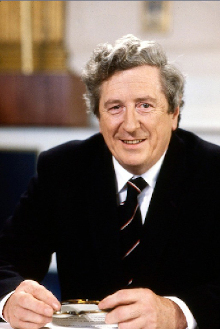
Garret FitzGerald succeeds Charles Haughey to become the eighth Taoiseach of Ireland on June 30, 1981. He serves in the position from June 1981 to March 1982 and December 1982 to March 1987.

FitzGerald is born into a very politically active family in Ballsbridge, Dublin on February 9, 1926, during the infancy of the Irish Free State. His father, Desmond FitzGerald, is the free state’s first Minister for External Affairs. He is educated at the Jesuit Belvedere College, University College Dublin and King’s Inns, Dublin, and qualifies as a barrister. Instead of practicing law, however, in 1959 he becomes an economics lecturer in the department of political economy at University College, Dublin, and a journalist.

FitzGerald joins Fine Gael, attaching himself to the liberal wing of the party. and in 1969 is elected to Dáil Éireann, the lower house of the Oireachtas, the Irish parliament. He later gives up his university lectureship to become Minister for Foreign Affairs in the coalition government of Liam Cosgrave (1973–1977). When the coalition government is resoundingly defeated in the 1977 Irish general election, Cosgrave yields leadership of Fine Gael to FitzGerald. In his new role as Leader of the Opposition and party leader, he proceeds to modernize and strengthen the party at the grass roots. He briefly loses power in 1982 when political instability triggers two snap elections.

By the time of the 1981 Irish general election, Fine Gael has a party machine that can easily match Fianna Fáil. The party wins 65 seats and forms a minority coalition government with the Labour Party and the support of a number of Independent TDs. FitzGerald is elected Taoiseach on June 30, 1981. To the surprise of many FitzGerald excluded Richie Ryan, Richard Burke and Tom O’Donnell, former Fine Gael stalwarts, from the cabinet.

In his prime ministry, FitzGerald pushes for liberalization of Irish laws on divorce, abortion, and contraception and also strives to build bridges to the Protestants in Northern Ireland. In 1985, during his second term, he and British Prime Minister Margaret Thatcher sign the Anglo-Irish (Hillsborough) Agreement, giving Ireland a consultative role in the governing of Northern Ireland. After his party loses in the 1987 Irish general election, he resigns as its leader and subsequently retires in 1992.

On May 5, 2011, it is reported that FitzGerald is seriously ill in a Dublin hospital. Newly elected Fine Gael Taoiseach Enda Kenny sends his regards and calls him an “institution.” On May 6 he is put on a ventilator. On May 19, after suffering from pneumonia, he dies at the Mater Private Hospital in Dublin at the age of 85.

In a statement, Irish President Mary McAleese hails FitzGerald as “a man steeped in the history of the State who constantly strove to make Ireland a better place for all its people.” Taoiseach Enda Kenny pays homage to “a truly remarkable man who made a truly remarkable contribution to Ireland.” Henry Kissinger, the former United States Secretary of State, who serves as an opposite number to FitzGerald in the 1970s, recalls “an intelligent and amusing man who was dedicated to his country.”

FitzGerald’s death occurs on the third day of Queen Elizabeth II‘s state visit to the Republic of Ireland, an event designed to mark the completion of the Northern Ireland peace process that had been “built on the foundations” of FitzGerald’s Anglo-Irish Agreement with Margaret Thatcher in 1985. In a personal message, the Queen offers her sympathies and says she is “saddened” to learn of FitzGerald’s death.

On his visit to Dublin, United States President Barack Obama offers condolences on FitzGerald’s death. He speaks of him as “someone who believed in the power of education; someone who believed in the potential of youth; most of all, someone who believed in the potential of peace and who lived to see that peace realised.”

FitzGerald is buried at Shanganagh Cemetery in Shankill, Dublin.

FitzGerald is the author of a number of books, including Planning in Ireland (1968), Towards a New Ireland (1972), Unequal Partners (1979), All in a Life: An Autobiography (1991), and Reflections on the Irish State (2003).


Leave a comment

Murder of Irish Crime Reporter Veronica Guerin

veronica-guerin-1

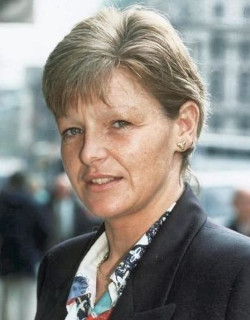
Journalist and crime scene reporter Veronica Guerin is murdered by drug lords in Dublin on June 26, 1996, an event which helped establish the Criminal Assets Bureau (CAB).

Guerin is born in Artane, Dublin on July 5, 1958. She attends Catholic school where she excels in athletics and later studies accountancy at Trinity College, Dublin. She plays for both the Ireland women’s national basketball team and Republic of Ireland women’s national football team, representing the latter in a match against England at Dalymount Park in May 1981.

After she graduates, her father employs her at his company but, following his death three years later, she changes professions and starts a public relations firm in 1983, which she runs for seven years. In 1983–84, she serves as secretary to the Fianna Fáil group at the New Ireland Forum. She serves as Charles Haughey‘s personal assistant, and becomes a family friend, taking holidays with his children. In 1987 she serves as election agent and party treasurer in Dublin North for Seán Haughey.

In 1990, she changes careers again, switching to journalism as a reporter with The Sunday Business Post and Sunday Tribune, working under editor Damien Kiberd. Craving first-hand information, she pursues a story directly to the source with little regard for her personal safety, to engage those she deems central to a story. This allows her to build close relationships with both the legitimate authorities, such as the Garda Síochána, and the criminals, with both sides respecting her diligence by providing highly detailed information. She also reports on Irish Republican Army activities in the Republic of Ireland.

From 1994 onwards, she begins to write about criminals for the Sunday Independent. Using her accountancy knowledge to trace the proceeds of illegal activity, she uses street names or pseudonyms for organized crime figures to avoid Irish libel laws.

When she begins to cover drug dealers, and gains information from convicted drugs criminal John Traynor, she receives numerous death threats. The first violence against her occurs in October 1994, when two shots are fired into her home after her story on murdered crime kingpin Martin Cahill is published. Guerin dismisses the “warning.” The day after writing an article on Gerry “The Monk” Hutch, on January 30, 1995, she answers her doorbell to a man pointing a revolver at her head. The gunman misses and shoots her in the leg. Regardless, she vows to continue her investigations.

On September 13, 1995, convicted criminal John Gilligan, Traynor’s boss, attacks her when she confronts him about his lavish lifestyle with no source of income. He later calls her at home and threatens to kidnap and rape her son and kill her if she writes anything about him.

On the evening of June 25, 1996, Gilligan drug gang members Charles Bowden, Brian Meehan, Kieran ‘Muscles’ Concannon, Peter Mitchell and Paul Ward meet at their distribution premises on the Greenmount Industrial Estate. The following day, while driving her red Opel Calibra, Guerin stops at a red traffic light on the Naas Dual Carriageway near Newlands Cross, on the outskirts of Dublin, unaware she is being followed. She is shot six times, fatally, by one of two men sitting on a motorcycle.

About an hour after Guerin is murdered, a meeting takes place in Moore Street, Dublin, between Bowden, Meehan, and Mitchell. Bowden later denies under oath in court that the purpose of the meeting is the disposal of the weapon but rather that it was an excuse to appear in a public setting to place them away from the incident.

At the time of her murder, Traynor is seeking a High Court order against Guerin to prevent her from publishing a book about his involvement in organised crime. Guerin is killed two days before she is due to speak at a Freedom Forum conference in London.

Guerin’s funeral is attended by Ireland’s Taoiseach John Bruton, and the head of the armed forces. It is covered live by Raidió Teilifís Éireann. On July 4, labour unions across Ireland call for a moment of silence in her memory, which is duly observed by people around the country. Guerin is buried in Dardistown Cemetery, County Dublin.


Leave a comment

Birth of Garech Browne, Irish Arts & Music Patron

garech-domnagh-browne

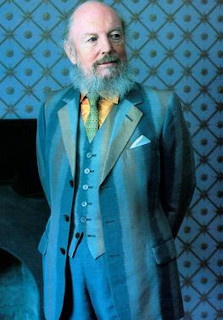
Garech Domnagh Browne, art collector and notable patron of Irish arts and traditional Irish music, is born in Chapelizod, Dublin on June 25, 1939. He is often known by the Irish designation of his name, Garech de Brún, or alternatively Garech a Brún, especially in Ireland.

Browne is the eldest of the three sons of Dominick Browne, 4th Baron Oranmore and Browne and his second wife, Oonagh Guinness, daughter of Arthur Ernest Guinness and wealthy heiress to the Guinness fortune. His father has the rare distinction of sitting in the House of Lords for 72 years, until his death at the age of 100 in August 2002, without ever speaking in a debate.

As both his parents are married three times, Browne has two stepmothers and two stepfathers, as well as a number of older half-siblings. His only full brother, Tara Browne, is a young London socialite whose death at the age of 21 in a car crash in London’s West End helps inspire John Lennon when writing the song “A Day in the Life” with Paul McCartney. Browne is educated at Institut Le Rosey, Switzerland. Although a member of the extended Guinness family, he takes no active part in its brewing business.

When in Ireland, Browne lives at Luggala, set deep in the Wicklow Mountains in County Wicklow. The house, which he inherited from his mother, has been variously described as a castle or hunting lodge of large proportions. He once states he would rather have not been born, calling it “frightful to bring anyone into this world.”

Browne is a leading proponent for the revival and preservation of traditional Irish music through his record label Claddagh Records which he founds with others in 1959. His former home, Woodtown Manor near Dublin, is for many years a welcoming place for Irish poets, writers and musicians. The folk-pop group Clannad makes many recordings of their music there.

Browne is instrumental in the formation of the traditional Irish folk group The Chieftains. In 1962, after setting up Claddagh Records, he asks his friend, the famed uileann piper Paddy Moloney, to form a group for a one-off album. Moloney responds with the first line-up for the band, which goes on to achieve international commercial success.

Browne is interviewed at length for the Grace Notes traditional music programme on RTÉ lyric fm on 18 March 2010. He is a friend and patron of British artist Francis Bacon and in January 2017 is featured in the BBC documentary Francis Bacon: A Brush with Violence.

Garech Browne dies at the age of 78 in London on March 10, 2018. In his will and testament, he bequeaths to the city of Galway the granite remains of a medieval “bow gate.” The location of this gate, which had otherwise gone unmentioned by Browne, remains a mystery for over a year following his death. It is discovered on the grounds of the Luggala estate in 2019. According to a Galway historian, the gate may have formed part of the city’s defences in the 17th century, and was later removed from the city by Browne’s father, when it was probably taken to the Browne family home at Castle MacGarrett, just outside Claremorris in County Mayo. The gate is one of a number of items left to the Irish State by Browne.


Leave a comment

The 31st International Eucharistic Congress Begins in Dublin

eucharistic-congress-closing-ceremony-1932

The 31st International Eucharistic Congress begins in Dublin on June 22, 1932, and runs through June 26. The congress is one of the largest eucharistic congresses of the 20th century and the largest public event to happen in the new Irish Free State. It reinforces the Free State’s image of being a devout Catholic nation. The high point is when over a million people gather for Mass in Phoenix Park.

Ireland is then home to 3,171,697 Catholics. It is selected to host the congress as 1932 is the 1500th anniversary of Saint Patrick‘s arrival. The chosen theme is “The Propagation of the Sainted Eucharist by Irish Missionaries.”

The city of Dublin is decorated with banners, bunting, garlands, and replica round towers. Seven ocean liners moor in the port basins and along Sir John Rogerson’s Quay. Five others anchor around Scotsmans Bay. The liners act as floating hotels and can accommodate from 130 to 1,500 people on each. The Blue Hussars, a ceremonial cavalry unit of the Irish Army formed to escort the President of Ireland on state occasions, first appears in public as an honor guard for the visiting Papal Legate representing Pope Pius XI.

John Charles McQuaid, President of Blackrock College, hosts a large garden party on the grounds of the college to welcome the papal legate, where the hundreds of bishops assembled for the Congress have the opportunity to mingle with a huge gathering of distinguished guests and others who have paid a modest subscription fee.

The final public mass of the congress is held at 1:00 PM on Sunday, June 26 in Phoenix Park at an altar designed by the eminent Irish architect John J. Robinson of Robinson & Keefe Architects, and is celebrated by Michael Joseph Curley, Archbishop of Baltimore. A radio station, known as Radio Athlone, is set up in Athlone to coincide with the Congress. In 1938 it becomes Radio Éireann. The ceremonies include a live radio broadcast by Pope Pius XI from the Vatican. John McCormack, the world-famous Irish tenor, sings César Franck‘s Panis Angelicus at the mass.

Approximately 25% of the population of Ireland attend the mass and afterwards four processions leave the Park to O’Connell Street where approximately 500,000 people gather on O’Connell Bridge for the concluding Benediction given by the Papal Legate, Cardinal Lorenzo Lauri.

The English Catholic writer G. K. Chesterton is also present, and observes, “I confess I was myself enough of an outsider to feel flash through my mind, as the illimitable multitude began to melt away towards the gates and roads and bridges, the instantaneous thought ‘This is Democracy; and everyone is saying there is no such thing.'”

On the other hand, such an overwhelming display of Catholicity only confirms to Protestants in the North the necessity of the border.

(Pictured: the closing ceremony of the Eucharistic Congress that was held in Dublin in June 1932)


Leave a comment

Birth of Irish Journalist Mary Holland

mary-holland

Mary Holland, Irish journalist who specialises in writing about Ireland and in particular Northern Ireland, is born in Dover, Kent, South East England on June 19, 1935. She is raised in Ireland and married a British diplomat, Ronald Higgins. They lived in Indonesia but the marriage is annulled.

Holland originally works in fashion for Vogue magazine and then The Observer. She comes to prominence as one of the first Irish journalists to report on the rise of the Northern Ireland Civil Rights Association and becomes an increasingly prominent commentator on the affairs of the region.

In 1977 Conor Cruise O’Brien is appointed editor-in-chief of The Observer. He is a writer and politician who serves as a government minister in the Irish Parliament, Oireachtas. He is often criticized for his uncompromising opposition to “physical force Irish republicanism,” and his actions to that end during Liam Cosgrave‘s tenure as Taoiseach are labelled as censorship by some. Shortly after starting as editor, he sends a memo to Holland:

“It is a very serious weakness of your coverage of Irish affairs that you are a very poor judge of Irish Catholics. That gifted and talkative community includes some of the most expert conmen and conwomen in the world and I believe you have been conned.”

Holland subsequently leaves The Observer and joins The Irish Times as their Northern Ireland correspondent. In 1988, she witnesses the Provisional Irish Republican Army (IRA) Corporals killings.

Holland’s awards include the Prix Italia award for her television documentary on the Creggan in Derry (Creggan, 1980) and, in 1989, the Christopher Ewart-Biggs Memorial Prize for the promotion of peace and understanding in Ireland. She writes and campaigns for abortion rights in Ireland and admits, in an article on the topic of abortion, that she had had one.

Holland dies from scleroderma on June 7, 2004, just twelve days before her 69th birthday. She is survived by her children with fellow journalist Eamonn McCann. Daughter Kitty is now a journalist for The Irish Times, and son Luke works for the United States-based human rights think tank, the Center for Economic and Social Rights.


Leave a comment

Original “Ulysses” Manuscript Goes on Display in Dublin

CREATOR: gd-jpeg v1.0 (using IJG JPEG v80), quality = 82

The original manuscript of James Joyce‘s Ulysses arrives in its “spiritual home” for the first time on June 13, 2000 when it goes on display at the Chester Beatty Library on the grounds of Dublin Castle in Dublin, the city that inspired the novel.

Spidery sentences penned on yellowing paper and littered with scribbled alterations make up the first draft of what many scholars consider to be the most influential work of fiction of the 20th century. It is the centerpiece of a Joyce exhibition at the Chester Beatty library which runs through the end of September 2000.

Derick Dreher, director of the Rosenbach Museum and Library in Philadelphia, Pennsylvania, where the manuscript has been kept since 1924, says it marks the homecoming of a work which is “quintessentially Irish.” He adds, “People are amazed that it has never been here before. The novel captures the essence of Dublin and yet was composed entirely on foreign soil and then sold in America.”

Dreher says that Joyce’s handwriting is so bad it is hard to make out what is written on many of the pages. Joyce left Dublin with servant girl, Nora Barnacle, in 1904 and writes Ulysses in Trieste, Zürich and Paris between 1914 and 1921. Ultimately, he marries Barnacle in 1931.

The novel traces the wanderings of a young writer, Stephen Dedalus, and advertisement canvasser, Leopold Bloom, on June 16, 1904, the day on which Joyce first goes out with Barnacle. He sells the manuscript to New York City lawyer and art patron, John Quinn, for $12,000 before its publication in 1921.


Leave a comment

President Mary Robinson Meets Queen Elizabeth II

robinson-elizabeth-visit-1993

Mary Robinson, the first female president of Ireland, becomes the first Irish head of state to meet with a British monarch when she visits Queen Elizabeth II on May 27, 1993.

For much of the 20th century, relations between Ireland and its nearest neighbour are cool. Temperatures drop significantly over the economic war in the 1930s and Ireland’s neutrality in World War II. The sense of unfinished business permeates diplomacy during the Troubles, but by 1990 there is significant warmth in trade, tourism, business and even politics.

The newly elected Robinson makes a big play of reaching out to Irish emigrants and sees the opportunity to help Anglo-Irish relations. And so, on her 49th birthday, she pops in for tea with the British head of state.

None of Robinson’s predecessors had set foot in Britain, other than to change planes. Even when President Patrick Hillery is invited to the wedding of Prince Charles and Lady Diana Spencer in 1981, he is advised by the Government of Ireland to decline the invitation.

But Robinson decides she will not be pushed around, and successfully insists she be allowed to join other heads of state at the opening of a European bank in London. Next, she asks the government if she might be able to travel to the University of Cambridge to deliver a speech and receive an honorary degree. It is only after he reluctantly agrees that Taoiseach Charlie Haughey realises that the Chancellor of the University is the Queen’s husband, Prince Philip.

Robinson meets the royal, the world remains on its axis, and a precedent is set. “Partly because I’ve never been fazed by royalty of any kind, least of all the British royal family, I felt entirely relaxed,” she recalls in her authorised biography.

Robinson next meets the prince at a memorial service for the victims of an Irish Republican Army (IRA) bombing in Warrington, where she is applauded as she leaves the church. Soon, she is meeting royals all over the place, at rugby matches and memorial ceremonies, and in a television interview says that she would like to meet the Queen.

By February 1993, Haughey has been replaced by Albert Reynolds and he grants permission for Robinson to travel for a strictly personal visit. The visit does not happen in a vacuum – Reynolds is in secret discussions with Republicans that would end in the IRA ceasefire – and the Taoiseach is keen not to give any suggestion that this is a State visit, which would require a reciprocal visit.

Robinson’s party arrives at Buckingham Palace at 4:55 PM on May 27 where they are greeted by the Queen’s private secretary, Sir Robert Fellowes. Robinson’s staff pushes the Palace to allow press photographers, reckoning that a historic moment should be captured.

Robinson, in an Ib Jorgensen fuchsia suit, later donated to Madame Tussauds waxworks, and her husband Nick are brought up to the first floor to meet the Queen for a friendly and informal tea party that lasts 30 minutes. They sip a blend of Chinese and India tea in Minton cups, exchange signed photographs of themselves, and discuss the prospects for peace. The President also hands over an extra present of a hand-turned wooden cup from Spiddal.

Afterwards, the ground-breaking photographs are taken and published all over the world, including the front page of the Irish Independent. “Palace Talks Prepare Way for State Visit” runs the lead headline over a piece by Bernard Purcell and Gene McKenna. They go on, reporting the President as saying the visit is “symbolic of the maturing relationship between Ireland and Britain.”

In 1996 President Robinson’s 15th visit to Britain is upgraded to an Official Visit, and she leaves office the following year.

Robinson’s successor, Mary McAleese, takes things further, and meets Queen Elizabeth II several times in London and at World War I commemorations on the continent. In May 2011 McAleese welcomes Queen Elizabeth II on her four-day State Visit to Ireland and in April 2014 President Michael D. Higgins makes the first State Visit to the UK.

(Pictured: President Mary Robinson with the Queen outside Buckingham Palace in 1993. Photo: Eamonn Farrell/Photocall Ireland | “Flashback 1993: The first Irish head of state meeting with a British monarch” by Ger Siggins, Independent.ie, May 22, 2016)


Leave a comment

Clare O’Leary Climbs Mount Everest

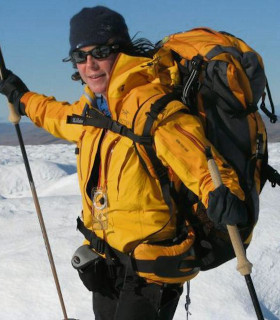
clare-o-learyClare O’Leary, Irish gastroenterologist, mountain climber and adventurer, becomes the first Irishwoman to successfully climb Mount Everest on May 18, 2004. She is accompanied by veteran mountaineer, Pat Falvey, who also sets a record by becoming the first Irishman to climb Everest from both sides.

O’Leary is born in 1972. She develops an interest in medicine, and cancer in particular, when her uncle dies from lung cancer during her childhood. After graduating from University College Cork, she spends over ten years training and working at the Cork University Hospital.

O’Leary makes her name in mountaineering in 2004, when she becomes the first Irish woman to reach the summit of Mount Everest, having failed on her first attempt in 2003 due to gastroenteritis. She climbs as a member of the Wyeth Irish Everest Expedition, led by Falvey. She also becomes the first Irish woman to ascend the Himalayan peak Ama Dablam and to climb the Seven Summits — the highest mountains on each continent. In 2008, she joins the Beyond Endurance expedition led by Falvey to the South Pole, making her the first woman to successfully ski to the South Pole.

In 2012, O’Leary and Mike O’Shea set out on an ongoing series of expeditions that they call the Ice Project. Their aim is to cross all of the world’s largest ice caps. Some of these expeditions include crossings of the Northern Patagonian Ice Field, the Greenland ice sheet, and Lake Baikal. In 2014, they attempt to ski to the North Pole after their first attempt in 2012 is cancelled due to a logistics problem, hoping to be the first Irish people to reach the North Pole. This attempt also has to be abandoned after they are injured in a sled accident.

In 2013, the railway path between Bandon and Innishannon in County Cork is named the Dr. Clare O’Leary Walk to commemorate her achievements. In November 2018, she is awarded an honorary doctorate by National University of Ireland Galway.

O’Leary lives in Clonmel, and is in a relationship with O’Shea. She currently works as a consultant gastroenterologist and general physician at South Tipperary General Hospital. She is also a patron of the Cork University Hospital Charity.


Leave a comment

The Dublin and Monaghan Bombings

dublin-and-monaghan-bombings

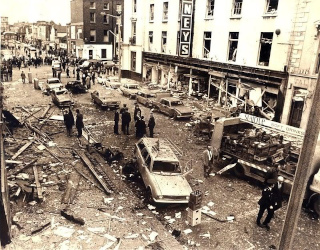
The Dublin and Monaghan bombings of May 17, 1974 are a series of co-ordinated bombings in Dublin and Monaghan, Ireland. Three car bombs explode in Dublin at Parnell Street, Talbot Street and South Leinster Street during the evening rush hour and a fourth car bomb explodes in Monaghan, just south of the border with Northern Ireland, almost ninety minutes later. The bombs kill 33 civilians and a full-term unborn child, and injure almost 300. The bombings are the deadliest attack of the conflict known as the Troubles, and the deadliest attack in the Republic of Ireland‘s history. Most of the victims are young women, although the ages of the dead range from pre-born up to 80 years.

The Ulster Volunteer Force (UVF), an Ulster loyalist paramilitary group from Northern Ireland, claims responsibility for the bombings in 1993. It has launched a number of attacks in the Republic since 1969. There are allegations taken seriously by inquiries that elements of the British state security forces help the UVF carry out the bombings, including members of the Glenanne gang. Some of these allegations have come from former members of the security forces. The Irish parliament‘s Joint Committee on Justices calls the attacks an act of international terrorism involving British state forces. The month before the bombings, the British government lifts the UVF’s status as a proscribed organisation.

The bombings happen during the Ulster Workers’ Council strike. This is a general strike called by hardline loyalists and unionists in Northern Ireland who oppose the Sunningdale Agreement. Specifically, they oppose the sharing of political power with Irish nationalists and the proposed role for the Republic in the governance of Northern Ireland. The Republic’s government had helped bring about the Agreement. The strike brings down the Agreement and the Northern Ireland Assembly on May 28.

No one has ever been charged with the bombings. A campaign by the victims’ families leads to an Irish government inquiry under Justice Henry Barron. His 2003 report criticises the Garda Síochána‘s investigation and says the investigators stopped their work prematurely. It also criticises the Fine Gael/Labour Party government of the time for its inaction and lack of interest in the bombings. The report says it is likely that British security force personnel or MI5 intelligence is involved but has insufficient evidence of higher-level involvement. However, the inquiry is hindered by the British government’s refusal to release key documents. The victims’ families and others are continuing to campaign to this day for the British government to release these documents.

(Pictured: Some of the damage caused by the second car bomb on Talbot Street, Dublin)