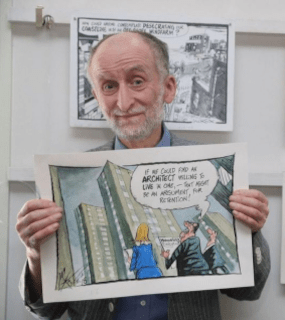
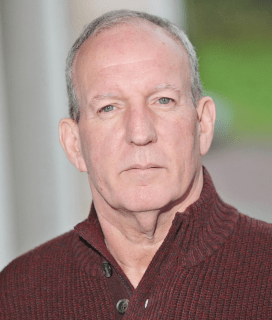
Knox trains as an architect at Edinburgh College of Art in Scotland from 1963 to 1967 and Heriot-Watt University in Edinburgh from 1967 to 1968 and works as an architect before establishing himself as a cartoonist. He works in animation from 1970 to 1975 for Halas & Batchelor in London, Potterton Productions in Montreal, and Kotopoulis Productions in Toronto. He then joins Red Weekly and Socialist Challenge as a political cartoonist, as well as contributing to various children’s comics for IPC Media from 1975 to 1988.
Knox signs much of his political work “Blotski,” and he and Republican News cartoonist Brian Moore, better known as “Cormac,” work together as “Kormski,” drawing the anti-clerical strip “Dog Collars” for Fortnight magazine. Since 1989 he has been the editorial cartoonist for The Irish News, a nationalist newspaper based in Belfast. Since 1996 he has contributed the “As I See It” feature to Hearts and Minds on BBC2 Northern Ireland. From 1997 to 1998 he is political cartoonist for Ireland on Sunday.
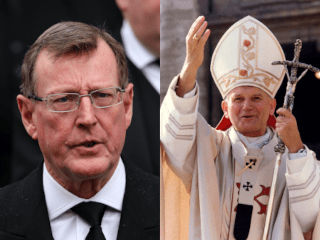
David Trimble becomes the first Ulster Unionist leader to meet a Pope when his historic meeting with John Paul II takes place in Rome on April 21, 1999. The meeting is widely welcomed as a sign that old prejudices are ending but Trimble is hotly criticised by both Protestants and Catholics in his Upper Bann constituency.
The First Minister is one of 54 Nobel Peace Prizelaureates who meets Pope John Paul II briefly at the Vatican, as part of a two-day trip organised by former Russian leader Mikhail Gorbachev. The Nobel Prize winners meet the Pope as a group and are then introduced and shake hands individually. There is a group photograph but no filming of the event. Careful stage-management ensures there are no public photographs of the two men close together.
A spokesman for Trimble says the UUP leader told the Pope he hopes this will be the year when peace will be secured in Northern Ireland. The Pope recalls his visit to Ireland and says murder cannot be condoned or called by another name.
Although the meeting is welcomed on both sides of the North divide, it does little to enhance Trimble’s standing in Upper Bann, particularly in troubled Portadown. In Portadown’s loyalist estates, there is open hostility toward Trimble. Many residents accusing their MP of “putting his personal status above the interests of his constituents.” The response is typified by one angry woman who says, “The loyalist people of this town and Drumcree, put David Trimble into office. Now he has turned his back on us. That’s a fatal mistake, this town and Drumcree will now destroy Trimble.”
“It’s unbelievable that this meeting is actually taking place,” says Orangeman Ivor Young. “It totally contradicts the oath that David Trimble took when he joined the Orange Order. We all knew Trimble was a traitor, this latest escapade puts the final nail in his political coffin here in Upper Bann. There is no way that he will ever be elected here again.”
Trimble also comes in for further criticism from Portadown Orange District, whose Drumcree protest has continued for the past 288 days. David Jones, the District’s press officer says that the people of Portadown once again see their local MP on “a world stage,” instead of being involved locally. “There are a lot of people around Portadown who aren’t very impressed that David Trimble has gone off to meet the Pope and hasn’t got more involved in trying to get the situation here solved,” says Jones.
On Portadown’s Garvaghy Road, Catholics are also critical of Trimble’s visit to Rome. “It’s amazing how he can travel to Rome to meet and talk to strangers,” says one nationalist resident, “yet he can’t be bothered to travel less than 30 miles to meet us, to talk about the serious issues that confront this community. After all we are as much his constituents as are the loyalists in this town.”
The meeting is the first time that the First Minister of Northern Ireland or the head of the Ulster Unionist Party has met the Pope in Rome. It also represents a rare appearance by an Orangeman at the heart of the Roman Catholic Church. Trimble and his entourage meet the Pope in the sumptuous surroundings of the Consistory Hall, the same room where the Cardinals of the Church gather to advise the Pope.
Earlier in the morning Trimble says in an interview with the Vatican radio that besides giving an update on developments in Northern Ireland, he wishes to “express to his Holiness the Pope that he and the Church will do what it can to persuade the paramilitaries to commit themselves irrevocably to peaceful means.”
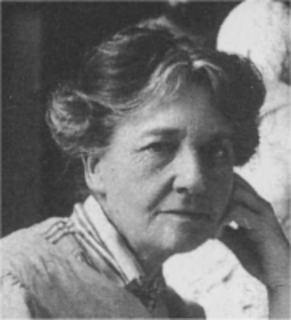
Praeger is born on April 15, 1867, in Holywood, County Down. She is the daughter of Willem Emilius Praeger, a Dutch linen merchant who had settled in Ireland in 1860, and Marie Patterson. She has five brothers of who Robert goes on to become a distinguished naturalist. Within months of her birth the family moves to Woodburn House, Croft Road, Holywood, where they have as a neighbour Rev. Charles McElester, a Non-subscribing Presbyterian minister who runs a day school in his church. She both attends this school, and later teaches there. She receives her secondary education at Sullivan Upper School, Holywood, the Belfast School of Art, and the Slade School of Fine Art, London. Before returning to Ireland to open a studio in Belfast and then in Holywood, she studies art in Paris.
Praeger writes and illustrates children’s books but achieves fame with her sculpture The Philosopher which is exhibited at the Royal Academy of Arts in London, bought by an American collector, and is now on display in the Colorado Springs Museum and Art Gallery. She mostly works in plaster, but also uses stone, marble, terracotta and bronze, and her work includes relief panels, memorial plaques and stones. She exhibits in London and Paris, at the Royal Hibernian Academy, as well as at the Irish Decorative Art Association Exhibitions. She is a member of the Guild of Irish Art Workers.
Among Praeger’s other works are The Wai, Johnny the Jig, These Little Ones, St. Brigid of Kildare and The Fairy Fountain. For the Causeway School near Bushmills, County Antrim, she carves Fionnula the Daughter of Lir in stone. She models a heraldic figure for the Northern Bank in Donegall Square West, Belfast, and bronze plaques for the front door of the Carnegie library, Falls Road, Belfast, as well as the angels on Andrews Memorial Hall in Comber, County Down, and some work in St. Anne’s Cathedral, Belfast. She illustrates three books for her brother, Robert Praeger. She is President of the Royal Ulster Academy, an honorary Fellow of the Royal Hibernian Academy, and she receives an honorary doctorate from Queen’s University, Belfast. In 1939 she is awarded the MBE.
Praeger maintains her studio in Hibernian Street, Holywood, up until 1952, at the age of 85. She dies at Rock Cottage, County Down, on April 17, 1954. She is buried in the Priory Cemetery, Holywood. Her work in included in the collections of the Ulster Museum and the National Gallery of Ireland, and some private collections around the world
(From: “Sophia Rosamond Praeger (1867 – 1954): Sculptor” by Kate Newmann and Richard Froggatt, Dictionary of Ulster Biography, http://www.newulsterbiography.co.uk)
Hopkirk is raised as a Catholic, and educated at Clongowes Wood College in County Kildare from 1945 to 1949 before attending Trinity College, Dublin until 1953. His academic career, however, is held back by his dyslexia. He first learns the basics of car control at the age of nine, when a local clergyman leaves him his invalid carriage in his will. He later graduates to a motorcycle with a sidecar, which is added at the insistence of his father who feels it would be safer, and upon attending Trinity to study engineering, acquires an Austin 7 “Chummy” Tourer which he uses to make his rally debut. Now bitten by the car bug, he drops out of university to start working for Dublin‘s Volkswagen assembler’s retail operation in Ballsbridge, where he purchases a string of used Volkswagen Beetles to enter in competitions.
Hopkirk’s first win comes in 1953 at the Cairncastle hillclimb at the wheel of a VW Beetle. He is offered a free Beetle for the 1953 Circuit of Ireland by Isaac Agnew of Belfast. It is the first of many Circuit entries. The following year he leads the Circuit on the first day of the competition.
Hopkirk starts his winning career in professional racing and rally driving in 1955, taking a class win at that year’s Circuit of Ireland Rally, and clinching his first Hewison Trophy, awarded to the most successful Irish rally driver of the year. He goes on to win the Trophy for three consecutive years. By this time he has graduated to a Triumph TR2. His success in the Triumph is noticed by the Standard Motor Company, who offers him his first factory drive in a Standard Ten at the 1956 RAC Rally in March of that year, where he takes the early lead before suffering problems later on. Two months later he takes a Standard Eight to third place in the Tulip Rally in the Netherlands, his first trip outside of Britain and Ireland. However he loses his drive with Standard in 1958, after overdriving his car at the Alpine Rally in an effort to make up time lost due to a puncture on the Stelvio Pass, damaging the engine and forcing him to retire from the competition.
In 1959 Hopkirk joins the Rootes Group as a works driver, initially picking up a drive in a Hillman Husky at the Safari Rally after reigning F1 World Champion Mike Hawthorn, who is originally meant to drive the car, is killed in a road accident. Later that year he places third overall and takes a class win at the Alpine Rally in a Sunbeam Rapier, and he leads the 1960 Safari Rally until his Rapier suffers a differential failure. He takes two Circuit of Ireland Rally wins in 1961 and 1962 and another third at the Alpine Rally in 1961. While at Rootes he also takes part in circuit racing, winning his class in a Rapier in the touring car race supporting the 1960 British Grand Prix.
Hopkirk finishes third at the 1962 Monte Carlo Rally in a Sunbeam Rapier. However, he becomes frustrated by the Rapier’s lack of reliability, culminating in all three works cars blowing their engines within the space of a kilometre at that year’s Acropolis Rally. After being impressed by a test drive of Pat Moss‘ Austin-Healey 3000, he sets his mind on a move, joining the British Motor Corporation and making his debut in a 3000 at the Liège-Sofia-Liège rally in August. In his second competition with the 3000, the RAC Rally, he finishes in second despite having to complete two miles of a special stage with a shredded tyre after a puncture. He first competes in a Mini at the 1963 Monte Carlo Rally, where he finishes sixth. That season he also finishes second on the Tulip Rally, sixth on Liège-Sofia-Liège, and fourth on the RAC Rally. In addition he takes the Mini to third place in the Tour de France Automobile‘s Touring Category behind two 3.8-litre Jaguars, winning his class and the overall on handicap.
Hopkirk also travels to Australia during his career to drive for the BMC Works Team in the annual Bathurst 500 race for standard production cars at the Mount Panorama Circuit. He drives at Bathurst in a Morris Cooper S from 1965 to 1967, obtaining a best result of 6th outright and 3rd in class in the 1965 Armstrong 500 when paired with Mäkinen. In 1965, he wins a Coupe d’Argent at the Alpine Rally. He wins the 1965 and 1967 Circuit of Ireland Rally, the 1966 and 1967 Alpine Rally, and the 1967 Rally Acropolis.
Hopkirk is elected as a life member of the British Racing Drivers’ Club in 1967, and is also president of the Historic Rally Car Register, and a patron of disability charity WheelPower.
In 1968 Hopkirk finishes second at the second edition of the Rally de Portugal. The following year, he finishes second in the Circuit of Ireland Rally and the RAC Rally, then fourth at the 1970 London to Mexico World Cup Rally with teammates Tom Nash and Neville Johnston in a Triumph 2.5 PI. He elects to step away from full-time competition at the end of that year, coinciding with British Leyland head Lord Stokes‘ decision to close down BL’s competition department.
In 1977, with co-driver Taylor Mike, Hopkirk takes part once again in a revived edition of the London-Sydney Marathon, the Singapore Airlines London to Sydney Rally, this time driving a Citroën CX 2400, taking third place overall in front of another CX driven by Claude Laurent and Jean-Claude Ogier.
In 1982, Hopkirk wins the RAC Golden 50, a historical anniversary race celebrating the 50th RAC Rally, with co-driver Brian Culcheth in the Mini Cooper with which Timo Mäkinen had won the 1965 Monte Carlo Rally. In 1990, he wins the Pirelli Classic Marathon with co-driver Alec Poole. In 1994, he enters the Monte Carlo Rally again, driving a current Mini Cooper, very similar to the original car, but now produced by Rover Group. He and his co-pilot Ron Crellin finish the race in 60th place against much more modern and powerful machines.
In 2010, Hopkirk is among the first four inductees into the Rally Hall of Fame, along with Timo Mäkinen, Rauno Aaltonen and Erik Carlsson.
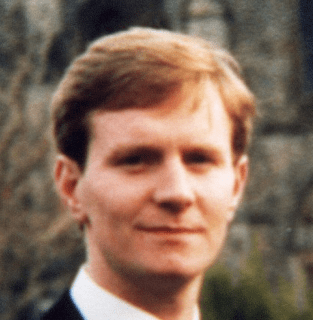
Lynagh joins the Provisional Irish Republican Army in the early 1970s. In December 1973 he is badly injured in a premature bomb explosion, arrested, and spends five years in the Maze Prison. While imprisoned, he studies and becomes a great admirer of Mao Zedong. After his release from prison in 1979 he is elected as a Sinn Féincouncillor for Monaghan and holds this position until he is killed.
After his release from prison Lynagh becomes active in the IRA again, active with the Provisional IRA East Tyrone Brigade. He quickly becomes a unit commander and gradually builds up his ruthless reputation. After a series of Ulster loyalist attacks against Irish nationalist politicians in late 1980 and early 1981, he is suspected of involvement in an attack on the Stronge estate near Middletown, County Armagh, where the IRA murdered the retired Ulster Unionist PartyStormont speaker, Sir Norman Stronge, and his son James, a Royal Ulster Constabulary (RUC) officer, before burning down their home, Tynan Abbey, and shooting their way out through a police cordon.
Lynagh is known as “The Executioner” by the Royal Ulster Constabulary. He is arrested and interrogated many times by the Garda Síochána in County Monaghan but is never charged. During this period, he devises a Maoist military strategy, aimed at escalating the war against the British state in Northern Ireland. The plan envisages the destruction of police stations and British Army military bases in parts of Northern Ireland to create “liberated” areas that will be thereby rendered under the domination of the IRA. In 1984 he starts co-operating with Pádraig McKearney who shares his views. The strategy begins materialising with the destruction of an RUC police station in Ballygawley in December 1985 which kills two police officers, and in The Birches in August 1986.
Lynagh is killed by the British Army’s Special Air Service on May 8, 1987 during an attack on the isolated rural part-time police station at the small County Armagh village of Loughgall, the third such attack that he had taken part in. During the incident the IRA detonates a 200-lb. bomb, and attacks the station with automatic weapons, and in the process are ambushed by the British Army which is lying in wait for them, having been forewarned of the IRA operation. All eight of the IRA attacking force are killed in the exchange of fire, the British forces involved incurring no fatalities. The incident subsequently becomes known as the Loughgall ambush.
At the time of his death, Lynagh is living in a flat on Dublin Street in Monaghan. He is buried at St. Joseph’s Cemetery (Latlurcan Cemetery) in Monaghan. During his funeral, as his coffin is carried through the village of Emyvale, Irish Garda Síochána officers are attacked by the crowd of mourners after they pursue three gunmen who had fired a volley over his coffin.
The family is originally from the Marrowbone area, on the Oldpark Road in North Belfast. The family has to move when Storey is very young due to Ulster loyalist attacks on the district, moving to Manor Street, an interface area also in North Belfast. His uncle is boxing trainer Gerry Storey and his father, also called Bobby, is involved in the defence of the area in the 1970s when Catholics are threatened by loyalists.
Storey is one of four children. He has two brothers, Seamus and Brian, and a sister Geraldine. Seamus and his father are arrested after a raid on their home which uncovers a rifle and a pistol. While his father is later released, Seamus is charged. He escapes from Crumlin Road Prison with eight other prisoners in 1971, and they are dubbed the Crumlin Kangaroos.
On his mother Peggy’s side of the family there is also a history of republicanism, but Storey says the dominant influences on him are the events happening around him. These include the McGurk’s Bar bombing in the New Lodge, some of those killed being people who knew his family, and also Bloody Sunday. This then leads to his attempts to join the IRA. He leaves school at fifteen and goes to work with his father selling fruit. At sixteen, he becomes a member of the IRA.
On April 11, 1973, his seventeenth birthday, Storey is interned and held at Long Kesh internment camp. He had been arrested 20 times prior to this but was too young for internment. In October 1974, he takes part in the protest at Long Kesh against living conditions where internees set fire to the “cages” in which they are being held. He is released from internment in May 1975. He is arrested on suspicion of a bombing at the Skyways Hotel in January 1976 and a kidnapping and murder in the Andersonstown district of Belfast in March 1976, but is acquitted by the judge at his trial. He is arrested leaving the courthouse and charged with a shooting-related incident. He is released after the case cannot be proven, only to be charged with shooting two soldiers in Turf Lodge. Those charges are dropped in December 1977. The same month he is arrested for the murder of a soldier in Turf Lodge, but the charges are again dropped. In 1978 he is charged in relation to the wounding of a soldier in Lenadoon, but is acquitted at trial due to errors in police procedure.
On December 14, 1979, he is arrested in Holland Park, London, with three other IRA volunteers including Gerard Tuite, and charged with conspiring to hijack a helicopter to help Brian Keenan escape from Brixton Prison. Tuite escapes from the same prison prior to the trial, and the other two IRA volunteers are convicted, but Storey is acquitted at the Old Bailey in April 1981. That August, after a soldier is shot, he is arrested in possession of a rifle and is convicted for the first time, being sentenced to eighteen years’ imprisonment.
Storey is one of the leaders of the Maze Prison escape in 1983, when 38 republican prisoners break out of the H-Blocks, the largest prison escape in British penal history and the largest peacetime prison escape in Europe. He is recaptured within an hour and sentenced to an additional seven years’ imprisonment. Released in 1994, he is again arrested in 1996 and charged with having personal information about a British Army soldier, and Brian Hutton, the Lord Chief Justice of Northern Ireland. At his trial at Crumlin Road Courthouse in July 1998, he is acquitted after his defence proves the personal information had previously been published in books and newspapers.
Having spent over twenty years in prison, much of it on remand, Storey’s final release is in 1998, and he again becomes involved in developing republican politics and strategy, eventually becoming the northern chairman of Sinn Féin.
On September 9, 2015, Storey is arrested and held for two days in connection with the killing of former IRA volunteer Kevin McGuigan the previous month. He is subsequently released without any charges, and his solicitor John Finucane states Storey will be suing for unlawful arrest.
Storey dies in England on June 21, 2020, following an unsuccessful lung transplant surgery. Sinn Féin president Mary Lou McDonald describes him as “a great republican” in her tribute. His funeral procession in Belfast on June 30 is attended by over 1,500 people including McDonald, deputy First MinisterMichelle O’Neill, and former Sinn Féin president Gerry Adams, but is criticised for breaking social distancing rules implemented in response to the COVID-19 pandemic which, at the time operating in Northern Ireland, limited funeral numbers to no more than 30 mourners.
In the 2017 film Maze, dramatising the 1983 prison break, directed by Stephen Burke, Storey is portrayed by Irish actor Cillian O’Sullivan.
Russell is the second son of Thomas Russell and Mary Armstrong. His father, the son of a small farmer, becomes an employee of Thomas Bell and Co., a prosperous firm of linen drapers. The family relocates to Dublin, where his father has a new offer of employment, when he is eleven years old.
Following his time at the Metropolitan School of Art, Russell becomes an accounts clerk in a drapery store but leaves in 1897 to organize agricultural cooperatives. Eventually he becomes editor of the periodicals Irish Homestead (1905–23) and The Irish Statesman (1923–30). In 1894 he publishes the first of many books of verse, Homeward: Songs by the Way, which establishes him in what is known as the Irish Literary Revival. His first volume of Collected Poems appears in 1913 and a second in 1926. He maintains a lifelong interest in theosophy, the origins of religion, and mystical experience. Candle of Vision: Autobiography of a Mystic (1918) is the best guide to his religious beliefs.
At the turn of the 20th century, Russell is considered by many to be the equal of Yeats, but he does not continue to grow and develop as Yeats does. He is prolific and versatile, but many critics find his poetry facile, vague, and monotonous, with “rather too much of the Celtic Twilight” in it.
Russell, who had become increasingly unhappy in the Irish Free State which, according to Yeats, he called “a country given over to the Devil,” moves to England soon after his wife’s death in 1932. Despite his failing health he goes on a final lecture tour in the United States but returns home utterly exhausted. He dies of cancer in Bournemouth, England, on July 17, 1935. His body is brought back to Ireland, and he is interred in Mount Jerome Cemetery, Dublin.
The Provisional IRA had been attacking British Army patrols and convoys with land mines and roadside bombs since the beginning of its campaign in the early 1970s. The deadliest attack was the Warrenpoint ambush of August 1979, when 18 soldiers were killed by two large roadside bombs near Warrenpoint, County Down. In July 1983, four soldiers of the local Ulster Defence Regiment (UDR) were killed when their vehicle struck an IRA land mine near Ballygawley, County Tyrone. It was the UDR’s biggest loss of life up until then.
On the morning of April 9, 1990, two UDR armoured landrovers are traveling from Abercorn Barracks to Downpatrick. An IRA unit has planted a 1,000-pound improvised land mine in a culvert under the Ballydugan Road, just outside the town. The unit waits in woodland overlooking the road, about 350 feet away. As the landrovers drive over the culvert, the IRA detonates the bomb by command wire. The huge blast blows the vehicle into a field and gouges a large crater in the road, 50 feet wide and 15 feet deep. A witness describes “a scene of utter carnage.” Four soldiers are killed: Michael Adams (23), John Birch (28), John Bradley (25), and Steven Smart (23). It is the biggest loss of life suffered by the UDR since the 1983 Ballygawley land mine attack. The soldiers in the other landrover suffer severe shock and are airlifted to hospital. According to police, a civilian driver also suffers shock, and another receives cuts and bruises.
The bombers escape on a motorcycle which had been stolen in Newry a week earlier, and is later found abandoned in Downpatrick. The IRA issues a statement saying the attack was carried out by members of its South Down Brigade.
A 23 year-old man is later sentenced to 15 years in prison for the attack. He had driven a scout car for the bombers when it was planted the day before the attack.
There are no reports of any casualties and army technical experts are at the scene shortly after the blast.
Gregory Campbell, security spokesman for the anti-agreement Democratic Unionist Party, visits the scene and says the blast bears similarities to an incident at Ballykelly, twelve miles away, in February 2000. He adds, “In Ballykelly there was a breach of the security fence, with the bomb planted near sleeping quarters. Here it was beside a former guardhouse. It appears to have been outside the perimeter.”
Campbell also claims that in recent months the base’s watchtowers had not been manned. “I get the impression that security has become a bit lax since the ceasefire,” he says. “This is confirmation of what we all knew was coming, a determined effort by paramilitary groups.”
Campbell continues, “When you look at the past few months it is very obvious that these groups – if they are splinter groups, if they are people who are leaving the Provisional IRA to join these dissidents or if the Provisional IRA is giving a wink and a nod to these dissidents – it is as plain as the nose on your face these people are developing terrorist capabilities.”
“When there is a device at a security cordon and another device inside another camp 12 miles down the road from here it is very obvious they are working towards a major attack with loss of life. Within a few months we are going to be faced with a major onslaught,” Campbell adds.
Meanwhile, Ulster Unionist Party (UUP) leader David Trimble, speaking in advance of a House of Commons debate warning of damaging consequences if the government presses on with moves to rename the Royal Ulster Constabulary, says it appears that the blast at the barracks in Derry is part of a wider campaign of low level terrorist activity by dissident republicans. Speaking on BBC Radio Trimble says, “There have been a number of incidents recently which have been attributed to dissident republicans. This may be another one. And there is reason to believe that dissident republicans are trying to launch a sustained campaign.”
Reid is the son of the Rev. Thomas Mayne Reid, a Presbyterian minister and later a senior clerk of the General Assembly of the Presbyterian Church in Ireland, and his wife, a daughter of the Rev. Samuel Rutherford. Educated at the Royal Belfast Academical Institution, he rebels against his father’s plans for him and decides not to pursue a career in the church. He briefly runs a school at Ballyroney before emigrating to the United States in 1839. Arriving in New Orleans, Louisiana, he finds a job as a corn factor’s clerk in the corn market. After six months he leaves because he refuses to whip slaves. Travelling across America, he works as a teacher, a clerk and an Indian-fighter, and anonymously publishes his first poem in August 1843. Later that year he meets Edgar Allan Poe in Philadelphia and the two become close friends. Poe later admits that Reid was ‘a colossal but most picturesque liar,’ but was impressed by his brilliant story-telling abilities.
With the outbreak of the Mexican-American War in 1846 Reid enlists in the 1st New York Infantry Regiment and is commissioned second lieutenant. Contributing a series of reports from the front under the pseudonym ‘Ecolier,’ he performs with great bravery in the Battle of Chapultepac on September 13, 1847. Wounded during the battle, he is promoted to first lieutenant three days later. Following his discharge from the army in 1848 he claims to have reached the rank of captain, but this is another of his inventions.
Reid’s first play, Love’s Martyr, is staged at the Walnut Street Theatre, Philadelphia, for five nights in October 1848, and the following year he publishes an embellished account of his experiences in Mexico entitled War Life. All of his works are published under the name ‘Captain Mayne Reid.’ In July 1849 he sails to England with a group of Hungarian radicals but decides against accompanying them to the Continent. Returning briefly to Ireland, he settles in London in 1850 and writes a novel, The Rifle Rangers. It is an immediate success and is followed quickly by The Scalp Hunters (1851), The Desert Home (1852), and The Boy Hunters (1853). While in England in 1851 he meets and falls in love with a 13-year-old girl, Elizabeth Hyde, daughter of his publisher, G. W. Hyde, an English aristocrat. When he discovers her age, he tells her that she is ‘getting old enough to have a lover, and you must have me.’ Two years later he continues with his suit, and this time is successful as they marry in 1853. He is immensely proud of his young bride, and later writes a semi-autobiographical novel The Child Wife (1868), based on their relationship.
Establishing a reputation as one of the most popular novelists of his generation, Reid does much to enhance the romantic image of the American West. His internationally successful books include The White Chief (1855), Bush Boys (1856), Oceola (1859), and The Headless Horseman (1865), and his novel about miscegenation, The Quadroon (1856), is later plagiarised by Dion Boucicault for The Octoroon (1859). A champion croquet player, he writes a treatise on the subject in 1863.
Disaster strikes in November 1866 when Reid is declared bankrupt. He had squandered all his money on the construction of ‘The Ranche,’ a Mexican-style hacienda in England. To raise money, he returns to the United States and embarks on a successful lecturing tour. Settling at Newport, Rhode Island, he writes another novel, The Helpless Hand (1868), which is a huge success and alleviates some of his difficulties. His wife hates America, however, and after he is briefly hospitalised in 1870, they decide to return to England.
Ill health, artistic doubts, and financial insecurity plagued Reid’s final years. Diagnosed with acute depression, he is unable to recapture his earlier audience and, despite a pension from the U.S. government, he struggles for money. He dies at Ross in Herefordshire on October 22, 1883, and is buried at Kensal Green Cemetery in London.
Although not regarded as an important novelist, Reid none the less has a significant influence on subsequent writers. The young Vladimir Nabokov is deeply impressed by his adventure stories, and one of his own first works is a poetic recreation of The Headless Horseman in French alexandrine. Both Robert Louis Stevenson and Arthur Conan Doyle are admirers, and politicians as diverse as Theodore Roosevelt and Leon Trotsky also make reference to his varied output. In total, Reid publishes over sixty novels, which are printed in ten languages.