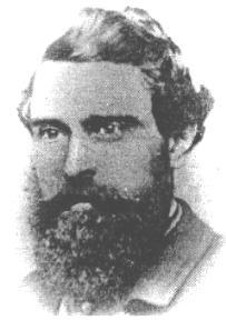
Charles Stewart Parnell turns the first sod for the construction of the West Clare Railway (WCR) on January 27, 1885, although actual work on the line had begun in November 1884. The line is opened on July 2, 1887.
At the end of the Great Famine there is a new growth in local businesses. The British Government determines that an improved railway system is necessary to aid in the recovery of the West of Ireland. The West Clare Railway and the South Clare Railway are built by separate companies, but in practice the West Clare Railway operates the entire line. The lines meet at Milltown Malbay. In due course the entire line becomes known as the West Clare Railway.
The West Clare Railway originally operates in County Clare between 1887 and 1961. The 3-foot narrow gauge railway runs from the county town of Ennis, via numerous stopping points along the West Clare coast to two termini, at Kilrush and Kilkee, with the routes diverging at Moyasta Junction. The system is the last operating narrow gauge passenger system in Ireland and connects with the mainline rail system at Ennis, where a station still stands today for bus and train services to Limerick and Galway. Intermediate stops include Ennistymon, Lahinch and Milltown Malbay.
On 27 September 27, 1960, CIÉ gives notice of its intending closure with effect from February 1, 1961, despite the dieselisation of passenger services in 1952 and freight in 1953. CIÉ says that the West Clare is losing £23,000 per year, despite the considerable traffic it handles. In December 1960 it is announced that the line would close completely on January 1, 1961 although actual closure does not take place until January 31, 1961. CIÉ begins dismantling the line the following day.
A preservation society maintains a railway museum at Moyasta Junction station, and successfully re-opens a section of the railway as a passenger carrying heritage line with diesel traction in the 1990s, and with steam motive power from 2009.
Born into an Irish Republican family in the Kashmir area of Belfast, Savage is educated at St. Gall’s Primary School, and at St. Paul’s Secondary School in the Falls Road area of West Belfast.
In 1987 Savage and Daniel McCann shoot and kill two Royal Ulster Constabulary officers at Belfast docks. He is also the leader of an IRA attack that places a car bomb beneath the car of John McMichael, an Ulster loyalist paramilitary, in Lisburn in December 1987. McMichael dies of his injuries two hours after the blast.
In March 1988, Savage and McCann, along with another Provisional IRA member, Mairéad Farrell, are sent to the British overseas territory of Gibraltar to plant a bomb in the town area targeting a British Army band which parades weekly in front of The Convent, the official Governors’ residence. However, the British Government acquires information about the intended attack and specially dispatches a British Army detachment there to intercept it, in an operation that it code-names Operation Flavius.
On March 6, 1988 Savage, McCann and Farrell enter Gibraltar from across the Spanish border to carry out a reconnaissance of the target. Having conducted it, they are leaving Gibraltar on foot approaching the Spanish border in two separate parties, when Savage sees McCann and Farrell up ahead being confronted and shot dead by soldiers from the Special Air Service regiment. He turns around and flees, running back into Gibraltar town, closely pursued on foot by another SAS soldier. After a 300-yard chase the soldier catches up with Savage and shoots him dead beneath a beech tree in Smith Dorrien Avenue. Civilian witnesses to the incident state afterwards that Savage is repeatedly fired upon by the soldier that had run him down while he is lying on the ground seemingly incapacitated.
The IRA team is subsequently found to be unarmed at the time of their deaths. A hire car rented by them, converted into a car bomb containing 140 lbs. of Semtex, with a device timed to go off during the changing of the guard ceremony in Gibraltar, is found two days later by the Spanish Police, who had assisted the British Government in tracking the IRA team’s movements in its territory before it had entered Gibraltar.
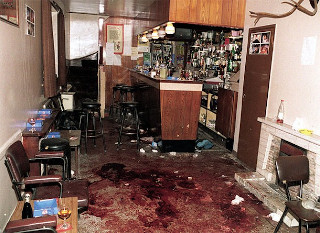
The bodies of Savage, Farrell and McCann are repatriated to Northern Ireland, where a collective IRA-sponsored funeral is held for them on March 16, 1988 at the IRA plot in Milltown Cemetery in West Belfast. As the coffins are being lowered into the ground Michael Stone, an Ulster loyalist paramilitary, stages a single-handed attack upon the ceremony, throwing grenades and firing a handgun at mourners. The funeral immediately descends into chaos. One group of mourners pursues the retreating attacker, who continues to throw grenades and fire bullets, through the cemetery grounds. Three of the unarmed mourners are killed and scores are injured. Stone retreats onto the adjoining M1 motorway, where he is arrested.
A Gibraltar inquest into the deaths of Savage, McCann and Farrell concludes the three had been lawfully killed. In 1995, the European Court of Human Rights rules that the human rights of the three were infringed, and criticizes the British authorities for lack of control in the arrest operation. They also rule that the three had been engaged in an act of terrorism, and consequently dismissed unanimously the applicants’ claims for damages, for costs and expenses incurred in the Gibraltar Inquest and the remainder of the claims for just satisfaction.
A British television documentary, Death on the Rock (1988), is produced and broadcast about the failed IRA operation in Gibraltar, examining the details of the events, and raising doubts about aspects of the British Government’s statements about the circumstances of the shootings of the IRA team, and questioning whether excessive force had been used in the confrontation in line with persistent rumours in the British media at that time of a “Shoot to Kill” strategy being used against the Provisional IRA by the British Government.
Mac Giolla is educated at the local national school in Nenagh before completing his secondary education at St. Flannan’s College in Ennis, County Clare. It is while at St. Flannan’s that he changes to using the Irish language version of his name. He wins a scholarship to University College Dublin where he qualifies with a Bachelor of Arts degree, followed by a degree in Commerce.
A qualified accountant, Mac Giolla is employed by the Irish Electricity Supply Board (ESB) from 1947 until he goes into full-time politics in 1977.
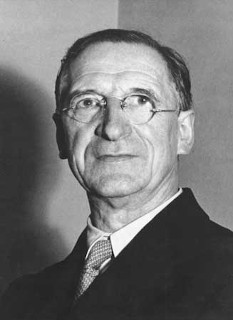
At the 1961 Irish general election, Mac Giolla unsuccessfully contests the Tipperary North constituency for Sinn Féin. In 1962, he becomes President of Sinn Féin and is one of the people who moves the party to the left during the 1960s. In 1969, Sinn Féin splits, and he remains leader of Official Sinn Féin. It is also in 1962 that he marries May McLoughlin who is also an active member of Sinn Féin as well as Cumann na mBan, the women’s section of the IRA. In 1977, the party changes its name to Sinn Féin the Workers Party and in 1982 it becomes simply the Workers’ Party.
In 1999, Mac Giolla writes to the chairman of the Flood Tribunal calling for an investigation into revelations that former Dublin Assistant City and County Manager George Redmond had been the official supervisor at the election count in Dublin West and was a close associate of Liam Lawlor. In 2003, Redmond is convicted of corruption by a Dublin court but subsequently has his conviction quashed due to conflicting evidence.
In his eighties Mac Giolla continues to be active and is a member of the group which campaigns to prevent the demolition of No. 16 Moore Street in Dublin city centre, where the surrender after the Easter Rising was completed. He also serves on the Dublin ’98 committee to commemorate the 200th anniversary of the Irish Rebellion of 1798.
Tomás Mac Giolla dies in Beaumont Hospital in Beaumont, Dublin on February 4, 2010, after a long illness.
Scott is born in Drogheda on June 24, 1905. His family originates in the province of Munster. His father, William Scott, is a school inspector from near Sneem on the Iveragh Peninsula in County Kerry. His mother is from County Cork. He is educated at Belvedere College in Dublin. There he first demonstrates his skills at painting and acting. Initially he wants to pursue a career as a painter, but his father points out that it might make more financial sense to become an architect.
Scott becomes an apprentice for the sum of £375 per annum to the Dublin architectural firm Jones and Kelly. He remains there from 1923 until 1926, where he studies under Alfred E. Jones. In the evenings after work, he also attends the Metropolitan School of Art and the Abbey School of Acting, and appears in many plays there until 1927, including the first productions of Seán O’Casey’s Juno and the Paycock and The Plough and the Stars. On completing his pupilage, he becomes an assistant to Charles James Dunlop and then has a brief spell as an assistant architect in the Office of Public Works.
In 1931 Scott partners with Norman D. Good to form Scott and Good, and they open an office in Dublin. They design the hospital at Tullamore (1934–1937) and Portlaoise General Hospital (1935). Between 1937 and 1938, he is the President of the Architectural Association of Ireland (AAI). He founds his company, Michael Scott Architects, in 1938. That same year he also designs his house Geragh, at Sandycove, County Dublin.
Scott’s most important pre-war commission is the Irish Pavilion for the 1939 New York World’s Fair. He produces a shamrock shaped building constructed in steel, concrete and glass. It is selected by an international jury as the best building in the show. As a result, he is presented with a silver medal for distinguished services and given honorary citizenship of the city of New York by then Mayor Fiorello H. La Guardia. Other better-known architects who design national pavilions for this World Fair include Alvar Aalto of Finland and Oscar Niemeyer of Brazil.
Scott has three major commissions from the Córas Iompair Éireann CIÉ, the Inchicore Chassis Works, the Donnybrook Bus Garage and, most famously, the Dublin Central Bus Station, to be known as àras Mhic Dhiarmada or Busáras. Though initially controversial, Busáras wins Scott the Royal Institute of the Architects of Ireland Triennial Gold Medal for Architecture.
Scott, who spends most of his life living at Sandycove Point, just south of Dún Laoghaire in south Dublin, dies in Dublin on January 24, 1989, and is buried near Sneem in County Kerry.
Hundreds of people gather at the rural church to say goodbye to a singer renowned for her distinctive voice. The Cranberries enjoyed huge success in the 1990s with tracks including “Zombie” and “Linger.” O’Riordan, who was also a member of alternative rock group D.A.R.K., had been working on a new studio album with The Cranberries in the months before her death. Her boyfriend and fellow D.A.R.K. band member Olé Koretsky is among the mourners. Her three children – Taylor, Molly and Dakota – join the singer’s mother Eileen, her sister Angela and brothers Terence, Brendan, Donal, Joseph and PJ in the small parish church. Her former husband Don Burton is also in attendance.
At the outset of the mass, symbols associated with O’Riordan’s life are brought to the altar. Her niece Eileen and a long-time friend bring forward a guitar and a platinum disc award. A picture of Our Lady of Dolours, after whom Dolores is named, is placed at the altar, as is a book of poetry.
In his homily, Canon Liam McNamara recalls meeting the young O’Riordan in 1989 when she was singing and playing the keyboard in the church. “She did have a unique respect for everybody,” he said. “Coupled with that respect, her kind, loving and generous heart made her a source of great hope to the Church, during its stormy years. For that we sincerely thank her from our hearts.”
During Communion, O’Riordan’s version of the hymn “Panis Angelicus” is played in the church. Archbishop of Cashel and EmlyKieran O’Reilly says, “Since we heard of the sudden death of Dolores O’Riordan, many hearts in Ireland and around the world are heavy with sadness on hearing the news.”
“Indeed, the great outpouring of sympathy and love for Dolores which we have seen since her death is a witness and a tribute to her great musical talent and very special voice by her many fans and lovers of music. “Dolores put her God-given talents at the service of others.”
Archbishop O’Reilly hails O’Riordan’s voice as “unique, far reaching and distinctly Irish. Her gifts have resonated in the lives of many and will continue to do so as her music and her songs will continue to be played and listened to.”
At the close of the service, The Cranberries’ song “When You’re Gone” rings around the church as the singer’s coffin is carried to the adjacent Caherelly Cemetery for a private burial service. Mourners break into a spontaneous round of applause.
On Monday evening, tea light candles light the streets as family and close friends accompany O’Riordan’s remains to the church from Cross’s Funeral Home in Ballyneety. President of IrelandMichael D. Higgins pays his condolences to the singer’s family earlier in the day and signs a book of condolence. “It was very important to pay tribute to the contribution Dolores made,” says Higgins. “It is so moving, so profoundly sad, that somebody so young is taken from us. She was a star that shone bright from the very beginning,” he adds.
(From: “Voice of Dolores O’Riordan fills church at her funeral,” The Irish Times, January 23, 2018)
In 1793 Agar is elected to the House of Commons of the United Kingdom as one of two representatives for Heytesbury. He succeeds his great-uncle Lord Mendip as second Baron Mendip in 1802 according to a special remainder in the letters patent. This is an English peerage and forces him to resign from the House of Commons and enter the House of Lords. Two years later he assumes by Royal licence the surname of Ellis in lieu of Agar.
Lord Clifden marries Lady Caroline , daughter of George Spencer, 4th Duke of Marlborough, in 1792. His only son, George, becomes a successful politician and is created Baron Dover in his father’s lifetime, but predeceases his father. Lady Clifden dies at the age of 50 at Blenheim Palace in November 1813. Lord Clifden remains a widower until his death at the age of 75 at Hanover Square, Mayfair, London, on July 13, 1836. He is succeeded in his titles by his grandson Henry, the eldest son of Lord Dover.
Northern Ireland is plunged into a new crisis after Benedict Hughes, a Catholic, is shot dead on January 21, 1998, as he is getting into his car after finishing his work in a loyalist area of south Belfast. It is the latest murder aimed at wrecking the peace process and the eighth sectarian killing since Christmas.
Hughes, age 55, dies in a hail of bullets in Sandy Row shortly after 5:00 PM, as he is preparing to travel back to his Suffolk Crescent home in west Belfast. The father of three is shot at least five times in the neck and chest as he tries to get into his car which is parked in Utility Street off the Donegall Road. He is taken to the Royal Victoria Hospital where he later dies. The lone gunman makes off on foot in the direction of Felt Street.
The attack comes after the funeral of Fergal McCusker, a Catholic shot dead by the Loyalist Volunteer Force (LVF) just days earlier and ahead of the funerals of Catholic taxi driver Larry Brennan and prominent loyalist Jim Guiney held on January 22.
When forensic people arrive on the scene soon after the shooting, the area is packed with onlookers who believe the shot man is a Protestant.
As a recovery truck comes to remove Hughes’s car later that night, small groups of people are still watching the scene. The Rev. Richard Darmody, the rector of nearby St. Aidan’s Church in Sandy Row, who went to the scene thinking the victim was one of his parishioners, condemns the murder. “I’m shocked and horrified that the life of an innocent person has been taken and that another family has been plunged into grief and pain. I feel very concerned about where this is going to lead, and the possibility of more lives being taken, and more families being bereaved.”
There is no immediate admission of responsibility. However, the blame is placed firmly on loyalists, either the LVF, which has admitted being behind a series of recent killings, or the Ulster Freedom Fighters, which has remained silent, but which is suspected by the security forces of having joined the killings.
SDLP councillor Alastair McDonnell says the peace process is not in crisis. Hughes was “an innocent Catholic who was just trying to earn a living, who has no connections with any political or paramilitary grouping. If he had he wouldn’t have worked here.” He adds that there is a “small handful of evil people” who do not want to see peace.
Alliance spokesman Dr. Philip McGarry says there is “no excuse, no justification for causing pain to yet another family.”
(From: “Catholic shot dead leaving work in loyalist Sandy Row” by Louise McCall, The Irish Times, January 22, 1998)
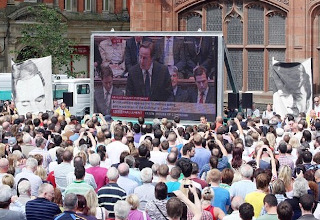
Kennedy takes office following the November 1960 presidential election, in which he narrowly defeats Richard Nixon, the then–incumbent Vice President. In addition to being the first Catholic to become President, he also becomes the youngest person elected to the office.
His inaugural address encompasses the major themes of his campaign and defines his presidency during a time of economic prosperity, emerging social changes, and diplomatic challenges. This inauguration is the first in which a poet, Robert Frost, participates in the program. Frost, then 86 years old, recites his poem “The Gift Outright” at Kennedy’s request as an act of gratitude towards Frost for his help during the campaign.
The oath of office for the President is administered to Kennedy by Chief Justice of the United StatesEarl Warren using a closed family Bible at 12:51 (ET) although he officially became president at the stroke of noon as defined by the 20th Amendment to the United States Constitution. He does not wear an overcoat when taking the oath of office and delivering the inaugural address, despite the cold conditions of 22 °F (−6 °C) with windchill at 7 °F (−14 °C) at noon.
Kennedy’s 1366-word inaugural address, the first delivered to a televised audience in color, is considered among the best presidential inaugural speeches in American history. It includes the iconic line “And so, my fellow Americans: ask not what your country can do for you—ask what you can do for your country.”
Raised in Dublin, Devlin first develops his badminton skills in the family garden during his childhood with his friend Gordon “Curly” Mack. The two childhood friends graduate from the garden to win an impressive six titles together in men’s doubles at the All England Open Badminton Championships.
Devlin is the second most successful player ever in the All England Open Badminton Championships with 18 titles between 1925 and 1931, including three triple championships in 1926, 1927 and 1929. He dominates the 1920s with six titles at the Irish Open and two titles at the Scottish Open.
Despite being Irish Devlin is part of the English team that tours Canada in 1925 to promote the sport on behalf of the Canadian Badminton Association which had recently been formed in 1921. He is also part of a second English touring team that visits Canada during 1930. A match is held at the Granite Club in Toronto which England wins 7-2.
When his playing career comes to an end in 1931, Devlin moves to North America to become the first known full-time badminton coach. He first sets foot in Winnipeg and then in Baltimore. After spending time coaching in North America, he returns to Ireland and teaches his skills to the next generations until he is well into his eighties.
Adding to his success with the racket, Devlin earns a solid reputation as a writer. Over four decades, he authors many books on the technical and tactical aspects of badminton. He is a strong believer in sound technique and becomes the first known player to use the overhead backhand clear.
Frank Devlin dies on October 27, 1988, at 88 years of age.
Two of Devlin’s daughters, Judy and Susan, become badminton legends in their own right, and win six All England women’s doubles titles together as partners. Judy, who also wins ten All England titles in women’s singles, is inducted with her late father into the Badminton Hall of Fame in 1997.
(Pictured (L to R): Sir George Thomas of England and Frank Devlin of Ireland)
After preparatory education at Worplesdon and at Greenford, near Harrow, Kean is sent to Eton College, where he remains for three years. In 1827, he is offered a cadetship in the East India Company‘s service, which he is prepared to accept if his father would settle an income of £400 on his mother. The elder Kean refuses to do this, so he determines to become an actor. He makes his first appearance at Drury Lane on October 1, 1827 as Norval in John Home‘s Douglas, but his continued failure to achieve popularity leads him to leave London in the spring of 1828 for the provinces. In Glasgow, on October 1 of that year, father and son act together in Arnold Payne’s Brutus, the elder Kean in the title role and his son as Titus.
After a visit to the United States in 1830, where he is received with much favour, Kean appears in 1833 at Covent Garden as “Sir Edmund Mortimer” in George Colman‘s The Iron Chest, but his success is not pronounced enough to encourage him to remain in London, especially as he has already won a high position in the provinces. In January 1838, however, he returns to Drury Lane, and plays Hamlet with a success which gives him a place among the principal tragedians of his time. He marries the actress Ellen Tree (1805-1880) on January 25, 1842, and pays a second visit to the United States with her from 1845 to 1847.
From his “tour round the world” Kean returns to England in 1866 in broken health, and dies at the age of 57 in London on January 22, 1868. He is buried in All Saints Churchyard, Catherington, East Hampshire district, Hampshire.