Mitchel is born in Camnish, near Dungiven, County Derry, on November 3, 1815, the son of a Presbyterian minister. At the age of four, he is sent to a classical school, run by an old minister named Moor, nicknamed “Gospel Moor” by the students. He reads books from a very early age. When a little over five years old, he is introduced to Latin grammar by his teacher and makes quick progress. In 1830, not yet 15 years old, he enters Trinity College, Dublin (TCD) and obtains a law degree in 1834.
In the spring of 1836, Mitchel meets Jane Verner, the only daughter of Captain James Verner. Though both families are opposed to the relationship, they become engaged in the autumn and are married on February 3, 1837, by the Rev. David Babington in Drumcree Church, the parish church of Drumcree.
Mitchel works in a law office in Banbridge, County Down, where he eventually comes into conflict with the local Orange Order. He meets Thomas Davis and Charles Gavan Duffy during visits to Dublin. He joins the Young Ireland movement and begins to write for The Nation. Deeply affected by the misery and death caused by the Great Famine, he becomes convinced that nothing will ever come of the constitutional efforts to gain Irish freedom. He then forms his own paper, United Irishmen, to advocate passive resistance by Ireland’s starving masses.
In May 1848, the British tire of Mitchel’s open defiance. Ever the legal innovators in Ireland, they invent a crime especially for the Young Irelanders – felony-treason. They arrest him for violating this new law and close down his paper. A rigged jury convicts him, and he is deported first to Bermuda and then to Australia. However, in June 1853, he escapes to the United States.
Mitchel works as a journalist in New York City and then moves to the South. When the American Civil War erupts, he is a strong supporter of the Southern cause, seeing parallels with the position of the Irish. His family fully backs his commitment to the Southern cause. He loses two sons in the war, one at the Battle of Gettysburg in 1863 and another at the Battle of Fort Sumter in 1864, and another son loses an arm. His outspoken support of the Confederacy causes him to be jailed for a time at Fort Monroe, where one of his fellow prisoners is Confederate PresidentJefferson Davis.
In 1874, the British allow Mitchel to return to Ireland and in 1875 he is elected in a by-election to be a member of the Parliament of the United Kingdom representing the Tipperary constituency. However, his election is invalidated on the grounds that he is a convicted felon. He contests the seat again in the resulting by-election and is again elected, this time with an increased vote.
Unfortunately, Mitchel, one of the staunchest enemies to English rule of Ireland in history, dies in Newry on March 20, 1875. He is buried in his parents’ grave in the unitarian cemetery, High Street, Newry, where a monument is later erected by his widow. He is also commemorated by a statue in Newry. Thirty-eight years later, his grandson, John Purroy Mitchel, is elected Mayor of New York City.
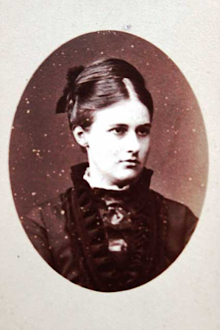
Mitchel is born Jane Verner around 1820 near Newry, County Down. At the time she, her brother and her mother, Mary Ward, are living with Captain James Verner (1777–1847), who is from a prominent Armagh family, and is involved in the Orange Order, going on to become Orange deputy grandmaster of Ireland in 1824. Although James Verner raises Mitchel, she is not believed to be his child. She attends Miss Bryden’s School for Young Ladies in Newry.
Mitchel meets her husband, John Mitchel, when she is fifteen. The couple elopes in November 1836, but do not marry as James Verner pursues them to Chester and brings her home to Ireland. They elope again in 1837, and are married at Drumcree Church, County Armagh, on February 3. At this point, Mitchel is disowned by James Verner, and goes to live with her in-laws at Dromalane, County Down. They then move to Banbridge in 1839 where her husband practises law. The couple goes on to have six children, three daughters and three sons.
The couple moves to Dublin in October 1845 when John Mitchel becomes the assistant editor of The Nation. They live at 8 Ontario Terrace, Rathmines, where they meet Young Irelanders. She is a full supporter of her husband’s nationalism. She aids in his work with The Nation, reading other newspapers, keeping and filing reference clippings, going on to become an editor and anonymous contributor to the United Irishman from February 1848. John Mitchel is convicted of treason for inciting insurrection in May 1848, and is sentenced to fourteen years’ transportation. Mitchel urges his fellow Young Irelanders to fight his removal, and denounces them when they fail to come out in support of him.
Due to her standing in the nationalist community, £1,450 is raised to support her and her family. For three years, Mitchel lives in Newry and Dublin, before she joins her husband in Van Diemen’s Land (Tasmania) in June 1851, where they settle in the village of Bothwell. Their youngest child, Isabel, is born there in 1853.
The Mitchels travel around the island with her husband, visiting fellow Irish exiles, becoming fond of William Smith O’Brien in particular.
When John Mitchel escapes in July 1853, Mitchel travels with her children to join him in Sydney, from where they sail to the United States. They live for a time in Brooklyn, New York, from 1853 to 1855, rekindling friendships with old friends who are fellow Young Ireland exiles.
In May 1855, the family moves to a remote farm at Tucaleechee Cove in Tennessee. She fears that the isolation and life in a primitive log cabin will be detrimental to their children’s education, and at her behest the family moves to Knoxville, Tennessee, in September 1856. From here, John Mitchel runs a pro-slavery newspaper, the Southern Citizen.
The family moves again in December 1858 to Washington, D.C. Mitchel supports her husband in the Southern cause, albeit with some reservation. Nothing, she says, will induce her “to become the mistress of a slave household.” Her objection to slavery is “the injury it does to the white masters.”
Mitchel accompanies her husband to Paris in September 1860, and in opposition to some of the family, she supports her daughter Henrietta’s conversion to Catholicism and entrance into a convent. She remains in Paris and Ireland with her daughters, while her husband and sons assist the Confederacy during the American Civil War. Without letting her husband know, she resolves to return to America when she hears of her youngest son, William’s, death at Gettysburg in July 1863. She sails with her daughters, Mary and Isabel, as Henrietta had died earlier the same year. While their ship runs a blockade by the Union, the ship is shelled, runs aground, and catches fire near the coast of North Carolina. She and her daughters are unhurt, but lose all of their possessions. By December 1863, she has joined her husband in Richmond, Virginia, remaining their for the rest of the Civil War. Their eldest son, John, is killed in action in July 1864.
The family returns to New York after the war, and John Mitchel sets up another paper, The Irish Citizen (1867–72). Due to lack of funding for the Irish American press and her husband’s ill health results in the family falling into poverty. This is alleviated by a testimonial raised by William and John Dillon in 1873. Mitchel is widowed in March 1875, going on to receive $30,000 from nationalist sympathisers. She invests this money in a photolithographic firm she and her son, James, run. She dies at home in Bedford Park, New York, on December 31, 1899. She is buried in Woodlawn Cemetery, Bronx, New York, with her plot marked with a large Celtic cross. She is survived by two of her children, James (1840–1908) and Mary (1846–1910).
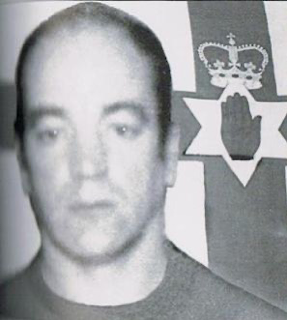
Jackson is one of seven children of John Jackson, farmhand, and his wife Eileen. As a teenager he participates in Paisleyite demonstrations against the Northern Ireland civil rights movement. He is already a local “hard man” who cultivates an air of menace. After a brief period in Australia, he returns home and serves in the Ulster Defence Regiment (UDR) from 1972 to 1975. He also joins the Ulster Volunteer Force (UVF) and is alleged to have committed his first murders in 1973. He is arrested in 1973 after the doorstep killing of a BanbridgeCatholic who works in the shoe factory that employs Jackson. The victim’s wife identifies Jackson as the murderer, but the charge is withdrawn after she admits to a degree of prompting by the police.
Jackson is a leading member of a UVF gang linked to about 100 murders carried out at random against Catholic civilians between 1973 and 1979, earning for the north Armagh and east Tyrone area the nickname “the murder triangle.” He also allegedly helps to plan the Dublin and Monaghan car bombings of May 17, 1974, killing thirty-three civilians, and orchestrates the attack on the Miami Showband on July 31, 1975. He becomes UVF Mid-Ulster Brigade commander in 1975. Never convicted of any of the numerous murders attributed to him, he is however jailed between 1979 and 1983 for arms possession.
Jackson marries Eileen Maxwell in the late 1960s. They have a son and two daughters. The marriage does not survive his imprisonment and after his release he moves to Donaghcloney, County Down, where he lives with a much younger girlfriend. He remains active in loyalist paramilitarism but takes a less prominent role. He survives several Irish Republican Army (IRA) attempts on his life, including the detonation of a car bomb outside his house. In 1984, the editor of the Belfast edition of the Sunday World is shot and wounded after publishing articles denouncing “the Jackal,” the nickname by which the press calls Jackson during his lifetime.
After the Anglo–Irish Agreement of 1985, Jackson is briefly linked to Ulster Resistance (UR), a paramilitary group founded by associates of Ian Paisley. He allegedly assists the rearming and reorganisation of the Mid-Ulster UVF under Billy Wright after the killing of his brother-in-law and alleged accomplice, Roy Metcalf, by the IRA in 1988. Relations between Wright and Jackson cool after the killing of a Catholic in Donaghcloney by Wright’s men leads to Jackson being called in for questioning, and he supports the UVF leadership in its 1996–97 dispute with Wright. He is also the focus of recurring allegations about collusion between loyalist paramilitaries and elements of the security forces in mid-Ulster, including claims that he operated on behalf of British military intelligence who shielded him from prosecution.
Jackson dies of lung cancer at the age of 49 at his Donaghcloney home on May 30, 1998. He is buried on June 1 in a private ceremony in the St. Bartholomew Church of Ireland churchyard in his native Donaghmore, County Down. His grave, close to that of his parents, is unmarked apart from a steel poppy cross. His father had died in 1985 and his mother outlives him by five years.
Considerable uncertainty surrounds his involvement in many of the crimes attributed to him, but there is no doubt that he is a cold-blooded multiple murderer and one of the most sinister “hard men” of loyalist paramilitarism.
(From: “Jackson, Robin” by Patrick Maume, Dictionary of Irish Biography, http://www.dib.ie, October 2009)
Mitchel is born in Camnish, near Dungiven, County Derry on November 3, 1815, the son of a Presbyterian minister. At the age of four, he is sent to a classical school, run by an old minister named Moor, nicknamed “Gospel Moor” by the students. He reads books from a very early age. When a little over five years old, he is introduced to Latin grammar by his teacher and makes quick progress. In 1830, not yet 15 years old, he enters Trinity College, Dublin (TCD) and obtains a law degree in 1834.
In the spring of 1836, Mitchel meets Jane Verner, the only daughter of Captain James Verner. Though both families are opposed to the relationship, they become engaged in the autumn and are married on February 3, 1837, by the Rev. David Babington in Drumcree Church, the parish church of Drumcree.
Mitchel works in a law office in Banbridge, County Down, where he eventually comes into conflict with the local Orange Order. He meets Thomas Davis and Charles Gavan Duffy during visits to Dublin. He joins the Young Ireland movement and begins to write for The Nation. Deeply affected by the misery and death caused by the Great Famine, he becomes convinced that nothing will ever come of the constitutional efforts to gain Irish freedom. He then forms his own paper, United Irishman, to advocate passive resistance by Ireland’s starving masses.
In May 1848, the British tire of Mitchel’s open defiance. Ever the legal innovators in Ireland, they invent a crime especially for the Young Irelanders – felony-treason. They arrest him for violating this new law and close down his paper. A rigged jury convicts him, and he is deported first to Bermuda and then to Australia. However, on June 8, 1853, he escapes to the United States.
Mitchel works as a journalist in New York City and then moves to the South. When the American Civil War erupts, he is a strong supporter of the Southern cause, seeing parallels with the position of the Irish. His family fully backs his commitment to the Southern cause. He loses two sons in the war, one at the Battle of Gettysburg in 1863 and another at the Battle of Fort Sumter in 1864, and another son loses an arm. His outspoken support of the Confederacy causes him to be jailed for a time at Fort Monroe, where one of his fellow prisoners is Confederate PresidentJefferson Davis.
In 1874, the British allow Mitchel to return to Ireland and in 1875 he is elected in a by-election to be a member of the Parliament of the United Kingdom representing the Tipperary constituency. However, his election is invalidated on the grounds that he is a convicted felon. He contests the seat again in the resulting by-election and is again elected, this time with an increased vote.
Unfortunately, Mitchel, one of the staunchest enemies to English rule of Ireland in history, dies in Newry on March 20, 1875, and is buried there. Thirty-eight years later, his grandson, John Purroy Mitchel, is elected Mayor of New York City.
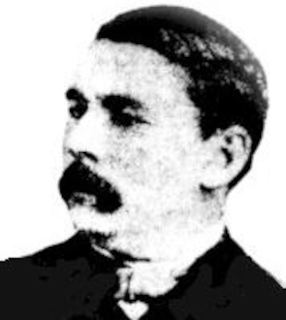
Scriven is born on September 10, 1819, of prosperous parents in Banbridge, County Down. He graduates with a degree from Trinity College Dublin in 1842. His fiancée accidentally drowns in 1843, the night before they are to be married. In 1844, at the age of 25, he leaves his native country and migrates to Canada, settling in Woodstock, Ontario. He leaves his country feeling a spiritual calling to serve the Lord in his Plymouth Brethren faith. He remains in Canada only briefly after becoming ill but returns for good in 1847.
For two or three years Scriven conducts a private school at Brantford. In 1855, while staying with James Sackville in Bewdley, Ontario, north of Port Hope, he receives news from Ireland of his mother being terribly ill. He writes a poem to comfort his mother called “Pray Without Ceasing.” It is later set to music and renamed by Charles Crozat Converse, becoming the hymn “What a Friend We Have in Jesus.” Scriven does not have any intentions nor dream that his poem would be published in the newspaper and later become a favorite hymn among the millions of Christians around the world.
About 1857, Scriven moves near to Port Hope, Ontario. Here he again falls in love and is due to be married, but in August 1860 his fiancée becomes ill with pneumonia and dies. He then devotes the rest of his life to tutoring, preaching and helping others.
In 1869, Scriven publishes a collection of 115 hymns entitled Hymns and other verses which does not include “What a Friend We Have in Jesus.”
Scriven drowns at age 66 on August 10, 1886. At the time of his death, he is very ill with fever and has been brought to a friend’s home to recover. It is a very hot night, and he goes outside possibly to cool down or to get a drink of cold water from the spring. His friend reports, “We left him about midnight. I withdrew to an adjoining room to watch and pray. You may imagine my surprise and dismay when upon visiting his room I found it empty. All search failed to find a trace of the missing man, until a little after noon his body was discovered in the nearby river, lifeless and cold in death.” To this day, no one knows for certain if his death is an accident or a suicide. He is buried next to his second fiancée in her family cemetery, Pengelley Family Cemetery, at Pengelly Landing, Peterborough County, Ontario, Canada.
A tall obelisk is built upon his grave with the words from the song and the following inscription:
“This monument was erected to the memory of Joseph M. Scriven, B.A., by lovers of his hymn, which is engraved hereon, and is his best memorial. Born at Seapatrick, Co. Down, Ireland, 10 Sept. 1819, emigrated to Canada 1844. Entered into rest at Bewdley, Rice Lake, 10 August 1886, and buried here. Blessed are the pure in heart for they shall see God.“
A plaque can be found on the Port Hope-Peterborough Highway with the following inscription:
“Four miles north, in the family Pengelley Cemetery, lies the philanthropist and author of this great masterpiece, written at Port Hope, 1857. The composer of the music, Charles C. Converse, was a well-educated versatile and successful Christian, whose talents ranged from law to professional music. Under the pen name of Karl Reden, he wrote numerous scholarly articles on many subjects. Though he was an excellent musician and composer with many of his works performed by the leading American orchestras and choirs of his day, his life is best remembered for this simple music so well suited to Scriven’s text.“
Lukas Media LLC releases the full-length documentaryFriends in Jesus, The stories and Hymns of Cecil Frances Alexander and Joseph Scriven in 2011. The 45-minute documentary movie details the life of Scriven and his influence on popular hymns.
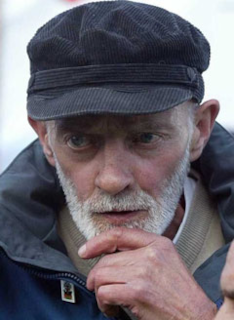
The son of a member of the Royal Air Force (RAF), Keenan is born on July 17, 1941, in Swatragh, County Londonderry, Northern Ireland, before his family moves to Belfast. As a teenager, he moves to England to find work, for a time working as a television repairman in partnership with his brother in Corby, Northamptonshire. During this time, he comes to the attention of the police when he damages a cigarette machine, which leads to police having his fingerprints on file. He returns to Northern Ireland when the Troubles begin and starts working at the Grundig factory in the Finaghy area of Belfast where he acquires a reputation as a radical due to his involvement in factory trade union activities.
Despite his family having no history of republicanism, Keenan joins the Provisional Irish Republican Army in 1970 or 1971, and by August 1971 is the quartermaster of the Belfast Brigade. He is an active IRA member, planning bombings in Belfast and travelling abroad to make political contacts and arrange arms smuggling, acquiring contacts in East Germany, Libya, Lebanon and Syria. In 1972, he travels to Tripoli to meet with Libyan leader Muammar Gaddafi in order to acquire arms and finance from his government. In early 1973 he takes over responsibility for control of the IRA’s bombing campaign in England and also becomes IRA Quartermaster General. In late 1973, he is the linchpin of the kidnap of his former employer at Grundig, director Thomas Niedermayer.
In early 1974, Keenan plans to break Gerry Adams and Ivor Bell out of Long Kesh using a helicopter, in a method similar to Seamus Twomey‘s escape from Mountjoy Prison in October 1973, but the plan is vetoed by Billy McKee. He is arrested in the Republic of Ireland in mid-1974 and sentenced to twelve months imprisonment for IRA membership. On March 17, 1975, he is shot and wounded while attempting to lead a mass escape from Portlaoise Prison. While being held in Long Kesh, Gerry Adams helps to devise a blueprint for the reorganisation of the IRA, which includes the use of covert cells and the establishment of a Southern Command and Northern Command. As the architects of the blueprint, Adams, Bell and Brendan Hughes, are still imprisoned, Martin McGuinness and Keenan tour the country trying to convince the IRA Army Council and middle leadership of the benefits of the restructuring plan, with one IRA member remarking “Keenan was a roving ambassador for Adams.” The proposal is accepted after Keenan wins support from the South Derry Brigade, East Tyrone Brigade and South Armagh Brigade, with one IRA member saying, “Keenan was really the John the Baptist to Adams’ Christ.”
In December 1975, members of an IRA unit based in London are arrested following the six-day Balcombe Street siege. The IRA unit had been active in England since late 1974 carrying out a series of bombings, and a few months after his release from prison Keenan visits the unit in Crouch Hill, London, to give it further instructions. In follow-up raids after the siege, police discover crossword puzzles in his handwriting and his fingerprints on a list of bomb parts. A warrant is issued for his arrest.
Garda Síochána informer Sean O’Callaghan claims that Keenan recommended IRA Chief of Staff Seamus Twomey to authorise an attack on Ulster Protestants in retaliation to an increase in sectarian attacks on Catholic civilians by Protestant loyalist paramilitaries, such as the killing of three Catholics in a gun and bomb attack by the Ulster Volunteer Force (UVF) on Donnelly’s Bar in Silverbridge, County Armagh on December 19, 1975. According to O’Callaghan “Keenan believed that the only way, in his words, to put the nonsense out of the Prods [Protestants] was to just hit back much harder and more savagely than them.” Soon after the sectarianKingsmill massacre occurs, when ten Protestant men returning home from their work are ordered out of a minibus they are travelling in and executed en masse with a machine gun on January 5, 1976.
Keenan is arrested on the basis of the 1975 warrant near Banbridge on March 20, 1979, when the Royal Ulster Constabulary (RUC) stopped two cars travelling north on the main road from Dublin to Belfast and is extradited to England to face charges relating to the Balcombe Street Gang‘s campaign in England. His capture is a blow to the IRA, in particular as he was carrying an address book listing his contacts including Palestinian activists in the United Kingdom. The IRA responds by dispatching Bobby Storey and three other members to break Keenan out of prison using a helicopter, but all four are arrested and remanded to Brixton Prison. Keenan stands trial at the Old Bailey in London in June 1980 defended by Michael Mansfield and is accused of organising the IRA’s bombings in England and being implicated in the deaths of eight people including Ross McWhirter and Gordon Hamilton Fairley. He is sentenced to eighteen years imprisonment after being found guilty on June 25, 1980.
Keenan continues to support Gerry Adams while in prison. In August 1982 Adams is granted permission by the IRA’s Army Council to stand in a forthcoming election to the Northern Ireland Assembly, having been refused permission at a meeting the previous month. In a letter sent from Leicester Prison, Keenan writes that he “emphatically” supports the move and endorses the Army Council’s decision.
Keenan is released from prison in June 1993 and by 1996 is one of seven members of the IRA’s Army Council. Following the events after the IRA’s ceasefire of August 1994, he is openly critical of Gerry Adams and the “tactical use of armed struggle,” or TUAS, strategy employed by the republican movement. After the Northern Ireland peace process becomes deadlocked over the issue of the IRA decommissiong its arms, he and the other members of the Army Council authorise the Docklands bombing which kills two people and marks the end of the IRA’s eighteen-month ceasefire in February 1996.
Keenan outlines the IRA’s public position in May 1996 at a ceremony in memory of hunger striker Seán McCaughey at Milltown Cemetery, where he states, “The IRA will not be defeated…Republicans will have our victory…Do not be confused about decommissioning. The only thing the Republican movement will accept is the decommissioning of the British state in this country.” In the same speech he accuses the British of “double-dealing” and denounces the Irish government as “spineless.”
On February 25, 2001, Keenan addresses a republican rally in Creggan, County Armagh, saying that republicans should not fear “this phase” of “the revolution” collapsing should the Good Friday Agreement fail. He confirms his continued commitment to the Armalite and ballot box strategy, saying that both political negotiations and violence are “legitimate forms of revolution” and that both “have to be prosecuted to the utmost.” He goes on to say, “The revolution can never be over until we have British imperialism where it belongs—in the dustbin of history,” a message aimed at preventing rank-and-file IRA activists defecting to the dissident Real IRA.
Keenan plays a key role in the peace process, acting as the IRA’s go-between with the Independent International Commission on Decommissioning (IICD). Gerry Adams remarks, “There wouldn’t be a peace process if it wasn’t for Brian Keenan.” Keenan resigns from his position on the Army Council in 2005 due to ill-health, and is replaced by Bernard Fox, who had taken part in the 1981 Irish hunger strike. On May 6, 2007, he is guest speaker at a rally in Cappagh, County Tyrone, to commemorate the 20th anniversary of the deaths of the so-called “Loughgall Martyrs,” eight members of the IRA East Tyrone Brigade killed by the Special Air Service (SAS) in 1987.
In July 2002, Keenan is diagnosed as suffering from terminal colorectal cancer. It is alleged by the Irish Independent and The Daily Telegraph that Keenan succeeded Thomas “Slab” Murphy as Chief of Staff of the Provisional IRA at some point between the late 1990s and the mid-2000s before he relinquished the role to deal with his poor health caused by cancer.
Keenan’s last years are spent living with his wife in Cullyhanna, County Armagh, where he dies of cancer on May 21, 2008. He is an atheist and receives a secular funeral, representing a major republican show of strength.
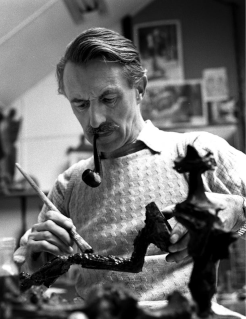
Frederick Edward McWilliamCBERA, Northern Irish surrealistsculptor, dies in London on May 13, 1992. He works chiefly in stone, wood and bronze. His style of work consists of sculptures of the human form contorted into strange positions, often described as modern and surreal.
McWilliam is born in Banbridge, County Down,on April 30, 1909, the son of Dr. William McWilliam, a local general practitioner. Growing up in Banbridge has a great influence on his work. He makes references to furniture makers such as Carson the Cooper and Proctors in his letters to his friend, Marjorie Burnett.
McWilliam attends Campbell College in Belfast and later attends Belfast College of Art from 1926. After 1928, he continues to study at the Slade School of Fine Art in London. He originally intends to become a painter, but influenced by Alfred Horace Gerrard, head of the sculpture department at the Slade, and by Henry Moore whom he meets there, he turns to sculpture. He receives the Robert Ross Leaving Scholarship which enables him and his wife, Beth (née Crowther), to travel to Paris where he visits the studio of Constantin Brâncuși.
During the first year of World War II, he joins the Royal Air Force and is stationed in England for four years where he is engaged in interpreting aerial reconnaissance photographs. He is then posted to India. While there he teaches art in the Hindu Art School in New Delhi.
After his return from India, McWilliam teaches for a year at the Chelsea School of Art. He is then invited by A. H. Gerrard to teach sculpture at the Slade. He continues in this post until 1968.
During the Northern IrelandTroubles McWilliam produces a series of bronzes in 1972 and 1973 known as Women of Belfast in response to the bombing at the Abercorn Tea-Rooms.
In 1964 McWilliam is awarded an Honorary Doctor of Letters from Queen’s University Belfast. In 1966 he is appointed CBE and in 1971 he wins the Oireachtas Gold Medal. He is represented in many public collections, including the Museum of Modern Art in New York City and Tate Britain in London. In 1984 the National Self-Portrait Gallery purchases a McWilliam self-portrait amongst acquisitions from fellow Northerners Brian Ballard, Brian Ferran and T. P. Flanagan.
Dodds is the son of schoolteachers. His father Robert is from a Presbyterian family and dies of alcoholism when Dodds is seven years old. His mother Anne is of Anglo-Irish ancestry. When he is ten, he moves with his mother to Dublin, and he is educated at St. Andrew’s College, where his mother teaches, and at Campbell College in Belfast. He is expelled from the latter for “gross, studied, and sustained insolence.”
In 1912, Dodds wins a scholarship at University College, Oxford, to read classics, or Literae Humaniores, a two-part, four-year degree program consisting of five terms of study of Latin and Greek texts followed by seven terms of study of ancient history and ancient philosophy. His friends at Oxford include Aldous Huxley and T. S. Eliot. In 1916, he is asked to leave Oxford due to his support for the Easter Rising, but he returns the following year to take his final examinations in Literae Humaniores, and is awarded a first-class degree to match the first-class awarded him in 1914 in Honour Moderations, the preliminary stage of his degree. His first tutor at Oxford is Arthur Blackburne Poynton.
After graduation, Dodds returns to Dublin and meets W. B. Yeats and George William Russell. He teaches briefly at Kilkenny College and in 1919 is appointed as a lecturer in classics at the University of Reading, where in 1923 he marries a lecturer in English, Annie Edwards Powell. They have no children.
In 1924, Dodds is appointed Professor of Greek at the University of Birmingham, and comes to know W. H. Auden, whose father George, Professor of Public Medicine and an amateur classicist, is a colleague. He is also responsible for Louis MacNeice‘s appointment as a lecturer at Birmingham in 1930. He assists MacNeice with his translation of Aeschylus, Agamemnon (1936), and later becomes the poet’s literary executor. He publishes one volume of his own poems, Thirty-Two Poems, with a Note on Unprofessional Poetry (1929).
On his retirement in 1960, Dodds is made an Honorary Fellow of University College, Oxford, until his death on April 8, 1979. He dies in the village of Old Marston, northeast of Oxford.
Among Dodds’s works are The Greeks and the Irrational (1951), which charts the influence of irrational forces in Greek culture up to the time of Plato, and Pagan and Christian in an Age of Anxiety, a study of religious life in the period between Marcus Aurelius and Constantine I. He is also editor of three major classical texts for the Clarendon Press, Proclus: Elements of Theology, Euripides‘ The Bacchae and Plato’s Gorgias, all published with extensive commentaries, and a translation in the case of the first. His autobiography, Missing Persons, is published in 1977. He edits Louis MacNeice’s unfinished autobiography The Strings are False (1965) and MacNeice’s Collected Poems (1966).
Frederick Edward McWilliamCBERA, Northern Irish surrealistsculptor, is born in Banbridge, County Down, on April 30, 1909. He works chiefly in stone, wood and bronze. His style of work consists of sculptures of the human form contorted into strange positions, often described as modern and surreal.
McWilliam is the son of Dr. William McWilliam, a local general practitioner. Growing up in Banbridge has a great influence on his work. He makes references to furniture makers such as Carson the Cooper and Proctors in his letters to his friend, Marjorie Burnett.
McWilliam attends Campbell College in Belfast and later attends Belfast College of Art from 1926. After 1928, he continues to study at the Slade School of Fine Art in London. He originally intends to become a painter, but influenced by Alfred Horace Gerrard, head of the sculpture department at the Slade, and by Henry Moore whom he meets there, he turns to sculpture. He receives the Robert Ross Leaving Scholarship which enables him and his wife, Beth (née Crowther), to travel to Paris where he visits the studio of Constantin Brâncuși.
During the first year of World War II, he joins the Royal Air Force and is stationed in England for four years where he is engaged in interpreting aerial reconnaissance photographs. He is then posted to India. While there he teaches art in the Hindu Art School in New Delhi.
After his return from India, McWilliam teaches for a year at the Chelsea School of Art. He is then invited by A. H. Gerrard to teach sculpture at the Slade. He continues in this post until 1968.
During the Northern IrelandTroubles McWilliam produces a series of bronzes in 1972 and 1973 known as Women of Belfast in response to the bombing at the Abercorn Tea-Rooms.
In 1964 McWilliam is awarded an Honorary Doctor of Letters from Queen’s University Belfast. In 1966 he is appointed CBE and in 1971 he wins the Oireachtas Gold Medal. He is represented in many public collections, including the Museum of Modern Art in New York City and Tate Britain in London. In 1984 the National Self-Portrait Gallery purchases a McWilliam self-portrait amongst acquisitions from fellow Northerners Brian Ballard, Brian Ferran and T. P. Flanagan.
William of Orange, King of Holland, and recently declared King William III of England, arrives with his fleet in Belfast on June 14, 1690. He remains for twelve days, departing on June 26. For his part he likes what he sees. “This country is worth fighting for,” he says.
William’s departure from London is held up by parliamentary business until the end of May, when he announces that he can wait no longer and adjourns Parliament. He sets out early in the morning of June 4, reaching Northampton before nightfall. On Sunday, June 8, he attends divine service in Chester Cathedral and goes on to inspect the ships at Hoylake on the tip of the Wirral Peninsula.
For two days the wind is contrary, but on June 11 he embarks on board the yacht “Mary” with a fleet escorted by Sir Cloudesley Shovell‘s squadron. On June 14 the hills of Ireland come in sight and in the afternoon the fleet casts anchor off Carrickfergus. He is rowed ashore in the Rear Admiral’s barge and at about 3:30 p.m. lands at the Old Quay under the shadow of the great Norman Castle.
The Garrison of the Castle has drawn up a Guard of Honour and the townspeople add their applause. The chosen spokesman is a Quaker, whose principles forbid him to doff his hat or use such titles as Sir and Majesty. He gets around the difficulty by taking off his hat and laying it on a stone and then stepping forward and saying “William, thou art welcome to thy Kingdom” which pleases the King so much that he replies, “You are the best-bred gentleman I have met since I came to England.” With these words he mounts his horse and sets off for Belfast.
Halfway along the shore is the little port of Whitehouse, where most of the army disembarks. The Commander-in-Chief, Frederick Schomberg, 1st Duke of Schomberg, and his senior commanders are waiting here to welcome the King. To cover the disembarkation, earthworks have been thrown up by the engineers at Fort William and garrisoned by troops ready for action.
In 1690 Belfast consists of about 300 houses in five streets. It has two churches, the Parish Church, where St. George’s Church still stands in the High Street, and the Presbyterian Meeting House in Rosemary Lane. The town had been surrounded by a rampart in 1642 and had been captured by Colonel Robert Venebles for Oliver Cromwell after a four-day siege and an assault on the North Gate in 1649.
It is at the North Gate that King William enters Belfast where North Street now crosses Royal Avenue. Here he is welcomed by the magistrates and burgesses in their robes and by the Rev. George Walker, now Bishop-elect of Derry. A Royal Salute is fired from the Castle and is echoed and re-echoed by the guns which Schomberg had placed at wide intervals for the purpose of conveying signals from post to post. Wherever it is heard it is known that King William has come. Before midnight all the heights of Antrim and Down are blazing with bonfires.
The next day being Sunday, William attends church at the Corporation Church, now St. George’s Church. On Monday, June 16, addresses of loyalty are presented on behalf of the Church of Ireland and Presbyterian Church clergy, the civic authorities of the city of Londonderry, the town of Belfast and by the Sheriffs, Justices of the Peace and Gentlemen of the Counties of Down and Antrim. The next two days are spent in military preparation.
In the previous season Schomberg had conducted a slow and cautious campaign but William says he has not come to Ireland to let the grass grow under his feet. He orders a general muster of the army in the Parish of Aghaderg which includes Scarvagh and on Thursday, June 19, begins his southward march from Belfast Castle.
The line of march continues along Upper Malone by the Old Coach Road and past the ruins of both Drumbeg and Lambeg Parish Churches which had been burned down in 1641. William reaches Schomberg’s headquarters in Lisburn Castle for lunch on the same day that he left Belfast Castle. The afternoon and evening are spent inspecting troops on Blaris Moor, and then on to Hillsborough Castle for the night.
The cavalcade moves on through the little round hills of County Down, crosses the Upper Bann between Huntly and Ballievey by ford over the hill of Banbridge and on to the rendezvous on the northwest of Loughbrickland.
After the disappointments of the previous season and the appalling loss of life through disease, Schomberg had dispersed his army into winter quarters all over Ulster. The Derry and Enniskillen men had gone home to pick up the threads of their lives. Now the farmers among them have the crop in and are recalled to the colours and ready to be reviewed. There are four regiments of Enniskillen men – Wynns, Tiffins, Lloyds and Cunninghams, one of foot and three of horse. There is only one regiment of Derry men, St. John’s, commanded by Mitchelburne with Rev. George Walker as chaplain.
On June 22, William sits in the saddle for hours reviewing his 36,000 men. Marching past are 10,000 Danes, some of whom came from Norway and Sweden, and even Finland, 7,000 Dutch and Brandenburgers, 2,000 French Huguenots, 11,000 English and Scots, 800 Derrymen, 4,500 Inniskilleners and two companies from Bandon, County Cork.
On June 24, an advance party reaches beyond Newry to the edge of Dundalk and brings intelligence that the deposed King James II has fallen back on Ardee. The following day the main army advances to Newry and camps on the side of a hill. On June 25, with the King at their head, wearing an Orange colour sash, they go through the Moyry Gap and pass out of Ulster en route to the Boyne.




 seamus dubhghaill