seamus dubhghaill

Promoting Irish Culture and History from Little Rock, Arkansas, USA


Leave a comment

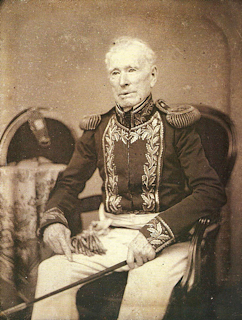
Birth of William Brown, Commander in the Argentine Navy

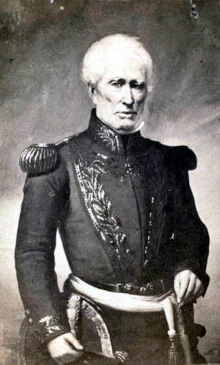
William Brown, Irish sailor, merchant, and naval commander who serves in the Argentine Navy during the wars of the early 19th century, is born on June 22, 1777, in Foxford, County Mayo. He is also known in Spanish as Guillermo Brown or Almirante Brown.

Comparatively little is known of his early life, and it has been suggested that he was illegitimate and took his mother’s surname and that his father’s surname was actually Gannon. He emigrates with his father to Baltimore, Maryland, in 1793, eventually settling in Philadelphia, Pennsylvania. A short time after their arrival, the friend who had invited them and offered them food and hospitality dies of yellow fever. Several days later, his father also succumbs to the same disease.

One morning, while Brown is wandering along the banks of the Delaware River, he meets the captain of a ship then moored in port. The captain inquires if he wants employment and Brown agrees. The captain engages him as a cabin boy, thereby setting him on the naval promotion ladder, where he works his way to the captaincy of a merchant ship. After ten years at sea, where he develops his skills as a sailor and reaches the rank of captain, Brown is press-ganged into a Royal Navy warship. British impressment of American sailors is one of the primary issues leading to the War of 1812.

During the Napoleonic Wars, Brown escapes the ship he is serving on, a galley, and scuttles the vessel. However, the French do not believe he had assisted them and imprison him in Lorient. On being transferred to Metz, he escapes, disguised in a French officer’s uniform. However, he is recaptured and is imprisoned in the fortress of Verdun. In 1809, he escapes from there in the company of a British Army officer named Clutchwell, and eventually reaches German territory.

Returning to England, Brown renounces his maritime career and on July 29, 1809, he marries Elizabeth Chitty, daughter of an English shipping magnate, in Kent. As he is a Catholic and she a Protestant, they agree to raise their sons as Catholics and their daughters as Protestants. Despite lengthy periods of enforced separation, they have nine children. He leaves the same year for the Río de la Plata on board Belmond and sets himself up as a merchant in Montevideo, Uruguay.

Late in 1811 Brown settles in Buenos Aires just as a criollo rebellion against Spanish colonial rule in Argentina is gaining strength. By April 1812, he is developing a coastal shipping business in fruit and hides. As the Spanish naval blockade of 1812–14 begins to choke trade, he is first commissioned by the patriot government as a privateer licensed to raid Spanish merchantmen, and then, on March 1, 1814, invited to take charge of a small rebel naval squadron to contest Spanish control of the Río de la Plata estuary. Leading a fleet of nineteen ships, he fixes with great speed on a set of wartime naval routines and signaling methods, and organises a system of discipline, founding the navy on principles that pay exceptional attention to the welfare of ordinary seamen.

In early March 1814, Brown shows personal courage and incisive skill in outwitting and defeating a more powerful Spanish force near Martín García Island, thereby dividing the Spanish blockade. A Spanish attempt in May 1814 to break his blockade of Montevideo is decisively crushed by him and his makeshift navy, and the Spanish strongholds on the Atlantic coast collapse, ending open war. In 1815 and 1816, however, he carries out skirmishing raids on military and commercial targets belonging to Spanish South American possessions, until detained by a British colonial governor in Barbados in July 1816 for alleged infringements of international rules of trade.

Illness, and a tortuous but ultimately successful appeal process, take up most of 1817–18, but when Brown returns to Argentina in October 1818, political enemies set in motion a prosecution for alleged disobedience of orders. Cashiered in August 1819, then restored in rank but forced to retire, he attempts suicide the following month. Convalescence and resumption of his trading concern occupies him for several years.

A repentant government renews Brown’s command of the navy in December 1825, when war breaks out with Brazil. Though vastly outnumbered by the Brazilian fleet, he shows audacity and great finesse in a number of successful engagements in the Plate estuary in 1826, roving up the Brazilian coast on occasion to create great confusion. In February 1827, he triumphs in a series of actions known as the Battle of Juncal. After another year of commercial privateering against the Brazilian merchant fleet, he is one of two delegates selected to sign peace terms with Brazil in October 1828.

Retiring from active service that month, Brown tries to remain neutral as civil war erupts in Argentina, but reluctantly accepts the post of governor of Buenos Aires under General Juan Lavalle from December 1828 to May 1829, when he resigns in disgust at government excesses. During 1829–37 he holds aloof from the despotic government of Juan Manuel de Rosas. After French and British encroachments on the region in the later 1830s, he offers to take charge of the navy again to protect national independence and is available to defend Argentine interests when war breaks out with a French-backed Uruguay in early 1841. Though exasperated by a long and “stupid war,” he blockades the Uruguayan navy effectively until French and British fleets intervene in July 1845 with overwhelming force to capture his squadron and bring the war to an end.

Idolised by the Argentinian population for his high-principled and humane advocacy of independent democracy, Brown passes his last years trading and farming a country estate. In late 1847, he journeys to Ireland, hoping to find relations in Mayo, and is shocked by the hunger and destitution of the Great Famine.

Brown dies on March 3, 1857, at his home in Buenos Aires and is buried with full military honours. The Argentine government issues a comuniqué: “With a life of permanent service to the national wars that our homeland has fought since its independence, William Brown symbolized the naval glory of the Argentine Republic.” During his burial, General Bartolomé Mitre famously says: “Brown in his lifetime, standing on the quarterdeck of his ship, was worth a fleet to us.” His grave is currently located in the La Recoleta Cemetery in Buenos Aires.
Leave a comment

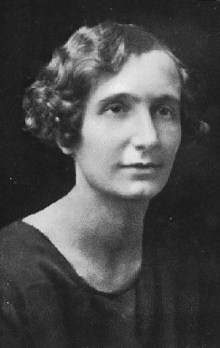
Death of Geraldine Cummins, Spiritualist Medium, Novelist & Playwright

Geraldine Dorothy Cummins, spiritualist medium, novelist and playwright, dies in Cork, County Cork, on August 24, 1969. She begins her career as a creative writer, but increasingly concentrates on mediumship and “channelled” writings, mostly about the lives of Jesus and Saint Paul, though she also publishes on a range of other topics. Her novels and plays typically document Irish life in a naturalist manner, often exploring the pathos of everyday life.

Cummins is born in Cork, on January 24, 1890, the daughter of the physician Ashley Cummins, professor of medicine at the National University of Ireland and sister to Mary Hearn and Iris Cummins. In her youth she is an athlete, becoming a member of the Irish Women’s International Hockey Team. She is also active as a suffragette. Her desire to follow her father in a medical career is vetoed by her mother, so she begins a literary career as a journalist and creative writer. From 1913 to 1917 she writes three plays for the Abbey Theatre in collaboration with Suzanne R. Day, the most successful of which is the comedy Fox and Geese (1917). She publishes the novel The Land they Loved in 1919, a naturalistic study of working class Irish life.

As she concentrates on mediumship, Cummins’s literary work tails off. However, she continues to publish creative literature in her later years. Her solo-written play, Till Yesterday Comes Again, is produced by the Chanticleer Theatre, London, in 1938. She also publishes another novel, Fires of Beltane (1936) and a short-story collection Variety Show (1959).

Literary critic Alexander G. Gonzalez says that Cummins work tries to encompass the full range of Irish social life, from the aristocracy to the lower classes. In this respect she is influenced by Somerville and Ross. Gonzalez considers her short story The Tragedy of Eight Pence to be the “finest” of her writings, the tale of a “happily married woman trying to shield her ill husband from the knowledge that his death will leave her penniless.”

Cummins begins to work as a medium following prompting from Hester Dowden and E. B. Gibbes. She receives alleged messages from her spirit-guide “Astor” and is an exponent of automatic writing. Her books are based on these communications. In 1928 she publishes The Scripts of Cleophas, which provides channelled material on early Christian history complementing Acts of the Apostles and St. Paul’s writings, supposed to have been communicated by the spirit of Cleophas, one of Paul’s followers. This is later supplemented by Paul in Athens (1930) and The Great Days of Ephesus (1933).

Cummins’s next work describes human progress through spiritual enlightenment. The Road to Immortality (1932) provides a glowing vision of the afterlife. Its contents are purportedly communicated from the “other side” by the psychologist and psychic researcher Frederic W. H. Myers. Unseen Adventures (1951) is a spiritual autobiography. She also publishes several books of spiritually-derived knowledge about details of the life of Jesus.

During World War II Cummins allegedly works as a British agent, using her personal contacts to identify pro-Nazi factions within the Irish Republican movement. She also employs her psychic activities to support the Allied cause, sending channelled messages from sympathetic spirits to Allied leaders to support the war effort. This includes information from Theodore Roosevelt, Arthur Balfour and Sara Roosevelt, Franklin D. Roosevelt‘s mother.

In the 1940s and 50s Cummins works with psychiatrists to develop a model for using spiritualism to treat mental illness, ideas she explores in Perceptive Healing (1945) and Healing the Mind (1957). She collaborates with a psychiatrist who uses the pseudonym R. Connell on both books. Their method is for her to “read” an object associated with the patient and thus identify either childhood traumas or experiences of ancestors which have created the problem. This includes treating a patient who is concerned about his homosexual desires by discovering that this derives from the fact that his Huguenot ancestors were humiliated by Catholics in the 18th century.

Cummins’s biography of writer and spiritualist Edith Somerville is published in 1952. She also writes The Fate of Colonel Fawcett (1955) which offers her psychic insights into the disappearance of the explorer Percy Fawcett in Brazil in 1925. She claims she had received psychic messages from Fawcett in 1936. He was still alive at that time, informing her that he had found relics of Atlantis in the jungle, but was ill. In 1948 she has a message from Fawcett’s spirit reporting his death. Her last book is an account of her conversations with the spirit of Winifred Coombe Tennant, Swan on a Black Sea; a Study in Automatic Writing; the Cummins-Willett Scripts (1965).

The automatic writing and alleged channeled material from Cummins have been examined and have been described by some psychical researchers to be the product of her own subconscious. For example, Harry Price, who studies various mental mediums including Cummins, writes that “there is no question that most of the automatic writing which has been published is the product of the subconscious.” Paranormal researcher Hilary Evans notes that unlike most spiritualists, Cummins does not accept the phenomena at face value and questions the source of the material.

According to the psychical researcher Eric Dingwall information published in Cummins’ scripts allegedly from Winifred Coombe Tennant are discovered to be erroneous. Biographer Rodger Anderson writes that although spiritualists consider Cummins completely honest “some suspected that she occasionally augmented her store of knowledge about deceased persons by normal means if by doing so she could bring comfort to the bereaved.”

Cummins’ book The Fate of Colonel Fawcett (1955), contains her automatist scripts allegedly from the spirit of Colonel Fawcett. Spiritualists claim the scripts are evidence for survival. However, the psychical researcher Simeon Edmunds notes that before his disappearance Fawcett had written articles for The Occult Review. Cummins also contributes articles to the same review and Edmunds suggests it is likely she had read the work of Fawcett. Edmunds concludes the scripts are a case of subliminal memory and unconscious dramatization.

Other researchers such as Mary Rose Barrington have suspected fraud as Cummins had long standing connections with friends and families of the deceased that she claimed to have contacted and could have easily obtained information by natural means. The classical scholar E. R. Dodds writes that Cummins worked as a cataloguer at the National Library of Ireland and could have taken information from various books that would appear in her automatic writings about ancient history. Her writings were heavily influenced by literature and religious texts. Dodds also studies her book Swan on a Black Sea which was supposed to be an account of spirit conversation but writes there is evidence suggestive of fraud as Cummins had received some of the information by natural means.

Cummins dies in Cork on August 24, 1969, and is buried in St. Lappan’s churchyard, Little Island.


Leave a comment

Death of William Brown, Commander in the Argentine Navy

William Brown, Irish sailor, merchant, and naval commander who serves in the Argentine Navy during the wars of the early 19th century, dies in Buenos Aires, Argentina, on March 3, 1857. He is also known in Spanish as Guillermo Brown or Almirante Brown.

Brown is born on June 22, 1777, in Foxford, County Mayo. Comparatively little is known of his early life, and it has been suggested that he was illegitimate and took his mother’s surname and that his father’s surname was actually Gannon. He emigrates with his father to Baltimore, Maryland, in 1793, eventually settling in Philadelphia, Pennsylvania. A short time after their arrival, the friend who had invited them and offered them food and hospitality dies of yellow fever. Several days later, his father also succumbs to the same disease.

One morning, while Brown is wandering along the banks of the Delaware River, he meets the captain of a ship then moored in port. The captain inquires if he wants employment and Brown agrees. The captain engages him as a cabin boy, thereby setting him on the naval promotion ladder, where he works his way to the captaincy of a merchant ship. After ten years at sea, where he develops his skills as a sailor and reaches the rank of captain, Brown is press-ganged into a Royal Navy warship. British impressment of American sailors is one of the primary issues leading to the War of 1812.

During the Napoleonic Wars, Brown escapes the ship he is serving on, a galley, and scuttles the vessel. However, the French do not believe he had assisted them and imprison him in Lorient. On being transferred to Metz, he escapes, disguised in a French officer’s uniform. However, he is recaptured and is imprisoned in the fortress of Verdun. In 1809, he escapes from there in the company of a British Army officer named Clutchwell, and eventually reaches German territory.

Returning to England, Brown renounces his maritime career and on July 29, 1809, he marries Elizabeth Chitty, daughter of an English shipping magnate, in Kent. As he is a Catholic and she a Protestant, they agree to raise their sons as Catholics and their daughters as Protestants. Despite lengthy periods of enforced separation, they have nine children. He leaves the same year for the Río de la Plata on board Belmond and sets himself up as a merchant in Montevideo, Uruguay.

Late in 1811 Brown settles in Buenos Aires just as a criollo rebellion against Spanish colonial rule in Argentina is gaining strength. By April 1812, he is developing a coastal shipping business in fruit and hides. As the Spanish naval blockade of 1812–14 begins to choke trade, he is first commissioned by the patriot government as a privateer licensed to raid Spanish merchantmen, and then, on March 1, 1814, invited to take charge of a small rebel naval squadron to contest Spanish control of the Río de la Plata estuary. Leading a fleet of nineteen ships, he fixes with great speed on a set of wartime naval routines and signaling methods, and organises a system of discipline, founding the navy on principles that pay exceptional attention to the welfare of ordinary seamen.

In early March 1814, Brown shows personal courage and incisive skill in outwitting and defeating a more powerful Spanish force near Martín García Island, thereby dividing the Spanish blockade. A Spanish attempt in May 1814 to break his blockade of Montevideo is decisively crushed by him and his makeshift navy, and the Spanish strongholds on the Atlantic coast collapse, ending open war. In 1815 and 1816, however, he carries out skirmishing raids on military and commercial targets belonging to Spanish South American possessions, until detained by a British colonial governor in Barbados in July 1816 for alleged infringements of international rules of trade.

Illness, and a tortuous but ultimately successful appeal process, take up most of 1817–18, but when Brown returns to Argentina in October 1818, political enemies set in motion a prosecution for alleged disobedience of orders. Cashiered in August 1819, then restored in rank but forced to retire, he attempts suicide the following month. Convalescence and resumption of his trading concern occupies him for several years.

A repentant government renews Brown’s command of the navy in December 1825, when war breaks out with Brazil. Though vastly outnumbered by the Brazilian fleet, he shows audacity and great finesse in a number of successful engagements in the Plate estuary in 1826, roving up the Brazilian coast on occasion to create great confusion. In February 1827, he triumphs in a series of actions known as the Battle of Juncal. After another year of commercial privateering against the Brazilian merchant fleet, he is one of two delegates selected to sign peace terms with Brazil in October 1828.

Retiring from active service that month, Brown tries to remain neutral as civil war erupts in Argentina, but reluctantly accepts the post of governor of Buenos Aires under General Juan Lavalle from December 1828 to May 1829, when he resigns in disgust at government excesses. During 1829–37 he holds aloof from the despotic government of Juan Manuel de Rosas. After French and British encroachments on the region in the later 1830s, he offers to take charge of the navy again to protect national independence and is available to defend Argentine interests when war breaks out with a French-backed Uruguay in early 1841. Though exasperated by a long and “stupid war,” he blockades the Uruguayan navy effectively until French and British fleets intervene in July 1845 with overwhelming force to capture his squadron and bring the war to an end.

Idolised by the Argentinian population for his high-principled and humane advocacy of independent democracy, Brown passes his last years trading and farming a country estate. In late 1847, he journeys to Ireland, hoping to find relations in Mayo, and is shocked by the hunger and destitution of the Great Famine.

Brown dies on March 3, 1857, at his home in Buenos Aires and is buried with full military honours. The Argentine government issues a comuniqué: “With a life of permanent service to the national wars that our homeland has fought since its independence, William Brown symbolized the naval glory of the Argentine Republic.” During his burial, General Bartolomé Mitre famously says: “Brown in his lifetime, standing on the quarterdeck of his ship, was worth a fleet to us.” His grave is currently located in the La Recoleta Cemetery in Buenos Aires.


Leave a comment

Birth of Geraldine Cummins, Spiritualist Medium, Novelist & Playwright

Geraldine Dorothy Cummins, spiritualist medium, novelist and playwright, is born in Cork, County Cork, on January 24, 1890. She began her career as a creative writer, but increasingly concentrates on mediumship and “channelled” writings, mostly about the lives of Jesus and Saint Paul, though she also publishes on a range of other topics. Her novels and plays typically document Irish life in a naturalist manner, often exploring the pathos of everyday life.

Cummins is the daughter of the physician Ashley Cummins, professor of medicine at the National University of Ireland and sister to Mary Hearn and Iris Cummins. In her youth she is an athlete, becoming a member of the Irish Women’s International Hockey Team. She is also active as a suffragette. Her desire to follow her father in a medical career is vetoed by her mother, so she begins a literary career as a journalist and creative writer. From 1913 to 1917 she writes three plays for the Abbey Theatre in collaboration with Suzanne R. Day, the most successful of which is the comedy Fox and Geese (1917). She publishes the novel The Land they Loved in 1919, a naturalistic study of working class Irish life.

As she concentrates on mediumship, Cummins’s literary work tails off. However, she continues to publish creative literature in her later years. Her solo-written play, Till Yesterday Comes Again, is produced by the Chanticleer Theatre, London, in 1938. She also publishes another novel, Fires of Beltane (1936) and a short-story collection Variety Show (1959).

Literary critic Alexander G. Gonzalez says that Cummins work tries to encompass the full range of Irish social life, from the aristocracy to the lower classes. In this respect she is influenced by Somerville and Ross. Gonzalez considers her short story The Tragedy of Eight Pence to be the “finest” of her writings, the tale of a “happily married woman trying to shield her ill husband from the knowledge that his death will leave her penniless.”

Cummins begins to work as a medium following prompting from Hester Dowden and E. B. Gibbes. She receives alleged messages from her spirit-guide “Astor” and is an exponent of automatic writing. Her books are based on these communications. In 1928 she publishes The Scripts of Cleophas, which provides channelled material on early Christian history complementing Acts of the Apostles and St. Paul’s writings, supposed to have been communicated by the spirit of Cleophas, one of Paul’s followers. This is later supplemented by Paul in Athens (1930) and The Great Days of Ephesus (1933).

Cummins’s next work describes human progress through spiritual enlightenment. The Road to Immortality (1932) provides a glowing vision of the afterlife. Its contents are purportedly communicated from the “other side” by the psychologist and psychic researcher Frederic W. H. Myers. Unseen Adventures (1951) is a spiritual autobiography. She also publishes several books of spiritually-derived knowledge about details of the life of Jesus.

During World War II Cummins allegedly works as a British agent, using her personal contacts to identify pro-Nazi factions within the Irish Republican movement. She also employs her psychic activities to support the Allied cause, sending channelled messages from sympathetic spirits to Allied leaders to support the war effort. This includes information from Theodore Roosevelt, Arthur Balfour and Sara Roosevelt, Franklin D. Roosevelt‘s mother.

In the 1940s and 50s Cummins works with psychiatrists to develop a model for using spiritualism to treat mental illness, ideas she explores in Perceptive Healing (1945) and Healing the Mind (1957). She collaborates with a psychiatrist who uses the pseudonym R. Connell on both books. Their method is for her to “read” an object associated with the patient and thus identify either childhood traumas or experiences of ancestors which have created the problem. This includes treating a patient who is concerned about his homosexual desires by discovering that this derives from the fact that his Huguenot ancestors were humiliated by Catholics in the 18th century.

Cummins’s biography of writer and spiritualist Edith Somerville is published in 1952. She also writes The Fate of Colonel Fawcett (1955) which offers her psychic insights into the disappearance of the explorer Percy Fawcett in Brazil in 1925. She claims she had received psychic messages from Fawcett in 1936. He was still alive at that time, informing her that he had found relics of Atlantis in the jungle, but was ill. In 1948 she has a message from Fawcett’s spirit reporting his death. Her last book is an account of her conversations with the spirit of Winifred Coombe Tennant, Swan on a Black Sea; a Study in Automatic Writing; the Cummins-Willett Scripts (1965).

The automatic writing and alleged channeled material from Cummins have been examined and have been described by some psychical researchers to be the product of her own subconscious. For example, Harry Price, who studies various mental mediums including Cummins, writes that “there is no question that most of the automatic writing which has been published is the product of the subconscious.” Paranormal researcher Hilary Evans notes that unlike most spiritualists, Cummins does not accept the phenomena at face value and questions the source of the material.

According to the psychical researcher Eric Dingwall information published in Cummins’ scripts allegedly from Winifred Coombe Tennant are discovered to be erroneous. Biographer Rodger Anderson writes that although spiritualists consider Cummins completely honest “some suspected that she occasionally augmented her store of knowledge about deceased persons by normal means if by doing so she could bring comfort to the bereaved.”

Cummins’ book The Fate of Colonel Fawcett (1955), contains her automatist scripts allegedly from the spirit of Colonel Fawcett. Spiritualists claim the scripts are evidence for survival. However, the psychical researcher Simeon Edmunds notes that before his disappearance Fawcett had written articles for The Occult Review. Cummins also contributes articles to the same review and Edmunds suggests it is likely she had read the work of Fawcett. Edmunds concludes the scripts are a case of subliminal memory and unconscious dramatization.

Other researchers such as Mary Rose Barrington have suspected fraud as Cummins had long standing connections with friends and families of the deceased that she claimed to have contacted and could have easily obtained information by natural means. The classical scholar E. R. Dodds writes that Cummins worked as a cataloguer at the National Library of Ireland and could have taken information from various books that would appear in her automatic writings about ancient history. Her writings were heavily influenced by literature and religious texts. Dodds also studies her book Swan on a Black Sea which was supposed to be an account of spirit conversation but writes there is evidence suggestive of fraud as Cummins had received some of the information by natural means.

Cummins dies in Cork on August 25, 1969, and is buried in St. Lappan’s churchyard, Little Island.


Leave a comment

Death of Radio Éireann’s Agony Aunt, Frankie Byrne

Frankie Byrne, Irish public relations consultant, broadcaster and Radio Éireann’s own agony aunt, dies in St. Vincent’s Hospital, Dublin, on December 11, 1993.

Byrne is born into a successful family of journalists from Dublin. Cared for by servants, from a young age Byrne feels like she isn’t loved as much as the other children in the family. She is the middle child with two brothers and two sisters. She attends boarding school in Rathfarnham and has a limited relationship with her parents. Her father is a racing journalist and broadcaster who lives in the Gresham Hotel on O’Connell Street where his job at Radio Éireann is located. She becomes addicted to nicotine and alcohol. Two of her siblings die from alcoholism.

In the late 1940s, Byrne works at the Brazilian embassy in Dublin. She is a pioneer in Irish radio and her program, “Agony Aunt,” leads to public confessionals on the radio. She writes an Agony Aunt column for the Evening Press during the same period. She is best known for her 22 years of the radio program ‘Dear Frankie.’ On the show she gives relationship advice to listener requests. Dear Frankie, sponsored by Jacob’s, paves the way for the contemporary radio programs such as The Gerry Ryan Show and RTÉ Radio 1’s Liveline with Joe Duffy.

Dear Frankie is broadcast from 1963 to 1985. It opens with the words, ‘Welcome to Women’s Page, a program for and about you.’ The program begins as a 15-minute question and answer format on household issues but soon becomes a radio program that allows people to share confidences and seek advice. She shares household problems with her listeners ranging from jealous husband to lovelorn teenagers. She claims to know nothing about domestic science but that she does know about love. She advises on domestic relationships while living a life of turmoil. The most unique feature of Dear Frankie is that the program sets people to talking and helps begin a national conversation on the lonely struggles of generations of Irish women.

Byrne never marries but has a 25+ year relationship with Frank Hall, the satirist and columnist for the Evening Herald. Their relationship has been disputed by some family members who deny they had a child together and that the couple were just good friends. Nevertheless, in the middle of this relationship, she becomes pregnant in the mid-1950s, giving birth to their daughter Valerie on July 12, 1956. She wants to keep the baby but ultimately gives her up to St. Clare’s Orphanage in Stamullen. She frequently visits her baby daughter until she is eventually adopted some 15 weeks later, going to a family who goes on to adopt four more children. Her relationship with Frank Hall comes to an end in the mid-1970s. Although she had struggled with alcoholism for many years, she stops drinking in the mid-1970s but is subsequently prescribed Valium and is addicted to the drug for the remainder of her life.

Byrne and her daughter are reunited on December 13, 1983, a decade before her death. The last time Valerie sees her mother is exactly ten years later, on December 13, 1993, in the mortuary in St. Vincent’s Hospital.

Byrne dies at the age of 71 from Alzheimer’s disease in St. Vincent’s Hospital, Dublin, on Saturday, December 11, 1993. Tributes are paid by colleagues and friends including the RTÉ assistant Director-General, Bobby Gahan, who describes her voice as “one of the greatest sounds of radio.” Others who pay public tribute to her include fellow broadcasters Larry Gogan and Gay Byrne.

Byrne is remembered as an influential force during the time of her radio show, and it has been said that an entire generation can hum the signature tune to her radio program. Following her death there is an outburst of support. Gay Byrne describes her as having been “a national institution who had been loved by everyone.” Dear Frankie is often credited as the first ‘agony aunt’ radio show program format in Ireland.

Byrne’s talk show and life inspire numerous pieces of literature including a stage production in 2010 and 2012, authored by Niamh Gleeson and produced by the Five Lamps Theater Company, which tells the story of her ‘tragic and secretive life.’ She is also the subject of a book published in 1998, which compiles the advice which she gave on Dear Frankie. In 2006, RTÉ airs a documentary on Byrne, in which they explore her life following the show, and include interviews with her family and friends, including her daughter Valerie.

Byrne is also famous for having been the first woman to found a public relations company in 1963, that works almost exclusively in promoting Jacob’s.


Leave a comment

Birth of Sir Roger Casement, Diplomat & Irish Nationalist

Sir Roger Casement, in full Sir Roger David Casement, diplomat and Irish nationalist, is born on September 1, 1864, in Kingstown (now Dún Laoghaire), County Dublin. Following his execution for treason in 1916, he becomes one of the principal Irish martyrs in the revolt against British rule in Ireland.

Casement is born into an Anglo-Irish family, and lives his very early childhood at Doyle’s Cottage, Lawson Terrace, Sandycove. His father, Captain Roger Casement of the (King’s Own) Regiment of Dragoons, is the son of Hugh Casement, a Belfast shipping merchant who goes bankrupt and later moves to Australia. After the family moves to England, Casement’s mother, Anne Jephson (or Jepson), of a Dublin Anglican family, purportedly has him secretly baptised at the age of three as a Roman Catholic in Rhyl, Wales.

The family lives in England in genteel poverty. Casement’s mother dies when he is nine years old. His father takes the family back to County Antrim in Ireland to live near paternal relatives. His father dies when he is thirteen years old. He is educated at the Diocesan School, Ballymena (later the Ballymena Academy). He leaves school at 16 and goes to England to work as a clerk with Elder Dempster Lines, a Liverpool shipping company headed by Alfred Lewis Jones.

Casement is a British consul in Portuguese East Africa (1895–98), Angola (1898–1900), Congo Free State (1901–04), and Brazil (1906–11). He gains international fame for revealing atrocious cruelty in the exploitation of native labour by white traders in the Congo and the Putumayo River region of Peru. His Congo report, published in 1904, leads to a major reorganization of Belgian rule in the Congo in 1908, and his Putumayo report of 1912 earns him a knighthood, which is ultimately forfeited on June 29, 1916.

Ill health forces Casement to retire to Ireland in 1912. Although he comes from an Ulster Protestant family, he has always sympathized with the predominantly Roman Catholic Irish nationalists. Late in 1913 he helps form the National Volunteers, and in July 1914 he travels to New York City to seek American aid for that anti-British force. After World War I breaks out in August, he hopes that Germany might assist the Irish independence movement as a blow against Great Britain. On arriving in Berlin in November 1914, he finds that the German government is unwilling to risk an expedition to Ireland and that most Irish prisoners of war would refuse to join a brigade that he intends to recruit for service against England.

Later, Casement fails to obtain a loan of German army officers to lead the Irish rising planned for Easter 1916. In a vain effort to prevent the revolt, he sails for Ireland on April 12 in a German submarine. Put ashore near Tralee, County Kerry, he is arrested on April 24 and taken to London, where, on June 29, he is convicted of treason and sentenced to death. An appeal is dismissed, and he is hanged at London’s Pentonville Prison on August 3, 1916, despite attempts by influential Englishmen to secure a reprieve in view of his past services to the British government. During this time, diaries reputedly written by Casement and containing detailed descriptions of homosexual practices are circulated privately among British officials. After years of dispute over their authenticity, the diaries are made available to scholars by the British home secretary in July 1959. It is generally considered that the passages in question are in Casement’s handwriting.

In 1965 Casement’s remains are repatriated to Ireland. Despite the annulment, or withdrawal, of his knighthood in 1916, the 1965 UK Cabinet record of the repatriation decision refers to him as “Sir Roger Casement.”

Casement’s last wish is to be buried at Murlough Bay on the north coast of County Antrim, in present-day Northern Ireland, but Prime Minister Harold Wilson‘s government had released the remains only on condition that they could not be brought into Northern Ireland, as “the government feared that a reburial there could provoke Catholic celebrations and Protestant reactions.”

Casement’s remains lay in state at the Garrison Church, Arbour Hill (now Arbour Hill Prison) in Dublin for five days, close to the graves of other leaders of the 1916 Easter Rising. After a state funeral, his remains are buried with full military honours in the Republican plot in Glasnevin Cemetery in Dublin, alongside other Irish republicans and nationalists. The President of Ireland, Éamon de Valera, then the last surviving leader of the Easter Rising, attends the ceremony, along with an estimated 30,000 others.


Leave a comment

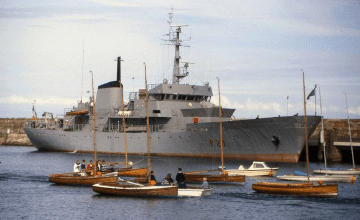
Commissioning of the LÉ Deirdre (P20)

The Deirdre (P20), an offshore patrol vessel in the Irish Naval Service, is commissioned by Lt. Cdr. Liam Brett on June 19, 1972. The building of LÉ Deirdre marks a milestone in the development of the Naval Service, being the first ship purpose-built in Ireland to patrol in Irish waters. She is named after Deirdre, a tragic heroine from Irish mythology who committed suicide after her lover’s murder.

In 1971, a contract is signed with Verlome Cork Dockyard (VCD) to build an offshore patrol vessel for the Naval Service. Built in 1972, LÉ Deirdre is built as a replacement for the Ton-class minesweepers, and one of the first vessels custom-built for the Irish Naval Service. She has a longer range and is a more seaworthy ship for work in the Atlantic. LÉ Deirdre becomes the prototype for the later Emer-type vessels.

Deirdre undertakes a number of search and rescue operations throughout her career. For example, LÉ Deirdre is one of the vessels involved in the 1979 Fastnet race rescue operations, assisting the crews of two yachts. In 1990, during the rescue of a Spanish trawler crew in Bantry Bay, a member of LÉ Deirdre‘s crew dies and is posthumously awarded the Distinguished Service Medal and Spanish Cross of Naval Merit.

By the time of the vessel’s naval decommissioning in early 2001, LÉ Deirdre has travelled approximately 450,000 nautical miles. She is replaced by a Róisín-class patrol vessel.

Deirdre is sold at public auction for IR£190,000 to the English yacht chartering company Seastream International for conversion into the luxury charter yacht Tosca IV for the company’s owner, businessman Christopher Matthews. Speaking on the radio, a Seastream spokesman appears pleased with their bargain as they had been prepared to bid up to IR£500,000. The auction starting price had been IR£60,000.

The conversion in a Polish shipyard is not completed as the English owner is killed while piloting a Eurocopter EC130 helicopter which crashes at Sauk Prairie, Wisconsin after hitting power lines over Lake Wisconsin on August 6, 2004. In 2007 LÉ Deirdre is towed to Brazil for further refit and completion. Substantially complete, she arrives at Jacksonville, Florida in September 2012 for final outfitting as Santa Rita I. However, in August 2014, Santa Rita I is towed to Green Cove Springs, Florida, for breaking.


Leave a comment

Death of Jazz Guitarist Louis Stewart

Louis Stewart, Irish jazz guitarist, dies in Harold’s Cross, Dublin on August 20, 2016.

Born on January 5, 1944 in Waterford, County Waterford, Stewart grows up in Dublin. He begins playing guitar when he is thirteen, influenced by guitarists Les Paul and Barney Kessel. He begins his professional career performing in Dublin showbands. In 1968, he wins an award as the most outstanding soloist at the Montreux Jazz Festival. Soon after, he spends three years with Benny Goodman.

Stewart records his debut album, Louis the First, in Dublin, and then records in London with Billy Higgins, Peter Ind, Sam Jones, Red Mitchell, and Spike Robinson. From the mid to late 1970s, he works with George Shearing, touring the United States, Brazil, and playing European festivals, and recording eight albums, including several for the MPS Records label in a virtuosic trio with Shearing and the Danish bassist Niels-Henning Ørsted Pedersen. He also appears on albums by Joe Williams and J. J. Johnson, and works with many other jazz musicians.

In 1981, ahead of Stewart’s debut in the United States as a leader, The New York Times states, “Mr. Stewart seems to have his musical roots in bebop. He leans toward material associated with Charlie Parker and he spins out single-note lines that flow with an unhurried grace, colored by sudden bright, lively chorded phrases. His up-tempo virtuosity is balanced by a laid-back approach to ballads, which catches the mood of the piece without sacrificing the rhythmic emphasis that keeps it moving.”

Stewart is prominently featured in Norman Mongan’s book, The History Of The Guitar In Jazz, in a chapter devoted to guitarists who are considered to be contemporary masters (along with players such as Jim Hall, Pat Martino, and George Benson). In a review of his live album Overdrive (Hep, 1993), AllMusic states, “Louis Stewart is one of the all-time greats, and it is obvious from the first notes he plays on any occasion.”

Stewart receives an honorary doctorate from Trinity College, Dublin, in 1998. In 2009, he becomes only the second jazz musician to be elected to Aosdána, an Irish affiliation of people engaged in literature, music, and visual arts that was established by the Irish Arts Council in 1981 to honour those whose work has made an outstanding contribution to the creative arts in Ireland.

In 2015, Stewart is diagnosed with cancer and dies on August 20, 2016 in Harold’s Cross, Dublin, at the age of 72.


Leave a comment

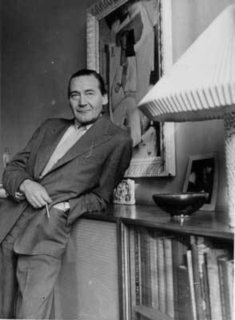
Birth of Architect Michael Scott

michael-scott

Michael Scott, Irish architect whose buildings include the Busáras building in Dublin, Cork Opera House, the Abbey Theatre and both Tullamore and Portlaoise Hospitals, is born in Drogheda on June 24, 1905.

Scott’s family originates in the province of Munster. His father, William Scott, is a school inspector from near Sneem on the Iveragh Peninsula in County Kerry. His mother is from County Cork. He is educated at Belvedere College in Dublin. There he first demonstrates his skills at painting and acting. Initially he wants to pursue a career as a painter, but his father points out that it might make more financial sense to become an architect.

Scott becomes an apprentice for the sum of £375 per annum to the Dublin architectural firm Jones and Kelly. He remains there from 1923 until 1926, where he studies under Alfred E. Jones. In the evenings after work, he also attends the Metropolitan School of Art and the Abbey School of Acting, and appears in many plays there until 1927, including the first productions of Seán O’Casey’s Juno and the Paycock and The Plough and the Stars. On completing his pupilage, he becomes an assistant to Charles James Dunlop and then has a brief spell as an assistant architect in the Office of Public Works.

In 1931 Scott partners with Norman D. Good to form Scott and Good, and they open an office in Dublin. They design the hospital at Tullamore (1934–1937) and Portlaoise General Hospital (1935). Between 1937 and 1938, he is the President of the Architectural Association of Ireland (AAI). He founds his company, Michael Scott Architects, in 1938. That same year he also designs his house Geragh, at Sandycove, County Dublin.

Scott’s most important pre-war commission is the Irish Pavilion for the 1939 New York World’s Fair. He produces a shamrock shaped building constructed in steel, concrete and glass. It is selected by an international jury as the best building in the show. As a result, he is presented with a silver medal for distinguished services and given honorary citizenship of the city of New York by then Mayor Fiorello H. La Guardia. Other better-known architects who design national pavilions for this World Fair include Alvar Aalto of Finland and Oscar Niemeyer of Brazil.

Scott has three major commissions from the Córas Iompair Éireann CIÉ, the Inchicore Chassis Works, the Donnybrook Bus Garage and, most famously, the Dublin Central Bus Station, to be known as àras Mhic Dhiarmada or Busáras. Though initially controversial, Busáras wins Scott the Royal Institute of the Architects of Ireland Triennial Gold Medal for Architecture.

Later, Ronnie Tallon and Robin Walker become partners, and the firm is renamed Scott Tallon Walker in 1975, shortly after the firm wins the Royal Institute of British Architects (RIBA) Royal Gold Medal.

Scott, who spends most of his life living at Sandycove Point, just south of Dún Laoghaire in south Dublin, dies in Dublin on January 24, 1989, and is buried near Sneem in County Kerry.


Leave a comment

Birth of Radiohead Guitarist Ed O’Brien

ed-obrien-radiohead

Edward John O’Brien, English guitarist, member of the alternative rock band Radiohead and grandson of a Tipperary emigrant, is born in Oxford, Oxfordshire, England on April 15, 1968. In 2010, Rolling Stone names him the 59th greatest guitarist of all time. Along with the other members of Radiohead, he is inducted into the Rock and Roll Hall of Fame in 2019.

O’Brien grows up listening to post-punk acts such as Siouxsie and the Banshees, Adam and the Ants, Depeche Mode, The Police and David Bowie. His earliest guitar influence is Andy Summers of The Police, particularly his use of delay and chorus effects on “Walking on the Moon.” His other influences include Peter Buck of R.E.M., Paul Weller of The Jam, Johnny Marr of The Smiths, John McGeoch of Magazine and Siouxsie and the Banshees, and The Edge of U2. He attends Abingdon School, an independent school for boys, in Oxfordshire, England, where he meets the other members of Radiohead. In 1985, they formed On a Friday, the name referring to the band’s usual rehearsal day in the school’s music room. O’Brien also studies economics at the University of Manchester.

In 1991, On a Friday sign a six-album record contract with EMI and changes their name to Radiohead. They find early success with their 1992 single “Creep“. Their third album, OK Computer (1997), propels them to international fame and is often acclaimed as one of the best albums of all time. O’Brien becomes depressed during the extensive OK Computer tour. After the tour, he returns to Oxford and falls further into depression.

Radiohead’s next albums, Kid A (2000) and Amnesiac (2001), are recorded simultaneously and mark a dramatic change in sound, incorporating influences from electronic music, classical music, jazz and krautrock. O’Brien keeps an online diary of Radiohead’s progress during the recording and initially struggles with the band’s change in direction. At the suggestion of Michael Brook, creator of the Infinite Guitar, he begins using sustain units, which allow guitar notes to be sustained infinitely. He combines these with looping and delay effects to create synthesiser-like sounds. By 2011, Radiohead has sold more than 30 million albums worldwide.

O’Brien releases solo music under the name EOB. His first solo track, the ambient composition “Santa Teresa,” is released on October 4, 2019. His first solo album, Earth, is announced in December 2019 and is due for release in April 2020 on Capitol Records. Recording for Earth begins in late 2017 and ends in early 2019. It is produced by Flood, Catherine Marks, and Adam “Cecil” Bartlett and is mixed by Alan Moulder, with contributions from drummer Omar Hakim, The Invisible members Nathan East and Dave Okumu, folk singer Laura Marling, Portishead guitarist Adrian Utley, Wilco drummer Glenn Kotche and Radiohead bassist Colin Greenwood. He begins a North American tour in February 2020.

O’Brien lives in London with his wife, Susan Kobrin, who worked for Amnesty International. The couple have a son, Salvador, born in January 2004, and a daughter, Oona, born in 2006. He is a cricket fan and supports Manchester United Football Club. Around 2000, he gives up alcohol and takes up meditation. In 2011, he and his family move to Brazil and live for a year on a farm near Ubatuba. In 2020, he announces that he believes he has contracted COVID-19 but is recovering in isolation.