seamus dubhghaill

Promoting Irish Culture and History from Little Rock, Arkansas, USA


Leave a comment

Death of John MacDermott

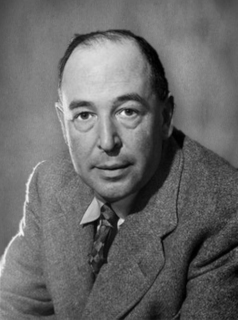
John Clarke MacDermott, Baron MacDermottMCPCPC (NI)Northern Irish politician, barrister, and judge, dies at his home in Belfast on July 13, 1979. He serves as Attorney General for Northern Ireland, a Lord of Appeal in Ordinary, and Lord Chief Justice of Northern Ireland. He is the first law lord to be appointed from Northern Ireland.

MacDermott is born in Belfast on April 12, 1896, the third surviving son and sixth of seven children of the Reverend John MacDermott DD, a Presbyterian clergyman who is minister of Belmont and moderator of the Presbyterian Church in Ireland, and of his wife Lydia Allen MacDermott (née Wilson), the daughter of a Strabane solicitor. He is educated at Campbell College, Belfast, from where he wins a scholarship to read Law at the Queen’s University Belfast (QUB) in 1914.

During the World War I, he serves with the machine gun battalion of the 51st (Highland) Division in France, Belgium and Germany, winning the Military Cross in 1918 and reaching the rank of Lieutenant. After the war he is called to the Bar of Ireland in 1921.

Eight years later MacDermott is appointed to determine industrial assurance disputes in Northern Ireland, and in 1931 becomes a lecturer in Jurisprudence at Queen’s University Belfast, teaching for four years.

In 1936, he is made a King’s Counsel, and two years later he is elected to the Northern Ireland House of Commons as an Ulster Unionist member for Queen’s University.

In 1940, MacDermott is appointed Minister of Public Security in the Government of Northern Ireland, and the following year becomes the Attorney General for Northern Ireland. He is succeeded in this post by William Lowry, whose son, Lord Lowry, would eventually succeed MacDermott as Lord Chief Justice. In 1944, he resigns his parliamentary seat on appointment as a High Court Judge for Northern Ireland, and three years later, on April 23, 1947, is made a Lord of Appeal in Ordinary, becoming a life peer as Baron MacDermott, of Belmont in the city of Belfast.

MacDermott returns from the House of Lords to take up his appointment as Lord Chief Justice of Northern Ireland. His successors to the latter office become Law Lords subsequently. Whilst Lord Chief Justice, he is affectionately known as “the Baron.”

In 1977, aged over eighty, MacDermott offers to redeliver a lecture at the Ulster College, which had been interrupted by a bomb meant for him and which had severely wounded him.

Having been made a Northern Ireland Privy Counsellor seven years earlier, MacDermott is sworn of the British Privy Council in 1947.

Four years later, in 1951, MacDermott is appointed Lord Chief Justice of Northern Ireland, a post he holds for twenty years. He is also Pro-Chancellor of his alma mater from 1951 to 1969. In 1958, he chairs the commission on the Isle of Man Constitution. He dies at his home in Belfast on July 13, 1979.

In 1926, MacDermott weds Louise Palmer Johnston, later Lady MacDermott. Their son, Sir John MacDermott, is also sworn into the British Privy Council in 1987, as a Lord Justice of Appeal in Northern Ireland. He later became a Surveillance Commissioner for Northern Ireland.
Leave a comment

Birth of David Cook, Northern Ireland Solicitor & Politician

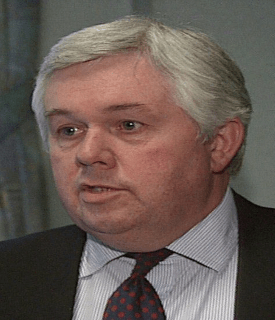
David Somerville Cook, English-born solicitor and politician, is born on January 25, 1944. He is a founding member of the nonsectarian, liberal-centre Alliance Party of Northern Ireland (APNI). He serves on Belfast City Council from 1973 to 1986, and in 1978 he becomes the first non-Unionist Lord Mayor of Belfast since 1898. He is elected as a member of the Northern Ireland Assembly of 1982 and serves on that body until its abolishment in 1986. He is appointed Chair of the Police Authority of Northern Ireland in 1994 and holds that position until his resignation from the role in 1996.

Cook is born to Francis John Granville Cook and Jocelyn McKay (née Stewart) in Leicester, England. As a child, he moves to Northern Ireland with his parents and sisters after his father is appointed headmaster of Campbell College in 1954.

Cook works as a solicitor, eventually becoming a senior partner at Sheldon and Stewart Solicitors.

In 1970, Cook is a founder member of the Alliance Party of Northern Ireland, a nonsectarian party, while he is elected to the party’s Central Executive in 1971.

Cook is elected to Belfast City Council in 1973, a position he holds until 1985. In 1978, he becomes the first non-Unionist Lord Mayor of Belfast since William James Pirrie, a Home Rule Liberal, in 1896–1898.

Cook stands for APNI in Belfast South in the February 1974 United Kingdom general election, taking just under 10% of the vote. He is able to improve to 27% of the vote at the 1982 Belfast South by-election. Following this, he wins a seat on the Northern Ireland Assembly representing Belfast South.

In the 1983 United Kingdom general election, 1986 Belfast South by-election and 1987 United Kingdom general election, Cook consistently wins over 20% of the votes cast in Belfast South. He also stands for Alliance in the 1984 European Parliament election but takes only 4% of the vote. From 1980 to 1984, he serves as the Deputy Leader of APNI.

In 1994, Cook becomes the Chairman of the Police Authority of Northern Ireland, but he is sacked from this role in 1996 after losing a vote of confidence. After a critical account of his role in an internal row in that authority appears in newspapers in 1998, he undertakes a lengthy libel case which is ultimately settled out of court. He subsequently sits on the Craigavon Health and Social Services Trust.

On September 20, 2020, it is announced that Cook has died after being diagnosed with COVID-19 during the pandemic. According to his family, he dies on September 19, 2020, at Craigavon Area Hospital. He had had a stroke two years earlier. He is survived by his wife Fionnuala, his sisters Alison and Nora, his daughter Barbary, his sons John, Patrick, Julius, and Dominic, and his granddaughters Romy and Imogen.


3 Comments

Birth of Frederick Hugh Crawford, Loyalist & British Army Officer

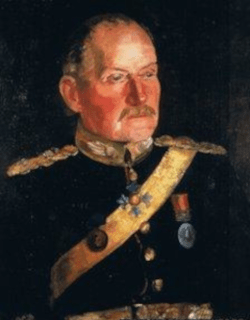
Colonel Frederick Hugh Crawford, CBE, JP, an officer in the British Army, is born in Belfast on August 21, 1861. A staunch Ulster loyalist, he is one of the lesser-known figures in Ulster Unionist history but one who is hugely influential because of his involvement in what is known as the Larne gun-running incident, when he is responsible for smuggling over 25,000 guns and ammunition into the North on the night of April 24, 1914. This makes him a hero for Northern Ireland‘s unionists.

Crawford is born into a “solid Methodist” family of Ulster Scots roots. He attends Methodist College Belfast and University College London (UCL). While Crawford is a determined Ulster loyalist, his great-grandfather was Alexander Crawford, a United Irishman arrested in March 1797 for “high treason,” and sent to Kilmainham Gaol, sharing a cell with prominent United Irishman Henry Joy McCracken.

According to the 1911 census for Ireland, Crawford is living in Marlborough Park, Belfast, with his wife of 15 years, Helen, and four of their five children: Helen Nannie, Marjorie Doreen, Ethel Bethea and Malcolm Adair Alexander. His other child, Stuart Wright Knox, is recorded as a pupil at Ballycloghan National School, Belfast. Stuart would become a lieutenant colonel in the British Army, before being invalided in 1944. Malcolm, after being a member of the Colonial Police, joins the Royal Ulster Constabulary (RUC), advancing to District Inspector. In 1931, Malcolm becomes a Justice of the Peace for Singapore.

Crawford works as an engineer for White Star Line in the 1880s, before returning from Australia in 1892. In 1894, he enlists with the Mid-Ulster Artillery regiment of the British Army, before being transferred to the Donegal Artillery, with which he serves during the Boer Wars, earning himself the rank of major.

In 1898, Crawford is appointed governor of Campbell College, Belfast. Two of his children, Stuart Wright Knox and Malcolm Adair Alexander, both attend Campbell College.

In 1911, Crawford becomes a member of the Ulster Unionist Council. On September 28, 1912, he is in charge of the 2,500 well-dressed stewards and marshals that escort Sir Edward Carson and the Ulster Unionist leadership from the Ulster Hall in central Belfast to the nearby City Hall on Donegall Square for the signing of the Ulster Covenant, which he allegedly signs in his own blood. With the formation of the Ulster Volunteers in 1913, he is made their Director of Ordnance.

During World War I Crawford is an officer commanding the Royal Army Service Corps and is awarded the Royal Humane Society‘s bronze medal for saving life. He also becomes a justice of the peace for Belfast.

With regard to Irish Home Rule, Crawford is strongly partisan and backs armed resistance to it, being contemptuous of those who use political bluffing. His advocation of armed resistance is evident when he remarks, at a meeting of the Ulster Unionist Council, that his heart “rejoiced” when he heard talk of looking into using physical force. At another meeting he even goes as far as asking some attendees to step into another room where he has fixed bayonets, rifles and cartridges laid out.

In 1910, the Ulster Unionist Council plans for the creation of an army to oppose Home Rule and approaches Crawford to act as their agent in securing weapons and ammunition. He tries several times to smuggle arms into Ulster, however, vigilant customs officials seize many of them at the docks. Despite this, the meticulously planned and audacious Larne gun-running of April 1914, devised and carried out by Crawford, is successful in bringing in enough arms to equip the Ulster Volunteer Force.

By the 1920s Crawford remains as stoic in his beliefs, remarking in a letter in 1920 that “I am ashamed to call myself an Irishman. Thank God I am not one. I am an Ulsterman, a very different breed.” In March 1920, he begins to reorganize the UVF and in May 1920 he appeals to Carson and James Craig for official government recognition. He states, “We in Ulster will not be able to hold our men in hand much longer…we will have the Protestants…killing a lot of the well-known Sinn Féin leaders and hanging half a dozen priests.” In 1921, he attempts to create an organisation intended to be a “Detective Reserve,” but called the “Ulster Brotherhood,” the aims of which are to uphold the Protestant religion and political and religious freedom, as well as use all means to “destroy and wipe out the Sinn Féin conspiracy of murder, assassination and outrage.” This organisation only lasts for a few months after failing to gain acceptance from the political authorities.

In 1921, Crawford is included in the Royal Honours List and appointed a CBE. In 1934, he writes his memoirs, titled Guns for Ulster.

Crawford dies on November 5, 1952, and is buried in the City Cemetery, Falls Road, Belfast. Upon news of his death, he is described by the then Prime Minister of Northern Ireland, Sir Basil Brooke, as being “as a fearless fighter in the historic fight to keep Ulster British.”


Leave a comment

Death of Surrealist Sculptor F. E. McWilliam

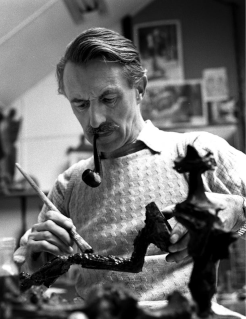
Frederick Edward McWilliam CBE RA, Northern Irish surrealist sculptor, dies in London on May 13, 1992. He works chiefly in stone, wood and bronze. His style of work consists of sculptures of the human form contorted into strange positions, often described as modern and surreal.

McWilliam is born in Banbridge, County Down, on April 30, 1909, the son of Dr. William McWilliam, a local general practitioner. Growing up in Banbridge has a great influence on his work. He makes references to furniture makers such as Carson the Cooper and Proctors in his letters to his friend, Marjorie Burnett.

McWilliam attends Campbell College in Belfast and later attends Belfast College of Art from 1926. After 1928, he continues to study at the Slade School of Fine Art in London. He originally intends to become a painter, but influenced by Alfred Horace Gerrard, head of the sculpture department at the Slade, and by Henry Moore whom he meets there, he turns to sculpture. He receives the Robert Ross Leaving Scholarship which enables him and his wife, Beth (née Crowther), to travel to Paris where he visits the studio of Constantin Brâncuși.

During the first year of World War II, he joins the Royal Air Force and is stationed in England for four years where he is engaged in interpreting aerial reconnaissance photographs. He is then posted to India. While there he teaches art in the Hindu Art School in New Delhi.

After his return from India, McWilliam teaches for a year at the Chelsea School of Art. He is then invited by A. H. Gerrard to teach sculpture at the Slade. He continues in this post until 1968.

The 1950s see McWilliam receive many commissions including the Four Seasons Group for the Festival of Britain exhibition in 1951. A major commission in 1957 is Princess Macha for Altnagelvin Area Hospital in Waterside, Derry.

During the Northern Ireland Troubles McWilliam produces a series of bronzes in 1972 and 1973 known as Women of Belfast in response to the bombing at the Abercorn Tea-Rooms.

In 1964 McWilliam is awarded an Honorary Doctor of Letters from Queen’s University Belfast. In 1966 he is appointed CBE and in 1971 he wins the Oireachtas Gold Medal. He is represented in many public collections, including the Museum of Modern Art in New York City and Tate Britain in London. In 1984 the National Self-Portrait Gallery purchases a McWilliam self-portrait amongst acquisitions from fellow Northerners Brian Ballard, Brian Ferran and T. P. Flanagan.

The Arts Council of Northern Ireland organises a retrospective of his work in 1981 and a second retrospective is shown at the Tate Gallery in 1989 for his 80th birthday.

McWilliam continues carving up to his death. He dies of cancer in London on May 13, 1992.

In September 2009 Banbridge District Council opens a gallery and studio dedicated to the work of and named after McWilliam.


Leave a comment

Birth of E. R. Dodds, Irish Classical Scholar

Eric Robertson Dodds, Irish classical scholar, is born in Banbridge, County Down, on July 26, 1893. He is Regius Professor of Greek at the University of Oxford from 1936 to 1960.

Dodds is the son of schoolteachers. His father Robert is from a Presbyterian family and dies of alcoholism when Dodds is seven years old. His mother Anne is of Anglo-Irish ancestry. When he is ten, he moves with his mother to Dublin, and he is educated at St. Andrew’s College, where his mother teaches, and at Campbell College in Belfast. He is expelled from the latter for “gross, studied, and sustained insolence.”

In 1912, Dodds wins a scholarship at University College, Oxford, to read classics, or Literae Humaniores, a two-part, four-year degree program consisting of five terms of study of Latin and Greek texts followed by seven terms of study of ancient history and ancient philosophy. His friends at Oxford include Aldous Huxley and T. S. Eliot. In 1916, he is asked to leave Oxford due to his support for the Easter Rising, but he returns the following year to take his final examinations in Literae Humaniores, and is awarded a first-class degree to match the first-class awarded him in 1914 in Honour Moderations, the preliminary stage of his degree. His first tutor at Oxford is Arthur Blackburne Poynton.

After graduation, Dodds returns to Dublin and meets W. B. Yeats and George William Russell. He teaches briefly at Kilkenny College and in 1919 is appointed as a lecturer in classics at the University of Reading, where in 1923 he marries a lecturer in English, Annie Edwards Powell. They have no children.

In 1924, Dodds is appointed Professor of Greek at the University of Birmingham, and comes to know W. H. Auden, whose father George, Professor of Public Medicine and an amateur classicist, is a colleague. He is also responsible for Louis MacNeice‘s appointment as a lecturer at Birmingham in 1930. He assists MacNeice with his translation of Aeschylus, Agamemnon (1936), and later becomes the poet’s literary executor. He publishes one volume of his own poems, Thirty-Two Poems, with a Note on Unprofessional Poetry (1929).

In 1936, Dodds becomes Regius Professor of Greek at the University of Oxford, succeeding Gilbert Murray. Murray decisively recommends him to British Prime Minister Stanley Baldwin and it is not a popular appointment. He is chosen over two prominent Oxford dons, Maurice Bowra of Wadham College and John Dewar Denniston of Hertford College. His lack of service in World War I and his support for Irish republicanism and socialism in addition to his scholarship on the non-standard field of Neoplatonism, also does not make him initially popular with colleagues. He is treated particularly harshly by Denys Page at whose college, Christ Church, the Regius Chair of Greek is based.

Dodds has a lifelong interest in mysticism and psychic research, being a member of the council of the Society for Psychical Research from 1927 and its president from 1961 to 1963.

On his retirement in 1960, Dodds is made an Honorary Fellow of University College, Oxford, until his death on April 8, 1979. He dies in the village of Old Marston, northeast of Oxford.

Among Dodds’s works are The Greeks and the Irrational (1951), which charts the influence of irrational forces in Greek culture up to the time of Plato, and Pagan and Christian in an Age of Anxiety, a study of religious life in the period between Marcus Aurelius and Constantine I. He is also editor of three major classical texts for the Clarendon Press, Proclus: Elements of Theology, EuripidesThe Bacchae and Plato’s Gorgias, all published with extensive commentaries, and a translation in the case of the first. His autobiography, Missing Persons, is published in 1977. He edits Louis MacNeice’s unfinished autobiography The Strings are False (1965) and MacNeice’s Collected Poems (1966).


Leave a comment

Birth of F. E. McWilliam, Surrealist Sculptor

Frederick Edward McWilliam CBE RA, Northern Irish surrealist sculptor, is born in Banbridge, County Down, on April 30, 1909. He works chiefly in stone, wood and bronze. His style of work consists of sculptures of the human form contorted into strange positions, often described as modern and surreal.

McWilliam is the son of Dr. William McWilliam, a local general practitioner. Growing up in Banbridge has a great influence on his work. He makes references to furniture makers such as Carson the Cooper and Proctors in his letters to his friend, Marjorie Burnett.

McWilliam attends Campbell College in Belfast and later attends Belfast College of Art from 1926. After 1928, he continues to study at the Slade School of Fine Art in London. He originally intends to become a painter, but influenced by Alfred Horace Gerrard, head of the sculpture department at the Slade, and by Henry Moore whom he meets there, he turns to sculpture. He receives the Robert Ross Leaving Scholarship which enables him and his wife, Beth (née Crowther), to travel to Paris where he visits the studio of Constantin Brâncuși.

During the first year of World War II, he joins the Royal Air Force and is stationed in England for four years where he is engaged in interpreting aerial reconnaissance photographs. He is then posted to India. While there he teaches art in the Hindu Art School in New Delhi.

After his return from India, McWilliam teaches for a year at the Chelsea School of Art. He is then invited by A. H. Gerrard to teach sculpture at the Slade. He continues in this post until 1968.

The 1950s see McWilliam receive many commissions including the Four Seasons Group for the Festival of Britain exhibition in 1951. A major commission in 1957 is Princess Macha for Altnagelvin Area Hospital in Waterside, Derry.

During the Northern Ireland Troubles McWilliam produces a series of bronzes in 1972 and 1973 known as Women of Belfast in response to the bombing at the Abercorn Tea-Rooms.

In 1964 McWilliam is awarded an Honorary Doctor of Letters from Queen’s University Belfast. In 1966 he is appointed CBE and in 1971 he wins the Oireachtas Gold Medal. He is represented in many public collections, including the Museum of Modern Art in New York City and Tate Britain in London. In 1984 the National Self-Portrait Gallery purchases a McWilliam self-portrait amongst acquisitions from fellow Northerners Brian Ballard, Brian Ferran and T. P. Flanagan.

The Arts Council of Northern Ireland organises a retrospective of his work in 1981 and a second retrospective is shown at the Tate Gallery in 1989 for his 80th birthday.

McWilliam continues carving up to his death. He dies of cancer in London on May 13, 1992.

In September 2009 Banbridge District Council opens a gallery and studio dedicated to the work of and named after McWilliam.


Leave a comment

Birth of George Henry Perrott Buchanan, Poet, Novelist & Journalist

George Henry Perrott Buchanan, poet, novelist, and journalist is born on January 9, 1904, in Kilwaughter, County Antrim, in what is now Northern Ireland.

Buchanan is the second child and younger of two sons and one daughter of the Rev. Charles Henry Leslie Buchanan (1863–1939) and Florence Buchanan (née Moore). He is educated at Larne Grammar School in Larne, County Antrim, Campbell College, Belfast, and Queen’s University Belfast (QUB). He works for the Northern Whig (1921) and is a founder member of the Northern Drama League, Belfast (1923). After moving to London, he joins The Daily Graphic, becomes a reviewer (1928–40) for The Times Literary Supplement, sub-editor (1930–35) of The Times, and columnist and drama critic (1935–38) for the News Chronicle.

During World War II, Buchanan serves as an operations officer in RAF Coastal Command (1940–45). His service includes a period in Sierra Leone, operational liaison with Free France in French Equatorial Africa, and night attacks on U-boats in the Bay of Biscay. After the war, he lives in Limavady, County Londonderry, Northern Ireland, for nearly ten years, which he later describes as a period of regeneration. During this time, he broadcasts for BBC Radio and becomes chairman of the NI town and country development committee (1949–53) and a member (from 1954) of the executive council of the European Society of Culture (Venice), and later president of its London centre.

A versatile writer with wide-ranging concerns, Buchanan publishes his first journal, Passage Through the Present, in 1932. It is followed by six novels, including A London Story (1935) and Naked Reason (1971). His plays include A Trip to the Castle (1960) and War Song (1965). The Politics of Culture (1977) is one of several collections of essays, and Green Seacoast (1959) and Morning Papers (1965) are autobiographical. His writing has been noted for its integrity and for the diversity of its ideas. Recurrent themes are the importance of common experience, living sensitively in the present, and the impoverishment of urban life. He believes in the power of ideas and the creative nature of journalism in the modern world. Despite his prosaic style, he writes poetry from his teenage years. It “was always the base from which everything else was motivated. . . [it] affected, and perhaps energised, everything I did. Its pressure led me to special attitudes in journalism, in the theatre, in the novel.” He publishes his first collection, Bodily Responses, in 1958. Other collections include Annotations (1970) and Inside Traffic (1976). In order to bring the variety of his work to a wider audience, Frank Ormsby devotes a supplement in the Honest Ulsterman (1978) to Buchanan, whom he believes is almost forgotten in Ireland and has been unjustly neglected.

Buchanan lives at 18A Courtnell Street, London W2. He marries four times, first to Winifred Mary Corn (1938-45), secondly to Noel Pulleyne Ritter (1949-51), thirdly to the Hon. Janet Hampden Margesson (1952-68), with whom he had two daughters, and fourthly to Sandra Gail McCloy (1974-89). He dies on June 28, 1989, in Richmond, London, and is cremated at Mortlake Crematorium, Richmond.

(From: “Buchanan, George Henry Perrott” by Helen Andrews, Dictionary of Irish Biography, http://www.dib.ie, October 2009 | Pictured: George Henry Perrott Buchanan by Howard Coster, 10 x 8 inch film negative, 1935, transferred from Central Office of Information, 1974)


Leave a comment

Birth of Charlie Lawson, Northern Irish Actor

charles-lawson

Quintin Charles Devenish “Charlie” Lawson, actor from Northern Ireland best known for playing Jim McDonald in the ITV soap opera Coronation Street, is born in Enniskillen, County Fermanagh on September 17, 1959.

Lawson is raised in a Protestant family and is educated at Campbell College, a grammar school in Belfast. He then trains as an actor at the Guildhall School of Music and Drama in London, where a classmate and good friend of his is fellow Enniskillen native Adrian Dunbar, whom Lawson says is the first Catholic he has ever met.

Lawson appears in at least three films and in at least twenty television productions. He is probably best known for appearing as Jim McDonald in the ITV television soap opera Coronation Street. He first appears as Jim in 1989 and remains a regular character for eleven years, since which time his appearances have been few and far between.

Lawson’s other television work includes appearing as Seamus Duffryn in the 1982 Yorkshire Television thriller miniseries Harry’s Game (also known as Belfast Assassin), and as one of the main characters, Billy, in Mike Leigh‘s television film Four Days in July, both based on The Troubles in Northern Ireland. He plays Trigg in the 1989 television film The Firm and has also appeared in various other television series including Doctors, Bread, The Bill and Rosemary & Thyme.

In 2000, Lawson makes a programme for ITV Granada, Passion for Peace, which follows him back to Northern Ireland and reports on the creation of the Tim Parry Johnathan Ball Peace Centre in Warrington. In 2005 he appears in the TV documentary Titanic: Birth of a Legend. In 2009 he appears alongside an eight-foot Frankfurter sausage in a German television commercial, advertising hot dogs. His overdubbed catchphrase in the commercial is Betrachten Sie die Größe meiner Wurst! (English: “Look at the size of my sausage!”).

In 2010, Lawson reveals that he is returning to Coronation Street for its fiftieth anniversary celebrations. He speculates that bosses may be planning to kill his character off, however, this never happens. He stays until April 2011. He then returns for a three-month stint on the soap between August and November 2014.

In 2015, Lawson makes a guest appearance in an episode of the Comedy Central sitcom Brotherhood as the father of the three main characters. He also appears as Doctor Black in the 2016 BBC Northern Ireland drama My Mother and Other Strangers.

Lawson returns to Coronation Street in September 2018 with his supposed long-lost daughter from his relationship with Liz. On October 8, 2018, while portraying Inspector John Rebus in the play Long Shadows in Edinburgh, he suffers a minor stroke on stage but recovers shortly afterwards.

Lawson lives in Belfast with his partner, Debbie Stanley, having previously lived with her in Chester, Cheshire, for a number of years.


Leave a comment

Birth of C.S. Lewis, Poet & Novelist

clive-staples-lewis

Clive Staples Lewis, novelist, poet, academic, medievalist, literary critic, essayist, lay theologian, and Christian apologist, is born in Belfast on November 29, 1898. He is best known for his works of fiction, especially The Screwtape Letters, The Chronicles of Narnia, and The Space Trilogy, and for his non-fiction Christian apologetics, such as Mere Christianity, Miracles, and The Problem of Pain.

Lewis is schooled by private tutors until age nine when his mother dies in 1908 from cancer. His father then sends him to live and study at Wynyard School in Watford, Hertfordshire. After the school is closed soon afterward, he attends Campbell College in the east of Belfast about a mile from his home, but leaves after a few months due to respiratory problems. He is then sent to the health-resort town of Malvern, Worcestershire, where he attends the preparatory school Cherbourg House. It is during this time that he abandons his childhood Christian faith and becomes an atheist. In September 1913, he enrolls at Malvern College. After leaving Malvern, he studies privately with William T. Kirkpatrick, his father’s old tutor and former headmaster of Lurgan College.

Lewis holds academic positions in English literature at both the University of Oxford (Magdalen College, 1925–1954) and the University of  Cambridge (Magdalene College, 1954–1963).

Lewis and fellow novelist J. R. R. Tolkien are close friends. They both serve on the English faculty at Oxford University and are active in the informal Oxford literary group known as the Inklings. He returns to Anglicanism at the age of 32, owing to the influence of Tolkien and other friends, and he becomes an “ordinary layman of the Church of England.” His faith profoundly affects his work, and his wartime radio broadcasts on the subject of Christianity bring him wide acclaim.

Lewis writes more than 30 books which have been translated into more than 30 languages and have sold millions of copies. The books that make up The Chronicles of Narnia have sold the most and have been popularised on stage, television, radio and cinema. His philosophical writings are widely cited by Christian apologists from many denominations.

In early June 1961, Lewis begins suffering from nephritis, which results in blood poisoning. He recovers but on July 15 of that year he falls ill and is admitted to the hospital where he suffers a heart attack the following day, lapses into a coma and awakens the next day. After he is discharged from the hospital his condition continues to decline. He is diagnosed with end-stage renal failure in mid-November. He collapses and dies in his bedroom on November 22. He is buried in the churchyard of Holy Trinity Church, Headington, Oxford.

Media coverage of Lewis’s death is almost completely overshadowed by news of the assassination of United States President John F. Kennedy, which takes place approximately 55 minutes after Lewis’s collapse.

In 2013, on the 50th anniversary of his death, Lewis is honoured with a memorial in Poets’ Corner in Westminster Abbey.


Leave a comment

Birth of Cosslett Quinn, Priest & Linguist

cosslett-o-cuinn-book

The Rev. Canon Cosslett Quinn (in Irish Cosslett Ó Cuinn), scholar, linguist, and priest of the Church of Ireland who translates the New Testament into Irish, is born in Derriaghy, County Antrim in what is now Northern Ireland on February 27, 1907.

Quinn is born to Charles Edward Quinn, rector of Derriaghy, and Edith Isobel Wadell. He studies at Campbell College in Belfast, and later at Trinity College Dublin, where he receives his Bachelor of Divinity in Theology in 1940.

Quinn is a poet, theologian, critic, biblical scholar, member of the ecumenical movement, and a scholar of the Irish language. During his studies, he develops a strong interest in Ulster Irish and often visits the Irish-speaking Gola Island and Derrybeg. He also publishes articles in Éigse: A Journal of Irish Studies on the dialects of Irish spoken on Rathlin Island and Kilkenny. He compiles the folklore of native Irish speakers from the islands of Tory and Arranmore off the coast of County Donegal.

While working in Belfast and Inishowen in 1931, Quinn is promoted to the post of deacon. In 1961, he is appointed professor of Biblical Greek at Trinity College and begins work on a new translation of the New Testament. He also translates the Book of Psalms and the Prayer Book of the Church of Ireland into Irish, as well as several Spanish works. Although it is unusual in his lifetime for Protestants to hold leading positions in the Irish language movement, Quinn is for a time President of Oireachtas na Gaeilge. He is made a canon of St. Patrick’s Cathedral in 1966, before retiring from the ministry in 1971.

Cosslett Quinn dies on December 6, 1995.