seamus dubhghaill

Promoting Irish Culture and History from Little Rock, Arkansas, USA


Leave a comment

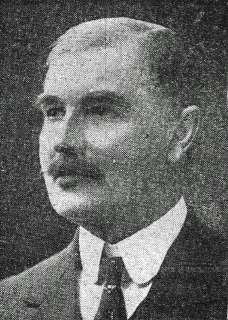
Death of James Stephens, Fenian & Co-founder of the Irish Republican Brotherhood

James Stephens, Irish republican, dies in Blackrock, County Dublin, on March 29, 1901. He is a founding member of an originally unnamed revolutionary organisation in Dublin. This organisation, founded on March 17, 1858, is later to become known as the Irish Republican Brotherhood (IRB).

References to Stephens’s early life, according to one of his biographers, Desmond Ryan, are obscure and limited to Stephens’s own vague autobiographical recollections. He is born at Lilac Cottage, Blackmill Street, Kilkenny, County Kilkenny, on January 26, 1825, and spends his childhood there. No birth records have ever been located, but a baptismal record from St. Mary’s Parish is dated July 29, 1825. There is reason to believe that he is born out of wedlock in late July 1825. However, according to Stephens, his exact date of birth is January 26. He is educated at St. Kieran’s College, Kilkenny, for at least one quarter in 1838. He is later apprenticed to a civil engineer, and from 1844 onwards works for the Waterford–Limerick Railway Company.

When the Young Irelanders split from Daniel O’Connell‘s Repeal Association and found the Irish Confederation in January 1847, Stephens becomes involved in the activities of the Kilkenny Confederate clubs. After the government suspends habeas corpus and issues warrants of arrest against the Confederate leaders, William Smith O’Brien appears in Kilkenny on July 23, 1848, seeking support for a popular insurrection, and two days later Stephens joins him. For four days he follows O’Brien’s wanderings and takes part in all his encounters with government forces, including the affray at the home of Widow McCormack on July 29 when O’Brien’s followers besiege a party of policemen in a house near Ballingarry, County Tipperary. They are finally dispersed by gunfire and the arrival of reinforcements, thus ending O’Brien’s revolutionary efforts. Stephens reportedly receives two bullet wounds but manages to hide and evade arrest.

Three days later, Stephens proceeds to Ballyneale, near Carrick-on-Suir, County Tipperary, in search of John O’Mahony. He accompanies O’Mahony to meet Michael Doheny, and for six weeks Stephens and Doheny avoid arrest by roaming around the south of Ireland, an adventure that Doheny records in The Felon’s Track (1849). On September 12, Stephens is smuggled out of Ireland by the family of the Skibbereen attorney McCarthy Downing, and four days later manages to reach Paris. O’Mahony and Doheny join him shortly afterwards, although Doheny soon emigrates to the United States.

From their exile Stephens and O’Mahony watch the failure of the ’49 conspiracy of James Fintan Lalor and Philip Gray and witness the barricades against Louis Napoleon’s coup d’état in 1851. Stephens later claims to have joined the French republican insurgents, but according to O’Mahony this is merely a frustrated intention. Equally without foundation is the rumour that Stephens and O’Mahony at this time join a republican secret society as a training ground for their future Irish enterprise.

Stephens remains in Paris from 1848 to 1855, supporting himself by teaching English. He attends Sorbonne University and has plans to obtain a professorship that never materialises. Towards the close of his exile, he is employed by the Le Moniteur Universel, for which he allegedly translates Charles Dickens‘s Martin Chuzzlewit. Late in 1855 he returns to Ireland and undertakes a series of tours throughout the island. He later magnifies the venture as “the 3,000 miles’ walk” and reformulates it as an attempt to measure the country’s nationalist temperature. However, his primary intention at the time is to collect information for a book he is planning to write. The following autumn he returns to Dublin, becomes tutor of French to the children of several well-to-do families including that of the Young Irelander John Blake Dillon, and joins the nationalist circle of Thomas Clarke Luby, Philip Gray, and other veterans of the ’49 conspiracy.

When Gray dies in January 1857, Stephens asks O’Mahony, then living in New York, to collect funds for a funeral monument. This evidence of nationalist activity, coupled with the prospect of “England’s difficulty” awakened by the recent Crimean War and the insurrection in India, give life to O’Mahony’s and Doheny’s Emmet Monument Association (EMA). That autumn the EMA sends an envoy to Ireland with a proposal for Stephens to prepare the country for the arrival of a military expedition. Stephens offers to organise 10,000 men in three months, provided he is given at least £80 a month and absolute authority over the enterprise. On March 17, 1858, Saint Patrick’s Day, he receives the first installment and his appointment as “chief executive” of the Irish movement. The same day he and his associates take an oath to make Ireland “an independent democratic republic.” The nameless secret society thereby inaugurated eventually becomes known as the Irish Republican Brotherhood (IRB). It is organised in cells, each led by a “centre” with Stephens being known as the “head centre.”

The EMA’s failure to send a second installment prompts Stephens to travel to New York in October 1858. While in America he attempts, and fails, to engage the support of the Young Irelanders John Mitchel and Thomas Francis Meagher, but succeeds in establishing a solid partnership with Irish nationalists based in New York. Late in 1858 the surviving members of the EMA reorganise themselves into a modified replica of the IRB, and under John O’Mahony’s inspiration adopt the name of the Fenian Brotherhood (FB). Eventually the label “Fenian” comes to be applied to the members of both organisations. As part of the new arrangements, Stephens obtains a new appointment as head of the movement “at home and abroad.”

Despite Stephens’s success, his labours in America and the secrecy of his own activities in Ireland are almost spoiled in December by the arrest of Jeremiah O’Donovan Rossa and other members of the Phoenix National and Literary Society of Skibbereen, which had been incorporated into the IRB the previous May. On his return from America in March 1859 Stephens takes refuge in Paris and delegates management of the organisation to Luby. He only returns to Dublin in April 1861 when O’Mahony, then on a tour of inspection, suggests establishing an executive council to share Stephens’s power. Stephens succeeds in frustrating this plan, but from the time of O’Mahony’s visit the tension between the two leaders never subsides.

In the autumn of 1861 Stephens takes lodgings on Charlemont Street at the house of John and Rossanna Hopper, owners of a small tailoring establishment, and soon falls in love with their daughter Jane, almost twenty years his junior. The two are married on January 24, 1864, at the church of SS Michael and John, Exchange Street. The marriage produces no children.

The first success for Stephens’s IRB comes on November 10, 1861, when the IRB-dominated National Brotherhood of Saint Patrick stages the funeral for the Young Irelander Terence MacManus after an intense tug-of-war with both the Catholic church and constitutional nationalism. Stephens plays a central role in promoting IRB control of the funeral arrangements and although the event lacks the mythical nationalist significance claimed by Fenian apologists, it serves to boost Fenian self-assertion and hasten the divorce between middle-class nationalist elites and a new militant republican working class which has different interests at stake in an independent Ireland.

Despite the McManus funeral success, the IRB continues to endure financial difficulties throughout 1862. In 1863, Stephens resolves to address these difficulties and consolidate the movement’s position by founding a newspaper. The Irish People is first issued on November 28, 1863. He contributes leading articles to its first three numbers but finally abandons his literary efforts in favour of Luby, John O’Leary, and Charles J. Kickham, thereafter the paper’s leading writers and guiding spirits.

In the meantime, the relationship between Stephens and O’Mahony continues to deteriorate. In November 1863 O’Mahony has turned the tables and persuaded the FB to acknowledge Stephens merely as “its representative in Europe.” In March 1864 Stephens again travels to the United States in order to stimulate the flow of funds towards the IRB and regain some hold on the FB. As part of his new policies, he makes the sensational announcement that 1865, at latest, is to be the movement’s “year of action.” After the end of the American Civil War in April 1865, Fenian activity increases spectacularly, and demobilised soldiers travel to Ireland. However, on September 15, 1865, the government takes action, suppresses The Irish People, and arrests most of Stephens’s closest collaborators, including Luby, O’Leary and O’Donovan Rossa. Stephens himself is arrested on November 11 but, in a daring operation that proves a propaganda coup for the Fenians, is rescued from Richmond Bridewell penitentiary thirteen days later and eventually makes his way to America via Britain and France. By the time he arrives in the United States, the FB has split into two “wings,” the partisans of John O’Mahony and those of William R. Roberts, the president of the Fenian “senate,” who advocate shifting military efforts towards invading Canada. The split ends Stephens’s already slender chances of launching a successful rising before the end of December, and he calls a postponement.

On February 17, 1866, the government suspends habeas corpus in Ireland and arrests multiply. Stephens braves the members’ impatience, calls a new postponement, and in May travels to New York in order to try and solve the American crisis in the IRB’s favour. He accepts O’Mahony’s resignation, takes control of his wing, and starts an intensive campaign of propaganda and fund-raising. Again, he proclaims 1866 as the “year of action,” but by December the movement is weaker than ever, and he tries to call a new postponement. This time his lieutenants, led by Col. Thomas J. Kelly, lose patience, depose him from leadership and prepare to launch the insurrection themselves. The result is the ill-fated Fenian Rising of March 5-6, 1867.

After his deposition, Stephens spends most of his remaining years in France, in dire financial distress, but still hoping against hope to regain his position at the head of the movement. However, the IRB is now under the control of the anti-Stephens supreme council, and the FB is quickly losing its influence to the newly emerged Clan na Gael. His reputation, always tainted by his controversial personality and autocratic management, had been ruined forever by the 1866 events and his repeated failure to order the rising. With the exception of a small core of diehard partisans, the majority of his former associates and followers have grown resentful of his leadership and are vehemently opposed to his return.

Apart from occasional English tutoring and a ruinous venture as a wine merchant that takes him to the United States from 1871 to 1874, Stephens’s post-Fenian years are mainly spent in poverty while awaiting the next opportunity to resume leadership of the IRB. In 1880, after a last unsuccessful trip to the United States and a crushing defeat by John Devoy and Clan na Gael, he gives up hope, returns to Paris, and settles down to earn a living as an occasional newspaper contributor. In 1885 he is expelled from France under the unfounded suspicion of involvement in dynamiting activities with his cousins Joseph and Patrick Casey and the journalist Eugene Davis. He then takes up residence in Brussels but is able to return to Paris two years later. Finally, through Charles Stewart Parnell‘s intervention in 1891, he is allowed to return to Ireland. He moves into a cottage in Sutton, near Howth, and settles into retirement. After his wife’s death in 1895 he moves to the house of his in-laws in Blackrock, County Dublin, where he dies on March 29, 1901. Two days later he is given a solemn nationalist funeral and is interred in Glasnevin Cemetery.

Stephens’s controversial historical reputation never accords him a comfortable place in the post-independence nationalist pantheon. His egotism and defects as a leader overshadow the credit he is given as a founder and organiser. Yet his notorious personality is arguably the key to his success and ultimate historical significance. His obsessive self-confidence and single-mindedness turn the EMA’s half-matured proposal into a solid partnership that inaugurates an enduring pattern of American involvement in Irish nationalism. At the same time, by impressing the IRB with his own assertiveness he enables it to break the tacit monopoly of the middle classes on Irish political life. By the time of his downfall, Irish republicanism has acquired a definite shape and a marginal but stable position in the Irish political scene.

Stephens’s name has been incorporated into Kilkenny local heritage in institutions as diverse as a swimming pool, a military barracks, and a hurling team. In 1967 a plaque is unveiled at the site of his childhood home on Blackmill Street. The main collections of his documents are the James Stephens papers, MSS 10491–2, in the National Library of Ireland, and the Michael Davitt papers addenda, MS 9659d, in Trinity College Dublin.

(From: “Stephens, James” by Marta Ramón, Dictionary of Irish Biography, http://www.dib.ie, last revised March 2021)

Leave a comment

The Assassination of Alan Bell

Alan Bell, policeman and resident magistrate, is tasked by British Intelligence to track down Michael Collins’s war chest. By March 26, 1920, he has successfully confiscated over £71,000 from Sinn Féin‘s headquarters and by investigating banks throughout the country and is set to seize much more. On that day he is pulled off a tram in South Dublin and shot three times in the head.

Bell is born in Banagher, King’s County (now County Offaly), one of at least two sons of the Rev. James Adamson Bell, Church of Ireland clergyman. His mother’s name is unknown. Educated locally, he joins the Royal Irish Constabulary (RIC) in September 1879 as a cadet, serving in the counties of Cavan, Galway, Roscommon, Westmeath, and Cork up to the rank of district inspector. During the Land War (1879–82) he investigates sources of Irish National Land League funds and in 1882 arrests the American land reformer and journalist Henry George in Athenry. He, along with District Inspector William Henry Joyce, compile evidence against the nationalist and agrarian agitation for the special commission of 1888–89 which investigates charges against the nationalist leader Charles Stewart Parnell and his associates. His actions make him popular with unionists but a marked man among nationalists.

After almost twenty years’ police service, Bell becomes a resident magistrate on November 12, 1898, a civil service post under the Constabulary Act, 1836. His districts included Athenry, Claremorris, Armagh, Belfast, and Portadown. With many years’ experience in criminal intelligence, he is transferred to Dublin Castle early in the Irish War of Independence as a special investigator and intelligence gatherer. In December 1919 he questions suspects for the attempted Irish Republican Army (IRA) assassination of the viceroy, Lord French, and place suspect premises under surveillance. His vulnerability is made evident by the shooting in January 1920 of Dublin Metropolitan Police assistant commissioner William C. Redmond, one of his informants. He remains in Dublin to investigate the “republican loan” raised by Michael Collins and Sinn Féin, believed to be hidden in suspect bank accounts. Refusing protective accommodation in Dublin Castle where other officials have already retreated, he opts to live with his wife at a private suburban residence, 19 Belgrave Square, Monkstown, County Dublin. He summons bank managers to his office in early March 1920 and progresses sufficiently to force Collins into taking action.

Carrying a pocket revolver for protection, Bell travels to work daily by tram until the morning of March 26, 1920. At the busy junction of Simmonscourt Road, Sandymount Avenue, and Merrion Road, Ballsbridge, a group of men immobilise the crowded vehicle and surround their target, declaring, “Come on, Mr. Bell, your time has come.” Bundling him on to the street, they shoot him dead in public view and run from the scene. In spite of vivid eyewitness accounts in the press, no killer is identified. His death comes amid almost daily violence and barely a week after the shooting of the Sinn Féin Lord Mayor of Cork, Tomás Mac Curtain, allegedly by police assassins. He acts fearlessly, perhaps expecting a violent death as the outcome of his mission.

Bell is buried privately in Dean’s Grange Cemetery, Deansgrange, County Dublin. Some Irish republican prisoners at Gloucester during the influenza epidemic of 1918–19 may have been saved from infection by his brother, who as prison doctor there had advised that the jail be evacuated.

(From: “Alan Bell” by Patrick Long, Dictionary of Irish Biography, http://www.dib.ie, October 2009)


Leave a comment

Birth of Cecil King, Painter & Collector

Cecil King, painter and collector, is born on February 22, 1921, at Rathdrum, County Wicklow.

King is the son of Henry King, businessman, of Rathdrum, and Susan King (née Crowe). He is educated at the Church of Ireland Ranelagh School, Athlone, and at Mountjoy School, Clontarf, Dublin (1936–39). Subsequently he joins the printing firm of W. & S. McGowan in Dundalk, where he goes on to become a director. During the 1940s his interest in amateur drama leads him to take classes at the Gaiety School of Acting in Dublin, where his fellow students include Milo O’Shea and Eamonn Andrews. Around this time, he is also involved in An Óige (the Irish Youth Hostel Association), in which he serves as honorary national secretary and honorary treasurer. This involvement leads him to travel extensively from the late 1940s around Europe, where he visits many major art museums and galleries.

King begins to acquire works of art, by both European and Irish artists, and by the mid-1950s he has amassed one of the most important collections of modern art in Ireland. Around 1954 he himself begins to paint, under the guidance of Barbara Warren and the English artist Neville Johnson. In his early work he focuses on urban scenes, often based on the area of Ringsend, Dublin, where he uses subdued tones to produce poetic images of a sombre mood. Even here his interest in the formal qualities of painting – such as the flatness of the picture surface and the juxtaposition of areas of colour on it, which becomes a defining feature of his art – is evident. In 1964 he leaves his successful business career behind in order to devote himself entirely to art, a bold move considering the limited audience for modern art that exists in Ireland at the time. In his own words he recalls how “Painting was what I wanted to do, I realised I didn’t need a car. I could do without an awful lot of things.” (Sunday Independent, November 7, 1982)

By this time, King is working in a fully abstract style. However, he still draws his inspiration from the external world, particularly the milieu of the circus. A painting such as Trapeze (1976; Allied Irish Bank collection) shows how he responds to acrobatic performance, not in any literal or figurative sense, but to the tensions and balances inherent within it. The overall effect is to convey to the viewer the essence of anticipation of the performance. Indeed, his works can create an almost physical sense of involvement on the part of the viewer. This is especially true of his Berlin Suite, a series of screen-prints produced as a result of a visit to East Berlin and published by Editions Alecto of London (1970). He is also inspired to produce a number of paintings on this theme of the claustrophobia of the divided city. Ultimately, he aspires to create works which, with their economy and restraint, achieve a meticulously balanced harmony. This concern leads him, in such works as the Baggot Street Series, to move away from even the most veiled figurative references, evidence for the fact that he constantly strives to further his artistic explorations.

King often works seven days a week. This quiet determination contributes in no small part to the international standing he soon achieves, as does his prolific record as an exhibitor. Writing a foreword to an exhibition of his work at Kilkenny in 1975, the critic William Packer finds that King’s art “confounds the expectations we might have of Irish art, for it is far from local in ambition, accomplishment, and seriousness.” He mounts over twenty-five one-man exhibitions and contributes to a large number of group shows in Ireland and abroad. A significant proportion of his output is to be found in galleries in Europe and the United States, including the Museum of Modern Art, New York, and the Tate Gallery, London. He is also represented in the major public and corporate collections in Ireland, such as the Irish Museum of Modern Art, Ulster Museum, Trinity College Dublin (TCD), Crawford Municipal Gallery, Dublin City Gallery The Hugh Lane, Arts Council, Aer Lingus, Bank of Ireland, Allied Irish Bank, and ESB. In fact, King, with his hard-edge abstract style, is one of the very few artists working in Ireland at the time whose work is comparable to that of the major (principally American) international exponents of abstraction. The term “hard-edge,” applied to King’s style, may however belie the subtlety he could achieve in terms of his handling of colour and texture. This is particularly true of his works in the media of pastel and tapestry, while his last paintings show a tendency towards more expressive brushwork and a more complex approach to colour.

King enjoys a happy relationship with Oliver Dowling from 1960 to the time of his death, at Dún Laoghaire, County Dublin, on April 7, 1986, having suffered a heart attack just three days before an exhibition of his work is due to open in Dublin at the Oliver Dowling Gallery. His legacy is not alone artistic: he also makes a significant contribution to the promotion of modern art in Ireland in his capacity as a member of the organising committee for the Rosc exhibition since its inception in the 1960s, where his wide knowledge of international art is much respected. A member of Aosdána, he twice serves as commissioner for the Department of Foreign Affairs cultural committee. He is also generous in his encouragement of young artists, whose work he regularly adds to his own collection.

(From: “King, Cecil” by Rebecca Minch, Dictionary of Irish Biography, http://www.dib.ie, May 2012 | Pictured: Abstract, Oil on Canvas by Cecil King)


Leave a comment

Death of Thekla Beere, Irish Civil Servant

Thekla Beere, an Irish civil servant who chairs Ireland’s Commission on the Status of Women in 1970 and is secretary of the Department of Transport and Power, dies on February 19, 1991, in Killiney, County Dublin. She is the first woman to lead a government department in Ireland.

Beere is born on June 20, 1901, in Kilmore, Columbkille, near Granard, County Longford, one of two daughters of the Rev. Francis John Armstrong Beere, Church of Ireland vicar of Streete, County Westmeath, and Lucie Beere (née Potterton). She attends Alexandra College in Milltown, Dublin, and does a moderatorship in Legal and Political Sciences and an LL.B. at Trinity College Dublin.

Beere joins the Civil Service of the Republic of Ireland in 1924 and works initially in the Statistics Branch. In 1925, she wins a Rockefeller Foundation scholarship and travels extensively in the United States before resuming her Civil Service career. From 1939, she works in the Department of Industry and Commerce where during The Emergency, as World War II is known in Ireland, she works in the area of supply with Minister Seán Lemass. She becomes Assistant Secretary of that Department in 1953. She is the first woman to achieve the rank of Department Secretary, the highest-ranking post in a government department, doing so at the Department of Transport and Power in 1959. President Mary McAleese calls her the “ultimate civil servant.”

Trinity College Dublin confers an honorary doctorate of Doctor of Laws upon her in 1960. After her retirement in 1967 she is active in public life, serving as a governor of Alexandra College and as a director of The Irish Times. She is requested by the Government to chair the Commission on the Status of Women in 1970, and the Beere Report is presented to the Minister for Finance in December 1972. The report provides a model for change in equal pay, the Civil Service marriage bar (which requires female civil servants to resign from their position upon marriage) and the widow’s pension. Her name is mentioned as a possible candidate for the Irish presidency in 1976.

Beere has a lifelong interest in the proceedings of the Statistical and Social Inquiry Society of Ireland and serves as its President. She is a Governor of The Irish Times Trust and chairwoman of the International Labour Organization office in Geneva, Switzerland. She is a member of the organising committee, which on May 7, 1931, sets up An Óige (the Irish Youth Hostel Association), of which she is President from 1968 to 1974. She also has an extensive interest in the arts, in particular the paintings of Cecil King.

Beere dies on February 19, 1991, in Killiney, County Dublin. She never marries but has a 40-year companionship with businessman JJ O’Leary.


Leave a comment

Death of Maurice Walsh, Author of “The Quiet Man”

Maurice Walsh, Irish novelist best known for the short story The Quiet Man which is later made into an Oscar-winning movie, dies on February 18, 1964, in Blackrock, Dublin.

Walsh is born on April 21, 1879, in Ballydonoghue near Listowel, County Kerry, the third child of ten and the first son born to John Walsh, a local farmer, and his wife Elizabeth Buckley who live in a three-room thatched farmhouse. John Walsh’s main interests are books and horses and he himself does little work about the farm, preferring to have a hired man. The most famous of these hired men is Paddy Bawn Enright, whose name is immortalised by Walsh in his story The Quiet Man, although the name is not used in the later motion picture. John Walsh passes on to his son not only a love of books but also legends and folk tales that are later featured of many of Walsh’s books.

Walsh goes to school in Lisselton, a mile or so up the road from Ballydonoghue, and later goes to St. Michael’s College in Listowel to prepare for the Civil Service entrance examination. He enters the service on July 2, 1901, as an Assistant Revenue Officer in the Customs and Excise Service. He is posted to Scotland before the year is out and, although he subsequently has a number of postings outside Scotland, he spends most of his time there while in the British service.

Walsh has a life-long interest in writing and, during his early years in Scotland, this interest starts to bear fruit. He submits some of his stories and has two published in the Irish Emerald in 1908. Later that year, on August 8, 1908, Walsh marries Caroline Begg in Dufftown, Banffshire, Scotland.

When the Irish Free State is formed in 1922, Walsh transfers to its excise service and moves to Dublin. Fighting is still going on there at the time, and he leaves his family in Scotland until it is safe for them to join him in 1923. The story The Key Above the Door is written during the months of separation although it is not published until some years later, appearing first in Chambers’ Edinburgh Journal as a serial between December 1925 and May 1926 and then in book form, published by W & R Chambers Ltd., in July 1926.

Sales of Walsh’s books grow steadily, especially in the wake of an unsolicited and generous letter from J. M. Barrie, the creator of Peter Pan, praising The Key Above the Door, which Chambers is subsequently able to use on dust covers of Walsh’s books.

Walsh retires from government service in 1933 but his success as a writer continues. In that same year he sells a story to The Saturday Evening Post, then a well-known weekly magazine published in the United States. That story, later to be incorporated in the collection of stories published under the title Green Rushes, is The Quiet Man.

Director John Ford reads the story in 1933 and soon purchases the rights to it for $10. Walsh is paid another $2,500 when Republic Pictures buys the idea and receives a final payment of $3,750 when the film is actually made. Filming commences on June 7, 1951, with John Wayne and Maureen O’Hara in the leading roles. All of the outdoor scenes are shot on location in County Mayo and County Galway. The inside scenes are filmed in late July at the Republic Studios in Hollywood. The Quiet Man wins the Academy Award for Best Director for John Ford, his fourth, and for Best Cinematography.

Walsh becomes President of the Irish branch of PEN International in 1938 and visits the United States for an international meeting that year as the Irish delegate. His wife Caroline is able to accompany him although she has been in failing health for some years and ultimately dies in January 1941. Walsh himself dies on February 18, 1964, in Blackrock, a suburb of Dublin, and is buried in the Esker cemetery at Lucan, County Dublin. President Éamon de Valera attended Walsh’s funeral Mass.

In 2013, The Quiet Man is selected for preservation in the United States National Film Registry by the Library of Congress as being “culturally, historically, or aesthetically significant.”


Leave a comment

Death of Aengus Fanning, Journalist & Editor of the Sunday Independent

Aengus Fanning, Irish journalist and editor of the Sunday Independent from 1984 until his death, dies on January 17, 2012, following a battle with lung cancer. He is also a former editor of farming for the Irish Independent. He is listed at number 31 on a list of “most influential people” in Irish society compiled for Village magazine.

Fanning is born on April 22, 1944, in the family home at Cloonbeg Terrace, Tralee, County Kerry, the fourth child among five sons and one daughter of Arnold (‘Paddy’) Fanning, a teacher, and his wife Clara (née Connell). Originally from Rostrevor, County Down, his mother is born a Presbyterian and converts to Catholicism to marry his father, though neither is religious. His father is a noted organiser of local theatrical productions, having written a one-act play, Vigil, which is staged in the Abbey Theatre in 1929.

Fanning has a keen interest in sport, having represented Kerry in Gaelic football in his youth. He is also passionate about cricket. He also plays the clarinet and is a jazz fan. He is a graduate of University College Cork (UCC).

In May 1964 Fanning is hired as a reporter by his uncle, James Fanning, the owner of the Midland Tribune in Birr, County Offaly, and pursues an unglamorous beat covering court sittings, local authority meetings and GAA matches. Needing a better salary to start a family, he joins Independent Newspapers (IN) in Dublin as a general reporter in May 1969, and soon after marries Mary O’Brien from Streamstown, County Offaly. They settle in Dún Laoghaire, County Dublin, and have three sons.

Fanning covers the Northern Ireland troubles during 1969–70, before reporting increasingly on farming matters, becoming the IN group’s agricultural correspondent in 1973, as Ireland’s European Economic Community (EEC) accession sparks a farming boom. He is made head of news analysis at the Irish Independent in 1982, improving the op-ed page and using it to advocate more market-driven economic policies.

Fanning is appointed editor of the mid-to-upmarket Sunday Independent in 1984 from. Under his leadership, the newspaper adopts what Irish newspaper historian John Horgan calls a “new emphasis on pungent opinion columns, gossip and fashion” which results in the paper overtaking its main rival, The Sunday Press. For a time, his deputy editor is journalist Anne Harris.

In a 1993 interview with Ivor Kenny in the book Talking to Ourselves, Fanning describes himself as a classical liberal who is opposed to both Ulster loyalist and Provisional Irish Republican Army terrorism. He also expresses a strong advocacy of the free market, arguing that the goal of a good newspaper is to be as commercially successful as possible:

“If three or four papers out of 15 are successful and the others are not, they might say they’re not driven by the market, they have some higher vocation: to serve the public interest or some pompous stuff like that. That’s how they feel good about themselves. Fair enough, if that’s how they want to explain the world. It’s a grand excuse for relative failure… I think we live or die by the market, it will always win through.”

Fanning recruits a number of noted writers to contribute to the newspaper, including historians Conor Cruise O’Brien and Ronan Fanning, journalists Shane Ross and Gene Kerrigan, poet Anthony Cronin and novelist Colm Tóibín. However, his editorship is not without controversy. The columns published by Eamon Dunphy and Terry Keane draw criticism. Michael Foley notes some Irish commentators criticised Fanning’s Sunday Independent, claiming the newspaper was publishing “a mix of sleaze and prurience.”

Fanning also defends the controversial Mary Ellen Synon, who calls the Paralympics games “perverse.” One of the more bizarre incidents occurs in 2001 when he is involved in fisticuffs with a colleague at the newspaper – operations editor Campbell Spray.

Diagnosed with lung cancer in April 2011, Fanning spends his last months undergoing treatment in St. Vincent’s University Hospital, Dublin, dying there on January 17, 2012, at the age of 69. His remains are cremated at Mount Jerome Crematorium.

Anne Harris, Fanning’s second wife, succeeds him as editor and lasts three years. As well as pioneering changes in the domestic print media’s role, Fanning’s Sunday Independent led Irish society’s turn towards free market hedonism, catching the public mood better than its more conventionally liberal rivals by rendering this cultural transformation in an exuberant, somewhat parodied form, and without regard for lingering post-Catholic inhibitions.


Leave a comment

Death of Elizabeth Corbet Yeats, Educator & Publisher

Elizabeth Corbet Yeats, known as Lolly, Anglo-Irish educator and publisher, dies on January 16, 1940. She works as an art teacher and publishes several books on art and is a founder of Dun Emer Press which publishes several works by her brother, W. B. Yeats. She is the first commercial printer in Ireland to work exclusively with hand presses.

Yeats is born at 23 Fitzroy Road, London, on March 11, 1868. She is the daughter of the Irish artist John Butler Yeats and Susan Yeats (née Pollexfen). She is sister to W. B., Jack and Susan Mary “Lily” Yeats. From the age of four she lives in Merville, Sligo, at the home of her grandfather William Pollexfen. In November 1874 her family moves to 14 Edith Villas, West Kensington, London. Her governess is Martha Jowitt from 1876 until 1879 before the family moves to Bedford Park, Chiswick, in 1878.

Yeats returns to Howth, County Dublin, in 1881. She enrolls, with her sister Susan, in the Dublin Metropolitan School of Art in 1883 and takes classes at the Royal Dublin Society.

The family moves to Eardley Crescent, South Kensington, London, in 1886. While there Yeats starts to write fiction and publishes a homemade magazine, The Pleiades, with six friends, contributing “Story without a plot” to the Christmas 1888 issue. In addition, she publishes “Scamp and three friends” in The Vegetarian.

Yeats also attends the Chiswick School of Art with her sister Susan and brother Jack Butler Yeats, learning “Freehand drawing in all its branches, practical Geometry and perspective, pottery and tile painting, design for decorative purposes.”

In the 1890s Yeats lives at 3 Blenheim Road, Bedford Park, London, and trains as a kindergarten teacher at the Froebel College in Bedford, Bedfordshire. She undertakes her teaching practice at the Bedford Park High School. In 1892, when her training is completed, she teaches as a visiting art mistress at the Froebel Society, Chiswick High School and the Central Foundation School.

Yeats earns a good income from lecturing and publication of four popular painting manuals: Brushwork (1896), Brushwork Studies of Flowers, Fruits and Animals (1898), Brushwork Copy Book (1899), and Elementary Brushwork Studies (1900).

Yeats trains and works as an art teacher and is a member of William Morris‘s circle in London before her family returns to Dublin in 1900. She writes and creates the artwork for Elementary Brush-Work Studies (1900), an educational book that teaches young children the technique of painting flowers and plants using her simple method. At the suggestion of Emery Walker, who works with Morris on the Kelmscott Press, she studies printing with the Women’s Printing Society in London.

In Dublin, Yeats accepts the invitation to join Evelyn Gleeson to form the Dun Emer Guild along with Lily, who is an embroiderer. She manages the Dun Emer Press from 1902 with a printing press acquired from a provincial newspaper. The Press is located at Runnymede, the house of Evelyn Gleeson. This is set up with the intention of training young women in bookbinding and printing as well as embroidery and weaving. In 1903 she starts printing and Dun Emer’s first book is W. B. Yeats’s In the Seven Woods (1903).

Despite being a gifted printer, the costings exceed the quality of work that Yeats produces with the result that the press is often at risk financially. Eleven books, decorated with pastels by George William Russell, appear under the Dun Emer imprint produced from a first-floor room. She has several disagreements with her brother William over his directions as literary editor. She also dislikes Evelyn Gleeson. In October 1906 she travels to New York to advertise her products but publishes Dun Emer’s last book, William’s Discoveries (1907), in late November when she returns to Dublin.

After many years of strained relations between the Yeats sisters and Evelyn Gleeson, their business relationship is finally ended. Subsequently, in 1908, Lolly and her brother William start the Cuala Press, publishing over 70 books including 48 by the poet. Yeats manages the press while her sister Lily controls the embroidery section. Cuala continues to be a family strain. Their father, John Butler Yeats, has to castigate his son William for sending overtly critical letters to his sisters about the press. However, Cuala produces magnificent books: W. B. Yeats’ The Green Helmet and Other Poems (1910) and a series of Broadsides (published 1908–15, with illustrations from Jack Yeats).

Yeats works with Cuala Press until just before her death in Dublin on January 16, 1940, after a diagnosis of high blood pressure and heart trouble.

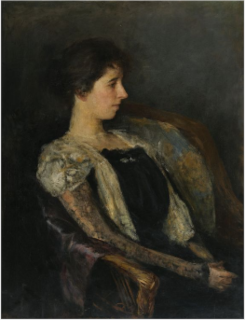
(Pictured: “Elizabeth Corbet Yeats” by Jack Butler Yeats, oil on canvas, circa 1899, National Gallery of Ireland)


Leave a comment

Birth of Rory O’Connor, Irish Republican Revolutionary

Rory O’Connor (Irish: Ruairí Ó Conchubhair), Irish republican revolutionary, is born in Kildare Street, Dublin, on November 28, 1883.

O’Connor is educated in St. Mary’s College, Dublin, and then in Clongowes Wood College, County Kildare, a public school run by the Jesuit order. It is also attended by the man who later condemns O’Connor to death, his close friend Kevin O’Higgins. He studies experimental physics, logic, and metaphysics. He also attends the College of Science, Merrion Street. He takes a BA (1906) and receives a B.Eng (1911). In 1910, he takes his Bachelor of Engineering and Bachelor of Arts degrees at University College Dublin (UCD), then known as the National University. Prominent in the university’s Literary and Historical Society, he advocates militant constitutional nationalism as one of the many society members active in the Young Ireland branch of the United Irish League.

O’Connor goes to work as a railway engineer, then he moves to Canada where he is an engineer in the Canadian Pacific Railway and Canadian Northern Railway, being responsible for the construction of 1,500 miles (2,400 km) of railroad. He returns to Ireland in 1915 at Joseph Plunkett‘s request and works for Dublin Corporation as a civil engineer. He joins the Catholic nationalist organisation the Ancient Order of Hibernians and serves in the Easter Rising in 1916 in the GPO as an intelligence officer. He is wounded by a sniper during reconnaissance at the Royal College of Surgeons.

During the subsequent Irish War of Independence (1919-21) O’Connor is Director of Engineering of the Irish Republican Army (IRA), a military organisation descended from the Irish Volunteers. The specialist skills of engineering and signaling are essential to the development of the 5th Battalion, Dublin Brigade. Its men are forbidden frontline duty as their contribution is regarded as vital, their number too small. But units only expand on an incremental local basis, disappointing General Richard Mulcahy.

O’Connor is also involved in the Republican breakout from Strangeways Prison in Manchester, England, on October 25, 1919. Michael Collins takes a particular interest in the escape and actually visits Austin Stack in the prison under a false name to finalise the arrangements. IRA men hold up traffic while a ladder is propped up against the outside of a prison wall. In all six prisoners escape, among them Piaras Beaslaí.

O’Connor refuses to accept the Anglo-Irish Treaty of 1921, which establishes the Irish Free State. It is ratified by a narrow vote in Dáil Éireann, the Irish parliament. He and many like him feel that the Treaty copper-fastens the partition of the six counties of Northern Ireland and undermines the Irish Republic declared in 1916.

On January 10, a meeting is held at O’Connor’s home in Monkstown, Dublin. In attendance are all senior anti-Treaty IRA officers except Liam Mellows. O’Connor is appointed to chair this grouping, known as the Republican Military Council. It is agreed that an IRA convention should be called without delay; failing this, a separate GHQ will be formed. At a further meeting in O’Connor’s office on March 20, a temporary IRA GHQ staff is elected under Liam Lynch as chief of staff. O’Connor remains in charge of engineering.

On March 26, 1922, the anti-Treaty officers of the IRA hold a convention in Dublin, in which they reject the Treaty and repudiate the authority of the Dáil. However, they are prepared to discuss a way forward. The convention meets again on April 9. It creates a new army constitution and places the army under a newly elected executive of 16 men, including O’Connor, that are to choose an army council and headquarters staff. Asked by a journalist if this development means the anti-Treatyites ware proposing a “military dictatorship” in Ireland, O’Connor replies, “You can take it that way if you want.”

On April 14, 1922, O’Connor is one of a number of IRA leaders in a 200-strong force that occupies the Four Courts building in the centre of Dublin in defiance of the Provisional Government. They intend to provoke the British troops, who are still in the country, into attacking them, which they believe will restart the war with Britain and re-unite the IRA against their common enemy. They also occupy other smaller buildings regarded as being associated with the former British administration, such as the Ballast Office and the Freemasons‘ Hall in Molesworth Street, but the Four Courts remains the focus of interest. On June 15, O’Connor sends out men to collect the rifles that belong to the mutineers of the Civic Guards.

Michael Collins tries desperately to persuade the IRA men to leave the Four Courts. At the Third IRA Convention on June 18, the Executive is split over whether the Irish Government should demand that all British troops leave within 72 hours. A motion to this effect, opposed by Lynch, is narrowly defeated, whereupon O’Connor and others leave the meeting to set up a separate GHQ. The IRA effectively splits into two factions opposed to the government.

On June 22, 1922, Sir Henry Wilson is assassinated in London by two IRA men, Reginald Dunne and Joseph O’Sullivan, each a former British soldier. Some now argue that this was done on the orders of Michael Collins, who had been a close friend of Dunne’s in the London Irish Republican Brotherhood (IRB). Prime Minister David Lloyd George writes an angry letter to Collins, which includes the line “…still less can Mr. Rory O’Connor be permitted to remain his followers and his arsenal in open rebellion in the heart of Dublin… organizing and sending out from this centre enterprises of murder not only in the area of your Government…”

On June 28, 1922, after the Four Courts garrison has kidnapped J. J. “Ginger” O’Connell, a general in the National Army, Collins gives orders for the shelling of the Four Courts with borrowed artillery lent by Winston Churchill. The shelling leads to the Four Courts catching fire, damaging parts of the building in addition to destroying numerous government documents. O’Connor is one of 130 men that surrender on June 30, some of whom are arrested and imprisoned in Mountjoy Prison. This incident marks the official start of the Irish Civil War, as fighting breaks out openly around the country between pro- and anti-Treaty factions.

On December 8, 1922, along with three other republicans, Liam Mellows, Richard Barrett and Joe McKelvey, captured with the fall of the Four Courts, O’Connor is executed by firing squad in reprisal for the anti-Treaty IRA’s killing of Free State Teachta Dála (TD) Sean Hales. The execution order is signed by Kevin O’Higgins. O’Connor had been best man at O’Higgins’s wedding on October 27, 1921. Their deaths remain a symbol of the bitterness and division of the Irish Civil War. O’Connor, one of 77 republicans executed by the Provisional Government, is seen as a martyr by the Republican movement in Ireland.

On O’Connor’s execution, the equestrienne Joan de Sales La Terriere, a close friend of his, names her son in his honour. “Rory O’Connor Place” in Arklow is named in his honour. There is also a pub in Crumlin, Dublin, named after him and a housing estate near Dún Laoghaire, County Dublin, called “Rory O’Connor Park.” A Sinn Féin cumann (UCD) is named after him.

(Pictured: Rory O’Connor addressing members of the IRA’s Dublin City Brigade at Smithfield, April 1922)


Leave a comment

Birth of Feargal Quinn, Businessman, Politician & TV Personality

Feargal Quinn, Irish businessman, politician and television personality, is born in Dublin on November 27, 1936. He is the founder of the Superquinn supermarket chain and serves as a Senator in Seanad Éireann representing the National University of Ireland constituency from 1993 to 2016.

Quinn’s father, Eamonn, founds a grocery brand and later the Red Island resort in Skerries, Dublin. He is a first cousin of Labour Party politician Ruairi Quinn and of Lochlann Quinn, former chairman of Allied Irish Banks (AIB). He is educated at Newbridge College and is a commerce graduate of University College Dublin (UCD). He builds a career in business and later takes on a range of public service roles.

Quinn founds the national supermarket chain Superquinn (originally Quinn’s Supermarkets), of which he remains non-executive president for some years after his family sells out their interest in August 2005 for over €400 million. Superquinn is known for its focus on customer service and pioneers a number of innovations, including Ireland’s first supermarket loyalty card in 1993, SuperClub. It also introduces self-scanning of goods by customers in a number of its outlets. Superquinn becomes the first supermarket in the world to guarantee the absolute traceability of all its beef from pasture to plate, using DNA TraceBack, a system developed at Trinity College, Dublin by IdentiGEN.

Quinn becomes the chairman of the Interim Board for Posts and serves as chairman of its successor An Post (the Irish postal administration) until 1989. He also serves on several other public authorities and boards. From 1993 to 1998, he chairs the steering committee which oversees the development of the Leaving Certificate Applied. In 2006, he is appointed an Adjunct Professor in Marketing at National University of Ireland Galway. He is also chairman of Springboard Ireland.

Quinn is a former President of EuroCommerce, the Brussels-based organisation which represents the retail, wholesale and international trade sectors in Europe. He also serves on the board of directors of CIES, the Food Business Forum based in Paris, as well as the American-based Food Marketing Institute.

In 2009, Quinn works with independent shops and helps them to revamp, modernise and stave off stiff competition from multi-national retailers. It airs as RTÉ‘s six-part television series, Feargal Quinn’s Retail Therapy. A second series airs in 2011, and a third series airs in 2012. In 2011, he fronts RTÉ’s Local Heroes campaign in Drogheda, County Louth, which is an assembled team of experts to kick-start the local economy. It airs as RTÉ One‘s six-part television series, Local Heroes – A Town Fights Back.

Quinn is first elected as a senator in 1993 from the National University of Ireland constituency and is re-elected in 1997, 2002, 2007 and 2011. He is a member of the Joint Oireachtas Committee on European Affairs, the Joint Committee on Finance and Public Service and is an Oireachtas member of the National Economic and Social Forum, along with the Joint Committee on Jobs and Innovation.

Quinn is one of the co-founders and is a driving force behind Democracy Matters – a civil society group that is formed to oppose the Government’s plans to abolish Seanad Éireann. In May 2013, with Senators Katherine Zappone and Mary Ann O’Brien, he introduces the Seanad Bill 2013 to reform the system of electing the elected members of Seanad Éireann (as provided for in Article 18.10 of the Constitution of Ireland) through a one-person, one vote franchise. The Seanad Bill 2013 succeeds in being passed at Second Stage in the Seanad. During the Seanad abolition referendum campaign, the Bill demonstrates to the electorate, in a very palpable way, that reform of the Seanad is achievable if they vote for its retention. In a referendum held in October 2013 on the Abolition of Seanad Éireann, the people vote to retain the Seanad by 51.7%.

In 2014, Quinn reveals that since being first elected to Seanad Éireann, he has donated his entire salary to charity and in more recent years he has refused to accept any salary. In March 2015, he opposes the Marriage Equality bill in the Seanad, and votes ‘No’ in the referendum. He serves as Chairman of the Independent Alliance. He does not contest the 2016 Seanad election.

Quinn is the recipient of five honorary doctorates from education institutions, including NUI Galway in 2006, a papal knighthood along with a fellowship and the French Ordre National du Mérite. He shares with Oprah Winfrey the 2006 “Listener of the Year” award of the International Listening Association.

Quinn dies peacefully at his home in Howth, County Dublin, on April 24, 2019, following a short illness. His funeral Mass takes place at St. Fintan’s Church in Sutton, north County Dublin. In attendance is President Michael D. Higgins, a representative for Taoiseach Leo Varadkar, Minister for Children Katherine Zappone, Senator Michael McDowell, and a host of other current and former politicians, business figures, and past colleagues of the “Superquinn family.” Fittingly, the coffin is carried from the church to the tune of Frank Sinatra’s “My Way.”


Leave a comment

Birth of Novelist Pamela Hinkson

Pamela Hinkson, novelist, is born on November 19, 1900, in Ealing, London, England, the only daughter among five children of Katharine Tynan Hinkson, novelist and poet, and Henry Albert Hinkson, a novelist, barrister, and classical scholar.

Married in 1893, Hinkson’s parents initially settle in England, where he studies law and is called to the Inner Temple in 1902. After suffering the loss of their first two sons in infancy, they have two more sons in addition to their daughter, Pamela. During this time her mother earns the main family income, and it is likely that she determines their return to Ireland in 1911. The Hinksons initially settle in Dalkey, County Dublin, before moving to a house called Clarebeg in Shankill. When Henry Hinkson is appointed resident magistrate for south Mayo (Castlebar) in October 1914, the family moves to Claremorris, County Mayo.

Hinkson is educated privately in England and on the Continent, and in Ireland attends a local convent day-school. She is exposed to her mother’s literary milieu which includes prominent writers of the Irish revival, including George William Russell, James Stephens, and Padraic Colum. Her mother’s memoir, The Years of the Shadow (1919), recalls Pamela’s developing talent for writing poetry and her predilection for war themes, as evidenced by The Blind Soldier, one of her first published poems. By the time she turns her hand to short stories, her earnings from writing enable her to buy the latest fashions.

Two key events that consumed Hinkson’s life and later spark her creativity are World War I and the Easter Rising. H. G. Wells describes in the foreword to his war novel Mr. Britling Sees It Through (1916) a conversation he had with her when she was 12, recalling how she had boldly set him straight on the “Irish question.” Her parents send her away to boarding school in County Wicklow in the hope that she will be distracted from her gloomy preoccupations, which are accentuated by the absence of her brothers, serving in the British Army. After the war she is deeply concerned by the redundancy experienced by demobilised and often maimed soldiers and contributes to the welfare work of the Irish servicemen’s Shamrock Club in London. These issues inform two early novels, The Victors (1925) and Harvest (1926), both written in the guise of an ex-serviceman under the pseudonym “Peter Deane.” By masking her identity, she avoids the possibility of her works being discredited because of her gender and lack of first-hand experience of war. Subsequently she writes under her own name for thirty years.

In contrast to her close relationship with her mother, Hinkson deeply dislikes her father. With the exception of her beloved brother Giles A. Hinckson, a correspondent for The Times in Buenos Aires and Santiago, she never meets a man who matches her high ideals. Though briefly engaged to be married, she is ultimately disillusioned by all men, dismissing them as she had her father. After his death early in 1919, she and her mother are left in financial difficulties, and have to resort to friends and boarding houses for accommodation. Without the financial means to embark on a university degree, she remains at her mother’s side. Though she continues to write, she leads a somewhat stifled life. From 1922 onwards they spend several years on the Continent.

Hinkson’s first novel, The End of All Dreams (1923), addresses the decline of the “big house” amid the revolutionary upheavals of recent Irish history, a theme to which she returns in later works, such as The Deeply Rooted (1935) and her last book, The Lonely Bride (1951). During the 1920s she writes much girls’ school fiction, while her novel Wind from the West (1930) is informed by a period spent in France, where she works as a governess. Her transcription of the memoirs of Lady Fingall (Elizabeth Burke-Plunkett), published under the title Seventy Years Young (1937), illustrates the decline of the Anglo-Irish ascendancy. Informed by war and the Irish troubles, her novels characteristically are solemn, and reflect her ambivalent relationship with Ireland. Inspired by the Irish landscape, but never an ardent supporter of Irish independence, she maintains an abiding attachment to England.

The death of Hinkson’s mother in 1931 is a devastating blow that triggers her most forceful and first truly successful novel, The Ladies’ Road (1932). Documenting the lives of the Irish and English ascendancies before, during, and after World War I, this novel, without being explicitly autobiographical, contains many motifs that resonate with her own life story. When published in the United States in 1946 it proves a massive success, selling 100,000 copies in the Penguin Books edition, a rare feat for a World War I novel appearing immediately after World War II. Other notable works are The Light on Ireland (1935) and her sketches of Irish life, Irish Gold (1939), written while she lodges with friends near Lough Derg, County Tipperary.

Hinkson’s visit to India in the late 1930s as a guest of the viceroy, which she recounts in Indian Harvest (1941), results in her appointment to the Ministry of Information in London (1939–45). She lectures on India in the United States during World War II, and also lectures to British troops and local audiences in Germany (1946–47), broadcasts on radio, and contributes to The Observer, The Spectator, New Statesman, The Manchester Guardian, and Time and Tide. Her novel Golden Rose (1944), written in London during The Blitz, romanticises the British colonial presence in India. Forthright in the expression of her numerous strongly held opinions, she argues ardently and controversially for women’s rights, animal welfare, and retention of Northern Ireland in the UK. Devout in her Catholicism, she is none the less critical of certain Catholic precepts.

Hinkson returns to Ireland in 1959 where she suffers poor health for twenty years until her death in Dublin on May 26, 1982.

(From: “Hinkson, Pamela” by Jessica March, Dictionary of Irish Biography, http://www.dib.ie)