Downey’s offbeat reports of the 1994 FIFA World Cup for The Irish News are subsequently compiled for his first book, Just One Big Party. He spends six years as a BBC news producer in Derry and Belfast, before joining the Derry News as editor in 2001. During his period as editor (2001–2004), the Derry News wins two Newspaper Society awards for Fastest Circulation Growth in the United Kingdom.
Since 2004, Downey has published six comic novels set in the criminal underbelly of post-ceasefire Ireland. His books have been described as “a superb blend of comedy, political dirty tricks, grisly murder and bizarre twists.”
A former deputy-president of the Union of Students in Ireland, Downey is one of the organisers of a student occupation of government offices in Dublin on Budget Day 1988 in protest against education cutbacks.
In 2006, Downey helps establish the new Northern Ireland literary review Verbal and edits the publication for its first six issues.
A lifelong political anorak, in 2007, Downey works as an election pundit for TV3 (Ireland), alongside the Irish comedian Brendan O’Carroll. In 2010, he wins a contest to predict the winners of Northern Ireland’s 18 Westminster constituencies, missing out on just one, Naomi Long, who surprisingly beat First MinisterPeter Robinson in Belfast East. He donates his prize, a framed Ian Knox cartoon, to Long by way of apology.
Downey’s 2010 comedy-thriller The American Envoy is the first novel issued by an Irish publishing house as a Kindlee-book, simultaneously with its paperback release.
In June 2011, Downey is appointed Director of Media for Culture Company 2013, the body tasked with delivering Derry’s UK City of Culture year.
Downey is married to Una McNally, and they have two children.
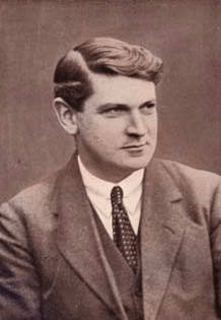
On February 21, 2003, a letter signed by Irish revolutionary leader Michael Collins, written in 1922 upon his return from London, fetches a record price of €28,000 at an auction at James Adam & Sons Ltd. on Dublin’s St. Stephen’s Green. Estimated to fetch up to €8,000.00, despite fierce bidding by the National Library of Ireland, the letter is purchased by singer Enya’s manager, Mickey Ryan, who says he wants the letter to remain in Ireland.
The letter is written after Collins returns to Dublin from a meeting in London with Churchill and Craig. He states in the letter that Craig’s stance on partition is seen as “an unreasonable one and not ours.”
“All the British statesmen are agreed that it was most disastrous on Craig’s part to talk about agreeing to nothing less than the six county area,” Collins writes.
Collins expresses his belief that ties would increase between leaders in the north and south, leading to a united Ireland in the long term. He tells Walsh that he is “no lover of partition, no matter what form it appears,” and that any form of partition is “distasteful” to him. “It would be far better to fix our minds for a time on a united Ireland, for this course will not leave minorities which would be impossible to govern,” he writes. He also says he hopes that one day a multi-denominational party might be formed in the north east, developing links with the Free State and destabilising the northern administration.
Faulkner is the elder of two sons of James, owner of the Belfast Collar Company, and Nora Faulkner. His younger brother is Colonel Sir Dennis Faulkner. He is educated initially at Elm Park preparatory school, Killylea, County Armagh, but at 14, preferring to stay in Ireland, is sent to the Church of Ireland-affiliated St. Columba’s College at Whitechurch, County Dublin, although he is Presbyterian. His best friend at the school is Michael Yeats, son of W. B. Yeats. He enters Queen’s University Belfast in 1939 to study law, but, with the advent of World War II, he quits his studies to work full-time in the family shirt-making business. He is the only Prime Minister of Northern Ireland to have been educated in the Irish Free State and one of only two to have been educated in Ireland.
Faulkner becomes involved in unionist politics, the first of his family to do so, and is elected to the Parliament of Northern Ireland as the Ulster Unionist Party (UUP) Member of Parliament (MP) for the constituency of East Down in 1949. His vociferous traditional unionist approach to politics ensures him a prominent backbench position. He is, at the time, the youngest ever MP in the Northern Irish Parliament. He is also the first Chairman of the Ulster Young Unionist Council in 1949. In 1956 he is offered and accepts the job of Parliamentary Secretary to the Ministry of Finance, or Government Chief Whip.
When Terence O’Neill becomes Prime Minister in 1963, he appoints Faulkner, his chief rival for the job, as Minister of Commerce. He resigns in 1969 over the technicalities of how and when to bring in the local government reforms which the British Labour government is pushing for. This is a factor in the resignation of O’Neill, who resigns as Prime Minister in the aftermath of his failure to achieve a good enough result in the 1969 Northern Ireland general election.
In the ensuing leadership contest, Faulkner loses out again when O’Neill gives his casting vote to his cousin, James Chichester-Clark. In 1970, he becomes the Father of the House. He comes back into government as Minister of Development under Chichester-Clark and in a sharp turn-around, begins the implementation of the political reforms that were the main cause of his resignation from O’Neill’s cabinet. Chichester-Clark himself resigns in 1971 as the political and security situation and the more intensive British interest proves difficult.
Faulkner is elected leader of the Ulster Unionist Party and Prime Minister. In his initial innovative approach to government, he gives a non-unionist, David Bleakley, a former Northern Ireland Labour Party (NILP) MP, a position in his cabinet as Minister for Community Relations. In June 1971, he proposes three new powerful committees at Stormont which would give the opposition salaried chairmanships of two of them.
However, this initiative (radical at the time) is overtaken by events. A shooting by soldiers of two nationalist youths in Derry causes the Social Democratic and Labour Party (SDLP), the main opposition, to boycott the Stormont parliament. The political climate deteriorates further when, in answer to a worsening security situation, Faulkner introduces internment on August 9, 1971. This is a disaster and causes the situation to worsen.
Despite this, Faulkner continues his radical approach to Northern Irish politics and, following Bleakley’s resignation in September 1971 over the internment issue, appointes Dr. G. B. Newe, a prominent lay Catholic, as Minister of State in the Cabinet Office. His administration staggers on through the rest of 1971, insisting that security is the paramount issue.
In January 1972, an incident occurs during a Northern Ireland Civil Rights Association march in Derry, during which paratroopers shoot and killed thirteen unarmed civilians. A fourteenth civilian dies later. What history has come to know as Bloody Sunday is, in essence, the end of Faulkner’s government. In March 1972, he refuses to maintain a government without security powers which the British government under Edward Heath decides to take back. The Stormont parliament is subsequently prorogued, initially for a period of one year, and following the appointment of a Secretary of State for Northern Ireland, William Whitelaw, direct rule is introduced.
In June 1973, elections are held to a new devolved parliament, the Northern Ireland Assembly. The elections split the UUP. Faulkner becomes chief executive in a power-sharing executive with the SDLP and the centre-ground Alliance Party, a political alliance cemented at the Sunningdale Conference that year. The power-sharing Executive lasts only six months and is brought down by a loyalistUlster Workers’ Council strike in May 1974. In 1974, he loses the leadership of the UUP to anti-Sunningdale elements led by Harry West. He subsequently resigns from the Ulster Unionist Party and forms the Unionist Party of Northern Ireland (UPNI).
The UPNI fares badly in the Northern Ireland Constitutional Convention elections of 1975, winning only five out of the 78 seats contested. Faulkner wins the final seat. In 1976 he announces that he is quitting active politics. He is elevated to the House of Lords in the 1977 New Year Honours list, being created Baron Faulkner of Downpatrick on February 7, 1977.
Faulkner, a keen huntsman, dies on March 3, 1977, following a riding accident while hunting with the County Down Staghounds at the Ballyagherty/Station Road junction near Saintfield, County Down. He is riding at full gallop along a narrow country road when his horse slips, throwing him off and killing him instantly. He is laid to rest at Magherahamlet Presbyterian Church near Spa, County Down where he had been a regular member of the congregation. His twenty-four-day life peerage is thus the shortest-lived until the death of Lord Heywood of Whitehall in 2018 just nine days after ennoblement.
Deane is the fourth child of Frank Deane and Winifred (Doherty) and is brought up as part of a Catholicnationalist family. He attends St. Columb’s College in his hometown, where he befriends fellow student Seamus Heaney. He then attends Queen’s University Belfast (BA and MA) and Pembroke College, Cambridge (PhD). Although he too becomes noted for his poetry, he chooses to go into academia instead. He workws as a teacher in Derry, with Martin McGuinness being one of his students. McGuinness later recalls how Deane was “gentle, kind and never raised his voice at all, an ideal teacher who was very highly thought of.”
Deane is the co-editor of Field Day Review, an annual journal of Irish studies. He also serves as general editor of the Penguin Classic James Joyce series and of Critical Conditions, a series in Irish Studies which is jointly published by the University of Notre Dame Press and Cork University Press. He co-founds the book series Field Day Files, which contains key works by David Lloyd, Joe Cleary, Marjorie Howes, and Kerby A. Miller.
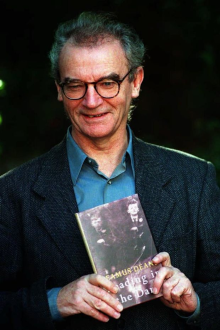
The first collection of Deane’s poetry, Gradual Wars, is published in 1972 and receives the AE Memorial Award for Literature. His first novel, Reading in the Dark, is published in 1996 and is partly autobiographical. It wins the 1996 Guardian Fiction Prize and the 1996 South Bank Show Award for Literature, is a New York Times Notable Book, wins The Irish Times International Fiction Prize and the Irish Literature Prize in 1997, besides being shortlisted for the Booker Prize in 1996. The novel is translated into more than twenty languages. He is also the general editor of the monumental Field Day Anthology of Irish Writing, which is 4,000 pages long and whose first volumes are released in 1990. It is later criticised for excluding the voices and experiences of Irish women. He responds to this by stating, “To my astonishment and dismay, I have found that I myself have been subject to the same kind of critique to which I have subjected colonialism … I find that I exemplify some of the faults and erasures which I analyse and characterize in the earlier period.”
Deane’s first marriage is to Marion Treacy. Together, they have four children. He is in a civil partnership with Emer Nolan until his death. They have one child together.
Following a short illness, Deane dies at the age of 81 on May 12, 2021 at Beaumont Hospital in Dublin.
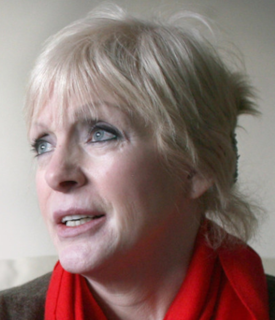
Price is born in Belfast on December 16, 1950. She and her sister, Marian, also an IRA member, are the daughters of Albert Price, a prominent Irish republican and former IRA member from Belfast. Their aunt, Bridie Dolan, is blinded and loses both hands in an accident handling IRA explosives.
Price becomes involved in Irish republicanism in the late 1960s and she and Marian participate in the Belfast to Derrycivil rights march in January 1969 and are attacked in the Burntollet Bridge incident.
In 1971 Price and her sister join the Provisional Irish Republican Army (IRA). In 1972 she joins an elite group within the IRA called “The Unknowns” commanded by Pat McClure. The Unknowns are tasked with various secretive activities and transport several accused traitors across the border into the Republic of Ireland where they are “disappeared.” She personally states that she had driven Joe Lynskey across the border to face trial. In addition she states that she, Pat McClure and a third Unknown were tasked with killing Jean McConville, with the third Unknown actually shooting her.
Price leads the car bombing attacks in London on March 8, 1973, which injure over 200 people and is believed to have contributed to the death of one person who suffers a fatal heart attack. The two sisters are arrested, along with Gerry Kelly, Hugh Feeney and six others, on the day of the bombing as they are boarding a flight to Ireland. They are tried and convicted at the Great Hall in Winchester Castle on November 14, 1973. Although originally sentenced to life imprisonment, which is to run concurrently for each criminal charge, their sentence is eventually reduced to 20 years. She serves seven years for her part in the bombing. She immediately goes on a hunger strike demanding to be moved to a prison in Northern Ireland. The hunger strike lasts for 208 days because the hunger strikers are force-fed by prison authorities to keep them alive.
On the back of the hunger-striking campaign, Price’s father contests Belfast West at the February 1974 United Kingdom general election, receiving 5,662 votes (11.9%). The Price sisters, Hugh Feeney, and Gerry Kelly are moved to Northern Ireland prisons in 1975 as a result of an IRA truce. In 1980 she receives the royal prerogative of mercy and is freed on humanitarian grounds in 1981, purportedly suffering from anorexia nervosa due to the invasive trauma of daily force feedings.
After her release in 1980, Price marries Irish actor Stephen Rea, with whom she has two sons, Danny and Oscar. They divorce in 2003.
The Price sisters remain active politically. In the late 1990s, Price and her sister claim that they have been threatened by their former colleagues in the IRA and Sinn Féin for publicly opposing the Good Friday Agreement (i.e. the cessation of the IRA’s military campaign). she is a contributor to The Blanket, an online journal, edited by former Provisional IRA member Anthony McIntyre, until it ceases publication in 2008.
In 2001, Price is arrested in Dublin and charged with possession of stolen prescription pads and forged prescriptions. She pleads guilty and is fined £200 and ordered to attend Alcoholics Anonymous meetings.
In February 2010, it is reported by The Irish News that Price had offered help to the Independent Commission for the Location of Victims’ Remains in locating graves of three men, Joe Lynskey, Seamus Wright, and Kevin McKee. The bodies of Wright and McKee are recovered from a singular grave in County Meath in August 2015. It is unclear if Price played a role in their recovery. The remains of Joe Lynskey have not been recovered as of April 2021.
Price is the subject of the 2018 feature-length documentary I, Dolours in which she gives an extensive filmed interview.
In 2010 Price claims Gerry Adams had been her officer commanding (OC) when she was active in the IRA. Adams, who has always denied being a member of the IRA, denies her allegation. She admits taking part in the murder of Jean McConville, as part of an IRA action in 1972. She claims the murder of McConville, a mother of ten, was ordered by Adams when he was an IRA leader in West Belfast. Adams subsequently publicly further denies Price’s allegations, stating that the reason for them is that she is opposed to the Provisional Irish Republican Army’s abandonment of paramilitary warfare in favour of politics in 1994, in the facilitation of which Adams has been a key figure.
Oral historians at Boston College interview both Price and her fellow IRA paramilitary Brendan Hughes between 2001 and 2006. The two give detailed interviews for the historical record of the activities in the IRA, which are recorded on condition that the content of the interviews is not to be released during their lifetimes. Prior to her death in May 2011, the Police Service of Northern Ireland (PSNI) subpoena the material, possibly as part of an investigation into the disappearance of a number of people in Northern Ireland during the 1970s. In June 2011, the college files a motion to quash the subpoena. A spokesman for the college states that “our position is that the premature release of the tapes could threaten the safety of the participants, the enterprise of oral history, and the ongoing peace and reconciliation process in Northern Ireland.” In June 2011, U.S. federal prosecutors ask a judge to require the college to release the tapes to comply with treaty obligations with the United Kingdom. On July 6, 2012, the United States Court of Appeals for the First Circuit agrees with the government’s position that the subpoena should stand. On October 17, 2012, the Supreme Court of the United States temporarily blocks the college from handing over the interview tapes. In April 2013, after Price’s death, the Supreme Court turns away an appeal that seeks to keep the interviews from being supplied to the PSNI. The order leaves in place a lower court ruling that orders Boston College to give the Justice Department portions of recorded interviews with Price. Federal officials want to forward the recordings to police investigating the murder of Jean McConville.
On January 24, 2013 Price is found dead at her Malahide, County Dublin home, from a toxic effect of mixing prescribed sedative and anti-depressant medication. The inquest returns a verdict of death by misadventure. Her body is buried at Milltown Cemetery in West Belfast.
The son of a docker, Doherty is born into an Irish republican family, his grandfather being a member of the Irish Citizen Army which fought against British rule in the 1916 Easter Rising. Doherty leaves school at the age of 14 and begins work on the docks and as an apprentice plumber, before being arrested in 1972 on his seventeenth birthday under the Special Powers Act. He is interned on the prison ship HMS Maidstone and at Long Kesh Detention Centre, and while interned hears of the events of Bloody Sunday in Derry, where 14 civil rights protesters were shot dead by the British Army. This leads to him joining the IRA after he is released in June 1972. In the mid-1970s he is convicted of possession of explosives and sentenced to six years imprisonment in Long Kesh. He is released in December 1979.
After his release, Doherty becomes part of a four-man active service unit nicknamed the “M60 gang” due to their use of an M60 heavy machine gun, along with Angelo Fusco and Paul Magee. On April 9, 1980, the unit lures the Royal Ulster Constabulary (RUC) into an ambush on Stewartstown Road, killing one constable and wounding two others. On May 2 the unit is planning another attack and has taken over a house on Antrim Road, when an eight-man patrol from the Special Air Service (SAS) arrive in plain clothes, after being alerted by the RUC. A car carrying three SAS members goes to the rear of the house, and another car carrying five SAS members arrives at the front of the house. As the SAS members at the front of the house exit the car, the IRA unit opens fire with the M60 machine gun from an upstairs window, hitting Captain Herbert Westmacott in the head and shoulder. Westmacott, who is killed instantly, is the highest-ranking member of the SAS killed in Northern Ireland. The remaining SAS members at the front, armed with Colt Commando automatic rifles, submachine guns and Browning pistols, return fire but are forced to withdraw. Magee is apprehended by the SAS members at the rear of the house while attempting to prepare the IRA unit’s escape in a transit van, while the other three IRA members remain inside the house. More members of the security forces are deployed to the scene and, after a brief siege, the remaining members of the IRA unit surrender.
The trial of Doherty and the other members of the M60 gang begins in early May 1981, on charges including three counts of murder. On June 10, Doherty and seven other prisoners, including Angelo Fusco and the other members of the IRA unit, take a prison officer hostage at gunpoint in Crumlin Road Gaol. After locking the officer in a cell, the eight take other officers and visiting solicitors hostage, also locking them in cells after taking their clothing. Two of the eight wear officers’ uniforms while a third wears clothing taken from a solicitor, and the group moves towards the first of three gates separating them from the outside world. They take the officer on duty at the gate hostage at gunpoint and force him to open the inner gate. An officer at the second gate recognises one of the prisoners and runs into an office and presses an alarm button, and the prisoners run through the second gate towards the outer gate. An officer at the outer gate tries to prevent the escape but is attacked by the prisoners, who escape onto Crumlin Road. As the prisoners are moving towards the car park where two cars are waiting, an unmarked RUC car pulls up across the street outside Crumlin Road Courthouse. The RUC officers open fire, and the prisoners return fire before escaping in the waiting cars. Two days after the escape, Doherty is convicted in absentia and sentenced to life imprisonment with a minimum recommended term of thirty years.
Doherty escapes across the border into the Republic of Ireland, and then travels to the United States on a false passport. He lives with an American girlfriend in Brooklyn and New Jersey, working on construction sites and as a bartender at Clancy’s Bar in Manhattan, where he is arrested by the Federal Bureau of Investigation (FBI) on June 28, 1983. He is imprisoned in the Metropolitan Correctional Center in Manhattan, and a legal battle ensues with the British government seeking to extradite him back to Northern Ireland. Doherty claims he is immune from extradition as the killing of Westmacott was a political act, and in 1985 federal judge John E. Sprizzo rules Doherty cannot be extradited as the killing was a “political offense.” His legal battle continues as the United States Department of Justice then attempts to deport him for entering the country illegally.
Doherty remains in custody at the Metropolitan Correctional Center and attempts to claim political asylum, and June 15, 1988, the United States Attorney GeneralEdwin Meese overturns an earlier ruling by the Federal Board of Immigration Appeals that Doherty can be deported to the Republic of Ireland and orders his deportation to Northern Ireland. In February 1989 new Attorney General Dick Thornburgh chooses not to support the decision made by his predecessor and asks lawyers for Doherty and the Immigration and Naturalization Service to submit arguments for a review of the decision and Doherty’s claim for asylum. By this time Doherty’s case is a cause célèbre with his sympathisers including over 130 Congressmen and a son of then President of the United StatesGeorge H. W. Bush, and in 1990 a street corner near the Metropolitan Correctional Center is named after him.
The People’s Democracy organizes the four-day march from Belfast to Derry, starting on January 1, 1969. The march is to be the acid test of the government’s intentions. Either the government will face up to the extreme right of its own Unionist Party and protect the march from the ‘harassing and hindering,’ or it will be exposed as impotent in the face of sectarian thuggery, and Westminster will be forced to intervene, re-opening the whole Irish question for the first time in 50 years. The march is modelled on the Selma to Montgomery march in Alabama in 1965, which had exposed the racist thuggery of America’s Deep South and forced the United States government into major reforms.
The departure on New Year’s Day 1969 of approximately 40 People’s Democracy supporters on the march to Derry is marked by a protest in Belfast by loyalists under the direction of MajorRonald Bunting, a close associate of Rev. Ian Paisley. It is the loyalist’s intention to harass the march along its entire journey.
On the first day of the march, the group makes its way unhindered towards Antrim. Just outside Antrim the marchers run into a police barricade, behind which several hundred loyalists are gathered, led by Major Bunting. The RUC refuses to remove the blockade and after a lengthy delay, and minor scuffles, the marchers are driven in police tenders to Whitehall Community Centre where they spend an unsettled night interrupted by a bomb threat.
The next day, the marchers set off for Randalstown but again find their way blocked by Major Bunting and a crowd of loyalists. Once again, the RUC refuses to remove the loyalist protesters and the marchers are eventually transported to Toome by car. The marchers are welcomed at Toome and after taking lunch in the village they set out for Maghera. After 30 minutes the march is again halted and then rerouted away from the loyalist village of Knockloughlin. After two miles, loyalist protestors led by Major Bunting again halt the march. Another standoff ensues and, as locals gather to support the marchers, the RUC’s County Inspector Kerr asks the loyalists to stand aside, which they do. The marchers then make their way towards Maghera, where loyalists have gathered to await their arrival. On hearing of this ‘reception’ committee, which is armed with clubs and sticks, the marchers decide to bypass the village and spend the night at Bracaghreilly. That night Maghera witnesses considerable violence from frustrated loyalists.
On January 3, the third day of the march, the marchers set out for Dungiven and encounter little opposition. After lunch in Dungiven they travel on to Feeny. A mile outside Dungiven the marchers are halted by the RUC with reports of a loyalist protest further along the road. A civil rights supporter then arrives along the road that is allegedly blocked and reports no obstructions ahead. The marchers decide to breach police lines and encounter no protest ahead. After reaching Feeny the marchers move on to Claudy, where they receive a friendly reception and settle down for the night. That night a loyalist attack on the hall in which the marchers are staying is repulsed by locals.
The same night in Derry, a rally by Ian Paisley in the Guildhall leads to serious disorder. While those inside the hall are listening to Major Bunting call for loyalists to gather the next day at Burntollet, a crowd of nationalists gather outside the building in protest. During clashes as the rally disperses, Major Bunting’s car is destroyed. Later that night stockpiles of bottles and stones are left by loyalists in the fields at Burntollet.
On the morning of January 4, the marchers, who now number approximately 500, set out on the last league of their journey to Derry. Just before reaching Burntollet District Inspector Harrison stops the march in order to investigate reports of loyalists ahead. Harrison, together with County Inspector Kerr, speak of 50 loyalists ahead and claim to be confident that there is no danger. With the RUC leading the way the marchers advance. In the field overlooking the road the marchers observe approximately 300 loyalists, identified by white armbands and armed with cudgels. They come under a bombardment of missiles. Marchers seek to escape the bombardment by speeding up the road but there is to be no escape as they immediately encounter a second contingent of loyalists blocking their escape.
As many marchers flee into the fields they are pursued by attackers and the RUC makes no attempt to intervene. Others are thrown into the nearby River Faughan. As what is left of the marchers continue on to Derry, they are also attacked twice in Derry’s Waterside before receiving a rousing welcome in Guildhall Square.
That night clashes occur between the RUC and local people and the first “Free Derry” is born. At 2:00 AM members of the RUC attack the Bogside, running amok in the Lecky Road and St. Columbs Wells districts. Windows are broken, residents are assaulted, and sectarian abuse is directed at the people of the Bogside. The reaction to this ‘invasion’ ranges from the painting of the Free Derry legend to the formation of vigilante squads in the area, based at the Foyle Harps Hall in the Brandywell and Rossville Hall in the Bogside. The barricades remain up for a number of days and relations between the community in the Bogside and the RUC, which has never been particularly good, grows steadily worse.
These events, together with the steady increase of conflict between local youths and the RUC as the year progress, is to lay the foundations for the resistance that is to take place during the Battle of the Bogside.
(From: “People’s Democracy march, January 4, 1969” by Jude Collins, http://www.judecollins.com, January 4, 2016)
O’Connell is born to Jeremiah Ambrose and Winifred O’Connell. He is nicknamed “Ginger” because of his red hair. His father is a national school inspector, so the family lives in Sligo, Derry, Longford and Belfast, and he attends a succession of primary schools. He studies at University College Dublin (UCD) where he receives a BA and a first-class MA. He is a member of the Literary and Historical Society at UCD and has an interest in boxing.
O’Connell is living in Cavan with his father, his sister Mary Margaret, his brother John Aloysius and two servants, Mary Burke and Rose Anne O’Reilly, at the time of the 1911 census, when he is 23. He is working as a Solicitor’s Apprentice, can read and write as well as speak both English and Irish, and is single. His mother is not living as it is recorded that his father is a widower.
O’Connell spends some time in the United States Army, serving with the 69th New York Infantry Regiment between 1912 and 1914. He returns to Ireland in 1914 and joins the Irish Volunteers, becoming Chief of Inspection in 1915. He travels the country organising volunteer corps, as well as contributing to the Irish Volunteer’s journal and delivering lectures on military tactics to both the Volunteers and Fianna Éireann. He also delivers a series of lectures about the famous Irish battles to the Gaelic League in Dublin. He is not a member of the Irish Republican Brotherhood (IRB) as he believes that soldiers should not be a part of secret societies.
During the Irish War of Independence, O’Connell is a member of the Irish Republican Army (IRA) headquarters staff, as Assistant Director of Training and, after the killing of Dick McKee in 1920, as Director of Training. He coordinates, and is the principal lecturer, for a training course for military officers. The course is run clandestinely in the premises of the Topographical Society on Gardiner Street in Dublin. A sympathetic doorkeeper allows the group in at night when the society is not present. Topics delivered by O’Connell include tactics, ordinance and engineering.
In the IRA split after Dáil Éireann ratifies the Anglo-Irish Treaty, O’Connell takes the pro-Treaty side. He is made Deputy Chief of Staff in the National Army. On June 26, 1922, he is kidnapped by anti-treaty forces in reprisal for the arrest of an anti-treaty officer. His kidnapping is a precipitating factor in the formal outbreak of the Irish Civil War, when government pro-treaty forces two days later attack anti-treaty forces occupying the Four Courts. He survives the fighting and spends the rest of the civil war as General Officer Commanding the Curragh Command.
Following the Irish Civil War, the National Army is reorganised, and as part of that O’Connell is demoted from general to colonel. He subsequently holds a variety of positions: chief lecturer in the army school of instruction (1924–1929); director of no. 2 (intelligence) bureau (1929–1932); OC Irish Army Equitation School (March–June 1932); quartermaster-general (1932–1935) and director of the military archives (1935–1944). He also publishes articles on Irish and foreign military history and tactics in his time as a military historian. He marries Gertrude McGilligan, and they have two children together – one son and one daughter.
O’Connell dies of a heart attack at the age of 56 on February 19, 1944.
The Northern state consists of the six northeastern counties of Ulster with a unionist majority. They are Antrim, Down, Armagh, Derry, Tyrone, and Fermanagh. Belfast is to be the seat of a government and hold limited devolved powers. The counties of Donegal, Cavan, and Monaghan are to be absorbed within the Irish Free State controlled from parliament in Dublin.
Irish nationalists are dismayed with the plan. Protestant Unionists, particularly those living within the boundaries of the new state, accept and start to implement the Act. Sectarian attacks are launched upon Catholic homes in Belfast, Derry, Banbridge, Lisburn, and Dromore. Catholics are driven from Belfast shipyards and from various engineering works in the city. Supposedly these attacks are in revenge for Irish Republican Army (IRA) assassinations.
The IRA continues the campaign to establish a republic with the Irish War of Independence. By the middle of 1921, both sides are exhausted, and a truce is called on June 9.
In July 1921, Éamon DeValera, the president of Dáil Éireann, goes to London to meet with Prime Minister Lloyd George. They agree an Irish delegation will come to London to discuss terms in the autumn.
During the debate, Lloyd George insists Ireland remain part of the Commonwealth and Dáil Éireann members take the oath of allegiance to the British throne. After a delay of two months, Lloyd George delivers the ultimatum on December 5, sign a treaty within three days or there will be war.
The Anglo-Irish Treaty is to give Ireland a 26 county Free State with Dominion status. The right to raise taxes, regulate foreign trade, independence in internal affairs, own an army, and the oath of allegiance is changed to one of fidelity.
The British are to retain three naval bases within the jurisdiction of the Free State, at Cobh, Lough Swilly, and Berehaven. The Northern Ireland boundary is to be determined by a commission. This gives false hope to large tracts of Tyrone, Fermanagh, Down, Armagh, and Derry City would be given to the Free State as they have Catholic majorities.
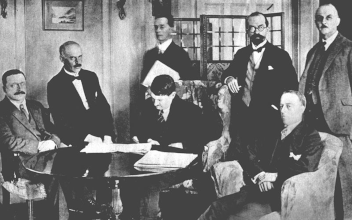
Just after 2:00 AM on December 6, 1921, the Irish delegation, without consulting the Dáil, finally sign a treaty with the British. Collins writes, prophetically, later on the day of the signing, “early this morning I signed my death warrant.”
The Treaty displeases the Catholics in the north and the unionists in the south. Meanwhile, many of those involved in the conflict are abhorred at the fact that not all of Ireland is to leave the United Kingdom.
(From: “The Anglo-Irish Treaty (1921)” by Brian O’Neill, Your Irish Culture, http://www.yourirish.com, May 20, 2020)
Born in Derry on March 23, 1917, McLaughlin is the son of a butcher and cattle dealer, and one of nine children. He starts singing in local churches in the Bogside at the age of seven, and as a teenager adds two years to his age to enlist in the Irish Guards, later serving abroad with the Palestine Police Force, before returning in the late 1930s to join the Royal Ulster Constabulary.
Known as The Singing Bobby, McLaughlin becomes a local celebrity before starting to work in the UK variety circuit, where he also plays summer seasons in English seaside resorts. The renowned Irish tenor John McCormack (1884–1945) advises him that his voice is better suited to a lighter repertoire than the operatic one he has in mind and urges him to find an agent. He finds the noted impresario Jack Hylton (1892–1965) who books him but is unable to fit his full name on the bill, thus Joseph McLaughlin becomes Josef Locke.
Locke makes an immediate impact when featured in “Starry Way,” a twenty-week summer show at the Opera House Theatre in Blackpool, Lancashire, England in 1946 and is rebooked for the following summer, then starring for three seasons at the Blackpool Hippodrome. He appears in ten Blackpool seasons from 1946 to 1969, not the nineteen seasons he later claims.
Locke makes his first radio broadcast in 1949 and subsequently appears on television programmes such as Rooftop Rendezvous, Top of the Town, All-star Bill and The Frankie Howerd Show. He is signed to the Columbia label in 1947, and his first releases are the two Italian songs “Santa Lucia” and “Come Back to Sorrento.”
In 1947, Locke releases “Hear My Song, Violetta,” which becomes forever associated with him. It is based on a 1936 tango “Hör’ mein Lied, Violetta” by Othmar Klose and Rudolf Lukesch. The song “Hör’ mein Lied, Violetta” is often covered, including by Peter Alexander and is itself based on Giuseppe Verdi‘s La traviata. His other songs are mostly a mixture of ballads associated with Ireland, excerpts from operettas, and familiar favourites.
In 1948, Locke appears in several films produced by Mancunian Films, usually as versions of himself. He plays himself in the film Holidays with Pay. He also appears as “Sergeant Locke” in the 1949 comedy What a Carry On!
In 1958, after Locke has appeared in five Royal Variety Performancetelecasts, and while he is still at the peak of his career, the British tax authorities begin to make substantial demands that he declines to meet. Eventually he flees the country for Ireland, where he lays low for several years. When his differences with the taxman are eventually settled, he relaunches his career in England with tours of the northern variety clubs and summer seasons at Blackpool’s Queen’s Theatre in 1968 and 1969, before retiring to County Kildare, emerging for the occasional concert in England. He later appears on British and Irish television, and in November 1984 is given a lengthy 90-minute tribute in honour of the award he is to receive at the Olympia theatre commentating his career in show business on Gay Byrne‘s The Late Late Show. He also makes many appearances on the BBC Television‘s long running variety show The Good Old Days.
In 1991, the Peter Chelsom film Hear My Song is released. It is a fantasy based on the notion of Locke returning from his Irish exile in the 1960s to complete an old love affair and save a Liverpool-based Irish night-club from ruination. Locke is played by Ned Beatty, with the singing voice of Vernon Midgley. The film leads to a revival in Locke’s career. A compilation CD is released, and he appears on This Is Your Life in March 1992. He performs in front of the Prince and Princess of Wales at the 1992 Royal Variety Show, singing “Goodbye,” the final song performed by his character in the film. He announces prior to the song that this will be his final public appearance.
Locke dies at the age of 82 in Clane, County Kildare on October 15, 1999, and is survived by his wife, Carmel, and a son.
On March 22, 2005, a bronze memorial to Locke is unveiled outside the City Hotel on Queen’s Quay in Derry by Phil Coulter and John Hume. The memorial is designed by Terry Quigley. It takes the form of a spiraling scroll divided by lines, representing a musical stave. The spiral suggests the flowing melody of a song and is punctuated by images illustrating episodes in his life, including Locke in police uniform, Blackpool Tower, Carnegie Hall, and the musical notes of the opening lines of “Hear My Song.”
A biography of the singer, entitled Josef Locke: The People’s Tenor, by Nuala McAllister Hart is published in March 2017, the centenary of his birth. The book corrects many myths that the charismatic Locke circulated about his career.






 seamus dubhghaill