The RMS Royal Adelaide, captained by John Batty, leaves Cork fully laden with cargo and about 250 passengers on Wednesday, March 27,1850, touching off at Plymouth, Devon, England, on Thursday evening. By the time the ship leaves Plymouth for London at 3:00 a.m. on Friday, March 29, there are almost three hundred deck passengers.
The ship is totally lost at about 11:00 p.m. on Saturday, March 30 on Tongue Sands north of Margate, Kent, England, with the loss of all on board. News only reaches London late on Sunday as the river pilot waiting for the ship happens to meet a Deal, Kent, pilot, Charles Gillham, who reports seeing a ship of a similar description in distress the previous evening (The Illustrated London News, April 6 and 13, 1850).
The dead include more than one hundred fifty deck passengers from Ireland, during a time when the Great Famine is at its height.
(Pictured: “The Wreck of the Royal Adelaide,” illustration for The Illustrated London News, April 13, 1850)
McLaughlin is one of ten children of Patrick McLaughlin, butcher and cattle dealer, and Annie McLaughlin (née Doherty). He starts singing in local churches in the Bogside at the age of seven, and as a teenager adds two years to his age to enlist in the Irish Guards, later serving abroad with the Palestine Police Force, before returning in the late 1930s to join the Royal Ulster Constabulary (RUC).
Known as The Singing Bobby, McLaughlin becomes a local celebrity before starting to work in the UK variety circuit, where he also plays summer seasons in English seaside resorts. The renowned Irish tenor John McCormack (1884–1945) advises him that his voice is better suited to a lighter repertoire than the operatic one he has in mind and urges him to find an agent. He finds the noted impresario Jack Hylton (1892–1965) who books him but is unable to fit his full name on the bill, thus Joseph McLaughlin becomes Josef Locke.
Locke makes an immediate impact when featured in “Starry Way,” a twenty-week summer show at the Opera House Theatre in Blackpool, Lancashire, England in 1946 and is rebooked for the following summer, then starring for three seasons at the Blackpool Hippodrome. He appears in ten Blackpool seasons from 1946 to 1969, not the nineteen seasons he later claims.
Locke makes his first radio broadcast in 1949 and subsequently appears on television programmes such as Rooftop Rendezvous, Top of the Town, All-star Bill and The Frankie Howerd Show. He is signed to the Columbia label in 1947, and his first releases are the two Italian songs “Santa Lucia” and “Come Back to Sorrento.”
In 1947, Locke releases “Hear My Song, Violetta,” which becomes forever associated with him. It is based on a 1936 tango “Hör’ mein Lied, Violetta” by Othmar Klose and Rudolf Lukesch. The song “Hör’ mein Lied, Violetta” is often covered, including by Peter Alexander and is itself based on Giuseppe Verdi‘s La traviata. His other songs are mostly a mixture of ballads associated with Ireland, excerpts from operettas, and familiar favourites.
In 1948, Locke appears in several films produced by Mancunian Films, usually as versions of himself. He plays himself in the film Holidays with Pay. He also appears as “Sergeant Locke” in the 1949 comedy What a Carry On!
In 1958, after Locke has appeared in five Royal Variety Performancetelecasts, and while he is still at the peak of his career, the British tax authorities begin to make substantial demands that he declines to meet. Eventually he flees the country for Ireland, where he lays low for several years. When his differences with the taxman are eventually settled, he relaunches his career in England with tours of the northern variety clubs and summer seasons at Blackpool’s Queen’s Theatre in 1968 and 1969, before retiring to County Kildare, emerging for the occasional concert in England. He later appears on British and Irish television, and in November 1984 is given a lengthy 90-minute tribute in honour of the award he is to receive at the Olympia Theatre commentating his career in show business on Gay Byrne‘s The Late Late Show. He also makes many appearances on the BBC Television‘s long running variety show The Good Old Days.
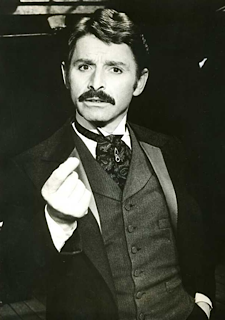
In 1991, the Peter Chelsom film Hear My Song is released. It is a fantasy based on the notion of Locke returning from his Irish exile in the 1960s to complete an old love affair and save a Liverpool-based Irish night-club from ruination. Locke is played by Ned Beatty, with the singing voice of Vernon Midgley. The film leads to a revival in Locke’s career. A compilation CD is released, and he appears on This Is Your Life in March 1992. He performs in front of the Prince and Princess of Wales at the 1992 Royal Variety Performance, singing “Goodbye,” the final song performed by his character in the film. He announces prior to the song that this will be his final public appearance.
Locke dies at the age of 82 at a nursing home in Clane, County Kildare on October 15, 1999, and is cremated at Glasnevin Cemetery. He is survived by his wife, Carmel, and a son.
On March 22, 2005, a bronze memorial to Locke is unveiled outside the City Hotel on Queen’s Quay in Derry by Phil Coulter and John Hume. The memorial is designed by Terry Quigley. It takes the form of a spiraling scroll divided by lines, representing a musical stave. The spiral suggests the flowing melody of a song and is punctuated by images illustrating episodes in his life, including Locke in police uniform, Blackpool Tower, Carnegie Hall, and the musical notes of the opening lines of “Hear My Song.”
A biography of the singer, entitled Josef Locke: The People’s Tenor, by Nuala McAllister Hart is published in March 2017, the centenary of his birth. The book corrects many myths that the charismatic Locke circulated about his career.
Butler succeeds to the title at the age of fifteen and was educated at the University of Oxford, taking the degree of LL.D. in 1677. In 1678, he is commissioned as a captain in Colonel Thomas Dongan‘s regiment, which is disbanded before he takes up his post.
In 1692, Butler is created Earl of Newcastle in County Limerick in the Jacobite peerage of Ireland. In France he is named Colonel of the 2nd Queen’s Regiment of Irish Horse in the service of that country and serves with distinction in various battles of the War of the Spanish Succession, also becoming a Lieutenant-General in the Spanish army. He is at the Siege of Roses in 1693, and in 1694 is a Brigadier attached to the army of Germany. He serves in Italy and other parts of Continental Europe from 1701 to 1703, sharing all the fortunes of the Irish Brigade. He later serves in the French army as a Lieutenant-General. He is created Brigadier of Cavalry in 1694.
Butler dies at the age of eighty-eight in Paris on June 18, 1740, and is buried at St. Paul’s there. John C. O’Callaghan writes in Irish Brigades in the Service of France (Glasgow, 1870): “The successive claimants of the title of Galmoy were officers in France down to the Revolution; in whose armies, as well as in others, various gentlemen have honourably represented a name, of which the illustrious General Lafayette is related to have said, in the war for the independence of the United States of America, that ‘whenever he wanted anything well done, he got a Butler to do it.'”
Notwithstanding the attainder, the viscountcy is assumed by his nephew, James Butler of the Irish Brigade in France, the son of the Viscount’s brother, Richard Butler of Galmoye.
Church is born on February 23, 1784, the second son of Matthew Church, a Quaker merchant in the North Mall area of Cork, County Cork, and Anne Dearman, originally from Braithwaith, Yorkshire, England. At the age of sixteen, he runs away from home and enlists in the British Army. For this violation of its principles, he is disowned by the Religious Society of Friends, but his father buys him a commission, dated July 3, 1800, in the 13th Somerset Light Infantry. He serves in the demonstration against Ferrol, Spain, and in the expedition to Egypt under Sir Ralph Abercromby in 1801, where he takes part in the Battle of Abukir and the taking of Alexandria. After the expulsion of the French from Egypt he returns home but goes back to the Mediterranean in 1805 among the troops sent to defend the island of Sicily. He accompanies the expedition which lands in Calabria and fights a successful battle against the French at the Battle of Maida on July 4, 1806. He is present on this occasion as captain of a recently raised company of Royal Corsican Rangers. His zeal attracts the notice of his superiors, and he has begun to show his capacity for managing and drilling foreign levies. His Corsicans form part of the garrison of Capri from October 1806 until the island is taken by an expedition directed against it by Joachim Murat, in September 1808, at the very beginning of his reign as king of Naples. Church, who has distinguished himself in the defence, returns to Malta after the capitulation.
In the summer of 1809 Church sails with the expedition sent to occupy the French-occupied Ionian Islands. Here he increases the reputation he has already gained by forming a Greek regiment in British pay. On September 9, 1809, he takes the position of Major in the 1st Regiment Greek Light Infantry. On November 19, 1812, he becomes Lieutenant-Colonel of the unit, by then renamed The Duke of York’s Greek Light Infantry Regiment. Having gained the experience of managing foreign troops, he commands the regiments made up of Greeks he recruits himself in 1813, when he forms a second regiment composed of 454 Greeks (2nd Regiment Greek Light Infantry) to occupy Paxoi islands. These regiments include many of the men who are afterward among the leaders of the Greeks in the Greek War of Independence including Theodoros Kolokotronis, with whom he keeps a friendship and correspondence. He commands this regiment at the taking of the island of Santa Maura (Lefkada), on which occasion his left arm is shattered by a bullet.
During his slow recovery Church travels in northern Greece, in Macedonia, and to Constantinople. In the years of the fall of Napoleon (1813 and 1814) he is present as British military representative with the Austrian troops until the campaign which terminates in the expulsion of Murat from Naples. He draws up a report on the Ionian Islands for the Congress of Vienna, in which he argues in support, not only of the retention of the islands under the British flag, but of the permanent occupation by Britain of Parga and other formerly Venetian coastal towns on the mainland, then in the possession of Ali Pasha of Ioannina. The peace and the disbanding of his Greek regiment leaves him without employment, though his reputation is high at the war office, and his services are recognized by the grant of a Companion of the Order of the Bath.
In 1817, Church enters the service of King Ferdinand I of Naples as lieutenant-general, with a commission to suppress the brigandage then rampant in Apulia. Ample powers are given him, and he attains a full measure of success. In 1820 he is appointed governor of Palermo and commander-in-chief of the troops in Sicily. The revolution which breaks out in that year leads to the termination of his services in Naples. He escapes from violence in Sicily with some difficulty. At Naples he is imprisoned and put on trial by the government but is acquitted and released in January 1821. King George IV confers on him a Knight Commander of the Royal Guelphic Order in 1822. He is further promoted to Knight Grand Cross by William IV in 1837.
The rising of the Greeks against the Turks has his full sympathy from the beginning. But for some years he has to act only as the friend of the insurgents in England. In 1827 he takes the honourable but unfortunate step of accepting the commandership-in-chief of the Greek army. At the point of anarchy and indiscipline to which they have now fallen, the Greeks can no longer form an efficient army and can look for salvation only to foreign intervention. Church, who lands in March, is sworn archistrategos on April 15, 1827, but cannot secure loyal co-operation or obedience. The rout of his army in an attempt to relieve the Acropolis of Athens, then besieged by the Ottomans, proves that it is incapable of conducting regular operations. With the acropolis capitulated, he turns to partisan warfare in western Greece.
After the Battle of Navarino, and during the Kapodistrias period, Church is placed commander-in-chief of the Greek regular forces in Central Greece, together with Demetrios Ypsilantis. However, he surrenders his commission as a protest against the unfriendly government of Capodistrias on August 25, 1829. He lives the remainder of his life in Greece.
Church’s activity has beneficial results and leads to a rectification in 1832, in a sense favourable to Greece, of the frontier drawn by the Great Powers in the London Protocol (1830). Under King Otto, he occupies senior military positions. On October 3, 1833, he is promoted to lieutenant general in the Hellenic Army, and in January 1835 becomes commander of the forces in Continental Greece. On June 10, 1835, he is appointed head of the Secretariat of State for Military Affairs (Army Minister), becoming Inspector-General of the Army on October 28, 1836. He serves as a senator from 1844 to 1845. He is promoted to full general in February 1854, the grade being established for the first time for this purpose in the Hellenic Army.
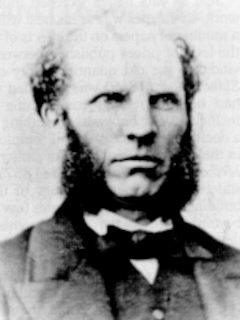
Church dies following an illness on March 20, 1873. The funeral service takes place in the Anglican Church in Filellinon Street in the presence of King George I and a large number of official guests. Panagiotis Chalkiopoulos, the Minister of Justice, gives the funeral speech in Greek, while John Gennadius gives a speech in English. He is buried at the First Cemetery of Athens at public expense on March 27. The funeral monument has an inscription in English on the front and Greek on the back.
(Pictured: Portrait of Sir Richard Church, oil on cardboard by an unidentified artist, 1873)
Sterne is born on November 24, 1713, in Clonmel, County Tipperary, to a British military officer stationed there. Following his father’s postings, the family moves briefly to Yorkshire before returning to Ireland, where they live largely in poverty and move frequently throughout the rest of Sterne’s youth. When the elder Sterne is dispatched to Jamaica, where he would die in 1731, he places his son with a wealthy uncle who supports the boy’s education.
Sterne attends Jesus College, Cambridge, following in the footsteps of his grandfather, Richard Sterne, who had been Master of the College. After being ordained as an Anglican priest, he takes up the vicarship of Sutton-on-the-Forest, where he marries Elizabeth Lumley. The couple lives there for the next 20 years.
Through his paternal family line, Sterne is connected to several powerful clergymen. His uncle, Archdeacon Jaques Sterne, encourages him to contribute to Whig political journals, and consequently he writes several articles supporting Sir Robert Walpole. However, when his political fervency fails to match his uncle’s, prompting him to abandon the role of political controversialist, Jaques Sterne cuts ties with his nephew and refuses to support his career. Nevertheless, Sterne continues writing.
Sterne’s first long work, a sharp satire of the spiritual courts entitled A Political Romance, makes him as many enemies as allies. Though the work is not widely distributed and indeed is burned at the request of those targeted by its Swiftian-style criticism, it represents Sterne’s first foray into the kind of humorous satire for which he would become famous. At age 46, he steps back from managing his parishes and turns his full attention to writing.
Sterne begins what becomes his best-known work, The Life and Opinions of Tristram Shandy, Gentleman, at a moment of personal crisis. He and his wife are both ill with tuberculosis and, in the same year that the first volumes of his long comic novel appear, his mother and uncle Jaques die. The blend of sentiment, humour and philosophical exploration that characterises his works matures during this difficult period. Tristram Shandy is an enormous success, and Sterne becomes, for the first time in his life, a famous literary figure in London. Still suffering from tuberculosis, he leaves England for Continental Europe, where his travels influence his second major work, A Sentimental Journey Through France and Italy (1768).
Sterne’s narrator in A Sentimental Journey is Parson Yorick, a sensitive but also comic figure who first appears in Tristram Shandy and who becomes Sterne’s fictive alter ego. In A Sentimental Journey, Parson Yorick wears a “little picture of Eliza around his neck,” and in the last year of his life Sterne writes the autobiographical Journal to Eliza under the pseudonym Yorick. Eliza is Eliza Draper, the wife of an East India Company official, and the literary and emotional muse of Sterne’s final years. After Draper returns to India, the two continue to exchange letters, some of which Draper allows to be published after Sterne’s death in the volume Letters from Yorick to Eliza.
In early 1768, less than a month after A Sentimental Journey is published, Sterne’s strength fails him and he dies in his lodgings at 41 Old Bond Street in London on March 18, 1768, at the age of 54. He is buried in the churchyard of St. George’s Hanover Square Church.
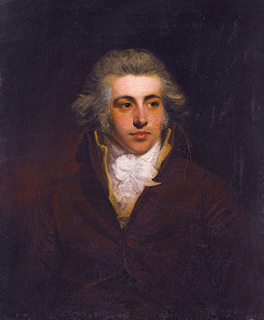
(Pictured: Portrait of Laurence Sterne (1713-1768), oil on canvas by Joshua Reynolds, 1760)
O’Conor is the second of six sons of Denis O’Conor and Catharine O’Conor (neé Browne), who also have six daughters. The O’Conors are Catholic, descendants of a princely family in the west of Ireland. His grandfather is the historian Charles O’Conor, his brother the historian Matthew O’Conor.
O’Conor is educated at the Pontifical Irish College, Rome, from 1779 to 1791 and is appointed parish priest of Kilkeevan, County Roscommon, in 1789. In 1796 he prepares for publication a memoir of his grandfather, the historian Charles O’Connor, which highlights the efforts made by him and other Irish Catholics of substance to obtain the constitutional repeal of the penal laws. The first volume is suppressed as dangerous to the family and the manuscript of the second is burned by O’Conor before reaching the printer. He destroys what he believes to be the whole run of the first volume and ten folios of the second, by casting them into a sewer, which communicates with the River Poddle. However, copies of the first volume survive in Trinity College Dublin (TCD) and the Barrister at Law (BL).
In 1798 O’Conor is invited to become chaplain to Mary Nugent, the Marchioness of Buckingham, and to organize and translate a collection of Gaelic manuscripts at Stowe, Buckinghamshire, England. With him he brings papers of his grandfather to Stowe, including fifty-nine Gaelic manuscripts. There he writes Columbanus ad Hibernos (1810–13), a series of letters supporting the royal veto on Catholic episcopal appointments in Ireland. These are answered by Francis Plowden and see him suspended from duties of parish priest by John Troy, Archbishop of Dublin. In his duties as librarian, he edits the Annals of the Four Masters, and other chronicles from the Stowe Library as Rerum Hibernicarum Scriptores Veteres (1814–26), an edition regarded as unreliable.
O’Conor experiences mental illness and by 1827 is suffering from the delusion that he is deliberately being starved by order of the Marquess of Buckingham. He leaves Stowe on July 4, 1827. The Nation (March 26, 1853) claims that he is thereafter a patient at Dr. Harty’s asylum in Finglas, Dublin, apparently along with John Lanigan, whom he knew in the Irish College. His family twice unavailingly demands that the paper’s editor issue a correction.
O’Conor dies on July 29, 1828, in his family’s house at Bellanagare. He is buried in Ballintober Cemetery, Castlerea, County Roscommon.
The Protestant forces are taken by surprise and there is little fighting, reflected in the term “Break,” a Scottish word for rout. Victory secures eastern Ulster for the Jacobites but they fail to fully exploit their success.
While much of the Protestant population of east Ulster supports the claim of William III to thrones of Ireland, England and Scotland, the rest of Ireland, including the Lord Deputy of Ireland, Richard Talbot, 1st Earl of Tyrconnell, and the army, support James II. As a result, war breaks out in Ireland after James is deposed in the Glorious Revolution. At the start of the conflict, the Jacobites are left in control of two fortified positions at Carrickfergus and Charlemont in territory which is predominantly Williamite in sympathy. The local Williamites raise a militia and meet in a council at Hillsborough. They make an ineffective assault on Carrickfergus. However, this is easily beaten off and a local Catholic cleric named O’Hegarty reports that the Williamite are badly armed and trained.
The Jacobite commander in the north is Richard Hamilton, an experienced soldier who serves with the French military from 1671 to 1685, when he is appointed a colonel in the Irish Army. In September 1688, he and his regiment are transferred to England. When James flees into exile, he is held in the Tower of London. Released on parole by William in February, he is sent to negotiate with Talbot but drops this mission once back in Ireland. Alexander Osbourne, a Presbyterian clergyman, is sent to offer the Hillsborough council a pardon in return for surrender but they refuse, reportedly encouraged by Osbourne. On March 8, Hamilton marches north from Drogheda with 2,500 men to subdue the Williamites by force.
On March 14 Hamilton crosses the River Lagan and attacks a 3,000 strong Williamite force under Lord Mount Alexander at Dromore. Alexander’s cavalry falls back in disorder following a charge by the Jacobite dragoons. Seeing this, Hamilton orders a general advance of his infantry and the Williamite foot flee toward Dromore itself. They are overtaken in the village by the Jacobite cavalry and slaughtered, roughly 400 being killed and the rest fleeing for their lives.
Lord Mount Alexander rides to Donaghadee and takes a ship to England, while many other Protestants leave for Northern England or Scotland. Hamilton’s men capture Hillsborough, along with £1,000 and large stocks of food but fail to pursue their opponents. This allows the bulk of the militia under Rawdon and Henry Baker to reach Coleraine, then make their way to Derry, where they take part in the successful defence of the city.
The Littlejohn brothers are jailed on August 3, 1973, for a £67,000 robbery at an Allied Irish Banks branch on Grafton Street, Dublin, in October 1972, the biggest to date in Irish history.
During their trial the brothers claim to have been working for the British Government against the IRA. They say they had been told to stage the robbery to discredit the republican organisation and force the Irish Government to introduce tougher measures against its members. The British Government, however, denies all knowledge of the brothers.
Kenneth is sentenced to twenty years while his brother receives a fifteen-year term. During their time in prison the brothers exhaust all the appeals processes, with their final appeal being turned down in January 1974.
The brothers escape from Mountjoy during an exercise period. They scale the 25-foot-high main prison wall with homemade ropes while other prisoners distract the guards. However, the pair is spotted as they climb an outer wall.
Keith, 29, who has injured his ankle, is recaptured near the prison. Kenneth, 32, however, disappears without trace and is believed to be heading for the border with Northern Ireland. He is recaptured in December 1974. The brothers are released early in 1981 on condition they leave the Republic of Ireland.
Keith’s successful bid for freedom comes as a surprise. He has been weakened by a hunger strike he has been conducting since February in support of a demand for political prisoner status.
From the time the brothers are jailed the British Government steadfastly continues to deny all knowledge of them.
But the brothers’ tale does receive partial validation the prior year. Ireland’s former Taoiseach, Jack Lynch, admits he had been given diplomatic reports from the British authorities in January 1973 about the UK’s contact with the Littlejohn brothers.
In 1982, Nottingham Crown Court jails Kenneth Littlejohn for six years for his part in a £1,300 armed robbery at the Old Manor House, North Wingfield, Chesterfield, England. Keith Littlejohn, however, is cleared of a similar offence.
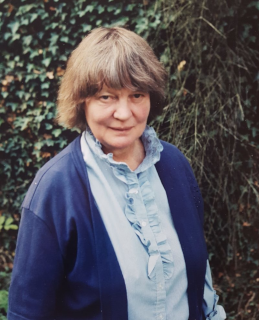
Ford stands unsuccessfully for Antrim Borough Council in 1989 and enters politics full-time when he becomes general secretary of the Alliance Party. In that role, he is best known as a strong supporter of the then-leader John Alderdice and an advocate of better political organisation and community politics. He is elected to Antrim Borough Council in 1993, 1997 and – after leaving the Council in 2001 to concentrate on Assembly business – again in 2005.
In 2001, Seán Neeson resigns from the Party leadership following poor election results. Ford wins the leadership election on October 6 by 86 votes to 45, ahead of Eileen Bell.
Ford gives Alliance a stability which it has lacked since the departure of John Alderdice, but the Party has declined seriously in the late 1990s and all he can do is stabilise the situation. Within a month of taking over the leadership, however, he has a chance to establish Alliance’s relevancy in the post-Good Friday Agreement environment. On November 6, 2001, the Northern Ireland Executive is to be re-established. Due to defections within his own Ulster Unionist Party (UUP), First MinisterDavid Trimble has insufficient support within the Unionist bloc in the Assembly to be re-elected to his post. Ford and two of his five colleagues re-designate as Unionist for just 22 minutes in order to secure Trimble’s position and thereby enable the devolved institutions to operate for another year. However, Alliance fails to make any political gains from their move, and the UUP and Sinn Féin fail to reach agreement on the decommissioning issue, ensuring that the institutions collapse again in October 2002.
In the 2003 Northern Ireland Assembly election, Ford’s seat in the Assembly is perceived to be under severe threat from Sinn Féin’s Martin Meehan, with many commentators expecting him to lose it. However, his expertise in nuts-and-bolts electioneering stands him in good stead. Although Alliance’s vote almost halved, his own vote in South Antrim increases from 8.6% to 9.1%. Meehan’s vote increases dramatically, from 7.3% to 11.5%, and he starts the election count ahead. Ford has much greater transfer appeal and finishes 180 votes ahead of Meehan at the end of a dramatic three-way fight for the last two seats, with Thomas Burns of the Social Democratic and Labour Party (SDLP) just 14 votes ahead of Ford. Despite the dramatic fall in vote, Alliance holds on to its six seats in the Assembly, which remains suspended.
In 2004, Ford makes good his leadership election pledge to work with other parties, as Alliance joins with the Workers’ Party, Northern Ireland Conservatives and elements of the Northern Ireland Women’s Coalition to support Independent candidate John Gilliland in the European elections, achieving the best result for the centre ground for 25 years.
Ford’s greatest triumph comes in the 2007 Northern Ireland Assembly election, when the party achieves its highest vote share since Alderdice’s departure and picks up a seat in what is an otherwise poor election for the moderates. Despite media predictions once again of his demise, Ford himself is elected third in South Antrim, with over 13% of the poll.
On April 12, 2010, Ford is chosen by the Assembly to become Northern Ireland’s first Justice Minister in 38 years. He is supported in the Assembly by the Democratic Unionist Party (DUP), Sinn Féin, the Alliance Party, the Green Party and the Progressive Unionist Party (PUP). Separate candidates for the position are put forward by both the UUP and the SDLP, being Danny Kennedy and Alban Maginness respectively.
Ford announces his resignation as Leader in October 2016 on the fifteenth anniversary of his election as leader noting, “The team is working well, and I think it’s an appropriate time to hand over to a new leader who will lead the party forward in the next stage of its development and growth.”
Ford and his wife Anne have four grown children and live in rural County Antrim. Until the spring of 2013, he is an elder in the Second Donegore congregation of the Presbyterian Church in Ireland. He is removed from his role as a ruling elder over differences with fellow congregants on the subject of same-sex marriage. In a 2016 interview he says he is still hurt by the decision by his fellow elders who chose not to work with him because of his support for equal marriage. “It saddened me that there was, if I may put it, a lack of understanding from some people about the role I had as a legislator, compared to the role I have within the church.”
The Capture of Bandon begins on February 23, 1689, when the town of Bandon, County Cork, is forcibly seized from its rebellious Protestant inhabitants by force of Irish Army troops under Justin McCarthy. The skirmishing at the town takes place during the early stages of the Williamite War in Ireland. The Jacobite success at Bandon helps suppress any chance of a general Munster uprising against the rule of James II similar to that which occurs in Ulster the same year. The slogan “No Surrender!” is believed to have been first used at Bandon and subsequently taken up, more famously, by the defenders at the Siege of Derry later in the year.
In 1685, the Catholic James II comes to the throne. This leads to a sharp reversal of government policy in Ireland, which had previously favoured the Protestant inhabitants. This is quickly changed by James’ representative Richard Talbot, 1st Earl of Tyrconnell. Under Talbot’s administration, the army and civil government are mostly purged of Protestants, who are replaced by Catholics. In Bandon, the previous town burgesses are replaced by Catholic nominees.
Talbot’s actions lead to a growing hostility amongst the Protestant inhabitants across the island toward the King and his Irish government. Bandon is a historic centre of Protestants, dating back to the Plantation of Munster in the Elizabethan era and is a natural focus of dissent against James’s rule. In 1688, a similar opposition in England leads to the Glorious Revolution, in which William III successfully invades with a Dutch Army. Many Protestants now believe William to be their rightful King while Catholics, and some Protestants, remain loyal to James. During the growing turmoil, many rural County Cork Protestants come to shelter in Bandon.
Fearing a potential outbreak of rebellion in Bandon will occur, the government sends a detachment of the Irish Army under Captain Daniel O’Neill to take the town. They reportedly enter on a Sunday morning while the inhabitants are attending church services. The following day, February 24, sometimes referred to as “Black Monday,” the townspeople rise and attack the soldiers. Various sources say between three and eight of the redcoats are killed and the remainder are driven out of the town. Using their captured weapons, the Protestants then make an effort to prepare Bandon to withstand an assault.
Having received word about the growing rebellion in the county, Talbot in Dublin has already dispatched six companies of infantry under Justin McCarthy, an experienced Irish Catholic soldier. Instead of immediately assaulting Bandon, McCarthy first seizes nearby Cork, another major centre of Protestants in the south of the country and clamps down on other potential dissidents. He then proceeds to Bandon with his troops, plus some cavalry and artillery. Although they had previously hung out a banner proclaiming “No Surrender,” the defenders negotiate a surrender in exchange for generous conditions. Despite the usual punishment for rebellion being death, the town corporation is fined £1,000 and the walls are ordered to be demolished.
The comparatively light terms imposed on the town are part of a wider attempt by King James to convince Protestants of his goodwill toward them. It angers more hardline Catholics, including McCarthy’s nephew, Donough MacCarthy, 4th Earl of Clancarty, who wants a harsher punishment for the rebels.
The fighting at Bandon is part of a succession of defeats of locally raised Protestant troops both across Munster (at Castlemartyr) and Ireland as a whole, with the Ulster-raised Army of the North suffering heavy defeats at the Break of Dromore and the Battle of Cladyford. The advance of the mainly Catholic Jacobite Army is halted by the successful Protestant defence of Enniskillen and Derry. The arrival of large-scale reinforcements under Frederick Schomberg and King William reverse the tide, and Dublin is captured following the Battle of the Boyne in 1690. The same year, Bandon is re-taken by Protestant forces following John Churchill, 1st Duke of Marlborough‘s successful Siege of Cork. The walls are not rebuilt, as they are becoming increasingly militarily obsolete.