seamus dubhghaill

Promoting Irish Culture and History from Little Rock, Arkansas, USA


Leave a comment

Birth of John Oxx, Thoroughbred Trainer

John M. Oxx, retired Irish trainer of thoroughbred racehorses, is born on July 14, 1950. By the end of the 2009 season he had trained thirty-five Group One winners over his career, including the winners of eleven Classic races. He is best known as the trainer of Sinndar and Sea The Stars.

Oxx has been widely praised for the care and undemonstrative authority with which he approaches the training and racing of his horses. He is particularly known for being highly selective when choosing when and where his horses will run.

Oxx is the son of John Oxx Sr., who is himself a successful trainer, winning eight Irish classic races. In 1950, his father purchases Currabeg, at the southwestern end of the Curragh in County Kildare, where Oxx Jr. takes over training. He graduates from University College, Dublin, as a veterinary surgeon in 1973, and works as his father’s assistant before taking over the stable in 1979. In that year he has his first win and his first Group win with Orchestra.

Oxx’s first Classic win comes with Eurobird in the Irish St. Leger of 1987. He has further success in the same race with Petite Ile two years later. In 1995, he trains Ridgewood Pearl, bred and owned by Sean and Anne Coughlan, to victories in the Irish 1,000 Guineas, the Coronation Stakes at Ascot Racecourse, the Prix du Moulin de Longchamp, and the Breeders’ Cup Mile at Belmont Park, in the United States, meaning that the filly has six wins in eight races and that she wins Group One races in four different countries in the same season.

The Aga Khan begins to support Oxx’s yard with a number of yearlings after Eurobird’s win in 1987. When he decides to withdraw his racehorses from England following Aliysa’s disqualification in the Epsom Oaks of 1989, he establishes a significant presence in Oxx’s yard. Without a budget of his own to spend on yearlings, Oxx continues to be reliant on horses bred by owners with whom he has an association. In some years, he concedes, “you wouldn’t have anything remotely near Group One standard.”

Many of Oxx’s major race wins have come from Aga Khan-owned horses, beginning with Manntari’s victory in the Vincent O’Brien National Stakes at the Curragh in 1993, and continuing with Timarida’s win in the Irish Champion Stakes at Leopardstown Racecourse in 1996, followed by Ebadiyla’s victory in the 1997 Irish Oaks. He also wins that race with Winona the following year. In 2000, he trains the Aga Khan’s brilliant Sinndar to wins in the Epsom Derby, the Irish Derby, and the Prix de l’Arc de Triomphe, making the colt the only horse ever to win that trio of races and at the time one of only three Irish-based horses to ever win the Arc.

The partnership also has successes with Alamshar, who wins the Irish Derby and the King George VI and Queen Elizabeth Stakes at Ascot Racecourse; with Azamour, winner of the St. James’s Palace Stakes, the Irish Champion Stakes, the Prince of Wales Stakes and the King George VI and Queen Elizabeth Stakes in 2004 and 2005; and with Kastoria, whose 2006 season includes a win in the Irish St. Leger.

Oxx comes to wider public attention when guiding Sea The Stars through a famous 2009 season in which he wins Group One races in England, Ireland and France, his six consecutive triumphs including the 2000 Guineas Stakes, the Epsom Derby and the Prix de l’Arc de Triomphe. He is typically understated when assessing the role of the trainer in the career of a great horse like Sea The Stars. “You can’t give them ability they don’t have,” he tells The Independent newspaper. “Really, it’s just a case of not messing it up – not to overtax the horse too soon, or ask it to do stupid things as a two-year-old. If you mind him sufficiently when he’s young, hopefully his ability will blossom.”

In an interview with The Observer, Oxx says of Sea The Stars: “I was always reading about racing and great horses of the past. So when you grow up with the history of racing and the history of breeding, the landmark horses that come along over a century, and more – to train one that’s in that league gives you the greatest satisfaction.”

Oxx serves as chairman of the Irish National Stud from 1985 to 1990. He is chairman of the Irish Racehorse Trainers’ Association from 1986 to 1991 and from 1993 to 1996. He serves on numerous other racing bodies and is chairman of the Racing Academy and Centre of Education. In 2008, he is given the Irish Racehorse Trainers’ Association Hall of Fame award.

Oxx marries Caitriona O’Sullivan in 1974. They have three children.


Leave a comment

Death of John MacDermott

John Clarke MacDermott, Baron MacDermottMCPCPC (NI)Northern Irish politician, barrister, and judge, dies at his home in Belfast on July 13, 1979. He serves as Attorney General for Northern Ireland, a Lord of Appeal in Ordinary, and Lord Chief Justice of Northern Ireland. He is the first law lord to be appointed from Northern Ireland.

MacDermott is born in Belfast on April 12, 1896, the third surviving son and sixth of seven children of the Reverend John MacDermott DD, a Presbyterian clergyman who is minister of Belmont and moderator of the Presbyterian Church in Ireland, and of his wife Lydia Allen MacDermott (née Wilson), the daughter of a Strabane solicitor. He is educated at Campbell College, Belfast, from where he wins a scholarship to read Law at the Queen’s University Belfast (QUB) in 1914.

During the World War I, he serves with the machine gun battalion of the 51st (Highland) Division in France, Belgium and Germany, winning the Military Cross in 1918 and reaching the rank of Lieutenant. After the war he is called to the Bar of Ireland in 1921.

Eight years later MacDermott is appointed to determine industrial assurance disputes in Northern Ireland, and in 1931 becomes a lecturer in Jurisprudence at Queen’s University Belfast, teaching for four years.

In 1936, he is made a King’s Counsel, and two years later he is elected to the Northern Ireland House of Commons as an Ulster Unionist member for Queen’s University.

In 1940, MacDermott is appointed Minister of Public Security in the Government of Northern Ireland, and the following year becomes the Attorney General for Northern Ireland. He is succeeded in this post by William Lowry, whose son, Lord Lowry, would eventually succeed MacDermott as Lord Chief Justice. In 1944, he resigns his parliamentary seat on appointment as a High Court Judge for Northern Ireland, and three years later, on April 23, 1947, is made a Lord of Appeal in Ordinary, becoming a life peer as Baron MacDermott, of Belmont in the city of Belfast.

MacDermott returns from the House of Lords to take up his appointment as Lord Chief Justice of Northern Ireland. His successors to the latter office become Law Lords subsequently. Whilst Lord Chief Justice, he is affectionately known as “the Baron.”

In 1977, aged over eighty, MacDermott offers to redeliver a lecture at the Ulster College, which had been interrupted by a bomb meant for him and which had severely wounded him.

Having been made a Northern Ireland Privy Counsellor seven years earlier, MacDermott is sworn of the British Privy Council in 1947.

Four years later, in 1951, MacDermott is appointed Lord Chief Justice of Northern Ireland, a post he holds for twenty years. He is also Pro-Chancellor of his alma mater from 1951 to 1969. In 1958, he chairs the commission on the Isle of Man Constitution. He dies at his home in Belfast on July 13, 1979.

In 1926, MacDermott weds Louise Palmer Johnston, later Lady MacDermott. Their son, Sir John MacDermott, is also sworn into the British Privy Council in 1987, as a Lord Justice of Appeal in Northern Ireland. He later became a Surveillance Commissioner for Northern Ireland.


Leave a comment

Birth of Luke O’Toole, Irish Gaelic Games Administrator

Luke O’Toole, Irish Gaelic games administrator, is born on June 21, 1873, in Ballycumber, Tinahely, County Wicklow.

O’Toole is the second son among five children of John O’Toole and Bridie O’Toole (née Doran). Of farming stock on both sides, he is educated at the local national school at Ballycumber and at a Dublin secondary school. When in the mid-1890s he moves to Dublin, he joins the Benburb Gaelic Football Club at Donnybrook, where his teammates include the future nationalist parliamentarian Thomas M. Kettle, who is killed in 1916 near Ginchy, France, during World War I. The proprietor of two newsagents’ shops near his home in Mount Pleasant Square, he soon becomes his club’s delegate to the Dublin county committee of the Gaelic Athletic Association about 1899. Founded in 1884 by Michael Cusack, the GAA by the late 1890s is insolvent and almost moribund, having been riven by rival nationalist factions. However, a group of younger officials which includes O’Toole is determined not to allow the Association to die, and at its annual congress in Thurles on September 22, 1901, stages what is in effect a palace coup. Alderman James Nowlan of Kilkenny, County Kilkenny, a labour activist and Gaelic League enthusiast, is elected president, and in a contest for the post of secretary, O’Toole defeats Cusack.

O’Toole holds the post of chief officer of the GAA until his death almost thirty years later. During this period, despite major political and military turmoil, including the world war, the Irish War of Independence, and the Irish Civil War, he is instrumental in turning the Association into the biggest Irish sports body, and some leading members, such as Michael Collins and Harry Boland, play major political roles between 1913 and 1923. Essentially a backroom administrator, O’Toole rarely appears in public apart from GAA events, one notable exception being on November 25, 1913, at the foundation meeting of the Irish Volunteers at the Rotunda Rink, Dublin, where he is one of the platform party. After the suppression of the 1916 Easter Rising, he goes into hiding temporarily in his native Wicklow. From then until the cessation of hostilities in mid-1921 he manages to evade the notice of the authorities though he is always a close associate of Sinn Féin leaders. He plays a big part in reviving the fortunes of the GAA after the Irish Civil War and is a principal organiser of the Tailteann Games in 1924 and 1928. His career, however, is cut short at the age of 56 by his sudden death at his desk on July 17, 1929.

For most of his life O’Toole resides in a house provided by the GAA beside Croke Park, the Association’s headquarters and principal stadium. He marries Bridget Doyle, a shopkeeper of Dublin. They have four sons and four daughters.

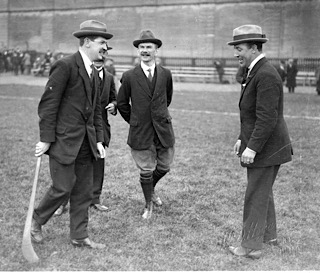
(From: “O’Toole, Luke” by Marcus de Búrca, Dictionary of Irish Biography, http://www.dib.ie, October 2009 | Pictured: Michael Collins, Luke O’Toole and Harry Boland in 1921, Image credit: GAA)


Leave a comment

Death of Chicago May

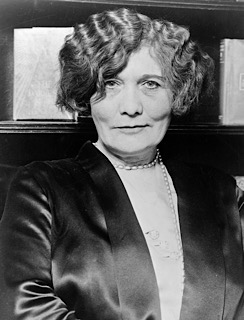
Chicago May, the nickname of Mary Anne Duignan, an Irish-born criminal who becomes notorious in the United StatesUnited Kingdom and France, dies in Philadelphia, Pennsylvania, on May 30, 1929. She refers to herself as the “queen of crooks” and sometimes uses the name May Churchill.

Duignan is born in Edenmore, BallinamuckCounty Longford, on December 26, 1871. In 1890, at the age of 19, she steals the proceeds earned by her parents from a recent cattle fair and runs away to Liverpool, England where she buys new clothes and books a ticket to America. Upon arrival in New York City she supports herself by prostitution and picking pockets.

She moves to Chicago to take advantage of the large influx of visitors at the 1893 World’s Columbian Exposition. She teams up with another prostitute. One robs customers while the other is having sex with them. She returns to New York City, where she works as a dancer, but is soon arrested for stealing a wallet, earning her first jail sentence. She briefly marries friend Jim Sharpe but the couple soon separates. After this, she calls herself May Churchill Sharpe. She soon establishes herself with the local criminal underworld, becoming involved in various crimes, mostly of a petty nature, including fraud, assault, brawling, drunk and disorderly behaviour, beggary and pickpocketing.

Duignan has various criminal lovers, but she graduates from petty criminality to major crime when she meets Eddie Guerin, who organises a robbery of the American Express office in Paris. She is imprisoned for her role in the crime. She operates her schemes on four continents and in nine countries. She reaches the height of her career in England when she is taken up by aristocrat Sir Sidney Hamilton Gore, who supposedly proposes marriage to her, shortly before he shoots himself.

After Guerin escapes from a French prison island, he makes his way to London where he meets Duignan again, but the relationship turns sour. She takes up with a burglar named Charley Smith. In 1907, during an altercation with Guerin, Smith shoots him, wounding him in the foot. Smith and Duignan are both accused of attempted murder. She is convicted and sentenced to 15 years. She is released in 1917, and returns to the United States.

By the 1920s, Duignan is living in Detroit and has become destitute. No longer young, she is reduced to propositioning men on the streets and is repeatedly arrested for soliciting and common prostitution. She hopes to make money from her former notoriety by writing magazine articles and an autobiography with the help of a journalist, which is published in 1928 as Chicago May, Her Story, by the Queen of Crooks. Her former lover Guerin publishes his own life story at the same time, under the title I Was a Bandit. She dies at the age of 58 in Philadelphia on May 30, 1929.


Leave a comment

Birth of Timothy McCarthy Downing, Solicitor & Politician

Timothy McCarthy Downing, solicitor and an Irish Liberal Party and Home Rule League politician, is born at Kenmare, County Kerry, on May 11, 1814.

Downing is the second son of Eugene Downing, a local merchant, and his wife, Helena, daughter of Timothy McCarthy of Kilfadamore, County Kerry. They have two other sons and two daughters. He is apprenticed in 1830 to his elder brother, Francis Henry, who practises as a solicitor at Killarney. Once admitted as a solicitor himself in 1836, he moves to Skibbereen, County Cork, where he practises until the mid-1860s, making from his practice a large fortune. By the mid-1870s he owns 4,067 acres in Cork and Kerry valued at £1,413.

Downing is prominent locally in public affairs, supporting the repeal campaign of Daniel O’Connell and the temperance campaign of Fr. Theobald Mathew. He is the first chairman of Skibbereen town commissioners, from 1862 to 1879. He later helps James Stephens and Michael Doheny escape to France in 1849. After Jeremiah O’Donovan Rossa and other members of the Phoenix National and Literary Society are arrested on December 5, 1858, he acts as their solicitor. His chief clerk, Mortimer Moynahan, a member of the society, unwittingly takes on as an assistant a man who proves to be an informer.

Downing involves himself in the National Association of Ireland, the political pressure group formed by the Catholic Archbishop of Dublin, Paul Cullen, and succeeds in getting tenant-right added to its demands in March 1865. He is elected as one of the two MPs for County Cork on November 30, 1868, and is reelected without a contest on February 5, 1874. Nominally a liberal, he draws his main support from the Catholic bishops and most of the parish clergy and, more significantly, from the tenant farmer class. The farmers’ interests he vigorously pursues in parliament and outside.

After the passing of William Ewart Gladstone‘s first land act, Downing plays a prominent part in the formation of the Home Rule League under the leadership of Isaac Butt. He is always a moderate on the home-rule issue – he opposes the pledging of home-rule MPs always to act together and later the obstructive tactics of fellow home-rulers Joseph Gillis Biggar and Charles Stewart Parnell. He is one of the nine members of the standing committee of Butt’s Irish Parliamentary Party (1874–79) and proves a stalwart of Butt particularly in disputes with Parnell. It is he who draws to the attention of the House of Commons the condition of tenants on the Buckley estate in the foothills of the Galtee Mountains at Skeheenarinky in County Tipperary in March 1877. In Butt’s absence Downing introduces an Irish land tenure bill on February 6, 1878, which is, however, quickly defeated.

Downing dies January 10, 1879, at his residence, Prospect House, Skibbereen, a deputy lieutenant of County Cork. The cortège that follows his body to the Old Caheragh Graveyard, Skibbereen, for burial is said to be four miles long. In Emmet Larkin‘s judgement, “it was not altogether unlikely, if he had survived, that he would have eventually succeeded Butt as chairman of the Irish party.”

In 1837, Downing marries Jane, youngest daughter of Daniel McCarthy of Ave Hill, Dromore, County Cork, and with her has four sons and three daughters. His younger brother, Washington, is a parliamentary reporter and later the Rome correspondent for The Daily News of London, and husband of Mary McCarthy Downing.

(From: “Downing, Timothy McCarthy” by C.J. Woods, Dictionary of Irish Biography, http://www.dib.ie, October 2009)


2 Comments

Birth of Charles Kickham, Novelist, Poet, Journalist & Revolutionary

Charles Joseph Kickham, Irish revolutionary, novelist, poet, journalist and one of the most prominent members of the Irish Republican Brotherhood (IRB), is born at Mullinahone, County Tipperary, on May 9, 1828.

Kickham’s father, John Kickham, is the proprietor of the principal drapery in the locality and is held in high esteem for his patriotic spirit. His mother, Anne O’Mahony, is related to the Fenian leader John O’Mahony. He grows up largely deaf and almost blind, the result of an explosion with a powder flask when he is thirteen. He is educated locally, where it is intended that he study for the medical profession. During his boyhood the campaign for a repeal of the Acts of Union 1800 between Great Britain and Ireland is at its height, and he soon becomes versed in its arguments and is inspired by its principles. He often hears the issues discussed in his father’s shop and at home amongst all his friends and acquaintances.

From a young age Kickham is imbued with these patriotic ideals. He becomes acquainted with the teaching of the Young Irelanders through their newspaper The Nation from its foundation in October 1842. His father read the paper aloud every week for the family. Like all the young people of the time, and a great many of the old ones, his sympathies are with the Young Irelanders on their secession from the Repeal Association.

When he is 22 years old, Kickham contributes The Harvest Moon sung to the air of “The Young May Moon,” to The Nation on August 17, 1850. Other verses are to follow, but the finest of his poems according to A. M. O’Sullivan, appear in other journals. Rory of the Hill, The Irish Peasant Girl, and Home Longings, better known as Slievenamon, are published in the Celt. The First Felon appears in the Irishman. Patrick Sheehan, the story of an old soldier, is published in the Kilkenny Journal, and becomes very popular as an anti-recruiting song.

Kickham begins to write for a number of papers, including The Nation, but also the Celt, the Irishman, the Shamrock, and becomes one of the leading writers of The Irish People, the Fenian newspaper, in which many of his poems appear. His writings are signed using his initials, his full name, or the pseudonyms, “Slievenamon” and “Momonia.”

Kickham is the leading member of the Confederation Club in Mullinahone, which he is instrumental in founding. When the revolutionary spirit begins to grip the people in 1848, he turns out with a freshly made pike to join William Smith O’Brien and John Blake Dillon when they arrive in Mullinahone in July 1848. On hearing of the progress of O’Brien through the country, he sets to work manufacturing pikes and is in the forge when news reaches him that the leaders are looking for him. It is here that he meets James Stephens for the first time. At O’Brien’s request, he rings the chapel bell to summon the people and before midnight a Brigade has answered the summons. He later writes a detailed account about this period which brings his connection with the attempted Rising of 1848 to a close.

After the failed 1848 uprising at Ballingarry, Kickham has to hide for some time, as a result of the part he had played in rousing the people of his native village to action. When the excitement has subsided, he returns to his father’s house and resumes his interests in the sports of fishing and fowling and spends much of his time in literary pursuits. Some of the authors in which he is well versed are Alfred Tennyson and Charles Dickens and he greatly admires George Eliot, and after William Shakespeare, is Robert Burns.

In the autumn of 1857, a messenger arrives from New York with a message for James Stephens from members of the Emmet Monument Association, calling on him to get up an organization in Ireland. On December 23, Stephens dispatches Joseph Denieffe to the United States with his reply and outlines his conditions and his requirements from the organisation in America. Denieffe returnd on March 17, 1858, with the acceptance of Stephens’ terms and £80. That evening the Irish Republican Brotherhood commences. Those present in Langan’s, lathe-maker and timber merchant, 16 Lombard Street, for that first meeting are Stephens, Kickham, Thomas Clarke Luby, Peter Langan, Denieffe and Garrett O’Shaughnessy. Later it includes members of the Phoenix National and Literary Society, which is formed in 1856 by Jeremiah O’Donovan Rossa in Skibbereen, County Cork.

In mid-1863, Stephens informs his colleagues that he wishes to start a newspaper, with financial aid from O’Mahony and the Fenian Brotherhood in America. The offices are established at 12 Parliament Street, almost at the gates of Dublin Castle. The first issue of The Irish People appears on November 28, 1863. The staff of the paper along with Kickham are Luby and Denis Dowling Mulcahy as the editorial staff, O’Donovan Rossa and James O’Connor in charge of the business office, with John Haltigan being the printer. John O’Leary is brought from London to take charge in the role of Editor. Shortly after the establishment of the paper, Stephens departs on an America tour, and to attend to organizational matters. Before leaving, he entrusts to Luby a document containing secret resolutions on the Committee of Organization or Executive of the IRB. Though Luby intimates its existence to O’Leary, he does not inform Kickham as there seems no necessity. This document later forms the basis of the prosecution against the staff of The Irish People.

Kickham’s first contribution to The Irish People, entitled Leaves from a Journal, appears in the third issue and is based on a journal he kept on his way to America in 1863. This article leaves no doubt as to his literary capacity according to O’Leary. It falls to Kickham, as a good Catholic, to tackle the priests, though not exclusively with articles such as “Two Sets of Principles,” a rebuff to the doctrines laid down by Lord Carlisle, and “A Retrospect,” dealing with the tenant-right movement chiefly but also the events of the recent past and their bearing on the present. Kickham articulates the attitude held by the IRB in relation to priests, or more particularly in politics.

On July 15, 1865, American-made plans for a rising in Ireland are discovered when the emissary loses them at Kingstown railway station. They find their way to Dublin Castle and to Superintendent Daniel Ryan, head of G Division. Ryan has an informer within the offices of The Irish People named Pierce Nagle. He supplies Ryan with an “action this year” message on its way to the IRB unit in Tipperary. With this information, Ryan raids the offices of The Irish People on September 15, followed by the arrests of O’Leary, Luby, and O’Donovan Rossa. Kickham is caught after a month on the run. Stephens is also caught but with the support of Fenian prison warders John J. Breslin and Daniel Byrne is less than a fortnight in Richmond Bridewell when he vanishes and escapes to France. The last issue of The Irish People is dated September 16, 1865.

On November 11, 1865, Kickham is convicted of treason. Judge William Keogh, with many expressions of sympathy for the prisoner, and many compliments in reference to his intellectual attainments, sentences him to fourteen years’ penal servitude. The prisoners’ refusal to disown their opposition to British rule in any way, even when facing charges of life-imprisonment, earn them the nickname of “the bold Fenian men.” Kickham spends time from 1866 until his release in the Woking Convict Invalid Prison.

Kickham is given a free pardon from Queen Victoria on February 24, 1869, because of ill-health, and upon his release he is made Chairman of the Supreme Council of the IRB and the unchallenged leader of the reorganized movement. He is an effective orator and chairman of meetings despite his physical handicaps. He wears an ear trumpet and can only read when he holds books or papers within a few inches of his eyes. For many years he carries on conversations by means of the deaf and dumb alphabet.

Kickham is the author of three well-known stories, dealing sympathetically with Irish life and manners and the simple faith, the joys and sorrows, the quaint customs and the insuppressible humour of the peasantry. Knocknagow is deemed one of the finest tales of peasant life ever written. Sally Cavanagh is a touching story illustrating the evils of landlordism and emigration. For the Old Land deals with the fortunes of a small farmer’s family.

Kickham dies on August 22, 1882, at the house of James O’Connor, a former member of the IRB and afterward MP for West Wicklow, 2 Montpelier Place, Blackrock, Dublin, where he had been living for many years, and had been cared for by the poet Rose Kavanagh. He is buried in Mullinahone, County Tipperary.


Leave a comment

Birth of James FitzJames Butler, 2nd Duke of Ormonde

James FitzJames Butler, 2nd Duke of Ormonde, KG, Irish statesman and soldier, is born into a Protestant family on April 29, 1665, at Dublin Castle. He is the third of the Kilcash branch of the family to inherit the earldom of Ormond. He serves in the campaign to put down the Monmouth Rebellion, in the Williamite War in Ireland, in the Nine Years’ War and in the War of the Spanish Succession but is accused of treason and goes into exile after the Jacobite rising of 1715.

Butler is the second but eldest surviving son, and one of eleven children, of Thomas Butler by his wife Emilia van Nassau-Beverweerd. His father is known as Lord Ossory. His father is heir apparent of James Butler, 1st Duke of Ormond but predeceases him and so never becomes duke. His father’s family, the Butler dynasty, is Old English and descends from Theobald Walter, who had been appointed Chief Butler of Ireland by King Henry II in 1177. His mother is Dutch. She descends from a cadet branch of the House of Nassau.

Butler is educated in France and afterwards at Christ Church, Oxford. On the death of his father on July 30, 1680, he becomes Baron Butler in the peerage of England and the 7th Earl of Ossory in the peerage of Ireland.

Butler obtains command of a cavalry regiment in Ireland in 1683 and having received an appointment at court on the accession of James II, he serves against the Duke of Monmouth at the Battle of Sedgemoor in July 1685. Having succeeded his grandfather as 2nd Duke of Ormonde on July 21, 1688, he is appointed a Knight of the Order of the Garter on September 28, 1688. In 1688, he also becomes Chancellor of the University of Dublin and Chancellor of the University of Oxford.

In January and February 1689, Butler votes against the motion to put William of Orange and Mary on the throne and against the motion to declare that James II has abdicated it. Nevertheless, he subsequently joins the forces of William of Orange, by whom he is made colonel of the 2nd Troop of Horse Guards on April 20, 1689. He accompanies William in his Irish campaign, debarking with him in Carrickfergus on June 14, 1690, and commands this troop at the Battle of the Boyne in July 1690. In February 1691 he becomes Lord Lieutenant of Somerset.

Butler serves on the continent under William of Orange during the Nine Years’ War and, having been promoted to major general, he fights at the Battle of Steenkerque in August 1692 and the Battle of Landen in July 1693, where he is taken prisoner by the French and then exchanged for the Duke of Berwick, James II’s illegitimate son. He is promoted to lieutenant general in 1694.

After the accession of Queen Anne in March 1702, Butler becomes commander of the land forces co-operating with Sir George Rooke in Spain, where he fights in the Battle of Cádiz in August 1702 and the Battle of Vigo Bay in October 1702 during the War of the Spanish Succession (1701–1714). Having been made a Privy Councillor, he succeeds Lord Rochester as Lord Lieutenant of Ireland in 1703. In 1704, he leases and rebuilds a property that becomes known as Ormonde Lodge in Richmond outside London.

Following the dismissal of the Duke of Marlborough, Butler is appointed Commander-in-Chief of the Forces and colonel of the 1st Regiment of Foot Guards on January 4, 1712, and Captain General on February 26, 1712. In the Irish Parliament he and the majority of peers support the Tory interest.

Butler plays a dramatic role at the notorious meeting of the Privy Council on March 8, 1711, when Antoine de Guiscard, a French double agent who is being questioned about his treasonable activities, attempts to assassinate Robert Harley, 1st Earl of Oxford, against whom he has a personal grudge for drastically cutting his allowance, by stabbing him with a penknife. Harley is wounded, but not seriously, due largely to the fact that he is wearing a heavy gold brocade waistcoat in which the knife gets stuck. Several Councillors, including Butler, stab Guiscard in return. Guiscard implores Butler to finish the deed, but he replies that it is not for him to play the hangman. In any case, he has the sense to see that Guiscard must be kept alive at least long enough to be questioned, although as it turns out Guiscard’s wounds are fatal, and he dies a week later.

On April 23, 1712, Butler leaves Harwich for Rotterdam to lead the British troops taking part in the war. Once there he allows himself to be made the tool of the Tory ministry, whose policy is to carry on the war in the Netherlands while giving secret orders to him to take no active part in supporting their allies under Prince Eugene. In July 1712, he advises Prince Eugene that he can no longer support the siege of Le Quesnoy and that he is withdrawing the British troops from the action and instead intends to take possession of Dunkirk. The Dutch are so exasperated at the withdrawal of the British troops that they close the towns of Bouchain on Douai to British access, despite the fact that they have plenty of stores and medical facilities available. Butler takes possession of Ghent and Bruges as well as Dunkirk, in order to ensure his troops are adequately provided for. On April 15, 1713, he becomes Lord Lieutenant of Norfolk.

Ormonde’s position as Captain-General makes him a personage of much importance in the crisis brought about by the death of Queen Anne and, during the last years of Queen Anne, he almost certainly has Jacobite leanings and corresponds with the Jacobite Court including his cousin, Piers Butler, 3rd Viscount Galmoye, who keeps barrels of gunpowder at Kilkenny Castle. King George I, on his accession to the throne in August 1714, institutes extensive changes and excludes the Tories from royal favour. Butler is stripped of his posts as Captain-General, as colonel of the 1st Regiment of Foot Guards and as Commander in Chief of the Forces with the first two posts going to the Duke of Marlborough and the role of Commander-in-Chief going to John Dalrymple, 2nd Earl of Stair. On November 19, 1714, Butler is instead made a member of the reconstituted Privy Council of Ireland.

Accused of supporting the Jacobite rising of 1715, Butler is impeached for high treason by Lord Stanhope on June 21, 1715. He might avoid the impending storm of Parliamentary prosecution, if he remains in England and stands trial but instead, he chooses to flee to France in August 1715 and initially stays in Paris with Lord Bolingbroke. On August 20, 1715, he is attainted, his estate forfeited, and honours extinguished. The Earl Marshal is instructed to remove the names and armorial bearings of Butler and Bolingbroke from the list of peers and his banner as Knight of the Garter is taken down in St. George’s Chapel.

On June 20, 1716, the Parliament of Ireland passes an act extinguishing the regalities and liberties of the county palatine of Tipperary; for vesting Butler’s estate in the crown and for giving a reward of £10,000 for his apprehension, should he attempt to land in Ireland. But the same parliament passes an act on June 24, 1721, to enable his brother, Charles Butler, 1st Earl of Arran, to purchase his estate, which he does accordingly.

Butler subsequently moves to Spain where he holds discussions with Cardinal Giulio Alberoni. He later takes part in a Spanish and Jacobite plan to invade England and puts James Francis Edward Stuart on the British throne in 1719, but his fleet is disbanded by a storm in the Bay of Biscay. In 1732, he moves to Avignon, where he is seen in 1733 by the writer Lady Mary Wortley Montagu. He dies at Avignon in exile on November 16, 1745, but his body is returned to London and buried in Westminster Abbey on May 22, 1746.

On July 20, 1682, Butler, then called Lord Ossory, marries Lady Anne Hyde, daughter of Laurence Hyde, who is then Viscount Hyde of Kenilworth but becomes Earl of Rochester in November. The couple has a daughter, Mary, who dies young in 1688.

Following the death of his first wife in 1685, Butler plans to marry again in order to secure a male heir. He gains permission from the House of Lords for the arranging of a jointure for another marriage in May 1685, and in August of that year, he marries Lady Mary Somerset, daughter of the Duke of Beaufort and Mary Capel. The couple has a son, Thomas (1686–1689), and two daughters, Elizabeth (1689–1750) and Mary (1690–1713). His second wife is a Lady of the Bedchamber to Queen Anne. Their younger daughter, Mary, marries John Ashburnham, 1st Earl of Ashburnham.

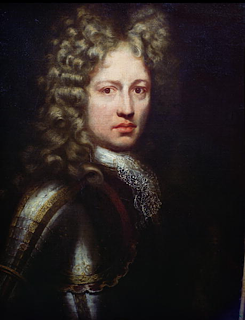
(Pictured: Portrait of James Butler, 2nd Duke of Ormonde, by Michael Dahl, National Portrait Gallery)


Leave a comment

Birth of Piers Butler, 3rd Viscount Galmoye

Piers Butler, 3rd Viscount Galmoye, otherwise Viscount Galmoy, an Anglo-Irish nobleman, is born on March 21, 1652. He is descended from Thomas Butler, 10th Earl of Ormond, and is the son of Edward Butler, 2nd Viscount Galmoye, and Eleanor (née Whyte), daughter of Sir Nicholas Whyte of Leixlip, County Kildare.

Butler succeeds to the title at the age of fifteen and was educated at the University of Oxford, taking the degree of LL.D. in 1677. In 1678, he is commissioned as a captain in Colonel Thomas Dongan‘s regiment, which is disbanded before he takes up his post.

Under James II of England Butler is Privy Councillor of Ireland, Lieutenant of the County of Kilkenny, and Colonel of the 2nd Regiment of Irish Horse. Serving as part of the Jacobite Irish Army, he commands a regiment at the Battle of the Boyne and serves with distinction in the Battle of Aughrim. He is one of the signatories of the Treaty of Limerick. At the Glorious Revolution, he might have been able to secure his old estates of 10,000 acres in Kilkenny and 5,000 in Wexford, had he consented to give his allegiance to William III of England rather than following Patrick Sarsfield and James II into exile in France. Instead, the English Parliament attaints him and declares his titles forfeited in 1697 by the statute 9 Will. 3. c. 4.

In 1692, Butler is created Earl of Newcastle in County Limerick in the Jacobite peerage of Ireland. In France he is named Colonel of the 2nd Queen’s Regiment of Irish Horse in the service of that country and serves with distinction in various battles of the War of the Spanish Succession, also becoming a Lieutenant-General in the Spanish army. He is at the Siege of Roses in 1693, and in 1694 is a Brigadier attached to the army of Germany. He serves in Italy and other parts of Continental Europe from 1701 to 1703, sharing all the fortunes of the Irish Brigade. He later serves in the French army as a Lieutenant-General. He is created Brigadier of Cavalry in 1694.

Butler marries Anne Mathew and with her has one son, Colonel Edward Butler, who is killed at the Battle of Malplaquet in 1709. After the death of his first wife, he marries Henrietta FitzJames, the illegitimate daughter of King James II and Arabella Churchill and the widow of Henry Waldegrave, 1st Baron Waldegrave, on April 3, 1695. She deserts him and returns to England.

Butler dies at the age of eighty-eight in Paris on June 18, 1740, and is buried at St. Paul’s there. John C. O’Callaghan writes in Irish Brigades in the Service of France (Glasgow, 1870): “The successive claimants of the title of Galmoy were officers in France down to the Revolution; in whose armies, as well as in others, various gentlemen have honourably represented a name, of which the illustrious General Lafayette is related to have said, in the war for the independence of the United States of America, that ‘whenever he wanted anything well done, he got a Butler to do it.'”

Notwithstanding the attainder, the viscountcy is assumed by his nephew, James Butler of the Irish Brigade in France, the son of the Viscount’s brother, Richard Butler of Galmoye.


Leave a comment

Death of Playwright T. C. Murray

Thomas Cornelius Murray, Irish dramatist who is closely associated with the Abbey Theatre, dies on March 7, 1959, at his home on Sandymount Strand, Ballsbridge, Dublin, of viral pneumonia.

Murray is born in Macroom, County Cork on January 17, 1873, the seventh of the eleven children of Cornelius Murray and Honora Murray (née Kelleher). He is educated at St. Patrick’s Teacher Training College in Drumcondra, Dublin. He works as a schoolteacher and in 1900 is appointed headmaster of the national school in Rathduff, County Cork. His first play, The Wheel of Fortune, is produced in 1909 by the Little Theatre in Cork, a theatre he co-founded with Daniel Corkery, Con O’Leary and Terence MacSwiney. The play is revised and renamed Sovereign Love in 1913. In 1915, he moves to Dublin as headmaster of the Model Schools at Inchicore, where he remains until his retirement from teaching in 1932.

Murray’s play Birthright is performed in the Abbey Theatre in 1910 and establishes him as a writer of force. In all, he writes fifteen plays, all of which are produced by the Abbey. His two most highly regarded works are Maurice Harte (1912) and Autumn Fire (1924). Both of these and Birthright are performed in New York City on Broadway, with Autumn Fire having a run of 71 performances. He also writes an autobiographical novel Spring Horizon (1937).

It has been stated both by A. DeGiacomo and by R. Allen Cave that, in the Art competitions at the 1924 Summer Olympics in Paris, France, Murray is awarded a bronze medal for his play Birthright. However, according to the official record for the games, although Murray is a participant in the literature category with this play and also with Maurice Harte, he does not win a medal.

In his later years, Murray holds a number of significant positions: director of the Authors’ Guild of Ireland, vice-president of the Irish Academy of Letters and president of the Irish Playwrights’ Association. He is awarded an honorary Doctor of Letters (D.Litt.) by the National University of Ireland in 1949. He dies on March 7, 1959, at his home on Sandymount Strand, Ballsbridge, Dublin, of viral pneumonia, his wife having predeceased him by fifteen years. His extensive papers, containing scripts of almost all of his fifteen plays, correspondence, clippings, reviews, and other material, are held in the National Library of Ireland (NLI).


Leave a comment

Execution of George Plantagenet, Duke of Clarence

George Plantagenet, Duke of Clarence, an English nobleman who engages in several major conspiracies against his brother, King Edward IV, is executed for high treason in the Tower of London on February 18, 1478, allegedly by drowning in a butt of malmsey wine.

Plantagenet is born in Dublin Castle on October 21, 1449, the sixth child and third surviving son of Richard Plantagenet, 3rd Duke of York, and Cecily Neville, Duchess of York, and the brother of English kings Edward IV and Richard III. His father’s struggle to gain power precipitates the Wars of the Roses (1455–85) between the houses of York and Lancaster.

Soon after Edward IV becomes king in March 1461, Plantagenet is made Duke of Clarence, and in 1462 he is appointed Lord Lieutenant of Ireland. However, around 1468, he falls under the influence of Richard Neville, 16th Earl of Warwick, who is losing the control that he had formerly exercised over the King. In defiance of Edward IV, he marries Neville’s daughter Isabel in Église Notre-Dame de Calais in July 1469. Then, in March 1470, he and Neville secretly support an armed uprising in northern England. When Edward IV discovers their treachery, they flee to France but return in September.

After Edward IV goes into exile, Plantagenet and Neville put the ineffectual Lancastrian monarch Henry VI, deposed in 1461, back on the throne. But Plantagenet soon becomes disenchanted with Neville’s management of the government. When Edward IV returns from exile in March 1471, the brothers become reconciled, and Plantagenet, who fights in the battles that lead to Edward’s restoration, is created, by right of his wife, first Earl of Warwick on March 25, 1472, and first Earl of Salisbury in a new creation.

After his wife dies on December 22, 1476, Plantagenet seeks to wed Mary, Duchess of Burgundy. But when Edward IV objects to that match also, the embittered Plantagenet once more begins scheming against his brother. Edward IV becomes convinced that his brother is aiming at his throne. Plantagenet is thrown into prison, and in January 1478 the King unfolds the charges against his brother to Parliament. He had slandered the King, had received oaths of allegiance to himself and his heirs, and had prepared for a new rebellion. Both houses of Parliament pass the bill of attainder, he is “privately executed” at the Tower of London on February 18, 1478, by tradition in the Bowyer Tower, and soon after the event, a rumour spreads that he had been drowned in a butt of malmsey wine.

Two of Plantagenet’s children survive their father: Margaret Pole, Countess of Salisbury (1473–1541), and Edward Plantagenet, 17th Earl of Warwick (1475–99), who passes the greater part of his life in prison and is beheaded in November 1499.

Plantagenet is a principal character in two of William Shakespeare‘s history plays: Henry VI, Part 3 and The Tragedy of Richard the Third. Shakespeare portrays him as weak-willed and changeable.