seamus dubhghaill

Promoting Irish Culture and History from Little Rock, Arkansas, USA


Leave a comment

Birth of Physician Sir Dominic Corrigan, 1st Baronet

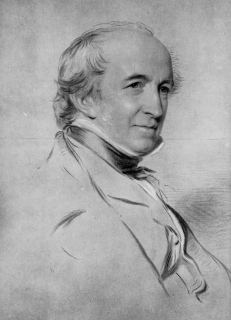
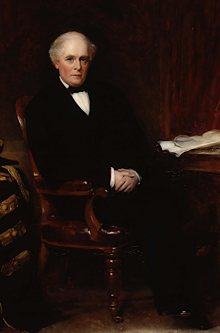
Sir Dominic John Corrigan, 1st Baronet, Irish physician known for his original observations in heart disease, is born in Thomas Street, Dublin, on December 2, 1802. The abnormal “collapsing” pulse of aortic valve insufficiency is named Corrigan’s pulse after him.

Corrigan is the son of a dealer in agricultural tools. He is educated in St. Patrick’s College, Maynooth, which then has a department for secular students apart from the ecclesiastical seminary. He is attracted to the study of medicine by the physician in attendance, and spends several years as an apprentice to the local doctor, Edward Talbot O’Kelly. He studies medicine in Dublin later transferring to Edinburgh Medical School where he receives his degree as MD in August 1825.

Corrigan returns to Dublin in 1825 and sets up a private practice at 11 Ormond Street. As his practice grows, he moves to 12 Bachelors Walk in 1832, and in 1837 to 4 Merrion Square West. Apart from his private practice, he holds many public appointments. He is a physician to St. Patrick’s College, Maynooth, the Sick Poor Institute, the Charitable Infirmary Jervis Street (1830–43) and the House of Industry Hospitals (1840–66). His work with many of Dublin’s poorest inhabitants leads to him specialising in diseases of the heart and lungs, and he lectures and published extensively on the subject. He is known as a very hard-working physician, especially during the Great Famine of Ireland. At the 1870 Dublin City by-election he is elected a Liberal Member of Parliament for Dublin City. In parliament he actively campaigns for reforms to education in Ireland and the early release of Fenian prisoners. He does not stand for re-election in 1874. His support for temperance and Sunday closing (of pubs) antagonises his constituents and alcohol companies

In 1847, Corrigan is appointed physician-in-ordinary to the Queen in Ireland. Two years later he is given an honorary MD from Trinity College Dublin (TCD). In 1846, his application to become a fellow of the Royal College of Physicians of Ireland (RCPI) is blocked. In 1855, he gets around this opposition by sitting the college’s entrance exam with the newly qualified doctors. He becomes a fellow in 1856, and in 1859 is elected president, the first Catholic to hold the position. He is re-elected president an unprecedented four times. There is a statue of Corrigan in the Graves’ Hall of the college by John Henry Foley.

Corrigan is President of the Royal Zoological Society of Ireland, the Dublin Pathological Society, and the Dublin Pharmaceutical Society. From the 1840s he is a member of the senate of the Queen’s University and in 1871 becomes its vice-chancellor. In 1866, he is created a baronet, of Cappagh and Inniscorrig in County Dublin and of Merrion Square in the City of Dublin, partly as a reward for his services as Commissioner of Education for many years. He is a member of the board of Glasnevin Cemetery and a member of the Daniel O’Connell Memorial Committee. Armand Trousseau, the French clinician, proposes that aortic heart disease should be called Corrigan’s disease.

The Corrigan Ward, a cardiology ward in Beaumont Hospital, Dublin is named in his honour. Part of his family crest is also part of the Beaumont Hospital crest.

Corrigan marries Joanna Woodlock, the daughter of a wealthy merchant, and sister of the Bishop Dr. Bartholomew Woodlock, in 1827. They have six children, three girls and three boys. Hus eldest son, Captain John Joseph Corrigan, Dragoon Guards, dies on January 6, 1866, aged 35 years and is interred at the Melbourne General Cemetery, Melbourne, Australia.

Corrigan dies at Merrion Square, Dublin, on February 1, 1880, having suffered a stroke the previous December. He is buried in the crypt of St. Andrews Church on Westland Row, Dublin. His grandson succeeds him to the baronetcy.


Leave a comment

Birth of F. S L. Lyons, Historian & Academic

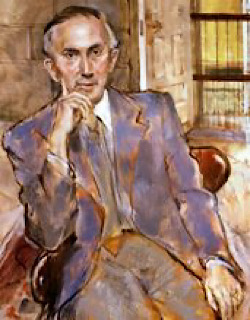
Francis Stewart Leland Lyons FBA, Irish historian and academic who serves as the 40th Provost of Trinity College Dublin from 1974 to 1981, is born in Derry, County LondonderryNorthern Ireland, in November 11, 1923.

Lyons is the son of Northern Bank official Stewart Lyons and Florence May (née Leland). He is known as “Le” among his friends and family. The Lyons family are Irish Protestant, of Presbyterian and Church of Ireland background, descended from a cadet branch of the landed gentry Lyons family, formerly of Oldpark, Belfast, After his birth, his family soon moves to Boyle, County Roscommon. He is educated at Dover College in Kent and later attends The High School, Dublin. At Trinity College Dublin, he is elected a Scholar in Modern History and Political Science in 1943.

Lyons is a lecturer in history at the University of Hull and then at Trinity College Dublin. He becomes the founding Professor of Modern History at the University of Kent in 1964, serving also as Master of Eliot College from 1969 to 1972.

Lyons becomes Provost of Trinity College Dublin in 1974, but relinquishes the post in 1981 to concentrate on writing. He wins the Heinemann Prize in 1978 for his work in Charles Stewart Parnell. He writes Culture and Anarchy in Ireland, 1890–1939, which wins the Christopher Ewart-Biggs Memorial Prize and the Wolfson History Prize in 1979. He is also awarded honorary doctorates by five universities and has fellowships at the Royal Society of Literature and the British Academy. He is Visiting Professor at Princeton University.

Lyons principal works include Ireland Since the Famine, the standard university textbook for Irish history from the mid-19th to late-20th century, which The Times calls “the definitive work of modern Irish history” and a biography of Charles Stewart Parnell.

Lyons is critical of Cecil Woodham-Smith‘s much-acclaimed history of the Great Irish Famine and has generally been considered among the “revisionist” historians who reconsiders the role of the British state in events like the Famine.

Lyons marries Jennifer Ann Stuart McAlister in 1954, and has two sons, one of whom, Nicholas, is a former Lord Mayor of London.

On September 15, 1983, Lyons is nominated, unopposed, as chancellor of Queen’s University Belfast (QUB). But less than a week later he is dead, succumbing in Dublin on September 21 to acute pancreatitis, which had struck him in mid-August. He had begun to write the first draft of his W. B. Yeats biography (having accumulated a great archive of material) only a few weeks before. His ashes are buried beside Trinity College chapel.


Leave a comment

Birth of Sidney Czira, Journalist, Broadcaster, Writer & Revolutionary

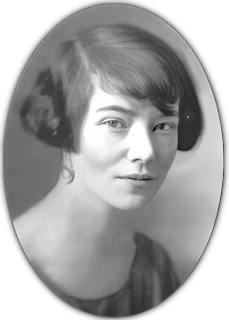
Sidney Sarah Madge Czira (née Gifford), journalistbroadcaster, writer and revolutionary, known by her pen name John Brennan, is born in Rathmines, Dublin, on August 3, 1889. She is an active member of the revolutionary group Inghinidhe na hÉireann (Daughters of Ireland) and writes articles for its newspaper, Bean na h-Éireann, and for Arthur Griffith‘s newspaper Sinn Féin.

Gifford is the youngest of twelve children of Frederick and Isabella Gifford. Isabella Gifford (née Burton), is a niece of the artist Frederic William Burton, and is raised with her siblings in his household after the death of her father, Robert Nathaniel Burton, a rector, during the Great Famine.

Gifford’s parents—her father is Catholic and her mother Anglican—are married in St. George’s Church, a Church of Ireland church on the north side of Dublin, on April 27, 1872. She grows up in Rathmines and is raised as a Protestant, as are her siblings.

Like her sisters, the socialist Nellie GiffordGrace Gifford, who marries Joseph Plunkett, and Muriel Gifford, who marries Thomas MacDonagh, she becomes interested and involved in the suffrage movement and the burgeoning Irish revolution.

Gifford is educated in Alexandra College in Earlsfort Terrace. After leaving school she studies music at the Leinster House School of Music. It is her music teacher, in her teens, who first gives her her first Irish national newspaper, The Leader. She begins reading this secretly and then starts reading Arthur Griffith’s newspaper, Sinn Féin.

Gifford is a member of Inghinidhe na hÉireann, a women’s political organisation active from the 1900s. It is founded by Maud Gonne and a group of working-class and middle-class women to promote Irish culture and help to alleviate the shocking poverty of Dublin and other cities at a time when Dublin’s slums are unfavourably compared with Calcutta‘s. Gifford, who is already writing under the name “John Brennan” for Sinn Féin, is asked to write for its newspaper Bean na h-Éireann. Her articles vary from those highlighting poor treatment of women in the workplace to fashion and gardening columns, some written under the pseudonym Sorcha Ní hAnlúan.

She also works, along with her sisters, in Maud Gonne’s and Constance Markievicz‘s dinner system in St. Audoen’s Church, providing good solid dinners for children in three Dublin schools – poor Dublin schoolchildren often arrive at school without breakfast, go without a meal for the day, and if their father has been given his dinner when they arrive home, might not eat or might only have a crust of bread that night.

In 1911, Gifford is elected (as John Brennan) to the executive of the political group Sinn Féin.

Gifford is a member of Cumann na mBan (The Irish Women’s Council) from its foundation in Dublin on April 2, 1914. Its members learn first aid, drilling and signalling and rifle shooting, and serve as an unofficial messenger and backup service for the Irish Volunteers. During the fight for Irish Independence the women carry messages, store and deliver guns and run safe houses where men on the run can eat, sleep and pick up supplies.

In 1914, Gifford moves to the United States to work as a journalist. Through her connection with Padraic Colum and Mary Colum, whom she had met through her brother-in-law Thomas MacDonagh, she meets influential Irish Americans such as Thomas Addis Emmet and Irish exiles like John Devoy, and marries a Hungarian lawyer, Arpad Czira, a former prisoner of war who is said to have escaped and fled to America. Their son, Finian, is born in 1922.

Czira writes both for traditional American newspapers and for Devoy’s newspaper, The Gaelic American. She and her sister Nellie found the American branch of Cumann na mBan, and she acts as its secretary. Both sisters tour and speak about the Easter Rising and those involved. She is an active campaigner for Irish independence and against the United States joining the war against Germany, seen as a war for profit and expansion of the British Empire, and so to the disadvantage of the work for Irish independence. She helps Nora Connolly O’Brien to contact German diplomats in the United States.

In 1922, Czira returns to Ireland with her son. As a member of the Women’s Prisoners’ Defence League, she is an activist against the ill-treatment of Republican prisoners during the Irish Civil War. She continues to work as a journalist, though she is stymied in her work, as are the women of her family and many of those who had taken the anti-Free State side. In the 1950s her memoirs are published in The Irish Times, and she moves into work as a broadcaster and produces a series of historical programmes.

Czira dies in Dublin on September 15, 1974, and is buried in Dean’s Grange Cemetery.


Leave a comment

Birth of William Brown, Commander in the Argentine Navy

William Brown, Irish sailor, merchant, and naval commander who serves in the Argentine Navy during the wars of the early 19th century, is born on June 22, 1777, in Foxford, County Mayo. He is also known in Spanish as Guillermo Brown or Almirante Brown.

Comparatively little is known of his early life, and it has been suggested that he was illegitimate and took his mother’s surname and that his father’s surname was actually Gannon. He emigrates with his father to Baltimore, Maryland, in 1793, eventually settling in Philadelphia, Pennsylvania. A short time after their arrival, the friend who had invited them and offered them food and hospitality dies of yellow fever. Several days later, his father also succumbs to the same disease.

One morning, while Brown is wandering along the banks of the Delaware River, he meets the captain of a ship then moored in port. The captain inquires if he wants employment and Brown agrees. The captain engages him as a cabin boy, thereby setting him on the naval promotion ladder, where he works his way to the captaincy of a merchant ship. After ten years at sea, where he develops his skills as a sailor and reaches the rank of captain, Brown is press-ganged into a Royal Navy warship. British impressment of American sailors is one of the primary issues leading to the War of 1812.

During the Napoleonic Wars, Brown escapes the ship he is serving on, a galley, and scuttles the vessel. However, the French do not believe he had assisted them and imprison him in Lorient. On being transferred to Metz, he escapes, disguised in a French officer’s uniform. However, he is recaptured and is imprisoned in the fortress of Verdun. In 1809, he escapes from there in the company of a British Army officer named Clutchwell, and eventually reaches German territory.

Returning to England, Brown renounces his maritime career and on July 29, 1809, he marries Elizabeth Chitty, daughter of an English shipping magnate, in Kent. As he is a Catholic and she a Protestant, they agree to raise their sons as Catholics and their daughters as Protestants. Despite lengthy periods of enforced separation, they have nine children. He leaves the same year for the Río de la Plata on board Belmond and sets himself up as a merchant in Montevideo, Uruguay.

Late in 1811 Brown settles in Buenos Aires just as a criollo rebellion against Spanish colonial rule in Argentina is gaining strength. By April 1812, he is developing a coastal shipping business in fruit and hides. As the Spanish naval blockade of 1812–14 begins to choke trade, he is first commissioned by the patriot government as a privateer licensed to raid Spanish merchantmen, and then, on March 1, 1814, invited to take charge of a small rebel naval squadron to contest Spanish control of the Río de la Plata estuary. Leading a fleet of nineteen ships, he fixes with great speed on a set of wartime naval routines and signaling methods, and organises a system of discipline, founding the navy on principles that pay exceptional attention to the welfare of ordinary seamen.

In early March 1814, Brown shows personal courage and incisive skill in outwitting and defeating a more powerful Spanish force near Martín García Island, thereby dividing the Spanish blockade. A Spanish attempt in May 1814 to break his blockade of Montevideo is decisively crushed by him and his makeshift navy, and the Spanish strongholds on the Atlantic coast collapse, ending open war. In 1815 and 1816, however, he carries out skirmishing raids on military and commercial targets belonging to Spanish South American possessions, until detained by a British colonial governor in Barbados in July 1816 for alleged infringements of international rules of trade.

Illness, and a tortuous but ultimately successful appeal process, take up most of 1817–18, but when Brown returns to Argentina in October 1818, political enemies set in motion a prosecution for alleged disobedience of orders. Cashiered in August 1819, then restored in rank but forced to retire, he attempts suicide the following month. Convalescence and resumption of his trading concern occupies him for several years.

A repentant government renews Brown’s command of the navy in December 1825, when war breaks out with Brazil. Though vastly outnumbered by the Brazilian fleet, he shows audacity and great finesse in a number of successful engagements in the Plate estuary in 1826, roving up the Brazilian coast on occasion to create great confusion. In February 1827, he triumphs in a series of actions known as the Battle of Juncal. After another year of commercial privateering against the Brazilian merchant fleet, he is one of two delegates selected to sign peace terms with Brazil in October 1828.

Retiring from active service that month, Brown tries to remain neutral as civil war erupts in Argentina, but reluctantly accepts the post of governor of Buenos Aires under General Juan Lavalle from December 1828 to May 1829, when he resigns in disgust at government excesses. During 1829–37 he holds aloof from the despotic government of Juan Manuel de Rosas. After French and British encroachments on the region in the later 1830s, he offers to take charge of the navy again to protect national independence and is available to defend Argentine interests when war breaks out with a French-backed Uruguay in early 1841. Though exasperated by a long and “stupid war,” he blockades the Uruguayan navy effectively until French and British fleets intervene in July 1845 with overwhelming force to capture his squadron and bring the war to an end.

Idolised by the Argentinian population for his high-principled and humane advocacy of independent democracy, Brown passes his last years trading and farming a country estate. In late 1847, he journeys to Ireland, hoping to find relations in Mayo, and is shocked by the hunger and destitution of the Great Famine.

Brown dies on March 3, 1857, at his home in Buenos Aires and is buried with full military honours. The Argentine government issues a comuniqué: “With a life of permanent service to the national wars that our homeland has fought since its independence, William Brown symbolized the naval glory of the Argentine Republic.” During his burial, General Bartolomé Mitre famously says: “Brown in his lifetime, standing on the quarterdeck of his ship, was worth a fleet to us.” His grave is currently located in the La Recoleta Cemetery in Buenos Aires.


Leave a comment

Birth of John Edgar, Minister & Professor of Theology

John Edgar, minister, professor of theology, moderator of the Secession Synod in 1828 and moderator of the Presbyterian Church in Ireland in 1842 is born near Ballynahinch, County Down, on June 13, 1798. He is Honorary Secretary to the Presbyterian Home Mission during the Great Famine in 1847.

Edgar is the eldest son of Samuel Edgar (1766-1826) and Elizabeth McKee (1771-1839). He attends the Royal Belfast Academical Institution where he excels as a student. He is ordained a minister in the Presbyterian church in 1820. He becomes D.D. of Hamilton College in Kirkland, New York, in 1836, is elected moderator of the Presbyterian Church in Ireland for 1842–43, and obtains LL.D. of New York in 1860.

Edgar is known as the origin of the Temperance movement in Ireland because he pours alcohol out his window in 1829. On August 14, 1829, he writes a letter in the Belfast Telegraph advocating temperance.

Edgar forms the Ulster Temperance Movement. In 1834, he tells a parliamentary committee inquiring into the causes and consequences of drunkenness in the United Kingdom that there are 550 “dram shops” in Belfast and 1,700 shops selling intoxicants in Dublin as well as numerous illicit distillers “even in the most civilised districts of Ulster.”

Edgar is also the founder of the Ulster Female Penitentiary in 1839 which is a residential home for prostitutes. He is also instrumental in getting the Deaf, Dumb and Blind Institute set up in Belfast. A meeting which leads to the establishment of the Presbyterian Orphan Society is held in 1866 in his drawing room.

Edgar is also involved in the relief effort by the Presbyterian church in Connacht during the Irish famine. The church is accused of proselytizing during the famine period. In the May Street Presbyterian Church he says, “I hope soon to have an opportunity of directing public attention to spiritual famine in Connacht, but our effort now is to save the perishing body … Our brother is starving, and, till we have satisfied his hunger, we have no time to inquire whether he is Protestant or Romanist.”

Edgar is interested in Gaelic language and culture, and is critical of other Protestant faiths particularly the Church of Ireland (Anglican) for not preaching in the Irish language.

Edgar dies at the age of 68 on August 26, 1866, in Cremore, Rathgar, Dublin, where he had gone to get medical treatment. He is survived by his wife Susanna, and is buried in Balmoral Cemetery, Belfast.


Leave a comment

John Mitchel Escapes from Van Diemen’s Land

John Mitchel, Irish nationalist writer and political journalist, escapes from Van Diemen’s Land (modern-day Tasmania, Australia) on June 8, 1853, with the assistance of Patrick James (“Nicaragua”) Smyth, an agent of the New York Irish Directory.

Mitchel is born in Camnish, near Dungiven, County Derry on November 3, 1815, the son of a Presbyterian minister. At the age of four, he is sent to a classical school, run by an old minister named Moor, nicknamed “Gospel Moor” by the students. He reads books from a very early age. When a little over five years old, he is introduced to Latin grammar by his teacher and makes quick progress. In 1830, not yet 15 years old, he enters Trinity College, Dublin (TCD) and obtains a law degree in 1834.

In the spring of 1836, Mitchel meets Jane Verner, the only daughter of Captain James Verner. Though both families are opposed to the relationship, they become engaged in the autumn and are married on February 3, 1837, by the Rev. David Babington in Drumcree Church, the parish church of Drumcree.

Mitchel works in a law office in Banbridge, County Down, where he eventually comes into conflict with the local Orange Order. He meets Thomas Davis and Charles Gavan Duffy during visits to Dublin. He joins the Young Ireland movement and begins to write for The Nation. Deeply affected by the misery and death caused by the Great Famine, he becomes convinced that nothing will ever come of the constitutional efforts to gain Irish freedom. He then forms his own paper, United Irishman, to advocate passive resistance by Ireland’s starving masses.

In May 1848, the British tire of Mitchel’s open defiance. Ever the legal innovators in Ireland, they invent a crime especially for the Young Irelanders – felony-treason. They arrest him for violating this new law and close down his paper. A rigged jury convicts him, and he is deported first to Bermuda and then to Australia. However, on June 8, 1853, he escapes to the United States.

Mitchel works as a journalist in New York City and then moves to the South. When the American Civil War erupts, he is a strong supporter of the Southern cause, seeing parallels with the position of the Irish. His family fully backs his commitment to the Southern cause. He loses two sons in the war, one at the Battle of Gettysburg in 1863 and another at the Battle of Fort Sumter in 1864, and another son loses an arm. His outspoken support of the Confederacy causes him to be jailed for a time at Fort Monroe, where one of his fellow prisoners is Confederate President Jefferson Davis.

In 1874, the British allow Mitchel to return to Ireland and in 1875 he is elected in a by-election to be a member of the Parliament of the United Kingdom representing the Tipperary constituency. However, his election is invalidated on the grounds that he is a convicted felon. He contests the seat again in the resulting by-election and is again elected, this time with an increased vote.

Unfortunately, Mitchel, one of the staunchest enemies to English rule of Ireland in history, dies in Newry on March 20, 1875, and is buried there. Thirty-eight years later, his grandson, John Purroy Mitchel, is elected Mayor of New York City.


Leave a comment

Thomas Francis Meagher Publicly Presents the Tricolour National Flag

Waterford native Thomas Francis Meagher presents the tricolour national flag of Ireland to the public for the first time at a meeting of the Young Ireland party in Dublin on April 15, 1848.

The mid-19th-century is a difficult time for the Irish. Under British subjugation, and amidst the vice-grip of the Great Famine, Ireland and its people are in desperate need for optimism, and something to bring the nation together.

News of the recent French Revolution has reached Irish ears and there is a growing belief that the path to independence is an achievable one.

During a trip to Paris with an Irish delegation sent to congratulate the French republicans on their successful revolution, Meagher is inspired to create a design for the Irish tricolour, similar to the French flag, with the help of a small group of French women sympathetic to the Irish cause.

The new flag has green, white and orange stripes – the colours symbolising the unification of two traditions into one nation – Catholics (green) and Protestants (orange). Few realise however, that Meagher’s original flag has the orange stripe closest to the staff, a design now used by Ivory Coast.

As Meagher outlines later, “The white in the centre signifies a lasting truce between Orange and Green and I trust that beneath its folds the hands of Irish Protestants and Irish Catholics may be clasped in generous and heroic brotherhood.”

At a meeting in Waterford on March 7, 1848, Meagher first publicly unveils the flag from a second-floor window of the Wolfe Tone Club as he addresses a gathered crowd on the street below who are present to celebrate another revolution that has just taken place in France.

From March of that year the Irish tricolour appears side-by-side with the French tricolour at meetings held all over the country.

On April 14 and 15, the flag is paraded around the country. Political journalist John Mitchel says at the time, “I hope to see that flag one day waving, as our national banner.”

The flag is nearly forgotten following the Young Irelander’s failed rising later in 1848. The Fenians, the next Irish revolutionary movement, use the traditional green field and golden harp motif for its flags and it is the predominantly used flag for the next sixty years.

During this time, support for Meagher’s design grows, and following the events of the 1916 Easter Rising, it is resurrected by the Irish Volunteers and later by Sinn Féin and is unofficially adopted as the flag of Ireland. With the green stripe closest to the staff, Meagher’s tricolour becomes the official flag of the 26 counties of the Irish Republic.

In 1937, the design achieves constitutional status as the official Irish flag.

Until recently, display of the tricolour flag is illegal in the six occupied counties of Northern Ireland.

(From: “On this day in 1848: Ireland’s new flag is shown to public for first time” by Harry Brent, The Irish Post, http://www.irishpost.com, April 15, 2021)


Leave a comment

The Wreck of the RMS Royal Adelaide

The RMS Royal Adelaide, a paddle steamship owned and operated by the City of Dublin Steam Packet Company, sinks in a storm on March 30, 1850, with the loss of two hundred lives. Its principal route runs between London and Cork, County Cork.

The RMS Royal Adelaide, captained by John Batty, leaves Cork fully laden with cargo and about 250 passengers on Wednesday, March 27,1850, touching off at Plymouth, Devon, England, on Thursday evening. By the time the ship leaves Plymouth for London at 3:00 a.m. on Friday, March 29, there are almost three hundred deck passengers.

The ship is totally lost at about 11:00 p.m. on Saturday, March 30 on Tongue Sands north of Margate, Kent, England, with the loss of all on board. News only reaches London late on Sunday as the river pilot waiting for the ship happens to meet a Deal, Kent, pilot, Charles Gillham, who reports seeing a ship of a similar description in distress the previous evening (The Illustrated London News, April 6 and 13, 1850).

The dead include more than one hundred fifty deck passengers from Ireland, during a time when the Great Famine is at its height.

(Pictured: “The Wreck of the Royal Adelaide,” illustration for The Illustrated London News, April 13, 1850)


Leave a comment

The Popery Act 1704 Receives Royal Assent

An Act to prevent the further Growth of Popery, commonly known as the Popery Act or the Gavelkind Act, is an act of the Parliament of Ireland that receives royal assent on March 4, 1704. It is designed to suppress Roman Catholicism in Ireland (“Popery“). William Edward Hartpole Lecky calls it the most notorious of the Irish Penal Laws.

Inheritance in traditional Irish law uses gavelkind, whereby an estate is divided equally among a dead man’s sons. In contrast, English common law uses male primogeniture, with the eldest son receiving the entire estate. The 1704 act enforces gavelkind for Catholics and primogeniture for Protestants.

Two separate bills “to prevent the further Growth of Popery” are introduced in the parliamentary session of 1703–04. One originates with the Privy Council of Ireland and is referred on July 4, 1703, to the Attorney-General for Ireland. The other is introduced as heads of a bill in the Irish House of Commons on September 28, 1703, and is sent to the Lord Lieutenant of Ireland on November 19. Under Poynings’ Law, both bills are transmitted to the Privy Council of England for approval. Formally, one bill is vetoed, and the other is returned to Dublin with amendments. A lack of surviving documentation makes it impossible to determine which of the two has which fate. The approved bill is engrossed on January 20, 1704, presented in the Commons on February 14, sent to the Irish House of Lords on February 25, and given royal assent on March 4.

Sir Theobald “Toby” Butler, the former Solicitor-General for Ireland, a Roman Catholic, makes a celebrated speech at the bar of the Commons denouncing the act as being “against the laws of God and man… against the rules of reason and justice.” Other eminent Catholic lawyers like Stephen Rice also denounce the measure but to no avail.

Charles Ivar McGrath says that while the Popery Act has “evident … negative effects,” specific research is lacking, and that it is intended more to prevent an increase in Catholic landholding than encourage further decrease. The Catholic share of land had already fallen from 60% before the Irish Rebellion of 1641 to 22% before the Williamite War in Ireland to 14% in 1704. The figure of 5% in 1776 given in Arthur Young‘s Tour in Ireland is probably an underestimate, although in 1778 only 1.5% of rent is paid to Catholics.

Catholic gavelkind cements a tradition of farm subdivision, which persists beyond the act’s repeal and contributes to the Great Famine of the 1840s.

The act is “explained and amended” by a 1709 act, 8 Anne c. 3 (I), which specifies certain time limits left ambiguous by the original act, and closes some loopholes used by Catholics to remain beneficial owners of nominally Protestant property.

A 1719 act, 6 Geo. 1. c. 9 (I), indemnifies officials who have not hitherto subscribed to the oath required by the Popery Act. The time period for Dissenters subscribing to the oath is routinely extended, initially by an Indemnity Act at the start of each biennial parliamentary session. Similar acts are passed by the British parliament, and after the union the UK parliament continues the practice.

From the late 18th century Roman Catholic relief bills ease the Penal Laws, by explicit or implicit repeal and replacement. In 1772, Catholics are allowed to lease up to fifty Irish acres of bog-land for up to 61 years. The 1704 oath of allegiance for Catholics is replaced in 1774. Gardiner’s Act, the Leases for Lives Act 1777, implicitly repeals many other provisions of the 1704 act. Some are replaced with less onerous restrictions. The sacramental test is repealed for Dissenters in 1780. The Roman Catholic Relief Act 1782 repeals section 23 of the 1704 act. Another act of 1782 allows lay Catholics to be guardians of Protestants. Most restrictions on intermarriage are removed by the Roman Catholic Relief Act 1792. Many Penal Laws are repealed in general terms by the Roman Catholic Relief Act 1793. The sacramental test for Catholics is effectively replaced by the 1774 oath.

The Roman Catholic Relief Act 1829 abolishes the declaration against transubstantiation and specifies a new public oath for Catholics, explicitly permitting Catholics to hold Irish civil or military offices other than Lord Lieutenant and Lord Chancellor of Ireland, with the same oaths as required of non-Catholics (in addition to the new Catholic oath).

The Criminal Law Commission‘s 1845 report on oaths says sections 1, 3, and 6 of the 1704 act have fallen into disuse and should be repealed. The Religious Disabilities Act 1846, passed in consequence of the committee’s report, explicitly repeals provisions of sections 1, 3, and 4 of the 1704 act.

The Popery Act is explicitly repealed as obsolete by the Promissory Oaths Act 1871, with the exception of section 25, which is made redundant by the coming into force in 1871 of the Irish Church Act 1869 and is repealed by the Statute Law Revision (Ireland) Act 1878.


Leave a comment

Death of Sir Dominic Corrigan, 1st Baronet, Irish Physician

Sir Dominic John Corrigan, 1st Baronet, an Irish physician known for his original observations in heart disease, dies in Dublin on February 1, 1880, following a stroke. The abnormal “collapsing” pulse of aortic valve insufficiency is named Corrigan’s pulse after him.

Corrigan is born in Thomas Street, Dublin, on December 2, 1802, the son of a dealer in agricultural tools. He is educated in St. Patrick’s College, Maynooth, which then has a department for secular students apart from the ecclesiastical seminary. He is attracted to the study of medicine by the physician in attendance and spends several years as an apprentice to the local doctor, Edward Talbot O’Kelly. He studies medicine in Dublin later transferring to Edinburgh Medical School where he receives his degree as MD in August 1825.

Corrigan returns to Dublin in 1825 and sets up a private practice at 11 Ormond Street. As his practice grows, he moves to 12 Bachelors Walk in 1832, and in 1837 to 4 Merrion Square West. Apart from his private practice, he holds many public appointments; he is a physician to St. Patrick’s College, Maynooth, the Sick Poor Institute, the Charitable Infirmary Jervis Street (1830–43) and the House of Industry Hospitals (1840–66). His work with many of Dublin’s poorest inhabitants leads to him specialising in diseases of the heart and lungs, and he lectures and publishes extensively on the subject. He is known as a very hard-working physician, especially during the Great Famine. At the 1870 Dublin City by-election he is elected a Liberal Member of Parliament for Dublin City. In parliament he actively campaigns for reforms to education in Ireland and the early release of Fenian prisoners. He does not stand for re-election in 1874. His support for temperance and Sunday closing of pubs apparently antagonises his constituents and alcohol companies.

In 1847, Corrigan is appointed physician-in-ordinary to the Queen in Ireland. Two years later he is given an honorary MD from Trinity College Dublin (TCD). In 1846 his application to become a fellow of the Royal College of Physicians of Ireland (RCPI) is blocked. In 1855 he gets around this opposition by sitting the college’s entrance exam with the newly qualified doctors. He becomes a fellow in 1856, and in 1859 is elected president, the first Catholic to hold the position. He is re-elected president an unprecedented four times. There is a statue of him in the Graves’ Hall of the college by John Henry Foley.

Corrigan is President of the Royal Zoological Society of Dublin, the Dublin Pathological Society, and the Dublin Pharmaceutical Society. From the 1840s he is a member of the senate of the Queen’s University and in 1871 becomes its vice-chancellor. In 1866 he is created a baronet, of Cappagh and Inniscorrig in the County of Dublin and of Merrion Square in the City of Dublin, partly as a reward for his services as Commissioner of Education for many years. He is a member of the board of Glasnevin Cemetery and a member of the Daniel O’Connell Memorial Committee. Armand Trousseau, the French clinician, proposes that aortic heart disease should be called Corrigan’s disease.

Corrigan marries Joanna Woodlock, the daughter of a wealthy merchant, and sister of the Bishop Dr. Bartholomew Woodlock, in 1827. They have six children, three girls and three boys. His eldest son, Captain John Joseph Corrigan, Dragoon Guards, dies on January 6, 1866, and is interred at the Melbourne General Cemetery, Melbourne, Australia.

Corrigan dies at Merrion Square, Dublin, on February 1, 1880, having suffered a stroke the previous December. He is buried in the crypt of St. Andrew’s Church, Westland Row, Dublin. His grandson succeeds him to the baronetcy.

The Corrigan Ward, a cardiology ward in Beaumont Hospital, Dublin, is named in his honour. Part of his family crest is also part of the Beaumont Hospital crest.