seamus dubhghaill

Promoting Irish Culture and History from Little Rock, Arkansas, USA


Leave a comment

Birth of Patrick Francis Moran, Third Archbishop of Sydney

Patrick Francis Moran, a prelate of the Catholic Church, the first cardinal appointed from Australia and the third Archbishop of Sydney, is born at LeighlinbridgeCounty Carlow, on September 16, 1830. Before his promotion to Archbishop, his scholarly research into the lives and times of the Irish Catholic Martyrs leads to the publication of many primary sources for the first time. These publications have since been used in recent beatifications and at least one canonization.

Moran’s parents are Patrick and Alicia Cullen Moran. Of his three sisters, two become nuns, one of whom dies nursing cholera patients. His parents die by the time he is 11 years old. In 1842, at the age of twelve, he leaves Ireland in the company of his uncle, Paul Cullen, rector of the Pontifical Irish College in Rome. There he studies for the priesthood, first at the minor seminary and then at the major seminary.

Moran is considered so intellectually bright that he gains his doctorate by acclamation. By The age of 25 he speaks ten languages, ancient and modern. He focuses on finding and editing important documents and manuscripts related to Irish ecclesiastical history. Some editions of his works remain important source materials to this day.

Moran is appointed vice-rector at the Pontifical Irish College and also takes the chair of Hebrew at Congregation for the Evangelization of Peoples (CEP). He is also some-time vice-rector of the Scots College in Rome. In 1866, he is appointed secretary to his mother’s half-brother, Cardinal Paul Cullen of Dublin. He is also appointed professor of scripture at Holy Cross College, Dublin. He founds the Irish Ecclesiastical Record (on which he later models the Australasian Catholic Record).

In 1869, Moran accompanies Cardinal Cullen to the First Vatican Council, a council also attended by Melbourne‘s then-first archbishop, James Alipius Goold. According to Michael Daniel, it is generally agreed that the definition of the Catholic doctrine of papal infallibility is based on Cullen’s proposal, and Ayres suggests that there is strong evidence that Cullen’s proposal is largely drafted by Moran. While in Rome and Ireland he is very active politically in opposing English Benedictine plans for monastic foundations undergirding the Catholic Church in Australia.

Moran is appointed coadjutor bishop of Ossory on December 22, 1871, and is consecrated on March 5, 1872 in Dublin by his uncle, Cardinal Paul Cullen. On the death of Bishop Edward Walsh, he succeeds as Bishop of Ossory on August 11, 1872. He champions Home Rule and is consulted by William Ewart Gladstone prior to the introduction of his Home Rule Bills.

Moran is personally chosen and promoted by Pope Leo XIII to head the Archdiocese of Sydney – a clear policy departure from the previous English Benedictine incumbents, John Bede Polding and Roger Vaughan, who were experiencing tension leading the predominantly Irish Australian Catholics. In the archbishop’s farewell audience with Leo XIII, it is evident that the intrigues of parties, the interference of government agencies and the influence of high ecclesiastics had made the matter almost impossible to decide by Propaganda. In the presence of others, the Pope says clearly: “We took the selection into our own hands. You are our personal appointment.” Moran is appointed to Australia on January 25, 1884, and arrives on September 8, 1884. He is created cardinal-priest on July 27, 1885, with the title of St. Susanna. The new Irish Australian cardinal makes it his business to make his presence and leadership felt.

Moran begins transforming the Sydney Saint Patrick’s Day festivities by inaugurating the celebration of a Solemn Mass at St. Mary’s Cathedral on Saint Patrick’s Day 1885. Over time the day’s events change from an Irish nationalist and political day into an occasion “for the demonstration of Irish Catholic power and respectable assimilation” as well as “for the affirmation of Irish Catholic solidarity.”

In 1886, it is estimated that Moran travels 2,500 miles over land and sea, visiting all the dioceses of New Zealand. In 1887, he travels 6,000 miles to consecrate fellow Irishman Matthew Gibney at Perth. He also travels to BallaratBathurstBendigoHobartGoulburnLismore, Melbourne and Rockhampton for the consecration of their cathedrals. Following the 1891 encyclical Rerum Novarum, he supports the right of labourers to better their conditions.

During his episcopate, Moran consecrates 14 bishops (he is the principal consecrator of William WalshMichael VerdonPatrick Vincent DwyerArmand Olier and also assists in consecrating Patrick Clune, among others). He ordains nearly 500 priests, dedicates more than 5,000 churches and professes more than 500 nuns. He makes five journeys to Rome on church business between 1885 and 1903, but does not participate in the papal conclave of 1903 because of the relatively short notice and the distance, making it impossible for him to reach Rome within 10 days of the death of Pope Leo.

Moran is a strong supporter of Federation, and in November 1896 attends the People’s Federal Convention in Bathurst. In March 1897, he stands as a candidate election of ten delegates from New South Wales to the Australasian Federal Convention. Although he states he will not attend the Convention in any official capacity, but in a solely individual one, his candidacy sparks a sectarian reaction. Twenty-nine per cent of voters give one of their ten votes to Moran, but he comes only thirteenth in number of total votes and is not elected.

From 1900 to 1901, Moran’s leadership survives a crisis when his personal secretary, Denis O’Haran, is named as co-respondent in the divorce case of the cricketer Arthur Coningham. Moran vigorously defends O’Haran and a jury finds in his favour.

Moran dies in Manly, Sydney, on August 16, 1911, aged 80. A quarter of a million people, the largest crowd ever to gather in Australia prior to that date, witness his funeral procession through the centre of Sydney. He is buried in St. Mary’s Cathedral, Sydney.


Leave a comment

Birth of Kevin Izod O’Doherty, Politician & Young Irelander

Kevin Izod O’Doherty, an Irish Australian politician who, as a Young Irelander, is transported to Tasmania in 1849, is born in Dublin on September 7, 1823, although other sources including the Dictionary of Australasian Biography indicate he is born in June 1824. He is first elected to the Legislative Assembly of Queensland in 1867. In 1885, he returns to Europe briefly serving as an Irish Home Rule MP at Westminster before returning in 1886 as a private citizen to Brisbane.

O’Doherty receives a good education and studies medicine, but before he is qualified, joins the Young Ireland party and in June 1848, together with Thomas Antisell and Richard D’Alton Williams, establish The Irish Tribune. Only five editions are issued, the first being on June 10, 1848. On July 10, 1848, when the fifth edition is issued, O’Doherty is arrested and charged with treason felony. At the first and second trials the juries disagree, but at the third trial, he is found guilty and sentenced to transportation for ten years.

O’Doherty arrives in Tasmania in November 1849, is at once released on parole to reside at Oatlands, and his professional services are utilised at St. Mary’s Hospital, Hobart. The other Irish prisoners nickname him “St. Kevin.”  In 1854 he receives a pardon with the condition that he must not reside in Great Britain or Ireland. He goes to Paris and carries on his medical studies, making one secret visit to Ireland to marry Mary Eva Kelly, to whom he is affianced before leaving Ireland. He receives an unconditional pardon in 1856, and completes his studies in Dublin, graduating FRCS in 1857. He practises in Dublin successfully, and in 1862 goes to Brisbane, Australia, and becomes well known as one of its leading physicians.

O’Doherty is elected a member of the Legislative Assembly of Queensland in 1867, in 1872 is responsible for a health act being passed, and is also one of the early opponents of the trafficking of Kanakas. In 1885, he resigns as he intends to settle in Europe.

In Ireland, O’Doherty is cordially welcomed, and is returned unopposed as Irish Parliamentary Party (IPP) MP for North Meath to the House of Commons of the United Kingdom in the November 1885 United Kingdom general election. However, finding the climate does not suit him, he does not seek re-election in 1886 and returns to Brisbane in that year. He attempts to take up his medical practice again but is not successful. He dies in poor circumstances in Brisbane on July 15, 1905.

O’Doherty’s wife and a daughter survive him. A fund is raised by public subscription to provide for his widow, a poet, who in her early days is well known as the author of Irish patriotic verse in The Nation under the soubriqet “Eva.” In Australia, she occasionally contributes to Queensland journals, and one of her poems is included in A Book of Queensland Verse. She dies at Brisbane on May 21, 1910.


Leave a comment

Birth of Máire Ní Chinnéide, Language Activist & Playwright

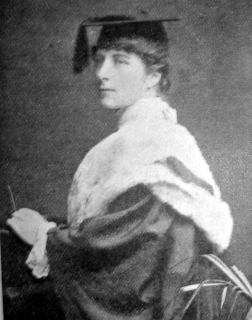
Máire Ní Chinnéide (English: Mary or Molly O’Kennedy) Irish language activist, playwright, first president of the Camogie Association and first female president of Oireachtas na Gaeilge, is born in Rathmines, an affluent inner suburb on the Southside of Dublin, on January 17, 1879.

Ní Chinnéide attends Muckross Park College and the Royal University of Ireland (later the National University of Ireland) where she is a classmate of Agnes O’Farrelly, Helena Concannon, and Hanna Sheehy-Skeffington. She learns the Irish language on holiday in Ballyvourney, County Cork, and earns the first scholarship in Irish language from the Royal University of Ireland, worth £100 a year, which is spent on visits to the Irish college in Ballingeary.

She studies in the school of Old Irish established by Professor Osborn Bergin and is strongly influenced by the Irish Australian professor O’Daly. She later teaches Latin through Irish at Ballingeary and becomes proficient in French, German, Italian and Spanish.

She spends the last £100 of her scholarship on a dowry for her marriage to Sean MacGearailt, later first Accountant General of Revenue in the Irish civil service, with whom she lives originally in Glasnevin and then in Dalkey.

She is a founder member of the radical Craobh an Chéitinnigh, the Keating branch of Conradh na Gaeilge, composed mainly of Dublin-based Kerry people and regarded, by themselves at least, as the intellectual focus of the League.

In August 1904, some six years after the establishment of the earliest women’s hurling teams, the rules of camogie (then called camoguidheacht), first appears in Banba, a journal produced by Craobh an Chéitinnigh. Camogie had come to public attention when it was showcased at the annual Oireachtas (Conradh na Gaeilge Festival) earlier that year, and it differed from men’s hurling in its use of a lighter ball and a smaller playing-field. Ní Chinnéide and Cáit Ní Dhonnchadha, like Ní Chinnéide, an Irish-language enthusiast and cultural nationalist, are credited with having created the game, with the assistance of Ní Dhonnchadha’s scholarly brother Tadhg Ó Donnchadha, who drew up its rules. She is on the first camogie team to play an exhibition match in Navan, County Meath, in July 1904, becomes an early propagandist for the game and, in 1905, is elected president of the infant Camogie Association.

Ní Chinnéide later serves as Vice-President of Craobh an Chéitinnigh, to Cathal Brugha. She is active in Cumann na mBan during the Irish War of Independence and takes the pro-treaty side during the Irish Civil War and attempts to set up a woman’s organisation “in support of the Free State” alongside Jennie Wyse Power.

She first visits the Blasket Islands in 1932 with her daughter Niamh, who dies tragically young. In the summer of 1934, she puts the idea into Peig Sayers‘s head to write a memoir. According to a later interview with Ní Chinnéide “she knew and admired her gift for easy conversation, her gracious charm as a hostess, her talent for illustrating a point she was making by a story out of her own experience that was as rich in philosophy and thought as it was limited geographically.” Peig answers that she has “nothing to write.” She had learned only to read and write in English at school and most of it has been forgotten.

Ní Chinnéide suggests Peig should dictate her memoir to her son Micheal, known to everyone on the island as An File (“The Poet”), but Peig “only shook her head doubtfully.” At Christmas, a packet arrives from the Blaskets with a manuscript, she transcribes it word for word and the following summer brings it back to the Blaskets to read it to Peig. She then edits the manuscript for the Talbot Press. Peig becomes well known as a prescribed text on the Leaving Certificate curriculum in Irish.

Ní Chinnéide has an acting part in the first modern play performed in Irish on the stage, Casadh an tSugáin by Douglas Hyde in 1901. She is later author of children’s plays staged by An Comhar Drámuidhachta at the Oireachtas and the Peacock Theatre, of which Gleann na Sidheóg and An Dúthchas (1908) are published. She is a broadcaster in Irish on 2RN, a wholly owned subsidiary of Raidió Teilifís Éireann, after its foundation in 1926 and author of a translation of Grimms’ Fairy Tales (1923). She is president of the Gaelic Players Dramatic group during the 1930s and a founder of the Gaelic Writers Association in 1939.

She soon becomes interested in writing children’s plays, including Gleann na Sidheóg (Fairy Glen, 1905) and Sidheoga na mBláth (Flower Fairies, 1909. Although there is little information available on the staging of her first play, by the time her second children’s play, Sidheóga na mBláth, is published in An Claidheamh Soluis in December 1907, “Éire Óg” (“Young Ireland”) branches of Conradh na Gaeilge have been established in conjunction with adults’ branches. Patrick Pearse in particular voices the expectation that this play will be staged by many “Éire Óg” branches “before the New Year is very old,” thus indicating the immediate take up of such plays. Indeed, a week after the play’s publication, it is staged in the Dominican College in Donnybrook, Dublin, where Ní Chinnéide had spent several years as an Irish teacher.

Ní Chinnéide dies on April 25, 1967, and is buried in Dean’s Grange Cemetery.

In 2007 the camogie trophy (Máire Ní Chinnéide Cup) for the annual inter-county All-Ireland Junior Camogie Championship is named in her honour.

(Pictured: Máire Ní Chinéide at her graduation, photograph from Banba, 1903)


Leave a comment

Death of Iseult Gonne

Iseult Lucille Germaine Gonne, the daughter of the Irish republican revolutionary Maud Gonne and the French politician and journalist Lucien Millevoye, dies on March 22, 1954. She marries the novelist Francis Stuart in 1920.

Maud Gonne conceives a child, Georges, with her French Boulangist lover Lucien Millevoye. When the baby dies, possibly by meningitis, she is distraught, and buries him in a large memorial chapel built for him with money she had inherited. She separates from Millevoye after Georges’ death, but in late 1893, she arranges to meet him at the mausoleum in Samois-sur-Seine and, next to the coffin, they have sex. Her purpose is to conceive a baby with the same father, to whom the soul of Georges would transmigrate in metempsychosis. Iseult is born in France as a result on August 6, 1894. She is educated at a Carmelite convent in Laval, France. When she returns to Ireland she is referred to as Maud’s niece or cousin rather than her daughter.

In 1903, Maud Gonne marries John MacBride. Iseult’s half-brother Seán MacBride is born in 1904. The couple separates in 1905. With Gonne fearing that Seán’s father will seize him from her, her family mostly lives in France until John MacBride’s death in the 1916 Easter Rising. In a separation settlement, MacBride is granted a month’s summer custody, however, he returns to Ireland and never sees his child again. Iseult’s relationship with her stepfather is tainted by an allegation by William Butler Yeats, who writes to Lady Gregory in January 1905, the month MacBride and Maud separate, that he had been told MacBride had molested Iseult, who at that time was ten years old. However, many critics have suggested that Yeats may have fabricated the event due to his hatred of MacBride over Maud’s rejection of him in favour of MacBride. The divorce papers submitted by Gonne make no mention of any such incident – the only charge against MacBride that is substantiated in court is that he was drunk on one occasion during the marriage and Iseult’s own writings make no mention of the allegation.

In 1913, Iseult meets Rabindranath Tagore. Inspired by his poetry, she begins to learn Bengali in 1914, tutored by Devabrata Mukerjea. Together, in France, they translate some of Tagore’s The Gardener into French directly from the Bengali. Tagore leaves it to Yeats’ discretion to decide the merit of the work, but Yeats does not feel sufficiently fluent in French to judge them. The translations are never published. Iseult is widely considered a great beauty, and temperate, able to speak her mind. She attracts the admiration of literary figures including Ezra Pound, Lennox Robinson and Liam O’Flaherty. Her most infamous association is with Yeats, who had long been in love with her mother. In 1916, in his fifties, Yeats proposes to the 22-year-old Iseult who refuses his advances. He had known her since she was four and often referred to her as his darling child. Many Dubliners suspected that Yeats is her father.

In 1920, Iseult elopes to London with 17-year-old Irish Australian Francis Stuart, who becomes a writer, and the couple later marries. Their first child, Dolores, dies in 1921 of spinal meningitis at three months old. The couple has two other children, Ian and Catherine.

Iseult makes headlines during World War II when she is brought to trial for harboring Hermann Görtz, a German parachutist, a crime to which she confesses but is acquitted.

Maud Gonne dies on April 27, 1953, and does not acknowledge Iseult in her will, possibly due to pressure from Séan who does not want to reveal Maud’s relation to Millevoye. Iseult dies at the age of 59 from heart disease less than a year later, on March 22, 1954. She is buried in Glendalough, County Wicklow.

(Pictured: Iseult Gonne, c. 1910)


Leave a comment

Birth of Dónal Lunny, Irish Folk Musician & Producer

donal-lunny

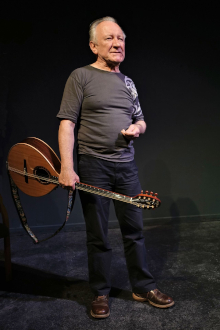
Dónal Lunny, Irish folk musician and producer, is born on March 10, 1947, in Tullamore, County Offaly. He plays left-handed guitar and bouzouki, as well as keyboards and bodhrán. As a founding member of popular bands Planxty, The Bothy Band, Moving Hearts, Coolfin, Mozaik, LAPD, and Usher’s Island, he has been at the forefront of the renaissance of Irish traditional music for over five decades.

Lunny attends secondary school at Newbridge College and, in 1963, joins the Patrician Brothers’ school for the Intermediate Certificate year. As a teenager, he joins an occasional trio called Rakes of Kildare, with his elder brother Frank and Christy Moore. They play mostly in pubs and are also booked for a couple of gigs, one at Hugh Neeson’s pub in Newbridge for Easter Monday in 1966.

In 1965, Lunny enrolls at Dublin‘s National College of Art & Design where he studies Basic Design and Graphic Design. He also develops an interest in metalwork leading him to become a skilled gold-and-silversmith, although he only practises the craft for a short time before devoting his energies fully to music. During his time in Dublin, he plays in a band called The Parnell Folk, with Mick Moloney, Sean Corcoran, Johnny Morrissey and Dan Maher.

When Moving Hearts breaks up in 1985, Lunny diversifies and becomes a producer. He is closely involved in the establishment of a new Irish record label, Mulligan Records (acquired in 2008 by Compass Records), and produces and plays on many of its early releases.

Lunny is the producer and music director of the soundtrack of Bringing It All Back Home, a BBC Television documentary series charting the influence of Irish music throughout the world. He produces albums for Paul Brady, Elvis Costello, Indigo Girls, Sinéad O’Connor, Clannad, Maurice Lennon, Baaba Maal, and Five Guys Named Moe. He appears on the compilation albums The Gathering (1981) and Common Ground (1996). In 1994, he produces Irish Australian singer/songwriter Mairéid Sullivan’s first recording, Dancer.

Lunny pushes new boundaries with his band Coolfin (1998) which includes uilleann piper John McSherry. He appears at the 2000 Cambridge Folk Festival, and the album that commemorates it. In 2001 he collaborates with Frank Harte on the album My Name is Napoleon Bonaparte. He produces the album Human Child (2007) by Faeroese Eivør Pálsdóttir, which is published in two versions, one English and one Faeroese.

As an arranger, Lunny works for The Waterboys, Fairground Attraction and Eddi Reader. Journey (2000) is a retrospective album. During 2003–2005, he is part of the reunited Planxty concert tour. He also produces Jimmy MacCarthy‘s album entitled Hey-Ho Believe, which is released on November 12, 2010.

Lunny is the brother of musician and producer Manus Lunny. He has a son, Shane, whose mother is singer Sinéad O’Connor.

(Pictured: Dónal Lunny at the Craiceann Bodhrán Festival 2016, Inis Oirr)


Leave a comment

Birth of Louis Brennan, Irish Australian Inventor

louis-brennan

Louis Brennan, Irish Australian mechanical engineer and inventor, is born in Castlebar, County Mayo on January 28, 1852.

Brennan moves to Melbourne, Australia in 1861 with his parents. He starts his career as a watchmaker and a few years later is articled to Alexander Kennedy Smith, a renowned civil and mechanical engineer of the period. He serves as a sergeant in the Victorian Engineers under the command of Captain John James Clark. He invents the idea of a steerable torpedo in 1874, from observing that if a thread is pulled on a reel at an angle with suitable leverage, the reel will move away from the thread side. He spends some years working out his invention and receives a grant of £700 from the Victorian government towards his expenses. He patents the Brennan torpedo in 1877. The idea is trialed at Camden Fort near Crosshaven, County Cork.

Brennan goes to England in 1880 and brings his invention before the War Office. Sir Andrew Clarke alerts the authorities to the possibilities of the torpedo if used in the defence of harbours and channels, and the patent is eventually bought for a sum believed to be more than £100,000 (£ 9,331,100 in 2019). In 1887 he is appointed superintendent of the Brennan torpedo factory and is consulting engineer from 1896 to 1907.

Brennan does much work on a gyro monorail locomotive which is kept upright by a gyrostat. In 1903 he patents a gyroscopically balanced monorail system that he designs for military use. He successfully demonstrates the system on November 10, 1909, at Gillingham, England, but fears that the gyroscopes might fail prevents adoption of the system for widespread use.

From 1916 to 1919 Brennan serves in the munition invention department. From 1919 to 1926 he is engaged by the air ministry in aircraft research work at the Royal Aircraft Establishment, Farnborough, and gives much time to the invention of a helicopter. The government spends a large sum of money on it, but in 1926 the air ministry gives up working on it, much to Brennan’s disappointment.

Brennan marries Anna Quinn on 10 September 10, 1892. The marriage results in a son and a daughter. He is created a Companion of the Order of the Bath in 1892 and is foundation member of the National Academy of Ireland in 1922.

In January 1932 Brennan is knocked down by a car at Montreux, Switzerland, and dies on January 17, 1932. He is buried at St. Mary’s Catholic Cemetery, Kensal Green, London, in an unmarked plot numbered 2454 that is opposite the Chapel record office. On March 11, 2014, Taoiseach Enda Kenny unveils a new gravestone for Brennan at St. Mary’s in a ceremony honouring the inventor’s life and career.

Gillingham Library retains the archive of his papers.