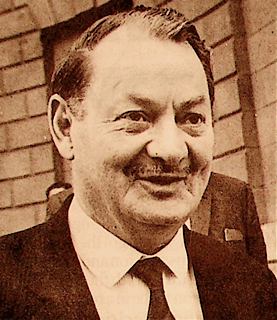
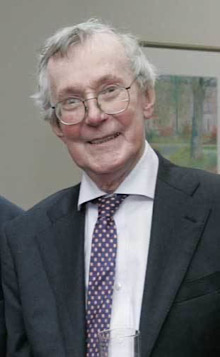
Ireland formally applies for European Economic Committee (EEC) membership in July 1961. Ó Móráin, as Minister for Lands and the Gaeltacht, delivers a widely reported address to the Castlebar Chamber of Commerce in 1962. In the speech, he argues that Ireland is “ready to subscribe to the political aims of the EEC” and that Ireland does not want to be seen as “committed” to its policy of neutrality. In the ensuing controversy, he and Lemass deny that there is any suggestion Ireland might or should abandon neutrality. Outside the country, foreign governments see this episode as a deliberately provoked debate to evaluate the government’s domestic room for manoeuvre on neutrality.
Ó Móráin is appointed Minister for Justice by Taoiseach Jack Lynch in 1968. It is in this role that he is most remembered. While he is still Minister, the Arms Crisis in Ireland erupts in 1970. This political scandal sees Government ministers Charles Haughey and Neil Blaney dismissed by the Taoiseach for alleged involvement in a conspiracy to smuggle arms to the Irish Republican Army (IRA) in Northern Ireland. Ó Móráin continually suffers from ill health, which is accentuated by his alcoholism. When the Arms Crisis erupts, Lynch comes to see him in a hospital in Galway and asks for his resignation. Ó Móráin is a witness at the subsequent Arms Trial. He testifies that he had passed on Garda intelligence reports about the involvement of ministers with the IRA to the Taoiseach before the arms were seized at Dublin Airport. Hus evidence at the trial has been described as “erratic.”
Ó Móráin loses his Dáil seat at the 1973 Irish general election and retires from politics. He dies at his home in Sutton, Dublin, in on May 6, 1983. With a Fianna Fáil guard of honour, he is buried in Castlebar. With his wife, Madge, he has one daughter, Sorcha, and two sons, John, and Michael, who dies in a road accident in 1972.
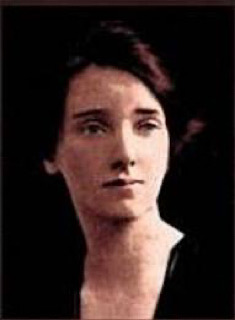
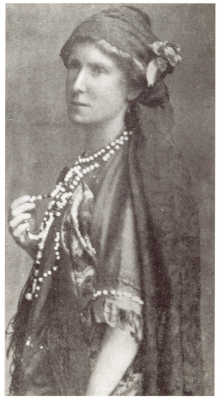
Macardle is born in Dundalk, County Louth, on March 7, 1889, into a wealthy brewing family famous for producing Macardle’s Ale. Her father, Sir Thomas Callan Macardle, is a Catholic who supports John Redmond and the Irish Home Rule movement, while her mother, Lucy “Minnie” Macardle, comes from an English Anglican background and is politically a unionist. Lucy converts to Catholicism upon her marriage to Thomas. Macardle and her siblings are raised as Catholics, but Lucy, who is politically isolated in Ireland, “inculcated in her children an idealised view of England and an enthusiasm for the British empire“. She receives her secondary education in Alexandra College, Dublin—a school under the management of the Church of Ireland—and later attends University College Dublin (UCD). Upon graduating, she returns to teach English at Alexandra where she had first encountered Irish nationalism as a student. This is further developed by her first experiences of Dublin’s slums, which “convinced her that an autonomous Ireland might be better able to look after its own affairs” than the Dublin Castle administration could.
Between 1914 and 1916, Macardle lives and works in Stratford-upon-Avon in Warwickshire, England. There, her encounters with upper-class English people who express anti-Irish sentiment and support keeping Ireland in the British Empire by force further weakens her Anglophilia. Upon the outbreak of World War I, she supports the Allies, as does the rest of her family. Her father leads the County Louth recruiting committee while two of her brothers volunteer for the British Army. Her brother, Lieutenant Kenneth Callan Macardle, is killed at the Battle of the Somme, while another brother, Major John Ross Macardle, survives the war and earns the Military Cross. While Macardle is a student, the Easter Rising occurs, an experience credited for a further divergence of her views regarding republicanism and her family.
On January 19, 1919, Macardle is in the public gallery for the inaugural meeting of the First Dáil and witnesses it declare unilateral independence from the United Kingdom, which is ultimately the catalyst for the Irish War of Independence.
By 1919 Macardle has befriended Maud Gonne MacBride, the widow of the 1916 Easter Rising participant John MacBride, and together the two work at the Irish White Cross, attending to those injured in the war. It is during this period she also becomes a propagandist for the nationalist side.
Following the signing of the Anglo-Irish Treaty in December 1921, Macardle takes the anti-treaty side in the ensuing Irish Civil War. Alongside Gonne MacBride and Despard, she helps found the Women Prisoners’ Defence League, which campaigns and advocates for republicans imprisoned by the newly established Irish Free State government. It is also during this same time that she begins working alongside Erskine Childers in writing for anti-treaty publications An Phoblacht and Irish Freedom.
In October 1922, Despard, Gonne MacBride and Macardle are speaking at a protest on O’Connell Street, Dublin against the arrest of Mary MacSwiney, a sitting Teachta Dála, by the Free State when Free State authorities move to break it up. Rioting follows and Free State forces open fire, resulting in 14 people being seriously wounded while hundreds of others are harmed in the subsequent stampede to flee. Following the event, Macardle announces she is going to pursue support of the Anti-treaty side full-time in a letter to Alexandra College, which ultimately leads to her dismissal on November 15, 1922. In the following days Macardle is captured and imprisoned by the Free State government and subsequently serves time in both Mountjoy Prison and Kilmainham Gaol, with Rosamond Jacob as her cellmate. During one point at her time in Kilmainham, Macardle is beaten unconscious by male wardens. She becomes close friends with Jacob and shares a flat with her in Rathmines later in the 1920s.
The Irish Civil War concludes in the spring of 1923, and Macardle is released from prison on May 9.
Following the Irish Civil War, Macardle remains active in Sinn Féin and is drawn into the camp of its leader Éamon de Valera and his wife Sinéad. She travels alongside the de Valeras as they tour the country and she is a frequent visitor to their home. As the trust between Macardle and de Valera develops, de Valera asks her to travel to County Kerry to investigate and document what later becomes known as the Ballyseedy massacre of March 1923, in which a number of unarmed republican prisoners are reportedly killed in reprisals. She obliges, and by May 1924 she has compiled a report that is released under the title of The Tragedies of Kerry.” Immediately upon the release of the report, the Minister for DefenceRichard Mulcahy sets up an inquiry in June 1924 to carry out a separate investigation by the government. However, the government’s inquiry comes to the conclusion there had been no wrongdoing committed. Her book The Tragedies of Kerry remains in print and is the first journalistic historical account of the Irish Civil War from those on the republican side detailing Ballyseedy, Countess Bridge and various other incidents that occur in Kerry during this time.
In 1926, Éamon de Valera resigns as President of Sinn Féin and walks out of the party following a vote against his motion that members of the party should end their policy of abstentionism against Dáil Éireann. De Valera and his supporters, including Macardle, form the new political party Fianna Fáil in May 1926, with Macardle immediately elected to the party’s National Executive|Ard Chomhairle, one of six female members out of twelve on the original party National Executive, the others being Hanna Sheehy-Skeffington, Kathleen Clarke, Countess Constance Markievicz and Linda Kearns. Macardle is made the party’s director of publicity. However, she resigns from Fianna Fáil in 1927 when the new party endorses taking their seats in Dáil Eireann. Nevertheless, her views remain relatively pro-Fianna Fáil and pro-de Valera.
Macardle recounts her civil war experiences in Earthbound: Nine Stories of Ireland (1924). She continues as a playwright for the next two decades. In her dramatic writing, she uses the pseudonymMargaret Callan. In many of her plays a domineering female character is always present. This is thought to be symbolic of her own relationship with her own mother. Her parents’ marriage had broken up as her mother returned to England and her father raised the children with servants in Cambrickville and they were sent away for school. This female character holds back the growth and development of the younger female character in Dorothy’s plays and writings.
By 1931, Macardle takes up work as a writer for The Irish Press, which is owned by de Valera and leans heavily toward supporting Fianna Fáil and Irish republicanism in general. In addition to being a theatre and literary critic for the paper, she also occasionally writes pieces of investigative journalism such as reports on Dublin’s slums. In the mid-1930s she also becomes a broadcaster for the newly created national radio station Radio Éireann.
In 1937, Macardle writes and publishes the work by which she is best known, The Irish Republic, an in-depth account of the history of Ireland between 1919 until 1923. Because of the book, political opponents and some modern historians consider her to have been a hagiographer toward de Valera’s political views. In 1939 she admits, “I am a propagandist, unrepentant and unashamed.” Overall, however, the book is well-received, with reviews ranging from “glowing” to measured praise. She is widely praised for her research, thorough documentation, range of sources and narration of dramatic events, alongside reservations about the book’s political slant. The book is reprinted several times, most recently in 2005. Éamon de Valera considers The Irish Republic the only authoritative account of the period from 1916 to 1926, and the book is widely used by de Valera and Fianna Fáil over the years and by history and political students. She spends seven years writing the book in a cottage in Delgany, County Wicklow, and it is a day-by-day account of the history of the events in Ireland from 1919 to 1923 recorded in painstaking detail together with voluminous source material.
In 1937, de Valera’s Fianna Fáil government is able to create a new Constitution of Ireland following a successful referendum. However, there is widespread criticism of the new Constitution from women, particularly republican women, as the language of the new Constitution emphasises that a woman’s place should be in the home. Macardle is among them, deploring what she sees as the reduced status of women in this new Constitution. Furthermore, she notes that the new Constitution drops the commitment of the 1916 Proclamation of the Irish Republic to guarantee equal rights and opportunities “without distinction of sex” and writes to de Valera questioning how anyone “with advanced views on the rights of women” can support it. DeValera also finds her criticising compulsory Irish language teaching in schools.
While working as a journalist with the League of Nations in the late 1930s, Macardle acquires a considerable affinity with the plight of Czechoslovakia being pressed to make territorial concessions to Nazi Germany. Believing that “Hitler‘s war should be everybody’s war,” she disagrees with de Valera’s policy of neutrality. She goes to work for the BBC in London, develops her fiction and, in the war’s aftermath, campaigns for refugee children – a crisis described in her book Children of Europe (1949). In 1951, she becomes the first president of the Irish Society of Civil Liberties.
Macardle dies of cancer on December 23, 1958, in a hospital in Drogheda, at the age of 69. Though she is somewhat disillusioned with the new Irish State, she leaves the royalties from The Irish Republic to her close friend Éamon de Valera, who had written the foreword to the book. De Valera visits her when she is dying. She is accorded a state funeral, with de Valera giving the oration. She is buried in Sutton, Dublin.
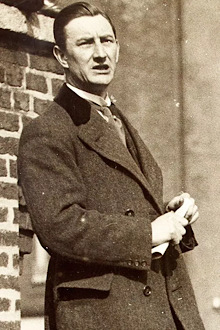
Traynor is born in Dublin on March 21, 1886, into a strongly nationalist family. He is educated by the Christian Brothers. In 1899, he is apprenticed to John Long, a famous woodcarver. As a young man he is a noted footballer and tours Europe as a goalkeeper with Belfast Celtic F.C. whom he plays with from 1910 to 1912. He rejects claims soccer is a foreign sport calling it “a Celtic game, pure and simple, having its roots in the Highlands of Scotland.”
When the Irish Civil War breaks out in June 1922, Traynor takes the Anti-Treaty IRA side. The Dublin Brigade is split, however, with many of its members following Michael Collins in taking the pro-Treaty side. During the Battle of Dublin, he is in charge of the Barry’s Hotel garrison, before making their escape. He organises guerilla activity in south Dublin and County Wicklow, before being captured by Free State troops in September. He is then imprisoned for the remainder of the war.
In 1936, Traynor is first appointed to the Cabinet as Minister for Posts and Telegraphs. In September 1939, he is appointed Minister for Defence and holds the portfolio to February 1948. In 1948, he becomes President of the Football Association of Ireland, a position he holds until his death. He serves as Minister for Defence in several Fianna Fáil governments and as Minister for Justice, where he is undermined by his junior minister, and later Taoiseach, Charles Haughey, before he retires in 1961.
Traynor dies in Dublin at the age of 77 on December 14, 1963. He has a road named in his memory, running from the Malahide Road through Coolock to Santry in Dublin’s northern suburbs.
Lyons is born in to Margaret (née Sullivan) and Timothy Lyons senior, who is listed on his birth certificate as a cottier. He is the oldest of six siblings. Prior to the Irish Civil War, he works as a labourer. He fights with the IRA’s Kilflynn Company during the Irish War of Independence. He is described as being slight, “adventurous” as a column leader and a marksman who shoots at small birds. He shoots a British officer in an ambush led by captain George O’Shea at Shannow Bridge where the Kilflynn road joins the R557, forcing a retreat. He gains the nickname “Aeroplane” or “Aero” because of the way he suddenly appears and his last-minute escapes. Because of regular searches by Black and Tans, his father fears the family home will be burnt out and asks him to leave.
After the ratification of the Anglo-Irish Treaty, Lyons fights against Free State forces . At the time of his death he is commandant. He is involved in fighting in Listowel and Limerick, is captured near Athea, jailed in Limerick and released in late 1922 with an undertaking not to rejoin the fight. Notwithstanding this, the column continues to operate, generally around Causeway and Ballyduff.
On April 15, 1923, Lyons’ column attacks a Free State raiding party in Meenoghane, County Kerry. The raiding party receives reinforcements. He and his men are eventually surrounded at nearby Clashmealcon on April 16 by Michael Hogan’s 1st Western Division. They descend the rugged, Atlantic cliffs to the caves and hide in Dumfort’s Cave. He shoots out searchlights with his Lee-Enfield rifle and two Free State soldiers are shot dead from the cave. The situation is under Army Emergency Powers. With no escape for the men hiding, troops try to blast them out by dropping mines and smoke them out with petrol-soaked turf.
On April 16, James McGrath, the brother of Thomas McGrath, one of Lyons’s men, is arrested and taken to the cliffs in order to enter the cave and persuade the men to surrender. On the night of April 17-18, Thomas McGrath and Patrick O’Shea, his first cousin, fall trying to scale the cliffs to escape and drown. After offering to surrender himself on the morning of the April 18, Lyons falls several metres onto rocks from a rope that is provided by National Army troops. He is then shot multiple times by troops from the cliff top and is not recovered.
Three of Lyons’ men who surrender, Edmond Greaney, James McEnery and British deserter-turned-republican Reginald Stephen Hathaway, are executed in Ballymullen Barracks by gunshot on April 25, for breaking their undertaking not to take up arms against the Free State, attacking troops at Clashmealcon, burning the Civic Guard station at Ballyheigue, stripping the same Civic Guards and robbing the post office at Ballyduff.
Lyons’ decomposing body, minus a leg, is washed up on May 5, identifiable by a boot. He is buried alongside George O’Shea and Timothy Tuomey (both killed at Ballyseedy) in the Republican plot at Kilflynn Church (now St. Columba’s Heritage Centre).
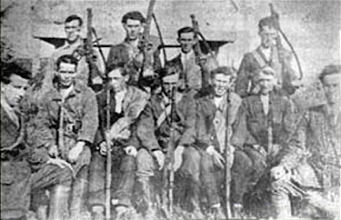
(Pictured: Kilflynn IRA Flying Column, 1922. Back (L to R): Denis O’Connell (Lixnaw), Stephen Fuller (Kilflynn), William Hartnett (Mountcoal), Tim Twomey (Kilflynn). Front (L to R): Terry Brosnan (Lixnaw), John McElligott (Leam, Kilflynn), Danny O’Shea (Kilflynn), Timothy (Aero) Lyons (Garrynagore), Tim Sheehy (Lyre), Pete Sullivan (Ballyduff), Paddy Mahony (Ballyegan, Battalion O.C.).)
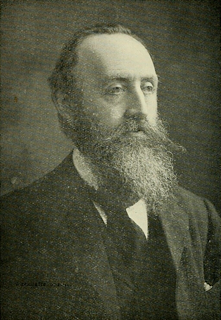
Plunkett is educated expensively: at a primary school in Nice, making him fluent in French and Italian, then at Clongowes Wood College, and, from 1872, at Trinity College Dublin (TCD), where his generous allowance allows him to study renaissance and medieval art. He enrolls at King’s Inns in 1870 and the Middle Temple in 1874, but is not called to the bar until 1886. While there he befriends Oscar Wilde and Jeremiah O’Donovan Rossa. In 1877, he endows a university gold medal for Irish speakers and publishes a book of poems, God’s Chosen Festival, and the following year he issues a pamphlet, The Early Life of Henry Grattan. He also writes articles for magazines, editing a short-lived one, Hibernia, for eighteen months from 1882. In 1883, he donates funds and property to the nursing order of the Little Company of Mary (Blue Sisters), and on April 4, 1884, Pope Leo XIII makes him a count.
On June 26, 1884, Plunkett marries Mary Josephine Cranny (1858–1944). The couple has seven children: Philomena (Mimi) (b. 1886), Joseph (b. 1887), Mary Josephine (Moya) (b. 1889), Geraldine (b. 1891), George Oliver (b. 1894), Fiona (b. 1896), and Eoin (Jack) (b. 1897).
In 1894, Plunkett part-edits Charles O’Kelly‘s memoir The Jacobite War in Ireland. By 1900, when he publishes the standard biography Sandro Botticelli, he is supplementing his income by renewed artistic studies, which until 1923 finances his lease of Kilternan Abbey, County Dublin. His Pinelli (1908) is followed by Architecture of Dublin, and, in 1911, by his revised edition of Margaret McNair Stokes‘s Early Christian Art in Ireland. In 1907, he becomes director of the National Museum of Ireland, where he increases annual visits from 100 to 3,000.
Joseph Plunkett swears his father into the Irish Republican Brotherhood (IRB) in April 1916, sending him secretly to seek German aid and a papal blessing for the projected Easter rising. After its defeat, Plunkett is sacked by the National Museum of Ireland and deported with the countess to Oxford, and the following January he is expelled by the Royal Dublin Society (RDS). This earns him nomination as the surviving rebels’ candidate in the North Roscommon by-election. He returns to Ireland illegally on January 31, 1917, and wins the seat easily three days later. Pledging abstention from attendance at Westminster in accordance with Sinn Féin policy, he initiates a Republican Liberty League, which coalesces with similar groups such as Sinn Féin. In October this front becomes the new Sinn Féin, committed to Plunkett’s republic rather than to the “king, lords and commons“ of Arthur Griffith. Plunkett and Griffith become the new party’s vice-presidents, under Éamon de Valera.
On May 18, 1918, Plunkett is interned again. Released after Sinn Féin’s general election landslide (in which he is returned unopposed), he presides, Sinn Féin’s oldest MP, at the planning meeting for Dáil Éireann on January 17, 1919, and at its opening session on January 21. On the 22nd he is made foreign affairs minister by Cathal Brugha, an appointment reaffirmed by de Valera on April 10. He criticises his president for advocating a continuing Irish external relationship with Britain, and fails to organise an Irish foreign service. In February 1921, de Valera makes Robert Brennan his departmental secretary and a ministry takes shape, while Plunkett publishes a book of poems, Ariel. After uncontested “southern Irish“ elections to the Second Dáil, de Valera moves his implacable foreign minister from the cabinet to a tailor-made portfolio of fine arts. Plunkett’s Dante sexcentenary commemoration is overshadowed by news of the Anglo–Irish Treaty. Opposing this, Plunkett cites his oath to the republic and its martyrs including his son. He leaves his ministry on January 9, 1922.
Plunkett chairs the anti-treaty Cumann na Poblachta, which loses the June general election, though he is returned again unopposed. In the Irish Civil War the treatyites intern him and the republicans appoint him to their council of state. In the August 1923 Irish general election, his first electoral contest since 1917, the interned count tops the poll in County Roscommon. He is released in December.
When de Valera forms Fianna Fáil in 1926, Plunkett stays with Sinn Féin, and loses his deposit in the June 1927 Irish general election. A year later he publishes his last poetry collection, Eros. He runs for a new Cumann Poblachta na hÉireann in a County Galway by-election in 1936, but loses his deposit again. On December 8, 1938, with the other six surviving abstentionist Second Dáil TDs, he transfers republican sovereignty to the IRA Army Council.
Plunkett is a big man with a black beard which whitens steadily after his fiftieth birthday. He is always formally pleasant and courteous. His oratory is described by M. J. MacManus as “level, cultured tones . . . [more] used to addressing the members of a learned society than to the rough and tumble of the hustings” (The Irish Press, March 15, 1948). Theoretically and practically, he is more scholar than politician. His portrait is on display at the Royal Society of Antiquaries of Ireland (RSAI).
Plunkett dies from cancer on March 12, 1948, and is buried in Glasnevin Cemetery, survived by his children Geraldine (wife of Thomas Dillon), Fiona, and Jack. His grandson Joseph (1928–66), son of George Oliver Plunkett, inherits the title.
(From: “Plunkett, Count George Noble” by D. R. O’Connor Lysaght, Dictionary of Irish Biography, http://www.dib.ie, October 2009)
O’Farrelly is born Agnes Farrelly on June 24, 1874, in Raffony House, Virginia, County Cavan, one of five daughters and three sons of Peter Dominic Farrelly and Ann Farrelly (née Sheridan), a family with a traditional interest in the Irish language. After her articles Glimpses of Breffni and Meath are published in The Anglo-Celt in 1895, the editor, E. T. O’Hanlon, encourages her to study literature. Graduating from the Royal University of Ireland (BA 1899, MA 1900), she is appointed a lecturer in Irish at Alexandra College and Loreto College. A founder member in 1902, along with Mary Hayden, of the Irish Association of Women Graduates and Candidate Graduates, to promote equal opportunity in university education, she gives evidence to the Robertson (1902) and Fry (1906) commissions on Irish university education, arguing successfully for full co-education at UCD. Appointed lecturer in modern Irish at UCD in 1909, she is also a member of the first UCD governing body and the National University of Ireland (NUI) senate (1914–49). In 1932, on the retirement of Douglas Hyde, she is appointed professor of modern Irish at UCD, holding the position until her retirement in 1947. She is also president of the Irish Federation of University Women (1937–39) and of the National University Women Graduates’ Association (NUWGA) (1943–47).
One of the most prominent women in the Gaelic League, a member of its coiste gnótha (executive committee) and a director of the Gaelic press An Cló-Chumann Ltd, O’Farrelly is a close friend of most of its leading figures, especially Douglas Hyde, Kuno Meyer, and Eoin MacNeill. One of Hyde’s allies in his battle to avoid politicising the league, she is so close to him that students at UCD enjoy speculating about the nature of their friendship. She advocates pan-Celticism, but does not get involved in disputes on the matter within the league. A founder member, and subsequently principal for many years, of the Ulster College of Irish, Cloghaneely, County Donegal, she is also associated with the Leinster and Connacht colleges and serves as chairperson of the Federation of Irish Language Summer Schools.
Having presided at the inaugural meeting of Cumann na mBan in 1914, espousing its subordinate role in relation to the Irish Volunteers, O’Farrelly leaves the organisation soon afterward because of her support for recruitment to the British Army during World War I. A close friend of Roger Casement, in 1916, along with Col. Maurice Moore she gathers a petition that seeks a reprieve of his death sentence. She is a member of a committee of women which negotiate unsuccessfully with Irish Republican Army (IRA) leaders to avoid civil war in 1922, and is heavily defeated as an independent candidate for the NUI constituency in the general elections of 1923 and June 1927. In 1937 she is actively involved in the National University Women Graduates’ Association’s campaign against the constitution, seeking deletion of articles perceived as discriminating against women.
Popular among students at UCD, O’Farrelly has a reputation as a social figure and entertains frequently at her homes in Dublin and the Donegal Gaeltacht. A founder member (1914) and president (1914–51) of the UCD camogie club, she persuades William Gibson, 2nd Baron Ashbourne, to donate the Ashbourne Cup for the camogie intervarsities. She is also president of the Camogie Association of Ireland in 1941–42. A supporter of native Irish industry, she is president of the Irish Industrial Development Association and the Homespun Society, and administrator of the John Connor Magee Trust for the development of Gaeltacht industry. A poet and writer in both Irish and English, often using the pseudonym ‘Uan Uladh’, her principal publications in prose are The reign of humbug (1900), Leabhar an Athar Eoghan (1903), Filidheacht Segháin Uí Neachtáin (1911), and her novel Grádh agus crádh (1901); and in poetry Out of the depths (1921) and Áille an domhain (1927).
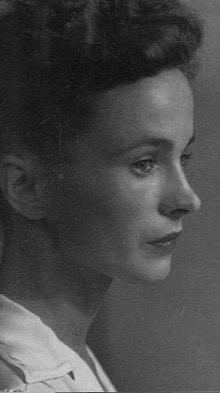
Brennan is born in Dublin on January 6, 1917, one of four siblings, and grows up at 48 Cherryfield Avenue in the Dublin suburb of Ranelagh. She and her sisters are each named after ancient Irish Queens: Emer, Deirdre and Maeve. Her parents, Robert and Úna Brennan, both from County Wexford, are republicans and are deeply involved in the Irish political and cultural struggles of the early twentieth century. They participate in the 1916 Easter Rising but while Úna is imprisoned for a few days, Robert is sentenced to death. The sentence is commuted to penal servitude.
Robert’s continuing political activity results in further imprisonments in 1917 and 1920. Brennan is born while he was in prison. He is director of publicity for the anti-Treaty Irish Republican Army during the Irish Civil War. He also founds and is the director of The Irish Press newspaper. His imprisonments and activities greatly fragment her childhood. In her story The Day We Got Our Own Back she recounts her memory of how, when she was five, her home was raided by Irish Free State forces looking for her father, who was on the run.
Robert Brennan is appointed the Irish Free State’s first minister to the United States, and the family moves to Washington, D.C. in 1934, when Brennan is seventeen. She attends the Sisters of ProvidenceCatholic school in Washington, Immaculata Seminary, graduating in 1936. She then graduates with a degree in English from American University in 1938. She and her two sisters remain in the United States when her parents and brother return to Ireland in 1944.
Brennan moves to New York City and finds work as a fashion copywriter at Harper’s Bazaar in the 1940s. She also writes a Manhattan column for the Dublin society magazine Social and Personal, and writes several short pieces for The New Yorker magazine. In 1949, she is offered a staff job by William Shawn, The New Yorker‘s managing editor.
Brennan first writes for The New Yorker as a social diarist. She writ’s sketches about New York life in The Talk of the Town section under the pseudonym “The Long-Winded Lady.” She also contributes fiction criticism, fashion notes, and essays. She writes about both Ireland and the United States.
The New Yorker begins publishing Brennan’s short stories in 1950. The first of these stories is called The Holy Terror. In it, Mary Ramsay, a “garrulous, greedy heap of a woman” tries to keep her job as a ladies’ room attendant in a Dublin hotel.
Brennan’s work is fostered by William Keepers Maxwell, Jr., and she writes under The New Yorker managing editors Harold Ross and William Shawn. Although she is widely read in the United States in the 1950s and 1960s, she is almost unknown in Ireland, even though Dublin is the setting of many of her short stories.
A compendium of Brennan’s New Yorker articles called The Long-Winded Lady: Notes from the New Yorker is published in 1969. Two collections of short stories, In and Out of Never-Never Land (1969) and Christmas Eve (1974) are also published.
Brennan’s career does not really take off until after her death which leads many of her stories to be reintroduced to the public and many articles written about her up until her passing.
The love of Brennan’s life is reportedly writer and theatre critic/director Walter Kerr but he breaks off their engagement and marries writer Bridget Jean Collins.
In 1954, Brennan marries St. Clair McKelway, The New Yorker‘s managing editor. McKelway has a history of alcoholism, womanizing and manic depression and has already been divorced four times. She and McKelway divorce after five years.
Brennan is writing consistently and productively in the late 1960s. By the time her first books are published, however, she is showing signs of mental illness. Her previously immaculate appearance becomes unkempt. Her friends begin to find her eccentricities disturbing rather than entertaining. She becomes obsessive.
In the 1970s, Brennan becomes paranoid and alcoholic. Hospitalized on numerous occasions, she becomes destitute and homeless, frequently sleeping in the women’s lavatory at The New Yorker. She is last seen at the magazine’s offices in 1981.
In the 1980s, Brennan vanishes from view and her work is forgotten. After wandering from one transient hotel to another along 42nd Street, she is admitted to Lawrence Nursing Home in Arverne.
Brennan dies of a heart attack on November 1, 1993, aged 76, and is buried in Queens, New York City.
During the Irish Confederate Wars, like most Irish Catholics, O’Brien sides with Confederate Ireland. His services to the Catholic Confederation are highly valued by the Supreme Council. He treats the wounded and supports Confederate soldiers throughout the conflict. He is against a peace treaty that does not guarantee Catholic freedom of worship in Ireland and in 1648 signs the declaration against the Confederate’s truce with Murrough O’Brien, 1st Earl of Inchiquin, who has committed atrocities such as the Sack of Cashel against Catholic clergy and civilians, and the declaration against the Protestant royalist leader, James Butler, 1st Duke of Ormond, in 1650 who, due to his failure to resist the Cromwellian conquest of Ireland is not deemed fit to command Catholic troops. He is one of the prelates, who, in August 1650 offers the Protectorate of Ireland to Charles IV, Duke of Lorraine.
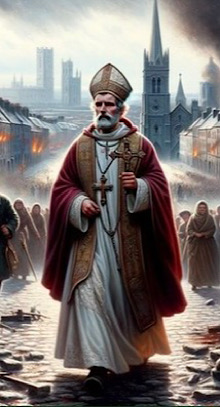
In 1651, Limerick is besieged and O’Brien urges a resistance that infuriates the Ormondists and Parliamentarians. Following surrender, he is found ministering to the wounded and ill inside a temporary plague hospital. As previously decided by the besieging army, O’Brien is denied quarter and protection. Along with Alderman Thomas Stritch and English Royalist officer Colonel Fennell, he is tried by a drumhead court-martial and sentenced to death by New Model Army General Henry Ireton. On October 30, 1651, O’Brien is first hanged at Gallows Green and then posthumously beheaded. His severed head is afterward displayed spiked upon the river gate of the city.
After the successful fight that is eventually spearheaded by Daniel O’Connell for Catholic emancipation between 1780 and 1829, interest revives as the Catholic Church in Ireland is rebuilding after three hundred years of being strictly illegal and underground. As a result, a series of re-publications of primary sources relating to the period of the persecutions and meticulous comparisons against archival Government documents in London and Dublin from the same period are made by Daniel F. Moran and other historians.
The first Apostolic Process under Canon Law begins in Dublin in 1904, after which a positio is submitted to the Holy See.
In the February 12, 1915 Apostolic decree, In Hibernia, heroum nutrice, Pope Benedict XV formally authorizes the formal introduction of additional Causes for Roman Catholic Sainthood.
During a further Apostolic Process held in Dublin between 1917 and 1930 and against the backdrop of the Irish War of Independence and the Irish Civil War, the evidence surrounding 260 alleged cases of Roman Catholic martyrdom are further investigated, after which the findings are again submitted to the Holy See.
On September 27, 1992, O’Brien and sixteen other Irish Catholic Martyrs are beatified by Pope John Paul II. June 20th, the anniversary of the 1584 execution of Elizabethan era martyr Dermot O’Hurley, is assigned as the feast day of all seventeen. A large backlighted portrait of him is on display in St. Michael’s Church, Cappamore, County Limerick, which depicts him during The Siege of Limerick.
O’Shannon is awarded lifetime membership of the Irish Film & Television Academy in 2010, to which he says it is “particularly gratifying that it occurs before I pop my clogs”.
The Irish radio and television broadcaster Terry Wogan describes O’Shannon as possibly the greatest Irish television journalist of the 20th century.
O’Shannon first becomes a journalist with The Irish Times on leaving the Royal Air Force in 1947. Later he joins the Irish state broadcasting service Raidió Teilifís Éireann (RTÉ).
In July 1972, O’Shannon records a notable television interview with 31-year-old Muhammad Ali, when Ali is in Dublin to compete at Croke Park in a bout with Alvin Lewis.
O’Shannon receives a Jacob’s Award for his 1976 TV documentary, Even the Olives are Bleeding, which details with the activities of the “Connolly Column” in the Spanish Civil War. Two years later he is honoured with a second Jacob’s Award for his television biography Emmet Dalton Remembers (1978).
In 1978, O’Shannon leaves RTÉ to join Canadian company Alcan which is setting up an aluminum plant at Aughinish, County Limerick, in 1978. He is head-hunted to become its Director of Public Affairs, an important post at a time when there are environmental concerns about the effects of aluminum production. He admits that he is attracted by the salary, “five times what RTÉ were paying me,” but he also later says that one reason for the move is that he had become unhappy with working at RTÉ, stating in an interview that: “The real reason I got out of RTÉ was that they wouldn’t let me do what I wanted to do journalistically.” He had submitted proposals to the station’s editors for television documentary series on the Irish Civil War, and also one on the wartime Emergency period, but they had been rejected. While he enjoys the social life with lavish expenses which his public relations duties involve, his friends believe that he misses the varied life and travel of journalism. He retires early from Aughinish in 1992, and returns to making television documentaries with RTÉ.
O’Shannon’s wife, Patsy, whom he met while they were working at The Irish Times office in London, dies in 2006. They had been married for more than 50 years.
On January 12, 2007, O’Shannon announces his retirement at the age of 80. In a 2008 television documentary, he admits that throughout his marriage he had been a serial womaniser and had repeatedly engaged in extra-marital affairs unbeknownst to his wife.
After weakening health for two years, and spending his last days in a hospice at Blackrock, O’Shannon dies at the Beacon Hospital in Dublin on October 22, 2011, in his 84th year. His body is reposed at Fanagans Funeral Home in Dublin on October 25, followed by a funeral the following day at Glasnevin Cemetery Chapel, where his remains are cremated afterward.
Director General of RTÉNoel Curran says O’Shannon had brought into being “some of the great moments in the RTÉ documentary and factual schedule over the past five decades.” In tribute, RTÉ One shows the documentary Cathal O’Shannon: Telling Tales on November 10, 2011. It had originally aired in 2008 to mark his 80th birthday
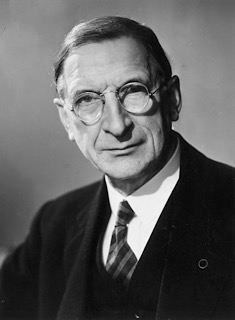
In the 1916 Easter Rising in Dublin, de Valera commands an occupied building and is the last commander to surrender. Because of his American birth, he escapes execution by the British but is sentenced to penal servitude. Released in 1917 but arrested again and deported in May 1918 to England, where he is imprisoned, he is acclaimed by the Irish as the chief survivor of the uprising and in October 1917 is elected president of the Irish republican and democratic socialistSinn Féin political party, which wins three-fourths of all the Irish constituencies in December 1918.
After Dáil Éireann ratifies the treaty by a small majority in 1922, de Valera supports the republican resistance in the ensuing Irish Civil War. W. T. Cosgrave’s Irish Free State ministry imprisons him, but he is released in 1924 and then organizes a republican opposition party that does not sit in Dáil Éireann. In 1927, however, he persuades his followers to sign the oath of allegiance as “an empty political formula,” and his new Fianna Fáil (“Soldiers of Destiny”) party then enters the Dáil, demanding abolition of the oath of allegiance, of the governor-general, of the Seanad Éireann (senate) as then constituted, and of land-purchase annuities payable to Great Britain. The Cosgrave ministry is defeated by Fianna Fáil in 1932, and de Valera, as head of the new ministry, embarks quickly on severing connections with Great Britain. He withholds payment of the land annuities, and an “economic war” results. Increasing retaliation by both sides enables de Valera to develop his program of austere national self-sufficiency in an Irish-speaking Ireland while building up industries behind protective tariffs. In the new Constitution of Ireland, ratified by referendum in 1937, the Irish Free State becomes Ireland, a sovereign, independent democracy tenuously linked with the British Commonwealth (under the Executive Authority (External Relations) Act 1936) only for purposes of diplomatic representation.
De Valera’s prestige is enhanced by his success as president of the council of the League of Nations in 1932 and of its assembly in 1938. He also enters negotiations with British Prime MinisterNeville Chamberlain in which he guarantees that he will never allow Ireland to be used as a base for attacking Britain in the event of war. This culminates in the Anglo-Irish defense agreement of April 1938, whereby Britain relinquishes the naval bases of Cobh, Berehaven, and Lough Swilly (retained in a defense annex to the 1921 treaty), and in complementary finance and trade treaties that end the economic war. This makes possible de Valera’s proclamation in September 1939, upon the outbreak of World War II, that Ireland will remain neutral and will resist attack from any quarter. In secret, however, de Valera also authorizes significant military and intelligence assistance to both the British and the Americans throughout the war. He realizes that a German victory will imperil Ireland’s independence, of which neutrality is the ultimate expression. By avoiding the burdens and destruction of the war, de Valera achieves a relative prosperity for Ireland in comparison with the war-torn countries of Europe, and he retains office in subsequent elections.
In 1948, a reaction against the long monopoly of power and patronage held by de Valera’s party enables the opposition, with the help of smaller parties, to form an interparty government under John A. Costello. Ironically, this precarious coalition collapses within three years after Ireland becomes a republic by means of the repeal of the Executive Authority (External Relations) Act 1936 and the severance of all ties with the British Commonwealth, an act de Valera had avoided. De Valera resumes office until 1954, when he appeals unsuccessfully for a fresh mandate, and Costello forms his second interparty ministry. No clearly defined difference now exists between the opposing parties in face of rising prices, continued emigration, and a backward agriculture. De Valera claims, however, that a strong single-party government is indispensable and that all coalitions must be weak and insecure. On this plea he obtains, in March 1957, the overall majority that he demands.
In 1959, de Valera agrees to stand as a candidate for the presidency. He resigns his position as Taoiseach and leader of the Fianna Fáil party. In June he is elected president, and is reelected in 1966. He retires to a nursing home near Dublin in 1973 and dies there on August 29, 1975.
De Valera’s career spans the dramatic period of Ireland’s modern cultural and national revolution. As an anticolonial leader, a skillful constitutionalist, and a symbol of national liberation, he dominates Ireland in the half century following the country’s independence.
(From: “Éamon de Valera, president of Ireland,” Encyclopedia Britannica, http://www.britannica.com, last updated August 14, 2025)