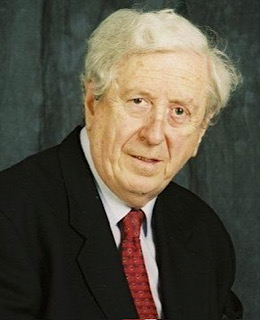
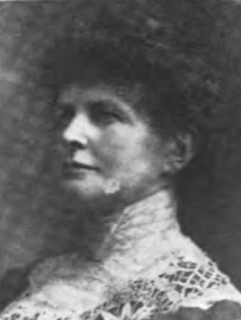
FitzGerald joins Fine Gael, attaching himself to the liberal wing of the party. and in 1969 is elected to Dáil Éireann, the lower house of the Oireachtas, the Irish parliament. He later gives up his university lectureship to become Minister for Foreign Affairs in the coalition government of Liam Cosgrave (1973–77). When the coalition government is resoundingly defeated in the 1977 Irish general election, Cosgrave yields leadership of Fine Gael to FitzGerald. In his new role as Leader of the Opposition and party leader, he proceeds to modernize and strengthen the party at the grass roots. He briefly loses power in 1982 when political instability triggers two snap elections.
By the time of the 1981 Irish general election, Fine Gael has a party machine that can easily match Fianna Fáil. The party wins 65 seats and forms a minority coalition government with the Labour Party and the support of a number of Independent TDs. FitzGerald is elected Taoiseach on June 30, 1981. To the surprise of many, FitzGerald excludes Richie Ryan, Richard Burke and Tom O’Donnell, former Fine Gael stalwarts, from the cabinet.
On May 5, 2011, it is reported that FitzGerald is seriously ill in a Dublin hospital. Newly elected Fine Gael Taoiseach Enda Kenny sends his regards and calls him an “institution.” On May 6 he is put on a ventilator. On May 19, after suffering from pneumonia, he dies at the Mater Private Hospital in Dublin at the age of 85.
In a statement, Irish PresidentMary McAleese hails FitzGerald as “a man steeped in the history of the State who constantly strove to make Ireland a better place for all its people.” Taoiseach Enda Kenny pays homage to “a truly remarkable man who made a truly remarkable contribution to Ireland.” Henry Kissinger, the former United States Secretary of State, who serves as an opposite number to FitzGerald in the 1970s, recalls “an intelligent and amusing man who was dedicated to his country.”
FitzGerald’s death occurs on the third day of Queen Elizabeth II‘s state visit to the Republic of Ireland, an event designed to mark the completion of the Northern Ireland peace process that had been “built on the foundations” of FitzGerald’s Anglo-Irish Agreement with Margaret Thatcher in 1985. In a personal message, the Queen offers her sympathies and says she is “saddened” to learn of FitzGerald’s death.
On his visit to Dublin, United States PresidentBarack Obama offers condolences on FitzGerald’s death. He speaks of him as “someone who believed in the power of education; someone who believed in the potential of youth; most of all, someone who believed in the potential of peace and who lived to see that peace realised.”
FitzGerald is the author of a number of books, including Planning in Ireland (1968), Towards a New Ireland (1972), Unequal Partners (1979), All in a Life: An Autobiography (1991), and Reflections on the Irish State (2003).
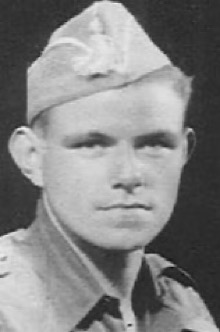
O’Riordan is born at 37 Pope’s Quay, Cork, County Cork, on November 11, 1917, the youngest of five children. His parents come from the West Cork Gaeltacht of Ballingeary–Gougane Barra. Despite his parents being native speakers of the Irish language, it is not until he is interned during World War II that he learns Irish.
As a teenager, O’Riordan joins the republican youth movement, Fianna Éireann, and then the Irish Republican Army (IRA). Much of the IRA at the time is inclined toward left-wing politics. A lot of its activity at the time involves street fighting with the quasi-fascistBlueshirt movement, and he fights the Blueshirts on the streets of Cork in 1933–34. He Is friends with left-wing inclined republicans such as Peadar O’Donnell and Frank Ryan, and in 1934, he follows them into the Republican Congress – a short-lived socialist republican party.
O’Riordan joins the Communist Party of Ireland (1933) in 1935 while still in the IRA and works on the communist newspaper The Irish Workers’ Voice. In 1937, following the urgings of Peadar O’Donnell, several hundred Irishmen, mostly IRA or ex-IRA men, go to fight for the Spanish Republic in the Spanish Civil War with the XVth International Brigade. They are motivated in part by enmity towards the 800 or so Blueshirts, led by Eoin O’Duffy who went to Spain to fight on the “nationalist” side in the Irish Brigade. He accompanies a party led by Frank Ryan. In the Republic’s final offensive of July 25, 1938, he carries the flag of Catalonia across the River Ebro. On August 1 he is severely injured by shrapnel on the Ebro front. He is repatriated to Ireland the following month, after the International Brigades are disbanded.
In 1938, O’Riordan is offered an Irish Army commission by the Irish Free State but chooses instead to train IRA units in Cork. As a result of his IRA activities during World War II, he is interned in the Curragh Camp from 1939 until 1943 where he is Officer Commanding of the Cork Hut and partakes in Máirtín Ó Cadhain‘s Gaelic League classes as well as publishes Splannc (Irish for “Spark”, named after Vladimir Lenin‘s newspaper). He is secretary of the “Connolly group,” composed of leftist internees. Following his release from internment, he terminates his IRA membership.
In 1944, O’Riordan is founding secretary of the Liam Mellows Branch of the Labour Party. This branch becomes infamous for what is regarded during the period as its controversial nature and becomes an intractable enemy of Branch Chair Timothy Quill. The branch is initially established by former members of the Curragh Camp’s Communist Group, including Bill Nagle and Jim Savage. During this time, the Irish Transport and General Workers’ Union (ITGWU) disaffiliates from the Labour Party and the National Labour Party is established on the basis that communists have infiltrated the party. Quill, who is made branch chair by the Labour Party, allegedly has O’Riordan and his fellow members expelled, with the branch being dissolved. O’Riordan later accuses Quill of antisemitism and both Quill and Timothy J. Murphy of “red-baiting.” In 2001, he claims that any attempt to raise the issue of defence of communist Spain “was shouted down at Labour Party Conferences.” In 1945, he is a founding secretary of the Cork Socialist Party.
O’Riordan subsequently works as a bus conductor in Cork and is active in the ITGWU. He stands as a Cork Socialist Party candidate in the 1946 Cork Boroughby-election, placing third behind Fianna Fáil‘s Patrick McGrath and Fine Gael‘s Michael O’Driscoll with 3,184 votes. Afterward, he moves to Dublin where he lives in Victoria Street with his wife Kay, and continues to work as a bus conductor and remains active in the ITGWU.
In 1948, O’Riordan is a founding secretary of the Irish Workers’ League and general secretary thereafter, and of its successor organisation the Irish Workers’ Party from 1962 to 1970.
O’Riordan meets and befriends folk musician Luke Kelly, and the two develop a “personal-political friendship.” Kelly endorses him for election, and holds a rally in his name during campaigning in 1965.
In all O’Riordan runs for election five times, campaigning throughout for the establishment of a socialist republic in Ireland but given Ireland’s Catholic conservatism and fear of communism, he does so without success. He does, however, receive playwright Seán O’Casey‘s endorsement in 1951. O’Casey writes: “Mr. O’Riordan is his own message. He has nothing to sell but his soul. But he hasn’t done that, though he will be told he’ll lose it by holding on to it.”
O’Riordan’s participation in the Spanish Civil War is always an important part of his political identity. In 1966, he attends the International Brigades’ Reunion in Berlin and is instrumental in having Frank Ryan’s remains repatriated from Germany to Ireland in 1979.
O’Riordan is a member of the Irish Chile Solidarity Committee and attends the 1st Party Congress of the Communist Party of Cuba in 1984. He also campaigns on behalf of the Birmingham Six and attends their appeal trial in 1990. He serves between 1970 and 1983 as General Secretary of the Communist Party of Ireland (CPI) and from 1983 to 1988 as National Chairman of the party publishing many articles under the auspices of the CPI. Hus staunchly pro-Soviet direction of the party leads to a number of members leaving to form the EurocommunistIrish Marxist Society.
O’Riordan’s last major public outing is in 2005 at the re-dedication of the memorial outside Dublin’s Liberty Hall to the Irish veterans of the Spanish Civil War. With other veterans, he Is received by President of IrelandMary McAleese. He is also presented with Cuba’s Medal of Friendship by the Cuban Consul Teresita Trujillo to Ireland on behalf of Cuban President Fidel Castro.
In 1969, according to Soviet dissident Vasili Mitrokhin, O’Riordan is approached by IRA leaders Cathal Goulding and Seamus Costello with a view to obtaining guns from the Soviet KGB to defend Irish republican areas of Belfast during the communal violence that marked the outbreak of the Troubles. Mitrokhin alleges that O’Riordan then contacts the Kremlin, but the consignment of arms does not reach Ireland until 1972. The operation is known as Operation Splash.
In the meantime, the IRA has split into the Provisional IRA and the Official IRA and it is the latter faction who receives the Soviet arms. Mitrokhin’s allegations are repeated in Boris Yeltsin‘s autobiography. After the split in the Republican movement, O’Riordan unsuccessfully attempts to bring about a reunification of the two sides.
O’Riordan’s book, Connolly Column: The Story of the Irishmen who fought for the Spanish Republic, 1936–1939, published in 1979, deals with the Irish volunteers of the International Brigade who fought in support of the Spanish Republic against Francisco Franco in the Spanish Civil War (1936–39). An updated version of the book is reprinted in 2005 and is launched by the Lord Mayor of Dublin, Cllr. Michael Conaghan at a book launch at SIPTU headquarters, Liberty Hall. The book is the inspiration for Irish singer-songwriter Christy Moore‘s famous song Viva la Quinta Brigada.
In 1991, O’Riordan’s wife, Kay Keohane of Clonakilty, County Cork dies at their home at the age of 81. He continues to live in their family home before moving to Glasnevin in 2000 to be close to his son Manus who lives nearby. In 1999, he describes himself as an atheist and believes that communism will rise again. He lives there until falling ill in November 2005 and is taken to the Mater Hospital. His health rapidly deteriorates and he quickly develops Alzheimer’s disease. Soon afterward he is moved to St. Mary’s Hospital in the Phoenix Park where he spends the final few months of his life, before his death at the age of 88 on May 18, 2006. Then Labour Party leader Ruairi Quinn praises O’Riordan after his death, saying, “As leader of the Labour Party I had the honour of ensuring he received a special citation at our 2001 national conference. Michael O’Riordan stood out against the tide of Irish conservatism and clerical domination that kept Ireland backward and isolated in the 1930s, 1940s and 1950s.”
O’Riordan’s funeral at Glasnevin Crematorium is attended by over a thousand mourners. Following a wake the previous night at Finglas Road, hundreds turn up outside the house of his son and traffic grinds to a halt as family, friends and comrades – many of whom are waving the red flag of the Communist Party of Ireland – escort O’Riordan to Glasnevin Cemetery. A secular ceremony takes place led by Manus O’Riordan (Head of Research at SIPTU) with contributions from O’Riordan’s family, Communist Party general secretary Eugene McCartan and IBMT representative Pauline Frasier.
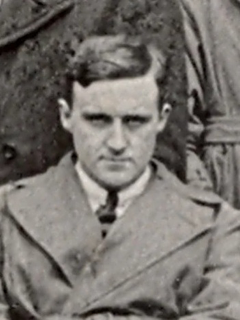
MacNeill is one of five children born to Archibald McNeill, a Roman Catholic working-class baker, sailor and merchant, and his wife, Rosetta McNeill (née McAuley), also a Catholic. He is raised in Glenarm, an area which “still retained some Irish-language traditions.” His niece is nationalist and teacher, Máirín Beaumont.
MacNeill marries Agnes Moore on April 19, 1898. The couple has eight children, four sons and four daughters (though the 1911 census entry for MacNeill notes eleven children, seven of whom are still alive).
The Gaelic League is from the start strictly non-political, but in 1915, a proposal is put forward to abandon that policy and become a semi-political organisation. MacNeill strongly supports this and rallies to his side a majority of delegates at the 1915 Oireachtas. Douglas Hyde, a non-political Protestant, who had co-founded the League and been its president for 22 years, resigns immediately afterward.
Through the Gaelic League, MacNeill meets members of Sinn Féin, the Irish Republican Brotherhood (IRB), and other nationalists and republicans. One such colleague, The O’Rahilly, runs the league’s newspaper An Claidheamh Soluis, and in October 1913 asks MacNeill to write an editorial for it on a subject broader than Irish language issues. He submits a piece called “The North Began,” encouraging the formation of a nationalist volunteer force committed to Irish Home Rule, much as the unionists had done earlier in the year with the Ulster Volunteers to thwart Home Rule in Ireland. In July 1915, he comments on the threat that the unarmed nationalists in Ulster might face: “…a demented…English driven Orange Army would be let loose upon the helpless Catholic people of Ulster, who would be driven out of the province or massacred where they stood.”
Bulmer Hobson, a member of the IRB, approaches MacNeill about bringing the idea to fruition, and, through a series of meetings, MacNeill becomes chair of the council that forms the Irish Volunteers, later becoming its chief of staff. Unlike the IRB, he is opposed to the idea of an armed rebellion, except in resisting any suppression of the Volunteers, seeing little hope of success in open battle against the British army.
The Irish Volunteers have been infiltrated by the Irish Republican Brotherhood, which plan on using the organisation to stage an armed rebellion, to separate Ireland from the United Kingdom and establishing an Irish Republic. The entry of the UK into World War I is, in their view, a perfect opportunity to do that. With the cooperation of James Connolly and the Irish Citizen Army, a secret council of IRB officials plan a general rising at Easter 1916. On the Wednesday before Easter, they present MacNeill with a letter, allegedly stolen from high-ranking British staff in Dublin Castle, indicating that the British are going to arrest him and all the other nationalist leaders. Unbeknownst to MacNeill, the letter—called the Castle Document—is a forgery.
When MacNeill learns about the IRB’s plans, and when he is informed that Roger Casement is about to land in County Kerry with a shipment of German arms, he is reluctantly persuaded to go along with them, believing British action is now imminent and that mobilization of the Irish Volunteers will be justified as a defensive act. However, after learning that the German arms shipment has been intercepted and Casement arrested, and having confronted Patrick Pearse, who refuses to relent, MacNeill countermands the order for the Rising by sending written messages to leaders around the country, and placing a notice in the Sunday Independent cancelling the planned “manoeuvres.” This greatly reduces the number of volunteers who report for duty on the day of the Easter Rising.
Pearse, Connolly and the others agree that the uprising will go ahead anyway, but it begins one day later than originally intended to ensure that the authorities are taken by surprise. Beginning on Easter Monday, April 24, 1916, the Rising lasts less than a week. After the surrender of the rebels, MacNeill is arrested although he has taken no part in the insurrection. The rebel leader Tom Clarke, according to his wife Kathleen, warns her on the day before his execution, “I want you to see to it that our people know of his treachery to us. He must never be allowed back into the National life of this country, for so sure as he is, so sure will he act treacherously in a crisis. He is a weak man, but I know every effort will be made to whitewash him.”
In 1923, MacNeill, a committed internationalist, is also a key member of the diplomatic team that oversees Ireland’s entry to the League of Nations.
MacNeill’s family is split on the treaty issue. One son, Brian, takes the anti-Treaty side and is killed in disputed circumstances near Sligo by Free State troops during the Irish Civil War in September 1922. Two other sons, Niall and Turloch, as well as nephew Hugo MacNeill, serve as officers in the Free State Army. One of his brothers, James McNeill, is the second and penultimate Governor-General of the Irish Free State.
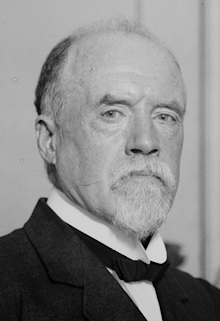
In 1924, the three-man Irish Boundary Commission is set up to settle the border between Northern Ireland and the Irish Free State. MacNeill represents the Irish Free State. He is the only member of the Commission without legal training and has been described as being “pathetically out of his depth.” However, each of the Commissioners is selected out of political expediency rather than for any established competence or insight into boundary making. On November 7, 1925, a conservative British newspaper, The Morning Post, publishes a leaked map showing a part of eastern County Donegal (mainly The Laggan district) that is to be transferred to Northern Ireland, the opposite of the main aims of the commission. Perhaps embarrassed by that, especially since he said that it had declined to respect the terms of the Treaty, MacNeill resigns from the commission on November 20. Hus performance in the Boundary Commission has been deemed highly negative in a 2025 study The Root of All Evil: The Irish Boundary Commission.
On November 24, 1925, MacNeill also resign as Minister for Education, a position unrelated to his work on the commission.
On December 3, 1925, the Free State government agrees with the governments in London and Belfast to end its onerous treaty requirement to pay its share of the United Kingdom’s “imperial debt” and, in exchange, agrees that the 1920 boundary will remain as it is, overriding the commission. This angers many nationalists and MacNeill is the subject of much criticism, but in reality, he and the commission have been sidestepped by the intergovernmental debt renegotiation. In any case, despite his resignations, the intergovernmental boundary deal is approved by a Dáil vote of 71–20 on December 10, 1925, and MacNeill is listed as voting with the majority in favour. He loses his Dáil seat at the June 1927 Irish general election.
MacNeill is an important scholar of Irish history and among the first to study Early Irish law, offering both his interpretations, which at times are coloured by his nationalism, and translations into English. He is also the first to uncover the nature of succession in Irish kingship, and his theories are the foundation for modern ideas on the subject.
MacNeill is a contributor to the Royal Irish Academy‘s Clare Island Survey, recording the Irish place names of the island. His disagreements and disputes with Goddard Henry Orpen, particularly over the latter’s book Ireland under the Normans, generate controversy.
MacNeill retires from politics completely and becomes Chair of the Irish Manuscripts Commission. In his later years he devotes his life to scholarship and publishes several books on Irish history. He dies in Dublin of natural causes, aged 78, on October 15, 1945. He is buried in Kilbarrack Cemetery.
Deasy is the third among six sons of William Deasy, seaman, and Mary Deasy (née Murray). He is educated locally at Ballinadee before leaving school at the age of thirteen to work in nearby Bandon.
During the Irish War of Independence (1919–21), Deasy is adjutant of the IRA’s 3rd Cork Brigade (West Cork). He serves under Tom Barry in one of the unit’s best known actions, the Crossbarry ambush in March 1921. His younger brother, Pat, dies in action at the Kilmichael ambush in November 1920, an engagement at which Deasy is not present. He also takes part in the Tooreen ambush.
Deasy opposes the Anglo-Irish Treaty. In the months that follow he tries to persuade Collins to renegotiate aspects of the treaty, especially to remove an oath to the British king from the constitution of the new Irish Free State. When fighting breaks out in Dublin in June 1922 between pro and anti-Treaty forces, he sides with the Anti-Treaty IRA in the ensuing Irish Civil War. However, he is reluctant to fight his former comrades and voices the opinion that the fighting should have ended with the Free State seizure of the Four Courts.
In late July 1922, Deasy commands 1,500 anti-Treaty fighters who hold a line around Kilmallock south of Limerick city against about 2,000 Free State troops under Eoin O’Duffy. His men are the most experienced IRA fighters of the 1919-21 war and hold their position until August 8, when they are outflanked by seaborne landings on the southern coast. His men then disperse. He goes on the run in the southeast of the country.
In August 1922, Deasy is in command of a band of republican guerrillas in West Cork when they hear that Collins is in the area. Deasy has his men prepare an ambush for Collins’ convoy at Béal na Bláth, should it return by the same route it had taken earlier.
Deasy and most of his men do not take part in the ambush as they had retired to a nearby pub, assuming that they had missed Collins. However, Collins arrives as the last of Deasy’s men are clearing the mine and barricade that had been erected on the road at Béal na Bláth. Collins is killed in the ensuing firefight. Deasy later writes in his memoirs that he profoundly regrets the death of his former commander.
In January 1923, by which time Deasy has become Deputy Chief of Staff of the IRA, he is captured by Free State forces near Clonmel, County Tipperary, and sentenced to death. He is aware that the newly formed government plans on wholesale executions and knows that the IRA will retaliate with reprisals. He decides that it is now time to end the war. He signs a document (written by his captors) ordering the men under his command to surrender themselves and their arms to the government. He is spared execution. On the day that his order is published, Free State authorities demand that the prisoners in a jail in Limerick sign a statement agreeing to unconditional surrender, threatening wholescale executions to those who refused. Some republicans denounce Deasy as a traitor and a coward for this action, but he argues in his book, Brother against Brother, that he was opposed to continuing the civil war anyway and would have called on republicans to surrender whether or not he had been captured.
Deasy takes no further part in politics following the end of the Irish Civil War. In 1924, he sets up a business making weatherproof textiles. On November 24, 1927, he marries Margaret Mary O’Donoghue. They have three daughters together.
During The Emergency, Deasy serves in the Irish Army from 1940 to 1945, reaching the rank of commandant. He later writes two memoirs about his experiences during the revolutionary period: Toward Ireland Free and Brother against Brother, the latter being published after his death.
Deasy dies at St. Anne’s Hospital, Northbrook Road, Dublin, on August 20, 1974. He is buried in Bohernabreena Cemetery in Dublin.
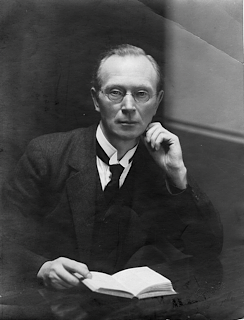
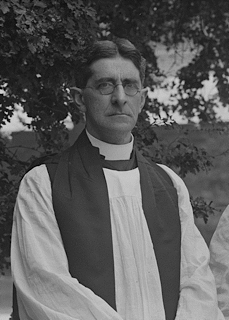
Though Gregg is instinctively conservative, his awareness of contemporary trends make him responsive to demands for change: he supports the resolution for women to hold parochial office and presents a petition to the General Synod in 1914, signed by 1,400 women. Though the motion is lost, he perseveres undaunted, and a bill for the ecclesiastical enfranchisement of women is finally carried in 1920. A unionist, he is also one of three Anglican and seventeen Catholic bishops to sign the declaration against partition in 1917, which is organised by the Catholic Bishop of Derry, Charles McHugh.
From the 1920s the Irish church is dominated by Gregg, first as Archbishop of Dublin (1920–39) and later as Archbishop of Armagh and Primate of All Ireland (1939–59). He provides stability to the church during a turbulent period of political and social change and is outspoken in defence of its interests, pragmatically espousing policies that will lead to the greater integration of the Protestant community into the new Irish state, as in his acceptance of the teaching of compulsory Irish in national schools. Despite a declining Protestant community in the south of Ireland, he maintains the unity of the church, overcoming the political division of the country into two entities. He regrets constitutional change but pledges the loyalty of the church to the Irish Free State. While recognising that the Protestant ethos is different from that of the majority of Irishmen, he maintains that “whatever our religious or political outlook may be, here is our home, and we have a right to be here.” He is elected to the first Irish Free State senate, and is subsequently consulted by Éamon de Valera, who later describes him as “a most learned and kindly gentleman, and . . . a highly valued friend,” in framing the text of the 1937 constitution. In 1949, he adapts, albeit with sadness, the state prayers to fit the republican form of government, observing that “the republic is a fact” and that “in our prayers, above all, there must be reality.”
Gregg is an able administrator, and his courage and integrity in facing difficult situations and his scholarship and devotion to the church earn him respect in the councils of the wider Anglican communion. He is known as “the churchman’s bishop” for his emphasis on doctrinal orthodoxy, ecclesiastical discipline, and loyalty to the clergy. Though conservative in his approach to church unity, he seeks closer relations between the Christian churches and frequently visits the reformed churches of the Iberian Peninsula, where a portrait plaque is unveiled in 1950 in St. John’s Church, Vila Nova de Gaia, Portugal. A baptistry in St. Paul’s Cathedral, Lisbon, is dedicated to his memory. Well known in England as a writer and preacher, he is appointed select preacher at the University of Cambridge (1916, 1930, 1936) and the University of Oxford (1946, 1947) and supports the institution of annual theological lectures at Queen’s University Belfast (QUB). His publications include Epistle of St. Clement of Rome (1899) and The Primitive Faith and Roman Catholic Developments (1909) – a minor classic which is used as a textbook for ordinands of the Church of England. He writes the introduction and notes to the revised version of the Wisdom of Solomon for the Cambridge Bible for Schools (1909) and publishes sermons and articles in religious journals. Elected Member of the Royal Irish Academy (MRIA) in 1914, he is elected to honorary fellowship in 1934 by Christ’s College, Cambridge, is awarded an honorary Doctor of Divinity (DD) in 1949 by QUB, and is created Order of the Companions of Honour (CH) in 1957.
A commanding figure, tall, thin, with raven-black hair, piercing eyes, and fine features, Gregg has an air of sacerdotal austerity, lightened on occasion by his dry sense of humour. He maintains a well regulated daily timetable and keeps a diary, writing his most personal thoughts in Greek. He makes time for recreation, a daily walk of two miles, tennis, and (from 1929) sailing, and holidays in Ireland and on the Continent. He has a great love of English literature and church music. In 1959, he retires to the Woodhouse, Rostrevor, County Down. Though incapacitated by blindness, deafness, and lameness, he never complains, and according to his wife, his life of prayer is enriched. He dies on May 2, 1961, at his home and is buried in Enniskerry, County Wicklow, beside his first wife and son.
Gregg marries Anna Alicia Jennings on November 26, 1902. They have two sons and two daughters. Anna dies in 1945. On January 22, 1947, he marries secondly Leslie Alexandra, daughter of the Rev. T. J. McEndoo, dean of Armagh, who officiates at the marriage of his daughter and of his archbishop.
(From: “Gregg, John Allen Fitzgerald” by Helen Andrews, Dictionary of Irish Biography, http://www.dib.ie, October 2009)
Elvery is the second among seven children of William Elvery , merchant, and Theresa Elvery (née Moss), singer and music teacher, whose parents are English Quakers. Her father’s ancestors were silk merchants from Spain, called Alvarez. Her early childhood is spent in Carrickmines, County Dublin. In 1896 the family moves to Foxrock and she attends the Dublin Metropolitan School of Art. Her mother’s family is artistic – one aunt is the artist Phoebe Anna Traquair – and she and her sisters are talented artists and singers. Her younger sister, Dorothy Kay, becomes a noted portrait painter in South Africa. At the age of sixteen, she wins a three-week scholarship to study at the Royal College of Art in South Kensington, London. Back in Dublin, she models for William Orpen, then teaching in the school. They become friends, and she regrets never studying painting under him. She concentrates on sculpture under John Hughes and has great success, winning the Taylor scholarship three years in a row (1901–03). The first year she wins, the judges, seeking evidence that she had worked unaided, asks her to model a head from life in their presence.
Elvery’s first exhibit in the Royal Hibernian Academy (RHA) is a bronze statuette of a boy in 1902. Thereafter she is a lifelong exhibitor with the RHA, showing almost annually until her death. Friendship with the older Sarah Purser introduces her to Dublin’s artistic milieu and to the arts and crafts movement. In the movement’s 1904 exhibition she shows ten items, including terracotta statuettes, a holy water stoup, and a plaster cast of a lectern, which is cast in bronze in Paris that year and placed in her former parish church in Carrickmines. The movement’s historian, Paul Larmour, calls this lectern “a remarkable piece of organic Art Nouveau . . . There is nothing else like it in Ireland.”
In 1904, after a brief period studying in Paris with her sister and fellow students Estella Solomons and Frances “Cissie” Beckett, Elvery takes lessons in stained glass from Alfred E. Child, and is then persuaded by Purser to join her Tower of Glass (An Túr Gloine) studio. She remains six years, executing windows for St. Stephen’s Church, Mount Street, Dublin; St. Nicholas Church, Carrickfergus; and a war memorial at the Church of Ireland church, Carrickmines. Although her work is generally well received, she does not rate her skill in the medium highly – “I never got the right feeling for glass or the detached, austere quality necessary for ecclesiastical art” – and her window for a Gortconvent leads to a critical review of Purser’s studio by W. B. Yeats. She does not, however, confine herself to glass but also designs for silversmiths and illustrated books for children. For Iosagán agus Sgealta Eile (1907), by Patrick Pearse, she provides a black-and-white frontispiece and four colour illustrations. For the Cuala Press, run by Lily and Elizabeth Yeats, she designs calendars, Christmas cards, and fifteen hand-coloured prints, which continue to be issued until after World War II.
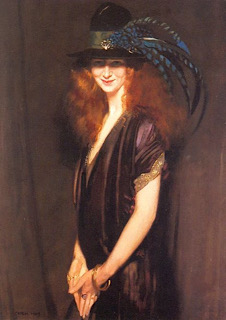
Elvery’s social life in Dublin is busy. An active member of the United Arts Club, she is called by Lady Gregory “the beautiful Miss Elvery,” and Orpen’s portrait, showing her long-necked, graceful, and vivacious, bears out this description. Tiring of glass, and wishing to become a painter, she leaves in 1910 for the Slade School of Fine Art in London. There Henry Tonks is less complimentary than her Dublin teachers. He finds her work facile: “The speed, the slickness, the skill. It is horrible!” Orpen also comes to this view: “her only fault was that the transmission of her thoughts from her brain to paper or canvas, clay or stained glass, became so easy to her that all was said in a few hours. Nothing on earth could make her go on and try to improve on her first translation of her thought.”
Back in Dublin, Elvery takes a studio in Kildare Street and teaches for a time in the Metropolitan School of Art, before her parents arrange a marriage with Charles Henry Gordon Campbell, eldest son of the future Lord Chancellor of Ireland, James Campbell. They marry on August 1, 1912, and move to London where he is called to the English bar. It is not initially a love match but they are well-suited – he likes artistic, Bohemian circles and they become friends with D. H. and Frieda Lawrence, the painter Mark Gertler, the publisher John Middleton Murry, and his wife, the writer Katherine Mansfield, who describes Campbell as “a queer mixture for she is loving and affectionate, and yet she is malicious.”
Campbell’s husband becomes secretary of the Department of Industry and Commerce in the Irish Free State and in 1922 the family moves to Clonard, Terenure, Dublin. His government position means that within six months the house is burned down by anti-Treatyites, who are, however, almost comically accommodating – local men, they express distress at the job and allow her to save the children’s Christmas presents. In 1931 she becomes Lady Glenavy after her husband succeeds to his father’s title, an important member of Dublin’s social and artistic scene. She helps establish the Dublin Drama League and assists Shelah Richards in the production of two plays in 1936. Her friendships are wide and varied and her conversation imaginative and engaged. Dressed in beige – what her son calls “variations on a theme of porridge” – she entertains constantly. Her house has what she terms a “caravanserai” character and is constantly full of people.
Appointed an associate of the RHA in 1932, Campbell becomes a full member in 1934 and takes her turn at teaching. She also joins the more radical Society of Dublin Painters and holds in February 1935 a one-person show at their premises, 7 Stephen’s Green, but she never shows with the Irish Exhibition of Living Art, though her work is more avant-garde than that of most academicians. At its best in still lifes and figure compositions, her work has “a sense of drama and an enigmatic or near-surrealist appearance.” Brian Kennedy notes that she is the first Irish painter to go surrealist (though she never thinks of herself in this way) and although she is serious about her work – taking lessons at an advanced age from Patrick Hennessy – she is also diffident. Her memoir does not trace her development as an artist and mentions only one work with approbation – The Intruder (exhibited at the RHA in 1932). Now in the National Gallery of Ireland, it depicts in bold, rich colours a female centaur beckoning a young man from a group of picnickers. It immediately attracts attention. Richard Orpen wants the academy to buy it, but they think it obscene.
About 1941 the Campbells move to a large Georgian house in Rathfarnham, and twenty years later they transfer to a smaller house in Sandycove. After her husband’s death in 1962, she publishes her memoirs, And Today We Will Only Gossip (1964). The title is well chosen as the book is not self-revelatory but full of characters she encountered. Monk Gibbon calls her a “unique mixture: of talent and diffidence; of gregariousness and contempt for the herd; of gentle consideration and a savage determination to wound. Only those who knew her well knew her at all; and even to them she remained something of a mystery” (The Irish Times, December 2, 1980).
Campbell dies in Dublin on May 21, 1970, and is survived by her two sons, the writer and humorist Patrick Campbell and the novelist Michael Campbell, and predeceased by her daughter, Bridget, an Irish international lacrosse player and talented scientist, who is killed by a bomb during the London blitz.
(From: “Campbell, Beatrice Moss” by Bridget Hourican and Pauric J. Dempsey, Dictionary of Irish Biography, http://www.dib.ie, October 2009 | Pictured: “Bridgit – a picture of Miss Elvery (Beatrice Elvery),” oil on canvas by William Orpen, 1909)
Ginnell is born in Delvin, County Westmeath, in 1852, (baptised April 9, 1852) the son of Laurence Ginnell and Mary Monaghan and twin to Michael Ginnell. He is self-educated and is called to the Irish bar as well as the Bar of England and Wales. In his youth, he is involved with the Land War and acts as private secretary to John Dillon.
The last great social and agrarian campaign of the Irish home rule movement, the Ranch War (1906 and 1909), is largely led and organised by Ginnell from the central office of the United Irish League. He is elected an MP in 1906, takes his seat at Westminster and swears allegiance to Edward VII. On October 14, 1906, he launches the “war” at Downs, County Westmeath.
The purpose of the war is to bring relief to the large numbers of landless and smallholders, particularly in the West, who are relatively untouched by the Wyndham Land Act (1903) and by the larger policy of purchase. The strategy that Ginnell pursues is the Down’s Policy, or cattle driving, a proceeding designed to harass the prosperous grazier interests, whose “ranches” occupy large, under populated and under worked tracts. The Down’s Policy is also meant to draw public attention to the scandalous inequalities that survive in the Irish countryside. The conservatives within the home rule leadership are understandably suspicious about the revival of agrarian disturbances, but the mood of the party organisation is hardening in the aftermath of a disappointing devolution bill in May 1907, from the new Liberal government, so that it seems logical to turn to the traditional mechanism for reactivating the national question: agrarian agitation.
Ginnell’s cattle drives begin to tail off after the summer of 1908, and the agitation is finally dissolved with the passage of a 1909 Act by the Liberal Chief Secretary Augustine Birrell that allows the transfer to the Irish Land Commission of farmland by compulsory purchase, which is hailed by the national movement as an historic victory. In reality, the Ranch War involves an implosion within sectors of the Irish Parliamentary Party, as its leadership has not facilitated the working of the Wyndham Land Act in the first place because John Dillon and his like want conflict above victory.
In 1909, Ginnell is expelled from the Irish Parliamentary Party for the offence of asking to see the party accounts after which he sits as an Independent Nationalist. During this time, he is addressed frequently as “The MP for Ireland.” At Westminster, he is highly critical of the British government‘s war policy and its holding of executions of certain participants in the Easter Rising of 1916. On May 9, he accuses British Prime MinisterH. H. Asquith, of “Murder” and is forcibly ejected from the Chamber. He visits many of the prisoners who are interned in various prisons in Wales and England.
At the Sinn Féin ardfheis in 1917, at which the party is reconstituted as a republican party with de Valera as president, Ginnell and W. T. Cosgrave are elected Honorary Treasurers. He is imprisoned in March 1918 for encouraging land agitation and later deported to Reading Gaol. In the 1918 United Kingdom general election, he is elected as a Sinn Féin MP for the Westmeath constituency by comfortably defeating his IPP challenger. After his release from prison, he attends the proceedings of the First Dáil. Along with fellow TDJames O’Mara, he is one of the only TDs to serve as a member in both the House of Commons and Dáil Éireann.
He is one of the few people to have served in the House of Commons and in the Oireachtas. He is appointed Director of Propaganda in the Second Ministry of the Irish Republic. After spending a year as a republican campaigner in Chicago, he is appointed the Representative of the Irish Republic in Argentina and South America by de Valera. He carries out his propaganda work here to distribute copies of the Irish Bulletin and to provide the Sinn Féin version of the conflict during the Irish War of Independence. On August 16, 1921, he returns home to attend the first meeting of the Second Dáil. He travels back to Argentina some months later to serve as the Representative of the Republic there.
On September 9, 1922, Ginnell is the only anti-Treaty TD to attend the inaugural meeting of the Provisional Parliament or Third Dáil. Before signing the roll, he says, “I want some explanation before I sign. I have been elected in pursuance of a decree by Dáil Éireann, which decree embodies the decree of May 20, 1922. I have heard nothing read in reference to that decree, nothing but an Act of a foreign Parliament. I have been elected as a member of Dáil Éireann. I have not been elected to attend any such Parliament. Will anyone tell me with authority whether it is…”.
Ginnell is at this point interrupted but resumes by saying that he will sign the roll and take his seat in the Assembly if the Assembly is Dáil Éireann. He is informed he is not allowed raise any such question until a Ceann Comhairle has been elected. He continues to ask questions regardless to which he gets no answer including his question: “Will any member of the Six Counties be allowed to sit in this Dáil?” W. T. Cosgrave moves at this point that he be excluded from the House. Ginnell protests, and he is dragged out by force.
De Valera later appoints Ginnell a member of his “Council of State,” a twelve-member body set up to advise him on the deteriorating situation in the civil war. He returns to the United States soon afterward to serve as the Republic‘s envoy in the country. He orders Robert Briscoe and some of his friends to take possession of the Consular Offices in Nassau Street, New York City, then in the hands of the Irish Free State Government, to obtain the list of the subscribers to the bond drive organized to aid the struggle in the War of Independence. At the time, a court case is ongoing to decide on who has the right to the funds: the newly installed Provisional Government or de Valera, as one of the three trustees among the anti-Treatyites.
Ginnell dies in Washington, D.C. on April 17, 1923, at the age of 71, still campaigning against the Anglo-Irish Treaty.
Fisher is the sixteenth of seventeen children to Jane and Abraham Fisher. The Fishers are a Quaker family with a business in Youghal. They are noted for their charitable works, especially during the Great Famine.
Fisher and Haslam marry on March 20, 1854, in Cork Registry Office. Their marriage is mainly celibate as a result of them not wanting to have children. In later writings Thomas argues in favour of chastity for men. The couple shares a belief in equality for men and women and he supports her campaigns.
Both of the Haslams are expelled from the Society of Friends due to their interests in social reform but both maintain links with the community. Thomas is said to have been disowned for harbouring ideas contrary to Quaker teachings. In 1868, he publishes a pamphlet called “The Marriage Problem,” in which he raises and supports the idea of family limitation and outlines a number of contraceptive methods including the safe period. He dies on January 30, 1917, in his ninety-second year.
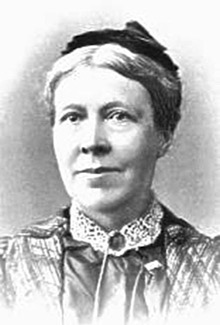
Haslam is best remembered today for her work for votes for women. She is a pioneer in every 19th century Irish feminist campaign and fights for votes for women from the year 1866. In 1872, she organises the “General Meeting of the members and friends of the Irish Society for Women’s Suffrage” in Blackrock, Dublin, which is chaired by George Owens and attended by MPs Maurice Brooks (a Home Ruler) and William Johnston (a northern Orangeman) and by the future Liberal Unionist Party MP Thomas Spring Rice, 2nd Baron Monteagle of Brandon. The Haslams are founding members of the Dublin Women’s Suffrage Association (DWSA) in 1876. This marks the start of a remarkable campaign in Dublin for votes for women. Haslam, along with the writing of her husband, continues the campaign and in 1896 women in Ireland win the right to be elected as Poor Law Guardians, members of the official bodies which administer the Poor Law. Ireland’s early women’s rights activists have a close relationship with their English correlatives and share the same discrimination in education, employment, sexual freedom and political participation. The DWSA organises the introduction of a private member’s bill to remove disqualification “by sex or marriage” for election or serving as a poor law guardian. The bill passes in 1896 and the association immediately writes to the newspapers and publishes leaflets explaining the process on how to register to vote and stand for election and encouraged qualified women to go forward as candidate.
By 1900, there are nearly 100 women guardians. Haslam then leads a campaign to encourage qualified women to stand for election in 1898. Women win eligibility to vote in local government elections, and to stand for elections as rural and urban district councillors. In 1913, she steps down as secretary of the Association and is elected life-president.
One of Haslam’s longest campaigns, working alongside the Belfast suffragist Isabella Tod, is for repeal of the Contagious Diseases Acts of 1864. The acts allow for state regulation of prostitutes in areas in which the army is stationed. The act permits compulsory internment of women for up to three months, which is later extended to one year. Medical treatment is also enforced on the women. The act seeks only to reduce the spread of sexually transmitted diseases among the military. She opposes the act as she feels it legitimises prostitution, commoditises women and undermines family life. It is finally repealed following eighteen years of campaigning.
Haslam is involved in the 1866 petition and gathers 1,499 signatures to extend suffrage to women as well as men. In 1867, male suffrage is extended but it is not until 1911 that the Suffrage movement achieves the significant victory of securing the right of women to stand for election as local councillors.
In 1918, a woman of almost ninety, Haslam goes to the polls “surrounded by flowers and flags,” with women who unite in her honour to celebrate the victory of the vote. This display of unity by activist women from all shades of political opinion acknowledge her role in the fight for the right to vote. The same year in which she dies, in 1922, the Irish Free State extends the vote to all men and women over the age of 21.
Haslam dies on November 28, 1922, at her home in Carlton Terrace, Dublin, of “cardiac dropsy” at the age of 93. She is buried next to her husband in the Quaker burying ground at the Friends Burial Ground in Temple Hill, Blackrock, Dublin.
A memorial seat to Anna and Thomas Haslam is erected in 1923 in St. Stephen’s Green, Dublin, with the inscription “in honour of their long years of public service chiefly devoted to the enfranchisement of women.”
Shannon is the eldest child of solicitor George William Shannon and Emily Shannon (née Goodman). She has two sisters and two brothers. She attends Alexandra College, and later lectures for women at Trinity College Dublin (TCD). On July 27, 1875, she marries Maurice Dockrell, eldest son of Thomas Dockrell, a well known Dublin merchant, and Anne Morgan Dockrell (née Brooks). The couple has seven children, one daughter and six sons. She goes on to become a director and member of the board of her husband’s family company: Messrs Thomas Dockrell & Sons & Co. Ltd.[1]
Dockrell is an active member of the committee of the Dublin Women’s Suffrage and Local Government Association, later known as the Irish Women’s Suffrage and Local Government Association (IWSLGA), founded in 1876 to promote women’s suffrage by democratic methods. She attends international women’s suffrage conferences in Stockholm in 1911 and Budapest in 1913. She is also a committee member of the London Women’s Suffrage Society, speaking on the role of women in local government at the International Congress of Women in London in 1899. The Irish Citizen lists her as a suitable woman candidate to run for the senate seat proposed by the Home rule bill in 1912.
Dockell is a member of the National Union of Women Workers, sitting as a member of its public services committee. Like many of her contemporaries, she believes that women are best placed to address issues around health, societal moral well-being, and housing. From 1898, the Local Government (Ireland) Act, allows women to be candidates for local government elections. Dockrell first runs as a candidate in the Urban District Council (UDC) of the Monkstown ward of Blackrock, Dublin in the 1898 local elections, where she is returned as the third of nine elected, becoming one of only four women councillors elected in Ireland.
Dockrell describes herself as a unionist and a Protestant, sitting as a council on the Blackrock UDC until her death. She is the only woman councillor on that UDC until 1925 and the election of Ellen O’Neill. She is also the first woman chair of a UDC when she is elected to the position in 1906.
Despite the political and societal turmoil of the early 20th century in Ireland and the establishment of the Irish Free State, Dockrell continues in her commitment to local politics. This includes being the first woman to be elected to a Dublin county council in 1920. Despite remaining a committed unionist, she works with the Free State government. Following her husband’s knighthood, she is also known as Lady Dockrell.
The Irish Catholic Hierarchy formally endorses Home Rule on February 16, 1886, a significant moment in the Irish political landscape.
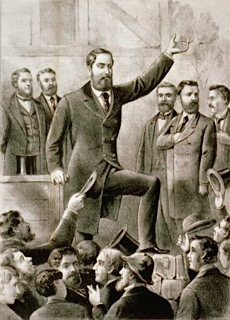
The Home Rule movement, led by Charles Stewart Parnell (pictured) and the Irish Parliamentary Party (IPP), seeks to establish a separate Irish parliament to handle domestic affairs while remaining within the British Empire. The campaign gains significant momentum throughout the late 19th century, but opposition from the British government and Irish unionists make progress difficult. Up to this point, the Catholic Church in Ireland had largely remained cautious about taking an overtly political stance on Home Rule. However, their endorsement on this day in 1886 changes the dynamic of the movement, giving it an unprecedented boost in legitimacy and support among the Irish people.
The Catholic Church plays a central role in Irish society, wielding immense influence over the daily lives of the majority Catholic population. Many of the clergy are already sympathetic to nationalist aspirations, but an official endorsement from the hierarchy signals a unified front that cannot be ignored. By formally backing Home Rule, the bishops strengthen nationalist demands and provide moral authority to the movement, reinforcing the argument that Home Rule is not just a political necessity but also a just and rightful cause.
This endorsement comes at a critical time. British Prime MinisterWilliam Ewart Gladstone is preparing to introduce the Government of Ireland Bill 1886, commonly known as the First Home Rule Bill, in April 1886, a legislative measure that, if passed, would grant Ireland limited self-government. The backing of the Catholic hierarchy is instrumental in rallying public support and reinforcing Parnell’s leadership. While the bill ultimately fails in the House of Commons on June 8, 1886, due to strong opposition from Conservative and Unionist factions, the Catholic Church’s stance ensures that Home Rule remains a dominant political issue for decades to come.
Despite the failure of the 1886 bill, the endorsement by the Catholic bishops has long-term implications. It solidifies a powerful alliance between Irish nationalism and the Church, an influence that persists well into the 20th century. The endorsement also helps to counteract Protestant unionist claims that Home Rule is merely a radical or sectarian endeavor, presenting it instead as a moderate and just political cause with widespread backing.
Over the following years, Home Rule remains a contentious issue, with subsequent attempts to pass similar legislation met with resistance. The Government of Ireland Bill 1893, commonly known as the Second Home Rule Bill, is again defeated in the House of Lords, and it is not until the Government of Ireland Act 1914, commonly referred to as the Third Home Rule Bill, that significant progress is made. Even then, implementation is delayed by World War I and ultimately overshadowed by the 1916 Easter Rising and the Irish War of Independence.
Looking back, the Catholic Church’s endorsement of Home Rule on February 16, 1886, is a defining moment in Ireland’s political history. It reinforces the nationalist cause, legitimizes the demand for self-governance, and plays a crucial role in shaping Ireland’s path toward eventual independence. While Home Rule itself is never fully realized in the form originally envisioned, its legacy influences the Irish Free State’s establishment in 1922 and Ireland’s eventual emergence as a fully independent republic.
(From: “February 16, 1886 – The Catholic Church Embraces Home Rule,” by Bagtown Clans, This Day in Irish History Substack, http://www.thisdayinirishhistory.substack.com, February 2025)