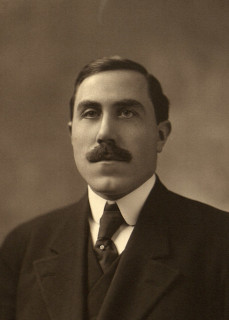
Shanahan is involved in the Easter Rising in Dublin in April 1916. This leads to him having legal difficulties over the licence of his public house. He consults the lawyer and politician Tim Healy who comments:
“I had with me today a solicitor with his client, a Dublin publican named Phil Shanahan, whose licence is being opposed, and whose house was closed by the military because he was in Jacob’s during Easter week. I was astonished at the type of man – about 40 years of age, jolly and respectable. He said he ‘rose out’ to have a ‘crack at the English’ and seemed not at all concerned at the question of success or failure. He was a Tipperary hurler in the old days. For such a man to join the Rebellion and sacrifice the splendid trade he enjoyed makes one think there are disinterested Nationalists to be found. I thought a publican was the last man in the world to join a rising! Alfred Byrne, MP, was with him, and is bitter against the Party. I think I can save Shanahan’s property.”
Shanahan is elected for Dublin Harbour at the 1918 Irish general election, defeating Alfred Byrne. Like other Sinn Féin MPs, he does not take his seat at Westminster, but becomes a member of the revolutionary Dáil. He represents Dublin Harbour in the First Dáil from 1919 to 1921. He is arrested and detained in custody by the British government in April 1920 but is released in time to attend the next meeting of the Dáil on June 29, 1920.
During the Irish War of Independence, Billy Dunleavy recalls, “The IRA were the best men we ever had at that time. The Tans used to go around in the tenders with a wire over the top and if it was going by up there in Talbot Street they’d (IRA) say, ‘Get out of the way, quick!’ and they’d throw a hand grenade into the car. Now Phil Shanahan, he owned a pub over there on the corner, he was a great man and he used to hide them after they’d been out on a job. He had cellars and all the IRA men used to go there and hide their stuff.”
The Tooreen ambush (also known as the Toureen ambush or Ballinhassig ambush) is an ambush carried out by the Irish Republican Army (IRA) on October 22, 1920, during the Irish War of Independence. It takes place near Roberts Farm, Tooreen, near Ballinhassig in County Cork. The IRA ambushes two lorries of British soldiers, killing three and wounding four others. The British surrender and their weapons and ammunition are seized by the IRA. Later that night, British soldiers go on a rampage in nearby Bandon.
Up until the Tooreen ambush, the 3rd Cork Brigade had finished its training, but had not previously engaged in battle with British troops stationed in County Cork. The Tooreen ambush is one of the first major ambushes carried out by the West Cork Brigade under Tom Barry.
The Essex Regiment of the British Army is deployed to West Cork and has a reputation for violently raiding houses throughout the countryside and arresting people believed to be IRA volunteers. They are also alleged to torture their prisoners in order to get information on the whereabouts of the flying columns, so this makes them a despised enemy to the West Cork IRA.
The Essex Regiment is known to travel on the road from Bandon to Cork City every morning and return in the evenings. The road goes through the hamlet of Toureen which the Third West Cork Brigade is stationed at nearby and it is decided to ambush this column of the Essex Regiment as it makes its way to Cork city.
Thirty-two ambushers, twenty-one being riflemen of the Third West Cork Brigade, occupy ambush positions outside Toureen and lay in wait for the approaching Essex Regiment. The Regiment normally goes in two or three lorries to Cork City so the IRA places a homemade mine on the road for use against them.
Scouts signal the approach of two lorries which are coming down the road toward the ambush site. As the first lorry passes, the order to fire is given and a homemade three-pound bomb is thrown. The bomb lands inside the lorry but does not explode. The mine that is placed on the road also fails to detonate. As the volunteers open fire, the second lorry stops and the soldiers inside leap out and return fire, but the volunteers are hidden behind a large timber gate which gives them cover. The first lorry continues on to Cork Barracks. As the fight goes on, the officer in command of the British troops, Captain Dixon, is shot in the head and killed as is one of his men.
The remaining British soldiers surrender soon after, and the IRA men cease firing. The British soldiers are relieved of their weapons and ammunition, but otherwise unharmed. Fourteen rifles, bayonets, equipment, several Mills bombs, around 1,400 rounds of ammunition and a couple of revolvers are taken from them.
Two British soldiers, Lt. Dixon MC of the Suffolk Regiment and Pte. Charles William Reid of the Essex Regiment, are killed in the ambush. Five are wounded, including Sergeant Thomas Bennett RASC who dies in Cork on the following day. Six are unhurt except for shock. None of the IRA volunteers are killed or wounded during the ambush and aid is given to the wounded soldiers, while the dead are pulled away from the lorry and it is then set on fire by the volunteers. The two soldiers who are not hurt during the ambush are released along with their wounded and they return to their barracks.
Later that night, members of the Essex Regiment go on a violent rampage through Bandon, destroying property and seeking out anyone they believe to be connected to the ambush. It is believed that at least some of the rampaging soldiers are those released unharmed by the IRA earlier in the day. The reprisal attacks are indiscriminate and include attacks on homes and properties of business owners with “establishment” connections – including the Brennan family of Kilbrogan House.
A Military Court of Inquiry into the soldiers killed, is conducted on October 28, 1920. There are mixed references to these proceedings in The Irish Times and the Irish Independent, both of which contain errors.
Lt. Dixon is buried with full military honours in St. Paul’s Church in Dover, Kent, England. Sergeant Bennett is buried in St. Peter & St. Paul Church in his home village of Shorne, near Gravesend in Kent.
(Pictured: Plaque on a farm wall marking the location of the Tooreen ambush)
James Green Douglas, Irish businessman and politician dies on September 16, 1954. In 1922 he serves as the first-ever Leas-Chathaoirleach (deputy chairperson) of Seanad Éireann, the upper house of the newly independent Irish parliament. He goes on to serve in the Seanad for 30 years.
Douglas is born July 11, 1887, at 19 Brighton Square, Dublin, the eldest of nine children of John Douglas, proprietor of John Douglas & Sons Ltd, drapers and outfitters of Wexford St. and originally of Grange, County Tyrone, and his wife, Emily, daughter of John and Mary Mitton of Gortin, Coalisland, County Tyrone. The genealogy of the Douglas family to which he belongs can be traced to Samuel Douglas of Coolhill, Killyman, County Tyrone.
Douglas attends (1895–98) a small school for Quaker children and is a boarder (1898–1902) in the Friends’ School, Lisburn. In 1902 he begins a three-year apprenticeship in his father’s business.
On February 14, 1911, Douglas marries Georgina (Ena) Culley (1883–1959), originally of Tirsogue, Lurgan, County Armagh, whom he meets during his apprenticeship. Their children are John Harold Douglas, who succeeds to the family busines and replaces his father as senator, and James Arthur Douglas, who becomes a well-known architect.
From an early age Douglas is fascinated by politics and influenced by the newspapers edited by Arthur Griffith. He becomes a member of the Dublin Liberal Association, whose members for the most part are Protestanthome rulers. After the 1916 Easter Rising, with George Russell and others, who also regard themselves as neither unionists nor nationalists, he sets out to promote what they term “full dominion status” for Ireland. This paves the way for the Irish Convention (1917–18), which, however, fails to reconcile the polarised political attitudes of the time.
Douglas goes on to become a very active member of Seanad Éireann between 1922 and 1936 under the constitution he had helped to prepare. In 1922, he is elected as the first vice-chairman of the Senate. The Senate is abolished in 1936 and re-established under the terms of the 1937 Constitution of Ireland. He is again an active Senator between 1938 and 1943, and from 1944 to 1954. The topics most associated with him during his work as Senator are international refugees and the League of Nations.
For some thirty years he runs the family business, and is also a director of Aspro (Ireland) Ltd, Nugent & Cooper Ltd, Philips Lamps (Ireland) Ltd, and the Greenmount & Boyne Linen Co. Ltd. In addition, he serves as president of the Linen and Cotton Textile Manufacturers Association and as a member of the council of the Federated Union of Employers.
McCorley is one of three children born to Roger Edmund McCorley, a meat carver in a hotel, and Agnes Liggett. He has two elder brothers, Vincent and Felix. He joins the Fianna in his teens. His family has a very strong republican tradition, and he claims to be the great-grandson of the United Irishmen folk hero Roddy McCorley, who was executed for his part in the Irish Rebellion of 1798.
McCorley is noted for his militancy, as he is in favour of armed attacks on British forces in Belfast. The Brigade’s leaders, by contrast, in particular, Joe McKelvey, are wary of sanctioning attacks for fear of loyalist reprisals on republicans and the Catholic population in general. In addition, McCorley is in favour of conducting an armed defense of Catholic areas, whereas McKelvey does not want the IRA to get involved in what he considers to be sectarian violence. McCorley writes later that in the end, “the issue settled itself within a very short space of time, when the Orange mob was given uniforms, paid for by the British, and called the Ulster Special Constabulary (USC).” The role of the USC, a temporary police force raised for counter-insurgency purposes, in the conflict is still debated, but republicans maintain that the organization was responsible for the indiscriminate killings of Catholics and nationalists.
On January 26, 1921, McCorley, is involved in the fatal shooting of three Auxiliary Division officers in their beds in the Railway View hotel in central Belfast. Shortly afterwards, he and another IRA man, Seamus Woods, organize an active service unit (ASU) within the first battalion of the Belfast Brigade, with the intention of carrying out attacks, with or without the approval of the Brigade leadership. The unit consists of 32 men. McCorley later writes, “I issued a general order that, where reprisal gangs [State forces] were cornered, no prisoners were to be taken.” In March 1921, he personally leads the ASU in the killing of three Black and Tans in Victoria Street in central Belfast. He is responsible for the deaths of two more Auxiliaries in Donegall Place in April. In reprisal for these shootings, members of the RIC assassinate two republican activists, the Duffin brothers in Clonard Gardens in west Belfast. On June 10, 1921, both and Woods and McCorley units are involved in the killing a RIC man who is suspected in the revenge killings of the Duffin brothers. Two RIC men and a civilian are also wounded in that attack.
Thereafter, there is what historian Robert Lynch has described as a “savage underground war” between McCorley’s ASU and RIC personnel based in Springfield Road barracks and led by an Inspector Ferris. Ferris is accused of murdering the Lord Mayor of Cork Thomas MacCurtain and had been posted to Lisburn for his safety. Ferris himself is among the casualties, being shot in the chest and neck, but surviving. McCorley claims to have been one of the four IRA men who shot Ferris. In addition, his men bomb and burn a number of businesses including several cinemas and a Reform Club. In May 1921, however, thirteen of his best men are arrested when surrounded by British troops during an operation in County Cavan. They are held in Crumlin Road Gaol and sentenced to death.
On June 3, McCorley organizes an attack on Crumlin Road Gaol in an attempt to rescue the IRA men held there before they are executed. The operation is not a success; however, the condemned men are reprieved after a truce is agreed between the IRA and British forces in July 1921. On Bloody Sunday (July 10, 1921), he is a major leader in the defense of nationalist areas from attacks by both the police and loyalists. On that day twenty people are killed before he negotiates a truce beginning at noon on July 11. At least 100 people are wounded, about 200 houses are destroyed or badly damaged – most of them Catholic homes, leaving 1,000 people homeless.
In April 1922, McCorley becomes leader of the IRA Belfast Brigade after Joe McKelvey goes south to Dublin to join other IRA members who are against the Anglo-Irish Treaty. With McKelvey’s departure, Seamus Woods becomes Officer Commanding of the IRA’s 3rd Northern Division, which has up to 1,000 members, with McCorley designated as Vice Officer Commanding. McCorley for his part, supports the Treaty, despite the fact that it provides for the partition of Ireland and the continued British rule in Northern Ireland. The reason for this is that Michael Collins and Eoin O’Duffy have assured him that this is only a tactical move and indeed, Collins sends men, money and weapons to the IRA in the North throughout 1922.
However, McCorley’s command sees the collapse of the Belfast IRA. In May 1922, the IRA launches an offensive with attacks all across Northern Ireland. In Belfast, he carries out an assault on Musgrave Street RIC barracks. He also conducts an arson campaign on businesses in Belfast. His men also carry out a number of assassinations, including that of Ulster Unionist PartyMPWilliam J. Twaddell, which causes the internment of over 200 Belfast IRA men.
To escape from the subsequent repression, McCorley and over 900 Northern IRA men flee south, to the Irish Free State, where they are housed in the Curragh. McCorley is put in command of these men. In June 1922, the Irish Civil War breaks out between Pro and Anti-Treaty elements of the IRA. He takes the side of the Free State and Michael Collins. After Collins is killed in August 1922, his men are stood down. About 300 of them join the National Army and are sent to County Kerry to put down anti-Treaty guerrillas there. In the Spring of 1923, bitterly disillusioned by the brutal counterinsurgency against fellow republicans, he resigns his command.
McCorley later asserts that he “hated the Treaty” and only supported it because it allowed Ireland to have its own armed forces. Both he and Seamus Woods are severe critics of the Irish Free State inertia towards Northern Ireland after the death of Michael Collins. He comments that when Collins was killed “the Northern element gave up all hope.”
In 1936 McCorley is instrumental in the establishment of the All-Ireland Old IRA Men’s Organization, serving as Vice-President with President Liam Deasy (Cork No. 3 Brigade) and Secretary George Lennon (Waterford No. 2 Brigade).
McGarrity is born on March 28, 1874, in Carrickmore, County Tyrone. His family grows up in poverty, motivating his need to immigrate later in life. He grows up hearing his father discussing Irish politics, including topics such as the Fenians, the Irish Parliamentary Party (IPP), and Irish Home Rule. By the time he is an adult, he has developed a keen interest in politics himself.
McGarrity immigrates to the United States in 1892 at the age of 18. He is reputed to have walked to Dublin before boarding a cattle boat to Liverpool disguised as a drover, and then sailing to the United States using a ticket belonging to someone else. He settles in Philadelphia, Pennsylvania and becomes successful in the liquor business. His business fails, however, on three occasions, twice due to embezzlement by his business partner.
In 1893 McGarrity joins Clan na Gael, an Irish organisation based in the United States committed to aiding the establishment of an independent Irish state. Clan na Gael had been heavily involved with the Fenian Brotherhood that McGarrity had grown up hearing about, and by the latter half of the 19th century had become a sister organisation of the Irish Republican Brotherhood (IRB). In the decade just before McGarrity joins, Clan na Gael and the Fenian movement had waged the Fenian dynamite campaign, where they attempted to force the British state to make concessions in Ireland by bombing British infrastructure. However, this had caused a split within Clan na Gael that is not mended until seven years after McGarrity joins when, in 1900, the factions reunite and plead to support “the complete independence of the Irish people, and the establishment of an Irish republic.” In the years that follow the 1880s and 1890s, he is, amongst others, credited with helping to stitch the organisation back together and bring it renewed strength.
McGarrity helps sponsor several Irish Race Conventions and founds and runs a newspaper called The Irish Press from 1918-22 that supports the Irish War of Independence. He is the founder of the Philadelphia chapter of Clan Na Gael.
When Éamon de Valera arrives in the United States in 1919 they strike up an immediate rapport and McGarrity manages de Valera’s tour of the country. He persuades de Valera of the benefits of supporting him and the Philadelphia branch against the New York branch of the Friends of Irish Freedom organisation led by John Devoy and Judge Daniel F. Cohalan. He becomes president of the American Association for the Recognition of the Irish Republic. He christens his newborn son Éamon de Valera McGarrity, although their relationship becomes strained upon de Valera’s entry back into Dáil Éireann in the Irish Free State.
The Irish Civil War sees a split in Clan na Gael just as it had split Sinn Féin back in Ireland. McGarrity and a minority of Clan na Gael members support the anti-treaty side but a majority support the pro-treaty side, including John Devoy and Daniel Cohalan. Furthermore, in October 1920 Harry Boland informs the Clan na Gael leadership that the IRB will be cutting their ties to the Clan unless the IRB is given more influence over their affairs. Devoy and Cohalan resist this, but McGarrity sees the Clan’s connection with the IRB as vital. While McGarrity’s faction is initially labelled “Reorganised Clan na Gael,” they are able to inherit total control of the Clan na Gael name as Devoy is not able to keep effective organisation of the group. In general, however, the in-fighting amongst the Irish on both sides of the Atlantic is quite disheartening for Irish Americans and in the years to come neither pro nor anti-treaty sides of Clan na Gael see much in the way of donations.
With the scope of Clan na Gael now narrowed, and Devoy and Cohalan removed from the picture, McGarrity becomes chairman of the organisation. He does not support the founding of Fianna Fáil in 1926 and opposes the party’s entry into the Dáil in 1927. Even after the Irish Civil War, he still supports the idea that a 32-county Irish Republic can be achieved through force. in the spring of 1926, he receives Chief of Staff of the Irish Republican ArmyAndrew Cooney to the United States. Cooney and Clan na Gael formally agree that each organisation will support the other and that Clan na Gael will raise funds, purchase weapons and build support for the IRA in the United States.
Going into the late 1920s though Clan na Gael, as are most Irish American organisations, is struggling. Having limped past the split caused by the Irish Civil War, the rejection of Fianna Fáil has caused a second split in the membership. Many Irish Americans see the IRA and Fianna Fáil as one and the same at that point and Clan na Gael and McGarrity’s hostility to them causes much friction.
By July 1929, the Clan’s membership in one of its strongholds, New York City, is down to just 620 paid members. Then in October of that same year Wall Street crashes and the Great Depression hits. In 1933 McGarrity is left almost bankrupt after he is found guilty of “false bookkeeping entries.” His livelihood is saved when he becomes one of the main ticket agents in the United States for the Irish Hospitals’ Sweepstake. He is a personal friend of Joseph McGrath, one of the founders of the Sweepstake. The sweepstakes allow him to turn his fortunes around.
Despite the trying times of both Clan na Gael and his personal life, McGarrity holds fast in his belief in physical force Irish Republicanism. In 1939 he supports the demand from Seán Russell for the “S-Plan” bombing campaign in Britain, which proves disastrous. He allegedly meets Hermann Göring in Berlin in 1939 to ask for aid for the IRA, which leads indirectly to “Plan Kathleen.”
McGarrity is a lifelong friend of fellow Carrickmore native and avid Republican, Patrick McCartan. When he dies on September 4, 1940 a mass is held in the St. Mary’s Pro-Cathedral in Dublin. He remains an unrepentant physical force republican all his life. A number of McGarrity’s papers are in the National Library of Ireland. He donates his personal Library to Villanova University.
The IRA signs all its statements ‘J.J. McGarrity’ until 1969 when the organisation splits into the ‘Official‘ and ‘Provisional‘ movements. Thereafter the term continues to be used by the Officials while the Provisionals adopt the moniker ‘P.O’Neill.’
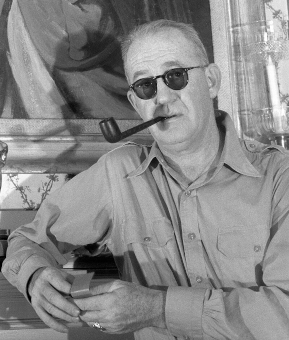
From an early age Ford has an interest in painting and sailing, and in July 1914 moves to California, where his older brother Francis is an actor with a small film company. Adopting the name ‘Jack Ford,’ he learns his trade as a filmmaker and acts in a number of silent films. Reveling in his Irish heritage, he makes his director’s debut with The Tornado (1917) and follows it with more than forty movies over the next six years. On July 3, 1920, he marries Mary McBryde Smith, a former officer in the army medical corps. They meet at a party thrown by the director Rex Ingram and have one son and one daughter.
In 1921 Ford visits Ireland for the first time and later claims to have travelled on the same boat that brought Michael Collins back from the treaty negotiations. He meets his relatives at Spiddal, falls in love with the countryside, and becomes a fervent Irish nationalist. It is later claimed that he brought over funds for his cousin Martin Feeney, a member of an Irish Republican Army (IRA) flying column.
Returning to Hollywood, Ford becomes friends with the retired marshal Wyatt Earp and makes a number of commercially successful films, now as ‘John Ford’. In 1926 he directs The Shamrock Handicap, a horse-racing yarn partly set in Ireland. In 1928 he shoots Mother Machree, a movie about Irish emigration, starring Victor McLaglen, a regular collaborator. McLaglen also stars in Hangman’s House, made the same year, Ford’s first major movie about Ireland.
In 1934 Ford purchases a luxury yacht which he names the Araner after the Aran Islands. He also begins shooting The Informer, a film set in Ireland during the Irish War of Independence and based on a short novel by Liam O’Flaherty. The picture is a major box office success and wins four Academy Awards, including Best Director. O’Flaherty is so impressed with the film that he dedicates his next book, Famine, to Ford.
In 1934 Ford visits Ireland for the second time, and approaches Seán O’Casey about directing a version of The Plough and the Stars. Released in 1936, the film stars Barry Fitzgerald as Fluther, but it is reedited by the studio, much to Ford’s fury, and is a commercial and critical flop.
In 1952 Ford returns to Ireland to film The Quiet Man, starring Wayne, McLaglen, and Maureen O’Hara. Shot at Ashford Castle, County Mayo, the picture becomes one of the most popular Irish films of all time. He is immensely proud of the work and is in tears leaving Ireland. The following year he makes Mogambo, with Clark Gable, Grace Kelly and a young English actor, Donald Sinden, who later recalls that Ford berated him personally for all the problems of Ireland from the time of William of Orange. Ford’s strong sense of Irishness is central to his character and is crucial for any understanding of his work. Back in Ireland in 1956, he shoots The Rising of the Moon, a portmanteau film for which he takes no salary, starring Tyrone Power, Cyril Cusack, and Noel Purcell. A minor film, it makes no impact at the box office.
Two of Ford’s finest movies are made in his later years. The Searchers (1956) is a powerful study of vengeance, while The Man Who Shot Liberty Valance (1962) is an elegiac revisionist western which concludes with the famous line, “When the legend becomes fact, print the legend.”
Struck with cancer in his final years, Ford dies on August 31, 1973 at his home in Palm Desert, California, and is buried at Holy Cross Cemetery, Culver City. His will disinherits his son, Michael Patrick Roper, and leaves everything to his wife, daughter, and grandchildren.
When asked to name the finest American directors, Orson Welles replies simply, “John Ford, John Ford, and John Ford.” An alcoholic, Ford is a difficult and often tyrannical director, but he makes films of extraordinary power and vision. He ranks as one of the greatest filmmakers of the twentieth century. As Frank Capra concludes, “John is half-tyrant, half-revolutionary; half-saint, half-Satan; half-possible, half-impossible; half-genius, half-Irish.”
(From: “Ford, John,” contributed by Patrick M. Geoghegan, Dictionary of Irish Biography, http://www.dib.ie)
Ryan attributes to Pearse the saying “[G]ive me a hundred men and I will free Ireland!” He becomes part of a group of former students lodging in St. Enda’s while they go to university who join the Irish Republican Brotherhood (IRB). They meet in a safe house at Rathfarnham in 1911. The men take the tram from Rathfarnham to Nelson’s Pillar in central Dublin. Pearse once told his friend, “Let them talk! I am the most dangerous revolutionary of the whole lot of them!” In 1911, the Dungannon Clubs revive the Volunteers Militia movement. These clubs are not initially successful in Dublin but are more so in Belfast amongst nationalists. One of the northern members is the Dubliner Oscar Traynor, in his youth a professional footballer with Belfast Celtic F.C., later a war hero and later again a politician and Minister for Posts and Telegraphs.
Eoin MacNeill is appointed leader of the Irish Volunteers. Ryan writes that Pearse, a risk-taker and idealist, tells him MacNeill is “too tactful.” MacNeill is prepared to entertain the Irish Parliamentary Party with negotiations. Ryan quotes Pearse as saying, “[MacNeill] has the reputation of being tactful, but his tact consists in bowing to the will of the Redmondites every time. He never makes a fight except when they assail his personal honour, when he bridles up at once… very delicate position… he is weak, hopelessly weak.”
Pearse tells Ryan that MacNeill is “a Grattan come to life again.” Henry Grattan is a constitutional orator and MP in the Protestant-only 18th-century Irish House of Commons, but one of those who fiercely opposes the notorious Acts of Union 1800, secured by massive bribery (which is then repaid out of Irish taxes), making Ireland part of the United Kingdom. Moreover, MacNeill is an “inconclusive ditherer.” He wants the Irish Volunteers to be apolitical.
The Easter Rising is preceded by the revelation of the “Castle Document,” a plan by the British government to arrest the leaders of the Irish Volunteers and Irish Citizen Army and other radicals. Ryan claims that this document, presented to MacNeill on the Wednesday before the Rising and said to have been stolen from high-ranking British staff in Dublin Castle, is a forgery. Some claim that it is concocted by Joseph Plunkett with the implicit approval of Catholic Archbishop Cullen of Dublin, a sympathiser with Dublin Castle and Redmond’s war stratagem. “Forgery is a strong word,” Ryan says, “but that in its final form the document was a forgery no doubt can exist whatever.” Modern interpretation from Charles Townshend has judged the document to be genuine, and the opinion attributed to the Archbishop’s Palace as circumstantial. Grace Gifford, Plunkett’s widow, says that she was with Plunkett when he deciphered it at Larkfield House. Prior to his execution, Seán Mac Diarmada is met by a priest, and makes the assumptive response that it is a fraudulent document.
Ryan fights through the Easter Rising from April 24, 1916, in the General Post Office (GPO) under murderous artillery fire and describes the battle vividly in his witness statement to the Bureau of Military History. He describes the garrison retreating to Moore Street and quotes Pearse’s sculptor brother Willie Pearse, who is executed a few days later, as saying “Connolly has been asked out to negotiate. They have decided to go to save the men from slaughter, for slaughter it is.”
Ryan fights in the Irish War of Independence and afterwards writes about his experiences. However, the Irish Civil War which follows from June 1922 to April 1923 repels him. He cannot accept that Irishmen would fight Irishmen.
Ryan marries Sarah Hartley in 1933. In 1939 they return to Ireland, where he edits the Torch, a Labour paper. Finding his views at odds with the Labour Party‘s official line, publication ceases in 1944. He and his wife then move to Swords in north County Dublin, where they operate a poultry farm.
MacEntee is the son of James McEntee, a publican, and his wife, Mary Owens, both of whom are from Monaghan. James McEntee is a prominent Nationalist member of Belfast Corporation and a close friend of Joseph DevlinMP.
MacEntee is educated at St. Mary’s Christian Brothers’ Grammar School, St. Malachy’s College and the Belfast Municipal College of Technology where he qualifies as an electrical engineer. His early political involvement is with the Irish Socialist Republican Party in Belfast. He quickly rises through the ranks of the trade union movement becoming junior representative in the city’s shipyards. Following his education, he works as an engineer in Dundalk, County Louth, and is involved in the establishment of a local corps of the Irish Volunteers in the town. He mobilises in Dundalk and fights in the General Post Office garrison in the Easter Rising in 1916. He is sentenced to death for his part in the rising. This sentence is later commuted to life imprisonment. He is released in the general amnesty in 1917 and is later elected a member of the National Executives of both Sinn Féin and the Irish Volunteers in October 1917. He is later elected Sinn Féin Member of Parliament (MP) for South Monaghan at the 1918 Irish general election.
An attempt to develop MacEntee’s career as a consulting engineer in Belfast is interrupted by the Irish War of Independence in 1919. He serves as Vice-Commandant of the Belfast Brigade of the Irish Republican Army (IRA). He is also a member of the Volunteer Executive, a sort of Cabinet and Directory for the Minister for Defence and the HQ Staff, however, he remains one of the few Sinn Féiners from the north. On August 6, 1920, he presents ‘a Memorial’ lecture to the Dáil from the Belfast Corporation. He tells the Dáil it is the only custodian of public order, that a Nationalist pogrom is taking place, and he advises them to fight Belfast. The Dáil government’s policy is dubbed Hibernia Irredenta or “Greening Ireland.” He is asked to resign his South Monaghan seat after voting against a bunting celebration in Lurgan to mark the signing of the Anglo-Irish Treaty.
In April 1921 MacEntee is transferred to Dublin to direct a special anti-partition campaign in connection with the May general election. It remains Michael Collins‘s policy, he declares, that the largely Protestant shipyard workers of Belfast are being directed by the British, urging all Irishmen to rejoin the Republic. Correspondingly the Ulster Unionist Council rejects the call for a review of the boundary commission decision made on Northern Ireland. But when Ulstermen choose James Craig as Premier, Collins denounces democracy in the north as a sham. It is on the partition of Ireland issue that MacEntee votes against the Anglo-Irish Treaty of 1921. During the subsequent Irish Civil War, he commands the IRA unit in Marlboro Street Post Office in Dublin. He later fights with Cathal Brugha in the Hamman Hotel and is subsequently interned in Kilmainham and Gormanstown until December 1923.
After his release from prison, MacEntee devotes himself more fully to his engineering practice, although he unsuccessfully contests the Dublin Countyby-election of 1924. He becomes a founder-member of Fianna Fáil in 1926 and is eventually elected a TD for Dublin County at the June 1927 Irish general election.
MacEntee founds the Association of Patent Agents in 1929, having gained his interest in Patents when he worked as an assistant engineer in Dundalk Urban District Council. He values his status as a Patent Agent as he maintains his name on the Register for over 30 years while he holds Ministerial rank in the Irish Government, although he is not believed to have taken any active part in the patent business, which is carried on by his business partners.
In 1932, Fianna Fáil comes to power for the very first time, with MacEntee becoming Minister for Finance. In keeping with the party’s protectionist economic policies his first budget in March of that year sees the introduction of new duties on 43 imports, many of them coming from Britain. This sees retaliation from the British government, which in turn provokes a response from the Irish government. This is the beginning of the Anglo-Irish Trade War between the two nations, however, a treaty in 1938, signed by MacEntee and other senior members brings an end to the issue.
In 1939, World War II breaks out and a cabinet reshuffle results in MacEntee being appointed as Minister for Industry and Commerce, taking over from his rival Seán Lemass. During his tenure at this department, he introduces the important Trade Union Act (1941). In 1941, another reshuffle of ministers takes place, with him becoming Minister for Local Government and Public Health. The Health portfolio is transferred to a new Department of Health in 1947. Following the 1948 Irish general election, Fianna Fáil returns to the opposition benches for the first time in sixteen years.
In 1951, Fianna Fáil are back in government, although in minority status, depending on independent deputies for survival. MacEntee once again returns to the position of Minister for Finance where he feels it is vital to deal with the balance of payments deficit. He brings in a harsh budget in 1951 which raises income tax and tariffs on imports. His chief aim is to cut spending and reduce imports, however, this comes at a cost as unemployment increases sharply. The increases are retained in his next two budgets in 1952 and 1953. It is often said that it is his performance during this period that costs Fianna Fáil the general election in 1954. The poor grasp on economics also does his political career tremendous damage as up to that point he is seen as a likely successor as Taoiseach. Seán Lemass, however, is now firmly seen as the “heir apparent.”
In 1957, Fianna Fáil returns to power with an overall majority with MacEntee being appointed Minister for Health. The financial and economic portfolios are dominated by Lemass and other like-minded ministers who want to move away from protection to free trade. He is credited during this period with the reorganisation of the health services, the establishment of separate departments of health and social welfare, and the fluoridation of water supplies in Ireland. In 1959, he becomes Tánaiste when Seán Lemass is elected Taoiseach.
Following the 1965 Irish general election, MacEntee is 76 years old and retires from the government. He re-emerges in 1966 to launch a verbal attack on Seán Lemass for deciding to step down as party leader and Taoiseach. The two men, however, patch up their differences shortly afterwards. MacEntee retires from Dáil Éireann in 1969 at the age of 80, making him the oldest TD in Irish history.
MacEntee dies in Dublin on January 9, 1984, at the age of 94. He is buried in Glasnevin Cemetery, Dublin. At the time of his death, he is the last surviving member of the First Dáil.
A large lorry transporting petrol which is part of a British military convoy travelling from Claremorris towards Ballyhaunis comes off the road on the Claremorris-Ballyhaunis road near Holywell on Saturday, July 31, 1920. The driver of the lorry loses control and crashes off the road into the bog below. The lorry sinks somewhat and is stuck in the bog. A military guard of between 12-20 British soldiers from the 2nd Battalion Argyll and Sutherland Highlanders, who are garrisoned in the old workhouse in Claremorris, is placed on the lorry while the rest of the convoy continues on their journey.
The soldiers set up camp in a little old, abandoned house nearby, throwing a large tarpaulin over the roof of the house for shelter. They place two sentries on the road while the rest of the guard retires to the abandoned house where they light a fire in the ruin’s fireplace. Martin Forkhan, a local IRA volunteer, happens upon the scene of the crashed lorry and immediately notifies the Ballyhaunis Battalion Commandant, Patrick Kenny, of the situation. Kenny issues instructions to mobilise all officers in the Ballyhaunis Battalion area.
On that same night, a train leaving Ballyhaunis towards Westport is held up by armed and masked men not far from the military encampment. A unit of 25 IRA men under the command of Capt. Martin Forde take control of the train after firing a number of warning shots. The IRA then removes steel shutters destined for Westport Royal Irish Constabulary (RIC) Barracks and bury them in the bog nearby. The steel shutters are part of a program of fortification of RIC Barracks country-wide. Some of these men then mobilise with the other IRA officers gathering at Holywell Wood, where arrangements are made for an attempt to overpower and disarm the soldiers guarding the crashed lorry.
The assembled IRA, approximately 40 strong, march to the site of the military encampment where they take up positions. The volunteers are unsure of the size of the British force guarding the lorry, as all they can see is one sentry. An IRA officer approaches the sentry and asks for a light for a cigarette. The sentry sends him into the camp. As he lights his cigarette from the camp fire he looks around and counts 18 rifles present. It is then presumed that there are roughly 18 soldiers at the encampment. Cmdt. Kenny mades a plan and orders an attack, but as the IRA volunteers are crawling through the fields toward their assigned positions to surround the encampment, a line of motorcars appears on the Claremorris road. The headlights from the motorcars would have exposed the positions taken up by the IRA, so due to their poor positions, the delay in organising a plan and the coming dawn, it is decided that the attack is to be postponed until the following night.
The next day, Sunday, August 1, 1920, a section of men under the command of Capt. Patrick McNieve is positioned near the site of the encampment to keep it under observation while the officers mobilise the entire battalion. On this day, there are sports taking place in Aghamore and many of the battalions volunteers gather in that area so are easily located. Back at Holywell, scouts are posted on the surrounding roads to notify of any advancing British reinforcements and a trench has been dug across the road to delay any traffic from getting by. During the day, members of Cumann na mBán assist in transferring ammunition from arms dumps to the ambush site. That night, with all available men in the battalion area mobilised, the IRA assembles once more and organises a plan of attack. Orders are issued, they manoeuvre into their assigned positions and wait. D Coy (Brackloon) proceeds to their positions between Ballyhaunis and Holywell where they are on outpost duty guarding the road about half a mile from the ambush site. The IRA officers decide that while the soldiers in the camp sleep, some volunteers will attempt to sneak into the camp and take their weapons. Cmdt. Patrick Kenny leads a small ambush party of about 20 men and creeps into the camp at approximately 3:00 a.m. They are armed with shotguns and revolvers. A further 188 IRA men, many of them unarmed, from the Battalion are on scouting, road trenching, sentry and outpost duties in the surrounding district.
The ambush party successfully infiltrates the camp without alerting the sentries and Cmdt. Kenny manages to gather up five or six rifles that are stacked together. But as he is leaving the camp, the alarm is raised and the British soldiers begin to awaken. The IRA shouts a demand for the British military guard to surrender but when no surrender comes, the IRA opens fire. Three British soldiers are badly wounded in the opening salvo. One takes a full shotgun blast to his back, another has a portion of his arm blown off and the third is badly wounded in the leg. With three of their men knocked out, the British soldiers organise their defence and return fire on the IRA. The IRA ambush party retreats to positions behind a fence where they maintain constant fire on the camp. A fierce gun battle ensues. In the darkness, as Cmdt. Kenny retreats with the rifles in his arms, he is caught in the crossfire and severely wounded in the left arm and face by a shotgun blast from one of his own men. He falls from his wounds and drops the rifles he had been carrying. Capt. Martin Forde and several other officers run to Kenny’s aid. Forde and his comrades are able to carry Kenny to safety. The battle continues on for about an hour and before dawn, just as the military guard seems about to surrender, two lorries of British reinforcements come from Claremorris to their assistance. The British reinforcements open fire from their lorries on the outposts as they encounter those who return fire with their shotguns. With the IRA running low on ammunition and now out-gunned, Cmdt. Kenny issues an order for the IRA to retreat under fire. There are varied accounts of the length of time the ambush lasts. Some accounts state the attack on the camp lasts 15 minutes, with other accounts indicating that from beginning to end, the ambush lasts for between one and two hours. Dawn is breaking just as the engagement ends.
The IRA operation is deemed unsuccessful as they did not achieved their primary objective of disarming the British soldiers and their commanding officer is badly wounded in the attack. The inability to capture the British soldiers’ weapons will hamper the battalion and the wider East Mayo Brigade’s ability to conduct large ambushes in an area that is already in very short supply of rifles and ammunition. There are varying accounts of casualties from both sides. The IRA inflicts a minimum of three casualties on the British side and the ambush gives many volunteers their first experience of battle. Some of the volunteers who take part in the ambush claim that five and upwards of ten on the British side are wounded. The British claim that they killed one IRA man and wounded several others. They also admit that three of their soldiers are wounded. The following day, British police and military carry out an exhaustive search in the intervening districts. It is reported in the Western People, that in the search that follows, the police and military from Claremorris and Ballyhaunis find blood stains over the ground covered by the IRA and two shotguns, a loaded revolver and two overcoats. In reality the IRA suffers only one casualty, that of their Cmdt. Patrick Kenny. In the military drive that follows, the number of private houses raided totals one hundred and fifty, however nothing incriminating is found.
After Cmdt. Kenny is safely extracted from the engagement; he is carried by Volunteers Jack and William Caulfield along with others to a house nearby and then on to Pat Healy’s house. The British military’s account reports that the soldiers witness a body being carried into a house nearby. From there he is taken to be treated first by Dr. A Smyth, Ballyhaunis, who is the battalion’s Medical Officer. He is moved to Mayo County infirmary and treated by Dr. McBride, however, it is deemed unsafe for him to stay there so after 24 hours he has to leave and is treated by Dr. Hopkins Castlebar in Union hospital for ten days. Members of Cumann na mBan employed in the Union hospital had established an IRA ward in a disused portion of the hospital where numerous wounded volunteers are treated throughout the war. When Kenny has recovered sufficiently, he is taken to Surgeon M Ó Máille in Galway, where he receives treatment for five weeks. He then goes on to recuperate in the home of Pádraic Ó MáilleTD near Maum in Connemara for four months. Ó Máille’s home is used as a safe house by the West Connemara, West Mayo and South Mayo IRA Brigades. Kenny returns to the Ballyhaunis area in April 1921.
(Pictured: Ballyhaunis IRA September 1921: Back L-R:Capt. Pat McNieve (Logboy Coy), Capt Austin Tarpey (Holywell Coy), Bn Cmdt. Patrick Kenny, Vol Joe Taylor (Aghamore Coy), Vol John Forde (Bekan Coy), Capt. Luke Taylor (Aghamore Coy), Vol Sonny Biesty (Holywell Coy), Bn Vice Cmdt. Dom Byrne, Front L-R: Vol Jack Kilduff (Bekan Coy), Bn Adjt. Austin Kenny, Capt. Michael Devaney (Brackloon Coy), Capt. Jim Kilkenny (Crossard Coy), Lt Michael Nolan (Knock Coy). Nearly all of the men photographed played some part in the Holywell Ambush)
On July 30, 1920, Brooke is killed, at the age of 69, at his offices in Dublin, by Paddy Daly, Tom Keogh and Jim Slattery, members of Michael Collins‘s Squad of the Irish Republican Army (IRA). He is killed in view of a colleague, who is spared. He is marked out for his activities as a judge, anti-republican activities, and his friendship with Sir John French. As an Irish Privy Counsellor, he is a signatory of the order proclaiming Dáil Éireann illegal.
The inquest following the assassination finds that Brooke had a pistol in his jacket pocket. His killing has been termed the only outright political assassination of the Irish War of Independence.