seamus dubhghaill

Promoting Irish Culture and History from Little Rock, Arkansas, USA


Leave a comment

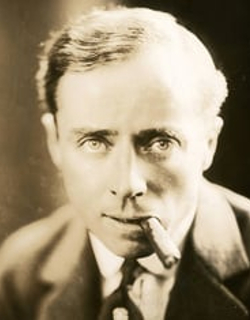
Birth of Herbert Brenon, Director, Actor & Screenwriter

herbert-brenon

Herbert Brenon, Irish film director, actor and screenwriter during the era of silent movies through the 1930s, is born Alexander Herbert Reginald St. John Brenon on January 13, 1880.

Brenon is born at 25 Crosthwaite Park, in Kingstown (now Dún Laoghaire, County Dublin) to journalist, poet, and politician Edward St. John Brenon and Francis Harries.

In 1882, the family moves to London, where Brenon is educated at St. Paul’s School and at King’s College London. He starts out as a stagehand in New York City and by 1909 he operates a small picture theatre in Pennsylvania. Before becoming a director, he performs in vaudeville acts with his wife, Helen Oberg.

In 1911 Brenon is hired as a writer by Carl Laemmle, directing his first short the following year. Signed by William Fox in 1915, he graduates to feature films. With Paramount Pictures from 1923, he directs several spectacular productions with British themes, including the silent version of Beau Geste (1926). He regards sound pictures with a measure of apprehension.

Some of his more noteworthy films are the first movie adaptations of Peter Pan (1924) and the aforementioned Beau Geste (1926), Sorrell and Son (1927) for which he is nominated for the Academy Award for Best Director in the 1st Academy Awards, Laugh, Clown, Laugh (1928) with Lon Chaney, and The Flying Squad (1940), his last.

Brenon returns to Great Britain in 1934, but his career is well on the decline, and he retires in 1940.

Herbert Brenon dies in Los Angeles, California on June 21, 1958, and is interred in a private mausoleum at Woodlawn Cemetery, Bronx, New York.


Leave a comment

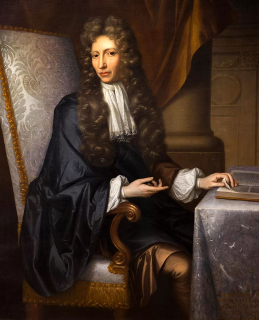
Death of Robert Boyle, Philosopher & Writer

robert-boyle

Robert Boyle, Anglo-Irish natural philosopher, theological writer, chemist, physicist, inventor and a preeminent figure of 17th-century intellectual culture, dies on December 31, 1691, in London.

Boyle is born on January 25, 1627, at Lismore Castle, in County Waterford. At age eight, he begins his formal education at Eton College, where his studious nature quickly becomes apparent. In 1639 he and his brother Francis embark on a grand tour of the continent together with their tutor Isaac Marcombes. In 1642, owing to the Irish rebellion, Francis returns home while Robert remains with his tutor in Geneva and pursues further studies.

Boyle returns to England in 1644, where he takes up residence at his hereditary estate of Stalbridge in Dorset. There he begins a literary career writing ethical and devotional tracts, some of which employ stylistic and rhetorical models drawn from French popular literature, especially romance writings. In 1649 he begins investigating nature via scientific experimentation. From 1647 until the mid-1650s, he remains in close contact with a group of natural philosophers and social reformers gathered around the intelligencer Samuel Hartlib. This group, the Hartlib Circle, includes several chemists who heighten his interest in experimental chemistry.

Boyle spends much of 1652–1654 in Ireland overseeing his hereditary lands and performing some anatomic dissections. In 1654 he is invited to Oxford, and he takes up residence at the university until 1668. In Oxford he is exposed to the latest developments in natural philosophy and becomes associated with a group of notable natural philosophers and physicians, including John Wilkins, Christopher Wren, and John Locke. These individuals, together with a few others, form the “Experimental Philosophy Club.” Much of Boyle’s best known work dates from this period.

In 1659 Boyle and Robert Hooke, the clever inventor and subsequent curator of experiments for the Royal Society, complete the construction of their famous air pump and use it to study pneumatics. Their resultant discoveries regarding air pressure and the vacuum appear in Boyle’s first scientific publication, New Experiments Physico-Mechanicall, Touching the Spring of the Air and Its Effects (1660). Boyle and Hooke discover several physical characteristics of air, including its role in combustion, respiration, and the transmission of sound. One of their findings, published in 1662, later becomes known as “Boyle’s law.” This law expresses the inverse relationship that exists between the pressure and volume of a gas, and it is determined by measuring the volume occupied by a constant quantity of air when compressed by differing weights of mercury.

Among Boyle’s most influential writings are The Sceptical Chymist (1661), which assails the then-current Aristotelian and especially Paracelsian notions about the composition of matter and methods of chemical analysis, and the Origine of Formes and Qualities (1666), which uses chemical phenomena to support the corpuscularian hypothesis. He argues so strongly for the need of applying the principles and methods of chemistry to the study of the natural world and to medicine that he later gains the appellation of the “father of chemistry.”

Boyle is a devout and pious Anglican who keenly champions his faith. He sponsors educational and missionary activities and writes a number of theological treatises. He is deeply concerned about the widespread perception that irreligion and atheism are on the rise, and he strives to demonstrate ways in which science and religion are mutually supportive. For Boyle, studying nature as a product of God’s handiwork is an inherently religious duty. He argues that this method of study would, in return, illuminate God’s omnipresence and goodness, thereby enhancing a scientist’s understanding of the divine. The Christian Virtuoso (1690) summarizes these views and may be seen as a manifesto of his own life as the model of a Christian scientist.

In 1668 Boyle leaves Oxford and takes up residence with his sister Katherine Jones, Vicountess Ranelagh, in her house on Pall Mall in London. There he sets up an active laboratory, employs assistants, receives visitors, and publishes at least one book nearly every year. Living in London also provides him the opportunity to participate actively in the Royal Society.

Boyle is a genial man who achieves both national and international renown during his lifetime. He is offered the presidency of the Royal Society and the episcopacy but declines both. Throughout his adult life, he is sickly, suffering from weak eyes and hands, recurring illnesses, and one or more strokes. He dies at age 64 on December 31, 1691, after a short illness exacerbated by his grief over Katherine’s death a week earlier. He leaves his papers to the Royal Society and a bequest for establishing a series of lectures in defense of Christianity. These lectures, now known as the Boyle Lectures, continue to this day.


1 Comment

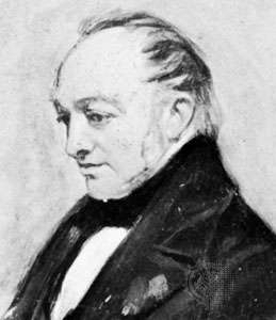
Birth of William Lewery Blackley, Divine & Social Reformer

william-lewery-blackley

William Lewery Blackley, divine and social reformer, is born at Dundalk, County Louth on December 30, 1830.

Blackley is the second son of Travers Robert Blackley of Ashtown Lodge, County Dublin and Eliza, daughter of Colonel Lewery, who is taken prisoner by the French at Verdun. His maternal grandfather is Travers Hartley, MP for Dublin (1776-1790) and governor of the Bank of Ireland.

In boyhood Blackley is sent with his brother John to a school at Brussels kept by Dr. Carl Martin Friedlander, a Polish political refugee, whose daughter, Amelia Jeanne Josephine, he subsequently marries on July 24, 1855. There he acquires proficiency in French, German, and other foreign languages. In 1847 he returns to Ireland, entered Trinity College, Dublin, graduating B.A. in 1850, M.A. in 1854, and takes holy orders. In 1854 he becomes curate of St. Peter’s, Southwark, but an attack of cholera compels his retirement from London. From 1855 to 1867 he has charge of two churches at Frensham, near Farnham, Surrey. He is rector of North Waltham, Hampshire (1867-1883), and King’s Somborne (1883-1889). In 1883 he is made honorary canon of Winchester.

Blackley, who is an energetic parish priest and is keenly interested in social questions, carefully elaborates a scheme for the cure of pauperism by a statutory enforcement of thrift which has far-reaching results at home and abroad. In November 1878 he contributes to the Nineteenth Century an essay entitled National Insurance a Cheap, Practical, and Popular Way of Preventing Pauperism, and thenceforth strenuously advocates a scheme of compulsory insurance, which the National Providence League, with the Earl of Shaftesbury as president, is formed in 1880 to carry into effect. At the same time he recommends temperance as a means of social regeneration. His views reach a wide public through his writings, which include How to teach Domestic Economy (1879), Collected Essays on the Prevention of Pauperism (1880), Social Economy Reading Book, adapted to the New Code (1881), Thrift and Independence; a Word for Working-men (1884).

Blackley’s scheme provides that all persons between eighteen and twenty should subscribe to a national fund, and should receive in return a week in time of sickness, and a week after the age of seventy. The plan is urged on the House of Lords by the Earl of Carnarvon in 1880, and is the subject of inquiry by a select committee of the House of Commons from 1885 to 1887. The majority of the boards of guardians in England and Wales support the proposals, but the commons’ committee, while acknowledging Blackley’s ingenuity and knowledge, reports adversely on administrative and actuarial grounds. At the same time the friendly societies, which Blackley has censured in his Thrift and Independence, regards the principle of compulsion as a menace to their own growth, and their historian and champion, the Rev. John Frome Wilkinson, sharply criticises Blackley’s plan in The Blackley National Providence Insurance Scheme; a Protest and Appeal (1887). Blackley’s plan, although rejected for the time, stimulates kindred movements in the colonies and in foreign countries, and leads directly to the adoption of old age pensions in England by legislation in 1908, while the national insurance scheme which receives parliamentary sanction in 1911 bears some trace of Blackley’s persistent agitation.

In 1887 Blackley, who is director of the Clergy Mutual Insurance Company, makes proposals to the church congress which lead to the formation of the “Clergy Pension Scheme” and of a society for ecclesiastical fire insurance. In the autumn of 1889 Blackley, whose active propagandism brings him constantly to London, becomes vicar of St. James the Less, Vauxhall Bridge Road. There he enlarges the schools and builds a parish hall and a vicarage.

William Lewery Blackley dies after a brief illness at 79 St. George’s Square, on July 25, 1902. Brasses are put up in Blackley’s memory in the churches of St. James the Less, North Waltham, and Frensham.


Leave a comment

Birth of Playwright St. John Greer Ervine

st-john-greer-ervine

St. John Greer Ervine, unionist playwright, author, critic, and manager of the Abbey Theatre from 1915 to 1916, is born in Ballymacarrett, Belfast on December 28, 1883. He is considered to be the founding father of modern Northern Irish drama.

Although accepted to study at Trinity College, Dublin, circumstances force Ervine to leave school at the age of 15 to begin working in an insurance office.

Two years later, Ervine immigrates to London, where he discovers a love for the theatre. He begins his writing career with Mixed Marriage (1911), an Ulster tragedy, and produces three plays between 1911 and 1915. In 1915, after a meeting with William Butler Yeats in London, he becomes the director of the Abbey Theatre in Dublin. It is, however, not a happy appointment as his personality and politics clash with the management of the theatre.

Ervine then joins the Royal Dublin Fusiliers and fights in Flanders, losing a leg in the conflict. Returning home, he feels increasingly alienated by nationalism and more attracted to the unionism of his family background. He becomes a vehement detractor of the south, describing Ireland in a letter to George Bernard Shaw as brimming with “bleating Celtic Twilighters, sex-starved Daughters of the Gael, gangsters and gombeen men.”

Ervine is a distinctively Ulster orientated writer, focusing on a naturalistic portrayal of rural and urban life. His most famous and popular work amongst his Northern Irish audience is Boyd’s Shop (1936), which becomes one of the Ulster Group Theatre’s stalwart productions. The play is a classic of the homely yet sincere Ulster genre and centres around the struggles of the folk that Ervine grew up with in his grandmother’s shop on the Albertbridge Road. Ervine creates in Boyd’s Shop a template for Ulster theatre that is to dominate until the advent of Samuel Thompson‘s Over the Bridge.

Ervine’s reactionary unionism and anti-southern hatred becomes more pronounced as he ages and eclipses his more subtle characteristics and abilities as a writer. Although many of his novels and plays are at times clouded by his prejudices, they are also very often capable of tremendous feeling and humanity showing he is a writer of note.

St. John Greer Ervine dies at the age of 87 in London on January 24, 1971.


Leave a comment

Birth of Sir John Parnell, 2nd Baronet

john-parnell

Sir John Parnell, 2nd Baronet, an Anglo-Irish Member of Parliament, is born on December 25, 1744.

A Church of Ireland landowner, his family had originally migrated to Ireland from Congleton in Cheshire. Although not from an Irish Roman Catholic background, Parnell, the only son of Sir John Parnell, 1st Baronet, is renowned in Irish history for his efforts to bring about a more emancipated country. He is the great-grandfather of Charles Stewart Parnell, known as the uncrowned king of Ireland and best known for opposing the Acts of Union 1800 between the two kingdoms of Great Britain and Ireland.

From a line of politically astute ancestors who had moved to Ireland in the 17th century, Parnell rises to the highest positions in Irish politics as Commissioner of the Revenue (1780), Chancellor of the Exchequer of Ireland (1787), and Lord of the Treasury (1793).

Parnell first serves in the Parliament of Ireland as one of the members for Bangor, from 1767 to 1768. He later sits for Queen’s County from 1783 until the Union with Great Britain creates the United Kingdom of Great Britain and Ireland in 1801. After the Union, he gains a seat in the Parliament of the United Kingdom for a short time as member for Queen’s County but dies suddenly in London in December 1801.

Henry Grattan describes Parnell as “an honest, straightforward, independent man, possessed of considerable ability and much public spirit; as Chancellor of the Exchequer, he was not deficient, and he served his country by his plan to reduce the interest of money. He was amiable in private, mild in disposition, but firm in mind and purpose. His conduct at the Union did him honour, and proved how warmly he was attached to the interests of his country, and on this account, he was dismissed.”

(Pictured: Oil painting on canvas, The Right Hon. Sir John Parnell, 2nd Bt (1744–1801) by Pompeo Girolamo Batoni (Lucca 1708 – Rome 1787))


Leave a comment

Birth of Martin Archer Shee, Portrait Painter

martin-archer-shee

Sir Martin Archer Shee, portrait painter and president of the Royal Academy of Arts, is born in Dublin on December 23, 1769.

Shee is born into an old Irish Catholic family, the son of Martin Shee, a merchant, who regards the profession of a painter as an unsuitable occupation for a descendant of the Shees. He nevertheless studies art in the Royal Dublin Society and comes to London. There, in 1788, he is introduced by Edmund Burke to Joshua Reynolds, on whose advice he studies in the schools of the Royal Academy of Arts.

In 1789 Shee exhibits his first two pictures, the “Head of an Old Man” and “Portrait of a Gentleman.” Over the next ten years he steadily increases in practice. In 1798 he is chosen an associate of the Royal Academy and in 1800 he is elected a Royal Academician. He moves to George Romney‘s former house at 32 Cavendish Square and sets up as his successor.

Shee continues to paint with great readiness of hand and fertility of invention, although his portraits are eclipsed by more than one of his contemporaries, and especially by Thomas Lawrence. His earlier portraits are carefully finished, easy in action, with good drawing and excellent discrimination of character. They show an undue tendency to redness in the flesh painting, a defect which is still more apparent in his later works, in which the handling is less square, crisp and forcible. In addition to his portraits, he executes various subjects and historical works, such as Lavinia, Belisarius, his diploma picture “Prospero and Miranda,” and the “Daughter of Jephthah.”

In 1805 Shee publishes a poem consisting of Rhymes on Art, and a second part follows in 1809. Lord Byron speaks well of it in his English Bards and Scotch Reviewers. He publishes another small volume of verse in 1814, entitled The Commemoration of Sir Joshua Reynolds, and other Poems, but this is less successful. He also produces a tragedy, Alasco, set in Poland. The play is accepted at Covent Garden, but is refused a licence, on the grounds that it contains treasonable allusions, and Shee angrily resolves to make his appeal to the public. He carries out his threat in 1824, but Alasco is still on the list of unacted dramas in 1911. He also publishes two novels – Oldcourt (1829, in three volumes) and Cecil Hyde (1834).

On the death of Sir Thomas Lawrence in 1830, Shee is chosen president of the Royal Academy in his stead and shortly afterwards receives a knighthood. In 1831 he is elected a Fellow of the Royal Society. In an examination before the parliamentary committee of 1836 concerning the functions of the Royal Academy, he ably defends its rights. He continues to paint until 1845, when illness makes him retire to Brighton. He is deputised for at the Academy by J. M. W. Turner, who had appointed him a trustee of the projected Turner almshouse.

From 1842–1849, Shee is the first president of the Royal Birmingham Society of Artists.

Martin Archer Shee dies in Brighton, Sussex, England on August 13, 1850, and is buried in the western extension to St. Nicholas’ Churchyard in Brighton. His headstone remains but has been laid flat and moved to the perimeter of the site.


Leave a comment

Harrods Bombing

harrods-bombing

A Provisional Irish Republican Army (PIRA) car bomb kills six and injures ninety outside London‘s Harrods department store, a large, upmarket department store in the affluent Knightsbridge district near Buckingham Palace on December 17, 1983. The IRA Army Council claims that it has not authorised the attack and expresses regret for the civilian casualties. After the bombing, the IRA changes its tactic to focus on military targets on the mainland.

Harrods had been the target of an earlier IRA bomb on December 21, 1974, which was placed in the northeast corner of the first floor. There was a very short warning, and the store was in the process of being cleared when it exploded. It was also the target of a much smaller IRA bomb almost ten years later, in January 1993, which injured four people.

From 1973 the Provisional IRA has carried out waves of bombing attacks on commercial targets in London and elsewhere in England as part of its “economic war.” The goal is to damage the economy and cause disruption, which would put pressure on the British government to withdraw from Northern Ireland. On December 10, 1983, the IRA carries out its first attack in London in some time when a bomb explodes at the Royal Artillery Barracks, injuring three British soldiers.

One week later, on the afternoon of December 17, IRA members park a car bomb near the side entrance of Harrods, on Hans Crescent. The bomb contains 25 to 30 lbs. of explosives and is set to be detonated by a timer. It is left in a 1972 blue Austin 1300 GT four-door sedan. At 12:44 PM a man using an IRA codeword phones the central London branch of the Samaritans charity. The caller says there is a car bomb outside Harrods and another bomb inside Harrods and gives the car’s registration plate. According to police, he does not give any other description of the car.

The bomb explodes at about 1:21 PM, as four police officers in a car, an officer on foot and a police dog-handler near the suspect vehicle. Three officers and three bystanders are killed, and 90 others are injured, including 14 police officers. The blast damages 24 cars and all five floors on the side of Harrods, sending a shower of glass down onto the street. The police car absorbs much of the blast and this likely prevents further casualties.

Five people die at the scene of the bombing and a sixth later dies in the hospital. The bystanders who die are Philip Geddes (24), a journalist who had heard about the alert and went to the scene, Jasmine Cochrane-Patrick (25) and Kenneth Salvesen (28), a United States citizen. The Metropolitan Police Service officers killed are Sergeant Noel Lane (28) and Constable Jane Arbuthnot (22). A third officer, Inspector Stephen Dodd (34), dies in the hospital from his injuries on December 24. Constable Jon Gordon survives but loses both legs and part of a hand in the blast.

At the time of the explosion, a second warning call is made by the IRA. The caller says that a bomb has been left in the C&A department store at the east end of Oxford Street. Police clear the area and cordon it off, but this claim is found to be false. In the aftermath of the attack, hundreds of extra police and mobile bomb squads are drafted into London. Aleck Craddock, chairman of Harrods, reports that £1 million in turnover has been lost as a result of the bombing. Despite the damage, Harrods re-opens three days later, proclaiming it will not be “defeated by acts of terrorism.” Denis Thatcher, the husband of British Prime Minister Margaret Thatcher, visits the store and tells reporters “no damned Irishman is going to stop me going there.”


Leave a comment

Ratification of the Anglo-Irish Treaty

anglo-irish-treaty-negotiatorsThe Anglo-Irish Treaty is ratified by the Parliament of the United Kingdom on December 16, 1921. It is ratified by the British House of Commons by a vote of 401 to 58. On the same day the House of Lords votes in favour by 166 to 47.

The Anglo-Irish Treaty, commonly known as “The Treaty” and officially the “Articles of Agreement for a Treaty Between Great Britain and Ireland,” is an agreement between the government of the United Kingdom of Great Britain and Ireland and representatives of the Irish Republic that concludes the Irish War of Independence. It provides for the establishment of the Irish Free State within a year as a self-governing dominion within the “community of nations known as the British Empire,” a status “the same as that of the Dominion of Canada.” It also provides Northern Ireland, which had been created by the Government of Ireland Act 1920, an option to opt out of the Irish Free State, which it exercises.

The agreement is signed in London on December 6, 1921, by representatives of the Government of the United Kingdom, which includes Prime Minister David Lloyd George, who is head of the British delegates, and by representatives of the Irish Republic including Michael Collins and Arthur Griffith. The Irish representatives have plenipotentiary status (negotiators empowered to sign a treaty without reference back to their superiors) acting on behalf of the Irish Republic, though the British government declines to recognise that status. As required by its terms, the agreement is ratified by “a meeting” of the members elected to sit in the House of Commons of Southern Ireland and separately by the British Parliament.

Éamon de Valera calls a cabinet meeting to discuss the treaty on December 8, where he comes out against the treaty as signed. The cabinet decides by four votes to three to recommend the treaty to Dáil Éireann on December 14. Though the treaty is narrowly ratified, the split leads to the Irish Civil War, which is won by the pro-treaty side.

The Irish Free State as contemplated by the treaty comes into existence when its constitution becomes law on December 6, 1922 by a royal proclamation giving the force of law to the Irish Free State Constitution Act 1922.

(Pictured: Members of the Irish negotiation committee returning to Ireland in December 1921)


Leave a comment

Birth of Edna O’Brien, Novelist, Playwright & Poet

edna-o-brien

Edna O’Brien, novelist, memoirist, playwright, poet and short story writer, is born in Tuamgraney, County Clare on December 15, 1930. Philip Roth describes her as “the most gifted woman now writing in English,” while the former President of Ireland Mary Robinson cites her as “one of the great creative writers of her generation.” Her works often revolve around the inner feelings of women, and their problems in relating to men, and to society as a whole.

O’Brien is the youngest child of “a strict, religious family.” From 1941 to 1946 she is educated by the Sisters of Mercy, a circumstance that contributes to a “suffocating” childhood. “I rebelled against the coercive and stifling religion into which I was born and bred. It was very frightening and all pervasive. I’m glad it has gone.” She is fond of a nun as she deeply misses her mum and tries to identify the nun with her mother.

In 1950, O’Brien is awarded a licence as a pharmacist. In Ireland, she reads such writers as Leo Tolstoy, William Makepeace Thackeray, and F. Scott Fitzgerald. In 1954, she marries, against her parents’ wishes, the Irish writer Ernest Gébler and the couple moves to London. They have two sons, but the marriage is dissolved in 1964. Gébler dies in 1998.

In London, O’Brien purchases Introducing James Joyce, with an introduction written by T. S. Eliot. When she learns that James Joyce‘s A Portrait of the Artist as a Young Man is autobiographical, it makes her realise where she might turn, should she decide to write herself. In London she starts work as a reader for Hutchinson, where on the basis of her reports she is commissioned, for £50, to write a novel. Her first novel, The Country Girls (1960), is often credited with breaking silence on sexual matters and social issues during a repressive period in Ireland following World War II.

This novel is the first part of a trilogy of novels which includes The Lonely Girl (1962) and Girls in Their Married Bliss (1964). Shortly after their publication, these books are banned and, in some cases burned, in her native country due to their frank portrayals of the sex lives of their characters. Her novel A Pagan Place (1970) is about her repressive childhood. Her parents are vehemently against all things related to literature and her mother strongly disapproves of her daughter’s career as a writer.

O’Brien is a panel member for the first edition of the BBC‘s Question Time in 1979. In 2017, she becomes the sole surviving member.

In 1980, she writes a play, Virginia, about Virginia Woolf, and it is staged originally in June 1980 at the Stratford Festival, Ontario, Canada and subsequently in the West End of London at the Theatre Royal Haymarket with Maggie Smith and directed by Robin Phillips. It is staged at The Public Theater in New York City in 1985.

Other works include a biography of James Joyce, published in 1999, and one of the poet Lord Byron, Byron in Love (2009). House of Splendid Isolation (1994), her novel about a terrorist who goes on the run, marks a new phase in her writing career. Down by the River (1996) concerns an under-age rape victim who seeks an abortion in England, the “Miss X case.” In the Forest (2002) deals with the real-life case of Brendan O’Donnell, who abducts and murders a woman, her three-year-old son, and a priest, in rural Ireland.

O’Brien now lives in London. She receives the Irish PEN Award in 2001. Saints and Sinners wins the 2011 Frank O’Connor International Short Story Award, the world’s richest prize for a short story collection. Faber and Faber publish her memoir, Country Girl, in 2012. In 2015, she is bestowed Saoi by Aosdána.


Leave a comment

Death of Christie Hennessy, Folk Singer-Songwriter

christie-hennessyChristie Hennessy, Irish folk singer-songwriter, dies in London on December 11, 2007. Although Hennessy is unable to read or write due to severe dyslexia, he still writes his own songs such as “Roll back the Clouds” and “All the lies that you told me.”

Hennessy is born in Tralee, County Kerry on November 19, 1945. His first guitar is made, especially for him, from a tea chest when he is six years old by his friend Jerry Quirke. He leaves school at the age of eleven.

Hennessy’s first job is as a messenger boy, and it is then that he discovers that it is important to be able to read. He is unable to read or write due to severe dyslexia, but still enjoys his library of books. He later works on building sites in London.

In 1972 Hennessy releases his first record, The Green Album, on Westwood, a small label. With scant publicity or promotion, the album makes little impact and only 500 copies of the record are pressed. He returns to labouring on building sites in the UK and does not release another album for twenty years. When he does, his 1992 release The Rehearsal outsells U2 in Ireland, eventually attaining triple platinum status. His following albums, A Year in the Life and Box also sell extremely well in Ireland.

A renowned songwriter as well as performer, Hennessy writes several songs that become hits for other singers including Don’t Forget your Shovel, made famous by Christy Moore, and All the Lies that You Told Me, recorded by Frances Black. He also composes the theme tune and incidental music for the BBC TV series Get Well Soon written by Ray Galton (of Steptoe & Son fame) and composes and writes a musical/feature film about his native Ireland, Two Stops to Paradise.

In 2005, Christy Moore’s rendition of Hennessy’s Don’t Forget Your Shovel is referenced in a UK Number One single JCB by Nizlopi. It is further referenced in the video for the same song. As the line is sung, the characters in the JCB pass a shop called “Christie’s Shovels.”

Hennessy returns to the studio in 2007, one final time to record an album with both Luka Bloom and Christy Moore sharing vocals on one of the tracks.

Christie Hennessy dies on December 11, 2007 in a London hospice, at the age of 62. He is reported to have died from pleural mesothelioma, a rare form of lung cancer, which has been attributed to his younger years spent working on building sites in London where he was exposed to asbestos dust. Just before he dies he had been touring in Ireland but had to cancel due to the illness. His ashes are buried in Old Rath Cemetery, Tralee. A commemorative statue of Christie is erected in Central Plaza, just off the town square in Tralee in November 2009.