seamus dubhghaill

Promoting Irish Culture and History from Little Rock, Arkansas, USA


Leave a comment

Birth of Sir William Bernard Hickie, British Army General

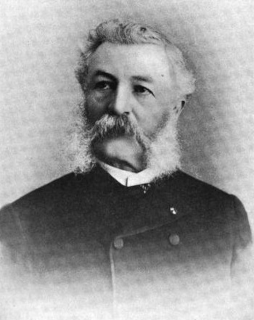
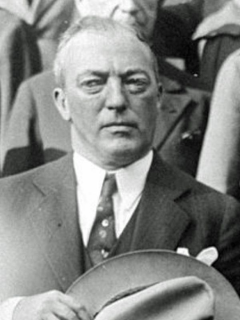
Sir William Bernard Hickie, British Army general, commander of the 16th (Irish) Division (1915–18) and an Irish nationalist politician, is born on May 21, 1865, at Slevoir, Terryglass, near Borrisokane, County Tipperary.

Hickie is the eldest son of Colonel James Francis Hickie, JP, of Slevoir, former commanding officer of the 7th Royal Fusiliers, and Lucila Calista (de Tejada) Hickie, daughter of Don Pablo Lariosy Herreros de Tejada of Laguna de Cameros, Castile. He is educated at St. Mary’s College, Oscott, before attending the Royal Military College, Sandhurst, and is commissioned into the Royal Fusiliers in 1885, serving in Egypt and India.

A major at the outbreak of the Second Boer War in 1899, Hickie serves on the staff of Lieutenant-Colonel P. W. J. Le Gallais, commanding officer of the mounted infantry. On November 6, 1900, he is involved in an attempt to capture General Christiaan De Wet at the Battle of Bothaville, when a force led by Le Gallais and Lieutenant-Colonel Wally Ross storm De Wet’s camp. De Wet escapes, while a rearguard of 100 men engages the British force. In a fierce fight Le Gallais is killed, and Wally Ross is badly wounded. Hickie decides to charge the Boer position and leads his small force forward just as reinforcements under Major-General C. E. Knox arrive. The Boers immediately surrender, and some are found with explosive bullets. He wants to execute them immediately, but Knox insists that they be tried. Exasperated with the whole affair, Hickie gives a highly critical interview after the action which is later published in The Times History of the War in South Africa (7 vols, 1900–09), edited by Leo Amery.

Hickie is promoted to brevet lieutenant colonel in 1901 and appointed deputy-assistant adjutant general of the 8th division (1903–06). In 1906, he is given command of the 1st battalion of the Royal Fusiliers. Promoted to colonel in 1912, he serves as assistant quartermaster general of the Irish command (1912–14) and is appointed a Companion of the Order of the Bath in 1914. On the outbreak of World War I, he is promoted to brigadier general and serves in Belgium and France in command of the adjutant’s and quartermaster-general’s department of II Corps. In this capacity, he is involved in the retreat following the Battle of Mons and during the First Battle of the Marne (September 1914). In December 1915, he is appointed to command the 16th (Irish) Division, with the rank of major general, replacing General Sir Lawrence W. Parsons. The division is based around a core of Redmondite National Volunteers, and Hickie, a Catholic and a home ruler, is an acceptable commander to John Redmond and other Irish nationalists.

Hickie is professional, politically adept, and popular with his men, and under his leadership the 16th is renowned for its aggressive fighting spirit. He commands the division during the Battle of the Somme in 1916 and, while proud of his men’s success in capturing Guillemont and Ginchy (September 1916), is appalled by their losses. When the division is ordered to capture Messines (now Mesen) in June 1917, he gives Major Willie Redmond permission to advance as far as the first objective and, following Redmond’s death, reproaches himself bitterly. After this attack the division is transferred to the fifth army and provides assault troops for future attacks. During the Third Battle of Ypres, and especially during the attack on Langemarck in August 1917, the division suffers horrendous casualties, losing 221 officers and 4,064 men. Among the casualties is Fr. Willie Doyle, who Hickie unsuccessfully recommends for a Victoria Cross. The division’s losses at Langemarck are highlighted by Irish MPs in the House of Commons, and Hickie’s handling of the attack is criticised. By this time, nationalist disillusionment with the war means that few Irish replacements are available, and Hickie is forced to accept increasing numbers of non-Irish conscripts into the division. Worn down by years of command, his health finally breaks, and, in February 1918, he is sent home on sick leave, being replaced by Major-General Sir Richard Amyatt Hull.

In 1918, Hickie is created a Knight Commander of the Order of the Bath (KCB) and is also awarded the French Croix de Guerre. During the Irish War of Independence (1919–21), he is critical of the methods used by Crown forces, denouncing in particular the indiscipline of the Black and Tans. In 1921 he retires from the army and becomes a prominent figure in the Royal British Legion in Ireland, tirelessly campaigning on behalf of ex-servicemen. In the 1920s he is involved with the Irish battlefield memorial committee, which erects memorial crosses at Wytschaete, Guillemont, and Salonika, commemorating the 10th and 16th divisions. He later serves as a senator of the Irish Free State (1925–36). Retiring from public life in 1936 to his residence at Terryglass, County Tipperary, he devotes his last years to gardening and reading.

Hickie dies on November 3, 1950, in Dublin, and is buried at Terryglass. He marries a daughter of the novelist Rev. J. O. Hannay, who predeceases him. There is a small collection of his papers in the National Library of Ireland (NLI).

(From: “Hickie, Sir William Bernard” by David Murphy, Dictionary of Irish Biography, http://www.dib.ie, October 2009)

Leave a comment

Death of William Francis Deegan, Architect & American Legion Organizer

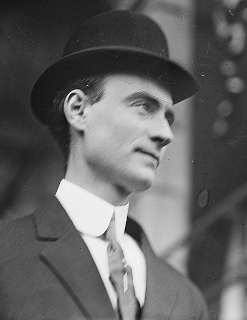
William Francis Deegan, architect, organizer of the American Legion, major in the United States Army Corps of Engineers (USACE), and Democratic political leader in New York City, dies in Manhattan, New York County, New York, on April 3, 1932.

Deegan is born in the Bronx, Bronx County, New York, on December 28, 1882, to Irish immigrants. He studies architecture at Cooper Union. He marries Violet Secor (1889-1969) and has one son, William Secor Deegan (1909-85). At the age of 35 he serves in World War I as a staff officer in the 105th Field Artillery, rising to the rank of major.

Deegan later joins the United States Army Corps of Engineers as a major, where he supervises the construction of military bases in the New York area under the command of General George Washington Goethals. After the war he helps organize the American Legion in 1919, advancing to State Commander in 1921. In 1922 he is considered a strong candidate to become national commander of the Legion at their convention in New Orleans but is defeated due to his strong advocacy for admitting Black veterans into the organization. Advocacy for the rights of Black people is a strong theme throughout Deegan’s career, including during his position as Tenement House Commissioner.

Deegan works as an architect at a number of distinguished firms, including McKim, Mead & White, Post, Magnicke and Franke, and Starrett and van Vleck. Later in life he holds a number of political positions, most of them in the Bronx. He is President of the Bronx Chamber of Commerce until the chamber grows critical of Mayor Jimmy Walker, at which point he resigns. In 1928, Mayor Walker appoints him Tenement House Commissioner of New York City, a post he holds for the rest of his life, and in 1930, chairman of the Mayor’s Committee on Receptions to Distinguished Guests, or “official greeter,” a job in which he is preceded by his friend Rodman Wanamaker and eventually succeeded by Grover Whalen.

Deegan dies of complications following an appendectomy on April 3, 1932. He is buried at Gate of Heaven Cemetery, Hawthorne, Westchester County, New York. After his death, his widow, Violet, marries Albert W. Crouch (1882-1954).

At the time of his death, a new road is being built from the Triborough Bridge (now the Robert F. Kennedy Bridge) to the Grand Concourse. This is renamed and expanded in 1956 into the Major Deegan Expressway section of Interstate 87 in the Bronx, which retains his name.


Leave a comment

Death of Florence O’Donoghue, Historian & Member of the Irish Republican Army

Florence O’Donoghue, historian and head of intelligence of the Cork No. 1 Brigade of the Irish Republican Army (IRA) during the Irish War of Independence, dies on December 18, 1967, in Mercy University Hospital, Cork, County Cork.

O’Donoghue is born in Rathmore, County Kerry, on July 22, 1894, the son of farmer Patrick O’Donoghue and Margaret Cronin. He moves to Cork in 1910, where he works as an apprentice in the drapery trade.

The 1916 Easter Rising is a watershed in O’Donoghue’s life. In December 1916, he joins the Cork branch of the Irish Volunteers. In early 1917, he is elected unanimously First Lieutenant of the Cyclist Company and as a result devotes all his spare time to Volunteer work. He begins writing weekly for two years for The Irish World newspaper. By May 1917, he is sworn into the Irish Republican Brotherhood (IRB) and in October, Tomás Mac Curtain appoints him head of communications of the Cork Brigade. He replaces Pat Higgins as Brigade Adjutant in February 1917. He is a key organiser in the sensational jailbreak of Captain Donnchadh Mac Niallghuis on Armistice Day 1918 and takes personal responsibility for his protection. Michael Collins is the last officer from Volunteers General Headquarters to visit Cork shortly after Christmas 1919, until the truce in 1921.

O’Donoghue builds up an intelligence network and agents which includes his future wife, Josephine Marchment. She is head female clerk at the 6th Division Headquarters at Victoria Barracks, Cork, and passes on secret British Army correspondence to him. He recruits people to open letters, tap phone lines and intercept telegrams. The Irish Republican Army has 2,000 active members in Cork which are also used for intelligence gathering. By March 1920, after killing a Royal Irish Constabulary (RIC) Inspector, he is on the run and serving full-time in the IRA. In November of that year, the Cork Brigade kills six British Army officers and executes five Cork civilians on suspicion of spying.

After two and a half years of fighting, a truce is agreed upon on July 11, 1921. When the Dáil approves the Anglo-Irish Treaty, in January 1922, the IRA splits into pro- and anti-Treaty camps. Over the coming months and after being elected onto the army’s executive as Adjutant General, O’Donoghue warns of the dangers of an Irish Civil War. In June 1922, he resigns from the army’s national executive and a month later, on July 3, 1922, from the army. Civil war does break out on June 28, 1922 between pro- and anti-Treaty factions, much to his dismay.

During the Irish Civil War, O’Donoghue remains neutral and tries to organise a truce to end the fighting. In December 1922, he forms a group called the “Neutral IRA”, along with Seán O’Hegarty, composed of pro-truce IRA men. He claims he has 20,000 members in this group. He campaigns for a month’s truce between the two sides, so that a political compromise could be reached. However, his efforts come to nothing and in March 1923, he winds up the “Neutral IRA,” judging that its objectives cannot be achieved. The Irish Civil War ends on May 24, 1923.

O’Donoghue serves as major in the Irish Army from 1939-1946. He forms a Supplementary Intelligence Service that is to remain behind enemy lines in the event of an invasion. He also teaches guerrilla warfare tactics to new army recruits.

O’Donoghue marries Josephine Brown (née Marchment) in April 1921 and they have four children. The couple also adopts two children from Josephine’s first marriage, including Reggie Brown, whom O’Donoghue kidnaps from his grandparents in Wales in 1920. He becomes a rate collector and remains outside politics.

In later years O’Donoghue becomes a respected historian. While in the army he edits An Cosantóir, the Irish Army’s magazine. He convinces Éamon de Valera to establish the Bureau of Military History to record personal accounts from the Irish War of Independence. He is a recording officer until 1948. His most famous work is his biography on Liam Lynch, entitled No Other Law.

O’Donoghue dies on December 18, 1967, and Tom Barry gives the graveside oration. His papers are in the National Library of Ireland (NLI) and his statement to the Bureau of Military History is in the Military Archives.


Leave a comment

Death of Richard Butler, Irish-born Officer in the Continental Army

Richard Butler, an Irish-born officer in the Continental Army during the American Revolutionary War, is killed on November 4, 1791, while fighting Native Americans in the United States in a battle that is known as St. Clair’s defeat.

Born on April 1, 1743, in St. Bridget’s Parish, Dublin, Butler is the oldest son of Thomas and Eleanor Butler (née Parker). His father is an Irish aristocrat who serves in the British Army. He is the brother of Colonel Thomas Butler and Captain Edward Butler. All three brothers serve in the American Revolution and in the Northwest Indian War against the Northwestern Confederacy of Native American tribes in the Northwest Territories. His two other brothers, William and Percival, serve in the Revolution but do not see later military service.

In 1748 Butler’s father opens a gun shop in Dublin, but that same year the family moves to Lancaster, Pennsylvania, where he learns to make the Pennsylvania long rifles used in the French and Indian War.

By 1760, the family moves to the frontier at Carlisle, Pennsylvania, where Thomas and his sons manufacture long rifles and become friends with Daniel Morgan. The Butler gun shop still stands in Carlisle.

By the 1770s, Butler and his brother William are important traders at Fort Pitt in Pennsylvania and in Ohio. Butler Street in Pittsburgh is named for them.

At the outset of the American Revolution, the Continental Congress names Butler a commissioner in 1775 to negotiate with the Indians. He visits representatives of the Delaware, Shawnee, and other tribes to secure their support, or at least neutrality, in the war with Britain.

On July 20, 1776, Butler is commissioned a major in the 8th Pennsylvania Regiment in the Continental Army, serving first as second in command to his friend Daniel Morgan. He is promoted to lieutenant colonel on March 12, 1777, retroactive to September 1776. On June 7, 1777, he is promoted to colonel and placed in command of 9th Pennsylvania Regiment.

During the war Butler sees action at the Battle of Saratoga (1777) and the Battle of Monmouth (1778). His four other brothers also serve and are noted for their bravery as the “fighting Butlers.” In January 1781 he is transferred to the 5th Pennsylvania Regiment and leads the Continental Army at the Battle of Spencer’s Ordinary.

At the conclusion of the Battle of Yorktown in October 1781, General George Washington confers on Butler the honor of receiving Cornwallis’ sword of surrender, an honor which he gives to his second in command, Ebenezer Denny. At the last moment, Baron von Steuben demands that he receive the sword. This almost precipitates a duel between Butler and Von Steuben.

At the victory dinner for his officers, George Washington raises his glass and toasts, “The Butlers and their five sons!”

Following Yorktown, Butler remains in the Continental Army and is transferred to the 3rd Pennsylvania Regiment following a consolidation of the Army on January 1, 1783. On September 30 of the same year, he is breveted as a brigadier general. He remains in active service with the Continental Army until it is finally disbanded on November 3, 1783.

In 1783 Butler and his brothers become original members of the Pennsylvania Society of the Cincinnati, a military society of officers who had served in the Continental Army.

After the war, the Confederation Congress puts Butler in charge of Indians of the Northwest Territory. He negotiates the Treaty of Fort Stanwix in 1784, in which the Iroquois surrender their lands. He is also called upon during later negotiations, such as the Treaty of Fort McIntosh in 1785.

Butler returns to Pennsylvania and is a judge in Allegheny County. He also serves in the state legislature. He marries Maria Smith, and they have four children, only one of whom lives to have children and continue the line. He also fathers a son, Captain Butler (or Tamanatha) with Shawnee chief Nonhelema. He and his Shawnee son fight in opposing armies in 1791.

In 1791, Butler is commissioned a major general in the levies (i.e. militiamen conscripted into Federal service) under Major General Arthur St. Clair to fight against the Western Confederacy of Native Americans in the Northwest Territories (modern day Ohio). He is killed in action on November 4, 1791, in St. Clair’s Defeat at what is now Fort Recovery, Ohio.

Reportedly Butler is first buried on the battlefield, which site is then lost until it is accidentally found years later. The remains are laid to rest with the remains of the other fallen at Fort Recovery.

Butler County, Ohio, where Fort Hamilton stood, is named for Richard Butler, as are Butler County, Kentucky, and Butler County, Pennsylvania. The city of Butler, Pennsylvania and the General Richard Butler Bridge, located in the city of Butler, are also named for him. A miniature portrait of Butler is painted by “The Painter of The Revolution,” Colonel John Trumbull, in 1790 and is in the collection of Yale University.

Butler is also honored in the name of General Richard Butler KYSAAR, Butler County, Kentucky recognized August 20, 2016. A chapter of the Sons of the American Revolution is named for him as as is the General Richard Butler Chapter of the Daughters of the American Revolution (DAR), founded in Butler, Pennsylvania.


Leave a comment

Birth of John Purroy Mitchel, the 95th Mayor of New York City

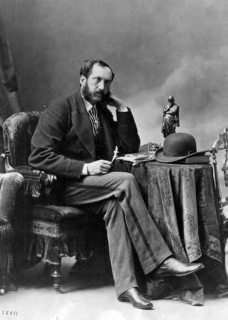
John Purroy Mitchel, the 95th mayor of New York City (1914-17), is born on July 19, 1879, at Fordham, Bronx, New York City. He is remembered for his short career as leader of reform politics in New York as well as for his early death as a U.S. Army Air Service officer in the last months of World War I.

Mitchel is born to James Mitchel, a New York City fire marshal, and Mary Purroy who works as a schoolteacher until her marriage. His father is Irish, and Presbyterian in faith, the son of the famous Irish nationalist John Mitchel, and a veteran of the Confederate States Army. Two of his uncles were killed fighting for the Confederacy. His maternal grandfather, Venezuelan-born Juan Bautista Purroy, was that country’s consul in New York, which makes Mitchel the first Mayor of New York City of Latino descent. His great-grandfather, José Joaquin de Purroy, was a lawyer from Spain who settled in Venezuela. He graduates from a Catholic secondary school at Fordham Preparatory School in the late 1890s. He obtains his bachelor’s degree from Columbia College in 1899 and graduates from New York Law School in 1902 with honors. He then pursues a career as a private attorney.

In December 1906, Mitchel’s career takes flight when he is hired by family friend and New York City corporation counsel William B. Ellison to investigate the office of John F. Ahearn, borough president of Manhattan, for incompetence, waste and inefficiency. As a result, Ahearn is dismissed as borough president of Manhattan. He begins his career as assistant corporation counsel and then becomes a member of the Commissioners of Accounts, from which he investigates city departments. He gains results and recognition for his thorough and professional investigations into various city departments and high-ranking officials. Along with the help of Henry Bruère and other staff members of the Bureau of Municipal Research, he turns the insignificant Commissioners of Accounts into an administration of importance.

The young Mitchel’s reputation as a reformer garners him the support of the anti-Tammany forces. In 1909, he is elected president of the New York City Board of Aldermen, an organization similar to the current New York City Council. As president of the Board of Aldermen, he is able to enact fiscal reforms. He cuts waste and improves accounting practices. Also, he unsuccessfully fights for a municipal-owned transit system and the city sees him vote against allowing the Interborough Rapid Transit and the Brooklyn Rapid Transit companies permission to extend their existing subway and elevated lines. For a six-week period in 1910 after current Mayor William J. Gaynor is injured by a bullet wound, he serves as acting mayor. His biggest accomplishment during his short tenure is the act of neutrality during a garment industry strike.

As the mayoral election approaches in 1913, the Citizens Municipal Committee of 107 sets out to find a candidate that will give New York “a non-partisan, efficient and progressive government.” They are assisted in this endeavor by the Fusion Executive Committee, led by Joseph M. Price of the City Club of New York. After nine ballots, Mitchel is nominated as a candidate for mayor. During his campaign, he focuses on making City Hall a place of decency and honesty. He also focuses on business as he promises New Yorkers that he will modernize the administrative and financial machinery and the processes of city government.

At the age of 34, Mitchel is elected mayor on the Republican Party slate as he wins an overwhelming victory, defeating Democratic candidate Edward E. McCall by 121,000 votes, thus becoming the second youngest mayor of New York City. He is often referred to as “The Boy Mayor of New York.”

Mitchel’s administration introduces widespread reforms, particularly in the Police Department, which has long been highly corrupt, and which is cleaned up by Mitchel’s Police Commissioner Arthur H. Woods. Woods is able to break up gangs and in his first year in office and he arrests more than 200 criminals. Woods also launches an attack on robbery, prostitution, pickpocketing and gambling. Woods ultimately transforms the police department into a crime-fighting machine. Mitchel aims to get rid of corruption wherever he sees it. His administration sets out to restructure and modernize New York City and its government. He is able to expand the city’s regulatory activities, runs the police department more honestly and efficiently and, much like in 1910, he maintains impartiality during garment and transportation workers strikes in 1916.

At 1:30 p.m. on April 17, 1914, Michael P. Mahoney fires a gun at the mayor as Mitchel is getting in his car to go to lunch. The bullet ricochets off a pedestrian and hits Frank Lyon Polk, New York City’s corporation counsel, in the chin.

Mitchel’s early popularity is soon diminished due to his fiscal policies and vision of education. He is heavily criticized for combining vocational and academic courses. He begins to trim the size of the Board of Education and attempts to control teachers’ salaries.

Mitchel advocates universal military training to prepare for war. In a speech at Princeton University on March 1, 1917, he describes universal military training as “the [only] truly democratic solution to the problem of preparedness on land.” His universal military training alienates New Yorkers and is not popular. Many feel he focuses too much on military patriotism and is indifferent to politics. This soon leads to a loss of support for his re-election bid in 1917.

Mitchel runs again for mayor in the highly charged wartime election of 1917. His re-election bid takes a hit as many New Yorkers feel he is socializing with the social elite, focuses too much on the economy and efficiency and his concern on military preparedness. He narrowly loses the Republican primary to William M. Bennett after a contentious recount but then runs for re-election as a pro-war Fusion candidate.

Mitchel’s main campaign theme is patriotism, with a media campaign that denounces Germans, Irish, and Jews as unpatriotic sympathizers with the enemy cause. He runs against Republican Bennett, antiwar Socialist Morris Hillquit, and the Tammany Hall Democrat John F. Hylan. Hylan ridicules and denounces Mitchel’s upper-class reform as an affront to democracy and to the voters. He wins by a landslide without taking a clear position on the war. Mitchel barely beats Hillquit for second place.

After failing to get re-elected, Mitchel joins the Air Service as a flying cadet, completing training in San Diego and obtaining the rank of major. On the morning of July 6, 1918, when returning from a short military training flight to Gerstner Field, near Lake Charles, Louisiana, his plane suddenly goes into a nosedive, causing him to fall from his plane due to an unfastened seatbelt. He plummets 500 feet to his death, his body landing in a marsh about a half mile south of the field.

Mitchel’s body is returned to Manhattan, New York City. His funeral is held at St. Patrick’s Cathedral, and he is buried in Woodlawn Cemetery in The Bronx, New York City, on July 11, 1918.

Mitchel Field on Long Island is named for him in 1918. A bronze memorial plaque with his likeness is also affixed between the two stone pylons at the western end of Hamilton Hall, the main college building at Columbia University. A plaque of his likeness is on the entrance to the base of the Central Park Reservoir elevated cinder jogging track at 90th Street and Fifth Avenue entrance to Central Park. The New York City Fire Department operates a fireboat named John Purroy Mitchel from 1921 to 1966.


Leave a comment

Assassination of Sir Richard Sykes, British Ambassador to the Netherlands

Sir Richard Adam Sykes, KCMG, MC, the British Ambassador to the Netherlands, is assassinated by two members of the Irish Republican Army (IRA) outside his residence in The Hague on March 22, 1979.

Sykes is born on May 8, 1920, to Brigadier A. C. Sykes. For his schooling he attends Wellington College before going up to the University of Oxford, where he attends Christ Church.

During World War II, Sykes serves in the British Army with the Royal Signals from 1940 to 1946. During his service he attains the rank of major. In 1945 he is awarded the Military Cross as well as the Croix de Guerre by France.

Sykes joined HM Foreign Service in 1947 and serves at the Foreign Office from 1947 to 1948. He then serves in Nanjing (1948–50), Peking (1950–52) and returns to the UK to serve at the Foreign Office (1952–56). His next overseas postings take him to Brussels (1956–59), Santiago (1959–62) and Athens (1963–66), before returning to the Foreign Office (1967–69).

Sykes’ first posting as an ambassador comes with a posting to Havana (1970–72) before moving to be a Minister at the British Embassy in Washington D.C. (1972–1975). From there he returns to the Foreign Office as Department Under-Secretary between 1975 and 1977. He is then appointed as Ambassador to the Netherlands in 1977.

Sykes is leaving his residence in The Hague at 9:00 a.m. on March 22, 1979, and is getting into his silver Rolls-Royce limousine when he is shot. He is sitting next to Alyson Bailes. The car door is held by Karel Straub, a 19-year-old Dutch national who works at the embassy. Straub is also shot in the attack. The chauffeur, Jack Wilson, is uninjured and drives Sykes to Westeinde Hospital, where he dies two hours later. Straub is transported by ambulance to the same hospital, where he also dies.

Police report that the shots came from around 10 yards away by two assailants wearing business suits, who escaped on foot following the attack. Suspects for the assassination are Palestinians or Iraqis, although no evidence is ever put forward. It is ultimately confirmed that the IRA had carried out the killings.

The IRA claims responsibility for the assassination in February 1980. In a statement they say of Sykes, “[he was] not just a Brit propagandist, as are all British ambassadors, but because he had been engaged in intelligence operations against our organisation.”

The ‘intelligence operations’ mentioned in the statement relate to a government report written by Sykes following the assassination of Christopher Ewart-Biggs. Ewart-Biggs was the British Ambassador to the Republic of Ireland and was killed by the IRA in 1976. Sykes produces diplomatic security guidelines as part of his report.

Sykes’ position as Ambassador to the Netherlands had been strained due to certain Dutch groups, which were sympathetic to the IRA, and consequent arms smuggling activities.

There is a memorial plaque to Sykes in St. Michael’s Church, Wilsford, Wiltshire.

(Pictured: “Sir Richard Sykes” by Bassano Ltd., half-plate film negative, 20 January 1966, National Portrait Gallery, London)


Leave a comment

Birth of Robert Horatio George Minty, Officer in the U.S. Union Army

Robert Horatio George Minty, a Brevet Major General in the Union Army during the American Civil War, is born in Westport, County Mayo, on December 4, 1831.

In 1836, Minty’s father, also named Robert, is promoted to lieutenant in the 1st West India Regiment of Foot, which is a regiment of black enlisted men with white officers. The whole family leaves Ireland and travels with him through Minty’s later childhood and teenage years. They move all around the Caribbean and West Africa ultimately being sent to Sierra Leone.

Minty’s father becomes judge advocate general in Jamaica in 1846 but dies after falling victim to yellow fever in 1848. Though he is only 17 at the time, he is allowed to take over his father’s commission in the regiment. After serving five years in the regiment he resigns his commission, possibly because he nearly becomes a victim of a tropical disease himself.

Minty immigrates to Ontario, Canada, where his mother and the family had moved after his father’s death. He is hired by the Great Western Railroad Company at a time when the railroad business is exploding in both the United States and Canada. He is involved with railroads for the rest of his life, with time out for the American Civil War.

Minty is commissioned as Major of the 2nd Michigan Cavalry Regiment on October 2, 1862, but holds that duty for only a month before he is transferred to the 3rd Michigan Cavalry Regiment and promoted to Lieutenant Colonel. His time with the new regiment is again relatively brief, for in March 1862 he is given the task of recruiting another regiment that becomes the 4th Michigan Cavalry Regiment.

Promoted to Colonel and officially given command of the unit on July 21, 1862, Minty leads it as it fights in Kentucky, Tennessee, Georgia and the Carolinas, taking part in the Battle of Chickamauga and the Battle of Atlanta. He is brevetted Brigadier General, U.S. Volunteers and Major General, U.S. Volunteers on March 13, 1865, for “gallant and meritorious services during the war.”

Minty and the men under his command are noted as being the regiment that captures the fleeing President of the Confederate States of America, Jefferson Davis, at Irwinville, Georgia on May 9, 1865, as the Confederacy collapses.

Minty is honorably mustered out of the Union Army on April 15, 1865, at Nashville, Tennessee, and becomes a successful railroad executive in his post-war career. He dies at the age of 74 on August 24, 1906, in Jerome, Arizona. He is buried at Aultorest Memorial Park in Ogden, Utah.


Leave a comment

Birth of Molesworth Phillips, Companion of Captain Cook

molesworth-phillips

Molesworth Phillips, sailor and companion of Captain James Cook, is born in Swords, County Dublin on August 15, 1755.

Phillips is the son of John Phillips of Swords. His father is a natural son of Richard Molesworth, 3rd Viscount Molesworth, whence Phillips acquires his Christian name. He first enters the Royal Navy, but on the advice of his friend Sir Joseph Banks he accepts a commission as second lieutenant in the Royal Marines on January 17, 1776. In this capacity he is selected to accompany Captain Cook on his last voyage, extending over nearly three years. He sails with Cook from Plymouth on July 12, 1776, and is with the marines who escort Cook when he lands at Hawaii on February 14, 1779.

In John Webber‘s painting “The Death of Captain Cook” Phillips is represented kneeling and firing at a native who is clubbing Cook. Phillips is himself wounded, but, after swimming back to the boat, he turns back and helps another wounded marine to the boats.

On November 1, 1780, Phillips is promoted to captain. On January 10, 1782, he marries Susanna Elizabeth, third daughter of Dr. Charles Burney (1726-1814), and sister of Frances Burney and of James Burney, Phillips’s friend, who, like him, had accompanied Cook on his last voyage. He has no further active service, but is promoted brevet major on March 1, 1794, and brevet lieutenant colonel on January 1, 1798. From 1784, for the sake of his wife’s health, he lives for a time at Boulogne, but after the French Revolution he resides chiefly at Mickleham, Surrey, not far from Juniper Hall, where Frances Burney entertains numbers of French emigres. From 1796 to 1799, during the alarm of a French invasion of Ireland, Phillips feels it his duty to reside on the Irish estates at Beleotton, which he had inherited from an uncle. On January 6, 1800, his wife dies.

After the Treaty of Amiens, Phillips visits France in 1802, and he is one of those who are seized by Napoleon on the renewal of the war. He is detained in France until the peace of 1814. During this detention he makes friends with the Prince of Talleyrand and other well-known Frenchmen. After his return to England, he becomes acquainted with Robert Southey, Mary and Charles Lamb, who describe him as “the high-minded associate of Cook, the veteran colonel, with his lusty heart still sending cartels of defiance to old Time,” and with John Thomas Smith (1766-1833), whom he supplies with various anecdotes for his Nollekens and his Times.

Phillips dies of cholera at his house in Lambeth on September 11, 1832, and is buried in St. Margaret’s, Westminster, where an inscription commemorates him and James and Martin Burney (1788-1852).

(Pictured: Etching of Molesworth Phillips by Andrew Geddes, circa 1825, bequeathed by Frederick Leverton Harris, 1927, National Portrait Gallery, London)


Leave a comment

Birth of William Francis Butler, Army Officer & Writer

william-francis-butler

William Francis Butler, 19th-century British Army officer, writer, and adventurer, is born on October 31, 1838, at Ballyslatteen, Golden, County Tipperary.

Butler is the son of Richard and Ellen Butler. The great famine of 1847 and scenes of suffering and eviction are amongst his earliest recollections. He is educated chiefly by the Jesuits at Tullabeg College.

Butler enters the army as an ensign of the 69th Regiment of Foot at Fermoy Barracks in 1858, becoming captain in 1872 and major in 1874. He takes part with distinction in the Red River expedition (1870–71) and the Ashanti operations of 1873–1874 under Garnet Wolseley, 1st Viscount Wolseley and receives the Companion of the Order of the Bath in 1874.

On June 11, 1877, Butler marries Elizabeth Thompson, an accomplished painter of battle scenes, notably The Roll Call (1874), Quatre Bras (1875), Rorke’s Drift (1881), The Camel Corps (1891), and The Dawn of Waterloo (1895). They have six children. His daughter, Elizabeth Butler, marries Lt.-Col. Randolph Albert Fitzhardinge Kingscote (1867-1940) on July 24, 1903.

Butler again serves with General Wolseley in the Anglo-Zulu War, the Battle of Tell El Kebir (after which he is made an aide-de-camp to Queen Victoria) and the Sudan in 1884–1886, being employed as colonel on the staff in 1885 and brigadier general in 1885–1886. In the latter year, he is made a Knight Commander of the Order of the Bath. He serves as brigadier general on the staff in Egypt until 1892 when he is promoted to major general and stationed at Aldershot, subsequent to which he is given command of the South-Eastern District in March 1896.

In 1898 Butler succeeds General William Howley Goodenough as commander-in-chief in South Africa, with the local rank of lieutenant general. For a short period (December 1898 – February 1899), during the absence of Sir Alfred Milner in England, he acts as high commissioner, and as such, and subsequently in his military capacity, he expresses views on the subject of the probabilities of war which are not approved by the home government. He is consequently ordered home to command the Western District and holds this post until 1905. He also holds the Aldershot Command for a brief period from 1900 to 1901. He is promoted to lieutenant general in 1900 and continues to serve, finally leaving the King‘s service in 1905.

In October 1905, having reached the age limit of sixty-seven, Butler is placed on the retired list. The few years of life which remain to him he spends at Bansha Castle in Ireland, devoted chiefly to the cause of education. He is a frequent lecturer both in Dublin and the provinces on historical, social, and economic questions. He is known as a Home Ruler and an admirer of Charles Stewart Parnell. He is a member of the Senate of the National University of Ireland, and a commissioner of the Board of National Education. In June 1906, he is appointed Knight of the Grand Cross of the Order of the Bath, and in 1909 he is made a member of the Privy Council of Ireland.

William Butler dies at Bansha Castle in Bansha, County Tipperary, on June 10, 1910, and is buried at the cemetery of Killaldriffe, a few miles distant and not far from his ancestral home.

Butler had long been known as a descriptive writer, since his publication of The Great Lone Land (1872) and other works and he was the biographer (1899) of Sir George Pomeroy Colley. He had started work on his autobiography a few years before his death but died before it was completed. His youngest daughter, Eileen, Viscountess Gormanston, completes the work and has it published in 1911.

(Pictured: William Francis Butler, Source: Archives of Manitoba, Personalities – Butler, W. F. 1, N10492)


Leave a comment

Death of Dick Dowling, Confederate Commander

Southern Methodist University, Central University Libraries, DeGolyer Library

Richard William “Dick” Dowling, the victorious confederate commander at the Second Battle of Sabine Pass in the American Civil War, dies of yellow fever in Houston, Texas on September 23, 1867.

Dowling is born in the townland of Knockballyvishteal, Milltown, County Galway on January 14, 1837, the second of eight children, born to tenant farmer Patrick and Bridget Dowling (née Qualter). Following the eviction of his family from their home in 1845, the first year of the Great Famine, nine-year-old Dowling leaves Ireland in 1846 with his older sister Honora, bound for New Orleans in the United States.

As a teenager, Dowling displays his entrepreneurial skills by successfully running the Continental Coffeehouse, a saloon in the fashionable French Quarter. His parents and siblings follow from Ireland in 1851, but the joy of reunion is short-lived. In 1853, a yellow fever outbreak in New Orleans takes the lives of his parents and one of his younger brothers. With rising anti-Irish feeling growing in New Orleans, following local elections which see a landslide victory for the “Know Nothing” party, Dowling moves to Houston in 1857.

In 1857 Dowling marries Elizabeth Ann Odlum, daughter of Benjamin Digby Odlum, a Kildare-born Irishman, who had fought in the Texas Revolution, being captured at the Battle of Refugio in 1836.

By 1860, Dowling owns a number of saloons. His most successful is named the Bank of Bacchus, located on Courthouse Square in downtown Houston. “The Bank” as it is known locally becomes Houston’s most popular social gathering place in the 1860s and is renowned for its hospitality. He is also involved in setting up Houston’s first gaslight company and is first to have it installed in his home and “The Bank.” He is a founding member of Houston’s Hook and Ladder Company Number One fire department and is also involved in running the city’s first streetcar company.

Prior to the outbreak of the American Civil War, Dowling makes a name for himself as an able and successful entrepreneur. Among other things, he is involved with a predominantly Irish militia company which serves a more social than military role in Houston society. Upon Secession, this militia company is mustered straight into the Confederate States Army, with Dowling being elected First Lieutenant. The unit names themselves the “Jefferson Davis Guards” in honor of Confederate President Jefferson Davis. The Davis Guards are initially part of a Texas State Troops/Confederate expedition sent to take over Union Army forts and arsenals along the border with Mexico. The expedition is successfully completed without a shot being fired. They participate in the Battle of Galveston on New Year’s Day 1863, following which they are assigned to a newly constructed artillery post near the mouth of the Sabine River called Fort Sabine.

Sabine Pass was important as a point of arrival and departure for blockade runners. It is suspected that the Union Army will attempt an invasion of Texas via Sabine Pass because of its value as a harbor for blockade runners and its proximity 18 miles southeast of Beaumont, which lies on the railroad between Houston and the eastern part of the Confederacy.

To negotiate Sabine Pass all vessels except small boats take one of the two river channels. No seagoing ship can traverse the Pass without great risk of running aground should it stray from one of the channels. The inevitable course of any steam-powered warship, including shallow-draft gunboats then common to the U.S. Navy, would use one of the channels, both of which are within fair range of the fort’s six smoothbores.

Dowling spends the summer of 1863 at the earthen fort instructing his men in gunnery. On September 8, 1863, a Union Navy flotilla of some 22 gunboats and transports with 5,000 men accompanied by cavalry and artillery arrive off the mouth of Sabine Pass. The plan of invasion is sound, but monumentally mismanaged. Four of the flanking gunboats are to steam up the pass at speed and draw the fire of the fort, two in each channel, a tactic which had been used successfully in subduing the defensive fortifications of Mobile and New Orleans prior to this. This time, however, Dowling’s artillery drills pay off as the Confederates pour a rapid and withering fire onto the incoming gunboats, disabling and capturing two, while the others retreat in disarray. The rest of the flotilla retreats from the mouth of the pass and returns ignominiously to New Orleans, leaving the disabled ships with no option but to surrender to Dowling. With a command of just 47 men, Dowling had thwarted an attempted invasion of Texas, in the process capturing two gunboats, some 350 prisoners and a large quantity of supplies and munitions.

The Confederate government offers its gratitude and admiration to Dowling, now promoted to Major, and his unit, as a result of their battlefield prowess. In gratitude, the ladies of Houston present the unit with specially struck medals, which are actually Mexican eight reale coins with both faces sanded down and inscribed “Sabine Pass, 1864” on one side and a Maltese cross with the letters D and G on the other. Because of the official recognition given to the action, it is now accepted that these Davis Guard Medals are the only medals of honor issued by the Confederate government, and consequently are collector’s items today.

After the battle of Sabine Pass Dowling is elevated to hero status in his hometown of Houston. He subsequently serves as a recruiter for the Confederacy and is personally commended for his action at the battle by Jefferson Davis. After the war he returns to his saloon business and quickly becomes one of the city’s leading businessmen.

Dowling’s promising future is cut short by another yellow fever epidemic which devastates Houston in the late summer of 1867, and he dies on September 23, 1867. He is buried at St. Vincent’s Catholic Cemetery, the oldest Catholic cemetery in Houston.