seamus dubhghaill

Promoting Irish Culture and History from Little Rock, Arkansas, USA


Leave a comment

Birth of Charles Maturin, Clergyman, Playwright & Novelist

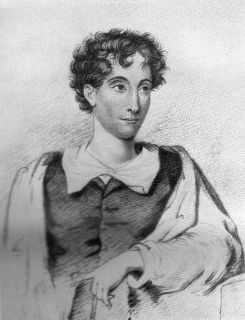
Charles Robert Maturin, also known as C. R. Maturin, an Irish Protestant clergyman ordained in the Church of Ireland and a writer of Gothic plays and novels, is born in Dublin on September 25, 1780. His best-known work is the novel Melmoth the Wanderer.

Maturin is descended from Huguenots who found shelter in Ireland, one of whom is Gabriel Jacques Maturin who becomes Dean of St. Patrick’s Cathedral, Dublin, after Jonathan Swift in 1745. He attends Trinity College Dublin. Shortly after being ordained as curate of Loughrea, County Galway, in 1803, he moves back to Dublin as curate of St. Peter’s Church. He lives in York Street with his father William, a Post Office official, and his mother, Fedelia Watson. He marries the acclaimed singer Henrietta Kingsbury on October 7, 1804.

Maturin’s first three works are Gothic novels published under the pseudonym Dennis Jasper Murphy and are critical and commercial failures. They do, however, catch the attention of Sir Walter Scott, who recommends Maturin’s work to Lord Byron. With their help, his play Bertram is staged in 1816 at the Theatre Royal, Drury Lane for 22 nights, with Edmund Kean starring in the lead role as Bertram. Financial success, however, eludes Maturin, as the play’s run coincides with his father’s unemployment and another relative’s bankruptcy, both of them assisted by the fledgling writer. To make matters worse, Samuel Taylor Coleridge publicly denounces the play as dull and loathsome, and “melancholy proof of the depravation of the public mind,” going nearly so far as to decry it as atheistic.

The Church of Ireland takes note of these and earlier criticisms and, having discovered the identity of Bertram‘s author after Maturin had shed his nom de plume to collect the profits from the play, subsequently bar his further clerical advancement. Forced to support his wife and four children by writing on his curate salary of £80-90 per annum, compared to the £1000 he made for Bertram, he switches back from playwright to novelist after a string of his plays meet with failure. He produces several novels in addition to Melmoth the Wanderer, including some on Irish subjects and The Albigenses, a historical novel which features werewolves. Various poems have also been ascribed to Maturin on dubious grounds and appear to be the work of others. The prize-winning “Lines on the Battle of Waterloo” is published in 1816 under the name of the university graduate John Shee. “The Universe” appears with Maturin’s name on the title page in 1821 but is now thought to be almost completely the work of James Wills.

The exaggerated effectiveness of Maturin’s preaching can be gauged from the two series of sermons that he publishes. On the occasion of the death of Princess Charlotte, he declares, “Life is full of death; the steps of the living cannot press the earth without disturbing the ashes of the dead – we walk upon our ancestors – the globe itself is one vast churchyard.” A contemporary account records that there had seldom been seen such crowds at St Peter’s. “Despite the severe weather, people of all persuasions flocked to the church and listened spellbound to this prince of preachers. In his obituary it is said that ‘did he leave no other monument whereon to rest his fame, these sermons alone would be sufficient.'”

Maturin dies in Dublin on October 30, 1824. A writer in the University Magazine later sums up his character as “eccentric almost to insanity and compounded of opposites – an insatiable reader of novels; an elegant preacher; an incessant dancer; a coxcomb in dress and manners.”

A sister of Maturin’s wife marries Charles Elgee, whose daughter, Jane Francesca, becomes the mother of Oscar Wilde. Thus, Charles Maturin is Oscar Wilde’s great-uncle by marriage. Wilde discards his own name and adopts the name of Maturin’s novel, Melmoth, during his exile in France.

Maturin’s eldest son, William Basil Kingsbury Maturin, follows him into the ministry, as do several of his grandsons. One of these, Basil W. Maturin, dies in the sinking of RMS Lusitania on May 7, 1915. The second son is Edward Maturin, who emigrates to the United States and becomes a novelist and poet there.


Leave a comment

Gerry Adams Announces Re-election Bid as Sinn Féin President

Sinn Féin President Gerry Adams announces on September 5, 2017, he will seek re-election as the party president in November and then outline his own future intentions as the former political wing of the Irish Republican Army (IRA) prepares to complete a generational shift in its leadership.

Adams, Sinn Féin leader for over thirty years, will seek re-election to the one-year post at the party’s annual conference and set out his future plans at that time. “I will be allowing my name to go forward for the position of Uachtaran Shinn Féin (President of Sinn Féin),” Adams says in a speech at a meeting of the party’s lawmakers. “And if elected I will be setting out our priorities and in particular our planned process of generational change, including my own future intentions.”

“We have no ambition to be part of the system. Our ambition is to change it. That means we must be in government – North and South,” Adams says.

Reviled by many as the face of the IRA during its campaign against British rule in Northern Ireland, Adams reinvented himself as a peacemaker in the troubled region and then as a populist opposition lawmaker in the Irish Republic. Around 3,600 people were killed during Northern Ireland’s “Troubles,” three decades of sectarian bloodshed between pro-British Protestant unionists and Catholic nationalists seeking a united Ireland that was ended by the 1998 Good Friday Agreement.

Whenever Adams decides to step down, he will almost certainly hand over to a successor with no direct involvement in the decades of conflict in Northern Ireland, say political analysts, making Sinn Féin a more palatable coalition partner in the Irish Republic where it has never been in power. Deputy leader Mary Lou McDonald, who has been at the forefront of a new breed of Sinn Féin politicians transforming the left-wing party’s image, is the clear favorite to take over. Michelle O’Neill, another Sinn Féin lawmaker in her 40s, succeeded Martin McGuinness as leader in Northern Ireland shortly before the former IRA commander’s death in March 2017.

With McGuinness, Adams turned Sinn Féin into the dominant nationalist party in Northern Ireland and the third largest party south of the border. Adams said the previous month that he intended to lead the party into the next parliamentary election in the Irish republic where suspicion of Sinn Féin’s role in the Northern Ireland troubles still runs deep among the main political parties.

The far larger ruling Fine Gael and main opposition Fianna Fáil, a more natural ally, have ruled out governing with Sinn Féin but analysts say a change of leader could soften that stance. The next election is expected in the next 12 months.

(From: “Sinn Féin’s Adams to outline succession plan in November” by Padraic Halpin | Photo: Sinn Féin President Gerry Adams speaks at an event in Gormanstown, Ireland, September 5, 2017, REUTERS/Clodagh Kilcoyne)


Leave a comment

Birth of Cornelius Denvir, Mathematician & Lord Bishop of Down and Connor

Cornelius Denvir, Roman Catholic Prelate, mathematician, natural philosopher and Lord Bishop of Down and Connor, is born on August 13, 1791, at Ballyculter, County Down. He is noted for ministering in Belfast amidst growing sectarian tension, taking a moderate and non-confrontational stance, to the annoyance of his pro-Catholic followers. He is also a professor at Maynooth College as well as Down and Connor Diocesan College, and is active in the local scientific community.

Denvir is educated at Dr. Nelson’s Classical School in Downpatrick, being described by peers as an enthusiastic child with a love for sight-seeing. According to one biographer, young Denvir also shows interest in the catechism by attending local visits from the then Bishop of Down and Connor, Dr. Patrick MacMullan, who is resident in Downpatrick. In September 1808, he enrolls at Maynooth College, and is appointed chair of Natural Philosophy and Mathematics there in August 1813.

As chair of mathematics and natural philosophy at Maynooth College, Denvir is noted for changing the style of education at the college from pure logic-based reasoning in Mathematics to a more holistic, topical approach. He is also noted for emphasising experimentation and the importance of the scientific method in teaching natural philosophy, with several sources noting his well-stocked labs.

While at Maynooth College Denvir teaches both Nicholas Callan, the inventor and physicist, and Dominic Corrigan, the noted Irish physician. According to several accounts, both speak fondly of their old professor, to the point of Callan gifting Denvir one of his induction coils in thanks.

Denvir is ordained first as deacon in June 1813, then a priest in May 1814, performing his liturgical duties in conjunction with his academic ones. In 1826, he leaves Maynooth College to become the parish priest of Downpatrick. In 1833 he becomes a professor at the newly founded St. Malachy’s College, teaching classes in Latin, Greek and Mathematics. He continues his duties as parish priest and professor until 1835, when he is appointed Bishop of Down and Connor in succession to Dr. William Crolly.

As 22nd Lord Bishop of Down and Connor, Denvir emphasises the teaching of the Catechism to youth as well as emphasising the importance of scripture to the diocese. In 1841 he helps fund the start of construction of St. Malachy’s Church in Belfast, which is completed in 1845. In his later years, he falls under criticism by other Belfast Catholics, who claim he is neglectful of his duties, especially those relating to expanding and defending Catholicism in the face of growing Protestant influence. Some accounts attribute his shortcomings to poor health and temperament, while others suggest that he backs away from expansion to avoid conflict with Protestant groups.

Denvir suffers from personal finance problems during his time as Bishop. The construction of St. Malachy’s Church puts him into deep personal debt, which he is apparently arrested for some time after 1844. He is also criticised for selling seats in the newly constructed church to offset costs. He is also described as reluctant in asking for funds from parishioners, severely limiting his resources with which to care for the church.

Denvir is appointed Commissioner of National Education in 1853. He is noted for being supportive of non-denominational education and investigating reports of proselytism in public primary education. He later resigns this position in 1857 on request of the Holy See to focus on expanding the local Catholic school system.

In 1860, after years of illness compounded by age, Denvir is assigned Dr. Patrick Dorrian as a coadjutor bishop to assist in his episcopal duties. While ill health is said to be the predominant reason for the appointment of a coadjutor, contemporary newspaper accounts suggest there also might be an ideological reason for the appointment. In The Spectator it is noted in December 1859 “it may be, because he is too liberal for the Cullen epoch.”

In May 1865, Denvir resigns as Bishop and is succeeded by Dorrian. He dies one year later on July 10, 1866, in his residence on Donegall St., after suffering from fainting fits a few days prior. He is buried in Ballycruttle Church.


Leave a comment

Death of Robert Barton, Nationalist & Anglo-Irish Politician

Robert Childers Barton, Anglo-Irish politician, Irish nationalist and farmer who participates in the negotiations leading up to the signature of the Anglo-Irish Treaty, dies in Annamoe, County Wicklow, on August 10, 1975. His father is Charles William Barton, and his mother is Agnes Alexandra Frances Childers. His wife is Rachel Warren of Boston, daughter of Fiske Warren. His double first cousin and close friend is the English-born Irish writer Erskine Childers.

Barton is born in Annamoe on March 14, 1881, into a wealthy Irish Protestant land-owning family, namely of Glendalough House. His two younger brothers, Erskine and Thomas, die while serving in the British Army during World War I. He is educated in England at Rugby School and the University of Oxford and becomes an officer in the Royal Dublin Fusiliers on the outbreak of World War I. He is stationed in Dublin during the 1916 Easter Rising and comes into contact with many of its imprisoned leaders in the aftermath while on duty at Richmond Barracks. He resigns his commission in protest at the heavy-handed British government suppression of the revolt. He then joins the Irish Republican Brotherhood (IRB).

At the 1918 Irish general election to the British House of Commons, Barton is elected as the Sinn Féin member for West Wicklow. In common with all Sinn Féin members, he boycotts the Westminster parliament and sits instead in Dáil Éireann (the First Dáil). Arrested in February 1919 for sedition, he escapes from Mountjoy Prison on Saint Patrick’s Day, leaving a note to the governor explaining that, owing to the discomfort of his cell, he felt compelled to leave, and requests the governor to keep his luggage until he sends for it. He is appointed as Director of Agriculture in the Dáil Ministry in April 1919. He is recaptured in January 1920 and sentenced to three years’ imprisonment but is released under the general amnesty of July 1921.

In May of that year, prior to his release, Barton is elected as a Sinn Féin member for Kildare–Wicklow in the 1921 Irish election to the House of Commons of Southern Ireland. Once again, all Sinn Féin members boycott this parliament, sitting as the Second Dáil. In August 1921, he is appointed to cabinet as Secretary for Economic Affairs.

Barton is one of the Irish plenipotentiaries to travel to London for the Anglo-Irish Treaty negotiations. His cousin is a secretary to the delegation. He reluctantly signs the Treaty on December 6, 1921, defending it “as the lesser of two outrages forced upon me and between which I had to choose.”

Although he had signed the Treaty and voted for it in the Dáil, Barton stands in the 1922 Irish general election for Anti-Treaty Sinn Féin, the only TD who had voted for the Treaty to do so and wins a seat in the Third Dáil. In common with other Anti-Treaty TDs, he does not take his seat. In October 1922 he is appointed Minister for Economic Affairs in Éamon de Valera‘s “Emergency Government,” a shadow government in opposition to the Provisional Government and the later Executive Council of the Irish Free State. His memoir of this period is completed in 1954 and can be seen on the Bureau of Military History website. He is arrested and interned for most of the war at the Curragh Camp.

Barton is defeated at the 1923 Irish general election and retires from politics for the law, practicing as a barrister. He later becomes a judge. He is chairman of the Agricultural Credit Corporation from 1934 to 1954. He dies at home in County Wicklow on August 10, 1975, at the age of 94, the last surviving signatory of the Anglo-Irish Treaty. Éamon de Valera dies only nineteen days later, on August 29, 1975.

Glendalough House, run by Barton for over 70 years right up until his death, is still considered one of Ireland’s most notable properties, alongside nearby Powerscourt Estate. The house is the center of numerous political meetings and gatherings from 1910 to 1922. It has also been featured as a location in many large Hollywood films including Excalibur, Saving Private Ryan and Braveheart.


Leave a comment

Birth of John Charles McQuaid, Archbishop of Dublin

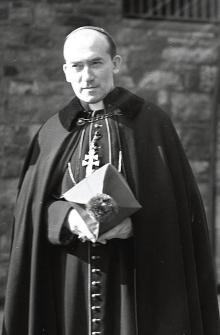
John Charles McQuaid, C.S.Sp., the Catholic Primate of Ireland and Archbishop of Dublin between December 1940 and January 1972, is born on July 28, 1895, in Cootehill, County Cavan. He is known for the unusual amount of influence he has over successive governments.

McQuaid is the eldest son of Eugene McQuaid and Jennie Corry McQuaid. He comes from a medical family, with his father, paternal uncle, sister and half-brother all being doctors. He is educated at St. Patrick’s College, Cavan, followed by Blackrock College in Blackrock, Dublin, which is run by the Holy Ghost Fathers, and the Jesuit Clongowes Wood College. He enters the Holy Ghost novitiate at Kimmage, Dublin, in 1913 and is professed in 1914. He graduates from the University College Dublin (UCD) in 1917 with first-class honors in classics. He continues his postgraduate studies at UCD with a master’s degree and a teaching diploma and subsequently earns a doctorate in theology at the Pontifical Gregorian University in Rome.

Ordained in 1924, the theology in which McQuaid is trained is conservative — strongly neo-scholastic and hostile to modernism and liberalism. His hatred of the French Revolution is expressed in several pastorals and speeches throughout his career. He also regards Protestantism as a fundamental error from which Irish Catholics should be quarantined as much as possible.

Appointed Dean of Studies at Blackrock College, McQuaid becomes a prominent figure in Catholic education and chairs the Catholic Headmasters’ Association for several years. In 1931 he is appointed president of Blackrock College, in which capacity he becomes acquainted with Éamon de Valera, the future Irish Taoiseach whose sons attend the school. In 1936 while drafting a new Irish constitution, de Valera consults McQuaid, although he rejects McQuaid’s draft “One, True Church” clause which states, among other things, that the Catholic Church is the one true church in Ireland.

When McQuaid is appointed Archbishop of Dublin in 1940, the appointment of a priest from the regular clergy causes considerable surprise. Irish government archives reveal that de Valera, as is suspected at the time, presses McQuaid’s claims at the Vatican. However, it is doubtful whether the Vatican needs much persuasion. There is a dearth of potential episcopal talent and McQuaid has an outstanding reputation as a Catholic educationalist.

Once appointed, McQuaid proves to be one of the ablest administrators in the history of the Irish Church. In the first two years of his episcopate, he sets up the Catholic Social Service Conference to alleviate the poverty and distress in Dublin which is aggravated by the war, and the Catholic Social Welfare Bureau to help the thousands of Irish emigrants going to Britain for war work. These two organizations fill a much-needed gap and continue to exist after the war. The expansion of Dublin city and its suburbs during his episcopate requires the building of new churches, schools, and hospitals. Meeting these demands also necessitates a considerable increase in the number of clergies, secular and regular, whose numbers more than double in the period from 1941 to 1972.

Given his previous career, the importance McQuaid assigns to education is not surprising. He is critical of the low priority accorded to education by successive governments and is particularly critical of the poor and pay conditions of teachers. His intervention in the primary teachers’ strike in 1946 is poorly received by the government and marks the souring of his relationship with de Valera. During his episcopate the number of primary schools increases by a third while the number of secondary schools more than double but, as with social welfare, the government increasingly assumes a dominant role in education from the 1960s onwards. Almost immediately after his appointment in 1940, he takes a hardline stand against the attendance of Catholic students at Trinity College Dublin (TCD). The ban lasts until 1970, when the increase in student numbers renders it untenable and he accedes reluctantly.

McQuaid has a formidable list of achievements in health care, especially maternity and pediatric services, physical and mental handicap services, and the treatment of alcoholism. It is ironic, therefore, that the most controversial episode of his career occurs in this area — the Irish hierarchy’s rejection in 1951 of a free mother-and-child health service. This leads to the resignation of the Minister for Health, Dr. Noël Browne, and is a watershed in Church-State relations in Ireland. With Irish tuberculosis and infant mortality statistics ranking among the highest in the world, the hierarchy, and particularly McQuaid, lose considerable support by lining up with the conservative medical establishment to resist efforts at socialized medicine.

From various pastorals that McQuaid issues at the time, it is clear that he does not see the need for the Second Vatican Council. As its deliberations proceed, his unease grows, and he becomes increasingly preoccupied with the issue of episcopal power and independence that he believes are being threatened by the Council. In the areas of liturgical reform, greater lay participation, and ecumenism, he is slow in implementing the Vatican II reforms. His views on ecumenism had always been lukewarm and had led to allegations that he was anti-Protestant. His personality and policies are criticized by a more assertive Dublin laity, but being a shy, reserved man who increasingly feels the isolation of office, he never responds to such comments. In 1968 the reaction to Humanae vitae causes open rebellion in the Dublin diocese, the force of which catches him unaware. His last pastoral as archbishop in 1971 betrays his anger and bemusement at the response to Humanae vitae in Dublin.

At the age of 75, McQuaid submits his resignation to the Vatican, and it is accepted. His resignation is announced in January 1972, when he is replaced by Dermot Ryan. McQuaid dies in Loughlinstown, County Dublin, the following year on April 7, 1973. He is buried in St. Mary’s Pro-Cathedral in Dublin, the seat of the Roman Catholic Archdiocese of Dublin.

McQuaid’s substantial archives are released by the Dublin Diocesan Archives in the late 1990s. In 1999 journalist John Cooney publishes a hostile biography of McQuaid, which makes controversial allegations of sexual abuse against McQuaid. The allegations are based on tenuous evidence gathered by McQuaid’s nemesis from the 1951 Mother and Child controversy, Dr. Noël Browne, who had died in 1997. No corroborating evidence is produced or has since emerged.


Leave a comment

Birth of John Philpot Curran, Orator, Politician, Lawyer & Judge

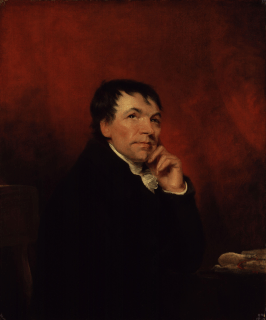
John Philpot Curran, Irish orator, politician, wit, lawyer and judge, who holds the office of Master of the Rolls in Ireland, is born in Newmarket, County Cork, on July 24, 1750.

Curran is the eldest of five children of James Curran, seneschal of the Newmarket manor court, and Sarah, née Philpot. The Curran family are said to have originally been named Curwen, their ancestor having come from Cumberland as a soldier under Oliver Cromwell during the Cromwellian conquest of Ireland, originally settling in County Londonderry.

Curran is educated at Midleton College, County Cork, before studing law at Trinity College Dublin. He continues his legal studies at King’s Inns and the Middle Temple. He is called to the Irish Bar in 1775. Upon his first trial, his nerves get the better of him and he cannot proceed. His short stature, boyish features, shrill voice and a stutter are said to have impacted his career, and earn him the nickname “Stuttering Jack Curran.”

However, Curran can speak passionately in court on subjects close to his heart. He eventually overcomes his nerves and gets rid of his speech impediment by constantly reciting Shakespeare and Bolingbroke in front of a mirror, becoming a noted orator and wit. His championing of popular Irish causes such as Catholic emancipation make him one of the most popular lawyers in Ireland. He is also fluent in the Irish language which is still the language of the majority at the time. He writes a large amount of humorous and romantic poetry.

The case which cements Curran’s popularity is that of Father Neale and St. Leger St. Leger, 1st Viscount Doneraile at the County Cork Assizes in 1780. Having a passion for lost causes, he represents the priest and wins over the jury by setting aside the issue of religion.

A liberal Protestant whose politics are similar to Henry Grattan, Curran employs all his eloquence to oppose the illiberal policy of the Government, and also the Union with Britain. He stands as Member of Parliament (MP) for Kilbeggan in 1783. He subsequently represents Rathcormack (1790-98) and Banagher from 1800 until the Act of Union in 1801, which bitterly disappoints him, forcing him to contemplate emigrating to the United States.

In 1798, Ireland rebels against the British House of Commons and lack of reforms on Catholic emancipation. The British defeat the Irish rebels in numerous battles and soon establish their control over the country by 1799. Many of the Irish ring leaders are charged with treason and are facing death sentences. Curran plays an important role in court defending the leaders of the United Irishmen.

Curran’s youngest daughter Sarah‘s romance with United Irishmen leader Robert Emmet scandalises Curran, who had tried to split them up. He is arrested and agrees to pass their correspondence on to Standish O’Grady, 1st Viscount Guillamore, the Attorney-General for Ireland. In the circumstances he cannot defend Emmet. He is suspected of involvement in Emmet’s Rebellion, but is completely exonerated. However, his friend Arthur Wolfe, 1st Viscount Kilwarden, is killed by the rebels, and he loses any faith in the beliefs of the United Irishmen. Emmet is found guilty of rebelling against the Crown and the union between Great Britain and Ireland and is hanged in 1803. Curran disowns Sarah, who dies of tuberculosis five years later.

Curran is appointed Master of the Rolls in Ireland in 1806, following William Pitt the Younger‘s replacement by a more liberal cabinet.

Curran retires in 1814 and spends his last three years in London. He dies in his home in Brompton on October 14, 1817. In 1837, his remains are transferred from Paddington Cemetery, London to Glasnevin Cemetery in Dublin, where they are laid in an 8-foot-high classical-style sarcophagus. In 1845 a white marble memorial to him, with a carved bust by Christopher Moore, is placed near the west door of St. Patrick’s Cathedral, Dublin.


Leave a comment

Death of James Butler, 1st Duke of Ormonde

James Butler, 12th Earl and 1st Duke of Ormond, dies on July 21, 1688, at the Kingston Lacy estate near Wimborne Minster, Dorset, England. An Anglo-Irish Protestant, he is the leading agent of English royal authority in Ireland during much of the period from the beginning of the English Civil War (1642–51) to the Glorious Revolution (1688–89).

Butler is born at Clerkenwell, London on October 19, 1610, into the prominent Butler family, the eldest child of Thomas Butler and his wife Elizabeth Poyntz. He grows up in England and succeeds to the earldom of Ormonde in 1633. That same year he begins his active career in Ireland by offering his services to Lord Deputy of Ireland Thomas Wentworth, later Earl of Strafford. Upon the outbreak of the Irish Rebellion of 1641 in Ireland, he is appointed a lieutenant general in the English army. He defeats the rebels of the Catholic Confederacy at Kilrush, Munster on April 15, 1642, and at New Ross, Leinster on March 18, 1643. Those triumphs, however, do not prevent the confederates from overrunning most of the country.

Butlers’s attempts to conclude a peace are blocked by a Catholic faction that advocates complete independence for Ireland. The situation deteriorates further, and in July 1647, he departs from Ireland, leaving the Protestant cause in the hands of the parliamentarians, who had defeated King Charles I in the First English Civil War (1642–46).

Returning to Ireland in September 1648, Butler concludes a peace with the confederacy in January 1649. He then rallies Protestant royalists and Catholic confederates in support of Charles II, son and successor of Charles I. For several months most of Ireland is under his control. But the parliamentarian general Oliver Cromwell lands at Dublin in August 1649 and swiftly conquers the country for Parliament. Butler flees to France and becomes one of Charles II’s closest advisers at his court-in-exile in Paris.

When Charles II returns to England in the Restoration of 1660, Butler, who had urged constitutional rather than military rule, is made commissioner for the treasury and the navy. Appointed Lord Lieutenant of Ireland in 1662, he makes vigorous attempts to encourage Irish commerce and industry. Nevertheless, his enemies at court persuade Charles to dismiss him in 1669. He is restored to royal favour in 1677 and is again appointed Lord Lieutenant of Ireland. Although he is created a duke in the English peerage in 1682, he is recalled from Ireland in 1684 as a result of new intrigues at Charles’s court and because of the determination of James, Duke of York, to strengthen his supporters in Ireland.

Butler dies on July 21, 1688, at the Kingston Lacy estate, Dorset. He is buried in Westminster Abbey on August 4, 1688. His eldest son, Thomas, 6th Earl of Ossory, predeceases him, but Ossory’s eldest son James succeeds as 2nd Duke of Ormonde (1665–1745).

(Pictured: “James Butler, 1st Duke of Ormond,” oil on canvas by William Wissing, National Portrait Gallery)


Leave a comment

Birth of Sir Maziere Brady, 1st Baronet & Lord Chancellor of Ireland

Sir Maziere Brady, 1st Baronet, PC (Ire), Irish judge, notable for his exceptionally long, though not particularly distinguished tenure as Lord Chancellor of Ireland, is born on July 20, 1796.

Brady is born on Parliament Street, Dublin, the second son of Francis Tempest Brady of Booterstown, a manufacturer of gold and silver thread, and his wife Charlotte Hodgson, daughter of William Hodgson of Castledawson, County Londonderry. He is baptised at St. Werburgh’s Church, Dublin. He is the brother of Sir Nicholas Brady, Lord Mayor of Dublin, and uncle of the eminent ecclesiastical historian William Maziere Brady.

The Bradys are an old and distinguished Munster family who are particularly associated with the town of Bandon, County Cork. Probably the most celebrated of his ancestors is the poet and psalmist Nicholas Brady (1659–1726), who collaborated with Nahum Tate, the Poet Laureate, on New Version of the Psalms of David.

Other notable forebears include Hugh Brady, the first Protestant Bishop of Meath (d. 1584), his father-in-law Robert Weston who, like Maziere serves as Lord Chancellor of Ireland, and the judge and author Luke Gernon (d. 1672), who is now best remembered for his work A Discourse of Ireland (1620), which gives a detailed and (from the English colonial point of view) not unsympathetic picture of the state of Ireland in 1620.

Brady is educated at Trinity College Dublin and takes his Bachelor of Arts degree in 1816. He enters the Middle Temple in 1816, is called to the Bar in 1819 and becomes King’s Counsel in 1835.

In politics Brady is a Liberal and supports Catholic emancipation. He sits on a commission of inquiry into Irish municipal corporations in 1833. He is appointed Solicitor-General for Ireland in 1837 and Attorney-General for Ireland the following year. In 1840 he is appointed Lord Chief Baron of the Irish Exchequer. In 1846 he is appointed Lord Chancellor of Ireland and serves in that office, with short intervals, for the next 20 years. He retires in 1866 and is made a baronet, of Hazelbrook in the County of Dublin, in 1869. His appointment ends the practice which grew after the Acts of Union 1800 of appointing only English lawyers as Lord Chancellor of Ireland. He sits on the Government Commission on Trinity College Dublin in 1851 and is nominated as Vice-Chancellor of Queen’s University Belfast in 1850. All through his life he shows a keen interest in education.

According to Elrington Ball, Brady’s Lord Chancellorship is notable for its length but for nothing else. Ball calls him “a good Chief Baron spoiled to make a bad Chancellor.” By general agreement he had been an excellent Chief Baron of the Exchequer, having a reputation for being fair-minded, courteous and approachable, but in Ball’s view the more onerous (and partly political) office of Lord Chancellor is beyond his capacity. Unlike some judges whose training had been in the common law, he never quite masters the separate code of equity. Delaney takes a somewhat more favourable view of Brady as Lord Chancellor, arguing that while his judgements do not show any great depth of learning they do show an ability to identify the central issue of any case and to apply the correct legal principle to it.

An anonymous pamphlet from 1850, which is highly critical of the Irish judiciary in general, describes Brady as being unable to keep order in his Court, and easily intimidated by counsel, especially by that formidable trio of future judges, Jonathan Christian, Francis Alexander FitzGerald, and Abraham Brewster. The author paints an unflattering picture of Brady as sitting “baffled and bewildered” in a Court where he is “a judge but not an authority.” On the other hand, Jonathan Christian, who had often clashed with Brady in Court, later praises him as “no ordinary man” despite his shortcomings as a judge. He describes him as “independent-minded, patriotic, natural and unaffected.”

Brady is a founder member of the Stephen’s Green Club and a member of the Royal Dublin Society and the Royal Irish Academy. In addition to the arts, he shows a keen interest in science, especially after his retirement. Like most judges of the time, he has both a town house in central Dublin and a place some distance from the city centre. His country house is Hazelbrook, Terenure, Dublin. He changes his town house several times, settling finally in Pembroke Street.

Brady marries firstly Elizabeth Anne Buchanan, daughter of Bever Buchanan, apothecary of Dublin, and his wife Eleanor Hodgson, in 1823 and they have five children. Elizabeth dies in 1858. In 1860, Brady marries Mary Hatchell, daughter of John Hatchell, Attorney-General for Ireland and Elizabeth Waddy, who survives him. He dies at his house in Pembroke Street on April 13, 1871. He is buried in Mount Jerome Cemetery.


Leave a comment

Death of Francis Lenny, Roman Catholic Bishop

Francis Lenny, Irish Roman Catholic bishop in the last third of the 20th century, dies in Mullavilly, County Armagh, Northern Ireland, on July 16, 1978.

Lenny is born in Cookstown, County Tyrone, on September 27, 1928. He is educated at St. Patrick’s Grammar School, Armagh, and St. Patrick’s College, Maynooth. He is ordained priest for the Archdiocese of Armagh on June 21, 1953. Pursuing his studies in ancient classes and canon law in Maynooth and the Dunboyne Institute, in July 1955 he is named secretary to Cardinal John D’Alton, Primate of Ireland, and upon his death in 1963, proceeds in the same position with his successor, Cardinal William Conway.

Lenny is appointed parish priest in Mullavilly in 1972. Less than two years later he is named coadjutor bishop of Armagh, receiving his episcopal consecration with the titular see of Rotdon from Cardinal Conway on June 16, 1974. Financial secretary to the Bishops’ Financial and General Purposes Committee, upon Conway’s death, he becomes vicar capitular of the archdiocese until Tomás Ó Fiaich is named his successor.

Lenny is a well-known canonist, and it is he who transfers a major relic of Saint Oliver Plunkett from Downside Abbey to Ireland in 1975, and is presently preserved in Oldcastle, County Meath, Plunkett’s birthplace.

A man of great charity and deep disposition, Lenny experiences great opposition from members of the Protestant community of Mullavilly, refusing to leave the village despite threats he receives. His bungalow is maliciously set on fire, and he dies at the early age of forty-nine on July 16, 1978, the fourth anniversary of his episcopal consecration, from injuries received complicated by a heart attack. Dressed in chasuble and mitre, he is laid to rest in a simple solid oak coffin following the celebration of a Funeral Mass celebrated at St. Patrick’s Cathedral in Armagh, presided by Archbishop Ó Fiaich which sees the participation of thousands.


Leave a comment

Birth of Thomas Butler, 6th Earl of Ossory

Vice Admiral Thomas Butler, 6th Earl of Ossory, KG, PC, PC (Ire), Irish soldier and politician, is born on July 8, 1634, at Kilkenny Castle. He is the eldest son of James Butler, 1st Duke of Ormond, and Elizabeth Preston. He predeceases his father and therefore never becomes duke.

When Butler is born, his father is then the 12th Earl of Ormond but is raised to marquess and duke. His family, the Butler dynasty, is Old English and descends from Theobald Walter, who had been appointed Chief Butler of Ireland by King Henry II in 1177. His mother is a second cousin once removed of his father as she is a granddaughter of Black Tom, 10th Earl of Ormond. Her father, however, is Scottish, Richard Preston, 1st Earl of Desmond, a favourite of James I. Both parents are Protestants. They married on Christmas Day 1629.

Butler is one of ten siblings, eight brothers and two sisters, but five of the sons die in childhood. As the eldest living son, he is the heir apparent and is styled with the corresponding courtesy title, which at first is Viscount Thurles but changed to Earl of Ossory when his father becomes marquess in 1642. His early years are spent in Ireland until 1647 when he accompanies his father to England. In 1648 his father renews his support for the royalist cause and he and his son have to flee to France, arriving in Caen in February 1648. Lady Ormond also moves to Caen, where she arrives on June 23, 1648, with his siblings.

Butler is an accomplished athlete and a good scholar. Having come to London in 1652 he is rightly suspected of sympathising with the exiled royalists, and in 1655 is jailed by Oliver Cromwell. After his release about a year later he goes into exile to the Netherlands where Charles II has his exile court at the time.

On November 17, 1659, while in exile, Butler marries Emilia van Nassau, the second daughter of Louis of Nassau, Lord of De Lek and Beverweerd. They have eleven children, including two sons: James (1665–1745), who becomes the 2nd Duke of Ormonde in 1688; Charles (1671–1758), who becomes the de jure 3rd Duke of Ormonde following his elder brother’s attainder in 1715; Elizabeth (died 1717), who marries William Stanley, 9th Earl of Derby in 1673; Amelia (died 1760), who inherits the estates of her brother Charles and never marries; and Henrietta (died 1724), who marries Henry de Nassau d’Auverquerque, 1st Earl of Grantham.

Butler accompanies Charles II back to England in 1660. In 1661 he becomes a member of both the English and the Irish houses of commons, representing in the former Bristol and Dublin University in the latter.

In 1662 Butler is called to the Irish House of Lords under a writ of acceleration as the Earl of Ossory. His father holds the title “5th Earl of Ossory” as one of his subsidiary titles. The acceleration makes Thomas Butler the 6th Earl of Ossory. This is the only substantive title he ever holds, as he predeceases his father and therefore never succeeds to his father’s titles. His eldest son, however, would later become the 2nd Duke of Ormond and the 7th Earl of Ossory.

Butler holds several military appointments: lieutenant-general of the army in Ireland (appointed in 1665); created an English peer as Lord Butler (in 1666); Lord of the Bedchamber to Charles II (appointed in 1660), a post he holds until his death.

In 1665 a fortunate accident allows Butler to take part in the Battle of Lowestoft against the Dutch, and in May 1672, being now in command of a ship, he fights against the same enemies in the Battle of Solebay, serving with great distinction on both occasions. He is partly responsible for this latter struggle, as on March 12, 1672, before war is declared, he attacks the Dutch Smyrna fleet, an action which he greatly regrets later in life. While visiting France in 1672 he rejects the liberal offers made by Louis XIV to induce him to enter the service of France and returning to England he adds to his high reputation by his conduct during the Battle of Texel in August 1673. From 1677 until 1679, he serves alongside his father as a Lord of the Admiralty.

Butler is intimate with William, Prince of Orange, and in 1677 he joins the allied army in the Netherlands, commanding the British contingent and winning great fame at the siege of Mons in 1678. He acts as deputy for his father, who is Lord Lieutenant of Ireland, and in parliament he defends Ormond’s Irish administration with great vigour. In 1680 he is appointed governor of English Tangier, but his death prevents him from taking up his new duties.

Butler dies on July 30, 1680, at Arlington House in London. He is buried provisionally in Westminster Abbey on July 31, 1680. The ceremony of burial is performed belatedly on November 13, 1680. Some say Butler’s body is later taken to Ireland and reburied in the family vault in St. Canice’s Cathedral, Kilkenny. James, his eldest son, succeeds him as the 7th Earl of Ossory and in 1688 becomes the 2nd Duke of Ormond.

One of Butler’s most intimate friends is John Evelyn, who eulogises him in his Diary.

(Pictured: “Thomas Butler, Earl of Ossory” by Peter Lely, painting, circa 1678, National Portrait Gallery)