In 1904, King Edward VII and Queen Alexandra travel to Ireland for a semi-official eight-day visit, arriving in Kingstown (now Dún Laoghaire) on April 26. They are accompanied by their daughter, Princess Victoria.
They travel by rail to Naas via the Great Southern and Western Railway Company. They are seated in a luxuriously upholstered carriage, the engine decorated with flags and streamers. The visit triggers a frenzy of preparation among the elite and merchants of Naas. Leading citizens from diverse backgrounds, including Protestants, Catholics, Loyalists, and Home Rulers, come together to welcome the royal visitors. The town is adorned with bunting, banners, and arches bearing royal and loyalist symbols, creating an extravagant showpiece of imperial loyalty.
During their visit to Naas, the King and Queen attend the Punchestown Races, adding a touch of glamour to the occasion.
They stay in the Dublin area for a few days, attending several events and ceremonies. After finishing in Dublin, the royals board their royal train for a three-day visit to Kilkenny.
For the arrival of the King and Queen in Kilkenny, significant efforts are undertaken to ensure the city is elegantly presented. In the weeks and months prior to the visit, local businessmen convene meetings in how best to organise the occasion.
The city is heavily festooned with bunting and streamers, and the route from the railway station to Kilkenny Castle is decorated with tiny fairy lights of every colour. During the visit, Princess Victoria plants three trees on the grounds of the Castle.
The visit is well-received in Kilkenny, although sometimes expressed in primitive fashion: an old man remarks, “Sure, the King’s a man after all,” his wife correcting him, “But he’s a great man, and the lovely lady’s an angel.” Although well-supported, black flags protesting the visit are hung from some buildings along the route. (It is more than 110 years before another royal visit is made to Kilkenny when Prince Charles and Princess Camilla visit the city on May 11, 2017.)
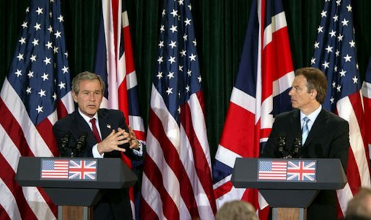
The two leaders meet at Hillsborough Castle and begin their sessions on April 7 with a half-hour walk through the gardens before dinner. The following day they hold a press conference and further talks, including a session on the Northern Ireland peace effort.
Bush and Blair, Bush’s closest ally in confronting Saddam Hussein, come together to discuss questions made increasingly urgent by the rapid military progress American and British forces have made and to plan for a postwar Iraq. They seek to bridge their differences over how much of a role to give the United Nations in rebuilding the country and putting together a new government.
Blair has been under pressure at home and from much of Europe to support giving the United Nations a strong role in stabilizing Iraq. The White House, however, has consistently signaled that it wants the United States and Britain to play the lead role in creating a new Iraqi government.
United States Secretary of StateColin L. Powell tells reporters traveling with the president that the United States is sending officials to the region to begin assembling a group of Iraqis who will constitute an interim governing authority and will be put in place alongside the American-led military and civilian authorities. In a sign of the speed with which the maneuvering for power in post-Hussein Iraq is unfolding, Ahmed Chalabi, the leader of the main Iraqi exile opposition group, the Iraqi National Congress (INC), is reported to be heading to Baghdad from southern Iraq.
“The hostilities phase is coming to a conclusion,” Powell says. “It’s time for all of us to think about the post-hostilities phase, how we create a representative government consisting of all elements of Iraqi society.”
Powell and British officials play down the magnitude of the differences between the United States and Britain over the United Nations role. The United Nations, Powell says, will have “an endorsing role to play to the interim authority to give it legitimacy,” a formulation that appears to reserve for the United States and Britain the right to select the leaders of the temporary postwar administration. A spokesman for Blair uses similar language, referring to the United Nations’ being involved “in a way that endorses that new Iraqi authority” as a step toward establishing a full-fledged Iraqi government.
Initially, primary responsibility for administering Iraq would rest with a team led by a retired United States Armylieutenant general, Jay Garner, and the interim Iraqi authority would be likely to begin assuming power after that, perhaps 90 days later, the British spokesman says.
Clearly wary of getting into another diplomatic squabble with other members of the United Nations Security Council, Powell and other administration officials have emphasized in recent days that the United States and Britain, having waged the war and paid for it with blood and money, will not be drawn into a negotiation with countries like France and Germany over the immediate postwar period.
Powell emphasizes, however, that part of his focus will now be on “healing” diplomatic wounds and granting the United Nations an important role once Iraq is stabilized.
At the United Nations, Secretary-GeneralKofi Annan says he will travel to Britain, France, Germany and Russia in the coming week to test whether the Security Council might be able to agree on a postwar plan. He announces that he has been working on post-conflict issues with a special adviser, Rafeeuddin Ahmed. He says he expects the United Nations to play an important role, whether as a political facilitator or dealing with issues like reconstruction or human rights. “Above all, the U.N. involvement does bring legitimacy, which is necessary, necessary for the country, for the region and for the peoples around the world,” Annan says.
Bush’s trip to see Blair here is the third British-American summit meeting in as many weeks. It coincides with news that American forces are attacking the presidential palaces and other symbols of the Iraqi government in the heart of Baghdad and that British soldiers have taken control of Iraq’s second-largest city, Basra.
The presence of the two leaders draws crowds of antiwar protesters and set off a local debate about whether this city, which has been trying to put behind it a history of sectarian violence, is an appropriate location for a war council.
The city authorities in Belfast have to divert traffic and clear public buildings in various locations following a series of bomb scares. The scenes are reminiscent of the conflicted time before the Northern Ireland peace agreement in 1998 put an end to organized sectarian violence that cost the lives of more than 3,600 people over three decades.
In the conversations about Iraq, Blair plays his customary role of trying to bridge trans-Atlantic differences. He hopes to placate criticism at home and ease relations with his European neighbors by pushing for a United Nations resolution authorizing an interim governing authority.
He had earlier envisaged a more prominent role for the United Nations, but he emerged from his last meeting with Bush, at Camp David on March 27, emphasizing the need for the United Nations to endorse the transition plans rather than play a central part in the plans, as he had advocated at the first summit meeting, in the Azores on March 16.
Europeans express alarm at what they see as the marginalization of the United Nations. At the same time, European critics of the war, like France, Germany and Russia, may object to Blair’s compromise proposal on grounds that it legitimizes a war they oppose. Even in Britain, the one European country where the war has majority support, there is great resistance to American domination of the postwar running of Iraq. An opinion poll in The Daily Telegraph shows that while Britons’ enthusiasm for the war has grown to a high of 60 percent and their approval of Blair’s conduct has also risen, there is only 2 percent approval of an American-controlled administration of Iraq.
Powell says the United States is only trying to lay out a plan under which military control of Iraq can give way to a mix of civilian and military control, including substantial involvement by Iraqis, and then to a full-fledged government. He says United Nations involvement might be necessary to convince banks and financial markets that they can safely and legally lend money to Iraq. Asked about peacekeeping duties, he says NATO is open to the possibility of helping to provide postwar security or assisting in the search for weapons of mass destruction.
Planning for the peace has exposed differences not only between the United States and Britain, but also within the Bush administration and between the administration and Congress.
Blair chose to hold his meeting with Bush in Northern Ireland in part so that the president can lend his support to the long-running efforts by Britain and Ireland to find a peaceful solution to the strife between Catholics and Protestants in the province. The White House, however, seems not to be paying much attention to Northern Ireland diplomacy. The schedules and credentials it distributes to reporters list the site as “Belfast, Ireland.”
(From: “Bush Meets With Blair to Discuss Postwar Iraq” by Richard W. Stevenson and Warren Hoge, The New York Times, http://www.nytimes.com, April 8, 2003)
Ahern is urged by Paisley to ensure that criminals who flee across the Irish border are arrested. The Democratic Unionist leader makes the proposal during a cordial one-and-a-half-hour meeting at Farmleigh in Phoenix Park, where the two leaders exchange their first public handshake.
Afterwards Paisley, who receives an invitation from the taoiseach to visit the Battle of the Boyne site later in the year, says that they had also discussed the need for the new administrations in Northern Ireland and in the Republic of Ireland to work for each other’s best interests. “We can confidently state that we are making progress to ensure our two countries can develop and grow side by side in the spirit of generous cooperation,” he declares. “I trust that old barriers and threats will be removed in my day. Business opportunities are flourishing. Genuine respect for the understanding of each other’s differences and, for that matter, similarities is now developing.”
Earlier the DUP leader, who becomes the First Minister of the new power-sharing government on May 8 alongside Sinn Féin‘s Martin McGuinness as deputy First Minister, firmly shakes the hand of Ahern in public for the first time. As he arrives at Farmleigh, he quips, “I better shake the hands of this man. I’ll give him a firm handshake.”
Paisley, who is accompanied by his son, Ian Paisley, Jr., affectionately grabs the taoiseach by the shoulder. There is another handshake after the meeting at Farmleigh is finished.
Paisley says, “Mr. Ahern has come to understand me as an Ulsterman of plain speech. He didn’t ever need a dictionary to find out what I was saying. We engaged in clear and plain speech about our hopes and our aspirations for the people we both serve. The prime minister kindly congratulated me on my election victory.”
Paisley says that he had raised a number of issues crucial to unionists. “I have taken the opportunity to raise with the prime minister a number of key matters including ensuring that fugitives from justice who seek to use the border to their advantage are quickly apprehended and returned without protracted legal wrangle.” He adds, “I raised other legal issues of interests to unionists, and we discussed cooperation of an economic nature that will be to our mutual benefit.” He also says he had raised the issue of bringing Northern Ireland’s corporation tax into line with that of Ireland.
Regarding the invitation to visit the site of the Battle of the Boyne, Paisley says, “We both look forward to the visit to the battle site at the Boyne… Not to refight it, because that would be unfair, for he would have the home advantage. No Ulsterman ever gives his opponents an advantage. He adds, “Such a visit would help to demonstrate how far we have come when we can celebrate and learn from the past, so the next generation more clearly understands.”
Ahern pays tribute to the leadership shown by Paisley in helping to deliver a better future for the people of Northern Ireland. As Northern Ireland’s politicians continue at great pace to prepare for the return of power sharing, the taoiseach says that the progress has been very encouraging. “At this important time in our history, we must do our best to put behind us the terrible wounds of our past and work together to build a new relationship between our two traditions,” he says. “That new relationship can only be built on a basis of open dialogue and mutual respect. I fervently believe that we move on from here in a new spirit of friendship. The future for this island has never been brighter. I believe that this is a future of peace, reconciliation and rising prosperity for all. We stand ready to work with the new executive. We promise sincere friendship and assured cooperation. I believe that we can and will work together in the interests of everyone on this island.”
Ahern says he believes that the Battle of the Boyne site can be a symbol of the new beginning in the relationship between governments in Belfast and Dublin. “I believe that this site can become a valuable and welcome expression of our shared history and a new point of departure for an island, north and south, which is at ease with itself and respectful of its past and all its traditions,” he declared.
The Battle of the Boyne was fought in 1690 between the followers of England‘s King William of Orange, a Protestant, and the deposed King James, a Catholic, in Drogheda, eastern Ireland. Ireland was at that point under English rule. The battle is commemorated by many Northern Irish loyalists on July 12 each year.
Ministerial posts within the new devolved Stormont government have yet to be finalised. Already Sinn Féin has announced that MPs Michelle Gildernew and Conor Murphy and assembly members Gerry Kelly and Caitríona Ruane will be members of the government. However, the party has not yet indicated which of the four will take the three senior cabinet posts in education, agriculture and regional development and which one will be the junior minister in the Office of First and Deputy First Minister.
The DUP has also yet to name its ministers, but it has chosen finance, economy, environment and culture arts and leisure as the government departments it will head. The DUP’s deputy leader, Peter Robinson, and Nigel Dodds, the Belfast North MP, who both served in the last devolved government, are tipped to be the finance and economy ministers.
The Ulster Unionist Party (UUP) has yet to declare who their two ministers will be at the Departments of Health and Employment and Learning.
(From: “Upbeat Paisley shares first handshake with Irish PM” by Hélène Mulholland and agencies, The Guardian, http://www.theguardian.com, April 4, 2007)
Kavanagh’s mother insists that he be brought up and have opportunities like any other child and places him in the care of the doctor Francis Boxwell, who believes that an armless and legless child can live a productive life. Kavanagh learns to ride horses at the age of three by being strapped to a special saddle and managing the horse with the stumps of his arms. With the help of the surgeon Sir Philip Crampton, Lady Harriet has a mechanical wheelchair constructed for her son, and encourages him to ride horses and engage in other outdoor activities. He also goes fishing, hunting, draws pictures and writes stories, using mechanical devices supplementing his physical capacities. His mother teaches him how to write and paint holding pens and brushes in his mouth.
In 1846, Lady Harriet takes three of her children, Thomas, Harriet and Arthur, traveling to the Middle East for two years. Kavanagh nearly drowns in the Nile when he falls in while fishing and is rescued by a local antiquities salesman who dives in to pull him out.
In 1849, Kavanagh’s mother discovers that he has been having affairs with girls on the family estate, so she sends him into exile to Uppsala, and then to Moscow with his brother and a clergyman, whom he comes to hate. He travels extensively in Egypt, Anatolia, Persia, and India between 1846 and 1853. In India, his letter of credit from his mother is cancelled when she discovers that he has spent two weeks in a harem, so he persuades the East India Company to hire him as a despatch rider. Other sources say that this is due to the death of his eldest brother, Charles, of tuberculosis in December 1851, which leaves him with only 30 shillings.
Kavanagh dies of pneumonia in London at the age of 58 on December 25, 1889. He is buried in Ballicopagan cemetery. He is succeeded in the title of The MacMurrough by his son, Walter MacMurrough Kavanagh, who also serves as MP for County Carlow from 1908 to 1910. The 1901 novel The History of Sir Richard Calmady, written by Lucas Malet (pseudonym of Mary St. Leger Kingsley), is based on his life.
Kavanagh marries his cousin, Mary Frances Forde-Leathley, in 1855. Assisted by his wife, he is a philanthropic landlord, active county magistrate, and chairman of the board of guardians. Together, they have seven children.
Thomas Reynolds, United Irishman, informant, consul and heir to a fortune, is born at his father’s house, 9 West Park Street, Dublin, on March 12, 1771.
Reynolds’s family history is well documented. His great-great-grandfather was Connor Reynolds of Rhynn Castle, County Leitrim, who married the daughter of Sir Robert Nugent, by whom he leaves three sons, Conor, George Nugent and Thomas. The second of these renounces his family’s Catholicism and becomes a Protestant in order to obtain possession of the greater part of the family estates and was grandfather of the George Nugent Reynolds who was killed in a duel in 1786. The third son, Thomas, a successful wool-stapler in Dublin, married Margaret Lacy, the sister of the famous Austrian general, Franz Moritz von Lacy, and by her had three sons and one daughter. Thomas’s eldest son, James, inherited his business and was one of the seven Catholics who in 1757 met at the Globe coffee-house, Essex Street, to form a committee to request the removal of legal disabilities imposed on Catholics. Thomas’s second son, also Thomas, a manufacturer of woolen poplins, had three daughters, whose marriages connected him with several distinguished Catholic families, and an only son, Andrew, father of the main subject of this article. Andrew Reynolds, admitted into partnership with his father, later developed a new poplin “by having the warp of silk and the weft, or shoot, of worsted.” These poplins came to be “prized in foreign countries as Irish tabinets.” He had an annual turnover of £100,000 to £150,000 and eventually made profits of £15,000 to £20,000 a year. On April 20, 1767, Andrew Reynolds married as his second wife, a second-cousin, Rose Fitzgerald, eldest daughter of Thomas Fitzgerald of Kilmead, County Kildare, a distant kinsman and substantial creditor of the Duke of Leinster, and his wife Rose, daughter of Francis Lacy of Inns Quay, Dublin. By Rose he had two sons and twelve daughters.
Until the age of eight, Reynolds, the future United Irishman and the only son to survive to adulthood, lives at the seat of his maternal grandfather in the care of a Catholic priest, William Plunkett. He is then moved to the school of a Protestant clergyman named Crawford at Chiswick near London and by the age of twelve he spends all vacations in the house of Sir Joshua Reynolds, who appears to take pleasure in teaching him the first principles of drawing. From Chiswick, he moves to Liège in 1783 to be educated by Catholics priests, former Jesuits, returning to Ireland shortly before his father’s death, at the age of 44, on May 8, 1788.
After 1784, the introduction of cottons to Ireland spoiled Andrew Reynolds’s trade. Loans to his nephews, the O’Reilly brothers (Thomas, Patrick and Andrew), iron-smelters at Arigna, County Roscommon, worsen his losses, which reach £200,000 at the time of his death. Lodging with his mother in Dublin, 17-year-old Reynolds mixes with “dissipated idlers” such as Simon Butler and Valentine Lawless. He revisits the Continent and is in Paris in July 1789 when the Bastille is stormed. At the behest of his mother, he becomes a member of the Catholic Committee in succession to his father on February 9, 1791, and attends the Catholic Convention as a delegate of the Dublin parish of St. Nicholas Without in December 1792. He chooses not to enter his late father’s business, preferring, despite his small income, the carefree life of a gentleman, doing the rounds of his well-to-do country relations. On March 25, 1794, he marries Harriet Witherington, fourth daughter of William Witherington, a Dublin woolen merchant, and a younger sister of Matilda Tone. His mother thereupon assigns to him half of the capital in the family business – now carried on by a relation, Thomas Warren, formerly clerk to Andrew Reynolds – and one third of the profits. He has other property as well and expectations of more, including a life-interest in an estate in Jamaica and the promise from the Duke of Leinster of the reversion of Kilkea Castle in County Kildare. A poor manager, Warren is forced out and later testifies against him in a judicial process. He still has £18,500 in assets and in 1797 obtains possession of Kilkea Castle and winds up his business affairs.
On the eve of the rebellion of 1798, Reynolds is a gentleman “of ample fortune and of the first connexions in the country.” In January or February 1797, he is drawn into the United Irish organisation by Peter Sullivan, a confidential clerk in the Reynolds family business, who refers him to Richard Dillon, a Catholic linen-draper, and to Oliver Bond, in whose house in Bridge Street he is sworn in, believing, according to his son, that the sole objects of the organisation are Catholic emancipation and the reform of parliament. Soon he is attending meetings of a baronial committee, but only after meeting Lord Edward FitzGerald in November 1797 achieves a position of importance, that of County Kildare treasurer and membership of the Leinster provincial committee. After being informed of a plan for an insurrection and for the assassination of approximately eighty individuals, some of them his own relations, and knowing the provincial committee is to meet on March 12 at the house of Oliver Bond to decide finally on a general rising, he communicates the United Irishmen’s plan to Dublin Castle through William Cope, a merchant. Those present at Bond’s house are arrested and so the plan is spoiled. He resigns as county treasurer on March 18, to be replaced by John Esmonde. Known to the United Irish leadership as an informant and in danger of his life – at least two unsuccessful attempts on his life are made – but known to Dublin Castle only as an influential United Irishman, he suffers the ransacking of his house at Kilkea on April 20 by dragoons and militia, who believe FitzGerald is concealed there. Finally, he is arrested and is to face a court-martial at Athy but, his true identity being disclosed to Dublin Castle by Cope, he is delivered to a grateful Irish privy council on May 5.
During the rebellion, Kilkea Castle, which had been renovated by Reynolds in 1797 at an expense of over £2,500 and contains priceless paintings, is garrisoned by troops and attacked by insurgents, rendering it uninhabitable for many years. It is refitted in the late 1830s. He is the principal prosecution witness in the trials of John McCann, William Michael Byrne and Bond. There being few other grounds of defence, the defence counsel, John Philpot Curran, seeks to impeach his character and motives, which, with adverse remarks by Thomas Moore in his Life and Death of Lord Edward Fitzgerald (1831) and a hostile obituary in The Morning Chronicle, gives rise after his death to a two-volume apologia by his son, Thomas, based on family papers and a remarkably detailed source for the history of the Reynolds family. For his action in coming forward at a critical period to save Ireland from the wicked plans of the conspirators, he is honoured by Dublin Corporation with the Freedom of the City on October 19, 1798.
His life threatened, Reynolds resides for some months in Leinster Street, Dublin, then moves with his family to Britain, spending some time in Monmouthshire before settling in London in 1803. In 1810, he is appointed British postmaster-general in Lisbon, an onerous but lucrative appointment owing to the Peninsular War. In September 1814 he returns to England. In July 1817, favoured by Lord Castlereagh, he goes to Copenhagen as consul to Iceland. He has to visit that remote island part of the kingdom of Denmark only once (June–August 1818) and in January 1820 finally leaves Copenhagen leaving his younger son, Thomas, in charge of consular affairs. With his wife and daughters, he settles in Paris. There in 1825, his elder son, Andrew Fitzgerald, fights a duel with Thomas Warren, a French army officer and son of Thomas Warren who had been Reynolds’s clerk, and is later a United Irishman. In 1831, he undergoes a religious experience and embraces evangelical Protestantism.
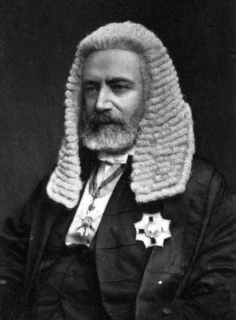
Duffy is born on April 12, 1816, in Dublin Street, Monaghan, County Monaghan. Both of his parents die while he is still a child and his uncle, Fr. James Duffy, who is the Catholic parish priest of Castleblayney, becomes his guardian for a number of years. He is educated at St. Malachy’s College in Belfast and is admitted to the Irish Bar in 1845. He becomes a leading figure in Irish literary circles.
In August 1850, Duffy forms the Tenant Right League to bring about reforms in the Irish land system and protect tenants’ rights, and in 1852 is elected to the House of Commons for New Ross. By 1855, the cause of Irish tenants seems more hopeless than ever. Broken in health and spirit, Duffy publishes a farewell address to his constituency, declaring that he has resolved to retire from parliament, as it is no longer possible to accomplish the task for which he has solicited their votes.
In 1871, Duffy leads the opposition to Premier Sir James McCulloch‘s plan to introduce a land tax, on the grounds that it unfairly penalised small farmers. When McCulloch’s government is defeated on this issue, he becomes Premier and Chief Secretary. The majority of the colony is Protestant, and he is accused of favouring Catholics in government appointments. In June 1872, his government is defeated in the Assembly on a confidence motion allegedly motivated by sectarianism.
When Graham Berry becomes Premier in 1877, he makes Duffy Speaker of the Legislative Assembly, a post he holds without much enthusiasm until 1880, when he quits politics and retires to the south of France. Duffy remains interested in both the politics of his adoptive country and of Ireland. He is knighted in 1873 and is made KCMG in 1877.
Duffy spends his last years in Nice and dies at the age of 86 on February 9, 1903, at his home there, 12 Boulevard Victor Hugo. He is buried at Glasnevin Cemetery, Glasnevin, Dublin on March 8. 1903. The length of his career, the breadth of his experience, and his voluminous labours as a chronicler make him an important figure in the history of Ireland and the Irish diaspora in the nineteenth century. He also deserves attention as the most prominent and articulate Ulster catholic nationalist of his time. There are Duffy papers in the Royal Irish Academy and National Library of Ireland.
Mac Liammóir is born Alfred Willmore on October 25, 1899. He is born to a Protestant family living in the Kensal Green district of London.
As Alfred Willmore, he is one of the leading child actors on the English stage, in the company of Noël Coward. He appears for several seasons in Peter Pan. He studies painting at London’s Slade School of Fine Art, continuing to paint throughout his lifetime. In the 1920s he travels all over Europe. He is captivated by Irish culture and learns the Irish language which he speaks and writes fluently. He changes his name to an Irish version, presenting himself in Ireland as a descendant of Irish Catholics from Cork. Later in his life, he writes three autobiographies in Irish and translates them into English.
While acting in Ireland with the touring company of his brother-in-law Anew MacMaster, Mac Liammóir meets the man who becomes his partner and lover, Hilton Edwards. Their first meeting takes place in the Athenaeum, Enniscorthy, County Wexford. Deciding to remain in Dublin, where they live at Harcourt Terrace, the pair assists with the inaugural production of Galway‘s Irish language theatre, An Taibhdhearc. The play is Mac Liammóir’s version of the mythical story Diarmuid agus Gráinne, in which Mac Liammóir plays the lead role as Diarmuid.
Mac Liammóir and Edwards then throw themselves into their own venture, co-founding the Gate Theatre in Dublin in 1928. The Gate becomes a showcase for modern plays and design. Mac Liammóir’s set and costume designs are key elements of the Gate’s success. His many notable acting roles include Robert Emmet/The Speaker in Denis Johnston‘s The Old Lady Says “No!” and the title role in Hamlet.
In 1948, Mac Liammóir appears in the NBC television production of Great Catherine with Gertrude Lawrence. In 1951, during a break in the making of Othello, he produces Orson Welles‘s ghost-story Return to Glennascaul which is directed by Hilton Edwards. He plays Iago in Welles’s film version of Othello (1951). The following year, he goes on to play ‘Poor Tom’ in another Welles project, the TV film of King Lear (1953) for CBS.
Mac Liammóir claims when talking to Irish playwright Mary Manning, to have had a homosexual relationship with General Eoin O’Duffy, former Garda Síochána Commissioner and head of the paramilitary Blueshirts in Ireland, during the 1930s. The claim is revealed publicly by RTÉ in a documentary, The Odd Couple, broadcast in 1999. However, Mac Liammóir’s claims have not been substantiated.
Mac Liammóir’s life and artistic development are the subject of a major study by Tom Madden, The Making of an Artist. Edwards and Mac Liammóir are the subject of a biography, titled The Boys by Christopher Fitz-Simon.
Micheál Mac Liammóir dies at his and Edwards’s Dublin home, 4 Harcourt Terrace, at the age of 78 on March 6, 1978. Edwards and Mac Liammóir are buried alongside each other at St. Fintan’s Cemetery, Sutton, Dublin.
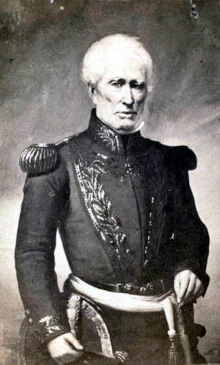
Brown is born on June 22, 1777, in Foxford, County Mayo. Comparatively little is known of his early life, and it has been suggested that he was illegitimate and took his mother’s surname and that his father’s surname was actually Gannon. He emigrates with his father to Baltimore, Maryland, in 1793, eventually settling in Philadelphia, Pennsylvania. A short time after their arrival, the friend who had invited them and offered them food and hospitality dies of yellow fever. Several days later, his father also succumbs to the same disease.
One morning, while Brown is wandering along the banks of the Delaware River, he meets the captain of a ship then moored in port. The captain inquires if he wants employment and Brown agrees. The captain engages him as a cabin boy, thereby setting him on the naval promotion ladder, where he works his way to the captaincy of a merchant ship. After ten years at sea, where he develops his skills as a sailor and reaches the rank of captain, Brown is press-ganged into a Royal Navy warship. British impressment of American sailors is one of the primary issues leading to the War of 1812.
During the Napoleonic Wars, Brown escapes the ship he is serving on, a galley, and scuttles the vessel. However, the French do not believe he had assisted them and imprison him in Lorient. On being transferred to Metz, he escapes, disguised in a French officer’s uniform. However, he is recaptured and is imprisoned in the fortress of Verdun. In 1809, he escapes from there in the company of a British Army officer named Clutchwell, and eventually reaches German territory.
Returning to England, Brown renounces his maritime career and on July 29, 1809, he marries Elizabeth Chitty, daughter of an English shipping magnate, in Kent. As he is a Catholic and she a Protestant, they agree to raise their sons as Catholics and their daughters as Protestants. Despite lengthy periods of enforced separation, they have nine children. He leaves the same year for the Río de la Plata on board Belmond and sets himself up as a merchant in Montevideo, Uruguay.
Late in 1811 Brown settles in Buenos Aires just as a criollo rebellion against Spanish colonial rule in Argentina is gaining strength. By April 1812, he is developing a coastal shipping business in fruit and hides. As the Spanish naval blockade of 1812–14 begins to choke trade, he is first commissioned by the patriot government as a privateer licensed to raid Spanish merchantmen, and then, on March 1, 1814, invited to take charge of a small rebel naval squadron to contest Spanish control of the Río de la Plata estuary. Leading a fleet of nineteen ships, he fixes with great speed on a set of wartime naval routines and signaling methods, and organises a system of discipline, founding the navy on principles that pay exceptional attention to the welfare of ordinary seamen.
In early March 1814, Brown shows personal courage and incisive skill in outwitting and defeating a more powerful Spanish force near Martín García Island, thereby dividing the Spanish blockade. A Spanish attempt in May 1814 to break his blockade of Montevideo is decisively crushed by him and his makeshift navy, and the Spanish strongholds on the Atlantic coast collapse, ending open war. In 1815 and 1816, however, he carries out skirmishing raids on military and commercial targets belonging to Spanish South American possessions, until detained by a British colonial governor in Barbados in July 1816 for alleged infringements of international rules of trade.
Illness, and a tortuous but ultimately successful appeal process, take up most of 1817–18, but when Brown returns to Argentina in October 1818, political enemies set in motion a prosecution for alleged disobedience of orders. Cashiered in August 1819, then restored in rank but forced to retire, he attempts suicide the following month. Convalescence and resumption of his trading concern occupies him for several years.
A repentant government renews Brown’s command of the navy in December 1825, when war breaks out with Brazil. Though vastly outnumbered by the Brazilian fleet, he shows audacity and great finesse in a number of successful engagements in the Plate estuary in 1826, roving up the Brazilian coast on occasion to create great confusion. In February 1827, he triumphs in a series of actions known as the Battle of Juncal. After another year of commercial privateering against the Brazilian merchant fleet, he is one of two delegates selected to sign peace terms with Brazil in October 1828.
Retiring from active service that month, Brown tries to remain neutral as civil war erupts in Argentina, but reluctantly accepts the post of governor of Buenos Aires under General Juan Lavalle from December 1828 to May 1829, when he resigns in disgust at government excesses. During 1829–37 he holds aloof from the despotic government of Juan Manuel de Rosas. After French and British encroachments on the region in the later 1830s, he offers to take charge of the navy again to protect national independence and is available to defend Argentine interests when war breaks out with a French-backed Uruguay in early 1841. Though exasperated by a long and “stupid war,” he blockades the Uruguayan navy effectively until French and British fleets intervene in July 1845 with overwhelming force to capture his squadron and bring the war to an end.
Idolised by the Argentinian population for his high-principled and humane advocacy of independent democracy, Brown passes his last years trading and farming a country estate. In late 1847, he journeys to Ireland, hoping to find relations in Mayo, and is shocked by the hunger and destitution of the Great Famine.
Brown dies on March 3, 1857, at his home in Buenos Aires and is buried with full military honours. The Argentine government issues a comuniqué: “With a life of permanent service to the national wars that our homeland has fought since its independence, William Brown symbolized the naval glory of the Argentine Republic.” During his burial, General Bartolomé Mitre famously says: “Brown in his lifetime, standing on the quarterdeck of his ship, was worth a fleet to us.” His grave is currently located in the La Recoleta Cemetery in Buenos Aires.
MacEntee is born as John McEntee at 47 King Street, Belfast, on August 23, 1889, the son of James McEntee, a publican, and his wife, Mary Owens, both of whom are from Monaghan. James McEntee is a prominent Nationalist member of Belfast Corporation and a close friend of Joseph DevlinMP.
MacEntee is educated at St. Mary’s Christian Brothers’ Grammar School, St. Malachy’s College and the Belfast Municipal College of Technology where he qualifies as an electrical engineer. His early political involvement is with the Irish Socialist Republican Party in Belfast. He quickly rises through the ranks of the trade union movement becoming junior representative in the city’s shipyards. Following his education, he works as an engineer in Dundalk, County Louth, and is involved in the establishment of a local corps of the Irish Volunteers in the town. He mobilises in Dundalk and fights in the General Post Office garrison in the Easter Rising in 1916. He is sentenced to death for his part in the rising. This sentence is later commuted to life imprisonment. He is released in the general amnesty in 1917 and is later elected a member of the National Executives of both Sinn Féin and the Irish Volunteers in October 1917. He is later elected Sinn Féin Member of Parliament (MP) for South Monaghan at the 1918 Irish general election.
An attempt to develop MacEntee’s career as a consulting engineer in Belfast is interrupted by the Irish War of Independence in 1919. He serves as Vice-Commandant of the Belfast Brigade of the Irish Republican Army (IRA). He is also a member of the Volunteer Executive, a sort of Cabinet and Directory for the Minister for Defence and the HQ Staff, however, he remains one of the few Sinn Féiners from the north. On August 6, 1920, he presents ‘a Memorial’ lecture to the Dáil from the Belfast Corporation. He tells the Dáil it is the only custodian of public order, that a Nationalist pogrom is taking place, and he advises them to fight Belfast. The Dáil government’s policy is dubbed Hibernia Irredenta or “Greening Ireland.” He is asked to resign his South Monaghan seat after voting against a bunting celebration in Lurgan to mark the signing of the Anglo-Irish Treaty.
In April 1921 MacEntee is transferred to Dublin to direct a special anti-partition campaign in connection with the May general election. It remains Michael Collins‘s policy, he declares, that the largely Protestant shipyard workers of Belfast are being directed by the British, urging all Irishmen to rejoin the Republic. Correspondingly the Ulster Unionist Council rejects the call for a review of the boundary commission decision made on Northern Ireland. But when Ulstermen choose James Craig as Premier, Collins denounces democracy in the north as a sham. It is on the partition of Ireland issue that MacEntee votes against the Anglo-Irish Treaty of 1921. During the subsequent Irish Civil War, he commands the IRA unit in Marlboro Street Post Office in Dublin. He later fights with Cathal Brugha in the Hamman Hotel and is subsequently interned in Kilmainham and Gormanstown until December 1923.
After his release from prison, MacEntee devotes himself more fully to his engineering practice, although he unsuccessfully contests the Dublin Countyby-election of 1924. He becomes a founder-member of Fianna Fáil in 1926 and is eventually elected a TD for Dublin County at the June 1927 Irish general election.
MacEntee founds the Association of Patent Agents in 1929, having gained his interest in Patents when he worked as an assistant engineer in Dundalk Urban District Council. He values his status as a Patent Agent as he maintains his name on the Register for over 30 years while he holds Ministerial rank in the Irish Government, although he is not believed to have taken any active part in the patent business, which is carried on by his business partners.
In 1932, Fianna Fáil comes to power for the very first time, with MacEntee becoming Minister for Finance. In keeping with the party’s protectionist economic policies his first budget in March of that year sees the introduction of new duties on 43 imports, many of them coming from Britain. This sees retaliation from the British government, which in turn provokes a response from the Irish government. This is the beginning of the Anglo-Irish Trade War between the two nations, however, a treaty in 1938, signed by MacEntee and other senior members brings an end to the issue.
In 1939, World War II breaks out and a cabinet reshuffle results in MacEntee being appointed as Minister for Industry and Commerce, taking over from his rival Seán Lemass. During his tenure at this department, he introduces the important Trade Union Act (1941). In 1941, another reshuffle of ministers takes place, with him becoming Minister for Local Government and Public Health. The Health portfolio is transferred to a new Department of Health in 1947. Following the 1948 Irish general election, Fianna Fáil returns to the opposition benches for the first time in sixteen years.
In 1951, Fianna Fáil are back in government, although in minority status, depending on independent deputies for survival. MacEntee once again returns to the position of Minister for Finance where he feels it is vital to deal with the balance of payments deficit. He brings in a harsh budget in 1951 which raises income tax and tariffs on imports. His chief aim is to cut spending and reduce imports, however, this comes at a cost as unemployment increases sharply. The increases are retained in his next two budgets in 1952 and 1953. It is often said that it is his performance during this period that costs Fianna Fáil the general election in 1954. The poor grasp on economics also does his political career tremendous damage as up to that point he is seen as a likely successor as Taoiseach. Seán Lemass, however, is now firmly seen as the “heir apparent.”
In 1957, Fianna Fáil returns to power with an overall majority with MacEntee being appointed Minister for Health. The financial and economic portfolios are dominated by Lemass and other like-minded ministers who want to move away from protection to free trade. He is credited during this period with the reorganisation of the health services, the establishment of separate departments of health and social welfare, and the fluoridation of water supplies in Ireland. In 1959, he becomes Tánaiste when Seán Lemass is elected Taoiseach.
Following the 1965 Irish general election, MacEntee is 76 years old and retires from the government. He re-emerges in 1966 to launch a verbal attack on Seán Lemass for deciding to step down as party leader and Taoiseach. The two men, however, patch up their differences shortly afterwards. MacEntee retires from Dáil Éireann in 1969 at the age of 80, making him the oldest TD in Irish history.
MacEntee dies in Dublin on January 9, 1984, at the age of 94. He is buried in Glasnevin Cemetery, Dublin.
O’Halloran is the third son of Michael O’Halloran, a prosperous farmer, and his wife Mary McDonnell. He is named after Sylvester Lloyd, the titular Catholic bishop of Killaloe (1728–39). His mother’s cousin, Sean Claragh McDonnell, teaches him much at an early age, including some Greek and Latin. He goes on to a Limerick school run by Robert Cashin, a Protestantclergyman, which is unusual at the time as the O’Hallorans are Roman Catholics during the difficult time of the Penal Laws.
O’Halloran and his brothers engage successfully in areas of life that work around the restrictions of the Penal Laws. Joseph becomes a Jesuit and holds chairs in rhetoric, philosophy and divinity at the Jesuit College at Bordeaux in France. George becomes a jeweler and in time a property-owner. O’Halloran goes to London to learn medicine at the age of 17, particularly studying the methods of Richard Mead, as well as the oculists Taylor and Hillmer. After further study at Leiden, and in Paris under the anatomist and academician Antoine Ferrein, he sets up practice as a surgeon in Limerick in early 1749.
O’Halloran writes several learned treatises on medical matters, and his fame is acknowledged by his membership of the RIA in 1787. He is a founder of the County Limerick Infirmary that starts with four beds in 1761 before moving to larger premises at St. Francis’s Abbey in 1765. The foundation stone of the original infirmary is now preserved in the Sylvester O’Halloran Post Graduate Centre at the Mid-Western Regional Hospital, Limerick.
While in France, O’Halloran is very impressed with the Académie Royale de Chirurgie, which had been founded in Paris in 1731 during the reign of Louis XV. He is subsequently instrumental in founding the Royal College of Surgeons in Ireland (RCSI), by writing its blueprint, Proposals for the Advancement of Surgery in Ireland, in 1765. In 1780, he is made an honorary member of the new Dublin Society of Surgeons and, when the RCSI receives its charter in 1784, is again elected an honorary member, equivalent to a Fellowship today.
As well as his scientific knowledge, O’Halloran’s interest in the arts begins with his collection of Gaelic poetry manuscripts and this leads on to an interest in Irish history. Given his background, he argues to validate the pre-Norman history of Ireland which had often been dismissed as a period of barbarism.
In 1789, Charlotte Brooke publishes the first English-language compendium of Irish poetry, the seminal “Reliques of Irish Poetry”, giving full due to O’Halloran for lending her his manuscript collection and for having written the essential history underlying her anthology.
In 1752, O’Halloran marries Mary Casey of Ballycasey, County Limerick, and they have four sons and a daughter. Their homes are in Change Lane and then on Merchants’ Quay. One of their sons is Major-General Sir Joseph O’Halloran, the father of Thomas Shuldham O’Halloran, after whom the Adelaide, South Australia suburb of O’Halloran Hill is named. Mary dies in 1782.
After a stroke, O’Halloran is infirm and confined to his chair for some time before his death on August 11, 1807, at his home on Limerick’s Merchant Quay. His is buried at St. Munchin’s graveyard at Killeely, which is now a suburb of Limerick.
Though politically restricted in his life by the Penal Laws, O’Halloran helps establish the county Infirmary, is elected President of the city’s Free Debating Society in 1772 and is elected to a committee in 1783 that examines the River Shannon navigation. Appropriately, a Limerick bridge over the River Shannon has been named after him.