seamus dubhghaill

Promoting Irish Culture and History from Little Rock, Arkansas, USA


Leave a comment

Death of Madeleine ffrench-Mullen, Revolutionary & Labour Activist

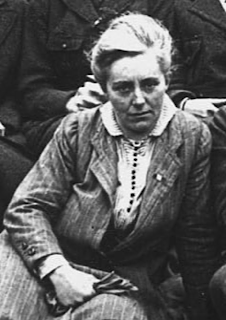
Madeleine ffrench-Mullen, Irish revolutionary and labour activist who takes part in the Easter Rising in Dublin in 1916, dies in Dublin on May 26, 1944.

Ffrench-Mullen is born on December 30, 1880, in Malta, where her father, St. Lawrence ffrench-Mullen, a Royal Navy surgeon, is stationed. She has two brothers, St. Lawrence Patrick Joseph (1890–1891) and Douglas (1893–1943).

Ffrench-Mullen’s interest in politics starts young. Her father is a committed Parnellite and their Dundrum home is a campaign headquarters. She is a radical feminist and republican during her life. Like many others of the time, she regards it as a woman’s right to vote. She joins the suffrage movement, and meets women with a similar worldview and values. The women’s suffrage movement is included in the Movements of Extremists reports of the Dublin Metropolitan Police. Ffrench-Mullen goes on to join Inghinidhe na hÉireann, a radical nationalist women’s group founded by Maud Gonne in 1900. The organisation develops into Cumann na mBan in 1913. Suffragist values are central to Cumann na mBan’s goal of standing side-by-side with men in the fight for the Irish Republic. Some members see this as women regaining the rights that had belonged to them in pre-invasion Gaelic civilisation. She is on the socialist wing of the moment, holding to the ideals of universal social equality of the syndicalist James Connolly and the Irish Citizen Army (ICA).

During the 1916 Easter Rising, ffrench-Mullen serves as a lieutenant in the Irish Citizen Army. She sees action with the St. Stephen’s Green and Royal College of Surgeons garrison. In St. Stephen’s Green she is in command of the 15 Citizen Army women who set up a medical station and field kitchen. While occupying St. Stephen’s Green, she and her comrades come under sustained heavy fire from the Shelbourne Hotel and buildings on the north side of the Green. After the surrender of the College of Surgeons garrison, ffrench-Mullen is one of the 77 women who had fought in the Rising who are imprisoned, among them her life partner Kathleen Lynn. While in captivity ffrench Mullen is moved three times, spending time in Richmond BarracksKilmainham Gaol and Mountjoy Prison. She is released on June 5, 1916.

Ffrench-Mullen meets Kathleen Lynn through Inghinidhe na h-Éireann. In 1915, she moves into Lynn’s home in Belgrave Road, Rathmines, where they live together for thirty years, until ffrench-Mullen’s death in 1944.

Ffrench-Mullen records in her prison diary in 1916 that she can face prison without fear once Lynn (whom she refers to as “the Doctor”) and she are together. Katherine Lynch of the Women’s Studies Centre at University College Dublin (UCD) describes them as partners, calling them part of a network of lesbians living in Dublin—which includes Helena MolonyLouie Bennett and Elizabeth O’Farrell—who meet through the suffrage movement and later become involved with the national and trade union movement. These women are featured, along with Eva Gore-Booth and others, in a 2023 TG4 documentary about “the radical queer women at the very heart of the Irish Revolution”: Croíthe Radacacha (Radical Hearts).

In 1919, Madeleine ffrench-Mullen and Kathleen Lynn establish Saint Ultan’s Children’s Hospital, also known as Teach Ultan, which is a female-run hospital for infants at 37 Charlemont Street, Dublin. The hospital focuses on children’s health and wellbeing, an area that is perceived at the time as women’s concern. In the aftermath of World War I many health problems have arisen including a rise in venereal diseases such as syphilis, carried from soldiers returning home from war. Many of Ireland’s infants of the time suffer from congenital syphilis (inherited disease from mother at birth), and this is a driving factor in the opening of St Ultan’s hospital. Tuberculosis is endemic in Ireland during its time as a British colony. Against steadfast opposition by the State and the Catholic Church, Lynn and ffrench-Mullen establish a vaccination project, vaccinating thousands of impoverished children who would have died of tuberculosis without their vaccines. Their success leads to the foundation of Ireland’s BCG vaccine programme, which has vaccinated all babies since the 1950s.

Ffrench-Mullen dies at the age of 63 in a Dublin nursing home on May 26, 1944. She is interred with her parents as well as her younger brothers (whom she outlives) in the ffrench-Mullen family plot in Glasnevin Cemetery. Her funeral takes place on the same day as the 1944 Irish general election.

Leave a comment

Birth of Karl Mullen, Rugby Union Player & Gynecologist

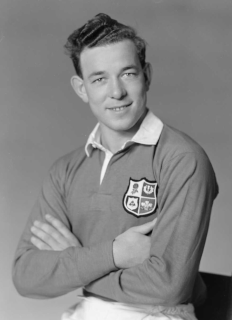
Dr. Karl Daniel Mullen, rugby union player and consultant gynecologist who captains the Irish rugby team and captains the British Lions on their 1950 tour to Australia and New Zealand, is born on November 26, 1926, in Courtown Harbour, County Wexford.

Mullen is one of three sons and seven daughters of Daniel Mullen, an officer of the customs and excise, and his wife Annie (née Hargrove). After his parents move to Home Farm Road, Drumcondra, Dublin, he is educated at the Dominican St. Thomas’s Academy, Eccles Street, the Jesuit Belvedere College, Great Denmark Street, and the Royal College of Surgeons in Ireland (RCSI). He plays rugby and cricket at school, association football with Home Farm F.C., and golf in the summer months. Initially a centre, he becomes a prop on the Belvedere junior cup team and, after injury to a teammate, hooker on the senior cup team, which loses the Leinster Schools Rugby Senior Cup final to Castleknock College in 1944.

On January 25, 1947, Mullen makes his formal Irish debut in a 12–8 loss to France. He plays as hooker, winning 25 caps for Ireland from 1947 to 1952. A year later, on January 31, 1948, he plays his first game for Barbarian F.C. in a 9–6 victory over Australia in Cardiff, Wales. After helping Ireland to victory over France on January 1, 1948, at the age of 21, he captains Ireland for the first time, on February 14, 1948, leading them to an 11–10 victory over England at Twickenham Stadium.

Mullen captains the Irish team to their first Grand Slam in the 1948 Five Nations Championship and is one of eight players from that team who live to see the country’s next Grand Slam in 2009.

Ireland retains the triple crown in 1949 by beating Wales 5–0 in Swansea, ending a run of defeats on Welsh soil lasting fourteen years. The following season Ireland suffers from injuries and loses to both England and Wales, the latter securing the triple crown.

Mullen is selected to captain the 1950 Lions Tour to Australia and New Zealand. After appearing in the first two tests against New Zealand, a 9–9 draw and an 8–0 loss, he sustains an ankle injury in the latter game and concedes his place to Dai Davies of Wales. Returning for the second test against Australia, a resounding 24–3 victory, he also plays in a semi-official “British Isles RFU” team against Ceylon during their return journey in September.

Under Mullen’s captaincy Ireland regains the international championship in 1951. His last cap comes in a 14–3 loss to Wales at Lansdowne Road on March 8, 1952. In twenty-five successive appearances (fifteen as captain), he secured three international championships and two triple crowns for Ireland in four seasons, their most successful haul of the twentieth century.

Mullen’s distinguished rugby career has to be fitted around his medical studies. In 1945, he enters the RCSI, graduating L and LM (RCSI and RCPI) in 1949. Awarded the diploma in obstetrics (1952) and membership of the Royal College of Obstetricians and Gynaecologists (1956), he trains at Sir Patrick Dun’s Hospital, Jervis Street Hospital and the Rotunda hospitals. After serving as senior obstetrics registrar at the Derby City General Hospital (1953–56), he returns to Dublin to become a consultant obstetrician, based at Mount Carmel Community Hospital, Churchtown, Dublin, and develops a considerable private practice. By his retirement in 2002, he is estimated to have delivered over 40,000 babies. A proponent of sex education in schools, he appears on RTÉ‘s 7 Days in December 1970, outlining various methods of birth control and calling for a more honest and realistic approach to artificial contraception.

Mullen marries Doreen Kilbride, an accomplished soprano, on April 30, 1952, in Donnybrook, Dublin, interrupting their honeymoon to play for Old Belvedere R.F.C. in the Leinster Senior Cup final. They have eight children, three boys and five girls. In 1975, they move from Altamount, Dundrum, Dublin, to Tulfarris House, Blessington, County Wicklow, adjacent to Poulaphouca Reservoir, where they farm and bred Irish draught horses. In 1985, he sells the property and much of his art collection and moves to Kilcullen, County Kildare.

Mullen is one of eight surviving members of the 1948 team to witness Ireland’s second grand slam on March 21, 2009. Only weeks later, having suffered from a long illness, he dies on April 27, 2009, at his home, Gilltown Lodge, in Kilcullen.

(Pictured: Karl Mullen, captain of the British Lions rugby union team, 1950)


Leave a comment

Birth of Abraham Colles, Professor & President of the RCSI

Abraham Colles, Professor of Anatomy, Surgery and Physiology at the Royal College of Surgeons in Ireland (RCSI) and the President of RCSI in 1802 and 1830, is born in Millmount, County Kilkenny, on July 23, 1773. A prestigious Colles Medal & Travelling Fellowship in Surgery is awarded competitively annually to an Irish surgical trainee embarking on higher specialist training abroad before returning to establish practice in Ireland.

Descended from a Worcestershire family, some of whom had sat in Parliament, Colles is born to William Colles and Mary Anne Bates of Woodbroak, County Wexford. The family lives near Millmount, a townland near Kilkenny, County Kilkenny, where his father owns and manages his inheritance which is the extensive Black Quarry that produces the famous Kilkenny black marble. His father dies when he is 6 years old, but his mother takes over the management of the quarry and manages to give her children a good education. While at Kilkenny College, a flood destroys a local physician’s house. He finds an anatomy book belonging to the doctor in a field and returns it to him. Sensing the young man’s interest in medicine, the physician lets him keep the book.

Colles goes on to enroll in Trinity College Dublin in 1790 and is indentured to Philip Woodroffe, studying at Dr. Steevens’ Hospital, The Foundlings’ Hospital and the House of Industry hospitals. He receives the Licentiate Diploma of the Royal College of Surgeons in 1795 and goes on to study medicine at the University of Edinburgh Medical School, receiving his MD degree in 1797. Afterward, he lives in London for a short period, working with the famous surgeon Sir Astley Cooper in his dissections of the inguinal region.

Following his return to Dublin, in 1799, Colles is elected to the staff at Dr. Steevens’ Hospital where he serves for the next 42 years. In October 1803, he is appointed Surgeon to Cork-street Fever Hospital, and subsequently becomes Consulting Surgeon to the Rotunda Hospital, City of Dublin Hospital, and Victoria Lying-in Hospital. He is a well-regarded surgeon and is elected as president of the Royal College of Surgeons in Ireland (RCSI) in 1802 at the age of 28 years, subsequently also serving as president in 1830. In 1804, he is appointed Professor of Anatomy, Physiology, and Surgery at RCSI.

In 1811, Colles writes an important treatise on surgical anatomy and some terms he introduces have survived in surgical nomenclature until today. He is remembered as a skillful surgeon and for his 1814 paper On the Fracture of the Carpal Extremity of the Radius. This injury continues to be known as Colles’ fracture. This paper, describing distal radial fractures, is far ahead of its time, being published decades before X-rays come into use. He also describes the membranous layer of subcutaneous tissue of the perineum, which comes to be known as Colles’ fascia. He also extensively studies the inguinal ligament, which is sometimes called Colles’ ligament. He is regarded as the first surgeon to successfully ligate the subclavian artery.

In 1837, Colles writes “Practical observations on the venereal disease, and on the use of mercury” in which he introduces the hypothesis of maternal immunity of a syphilitic infant when the mother has not shown signs of the disease. His principal textbook is the two-volume Lectures on the theory and practice of surgery. His writings are important, though not voluminous. Some of his papers are collected and edited by his son, William Colles, and published in the Dublin Journal of Medical Science. Selections from the works of Abraham Colles, chiefly relative to the venereal disease and the use of mercury, comprise Volume XOII. of the Library of the New Sydenham Society, published in 1881. They are edited and annotated by one of the most distinguished Fellows of the RCSI, Robert McDonnell. His Lectures on Surgery are edited by Simon M’Coy and published in 1850. In tribute to his distinguished career, he is awarded a baronetcy in 1839, which he refuses.

Upon Colles’s retirement as Professor of Surgery, the Members of RCSI pass a resolution which includes “We have also to assure you that it is the unanimous feeling of the College, that the exemplary and efficient manner in which you have filled this chair for thirty-two years, has been a principal cause of the success and consequent high character of the School of Surgery in this country.”

Colles dies on November 16, 1843, from gout. He is buried in Mount Jerome Cemetery, Dublin.

In 1807, Colles marries Sophia Cope. His son William follows in his footsteps, being elected to the Chair of Anatomy in the Royal College of Surgeons in Ireland in 1863. Another of his sons, Henry, marries Elizabeth Mayne, a niece of Robert James Graves. His grandson is the eminent music critic and lexicographer H. C. Colles. His granddaughter Frances marries the judge Lord Ashbourne, and her sister Anna marries his colleague Sir Edmund Thomas Bewley.


Leave a comment

Birth of Charles Cameron, Physician, Chemist & Writer

Sir Charles Alexander Cameron, CB, Irish physician, chemist and writer prominent in the adoption of medical hygiene, is born in Dublin on July 16, 1830. For over fifty years he has charge of the Public Health Department of Dublin Corporation. He is elected president of the Royal College of Surgeons in Ireland (RCSI) in 1885.

Cameron is the son of Captain Ewen Cameron of Scotland and Belinda Smith of County Cavan. He is descended from Clan Cameron of Lochiel. He receives his early education in chemistry and pharmaceutical chemistry in Dublin. In 1852 he is elected professor to the newly founded Dublin Chemical Society while continuing to study medicine at several schools and hospitals in Dublin. In 1854 he goes to Germany where he graduates in philosophy and medicine. While there he publishes his translations of German poems and songs.

Upon his return to Ireland, Cameron becomes scientific advisor to the British government in Ireland in criminal cases and over the years takes part in many notable trials, including those relating to the Phoenix Park Murders. In 1862, he becomes public analyst for the City of Dublin, a position which is later extended to 23 counties in Ireland. In 1867, he is elected Professor of Hygiene in the Royal College of Surgeons in Ireland (RCSI). He is also lecturer in chemistry in Dr. Steevens’ Hospital and the Ledwich School of Medicine, succeeding Dr. Maxwell Simpson, and retains these positions until 1874. In 1875 he is appointed Professor of Chemistry at the Royal College of Surgeons in Ireland.

From 1858 to 1863, Cameron is editor and part proprietor of the Agricultural Review, in which he writes hundreds of articles on various subjects. In 1860–62, he is also editor of the Dublin Hospital Gazette and afterward publishes many reports on public health to the Dublin Journal of Medical Science. At this time, he is in contact with many agricultural associations both in Ireland and abroad and receives a number of awards and tributes.

In 1874, Cameron becomes Co-Medical Officer of Health for Dublin Corporation and two years later becomes Chief Medical Officer. Being in charge of the Public Health Department of Dublin City means that he is always in the public eye, and due to the level of poverty and disease in the city at the time his work is cut out for him. He makes many recommendations for improving the sanitation of dwellings and sees to it that unsanitary housing is either improved or closed down. He publishes numerous sanitary reports, papers on hygiene, the social life of the very poor and proper eating habits, those of the very poor in particular. On the other hand, he is in a position to meet the major figures of the day, from the monarchy and the government downward. He is a member of several clubs in the city and dines with local and visiting celebrities alike, which he describes in his reminiscences.

In 1884, Cameron becomes vice-president of the Royal College of Surgeons of Ireland, and the following year becomes president. He is knighted in 1885 in consideration of “his scientific researches, and his services in the cause of public health.” In 1886, he publishes his History of the Royal College of Surgeons in Ireland, and of the Irish Schools of Medicine. This work contains nearly 300 biographies of the most eminent medical men in Ireland.

Cameron marries Lucie Macnamara of Dublin in 1862, who dies in the early 1880s. They have eight children. His eldest son, Captain Charles J. Cameron, dies in a boating accident in Athlone in 1913, while another son, Lieutenant Ewen Henry Cameron, shoots himself in a train in Newcastle in 1915 while on the way to the Western Front. Two sons, Edwin and Mervyn, die of pulmonary tuberculosis in their 20s.

Cameron is a leading Freemason in Dublin, serving as Deputy Grand Master of the Grand Lodge of Ireland (1911–20), Deputy Grand Master of the Great Priory of Ireland, Sovereign Grand Commander of the Supreme Council of the 33rd degree (Ancient and Accepted Rite for Ireland). He is first initiated as a member of Fidelity Lodge No. 125 in 1858 and is also a member of the Duke of York Lodge No. 25, serving as its secretary for over 50 years.

In 1911, Cameron is made a Freeman of the city and honoured by many from the Sinn Féin Lord Mayor, Alderman Kelly, to the Lord Lieutenant of Ireland, Lord Aberdeen.

Cameron dies at his home on Raglan Road in Dublin on February 27, 1921, and is interred in Mount Jerome Cemetery. At his death he leaves a son, Ernest Stuart Cameron, and two daughters, Lucie Gerrard and Helena Stanley.


Leave a comment

Death of Rosie Hackett, Trade Union Leader & Insurgent

Rosanna “Rosie” Hackett, Irish insurgent and trade union leader, dies on May 4, 1976, at St. Vincent’s Hospital, Fairview, Dublin. She is a founder-member of the Irish Women Workers’ Union (IWWU) and supports strikers during the 1913 Dublin lock-out. She later becomes a member of the Irish Citizen Army and is involved in the 1916 Easter Rising. In the 1970s, the labour movement awards her a gold medal for decades of service, and in 2014 a Dublin city bridge is named in her memory.

Hackett is born into a working-class family in Dublin on July 25, 1893, the daughter of John Hackett, a hairdresser, and Roseanna Dunne. According to the 1901 census, she is living with her widowed mother and five other family members in a tenement building on Bolton Street in Dublin. The available documents suggest that her father dies when she is still very young. She joins the Irish Transport and General Workers’ Union (ITGWU) when it is established in 1909 by James Larkin, which marks the beginning of her lifelong activity in trade unionism. By 1911 she is living with her family in a cottage on Old Abbey Street, and her mother has remarried to Patrick Gray.

Hackett fights for many decades for the rights of workers. Through her affiliation and work with the ITGWU, the IWWU and the Irish Citizen Army, she helps carve out and secure modern-day working conditions. Her career begins as a packer in a paper store, then becoming a messenger for Jacob’s biscuits. At that time the working conditions in the factory are poor.

On August 22, 1911, Hackett helps organise the withdrawal of women’s labour in Jacob’s factory to support their male colleagues who are already on strike. With the women’s help, the men secure better working conditions and a pay rise. Two weeks later, at the age of eighteen, she co-founds the IWWU with Delia Larkin. During the 1913 lock-out she helps mobilise the Jacob’s workers to come out in solidarity with other workers. They, in turn, are locked out by their own employers. This does not stop her work to help others, and she, along with several of her IWWU colleagues, set up soup kitchens in Liberty Hall to help feed the strikers. However, in 1914 her Jacob’s employers sack her over her role in the lock-out.

Hackett begins work as a clerk in the printshop in Liberty Hall, and it is here she becomes involved with the Irish Citizen Army. She is involved in preparations for the 1916 Rising, working in a union shop, helping with printers, and making first-aid kits and knap-sacks.

If other members of the ITGWU were looking for James Connolly, Hackett aids in bringing them to him. She “worked as canvasser and traveler and was called on to carry out many confidential jobs.”

Hackett takes up first aid training provided by Dr. Kathleen Lynn for six months before the Rising and attends night marches organised by the Irish Citizen Army. According to her own account, she says, “A week before Easter, I took part in the ceremony of hoisting the challenge flag over Hall.” Like other girls and women who are involved in the Rising, she carries messages and guns and prepares uniforms and food for Irish Republican Army (IRA) members “and sometimes risky work.”

Three weeks before the Easter Rising, the Royal Irish Constabulary (RIC) raid a shop where Hackett is working. She is alone when they come, and they are looking for a copy of “Gael.” She says to them, “wait until I get the head” and she calls for Connolly. The police are stopped by Connolly and Helena Molony who are armed, and Hackett immediately hides everything, so that when the police come back, they cannot get anything.

Through her experience of working in the printshop, Hackett helps to print the Proclamation of the Irish Republic. She is in the printing room in Liberty Hall as a trusted messenger in 1916 when the Proclamation is printed, and it is the first time she is allowed in. Three men are there when she enters the room and one comes over to her, shakes her hand and congratulates her. It makes her very proud, especially since no one else is allowed to get in. She subsequently tells family members of handing it still wet to James Connolly before it is read by Patrick Pearse outside the entrance to the General Post Office (GPO).

Hackett is an active member of the Irish Citizen Army. On Easter Tuesday, under the command of Constance Markievicz, she takes part in the 1916 Rising and is located in the area of St. Stephen’s Green and the Royal College of Surgeons in Ireland. This position is heavily attacked with guns, short of first aid and “looked like a death trap.” However, after moving from an initially overlooked position in St. Stephen’s Green, it is one of the last positions to surrender. In the Royal College, as a first-aid practitioner, she is allowed entry to the lecture room sanctioned to the Red Cross only. Another first-aider, Aider Nora O’Daily, later reports that during those days, “I have a very kind remembrance of Little Rosie Hackett of the Citizen Army, always cheerful and always willing; to see her face about the place was a tonic itself.”

After surrendering, the rebels are taken to Dublin Castle. Hackett is imprisoned in Kilmainham Gaol for ten days.

In 1917, on the anniversary of Connolly’s death, Hackett, together with Helena Molony, Jennie Shanahan and Brigid Davis, print and hang a poster detailing the anniversary. After the first poster displayed by the ITGWU members is taken down by the police, they work to ensure that their poster will stay on Liberty Hall much longer by staying on top of the roof to defend it. They barricade the door using a ton of coal and nails on the windows. The poster is hanging there until 6:00 p.m. and thousands of people can see it.

After the Rising, Hackett returns to the IWWU which, at its strongest, organises over 70,000 women. After the 1945 laundry strike, they win an extra week of paid holidays for the workers. She attends many important labour union events such as the opening of the new Liberty Hall on May 2, 1965, and Arbour Hill memorial services. Until her retirement, she runs the trade union shops resulting in over five decades of active participation in the Irish trades union movement work to improve conditions for Irish workers. In 1970 she is awarded a gold medal for fifty years of ITGWU membership.

In the 1970s, Walter McFarlane, then branch secretary of the ITGWU, awards an honorary badge for Hackett’s fifty years contribution to the union.

Hackett never marries and lives in Fairview, Dublin, with her brother Tommy until her death on May 4, 1976. She is buried at St. Paul’s plot in Glasnevin Cemetery next to her mother and stepfather. At her burial, she is honoured with a military salute and her coffin is covered with the Irish flag. After her passing, her legacy is remembered in the union’s newspaper, a tale of the strife of Hackett together with the rest of Dublin’s working class, for which she fought to change.

In May 2014, the Rosie Hackett Bridge is officially opened by the Lord Mayor of Dublin. The Hackett Bridge Campaign began in October 2012, led by three women Angelina Cox, an active member of Labour Youth, Jeni Gartland and Lisa Connell. The final shortlist of contending names for the new bridge were Rosie Hackett, Kathleen Mills, Willie Bermingham, Bram Stoker and Frank Duff.

In April 2015, a plaque is unveiled on Foley Street by the North Inner City Folklore Project to commemorate the women of the Irish Citizen Army. The plaque lists Hackett as a member of the St. Stephen’s Green/College of Surgeons garrison during the 1916 Easter Rising.


Leave a comment

Birth of Sylvester O’Halloran, Surgeon & Historian

Sylvester O’Halloran, Irish surgeon with an abiding interest in Gaelic poetry and history, is born on December 31, 1728, at Caherdavin, County Limerick. For most of his life he lives and practises in Limerick and is later elected a member of the Royal Irish Academy (RIA).

O’Halloran is the third son of Michael O’Halloran, a prosperous farmer, and his wife Mary McDonnell. He is named after Sylvester Lloyd, the titular Catholic bishop of Killaloe (1728–39). His mother’s cousin, Sean Claragh McDonnell, teaches him much at an early age, including some Greek and Latin. He goes on to a Limerick school run by Robert Cashin, a Protestant clergyman, which is unusual at the time as the O’Hallorans are Roman Catholics during the difficult time of the Penal Laws.

O’Halloran and his brothers engage successfully in areas of life that work around the restrictions of the Penal Laws. Joseph becomes a Jesuit and holds chairs in rhetoric, philosophy and divinity at the Jesuit College at Bordeaux in France. George becomes a jeweler and in time a property-owner. O’Halloran goes to London to learn medicine at the age of 17, particularly studying the methods of Richard Mead, as well as the oculists Taylor and Hillmer. After further study at Leiden, and in Paris under the anatomist and academician Antoine Ferrein, he sets up practice as a surgeon in Limerick in early 1749.

O’Halloran writes several learned treatises on medical matters, and his fame is acknowledged by his membership of the RIA in 1787. He is a founder of the County Limerick Infirmary that starts with four beds in 1761 before moving to larger premises at St. Francis’s Abbey in 1765. The foundation stone of the original infirmary is now preserved in the Sylvester O’Halloran Post Graduate Centre at the Mid-Western Regional Hospital, Limerick.

While in France, O’Halloran is very impressed with the Académie Royale de Chirurgie, which had been founded in Paris in 1731 during the reign of Louis XV. He is subsequently instrumental in founding the Royal College of Surgeons in Ireland (RCSI), by writing its blueprint, Proposals for the Advancement of Surgery in Ireland, in 1765. In 1780, he is made an honorary member of the new Dublin Society of Surgeons and, when the RCSI receives its charter in 1784, is again elected an honorary member, equivalent to a Fellowship today.

As well as his scientific knowledge, O’Halloran’s interest in the arts begins with his collection of Gaelic poetry manuscripts and this leads on to an interest in Irish history. Given his background, he argues to validate the pre-Norman history of Ireland which had often been dismissed as a period of barbarism.

O’Halloran’s correspondents include Edmund Burke on early history. With Charles O’Conor of Bellanagare he discusses James Macpherson‘s translated version of Ossian and advises him about an eye complaint.

In 1789, Charlotte Brooke publishes the first English-language compendium of Irish poetry, the seminal “Reliques of Irish Poetry”, giving full due to O’Halloran for lending her his manuscript collection and for having written the essential history underlying her anthology.

In 1752, O’Halloran marries Mary Casey of Ballycasey, County Limerick, and they have four sons and a daughter. Their homes are in Change Lane and then on Merchants’ Quay. One of their sons is Major-General Sir Joseph O’Halloran, the father of Thomas Shuldham O’Halloran, after whom the Adelaide, South Australia suburb of O’Halloran Hill is named. Mary dies in 1782.

After a stroke, O’Halloran is infirm and confined to his chair for some time before his death on August 11, 1807, at his home on Limerick’s Merchant Quay. His is buried at St. Munchin’s graveyard at Killeely, which is now a suburb of Limerick.

Though politically restricted in his life by the Penal Laws, O’Halloran helps establish the county Infirmary, is elected President of the city’s Free Debating Society in 1772 and is elected to a committee in 1783 that examines the River Shannon navigation. Appropriately, a Limerick bridge over the River Shannon has been named after him.


Leave a comment

Birth of Rosie Hackett, Trade Union Leader & Insurgent

Rosanna “Rosie” Hackett, Irish insurgent and trade union leader, is born into a working-class family in Dublin on July 25, 1893. She is a founder-member of the Irish Women Workers’ Union (IWWU) and supports strikers during the 1913 Dublin lock-out. She later becomes a member of the Irish Citizen Army and is involved in the 1916 Easter Rising. In the 1970s, the labour movement awards her a gold medal for decades of service, and in 2014 a Dublin city bridge is named in her memory.

Hackett is the daughter of John Hackett, a hairdresser, and Roseanna Dunne. According to the 1901 census, she is living with her widowed mother and five other family members in a tenement building on Bolton Street in Dublin. The available documents suggest that her father dies when she is still very young. She joins the Irish Transport and General Workers’ Union (ITGWU) when it is established in 1909 by James Larkin, which marks the beginning of her lifelong activity in trade unionism. By 1911 she is living with her family in a cottage on Old Abbey Street, and her mother has remarried to Patrick Gray.

Hackett fights for many decades for the rights of workers. Through her affiliation and work with the ITGWU, the IWWU and the Irish Citizen Army, she helps carve out and secure modern-day working conditions. Her career begins as a packer in a paper store, then becoming a messenger for Jacob’s biscuits. At that time the working conditions in the factory are poor.

On August 22, 1911, Hackett helps organise the withdrawal of women’s labour in Jacob’s factory to support their male colleagues who are already on strike. With the women’s help, the men secure better working conditions and a pay rise. Two weeks later, at the age of eighteen, she co-founds the IWWU with Delia Larkin. During the 1913 lock-out she helps mobilise the Jacob’s workers to come out in solidarity with other workers. They, in turn, are locked out by their own employers. This does not stop her work to help others, and she, along with several of her IWWU colleagues, set up soup kitchens in Liberty Hall to help feed the strikers. However, in 1914 her Jacob’s employers sack her over her role in the lock-out.

Hackett begins work as a clerk in the printshop in Liberty Hall, and it is here she becomes involved with the Irish Citizen Army. She is involved in preparations for the 1916 Rising, working in a union shop, helping with printers, and making first-aid kits and knap-sacks.

If other members of the ITGWU were looking for James Connolly, Hackett aids in bringing them to him. She “worked as canvasser and traveller and was called on to carry out many confidential jobs.”

Hackett takes up first aid training provided by Dr. Kathleen Lynn for six months before the Rising and attends night marches organised by the Irish Citizen Army. According to her own account, she says, “A week before Easter, I took part in the ceremony of hoisting the challenge flag over Hall.” Like other girls and women who are involved in the Rising, she carries messages and guns and prepares uniforms and food for Irish Republican Army (IRA) members “and sometimes risky work.”

Three weeks before the Easter Rising, the Royal Irish Constabulary (RIC) raid a shop where Hackett is working. She is alone when they come, and they are looking for a copy of “Gael.” She says to them, “wait until I get the head” and she calls for Connolly. The police are stopped by Connolly and Helena Molony who are armed, and Hackett immediately hides everything, so that when the police come back, they cannot get anything.

Through her experience of working in the printshop, Hackett helps to print the Proclamation of the Irish Republic. She is in the printing room in Liberty Hall as a trusted messenger in 1916 when the Proclamation is printed, and it is the first time she is allowed in. Three men are there when she enters the room and one comes over to her, shakes her hand and congratulates her. It makes her very proud, especially since no one else is allowed to get in. She subsequently tells family members of handing it still wet to James Connolly before it is read by Patrick Pearse outside the entrance to the General Post Office (GPO).

Hackett is an active member of the Irish Citizen Army. On Easter Tuesday, under the command of Constance Markievicz, she takes part in the 1916 Rising and is located in the area of St. Stephen’s Green and the Royal College of Surgeons in Ireland. This position is heavily attacked with guns, short of first aid and “looked like a death trap.” However, after moving from an initially overlooked position in St. Stephen’s Green, it is one of the last positions to surrender. In the Royal College, as a first-aid practitioner, she is allowed entry to the lecture room sanctioned to the Red Cross only. Another first-aider, Aider Nora O’Daily, later reports that during those days, “I have a very kind remembrance of Little Rosie Hackett of the Citizen Army, always cheerful and always willing; to see her face about the place was a tonic itself.”

After surrendering, the rebels are taken to Dublin Castle. Hackett is imprisoned in Kilmainham Gaol for ten days.

In 1917, on the anniversary of Connolly’s death, Hackett, together with Helena Molony, Jennie Shanahan and Brigid Davis, print and hang a poster detailing the anniversary. After the first poster displayed by the ITGWU members is taken down by the police, they work to ensure that their poster will stay on Liberty Hall much longer by staying on top of the roof to defend it. They barricade the door using a ton of coal and nails on the windows. The poster is hanging there until 6:00 p.m. and thousands of people can see it.

After the Rising, Hackett returns to the IWWU which, at its strongest, organises over 70,000 women. After the 1945 laundry strike, they win an extra week of paid holidays for the workers. She attends many important labour union events such as the opening of the new Liberty Hall on May 2, 1965, and Arbour Hill memorial services. Until her retirement, she runs the trade union shops resulting in over five decades of active participation in the Irish trades union movement work to improve conditions for Irish workers. In 1970 she is awarded a gold medal for fifty years of ITGWU membership.

In the 1970s, Walter McFarlane, then branch secretary of the ITGWU, awards an honorary badge for Hackett’s fifty years contribution to the union.

Hackett never marries and lives in Fairview, Dublin, with her brother Tommy until her death on July 4, 1976. She is buried at St. Paul’s plot in Glasnevin Cemetery next to her mother and stepfather. At her burial, she is honoured with a military salute and her coffin is covered with the Irish flag. After her passing, her legacy is remembered in the union’s newspaper, a tale of the strife of Hackett together with the rest of Dublin’s working class, for which she fought to change.

In May 2014, the Rosie Hackett Bridge is officially opened by the Lord Mayor of Dublin. The Hackett Bridge Campaign began in October 2012, led by three women Angelina Cox, an active member of Labour Youth, Jeni Gartland and Lisa Connell. The final shortlist of contending names for the new bridge were Rosie Hackett, Kathleen Mills, Willie Bermingham, Bram Stoker and Frank Duff.

In April 2015, a plaque is unveiled on Foley Street by the North Inner City Folklore Project to commemorate the women of the Irish Citizen Army. The plaque lists Hackett as a member of the St. Stephens Green/College of Surgeons garrison during the 1916 Easter Rising.


Leave a comment

Death of Mary Hayden, Campaigner for Women’s Causes

Mary Teresa Hayden, Irish historian, Irish language activist and campaigner for women’s causes, dies at her residence in Rathmines, Dublin, on July 12, 1942.

Hayden is born on May 19, 1862, in Merrion Square, Dublin, the only daughter of Thomas Hayden, physician and later vice-president of the Royal College of Surgeons in Ireland, and Mary Anne Hayden (née Ryan). Mary Hayden is educated initially at the Dominican College, Eccles Street, Dublin, and then at Alexandra College at Earlsfort Terrace, Dublin. She attends the Royal University of Ireland (RUI) where she graduates with a BA in 1885 and an MA in 1887 in Modern Languages.

She meets the Robertson commission in 1901 on behalf of St. Mary’s Dominican convent, Eccles Street, Dublin, where, as well as presenting the results of a questionnaire survey of women graduates, compiles in conjunction with Agnes O’Farrelly and Hanna Sheehy-Skeffington, she argues for the right of women to receive education on the same terms as men and in the same colleges, and to be employed by the universities on identical conditions (which is not realised until the Irish Universities Act of 1908). Along with Sheehy-Skeffington, she is a key figure in the formation of the Irish Association of Women Graduates in 1902, which concerns itself with various questions regarding women graduates’ employment in government departments, hospitals, and schools, as well as attempting to influence public policy in relation to sex discrimination.

A campaigner for gender equality and noted as a public speaker, Hayden is a prominent member of the Dublin Women’s Suffrage Association. She is a member of the Gaelic League and friends with Patrick Pearse. However, she opposes violence and disapproves of the 1916 Easter Rising.

After the passage of the Irish Universities Act in 1908, Hayden is appointed a member of both the senate of the National University of Ireland (NUI) and the governing body of the new University College Dublin (UCD), the first woman to hold such positions. In November 1909 she is appointed a lecturer in history, and in July 1911 first professor of modern Irish history at UCD, a position she holds until her retirement in 1938.

In 1915, along with Mary Louise Gwynn, Hayden founds the Irish Catholic Women’s Suffrage Association, and is also active in the Irish Women’s Franchise League, which mix campaigning for the vote with a variety of intellectual pursuits. She also becomes involved in the Women’s International League for Peace and Freedom. She is more moderate a nationalist than contemporary feminists such as Constance Markievicz and Hanna Sheehy-Skeffington and supports the Irish Parliamentary Party (IPP) rather than Sinn Féin.

Hayden’s last major public campaign, at the age of 75, is in the lead-up to the referendum on the 1937 Constitution of Ireland, in opposition to articles 40, 41, and 45 concerning the status of women. Reversing her lifelong non-party-political stance, she helps to form the Women’s Social and Progressive League as a political party committed to opposing the constitution and any regressive consequences it would entail.

Hayden receives an honorary doctorate from the NUI in 1935, three years before her retirement. A dedicated cyclist and swimmer, she is fluent in Irish, Greek, and Hindustani, and after retirement devotes her efforts to improving the welfare of Dublin children through her newly formed social club. She dies on July 12, 1942, at her residence in Rathmines, Dublin. Her unpublished diaries are deposited in the NLI.

A biography of Hayden, Mary Hayden: Irish Historian and Feminist, by Joyce Padbury is published by Arlen House in 2020.


2 Comments

Death of Philip Woodroffe, Surgeon at Dr. Steevens’ Hospital

Philip Woodroffe, the resident surgeon at Dr. Steevens’ Hospital in Dublin for over 30 years, dies in Dublin on June 4, 1799. Several eminent surgeons are apprenticed to him. He is the president of the Royal College of Surgeons in Ireland (RCSI) in 1788.

In his history of the RCSI, physician Charles Cameron writes that he has been unable to learn anything about Woodroffe’s parents or his early life.

Woodroffe is appointed assistant-surgeon to Dr. Steevens’ Hospital in 1763, and resident surgeon from 1765, an office which he holds until his death. In 1780 he becomes surgeon to the House of Industry Hospitals in Dublin and remains so for the rest of his life. In 1769 he is living in Crow Street. He moves to Fownes Street in 1774, and in 1784 he is living in St. Andrew’s Street.

Woodroffe is one of the founding members of the Dublin Society of Surgeons that later becomes the Royal College of Surgeons in Ireland and is one of those to whom the first charter is granted in 1784. In 1786, he follows William Dease as treasurer to the college, and holds the office for eight years. He is president of the college in 1788. His appointments also include surgeon to the Blue Coat School, the Foundling Hospital, and the Hospital for Incurables, Lazar’s Hill (now Townsend Street). Several notable surgeons such as Abraham Colles are apprenticed to him. Colles takes over as resident surgeon at Dr. Steevens’ Hospital after Woodroffe’s death.

Woodroffe dies on June 4, 1799, in St. Andrew’s Street, and is interred in St. Andrew’s churchyard.

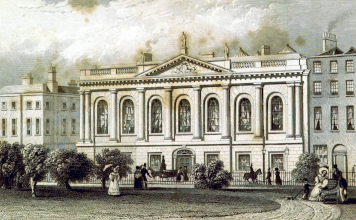
(Pictured: The College of Surgeons, Dublin, 1837)


Leave a comment

Birth of Surgeon Andrew Rynne

Andrew Rynne, retired Irish surgeon, medical practitioner and founder of Clane General Hospital in County Kildare, is born on May 18, 1942, at Downings House in Prosperous, County Kildare. He is the chairperson of the Irish Family Planning Association (IFPA) and the Republic of Ireland‘s first vasectomy specialist. He is known for his liberal approach to birth control.

Rynne’s father is Stephen Rynne, a writer, broadcaster, author and wit, while his mother, Alice Curtayne, is a writer, hagiographer, lecturer, linguist and scholar. He attends Prosperous National School from 1947 to 1951 and Ring College Waterford from 1951 do 1952. From 1961 to 1968, he attends the Royal College of Surgeons in Ireland. After graduation, he emigrates to Canada with an internship with Hamilton Civic Hospital.

Rynne starts his general practise in Mitchell, Ontario, from 1968 to 1973, where he is introduced to vasectomy. In 1970, he is appointed as the coroner for Perth County, Ontario. In January 1974, he returns to Ireland and establishes a general practise in Clane, County Kildare.

In 1975, Rynne joins Irish Family Planning Association and starts doing vasectomies for them. In 1984, he sells condoms as an act of civil disobedience and gets fined £500. In the following year, he becomes the Chairman of IFPA. In the same year, he founds Clane General Hospital with the opposition from the Catholic Church and the local supporters.

In 1990, Rynne is shot by a man on whom he had carried out a vasectomy eight years previously. According to Rynne, the gunman fires six or seven times with a .22 Long Rifle and shoots him in the right hip. The incident is the subject of a short film The Vasectomy Doctor by Paul Webster.