seamus dubhghaill

Promoting Irish Culture and History from Little Rock, Arkansas, USA


Leave a comment

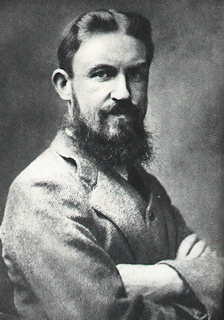
George Bernard Shaw Refuses Nobel Prize Money

On November 18, 1926, George Bernard Shaw refuses to accept the Nobel Prize in Literature prize money of £7,000 awarded to him a year earlier. He says, “I can forgive Alfred Nobel for his invention of the explosive but only the devil can think of the Nobel Prize.”

Shaw is born in Dublin on July 26, 1856, the third child of George Carr Shaw, a civil servant who later turns to a failed grain business to become an alcoholic, and Lucinda Elizabeth Shaw, a professional singer and sister of the famous opera singer Lucinda Frances. He is initially poor but is gifted with music and soon understands and loves the work of famous musicians and learns more about painting in Dublin. At the age of 15, he works as an apprentice and cashier for a real estate firm.

In 1876, Shaw follows his mother and two sisters to London. There he writes music reviews for newspapers to earn money, self-studies and actively participates in social activities. In 1884, he joins the founding of Fabian Society, an organization of British intellectuals advocating transition from capitalism to socialism by way of peace. From 1879 to 1883, he writes his first novel, Immaturity, and five other works that are not printed. An Unsocial Socialist is the first novel to be printed in 1887. Considered the father of “conceptual drama,” he begins writing plays in 1885, but achieves initial fame with Widowers’ Houses (1892). By 1903, his drama takes over the American and German stage, and in 1904 dominates the domestic stage. He becomes even more famous when Edward VII, the King of England, attends the performance of John Bull’s Other Island (1904), after which his drama spreads to European countries.

In addition, Shaw is also considered the best playwright in Britain at the time. He wants to use art to awaken people first to require changing the bourgeoisie order with all its institutions and customs. He emphasizes the educational function of the theater, but seeing the function of education is not an imposition from the playwright but arousing the aesthetic needs of the audience. The harsh problems of contemporary society such as the island’s predominant power, exploitative patterns, and the poverty of the people lead to social evils clearly reflected in his drama. His drama style tends to be satirical, sarcastic, finding its way to truth through paradoxes.

Shaw’s youngest dream is to earn a sum of money, then marry a wealthy wife. However, before becoming so wealthy that he can spend $ 35,000 on charity and enough money to travel around the world, he goes through many years of hardship. In the first nine years of his career, he receives only $30 USD in royalties. He is so poor that he does not even have the toll to get his manuscript to publishers. His clothes are tattered, his shoes open. All of his spending comes from his mother’s allowance. When he gets his name and remembers the miserable days, he often frowns, “I should have supported my family, the results are the opposite. I have never done anything for my family, and my mother has to work, raising me even though I was an adult.” Shaw, however, decides not to give up writing.

Realizing that, Shaw looks at the real royalties by publishing novels and the journey to the desired destination seems far away. He then turns to writing plays. He calculates that if the script is made public, the author will have revenue through the number of tickets issued and the number of shows. At the same time, the name of the author is also quickly known to the public. On the other hand, he says, only theater can “awaken people before the change of modern social order with all its institutions and customs.” He also judges that in addition to entertainment functions, the drama also contains the function of education, through arousing the aesthetic needs of the audience. He does not hesitate to bring to the stage all the most pressing issues of contemporary society such as the money’s inertia, the poverty of the people, and the social evils.

Saint Joan (1923) is judged to be the culmination of Shaw’s writing career. It is performed throughout European stages and is very popular. Two years after the release of Saint Joan, he is awarded the Nobel Prize for “the ideological and highly humanistic compositions, especially the spectacular satirical plays, combined with looks. Strange beauty of poetry.” When notified of his winning of the Nobel Prize, he humorously says, “The Nobel Prize for literature is like a float thrown to a swimmer.” Although he thinks he is the “swimmer to the shore,” he never leaves the pen. Thirteen years after receiving the Nobel Prize, Pygmalion, a script he wrote in 1912, is made into a film and receives the Academy Award for Best Adapted Screenplay.

In terms of scenario remuneration, Shaw receives an average of $100,000 a year, enough to spend on life, “reproduce” writing and traveling. It is only possible to marry a wealthy wife until the age of 40 years old. He always thinks that he “has no marriage status because he always worries others.” In terms of form, he is not very attractive because of his skinny body, but watching as the sisters do not allow him to carry out his intention to preserve his “absolute freedom.” Many beautiful female actors actively proclaim marriage proposal to Shaw, but he always uses humorous sentences to refuse.

Describing the George Bernard Shaw, Albert Einstein‘s physical genius after having met him has to say, “There are rare people who are so independent that they can see the weaknesses and absurdities of contemporaries. and at the same time do not let me get into it, but even so, when I encounter the hardships of life, these lonely people often lose their courage in helping humanity, with subtle humor and gentleness, can enthrall contemporaries and deserve to be torchbearers on the way of art’s unfavorable ways, today, with a passionate affection, I salute celebrate the biggest teacher on that path – the one who taught us and made us all feel happy.” It is a rare meeting of two great people in London in the fall of 1930.

(From: “November 18, 1926 – George Bernard Shaw refuses to receive a Nobel prize,” ScienceInfo.net, updated December 17, 2018)


Leave a comment

Death of Lawrence Sterne, Humorist & Author

Lawrence Sterne, Anglican clergyman, humorist, and author of the experimental novel The Life and Opinions of Tristram Shandy, Gentleman, dies in London on March 18, 1768. Though popular during his lifetime, he becomes even more celebrated in the 20th century, when modernist and postmodernist writers rediscover him as an innovator in textual and narrative forms.

Sterne is born on November 24, 1713, in Clonmel, County Tipperary, to a British military officer stationed there. Following his father’s postings, the family moves briefly to Yorkshire before returning to Ireland, where they live largely in poverty and move frequently throughout the rest of Sterne’s youth. When the elder Sterne is dispatched to Jamaica, where he would die in 1731, he places his son with a wealthy uncle who supports the boy’s education.

Sterne attends Jesus College, Cambridge, following in the footsteps of his grandfather, Richard Sterne, who had been Master of the College. After being ordained as an Anglican priest, he takes up the vicarship of Sutton-on-the-Forest, where he marries Elizabeth Lumley. The couple lives there for the next 20 years.

Through his paternal family line, Sterne is connected to several powerful clergymen. His uncle, Archdeacon Jaques Sterne, encourages him to contribute to Whig political journals, and consequently he writes several articles supporting Sir Robert Walpole. However, when his political fervency fails to match his uncle’s, prompting him to abandon the role of political controversialist, Jaques Sterne cuts ties with his nephew and refuses to support his career. Nevertheless, Sterne continues writing.

Sterne’s first long work, a sharp satire of the spiritual courts entitled A Political Romance, makes him as many enemies as allies. Though the work is not widely distributed and indeed is burned at the request of those targeted by its Swiftian-style criticism, it represents Sterne’s first foray into the kind of humorous satire for which he would become famous. At age 46, he steps back from managing his parishes and turns his full attention to writing.

Sterne begins what becomes his best-known work, The Life and Opinions of Tristram Shandy, Gentleman, at a moment of personal crisis. He and his wife are both ill with tuberculosis and, in the same year that the first volumes of his long comic novel appear, his mother and uncle Jaques die. The blend of sentiment, humour and philosophical exploration that characterises his works matures during this difficult period. Tristram Shandy is an enormous success, and Sterne becomes, for the first time in his life, a famous literary figure in London. Still suffering from tuberculosis, he leaves England for Continental Europe, where his travels influence his second major work, A Sentimental Journey Through France and Italy (1768).

Sterne’s narrator in A Sentimental Journey is Parson Yorick, a sensitive but also comic figure who first appears in Tristram Shandy and who becomes Sterne’s fictive alter ego. In A Sentimental Journey, Parson Yorick wears a “little picture of Eliza around his neck,” and in the last year of his life Sterne writes the autobiographical Journal to Eliza under the pseudonym Yorick. Eliza is Eliza Draper, the wife of an East India Company official, and the literary and emotional muse of Sterne’s final years. After Draper returns to India, the two continue to exchange letters, some of which Draper allows to be published after Sterne’s death in the volume Letters from Yorick to Eliza.

In early 1768, less than a month after A Sentimental Journey is published, Sterne’s strength fails him and he dies in his lodgings at 41 Old Bond Street in London on March 18, 1768, at the age of 54. He is buried in the churchyard of St. George’s Hanover Square Church.

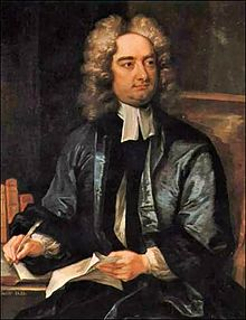
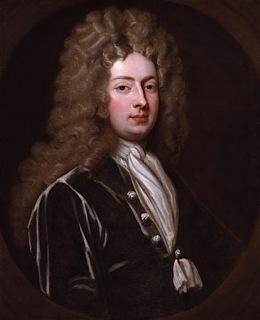
(Pictured: Portrait of Laurence Sterne (1713-1768), oil on canvas by Joshua Reynolds, 1760)


Leave a comment

Death of Dave Allen, Comedian, Satirist & Actor

David Edward Tynan O’Mahony, comedian, satirist and actor professionally known as Dave Allen, dies from emphysema in Kensington, London, on March 10, 2005.

Allen is born on July 6, 1936, in a nursing home at 37 Lower Leeson Street, Dublin, the youngest of three sons of (Gerard John) Cullen Tynan Allen, journalist, manager of The Irish Times, and raconteur, and his wife Jean Ballantyne (née Archer), an English-born nurse. His paternal grandmother, Nora Tynan O’Mahony, is the first women’s features editor of the Freeman’s Journal, and the poet Katharine Tynan is his great-aunt. Allen loses half a finger on his left hand in a childhood accident which becomes a favourite theme (and occasional prop) in his shows.

After initially attending Beaumont convent school, Allen goes to Firhouse national school, County Dublin, near the family residence outside Templeogue. For a period during World War II, he lives with his mother and brothers at Keenagh, County Longford, where they had moved for fear that Dublin might be targeted by air raids. On returning to Dublin, he goes to Terenure College, run by the Carmelite fathers. His reminiscences in later life often centre on memories of frequent and sadistic corporal punishment, and warnings from priests that adolescent male sexuality is a device of Satan leading straight to hell. His resentment is formative in his lifelong and outspoken atheism.

Allen, who is close to his father, is severely affected emotionally by his death in 1948, after which his relations with the school deteriorate further. The discovery that his father’s drinking and gambling had left the family heavily indebted means that, notwithstanding assistance from journalistic friends, his elder brothers are obliged to leave school and work as journalists to support the family. Restless and even more discontented at school than previously, he often plays truant to visit museums and art galleries. Expelled from Terenure College, he briefly attends the Catholic University School before leaving school at the age of 16. After working as a clerk for the Irish Independent, in 1954 he becomes a journalist on the Drogheda Argus, reporting weddings and gymkhanas. He later attributes this career path to the contemporary tradition of following a family profession.

Moving to London but failing to secure a job on a Fleet Street newspaper, Allen follows his brother John by becoming a “redcoat” attendant at Butlin’s holiday camps in Filey (Yorkshire), Skegness, Margate, and Brighton, performing various functions and telling jokes and stories during intervals between stage acts. In the winters he sells educational toys in Sheffield. Acquiring an agent, he becomes a professional comedian, adopting the stage name Dave Allen. He initially works the declining club and variety circuit, later claiming that he had toured with the last old-style nude tableaux show. In 1959, he makes his first television appearance on the BBC talent show New Faces and realises that television is the medium of the future. He tours with pop singer Helen Shapiro in 1963 and 1964, joined in the latter year by an emerging support band, the Beatles. At this period, he models himself on American stand-up comedians such as Jerry Lewis, focusing his act on discrete gags leading up to a punchline.

While performing in support of the singer Helen Traubel in Australian nightclubs, Allen often reminisces to her off stage about his early life. Traubel suggests that he incorporate such material into his act. Such is the genesis of his mature style of rambling absurdist monologues, which he describes as influenced by the Irish storytelling tradition in general, and his father’s stories in particular. After appearing in Melbourne and Sydney, he becomes the host of a ninety-minute chat show, Tonight with Dave Allen, on Sydney-based Channel 9. Eighty-four episodes are recorded of what becomes one of Australian television’s most successful programmes ever, its popularity boosted by the rumour that he is having an affair with singer Eartha Kitt, his hilarious interviews with eccentrics, and the frequent deployment of dangerous animals onstage.

Allen marries the English actress Judith Stott in Australia on March 9, 1964, a divorcée with one son. They have two children, including the comedian Ed Allen (Edward James Allen). After separating in 1980, the couple divorces in 1983. Returning to England in December 1964 to be with his wife, he establishes a reputation there through well-received performances as a compère at the televised Sunday Night at the London Palladium (1967) and The Blackpool Show (1966). After a slot as resident comedian on The Val Doonican Show (1965–67), he obtains his first stand-alone show, Tonight with Dave Allen, in 1967 on ITV, a mixture of sketches with the monologues for which he becomes best known. He usually performs seated on a barstool, smoking a cigarette, and sipping from a presumed glass of whiskey (actually ginger ale), while musing on the oddities of life, often expressing his suspicion of authority figures. His signature farewell phrase is “Goodnight, and may your God go with you.”

On BBC television Allen headlines two programmes: The Dave Allen Show (1968–69), and Dave Allen at Large (1971–79). He writes much of his own material, compulsively scouring newspapers for items that he can work into his act. He resists suggestions that he should move to an early evening slot, as this would entail restrictions on his material. In the 1970s and 1980s he tours widely with a one-man stage show, “An evening with Dave Allen,” containing more “adult” material than would be allowed on television at the time. His stage performances are less well-received in the United States than elsewhere.

Allen’s treatment of sex and religion involves him in frequent controversies. Priests and the confessional are frequent targets. In 1975, he provokes widespread protests from Catholics over a sketch in which the pope, played by Allen himself, and his cardinals perform a striptease on the steps of St. Peter’s Basilica. In 1977, his shows are banned from RTÉ. In 1984, the British anti-indecency campaigner Mary Whitehouse formally complains about his televised act, with particular reference to a simulated post-coital conversation. As with many stage comedians, his angry and outspoken stage persona contrasts with a reserved offstage life. He keeps his stage persona distinct from his private life and does not allow his children to attend his shows.

Allen gives occasional straight performances, notably in Edna O’Brien‘s plays A Pagan Place (1972) and Flesh and Blood (1985); in the dual roles of Captain Hook and Mr. Darling in a production of Peter Pan (1973); and in Alan Bennett‘s television play One Fine Day (1979). He has a supporting role in the Australian comedy film Squeeze a Flower (1970). He also presents several documentaries, notably Dave Allen in the Melting Pot (1969); surveying life in New York City, he discusses racism and drug addiction and conducts one of the first television interviews with openly gay men. Other documentaries for ITV include Dave Allen in Search of the Great English Eccentric (1974), and Dave Allen (1978), which deals with American eccentrics. Long fascinated with ghost stories, he publishes an anthology of horror stories, A Little Night Reading (1974).

In the 1980s, Allen is regarded by many fans of the new, politically engaged “alternative comedians” as old-fashioned. His leisurely style contrasts with their quick-fire delivery, and some of his references to the Irish and other ethnic groups are seen as demeaning. He makes a partial television comeback with a six-part BBC One series, Dave Allen (1990), using considerably more outspoken material than he had previously deployed on television.

In 1993, Allen appears in a six-part series for the new ITV London franchise, Carlton Television. Thereafter he moves into semi-retirement, partly because of health problems, while continuing to make guest television appearances. At the British Comedy Awards he is named best comedy performer (1993) and is granted a lifetime achievement award (1996). He occasionally releases videos of older material “to keep myself in the style to which I had become accustomed – a bit of an Irish retirement, actually.” He maintains tight editorial control over his recordings, having been annoyed when his first television shows were chopped and changed when re-broadcast by American networks. They are released on DVD after his death. He presents a six-part BBC series based on his old material, The Unique Dave Allen (1998). After giving his last performance on BBC Radio 4 in 1999, he retires and devotes himself to his hobby as an amateur painter.

After a seventeen-year relationship, Allen marries secondly Karin Stark, a theatrical producer, on December 9, 2003. Their one son is born three weeks after Allen dies peacefully in his sleep as a result of sudden arrhythmic death syndrome on March 10, 2005, in Kensington, London.

A selection of his routines, edited by Graham McCann, is published as The Essential Dave Allen (2005). His obituarists see him as prefiguring the aggressive mocking of authority by the alternative comedians who had once criticised him, and as paving the way for such irreverent and anti-deferential satire of political and religious authority as Not the Nine O’Clock News and Father Ted. The widespread use of the monologue by Irish dramatists such as Conor McPherson in the first decade of the twenty-first century also owes something to his influence.

(From: “Allen, Dave” by Patrick Maume, Dictionary of Irish Biography, http://www.dib.ie, June 2011)


Leave a comment

Birth of Anthony Cronin, Poet, Activist, Critic & Editor

Anthony Gerard Richard Cronin, Irish poet, arts activist, biographer, commentator, critic, editor and barrister, is born in Enniscorthy, County Wexford, on December 28, 1923.

After obtaining a B.A. from the National University of Ireland, Cronin enters the King’s Inns and is later called to the Bar.

Cronin is known as an arts activist as well as a writer. He is Cultural Adviser to Taoiseach Charles Haughey and briefly to Garret FitzGerald. He involves himself in initiatives such as Aosdána, the Irish Museum of Modern Art and the Heritage Council. He is a founding member of Aosdána, and is a member of its governing body, the Toscaireacht, for many years. He is elected Saoi, a distinction for exceptional artistic achievement, in 2003. He is also a member of the governing bodies of the Irish Museum of Modern Art and the National Gallery of Ireland, of which he is for a time Acting Chairman.

With Flann O’Brien, Patrick Kavanagh and Con Leventhal, Cronin celebrates the first Bloomsday in 1954. He contributes to many television programmes, including Flann O’Brien: Man of Parts (BBC) and Folio (RTÉ).

From 1966 to 1968 Cronin is a visiting lecturer at the University of Montana in Missoula, Montana, and from 1968 to 1970 he is poet in residence at Drake University in Des Moines, Iowa. He reads a selection of his poems for the Irish Poetry Reading Archive in 2015. He has honorary doctorates from several institutions, including the University of Dublin, the National University of Ireland and the Adam Mickiewicz University in Poznań, Poland.

Cronin begins his literary career as a contributor to Envoy, A Review of Literature and Art. He is editor of The Bell in the 1950s and literary editor of Time and Tide (London). He writes a weekly column, “Viewpoint,” in The Irish Times from 1974 to 1980. Later he contributes a column on poetry to the Sunday Independent.

His first collection of poems, called simply Poems (Cresset Press, London), is published in 1958. Several collections follow and his Collected Poems (New Island Books, Dublin) is published in 2004. The End of the Modern World (New Island Books, 2016), written over several decades, is his final publication.

Cronin’s novel, The Life of Riley, is a satire on Bohemian life in Ireland in the mid-20th century, while his memoir Dead as Doornails addresses the same subject.

Cronin knows Samuel Beckett from when they do some work for the BBC during the 1950s and 1960s. He gives a prefatory talk to Patrick Magee‘s reading of The Unnamable on the BBC Third Programme. Beckett is not impressed, saying, “Cronin delivered his discourse… It was all right, not very exciting.” Cronin later publishes a biography of him, Samuel Beckett: The Last Modernist (1996), followed on from No Laughing Matter: The Life and Times of Flann O’Brien (1989).

In his later years, Cronin suffers from failing health, which prevents him from traveling abroad, thus limiting his dealings to local matters. He dies in Dublin on December 27, 2016, one day short of his 93rd birthday.

Cronin firstly marries Thérèse Campbell, from whom he separates in the mid-1980s. She dies in 1999. They have two daughters, Iseult and Sarah. Iseult is killed in a road accident in Spain. He secondly marries the writer Anne Haverty who, along with daughter Sarah, survives him.


Leave a comment

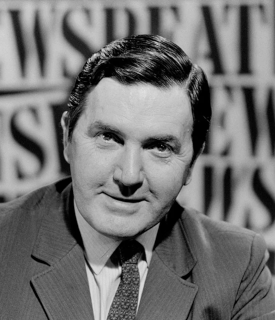
Death of Frank Hall, Broadcaster, Journalist, Satirist & Film Censor

Frank Hall, Irish broadcaster, journalist, satirist and film censor, dies in Dublin on September 21, 1995. He is best remembered for his satirical revue programme Hall’s Pictorial Weekly.

Born in Newry, County Down, on February 24, 1921, Hall receives little more than a primary education as he leaves school at the age of twelve to work in a local shop. He later works as a waiter in London before moving to Dublin. On his return he joins the art department of the Irish Independent. He subsequently works with the Evening Herald where he writes a column on dance bands.

After that, Hall moves to RTÉ where he works in the newsroom. From 1964 to 1971 he presents Newsbeat, a regional news programme. He also presents The Late Late Show for the opening of the 1964 season, but his lack of success in that seat leads to the return of the previous presenter, Gay Byrne. When Newsbeat ends, he starts writing and presenting Hall’s Pictorial Weekly, a political satire show that runs for over 250 episodes until 1980. A successor show, Hall and Company, runs from 1980 until his retirement from television in 1986. He serves as spokesperson for the Irish jury in the Eurovision Song Contest 1965 and 1966.

Hall wins two Jacob’s Awards, in 1966 and 1975, for his work on Newsbeat and Hall’s Pictorial Weekly respectively.

In 1978, Hall is appointed Ireland’s national film censor. During his period as censor, he is known for his strict application of Irish censorship and his defence of family values. Among the films banned by him is Monty Python’s Life of Brian, which he describes as “offensive to Christians and to Jews as well, because it made them appear a terrible load of gobshites.”

Hall has a long running affair with a young colleague from RTÉ, though married to Aideen Kearney at the time. It is also widely accepted that he has a daughter in 1956 with RTÉ presenter Frankie Byrne, although this is disputed at the time by his family members. His relationship with Frankie Byrne is placed in the public domain in a Mint Productions programme, Dear Frankie, screened on RTÉ in January 2006. In 2010, a play written by Niamh Gleeson, also entitled Dear Frankie, opens in the Liberty Hall theatre. Later in 2012, it opens again in the Gaiety Theatre, going on to play in theatres across the country.

Hall dies of a heart attack in Dublin on September 21, 1995. He is buried in Dardistown Cemetery in Northside, Dublin.


1 Comment

Birth of Hannah Lynch, Feminist, Novelist & Journalist

Hannah Lynch, Irish feminist, novelist, journalist and translator, is born in Dublin on March 25, 1859.

Lynch’s father, who is a committed, non-violent Fenian, dies when she is young. Her mother, Anna Theresa Calderwood, is married twice. She grows up in a cultivated, literary, very female household with her mother and ten sisters and half-sisters. Her stepfather is James Cantwell, also a Fenian, who runs the Star and Garter Hotel. From her early childhood she is familiar with many leading political agitators and writers in Dublin. Having been educated at a convent school in France, she considers training as a doctor and later as a concert pianist. However, economic circumstances lead to her to work as a sub-editor for a provincial paper and as a governess in Europe.

A nationalist like her father and stepfather, Lynch is an executive member of the Ladies’ Land League and as a result closely associates with Fanny Parnell. She writes extensively, producing short stories and satirical sketches, as well as Land War fiction, travel writing, translations and literary criticism. Her satirical pieces include “A Dublin Literary Coterie Sketched by a Non-Pretentious Observer” (1888) and “My Friend Arcanieva” (1895). She publishes William O’Brien‘s paper United Ireland from France, after it is suppressed in Ireland. She disagrees with William Butler Yeats on the literary merit of Emily Lawless, calling her work “highly polished literary stories.”

Lynch also writes fiction on the subject of political and cultural affairs in Ireland, sometimes meeting controversy. Her first novel, Through Troubled Waters (1885), is a fictionalised version of a real-life incident in Galway in which the daughters of a prosperous landowning family are murdered to make way for the sons to inherit the land. The novel also depicts the rural clergy as complicit, by denouncing the victims from the pulpit. The newspaper United Ireland strongly criticises the novel, claiming it peddles in anti-Irish stereotypes for a British audience. She responds by stating that she had intended the book for an Irish publisher and audience, and that she should not be asked “to prove my patriotism at the expense of truth.”

Lynch publishes across Ireland, the United Kingdom and from Paris. Her political work eventually leads to a breakdown in her health, after which she spends a period recuperating on the Isle of Wight. By 1896, she has settled in Paris, having also lived in both Spain and Greece. She speaks Greek and French. She then returns to lecture in Ireland and is a part of the salons of Paris in the Belle Époque as well as the Irish Literary Revival in Dublin. She is friends with the historian, biographer and literary critic Arvède Barine (pseudonym of Louise-Cécile Vincens), the writers Mabel and Mary Robinson, and the medievalist Gaston Paris. Her work however does not bring significant income, and she is forced to apply to the Royal Literary Fund for help on multiple occasions. Eventually it takes a toll on her health. She spends time in hospital in Margate, England in 1903.

Lynch dies at 60 Rue de Breteuil in Paris on January 9, 1904, where she spends much of her working life.


Leave a comment

Death of Radio Éireann’s Agony Aunt, Frankie Byrne

Frankie Byrne, Irish public relations consultant, broadcaster and Radio Éireann’s own agony aunt, dies in St. Vincent’s Hospital, Dublin, on December 11, 1993.

Byrne is born into a successful family of journalists from Dublin. Cared for by servants, from a young age Byrne feels like she isn’t loved as much as the other children in the family. She is the middle child with two brothers and two sisters. She attends boarding school in Rathfarnham and has a limited relationship with her parents. Her father is a racing journalist and broadcaster who lives in the Gresham Hotel on O’Connell Street where his job at Radio Éireann is located. She becomes addicted to nicotine and alcohol. Two of her siblings die from alcoholism.

In the late 1940s, Byrne works at the Brazilian embassy in Dublin. She is a pioneer in Irish radio and her program, “Agony Aunt,” leads to public confessionals on the radio. She writes an Agony Aunt column for the Evening Press during the same period. She is best known for her 22 years of the radio program ‘Dear Frankie.’ On the show she gives relationship advice to listener requests. Dear Frankie, sponsored by Jacob’s, paves the way for the contemporary radio programs such as The Gerry Ryan Show and RTÉ Radio 1’s Liveline with Joe Duffy.

Dear Frankie is broadcast from 1963 to 1985. It opens with the words, ‘Welcome to Women’s Page, a program for and about you.’ The program begins as a 15-minute question and answer format on household issues but soon becomes a radio program that allows people to share confidences and seek advice. She shares household problems with her listeners ranging from jealous husband to lovelorn teenagers. She claims to know nothing about domestic science but that she does know about love. She advises on domestic relationships while living a life of turmoil. The most unique feature of Dear Frankie is that the program sets people to talking and helps begin a national conversation on the lonely struggles of generations of Irish women.

Byrne never marries but has a 25+ year relationship with Frank Hall, the satirist and columnist for the Evening Herald. Their relationship has been disputed by some family members who deny they had a child together and that the couple were just good friends. Nevertheless, in the middle of this relationship, she becomes pregnant in the mid-1950s, giving birth to their daughter Valerie on July 12, 1956. She wants to keep the baby but ultimately gives her up to St. Clare’s Orphanage in Stamullen. She frequently visits her baby daughter until she is eventually adopted some 15 weeks later, going to a family who goes on to adopt four more children. Her relationship with Frank Hall comes to an end in the mid-1970s. Although she had struggled with alcoholism for many years, she stops drinking in the mid-1970s but is subsequently prescribed Valium and is addicted to the drug for the remainder of her life.

Byrne and her daughter are reunited on December 13, 1983, a decade before her death. The last time Valerie sees her mother is exactly ten years later, on December 13, 1993, in the mortuary in St. Vincent’s Hospital.

Byrne dies at the age of 71 from Alzheimer’s disease in St. Vincent’s Hospital, Dublin, on Saturday, December 11, 1993. Tributes are paid by colleagues and friends including the RTÉ assistant Director-General, Bobby Gahan, who describes her voice as “one of the greatest sounds of radio.” Others who pay public tribute to her include fellow broadcasters Larry Gogan and Gay Byrne.

Byrne is remembered as an influential force during the time of her radio show, and it has been said that an entire generation can hum the signature tune to her radio program. Following her death there is an outburst of support. Gay Byrne describes her as having been “a national institution who had been loved by everyone.” Dear Frankie is often credited as the first ‘agony aunt’ radio show program format in Ireland.

Byrne’s talk show and life inspire numerous pieces of literature including a stage production in 2010 and 2012, authored by Niamh Gleeson and produced by the Five Lamps Theater Company, which tells the story of her ‘tragic and secretive life.’ She is also the subject of a book published in 1998, which compiles the advice which she gave on Dear Frankie. In 2006, RTÉ airs a documentary on Byrne, in which they explore her life following the show, and include interviews with her family and friends, including her daughter Valerie.

Byrne is also famous for having been the first woman to found a public relations company in 1963, that works almost exclusively in promoting Jacob’s.


Leave a comment

Birth of Jonathan Swift, Essayist, Pamphleteer, Poet & Cleric

Jonathan Swift, satirist, essayist, political pamphleteer, poet and cleric who becomes Dean of St. Patrick’s Cathedral, Dublin, is born in Dublin on November 30, 1667.

Swift’s father, an attorney, also named Jonathan Swift, dies just two months before he is born. Without steady income, his mother struggles to provide for her newborn. Moreover, he is a sickly child. It is later discovered that he suffers from Ménière’s disease, a condition of the inner ear that leaves the afflicted nauseous and hard of hearing. In an effort to give her son the best upbringing possible, Swift’s mother gives him over to Godwin Swift, her late husband’s brother and a member of the respected professional attorney and judges group Gray’s Inn. Godwin Swift enrolls his nephew with one of his cousins in Kilkenny College, which is perhaps the best school in Ireland at the time. He arrives there at the age of six, where he is expected to have already learned the basic declensions in Latin. He has not and thus begins his schooling in a lower form. He graduates in 1682, when he is 15. His transition from a life of poverty to a rigorous private school setting proves challenging. He does, however, make a fast friend in William Congreve, the future poet and playwright.

In 1682, Swift commences his undergraduate studies at Trinity College, Dublin. In 1686, he receives a Bachelor of Arts degree and goes on to pursue a master’s degree. Not long into his research, huge unrest breaks out in Ireland. The king of Ireland, England and Scotland is soon to be overthrown. What becomes known as the Glorious Revolution of 1688 spurs him to move to England and start anew. For 10 years, Swift works in Surrey‘s Moor Park and acts as an assistant to Sir William Temple, 1st Baronet.

During his Moor Park years, Swift meets the daughter of Temple’s housekeeper, an 8-year-old named Esther Johnson, known as “Stella.” They become lovers for the rest of their lives until Johnson’s death in 1728. It is rumored that they marry in 1716, and that Swift keeps of lock of Johnson’s hair in his possession at all times.

During his decade of work for Temple, Swift returns to Ireland twice. On a trip in 1695, he takes all necessary requirements to become an ordained priest in the Anglican tradition. Under Temple’s influence, he also begins to write, first short essays and then a manuscript for a later book. Temple dies in 1699. Swift completes the task of editing and publishing Temple’s memoirs. He then leans on his priestly qualifications and finds work ministering to a pea-sized congregation just 20 miles outside of Dublin. For the next ten years, he gardens, preaches and works on the house provided to him by the church. He also returns to writing. His first political pamphlet is titled A Discourse on the Contests and Dissentions in Athens and Rome.

In 1704, Swift anonymously releases A Tale of a Tub and The Battle of the Books. Tub, although widely popular with the masses, is harshly disapproved of by the Church of England. Ostensibly, it criticizes religion, but Swift means it as a parody of pride. Nonetheless, his writings earn him a reputation in London and when the Tories come into power in 1710, they ask him to become editor of The Examiner, their official paper. After a time, he becomes fully immersed in the political landscape and begins writing some of the most cutting and well-known political pamphlets of the day, including The Conduct of the Allies, an attack on the Whigs. Privy to the inner circle of Tory government, he lays out his private thoughts and feelings in a stream of letters to his beloved Stella. They are later published as The Journal to Stella.

When he sees that the Tories will soon fall from power, Swift returns to Ireland. In 1713, he takes the post of Dean at St. Patrick’s Cathedral, Dublin. While leading his congregation at St. Patrick’s, he begins to write what would become his best-known work. In 1726, at last finished with the manuscript, he travels to London and benefits from the help of several friends, who anonymously publish it as Travels into Several Remote Nations of the World, in Four Parts. By Lemuel Gulliver, First a Surgeon, and then a Captain of Several Ships, more simply known as Gulliver’s Travels. The book is an immediate success and has not been out of print since its first run.

Not long after the celebration of this work, Esther Johnson, falls ill. She dies in January 1728. Her death moves Swift to write The Death of Mrs. Johnson.

In 1742, Swift suffers a stroke and loses the ability to speak. He dies on October 19, 1745. He is laid to rest next to Esther Johnson inside Dublin’s St. Patrick’s Cathedral.


Leave a comment

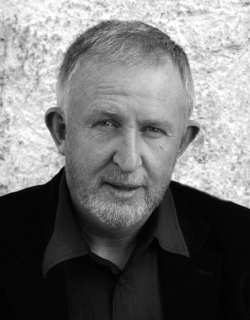
Birth of William Wall, Novelist, Poet & Short Story Writer

William “Bill” Wall, Irish novelist, poet and short story writer, is born in Cork, County Cork, on July 6, 1955.

Wall is raised in the coastal village of Whitegate, County Cork. He receives his secondary education at the Midleton CBS Secondary School in Midleton. He progresses to University College Cork where he graduates in Philosophy and English. He teaches English and drama at Presentation Brothers College, Cork, where he inspires Cillian Murphy to enter acting.

In 1997, Wall wins the Patrick Kavanagh Poetry Award. He publishes his first collection of poetry that same year. His first novel, Alice Falling, a dark study of power and abuse in modern-day Ireland, appears in 2000. He is the author of four novels, two collections of poetry and one of short stories.

In 2005, This Is The Country appears. A broad attack on politics in “Celtic Tiger” Ireland, as well as a rite of passage novel, it is longlisted for the Man Booker Prize, and shortlisted for the Irish Book Awards. It can be read as a satirical allegory on corruption, the link between capitalism and liberal democracy exemplified in the ‘entrepreneurial’ activities of minor drug dealers and gangsters, and reflected in the architecture of business-parks and sink estates. This political writing takes the form of “an insightful and robust social conscience”, in the words of academic John Kenny. Kenny also focuses on what he sees as Wall’s “baneful take on the Irish family, his fundamentally anti-idyllic mood” which has “not entirely endeared Wall to the more misty-eyed among his readers at home or abroad.” The political is also in evidence in his second collection of poetry Fahrenheit Says Nothing To Me. He is not a member of Aosdána, the Irish organisation for writers and artists. In 2006, his first collection of short fiction, No Paradiso, appears. In 2017, he becomes the first European to win the Drue Heinz Literature Prize.

His provocative political blog, The Ice Moon, has increasingly featured harsh criticism of the Irish government over their handling of the economy, as well as reviews of mainly left-wing books and movies. Many of his posts are satirical. He occasionally writes for literary journals, writes for Irish Left Review, and reviews for The Irish Times. His work has been translated into several languages. He has also appeared on the Irish-language channel TG4, such as in the programme Cogar.

He is one of the Irish delegates at the European Writers Conference in Istanbul in 2010.

Described by writer Kate Atkinson as “lyrical and cruel and bold and with metaphors to die for,” critics have focused on Wall’s mastery of language, his gift for “linguistic compression,” his “poet’s gift for apposite, wry observation, dialogue and character,” his “unflinching frankness” and his “laser-like … dissection of human frailties,” which is counterbalanced by “the depth of feeling that Wall invests in his work.” A review of his first novel in The New Yorker declares “Wall, who is also a poet, writes prose so charged—at once lyrical and syncopated—that it’s as if Cavafy had decided to write about a violent Irish household.” In a recent review, his long poem “Job in Heathrow,” anthologised in The Forward Book of Poetry 2010 but originally published in The SHOp, is described as “a chilling airport dystopia.” Poet Fred Johnston suggests that Wall’s poetry sets out to “list the shelves of disillusion under which a thinking man can be buried.” For Philip Coleman, “Ghost Estate is a deeply political book, but it also articulates a profound interest in and engagement with questions of aesthetics and poetics.”

Wall is a longtime sufferer of adult-onset Still’s disease (AOSD) and describes his efforts to circumvent the disabling effects of the disease using speech-to-text applications as “a battle between me and the software.”


Leave a comment

Death of Austin Clarke, Poet, Playwright & Novelist

Austin Clarke, poet, playwright and novelist, dies in Dublin on March 19, 1974. At the time of his death, he is considered to be the greatest poet of his generation after W. B. Yeats,

Clarke is born in 83 Manor Street, Stoneybatter, Dublin, on May 9, 1896. His main contribution to Irish poetry is the rigour with which he uses technical means borrowed from classical Irish language poetry when writing in English. Effectively, this means writing English verse based not so much on metre as on complex patterns of assonance, consonance, and half rhyme. Describing his technique to Robert Frost, he says, “I load myself down with chains and try to wriggle free.”

Clarke’s early poetry clearly shows the influence of Yeats. His first book, The Vengeance of Fionn, is a long narrative poem retelling an Ossianic legend. It meets with critical acclaim and, unusually for a first book of poetry, goes to a second edition. Between this and the 1938 volume Night and Morning, he publishes a number of collections, all of which, to one extent or another, can be seen as being written in the shadow of Yeats. There is, however, one significant difference. Unlike the older poet, Clarke is a Catholic, and themes of guilt and repentance run through this early work.

Between 1938 and 1955, Clarke publishes no new lyric or narrative poetry. He is co-founder of the Lyric Theatre, Dublin and writes a number of verses plays for them. He also works as a journalist and has a weekly poetry programme on RTÉ radio. It seems likely that he also experiences some kind of personal crisis during this time, and this has significant consequences for his later poetry.

Clarke returns to publishing poetry with the 1955 collection Ancient Lights and is to continue writing and publishing prolifically for the remainder of his life. Although he continues to use the same Gaelic-derived techniques, this late poetry is markedly different from his earlier work. Many of the later poems are satires of the Irish church and state, while others are sensual celebrations of human sexuality, free of the guilt of the earlier poems. He also publishes the intensely personal Mnemosyne Lay in Dust, which is a poem sequence detailing the fictional Maurice Devanes’s nervous breakdown and subsequent recovery.

Clarke also comes to admire the work of more avant-garde poets like Ezra Pound and Pablo Neruda, both of whom he writes poems about. A number of the late long poems, such as, for instance, the 1971 Tiresias, show the effects of studying these poets and their looser formal structures. He sets up the Bridge Press to publish his own work, which allows him the freedom to publish work that many mainstream Irish publishers of the time might have been reluctant to handle. His Collected Poems is published in 1974 and a Selected Poems in 1976.

In addition to some twenty volumes of poetry and numerous plays, Clarke publishes three novels: The Bright Temptation (1932), The Singing Men at Cashel (1936), and The Sun Dances at Easter (1952). All of these are banned by the Censorship of Publications Board (Ireland). He also publishes two volumes of memoirs, Twice Round the Black Church (1962) and A Penny in the Clouds (1968), and a number of scattered critical essays and book reviews. While all of these prose writings are of interest, his reputation rests firmly on his poetry.

In 1920 Clarke marries Cornelia (Lia) Cummins. The marriage effectively lasts only a few days, and he spends several months in St. Patrick’s Hospital recovering from it, but they do not divorce before Cummins dies in 1943. He meets, has three sons with, and later marries (1945) Norah Esmerelda Patricia Walker (1900–1985), granddaughter of Matthew Harris, MP for East Galway from 1885 to 1890.

Clarke lives in Bridge House beside Templeogue Bridge which spans the River Dodder in the south Dublin suburb of Templeogue. After his death on March 19, 1974, there is a proposal to preserve the house and his library of 6,500 books as a memorial. This is not possible owing to long-term plans to demolish the house and widen the road. The old Templeogue Bridge, built in 1800, and Bridge House are removed. A new bridge is opened by Councillor Bernie Malone, Chairman Dublin City Council, on December 11, 1984, which is renamed Austin Clarke Bridge in his honour.

(Photo © RTÉ Archives)