seamus dubhghaill

Promoting Irish Culture and History from Little Rock, Arkansas, USA


Leave a comment

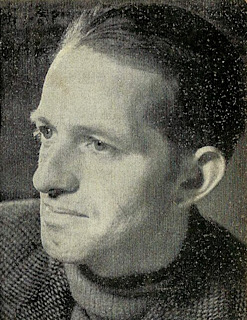
Death of Roger McCorley, Irish Republican Activist

Roger McCorleyIrish republican activist, dies on November 13, 1993.

McCorley is born into a Roman Catholic family at 67 Hillman Street in Belfast on September 6, 1901. He is one of three children born to Roger Edmund McCorley, a meat carver in a hotel, and Agnes Liggett. He has two elder brothers, Vincent and Felix. He joins the Fianna in his teens. His family has a very strong republican tradition, and he claims to be the great-grandson of the United Irishmen folk hero Roddy McCorley, who was executed for his part in the Irish Rebellion of 1798.

McCorley is a member of the Belfast Brigade of the Irish Republican Army (IRA) during the Irish War of Independence (1919–22). He is commandant of the Brigade’s first battalion, eventually becoming Commandant of the Belfast Brigade. In June 1920, he is involved in an attack on a Royal Irish Constabulary (RIC) police barracks at CrossgarCounty Down. On Sunday, August 22, 1920, in Lisburn, he is involved in the assassination of RIC District Inspector Oswald Swanzy, who was held responsible by Michael Collins for the assassination of Tomás Mac CurtainLord Mayor of Cork.

McCorley is noted for his militancy, as he is in favour of armed attacks on British forces in Belfast. The Brigade’s leaders, by contrast, in particular, Joe McKelvey, are wary of sanctioning attacks for fear of loyalist reprisals on republicans and the Catholic population in general. In addition, McCorley is in favour of conducting an armed defense of Catholic areas, whereas McKelvey does not want the IRA to get involved in what he considers to be sectarian violence. McCorley writes later that in the end, “the issue settled itself within a very short space of time, when the Orange mob was given uniforms, paid for by the British, and called the Ulster Special Constabulary (USC).” The role of the USC, a temporary police force raised for counter-insurgency purposes, in the conflict is still debated, but republicans maintain that the organization was responsible for the indiscriminate killings of Catholics and nationalists.

On January 26, 1921, McCorley, is involved in the fatal shooting of three Auxiliary Division officers in their beds in the Railway View hotel in central Belfast. Shortly afterwards, he and another IRA man, Seamus Woods, organize an active service unit (ASU) within the first battalion of the Belfast Brigade, with the intention of carrying out attacks, with or without the approval of the Brigade leadership. The unit consists of 32 men. McCorley later writes, “I issued a general order that, where reprisal gangs [State forces] were cornered, no prisoners were to be taken.” In March 1921, he personally leads the ASU in the killing of three Black and Tans in Victoria Street in central Belfast. He is responsible for the deaths of two more Auxiliaries in Donegall Place in April. In reprisal for these shootings, members of the RIC assassinate two republican activists, the Duffin brothers in Clonard Gardens in west Belfast. On June 10, 1921, both and Woods and McCorley units are involved in the killing a RIC man who is suspected in the revenge killings of the Duffin brothers. Two RIC men and a civilian are also wounded in that attack.

Thereafter, there is what historian Robert Lynch has described as a “savage underground war” between McCorley’s ASU and RIC personnel based in Springfield Road barracks and led by an Inspector Ferris. Ferris is accused of murdering the Lord Mayor of Cork Thomas Mac Curtain and had been posted to Lisburn for his safety. Ferris himself is among the casualties, being shot in the chest and neck, but surviving. McCorley claims to have been one of the four IRA men who shot Ferris. In addition, his men bomb and burn a number of businesses including several cinemas and a Reform Club. In May 1921, however, thirteen of his best men are arrested when surrounded by British troops during an operation in County Cavan. They are held in Crumlin Road Gaol and sentenced to death.

On June 3, McCorley organizes an attack on Crumlin Road Gaol in an attempt to rescue the IRA men held there before they are executed. The operation is not a success; however, the condemned men are reprieved after a truce is agreed between the IRA and British forces in July 1921. On Bloody Sunday (July 10, 1921), he is a major leader in the defense of nationalist areas from attacks by both the police and loyalists. On that day twenty people are killed before he negotiates a truce beginning at noon on July 11. At least 100 people are wounded, about 200 houses are destroyed or badly damaged – most of them Catholic homes, leaving 1,000 people homeless.

In April 1922, McCorley becomes leader of the IRA Belfast Brigade after Joe McKelvey goes south to Dublin to join other IRA members who are against the Anglo-Irish Treaty. With McKelvey’s departure, Seamus Woods becomes Officer Commanding of the IRA’s 3rd Northern Division, which has up to 1,000 members, with McCorley designated as Vice Officer Commanding. McCorley for his part, supports the Treaty, despite the fact that it provides for the partition of Ireland and the continued British rule in Northern Ireland. The reason for this is that Michael Collins and Eoin O’Duffy have assured him that this is only a tactical move and indeed, Collins sends men, money and weapons to the IRA in the North throughout 1922.

However, McCorley’s command sees the collapse of the Belfast IRA. In May 1922, the IRA launches an offensive with attacks all across Northern Ireland. In Belfast, he carries out an assault on Musgrave Street RIC barracks. He also conducts an arson campaign on businesses in Belfast. His men also carry out a number of assassinations, including that of Ulster Unionist Party MP William J. Twaddell, which causes the internment of over 200 Belfast IRA men.

To escape from the subsequent repression, McCorley and over 900 Northern IRA men flee south, to the Irish Free State, where they are housed in the Curragh. McCorley is put in command of these men. In June 1922, the Irish Civil War breaks out between Pro and Anti-Treaty elements of the IRA. He takes the side of the Free State and Michael Collins. After Collins is killed in August 1922, his men are stood down. About 300 of them join the National Army and are sent to County Kerry to put down anti-Treaty guerrillas there. In the Spring of 1923, bitterly disillusioned by the brutal counterinsurgency against fellow republicans, he resigns his command.

McCorley later asserts that he “hated the Treaty” and only supported it because it allowed Ireland to have its own armed forces. Both he and Seamus Woods are severe critics of the Irish Free State inertia towards Northern Ireland after the death of Michael Collins. He comments that when Collins was killed “the Northern element gave up all hope.”

In 1936 McCorley is instrumental in the establishment of the All-Ireland Old IRA Men’s Organization, serving as Vice-President with President Liam Deasy (Cork No. 3 Brigade) and Secretary George Lennon (Waterford No. 2 Brigade).

In the 1940s, McCorley is a founding member of Córas na Poblachta, a political party which aspires to a United Ireland and economic independence from Britain. He dies on November 13, 1993, and is buried in the Republican Plot of Glasnevin Cemetery.


Leave a comment

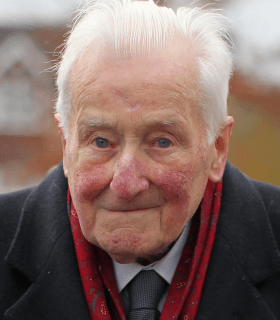
Birth of Billy McKee, Founding Member of the Provisional IRA

Billy McKee (Irish: Liam Mac Aoidh), Irish republican and a founding member and leader of the Provisional Irish Republican Army, is born on November 12, 1921, in Belfast, Northern Ireland.

McKee joins Fianna Éireann in 1936. He is arrested following a raid on a Gaelic Athletic Association (GAA) club in 1938, being imprisoned in Crumlin Road Gaol for several months. Following his release from prison, he joins the Irish Republican Army (IRA) in 1939. During World War II, the IRA carries out a number of armed actions in Northern Ireland known as the Northern Campaign. He is arrested and imprisoned in Crumlin Road Gaol until 1946 for his role in this campaign. In 1956, the IRA embarks on another armed campaign against partition, known as the Border Campaign. He is again arrested and interned for the duration of the campaign. He is released in 1962.

Upon release, McKee becomes Officer Commanding (OC) of the IRA’s Belfast Brigade. However, he resigns this position in 1963, after a dispute with other republicans due to him acceding to a Royal Ulster Constabulary (RUC) demand that he not fly an Irish tricolour during a republican march. He is succeeded by Billy McMillen.

As the 1960s proceed, McKee drifts away from the IRA. He grows very disillusioned with the organisation’s increasing emphasis on socialism and reformist politics over “armed struggle.” He is a devout Roman Catholic, who attends Mass daily. As a result, he is very uncomfortable with what he feels are “communist” ideas coming into the republican movement.

During the 1969 Northern Ireland riots, severe rioting breaks out in Belfast between Irish Catholic nationalists, Protestant loyalists, and the RUC. McKee is highly critical of the IRA’s failure to defend Catholic areas during these disturbances. On August 14, 1969, McKee, Joe Cahill and a number of other Irish Republican activists occupy houses at Kashmir Street, however, being poorly armed they fail to prevent Irish Catholics in Bombay Street and parts of Cupar Street and Kashmir Street being driven from their homes in the sectarian rioting that engulfs parts of the city. In the aftermath of the riots, he accuses Billy McMillen, the IRA’s Belfast commander, and the Dublin-based IRA leadership, of having failed to direct a clear course of action for the organization in civil disturbances. On September 22, 1969, he and a number of other IRA men arrive with weapons at a meeting called by McMillen and try to oust him as head of the Belfast IRA. They are unsuccessful but announce that they will no longer be taking orders from the IRA leadership in Dublin. In December 1969, the IRA splits into the Provisional IRA which is composed of traditional militarists like McKee, and the Official IRA which is composed of the remnants of the pre-split Marxist leadership and their followers. He sides with the Provisionals and joins the IRA Army Council in September 1970.

McKee becomes the first OC of the Provisional IRA Belfast Brigade. From the start, there is intermittent feuding between McKee’s men and his former comrades in the Official IRA, as they vie for control of nationalist areas. However, the Provisionals rapidly gain the upper hand, due to their projection of themselves as the most reliable defenders of the Catholic community.

McKee himself contributes greatly to this image by an action he undertakes on June 27, 1970, the Battle of St Matthew’s. Rioting breaks out in the Ardoyne area of north Belfast after an Orange Order parade, and three Protestants are killed in gun battles between the Provisional IRA and loyalists. In response, loyalists prepare to attack the vulnerable Catholic enclave of Short Strand in east Belfast. When McKee hears about this, he drives to Short Strand with some men and weapons and takes up position at St Matthew’s Church. In the ensuing five-hour gun battle, he is wounded and one of his men is killed, along with at least four Protestants.

On April 15, 1971, McKee, along with Proinsias Mac Airt, is arrested by the British Army when found in possession of a handgun. He is charged and convicted for possession of the weapon and imprisoned in Crumlin Road Gaol, and Joe Cahill takes over as OC of the Belfast Brigade.

In 1972, McKee leads a hunger strike protest in an effort to win recognition of IRA prisoners as political prisoners. Republicans who are interned already have special status, but those convicted of crimes do not. On June 19, the 35th day of hunger strike, he is close to death, William Whitelaw concedes Special Category Status (SCS) which, although not officially awarding political status, is tacit recognition of the political nature of the incarceration. Prisoners wear their own clothes, have no prison work, can receive one visit and food parcel per week and unlimited letters.

McKee is released on September 4, 1974, and resumes his position as OC of the Belfast Brigade. At this time the Provisional IRA calls a ceasefire, and he is involved, with Ruairí Ó Brádaigh, in secret peace talks in Derry with the Northern Ireland Office. He is also involved in talks with Protestant clergy in Feakle, County Clare, in December 1974, where he voices his desire to end the violence.

However, in the same period, McKee authorises a number of sectarian attacks on Protestants as well as renewed attacks on rival republicans in the Official IRA. For this he is heavily criticised by a group of Provisional IRA activists grouped around Gerry Adams.

A faction led by Adams manages to get McKee voted off the IRA Army Council in 1977, effectively forcing him out of the leadership of the organisation. His health suffers in this period, and he does not resume his IRA activities. He joins Republican Sinn Féin after a split in Sinn Féin in 1986. At age 89, reflecting on his involvement in the Republican cause he says, “From the time I was 15 until 65 I was in some way involved. I have had plenty of time since to think if I was right or I was wrong. I regret nothing.”

In later years McKee, Brendan Hughes and Tommy McKearney are critical of the Belfast Agreement and of the reformist politics of Sinn Féin. In 2016 he sends a message of support to the launch of the hardline new Republican party Saoradh, reportedly the political wing of the New IRA.

McKee dies in Belfast at the age of 97 on June 11, 2019. His funeral takes place on June 15, 2019, in west Belfast. His coffin is carried on a gun carriage. He is buried in Milltown Cemetery.


Leave a comment

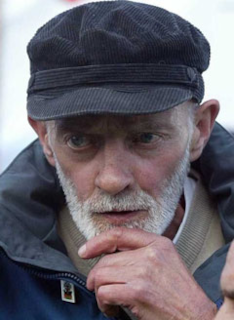
Death of Brian Keenan, Member of the Army Council of the Provisional IRA

Brian Keenan, a member of the Army Council of the Provisional Irish Republican Army (IRA), dies on May 21, 2008, at Cullyhanna, County Armagh, Northern Ireland, following a battle with colorectal cancer. He receives an 18-year prison sentence in 1980 for conspiring to cause explosions and plays a key role in the Northern Ireland peace process.

The son of a member of the Royal Air Force (RAF), Keenan is born on July 17, 1941, in Swatragh, County Londonderry, Northern Ireland, before his family moves to Belfast. As a teenager, he moves to England to find work, for a time working as a television repairman in partnership with his brother in Corby, Northamptonshire. During this time, he comes to the attention of the police when he damages a cigarette machine, which leads to police having his fingerprints on file. He returns to Northern Ireland when the Troubles begin and starts working at the Grundig factory in the Finaghy area of Belfast where he acquires a reputation as a radical due to his involvement in factory trade union activities.

Despite his family having no history of republicanism, Keenan joins the Provisional Irish Republican Army in 1970 or 1971, and by August 1971 is the quartermaster of the Belfast Brigade. He is an active IRA member, planning bombings in Belfast and travelling abroad to make political contacts and arrange arms smuggling, acquiring contacts in East Germany, Libya, Lebanon and Syria. In 1972, he travels to Tripoli to meet with Libyan leader Muammar Gaddafi in order to acquire arms and finance from his government. In early 1973 he takes over responsibility for control of the IRA’s bombing campaign in England and also becomes IRA Quartermaster General. In late 1973, he is the linchpin of the kidnap of his former employer at Grundig, director Thomas Niedermayer.

In early 1974, Keenan plans to break Gerry Adams and Ivor Bell out of Long Kesh using a helicopter, in a method similar to Seamus Twomey‘s escape from Mountjoy Prison in October 1973, but the plan is vetoed by Billy McKee. He is arrested in the Republic of Ireland in mid-1974 and sentenced to twelve months imprisonment for IRA membership. On March 17, 1975, he is shot and wounded while attempting to lead a mass escape from Portlaoise Prison. While being held in Long Kesh, Gerry Adams helps to devise a blueprint for the reorganisation of the IRA, which includes the use of covert cells and the establishment of a Southern Command and Northern Command. As the architects of the blueprint, Adams, Bell and Brendan Hughes, are still imprisoned, Martin McGuinness and Keenan tour the country trying to convince the IRA Army Council and middle leadership of the benefits of the restructuring plan, with one IRA member remarking “Keenan was a roving ambassador for Adams.” The proposal is accepted after Keenan wins support from the South Derry Brigade, East Tyrone Brigade and South Armagh Brigade, with one IRA member saying, “Keenan was really the John the Baptist to Adams’ Christ.”

In December 1975, members of an IRA unit based in London are arrested following the six-day Balcombe Street siege. The IRA unit had been active in England since late 1974 carrying out a series of bombings, and a few months after his release from prison Keenan visits the unit in Crouch Hill, London, to give it further instructions. In follow-up raids after the siege, police discover crossword puzzles in his handwriting and his fingerprints on a list of bomb parts. A warrant is issued for his arrest.

Garda Síochána informer Sean O’Callaghan claims that Keenan recommended IRA Chief of Staff Seamus Twomey to authorise an attack on Ulster Protestants in retaliation to an increase in sectarian attacks on Catholic civilians by Protestant loyalist paramilitaries, such as the killing of three Catholics in a gun and bomb attack by the Ulster Volunteer Force (UVF) on Donnelly’s Bar in Silverbridge, County Armagh on December 19, 1975. According to O’Callaghan “Keenan believed that the only way, in his words, to put the nonsense out of the Prods [Protestants] was to just hit back much harder and more savagely than them.” Soon after the sectarian Kingsmill massacre occurs, when ten Protestant men returning home from their work are ordered out of a minibus they are travelling in and executed en masse with a machine gun on January 5, 1976.

Keenan is arrested on the basis of the 1975 warrant near Banbridge on March 20, 1979, when the Royal Ulster Constabulary (RUC) stopped two cars travelling north on the main road from Dublin to Belfast and is extradited to England to face charges relating to the Balcombe Street Gang‘s campaign in England. His capture is a blow to the IRA, in particular as he was carrying an address book listing his contacts including Palestinian activists in the United Kingdom. The IRA responds by dispatching Bobby Storey and three other members to break Keenan out of prison using a helicopter, but all four are arrested and remanded to Brixton Prison. Keenan stands trial at the Old Bailey in London in June 1980 defended by Michael Mansfield and is accused of organising the IRA’s bombings in England and being implicated in the deaths of eight people including Ross McWhirter and Gordon Hamilton Fairley. He is sentenced to eighteen years imprisonment after being found guilty on June 25, 1980.

Keenan continues to support Gerry Adams while in prison. In August 1982 Adams is granted permission by the IRA’s Army Council to stand in a forthcoming election to the Northern Ireland Assembly, having been refused permission at a meeting the previous month. In a letter sent from Leicester Prison, Keenan writes that he “emphatically” supports the move and endorses the Army Council’s decision.

Keenan is released from prison in June 1993 and by 1996 is one of seven members of the IRA’s Army Council. Following the events after the IRA’s ceasefire of August 1994, he is openly critical of Gerry Adams and the “tactical use of armed struggle,” or TUAS, strategy employed by the republican movement. After the Northern Ireland peace process becomes deadlocked over the issue of the IRA decommissiong its arms, he and the other members of the Army Council authorise the Docklands bombing which kills two people and marks the end of the IRA’s eighteen-month ceasefire in February 1996.

Keenan outlines the IRA’s public position in May 1996 at a ceremony in memory of hunger striker Seán McCaughey at Milltown Cemetery, where he states, “The IRA will not be defeated…Republicans will have our victory…Do not be confused about decommissioning. The only thing the Republican movement will accept is the decommissioning of the British state in this country.” In the same speech he accuses the British of “double-dealing” and denounces the Irish government as “spineless.”

On February 25, 2001, Keenan addresses a republican rally in Creggan, County Armagh, saying that republicans should not fear “this phase” of “the revolution” collapsing should the Good Friday Agreement fail. He confirms his continued commitment to the Armalite and ballot box strategy, saying that both political negotiations and violence are “legitimate forms of revolution” and that both “have to be prosecuted to the utmost.” He goes on to say, “The revolution can never be over until we have British imperialism where it belongs—in the dustbin of history,” a message aimed at preventing rank-and-file IRA activists defecting to the dissident Real IRA.

Keenan plays a key role in the peace process, acting as the IRA’s go-between with the Independent International Commission on Decommissioning (IICD). Gerry Adams remarks, “There wouldn’t be a peace process if it wasn’t for Brian Keenan.” Keenan resigns from his position on the Army Council in 2005 due to ill-health, and is replaced by Bernard Fox, who had taken part in the 1981 Irish hunger strike. On May 6, 2007, he is guest speaker at a rally in Cappagh, County Tyrone, to commemorate the 20th anniversary of the deaths of the so-called “Loughgall Martyrs,” eight members of the IRA East Tyrone Brigade killed by the Special Air Service (SAS) in 1987.

In July 2002, Keenan is diagnosed as suffering from terminal colorectal cancer. It is alleged by the Irish Independent and The Daily Telegraph that Keenan succeeded Thomas “Slab” Murphy as Chief of Staff of the Provisional IRA at some point between the late 1990s and the mid-2000s before he relinquished the role to deal with his poor health caused by cancer.

Keenan’s last years are spent living with his wife in Cullyhanna, County Armagh, where he dies of cancer on May 21, 2008. He is an atheist and receives a secular funeral, representing a major republican show of strength.


Leave a comment

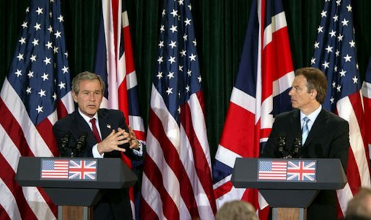
Bush-Blair Summit in Belfast to Discuss Postwar Iraq

United States President George W. Bush leaves Belfast on April 8, 2003, following the end of a two-day summit with British Prime Minister Tony Blair to discuss postwar Iraq.

The two leaders meet at Hillsborough Castle and begin their sessions on April 7 with a half-hour walk through the gardens before dinner. The following day they hold a press conference and further talks, including a session on the Northern Ireland peace effort.

Bush and Blair, Bush’s closest ally in confronting Saddam Hussein, come together to discuss questions made increasingly urgent by the rapid military progress American and British forces have made and to plan for a postwar Iraq. They seek to bridge their differences over how much of a role to give the United Nations in rebuilding the country and putting together a new government.

Blair has been under pressure at home and from much of Europe to support giving the United Nations a strong role in stabilizing Iraq. The White House, however, has consistently signaled that it wants the United States and Britain to play the lead role in creating a new Iraqi government.

United States Secretary of State Colin L. Powell tells reporters traveling with the president that the United States is sending officials to the region to begin assembling a group of Iraqis who will constitute an interim governing authority and will be put in place alongside the American-led military and civilian authorities. In a sign of the speed with which the maneuvering for power in post-Hussein Iraq is unfolding, Ahmed Chalabi, the leader of the main Iraqi exile opposition group, the Iraqi National Congress (INC), is reported to be heading to Baghdad from southern Iraq.

“The hostilities phase is coming to a conclusion,” Powell says. “It’s time for all of us to think about the post-hostilities phase, how we create a representative government consisting of all elements of Iraqi society.”

Powell and British officials play down the magnitude of the differences between the United States and Britain over the United Nations role. The United Nations, Powell says, will have “an endorsing role to play to the interim authority to give it legitimacy,” a formulation that appears to reserve for the United States and Britain the right to select the leaders of the temporary postwar administration. A spokesman for Blair uses similar language, referring to the United Nations’ being involved “in a way that endorses that new Iraqi authority” as a step toward establishing a full-fledged Iraqi government.

Initially, primary responsibility for administering Iraq would rest with a team led by a retired United States Army lieutenant general, Jay Garner, and the interim Iraqi authority would be likely to begin assuming power after that, perhaps 90 days later, the British spokesman says.

Clearly wary of getting into another diplomatic squabble with other members of the United Nations Security Council, Powell and other administration officials have emphasized in recent days that the United States and Britain, having waged the war and paid for it with blood and money, will not be drawn into a negotiation with countries like France and Germany over the immediate postwar period.

Powell emphasizes, however, that part of his focus will now be on “healing” diplomatic wounds and granting the United Nations an important role once Iraq is stabilized.

Bush’s national security adviser, Condoleezza Rice, arrives from Moscow on the evening of April 7, where she had met with President of Russia Vladimir V. Putin, who has broken with Bush over the war but whose country has longstanding economic interests in Iraq, including oil.

At the United Nations, Secretary-General Kofi Annan says he will travel to Britain, France, Germany and Russia in the coming week to test whether the Security Council might be able to agree on a postwar plan. He announces that he has been working on post-conflict issues with a special adviser, Rafeeuddin Ahmed. He says he expects the United Nations to play an important role, whether as a political facilitator or dealing with issues like reconstruction or human rights. “Above all, the U.N. involvement does bring legitimacy, which is necessary, necessary for the country, for the region and for the peoples around the world,” Annan says.

Bush’s trip to see Blair here is the third British-American summit meeting in as many weeks. It coincides with news that American forces are attacking the presidential palaces and other symbols of the Iraqi government in the heart of Baghdad and that British soldiers have taken control of Iraq’s second-largest city, Basra.

The presence of the two leaders draws crowds of antiwar protesters and set off a local debate about whether this city, which has been trying to put behind it a history of sectarian violence, is an appropriate location for a war council.

The city authorities in Belfast have to divert traffic and clear public buildings in various locations following a series of bomb scares. The scenes are reminiscent of the conflicted time before the Northern Ireland peace agreement in 1998 put an end to organized sectarian violence that cost the lives of more than 3,600 people over three decades.

In the conversations about Iraq, Blair plays his customary role of trying to bridge trans-Atlantic differences. He hopes to placate criticism at home and ease relations with his European neighbors by pushing for a United Nations resolution authorizing an interim governing authority.

He had earlier envisaged a more prominent role for the United Nations, but he emerged from his last meeting with Bush, at Camp David on March 27, emphasizing the need for the United Nations to endorse the transition plans rather than play a central part in the plans, as he had advocated at the first summit meeting, in the Azores on March 16.

Europeans express alarm at what they see as the marginalization of the United Nations. At the same time, European critics of the war, like France, Germany and Russia, may object to Blair’s compromise proposal on grounds that it legitimizes a war they oppose. Even in Britain, the one European country where the war has majority support, there is great resistance to American domination of the postwar running of Iraq. An opinion poll in The Daily Telegraph shows that while Britons’ enthusiasm for the war has grown to a high of 60 percent and their approval of Blair’s conduct has also risen, there is only 2 percent approval of an American-controlled administration of Iraq.

Powell says the United States is only trying to lay out a plan under which military control of Iraq can give way to a mix of civilian and military control, including substantial involvement by Iraqis, and then to a full-fledged government. He says United Nations involvement might be necessary to convince banks and financial markets that they can safely and legally lend money to Iraq. Asked about peacekeeping duties, he says NATO is open to the possibility of helping to provide postwar security or assisting in the search for weapons of mass destruction.

Planning for the peace has exposed differences not only between the United States and Britain, but also within the Bush administration and between the administration and Congress.

Blair chose to hold his meeting with Bush in Northern Ireland in part so that the president can lend his support to the long-running efforts by Britain and Ireland to find a peaceful solution to the strife between Catholics and Protestants in the province. The White House, however, seems not to be paying much attention to Northern Ireland diplomacy. The schedules and credentials it distributes to reporters list the site as “Belfast, Ireland.”

(From: “Bush Meets With Blair to Discuss Postwar Iraq” by Richard W. Stevenson and Warren Hoge, The New York Times, http://www.nytimes.com, April 8, 2003)


1 Comment

Final Rally of the Peace People’s Campaign

A rally of twelve to fifteen thousand Peace People from both north and south takes place at the new bridge over the River Boyne at Drogheda, County Louth, on December 5, 1976. In general, the Peace People’s goals are the dissolution of the Irish Republican Army (IRA) and an end to violence in Northern Ireland. The implicit goals of the Peace People rallies are delegitimization of violence, increasing solidarity, and gaining momentum for peace.

In the 1960s, Northern Ireland begins a period of ethno-political conflict called the Troubles. Through a series of social and political injustices, Northern Ireland has become a religiously divided society between historically mainland Protestants and Irish Catholics. Furthermore, the Irish people have become a fragmented body over a range of issues, identities, circumstances and loyalties. The conflict between Protestants and Catholics spills over into violence, marked by riots and targeted killings between the groups beginning in 1968. In addition, paramilitary groups, including the prominent IRA, launch attacks to advance their political agendas.

The violence continues to escalate. On August 10, 1976, Anne Maguire and her children are walking along Finaghy Road North in Belfast. Suddenly, a Ford Cortina slams into them. The car is being driven by Danny Lennon, who moments before had been shot dead by pursuing soldiers.  The mother is the only survivor. The collision kills three of her four children, Joanne (8), John (2), and Andrew (6 months). Joanne and Andrew die instantly while John is injured critically.

The next day, immediately following John’s death, fifty women from the Republican neighborhoods of Andersonstown and Stewartstown protest Republican violence by marching with baby carriages. That evening, Mairead Corrigan, Anne Maguire’s sister, appears on television pleading for an end to the violence. She becomes the first leader of the Peace People to speak publicly.

However, she was not the only one to initiate action. As soon as she hears Mairead speak on the television, Betty Williams begins petitioning door-to-door for an end to sectarian violence. She garners 6,000 signatures of support within a few days.  This support leads directly into the first unofficial action of the Peace People. On 14 August, only four days after the incident, 10,000 women, both Protestant and Catholic, march with banners along Finaghy Road North, the place of the children’s death, to Milltown Cemetery, their burial site.  This march mostly includes women along with a few public figures and men. The marchers proceed in almost utter silence, only broken by short bouts of singing from the nuns in the crowd and verbal and physical attacks by Republican opposition.

The following day, the three who become leaders of the Peace People – Mairead Corrigan, Betty Williams, and journalist Ciaran McKeown – come together for their first official meeting.  During these initial meetings they establish the ideological basis of nonviolence and goals for the campaign.  The essential goals for the movement are the dissolution of the IRA and an end to the violence in Northern Ireland.  The goals of the campaign implicit in their declaration are awareness, solidarity, and momentum. 
Peace People’s declaration:

“We have a simple message to the world from this movement for Peace. We want to live and love and build a just and peaceful society. We want for our children, as we want for ourselves, our lives at home, at work, and at play to be lives of joy and peace. We recognise that to build such a society demands dedication, hard work, and courage. We recognise that there are many problems in our society which are a source of conflict and violence. We recognise that every bullet fired, and every exploding bomb make that work more difficult. We reject the use of the bomb and the bullet and all the techniques of violence. We dedicate ourselves to working with our neighbours, near and far, day in and day out, to build that peaceful society in which the tragedies we have known are a bad memory and a continuing warning.”

During the four-month campaign, Peace People and partners organize and participate in 26 marches in Northern Ireland, Britain, and the Republic of Ireland. In order to organize these marches effectively they establish their main headquarters in Belfast.

After the initial Finaghy Road March, the Peace People, both Protestants and Catholics, rally in Ormeau Park on August 21. The official Declaration of the Peace People is first read at this rally, the largest rally of the entire campaign.   The group numbers over 50,000. The rally even includes some activists from the Republic of Ireland, most notably Judy Hayes from the Glencree Centre of Reconciliation near Dublin. After the rally, she and her colleagues return to the south to organize solidarity demonstrations.     

In the few days before the next march, the organization “Women Together” request Peace People to call off the march, disapproving of Catholics and Protestants participating in a joint march. The Peace People are not dissuaded. The next Saturday, 27,000 people march along Shankill Road, the loyalist/Protestant neighborhood.

In the next three months, Peace People organize and participate in a rally every Saturday; some weeks even have two. Some of the most notable marches include the Derry/Londonderry double-march, the Falls march, the London march, and the Boyne march.

The Saturday following the Shankill march marks the Derry/Londonderry double-march. At this march, Catholics march on one side of the River Foyle and Protestants on the other.  The groups meet on the Craigavon Bridge.  Simultaneously, 50,000 people march in solidarity in Dublin.

On October 23, marchers meet in the Falls, Belfast, in the pouring rain on the same Northumberland street corner where the Shankill March had started.  The Falls Road rally is memorable for the fear and violence that ensues. During this rally Sinn Féin supporters throw stones and bottles at the marchers.  The attackers escalate the violence as the marchers near Falls Park. The marchers are informed by others that more attackers await them at the entrance to the park, inciting fear within the body of the rally.  The leaders decide that this is an important moment of conflict in the rally and that they must push on.  They continue verbally encouraging the marchers through the cloud of bottles, bricks, and stones.

The leaders plan to escalate the campaign momentum for the last two major symbolic rallies in London and Boyne, Drogheda.  A week before the rallies, on November 20-21, they plan a membership drive. Over 105,000 people sign within two days.

The symbolic week of the culminating rallies begins on November 27 at the glamorous London Rally. They begin to march at Hyde Park, cut through Westminster Abbey, and end at Trafalgar Square. Some groups sing “Troops Out,” and others resound with civil rights songs.  

On December 5, Peace People holds its final march of the campaign, along the River Boyne. The Northern and Southern Ireland contingents met at the Peace Bridge. This is an important point in the legacy of the Peace People movement. Now that the enthusiastic rallies are over, the people are responsible for the tedious local work and continuing the momentum and solidarity that the rallies have inspired. The shape of the Peace People is changing.

After the planned marches are over, the rally portion of the campaign fades and the Peace People take a new shape. Corrigan, Williams, and McKeown stop planning marches, but continue to be involved in action that takes the form of conferences and traveling overseas. However, the leaders begin doing more separated work. Ciaran McKeown increases his focus on radical political restructuring.

In 1977, Betty Williams and Mairead Corrigan receive the Nobel Peace Prize.  Issues regarding the use of the monetary award impact the two leaders’ relationships in an irreconcilable manner.  

Due to the fact that many people, unlike McKeown, are less interested in the political side of the equation, the People continue actions along the lines of rallies and social work. Actions continue through the People’s initiative in the form of Peace Committees that each does separate work in local areas.

The Peace People makes a substantial impact.  They help to de-legitimize violence, increase solidarity across sectarian lines, and develop momentum for peace.  Although the violence does not fully subside until 1998 with the negotiation of political change, Ireland sees in 1976 one of its most dramatic decreases in political violence, accompanying the Peace People’s marches and rallies. The campaign dramatizes how tired the people are of bloodshed, their desperate desire for peace, and the clear possibility of alternatives.

(From: “Peace People march against violence in Northern Ireland, 1976” by Hannah Lehmann, Global Nonviolent Action Database, https://nvdatabase.swarthmore.edu/, 2011 | Pictured: The Peace People organisation rally in Drogheda, County Louth, December 5, 1976)


Leave a comment

Birth of Roger McCorley, Irish Republican Activist

Roger McCorley, Irish republican activist, is born into a Roman Catholic family at 67 Hillman Street in Belfast on September 6, 1901.

McCorley is one of three children born to Roger Edmund McCorley, a meat carver in a hotel, and Agnes Liggett. He has two elder brothers, Vincent and Felix. He joins the Fianna in his teens. His family has a very strong republican tradition, and he claims to be the great-grandson of the United Irishmen folk hero Roddy McCorley, who was executed for his part in the Irish Rebellion of 1798.

McCorley is a member of the Belfast Brigade of the Irish Republican Army (IRA) during the Irish War of Independence (1919–1922). He is commandant of the Brigade’s first battalion, eventually becoming Commandant of the Belfast Brigade. In June 1920, he is involved in an attack on a Royal Irish Constabulary (RIC) police barracks at Crossgar, County Down. On Sunday, August 22, 1920, in Lisburn, he is involved in the assassination of RIC District Inspector Oswald Swanzy, who was held responsible by Michael Collins for the assassination of Tomás McCurtain, Lord Mayor of Cork.

McCorley is noted for his militancy, as he is in favour of armed attacks on British forces in Belfast. The Brigade’s leaders, by contrast, in particular, Joe McKelvey, are wary of sanctioning attacks for fear of loyalist reprisals on republicans and the Catholic population in general. In addition, McCorley is in favour of conducting an armed defense of Catholic areas, whereas McKelvey does not want the IRA to get involved in what he considers to be sectarian violence. McCorley writes later that in the end, “the issue settled itself within a very short space of time, when the Orange mob was given uniforms, paid for by the British, and called the Ulster Special Constabulary (USC).” The role of the USC, a temporary police force raised for counter-insurgency purposes, in the conflict is still debated, but republicans maintain that the organization was responsible for the indiscriminate killings of Catholics and nationalists.

On January 26, 1921, McCorley, is involved in the fatal shooting of three Auxiliary Division officers in their beds in the Railway View hotel in central Belfast. Shortly afterwards, he and another IRA man, Seamus Woods, organize an active service unit (ASU) within the first battalion of the Belfast Brigade, with the intention of carrying out attacks, with or without the approval of the Brigade leadership. The unit consists of 32 men. McCorley later writes, “I issued a general order that, where reprisal gangs [State forces] were cornered, no prisoners were to be taken.” In March 1921, he personally leads the ASU in the killing of three Black and Tans in Victoria Street in central Belfast. He is responsible for the deaths of two more Auxiliaries in Donegall Place in April. In reprisal for these shootings, members of the RIC assassinate two republican activists, the Duffin brothers in Clonard Gardens in west Belfast. On June 10, 1921, both and Woods and McCorley units are involved in the killing a RIC man who is suspected in the revenge killings of the Duffin brothers. Two RIC men and a civilian are also wounded in that attack.

Thereafter, there is what historian Robert Lynch has described as a “savage underground war” between McCorley’s ASU and RIC personnel based in Springfield Road barracks and led by an Inspector Ferris. Ferris is accused of murdering the Lord Mayor of Cork Thomas MacCurtain and had been posted to Lisburn for his safety. Ferris himself is among the casualties, being shot in the chest and neck, but surviving. McCorley claims to have been one of the four IRA men who shot Ferris. In addition, his men bomb and burn a number of businesses including several cinemas and a Reform Club. In May 1921, however, thirteen of his best men are arrested when surrounded by British troops during an operation in County Cavan. They are held in Crumlin Road Gaol and sentenced to death.

On June 3, McCorley organizes an attack on Crumlin Road Gaol in an attempt to rescue the IRA men held there before they are executed. The operation is not a success; however, the condemned men are reprieved after a truce is agreed between the IRA and British forces in July 1921. On Bloody Sunday (July 10, 1921), he is a major leader in the defense of nationalist areas from attacks by both the police and loyalists. On that day twenty people are killed before he negotiates a truce beginning at noon on July 11. At least 100 people are wounded, about 200 houses are destroyed or badly damaged – most of them Catholic homes, leaving 1,000 people homeless.

In April 1922, McCorley becomes leader of the IRA Belfast Brigade after Joe McKelvey goes south to Dublin to join other IRA members who are against the Anglo-Irish Treaty. With McKelvey’s departure, Seamus Woods becomes Officer Commanding of the IRA’s 3rd Northern Division, which has up to 1,000 members, with McCorley designated as Vice Officer Commanding. McCorley for his part, supports the Treaty, despite the fact that it provides for the partition of Ireland and the continued British rule in Northern Ireland. The reason for this is that Michael Collins and Eoin O’Duffy have assured him that this is only a tactical move and indeed, Collins sends men, money and weapons to the IRA in the North throughout 1922.

However, McCorley’s command sees the collapse of the Belfast IRA. In May 1922, the IRA launches an offensive with attacks all across Northern Ireland. In Belfast, he carries out an assault on Musgrave Street RIC barracks. He also conducts an arson campaign on businesses in Belfast. His men also carry out a number of assassinations, including that of Ulster Unionist Party MP William J. Twaddell, which causes the internment of over 200 Belfast IRA men.

To escape from the subsequent repression, McCorley and over 900 Northern IRA men flee south, to the Irish Free State, where they are housed in the Curragh. McCorley is put in command of these men. In June 1922, the Irish Civil War breaks out between Pro and Anti-Treaty elements of the IRA. He takes the side of the Free State and Michael Collins. After Collins is killed in August 1922, his men are stood down. About 300 of them join the National Army and are sent to County Kerry to put down anti-Treaty guerrillas there. In the Spring of 1923, bitterly disillusioned by the brutal counterinsurgency against fellow republicans, he resigns his command.

McCorley later asserts that he “hated the Treaty” and only supported it because it allowed Ireland to have its own armed forces. Both he and Seamus Woods are severe critics of the Irish Free State inertia towards Northern Ireland after the death of Michael Collins. He comments that when Collins was killed “the Northern element gave up all hope.”

In 1936 McCorley is instrumental in the establishment of the All-Ireland Old IRA Men’s Organization, serving as Vice-President with President Liam Deasy (Cork No. 3 Brigade) and Secretary George Lennon (Waterford No. 2 Brigade).

In the 1940s, McCorley is a founding member of Córas na Poblachta, a political party which aspires to a United Ireland and economic independence from Britain. He dies on November 13, 1993, and is buried in the Republican Plot of Glasnevin Cemetery.


Leave a comment

British Ultimatum to the Irish Delegation at the Anglo-Irish Treaty Talks

The Irish delegation at the Anglo-Irish Treaty talks in London are given an ultimatum by British Prime Minister David Lloyd George on December 5, 1921. Sign the treaty or face “immediate and terrible war.”

In 1920, during the Irish War of Independence, the Government of Ireland Act not only establishes the new state of Northern Ireland but gives that state the right to opt-out of a future self-governing Irish Free State within the British Commonwealth of Nations.

The Northern state consists of the six northeastern counties of Ulster with a unionist majority. They are Antrim, Down, Armagh, Derry, Tyrone, and Fermanagh. Belfast is to be the seat of a government and hold limited devolved powers. The counties of Donegal, Cavan, and Monaghan are to be absorbed within the Irish Free State controlled from parliament in Dublin.

Irish nationalists are dismayed with the plan. Protestant Unionists, particularly those living within the boundaries of the new state, accept and start to implement the Act. Sectarian attacks are launched upon Catholic homes in Belfast, Derry, Banbridge, Lisburn, and Dromore. Catholics are driven from Belfast shipyards and from various engineering works in the city. Supposedly these attacks are in revenge for Irish Republican Army (IRA) assassinations.

The IRA continues the campaign to establish a republic with the Irish War of Independence. By the middle of 1921, both sides are exhausted, and a truce is called on June 9.

In July 1921, Éamon DeValera, the president of Dáil Éireann, goes to London to meet with Prime Minister Lloyd George. They agree an Irish delegation will come to London to discuss terms in the autumn.

The delegation appointed by the Dáil to travel to London consists of Arthur Griffith (Minister for Foreign Affairs and chairman of the delegation); Michael Collins (Minister for Finance and deputy chairman of the delegation); Robert Barton (Minister for Economic Affairs); George Gavan Duffy and Éamonn Duggan, with Erskine Childers, Fionán Lynch, Diarmuid O’Hegarty, and John Chartres providing secretarial assistance. DeValera himself does not attend. Future historians wonder if he knew they would not be able to negotiate a 32 county Irish Republic.

During the debate, Lloyd George insists Ireland remain part of the Commonwealth and Dáil Éireann members take the oath of allegiance to the British throne. After a delay of two months, Lloyd George delivers the ultimatum on December 5, sign a treaty within three days or there will be war.

The Anglo-Irish Treaty is to give Ireland a 26 county Free State with Dominion status. The right to raise taxes, regulate foreign trade, independence in internal affairs, own an army, and the oath of allegiance is changed to one of fidelity.

The British are to retain three naval bases within the jurisdiction of the Free State, at Cobh, Lough Swilly, and Berehaven. The Northern Ireland boundary is to be determined by a commission. This gives false hope to large tracts of Tyrone, Fermanagh, Down, Armagh, and Derry City would be given to the Free State as they have Catholic majorities.

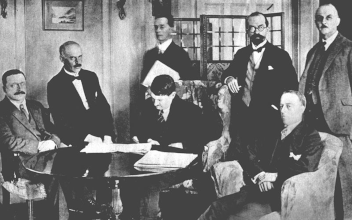
Just after 2:00 AM on December 6, 1921, the Irish delegation, without consulting the Dáil, finally sign a treaty with the British. Collins writes, prophetically, later on the day of the signing, “early this morning I signed my death warrant.”

The Treaty displeases the Catholics in the north and the unionists in the south. Meanwhile, many of those involved in the conflict are abhorred at the fact that not all of Ireland is to leave the United Kingdom.

(From: “The Anglo-Irish Treaty (1921)” by Brian O’Neill, Your Irish Culture, http://www.yourirish.com, May 20, 2020)


Leave a comment

Hume & Trimble Receive 1998 Nobel Peace Prize

hume-trimble-noble-prize-1998

The 1998 Nobel Peace Prize is awarded on October 16, 1998, to John Hume and David Trimble, leaders of the largest Roman Catholic and Protestant political parties in Northern Ireland, for their efforts to bring peace to the long-polarized British province. The two men share the prize money of $960,000.

Hume, 61, the Catholic head of the Social Democratic and Labor Party, is cited by the Nobel Committee in Oslo for having been the “clearest and most consistent of Northern Ireland’s political leaders in his work for a peaceful solution.”

Trimble, 54, the Protestant leader of the Ulster Unionist Party, is honored for having demonstrated “great political courage when, at a critical stage in the process, he advocated solutions which led to the peace agreement.”

The leader of a third prominent party, Gerry Adams of Sinn Féin, the political wing of the Irish Republican Army (IRA), is not named as a prize winner. While it does not honor Adams, the committee says it wishes to “emphasize the importance of the positive contributions to the peace process made by other Northern Irish leaders.” Nor are several other figures mentioned as possibilities, including former Senator George Mitchell, who led the talks, British Prime Minister Tony Blair and Irish Taoiseach Bertie Ahern, United States President Bill Clinton, and Mo Mowlam, the British Government’s Secretary of State for Northern Ireland.

The accord, signed on April 10 and known as the Good Friday Agreement, gives the 1.7 million residents of Northern Ireland a respite from the sectarian violence that has claimed more than 3,200 lives in the previous 30 years. It also opens the possibility of lasting stability for the first time since the establishment of Northern Ireland with partition from Ireland in 1921.

Forging concessions from fiercely antagonistic populations, the accord seeks to balance the Protestant majority’s wish to remain part of Britain with Catholic desires to strengthen ties to the Republic of Ireland to the south. The committee, seeing in Northern Ireland’s two warring groups a dispute with notable similarities to violent tribal confrontations elsewhere, expresses the hope that the accord will serve “to inspire peaceful solutions to other religious, ethnic and national conflicts around the world.”

Adams, in New York on a fund-raising trip for Sinn Féin, welcomes the Oslo announcement and particularly praises Hume, who is widely seen as having helped persuade the IRA to adopt a cease-fire and having eased Sinn Féin’s entry into the talks. “Indeed, there would be no peace process but for his courage and vision,” Adams says, adding, “No one deserves this accolade more.” He also wishes Trimble well and says the prize imposes on everyone the responsibility to “push ahead through the speedy implementation of the agreement.”

In the unforgiving politics of Northern Ireland, the Unionist dissidents and members of other Protestant parties who do not join in the peace talks attack both Trimble and Hume. Ian Paisley Jr., son of the head of the Democratic Unionist Party, calls the Nobel Committee’s decision a “farce” and says of the winners, “These people have not delivered peace, and they are not peacemakers.”

Trimble says he is “slightly uncomfortable” with the award because so many other people have been involved beside him in reaching the settlement and much remains to be done to put it in place. “We know that while we have the makings of peace, it is not wholly secure yet,” he tells the BBC from Denver, where he is on an 11-city North American tour to spur foreign investment in Ulster. “I hope it does not turn out to be premature.”

Hume receives word of the prize at his home in Londonderry and terms it “an expression of the total endorsement of the work of very many people.” He adds, “This isn’t just an award to David Trimble and myself. It is an award to all the people in Northern Ireland.”

In Washington, D.C., President Clinton says “how very pleased” he is, “personally and as President, that the Nobel Prize Committee has rewarded the courage and the people of Northern Ireland by giving the Nobel Peace Prize to John Hume and to David Trimble.” He adds “a special word of thanks” to George Mitchell, who issues a statement praising Hume and Trimble as “fully deserving of this honor.”

The peace talks began in the summer of 1996. They eventually draw the participation of 8 of the 10 Northern Irish parties, with many of the men around the table convicted murderers and bombers who had emerged from prison with a commitment to peaceful resolution to what for nearly a century have been referred to wearily as “the Troubles.” The paramilitary groups had also made the tactical decision that violence would not secure their goals; a shared conviction that gives these talks a chance for success that past fitful attempts at settlement lacked.

The peace talks move in a desultory manner until Blair takes office in May 1997 and highlights the cause of peace in Northern Ireland as an early commitment. At his and Ahern’s urging, the IRA declares a cease-fire in July, and by September Sinn Féin is permitted to join the talks.

Blair also gives Trimble and Adams unprecedented access to 10 Downing Street, and the Ulster Protestants report that they obtained from Clinton the most sympathetic hearing they ever had from an American President, allaying their longtime suspicions of Washington’s bias in favor of the Catholic minority.

(From: “2 Ulster Peacemakers Win the Nobel Prize,” The New York Times, Warren Hoge, October 17, 1998)


Leave a comment

Birth of Máiread Maguire, Northern Irish Peace Activist

mairead-maguire

Máiread Maguire, née Máiread Corrigan, also called Máiread Corrigan Maguire, peace activist from Northern Ireland, is born in Belfast on January 27, 1944. Along with Betty Williams and Ciaran McKeown, she founds the Peace People, a grassroots movement of both Roman Catholic and Protestant citizens dedicated to ending the sectarian violence in Northern Ireland. For their work, Maguire and Williams share the 1976 Nobel Peace Prize.

Although Maguire from a young age earns her living as a secretary, she also is from her youth a member of the Legion of Mary, a lay Catholic welfare organization, and through it she becomes deeply involved in voluntary social work among children and teenagers in various Catholic neighbourhoods of Belfast. She is stirred to act against the growing violence in Northern Ireland after witnessing in August 1976 an incident in which a car being driven by an Irish Republican Army (IRA) terrorist goes out of control when the IRA man is shot by British troops. The car strikes and kills three children of Maguire’s sister.

Within days each woman publicly denounces the violence and calls for mass opposition to it. Marches of Catholic and Protestant women, numbering in the thousands, are organized, and shortly afterward the Peace People is founded based on the conviction that genuine reconciliation and prevention of future violence are possible, primarily through the integration of schools, residential areas, and athletic clubs. The organization publishes a biweekly paper, Peace by Peace, and provides a bus service to and from Belfast’s jails for families of prisoners.

Although Williams breaks away from the Peace People in 1980, Maguire remains an active member and later serves as the group’s honorary president. In 2006 she joins Williams and fellow Nobel Peace Prize winners Shirin Ebadi, Jody Williams, Wangari Maathai, and Rigoberta Menchú to found the Nobel Women’s Initiative. She is also active in various Palestinian causes, notably efforts to end the Israeli government’s blockade of the Gaza Strip, and she is deported from Israel on several occasions.

In October 2012, Maguire travels to New York City to serve on the Russell Tribunal on Israel/Palestine alongside writer Alice Walker, activist Angela Davis, former Congresswoman Cynthia McKinney, and Pink Floyd’s Roger Waters. The Russell Tribunal’s findings and conclusions challenge governments and civil society to have courage and act by implementing sanctions, thereby refusing to be silent and complicit in the face of Israel ’s violation of International Laws.

In March 2018, Maguire and two Nobel peace laureates, Shirin Ebadi and Tawakkol Karman, visit rohingya camps in Cox’s Bazar and share opinion on the crisis. After returning to Dhaka, they discuss the Rohingya crisis with members of the civil society of Bangladesh.

Maguire is a proponent of the belief that violence is a disease that humans develop but are not born with. She believes humankind is moving away from a mindset of violence and war and evolving to a higher consciousness of nonviolence and love. Among the figures she considers spiritual prophets in this regard are Jesus, Francis of Assisi, Mahatma Gandhi, Abdul Ghaffār Khān, Fr. John L. McKenzie, and Martin Luther King, Jr. She professes to reject violence in all its forms.


Leave a comment

Signing of the Anglo-Irish Agreement

anglo-irish-agreement

The Anglo-Irish Agreement, an accord that gives the government of Ireland an official consultative role in the affairs of Northern Ireland, is signed by Taoiseach Garret FitzGerald and British Prime Minister Margaret Thatcher on November 15, 1985, at Hillsborough Castle in County Down, Northern Ireland. Considered one of the most significant developments in British-Irish relations since the establishment of the Irish Free State in 1922, the agreement provides for regular meetings between ministers in the Irish and British governments on matters affecting Northern Ireland. It outlines cooperation in four areas: political matters, security and related issues, legal matters, including the administration of justice, and the promotion of cross-border cooperation.

The agreement is negotiated as a move toward easing long-standing tension between Britain and Ireland on the subject of Northern Ireland, although Northern Irish unionists, who are in favour of remaining part of the United Kingdom, are themselves strongly opposed to giving their southern neighbour a say in domestic matters. Many political leaders, including Thatcher, who has been strongly committed to British sovereignty in Northern Ireland, have come to believe that a solution to years of sectarian violence in Northern Ireland can only be achieved by means of an all-Ireland arrangement.

Such an attempt had previously been made in 1973. A power-sharing executive, composed of Irish nationalists as well as unionists, was set up in Northern Ireland, and Taoiseach Liam Cosgrave participated in talks with British Prime Minister Edward Heath that resulted in the Sunningdale Agreement. That accord recognized that Northern Ireland’s relationship with Britain could not be changed without the agreement of a majority of its population, and it provided for the establishment of a Council of Ireland composed of members from both the Dáil Éireann (the lower chamber of the Oireachtas) and the Northern Ireland Assembly. That agreement collapsed in May 1974 because of a general strike inspired by unionist opponents of power sharing.

In 1981 FitzGerald launches a constitutional crusade to make the reunification of Ireland more attractive to Northern Ireland’s Protestants. At the end of the year, the Irish and British governments set up an Anglo-Irish intergovernmental council to discuss matters of common concern, especially security. In 1984 the report of the New Ireland Forum, a discussion group that includes representatives of political parties in Ireland and Northern Ireland, sets out three possible frameworks for political development in Ireland: a unitary state, a federal state, and joint sovereignty. Of Ireland’s major political parties, Fianna Fáil prefers a unitary state, which Fine Gael and the Irish Labour Party regard as unrealistic. They prefer the federal option.

Also in the early 1980s, in Northern Ireland, John Hume, the leader of the Social Democratic and Labour Party (SDLP) and a member of the British Parliament, gathers the support of prominent Irish American political leaders in condemning the use of violence and urging Irish Americans not to support the Irish Republican Army (IRA), a paramilitary organization that often uses violent means to bring an end to British rule in Northern Ireland. Hume’s group also encourages United States President Ronald Reagan to persuade Thatcher to pursue closer relations with Ireland.

In the improved political climate between Britain and Ireland, leaders of the two countries sit down to negotiations. Ireland and Britain agree that any change in the status of Northern Ireland would come about only with the consent of the majority of the people of Northern Ireland, and an intergovernmental conference is established to deal with political, security, and legal relations between the two parts of the island. The agreement is a blow to Northern Ireland’s unionists, because it establishes a consultative role for the government of Ireland in the affairs of Northern Ireland through the Anglo-Irish Secretariat. The Ulster Unionist Party (UUP) and other unionists denounce the agreement, and UUP members of Parliament resign their seats over the issue, although 14 are returned in by-elections in 1986. The party organizes mass protests and boycotts of local councils and files a lawsuit challenging the legality of the agreement. However, these efforts, which are joined by the Democratic Unionist Party, fail to force abrogation of the agreement.

Contacts between the Irish and British governments continue after February 1987 within the formal structure of the intergovernmental conference. Fears that the violence in Northern Ireland would spill into Ireland as a consequence of closer Anglo-Irish cooperation in the wake of the agreement proves unfounded, and the UUP decides to participate in new negotiations on the constitutional future of Northern Ireland in 1990–93. After republican and unionist forces declare cease-fires in 1994, the UUP reluctantly joins discussions with the British and Irish governments and other political parties of Northern Ireland. No deal accepted by all sides is reached until the Good Friday Agreement in April 1998, which creates the Northern Ireland Assembly and new cross-border institutions.

(From: “Anglo-Irish Agreement,” Lorraine Murray, Encyclopaedia Britannica, http://www.britannica.com, November 12, 2010)