seamus dubhghaill

Promoting Irish Culture and History from Little Rock, Arkansas, USA


Leave a comment

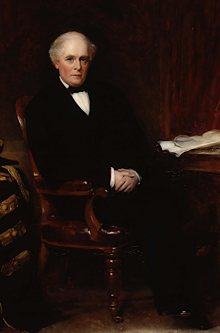
Birth of Physician Sir Dominic Corrigan, 1st Baronet

Sir Dominic John Corrigan, 1st Baronet, Irish physician known for his original observations in heart disease, is born in Thomas Street, Dublin, on December 2, 1802. The abnormal “collapsing” pulse of aortic valve insufficiency is named Corrigan’s pulse after him.

Corrigan is the son of a dealer in agricultural tools. He is educated in St. Patrick’s College, Maynooth, which then has a department for secular students apart from the ecclesiastical seminary. He is attracted to the study of medicine by the physician in attendance, and spends several years as an apprentice to the local doctor, Edward Talbot O’Kelly. He studies medicine in Dublin later transferring to Edinburgh Medical School where he receives his degree as MD in August 1825.

Corrigan returns to Dublin in 1825 and sets up a private practice at 11 Ormond Street. As his practice grows, he moves to 12 Bachelors Walk in 1832, and in 1837 to 4 Merrion Square West. Apart from his private practice, he holds many public appointments. He is a physician to St. Patrick’s College, Maynooth, the Sick Poor Institute, the Charitable Infirmary Jervis Street (1830–43) and the House of Industry Hospitals (1840–66). His work with many of Dublin’s poorest inhabitants leads to him specialising in diseases of the heart and lungs, and he lectures and published extensively on the subject. He is known as a very hard-working physician, especially during the Great Famine of Ireland. At the 1870 Dublin City by-election he is elected a Liberal Member of Parliament for Dublin City. In parliament he actively campaigns for reforms to education in Ireland and the early release of Fenian prisoners. He does not stand for re-election in 1874. His support for temperance and Sunday closing (of pubs) antagonises his constituents and alcohol companies

In 1847, Corrigan is appointed physician-in-ordinary to the Queen in Ireland. Two years later he is given an honorary MD from Trinity College Dublin (TCD). In 1846, his application to become a fellow of the Royal College of Physicians of Ireland (RCPI) is blocked. In 1855, he gets around this opposition by sitting the college’s entrance exam with the newly qualified doctors. He becomes a fellow in 1856, and in 1859 is elected president, the first Catholic to hold the position. He is re-elected president an unprecedented four times. There is a statue of Corrigan in the Graves’ Hall of the college by John Henry Foley.

Corrigan is President of the Royal Zoological Society of Ireland, the Dublin Pathological Society, and the Dublin Pharmaceutical Society. From the 1840s he is a member of the senate of the Queen’s University and in 1871 becomes its vice-chancellor. In 1866, he is created a baronet, of Cappagh and Inniscorrig in County Dublin and of Merrion Square in the City of Dublin, partly as a reward for his services as Commissioner of Education for many years. He is a member of the board of Glasnevin Cemetery and a member of the Daniel O’Connell Memorial Committee. Armand Trousseau, the French clinician, proposes that aortic heart disease should be called Corrigan’s disease.

The Corrigan Ward, a cardiology ward in Beaumont Hospital, Dublin is named in his honour. Part of his family crest is also part of the Beaumont Hospital crest.

Corrigan marries Joanna Woodlock, the daughter of a wealthy merchant, and sister of the Bishop Dr. Bartholomew Woodlock, in 1827. They have six children, three girls and three boys. Hus eldest son, Captain John Joseph Corrigan, Dragoon Guards, dies on January 6, 1866, aged 35 years and is interred at the Melbourne General Cemetery, Melbourne, Australia.

Corrigan dies at Merrion Square, Dublin, on February 1, 1880, having suffered a stroke the previous December. He is buried in the crypt of St. Andrews Church on Westland Row, Dublin. His grandson succeeds him to the baronetcy.


Leave a comment

Birth of Patrick Francis Moran, Third Archbishop of Sydney

Patrick Francis Moran, a prelate of the Catholic Church, the first cardinal appointed from Australia and the third Archbishop of Sydney, is born at LeighlinbridgeCounty Carlow, on September 16, 1830. Before his promotion to Archbishop, his scholarly research into the lives and times of the Irish Catholic Martyrs leads to the publication of many primary sources for the first time. These publications have since been used in recent beatifications and at least one canonization.

Moran’s parents are Patrick and Alicia Cullen Moran. Of his three sisters, two become nuns, one of whom dies nursing cholera patients. His parents die by the time he is 11 years old. In 1842, at the age of twelve, he leaves Ireland in the company of his uncle, Paul Cullen, rector of the Pontifical Irish College in Rome. There he studies for the priesthood, first at the minor seminary and then at the major seminary.

Moran is considered so intellectually bright that he gains his doctorate by acclamation. By The age of 25 he speaks ten languages, ancient and modern. He focuses on finding and editing important documents and manuscripts related to Irish ecclesiastical history. Some editions of his works remain important source materials to this day.

Moran is appointed vice-rector at the Pontifical Irish College and also takes the chair of Hebrew at Congregation for the Evangelization of Peoples (CEP). He is also some-time vice-rector of the Scots College in Rome. In 1866, he is appointed secretary to his mother’s half-brother, Cardinal Paul Cullen of Dublin. He is also appointed professor of scripture at Holy Cross College, Dublin. He founds the Irish Ecclesiastical Record (on which he later models the Australasian Catholic Record).

In 1869, Moran accompanies Cardinal Cullen to the First Vatican Council, a council also attended by Melbourne‘s then-first archbishop, James Alipius Goold. According to Michael Daniel, it is generally agreed that the definition of the Catholic doctrine of papal infallibility is based on Cullen’s proposal, and Ayres suggests that there is strong evidence that Cullen’s proposal is largely drafted by Moran. While in Rome and Ireland he is very active politically in opposing English Benedictine plans for monastic foundations undergirding the Catholic Church in Australia.

Moran is appointed coadjutor bishop of Ossory on December 22, 1871, and is consecrated on March 5, 1872 in Dublin by his uncle, Cardinal Paul Cullen. On the death of Bishop Edward Walsh, he succeeds as Bishop of Ossory on August 11, 1872. He champions Home Rule and is consulted by William Ewart Gladstone prior to the introduction of his Home Rule Bills.

Moran is personally chosen and promoted by Pope Leo XIII to head the Archdiocese of Sydney – a clear policy departure from the previous English Benedictine incumbents, John Bede Polding and Roger Vaughan, who were experiencing tension leading the predominantly Irish Australian Catholics. In the archbishop’s farewell audience with Leo XIII, it is evident that the intrigues of parties, the interference of government agencies and the influence of high ecclesiastics had made the matter almost impossible to decide by Propaganda. In the presence of others, the Pope says clearly: “We took the selection into our own hands. You are our personal appointment.” Moran is appointed to Australia on January 25, 1884, and arrives on September 8, 1884. He is created cardinal-priest on July 27, 1885, with the title of St. Susanna. The new Irish Australian cardinal makes it his business to make his presence and leadership felt.

Moran begins transforming the Sydney Saint Patrick’s Day festivities by inaugurating the celebration of a Solemn Mass at St. Mary’s Cathedral on Saint Patrick’s Day 1885. Over time the day’s events change from an Irish nationalist and political day into an occasion “for the demonstration of Irish Catholic power and respectable assimilation” as well as “for the affirmation of Irish Catholic solidarity.”

In 1886, it is estimated that Moran travels 2,500 miles over land and sea, visiting all the dioceses of New Zealand. In 1887, he travels 6,000 miles to consecrate fellow Irishman Matthew Gibney at Perth. He also travels to BallaratBathurstBendigoHobartGoulburnLismore, Melbourne and Rockhampton for the consecration of their cathedrals. Following the 1891 encyclical Rerum Novarum, he supports the right of labourers to better their conditions.

During his episcopate, Moran consecrates 14 bishops (he is the principal consecrator of William WalshMichael VerdonPatrick Vincent DwyerArmand Olier and also assists in consecrating Patrick Clune, among others). He ordains nearly 500 priests, dedicates more than 5,000 churches and professes more than 500 nuns. He makes five journeys to Rome on church business between 1885 and 1903, but does not participate in the papal conclave of 1903 because of the relatively short notice and the distance, making it impossible for him to reach Rome within 10 days of the death of Pope Leo.

Moran is a strong supporter of Federation, and in November 1896 attends the People’s Federal Convention in Bathurst. In March 1897, he stands as a candidate election of ten delegates from New South Wales to the Australasian Federal Convention. Although he states he will not attend the Convention in any official capacity, but in a solely individual one, his candidacy sparks a sectarian reaction. Twenty-nine per cent of voters give one of their ten votes to Moran, but he comes only thirteenth in number of total votes and is not elected.

From 1900 to 1901, Moran’s leadership survives a crisis when his personal secretary, Denis O’Haran, is named as co-respondent in the divorce case of the cricketer Arthur Coningham. Moran vigorously defends O’Haran and a jury finds in his favour.

Moran dies in Manly, Sydney, on August 16, 1911, aged 80. A quarter of a million people, the largest crowd ever to gather in Australia prior to that date, witness his funeral procession through the centre of Sydney. He is buried in St. Mary’s Cathedral, Sydney.


Leave a comment

Birth of Dónal McKeown, Roman Catholic Bishop of Derry

Dónal McKeown, Roman Catholic prelate from Northern Ireland who has served as Bishop of Derry since 2014, is born in Belfast on April 12, 1950.

McKeown is one of four children born to James McKeown and his wife Rose (née McMeel), and is baptised in St. Patrick’s Church, Belfast. He is brought up in Randalstown, County Antrim, where he plays Gaelic football and hurling with Kickhams GAC Creggan.

McKeown attends primary school at Mount St. Michael’s Primary School, Randalstown, and secondary school as a boarder at St. MacNissi’s College, Camlough, between 1961 and 1968, completing his O-Levels and A-Levels with special distinctions in Modern Languages. Two of his teachers at St. MacNissi’s College are his future brother bishops, Anthony Farquhar and Patrick Walsh.

McKeown begins studying for the priesthood at St. Malachy’s College, Belfast, in 1968, and obtains a bachelor’s degree with honours in German and Italian from Queen’s University Belfast (QUB). He teaches English at a school in Dieburg, Germany, between 1970 and 1971, and subsequently works as Northern Ireland correspondent for the Catholic media company Katholische Nachrichten-Agentur between 1971 and 1973.

McKeown completes a licentiate in sacred theology at the Pontifical Gregorian University, Rome, between 1973 and 1978, during which he also works for Vatican Radio and as a correspondent for An Saol Mór, an Irish-language programme on RTÉ.

McKeown is ordained to the priesthood on July 3, 1977.

Following ordination, McKeown’s first pastoral assignment is as chaplain at Mater Infirmorum Hospital, before returning to Rome to complete his licentiate. He returns to the Diocese of Down and Connor in 1978, where he is appointed as a teacher at Our Lady and St. Patrick’s College, Knock, while also serving as assistant priest in Derriaghy. He returns to St. MacNissi’s College in 1983, where he continues his involvement with youth ministry and is given responsibility for organising the annual diocesan pilgrimage to Lourdes.

McKeown subsequently returns to St. Malachy’s College in 1987, where he teaches and serves as dean of the adjoining seminary, before succeeding Canon Noel Conway as president in 1995. During his presidency, he completes a Master of Business Administration at the University of Leicester in 2000, specialising in educational management.

McKeown has completed the Belfast Marathon on two occasions: as a priest with a team of 48 from Derriaghy in 1982, and as a bishop fundraising for a minibus for St. Malachy’s College in 2001.

McKeown is appointed auxiliary bishop-elect for the Diocese of Down and Connor and titular bishop of Cell Ausaille by Pope John Paul II on February 21, 2001, the first Irish bishop to be appointed in the third millennium. He is consecrated by the Bishop of Down and Connor, Patrick Walsh, on April 29 in St. Peter’s Cathedral, Belfast.

In response to a 2007 decision by Amnesty International to campaign for the legalisation of abortion in certain circumstances, McKeown supports the decision of Catholic schools in the diocese to disband their Amnesty International support groups, on the grounds that it is no longer appropriate to promote the organisation in their schools.

It is reported in an article in The Irish News that the mention of McKeown as a possible successor to Walsh as Bishop of Down and Connor is actively opposed by some priests in the diocese, who regard him as being “too soft” on the issue of integrated education. This opposition is branded a “Stop Donal” campaign.

McKeown also serves as a member of the Irish Catholic Bishops’ Conference, with responsibility for the promotion of Catholic education, youth ministry, university chaplaincies and the promotion of vocations. His interests include the interface between faith and the empirical sciences, and working with Catholic schools in Norway, Denmark, Lithuania, Poland and Germany.

McKeown also serves as a member of the Irish Catholic Bishops’ Conference and its committee on education and chairs its committees on vocations and youth. He leads the youth of the diocese to World Youth Day in 2002 and 2005 and also travels to Rome with his brother bishops for their quinquennial visit ad limina in 2006. He is also a regular contributor on Thought for the Day on BBC Radio Ulster.

McKeown is appointed Bishop-elect of Derry by Pope Francis on February 25, 2014. He is installed on April 6 in St. Eugene’s Cathedral, Derry.

Following the appointment of Noël Treanor as Apostolic Nuncio to the European Union on November 26, 2022, McKeown is announced as Apostolic Administrator of Down and Connor on January 21, 2023. He serves in this role until the installation of Alan McGuckian, following his appointment as Bishop of Down and Connor on February 2, 2024.

McKeown starts a 33-day journey of prayer toward the Consecration to Jesus Christ through Mary on January 9, 2025. The prayer takes place online each evening at 7:00 p.m. The 33 days of prayer take place the week following the Baptism of the Lord until the Feast of Our Lady of Lourdes on February 11.


Leave a comment

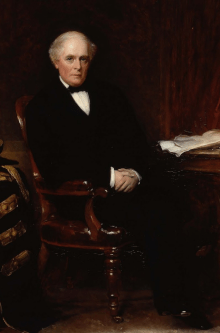
Death of Sir Dominic Corrigan, 1st Baronet, Irish Physician

Sir Dominic John Corrigan, 1st Baronet, an Irish physician known for his original observations in heart disease, dies in Dublin on February 1, 1880, following a stroke. The abnormal “collapsing” pulse of aortic valve insufficiency is named Corrigan’s pulse after him.

Corrigan is born in Thomas Street, Dublin, on December 2, 1802, the son of a dealer in agricultural tools. He is educated in St. Patrick’s College, Maynooth, which then has a department for secular students apart from the ecclesiastical seminary. He is attracted to the study of medicine by the physician in attendance and spends several years as an apprentice to the local doctor, Edward Talbot O’Kelly. He studies medicine in Dublin later transferring to Edinburgh Medical School where he receives his degree as MD in August 1825.

Corrigan returns to Dublin in 1825 and sets up a private practice at 11 Ormond Street. As his practice grows, he moves to 12 Bachelors Walk in 1832, and in 1837 to 4 Merrion Square West. Apart from his private practice, he holds many public appointments; he is a physician to St. Patrick’s College, Maynooth, the Sick Poor Institute, the Charitable Infirmary Jervis Street (1830–43) and the House of Industry Hospitals (1840–66). His work with many of Dublin’s poorest inhabitants leads to him specialising in diseases of the heart and lungs, and he lectures and publishes extensively on the subject. He is known as a very hard-working physician, especially during the Great Famine. At the 1870 Dublin City by-election he is elected a Liberal Member of Parliament for Dublin City. In parliament he actively campaigns for reforms to education in Ireland and the early release of Fenian prisoners. He does not stand for re-election in 1874. His support for temperance and Sunday closing of pubs apparently antagonises his constituents and alcohol companies.

In 1847, Corrigan is appointed physician-in-ordinary to the Queen in Ireland. Two years later he is given an honorary MD from Trinity College Dublin (TCD). In 1846 his application to become a fellow of the Royal College of Physicians of Ireland (RCPI) is blocked. In 1855 he gets around this opposition by sitting the college’s entrance exam with the newly qualified doctors. He becomes a fellow in 1856, and in 1859 is elected president, the first Catholic to hold the position. He is re-elected president an unprecedented four times. There is a statue of him in the Graves’ Hall of the college by John Henry Foley.

Corrigan is President of the Royal Zoological Society of Dublin, the Dublin Pathological Society, and the Dublin Pharmaceutical Society. From the 1840s he is a member of the senate of the Queen’s University and in 1871 becomes its vice-chancellor. In 1866 he is created a baronet, of Cappagh and Inniscorrig in the County of Dublin and of Merrion Square in the City of Dublin, partly as a reward for his services as Commissioner of Education for many years. He is a member of the board of Glasnevin Cemetery and a member of the Daniel O’Connell Memorial Committee. Armand Trousseau, the French clinician, proposes that aortic heart disease should be called Corrigan’s disease.

Corrigan marries Joanna Woodlock, the daughter of a wealthy merchant, and sister of the Bishop Dr. Bartholomew Woodlock, in 1827. They have six children, three girls and three boys. His eldest son, Captain John Joseph Corrigan, Dragoon Guards, dies on January 6, 1866, and is interred at the Melbourne General Cemetery, Melbourne, Australia.

Corrigan dies at Merrion Square, Dublin, on February 1, 1880, having suffered a stroke the previous December. He is buried in the crypt of St. Andrew’s Church, Westland Row, Dublin. His grandson succeeds him to the baronetcy.

The Corrigan Ward, a cardiology ward in Beaumont Hospital, Dublin, is named in his honour. Part of his family crest is also part of the Beaumont Hospital crest.


Leave a comment

Death of Fr. Des Wilson, Irish Catholic Priest & Church Dissident

Father Des Wilson, Irish Catholic priest and church dissident who in the course of the Northern Ireland Troubles embraces ideas and practice associated, internationally, with liberation theology, dies in his native Belfast on November 5, 2019. He believes the Word of God can never be silent in the face of oppression, injustice and suffering. He seeks to apply the ideas of liberation theology to the North, supporting and empowering marginalised communities, and acting as a voice for the voiceless.

Wilson is born in Belfast on July 8, 1925, the youngest of five sons to William Wilson, a publican and native of County Cavan, and his wife Emma (née McAvoy), a native of south County Down. He spends his earliest years above his father’s pub in Belfast, before the family moves to a house in the suburbs.

Wilson attends primary school locally, then receives secondary education at St. Malachy’s College. During his time there Belfast is blitzed in April and May 1941. Almost 1,000 are killed. The carnage he sees is a factor in his deciding on the priesthood.

After secondary school Wilson enters the seminary at St. Malachy’s, while studying English and Philosophy at Queen’s University Belfast. He proceeds to St. Patrick’s College, Maynooth, being ordained on June 19, 1949, for the Diocese of Down and Connor.

After ordination Wilson serves as chaplain in Belfast’s Mater Infirmorum Hospital, then spends 15 years in St. Malachy’s as spiritual director. Former pupils remember him as fair, and able to play jazz excellently on the organ.

Wilson lives out his beliefs, spending half a century in Belfast’s Ballymurphy estate, among the North’s most deprived, and one of the areas which suffers worst from the Troubles. There he plays a role in community development, establishing projects to provide employment in the area. He suffers, finding himself for years outside the official Catholic Church.

Wilson plays a significant role in providing adult education. He wants an education that does not just provide qualifications and open career paths but is psychologically liberating.

Life changes in 1966 when Wilson is moved to St. John’s Parish in West Belfast as a curate. Having come from a comfortable background in Ballymurphy, he is shocked by the poverty, the poor housing and the treatment of women. Unusual for a priest at the time, he moves into a terraced house in the estate. He finds the Catholic Church unable to respond to the multiple problems people are facing. That inability worsens as the Troubles erupt.

Wilson’s personal probity is so recognised that he is accepted as a mediator in feuds between the Provisional Irish Republican Army and Official Irish Republican Army in the 1970s and is able to broker permanent peace. He also helps bring about the ceasefires in the 1990s.

Wilson does not shirk unpopular stances. In the 1970s he refuses to condemn the Irish Republican Army (IRA). Later he says the conviction of former Real Irish Republican Army leader Michael McKevitt for directing terrorism is unsafe. He also publicly visits and supports a Ballymurphy couple which has a very bitter falling out with Sinn Féin, leading to a picket on their home.

By 1975 relations with his bishop has broken down and Wilson resigns but continues ministering in Ballymurphy. Forbidden to say Mass in a church, his pay cut off, he says Mass in his house. He suffers hardship, living from savings, some earnings from writing, broadcasting and lecturing, and help from Quaker and Presbyterian friends. By the early 1980s his Ballymurphy home becomes too small for the many classes he organises. His classes are rehoused and expanded as the Conway Education Centre in a vacant mill. He is able to offer a range of vocational and non-vocational courses with almost 1,000 students. In the mid-1980s his relationship with the Dioceses of Down and Connor is re-established, and he is allowed to continue his ministry.

Personally, Wilson has great gifts of head and heart and is incapable of rancour. A strong belief is that it is important to share food to talk, as happened in Biblical times. Thus, a lunch would last an afternoon.

Wilson dies on November 5, 2019, in Belfast. Instead of wreaths, he asks mourners to donate to the Ballymurphy Massacre Memorial Garden. The garden is dedicated to the victims of the Ballymurphy massacre of August 1971, which saw the killing in the district of eleven civilians by soldiers of the 1st Battalion, Parachute Regiment. The victims include Fr. Hugh Mullan, who had been a student of Wilson’s at St. Malachy’s. He was shot while going to the aid of a wounded man.

Following a Requiem Mass at Corpus Christi Church in Ballymurphy, Wilson is buried in Milltown Cemetery. Senior Sinn Féin politicians Gerry Adams and Michelle O’Neill are among those who take turns carrying his coffin.

(From: “Fr Des Wilson obituary: Priest who fought oppression and injustice in North,” The Irish Times, http://www.irishtimes.com, December 7, 2019)


Leave a comment

Birth of John Hume, Northern Ireland Nationalist Politician

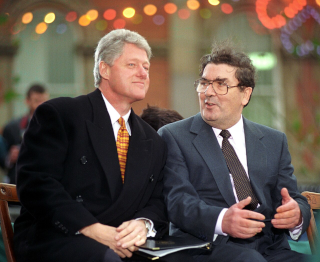
John Hume KCSG, Irish nationalist politician from Northern Ireland, is born into a working-class Catholic family in Derry, County Londonderry, on January 18, 1937. He is widely regarded as one of the most important figures in the recent political history of Ireland and is credited as being the thinker behind many political developments in Northern Ireland, from the power sharing Sunningdale Agreement to the Anglo-Irish Agreement and the Good Friday Agreement. He wins the Nobel Peace Prize in 1998 alongside the leader of the Ulster Unionist Party (UUP), David Trimble.

Hume is the eldest of seven children of Samuel Hume, a former soldier and shipyard worker, and Anne “Annie” (née Doherty), a seamstress. He has a mostly Irish Catholic background, though his surname derives from one of his great-grandfathers, a Scottish Presbyterian who migrated to County Donegal. He attends St. Columb’s College and goes on to St. Patrick’s College, Maynooth, the leading Catholic seminary in Ireland and a recognised college of the National University of Ireland, where he intends to study for the priesthood. Among his teachers is Tomás Ó Fiaich, the future cardinal and Primate of All Ireland.

Hume does not complete his clerical studies but does obtain an M.A. degree in French and history from the college in 1958. He then returns home to his native Derry, where he becomes a teacher at his alma mater, St. Columb’s College. He is a founding member of the Credit Union movement in the city and is chair of the University for Derry Committee in 1965, an unsuccessful fight to have Northern Ireland’s second university established in Derry in the mid-1960s.

Hume becomes the youngest ever President of the Irish League of Credit Unions at age 27. He serves in the role from 1964 to 1968. He once says that “all the things I’ve been doing, it’s the thing I’m proudest of because no movement has done more good for the people of Ireland, north and south, than the credit union movement.”

Hume becomes a leading figure in the civil rights movement in the late 1960s along with people such as Hugh Logue. He is a prominent figure in the Derry Citizens’ Action Committee. The DCAC is set up in the wake of the October 5, 1968, march through Derry which had caused much attention to be drawn towards the situation in Northern Ireland. The purpose of the DCAC is to make use of the publicity surrounding recent events to bring to light grievances in Derry that had been suppressed by the Unionist Government for years. The DCAC, unlike the Northern Ireland Civil Rights Association (NICRA), is aimed specifically at a local campaign, improving the situation in Derry for everyone, and maintaining a peaceful stance. The committee also has a Stewards Association that is there to prevent any violence at marches or sit-downs.

Hume becomes an Independent Nationalist member of the Parliament of Northern Ireland in 1969 at the height of the civil rights campaign. He is elected to the Northern Ireland Assembly in 1973 and serves as Minister of Commerce in the short-lived power-sharing Executive in 1974. He stands unsuccessfully for the Westminster Parliament for the Londonderry constituency in October 1974, and is elected for Foyle in 1983.

In October 1971, Hume joins four Westminster MPs in a 48-hour hunger strike to protest at the internment without trial of hundreds of suspected Irish republicans. State papers that have been released under the 30-year rule that an Irish diplomat eight years later in 1979 believes Hume supported the return of internment.

In 1977, Hume challenges a regulation under the Civil Authorities (Special Powers) Act (Northern Ireland) 1922 which allows any soldier to disperse an assembly of three or more people. The Lord Chief Justice of Northern Ireland, Robert Lowry, holds that the regulation is ultra vires under Section 4 of the Government of Ireland Act 1920 which forbids the Parliament of Northern Ireland to make laws in respect of the army.

A founding member of the Social Democratic and Labour Party (SDLP), Hume succeeds Gerry Fitt as its leader in 1979. He also serves as one of Northern Ireland’s three Members of the European Parliament and serves on the faculty of Boston College, from which he receives an honorary degree in 1995.

Hume is directly involved in secret talks with the British government and Sinn Féin, in an effort to bring Sinn Féin to the discussion table openly. The talks are speculated to lead directly to the Anglo-Irish Agreement in 1985.

The vast majority of unionists reject the agreement and stage a massive and peaceful public rally in Belfast City Centre to demonstrate their distaste. Many Republicans and nationalists also reject it, as they see it as not going far enough. Hume, however, continues dialogue with both governments and Sinn Féin. The “Hume–Adams process” eventually delivers the 1994 Irish Republican Army (IRA) ceasefire which ultimately provides the relatively peaceful backdrop against which the Good Friday agreement is brokered.

On February 4, 2004, Hume announces his complete retirement from politics and is succeeded by Mark Durkan as SDLP leader. He does not contest the 2004 European Parliament election where his seat is won by Bairbre de Brún of Sinn Féin, nor does he run in the 2005 United Kingdom general election, in which Mark Durkan retains the Foyle constituency for the SDLP.

Hume and his wife, Pat, continue to be active in promoting European integration, issues around global poverty and the Credit Union movement. He is also a supporter of the Campaign for the Establishment of a United Nations Parliamentary Assembly, an organisation which campaigns for democratic reformation of the United Nations.

In 2015, Hume is diagnosed with Alzheimer’s disease, of which he had first displayed symptoms in the late 1990s. He dies in the early hours of August 3, 2020, at a nursing home in Derry, at the age of 83. On his death, former Labour Party leader and prime minister Tony Blair says, “John Hume was a political titan; a visionary who refused to believe the future had to be the same as the past.” The Dalai Lama says on Twitter, “John Hume’s deep conviction in the power of dialogue and negotiations to resolve conflict was unwavering… It was his leadership and his faith in the power of negotiations that enabled the 1998 Good Friday Agreement to be reached. His steady persistence set an example for us all to follow.”

(Pictured: John Hume with U.S. President Bill Clinton in 1995)


Leave a comment

Death of IRA Volunteer Fergal O’Hanlon

Fergal O’Hanlon (Irish: Feargal Ó hAnnluain), a volunteer in the Pearse Column of the Irish Republican Army (IRA), is killed on January 1, 1957, while taking part in an attack on Royal Ulster Constabulary (RUC) barracks.

Born into a staunchly republican family on February 2, 1936, in Ballybay, County Monaghan, O’Hanlon is a draughtsman employed by Monaghan County Council. He is a Gaelic footballer and a keen Irish language activist. A devout Catholic, he considers becoming a priest and spends one year at the seminary in St. Macartan’s. He joins the IRA in 1956.

At the age of 20, O’Hanlon is killed on January 1, 1957, along with Seán South while taking part in an attack on the Royal Ulster Constabulary barracks in Brookeborough, County Fermanagh, during the border campaign. Several other IRA members are wounded in the botched attack. The IRA flees the scene in a dumper truck. They abandon it near the border. They leave South and O’Hanlon, both then unconscious, in a cow byre, and crossed into the Republic of Ireland on foot for help for their comrades. The wounded IRA men are treated as “car crash victims” by sympathetic staff in the Mater Misericordiae Hospital in Dublin.

The events and personalities are sympathetically recalled in Dominic Behan‘s ballad “The Patriot Game.” O’Hanlon is mentioned in the song “Seán South of Garryowen” (“Brave Hanlon by his side”).

O’Hanlon’s mother remains firmly committed to the IRA and is hurt by the suggestion that there was an alternative to IRA activity or that her son was anything other than an Irish hero.

A marble monument now stands at the spot where South and O’Hanlon lost their lives. An annual lecture has been held in memory of O’Hanlon since 1982, and approximately 500 people attended a 50th commemoration of the men’s deaths in January 2007 in Limerick.

In 1971, a monument is unveiled to O’Hanlon in his hometown on a hill overlooking the Clones Road on which he had made his last journey home. A Gaelic football team is founded in Monaghan in 2003 and called the Fergal O’Hanlons.

O’Hanlon’s brother, Eighneachán Ó hAnnluain, is elected a Sinn Féin abstentionist TD in the 1957 Irish general election to Dáil Éireann. His sister, Pádraigín Uí Mhurchadha, is a Sinn Féin Councillor on Monaghan Urban Council.


Leave a comment

Birth of Irish Novelist John Banim

John Banim, Irish novelist, short story writer, playwright, poet and essayist, sometimes called the “Scott of Ireland,” is born in Kilkenny, County Kilkenny on April 3, 1798. He also studied art, working as a painter of miniatures and portraits, and as a drawing teacher, before dedicating himself to literature.

At age four, Banim’s parents send him to a local school where he learns the basics of reading and grammar. At age five, he is sent to the English Academy at Kilkenny where his older brother Michael (1796–1874) is a student. After five years at the English Academy, he is sent to a seminary run by a Reverent Magrath, considered to be the finest Roman Catholic school in Ireland. After a year at the seminary, he transfers to another academy run by a teacher named Terence Doyle. Throughout his school years, he reads avidly and writes his own stories and poems. When he is ten, he visits the poet Thomas Moore, bringing along some of his own poetry in manuscript. Moore encourages him to continue writing and gives him a season ticket to his private theatre in Kilkenny.

At the age of 13, Banim enters Kilkenny College and devotes himself specially to drawing and miniature painting. He pursues his artistic education for two years in the schools of the Royal Dublin Society, and afterwards teaches drawing in Kilkenny, where he falls in love with one of his pupils, a 17-year-old girl named Anne. His affection is returned, but her parents disapprove of their relationship and send her out of town. Anne dies two months later of tuberculosis. Her death makes a deep impression on him and his health suffers severely and permanently.

In 1820 Banim goes to Dublin and settles finally to the work of literature. He publishes a poem, The Celt’s Paradise, and his play Damon and Pythias is performed at Covent Garden in 1821. During a short visit to Kilkenny he marries, and in 1822, in conjunction with Michael, plans a series of tales illustrative of Irish life, which should be for Ireland what the Waverley Novels are for Scotland. The influence of his model is distinctly traceable in his writings.

Banim then sets out for London, and supports himself by writing for magazines and for the stage. A volume of miscellaneous essays is published anonymously in 1824, called Revelations of the Dead Alive. The first series of Tales of the O’Hara Family appears in April 1825, which achieves immediate and decided success. One of the most powerful of them, Crohoore of the Bill Hook, is by Michael Banim.

In 1826, a second series is published, containing the Irish novel, The Nowlans. Banim’s health has given way, and the next effort of the “O’Hara family” is almost entirely the production of his brother Michael. The Croppy, a Tale of 1798 (1828), a novel of the Irish Rebellion of 1798, is hardly equal to the earlier tales, though it contains some wonderfully vigorous passages.

The Mayor of Windgap, and The Ghost Hunter (both by Michael Banim), The Denounced (1830) and The Smuggler (1831) follow in quick succession, and are received with considerable favour. Most of these deal with the darker and more painful phases of life, but the feeling shown in his last, Father Connell, is brighter and tenderer. Banim, meanwhile, suffers from illness and consequent poverty. In 1829, he goes to France, and while he is abroad a movement to relieve his wants is set on foot by the English press, headed by John Sterling in The Times. A sufficient sum is obtained to remove him from any danger of actual want.

Banim returns to Ireland in 1835, taking up residence in Dublin. On meeting him again in August, Michael Banim finds his brother’s condition to be that of a complete invalid. He is often in pain and has to use opiates to sleep, but during the short intervals between the attacks of his illness, he is able to enjoy conversation and the company of his brother and friends. In September he returns to Kilkenny and is received with an address from the citizens of Kilkenny showing their appreciation of him, and a subscription from them of £85. After a short stay in his childhood home, he settles in Windgap Cottage, then a short distance from Kilkenny. He passes the remainder of his life there, dying on August 13, 1842.

Michael Banim acquires a considerable fortune which he loses in 1840 through the bankruptcy of a firm with which he had business relations. After this disaster he writes Father Connell (1842), Clough Fionn (1852), and The Town of the Cascades (1862). He dies at Booterstown.

An assessment in the Encyclopædia Britannica Eleventh Edition (1911) reads:

“The true place of the Banims in literature is to be estimated from the merits of the O’Hara Tales; their later works, though of considerable ability, are sometimes prolix and are marked by too evident an imitation of the Waverley Novels. The Tales, however, are masterpieces of faithful delineation. The strong passions, the lights and shadows of Irish peasant character, have rarely been so ably and truly depicted. The incidents are striking, sometimes even horrible, and the authors have been accused of straining after melodramatic effect. The lighter, more joyous side of Irish character, which appears so strongly in Samuel Lover, receives little attention from the Banims.”


Leave a comment

Birth of James Cardinal Gibbons, Archbishop of Baltimore

james-cardinal-gibbons

James Cardinal Gibbons, American prelate of the Catholic Church, is born in Baltimore, Maryland on July 23, 1834 to parents Thomas and Bridget (née Walsh) Gibbons who had emigrated from Toormakeady, County Mayo. In his role as Archbishop of Baltimore from 1877 to 1921, he serves as a bridge between Roman Catholicism and American Catholic values.

Gibbons is taken by his parents from Baltimore to Ireland in 1837. Following his father’s death in 1847, at the height of The Great Hunger, his mother moves the family back to the United States. He spends the next eight years as a grocer in New Orleans. In 1855 he enters a seminary in Baltimore, becoming a priest in 1861. He rises through the ranks of the Roman Catholic Church quickly, and by 1868 he is the youngest bishop in the United States. During a short stay in North Carolina, he writes The Faith of Our Fathers (1876), a defense of Catholicism that proves exceptionally popular, selling more than two million copies. He is elevated to Archbishop of Baltimore in 1877. He assumes a leadership role as the presiding prelate at the Third Plenary Council of Baltimore in 1884, and in 1886 he is made a cardinal by Pope Leo XIII.

As a leader of the Catholic Church hierarchy in the United States, Gibbons is outspoken in his praise for American democratic institutions and he advocates Americanization — the rapid assimilation of Catholic immigrants into American culture and institutions — both as a means to counter Protestant Americans’ suspicions toward Catholics and to avoid the fragmentation of the Catholic Church in the United States along ethnic lines. He is also sympathetic to the cause of organized labour and works to overcome suspicions within the Catholic Church toward the Knights of Labor, which has been considered a secret society by many clergymen.

On education, as on other social issues, Gibbons seeks ways of harmonizing the tenets of the Catholic faith with the principles of American democracy. He enters the controversy over control of parochial and public schools in 1891 when he defends Archbishop John Ireland’s experimental plan for cooperation between Catholic and public schools in the Minnesota towns of Faribault and Stillwater. To the dismay of conservative bishops, he refuses to condemn public education and encourages efforts to find common ground between the two systems. The Faribault-Stillwater plan remains controversial despite Gibbons’s support, and acrimony between the plan’s supporters and conservative opponents lingers until 1893.

During World War I, Gibbons is instrumental in the establishment of the National Catholic War Council, and afterwards supports the League of Nations. Although initially opposed to women’s suffrage, when the Nineteenth Amendment passes Gibbons urges women to exercise their right to vote “…not only as a right but as a strict social duty.”

James Cardinal Gibbons dies at the age of 86 in Baltimore on March 24, 1921. Throughout his career he is a respected and influential public figure. Although nonpartisan, he takes positions on a variety of foreign and domestic policy issues and is personally acquainted with every U.S. president from Andrew Johnson to Woodrow Wilson.


Leave a comment

Birth of James Augustine Healy, Bishop of Portland, Maine

james-augustine-healy

James Augustine Healy, American Roman Catholic priest and the second bishop of Portland, Maine, is born on April 6, 1830, in Macon, Georgia to a multiracial slave mother and Irish immigrant father. He is the first bishop in the United States of any known African descent. When he is ordained in 1854, his multiracial ancestry is not widely known outside his mentors in the Catholic Church.

Healy is the eldest of ten siblings of Michael Morris Healy, an Irish immigrant planter from County Roscommon, and his common law wife Eliza Smith (sometimes recorded as Clark), a multiracial enslaved African American. He achieves many “firsts” in United States history. He is credited with greatly expanding the Catholic church in Maine at a time of increased Irish immigration. He also serves Abenaki people and many parishioners of French-Canadian descent who were traditionally Catholic. He speaks both English and French.

Beginning in 1837, like many other wealthy planters with mixed-race children, Michael Healy starts sending his sons to school in the North. James, along with brothers Hugh and Patrick, goes to Quaker schools in Flushing, New York, and Burlington, New Jersey. Later they each attend the newly opened College of the Holy Cross in Worcester, Massachusetts. He graduates as valedictorian of the college’s first graduating class in 1849.

Following graduation, Healy wishes to enter the priesthood. He cannot study at the Jesuit novitiate in Maryland, as it is a slave state. With the help of John Bernard Fitzpatrick, he enters a Sulpician seminary in Montreal. In 1852, he transfers to study at Saint-Sulpice Seminary in Paris, working toward a doctorate and a career as a seminary professor. After a change of heart, he decides to become a pastor. On June 10, 1854, he is ordained at Notre-Dame de Paris as a priest to serve in Boston, Massachusetts. He is the first African American to be ordained a Roman Catholic priest although at the time he identifies as and is accepted as white Irish Catholic.

When Healy returns to the United States, he becomes an assistant pastor in Boston. He serves the archbishop, who helps establish his standing in the church. In 1866 he becomes the pastor of St. James Church, the largest Catholic congregation in Boston. In 1874 when the Boston legislature is considering taxation of churches, he defends Catholic institutions as vital organizations that help the state both socially and financially. He also condemns certain laws that are generally enforced only on Catholic institutions. He founds several Catholic charitable institutions to care for the many poor Irish immigrants who had arrived during the Great Famine years.

Healy’s success in the public sphere leads to his appointment by Pope Pius IX to the position of second bishop of Portland, Maine. He is consecrated as Bishop of Portland on June 2, 1875, becoming the first African American to be consecrated a Catholic bishop. For 25 years he governs his large diocese, supervising also the founding of the Diocese of Manchester, New Hampshire, when it is split from Portland in 1885. During his time in Maine, which is a period of extensive immigration from Catholic countries, he oversees the establishment of 60 new churches, 68 missions, 18 convents, and 18 schools. During that period, he also serves his Abenaki and French-Canadian parishioners.

Healy is the only member of the American Catholic hierarchy to excommunicate men who joined the Knights of Labor, a national union, which reaches its peak of power in 1886.

Two months before his death on August 5, 1900, Healy is called as assistant to the Papal throne by Pope Leo XIII, a position in the Catholic hierarchy just below that of cardinal.