seamus dubhghaill

Promoting Irish Culture and History from Little Rock, Arkansas, USA


Leave a comment

Birth of Éamon de Valera, Third President of Ireland

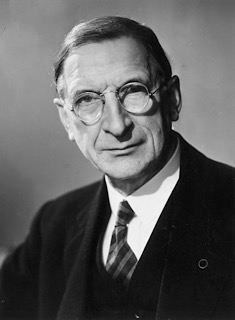
Éamon de Valera, Irish politician and patriot, is born George de Valero on October 14, 1882, in Lennox Hill, a neighborhood on the Upper East Side of Manhattan in New York City. He serves as Taoiseach (1932–48, 1951–54, 1957–59) and President of Ireland (1959–73). An active revolutionary from 1913, he becomes president of Sinn Féin in 1917 and founds the Fianna Fáil party in 1926. In 1937, he makes his country a sovereign state, renamed Ireland, or Éire. His academic attainments also inspire wide respect. He becomes chancellor of the National University of Ireland in 1921.

De Valera is the son of Catherine Coll, who is originally from Bruree, County Limerick, and Juan Vivion de Valera, described on the birth certificate as a Spanish artist born in 1853. His father dies when he is two years old. He Is then sent to his mother’s family in County Limerick, and studies at the local national school and at Blackrock College, Dublin. He graduates from the Royal University of Ireland and becomes a teacher of mathematics and an ardent supporter of the Irish language revival. In 1913, he joins the Irish Volunteers, which had been organized to resist opposition to Home Rule for Ireland.

In the 1916 Easter Rising in Dublin, de Valera commands an occupied building and is the last commander to surrender. Because of his American birth, he escapes execution by the British but is sentenced to penal servitude. Released in 1917 but arrested again and deported in May 1918 to England, where he is imprisoned, he is acclaimed by the Irish as the chief survivor of the uprising and in October 1917 is elected president of the Irish republican and democratic socialist Sinn Féin political party, which wins three-fourths of all the Irish constituencies in December 1918.

After a dramatic escape from HM Prison Lincoln in February 1919, de Valera goes in disguise to the United States, where he collects funds. He returns to Ireland before the Irish War of Independence ends with the truce that takes effect on July 11, 1921, and appoints plenipotentiaries to negotiate in London. He repudiates the Anglo-Irish Treaty of December 6, 1921, that they signed to form the Irish Free State, however, primarily because it imposes an oath of allegiance to the British crown.

After Dáil Éireann ratifies the treaty by a small majority in 1922, de Valera supports the republican resistance in the ensuing Irish Civil WarW. T. Cosgrave’s Irish Free State ministry imprisons him, but he is released in 1924 and then organizes a republican opposition party that does not sit in Dáil Éireann. In 1927, however, he persuades his followers to sign the oath of allegiance as “an empty political formula,” and his new Fianna Fáil (“Soldiers of Destiny”) party then enters the Dáil, demanding abolition of the oath of allegiance, of the governor-general, of the Seanad Éireann (senate) as then constituted, and of land-purchase annuities payable to Great Britain. The Cosgrave ministry is defeated by Fianna Fáil in 1932, and de Valera, as head of the new ministry, embarks quickly on severing connections with Great Britain. He withholds payment of the land annuities, and an “economic war” results. Increasing retaliation by both sides enables de Valera to develop his program of austere national self-sufficiency in an Irish-speaking Ireland while building up industries behind protective tariffs. In the new Constitution of Ireland, ratified by referendum in 1937, the Irish Free State becomes Ireland, a sovereign, independent democracy tenuously linked with the British Commonwealth (under the Executive Authority (External Relations) Act 1936) only for purposes of diplomatic representation.

De Valera’s prestige is enhanced by his success as president of the council of the League of Nations in 1932 and of its assembly in 1938. He also enters negotiations with British Prime Minister Neville Chamberlain in which he guarantees that he will never allow Ireland to be used as a base for attacking Britain in the event of war. This culminates in the Anglo-Irish defense agreement of April 1938, whereby Britain relinquishes the naval bases of Cobh, Berehaven, and Lough Swilly (retained in a defense annex to the 1921 treaty), and in complementary finance and trade treaties that end the economic war. This makes possible de Valera’s proclamation in September 1939, upon the outbreak of World War II, that Ireland will remain neutral and will resist attack from any quarter. In secret, however, de Valera also authorizes significant military and intelligence assistance to both the British and the Americans throughout the war. He realizes that a German victory will imperil Ireland’s independence, of which neutrality is the ultimate expression. By avoiding the burdens and destruction of the war, de Valera achieves a relative prosperity for Ireland in comparison with the war-torn countries of Europe, and he retains office in subsequent elections.

In 1948, a reaction against the long monopoly of power and patronage held by de Valera’s party enables the opposition, with the help of smaller parties, to form an interparty government under John A. Costello. Ironically, this precarious coalition collapses within three years after Ireland becomes a republic by means of the repeal of the Executive Authority (External Relations) Act 1936 and the severance of all ties with the British Commonwealth, an act de Valera had avoided. De Valera resumes office until 1954, when he appeals unsuccessfully for a fresh mandate, and Costello forms his second interparty ministry. No clearly defined difference now exists between the opposing parties in face of rising prices, continued emigration, and a backward agriculture. De Valera claims, however, that a strong single-party government is indispensable and that all coalitions must be weak and insecure. On this plea he obtains, in March 1957, the overall majority that he demands.

In 1959, de Valera agrees to stand as a candidate for the presidency. He resigns his position as Taoiseach and leader of the Fianna Fáil party. In June he is elected president, and is reelected in 1966. He retires to a nursing home near Dublin in 1973 and dies there on August 29, 1975.

De Valera’s career spans the dramatic period of Ireland’s modern cultural and national revolution. As an anticolonial leader, a skillful constitutionalist, and a symbol of national liberation, he dominates Ireland in the half century following the country’s independence.

(From: “Éamon de Valera, president of Ireland,” Encyclopedia Britannica, http://www.britannica.com, last updated August 14, 2025)


Leave a comment

Birth of Cahal Daly, Archbishop of Armagh

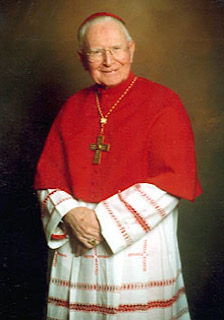
Cahal Brendan Daly KGCHS, a Roman Catholic cardinaltheologian and writer, is born Charles Brendan Daly on October 1, 1917, in Ballybraddin, Loughguile, a village near Ballymoney in County Antrim.

Daly serves as the Catholic Primate of All Ireland and Archbishop of Armagh from late 1990 to 1996, the oldest man to take up this role in nearly 200 years. He is later created a Cardinal-Priest of San Patrizio by Pope John Paul II in the papal consistory of June 28, 1991.

Daly is the third child of seven born to Charles Daly and Susan Connolly. His father is a primary school teacher originally from KeadueCounty Roscommon, and his mother a native of Antrim. He is educated at St. Patrick’s National School in Loughguile, and then as a boarder in St. Malachy’s CollegeBelfast, in 1930. The writer Brian Moore is a near contemporary.

Daly studies Classics at Queen’s University Belfast (QUB). He earns his BA with Honours and also the Henry Medal in Latin Studies in 1937 and completes his MA the following year. He enters St. Patrick’s College, Maynooth and is ordained to the priesthood on June 22, 1941. He continues studies in theology in Maynooth, from where he obtains a doctorate in divinity (DD) in 1944. His first appointment is as Classics Master in St. Malachy’s College (1944–45).

In 1945, Daly is appointed Lecturer in Scholastic Philosophy at Queen’s University, Belfast, retaining the post for 21 years. In the academic year 1952–53 QUB grants him sabbatical leave, which he spends studying at the Catholic University of Paris where he receives a licentiate in philosophy. He returns to France at many points, particularly for holidays. He persists with his studies well into his retirement. He is a popular figure with the university and fondly remembered by his students. He is named a Canon of the Cathedral Chapter of Diocese of Down and Connor in 1966.

Daly is a peritus, or theological expert, at the Second Vatican Council (1962–65) to Bishop William Philbin during the first session of the Council and to Cardinal William Conway for the rest of the council. He dedicates himself to scholarship for 30 years, and publishes several books seeking to bring about understanding between the warring factions in Northern Ireland.

Daly is appointed Reader in Scholastic Philosophy at QUB in 1963, a post he holds until 1967, when he is appointed Bishop of Ardagh and Clonmacnoise on May 26.

Daly converts his forename Charles into Cahal ahead of his episcopal consecration in St. Mel’s CathedralLongford, on July 16, 1967, from Cardinal William Conway, with Archbishop Giuseppe Sensi and Bishop Neil Farren serving as co-consecrators.

Daly spends 15 years as bishop in Longford and is diligent about parish visitation and confirmations gradually assume a greater national profile. From 1974 onward, he devotes himself especially to ecumenical activities for the Pontifical Council for Promoting Christian Unity. His pastoral letter to Protestants, written in 1979, pleads for Christian unity.

Daly succeeded William Philbin as the 30th Bishop of Down and Connor when he is installed as bishop of his native diocese at a ceremony in St. Peter’s Cathedral, Belfast, on October 17, 1982.

On November 6, 1990, Daly is appointed Archbishop of Armagh and, as such, Primate of All Ireland. His age makes him an unexpected occupant of the post. Despite this it is requested that he stay in the role for three years before usual age of episcopal retirement at 75. Cardinal Daly takes a notably harder line against the Irish Republican Army (IRA) than his predecessor, Cardinal Tomás Ó Fiaich.

Daly is respectful of Protestant rights and opposes integrated education of Catholics and Protestants. This policy is criticised by those who see segregated education as one of the causes of sectarianism in Northern Ireland, but is seen by the Catholic clergy as important for passing on their faith to future generations. He is utterly orthodox in opposing divorce, contraception, abortion, the ordination of women and any idea of dropping clerical celibacy.

Daly is heckled by the audience on live television during a broadcast of The Late Late Show on RTÉ One on the topic of pedophilia in the 1990s. After his retirement in 1996, he makes no public statement on the issue.

Daly retires as Archbishop of Armagh on his 79th birthday, October 1, 1996, and subsequently suffers ill health. Although it is announced that he will attend the funeral of Pope John Paul II, he stays home on the advice of his doctors. His age makes him ineligible to participate in the 2005 conclave that elects Pope Benedict XVI.

Daly is admitted to the coronary unit of Belfast City Hospital on December 28, 2009. His health has already been declining, leading to prayers being ordered for him. He dies in hospital in Belfast on December 31, 2009, aged 92. His family are at his bedside at the time. His death brings to an end a two-year period during which Ireland has, for the first time in its history, three living Cardinals.

Daly lay in state in Belfast and then his remains are taken to Armagh. Pope Benedict XVI pays tribute at this stage. Large numbers of people travel from as far as County Westmeath to attend Mass at Armagh on January 4, at which Monsignor Liam McEntaggart, the former parish priest of Coalisland, says, “When the history of peace making in Ireland comes to be written, the contribution of Cardinal Daly will be accorded a high place.” Monsignor McEntaggart himself dies on August 22, 2010, aged 81, less than eight months after Cardinal Daly’s passing.

Daly’s funeral is held on January 5, 2010, and is attended by the president Mary McAleese and Taoiseach Brian Cowen. Daly is buried in the grounds of St. Patrick’s Roman Catholic Cathedral, Armagh, next to his three predecessors in the see, Cardinals Ó Fiaich, Conway and D’Alton.


Leave a comment

Death of James Ryan, Doctor, Revolutionary & Fianna Fáil Politician

James Ryan, medical doctor, revolutionary and politician who serves in every Fianna Fáil government from 1932 to 1965, dies on his farm at Kindlestown, County Wicklow, on September 25, 1970.

Ryan is born on the family farm at Tomcoole, near TaghmonCounty Wexford, on December 6, 1892. The second-youngest of twelve children, he is educated at St. Peter’s College, Wexford, and Ring College, Waterford. In 1911, he wins a county council scholarship to University College Dublin (UCD) where he studies medicine.

In March 1917, Ryan passes his final medical examinations. That June he sets up medical practice in Wexford. In 1921, he moves to Dublin where he opens a doctor’s practice at Harcourt Street, specialising in skin diseases at the Skin and Cancer Hospital on Holles Street. He leaves medicine in 1925, after he purchases Kindlestown, a large farm near Delgany, County Wicklow. He lives there and it remains a working farm until his death.

In July 1919, Ryan marries Máirín Cregan, originally from County Kerry and a close friend of Sinéad de Valera throughout her life. Cregan, like her husband, also fought in the Easter Rising and is subsequently an author of children’s stories in Irish. They have three children together.

One of Ryan’s sisters, Mary Kate, marries Seán T. O’Kelly, one of Ryan’s future cabinet colleagues and a future President of Ireland. Following her death O’Kelly marries her sister, Phyllis Ryan. Another of Ryan’s sisters, Josephine (‘Min’) Ryan, marries Richard Mulcahy, a future leader of Fine Gael. Another sister, Agnes, marries Denis McCullough, a Cumann na nGaedheal TD from 1924 to 1927. He is also the great-grandfather of Ireland and Leinster Rugby player James Ryan.

While studying at university in 1913, Ryan joins the Gaelic League at Clonmel. The company commander recruits the young Catholic nationalist, who becomes a founder-member of the Irish Volunteers and is sworn into the Irish Republican Brotherhood (IRB) the following year. In 1916, he goes first to Cork to deliver a message from Seán Mac Diarmada to Tomás Mac Curtain that the Easter Rising is due to happen on Easter Sunday, then to Cork again in a 12-hour journey in a car to deliver Eoin MacNeill‘s cancellation order, which attempts to stop the rising. When he arrives back on Tuesday, he serves as the medical officer in the General Post Office (GPO) and treats many wounds, including James Connolly‘s shattered ankle, a wound which gradually turns gangrenous. He is, along with Connolly, one of the last people to leave the GPO when the evacuation takes place. Following the surrender of the garrison, he is deported to HM Prison Stafford in England and subsequently Frongoch internment camp. He is released in August 1916.

Ryan rejoins the Volunteers immediately after his release from prison, and in June 1917, he is elected Commandant of the Wexford Battalion. His political career begins the following year when he is elected as a Sinn Féin candidate for the constituency of South Wexford in the 1918 United Kingdom general election in Ireland. Like his fellow Sinn Féin MPs, he refuses to attend the Westminster Parliament. Instead he attends the proceedings of the First Dáil on January 21, 1919. As the Irish War of Independence goes on, he becomes Brigade Commandant of South Wexford and is also elected to Wexford County Council, serving as chairman on one occasion. In September 1919, he is arrested by the British and interned on Spike Island and later Bere Island. In February 1921, he is imprisoned at Kilworth Internment Camp, County Cork. He is later moved on Ballykinlar Barracks in County Down and released in August 1921.

In the 1922 Irish general election, Ryan and one of the other two anti-Treaty Wexford TDs lose their seats to pro-Treaty candidates. During the Irish Civil War, he is arrested and held in Mountjoy Prison before being transferred to Curragh Camp, where he embarks on a 36-day hunger strike. While interned he wins back his Dáil seat as an abstentionist at the 1923 Irish general election. He is released from prison in December 1923.

In 1926, Ryan is among the Sinn Féin TDs who follow leader Éamon de Valera out of the party to found Fianna Fáil. They enter the Dáil in 1927 and spend five years on the opposition benches.

Following the 1932 Irish general election, Fianna Fáil comes to office and Ryan is appointed Minister for Agriculture, a position he continuously holds for fifteen years. He faces severe criticism over the Anglo-Irish trade war with Britain as serious harm is done to the cattle trade, Ireland’s main export earner. The trade war ends in 1938 with the signing of the Anglo-Irish Trade Agreement between both governments, after a series of talks in London between the British Prime Minister Neville Chamberlain, de Valera, Ryan and Seán Lemass.

In 1947, after spending fifteen years as Minister for Agriculture, Ryan is appointed to the newly created positions of Minister for Health and Minister for Social Welfare. Following Fianna Fáil’s return to power at the 1951 Irish general election, he returns as Minister for Health and Social Welfare. Following the 1954 Irish general election, Fianna Fáil loses power and he moves to the backbenches once again.

Following the 1957 Irish general election, Fianna Fáil are back in office and de Valera’s cabinet has a new look to it. In a clear message that there will be a change to economic policy, Ryan, a close ally of Seán Lemass, is appointed Minister for Finance, replacing the conservative Seán MacEntee. The first sign of a new economic approach comes in 1958, when Ryan brings the First Programme for Economic Development to the cabinet table. This plan, the brainchild of T. K. Whitaker, recognises that Ireland will have to move away from self-sufficiency toward free trade. It also proposes that foreign firms should be given grants and tax breaks to set up in Ireland.

When Lemass succeeds de Valera as Taoiseach in 1959, Ryan is re-appointed as Minister for Finance. Lemass wants to reward him for his loyalty by also naming him Tánaiste. However, the new leader feels obliged to appoint MacEntee, one of the party elders to the position. Ryan continues to implement the First Programme throughout the early 1960s, achieving a record growth rate of 4 percent by 1963. That year an even more ambitious Second Programme is introduced. However, it overreaches and has to be abandoned. In spite of this, the annual growth rate averages five percent, the highest achieved since independence.

Ryan does not stand in the 1965 Irish general election, after which he is nominated by the Taoiseach to Seanad Éireann, where he joins his son, Eoin Ryan Snr. At the 1969 dissolution he retires to his farm at Kindlestown, County Wicklow, where he dies at age 77 on September 25, 1970. He is buried at Redford Cemetery, Greystones, County Wicklow. His grandson, Eoin Ryan Jnr, serves in the Oireachtas from 1989 to 2007 and later in the European Parliament from 2004 to 2009.


Leave a comment

Birth of Ciarán Cannon, Former Fine Gael Politician

Ciarán Cannon, former Fine Gael politician who serves as a Teachta Dála (TD) for the Galway East constituency from 2011 to 2024, is born on September 19, 1965, in Galway, County Galway. He previously serves as a Senator for the Progressive Democrats and is the last elected leader of that party. He serves as a Minister of State from 2011 to 2014 and again from 2017 to 2020. He serves as a Senator from 2007 to 2011, after being nominated by the Taoiseach.

Before entering politics, Cannon is a planning official for Galway City Council and Dublin City Council, as well as CEO and secretary of the Irish Pilgrimage Trust. In 2002, he is honoured as one of the Galway People of the Year.

As a member of the Progressive Democrats, Cannon is elected to Galway County Council in the 2004 Irish local elections, to represent the Loughrea local electoral area, with 1,307 first preferences. He is an unsuccessful candidate at the 2007 Irish general election in Galway East. He is nominated by the Taoiseach Bertie Ahern to the 23rd Seanad in 2007.

Cannon is elected as Leader of the Progressive Democrats in April 2008. He is the first leader of the party to sit as a Senator while serving as leader. At his first press conference as party leader, he states that he believes “there was passion, commitment, talent and knowledge within the PDs’ ranks to stage a big comeback.”

However, after speculation increases that Noel Grealish, one of the two Progressive Democrat TDs, intends to leave the party, Cannon announces in September 2008 that a party conference will be held on November 8, 2008, at which he will recommend that the party disband. The delegates present at the conference vote 201–161 to agree with this recommendation.

On March 24, 2009, Cannon announces his decision to resign the leadership of the Progressive Democrats and joins Fine Gael the same day. At the 2011 Irish general election, he is one of two Fine Gael TDs elected in Galway East.

On March 10, 2011, Cannon is appointed by the coalition government led by Enda Kenny as Minister of State at the Department of Education and Skills with responsibility for Training and Skills. He is dropped as a minister in a reshuffle on July 15, 2014. At the 2016 Irish general election, he is elected to the third seat in Galway East.

On June 20, 2017, Cannon is appointed by the minority government led by Leo Varadkar as Minister of State at the Department of Foreign Affairs and Trade with responsibility for the Diaspora and International Development. He calls for a “No” vote in the 2018 referendum to allow legislation on abortion.

In 2019, in recognition of his work in education, Cannon is appointed as a UNICEF global champion for education. He is one of seven Generation Unlimited Champions who advocates worldwide for the development of UNICEF’s Gen U programme.

At the 2020 Irish general election, Cannon is elected to the second seat in Galway East. He continues to serve as a minister of state until the formation of a new government on June 27, 2020.

On March 19, 2024, Cannon announces that he will not contest the next general election, blaming a “toxicity in politics.”

Cannon is a musician and songwriter, and recently collaborated with Irish folk singer Seán Keane and others on songwriting projects. One of his co-compositions, “Nature’s Little Symphony,” is performed in Dublin by the RTÉ Concert Orchestra as part of the national Cruinniú celebrations on Easter Monday 2017. Both “Nature’s Little Symphony” and another of his compositions, “Gratitude,” are featured on the album Gratitude recorded by Keane and the RTÉ Concert Orchestra in 2018. On the August 10, 2018, Cannon plays piano with Keane and the RTÉ Concert Orchestra as part of a sold-out performance at the National Concert Hall. In 2019, he composes “An Túr,” a short piano instrumental to celebrate the birthday of W. B. Yeats.

In 2021 Cannon is commissioned to compose the soundtrack to a poem by Emily Cullen as part of the national commemoration of the signing of the Anglo-Irish Treaty in 1921.

In March 2024, Cannon begins presenting The Grey Lake Cafe, a radio show on Loughrea Community Radio featuring his own musical choices, and interviews with public figures who have a passion for music.

Cannon is also an avid cyclist and cycling safety advocate. He specialises in endurance cycling challenges and on June 19, 2021, he cycles Ireland end to end, a distance of 575 km, in 23 hours and 23 minutes, to raise money for charity.

On July 2, 2021, Cannon is involved in a road traffic collision and suffers serious injuries. On July 2, 2022 he marks the first anniversary of the incident by cycling 500 km around the border of County Galway. Marking the same date in 2023, he cycles 935 km (581 mi) in 56 hours, covering all 32 counties of the island of Ireland while fundraising for Hand In Hand, a charity that supports families challenged by childhood cancer.


Leave a comment

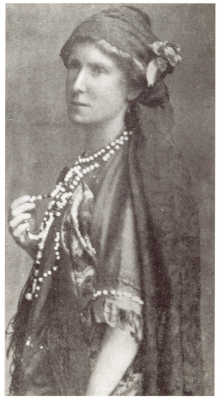
Death of Teresa Brayton, Irish Republican & Poet

Teresa Brayton, an Irish republican and poet who uses the pen name T. B. Kilbrook, dies in Kilbrook, a small village near Kilcock, County Kildare, on August 19, 1943.

Brayton is born Teresa Coca Boulanger in Kilbrook, the youngest daughter and fifth child of Hugh Boylan and Elizabeth Boylan (née Downes). Her family are long-time nationalists, with her great grandfather previously leading a battalion of pikesmen at the Battle of Prosperous.

Brayton later becomes a notable member of Irish national parties, the United Irish League and Cumann na mBan. She is described as “a patriot, but never in the vulgar sense a politician” in The Irish Times. She is closely associated with leaders of the 1916 Easter Rising, and writes poems in honour of Irish patriots including Charles Stewart ParnellRoger Casement and Patrick Pearse.

Brayton is educated from the age of 5 in Newtown National School. She writes her first poem at the age of twelve, and soon after wins her first literary award. Later on, she trains to be a teacher, and then becomes an assistant teacher to her older sister Elizabeth in the same school she received her education.

Brayton’s father is a tenant farmer, and from a young age she witnesses the effects of the land wars in Ireland. She is a supporter of Parnell, the Irish National Land League and the Irish Home Rule movement. Her work is largely influenced by her family history and Irish nationalism.

In September 1895, Brayton emigrates to the United States at the age of 27. She first lives in Boston, Chicago, and later moves to New York City. She meets Richard H. Brayton, a French-Canadian who works as an executive in the Municipal Revenue Department, who she then marries. She looks after their home and focuses on her career as a freelance journalist. She lives in the United States for 40 years and becomes well known in Irish American circles as a prominent figure in the Celtic Fellowship. It was in the United States that her reputation is established.

In the 1880s, Brayton begins her career as a poet, writing poetry for both national and provincial Irish newspapers, including Young Ireland and the King’s County Chronicle. She uses the pseudonym “T. B. Kilbrook” while contributing to these papers.

Brayton continues writing under the pseudonym until moving to the United States, where she becomes an acclaimed writer and continues to contribute to papers including the Boston newspaper The PilotNew York Monitor and Rosary Magazine. Her target audience is the Irish immigrant population of the United States. After establishing herself she releases her poetry in collections including Songs of Dawn (1913) and The Flame of Ireland (1926).

Brayton makes return trips to Ireland regularly and develops a relationship with nationalist peers, and the leaders of the Easter Rising. Upon returning to the United States, she becomes an activist for the Irish Republic and participates in organising the distribution of information to the Irish population through pamphlets and public speaking. Her contribution is acknowledged by Constance Markievicz. Her patriotism to Ireland admit her to the Celtic Fellowship in America, where she shares her poetry at events.

Brayton’s best-known poem is “The Old Bog Road,” which is later set to music by Madeline King O’Farrelly. It has since been recorded and released by many Irish musicians including Finbar FureyDaniel O’Donnell and Eileen Donaghy, among many others. Many more of her best-known ballads include, The Cuckoo’s CallBy the Old Fireside and Takin’ Tea in Reilly’s.

Brayton makes her permanent return to Ireland at the age of 64 following the death of her husband in 1932 and continues her career as a journalist writing for Irish newspapers and publishes religious poetry in the volume Christmas Verses in 1934. A short story called The New Lodger written by Brayton is published by the Catholic Trust Society in 1933. She dedicates much of her work to the exiled Irish living in the United States, incorporating themes of nostalgia, the familiarity of home and religion throughout her poetry.

Initially upon moving back to Ireland, she lives for a few years with her sister in Bray, County Wicklow. She then moves to Waterloo Avenue, North StrandCounty Dublin. Here, she witnesses the bombing of the North Strand on May 31, 1941 during World War II. Shortly after the bombing, she eventually settles back in Kilbrook, where she was born, and lives there for the rest of her life. She spends a brief period of time in the Edenderry Hospital before her death. During her stay there she becomes a good friend with Padraig O’Kennedy, the “Leinster Leader,” who is able to reveal to her something that is linked to a family member of his. A copy of her The Old Bog Road which had been set to music and autographed by her while she was living in the United States. She had it sent to O’Kennedy’s eldest son and on it she wrote the words: “To the boy who sings the Old Bog Road so sweetly.”

Two years after her return to Kilbrook, on August 19, 1943, Brayton dies in the same room where her mother had given birth to her over 75 years previously. She is buried at the Cloncurry cemetery in County Kildare. Her funeral is attended by many, including the then TaoiseachÉamon de Valera.

From the vivid imagery she speaks of in her poetry, Brayton, both a poet and a novelist, is described by some as “the poet of the homes of Ireland.” Such scenes include the vivid imagery of the fireside chats, the sound of her latch lifting as neighbours in to visit at night from her poem “The Old Boreen” and about her home cooking and work from “When the Leaves Begin to Fall.” Such images can be compared to most Irish households and can depict a vivid picture to those reading her poetry.

Brayton’s poetry leaves a lasting sense of Irish beauty and community. This can be seen in such poems as “A Christmas Blessing” where she speaks of “taking and giving in friendship” during Christmas. Since her passing she has continued to keep an audience from overseas from Boston and New York primarily, this as a result of the reminder her poems give to Irish exiles of Irish traditions and music which was close to them. While her poems are more often serious, some portray an almost comical undertone tone. In an article in The Irish Times, her poetry is also said to have a racy feel to them.


Leave a comment

Death of Monsignor James Horan

James Horan dies on August 1, 1986, while on a pilgrimage to Lourdes. He is a parish priest of Knock, County Mayo. He is most widely known for his successful campaign to bring an airport to Knock, his work on Knock Basilica, and is also credited for inviting Pope John Paul II to visit Knock Shrine in 1979.

Horan is born in Partry, County Mayo, on May 5, 1911. Educated at St. Jarlath’s College, Tuam, he trains for the priesthood in St. Patrick’s College, Maynooth. He is ordained in 1936, and his first post is in Glasgow, where he remains for three years. Having served as chaplain on an ocean liner and briefly in Ballyglunin, County Galway, he becomes curate in Tooreen, a small townland close to Ballyhaunis, County Mayo. While there, he organises the construction of a dance hall, which becomes a popular local amenity. He secures financing for the project by collecting £8,000 on a tour of American cities. After also serving in Cloonfad, County Roscommon, he is transferred to Knock in 1963, where he becomes parish priest in 1967. He is troubled by the struggles of daily life and mass emigration in the west of Ireland, and he works to improve the living standards of the local community.

While stationed at Knock, Horan oversees the building of a new church for Knock Shrine, which is dedicated in 1976. The shrine is the stated goal of Pope John Paul II’s visit in 1979. The pope travels to Knock as part of a state visit to Ireland, marking the centenary of the famous Knock apparitions. Horan works with Judy Coyne to organise the papal visit. He is responsible for the refurbishment of the church grounds, along with the construction of a huge church, with a capacity of 15,000. This newly constructed church is given the status of basilica by the pope. The day after the papal visit, Horan begins his campaign to build an international airport in Barnacuige, a small village near Charlestown, County Mayo.

Critics regard the idea of an airport on a “foggy, boggy site” in Mayo as unrealistic, but funding is approved by then Taoiseach Charles Haughey, who performs the official opening in May 1986, five years after work commenced. Although Horan had secured IR£10,000,000 in funding from Haughey, following the Fianna Fáil party’s defeat in the general election of 1982, his funding is cut, with the airport unfinished. He raises the IR£4,000,000 shortfall by holding a “Jumbo Draw.” This large lottery succeeds in raising the required revenue, but only after a painstaking tour of several countries, including Australia and the United States. This takes its toll on the ageing Horan and leads to his death shortly after the completion of the airport. The airport is originally known as Horan International Airport but is now officially referred to as Ireland West Airport Knock.

Horan dies on August 1, 1986, while on a pilgrimage to Lourdes, just a few months after the official opening of the airport. His remains are flown into Knock, the first funeral to fly into the airport he had campaigned for. He is buried in the grounds of the Knock Basilica. His life and work are chronicled in a musical written by Terry Reilly and local broadcaster Tommy Marren, entitled A Wing and a Prayer. It premières in The Royal Theatre in Castlebar, County Mayo, on November 25, 2010.


Leave a comment

Birth of Bobby Molloy, Independent Politician

Robert Molloy, independent politician, is born in Galway, County Galway, on July 9, 1936.

Molloy’s father, Michael Edward Molloy, is originally from Ballyhaunis, County Mayo, and runs a successful wholesale drapery business in the city. His mother, Rita Stanley, hails from Clifden, County Galway. He is educated at Coláiste Iognáid and University College Galway. Before entering politics, he works for several years in printing, the clothing industry and his family’s drapery firm.

Molloy is first elected to Dáil Éireann as a Fianna Fáil TD for the Galway West constituency at the 1965 Irish general election. In 1968, he is also elected Mayor of Galway. The following year he was appointed as Parliamentary Secretary to the Minister for Education

Molloy’s early political career is marked by his loyalty to Fianna Fáil’s leadership under Taoiseach Jack Lynch. He quickly rises through the ranks and is appointed Minister for Local Government in 1970, a position he holds until 1973. His tenure as Minister for Local Government is characterised by his efforts to modernise and streamline local government structures in Ireland. His tenure in Fianna Fáil sees him as a stalwart of the party’s establishment, though tensions with its leadership grow over the years, particularly with Charles Haughey.

In opposition from 1973, Molloy serves as the frontbench spokesman, where he becomes involved in a high-profile dispute with James Tully, the Labour Minister for Local Government, over the controversial redrawing of constituencies, known as the “Tullymander.” Molloy, along with fellow Fianna Fáil member Brendan Crinion, used Dáil privilege to accuse Tully of having an improper commercial relationship with a builder in County Meath. The accusation is strongly denied by Tully and Molloy and Crinion later withdraw the charge. Despite this, Molloy faces severe repercussions, being forced to resign from his frontbench position. He is subsequently condemned by a judicial tribunal and censured by the Dáil for abusing parliamentary privilege.

When Fianna Fáil returns to office in 1977, Molloy becomes Minister for Defence in the final government of Jack Lynch.

Molloy supports George Colley in the 1979 Fianna Fáil leadership electionCharles Haughey wins the contest and drops Molloy, alongside other opponents, from the cabinet. Thereafter Molloy becomes a member of the Gang of 22 who oppose Haughey’s leadership of the party.

In 1986, Molloy resigns from Fianna Fáil and joins the newly formed Progressive Democrats, spearheaded by Haughey’s arch-rival Desmond O’Malley. Molloy’s move is seen as a major break from the political establishment, as the Progressive Democrats advocate for low-tax, market-oriented economic policies and a more liberal economic agenda. His decision is driven by his dissatisfaction with the direction of Fianna Fáil under Haughey’s leadership and his belief that the party has become increasingly alienating. 

In 1989, Molloy contests the European Parliament elections but is unsuccessful in his attempt. Following the 1989 Irish general election, Molloy, along with newly elected MEP for Munster Pat Cox, represents the Progressive Democrats in the lengthy negotiations with Fianna Fáil to form a coalition government. Once the negotiations conclude, he is reinstated in the Cabinet as Minister for Energy under Taoiseach Charles Haughey, who had previously caused Molloy’s political humiliation a decade earlier. Over the following three years, Molloy and his Progressive Democrat colleague Desmond O’Malley have a working relationship with their former Fianna Fáil colleagues, though tensions grow due to resentment over their presence in the Cabinet. The issue comes to a head when Molloy and O’Malley make it clear they will not serve in a Cabinet that includes Brian Lenihan Snr, following his controversial remarks during the 1990 Irish presidential election about alleged phone calls to President Patrick Hillery from 1982.

In January 1992, Haughey faces further complications when Seán Doherty reveals information about the phone tapping of journalists dating back to 1982. Despite this, the coalition government ends when Albert Reynolds, Haughey’s successor, calls for a general election after accusing O’Malley of giving “dishonest” evidence to the Beef Tribunal. Molloy strongly denounces Reynolds’ accusation, describing it as “outrageous,” and criticises him for what he perceives as a “lack of generosity” in recent North-South negotiations, in which Molloy had represented the Progressive Democrats in talks with British Unionists.

Molloy stands at the European Parliament elections again in 1994 but is again unsuccessful.

Following the 1997 Irish general election, Molloy is part of the negotiations that lead to the formation of a coalition government between the Progressive Democrats and Fianna Fáil. On that occasion, he is appointed as Minister of State at the Department of the Environment and Local Government and sits at cabinet as Minister of State to the Government.

Molloy resigns as a minister and quits politics just before the 2002 Irish general election amid controversy surrounding his involvement in the rape case of Barbara Naughton. The controversy stems from a letter Molloy sent to then Minister for Justice, John O’Donoghue, on behalf of a constituent whose relative had been convicted of rape. The letter, which requests the temporary release of the individual pending an appeal, leads to public criticism. The case is high-profile, involving a Connemara man sentenced to eleven years for the systematic abuse of his young daughter. During the trial, the judge, Philip O’Sullivan, notes that someone acting on Molloy’s behalf had tried to contact him in his chambers to clarify whether he had received certain correspondence from the victim’s sister, which the judge describes as “quite improper.” In response to the backlash, Molloy resigns, describing the letter as a “human error of judgment,” but insisting it was not intended to be dishonest. He retires from politics after the election.

Molloy is a member of Fianna Fáil for over 20 years, but his views are not always in line with the mainstream of the party, particularly under the leadership of Charles Haughey. His decision to leave Fianna Fáil in 1986 and join the Progressive Democrats is motivated by ideological differences, notably the party’s move toward a more conservative, state-controlled economy. Molloy, on the other hand, embraces a platform of fiscal conservatism, with an emphasis on reducing taxes, deregulation, and the liberalisation of the economy.

In terms of social issues, Molloy is ahead of his time in advocating for progressive policies, particularly on women’s rights. In a survey conducted in 1976 by the Women’s Political Association (WPA), Molloy scores among the highest of any member of the Dáil for his progressive stance on issues affecting women. He supports measures such as divorce, contraception, and family law reform, which are seen as highly controversial at the time. His responses to the WPA’s questions reveal that he holds views that are in stark contrast to many of his colleagues within Fianna Fáil. His progressive views on women’s rights are notable, as he is the only member of Jack Lynch’s cabinet who consistently supports reformist policies on issues like family law and the role of women in public life.

In 1972, Molloy marries Phyllis Barry, a Montessori teacher from Foxrock, County Dublin, whose father is a cousin of the executed revolutionary Kevin Barry. The couple meet while campaigning in a by-election in mid-Cork. Together, they have four children: Sinead, Sorcha, Donnacha, and Dara.

Molloy dies at the age of 80 on October 2, 2016, in Salthill, Galway, County Galway. He is buried at Bohermore Cemetery, Bohermore, Galway.


Leave a comment

Death of Emer Colleran, Microbiologist & Environmental Advocate

Emer Colleran, Irish microbiologist, academic and an environmental advocate, dies on June 30, 2018, at University Hospital Galway. She is professor of microbiology at the National University of Ireland, Galway, a member of the Royal Irish Academy, one of Mary Robinson‘s nominees on the Council of State, and chairwoman of An Taisce, the National Trust for Ireland.

Colleran, and her twin Noreen, are born in BallinrobeCounty Mayo, on October 12, 1945, to John and Josie Colleran. One of a family of five children, her father is a school principal and her mother, also a primary school teacher, dies when she is just 11 years old. She completes her secondary education at St. Louis secondary school in Kiltimagh. She spends a lot of time outdoors as a child, particularly fishing, which sparks her interest in the environment.

On entering higher education, Colleran has a grant from the Department of Education, which requires that she do her studies through the Irish language. Her first choice, Medicine, is not available in Irish so she chooses Science. She graduates with a first-class primary degree in Science at University College Galway (now National University of Ireland, Galway) in 1967.

Colleran specialises in anaerobic digestion as a postgraduate and in 1971 becomes a postdoctoral fellow for two years at the University of Bristol in the UK.

Colleran lectures in biology at Athlone Regional Technical College (now Athlone Institute of Technology) and Galway Regional Technical College (now Galway-Mayo Institute of Technology) before her appointment as a lecturer in microbiology at NUI Galway in 1976. She is appointed Associate Professor of Microbiology by the Senate of the National University of Ireland in 1990. She is a member of the university’s governing authority for a number of years, but steps down in May 2000 in connection with the selection procedure for the new university president. In October of that year, she is appointed professor of microbiology and chair of the department at NUI Galway.

Colleran is the first director of the Environment Change Institute at NUI Galway set up under the Higher Education Authority‘s Programme for Research in Third Level Institutions in 2000. In 2010, the Environmental Change Institute and the Martin Ryan Marine Research Institute are merged to form the current day Ryan Institute at NUI Galway.

In 1973, Colleran is elected to the committee of the Galway Association of An Taisce, part of a national voluntary organisation the aims of which are conservation in Ireland through education, publicity and positive action. She serves as membership secretary and then treasurer to the Galway branch before becoming chairman. In 1981, as chairman of the Galway branch, she hits back at claims from Galway County Council that An Taisce are “an anonymous group, wielding power unfairly.” She is involved in the compilation of a controversial planning report, published by An Taisce in 1983, which highlights abuse of planning laws by city and county councillors across Ireland, and in particular in counties Galway, Mayo, DonegalKerry and Louth.

Colleran serves as Environmental Officer for An Taisce before being elected National Chairman in 1987, the first time a chairman has come from one of the western county associations. She continues to use her position to campaign against misuse of planning laws, for a clamp down on pollution of rivers and lakes, and against a move to scrap An Foras Forbartha, a body that provides independent monitoring of pollution. During her three years as chairman, until May 1990, she is particularly involved in debates over local environmental and planning issues, in particular over gold mining in the west of Ireland, a proposed airport for Clifden, and the planned sewage treatment plant at Mutton Island, County Galway.

In 1991 plans are announced for a new visitor centre, to be located at Mullaghmore in The Burren. Colleran is among those who are part of an appeal, saying that while the plan for the national park is welcomed by An Taisce, they want the visitor centre to be located three or four miles from Mullaghmore.

President Mary Robinson appoints seven new members to her Council of State in February 1991, including Colleran. Other new members appointed at the time are Monica Barnes, Patricia O’Donovan, Quintan Oliver, Rosemarie Smith, Dónal Toolan and D. Kenneth Whitaker. The new Council of State represents a wide spectrum of Irish life and is widely welcomed, although Fine Gael is disappointed that its leader John Bruton is not included.

In 1991, Colleran is one of 15 people appointed to Taoiseach Charles Haughey‘s Green 2000 Advisory Group, to determine which problems will face the environment in the next century. The group is led by Dr. David Cabot, special advisor on environmental affairs.

Colleran is appointed a member of the National Heritage Council in 1995 by the Minister for Arts, Culture and the GaeltachtMichael D. Higgins. In the same year the Minister of State at the Department of the MarineEamon Gilmore, appoints her to the chair of the Sea Trout working group to oversee the implementation of recommendations to tackle a decline in sea trout stocks, particularly in the west of Ireland.

In 2003, Colleran is elected as a member of the Royal Irish Academy.

Colleran is recognised at the annual NUI Galway Alumni Awards in 2004 when she receives the award for Natural Science, sponsored by Seavite Bodycare Ltd., which acknowledges a graduate who has made an outstanding contribution in the field of natural science.


Leave a comment

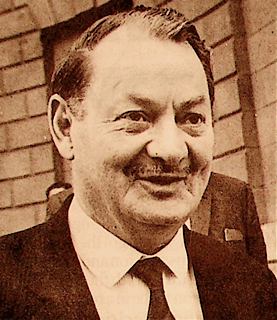
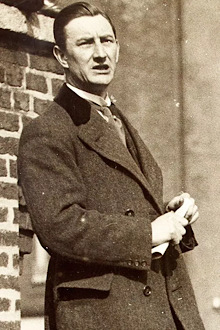
Birth of Richard Mulcahy, Fine Gael Politician & Army General

Richard James Mulcahy, Irish Fine Gael politician and army general, is born in Manor Street, Waterford, County Waterford, on May 10, 1886, the son of post office clerk Patrick Mulcahy and Elizabeth Slattery. He is educated at Mount Sion Christian Brothers School and later in Thurles, County Tipperary, where his father is the postmaster.

Mulcahy joins the Royal Mail (Post Office Engineering Dept.) in 1902, and works in Thurles, Bantry, Wexford and Dublin. He is a member of the Gaelic League and joins the Irish Volunteers at the time of their formation in 1913. He is also a member of the Irish Republican Brotherhood.

Mulcahy is second-in-command to Thomas Ashe in an encounter with the armed Royal Irish Constabulary (RIC) at Ashbourne, County Meath, during the 1916 Easter Rising, one of the few stand-out victories won by republicans in that week and generally credited to Mulcahy’s grasp of tactics. In his book on the Rising, Charles Townshend principally credits Mulcahy with the defeat of the RIC at Ashbourne, for conceiving and leading a flanking movement on the RIC column that had engaged with the Irish Volunteers. Arrested after the Rising, he is interned at Knutsford and at the Frongoch internment camp in Wales until his release on December 24, 1916.

On his release, Mulcahy immediately rejoins the republican movement and becomes commandant of the Dublin Brigade of the Irish Volunteers. He is elected to the First Dáil in the 1918 Irish general election for Dublin Clontarf. He is then named Minister for Defence in the new government and later Assistant Minister for Defence. In March 1918, he becomes Irish Republican Army (IRA) chief of staff, a position he holds until January 1922.

Mulcahy and Michael Collins are largely responsible for directing the military campaign against the British during the Irish War of Independence. During this period of upheaval in 1919, he marries Mary Josephine (Min) Ryan, sister of Kate and Phyllis Ryan, the successive wives of Seán T. O’Kelly. Her brother is James Ryan. O’Kelly and Ryan both later serve in Fianna Fáil governments.

Mulcahy supports the Anglo-Irish Treaty of December 1921. Archive film shows that Mulcahy, as Minister of Defence, is the Irish officer who raises the Irish tricolour at the first hand-over of a British barracks to the National Army in January 1922. He is defence minister in the Provisional Government on its creation and succeeds Collins, after the latter’s assassination, as Commander-in-Chief of the Provisional Government’s forces during the subsequent Irish Civil War.

Mulcahy earns notoriety through his order that anti-Treaty activists captured carrying arms are liable for execution. A total of 77 anti-Treaty prisoners are executed by the Provisional Government. He serves as Minister for Defence in the new Free State government from January 1924 until March 1924, but resigns in protest because of the sacking of the Army Council after criticism by the Executive Council over the handling of the “Army Mutiny,” when some National Army War of Independence officers almost revolt after he demobilises many of them at the end of the Irish Civil War. He re-enters the cabinet as Minister for Local Government and Public Health in 1927.

During Mulcahy’s period on the backbenches of Dáil Éireann his electoral record fluctuates. He is elected as TD for Dublin North-West at the 1921 and 1922 Irish general elections. He moves to Dublin North for the election the following year and is re-elected there in four further elections: June 1927, September 1927, 1932, and 1933.

Dublin North is abolished for the 1937 Irish general election, at which Mulcahy is defeated in the new constituency of Dublin North-East. However, he secures election to Seanad Éireann as a Senator, the upper house of the Oireachtas, representing the Administrative Panel. The 2nd Seanad sits for less than two months, and at the 1938 Irish general election he is elected to the 10th Dáil as a TD for Dublin North-East. Defeated again in the 1943 Irish general election, he secures election to the 4th Seanad by the Labour Panel.

After the resignation of W. T. Cosgrave as Leader of Fine Gael in 1944, Mulcahy becomes party leader while still a member of the Seanad. Thomas F. O’Higgins is parliamentary leader of the party in the Dáil at the time and Leader of the Opposition. Facing his first general election as party leader, Mulcahy draws up a list of 13 young candidates to contest seats for Fine Gael. Of the eight who run, four are elected. He is returned again to the 12th Dáil as a TD for Tipperary at the 1944 Irish general election. While Fine Gael’s decline had been slowed, its future is still in doubt.

Following the 1948 Irish general election Mulcahy is elected for Tipperary South, but the dominant Fianna Fáil party finishes six seats short of a majority. However, it is 37 seats ahead of Fine Gael, and conventional wisdom suggests that Fianna Fáil is the only party that can possibly form a government. Just as negotiations get underway, however, Mulcahy realises that if Fine Gael, the Labour Party, the National Labour Party, Clann na Poblachta and Clann na Talmhan band together, they would have only one seat fewer than Fianna Fáil and, if they can get support from seven independents, they will be able to form a government. He plays a leading role in persuading the other parties to put aside their differences and join forces to consign the then Taoiseach and Fianna Fáil leader Éamon de Valera, to the opposition benches.

Mulcahy initially seems set to become Taoiseach in a coalition government. However, he is not acceptable to Clann na Poblachta’s leader, Seán MacBride. Many Irish republicans had never forgiven him for his role in the Irish Civil War executions carried out under the Cosgrave government in the 1920s. Consequently, MacBride lets it be known that he and his party will not serve under Mulcahy. Without Clann na Poblachta, the other parties would have 57 seats between them — 17 seats short of a majority in the 147-seat Dáil. According to Mulcahy, the suggestion that another person serve as Taoiseach comes from Labour leader William Norton. He steps aside and encourages his party colleague John A. Costello, a former Attorney General of Ireland, to become the parliamentary leader of Fine Gael and the coalition’s candidate for Taoiseach. For the next decade, Costello serves as the party’s parliamentary leader while Mulcahy remained the nominal leader of the party.

Mulcahy goes on to serve as Minister for Education under Costello from 1948 until 1951. Another coalition government comes to power at the 1954 Irish general election, with Mulcahy once again stepping aside to become Minister for Education in the Second Inter-Party Government. The government falls in 1957, but he remains as Fine Gael leader until October 1959. In October the following year, he tells his Tipperary constituents that he does not intend to contest the next election.

Mulcahy dies from natural causes at the age of 85 in Dublin on December 16, 1971. He is buried in Littleton, County Tipperary.


Leave a comment

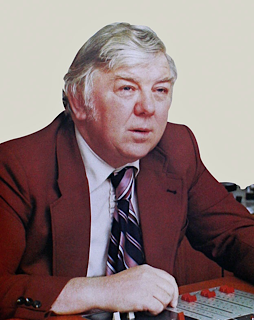
Birth of Cathal Goan, Former Director-General of RTÉ

Cathal Séamus Goan, Director-General of RTÉ from 2003 to 2011, is born on May 5, 1954, in Ardoyne, Belfast, Northern Ireland. He also plays a leading role in the launch of TG4.

Goan is an Irish language speaker. He studies Celtic studies at University College Dublin (UCD). He joins RTÉ in 1979 as an archivist with RTÉ Radio. He becomes a producer and senior producer on RTÉ Radio. In 1988, he moves to RTÉ Television and works on Today Tonight. Remaining in current affairs, he becomes editor of Cúrsaí, an Irish language television programme about arts and current affairs. He becomes Editor of Irish Language Programming in 1990.

Four years after being appointed Editor, Goan is approached to become “Ceannasaí” of the new Teilifís na Gaeilge. From August 1994, he manages the commencement of the new television channel. After a successful launch of the channel, where award-winning programming is produced during his tenure, he returns to RTÉ in 2000. He is appointed Director of Television and becomes a member of the RTÉ Executive Board.

Bob Collins retires as Director-General of RTÉ in 2003 to pursue a career elsewhere. It is announced in July 2003 that Goan will fill this position. He becomes the Director-General in October 2003. In 2008, he has a salary of €280,000, but it is reduced by €35,000. In 2006, he is announced as member of the board of National Concert Hall and serves there until May 2011. After the broadcast of a news item on nude pictures of Taoiseach Brian Cowen, Minister Michael Kennedy calls for Goan to “consider his position” as Director-General of RTÉ. He also receives criticism from Minister Éamon Ó Cuív in February 2010, when Sunday Mass is reduced to being broadcast just once a month on RTÉ Raidió na Gaeltachta.

Goan announces in July 2010 that he intends to step down at the end of his seven-year term. His resignation is accepted by the RTÉ Board.

Goan is married to Irish singer Maighread Ní Dhomhnaill.