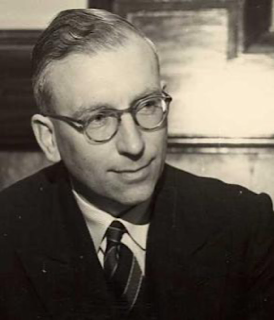
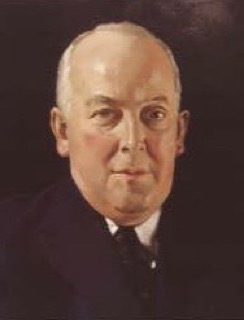
In 1956, Whitaker is appointed Secretary of the Department of Finance, at the age of thirty-nine. His appointment takes place at a time when Ireland’s economy is in deep depression. Economic growth is non-existent, inflation apparently insoluble, unemployment rife, living standards low and emigration at a figure not far below the birth rate. He believes that free trade, with increased competition and the end of protectionism, will become inevitable and that jobs will have to be created by a shift from agriculture to industry and services. He forms a team of officials within the department which produce a detailed study of the economy, culminating in a plan recommending policies for improvement. The plan is accepted by the government and is transformed into a white paper which becomes known as the First Programme for Economic Expansion, and quite unusually is published with his name attached in November 1958. The programme becomes known as the “Grey Book” which many argue brings the stimulus of foreign investment into the Irish economy. However, other reforms such as the Department of Industry and Commerce‘s export profits tax relief introduced in 1956, are opposed by Whitaker.
In 1977, Taoiseach Jack Lynch nominates Whitaker as a member of the 14th Seanad. He serves as a Senator from 1977 to 1981, where he sits as an independent member.
In 1981, Whitaker is nominated to the 15th Seanad by Taoiseach Garret FitzGerald, where he serves until 1982. FitzGerald also appoints him to chair a Committee of Inquiry into the Irish penal system, and he chairs a Parole Board or Sentence Review Group for several years.
Whitaker also serves as Chancellor of the National University of Ireland (NUI) from 1976 to 1996. He was also President of the Royal Irish Academy (RIA) and as such, a member of the Board of Governors and Guardians of the National Gallery of Ireland, from 1985 to 1987. He has a very strong love for the Irish language throughout his career and the collection of Irish poetry, An Duanaire: Poems of the Dispossessed 1600–1900, edited by Seán Ó Tuama and Thomas Kinsella is dedicated to Whitaker. From 1995 to 1996 he chairs the Constitution Review Group, an independent expert group established by the government, which publishes its report in July 1996.
Whitaker receives many national and international honours and tributes for his achievements during his lifetime, most notably the conferral of “Irishman of the 20th Century” in 2001 and Greatest Living Irish Person in 2002. In November 2014, the Institute of Banking confers an Honorary Fellowship on him and creates an annual T. K. Whitaker Scholarship in his name. In April 2015, he is presented with a lifetime achievement award by University College Dublin‘s Economics Society for his outstanding contribution to Ireland’s economic policy.
In November 2016, to mark his centenary year, Dún Laoghaire–Rathdown County Council acknowledges Whitaker’s “outstanding and progressive contribution to Irish public service and to society.” The Cathaoirleach of Dún Laoghaire–Rathdown, Cormac Devlin, presents a special award to Whitaker which is accepted by Ken Whitaker on behalf of his father.
Whitaker marries Nora Fogarty in 1941 and they have six children. After his wife’s death in 1994, he remarries, to Mary Moore in 2005. The couple is invited to Áras an Uachtaráin in 2006 for his 90th birthday by the President of IrelandMary McAleese. Mary Moore Whitaker dies in 2008. T. K. Whitaker turns 100 in December 2016 and dies a month later on January 9, 2017, having survived both of his wives. He is buried at Shanganagh Cemetery, Shankill, Dublin.
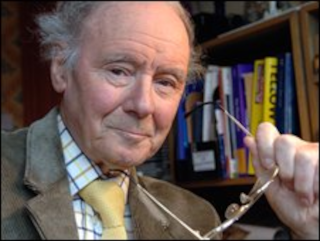
Hammond is the son of Leslie Hammond, a tram driver, and his wife Annie (née Lamont). His parents are not city people; his mother grew up near Ballybogy in the Ballymoney area of County Antrim, and his father, though from a family with roots in south County Londonderry, had lived in Ballymoney as a boy, and had been apprenticed to a blacksmith there. Both have a strong sense of their rural identity and maintain the Ulster Scots dialect of their childhood. They are never quite at home in the Belfast suburb of Cregagh, and in particular do not share the sectarian attitudes that are much more present in 1930s Belfast than they had been in north Antrim, one of the last strongholds of Presbyterian radicalism. Even as a boy, Hammond is interested in the old songs that his mother sang and realises that the traditions in which his parents had been nurtured are disappearing quickly in an increasingly urbanising and modernising world. When he encounters the work of Emyr Estyn Evans in the early 1940s, he is encouraged to document both rural tradition and the street life of the city, and he and a couple of friends, though still just teenagers, ride off on their bicycles to look for folklore in the hinterland of Belfast.
After primary school, Hammond wins a scholarship in 1941 to Methodist College Belfast, where he does well in examinations, and then goes to Stranmillis University College to train as a teacher. In his first job, in Harding Memorial primary school in east Belfast, he proves to be a popular, idealistic teacher, and is remembered by his pupils fifty years later as a fine singer and a teller of ghost stories, who had taken the class on memorable youth-hosteling trips to the Mourne Mountains. Youth hosteling and folklore collecting increases his awareness and understanding of the rich traditions of the whole community in the north of Ireland, and he is never constrained by political or religious barriers. His early career mirrors closely that of James Hawthorne, and their paths are to cross in later life.
Hammond is friendly with many others active in the cultural life of Northern Ireland and makes a name for himself as a song collector and eventually as an expert on all aspects of traditional singing. In 1956, he is awarded a scholarship to travel in the United States to meet the important pioneers of folk-music collecting and performance there. He records his first LP record of Ulster songs, I Am The Wee Falorie Man (1958), in the United States, and becomes friends with Pete Seeger, the Appalachian singer Jean Ritchie, with old blues singers, and notably with Liam Clancy, one of the three Clancy brothers who as a quartet with Tommy Makem are to popularise Irish folk music in the United States and elsewhere.
On returning to Belfast, Hammond takes a job in 1958 in Orangefield secondary school in the east of the city, where the highly regarded headmaster John Malone encourages new approaches to education. Among his pupils at Orangefield is George Ivan “Van” Morrison, who credits him with inspiring his interest in Irish traditional music. Hammond enjoys teaching but is increasingly drawn to folk-song performance and recording. He appears regularly on radio programmes of the BBC and Radio Éireann, and in 1964 joins the school’s department in BBC Northern Ireland. There, with colleagues like Sam Hanna Bell, James Hawthorne and others, he works on programmes such as Today and Yesterday in Northern Ireland, which for the first time introduces pupils (and many adults) to local history and to aspects of tradition. In 1968, with two friends, the poets Seamus Heaney and Michael Longley, he puts on poetry and traditional music events in schools all over the province. The Arts Council funds the Room to Rhyme project, which is immensely influential and inspiring, and is still talked about many years later by those who attended as children.
Hammond is creatively involved with hundreds of hours of broadcasting, in television as well as radio, and eventually for adults as well as children. He writes scripts, produces documentary series such as Ulster in Focusand Explorations, and brings an artistic sensibility to filming, as well as working sympathetically with traditional singers and craftspeople. Dusty Bluebells, a sensitively made film of Belfast children’s street games, wins the prestigious Golden Harp award in 1972. After he leaves the BBC to work as a freelance, and founds Flying Fox Films in 1986, he continues making documentaries on many aspects of Ulster life and heritage. His film called Steel Chest, Nail in the Boot and the Barking Dog (1986), about working in the Belfast shipyards, also wins a Golden Harp award. A companion book of the same name is published. Another book is Belfast, City of Song(1989), with Maurice Leyden. In 1979, he edits a volume of the songs of Thomas Moore. His documentary programmes include films about singers from Boho, County Fermanagh, and about the big houses of the gentry in Ireland. The Magic Fiddle (1991/2) examines the role of the instrument in the folk music of Ireland, Scandinavia, Canada, and the American south, while Another Kind of Freedom (1993) is about the experiences of a former Orangefield pupil, the Beirut hostage Brian Keenan. He also produces and directs the films Something to Write Home About (1998), Where Are You Now? (1999), and Bogland (1999), all of which explore Seamus Heaney’s home region and experiences.
The first poem in Heaney’s collection Wintering Out (1972) is entitled “For David Hammond and Michael Longley.” Their lifelong friendship leads to several other creative collaborations. In particular, after a distressing evening in 1972 when Hammond, affected by the despair and terror unleashed by Irish Republican Army (IRA) bombing of his city, is for once unable to sing, Heaney meditates on the experience in an essay and in an important poem, “The singer’s house” (subsequently included in his 1979 Field Work collection). The poem urges the singer to keep singing, to defend the values of art and friendship in a hostile time. Hammond collaborates with Dónal Lunny and other traditional musicians to bring out an LP also called The Singer’s House(1978), which includes Heaney’s poem on the album sleeve, and features some of the songs that he had made famous, such as “My Aunt Jane” and “Bonny Woodgreen,” from his vast repertoire of songs from Ulster. The album is reissued in 1980.
In 1995, Hammond is one of Heaney’s personal guests at the award of his Nobel prize in Stockholm, characteristically wearing his usual, mustard-yellow, cattle-dealer boots with evening dress. On another formal occasion, when he is awarded an honorary doctorate by Dublin City University in November 2003, he surprises the audience by standing up in his academic robes to sing “My Lagan love,” instead of giving an address. His unique, light mellow voice is an ideal vehicle for the traditional ballads which he knows so well. He records a number of records in the 1960s, including Belfast Street Songs, and publishes the book Songs of Belfast (1978). He also encourages traditional musicians like Arty McGlynn, and collaborates with them on various recording projects. He is well known for live and often impromptu performances at festivals and venues in Ireland and the United States. He also performs at the John F. Kennedy Center for the Performing Arts in Washington, D.C.
Hammond is also a notable collaborator with poets and dramatists, especially in the important Field Day Theatre Company project, of which he is a director, along with Seamus Heaney, Tom Paulin, Seamus Deane, Thomas Kilroy, and the project’s founders, Brian Friel and Stephen Rea. He supports the Field Day search for a “fifth province,” where history and community and culture can intersect, believing that to speak unthinkingly of “two traditions” is to perpetuate superficial political divisions. As he says in an interview in The Irish Times on July 4, 1998, songs can “take you out of yourself” and become bridges to unite people.
Hammond receives many honours. In 1994, he receives the Estyn Evans award for his contribution to mutual understanding, and his work is featured in several major events in his honour: in the University of North Florida (1999), in the Celtic Film Festival in Belfast (2003), and in Belfast’s Linen Hall Library (2005). A Time to Dream, a film about his life and work, is broadcast on BBC Northern Ireland in December 2008.
Hammond dies in hospital in Belfast, after a long illness, on August 25, 2008, survived by his wife Eileen (née Hambleton), whom he marries on July 19, 1954, and by their son and three daughters. His funeral in St. Finnian’s Church is a major cultural event, where friends sing, play and speak in his honour.
In Seamus Heaney’s last collection of poetry, Human Chain (2010), he includes a poignant farewell to Hammond. The poet imagines (or perhaps dreams) of another visit to the singer’s house, but this time “The door was open, and the house was dark.”
(From: “Hammond, David Andrew (‘Davy’)” by Linde Lunney, Dictionary of Irish Biography, http://www.dib.ie, December 2014)
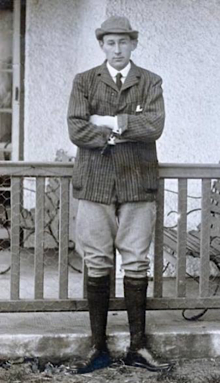
Moore is the eldest son of Queen Victoria‘s honorary physician in Ireland, Dr. William Moore of Rosnashane, Ballymoney, and Sidney Blanche Fuller. His ancestors came to Ulster during the Plantation of Ulster, settling at Ballymoney, at which time they were Quakers. The Moore Lodge estate is inherited from a relative. The family owns several other houses: Moore’s Grove and Moore’s Fort. He goes on to become a Deputy Lieutenant for County Antrim and a Justice of the Peace.
In 1903, Moore is one of the first landowners of Ireland to sell off their estates under the land acts. By the early 1920s he owns a Belfastpied-à-terre called “Glassnabreedon,” in the village of Whitehouse, four miles north of Belfast. This house is once owned by the son of Nicholas Grimshaw, Ireland’s first cotton pioneer.
Moore becomes a member of the General Synod of the Church of Ireland and is a founder member of the Ulster Council. He is a passionate Orangeman: his vehemence in defending Ulster’s right to oppose Irish Home Rule is said to alarm even those who share his views. Speaking in England on March 10, 1913, he makes his feelings clear on the possibility of Irish Home Rule: “I have no doubt, if Home Rule is carried, its baptism in Ireland will be a baptism in blood.” He shows little respect for English politicians, and has nothing but contempt for Southern Unionists. The eventual political settlement in 1921 meets with his approval.
Moore dies at his home, Moore Lodge, in Ballymoney on November 28, 1944, less than a week after his 80th birthday. He is buried in the family burial ground, “Lamb’s Fold,” two days later.
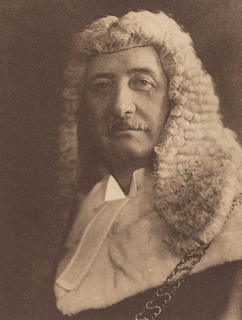
Babington is called to the Irish Bar in 1900. He briefly lectures in Equity at King’s Inns, and it is during this time, in 1910, that he re-arranges and re-writes R.E. Osborne’s Jurisdiction and Practice of County Courts in Ireland in Equity and Probate Matters. He takes silk in 1917.
In 1947, Babington chairs the Babington Agricultural Enquiry Committee, named in his honour, which is established in 1943 to examine agriculture in Northern Ireland. The committee’s first recommendation under Babington’s leadership is that Northern Ireland should direct all its energies to the production of livestock and livestock products and to their efficient processing and marketing.
Babington retires from the judiciary in 1949, taking up the chairmanship of the Northern Ireland Transport Tribunal, which exists until 1967, established under the Ulster Transport Act – promoting a car-centred transport policy – and which is largely responsible for the closure of the Belfast and County Down Railway. He endorses the closure on financial grounds and is at cross purposes with his co-chair, Dr. James Beddy, who advises against the closure, citing the disruption of life in the border region between the north and the south as his primary reason in addition to financial grounds.
Babington also chairs a government inquiry into the licensing of clubs, the proceeds of which results in new regulatory legislation at Stormont. While Attorney General, he is a proponent of renaming Northern Ireland as “Ulster.”
Babington is critical of the newly proposed Irish constitution, in which the name of the Irish state is changed to “Ireland,” laying claim to jurisdiction over Northern Ireland.
Michael McDunphy, Secretary to the President of Ireland, then Douglas Hyde, recalls Ernest Alton‘s correspondence with Babington on the question of Irish unity, in which Alton and Babington are revealed to be at cross purposes. The discussion is used as an example by Brian Murphy, in Forgotten Patriot: Douglas Hyde and the Foundation of the Irish Presidency, as an example of the office of the Irish President becoming embroiled in an initiative involving Trinity College Dublin and a senior Northern Ireland legal figure, namely Babington.
Babington writes to Alton, then Provost of Trinity College, Dublin, expressing his view that, as Murphy summarises, “… Severance between the two parts of Ireland could not continue, that it was the duty of all Irishmen to work for early unification and that in his opinion Trinity College was a very appropriate place in which the first move should be made.” When Alton arrives to meet with Hyde, it emerges, after conversing with Hyde’s secretary McDunphy, that he and Babington are at cross purposes. “It soon became clear that the united Ireland contemplated by Mr. [sic] Justice Babington of the Northern Ireland Judiciary was one within the framework of the British Commonwealth of Nations, involving recognition of the King of England as the Supreme Head, or as Dr. Alton put it, the symbol of unity of the whole system,” writes McDunphy.
Babington is a keen golfer. He is an international golfer from 1903 to 1913, during which he is runner-up in the Irish Amateur Golf Championships in 1909 and one of the Irish representatives at an international match in 1913. The Babington Room in the Royal Portrush Golf Club is named after him, as is the 18th hole on the course as a result of the key role he plays in shaping its history.
Babington dies at the age of 94 on April 10, 1972 at his home, Creevagh, Portrush, County Antrim.
The gunmen, who are wearing workmen’s overalls, escape in a car afterward, killing Ken Campbell, a caretaker, as they leave. The people with whom Bradford had been meeting, most of them elderly, dive under tables for cover, and dozens of teenagers dancing nearby break into hysterical tears, but there are no injuries.
The killing is part of an escalation of IRA violence, both in London and in Northern Ireland, after the collapse of the prison hunger strike the previous month. The previous night an IRA bomb damages the London home of Britain’s Attorney General for Northern Ireland, Michael Havers. The home is empty and no one is seriously injured.
Bradford, a 40-year-old Methodist minister who is married and has a 6-year-old daughter, is shot several times, according to witnesses, and he dies almost immediately. His brother, Roy, who lives near the scene of the killing, in South Belfast, is at his side within moments. “But he was unconscious when I reached him, and he only lived for about a minute,” Roy Bradford says. News of the killing arouses fears of a Protestant reaction that could lead to serious civil unrest in Northern Ireland.
John “Jack” Hermon, the Chief Constable of the Royal Ulster Constabulary, issues an appeal to both the Protestant majority and the Roman Catholics to show “good sense and restraint.” He says security is being tightened in the province as a precautionary measure. He orders a wide-ranging search for the gunmen, who number at least three and possibly four, a point upon which the witnesses differ.
Bradford, who has been in Parliament since 1974, is an outspoken critic of the Irish nationalist guerrillas. He repeatedly calls for the reimposition of capital punishment in the province and for other strong deterrent measures.
With the Rev. Ian Paisley, another hard-line Member of Parliament, Bradford had planned to visit the United States In early 1982 to counteract the publicity of the IRA, which depends heavily on the money it receives from its American sympathizers. “There is a need for Americans to recognize that Ulster is not an occupied country,” Bradford says the previous month, “and that our political history is one of which we can be proud.”
The IRA, in a statement claiming responsibility for the killing, calls Bradford “one of the key people responsible for winding up the loyalistparamilitarysectarian machine in the North.” All twelve of Northern Ireland’s Members of Parliament – ten Protestants and two Catholics – are considered likely targets in the sectarian struggle that has claimed 2,100 lives in the province since 1969.
Alongside his older brother, Connor Maguire, Maguire is a prime mover in the conspiracy which leads to the outbreak of rebellion in Ireland on October 23, 1641. He is tasked with securing County Fermanagh for the rebels, but is only partially successful, with several key fortresses in the county, including Enniskillen Castle, remaining under Protestant settler control. His attempt to murder Sir William Cole immediately prior to the rising fails, but the landowner Arthur Champion is killed in one of the first actions of the rebellion. In November 1641, he joins Felim O’Neill of Kinard at Newry to issue a proclamation in which the rebels claim they are acting in defence of King Charles and Catholicism. In December 1641, the Fermanagh army under Maguire slaughters many of the garrison and refugees in Tully Castle, apparently in retaliation for the killing of the garrison of a Maguire castle which had been taken by assault some days previously. He also destroys Castle Archdale and its neighbouring settler village, and kills eight Protestant settlers at Monea Castle. In early 1642, he is expelled from the Irish Parliament and in the summer of the same year he is made a colonel in Owen Roe O’Neill‘s army in Ulster.
Maguire is appointed Governor of Fermanagh by the authorities of the newly established Confederate Ireland. He commands the rebel reserve in the Battle of Benburb in June 1646. He leads raids into Protestant-held areas in east Ulster, before joining O’Neill in his campaigns in Leinster in the autumn of 1646. Later that year, he raids lands in Connacht controlled by the Royalist commander, Ulick Burke, 1st Marquess of Clanricarde. In August 1647, O’Neill and Maguire move the army to Leinster, where Maguire quarrels so vigorously with O’Neill over the payment of troops that the general orders his arrest and court-martials him. After the court-martial, Maguire and his supporters, about five or six regiments, draw up their forces and threaten to desert. The mutiny soon dissipates and Maguire remains allied to O’Neill.
In 1648, Maguire joins O’Neill in opposing the truce between the Confederates and Royalists. He plays a prominent role in the skirmishes and evasive manoeuvrings that occur between the two sides in central Ireland. In the winter of 1648, Maguire withdraws north and on November 13 he is killed while leading an attack on a fortress near Jamestown, County Leitrim.
Henry is born in Belfast on January 15, 1902, the daughter of the tea merchant George Adams Henry. She attends Mount Pottinger National School, and Victoria College, before expanding her studies at night classes at the Belfast School of Art.
Henry completes an apprenticeship at Clokey Stained Glass Studios founded by Walter Francis Clokey where she is to work for over fifty years designing stained glass windows. Her appointment in the autumn of 1919 comes by a chance visit to Victoria College by the firm’s owner who is seeking a suitable apprentice. She retires from the firm at Easter 1972.
Henry exhibits at the Belfast Art Society for the first time in 1928. She exhibits four works, all landscapes in oil, and then a further two works in the following year. In 1931, she shows a further two works with the successor to the Belfast Art Society, the Ulster Academy of Arts. In 1932, she shows A Derbyshire Village, described by one critic as “a delightful English rural scene.” Between 1931 and 1942 she shows with more than twenty paintings at the Ulster Academy of Arts, exhibiting at each annual show in that time.
Henry has a keen interest in photography from an early age and wins various awards for her photographs. In 1934, she wins the August prize from the Photographic Dealers’ Association for a shot of a child playing with toys in the bath, having received a consolation prize of five shillings in September of the previous year for a shot of a traditional market scene in Boulogne. She goes on to write a regular column for Amateur Photographer throughout the 1930s.
In January 1935, Henry is appointed leader of a local sketching group by the Youth Hostel Association. In December 1935, she is commended for a sketch called River Pool, submitted to a competition judged by James Humbert Craig on behalf of the Youth Hostel Association, presented alongside Port Muckin a show with the sketching group. Maurice Canning Wilks contributes Skernaghan Point, Brown’s Bay to the same show.
The Robinson and Cleaver Art Gallery stages a display of works from Four Ulster Artists in 1936 consisting of paintings from Henry, her sister Marjorie, Theo Gracey and F. H. Hummel. She contributes Green Boat, which she had presented earlier in the year to the Ulster Academy of Arts, and includes Off the Scilly Isles among pictures from Brittany and Bavaria. The reviewer in Belfast’s News Letter refers to her style as “Post-Impressionism.”
In 1937, Henry is elected an Associate of the Ulster Academy of Arts and presents three watercolours to the institution the following year. The exhibition is opened by Oliver St. John Gogarty with participants such as John Luke, Maurice Wilks, James Humbert Craig, Rosamund Praeger and Colin Middleton, who shows three Surrealist works including Angelus.
The Royal Hibernian Academy displays two small works, Flight, 1941 and Lakeside, among an unusually large contingent of Ulster artists in the annual exhibition in the spring of 1942. The Ulster Academy of Arts is united in their commitment to raise funds for the bomb damaged Ulster Hospital for Children and Women in their Spring Exhibition of 1942. Henry displays a sense of humour in her use of black-out paint, roadblocks and air raid shelters in one of the watercolours on show.
Henry is a regular exhibitor with the Water Colour Society of Ireland, and contributes more than one hundred works to their exhibitions between 1943 and 1986.
Henry joins Violet McAdoo in a joint exhibition at the Belfast Museum and Art Gallery in 1944. McAdoo presents with watercolours, however, Henry also presents oils. The paintings are primarily of landscapes but included a number urban scenes.
In 1945, Henry and her sister Margaret join Arthur and George Campbell, Colin Middleton, Gladys and Max Maccabe, Thomas Carr, Maurice Wilks, James McIntyre and others, in the only official exhibition from the Ulster branch of the Artists’ International Association sponsored by the Council for the Encouragement of Music and the Arts (NI) at the Belfast Museum.
The MacGaffin Gallery at Pottinger’s Entry is the venue for a group exhibition of experimental and modernist works with Nevill Johnson, Aaron McAfee and the MacCabes in 1946, where Henry exhibits seven paintings. Quayside is one of three pictures that she presents at the Ulster Academy in 1946. She also shows it with the Water Colour Society of Ireland in the following year and at CEMA’s Some Ulster Paintings exhibition in that same year.
In 1946, the Council for the Encouragement of Music and Art (CEMA) purchases a painting by Henry, in addition to works by other contemporary Ulster artists. Twenty-four of the works from the CEMA collection, including her painting, are later presented at their Donegall Place gallery in 1954.
Henry debuts at the 1948 Irish Exhibition of Living Art with one painting and returns in each of the subsequent ten years with a total of 20 paintings. She is also elected as an Honorary Academician of the Ulster Academy of Arts in 1948.
Henry displays one work, Harbour, Northern Ireland, with Violet McAdoo at the 88th exhibition of the Society of Women Artists at the Royal Institute Galleries in London during the summer of 1949. Just a few months later her work is back in London for the United Society of Artists annual exhibition where she shows Gossip and Shell and Sail.
Henry is awarded a travel scholarship from the Soroptomists of Belgium in 1957, which enables her to study stained glass in the country. She is the President of Soroptomist Club of Belfast from 1960 to 1961, where she had been a member since its foundation in 1932.
Upon her return from Belgium, CEMA stages a solo exhibition with thirty-five of Henry’s oils and watercolours at their Belfast gallery. The exhibition is arranged at short notice when another is unexpectedly cancelled. Writer Nesca Robb opens the exhibition where it is claimed a new painting technique, “monopainting,” is revealed, described as paint drawn through a gauze over glass. The exhibition includes a ‘Breton’ series, Kerry Tangle, Ship Pattern, Barrack Shapes, Lough Shapes, and Backs. In addition, she displays In the Park, an oil previously seen at the Royal Ulster Academy in 1955 and at the Irish Exhibition of Living Art in 1956, and a second oil, City Lunch Hour, exhibited at the Royal Ulster Academy in 1956.
The Ulster Society of Women Artists is founded in 1957 by Gladys Maccabe with the support of Henry and a number of others at a time when no arts societies are accepting female artists into their ranks. The main objective is to ensure the development of quality art and women artists in Ulster. The organisation begins with ten invited artists. Henry exhibits with the society throughout her life.
Henry receives a mention in the local press referring to her exhibits in the Royal Ulster Academy show of 1959 with Kenneth Jamison comparing her work with that of Deborah Brown, “Olive Henry is more decadent by instinct, a fine formaliser. Her pictures Man and Ropes and Riviera Port, well defined and carefully abstracted, contrast in form with Deborah Brown’s freer Oil Over Tempra,[sic] 1959.”
A group exhibition in 1964 at the New Gallery in Belfast includes work from Henry alongside Neil Shawcross, Max Maccabe, Kathleen Bell, Richard Croft and Helen Ross. Among other works she shows Easter and Long Garden.
In 1981, the Ulster Society of Womens Artists elects Henry as President. A retrospective of her studio works is hosted by the Shambles Gallery in Hillsborough, County Down in 1986, some thirty years since her last solo exhibition. Henry shows at the Royal Ulster Academy Annual Exhibition in 1987 for the last time.
Henry dies on November 8, 1989, at Crawfordsburn, County Down. Her paintings are held in the collections of the Northern Ireland Civil Service, Ulster Museum, Irish Linen Centre & Lisburn Museum, and the Royal Ulster Academy of Arts Diploma Collection.
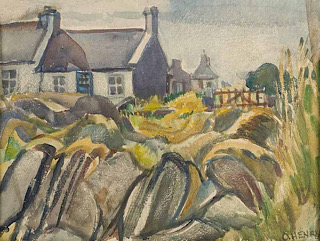
(Pictured: “The Gardener,” watercolour by Olive Henry)
Dorrian is born in Downpatrick, County Down, on March 29, 1814, one of four sons of Patrick Dorrian and his wife Rose (née Murphy). He is educated first by a Unitarian minister in the classical school in the town, where he excels, and then in St. Patrick’s College, Maynooth, where he is ordained in 1833.
Dorrian’s first appointment is as a curate in the then developing town of Belfast, attached to St Patrick’s Church, Belfast, where he ministers for ten years. At a relatively young age he is appointed parish priest in Loughinisland, County Down, (1847-60) at which time he becomes Bishop of Gabala (Qabala) and Coadjutor Bishop of the Diocese of Down and Connor to assist the ailing, frail and irenic Bishop Cornelius Denvir.
Dorrian is consecrated bishop on August 19, 1860, in St. Malachy’s Church, Belfast, and eventually succeeds as bishop five years later on May 4, 1865. He is known for his authoritarian style of leadership, referred to as “Cullenite“. As the post-famine population of Belfast grows, so too does sectarian attitudes, especially among those moving into the city from rural districts all over Ulster looking for work. He seeks to defend Catholic interests, insisting on the necessity of separate Catholic education and seeking, where possible, to influence the social and political interests of his church.
In this respect, historiansSean Connolly and Gillian McIntosh refer to Dorrian’s “pugnacious” presiding over the rapid expansion in priests, churches and religious houses in contrast to the “scholarly but ineffective” Bishop Denvir.
It is estimated Dorrian is responsible for doubling the number of Catholic churches in the city of Belfast, and in 1866, early in his episcopate, St. Peter’s Cathedral, Belfast in Derby Street in the Lower Falls area is first used as a pro-cathedral. His episcopal chair, placed in that church for the occasion, is still in use by the bishops of the Diocese of Down and Connor. He attends the First Vatican Council and is one of the leading Irish delegation to the event.
Dorrian dies at the Episcopal Palace, Chichester Park, Belfast, at 7:00 a.m., on November 3, 1885. His remains are interred within the chancel of St. Patrick’s Church, Belfast, on Friday, November 6.
At a meeting of the parish priests held in the chapel of St. Malachy’s College, on November 6, 1885, immediately after Dorrian’s funeral, Patrick MacAlister is elected Vicar Capitular of Down and Connor. McAllister is then named by Pope Leo XIII as Dorrian’s successor as the 24th Lord Bishop of Down and Connor.
In November 2017, the historic chapel of Belfast’s Mater Infirmorum Hospital is re-opened after extensive refurbishment. It has, as a result of its connection with Dorrian, become known as the Dorrian Chapel.
Morrow is born on April 26, 1863, in Comber, County Down, the second son of George Morrow, a painter and decorator from Clifton Street in west Belfast. Of his seven brothers, four, George, Jack, Edwin, and Norman, are also illustrators and all but one are artists. He is a keen ornithologist in his youth. In later life he is a keen walker and paints landscapes for leisure.
While studying under T. M. Lindsay at the Government School of Art in 1880, Morrow is awarded a £10 prize for drawing from the eminent publishers Cassell, Petter and Galpin. In 1881, while still learning his trade, he paints a mural of Belfast for the Working Men’s Institute in Rosemary Street, where his father is chairman. Later in that same year he exhibits a watercolour sketch of a standing figure entitled Meditative at the gallery of Rodman & Company, Belfast.
Morrow then wins a three-year scholarship worth £52 per year which he takes to the National Art Training School at South Kensington in 1882, where he begins a lifelong friendship with the British sculptor Albert Toft. In 1883, while still attending South Kensington, he joins the staff of The English Illustrated Magazine in preparation for the launch of the first edition. Two of his works are published in the Sunday at Home magazine in September of the same year.
J. Comyns Carr, first editor of TheEnglish Illustrated Magazine, commissions Morrow to complete a series on English industry when he has yet to complete his studies at South Kensington.
In 1890, Morrow begins illustrating for Bits and Good Words. He exhibits nine works at the Royal Academy of Arts between 1890 and 1904, all of which are watercolours, and another in 1917, and an offering in chalk at the 159th Exhibition, in the year of his death.
Morrow becomes a member of the Belfast Art Society in 1895, exhibiting with them in the same year. In 1896, a Morrow print is published in Volume 2 of the limited-edition print-collection Les Maîtres de l’Affiche selected by “Father of the Poster” Jules Chéret. In the same year he shows a watercolour of a Gurkha at the Earls Court in the Empire of India and Ceylon exhibition. In 1900, he exhibits with two Ulster artists, Hugh Thomson and Arthur David McCormick, at the Linen Hall Library in Belfast, who along with Morrow had contributed to the early success of TheEnglish Illustrated Magazine.
Morrow is one of the founders of the Ulster Arts Club in November 1902 along with five of his brothers, an organisation that has a nonsectarian interest in Celtic ideas, language and aesthetics. In November 1903, he exhibits at the first annual exhibition of the Club when he shows alongside John Lavery, Hans Iten, James Stoupe and F. W. Hull. He exhibits The Itinerant Musician, a watercolour that he had previously shown at the Royal Academy in 1902. Honorary membership is conferred upon him the following year. Three years later he is honoured with a solo exhibition of sketches and posters in conjunction with the Ulster Arts Club, at the Belfast Municipal Gallery.
In 1908, Morrow joins his brothers in an exhibition at 15 D’Olier Street, Dublin, an address which is later registered to the family business in 1913. Among his contributions to the family exhibition is his painting of Brandon Thomas, The Clarionette Player, which had previously been exhibited at the Royal Academy, and a poster entitled Irving in Dante.
In 1917, Morrow joins his brother George and 150 artists and writers, in petitioning the British Prime MinisterDavid Lloyd George to find a way of enacting the unsigned codicil to Hugh Lane’s will and establish a gallery to house Lane’s art collection in Dublin. Among the 32 notable artists who sign this petition are Jack B. Yeats, Sir William Orpen, Sir John Lavery, and Augustus John.
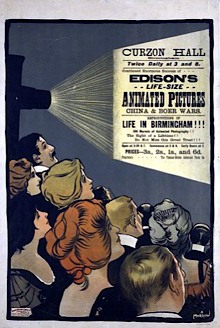
Morrow illustrates books for children and adults, but he is best known for the hundreds of posters he designs for the theatre, with the bulk of his commissions coming from just one lithographical printer, David Allen and Sons. As a cartoonist he draws for children’s annuals, and contributes three cartoons to Punch in 1923, 1925 and posthumously in 1931.
Morrow dies at his home in West Hoathly, West Sussex, on October 26, 1927, at the age of 64. He is survived by his wife and two children. His headstone in the local churchyard at All Saints Church, Highbrook is designed by his friend, the sculptor and architect, Albert Toft.
Clery is the son of Arthur Clery (who also uses the names Arthur Patrick O’Clery and Arthur Ua Cléirigh), a barrister, and Catherine Moylan. His father, who practises in India, publishes books on early Irish history.
Clery’s principal themes include the difficulties of Roman Catholic graduates seeking professional employment, dramatic criticism (he hails Lady Gregory‘s play Kincora as the Abbey Theatre‘s first masterpiece but is repulsed by the works of John Millington Synge), Catholic-Protestant rivalry, tension within the Dublin professional class, and the vagaries of the Gaelic revival movement.
Clery advocates partition on the basis of a two nations theory, first advanced in 1904–1905, possibly in response to William O’Brien‘s advocacy of securing Home Rule through compromise with moderate Unionists. Several of his articles on the subject are reprinted in his 1907 essay collection, The Idea of a Nation.
Clery derives this unusual view for a nationalist from several motives, including a belief that arguments for Irish nationalists’ right to self-determination can be used to justify Ulster Unionists’ right to secede from Ireland, fear that it might be impossible to obtain Home Rule unless Ulster is excluded, and distaste for both Ulster Protestants and Ulster Catholics, whom he sees as deplorably anglicised. He remains a partitionist for the rest of his life. He is not particularly successful as a barrister, but on the establishment of University College Dublin (UCD) in 1909, he is appointed to the part-time post of Professor of the Law of Property.
Clery does not take his seat and does not contest the September 1927 Irish general election since new legislation obliges candidates to pledge in advance that they will take their seat. He is one of the lawyers who advises Éamon de Valera that the Irish Free State is not legally obliged to pay the Land Annuities which had been agreed in the Anglo-Irish Treaty of 1922.
Clery was a close friend of Tom Kettle, with whom he founds a dining club, the “Cui Bono.” Hugh Kennedy is also a lifelong friend. As Auditor of the L & H, he tries to prevent James Joyce from reading a paper praising Henrik Ibsen, asserting that “the effect of Henrik Ibsen is evil,” but Joyce succeeds in reading it after he argues his case with the college president. The principal influence on Clery is the Irish Ireland editor D. P. Moran, to whose weekly paper, The Leader, Clery becomes a frequent contributor. In addition to The Idea of a Nation, he publishes Dublin Essays (1920) and (as Arthur Synan) The coming of the king.