seamus dubhghaill

Promoting Irish Culture and History from Little Rock, Arkansas, USA


Leave a comment

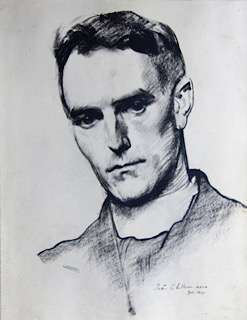
Birth of Derek Mahon, Northern Irish Poet

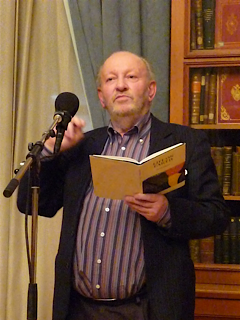
Norman Derek Mahon, Irish poet, is born in Belfast, Northern Ireland, on November 23, 1941, but lives in a number of cities around the world. At his death it is noted that his “influence in the Irish poetry community, literary world and society at large, and his legacy, is immense.” President of Ireland Michael D. Higgins says of Mahon, “he shared with his northern peers the capacity to link the classical and the contemporary but he brought also an edge that was unsparing of cruelty and wickedness.”

Mahon is the only child of Ulster Protestant working class parents. His father and grandfather work at Harland and Wolff while his mother works at a local flax mill. During his childhood, he claims he is something of a solitary dreamer, comfortable with his own company yet aware of the world around him. Interested in literature from an early age, he attends Skegoneill Primary School and then the Royal Belfast Academical Institution, known locally as Inst.

At Inst Mahon encounters fellow students who share his interest in literature and poetry. The school produces a magazine in which he produces some of his early poems. According to the critic Hugh Haughton, his early poems are highly fluent and extraordinary for a person so young. His parents cannot see the point of poetry, but he sets out to prove them wrong after he wins his school’s Forrest Reid Memorial Prize for the poem ”The power that gives the water breath.”

Mahon pursues third level studies at Trinity College Dublin (TCD) in French, English, and Philosophy and where he edits Icarus, and forms many friendships with writers such as Michael LongleyEavan Boland and Brendan Kennelly. He starts to mature as a poet. He leaves TCD in 1965 to take up studies at the Sorbonne in Paris.

After leaving the Sorbonne in 1966, Mahon works his way through Canada and the United States. In 1968, while spending a year teaching English at Belfast High School, he publishes his first collection of poems, Night Crossing (1968, Oxford University Press). He later teaches in a school in Dublin and works in London as a freelance journalist. He lives in Kinsale, County Cork. On March 23, 2007, he is awarded the David Cohen Prize for Literature. He wins the Poetry Now Award in 2006 for his collection, Harbour Lights, and again in 2009 for his Life on Earth collection.

At times expressing anti-establishment values, Mahon describes himself as an “aesthete” with a penchant “for left-wingery […] to which, perhaps naively, I adhere.”

In March 2020, at the beginning of the COVID-19 pandemicRTÉ News ends its evening broadcast with Mahon reading his poem Everything Is Going to Be All Right.

Mahon dies in Cork, County Cork, on October 1, 2020, after a short illness, aged 78. He is survived by his partner, Sarah Iremonger, and his three children, Rory, Katy, and Maisie. His papers are held at Emory University.

Mahon features on the Irish Leaving Certificate course with ten of his poems (Grandfather, Day Trip to Donegal, Ecclesiastes, After the Titanic, As It Should Be, A Disused Shed in Co. Wexford, Rathlin, The Chinese Restaurant in Portrush, Kinsale and Antarctica)
Leave a comment

Birth of Dairine Vanston, Landscape Artist

Dairine (Doreen) Vanston, Irish landscape artist who works in a Cubist style, is born in Dublin on October 19, 1903.

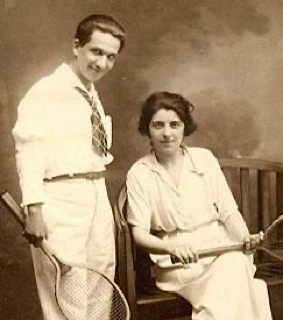
Vanston is the daughter of solicitor John S. B. Vanston, and sculptor Lilla Vanston (née Coffey). She attends Alexandra College, going on to study at Goldsmiths College, London under Roger Bissière. She then goes to Paris to the Académie Ranson, being sent there following the advice of Paul Henry. While in Paris she meets Guillermo Padilla, a Costa Rican law student at the University of Paris. They marry in 1926 and she takes the name Vanston de Padilla. The couple lives for a time in Italy, before moving to San José, Costa Rica. The marriage breaks down in the early 1930s, at which point she returns to Paris with her son and studies with André Lhote. She is living in France at the outbreak of World War II with Jankel Adler, but is able to escape to London in 1940, and later to Dublin.

Vanston’s time in Paris leaves a lasting impression on her work, including use of primary colours and a strong Cubist influence. She belongs to what critic Brian Fallon calls the “Franco-Irish generation of painters who looked to Paris,” along with Mainie JellettEvie Hone, and Norah McGuinness. Her time spent living in Costa Rica in the late 1920s and early 1930s imbues her work with tropical and highly toned colours. In Dublin in 1935, she exhibits 17 paintings, largely Costa Rican landscapes, at Daniel Egan’s gallery on St. Stephen’s Green. This is the closest thing to a solo show she would mount, with this show also featuring Grace HenryCecil Ffrench Salkeld, and Edward Gribbon.

Meeting the English artist Basil Rakoczi, who is also living in Dublin during World War II, leads Vanston to become associated with The White Stag group. In November 1941, she exhibits for the first time at a group show with 24 other artists, including Patrick Scott. One work that is shown at this exhibition is the painting Keel dance hall, which demonstrates that she spends time in the west of Ireland. The most important event staged by the group is the Exhibition of subjective art, which takes place at 6 Lower Baggot St. in January 1944. The Dublin Magazine notes her work at this show as the most effective of the experimental vanguard. This work, Dying animal, is a Cubist work with semi-representation forms rendered in bold colours. In 1945, her work is featured in a White Stag exhibition in London of young Irish painters at the Arcade gallery, Old Bond Street.

In 1947, Vanston spends almost a year in Costa Rica where she paints primarily in watercolours. Apart from this period, she lives and works in Dublin, living at 3 Mount Street Crescent near St. Stephen’s Church. At the inaugural Irish Exhibition of Living Art in 1943, she exhibits five works. At the first Exhibition of Independent Artists in 1960, of which she is a founder, she exhibits three landscapes and a work entitled War. She largely exhibits with the Independent Artists, the Irish Exhibition of Living Art, and the Oireachtas na Gaeilge, and does not exhibit with the Royal Hibernian Academy. Later in life, she exhibits with the Figurative Image exhibitions in Dublin, and is amongst the first painters chosen for Aosdána. A number of her works are featured in the 1987 exhibition, Irish women artists, from the eighteenth century to the present arranged by the National Gallery of Ireland and The Douglas Hyde Gallery.

Vanston dies on July 12, 1988, in a nursing home in Enniskerry, County Wicklow. Her work is greatly admired, but has received little by way of critical attention, which may have been to do with her slow rate of output. A number of her works have proved difficult to trace. She was a private person, even refusing to cooperate with the Taylor Galleries in the 1980s when they wanted to mount a retrospective of her work. The National Self-Portrait Collection in Limerick holds a work by Vanston.

(Pictured: Dairine Vanston with Guillermo Padilla in Paris)


Leave a comment

Birth of Pádraig de Brún, Catholic Priest & Linguist

Pádraig de Brún, also called Patrick Joseph Monsignor Browne, a Roman Catholic priestlinguistClassicist, and Celticist, is born in Grangemockler, County Tipperary, on October 13, 1889. With regard to his contribution to modern literature in Irish, he, who Louis de Paor terms in 2014 “one of the most distinguished literary figures of his time,” is also a writer of Irish poetry in the Irish language and the literary translator of many of the greatest works of the Western canon into Modern Irish. He serves as President of University College, Galway (UCG), and is known in friendly and informal circles as Paddy Browne.

De Brún is the son of a primary school teacher, Maurice Browne. He is educated locally, at Rockwell CollegeCashel, and at Holy Cross College, Drumcondra, Dublin (at both he is tutored in mathematics by Éamon de Valera). In 1909, he is awarded a BA from the Royal University of Ireland. He is awarded an MA degree by the National University of Ireland, and wins a traveling scholarship in mathematics and mathematical physics, enabling him to pursue further studies in Paris. He is ordained as a Catholic priest at the Irish College in Paris in 1913, the same year he earns his D.Sc. in mathematics from the University of Paris under Émile Picard.

After a period at the University of Göttingen, de Brún is appointed professor of mathematics at St. Patrick’s Pontifical University, Maynooth, in 1914. In April 1945, he is elected by the Senate of the National University of Ireland to succeed John Hynes as President of University College, Galway, an office he holds until his retirement in 1959. His friend Thomas MacGreevy refers to de Brún as, “Rector Magnificus,” and praises his, “Olympian capacity to appreciate the most exalted works of art and literature, ancient and modern.”

The School of Mathematics, Mathematical Physics and Statistics is based in Áras de Brún, a building named in de Brún‘s honour. He subsequently becomes Chairman of the Arts Council of Ireland, a position he holds until his death in 1960. He also serves as chairman of the Council of the Dublin Institute for Advanced Studies (DIAS).

De Brún is close friend of 1916 Easter Rising leader Seán Mac Diarmada and is deeply affected by the latter’s execution.

De Brún was a prolific writer of Irish poetry in the Irish language, including the well-known poem “Tháinig Long ó Valparaiso.” He further translates into Modern Irish many great works of the Western canon, including Homer‘s Iliad and OdysseySophocles‘ Antigone and Oedipus Rex, and Plutarch‘s Parallel Lives, as well as French stage plays by Jean Racine and Dante Alighieri‘s Divine Comedy. With regards to his importance to modern literature in Irish, he is recently termed “one of the most distinguished literary figures of his time.”

The French Government awards de Brún the title of Chevalier of the Legion d’Honneur in 1949, and in 1956, the order Al Merito della Repubblica Italiana is conferred on him by the President of Italy. He is created a Domestic Prelate (a Monsignor) by Pope Pius XII in 1950.

De Brún purchases land at Dunquin in the Dingle Peninsula Gaeltacht. In the 1920s, he also builds a house there known as Tigh na Cille, where his sister and her children often visit and stay at length. Through his literary mentorship of his niece, the future poet Máire Mhac an tSaoi, he has been credited with having an enormous influence upon the future development of modern literature in Irish.

After suffering a heart attack at his house at Seapoint, Dún Laoghaire, into which he had recently moved, de Brún dies on June 5, 1960, in St. Vincent’s nursing home, Leeson Street, Dublin.


Leave a comment

Birth of Máire Mhac an tSaoi, Diplomat, Poet & Memoirist

Máire Mhac an tSaoi, Irish civil service diplomat, writer of Modernist poetry in the Dingle Peninsula dialect of Munster Irish, a memoirist, and a highly important figure within modern literature in Irish, is born Máire MacEntee in Dublin on April 4, 1922. Along with Seán Ó Ríordáin and Máirtín Ó Direáin, she is, in the words of Louis de Paor, “one of a trinity of poets who revolutionised Irish language poetry in the 1940s and 50s.” She has a lifelong passion for the Irish language and is one of the leading authorities on Munster Irish.

Mhac an tSaoi’s father, Seán MacEntee, is born in Belfast and is a veteran of the Irish Volunteers during the 1916 Easter Rising and the subsequent Irish War of Independence, and of the Anti-Treaty Irish Republican Army (IRA) during the Irish Civil War. He is also a founding member of Fianna Fáil, a long-serving TD and Tánaiste in the Dáil. Her mother, Margaret Browne (or de Brún) of County Tipperary, is also an Irish republican and a distinguished Celticist who teaches courses in Irish literature in the Irish language at Alexandra College and University College Dublin (UCD).

Mhac an tSaoi is influenced by her stays in the Dingle Peninsula in County Kerry with her uncle, Monsignor De Brún, at his parish of Dún Chaoin. Monsignor de Brún, similarly to his sister, is a distinguished linguist and Celticist, the literary translator of Homer, Dante Alighieri, Sophocles, and Jean Racine into Modern Irish, “and one of the most distinguished literary figures of his time.”

Mhac an tSaoi studies Modern Languages and Celtic Studies at UCD, before going to further research at the Dublin Institute for Advanced Studies and at the University of Paris. She writes the famous work of Christian poetry in Munster Irish, Oíche Nollag (“Christmas Eve”), when she is only 15-years of age.

Mhac an tSaoi spends two years studying in post-war Paris (1945–47) before joining the Irish diplomatic service and is working at the Irish embassy in Madrid when she commits herself to writing poetry in Irish following her discovery of the works of Federico García Lorca.

She remains a prolific poet and is credited, along with Seán Ó Ríordáin and Máirtín Ó Direáin, with reintroducing literary modernism into Irish literature in the Irish language, where it had been dormant since the 1916 execution of Patrick Pearse, in the years and decades following World War II. Her poetry draws on the vernacular spoken by the native Irish speakers of the Munster Gaeltacht of West Kerry during the first half of the twentieth century. Formally, she draws on the song metres of the oral tradition and on older models from the earlier literary tradition. In later work, she explores looser verse forms but continues to draw on the remembered dialect of Dún Chaoin and on a scholarly knowledge of the older literature.

Mhac an tSaoi is elected to Aosdána in 1996 but resigns in 1997 after Francis Stuart is elevated to the position of Saoi. She had voted against Stuart because of his role as an Abwehr spy and in radio propaganda broadcasts from Nazi Germany aimed at neutral Ireland during World War II.

In 2001, she publishes an award-winning novel A Bhean Óg Ón… about the relationship between the 17th-century County Kerry poet and Irish clan chief Piaras Feiritéar and Meg Russell, the woman for whom he composed some of the greatest works of love poetry ever written in the Irish language.

Her poems Jack and An Bhean Óg Ón are both featured on the Leaving Certificate Irish course, at both Higher and Ordinary Levels, from 2006 to 2010. Her literary translation of Rainer Maria Rilke‘s Duino Elegies from Austrian German into the Irish language is published in 2013.

Mhac an tSaoi marries Irish politician, writer, and historian Conor Cruise O’Brien in a Roman Catholic wedding Mass in Dublin in 1962. This makes her the stepmother to O’Brien’s children from his 1939 civil marriage. Her mother is deeply embarrassed by the exposure of the relationship and staunchly opposes the match, as she has long been a close friend of O’Brien’s Presbyterian first wife. Despite their subsequent marriage, the exposure of their extramarital relationship ends Mhac an tSaoi’s diplomatic and civil service career. They later adopted two children, Patrick and Margaret.

She then lives with her husband in New York City, where he becomes a professor at New York University (NYU) after the Congo Crisis destroys O’Brien’s diplomatic career. He is long blamed by the United Nations for the escalation of the Congo Crisis.

Mhac an tSaoi and her husband, who is then serving as Albert Schweitzer Professor of the Humanities at NYU, are both staunchly opposed to the Vietnam War. They are both arrested by the New York City Police Department (NYPD), along with Dr. Benjamin Spock and Beat Generation poet Allen Ginsberg, during an allegedly violent protest outside a United States military induction centre in New York City on December 5, 1967. Afterward, during an interview with The New York Times, she accuses the NYPD of using excessive force both during and after her husband’s arrest.

She later returns with O’Brien to live in Dublin, where she attends another protest rally against the Vietnam War along O’Connell Street in 1969.

Mhac an tSaoi dies peacefully at the age of 99 on October 16, 2021, at home where she has been cared for by her daughter Margaret.


Leave a comment

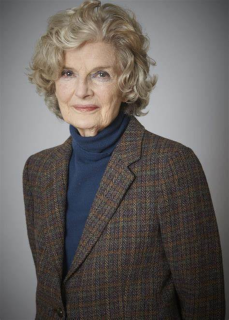
Birth of Julia O’Faolain, Novelist & Short Story Writer

Julia O’Faolain, Irish novelist and short story writer, is born in London on June 6, 1932. She works as a writer, language teacher, editor and translator and lives in France, Italy, and the United States.

Although born in England when her father, Irish writer Seán Ó Faoláin, is lecturing at the Catholic college, St. Mary’s College, at Strawberry Hill, London, O’Faolain grows up in Ireland. The family returns to Ireland when she is just one year old. They live first in Killough House in County Wicklow, where future Taoiseach Garret FitzGerald is a playmate, artist Paul Henry a neighbour and Cork writer Frank O’Connor a regular visitor. The family then moves to Knockaderry House in Killiney, County Dublin, where her father publishes the literary journal The Bell from an outhouse at the bottom of the garden. Writers, poets and intellectuals such as Patrick Kavanagh, Brendan Behan and Conor Cruise O’Brien are regular visitors and often have to entertain her while waiting to speak with her father.

O’Faolain does not begin school until she is eight years old as her mother, Irish writer and teacher Eileen Gould, has little time for nuns. Following her schooling, she completes an arts degree at University College Dublin (UCD) and then further studies at the Sapienza University of Rome and the Sorbonne in Paris. A formidable student and strikingly beautiful, she makes a strong impression on those who meet her.

In search of love, literature and freedom from 1950s Ireland, the young O’Faolain remains abroad working variously as a translator, language teacher, editor and writer in London. She makes lifelong friends who speak highly of her generosity, loyalty and kindness. As well as maintaining a strong interest in politics throughout her life, she attains a black belt in karate and attends karate classes until her early 70s.

In her 2013 memoir, O’Faolain recounts a number of her adult loves before she meets and marries Lauro Martines in Florence in 1957. The couple lives in Florence for a year while Martines completes a travelling fellowship from Harvard University. They then move to Portland, Oregon, where their son Lucien is born in 1959. While in the United States, she teaches French at Reed College in Portland. The family returns to live in Florence from 1962-66 while her husband carries out research. When he is offered a professorship at the University of California, Los Angeles in 1966, they move back to the United States. However, not keen to live full-time in the United States, they purchase a house in Hampstead in 1970 and later in central London where she spends a good deal of time. From the 1990s onwards, she and Lauro spend more and more time in London, and they visit Ireland more during these years. Lucian, a painter and picture repairer, lives in London.

O’Faolain’s novels include No Country for Young Men, which is nominated for the Booker Prize in 1980, Women in the Wall (1975), The Obedient Wife (1982) and The Judas Cloth (1992) which is set in 19th-century Italy. Her first collection of short stories, We Might See Sights and Other Stories, is published in 1968, followed by Man in the Cellar (1974), Melancholy Baby (1978) and Daughters of Passion (1982). And with her husband, she edits Not in God’s Image: Women in History from the Greeks to the Victorians (1973).

O’Faolain’s writings are suffused with themes of clerical intrigue, women’s role in society, power, faith and sexuality. She says once that she is more detached from her characters than her father was. “He was fond of his characters whereas I was more impatient of mine… The fact that he often forgave their foolishness showed that he was fond of Ireland itself, where he lived for the most of his life. I instead left it and found I was happier elsewhere.”

As a writer, O’Faolain is not particularly well-known in Ireland. Following the publication of her memoir in 2013, she is asked by The Irish Times journalist Arminta Wallace if it bothers her that her name does not often figure in lists of famous Irish writers, perhaps because she did not live here. She replies, “Not only do I not live here but when my last book came out someone wrote an article naming me as a ‘forgotten writer’… which was not a cheerful read. It wasn’t in any way offensive, but it wasn’t very comforting…I suppose I didn’t write enough. You mustn’t let too many years go by between books – and I did that.”

O’Faolain dies at the age of 88 in London on October 27, 2020, following a long illness. Her papers, which include manuscripts of her writing and a significant correspondence between her and her father, are donated to UCD in 2018. At the time, archivists expect them to be available to researchers by 2022.


Leave a comment

Murder of Nicholas Walsh, Church of Ireland Bishop of Ossory

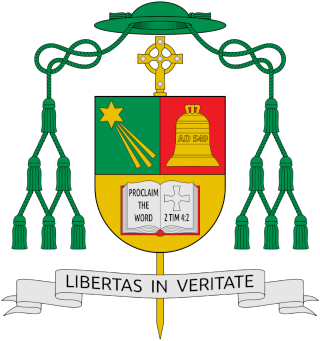
Nicholas Walsh, (Irish: Nicolás Bhailis), Church of Ireland Bishop of Ossory and a pioneer of printing in Irish type, is murdered on December 14, 1585, by James Dullerde, against whom he had proceeded in his court for adultery.

Walsh is born in Waterford, County Waterford, in or before 1538. He is the son of Patrick Walsh, Bishop of Waterford and Lismore (d. 1578). The identity of his mother is unknown. She was Patrick’s concubine for many years and they apparently married only after 1558, meaning their son was born outside marriage. About 1551 Walsh leaves Ireland to study at the universities of Paris, Oxford, and Cambridge, eventually graduating BA at Cambridge in 1562 or 1563. He receives the MA from Cambridge in 1567. He is appointed chancellor of St. Patrick’s Cathedral, Dublin, in 1571.

As a fluent Irish speaker, Walsh is deeply committed to the propagation of the Protestant faith through the medium of the Irish language. In 1571 he helps to secure the publication in Dublin of a catechism written in Irish by John Kearney (Irish: Seán Ó Cearnaigh), whom he has known since his time at Cambridge. He then procures a government order for printing the Book of Common Prayer in Irish, and for the liturgy and a sermon to be communicated in Irish in a church in each large town. In practice this order has no effect. From about 1573 he and Kearney begin work on an Irish translation of the New Testament. This project is finally completed and published in 1602 or 1603. He also writes a collection of sermons in Latin.

In 1572 Walsh is offered the bishopric of Kilmacduagh in Connacht but declines as this diocese lay in a dangerous part of the country. In February 1578 he becomes Bishop of Ossory, upon which he resigns his chancellorship at St. Patrick’s Cathedral and presumably sets aside his translation of the New Testament. Through his family he has links with the area of his diocese, and he is assured of the protection of the dominant magnate, Thomas Butler, Earl of Ormond. However, Catholicism is very strong in Ossory, particularly in the diocesan capital of Kilkenny. His arrival at Kilkenny is ignored by the citizens, and he finds himself presiding over an empty St. Canice’s Cathedral during Sunday services. In November 1578 he writes for support to the Lord Justice of Ireland, Sir William Drury, who empowers Walsh to fine recusants. That month Drury comes to Kilkenny and heavily fines a number of prominent citizens of Kilkenny for recusancy. However, these punitive efforts have little long-term impact and only increased Walsh’s unpopularity.

Walsh is further hampered by a lack of revenues from his diocese, which leads him in April 1581 to seek additional benefices that he can hold in commendam. in July 1582 he seeks a licence to solicit charitable donations in England. He also initiates legal proceedings to recover church property. At a time when the Church of Ireland episcopate is characterised by venality, cynicism, and crypto-Catholicism, he stands head and shoulders above his colleagues owing to his dedication, ability, and evangelising zeal. At the installation of the Bishop of Meath in 1584 he criticises his fellow bishops for neglecting their spiritual duties for political concerns. He is married to an Englishwoman and has four children.

Walsh’s life comes to a violent end on December 14, 1585, when he is stabbed to death in his own house at Kilkenny by James Dullerde, whom he had cited for adultery in his consistory court. He is buried in a tomb in St. Canice’s Cathedral, Kilkenny. Dullerde is caught and beheaded by Domhnall Spanaigh Kavanagh MacMurrough and his brother Cahir Carroughe.

(From: “Walsh, Nicholas (Nicolás Bhailis)” by Anthony M. McCormack and Terry Clavin, Dictionary of Irish Biography, http://www.dib.ie, October 2009 | Pictured: Coat of arms of the Bishop of Ossory)


Leave a comment

Death of Landscape Artist Dairine Vanston

Dairine (Doreen) Vanston, Irish landscape artist who works in a Cubist style, dies in Enniskerry, County Wicklow on July 12, 1988.

Vanston is born in Dublin on October 19, 1903. She is the daughter of solicitor John S. B. Vanston, and sculptor Lilla Vanston (née Coffey). She attends Alexandra College, going on to study at Goldsmith’s College, London under Roger Bissière. She then goes to Paris to the Académie Ranson, being sent there following the advice of Paul Henry. While in Paris she meets Guillermo Padilla, a Costa Rican law student at the University of Paris. They marry in 1926 and she takes the name Vanston de Padilla. The couple lives for a time in Italy, before moving to San José, Costa Rica. The marriage breaks down in the early 1930s, at which point she returns to Paris with her son and studies with André Lhote. She is living in France at the outbreak of World War II with Jankel Adler, but is able to escape to London in 1940, and later to Dublin.

Vanston’s time in Paris leaves a lasting impression on her work, including use of primary colours and a strong Cubist influence. She belongs to what critic Brian Fallon calls the “Franco-Irish generation of painters who looked to Paris,” along with Mainie Jellett, Evie Hone, and Norah McGuinness. Her time spent living in Costa Rica in the late 1920s and early 1930s imbues her work with tropical and highly toned colours. In Dublin in 1935, she exhibits 17 paintings, largely Costa Rican landscapes, at Daniel Egan’s gallery on St. Stephen’s Green. This is the closest thing to a solo show she would mount, with this show also featuring Grace Henry, Cecil Ffrench Salkeld, and Edward Gribbon.

Meeting the English artist Basil Rakoczi, who is also living in Dublin during World War II, leads Vanston to become associated with The White Stag group. In November 1941, she exhibits for the first time at a group show with 24 other artists, including Patrick Scott. One work that is shown at this exhibition is the painting Keel dance hall, which demonstrates that she spends time in the west of Ireland. The most important event staged by the group is the Exhibition of subjective art, which takes place at 6 Lower Baggot St. in January 1944. The Dublin Magazine notes her work at this show as the most effective of the experimental vanguard. This work, Dying animal, is a Cubist work with semi-representation forms rendered in bold colours. In 1945, her work is featured in a White Stag exhibition in London of young Irish painters at the Arcade gallery, Old Bond St.

In 1947, Vanston spends almost a year in Costa Rica where she paints primarily in watercolours. Apart from this period, she lives and works in Dublin, living at 3 Mount Street Crescent near St. Stephen’s Church. At the inaugural Irish Exhibition of Living Art in 1943, she exhibits five works. At the first Exhibition of Independent Artists in 1960, of which she is a founder, she exhibits three landscapes and a work entitled War. She largely exhibits with the Independent Artists, the Irish Exhibition of Living Art, and the Oireachtas na Gaeilge, and does not exhibit with the Royal Hibernian Academy. Later in life, she exhibits with the Figurative Image exhibitions in Dublin, and is amongst the first painters chosen for Aosdána. A number of her works are featured in the 1987 exhibition, Irish women artists, from the eighteenth century to the present arranged by the National Gallery of Ireland and The Douglas Hyde Gallery.

Vanston dies on July 12, 1988, in a nursing home in Enniskerry, County Wicklow. Her work is greatly admired, but has received little by way of critical attention, which may have been to do with her slow rate of output. A number of her works have proved difficult to trace. She was a private person, even refusing to cooperate with the Taylor Galleries in the 1980s when they wanted to mount a retrospective of her work. The National Self-Portrait Collection in Limerick holds a work by Vanston.

(Pictured: “Landscape with Lake and Hills” (1964), oil on paper (monotype) by Dairine Vanston)


Leave a comment

Death of Denis Devlin, Poet & Diplomat

denis-devlin

Denis Devlin, one of the major figures and influences of modern and modernist Irish poetry, dies in Dublin on August 21, 1959. Along with Samuel Beckett and Brian Coffey, he is one of the generation of Irish modernist poets to emerge at the end of the 1920s. He is also a career diplomat.

Devlin is born in Greenock, Scotland of Irish parents on April 15, 1908. His family returns to live in Dublin in 1918. He studies at Belvedere College and, from 1926, as a seminarian for the Roman Catholic priesthood at Clonliffe College. As part of his studies, he attends a degree course in modern languages at University College Dublin (UCD), where he meets and befriends Brian Coffey. Together they publish a joint collection, Poems, in 1930.

In 1927, Devlin abandons the priesthood and leaves Clonliffe College. He graduates from UCD with his BA in 1930 and spends that summer on the Blasket Islands to improve his spoken Irish. Between 1930 and 1933, he studies literature at Ludwig Maximilian University of Munich and the University of Paris, meeting, amongst others, Beckett and Thomas MacGreevy. He then returns to UCD to complete his MA thesis on Michael de Montaigne.

Devlin joins the Irish Diplomatic Service in 1935 and spends a number of years in Rome, New York and Washington, D.C. During this time, he meets the French poet Saint-John Perse, and the Americans Allen Tate and Robert Penn Warren. He goes on to publish a translation of Exile and Other Poems by Saint-John Perse, and Tate and Warren edit his posthumous Selected Poems.

Denis Devlin dies suddenly at the age of 51 in Dublin on August 21, 1959. Since his death, there have been two Collected Poems published; the first in 1964 is edited by Coffey and the second in 1989 by J.C.C. Mays.

Devlin’s personal papers are held in University College Dublin Archives.