seamus dubhghaill

Promoting Irish Culture and History from Little Rock, Arkansas, USA


1 Comment

The McMahon Murders

The McMahon murders occur on March 24, 1922 when six Catholic civilians are shot dead at the home of the McMahon family in Belfast. Police officers break into their house at night and shoot all eight males inside, in an apparent sectarian attack. The victims are businessman Owen McMahon, four of his sons, and one of his employees. Two others are shot but survive, and a female family member is assaulted. The survivors say that most of the gunmen wore police uniforms and it is suspected that they were members of the Ulster Special Constabulary (USC). It is believed to be a reprisal for the Irish Republican Army‘s (IRA) killing of two policemen the previous day.

Following the end of the Irish War of Independence in July 1921 and the signing of the Anglo-Irish Treaty in December 1921, the new unionist Government of Northern Ireland establishes the Ulster Special Constabulary (USC), a quasi-military reserve police force to the Royal Irish Constabulary (RIC), to counter the IRA.

The McMahon killings are believed to be a reprisal for the IRA’s killing of two USC policemen in Belfast. On March 23, 1922, USC officers Thomas Cunningham and William Cairnside are patrolling Great Victoria Street in the city centre when they are approached by a group of IRA members and shot dead. Two Catholics, Peter Murphy (61) and Sarah McShane (15), are shot dead in a suspected reprisal attack several hours later in the Catholic Short Strand area by unidentified gunmen. The McMahon family has no connection to any paramilitary violence.

At about 1:00 a.m. on March 24, 1922, two men wearing police uniforms seize a sledgehammer from a Belfast Corporation workman, who is guarding a building site at Carlisle Circus. A curfew is in place at the time, due to the daily violence in the city. At nearby Clifton Avenue they meet three other men and the party of five proceed to the home of Owen McMahon. Eight males and three females are in the house that night. The males are Owen, his six sons, and Edward McKinney, a parish just north of Buncrana in Inishowen, County Donegal. He works for the McMahons as a barman. The women are Owen’s wife Eliza, her daughter and her niece. At about 1:20 a.m., the gang uses the sledgehammer to break down the door of the McMahon residence.

Owen’s wife, Eliza, says that four of the men wore police caps and carried revolvers while another wore civilian clothes. John McMahon, one of Owen’s sons, says, “Four of the five men were dressed in the uniform of the RIC but, from their appearance, I know they are Specials, not regular RIC.” All of the men hide their faces. The four men in police uniform rush up the stairs and herd the males into the dining room. The women are taken into another room. When Owen asks why his family is being singled-out, one of the gunmen says it is because he is “a respected papist.” The gunmen say “you boys say your prayers,” before opening fire. The shooting continues for five minutes. Five of the men are killed outright and two are wounded, one fatally.

Owen McMahon (50), Gerard McMahon (15), Frank McMahon (24), Patrick McMahon (22) and Edward McKinney (25) are killed outright while Bernard McMahon (26) dies later. The youngest McMahon son, 12-year-old Michael, survives the attack by hiding behind furniture and pretending to be hit. John McMahon (30) survives despite serious gunshot wounds. Eliza McMahon raises the alarm by opening the drawing room window and shouting “Murder! Murder!” A matron at an adjoining nursing home is alerted and phones the police and an ambulance.

It is alleged that a group of policemen operating out of Brown Square Barracks in the Shankill Road area are behind the killings. This has never been proved, but historian Eamon Phoenix, of Stranmillis University College in Belfast, has said there is “strong circumstantial evidence” that District Inspector John Nixon was responsible. Historian Tim Pat Coogan believes the police were responsible. An inquiry is carried out by the Department of Defence of the Irish Free State, but not by the Northern Irish authorities. A 1924 Free State report alleges that twelve policemen, whom the report identifies by name, had carried out the McMahon murders, as well as several other attacks on Catholics.

The killings cause outrage among Belfast’s Catholic population and over 10,000 people attend the funerals of those killed.

David Lloyd George and Winston Churchill, worried that the violence could collapse the new Northern Ireland administration, organise a meeting in London between Irish republican leader Michael Collins and Sir James Craig, Prime Minister of Northern Ireland, both to try to stop the IRA violence which Collins has been tacitly encouraging and supporting, and to pressure Craig to provide more protection for Catholics. Craig denies the nationalist assertion that the McMahon killings were part of an anti-Catholic pogrom on behalf of state forces.

No one is ever prosecuted for the killings but District Inspector John Nixon of the Royal Irish Constabulary (RIC) is strongly suspected of being responsible. Nixon is later forced to step down from the Royal Ulster Constabulary, the force that succeeds the RIC in June 1922, albeit on full pension, in 1924 after being heard giving (in breach of police regulations) a political speech to an Orange Order meeting saying that, “not an inch of Ulster should be yielded” to the Free State.

Leave a comment

Michael Collins Letter Fetches Record Price at Auction

On February 21, 2003, a letter signed by Irish revolutionary leader Michael Collins, written in 1922 upon his return from London, fetches a record price of €28,000 at an auction at James Adam & Sons Ltd. on Dublin’s St. Stephen’s Green. Estimated to fetch up to €8,000.00, despite fierce bidding by the National Library of Ireland, the letter is purchased by singer Enya’s manager, Mickey Ryan, who says he wants the letter to remain in Ireland.

The letter is a three-page document sent by Collins to prominent Derry republican Louis J. Walsh in 1922, telling him about his opposition to the Northern Ireland border. Replying to a letter from Walsh, he outlines his position regarding negotiations with Winston Churchill and unionist leader James Craig.

The letter is written after Collins returns to Dublin from a meeting in London with Churchill and Craig. He states in the letter that Craig’s stance on partition is seen as “an unreasonable one and not ours.”

“All the British statesmen are agreed that it was most disastrous on Craig’s part to talk about agreeing to nothing less than the six county area,” Collins writes.

Collins expresses his belief that ties would increase between leaders in the north and south, leading to a united Ireland in the long term. He tells Walsh that he is “no lover of partition, no matter what form it appears,” and that any form of partition is “distasteful” to him. “It would be far better to fix our minds for a time on a united Ireland, for this course will not leave minorities which would be impossible to govern,” he writes. He also says he hopes that one day a multi-denominational party might be formed in the north east, developing links with the Free State and destabilising the northern administration.


Leave a comment

Birth of James Craig, 1st Viscount Craigavon & First Prime Minister of Northern Ireland

James Craig, 1st Viscount Craigavon PC PC (NI) DL, prominent Irish unionist politician, leader of the Ulster Unionist Party and the first Prime Minister of Northern Ireland from 1921 until his death in 1940, is born at Sydenham, Belfast, on January 8, 1871.

Craig is the seventh of nine children of James Craig (1828–1900), a wealthy whiskey distiller who had entered the firm of Dunville & Co. as a clerk and by age 40 is a millionaire and a partner in the firm. Craig Snr. owns a large house called Craigavon, overlooking Belfast Lough. His mother, Eleanor Gilmore Browne, is the daughter of Robert Browne, a prosperous man who owned property in Belfast and a farm outside Lisburn. Craig is educated at Merchiston Castle School in Edinburgh, Scotland. After school he begins work as a stockbroker, eventually opening his own firm in Belfast.

Craig enlists in the 3rd (Militia) battalion of the Royal Irish Rifles on January 17, 1900, to serve in the Second Boer War. He is seconded to the Imperial Yeomanry, a cavalry force created for service during the war, as a lieutenant in the 13th battalion on February 24, 1900, and leaves Liverpool for South Africa on the SS Cymric in March 1900. After arrival he is soon sent to the front and is taken prisoner in May 1900, but released by the Boers because of a perforated colon. On his recovery he becomes deputy assistant director of the Imperial Military Railways, showing the qualities of organisation that are to mark his involvement in both British and Ulster politics. In June 1901 he is sent home suffering from dysentery, and by the time he is fit for service again the war is over. He is promoted to captain in the 3rd Royal Irish Rifles on September 20, 1902, while still seconded to South Africa.

On his return to Ireland, having received a £100,000 legacy from his father’s will, Craig turns to politics, serving as Member of the British Parliament for East Down from 1906 to 1918. From 1918 to 1921 he represents Mid Down and serves in the British government as Parliamentary Secretary to the Minister for Pensions (1919–20) and Parliamentary Secretary to the Admiralty (1920–21).

Craig rallies Ulster loyalist opposition to Irish Home Rule in Ulster before World War I, organising the paramilitary Ulster Volunteers (UVF) and buying arms from Imperial Germany. The UVF becomes the nucleus of the 36th (Ulster) Division during World War I. He succeeds Edward Carson as leader of the Ulster Unionist Party in February 1921.

In the 1921 Northern Ireland general election, the first ever, Craig is elected to the newly created House of Commons of Northern Ireland as one of the members for Down.

On June 7, 1921, Craig is appointed the first Prime Minister of Northern Ireland by the Lord Lieutenant of Ireland. The House of Commons of Northern Ireland assembles for the first time later that day.

Craig is made a baronet in 1918, and in 1927 is created Viscount Craigavon, of Stormont in the County of Down. He is also the recipient of honorary degrees from Queen’s University Belfast (1922) and the University of Oxford (1926).

Craig had made his career in British as well as Northern Irish politics, but his premiership shows little sign of his earlier close acquaintance with the British political world. He becomes intensely parochial and suffers from his loss of intimacy with British politicians in 1938, when the British government concludes agreements with Dublin to end the Anglo-Irish trade war between the two countries. He never tries to persuade Westminster to protect Northern Ireland‘s industries, especially the linen industry, which is central to its economy. He is anxious not to provoke Westminster, given the precarious state of Northern Ireland’s position. In April 1939, and again in May 1940 during World War II, he calls for conscription to be introduced in Northern Ireland (which the British government, fearing a backlash from nationalists, refuses). He also calls for Winston Churchill to invade Ireland using Scottish and Welsh troops in order to seize the valuable ports and install a Governor-General at Dublin.

While still prime minister, Craig dies peacefully at his home at Glencraig, County Down at the age of 69 on November 24, 1940. He is buried on the Stormont Estate on December 5, 1940, and is succeeded as the Prime Minister of Northern Ireland by the Minister of Finance, J. M. Andrews.

(Pictured: James Craig, 1st Viscount Craigavon, bromide print by Olive Edis, National Portrait Gallery, London)


Leave a comment

The First Non-Stop Transatlantic Flight

British aviators John Alcock and Arthur Brown take off from Newfoundland on June 14, 1919, on the first ever non-stop transatlantic flight. They fly a modified World War I Vickers Vimy bomber from St. John’s, Newfoundland, to Clifden, Connemara, County Galway. A small amount of mail is carried on the flight, also making it the first transatlantic airmail flight.

In April 1913 London‘s Daily Mail offers a prize of £10,000 to the aviator who first crosses the Atlantic Ocean in an airplane from any point in the United States, Canada or Newfoundland to any point in Great Britain or Ireland in 72 continuous hours. The competition is suspended with the outbreak of war in 1914 but reopens after Armistice is declared in 1918.

Several teams enter the competition and, when Alcock and Brown arrive in St. John’s, the Handley Page team are in the final stages of testing their aircraft for the flight, but their leader, Admiral Mark Kerr, is determined not to take off until the plane is in perfect condition. The Vickers team quickly assembles their plane and while the Handley Page team are conducting yet another test, the Vickers plane takes off from Lester’s Field.

It is not an easy flight. The overloaded aircraft has difficulty taking off the rough field and barely misses the tops of the trees. At 5:20 PM the wind-driven electrical generator fails, depriving them of radio contact, their intercom and heating. An exhaust pipe bursts shortly afterwards, causing a frightening noise which makes conversation impossible without the failed intercom.

Alcock and Brown also have to contend with thick fog, which prevents Brown from being able to navigate using his sextant. Alcock twice loses control of the aircraft in the fog and nearly crashes into the sea. He also has to deal with a broken trim control that makes the plane become very nose heavy as fuel is consumed. Their electric heating suits fail, making them very cold in the open cockpit.

At 3:00 AM they fly into a large snowstorm. They are drenched by rain, their instruments ice up, and the plane is in danger of icing and becoming unflyable. The carburetors also ice up.

They make landfall in County Galway at 8:40 AM on June 15, 1919, not far from their intended landing place, after less than sixteen hours of flying time. The aircraft is damaged upon arrival because they land on what appears from the air to be a suitable green field, but which turns out to be Derrygilmlagh Bog, near Clifden. This causes the aircraft to nose-over, although neither of the airmen is hurt. Brown says that had the weather been favorable they could have pressed on to London. Their first interview is given to Tom ‘Cork’ Kenny of the Connacht Tribune.

Alcock and Brown are treated as heroes on the completion of their flight. The Secretary of State for Air, Winston Churchill, presents them with the Daily Mail prize. In addition to a share of the Daily Mail award, Alcock receives 2,000 guineas (£2,100) from the State Express Cigarette Company and £1,000 from Laurence R. Philipps for being the first Briton to fly the Atlantic Ocean. Both men are knighted a week later by King George V at Windsor Castle.

Alcock and Brown fly to Manchester in July 1919, where they are given a civic reception by the Lord Mayor of Manchester and Manchester City Council, and awards to mark their achievement.

(Pictured: Statue of Alcock and Brown formerly located at London Heathrow Airport. Relocated to Clifden, Connemara, County Galway, Ireland to celebrate centenary in 2019.)


Leave a comment

Introduction of the Third Home Rule Bill

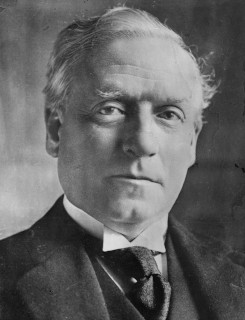
Prime Minister of the United Kingdom Herbert Henry Asquith, a member of the Liberal Party, introduces the Third Home Rule Bill on April 11, 1912, which would provide self-government for Ireland, an apparent triumph for Nationalist leader John Redmond.

As a minority party after 1910 elections, the Liberal Party depends on the Irish vote, controlled by John Redmond. To gain Irish support for the budget and the parliament bill, Asquith promises Redmond that Irish Home Rule will be the highest priority. It proves much more complex and time-consuming than expected. Support for self-government for Ireland had been a tenet of the Liberal Party since 1886, but Asquith has not been as enthusiastic, stating in 1903 (while in opposition) that the party should never take office if that government would be dependent for survival on the support of the Irish Nationalist Party. After 1910, though, Irish Nationalist votes are essential to stay in power. Retaining Ireland in the Union is the declared intent of all parties, and the Nationalists, as part of the majority that keep Asquith in office, are entitled to seek enactment of their plans for Home Rule, and to expect Liberal and Labour support. The Conservatives, with die-hard support from the Protestant Orange Order of Ulster, are strongly opposed to Home Rule. The desire to retain a veto for the House of Lords on such bills has been an unbridgeable gap between the parties in the constitutional talks prior to the December 1910 United Kingdom general election.

The cabinet committee (excluding Asquith) that in 1911 plans the Third Home Rule Bill opposes any special status for Protestant Ulster within majority-Catholic Ireland. In 1913, Asquith writes to Winston Churchill, stating that the Prime Minister has always believed and stated that the price of Home Rule should be a special status for Ulster. In spite of this, the bill as introduced in April 1912 contains no such provision and is meant to apply to all Ireland. Neither partition nor a special status for Ulster is likely to satisfy either side. The self-government offered by the bill is very limited, but Irish Nationalists, expecting Home Rule to come by gradual parliamentary steps, favours it. The Conservatives and Irish Unionists oppose it. Unionists begin preparing to get their way by force if necessary, prompting nationalist emulation. Though very much a minority, Irish Unionists are generally better financed and more organised.

Since the Parliament Act the Unionists can no longer block Home Rule in the House of Lords, but only delay Royal Assent by two years. Asquith decides to postpone any concessions to the Unionists until the bill’s third passage through the House of Commons, when he believes the Unionists will be desperate for a compromise. Biographer Roy Jenkins concludes that had Asquith tried for an earlier agreement, he would have had no luck, as many of his opponents wanted a fight and the opportunity to smash his government. Sir Edward Carson, MP for the University of Dublin and leader of the Irish Unionists in Parliament, threatens a revolt if Home Rule is enacted. The new Conservative leader, Bonar Law, campaigns in Parliament and in Northern Ireland, warning Ulstermen against “Rome Rule,” that is, domination by the island’s Catholic majority. Many who oppose Home Rule feel that the Liberals have violated the Constitution by pushing through major constitutional change without a clear electoral mandate, with the House of Lords, formerly the “watchdog of the constitution,” not reformed as had been promised in the preamble of the 1911 Act and thus justified actions that in other circumstances might be treason.

The passions generated by the Irish question contrast with Asquith’s cool detachment, and he writes about the prospective partition of the county of Tyrone, which has a mixed population, deeming it “an impasse, with unspeakable consequences, upon a matter which to English eyes seems inconceivably small, and to Irish eyes immeasurably big.” As the House of Commons debate the Home Rule bill in late 1912 and early 1913, unionists in the north of Ireland mobilise, with talk of Carson declaring a Provisional Government and Ulster Volunteer Forces (UVF) built around the Orange Lodges, but in the cabinet, only Churchill views this with alarm.

These forces, insisting on their loyalty to the British Crown but increasingly well-armed with smuggled German weapons, prepare to do battle with the British Army, but Unionist leaders are confident that the army will not aid in forcing Home Rule on Ulster. As the Home Rule bill awaits its third passage through the House of Commons, the so-called Curragh incident occurs in March 1914. With deployment of troops into Ulster imminent and threatening language by Churchill and the Secretary of State for War, John Seely, around sixty army officers, led by Brigadier General Hubert Gough, announce that they would rather be dismissed from the service than obey. With unrest spreading to army officers in England, the Cabinet acts to placate the officers with a statement written by Asquith reiterating the duty of officers to obey lawful orders but claiming that the incident had been a misunderstanding. Seely then adds an unauthorised assurance, countersigned by Sir John French, the professional head of the army, that the government has no intention of using force against Ulster. Asquith repudiates the addition, and requires Seely and French to resign, taking on the War Office himself, retaining the additional responsibility until hostilities against Germany begin.

Within a month of the start of Asquith’s tenure at the War Office, the UVF lands a large cargo of guns and ammunition at Larne, but the Cabinet does not deem it prudent to arrest their leaders. On May 12, Asquith announces that he will secure Home Rule’s third passage through the House of Commons (accomplished on May 25), but that there will be an amending bill with it, making special provision for Ulster. But the House of Lords make changes to the amending bill unacceptable to Asquith, and with no way to invoke the Parliament Act on the amending bill, Asquith agrees to meet other leaders at an all-party conference on July 21 at Buckingham Palace, chaired by King George V. When no solution can be found, Asquith and his cabinet plans further concessions to the Unionists, but this does not occur as the crisis in Europe erupts into war.

In September 1914, after the outbreak of the conflict, Asquith announces that the Home Rule bill will go on the statute book as the Government of Ireland Act 1914 but will not go into force until after the war. He adds that in the interim a bill granting special status to Ulster will be considered. This solution satisfies neither side.

(Pictured: H.H. Asquith, former Prime Minister of the United Kingdom)


Leave a comment

Home of British PM Edward Heath Damaged by Bomb

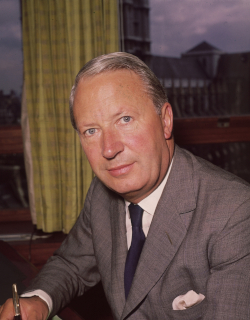
The London home of the Conservative leader and former Prime Minister of the United Kingdom Edward Heath is damaged from the impact of a bomb planted by the Irish Republican Army (IRA) on December 22, 1974. The attack comes just hours before a Christmas ceasefire is due to come into effect. Heath is not at home at the time of the blast but arrives ten minutes later. His housekeeper, Mrs. Crawford, and her daughter are both in the house at the time but are not injured.

The 21-pound bomb breaks glass, smashes the front door and damages the front room. The only damage to anything valuable is to a painting done in the south of France by Sir Winston Churchill. No one initially admits carrying out the attack, but the IRA is immediately suspected.

Witnesses describe seeing a man emerging from a Ford Cortina and throwing what is believed to have been the bomb onto the first-floor balcony of the house. Two policemen and a patrol car chase the vehicle as it drives off. The Cortina crashes a few minutes later in Chelsea and several men flee from the vehicle.

The police are fearful that the explosion is a “come‐on” tactic where an initial smaller bomb is followed by a larger one after the first has attracted crowds. They seal off all streets around the house for several hours. Heath’s home is about half a mile from Harrods, in Knightsbridge, where a more powerful bomb had gone off the previous night as Christmas shoppers were being evacuated.

Heath tells waiting reporters that Prime Minister Harold Wilson had sent him a message which was “very much appreciated.” Addressed “Dear Ted,” Wilson says, “This attack will only strengthen our united resolve to bring these things to justice.”

Heath, who had been conducting a carol service at his hometown of Broadstairs, Kent, carrying an overnight bag is driven off by police to an undisclosed location after his arrival at home. He returns later to inspect the damage with bomb squad chief, Commander Robert Huntley.

Heath says the attack will not deter him from traveling to Ulster the following day for talks with security forces and Ulster political leaders as previously scheduled. As Leader of the Opposition, Heath has a Special Branch police bodyguard with him at all times. The house is under “short” police patrol which means there are extra cars and foot patrols in the area but not directly outside the building.


Leave a comment

Lord Randolph Churchill’s Speech at Ulster Hall

Generated by IIPImage

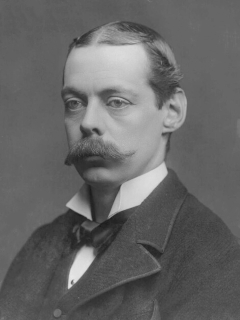
Conservative Party politician Lord Randolph Churchill, father of Winston Churchill, gives what many consider one of the single most destructive speeches in Irish history, inciting militant loyalists at Ulster Hall in Belfast on February 22, 1886.

The Conservative Party in Ulster launches an anti-Home Rule campaign in February 1886. It joins with the Orange Order to organise a huge political rally which is addressed by Lord Churchill.

Protestants in Ulster are very concerned about the prospect of Irish Home Rule. They fear that an Irish parliament will put rural agricultural interests before the needs of the industrial North-East. They believe a Dublin parliament will introduce tariffs which will damage industries in the north. They also fear that they will be discriminated against because of their religion, outnumbered in a Dublin parliament by Catholic representatives.

Churchill has shown disdain for Ulster Unionists up until this time, in private at least, telling Lord Salisbury, “these foul Ulster Tories have always ruined our party,” but as 1886 begins he sees an opportunity to exploit their fears for political gain. He decides that should Prime Minister William Gladstone “went for Home Rule (for Ireland), the Orange Card would be the one to play. Please God may it turn out the ace of trumps and not the two.” This quote leads one to believe he has few real convictions regarding the issue.

“Ulster will fight, and Ulster will be right,” Lord Churchill proclaims to a crowd before he even arrives at Ulster Hall.

Lord Churchill gives a rousing speech at the rally. During his speech, he plays on Protestant fears of Dublin “Catholic” rule and encourages Ulster Protestants to organize against Home Rule, so it does not come upon them “as a thief in the night.” As a result, the Ulster Protestants begin to form paramilitary drilling units.

Churchill achieves a short-term political gain by his playing of the Orange Card, but his most lasting legacy is the unfounded fear of Irish Catholics that he helps to implant in the minds of Ulster Protestants, a tragedy for both traditions on the island. Those fears remain evident over a century later.


Leave a comment

Irish Neutrality During World War II

File written by Adobe Photoshop? 4.0

On February 19, 1939 Taoiseach Éamon de Valera states his intention to preserve Irish neutrality in the event of a second world war.

The policy of Irish neutrality during World War II is adopted by the Oireachtas at the instigation of De Valera upon the outbreak of World War II in Europe. It is maintained throughout the conflict, in spite of several German airstrikes by aircraft that miss their intended British targets and attacks on Ireland’s shipping fleet by Allies and Axis alike. De Valera refrains from joining either the Allies or Axis powers. While the possibilities of not only a German but also a British invasion are discussed in Dáil Éireann, and either eventuality is prepared for, with the most detailed preparations being done in tandem with the Allies under Plan W, De Valera’s ruling party, Fianna Fáil, supports his neutral policy for the duration of the war.

This period is known in the Republic of Ireland as “The Emergency“, owing to the wording of the constitutional article employed to suspend normal government of the country.

Pursuing a policy of neutrality requires attaining a balance between the strict observance of non-alignment and the taking of practical steps to repel or discourage an invasion from either of the two concerned parties.

Ireland maintains a public stance of neutrality to the end, although this policy leads to a considerable delay in Ireland’s membership of the United Nations (UN). Ireland’s applications for membership are vetoed by the Soviet Union, a permanent member of the United Nations Security Council, from 1946 to December 1955. Seán MacBride considers that the UN boycott of Ireland had been originally agreed upon at the 1945 Yalta Conference by Winston Churchill and Joseph Stalin. Ireland’s acceptance into the UN is finally announced by John A. Costello on December 15, 1955.

Despite the official position of neutrality, there are many unpublicised contraventions of this, such as permitting the use of the Donegal Corridor to Allied military aircraft, and extensive co-operation between Allied and Irish intelligence, including exchanges of information, such as detailed weather reports of the Atlantic Ocean. For example, the decision to go ahead with the Normandy landings is decided by a weather report from Blacksod Bay, County Mayo.

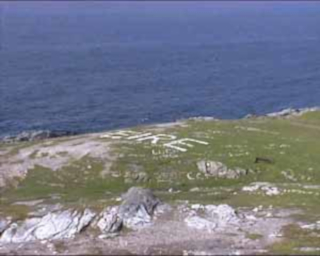
(Pictured: Markings to alert aircraft to neutral Ireland during World War II on Malin Head, County Donegal)


Leave a comment

Signing of the Anglo-Irish Treaty

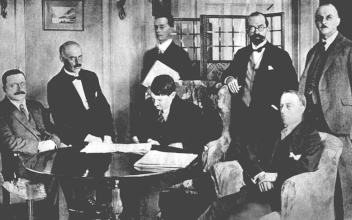
anglo-irish-treatyThe Anglo-Irish Treaty, commonly known as The Treaty and officially the Articles of Agreement for a Treaty Between Great Britain and Ireland, is signed in the early morning hours of December 6, 1921 by representatives of the Irish government appointed by President Éamon de Valera and those negotiating for the government of the United Kingdom of Great Britain and Ireland, ending the Irish War of Independence against Great Britain. It is then, and remains, one of the most debated moments in Irish history.

The Treaty provides for the establishment of the Irish Free State within a year as a self-governing dominion within the “community of nations known as the British Empire“, a status “the same as that of the Dominion of Canada.” It also provides Northern Ireland, which had been created by the Government of Ireland Act 1920, an option to opt out of the Irish Free State, which it exercises.

The agreement is signed in London by representatives of the British government, which includes Winston Churchill and Prime Minister David Lloyd George, who are old masters at the game of politics, and by representatives of the Irish Republic including Michael Collins and Arthur Griffith, who have nowhere near the political acumen of the British delegation. De Valera, a shrewd, experienced politician, may have been the only man in all of Ireland who might have matched them, but he refuses to join the negotiations.

The Irish representatives have plenipotentiary status acting on behalf of the Irish Republic, though the British government declines to recognise that status. As required by its terms, the Treaty is approved by “a meeting” of the members elected to sit in the House of Commons of Southern Ireland and separately by the British Parliament. In reality, Dáil Éireann, the legislative assembly for the de facto Irish Republic, first debates then approves the treaty. Members then proceed with the “meeting.” Though the Treaty is narrowly approved, the split leads to the Irish Civil War, which is won by the pro-treaty side.

The Irish Free State as contemplated by the Treaty comes into existence when its constitution becomes law on December 6, 1922 by a royal proclamation.

(Pictured: Michael Collins signs the Anglo-Irish Treaty on December 6, 1921)


Leave a comment

Death of William III, King of England, Scotland & Ireland

Kneller, Godfrey, 1646-1723; King William III (1650-1702)

William III, also widely known as William of Orange, dies at Kensington Palace on March 8, 1702, following a fall from his horse when it stumbles on a molehill. Upon his death, Anne accedes to the throne of Britain and Ireland.

William is sovereign Prince of Orange from birth, Stadtholder of Holland, Zeeland, Utrecht, Gelderland and Overijssel in the Dutch Republic from 1672 and King of England, Ireland and Scotland from 1689 until his death in 1702. As King of Scotland, he is known as William II. He is sometimes informally known in Northern Ireland and Scotland as “King Billy.”

William is born on November 4, 1650, at Binnenhof, The Hague, Dutch Republic. He inherits the Principality of Orange from his father, William II, who dies a week before William’s birth. His mother, Mary, is the daughter of King Charles I of England. In 1677, William marries his fifteen-year-old first cousin, Mary, the daughter of his maternal uncle James, Duke of York.

A Protestant, William participates in several wars against the powerful Catholic King of France, Louis XIV, in coalition with Protestant and Catholic powers in Europe. Many Protestants herald him as a champion of their faith. In 1685, William’s Catholic uncle and father-in-law, James, becomes king of England, Scotland and Ireland. James’s reign is unpopular with the Protestant majority in Britain. William, supported by a group of influential British political and religious leaders, invades England in what becomes known as the Glorious Revolution. On November 5, 1688, he lands at the southern English port of Brixham. James is deposed and William and his wife become joint sovereigns in his place.

William’s reputation as a staunch Protestant enables him to take power in Britain when many are fearful of a revival of Catholicism under James. William’s victory at the Battle of the Boyne in 1690 is still commemorated by loyalists in Northern Ireland and Scotland.

William and Mary reign together until Mary’s death from smallpox on December 28, 1694, after which William rules as sole monarch. Despite his conversion to Anglicanism, his popularity plummets during his reign as a sole monarch. His reign in Britain marks the beginning of the transition from the personal rule of the House of Stuart to the more Parliament-centred rule of the House of Hanover.

On March 8, 1702, William dies of pneumonia, a complication from a broken collarbone following a fall from his horse, Sorrel. The horse had been confiscated from Sir John Fenwick, one of the Jacobites who had conspired against William. Because his horse had stumbled into a mole’s burrow, many Jacobites toast “the little gentleman in the black velvet waistcoat.” Years later, Winston Churchill, in his A History of the English-Speaking Peoples, states that the fall “opened the door to a troop of lurking foes.” William is buried in Westminster Abbey alongside his wife. His sister-in-law, Anne, becomes queen regnant of England, Scotland and Ireland.

William’s death means that he would remain the only member of the Dutch House of Orange to reign over England.