The U-20, a GermanU-boat under the command of KapitänleutnantWalther Schwieger, sinks the British steamship Centurion off the southeast coast of Ireland on May 6, 1915. This tragic event has far-reaching consequences and shapes the course of World War I.
The Centurion is traveling through the waters southeast of Ireland when a torpedo fired from the U-20 hits the vessel, causing it to rapidly sink. This act of aggression results in the loss of many innocent lives and sends shockwaves throughout the world.
At the time of the incident, World War I is in full swing. Germany, engaged in submarine warfare, seeks to disrupt British supply lines and cut off its access to vital resources. The sinking of merchant ships, regardless of their civilian nature, is part of Germany’s strategy to weaken the enemy. The attack on the Centurion is just one of many instances in which German submarines target and sink British vessels.
A difference in this particular incident as opposed to other similar incidents is the widespread outrage it triggers. The Centurion is an unarmed cargo ship carrying civilian goods, and its destruction is seen as a ruthless and unjustifiable act. The loss of civilian lives and the callousness with which the submarine attack is executed causes public opinion to turn against Germany.
The sinking highlights the growing concern over unrestricted submarine warfare and its impact on civilian populations. It pushes the United States, which at the time is neutral, closer to entering the war on the side of the Allies. The incident also plays a significant role in shaping public opinion in other neutral countries, putting pressure on Germany to reconsider its aggressive tactics.
In response to international outrage, Germany initially defends its actions, arguing that the Centurion was carrying contraband cargo. However, under mounting pressure, the German government eventually backs down and pledges to modify its submarine warfare policies to reduce the risk to civilian lives. This move is meant to appease neutral countries and prevent the United States from entering the war.
The sinking of the Centurion has a lasting impact on maritime warfare. The incident leads to the introduction of new rules of engagement, such as the requirement for submarines to surface and warn civilian vessels before attacking. These rules aim to minimize civilian casualties and reduce the risk of similar tragedies occurring in the future.
Moreover, the sinking serves as a catalyst for technological advancements in submarine warfare. Navies worldwide realize the need for more sophisticated anti-submarine measures and began developing detection systems and tactics to counter the stealth of submarines. This incident marks a turning point in the evolution of naval warfare, as nations seek to adapt and respond to the new challenges posed by underwater vessels.
The following day, May 7, 1915, the U-20 sinks the British ocean linerRMS Lusitania off the southern coast of Ireland. The liner sinks in eighteen minutes with 1,197 casualties. The wreck lies in 300 feet of water.
On November 4, 1916, U-20 becomes grounded on the Danish coast south of Vrist, after suffering damage to its engines. Her crew attempts to destroy her with explosives the following day, succeeding only in damaging the boat’s bow but making it effectively inoperative as a warship.
The U-20 remains on the beach until 1925 when the Danish government blows it up in a “spectacular explosion.” The Danish navy removes the deck gun and makes it unserviceable by cutting holes in vital parts. The gun is kept in the naval stores at Holmen, Copenhagen for almost 80 years. The conning tower is removed and placed on the front lawn of the local museum Strandingsmuseum St. George Thorsminde, where it remains today.
(Pictured: The U-20, second from left, at Kiel, Schleswig-Holstein, on February 17, 1914)
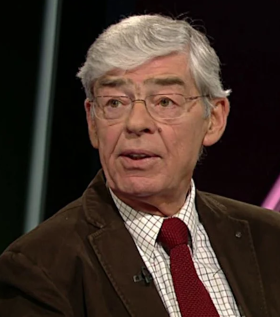
Alan Martin Dukes, former Fine Gaelpolitician, is born in Drimnagh, Dublin, on April 20, 1945. He holds several senior government positions and serves as a Teachta Dála (TD) from 1981 to 2002. He is one of the few TDs to be appointed a minister on their first day in the Dáil.
The Dukes family originally comes from the north of England. His grandfather serves with the Royal Engineers in World War I and settles in County Cork and then County Kerry afterward where he works with the Post Office creating Ireland’s telephone network.
Dukes is educated by the Christian Brothers at Coláiste Mhuire, Dublin, and is offered several scholarships for third level on graduation, including one for the Irish language. His interest in the Irish language continues to this day, and he regularly appears on Irish-language television programmes.
On leaving school he attends University College Dublin (UCD), where he captains the fencing team to its first-ever Intervarsity title.
In the 1979 European Parliament election, Dukes stands as a Fine Gael candidate in the Munster constituency. He has strong support among the farming community, but the entry of T. J. Maher, a former president of the IFA, as an independent candidate hurts his chances of election. Maher tops the poll.
This minority Fine Gael–Labour Partycoalition government collapses in February 1982 on the budget but returns to power with a working majority in December 1982. Dukes is again appointed to cabinet, becoming Minister for Finance less than two years into his Dáil career.
He faces a difficult task as finance minister. Ireland is heavily in debt while unemployment and emigration are high. Many of Fine Gael’s plans are deferred while the Fine Gael–Labour Party coalition disagrees on how to solve the economic crisis. The challenge of addressing the national finances is made difficult by electoral arithmetic and a lack of support from the opposition Fianna Fáil party led by Charles Haughey. He remains in the Department of Finance until a reshuffle in February 1986 when he is appointed Minister for Justice.
This is a difficult time for the country. Haughey’s Fianna Fáil runs on promises to increase spending and government services, and attacking the cutbacks favoured by Fine Gael. However, on taking office, the new Taoiseach and his finance minister Ray MacSharry immediately draw up a set of cutbacks including a spate of ward and hospital closures. This presents a political opportunity for the opposition to attack the government.
However, while addressing a meeting of the TallaghtChamber of Commerce, Dukes announces, in what becomes known as the Tallaght Strategy that: “When the government is moving in the right direction, I will not oppose the central thrust of its policy. If it is going in the right direction, I do not believe that it should be deviated from its course, or tripped up on macro-economic issues.”
This represents a major departure in Irish politics whereby Fine Gael will vote with the minority Fianna Fáil Government if it adopts Fine Gael’s economic policies for revitalising the economy. The consequences of this statement are huge. The Haughey government is able to take severe corrective steps to restructure the economy and lay the foundations for the economic boom of the nineties. However, at a snap election in 1989, Dukes does not receive electoral credit for this approach, and the party only makes minor gains, gaining four seats. The outcome is the first-ever coalition government for Fianna Fáil, whose junior partner is the Progressive Democrats led by former Fianna Fáil TD Desmond O’Malley.
Initially, Fianna Fáil’s Brian Lenihan Snr is the favourite to win. However, after several controversies arise, relating to the brief Fianna Fáil administration of 1982, and Lenihan’s dismissal as Minister for Defence midway through the campaign, the Labour Party’s Mary Robinson emerges victorious. To many in Fine Gael, the humiliation of finishing third is too much to bear and a campaign is launched against Dukes’ leadership. He is subsequently replaced as party leader by John Bruton.
Bruton brings Dukes back to the front bench in September 1992, shortly before the November 1992 Irish general election. In February 1994, Dukes becomes involved in a failed attempt to oust Bruton as leader and subsequently resigns from the front bench. Bruton becomes Taoiseach in December 1994 and Dukes is not appointed to cabinet at the formation of the government.
In 2001, Dukes backs Michael Noonan in his successful bid to become leader of Fine Gael.
After 21 years, Dukes loses his Dáil seat at the 2002 Irish general election. This contest sees many high-profile casualties for Fine Gael, including Deputy LeaderJim Mitchell, former deputy leader Nora Owen and others. Many local commentators feel that Dukes’ loss is due to a lack of attention to local issues, as he is highly involved in European projects and has always enjoyed a national profile.
He retires from frontline politics in 2002 and is subsequently appointed Director General of the Institute of International and European Affairs. He remains active within Fine Gael and serves several terms as the party’s vice-president. From 2001 to 2011, he is President of the Alliance française in Dublin, and in June 2004, the French Government appoints him an Officer of the Legion of Honour. In April 2004, he is awarded the Commander’s Cross of the Order of Merit of the Republic of Poland.
In December 2008, Dukes is appointed by Finance Minister Brian Lenihan Jnr as a public interest director on the board of Anglo Irish Bank. The bank is subsequently nationalised, and he serves on the board until the Irish Bank Resolution Corporation (IBRC) is liquidated in 2013.
Dukes has lived in Kildare since first being elected to represent the Kildare constituency in 1981. His wife Fionnuala (née Corcoran) is a former local politician and serves as a member of Kildare County Council from 1999 until her retirement in 2009. She serves as Cathaoirleach of the council from 2006 to 2007, becoming only the second woman to hold the position in the body’s one-hundred-year history. They have two daughters.
She is born Leslie Mary Price in Dublin on January 9, 1893, to Michael and Mary Price. Her father is a blacksmith, and she is one of six children. She wants to be a teacher and by 1911 has become a Monitress, a common way for girls to get into the teaching profession. Two of her brothers are involved in the Irish Volunteers and she is a member of Cumann na mBan. In advance of the Easter Rising, with the confusion over orders and lack of information, she states that she “did not question anything” as, with all that was happening, there are often odd events in her house. But they all wait for the mobilisation orders for the Rising.
De Barra’s role during the republican rebellion in Ireland, Easter 1916, is to act as a courier carrying messages and ammunition between the main headquarters in the General Post Office (GPO) and other posts. She does her role well during the Rising and gains the respect of many Irish Republicans. On the orders of Seán Mac Diarmada, one of the principal leaders of the rising, she and fellow Cumann na mBan member Bríd Dixon are promoted in the field and treated as officers. She later admits that the job was stressful. She is stationed both in the GPO and in the Hibernian Bank. It is while she is in the bank that she comes closest to death, standing beside Captain Thomas Weafer while he is shot. Another soldier who goes to his aid is also shot. She barely has time to grab Captain Weafer before he dies. She is the person sent to fetch a priest for the dying and wounded soldiers on the Thursday. By Friday evening, she is in the GPO and is with the group evacuated with Louise Gavan Duffy. Once they reach the hospital on Jervis Street, she parts company from Duffy and heads to Jacob’s factory to see how the rebels are getting on there. She is also arrested and held in Broadstone Station but quickly released.
By 1918, de Barra represents West Cork in the Cumann na mBan convention and becomes a member of the executive committee. She leaves her teaching career to focus fully on the organisation required by the republican movement in 1918. She travels the country by train and by bicycle to get women to join the local branches of the Cumann and take part in the activities needed by the movement. She is tasked by the Irish Republican Army’s (IRA) General Headquarters to set up specific lines of communication between Dublin and the Provincial commands. Within the year the organisation has grown from 17 to over 600 branches. She is Director of the organisation during the period up to the end of the war.
De Barra marries Tom Barry on August 22, 1921, in Cork during the Truce period in the lead up to the Anglo-Irish Treaty. At the wedding are men who later end up on opposite sides. Both Éamon de Valera and Michael Collins are guests. Her husband is staunchly Anti-Treaty even though he has been friends with Collins. Although her husband is a staunch republican and a major figure in the Irish War of Independence and the Irish Civil War, while she is serving in the GPO in Dublin during the rising, he is in Mesopotamia serving in the British Army in World War I.
In later years de Barra is central to the Irish Red Cross. Initially she gets involved by organising the care of children orphaned by World War II. She represents the Irish Red Cross at conferences in Toronto, Oslo, Monaco, New Delhi, Geneva, Vienna, The Hague, Athens, Istanbul and Prague. She and her husband handle refugees from Czechoslovakia and Poland. Through the Red Cross she is able to ascertain the status of Irish held by the Spanish during the Spanish Civil War, as officially Ireland remains neutral and cannot get involved. She is Chairman of the Irish Red Cross from 1950 to 1973.
De Barra is instrumental in the setting up of the Voluntary Health Insurance organisation in the late 1950s. In 1962, with the Red Cross she launches the “Freedom from hunger” campaign in Ireland which later becomes the organisation Gorta. She serves as chairman of Gorta also.
In 1956, a memorial to 1916 is unveiled in Limerick. It is designed by Albert Power and the commemoration of the Rising is held in May 1956 and the monument is unveiled by de Barra. In 1963 she is awarded an honorary degree from University College Dublin (UCD) along with Éamon de Valera and others.
In 1971, de Barra is part of a series to look back on the events leading to Irish Independence and her story is broadcast by Raidió Teilifís Eireann. In 1979 she wins the Henry Dunant Medal which is the highest award of the Red Cross Movement.
De Barra and her husband live on St. Patrick’s Street in Cork from the 1940s until his death in 1980. She dies in Cork on April 9, 1984, and is buried with her husband in St. Finbarr’s Cemetery. She is remembered today in the Leslie Bean de Barra Trophy awarded for the Cork Area Carer of the Year.
Moylett is born into a farming family and emigrates to London as a young man working in various departments in Harrods for five years before returning to Ireland in 1902. He opens a grocery and provisions business in Ballina and, as it proves successful, he later establishes branches in Galway and London between 1910 and 1914. The London-branch is sold at the outbreak of World War I.
Having founded and organised the recruitment and funding of the Mayo activities of the Irish Republican Army (IRA) he also acts as a justice of the Sinn Féin courts. He is advised to leave the area due to death threats from the Black and Tans and their burning down of his commercial premises in Ballina. On one occasion during the period, according to his military statements, he prevents some over-enthusiastic volunteers from attempting to kidnap and assassinate Prince George, Future King of England, who is sailing and holidaying in the Mayo/Donegal region at the time.
Relocating to Dublin, the Irish overseas Trading Company is formed with a former director of Imperial Chemical Industries. Moylett becomes involved in the Irish nationalist movement and is active in the Mayo and Galway areas during the Irish War of Independence. The Irish Overseas Trading Company, of which he is one of two directors, acts as a front for the importation of armaments covered by consignments of trade goods. According to his subsequent detailed military statements archived in the bureau of military history by the Irish Army, the consignments are imported to a number of warehouses in the Dublin Docks with the three keyholders to the warehouses being Éamon de Valera, Michael Collins and Arthur Griffith.
With Harry Boland in the United States with Éamon de Valera, Moylett succeeds him as president of the Irish Republican Brotherhood (IRB) and, in October 1920, is selected to go to London as the personal envoy of Arthur Griffith. During the next several months, he is involved in secret discussions with British government officials on the recognition of Dáil Éireann, a general amnesty for members of the Irish Republican Army and the organisation of a peace conference to end hostilities between both parties.
Moylett is assisted by John Steele, the London editor of the Chicago Tribune, who helps him contact high-level members of the British Foreign Office. One of these officials, in particular C.J. Phillps, has frequent meetings with him. Discussions center on the possibility of an armistice and amnesty in Ireland with the hope for a settlement in which a national Parliament will be established with safeguards for Unionists of Ulster. These meetings are later attended by H. A. L. Fisher, the President of the Board of Education and one of the most outspoken opponents of unauthorised reprisals against the Irish civilian population by the British government. One of the main points Fisher expresses to Moylett is the necessity of Sinn Féin to compromise on its demands for a free and united republic. His efforts are hindered however, both to the slow and confused pace of the peace negotiations as well as the regularly occurring violence in Ireland, most especially the Bloody Sunday incident on November 21, 1920, which happens while he is in London speaking with members of the cabinet. During the Irish Civil War, although a supporter of the Anglo-Irish Treaty, he chooses not to participate in the Free State government party which he views as an amalgam of Unionists and the old Irish Party. In 1926, he is a founding member of the Clann Éireann party and becomes an early advocate of the withholding of land annuities.
In 1930, Moylett and his family move to Dublin, and by 1940 his political activities in the city have become a concern for the Gardai. He begins moving in antisemitic, pro-German far-right politic circles while in Dublin, engaging with the likes of Gearóid Ó Cuinneagáin and George Griffith. Indeed alongside Griffith, he is deeply involved with the founding of the People’s National Party, an explicitly anti-Jewish Pro-Nazi party whose membership overlaps greatly with that of the Irish Friends of Germany. He leaves the People’s National Party in October 1939 only when he is expelled from the party and his position as treasurer on charges of embezzling party funds. In 1941 he continues to support these far-right groups when he aids Ó Cuinneagáin in setting up the Youth Ireland Association, a group gathered to fight “a campaign against the Jews and Freemasons, also against all cosmopolitan agenda.” When the group is found to be stealing guns from army reservists, the Gardai shuts the group down in September 1942.
William Richard English-Murphy, DSOMC, Irish soldier and policeman known as W. R. E. Murphy, dies on March 5, 1975, in Ardee, County Louth. He serves as an officer with the British Army in World War I and later in the National Army. In the Irish Civil War, he is second in overall command of the National Army from January to May 1923. He is first Irish Commissioner of the Dublin Metropolitan Police (DMP) and the last Commissioner of the force before its merger with the Garda Síochána in 1925. Thereafter he is the Deputy Commissioner of the Gardaí until his retirement in 1955.
Murphy is born in Danecastle, Bannow, County Wexford, on January 26, 1890. His parents die when he is four years old. His grandparents also die during his childhood. He and his sister Mae (Mary Sarah) are separately raised by relatives in Belfast and Waterford. He is completing his master’s degree at Queens University Belfast (QUB) when he follows the call of John Redmond to join the war effort and ensure Irish independence. Ulster regiments reject him because he is Catholic. Seeking a regiment that treats Irish volunteers with respect, he joins the British Army in Belfast in 1915 as an officer cadet in the South Staffordshire Regiment.
Murphy serves in the Battle of Loos in 1915 and is wounded but returns to action for the start of the Battle of the Somme in July 1916. He becomes commanding officer of the 1st Battalion, the South Staffordshire Regiment in August 1918, reaching the rank of temporary lieutenant colonel. In 1918, his regiment is posted to the Italian Front, at the Piave River, where they are when the armistice is declared on November 4, 1918. He is granted the rank of substantive lieutenant colonel on the retired list on May 16, 1922.
After he returns to Ireland, Murphy resumes his career as a teacher. At some point, he joins the Irish Republican Army (IRA), an organisation fighting to end British rule in Ireland.
In December 1921, the Anglo-Irish Treaty is signed between British and Irish leaders, resulting in the setting up of the Irish Free State. Conflict over the Treaty among Irish nationalists ultimately leads to the outbreak of the Irish Civil War in June 1922. Murphy enlists as a general in the new National Army of the Irish Free State. After the start of the Irish Civil War, he is put in command of troops charged with taking posts held by the anti-Treaty IRA in Limerick.
At the Battle of Kilmallock in July–August 1922, Murphy is second in command to Eoin O’Duffy. His troops successfully dislodge the anti-Treaty IRA from positions around Kilmallock in County Limerick, but he is criticised for his tendency to “dig in” and resort to trench warfare rather than rapid offensive action.
Afterward, Murphy is put in overall command of Free State forces in County Kerry until January 1923. He lobbies Richard Mulcahy, commander in chief, for 250 extra troops, to bring his command up to 1,500 and help to put down the guerrilla resistance there. In the early stages of the guerrilla war, he organises large-scale “sweeps” to break up the republican concentrations in west Cork and east Kerry. These meet with little success, however. He exercises overall command in the county, but day-to-day operations are largely run by Brigadier Paddy Daly, of the Dublin Guard.
In October, in response to continuing guerrilla attacks on his troops, Murphy orders a nightly curfew to be put into place in Tralee.
In December, Murphy writes to Mulcahy that the “Irregular [Anti-Treaty] organisation here is well-nigh broken up,” and suggests the end of the war in the county is in sight. His optimistic prediction, however, proves premature.
On December 20, Murphy sentences four captured republican fighters to death under the fictitious “Public Safety Act” for possession of arms and ammunition. However, the sentences are to be called off if local guerrilla activity ceases. Humphrey Murphy, the local IRA Brigade commander, threatens to shoot eight named government supporters in reprisal if the men are executed. Eventually, their sentence is commuted to penal servitude.
In January 1923, Murphy is promoted from his command in Kerry to “responsibility for operations and organisation at the national level” in the army. Paddy Daly takes over as commanding officer in Kerry. Murphy later voices the opinion that Daly had been a bad choice, given his implication in the Ballyseedy massacre and other events of March 1923, in which up to 30 anti-Treaty prisoners were killed in the county.
Murphy leaves the National Army after the end of the Irish Civil War in May 1923 and becomes the first Irish commissioner of the Dublin Metropolitan Police. He later becomes deputy commissioner of the Garda Síochána, when DMP is merged with the new national police force in 1925. He holds this post until his retirement in 1955.
Murphy is at the forefront of efforts to close down Dublin’s red-light district, the Monto, in the early 1920s. Between 1923 and 1925, religious missions led by Frank Duff of the Legion of Mary, a Roman Catholic organisation, and Fr. R.S. Devane work to close down the brothels. They receive the cooperation of Murphy in his role as Dublin Police Commissioner, and the campaign ends with 120 arrests and the closure of the brothels following a police raid on March 12, 1925.
Murphy lives with his daughter, Joan McMahon, in Ardee, County Louth, after his wife, Mary Agnes Fortune, dies on July 31, 1958. He dies on March 5, 1975, and is buried in St. Peter’s Churchyard, Bray, County Wicklow.
(Pictured: Major-General W. R. E. Murphy, as depicted on a Wills’ Irish Sportsmen cigarette card, from their boxing series)
Hardebeck is born on December 10, 1869, in Clerkenwell, London, to a German father and Welsh mother. He loses his sight when he is a baby. He attends the Royal Normal School for the Blind in London (1880–92) where, under his teacher Frederick Corder, a professor from the Royal Academy of Music, he shows a marked aptitude for music.
In 1893, at the age of twenty-four, Hardebeck moves to Belfast, where he opens a music store, but the venture fails, and he becomes the organist of a small parish in the city, the Holy Family Church, Wellington Place. He enters an anthem, O God of My Salvation, for contralto and chorus, for the 1897 Dublin Feis Ceoil and wins. On this occasion he hears folk song arrangements of Charles Villiers Stanford and others for the first time. At the 1901 Feis Ceoil, he again wins a prize, this time for a large cantata, The Red Hand of Ulster. In 1914, his wife, Mary Reavy, dies.
In 1919, Hardebeck becomes the director of the music school in Cork and becomes the first professor of Irish music at University College Cork (UCC) in 1922. Ill-suited for administrative tasks, he relinquishes the post after one year and returns to Belfast, which after the Irish Civil War has become the capital of Northern Ireland. In 1932, he finally settles in Dublin, where he works for An Gúm, the Irish government publisher, as arranger of Irish traditional songs for piano and choirs, many of which become teaching material at schools in the nascent Republic of Ireland. He also teaches Irish and traditional music in the Dublin Municipal School of Music for two years. On many occasions he acts as adjudicator in singing and musical competitions across Ireland.
Despite Hardebeck’s mixed German/Welsh/English background, the events of the 1913 Dublin lock-out, the outbreak of World War I, and the 1916 Easter Rising radicalise him, turning him into an Irish nationalist. He is quoted as saying, “I believe in God, Beethoven and Patrick Pearse.” He studies the Irish language and collects folk songs from around the country, making some unique arrangements that bridge the gap between traditional and art song.
At home in Dublin, Hardebeck plays his excellent arrangements of Irish melodies on a Schiedmayerharmonium. The instrument has a “percussion” stop, which he uses to great effect. He also owns a Knauss piano but plays the harmonium by choice. He is quite an authority on plainchant. The noted Irish harpsichord maker Cathal Gannon is a close friend of his for many years. Hardebeck teaches him how to appreciate the structure of the classical symphony and concerto and passes on his enthusiasm and love of Irish melodies.
Following Hardebeck’s death at his home, 14 St. Vincent Street, Berkeley Road, Dublin, on February 10, 1945, a Radio Éireann-sponsored symphony concert, held in the Capitol Theatre in Dublin, begins with a sympathetic performance of his orchestral variations upon Seoithín Seó. A state funeral is held in Saint Joseph’s Church, Berkeley Road, Dublin. The church is packed; various government ministers, the Lord Mayor and representatives of PresidentDouglas Hyde and of Éamon de Valera are there. Hardebeck’s own Kyrie and Agnus Dei are performed at the Requiem Mass. He is interred in Glasnevin Cemetery, where a Benedictus is chanted by the clergy present. A vote of sympathy is issued by the Irish National League of the Blind to Hardebeck’s widow and relatives, in which the hope is expressed “that the nation as a whole would not be unmindful of the important contribution which the late Dr. Hardebeck had made to Irish culture, music and art.”
Unfortunately, very little attention has been given to Hardebeck, who is one of the instigators in the revival of Irish music. Indeed, he is largely forgotten after his death. This is possibly due to his mixed origins and place of birth. His arrangement for orchestra of The Lark in the Clear Air is a fine piece of music, but he is content to sell it to the music publishers Boosey & Hawkes for just six guineas.
In June 2013, a plaque to Hardebeck’s memory is installed at Holy Family Church, Belfast.
(Pictured: “Carl Hardebeck (1869-1945),” oil on canvas, National Museums NI)
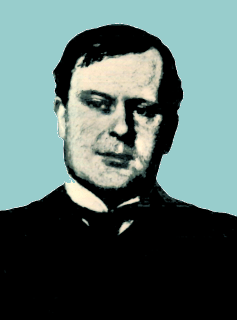
David Patrick Moran (Irish: Dáithí Pádraig Ó Móráin), better known as simply D. P. Moran, Irish journalist, activist and cultural-political theorist, dies on January 31, 1936. He is known as the principal advocate of a specifically Gaelic CatholicIrish nationalism during the early 20th century. Associated with the wider Celtic Revival, he promotes his ideas primarily through his journal, The Leader, and compilations of his articles such as the book The Philosophy of Irish Ireland.
Moran is born in Manor, a townland in Waterford, the youngest of twenty children born to James Moran, a builder, and Elizabeth Moran (née Casey). One of his brothers goes on to serve on the defense team of Patrick O’Donnell.
Despite the failure of the 1893 Home Rule Bill and the division of the Irish Parliamentary Party (IPP) in 1891, nationalists take heart from Douglas Hyde‘s 1892 speech, entitled “The Necessity for De-anglicising Ireland.” Moran builds upon this thesis and provides a wider ideology for enthusiasts, particularly after the re-unification of most of the nationalist parties from 1900.
In his 1905 text The Philosophy of Irish-Ireland, Moran argues that to be Irish requires:
the use of the Irish language
membership in the Roman Catholic Church
an anti-materialist outlook on life
the playing of only Gaelic games
Though a sponsor of the use of Irish, he never becomes fluent in the language himself. He emphasises the use of English in 1908–09 as “an active, vigilant, and merciless propaganda in the English language.” In the longer term, when Irish becomes again the language of the people, its use enables a de facto censorship of any foreign and unwelcome ideas written in English.
While Moran argues that the idea of “the Gael” is one that can assimilate others, he also feels that it will be hard if not impossible for members of the Church of Ireland who support the British Empire to ever qualify as Irish, being “resident aliens.” This extends to Anglo-Irish literature. He rejects the Abbey Theatre and questions Yeats‘ genius. He once speaks out against the influence Britain has over Irish Universities, stating, “We are all Palemen now.” In the matter of religious differences, Daniel O’Connell had said in 1826 that “the [Roman] Catholics of Ireland are a nation.” Moran moves beyond that, affirming in 1901 that “…the Irish Nation is de facto a Catholic nation.” He is virulent in his opposition to female suffrage.
Moran’s articles frequently contrast “Belfast” with “Ireland,” yet hope that Belfast can eventually change and assimilate. He feels that Ulster unionists should “… be grateful to the Irish nation for being willing to adopt them.” His paper publishes numerous articles by the future TDArthur Clery (writing under the pen name “Chanel”), who advocates partition on the grounds that Ulster unionists are a separate nation, but Moran himself disagrees and refuses to concede the legitimacy of a northern Protestant identity.
When Irish republicans initiate the Irish War of Independence in 1919, widescale anti-Catholic rioting breaks out in Belfast in 1920 and 1922. Moran identifies this as being caused by Orangeism, which he describes as “a sore and a cancer” in Ireland. He also alleges that “bigotry on the part of Catholics in the Six Counties is immediately due to Orange bigotry.”
Moran is initially a supporter of the Irish Parliamentary Party, believing that the separatism advocated by Arthur Griffith‘s Sinn Féin is impracticable; however, he opposes John Redmond‘s support of the British World War I effort.
Moran supports the Anglo-Irish Treaty agreed in 1921–22 and sees the partition of Ireland as beneficial for a truly Irish culture in the Irish Free State. This causes a sea-change in his opinions; from now on Northern Ireland can be safely ignored, along with what he sees as the English evils of “free thought, free trade, and free literature.” He claims Irish life and culture has to be protected from foreign influences, including the twin evils of the music hall and the English press. The new jazz music of the 1920s and other imported cultural elements are deprecated as “imported debasement and rot.”
On January 9, 1901, Moran marries Theresa Catherine, daughter of Thomas Francis O’Toole, a former Parnellite mayor of Waterford. They have four sons and one daughter.
Moran dies suddenly at his home in Skerries, Dublin, on January 31, 1936. His daughter, Nuala, who has written for the paper since the early 1920s, generally on artistic and social matters, takes over the running of the paper on his death, though it is then much diminished in size and influence. Nuala, who never marries, retains control of The Leader until it ceases publication in 1971.
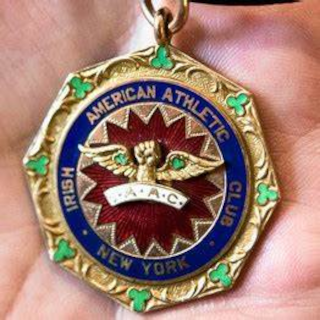
The Irish American Athletic Club, an amateur athletic organization based in Queens, New York, is established on January 30, 1898, originally as the Greater New York Irish Athletic Association. They shorten the name to the Irish American Athletic Club a few years later. They purchase a plot of land in what is then called Laurel Hill, Long Island, near Calvary Cemetery, Queens, and build a state-of-the-art athletic facility on what is farmland. The stadium, called Celtic Park, formally reopens after renovations on May 9, 1901, and until the facility is sold for housing in 1930, some of the greatest American athletes train or compete on Celtic Park’s track and field. The Irish American Athletic Club adopts a winged fist adorned with American flags and shamrocks as their emblem, with the Irish Gaelic motto “Láim Láidir Abú” or “A strong hand will be victorious,” and are often referred to as the “Winged Fists.” At one time they have clubs in Boston, Chicago, San Francisco and Yonkers, New York.
The Irish American Athletic Club is predominantly composed of Irish-born and first generation Irish American athletes, but many of the athletes who compete for the Winged Fist organization are neither.
The Irish American Athletic Club wins the Amateur Athletic Union national outdoor track and field team championship titles in 1904, 1906, 1907, 1908, 1910, 1911, 1912, 1913, 1914 and 1916. They also win the national indoor track and field team championship titles in 1906, 1908, 1909, 1911, 1913, 1914 and 1915. Individual athletes of the IAAC win 81 national outdoor championships titles and 36 individual national indoor championship titles.
In 1912–13, 1913–14, 1914–15 and 1916–17 the Irish American Athletic Club has a team, the New York Irish-Americans, represented in the American Amateur Hockey League. The team is coached by James C. “Jimmy” O’Brien and has on its roster for various seasons future NHL players Tom McCarthy and Moylan McDonnell. John McGrath and Patsy Séguin also play for the club.
Before the largest crowd that has ever assembled to see a track meet in the United States, on September 9, 1916, the Irish American Athletic Club defeats the New York Athletic Club at the Amateur Athletic Union’s National Championships, by a score of 38 to 27. Before a crowd of 30,000 spectators at Newark, New Jersey‘s Weequahic Park, the Irish American Athletic Club wins what is to be their last national championship title. The club disbands a year later when the United States becomes a combatant in World War I.
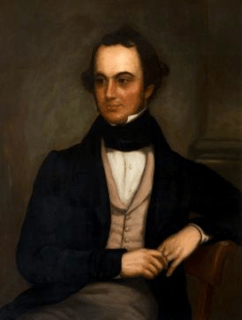
Following his local education, Lanyon becomes an apprentice civil engineer with Jacob Owen in Portsmouth. When Owen is made senior Engineer and Architect of the Irish Board of Works and moves to Dublin, Lanyon follows. In 1835 he marries Owen’s daughter, Elizabeth Helen. They have ten children, including Sir William Owen Lanyon, an army officer and future administrator of the Transvaal in southern Africa.
Lanyon is county surveyor in County Kildare briefly, a post he exchanges for its equivalent in County Antrim, based in Belfast, when the incumbent, Thomas Jackson Woodhouse, resigns in 1836. By 1842, he has built the Antrim coast road between Larne and Portrush, through spectacular natural surroundings. He designs the lofty three-arched Glendunviaduct on this route near Cushendun, an early example of his versatile talent for monumental display as well as the Ormeau Bridge over the River Lagan. He remains county surveyor of Antrim until 1861 when he resigns from the post to concentrate on private work and other interests.
Lanyon’s other business interests include being director of the Blackstaff Flax Spinning Company and chairman of several railway companies. He is made director of the Northern Counties Railway in 1870 but resigns in 1887 because of ill-health. Alongside his business activities he is an active Freemason and serves as Provincial Deputy Grand Master of Belfast and North Down between 1863 and 1868, Provincial Deputy Grand Master of Antrim between 1868 and 1883 and Provincial Grand Master of Antrim between 1883 and 1889.
Lanyon lives at The Abbey, a grand house in Whiteabbey, County Antrim, which eventually becomes a sanitorium during World War I and is now part of Whiteabbey Hospital. His wife dies in 1858, and his son William dies from cancer at the age of 44 in 1887. He dies at The Abbey on May 31, 1889, and is buried in Knockbreda Cemetery, Belfast, in a tomb also of his design.
Healy is one of twins, the third son born to Maurice, a Poor Law Union clerk, and Eliza (née Sullivan) Healy. His mother dies during the birth. It is said that the nurse places him in his brother Tim‘s arms and said, “This little boy has no mother now and you will have to be a mother to him.” As he grows up, he becomes very close to his elder brother. The orphaned children are effectively raised by their maternal grandmother, Jane Sullivan. The family moves to Lismore, County Waterford, where he is educated at the local Christian Brothers school. Both brothers marry Sullivans who are first cousins to their husbands and to each other.
Admitted as a solicitor in 1882, Healy practises as such and is returned to parliament four times, first as a member of the Irish Parliamentary Party for Cork City from 1885 to 1900, in which year standing as a Healyite nationalist he is defeated by William O’Brien in a bitter campaign. He is returned again for Cork City in May 1909 to January 1910.
Healy’s force in parliament is land law. He is a close confidant of his brother Tim and although more retiring and stolid than his better-known elder brother, he is considered the more intelligent and often acts as a counterbalance to his brother’s emotionality. On the outbreak of World War I in 1914 a son of each enlists in one of the Irish Divisions.
Maurice (junior) moves to England after the founding of the Irish Free State where he is both a successful lawyer and a broadcaster for the BBC during the early years of World War II. He writes the well-known legal memoir The Old Munster Circuit and the popular Stay Me with Flagons: A Book about Wine and Other Things.





 seamus dubhghaill