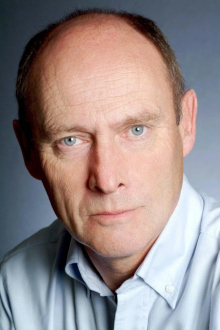
Duggan is the son of Irish immigrants. His mother works as a cook while his father is a school secretary. He was educated at Douai School, Woolhampton, Berkshire. He studies experimental psychology for two years at the University of Edinburgh but leaves school feeling unsatisfied and decides to try his hand at acting. Prior to making it as an actor, he sells bone china to U.S. soldiers stationed in Germany.
Duggan makes his television debut in 1976 in an episode of The Flight of the Heron, followed by single episodes of Sutherland’s Law and The New Avengers (1976) and ITV‘s Playhouse (1977). He then appears in an adaptation of The Eagle of the Ninth, and his first film is Sweeney 2 in the following year. In 1979 he begins a nine-year stint as Detective Sergeant Albert “Cheerful Charlie” Chisholm in the popular TV series Minder.
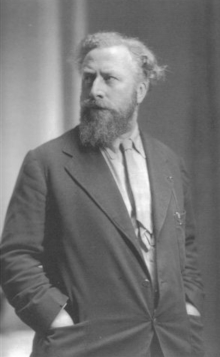
Robert John Gibbings, Irish artist and author most noted for his work as a wood engraver and sculptor, and for his books on travel and natural history, is born into a middle-class family in Cork, County Cork on March 23, 1889. Along with Noel Rooke he is one of the founder members of the Society of Wood Engravers in 1920 and is a major influence in the revival of wood engraving in the twentieth century.
Gibbings’ father, the Reverend Edward Gibbings, is a Church of Ireland minister. His mother, Caroline, is the daughter of Robert Day, Fellow of the Royal Society of Antiquaries of Ireland and president of The Cork Historical and Archaeological Society. He grows up in the town of Kinsale where his father is the rector of St. Multose Church.
Gibbings is very much at the centre of developments in wood engraving. He is a founder member and leading light of the Society of Wood Engravers, which he sets up with Noel Rooke in 1920. In 1922 he contributes two wood engravings, “Clear Waters” and “Hamrun,” to Contemporary English Woodcuts, an anthology of wood engravings produced by Thomas Balston, a director at Gerald Duckworth & Company and an enthusiast for the new style of wood engravings. In 1923 he receives a commission for a set of wood engravings for The Lives of Gallant Ladies for the Golden Cockerel Press, his most important commission to date at 100 guineas.
Gibbings is working on the wood engravings The Lives of Gallant Ladies when Hal Taylor, the owner of the press, becomes very ill with tuberculosis and has to put it up for sale. He seeks a loan from a friend, Hubert Pike, a director of Bentley Motors, to buy the press. He takes over in February 1924 and owns and runs the press until 1933.
Gibbings illustrates numerous books on travel and natural history, including Charles Darwin’s The Voyage of the Beagle, and writes a series of bestselling river books, notably Sweet Thames Run Softly. He does a huge amount to popularise the subject of natural history, travelling extensively through Polynesia, Bermuda and the Red Sea to gather inspiration for his work.
Gibbings is the first man to draw underwater, the illustrations filling his Penguin classic Blue Angels and Whales. He is one of the first natural history presenters on the BBC.
In September 1955 Gibbings and his wife, Patience, purchase Footbridge Cottage, a tiny beehive of a cottage in Gibbings’s words, in Long Wittenham on the banks of the River Thames. Life there suits him, and he has a period of tranquility that he had not known previously. They live there until he dies of cancer in an Oxford hospital on January 19, 1958. He is buried in the churchyard at Long Wittenham. The grave is marked by a simple headstone featuring his device of a crossed quill and graver, carved by Michael Black, a young sculptor who is a friend of Gibbings.
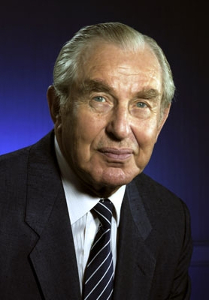
Chaim Herzog, Israeli politician, general, lawyer, and author, is elected the sixth President of Israel on March 22, 1983. He serves from 1983 to 1993.
Herzog joins the British Army during World War II, operating primarily in Germany as a tank commander in the Armoured Corps. There, he is given his lifelong nickname of “Vivian” because the British could not pronounce the name, “Chaim.” A Jewish soldier had volunteered that “Vivian” is the English equivalent of “Chaim.”
After leaving the army, Herzog opens a private law practice. He returns to public life when the Six-Day War breaks out in 1967, serving as a military commentator for Kol Israel radio news. Following the capture of the West Bank, he is appointed Military Governor of East Jerusalem, and Judea and Samaria.
Herzog enters politics in the 1981 elections, winning a Knesset seat as a member of the Alignment. Two years later, in March 1983, he is elected to the largely ceremonial role of President. He serves two five-year terms before retiring in 1993. He dies on April 17, 1997, and is buried on Mount Herzl, Jerusalem. His son, Isaac Herzog, led the Israeli Labour Party and the parliamentary Opposition in the Knesset from 2013 until 2018.
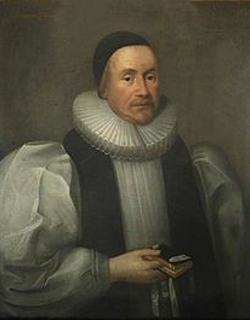
Ussher is born in Dublin on January 4, 1581. Early in life he is determined to pursue a career with the Church of England, a resolve quite similar to that of the Biblical Judge, Samuel.
A gifted polyglot, Ussher enters Dublin Free School and then the newly founded Trinity College, Dublin on January 9, 1594, at the age of thirteen (not an unusual age at the time). He receives his Bachelor of Arts degree by 1598 and is a fellow and MA by 1600. In May 1602, he is ordained in the Trinity College Chapel as a deacon (and possibly priest on the same day) in the ProtestantChurch of Ireland by his uncle Henry Ussher, the Archbishop of Armagh and Primate of All Ireland.
At the age of 26, Ussher becomes Professor and Chairman of the Department of Divinity at the University of Dublin, and he holds his professorship from 1609 to 1621. In 1625, he becomes Archbishop of Armagh, an office he apparently holds until his death. In 1628, King James I makes him a Privy Councillor.
Ussher is considered well-read and well-versed in history, a subject that soon becomes his primary focus. He writes several histories of the doings of the Irish and English churches dating back to Roman times. He also makes himself an expert in Semitic languages, an expertise that informs his argument in favor of the Masoretic Text of the Bible in preference to the Septuagint.
Ussher’s Confessions appear in 1643, followed in 1646 by his fifth work, Here I Stand. His most famous work, the dating of the creation as calculated from the Biblical record, appears in writing in the 1650s.
In 1656, Ussher goes to stay in the Countess of Peterborough’s house in Reigate, Surrey. On March 19, he feels a sharp pain in his side after supper and takes to his bed. His symptoms seem to have been those of a severe internal haemorrhage. Two days later, on March 21, 1656, he dies at the age of 75. His last words are reported as: “O Lord, forgive me, especially my sins of omission.” His body is embalmed and is to have been buried in Reigate, but at Oliver Cromwell‘s insistence he was given a state funeral on April 17 and is buried in the chapel of St. Erasmus in Westminster Abbey.
Ussher’s extensive library of manuscripts, many of them Middle Eastern originals, become part of the collection at the University of Dublin.
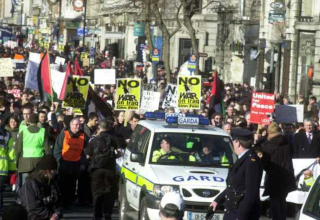
On the evening of March 20, 2003, up to 2,000 people take part in a protest outside the United States Embassy at Ballsbridge in Dublin to voice their opposition to the war in Iraq. This is one of numerous protests held in response to the Irish Anti-War Movement‘s call on Irish citizens to mount mass protests against the U.S.-led war in Iraq. The group says thousands of workers, students and school pupils had taken part in stoppages and walk-outs throughout the day.
Richard Boyd Barrett, the chairman of the IAWM, says, “The complicity of the Irish government in this murderous war through providing facilities for the U.S. military at Shannon Airport is an absolute disgrace. “This war has little support among ordinary people and has provoked a wave of anger and revulsion. We call on the people of Ireland to come out in their thousands at 6:00 PM tonight to their town centre demonstrations to show this carnage is not being mounted in our names.”
Earlier in the day, several hundred protesters gather outside Dáil Éireann to protest the Irish Government‘s decision to continue allowing U.S. military aircraft use Shannon Airport. The Dáil is holding a six-hour debate on a Government motion which, among other topics, contains a clause permitting U.S. forces continued use of Irish airspace and facilities.
The NGO Peace Alliance says it is “extremely disappointed” at the Government’s refusal to condemn the attack on Iraq. “We call upon thousands of Irish people to reject this shameful position by thronging the streets of Dublin and other cities and towns next Saturday” said the alliance’s co-ordinator, Brendan Butler.
SIPTU‘s National Executive Council also interrupts their monthly meeting. “This war is not only unnecessary but illegitimate in the context of international law”, says Joe O’Flynn, SIPTU General Secretary.
The Act is passed by the Long Parliament as a way of raising funds to suppress the Irish Rebellion of 1641, which had broken out five months earlier. It invites members of the public to invest £200 for which they will receive 1,000 acres of lands that are to be confiscated from rebels in Ireland. Two and a half million acres of Irish land are set aside by the English government for this purpose. The entire island of Ireland is about 20.9 million acres.
The enactment is done at the request of King Charles in the House of Lords, joined by the House of Commons, and is unanimously accepted without any debate. The Act had been placed before the Houses for inspection but is not formally read into the record. The title of the Act – “An Act for the speedy and effectual reducing of the Rebels, in His Majesty’s Kingdom of Ireland, to their due Obedience to His Majesty, and the Crown of England” – is read aloud to Parliament, followed by the statement: “Le Roy le veult.”
The “Adventurers” are so called because they are risking their money at a time when the Crown has just had to pay for the Bishops’ Wars in 1639–40. “Reducing” the rebels means leading them back to the legal concept of the “King’s Peace.” King Charles cannot subsequently enforce the Act, but it is realised by his political opponents following the Cromwellian conquest of Ireland in 1649–1653 and forms the main legal basis for the contentious Act for the Settlement of Ireland 1652.
Ironically, in May 1642 the Confederate Irish rebels draft the Confederate Oath of Association that recognises Charles as their monarch.
The Adventurers’ Act is extended and amended by three other acts – Lands of Irish Rebels; Adventurers’ Subscriptions Act 1640 (c. 34), Lands of Irish Rebels; Adventurers’ Subscriptions Act 1640 (c. 35), and Irish Rebels Act 1640 (c. 37). All four receive Royal Assent in the summer of 1642, just before the start of the English Civil War, but are usually referred to as 1640 acts, which is the year the Long Parliament started to sit and the 16th year of Charles I’s reign.
In July 1643, Parliament passes the Doubling Ordinance which doubles the allocation of land to anyone who increases their original investment by 25%. The purpose of the Act is twofold, firstly to raise money for Parliament to help suppress the rebellion in Ireland, and secondly to deprive the King of the lands seized from rebels that would be his by prerogative.
To enforce the Acts the Cromwellian conquest of Ireland is launched in 1649. In 1653, Ireland is declared subdued, and the lands are allocated to the subscribers in what becomes known as the Cromwellian Settlement.
The funeral cortege arrives at the church in Glencullen at 11:00 AM and is met by an honour guard from the Coast Guard and other rescue services. Captain Fitpatrick’s parents, four siblings, her young son Fionn, and other family members accompany the coffin into the church.
In his homily, Parish Priest Fr. Andrew O’Sullivan says St. Patrick’s church has seen many sad and tragic funerals but few as sad and sorrowful as this one. He pays tribute to the Fitzpatrick family and says they and the community have lost a loved and valued member. He adds that the congregations’ thoughts are with Captain Fitzpatrick’s three crew members who have yet to be found.
Fr. O’Sullivan says the family takes comfort from the fact that Dara had lived life to the fullest. Mourners hear that as well as being a loving mother, Dara was an avid traveler, cook and animal lover.
Poor weather conditions off the west coast of Ireland hamper the search for the three missing crew members and the wreckage of the Coast Guard helicopter R116. On March 22, the wreckage of the main part of the helicopter is detected by underwater cameras about 60 metres off Blackrock Island. The body of co-pilot Captain Mark Duffy is found in the cockpit section of the wreckage. A helmet and lifejacket belonging to one of the two missing crewmen is discovered on a beach on the Mullet Peninsula on September 30, 2017.
(From: Captain Dara Fitzpatrick remembered during funeral service, RTÉ.ie, the website of Raidió Teilifís Éireann, Ireland’s National Public Service Broadcaster, March 18, 2017)
Milligan is the eldest of eleven children born to Methodist parents Seaton Milligan (1837–1916) and Charlotte Burns (1842–1916), with nine surviving including Alice Milligan and Edith Wheeler. All nine children enroll at Methodist College Belfast which provides a privileged and exceptional education. She studies classical piano and composition at the Royal College of Music in London and the Conservatoires of Frankfurt and Milan. Following her marriage to Charles Eliot Fox in 1892, she settles in London.
In 1904 Fox co-founds with Alfred Perceval Graves the Irish Folk Song Society, an offshoot of the Folk-Song Society formed in 1898. Its aim is to collect and publish Irish airs and ballads, in addition to holding lectures and concerts on the subject. She acts as the society’s honorary secretary. The rules of the Society are collected in volume 4 of the Journal of the Irish Folk Song Society. The subscription is 5 shillings payable every January and committee meetings are held at the Rooms of the Irish Literary Society in London.
Fox is a musician in her own right and tours Ireland collecting folk songs and airs. She undertakes a series of tours of County Antrim between 1909 and 1910 with her sisters Edith Wheeler and Alice Milligan. The sisters record and transcribe songs by Irish singers, then publish articles and musical scores in The Journal of Irish Folk Song.
In 1910 Fox visits the east coast of the United States where the New York branch of the Irish Folk Song Society is formed. “The Bardic Recital” is produced on March 16 at the National Theatre in Washington, D.C. She collects and arranges the music for the play.
Fox rediscovers Edward Bunting‘s papers, and under the provision of her will they come to Queen’s University Belfast in 1916. From these papers she writes The Annals of the Irish Harpers. The publication of The Annals of the Irish Harpers stimulates a revival of interest in both the Irish harp and Edward Bunting. Alice Milligan nurses her sister prior to Fox’s death in London on March 25, 1916. An obituary of Charlotte Milligan Fox is in The Irish Booklover (1916). The Journal of the Irish Folk Song Society (1917) has a poem in remembrance of Charlotte Milligan Fox. The same issue has a memoir of Fox by Alice Milligan and an appreciation of Fox by Alfred Perceval Graves.
During 2010 and 2011, the Ulster History Circle mounts plaques for famous Ulster figures. Charlotte Milligan Fox and Alice Milligan have a plaque mounted on Omagh Library, 1 Spillar’s Place, Omagh, County Tyrone.
At the end of 1972 she is withdrawn and refitted to carry 1,500 single class passengers on cruises. Unusually, this transition from an early life as a purpose-built ocean liner to a long and successful career in cruising, occurs without any major external alterations, and with only minimal internal and mechanical changes over the years.
On April 2, 1982, Argentina invades the Falkland Islands, which initiates the Falklands War. At the time, SS Canberra is cruising in the Mediterranean Sea. The next day, her captain, Dennis Scott-Masson, receives a message asking his time of arrival at Gibraltar, which is not on his itinerary. When he calls at Gibraltar, he learns that the Ministry of Defence had requisitioned SS Canberra for use as a troopship. SS Canberra sails to Southampton, Hampshire, where she is quickly refitted, sailing on April 9 for the South Atlantic.
SS Canberra anchors in San Carlos Water on May 21 as part of the landings by British forces to retake the islands. Although her size and white colour make her an unmissable target for the Argentine Air Force, the liner is not badly hit in the landings as the Argentine pilots tend to attack the Royal Navy frigates and destroyers instead of the supply and troop ships. After the war, Argentine pilots claim they were told not to hit SS Canberra, as they mistook her for a hospital ship.
SS Canberra then sails to South Georgia island, where 3,000 troops are transferred from Queen Elizabeth 2. They are landed at San Carlos on June 2. When the war ends, SS Canberra is used as a cartel to repatriate captured Argentine soldiers, landing them at Puerto Madryn, before returning to Southampton to a rapturous welcome on July 11.
After a lengthy refit, SS Canberra returns to civilian service as a cruise ship. Her role in the Falklands War makes her very popular with the British public, and ticket sales after her return are elevated for many years as a result. Age and high running costs eventually catch up with her though, as she has much higher fuel consumption than most modern cruise ships. Although Premier Cruise Line makes a bid for the old ship, P&O had already decided that they do not want SS Canberra to operate under a different flag.
SS Canberra is withdrawn from P&O service in September 1997 and sold to ship breakers for scrapping on October 10, 1997, leaving for Gadani ship-breaking yard in Pakistan on October 31, 1997. Her deep draft means that she cannot be beached as far as most ships, and due to her solid construction, the scrapping process takes nearly a year instead of the estimated three months, being totally scrapped by the end of 1998.
The SS Canberra appears in the 1971 James Bond film Diamonds Are Forever as the liner where Mr. Wint and Mr. Kidd try to kill Bond. In 1997, singer/songwriter Gerard Kenny releases the single “Farewell Canberra” which is specially composed for the final voyage.
McCarrison is credited with being the first to experimentally demonstrate the effect of deficient dietaries upon animal tissues and organs. He also carries out human experiments aimed at identifying the cause of goitre, and includes himself as one of the experimental subjects. Much of his work is pioneering. His 1921 book Studies in Deficiency Disease is considered notable at the time, being published at a time when knowledge of vitamins and their role in nutrition is crystallizing.
McCarrison qualifies in Medicine at Queen’s College, Belfast in 1900. At age 23, he goes to India, where he spends 30 years on nutritional problems. His research in India on the cause of goitre wins widespread recognition and in 1913 he is promoted to do research. He attains the rank of major-general in the Indian Medical Service and founds the Nutritional Research Laboratories in Coonoor, where he remains until his retirement from the Indian Medical Service in 1935. After retiring, he returns to England and gives a series of three Cantor lectures on successive Mondays at the Royal Society of Arts, about the influence of diet on health. The first lecture focuses on the processes of nutrition; the second, on food essentials and their relationship to bodily structure and function; the third on disease prevention and physique improvement by attention to diet. The lectures are subsequently published in book form under the title Nutrition and Health, and at the time of the third edition in 1962, are still seen as relevant, with the advances of the preceding 25 years largely filling the details of the principles previously recognised by McCarrison.