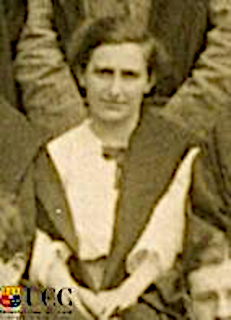
Cummins begins to study at UCC in 1912. At that time, there are 78 women students out of the 420 students enrolled. She graduates with an engineering degree in 1915. During her time in engineering, she is editor of the Journal of the Engineering Society.
While she is in college, Cummins is on the Ireland field hockey team. She earns her first “cap” for hockey in 1914 and leads the college hockey team to victory in the Munster cup. The Irish hockey team tours the United States in 1925 with Cummins as the captain. With the team she goes to the White House at the invitation of Calvin Coolidge.
Cummins works for the Royal Arsenal with the munitions factory at Woolwich, London, and then the Vickers Limited factory at nearby Erith. She works in a shipyard in Scotland during World War I between 1915 and 1916 before returning to Cork. Initially, she finds it difficult to find work there.
In 1924, Cummins founds a private practice in the city and works there until 1927 at which time she is appointed to the Irish Land Commission in Dublin. She moves to Dublin and although she visits, she never returns to live in Cork. She retires from the Land Commission in 1954.
Cummins is a Council member of the Women’s Engineering Society, having joined at the organisation’s inception. In December 1919, she writes an encouraging article in the very first edition of the society’s journal, The Woman Engineer. Based on her own Irish university experience, it lays out the practicalities of studies as well as social interactions likely to be encountered by a woman thinking of training as a civil engineer. The following year, she has another article published, this time in the Practical Engineer magazine, entitled The Suitability of Women for the Engineering Industries.
Twenty years later, in 1940, Cummins writes a lively piece entitled Women Engineers Overseas – in Eire for The Woman Engineer journal on her experiences as one of the earliest women engineers in Ireland. In this article, she recounts a tale of encountering the “oldest Inhabitant” of a very rural area, a proud owner of two fine horses, who on discovering “you must be an engineer, so would ye mind mending the electric light in the mare’s stable?”
Cummins dies at the age of 73 in Dublin on April 30, 1968.
(Pictured: Detail from photo of the 1913-14 2nd Year Engineering Class at University College Cork (UCC University Archives, OCLA, UCC))
Chancellor is born at 8 Fitzwilliam Place, Dublin, on January 9, 1910. Her parents are John William Chancellor, a Dublin clockmaker, jeweler, and photographer, and Cicely Chancellor (née Granger). They marry in Billericay, Essex, in 1904. She has an elder sister, Joyce Fanny, who also becomes an actress. She attends Nightingale Hall and Alexandra College, going on to train as a secretary.
Chancellor’s first appearance on stage is as a fairy in a benefit performance at the Gaiety Theatre in 1914. She appears again at the Gaiety in 1922 as Gwennie in F. Anstey‘s The Man from Blankley’s, and then studies drama under Frank Fay. In the 1920s, she acts in the Dublin Drama League’s productions in the Abbey Theatre. Once she joins the Gate Theatre her career progresses, establishing her as one of the principal actresses in the Gate by the early 1930s.
Chancellor plays Naomi alongside Orson Welles in a production of Jud Süss in October 1931. Welles becomes infatuated with her and later describes her as “the sexiest thing that ever lived.” In 1931, she debuts in J. B. Fagan‘s production of The New Gossoon by George Shiels as Biddy Henley at the Apollo Theatre. Her most noted roles are as Toots in Youth’s the Season in 1932 by Mary Manning, Laura in a production of Carmilla in 1932, based on the Gothicnovella by Sheridan Le Fanu, Ophelia in 1932 and Cicely in The Importance of Being Earnest in 1933. Touring with the Gate company in 1935, she plays Stella in its production of Lord Longford‘s Yahoo performed in the Westminster Theatre, London. She stars with James Mason in the Gate’s production of Pride and Prejudice in 1937. Disappointed with the parts she is getting at the Gate after that and much to the annoyance of Micheál Mac Liammóir and Hilton Edwards, she joins Lord Longford’s first provincial tour in 1937.
In the late 1930s, Chancellor works more often in London. Following her appearance as Baby Furze in the 1938 production of Spring Meeting by Molly Keane and John Perry, she is nominated as “Star of the Future” by the Daily Mail. She acts alongside Alec Guinness and Peggy Ashcroft in 1940 in Clemence Dane‘s Cousin Muriel at the Globe Theatre, directed by John Gielgud.
Chancellor returns to the Gaiety Theatre in 1941 to act with Hilton Edwards in a production of Caesar and Cleopatra by George Bernard Shaw, a production that marks the 75th anniversary of the Gaiety. The press welcomes her return to the company, but her fellow actors are disturbed by the fact she is then living with Denis Johnston, the husband of fellow actress Shelah Richards. After Johnston’s divorce, they marry in March 1945 in Dungannon, County Tyrone. She partly retires from acting to raise their sons, but also due to her increasing deafness that had begun in her teens.
In 1969, Chancellor returns to Ireland with her family and settles in Dalkey, County Dublin. She dies in Dún Laoghaire on April 27, 1984, and is buried in the close of St. Patrick’s Cathedral, Dublin.
McEnery is born on April 28, 1892, to Henry McEnery and Margaret (née Stack) at 4 Slieveawaddra, Drommartin, County Kerry. His mother and father are national teachers, and his father is also a farmer. Some of his older siblings become teachers and his brother is a Catholic priest.
McEnery marries Johannah (Hannah) Donnelly at Causeway, County Kerry, on April 13, 1918. Their only child, Henry, known as “Sunny,” is born on June 11, 1920.
McEnery joins the Irish Volunteers and is a lieutenant in the 3rd Battalion, North Kerry. As in the Volunteers, in the IRA he is a lieutenant, 3rd Battalion, in the Kerry No.1 Brigade (also of North Kerry). He is part of Timothy “Aeroplane” Lyons‘s column, which is involved in the burning of a Civic Guard station at Ballyheigue and a robbery of the Ballyduff post office. He is captured and imprisoned by the National Army and claims under interrogation that he was forced to join Lyons’s column under fear of death, accused of being a traitor. Despite giving an undertaking, he would not resume militant activity, he rejoins Lyons’s column following his release.
On April 16, McEnery takes part in the column’s ambush on a Free State raiding party at Meenoghane. The National Army’s 1st Western Division supplies reinforcements quickly and pursues the column to Clashmealcon, where the members hide in Dumfort’s Cave on the Atlantic cliffs with no possible escape. Two National Army troops are shot and killed by Lyons when trying to enter the cave. Two of the column’s men fall and drown after trying to scale the cliff at night. McEnery surrendered with Reginald Walter Stenning and Edmond Greaney. They are taken to Ballymullen Barracks in Tralee. Lyons falls from a rope and is shot while lying on the rocks below.
On April 18, McEnery and his two remaining colleagues are charged with the Ballyheigue burning, the Ballyduff robbery, stripping civic guards at Ballyheigue, attacking National troops at Clashmealcon and armed opposition to the government. They are tried and sentenced to death by Paddy Daly, OC of the National Army in Kerry. The following day, Daly asks for confirmation of the sentences, which duly arrive. McEnery is shot at 8:00 a.m. on April 25, three days before his 31st birthday. He is initially interred at the gaol. A death entry is made in the register the following month, incorrectly giving his age as 28. His body is finally released, along with those of others executed, to relatives on October 28 of the following year, when hundreds gather outside the gaol.
McEnery is buried alongside executed colleagues in the republican plot at Rahela Cemetery, Ballyduff. Hannah McEnery is granted £250 from the Irish White Cross and their son Henry £1 per week until working age. In 1932, pending new legislation, she applies for an allowance because of her dependency on McEnery and is awarded £67 and 10 shillings per annum (increased to £250 in the 1950s), and £18 per annum for their son.
McEnery is counted as one of “the seventy-seven,” a term made popular amongst republicans after the writing of Dorothy Macardle in memory of those executed by Free State troops.
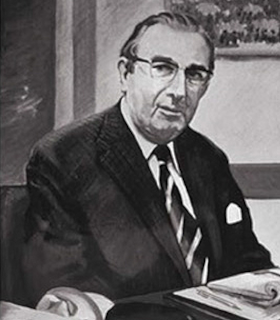
Seán Proinsias Ó Faoláin, short story writer of international repute and one of the most influential figures in 20th-century Irish culture, dies in Dublin on April 20, 1991. He is also a leading commentator and critic.
Ó Faoláin writes his first stories in the 1920s, eventually completing ninety stories over a period of sixty years. From 1929 to 1933 he lectures at the Catholic college, St. Mary’s College, at Strawberry Hill, London, during which period he writes his first two books. His first book, Midsummer Night Madness, is published in 1932. It is a collection of stories partly based on his Civil War experiences. He afterward returns to Ireland. He publishes four novels, seven additional volumes of short stories, six biographies, three travel books, a play, a memoir, a history book, translations and literary criticism, including one of the rare full-length studies of the short story, The Short Story (1948). He also writes a cultural history, The Irish, in 1947. His last short story volume, Foreign Affairs, is published in 1976. His Collected Stories is published in 1983.
Ó Faoláin produces critical studies of the novel and the short-story form, introduces texts of historical and literary merit, and contributes scores of articles, reviews, and uncollected stories to periodicals in Ireland, Britain, and the United States.
Ó Faoláin is a founder member and editor of the Irish literary periodical The Bell from 1940 to 1946. Under his editorship, The Bell participates in many key debates of the day. It also provides a crucial outlet for established and emerging writers during the lean war years. The list of contributors to The Bell include many of Ireland’s foremost writers, among them Patrick Kavanagh, Patrick Swift, Flann O’Brien, Frank O’Connor and Brendan Behan.
A recurring thread in Ó Faoláin’s work is the idea that national identities are historically produced and culturally hybrid; an additional thesis is that Irish history should be conceived in international terms, and that it should be read, in particular, in the context of social and intellectual developments across Europe.
Ó Faoláin marries Eileen Gould, a children’s book writer who publishes several books of Irish folk tales, in 1929. They have two children: Julia (1932–2020), who becomes a Booker-nominated novelist and short story writer, and Stephen (b. 1938).
Ó Faoláin dies in Dublin at the age of 91 on April 20, 1991.
Ó Faoláin is a controversial figure in his own lifetime and two of his books are banned for “indecency” in Ireland — his debut collection of short stories and his second novel, Bird Alone (1936). His legacy has proven divisive. If some consider him a social liberal cosmopolitan who challenges “proscriptive” definitions of Irish culture, others see him as a chauvinistic snob who paradoxically restricts the development of Irish writing. Proto-revisionist or nascent postcolonial, O’Faoláin has been considered both, sometimes within the same critical survey. Either way, his work is central to the evolution of a post–Literary Revival aesthetic, and his voice is one of the most prominent, and eloquent, in the fight against censorship in Ireland.
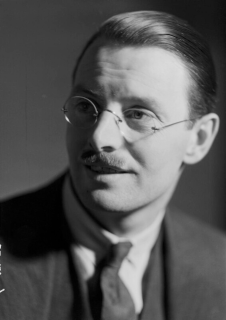
(Pictured: Portrait of Seán Ó Faoláin by Howard Coster, 1930s, National Portrait Gallery)
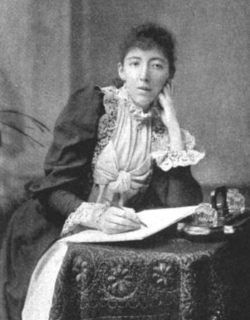
MacMahon, who is educated at home, is also literary. From the 1890s she begins contributing to periodicals such as the New Ireland Review, for which she writes on local history. Her first novel, A New Note, appears in 1894 and over the next thirty-five years she is prolific, publishing over twenty novels as well as making numerous contributions to magazines, and several to BBC radio programmes. She is unmarried and writing is her main source of income, but during World War I she works as a civil servant in various government departments including War, Trade, and the newly created Intelligence department. Afterward she lives in Brockenhurst, Hampshire, England, and converts at some stage to Catholicism.
MacMahon’s novels are romances. Typical of them is An Honorable Estate (1898), which features an English heiress marrying an impoverished Irish clergyman in a fit of pique, only to fall in love with him. They are undemanding but entertaining and occasionally ironic, with clever social commentary. Irish Book Lover, a quarterly review of Irish literature and bibliography, commends The Job (1914) for its insightful and sympathetic characterisation. It is an account of a baronet‘s struggle to improve his Irish estate despite the fecklessness of the inhabitants. Ireland is a frequent setting for her stories. Her view of it verges on the sentimental, and she often features eccentric but ultimately good-hearted country people.
However, MacMahon’s last book, Wind of Dawn (1927), is a more profound, interesting study. Set during the Irish War of Independence and the truce, it looks at the complexities within Irish society and the differences in attitude between the Anglo- and native Irish. Rich in characters, it features a naive English girl in love with Ireland, a papist-hating domestic servant, and an ascendancy grande dame who finds England monotonous but is adamant that her children will be educated there and will not acquire a brogue. Unlike MacMahon’s other books, it is not a romance and ends in tragedy and then acceptance for the coming change of regime. It reads like a lesser novel by Elizabeth Bowen and resembles in theme and argument, though not in quality, The Last September (1929), which it predates. Unfortunately, she is not inspired to go further in this line. She writes no more and retires on a government civil pension.
By the time of her death on April 19, 1956, MacMahon has fallen into complete obscurity, and surprisingly, given the quantity and relative merit of her work, she has no entry to date in any of the numerous anthologies of Irish or women writers.
Timothy Lyons, an Irish Republican Army (IRA) soldier also known as Aero or Aeroplane, is killed on April 18, 1923, at Clashmealcon caves, County Kerry. He fights with the Anti-Treaty side during the Irish Civil War. After a three-day siege by Irish Free State forces at Clashmealcon, County Kerry, he died after falling from a cliff onto rocks and then being shot.
Lyons is born on December 4, 1895, in Garrynagore, County Kerry, to Margaret (née Sullivan) and Timothy Lyons senior, who is listed on his birth certificate as a cottier. He is the oldest of six siblings. Prior to the Irish Civil War, he works as a labourer. He fights with the IRA’s Kilflynn Company during the Irish War of Independence. He is described as being slight, “adventurous” as a column leader and a marksman who shoots at small birds. He shoots a British officer in an ambush led by captain George O’Shea at Shannow Bridge where the Kilflynn road joins the R557, forcing a retreat. He gains the nickname “Aeroplane” or “Aero” because of the way he would suddenly appear and his last-minute escapes. Because of regular searches by Black and Tans, his father fears the family home will be burned out and asks him to leave.
After the ratification of the Anglo-Irish Treaty, Lyons fights against Irish Free State forces. At the time of his death, he is commandant. He is involved in fighting in Listowel and Limerick, is captured near Athea, gaoled in Limerick and released in late 1922 with an undertaking not to rejoin the fight. Notwithstanding this, the column continues to operate, generally around Causeway and Ballyduff.
On April 15, 1923, Lyons’s column attacks an Irish Free State raiding party in Meenoghane, north Kerry. The raiding party receives reinforcements. He and his men are eventually surrounded at nearby Clashmealcon on April 16 by Michael Hogan’s 1st Western Division. They descend the rugged, Atlantic cliffs to the caves and hide in Dumfort’s Cave. He shoots out searchlights with his Lee-Enfield rifle and two Irish Free State soldiers are shot dead from the cave. The situation is under Army Emergency Powers.
With no escape for the men hiding in the cave, troops try to blast them out by dropping mines and smoke them out with petrol-soaked turf. On April 16, James McGrath, the brother of Tom McGrath, one of Lyons’s men, is arrested and taken to the cliffs in order to enter the cave and persuade the men to surrender. On the night of April 17-18, McGrath and Patrick O’Shea, his first cousin, fall trying to scale the cliffs to escape and drown. After offering to surrender himself on the morning of the April 18, Lyons falls several metres onto rocks from a rope that is provided by National troops. He is then shot multiple times by troops from the cliff top and is not recovered.
Three of Lyons’s men who surrender, Edmond Greaney, James McEnery and British deserter-turned-republican Reginald Walter Stenning, are executed in Ballymullen Barracks by gunshot on April 25, for breaking their undertaking not to take up arms against the Irish Free State, attacking troops at Clashmealcon, burning the Civic Guard station at Ballyheigue, stripping the same Civic Guards and robbing the post office at Ballyduff.
Lyons’s decomposing body, minus a leg, is washed up on May 5, identifiable by a boot. He is buried alongside George O’Shea and Timothy Tuomey, both killed at Ballyseedy, in the republican plot at Kilflynn Church (now St. Columba’s Heritage Centre).
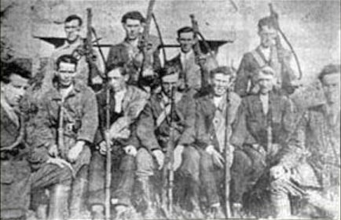
(Pictured: Kilflynn IRA Flying Column, 1922. Back (L to R): Denis O’Connell (Lixnaw), Stephen Fuller (Kilflynn), William Hartnett (Mountcoal), Tim Twomey (Kilflynn). Front (L to R): Terry Brosnan (Lixnaw), John McElligott (Leam, Kilflynn), Danny O’Shea (Kilflynn), Timothy (Aero) Lyons (Garrynagore), Tim Sheehy (Lyre), Pete Sullivan (Ballyduff), Paddy Mahony (Ballyegan, Battalion O.C.).)
Sheridan is born in Castlebar, County Mayo, on October 15, 1889. She has her early vocal training while at school at the Dominican Convent in Eccles Street, Dublin, with additional lessons from Vincent O’Brien. In 1908, she wins a gold medal at the Feis Ceoil. From 1909 to 1911 she studies at the Royal Academy of Music in London, during which time she is introduced to the Italian inventor Guglielmo Marconi, who is instrumental in arranging further studies for her in opera in Rome.
Sheridan returns to Italy, where her career continues to grow, with performances at the Teatro Dal Verme in Milan and at the Teatro di San Carlo in Naples, primarily in Puccini roles. In 1922 she first sings at La Scala, Milan, in La Wally by Alfredo Catalani under the direction of Arturo Toscanini. For the next few years, she sings at La Scala with great success. Perhaps her greatest role is Madama Butterfly, which she sings extensively in Italy and at Covent Garden. When she plays the part of Madama Butterfly, Puccini is said to be spellbound.
Despite her successes, Sheridan’s career is short. Suffering vocal difficulties, she goes into retirement around 1930 except for a few concerts. Bríd Mahon, in her 1998 book While Green Grass Grows, states that “It was rumoured that an Italian whose overtures she had rejected had blown his brains out in a box in La Scala, Milan, while she was on stage and that after the tragedy, she never sang in public again.”
Margaret Sheridan dies in relative obscurity on April 16, 1958, having lived in Dublin for many years, and her remains are buried in Glasnevin Cemetery, Dublin.
(Pictured: Margaret Burke Sheridan meets Italian conductor Vincenzo Bellezza in London, 1938. Photograph by Erich Salomon)
Dunne is born as Bernard Dunn in the village of Rostrevor, County Down, on May 19, 1908. He is the eldest son and second among three children of Barney Dunn, a businessman, and Margaret (née Byrne). His father inherits the Woodside Restaurant Temperance Refreshment Rooms and an auctioneering firm, and his mother runs a drapery business and later a shipping agency. He attends St. Mary’s School in Rostrevor until he is fourteen years old. While still in school he takes on a number of jobs, including repairing bicycles, rearing sheep, and working as a boot-boy at the home of Sir John Foster George Ross of Bladensburg. He is convinced not to emigrate to the United States by a family friend, Edward Whitaker.
Dunne moves to Drogheda in the newly established Irish Free State in 1926. He is employed as an apprentice first in Anderson’s of West Street, Drogheda, and later in Cameron’s Drapery store in Longford. It is after his move to Longford that he adds an “e” to his surname. In the mid-1930s, he moves to Cork, where he works as a buyer for Roches Stores in the menswear department. In 1944, he leaves Roches Stores to open a drapery shop with his friend, Des Darrer, across the road from Roches Stores on St. Patrick’s Street. A high-profile advertising campaign, combined with low prices, launches the venture successfully.
A second store opens on North Main Street, Cork, in 1947, which is followed by stores in Waterford and Mallow. Dunne and Darrer remain in partnership until 1952, when it is dissolved and Darrer takes ownership of the Waterford Dunnes Stores, renaming it Darrers.
The tenth store, in Wexford, opens in 1955, and the first store in Dublin opens in 1958. In 1960, Dunne launches the store’s first own-brand product, a lady’s jacket under the label St. Bernard. By 1964, Dunnes Stores has expanded into grocery and has an annual turnover of £6 million. He purchases two other Dublin stores, Bolger’s and Cassidy’s, in 1972, which have eleven shops across Dublin combined. Dunnes Stores opens its first branch in Northern Ireland in 1976.
Dunne meets his wife, Nora Maloney, while working at Roches Stores. They are married in September 1939 and have six children, including Margaret (Dunne) Heffernan, Frank, Elizabeth (Dunne) McMahon, Therese, and Ben Junior. Ben and later Margaret go on to work in the family business.
The family lives in Douglas, Cork, at Brownington Park, and in Blackrock, Cork, at Barnstead and at Ringmahon House. Following the establishment of the Dunnes Stores headquarters in Dublin in the early 1970s, the family moves to Jury’s Hotel, Dame Street. He and Nora later move to the Shelbourne Hotel, where they live until his death on April 14, 1983.
Born in Blackwater Street off Grosvenor Road in west Belfast in 1916, White is one of ten children (five sons and five daughters) of Billy White, water technician with Belfast Corporation, and his wife Kathleen (née McKane). As a boy he sings in the choir of Clonard Monastery. He plays in a céilí band as a teenager and is a lifelong aficionado of Irish music and plays the banjo and other string instruments (often smuggling guns in their cases). As a young man he is also an active member of Granuaile GAA club, playing hurling and Gaelic football.
White works as a plumber and joins the Irish Republican Army (IRA) at an early age, being imprisoned several times during the 1930s. He travels to England to take part in the IRA’s “S-Plan” bombing campaign of 1939 to 1940, then returns to Dublin to pass his bomb-making skills on to new recruits, including Brendan Behan. He then returns to England to become the IRA’s Manchester Operations Officer but, after a bomb he is working on goes off in the flat he is renting, he flees to Glasgow, then back to Ireland.
Shortly after returning to Ireland, White is arrested while giving a lecture on explosives in County Offaly and is interned at the Curragh Camp. The republican prisoners are split into two groups, one led by Pearse Kelly, and the other by Liam Leddy. White is unhappy with the situation and refuses to take sides. Shortly after his arrival, IRA Chief of StaffSeán McCool is also interned, and is concerned that the locations of many of the IRA’s arms caches are known only to him. McCool asks him to get the information to the new leadership by “signing out,” declaring that he is no longer involved with a paramilitary group. He refuses as doing so would be breaking IRA orders, but McCool persists, suggesting that he could resign from the army before signing out, thereby not contravening IRA rules. Once released, he immediately rejoins the IRA and passes on the information. He is also made IRA Quartermaster General by Chief of StaffCharlie Kerins. However, he is suspected of involvement in the killing of a police officer, Dinny O’Brien – something which he always denies – and has to go on the run.
In October 1942, White and a comrade are cornered in a house. Here the details are unclear. Tim Pat Coogan claims that White is in a house in Donnycarney in County Dublin with Maurice O’Neill (executed in Mountjoy Prison on November 12, 1942), while Danny Morrison claims that White is at a wedding reception in Cavan with Paddy Dermody. Both agree that there is a shoot-out in which one officer is killed, enabling White to escape, but he falls down a railway embankment and hides for two days before emerging, hoping that the police hunt is over. In Coogan’s version, he catches a bus to Dublin, covered in blood and mud; while, according to Morrison, he is assisted by a sympathetic soldier who helps him recover and cycles to Dublin with him. They agree that he reaches a safe house once in the capital. Morrison claims that the Donnycarney shootout occurs four months later and that White travels north, rather than returning to Dublin a second time.
On arrival in the north, White is made Officer Commanding of the IRA Northern Command. Kerins is arrested in Dublin in June 1944 and later tried for murder and hanged. White becomes the only member of the IRA leadership still free. A wanted man, he travels around until work is arranged for him by supporters in Altaghoney, County Londonderry, Northern Ireland. There, he works as a handyman and barber and sets up a dance band, also managing to acquire some explosives from a local Royal Ulster Constabulary (RUC) officer who wants rocks cleared from his field. For at least part of his time in Altaghoney, he serves as the IRA Chief of Staff.
White is finally captured and tried in October 1946 and is handed over to the Irish authorities. He is sentenced to death, but this is reduced to twelve years’ imprisonment on appeal, a defence in which his former comrade Seán MacBride is involved. He is actually released early in 1948 following a change in government which leaves Mac Bride in a ministerial post.
Following his release, White remains active in the IRA, but in a less high-profile way, as he is married and settles in Dublin. He supports the Provisional IRA following its split in 1970 and is involved in smuggling weapons across the border.
White publishes his autobiography in 1985, actually ghostwritten by Uinseann MacEoin. Entitled Harry, it attracts press attention for naming the IRA members who killed Kevin O’Higgins, names which Peadar O’Donnell separately confirms. White’s nephew, Danny Morrison, becomes a prominent Irish republican from the 1970s onward.
Ahern is urged by Paisley to ensure that criminals who flee across the Irish border are arrested. The Democratic Unionist leader makes the proposal during a cordial one-and-a-half-hour meeting at Farmleigh in Phoenix Park, where the two leaders exchange their first public handshake.
Afterwards Paisley, who receives an invitation from the taoiseach to visit the Battle of the Boyne site later in the year, says that they had also discussed the need for the new administrations in Northern Ireland and in the Republic of Ireland to work for each other’s best interests. “We can confidently state that we are making progress to ensure our two countries can develop and grow side by side in the spirit of generous cooperation,” he declares. “I trust that old barriers and threats will be removed in my day. Business opportunities are flourishing. Genuine respect for the understanding of each other’s differences and, for that matter, similarities is now developing.”
Earlier the DUP leader, who becomes the First Minister of the new power-sharing government on May 8 alongside Sinn Féin‘s Martin McGuinness as deputy First Minister, firmly shakes the hand of Ahern in public for the first time. As he arrives at Farmleigh, he quips, “I better shake the hands of this man. I’ll give him a firm handshake.”
Paisley, who is accompanied by his son, Ian Paisley, Jr., affectionately grabs the taoiseach by the shoulder. There is another handshake after the meeting at Farmleigh is finished.
Paisley says, “Mr. Ahern has come to understand me as an Ulsterman of plain speech. He didn’t ever need a dictionary to find out what I was saying. We engaged in clear and plain speech about our hopes and our aspirations for the people we both serve. The prime minister kindly congratulated me on my election victory.”
Paisley says that he had raised a number of issues crucial to unionists. “I have taken the opportunity to raise with the prime minister a number of key matters including ensuring that fugitives from justice who seek to use the border to their advantage are quickly apprehended and returned without protracted legal wrangle.” He adds, “I raised other legal issues of interests to unionists, and we discussed cooperation of an economic nature that will be to our mutual benefit.” He also says he had raised the issue of bringing Northern Ireland’s corporation tax into line with that of Ireland.
Regarding the invitation to visit the site of the Battle of the Boyne, Paisley says, “We both look forward to the visit to the battle site at the Boyne… Not to refight it, because that would be unfair, for he would have the home advantage. No Ulsterman ever gives his opponents an advantage. He adds, “Such a visit would help to demonstrate how far we have come when we can celebrate and learn from the past, so the next generation more clearly understands.”
Ahern pays tribute to the leadership shown by Paisley in helping to deliver a better future for the people of Northern Ireland. As Northern Ireland’s politicians continue at great pace to prepare for the return of power sharing, the taoiseach says that the progress has been very encouraging. “At this important time in our history, we must do our best to put behind us the terrible wounds of our past and work together to build a new relationship between our two traditions,” he says. “That new relationship can only be built on a basis of open dialogue and mutual respect. I fervently believe that we move on from here in a new spirit of friendship. The future for this island has never been brighter. I believe that this is a future of peace, reconciliation and rising prosperity for all. We stand ready to work with the new executive. We promise sincere friendship and assured cooperation. I believe that we can and will work together in the interests of everyone on this island.”
Ahern says he believes that the Battle of the Boyne site can be a symbol of the new beginning in the relationship between governments in Belfast and Dublin. “I believe that this site can become a valuable and welcome expression of our shared history and a new point of departure for an island, north and south, which is at ease with itself and respectful of its past and all its traditions,” he declared.
The Battle of the Boyne was fought in 1690 between the followers of England‘s King William of Orange, a Protestant, and the deposed King James, a Catholic, in Drogheda, eastern Ireland. Ireland was at that point under English rule. The battle is commemorated by many Northern Irish loyalists on July 12 each year.
Ministerial posts within the new devolved Stormont government have yet to be finalised. Already Sinn Féin has announced that MPs Michelle Gildernew and Conor Murphy and assembly members Gerry Kelly and Caitríona Ruane will be members of the government. However, the party has not yet indicated which of the four will take the three senior cabinet posts in education, agriculture and regional development and which one will be the junior minister in the Office of First and Deputy First Minister.
The DUP has also yet to name its ministers, but it has chosen finance, economy, environment and culture arts and leisure as the government departments it will head. The DUP’s deputy leader, Peter Robinson, and Nigel Dodds, the Belfast North MP, who both served in the last devolved government, are tipped to be the finance and economy ministers.
The Ulster Unionist Party (UUP) has yet to declare who their two ministers will be at the Departments of Health and Employment and Learning.
(From: “Upbeat Paisley shares first handshake with Irish PM” by Hélène Mulholland and agencies, The Guardian, http://www.theguardian.com, April 4, 2007)