After finishing his schooling at fifteen, O’Herlihy follows his grandfather into journalism and secures a job in the reading room of The Cork Examiner. He is only seventeen years-old when he subsequently becomes sub-editor of the Evening Echo, a position he holds for five years. He also graduates to the positions of news, features and sports reporter.
In the early 1960s O’Herlihy begins his broadcasting career when he starts to do local association football reports from Cork for Radio Éireann. In 1965, he makes his first television broadcast in a programme commemorating the sinking of the RMS Lusitania off the Cork coast. After three years O’Herlihy is asked to join RTÉ’s current affairs programme 7 Days to add the required field-reporting skills to the studio-based interviews. The programme has a reputation for its hard-hitting investigative reporting, and he reports on many varying stories from illegal fishing in Cork to the outbreak of the crisis in Northern Ireland. In November 1970, the 7 Days programme comes into controversy when O’Herlihy reports a story on illegal money lending. The report is unconventional as it is one of the first television pieces to use hidden cameras, it claims the government is not responding to illegal moneylending. A tribunal of inquiry follows, and O’Herlihy is forced to move away from current affairs.
Following this controversy, while O’Herlihy is not sacked as he has fifteen months left on his contract with RTÉ, he is moved to the RTÉ Sports department. There he works under Michael O’Hehir, who dislikes him and his broadcasting style. In spite of this O’Herlihy fronts RTÉ’s television coverage of the Olympic Games that year. He also becomes involved in the production of various sports programmes.
O’Herlihy is not long in the RTÉ Sports department when he becomes a regular presenter for such programmes as Sunday Sport and Sports Stadium. In 1978 he becomes RTÉ Soccer host alongside Eamon Dunphy and, in 1984, Johnny Giles joins the panel and Liam Brady follows in 1998. Since 1974 O’Herlihy becomes RTÉ’s chief sports presenter for such events as all Olympic Games until 2012, FIFA World Cups until 2014, UEFA European Football Championships until 2012 and European and World Track and Field Championships. He hosts RTÉ highlights of the Ryder Cup in 2006 when it is at the K Club in County Kildare and continues to present coverage of Ireland’s soccer internationals for RTÉ, along with Dunphy, Giles and Brady.
O’Herlihy hosts RTÉ’s coverage of rugby union in the 1980s and early 1990s. However, when RTÉ attains the rights to cover the English Premier League in 1992, Tom McGurk takes over as host of RTÉ’s coverage of rugby union. O’Herlihy covers the Premier League, Irish Internationals and The Champions League before dropping the Premier League in 2008. He continues to cover the Olympic Games and International Athletic Championships such as the European and World Athletics. He presents the first Rugby World Cup on RTÉ television in 1987 and, with Jim Carney, co-presents the first edition of The Sunday Game in 1979.
In 2012, while covering Chloe Magee‘s progress at the 2012 Summer Olympics O’Herlihy remarks that badminton was once considered “a mainly Protestant sport.” RTÉ subsequently receives a number of complaints, and while Magee criticises the remarks, the argument is made that the incident inadvertently reflected a complex historical reality.
O’Herlihy presents RTÉ Sport‘s coverage of the 2010 FIFA World Cup, his ninth FIFA World Cup. He fronts 18 European Championships and FIFA World Cups for RTÉ, the last of which comes in 2014. This proves to be the final tournament with O’Herlihy at the helm. He retires at its conclusion and dies the following year.
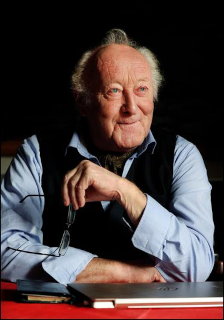
O’Herlihy attends the 12th Irish Film & Television Awards on Sunday, May 24, 2015. He dies peacefully in his sleep at his home the following day at the age of 76 nearly a year after his retirement. He is survived by wife Hillary and daughters Jill and Sally. Giles, Brady and Dunphy appear on The Late Late Show in tribute later that week. At the time of his death O’Herlihy is working on a sports version of Reeling in the Years, which RTÉ immediately cancels.
Rynne’s father is Stephen Rynne, a writer, broadcaster, author and wit, while his mother, Alice Curtayne, is a writer, hagiographer, lecturer, linguist and scholar. He attends Prosperous National School from 1947 to 1951 and Ring College Waterford from 1951 do 1952. From 1961 to 1968, he attends the Royal College of Surgeons in Ireland. After graduation, he emigrates to Canada with an internship with Hamilton Civic Hospital.
Rynne starts his general practise in Mitchell, Ontario, from 1968 to 1973, where he is introduced to vasectomy. In 1970, he is appointed as the coroner for Perth County, Ontario. In January 1974, he returns to Ireland and establishes a general practise in Clane, County Kildare.
In 1975, Rynne joins Irish Family Planning Association and starts doing vasectomies for them. In 1984, he sells condoms as an act of civil disobedience and gets fined £500. In the following year, he becomes the Chairman of IFPA. In the same year, he founds Clane General Hospital with the opposition from the Catholic Church and the local supporters.
In 1990, Rynne is shot by a man on whom he had carried out a vasectomy eight years previously. According to Rynne, the gunman fires six or seven times with a .22 Long Rifle and shoots him in the right hip. The incident is the subject of a short film The Vasectomy Doctor by Paul Webster.
O’Donnell is born on February 22, 1893, in Meenmore, near Dungloe, County Donegal, youngest among six sons and three daughters of Biddy and James O’Donnell. He is greatly influenced by his upbringing in the Rosses, in northwest Donegal, one of the poorest and most remote parts of Ireland. His father, a popular local fiddler, earns a living through his smallholding, seasonal labouring in Scotland, and winter work in a local corn mill. His mother, who comes from a radical labour and nationalist political background, works in a local cooperative store. He attends Rampart national school and Roshine national school, near Burtonport, where he is a monitor for four years. In 1911 he wins a scholarship to attend St. Patrick’s College in Drumcondra, Dublin, and returns in 1913 to the Rosses, where he spends two years teaching on the islands of Inishfree. In 1915 he is appointed head of Derryhenny national school, near Dungloe, and the following year becomes principal of a national school on the island of Arranmore, where he begins to write.
O’Donnell had long been concerned by the poor conditions of the local ‘tatie-hokers’ (potato pickers) who migrate annually to Scotland. In the summer of 1918, he travels there to help organise the Scottish Farm Servants’ Union. While there he is influenced by left-wing radicals such as Willie Gallacher, later a communistMember of Parliament (MP), and Emanuel ‘Manny’ Shinwell, later Baron Shinwell. In September 1918, against a background of rising labour militancy, he leaves teaching to become a full-time organiser for the Irish Transport and General Workers’ Union (ITGWU) in the west Ulster area. The following year he organises one of Ireland’s first “soviets” when the attendants and nurses of the Monaghan District Lunatic Asylum occupy the grounds and appoint O’Donnell as governor until their demands are met.
In early 1919 O’Donnell joins the Irish Republican Army (IRA) in Monaghan, resigning from the ITGWU for full-time IRA service in late 1920. He leads the 2nd Battalion, Donegal IRA, from the summer of 1920. In December 1920 he goes “on the run” and leads a flying column in west Donegal until May 1921, when he is wounded. Regarded as insubordinate and militarily inexperienced, he is unpopular among the other senior officers of the 1st Northern Division. He, in turn, is disappointed by the lack of social radicalism among the nationalist leadership. He opposes the Anglo-Irish Treaty, is placed in command of the minority anti-treaty 1st Northern Division and is a member of the IRA executive that occupies the Four Courts in Dublin in defiance of the provisional government.
Arrested in June 1922, O’Donnell shares a prison cell with Liam Mellows and influences his radical “Notes from Mountjoy,” an important document for subsequent left-wing republicans. He spends the next two years in various prisons and internment camps. His execution is widely expected to follow those of December 8, 1922. In August 1923, he is elected as a Sinn FéinTeachta Dála (TD) for Donegal in the general election called after the end of the Irish Civil War. He goes on hunger strike for forty-one days in late 1923 and succeeds in escaping from the Curragh in March 1924. In June 1924, while on the run, he marries Lile O’Donel, a wealthy Cumann na mBan activist who had smuggled communications for republican prisoners. O’Donel, a radical and member of the Communist Party, is the daughter of Ignatius O’Donel, a prominent landowner from Mayo. They have no children but raise their nephew, Peadar Joe, as their own son after the death in New York of O’Donnell’s brother Joe.
O’Donnell begins writing seriously while in jail and remains a prolific writer, journalist, and editor until the 1960s. His first novel, Storm, set in the Irish War of Independence, is published in 1925. One of his most highly regarded books, Islanders, is published in 1928. Adrigoole, like Islanders a story of poverty and starvation in rural Ireland, is published the following year. The Knife (1930) and On the Edge of the Stream (1934) soon follow. The most significant of his later novels is probably The Big Windows (1954). Foremost among his qualities as a writer is his empathy for the people, life, and landscape of rural Ireland. But his novels have been criticised for their slow pace, excessive detail, and didactic nature. He claims his writing is incidental to his political activism. His trilogy of autobiographical non-fiction, The Gates flew Open (1932), Salud! An Irishman in Spain (1936), and There Will Be Another Day (1963), which respectively concern the Irish Civil War, his activism during the Spanish Civil War, and his role in the land annuities agitation, remain highly regarded. His other important literary achievement is with The Bell, an innovative literary and political magazine which plays a useful dissenting role in an insular and conservative period. He founds The Bell with the writer Seán Ó Faoláin in 1940 and edits it from 1946 until it ceases publication in 1954.
O’Donnell exercises an influential role in the interwar IRA, particularly through his editorship of An Phoblacht (1926–29), which he attempts to divert from militarism to socialist agitation. His ultimate aim is for a thirty-two-county socialist republic. His most successful campaign is organising small farmers against the payment of land annuities to the government in the late 1920s and early 1930s. This campaign is later adopted by Fianna Fáil and contributes to their electoral success in 1932. He is less successful in radicalising the IRA. After the failure of Saor Éire, a left-wing IRA front which provokes clerical and popular hostility against the IRA, increasing tensions between the IRA’s left-wing and the leadership lead O’Donnell, along with Frank Ryan and George Gilmore, to split from the IRA to establish the short-lived Republican Congress in 1934.
Although O’Donnell claims he was never a Communist Party member, he plays a central role in forging links between republicans and the revolutionary left both in Ireland and internationally and invariably supports the communist party line at critical junctures. After the failure of Republican Congress, he takes up the cause of the Spanish republic. His championing of unpopular causes such as communism and Spain entail a good deal of frustration. He is physically attacked at political meetings and in 1932, despite having never visited the Soviet Union, loses a high-profile libel action against the Dominican Irish Rosary, which claim he had studied in Moscow‘s Lenin College. He is banned from entering the United States for several decades, although he maintains: “My relations with all the great powers continue to be friendly.”
O’Donnell continues to support radical campaigns until his death. He is an outspoken advocate of Irish emigrants. He is prominent in the Irish Campaign for Nuclear Disarmament and serves as its president in the early 1960s. He is a leading protester against the Vietnam War and a supporter of African anti-colonial movements such as that against apartheid. In later years he is involved in the “Save the west” campaign, highlighting the problems of the west of Ireland.
After several months of ill-health following a heart attack, O’Donnell dies in Dublin, aged 93, on May 13, 1986. He leaves instructions that there are to be “no priests, no politicians and no pomp” at his funeral, and those wishes are granted. He is cremated in Glasnevin Cemetery and his ashes are buried at his wife’s home in Swinford, County Mayo. Although he once remarked that every cause he fought for was a failure, he is now regarded as one of the most influential socialist republican theorists and an important voice of dissent in twentieth-century Ireland.
(From: “O’Donnell, Peadar” by Fearghal McGarry, Dictionary of Irish Biography, http://www.dib.ie)
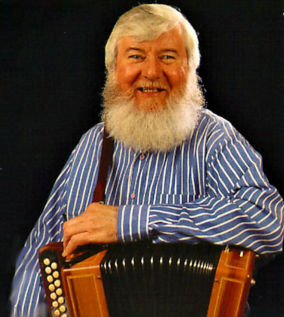
Burke starts playing traditional at age four and purchases his first accordion in the 1950s. He wins the All-Ireland Senior Accordion Championship in Thurles in 1959 and again in Boyle the following year. Together with fiddler Aggie Whyte, he wins the All-Ireland duet championship in 1962 in Gorey, County Wexford.
Burke co-founds the Leitrim Ceili Band with Padden Downey in 1956. Other members of the east Galway-based band, which wins All-Ireland Championships in 1959 and 1962, includes Irish flute players Paddy Carty, Ambrose Moloney and Tony Molloy, button accordionists Mick Darcy and Sean McGlynn, fiddlers Michael Joe Dooley, Paddy Doorhy, Aggie Whyte and Séamus Connolly, drummer Sean Curley and pianist Anne-Marie Courtney. The band tours in England and releases an LP on the New York-based Dublin label.
Burke first tours in the United States in 1961, and lives mainly in New York from 1962 to 1965, during which period he forms a musical partnership with fiddler Andy McGann. With McGann and pianist Felix Dolan, he records an LP, A Tribute to Michael Coleman, first released in 1966 on his own Shaskeen label. He records again with this trio, issuing The Funny Reel LP on the Shanachie Records label in 1979. Other musical collaborators over the years include Belfast fiddle great Sean McGuire, piper Michael Cooney, harpist Máire Ní Chathasaigh, fiddler Kevin Burke, pianist Charlie Lennon and his wife Anne Conroy Burke, whom he marries in 1990, on guitar and button accordion.
Burke’s first solo LP, Galway’s Own, is released in 1971. He also tours extensively for the next two decades, including with groups sponsored by Comhaltas Ceoltóirí Éireann. From 1988 to 1991, he lives in St. Louis, Missouri, where he has a musical residency at John D. McGurk’s Pub and hosts radio programmes at two stations, one of them the “Ireland in America” programme on KDHX. He represents Ireland in 1989 and 1992 at the International Accordion Festivals, in Montmagny, Quebec, along with accordion greats who include Cajun accordion player Marc Savoy and jazz accordionist Art Van Damme.
After residing in the United States from 1988 until 1991, Burke returns to Kilnadeema in 1992. There, he carries on teaching and performing music. He dies at the age of 81 on February 20, 2021, at Galway Hospice.
Burke is named RTÉ‘s Traditional Musician of the Year in 1970. He goes on to win both the AIB Traditional Musician of the Year and the Lifetime Achievement Award from The Irish World in 1997. A Joe Burke Tribute Concert is held in April 1997 at the Town Hall Theatre in Galway, on his reception of the AIB award. Three years later, he receives an award in Musical Mastery from Boston College. He is later conferred Gradam an Chomhaltais in 2003.
Lynch is born on November 9, 1893, in Barnagurraha, Anglesboro, County Limerick, the fifth child among six sons and a daughter of Jeremiah Lynch, farmer, and Mary Lynch (neé Kelly). The family is politically active. His father’s brother, John, had taken part in the Fenian Rising of 1867 and his mother had been joint secretary of the Ballylanders branch of the Ladies’ Land League.
Lynch attends Anglesboro national school (1898–1909). In 1910 he moves to Mitchelstown, County Cork, to take up a three-year apprenticeship in the hardware store of P. O’Neill on Baldwin Street. He remains there until the autumn of 1915. While in Mitchelstown he is a member of the Gaelic League and the Ancient Order of Hibernians. He also joins the Irish Volunteers. In 1914, when that organisation splits, he does not immediately join the militant rump. He then moves to Fermoy, County Cork, where he works in the store of Messrs J. Barry & Sons Ltd. His move coincides with a period of inactivity as neither Volunteer faction is very active nor is he known. Consequently, he does not take part in the 1916 Easter Rising, but it is a turning point for him. On May 2, 1916, he watches as the Kent family are led through Fermoy, having been captured by British soldiers. Richard Kent dies from a wound sustained that day and Thomas Kent is executed a week later. Lynch becomes a committed Volunteer at this point.
Once committed, Lynch’s enthusiasm and aptitude ensures that he quickly attains positions of responsibility. From early 1917 he is first lieutenant in the small Fermoy company. In September 1917, the Irish Volunteers in east Cork are reorganised. Nine local companies are formed into the Fermoy battalion, and he is elected adjutant. In April 1918, at the height of the conscription crisis, he briefly quits his job to concentrate on organising the Volunteers. In May he is lucky to escape arrest during the sweep that accompanies the “German plot.” When the immediate danger ends, he returns to Barry & Sons.
In January 1919, at the beginning of the Irish War of Independence, the Volunteer organisation in Cork undergoes a major restructuring. Three brigades are established, and Lynch becomes brigade commandant of Cork No. 2. In April he visits Irish Republican Army GHQ in Dublin to discuss plans and to seek arms. It is a frustrating experience as the GHQ has few guns and are cautious about action. Throughout the summer of 1919 he presses GHQ to authorise attacks on British targets as a method of acquiring arms and to prevent boredom and stagnation setting in among his men. Finally, GHQ sanctions attacks if the primary aim is the capture of arms. In response, on September 7, 1919, twenty-five men from the Fermoy company, led by Lynch, ambush fourteen British soldiers on their way to service in the Wesleyan church in Fermoy. Fifteen rifles are captured, one soldier killed, and three wounded. Lynch is shot in the shoulder, probably by one of his own men. As a result, he has to leave his job and hides out in Waterford for a time. A series of arrests follow, among those is Lynch’s close friend, Michael Fitzgerald, who dies on hunger strike in Cork County Gaol in 1920.
Lynch spends the early months of 1920 at GHQ in Dublin. During this time, he is offered the position of deputy chief of staff, but turns it down, preferring to return to Cork. Although not an articulate speaker, he impresses those he meets. His organisational talents, attention to detail, ability to inspire, and intolerance for those who waste meetings endlessly discussing side issues, are noted. He has a low tolerance for politicians and at all times considers the military wing of the movement to be of primary importance. He is engaged to Bridie Keyes, but marriage is postponed pending a final settlement of hostilities.
On June 26, 1920, Lynch, Seán Moylan, and two colleagues capture Major-GeneralCuthbert Lucas while he is fishing on the Munster Blackwater. He gives a false name when he is arrested on August 12, 1920, at City Hall, Cork, with Terence MacSwiney, Lord Mayor of Cork, and ten others. All but MacSwiney are released four days later. He then sets about organising a flying column within the brigade. Ernie O’Malley arrives from headquarters to train the men. This column achieves a major coup on September 28, 1920, when they briefly capture the British Army barracks at Mallow, leaving with a large booty of rifles, ammunition, and two machine guns. The British respond to this increase in activity and the war settles into a pattern of ambush and counter-ambush. The Mallow battalion suffers severe losses in February 1921 and Lynch himself narrowly escapes when four are killed during an encounter at Nadd in March 1921.
In early 1921 Lynch seeks to encourage greater cooperation between the various brigades in the south. Senior brigade officers meet on three occasions to discuss cooperation and a plan to import arms from Italy. The importation project fails, but the First Southern Division is formed on April 26, 1921, bringing eight brigades from Cork, Kerry, Waterford, and west Limerick together. He is elected divisional commandant, making him the most powerful officer outside GHQ. His influence is further increased by his appointment as Southern Divisional Centre and Supreme Council member of the clandestine Irish Republican Brotherhood (IRB) in March 1921.
Lynch is wary when the truce is called in July 1921. He works hard to maintain order in his division and to achieve a state of readiness in case the negotiations fail. For him the Anglo-Irish Treaty is a failure. When the Supreme Council of the IRB meets on December 10, 1921, he is the only voice against the agreement. He is among the officers who insist that an army convention should be called to discuss the treaty, effectively asserting that the army no longer accepts a position subordinate to the Dáil. The army, he believes, is the army of the Republic, and no civilian body can order it to abandon the Republic. The provisional government tries to ban this convention, but it goes ahead on March 26, 1922, and elects an army executive. Lynch is elected Chief of Staff. Between March and June, he works hard to prevent a civil war. He believes unity can be maintained, even under the Treaty, if a republican constitution can be enacted. He also cooperates with Michael Collins in promoting Irish Republican Army (IRA) activity in Ulster. In his adherence to the idea of a republic, the practicalities of politics have little impact on his consciousness, and he is dismissive of the popular support for the Treaty. He is horrified at the thought of civil war but fails to see that his position is leading almost inexorably in that direction. Distrusted as too moderate by Liam Mellows and Rory O’Connor, he is locked out of the Four Courts for a time.
When the Four Courts are attacked, Lynch immediately leaves his headquarters at the Clarence Hotel to travel south. He is briefly detained, before reaching Kingsbridge Station, and has a meeting with Eoin O’Duffy. He is disgusted when Free State figures later claim that he was released, having promised not to take arms against the government. The most plausible explanation of the incident appears to be that O’Duffy interpreted Lynch’s comments, merely indicating disappointment that a war had started, as constituting a statement of intent not to involve himself.
Lynch’s initial actions seem designed to avoid full-scale conflict. He does not order an attack on Dublin, nor does he attempt to seize Limerick. He chooses a containment strategy, seeking to hold a line from Limerick to Waterford for the republican forces. This fails, as the government sends troops in from the rear by sea. The republicans have no urban base when Lynch abandons Fermoy on August 11, 1922. He continues to meet individuals who seek a way to end the war, but intransigence has set in, and he insists that armed struggle will only end with a republic or absolute defeat. As early as August many republicans believe the war is lost and urge a reassessment of tactics, but Lynch rejects all such calls. Operating from secret headquarters in Santry, he orders the shooting of pro-Treaty politicians in retaliation for the execution of republican prisoners.
Under war conditions it is impossible for the army executive to meet regularly, and this leaves Lynch in almost complete control. As the pro-surrender lobby grows within the republican forces, he delays a meeting of the executive, claiming with some justification that it is too dangerous. He leaves Santry and attends a meeting of the Southern Division Council in the last days of February 1923. Sixteen of the eighteen officers there tell him that the military position is hopeless. This forces the calling of an executive meeting on March 6, 1923. No agreement is reached. He strongly favours fighting on, but a motion from Tom Barry, calling for an immediate end to hostilities, is barely rejected. Another meeting is arranged for April 10. On that morning a group, including Lynch and Frank Aiken, suddenly find themselves in danger of capture in a farmhouse on the slopes of the Knockmealdown Mountains in County Tipperary. They flee and are pursued. During the chase Lynch is shot in the abdomen. It seems clear that he is shot by the pursuing Free State soldiers, although Irish historian Meda Ryan has considered the theory that he may have been shot by one of his own in order to remove the major stumbling block to surrender. His colleagues are forced to abandon him, and he is captured. Initially the Free State troops believe they have caught Éamon de Valera. He is taken first to a public house in Newcastle, County Tipperary, and then to St. Joseph’s Hospital in Clonmel, but dies from his wound at 8:45 p.m. that evening. His last request is to be buried beside Michael Fitzgerald in Kilcrumper Cemetery, Fermoy, County Cork. On hearing of Lynch’s death, Ernie O’Malley writes, “You who were a living force are now a battle cry.” O’Malley is wrong, however, as the peace faction within republicanism is strengthened by his death and Aiken orders the suspension of activities on April 27.
In 1935, a massive memorial, consisting of a 60-foot-tall round tower, guarded by four bronze Irish Wolfhounds, is erected at Goatenbridge, County Tipperary, near the site of his capture. It is unveiled on April 7, 1935. Separate annual commemorations are held at Goatenbridge and Kilcrumper. Three biographies have been written and the Liam Lynch memorial pipe band is based in his native Anglesboro. The Lynch family possess a substantial collection of private correspondence.
Byrne is educated at Newbridge College, County Kildare, University College Dublin (UCD) and King’s Inns, Dublin. He is called to the Bar in 1970 and practises law in the Irish and European Courts. During his student days in Dublin, he founds the Free Legal Advice Centre, a student-run organisation providing legal aid to citizens in association with the legal profession. He campaigns in favour of Irish entry into the European Community (EC) in the 1970s and has been a keen supporter of European integration ever since.
In 1997 Byrne becomes Attorney General of Ireland in the Fianna Fáil-Progressive Democratscoalition government. As one of the negotiators of the Good Friday Agreement in April 1998, he drafts and oversees the major constitutional amendments required by that agreement, which are approved by Referendum in May 1998. He also advises on the constitutional amendments necessary for Ireland’s ratification of the Treaty of Amsterdam. During his tenure, he establishes the first independent Food Safety Agency in Europe responsible to the Minister for Health.
Byrne is nominated to the European Commission by TaoiseachBertie Ahern in September 1999, serving as Ireland’s EU Commissioner and has responsibility for Health & Consumer Protection in the Prodi Commission. He continues in that role until replaced as Ireland’s Commissioner by Charlie McCreevy in 2004.
Byrne is mooted as a potential candidate for the position of Director General of the World Health Organization following the death of the incumbent, Dr Lee Jong-wook in 2006. However, he is eventually not included in the list of thirteen candidates to head the agency.
After leaving the European Commission, Byrne holds a variety of paid and unpaid positions, including Co-Chair of European Alliance for Personalised Medicine, member of the International Advisory Board of FleishmanHillard, Chairman of the Ethics Committee of the International Prevention Research Institute (IPRI), Chairman of the Advisory Committee of the National Treasury Management Agency (NTMA), of counsel of Wilmer Cutler Pickering Hale and Dorr, Honorary Co-Chair of the World Justice Project (WJP) and a member of the World Prevention Alliamce.
Seóirse Bodley, Irish composer and former associate professor of music at University College Dublin (UCD), is born George Pascal Bodley in Dublin on April 4, 1933. In 2008, he is the first composer to become a Saoi of Aosdána. He is widely regarded as one of the most important composers of twentieth-century art music in Ireland, having been “integral to Irish musical life since the second half of the twentieth century, not just as a composer, but also as a teacher, arranger, accompanist, adjudicator, broadcaster, and conductor.”
Bodley’s father is George James Bodley (1879–1956), an employee in the Dublin office of the London Midland & Scottish Railway Company, and later of the Ports and Docks Board. His mother, Mary (née Gough, 1891–1977), works for the Guinness Brewery. He attends schools in the Dublin suburbs of Phibsborough and Glasnevin before he moves at the age of nine to an Irish-speakingChristian Brothers school at Parnell Square. He later studies at the School of Commerce in Rathmines, where he obtains his Leaving Certificate.
Music is encouraged in his parents’ home, and Bodley receives initial lessons on the mandolin from his father and on the piano from his mother. He studies the piano, harmony and counterpoint at the Royal Irish Academy of Music and obtains a Licentiate in piano from Trinity College London (TCL). From the age of 13, he also enrolls for a time at the Brendan Smith Academy of Acting. While he is still at school, he receives his first lessons in composition privately from the Dublin-based German choral conductor Hans Waldemar Rosen (1904–94), which continues, on and off, until 1956. From his student days he performs as an accompanist to singers and takes part in chamber music performances. An important element in his musical education is the twice-weekly free concerts given by the Radio Éireann Symphony Orchestra in the Phoenix Hall, Dame Court, where he has the opportunity to hear leading Irish and international performers and conductors presenting both classics and modern repertory.
From 1952 Bodley studies for a Bachelor of Music degree from University College Dublin, mainly with Anthony Hughes. He obtains the degree in 1955. From 1957 to 1959 he studies composition (with Johann Nepomuk David) and conducting at the Württembergische Hochschule für Musik in Stuttgart, Germany, and a year later he obtains a Doctorate in Music from UCD. He also takes classes in conducting with Hans Müller-Kray and Karl Maria Zwißler, and in piano with Alfred Kreutz. He returns to Germany several times in the early 1960s to participate in courses at the Darmstädter Ferienkurse, which significantly expands his knowledge of avant-garde techniques.
From 1959 until his retirement in 1998, Bodley lectures at the university’s music department, becoming associate professor in 1984. During the 1960s, he is conductor of the Culwick Choral Society.
Bodley’s development as a composer sees several distinct phases. In the 1970s he merges avant-garde styles with elements from Irish traditional music and becomes a figure of national importance. He receives several prestigious commissions for large-scale works, such as Symphony No. 3 (1981), written for the opening of the National Concert Hall.
In 1982 Bodley becomes a founder-member of Aosdána and PresidentMary McAleese confers the distinction of Saoi on him in November 2008. McAleese says that Bodley “has helped us to recast what it means to be an artist in Ireland.”
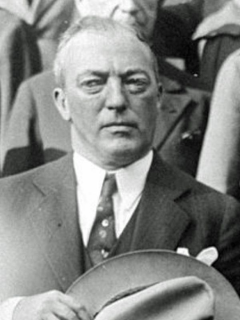
Deegan is born in the Bronx, Bronx County, New York, on December 28, 1882, to Irish immigrants. He studies architecture at Cooper Union. He marries Violet Secor (1889-1969) and has one son, William Secor Deegan (1909-85). At the age of 35 he serves in World War I as a staff officer in the 105th Field Artillery, rising to the rank of major.
Deegan later joins the United States Army Corps of Engineers as a major, where he supervises the construction of military bases in the New York area under the command of GeneralGeorge Washington Goethals. After the war he helps organize the American Legion in 1919, advancing to State Commander in 1921. In 1922 he is considered a strong candidate to become national commander of the Legion at their convention in New Orleans but is defeated due to his strong advocacy for admitting Black veterans into the organization. Advocacy for the rights of Black people is a strong theme throughout Deegan’s career, including during his position as Tenement House Commissioner.
Deegan works as an architect at a number of distinguished firms, including McKim, Mead & White, Post, Magnicke and Franke, and Starrett and van Vleck. Later in life he holds a number of political positions, most of them in the Bronx. He is President of the Bronx Chamber of Commerce until the chamber grows critical of MayorJimmy Walker, at which point he resigns. In 1928, Mayor Walker appoints him Tenement House Commissioner of New York City, a post he holds for the rest of his life, and in 1930, chairman of the Mayor’s Committee on Receptions to Distinguished Guests, or “official greeter,” a job in which he is preceded by his friend Rodman Wanamaker and eventually succeeded by Grover Whalen.
O’Reilly is born on May 14, 1929, in Granard, County Longford, one of six children of James P. O’Reilly, shopkeeper and musician, and Catherine O’Reilly (née Donegan). The family moves to Dublin when he is nine years old. He is educated at the Christian Brothers school in James’s Street, where he excels at Gaelic football and develops an interest in drama and music. Toward the end of his schooldays, he begins to participate in athletics, particularly the high jump, and is coached by Jack Sweeney, a leading athletics coach.
Always a man of many talents and interests, after leaving school O’Reilly combines working in the insurance business with an athletics career with Donore Harriers and evening drama classes. He wins several Irish titles, including the high jump, javelin, and decathlon, and sets a national record in the high jump. In 1954 he wins the British AAA Championships high jump title, beating the Commonwealth champion into second place, and setting a championship record of 6 ft. 5 in. (1.96 m). As a result, he secures a United States athletics scholarship to the University of Michigan, Ann Arbor, where he takes a degree in liberal arts, majoring in speech and drama. While at Michigan he improves his Irish record to 6 ft. 7 in. (2.007 m). His athletic career, however, is dogged with bad luck. He is selected to compete in the high jump at the European Athletics Championships in Bern, Switzerland, in 1954 but fractures an ankle in practice and fails to advance beyond the qualifying round. Although he competes at international level for ten years (1952–62), he is unlucky to never take part in the Olympic Games. A victim of sporting politics in 1952, as an NCAA athlete he is not entitled to compete. He is selected for the 1956 Summer Olympics in Melbourne but is unable to attend when, at the last minute, his club cannot provide the finance for him to attend. Earlier that year he wins the Big Ten Conference high jump title.
On leaving Michigan O’Reilly moves to New York City, where he embarks on an acting career with the Irish Players, but he returns to Dublin in 1959, where, after brief spells working as a teacher and for an advertising agency, he applies to Ireland’s new television station for a position. He is looking for an acting job but ends up being offered a position as a presenter, joining Teilifís Éireann in 1961 as an announcer/interviewer. His relaxed and unobtrusive style appeals to viewers and his light entertainment show, The Life of O’Reilly, is the most popular programme on Irish television in the day, eclipsing even a fledgling The Late Late Show. It is as a sports presenter and commentator, however, that O’Reilly is primarily remembered, as he becomes the face of sport on RTÉ Television for many years. He attends five Olympic Games as a broadcaster, from Mexico in 1968 to Los Angeles in 1984, commentating on athletics and gymnastics. The first presenter of RTÉ’s flagship Saturday afternoon sports programme Sports Stadium in 1984, he continues to present it over its fourteen-year life, co-presenting the final programme in December 1997. He also is the regular presenter of RTÉ’s Wimbledon Championships tennis coverage for many years, the sports results on news broadcasts on TV and radio, and Sunday Sport on RTÉ Radio, as well as commentating on individual sports such as ice-skating.
Although sports presenting is a natural progression for an athlete with his talents, O’Reilly’s real love is the arts. He continues to act, playing the part of Detective Inspector Michael Roarke in the classic children’s film Flight of the Doves (1971) with Ron Moody and Willie Rushton. He is also an accomplished singer and songwriter, and writes and performs his own one-man show, Across the Spectrum, comprising his own poems and songs in 1992. As well as a book of poems, The Great Explosion (1977), he releases a number of albums and tops the charts with his own song, “The Ballad of Michael Collins,” in 1981. He has a great admiration for Michael Collins, and this leads to his becoming the first non-political figure to give the oration at the annual Collins commemoration at Béal na Bláth, County Cork, in 1981. He also writes the song “Let the Nations Play” (1985), inspired by the boycotts of the Olympic games of 1980 and 1984, and the song is adopted as an anthem of the international Olympic movement.
Tall and slim in build, O’Relly is affable, modest, and self-deprecating in character. His relaxed style is no mere public affectation. He often exasperates colleagues by turning up just in time for broadcasts, and his ability to ad-lib is important in a live television environment. He once describes himself as “a champion high jumper who could enunciate properly and keep my hair neatly combed” (The Irish Times, April 7, 2001). Despite the disappointments in his sporting career, he maintains that his other interests more than compensated. In relation to the Olympics he is quoted as saying, “If you asked me whether I’d have preferred to win a medal or have written the song, I’d honestly say I would have preferred to have written the song” (Longford Leader, April 6, 2001).
O’Reilly lives in Ranelagh, Dublin, and is married twice. He meets his first wife Linda Herbst (née Kuhl) in New York in the late 1950s. His second marriage is to Johanna Lowry. He has four children. After a lenghty illness, he dies on April 1, 2001, in St. Vincent’s Hospital, Fairview, Dublin. He is buried at Mount Venus cemetery, Rathfarnham.
(From: “O’Reilly, Brendan” by Jim Shanahan, Dictionary of Irish Biography, http://www.dib.ie, October 2009)
John Arden, English playwright, dies on March 28, 2012, in Galway, County Galway. At the time of his death, he is lauded as “one of the most significant British playwrights of the late 1950s and early 60s.”
Arden is initially associated with the English Stage Company at the Royal Court Theatre in London. His 1959 play, Serjeant Musgrave’s Dance, in which four army deserters arrive in a northern mining town to exact retribution for an act of colonial violence, is considered to be his best. His work is influenced by Bertolt Brecht and epic theatre as in Left-Handed Liberty (1965, on the anniversary of Magna Carta). Other plays include Live Like Pigs, The Workhouse Donkey, and Armstrong’s Last Goodnight, the last of which is performed at the 1963 Chichester Festival by the Royal National Theatre after it was rejected by the Royal Court.
Arden’s 1978 radio play Pearl is considered in a Guardian survey to be one of the best plays in that medium. He also writes several novels, including Silence Among the Weapons, which is shortlisted for the Booker Prize in 1982, and Books of Bale, about the Protestant apologist John Bale. He is a member of the Royal Society of Literature.
With his wife and co-writer Margaretta D’Arcy, Arden pickets the Royal Shakespeare Company (RSC) premiere of his Arthurian play The Island of the Mighty, because they believe the production to be pro-imperialist. They write several plays together which are highly critical of British presence in Ireland, where he and D’Arcy live from 1971 onward.
In 1961, Arden is a founder member of the anti-nuclear Committee of 100, and he also chairs the pacifist weekly Peace News. In Ireland, he is for a while a member of Official Sinn Féin. He is an advocate of civil liberties, and opposes anti-terror legislation, as demonstrated in his 2007 radio play The Scam.
Arden is elected to Aosdána in 2011 before dying in Galway on March 28, 2012. He is waked in a wicker casket.
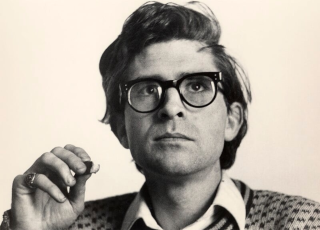
(Pictured: Photograph of John Arden, 1960 bromide print on card mount, credit to Roger Mayne, National Portrait Gallery, London)