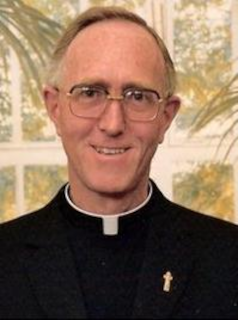
Connell is ordained priest by Archbishop John Charles McQuaid on May 19, 1951. He takes up a teaching post at the Department of Metaphysics at the University College Dublin. He is appointed Professor of General Metaphysics in 1972 and in 1983 becomes the Dean of the Faculty of Philosophy and Sociology. The College’s Department of Metaphysics is abolished after his departure.
Connell is appointed Archbishop of Dublin by the Holy See in early 1988. He is consecrated at St. Mary’s Pro-Cathedral, Dublin on March 6, 1988. He is created Cardinal-Priest by Pope John Paul II at the Consistory in Rome on February 21, 2001, with the TitulusS. Silvestri in Capite. Archbishops of Armagh, who hold the higher title of Primate of All Ireland, are more frequently appointed Cardinal than Archbishops of Dublin. The last Archbishop of Dublin to have been a cardinal is Cardinal Edward MacCabe, who was appointed in 1882. A large Irish contingent from Church and State, along with family and friends of the Cardinal, attend the installation which for the first time takes place at the front of the entrance to St. Peter’s Basilica.
On April 26, 2004, Connell retires as archbishop, handing the diocese to the coadjutor bishop, Diarmuid Martin. All bishops submit their resignation to the Pope on their 75th birthday. Connell’s is accepted shortly after his 78th birthday.
It is Connell’s failure, when Archbishop of Dublin in 1988–2004, to address adequately the abuse scandals in Dublin that lead the Vatican to assign Archbishop Martin as his replacement in the country’s largest diocese. The Murphy Report finds that Connell had handled the affair “badly” as he was “slow to recognise the seriousness of the situation.” It does praise him for making the archdiocesan records available to the authorities in 2002 and for his 1995 actions in giving the authorities the names of 17 priests who had been accused of abuse, although it says the list is incomplete as complaints were made against at least 28 priests in the archdiocese.
From 1988 Connell also continues to insure his archdiocese against liability from complainants, while claiming to the Murphy Commission that the archdiocese is “on a learning curve” in regard to child abuse. He arranges for compensation payments to be made from a “Stewardship Trust” that is kept secret from the archdiocese’s parishioners until 2003. In 1996 he refuses to help a victim of Paul McGennis and does not pass on what he knows about McGennis to her, or to the police. He apologises for this in 2002.
Desmond Connell dies in Dublin at the age of 90 on February 21, 2017, exactly sixteen years after his creation as Cardinal.
Clarke is born in Dublin on March 17, 1889, the younger son and third child of Joshua Clarke and Brigid Clarke (née MacGonigal). Church decorator Joshua Clarke moves to Dublin from Leeds, West Yorkshire, England, in 1877 and starts a decorating business, Joshua Clarke & Sons, which later incorporates a stained-glass division. Through his work with his father, Clarke is exposed to many schools of art but Art Nouveau in particular.
Clarke is educated at the Model School in Marlborough Street, Dublin, and Belvedere College, which he leaves in 1905. After his mother’s death in 1903, he is apprenticed into his father’s studio and attends evening classes in the Metropolitan College of Art and Design. His The Consecration of St. Mel, Bishop of Longford, by St. Patrick wins the gold medal for stained-glass work in the 1910 Board of Education National Competition. At the art school in Dublin, he meets fellow artist and teacher Margaret Crilley. They marry on October 31, 1914.
Clarke moves to London to seek work as a book illustrator. Picked up by London publisher George G. Harrap and Co., he starts with two commissions which are never completed. Difficulties with these projects makes Fairy Tales by Hans Christian Andersen his first printed work, in 1916. It includes 16 colour plates and more than 24 halftone illustrations. This is followed by illustrations for an edition of Edgar Allan Poe‘s Tales of Mystery and Imagination, the second version of which, published in 1923, makes his reputation as a book illustrator. His work can be compared to that of Aubrey Beardsley, Kay Nielsen, and Edmund Dulac. His final book, Selected Poems of Algernon Charles Swinburne, is published in 1928.
Clarke also continues to work in stained-glass, producing more than 130 windows. His glass is distinguished by the finesse of its drawing and his use of rich colours. He is especially fond of deep blues. His use of heavy lines in his black-and-white book illustrations echoes his glass techniques.
Clarke is plagued with ill health, in particular respiratory problems. He is diagnosed with tuberculosis in 1929 and goes to a sanatorium in Davos, Switzerland. Fearing that he will die abroad, he begins his journey back to Dublin in 1931, but dies on this journey on January 6, 1931, in Chur where he is buried. A headstone is erected but local law requires that the family pledge to maintain the grave 15 years after the death. This is not explained to the Clarke family and Harry Clarke’s remains are disinterred in 1946 and reburied in a communal grave.
Fay is the eldest son of four children of William Patrick Fay, a government clerk, and his wife, Martha Fay (née Dowling). He is educated at Belvedere College, Dublin, where he learns shorthand and typing, before leaving to become a secretary for an accountancy firm in Dublin. From an early age he has a passion for the theatre and immerses himself in books on the subject, becoming a drama expert. His brother, William George Fay, shares his enthusiasm and they take part in many amateur productions, setting up the Ormonde Dramatic Company in 1891.
Fay is an ardent nationalist and Arthur Griffith appoints him drama critic for his newspaper, the United Irishman (1899–1902), where he develops his ideas on how the theatre should be run. Initially in favour of plays in the Irish language, he soon abandons this as unworkable. In May 1901 he attacks W. B. Yeats for his faulty notions about theatre and even his work as a dramatist, ending with the fiercely nationalistic assertion that “there is a herd of Saxon and other swine fattening on us. They must be swept into the sea with the pestilent breed of West Britons with which we are troubled, or they will sweep us there.” Yeats’s and Lady Gregory‘s next play is Cathleen ni Houlihan.
In 1902, Fay writes a famous article advocating a national theatre company that will “be the nursery of an Irish dramatic literature which, while making a world-wide appeal, would see life through Irish eyes.” He is a member of his brother’s National Dramatic Society, which merges with the Irish Literary Theatre in 1902 to form the Irish National Theatre Society, the originating body of the Abbey Theatre. The following year Yeats declares that the national theatre owes its existence to the two Fay brothers. Fay soon abandons Griffith and begins to champion the cause of Yeats.
An excellent tragic actor, Fay can make audiences forget his less than five feet six inch stature through the power of his voice. When the Abbey Theatre opens on December 27, 1904, he stars in Yeats’s On Baile’s Strand as Cú Chulainn, a role he makes his own. He spends much time training the other actors. As an elocution teacher he has no equal. One play has Yeats leaving with his “head on fire” because of the quality of the voices on stage. Yeats dedicates his play The King’s Threshold (1904) with the words: “In memory of Frank Fay and his beautiful speaking in the character of Seanchan.”
Fay has a close but turbulent relationship with his brother William, whom he defers to in all theatrical matters except acting. Their heated arguments sometimes lead to blows. His temper is always volatile and he is prone to histrionics and fits of depression. After 1905, the Abbey Theatre becomes a limited company owing to the patronage of Annie Horniman, and the Fays lose most of their control, which results in much tension and bitterness. In 1907, Fay plays Shawn Keogh in the first production of The Playboy of the Western World by John Millington Synge.
Disagreements with Yeats over the approach to choosing and staging of plays comes to a head late in late 1907 and the Fays resign on January 13, 1908. On March 13 they are suspended from the Irish National Theatre Society. They tour the United States with Charles Frohman before separating. Fay then tours England in minor Shakespearean roles and melodrama. Between 1912 and 1914, Thomas MacDonagh and Joseph Mary Plunkett attempt to persuade him to become actor-manager of an Irish theatre. In 1918 he returns to the Abbey Theatre in two short-lived revivals of Yeats’s The Hour Glass and The King’s Threshold. He retires to Dublin permanently in 1921, teaching elocution and directing plays in local colleges.
Fay marries, in 1912, Freda, known as “Bird.” They live at Upper Mount Street, Dublin, and have one son, Gerard, who becomes a popular writer and memoirist. Fay dies on January 2, 1931, having never really recovered from the death of his wife, and is buried at Glasnevin Cemetery. He is credited with creating the Abbey Theatre style of acting, which becomes internationally known, and influences many other schools of acting. He wanted actors to behave as naturally as possible and to speak the lines as people would in real life, rather than with an exaggerated stage delivery. His training is a major influence on subsequent generations, as actors learned to “speak words with quiet force, like feathers borne on puffs of wind.”
(From: “Fay, Frank J. (Francis John)” by Patrick M. Geoghegan, Dictionary of Irish Biography, http://www.dib.ie, October 2009) | Pictured: Portrait of Frank Fay by John Butler Yeats, commissioned by Annie Horniman for the opening of the Abbey Theatre, December 27, 1904)
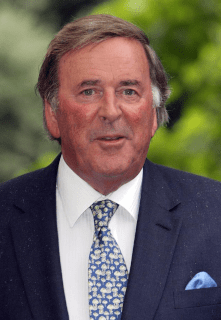
Sir Michael Terence WoganKBEDL, Irish-British radio and television broadcaster who works for the BBC in the United Kingdom (UK) for most of his career, is born at Cleary’s Nursing Home, Elm Park, Limerick, County Limerick, on August 3, 1938. Between 1993 and his semi-retirement in December 2009, his BBC Radio 2 weekday breakfast programme Wake Up to Wogan regularly draws an estimated eight million listeners. He is believed at the time to be the most listened-to radio broadcaster in Europe.
Wogan is the elder of two children. He is the son of the manager of Leverett & Frye, a high-class grocery store in Limerick, and is educated at Crescent College, a Jesuit school, from the age of eight. He experiences a strongly religious upbringing, later commenting that he had been brainwashed into believing by the threat of going to hell. Despite this, he often expresses his fondness for the city of his birth, commenting on one occasion that “Limerick never left me, whatever it is, my identity is Limerick.”
At the age of 15, after his father is promoted to general manager, Wogan moves to Dublin with his family. While living there he attends Crescent College’s sister school, Belvedere College. He participates in amateur dramatics and discovers a love of rock and roll. After leaving Belvedere in 1956, he has a brief career in the banking profession, joining the Royal Bank of Ireland. Still in his twenties, he joins the national broadcaster of Ireland, Raidió Teilifís Éireann (RTÉ), as a newsreader and announcer, after seeing a newspaper advertisement inviting applicants.
Wogan conducts interviews and presents documentary features during his first two years at RTÉ, before moving to the light entertainment department as a disc jockey and host of TV quiz and variety shows such as Jackpot, a top-rated quiz show on RTÉ in the 1960s.
Wogan is a leading media personality in Ireland and Britain from the late 1960s, and is often referred to as a “national treasure.” In addition to his weekday radio show, he is known for his work on television, including the BBC One chat show Wogan, presenting Children in Need, the game show Blankety Blank and Come Dancing. He is the BBC’s commentator for the Eurovision Song Contest from 1971 to 2008 (radio in 1971, 1974–1977; television in 1973, 1978, 1980–2008) and the Contest’s host in 1998. From 2010 to 2015 he presents Weekend Wogan, a two-hour Sunday morning show on BBC Radio 2.
In 2005, Wogan acquires British citizenship in addition to his Irish nationality and is awarded a knighthood in the same year and is therefore entitled to use the title “Sir” in front of his name.
Wogan’s health declines after Christmas 2015. He does not present Children in Need in November 2015, citing back pain as the reason for his absence from the long-running annual show. One of his friends, Father Brian D’Arcy, visits him during January and notices he is seriously ill. He dies of cancer at the age of 77 on January 31, 2016 at his home.
After Wogan’s death and his private funeral a few weeks later, a public memorial service is held on September 27 the same year. This is held at Westminster Abbey and is opened by a recording of Wogan himself, and features a number of his celebrity friends making speeches, such as Chris Evans and Joanna Lumley. The service is broadcast live on BBC Radio 2.
On November 16, 2016, the BBC renames BBC Western House, home of BBC Radio 2, in his memory, to BBC Wogan House.
Bowman is brought up in Ballsbridge in south Dublin. His father works for Great Southern Railways (later CIÉ) and his mother is a nurse, originally from County Monaghan. He is educated at Belvedere College and Trinity College Dublin where he receives a bachelor’s degree in history and political science in 1970 and a PhD in political science in 1980. He joins Radio Éireann in 1962, later becoming the presenter and commentator on numerous current affairs programmes, as well as an analyst of political developments and interviewer of politicians on radio and later on television. In the 1980s, he presents the current affairs programme Today Tonight, the precursor to Prime Time.
Bowman wins Jacob’s Awards in 2013 and 2016 for his radio broadcasting, the former for his presentation of the current affairs programme, Day by Day. In April 2008, he comments on RTÉ television coverage of the state funeral of Patrick Hillery, a former President of Ireland.
Bowman chairs the audience-participation political programme Questions and Answers on RTÉ One television for 21 years, the final edition airing on June 29, 2009. He is the presenter of Bowman: Sunday: 8.30 (previously Bowman Saturday) on radio, a weekly compilation of material from broadcasting archives at home and abroad.
Bowman writes a history of RTÉ Television called Window and Mirror. RTÉ Television: 1961-2011. It is launched by TaoiseachEnda Kenny at the National Museum of Ireland in Dublin on November 23, 2011.
Bowman is married to psychiatrist Eimer Philbin Bowman and they have have four children: Jonathan, Emma, Abie and Daniel. His eldest son, Jonathan Philbin Bowman, a journalist, television and radio presenter, dies in an accident in March 2000. His daughter, Emma Philbin Bowman, works in Dublin as a psychotherapist. His middle son, Abie Philbin Bowman, is a columnist for The Dubliner magazine and a stand-up comedian, while in 2005 his youngest son, Daniel, initiates Be Not Afraid, a charity wristband campaign which raises over €80,000 in aid of Turning the Tide of Suicide and the Irish Red Cross and later sets up a youth marketing firm, Spark.
Ryan is Professor of Oriental Languages at University College Dublin before his appointment by Pope Paul VI as Archbishop of Dublin and Primate of Ireland on December 29, 1971. Maintaining his connection and interest in oriental studies, he serves as chairman of the trustees of the Chester Beatty Library from 1978 to 1984.
During his term, Ryan consolidates much of the expansion of the archdiocese which had taken place during the term of his predecessor. He also oversees the fuller implementation of the reforms of Vatican II. He is particularly interested in liturgical reform.
Ryan also takes a traditional stand on social issues, including poverty, family life and opposition to abortion. He strongly promotes the Eighth Amendment of the Constitution of Ireland in 1983, granting the equal right to life to mother and unborn.
As Archbishop, Ryan gives the people of Dublin a public park on a site earmarked by his predecessors for a proposed cathedral. It is named “Archbishop Ryan Park” in his honour. The land, at Merrion Square, is a gift from the archbishop to the city of Dublin.
Ryan is named in the Murphy Report, released in 2009, on sexual abuse of children in Dublin. His actions in respect of complaints against priest Fr. McNamee are described in the report as “an example of how, throughout the 1970s, the church authorities were more concerned with the scandal that would be created by revealing Fr. McNamee’s abuse rather than any concern for the abused.” He also does not act on complaints against other priests who are also subsequently confirmed to be abusers.
In January 2010, after Ryan has been criticised in the Murphy Report the previous year, Dublin City Council seeks public views on renaming “Archbishop Ryan Park.” Later that same year it is renamed “Merrion Square Park” by the City Council.
FitzGerald joins Fine Gael, attaching himself to the liberal wing of the party. and in 1969 is elected to Dáil Éireann, the lower house of the Oireachtas, the Irish parliament. He later gives up his university lectureship to become Minister for Foreign Affairs in the coalition government of Liam Cosgrave (1973–1977). When the coalition government is resoundingly defeated in the 1977 Irish general election, Cosgrave yields leadership of Fine Gael to FitzGerald. In his new role as Leader of the Opposition and party leader, he proceeds to modernize and strengthen the party at the grass roots. He briefly loses power in 1982 when political instability triggers two snap elections.
By the time of the 1981 Irish general election, Fine Gael has a party machine that can easily match Fianna Fáil. The party wins 65 seats and forms a minority coalition government with the Labour Party and the support of a number of Independent TDs. FitzGerald is elected Taoiseach on June 30, 1981. To the surprise of many FitzGerald excludes Richie Ryan, Richard Burke and Tom O’Donnell, former Fine Gael stalwarts, from the cabinet.
On May 5, 2011, it is reported that FitzGerald is seriously ill in a Dublin hospital. Newly elected Fine Gael Taoiseach Enda Kenny sends his regards and calls him an “institution.” On May 6 he is put on a ventilator. On May 19, after suffering from pneumonia, he dies at the Mater Private Hospital in Dublin at the age of 85.
In a statement, Irish PresidentMary McAleese hails FitzGerald as “a man steeped in the history of the State who constantly strove to make Ireland a better place for all its people.” Taoiseach Enda Kenny pays homage to “a truly remarkable man who made a truly remarkable contribution to Ireland.” Henry Kissinger, the former United States Secretary of State, who serves as an opposite number to FitzGerald in the 1970s, recalls “an intelligent and amusing man who was dedicated to his country.”
FitzGerald’s death occurs on the third day of Queen Elizabeth II‘s state visit to the Republic of Ireland, an event designed to mark the completion of the Northern Ireland peace process that had been “built on the foundations” of FitzGerald’s Anglo-Irish Agreement with Margaret Thatcher in 1985. In a personal message, the Queen offers her sympathies and says she is “saddened” to learn of FitzGerald’s death.
On his visit to Dublin, United States PresidentBarack Obama offers condolences on FitzGerald’s death. He speaks of him as “someone who believed in the power of education; someone who believed in the potential of youth; most of all, someone who believed in the potential of peace and who lived to see that peace realised.”
FitzGerald is the author of a number of books, including Planning in Ireland (1968), Towards a New Ireland (1972), Unequal Partners (1979), All in a Life: An Autobiography (1991), and Reflections on the Irish State (2003).
Marmion is born April 1, 1858, in Dublin, the seventh of nine children of William Marmion and Herminie Marmion (née Cordier). He attends St. Laurence O’Toole’s, a primary school run by the Augustinian Fathers of John’s Lane. On January 11, 1869, he transfers to Belvedere College, where he receives an excellent grounding in Greek and Latin from the Jesuit Fathers. From there, he proceeded in January 1874 to Clonliffe College, where he remains until December 1879, when the new Archbishop of Dublin, Dr. Edward MacCabe, selects him for further theological studies in Rome.
Marmion is in Rome at the Pontifical Irish College, studying theology at the Propaganda College, for eighteen months (December 1879 – July 1881). Although invited by the authorities at Propaganda to present himself for the doctorate degree, he turns down the offer for health reasons, on account of the necessary extra year in Rome which this would entail. On returning to Dublin, he spends the first year as curate in Dundrum parish. This is followed by four years (1882–86) as professor of philosophy at Clonliffe. On October 25, 1886, he receives from the newly appointed Archbishop of Dublin, Dr. William Walsh, his dimissorial letters, granting him permission to join the Benedictine order. On November 21, 1886, he enters the newly founded BelgianMaredsous Abbey, with which, by virtue of the Benedictine vow of stability, he is to be associated for the rest of his life.
The first thirteen years of his monastic life (1886–99) are spent at Maredsous Abbey itself. After an unsuccessful start in the abbey school as a kind of housemaster to the junior boys, he finds his feet within the community through congenial work, notably the teaching of Thomistic philosophy to the junior monks. He also gradually builds up a reputation as a spiritual guide through the exercise of ministry on a small scale in the surrounding area. The next decade (1899–1909) finds him in Leuven as prior and professor of dogmatic theology at Mont César Abbey, which is founded and staffed by Maredsous. This decade provides a wide outlet for his matured spiritual doctrine through his lectures on dogmatic theology in Mont César, his retreats to priests and religious, and his private correspondence. The third and final phase of his monastic life begins when the chapter of Maredsous elects him as its third abbot in 1909.
An invitation is received from the Belgian government from December 1909 to April 1910 to undertake a Benedictine foundation in Katanga, part of the Belgian Congo. In spite of pressure from government quarters the chapter of Maredsous refuses the offer, and Marmion accepts this negative decision. In 1913 the entire community of Anglican Benedictines of Caldey Island, Wales, transfer their allegiance from Canterbury to Rome. Marmion becomes deeply involved in the spiritual and canonical process of the reception of the community into the Catholic church.
The outbreak of World War I ushers in four years of grave anxiety for Marmion. Belgium is not completely occupied but retains sovereignty over an area extending inland about twenty miles to the Ypres Salient. This enables the young monks of Maredsous, for whom Marmion had found a temporary home in Edermine, County Wexford, to travel to and from the Western Front, where they are being called up to serve as stretcher bearers in the Belgian army. He does his utmost to maintain the unity of his community between those who had remained in Maredsous and the Edermine group.
The first of Marmion’s great spiritual books, Christ, the Life of the Soul, appears in 1916, and its phenomenal success has been described as a silent plebiscite. This is followed by Christ in His Mysteries (1919), Christ the Ideal of the Monk (1922), and Sponsa Verbi (1923). The books are able to appear in rapid succession since they are compiled from his existing conference notes.
One final piece of important monastic and ecclesiastical and even political business absorbs much of Marmion’s energies, although strictly speaking it is not of his remit. His strenuous efforts to install Belgian monks in the Abbey of the Dormition on Mount Zion in Jerusalem following the internment (November 1918) of the original German Benedictine community by the victorious British forces are of no avail, the question being finally settled by the reinstallation of the German (Beuronese) monks in 1921.
Marmion dies at Maredsous on January 30, 1923, following a brief illness which originates in a chill and is aggravated by influenza.
Marmion is beatified by Pope John Paul II on September 3, 2000. This is the outcome of a popular reputation for holiness which had increased steadily since his death and the procedures for beatification prompted in 1954 by Mgr. Montini, the future Pope Paul VI. The canonical steps are: diocesan process at Namur (1957–61); examination at Rome of Marmion’s writings (1960–73); a critical biography (1987–94), written by Mark Tierney, OSB, for the Roman process on the ‘heroicity’ of Marmion’s virtues which concluded in June 1999; and finally, an inexplicable cure of cancer through Marmion’s intercession, judged as miraculous by Rome on January 25, 2000.
The originality of Marmion’s spiritual doctrine lay in his truly central emphasis on the doctrine of our adoption as the children of God in baptism. Many of his predecessors had also emphasised this doctrine, but few had made it the focus from which everything radiated and to which everything returned. The second characteristic of Marmion’s teaching, a much more personal trait, is the conviction of authenticity communicated by his writings, of the greatness of our sharing in the sonship of the Word. This makes a deep and lasting impression on the reader and gives an infinitely sacred meaning to the title ‘children of God’ and thereby to the whole of life. The third characteristic of Marmion’s teaching is the simplicity with which the deepest theological truths are presented – truths which preachers often feel their people cannot ‘take,’ and hence are left unsaid. Marmion presents these truths directly from St. John and St. Paul, and not merely in familiar extracts but in the whole sweep of their texts.
(From: “Marmion, Dom Columba” by Placid Murray, Dictionary of Irish Biography, http://www.dib.ie)
Francis Patrick Mary Browne, distinguished Irish Jesuit and a prolific photographer, dies in Dublin on July 7, 1960. His best-known photographs are those of the RMS Titanic and its passengers and crew taken shortly before its sinking in 1912. He is decorated as a military chaplain during World War I.
Browne is born to a wealthy family in 1880 at Buxton House, Cork, County Cork, the youngest of the eight children of James and Brigid (née Hegarty) Browne. His mother is the niece of William Hegarty, Lord Mayor of Cork, and a cousin of Sir Daniel Hegarty, the first Lord Mayor of Cork. She dies of puerperal fever eight days after his birth. After the death of his father in a swimming accident at Crosshaven on September 2, 1889, he is raised and supported by his uncle, Robert Browne, Bishop of Cloyne, who buys him his first camera shortly before the younger man embarks on a tour of Europe in 1897.
In April 1912 Browne receives a present from his uncle: a ticket for the maiden voyage of RMS Titanic from Southampton, England, to Queenstown, Ireland, via Cherbourg, France. He travels to Southampton via Liverpool and London, boarding the RMS Titanic on the afternoon of April 10, 1912. He is booked in cabin A-37 on the Promenade Deck. He takes dozens of photographs of life aboard RMS Titanic on that day and the next morning. He captures the last known images of many crew and passengers, including captain Edward J. Smith, gymnasium manager T. W. McCawley, engineer William Parr, Major Archibald Butt, writer Jacques Futrelle and numerous third-class passengers whose names are unknown.
During his voyage on the RMS Titanic, Browne is befriended by an American millionaire couple who are seated at his table in the liner’s first-class dining saloon. They offer to pay his way to New York and back in return for him spending the voyage to New York in their company. He telegraphs his superior, requesting permission, but the reply is an unambiguous “GET OFF THAT SHIP – PROVINCIAL.”
Browne leaves the RMS Titanic when she docks in Queenstown and returns to Dublin to continue his theological studies. When the news of the ship’s sinking reaches him, he realises that his photos would be of great interest, and he negotiates their sale to various newspapers and news cartels. They appear in publications around the world. The Eastman Kodak Company subsequently gives him free film for life, and he often contributes to The Kodak Magazine. It is unknown what type of camera he used to shoot the famous photos aboard RMS Titanic.
After his ordination on July 31, 1915, Browne completes his theological studies. In 1916, he is sent to Europe to join the Irish Guards as a chaplain. He serves with the Guards until the spring of 1920, including service at the Battle of the Somme and at Locre, Wytschaete, Messines Ridge, Paschendaele, Ypres, Amiens and Arras in Flanders.
Browne is wounded five times during the war, once severely in a gas attack. He is awarded the Military Cross (MC) on June 4, 1917 “for distinguished service in the field”. He is awarded a bar to his MC on February 18, 1918. He is also awarded the Croix de Guerre by France.
Browne takes many photographs during his time in Europe. One, which he calls “Watch on the Rhine,” is considered a classic image of World War I. He assembles a collection of his war photographs in an album named after his most famous photograph and distributes copies to his colleagues in the Guards.
After the war, Browne returns to Dublin, where, in 1922, he is appointed superior of Gardiner Street Church in Dublin. Ill health dogs him, however, and in 1924 it is thought that he would recover more quickly in warmer climes. He is sent on an extended visit to Australia. He takes his camera along, photographing life aboard ship and in Cape Town, South Africa, where he breaks his voyage.
On his way back to Ireland, Browne visits Ceylon, Aden, Suez, Saloniki, Naples, Toulon, Gibraltar, Algeciras, and Lisbon, taking photographs of local life and events at every stop. It is estimated that he takes more than 42,000 photographs during his life.
Browne resumes office as the Superior of Saint Francis Xavier Church, Dublin, upon his return. In 1929 he is appointed to the Retreats and Mission staff of the Irish Jesuits. His work entails preaching at missions and religious retreats all over Ireland. As most of this work is necessarily performed on evenings and Sundays, he has considerable time to indulge in his hobby during the daytime. He takes photographs of many parishes and towns in Ireland, and also photographs in London and East Anglia during his ecclesiastical travels to England.
Browne dies in Dublin on July 7, 1960, and is buried in the Jesuit plot in Glasnevin Cemetery in Dublin. His negatives lay forgotten for 25 years after his death. They are found by chance in 1985 when Father Edward E. O’Donnell discovers them in a large metal trunk, once belonging to Browne, in the Irish Jesuit archives. “When the trunk was opened in 1985, people compared him to the greats like Henri Cartier-Bresson and Robert Doisneau, but his work predated theirs by decades,” archivist David Davison later recalls.
O’Donnell brings the negatives to the attention of several publishers. The RMS Titanic photographs are published in 1997 as Father Browne’s Titanic Album with text by E. E. O’Donnell (Fr. Eddie O’Donnell). In all, at least 25 volumes of Browne’s photographs have now been published. The features editor of The Sunday Times of London calls this “the photographic equivalent to the discovery of the Dead Sea Scrolls.” Many of these books have become best-sellers, the latest being the Centenary Edition of Father Browne’s Titanic Album in 2012 by Messenger Publications, Dublin.
The Irish province of the Jesuits, the owner of the negatives pursuant to Browne’s will, engage photographic restoration specialists David and Edwin Davison to preserve and catalogue the fragile and unstable negatives. The Davisons make copies of every negative and are in the process of transferring every usable image to a digital format for future generations. The Davisons later acquire the rights to the photographs and still own the rights as Davison & Associates.
Adrian Hardiman, Irish judge who serves as a Judge of the Supreme Court of Ireland from 2000 to 2016, dies in Portobello, Dublin, on March 7, 2016. He writes a number of important judgments while serving on the Court. He also presides, as does each Supreme Court judge on a rotating basis, over the Court of Criminal Appeal.
Hardiman joins Fianna Fáil while a student in University College Dublin and stands unsuccessfully for the party in the local elections in Dún Laoghaire in 1985. In 1985, he becomes a founder member of the Progressive Democrats but leaves the party when he is appointed to the Supreme Court. He remains very friendly with the former party leader and ex-Tánaiste, Michael McDowell, who is a close friend at college, a fellow founding member of the party, and best man at his wedding.
Hardiman is called to the Irish Bar in 1974 and receives the rare honour of being appointed directly from the Bar to Ireland’s highest court. Prior to his elevation to the Supreme Court in 2000, he has a successful practice as a barrister, focusing on criminal law and defamation.
Politically, Hardiman supports the liberal side in Ireland’s debates over abortion, being active in the “anti-amendment” campaign during the 1982 Abortion Referendum and later represents the Well Woman Centre in the early 1990s. After his death, he is described by Joan Burton as a liberal on social issues. But he could be an outspoken opponent of Political Correctness, such as when he rejects the Equality Authority‘s attempt to force Portmarnock Golf Club to accept women as full members. He also believes that certain decisions, such as those involving public spending, are better left to elected politicians rather than unelected judges, regardless of how unpopular that might sometimes be in the media (which he tends to hold in low esteem) and among what he describes as the “chattering classes.”
Hardiman’s concern for individual rights is not confined to Ireland. In February 2016, he criticizes what he describes as the radical undermining of the presumption of innocence, especially in sex cases, by the methods used in the UK‘s Operation Yewtree inquiry into historical sex allegations against celebrities, and he also criticizes “experienced lawyer” and then United States presidential candidate Hillary Clinton for allegedly declaring in January that “every accuser was to be believed, only to amend her view when asked if it applied to women who had made allegations against her husband”, former U.S. PresidentBill Clinton.
In a tribute following his death in 2016, PresidentMichael D. Higgins says Justice Hardiman “was one of the great legal minds of his generation”, who was “always committed to the ideals of public service.” He is described as a “colossus of the legal world” by Chief JusticeSusan Denham.
One commentator writes that “Hardiman’s greatest contribution …was the steadfast defence of civil liberties and individual rights” and that “He was a champion of defendants’ rights and a bulwark against any attempt by the Garda Síochána to abuse its powers.”





 seamus dubhghaill