seamus dubhghaill

Promoting Irish Culture and History from Little Rock, Arkansas, USA


Leave a comment

Birth of John McAlery, Association Football Pioneer

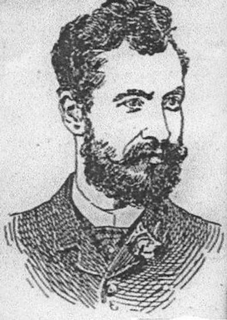
John McCredy McAlery, an Irish association football pioneer, is born in RathfrilandCounty Down, on November 29, 1848. His accomplishments include organizing the first ever properly organized football match in the history of Irish football in 1878, founding the first Irish football club in 1879, helping found the Irish Football Association in 1880, and wearing the captain‘s armband in Ireland‘s first ever international match in 1882. He is known as the “father of Irish association football.”

McAlery moves to Belfast to learn the drapery business and soon becomes very successful, opening the Irish Tweed House gentleman’s outfitters on Royal Avenue. A talented cricketer in his youth, his first involvement in the Belfast sport scene is helping in the formation of the Cliftonville Cricket Club in 1870, later serving as club treasurer. In 1878, during his honeymoon in Scotland, he witnesses his first ever association football match, and enjoys it so much he decides to introduce the sport back home.

The first match of organized association football on Irish soil is played on October 24, 1878, between Caledonian and Queen’s Park. McAlery invites the Scottish sides to play in the exhibition match at the Ulster Cricket Ground in an attempt to showcase the game to the Belfast crowd. Queen’s Park achieves a 3–2 victory, and more importantly, the demonstration is well received by the locals.

On September 20, 1879, less than a year later, McAlery places an advertisement in both the News Letter and the Northern Whig soliciting for individuals interested in becoming members of the Cliftonville Association Football Club.

The newly formed Cliftonville F.C. side plays their first match just nine days later, losing 2–1 to a team of rugby players called Quidnunces. They achieve their first victory on November 1 with a 2–0 defeat of Knock F.C., a team of former lacrosse players.

On November 18, 1880, McAlery organizes a meeting at the Queen’s Hotel in Belfast between the seven Irish football clubs that have been established at the time: AlexanderAvoniel, Cliftonville, Lisburn Distillery, Knock, Moyola Park and Oldpark. These teams become the founding members of the Irish Football Association (IFA), with Lord Spencer Chichester serving as its president and McAlery as secretary. In an appendix to the minutes of the meeting, McAlery writes: “If the spirit which pervaded from those present be acted upon the result will be a strong Association for promoting the game which we have espoused.”

The meeting also provides for Ireland’s first official football competition, the Irish FA Cup. In the first Cup final of the inaugural competition, played on April 9, 1881, Cliftonville is defeated by Moyola Park. They suffer the same fate the following year, losing to Queen’s Island in the final of the 1881–82 edition. McAlery, who captains Cliftonville while playing at fullback, wins his first trophy on his third try, as his club defeats Ulster to win the 1882–83 Irish Cup.

McAlery does not play much after this, deciding to focus on his administrative role in Irish football. He referees international matches until 1887, and remains the Irish FA secretary until 1888.

McAlery captains Ireland’s first ever international match on February 18, 1882, playing at right back. On a “bittery cold” Belfast night with occasional rain and hail, Ireland loses to the far more experienced England team by a score of 13–0. A week later, he makes his second and final international appearance, captaining his team again as they lose 7–1 to Wales in Wrexham.

McAlery retires to Whitehead, County Antrim, where he dies on December 3, 1925.

In 2013, a blue plaque erected by the Ulster History Circle is unveiled at Solitude, Cliftonville’s home ground, to commemorate McAlery’s efforts.


Leave a comment

Birth of Sam Hanna Bell, Novelist, Playwright & Broadcaster

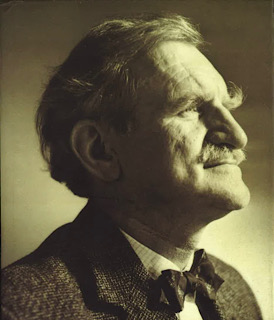
Sam Hanna Bell, Scottish-born Northern Irish novelistshort story writer, playwright, and broadcaster, is born in Glasgow to Ulster Scots parents on October 16, 1909.

Following the sudden death of his father in 1918, Bell is brought at the age of seven to live near Raffery in the Strangford Lough area of County Down. He lives with his mother and two brothers in a cottage with no electricity or running water. This is the setting of his acclaimed novel of Ulster rural life, December Bride (1951). He moves to Belfast in 1921, where he works at a variety of manual jobs before securing a post with the BBC in 1945. He is a co-founder of the left-leaning literary journal, Lagan, in 1943.

Bel’s first collection of short stories, Summer Loanen and Other Stories, is published in 1943. His novels include December Bride (1951), The Hollow Ball (1961), A Man Flourishing (1973) and Across the Narrow Sea (1987).

Bell is recruited to the BBC in 1946, along with fellow writer, W. R. Rodgers, by poet and radio producerLouis MacNeice. Some of his work as a radio producer is highly innovative. This is Northern Ireland, An Ulster Journey (1949) is a classic radio feature incorporating actuality, poetry, music and narration. In later work, Bell incorporates the voices of “ordinary people” in his attempt to paint a picture of Ulster as rooted in the lives and traditions of its people. His collaboration with W. R. Rodgers, The Return Room (1955), is one of the most important post-war Irish radio features and shows the influence of Dylan Thomas on Rodgers, the poet.

In the 1940s, along with his BBC colleague John Boyd, the essayist (and anti-Partition activist) Denis Ireland, actors Joseph Tomelty and J. G. Devlin, poets John Hewitt and Robert Greacen, and the Rev. Arthur Agnew, Bell is one of an intellectual set, “the club of ten” Linen Hall Library members that meets weekly next to the library in Campbell’s cafe.

In 1977, Bell is honoured with an MBE in recognition of his contribution to the cultural life of Northern Ireland.

December Bride is made into an acclaimed film in 1990. Reviewing the film, The Irish Times columnist and literary critic Fintan O’Toole says it is “not just a remarkable artistic achievement, but also a remarkable political one…restoring a richness and complexity to a history that has been deliberately narrowed.” In April 1999, December Bride is selected by award-winning novelist and critic Colm Tóibín and publisher, writer and critic Dame Carmen Callil, for inclusion in The Modern Library: The 200 Best Novels in English Since 1950 (Picador).

Bell dies on February 9, 1990, at 190 King’s Road, Knock, Belfast, aged 80, shortly before the premiere of the film of December Bride. On October 15, 2009, the eve of what would have been Bell’s centenary, a blue plaque is unveiled by Northern Ireland Minister of Culture, Arts and Leisure Nelson McCausland on the Belfast house where Bell had written December Bride. Such plaques are erected to commemorate and honour notable people.


Leave a comment

Birth of Harry Ferguson, Mechanic and Inventor

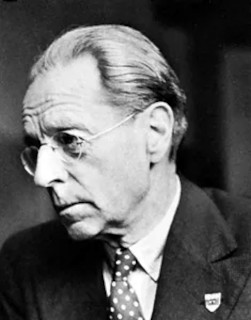
Henry George “Harry” Ferguson, a British mechanic and inventor who is noted for his role in the development of the modern agricultural tractor and its three-point linkage system, for being the first person in Ireland to build and fly his own aeroplane, and for developing the first four-wheel drive Formula One car, the Ferguson P99, is born on November 4, 1884, at Growell, near Dromore, County Down, in what is now Northern Ireland.

Ferguson is the son of a farmer. In 1902, he goes to work with his brother, Joe, in his bicycle and car repair business. While working there as a mechanic, he develops an interest in aviation, visiting air shows abroad. In 1904, he begins to race motorcycles.

In the 1900s Ferguson becomes fascinated with the newly emerging technology of powered human flight and particularly with the exploits of the Wright brothers, the American aviation pioneers who made the first plane flight in 1903 at Kill Devil Hills, North Carolina.

The first person to accomplish powered flight in the UK is Alliot Verdon Roe in June 1908, who also flies an aeroplane of his own design, but this has not yet been achieved in Ireland. Ferguson begins to develop a keen interest in the mechanics of flying and travels to several air shows, including exhibitions in 1909 at Blackpool and Rheims where he takes notes of the design of early aircraft. He convinces his brother that they should attempt to build an aircraft at their Belfast workshop and, working from his notes, they work on the design of a plane, the Ferguson monoplane.

After making many changes and improvements, they transport their new aircraft by towing it behind a car through the streets of Belfast up to Hillsborough Park to make their first attempt at flight. They are at first thwarted by propeller trouble but continue to make technical alterations to the plane. After a delay of nearly a week caused by bad weather, the Ferguson monoplane finally takes off from Hillsborough on December 31, 1909. Ferguson becomes the first Irishman to fly and the first Irishman to build and fly his own aeroplane.

After falling out with his brother over the safety and future of aviation, Ferguson decides to go it alone, and in 1911 founds a company selling Maxwell, Star and Vauxhall cars and Overtime Tractors. He sees at first hand the weakness of having tractor and plough as separate articulated units, and in 1917 he devises a plough that can be rigidly attached to a Ford Model T car — the Eros, which becomes a limited success, competing with the Fordson Model F.

In 1917 Ferguson meets Charles E. Sorensen while Sorensen is in England scouting production sites for the Fordson tractor. They discuss methods of hitching the implement to the tractor to make them a unit. In 1920 and 1921 he demonstrates early versions of his three-point linkage on Fordson tractors at Cork and at Dearborn, Michigan. He and Henry Ford discuss putting the Ferguson system of hitch and implements onto Fordson tractors at the factory, but no deal is struck. At the time the hitch is mechanical. Ferguson and his team of longtime colleagues, including Willie Sands and Archie Greer, soon develop a hydraulic version, which is patented in 1926. After one or two false starts, he eventually founds the Ferguson-Sherman Inc., with Eber and George Sherman.

The new enterprise manufactures the Ferguson plough, incorporating the patented “Duplex” hitch system mainly intended for the Fordson “F” tractor. Following several more years of development, Ferguson’s new hydraulic version of the three-point linkage is first seen on his prototype “Ferguson Black” or ‘Irish tractor’ as he calls it, now in the Science Museum, South Kensington, London. A production version of the “Black” is introduced in May 1936, made at one of the David Brown Engineering Ltd. factories in Huddersfield, West Yorkshire, and designated Ferguson Model A tractor.

Ferguson’s interests are merged with those of David Brown junior to create the Ferguson-Brown Company.

In October 1938, Ferguson demonstrates his latest tractor to Henry Ford at Dearborn, and they make the famous “handshake agreement.” He takes with him his latest patents covering future improvements to the Ferguson tractor and it is these that lead to the Ford-Ferguson 9N introduction to the world on June 29, 1939.

Henry Ford II, Ford’s grandson, ends the handshake agreement on June 30, 1947, following unsuccessful negotiations with Ferguson, but continues to produce a tractor, the 8N, incorporating Ferguson’s inventions, the patents on almost all of which have not yet expired, and Ferguson is left without a tractor to sell in North America. His reaction is a lawsuit demanding compensation for damage to his business and for Ford’s illegal use of his designs. The case is settled out of court in April 1952 for just over $9 million. The court case costs him about half of that and a great deal of stress and ill health.

By 1952, most of the important Ferguson patents have expired, and this allows Henry Ford II to claim that the case had not restricted Ford’s activities too much. It follows that all the world’s other tractor manufacturers can also use Ferguson’s inventions, which they do. A year later Ferguson merges with Massey-Harris Limited to become Massey-Harris-Ferguson Co., later Massey Ferguson.

Ferguson dies at his home at Stow-on-the-Wold, Gloucestershire, England, on October 25, 1960, as the result of a barbiturate overdose. The inquest is unable to conclude whether his death had been accidental or not.

A blue plaque commemorating Ferguson is mounted on the Ulster Bank building in Donegall Square, Belfast, the former site of his showroom. A granite memorial has been erected to Ferguson’s pioneering flight on the North Promenade, Newcastle, County Down, and a full-scale replica of the Ferguson monoplane and an early Ferguson tractor and plough can be seen at the Ulster Folk and Transport Museum at Cultra, County Down. Today his name lives on in the name of the Massey Ferguson company.


Leave a comment

Birth of Thomas Sinclair, Businessman & Politician

Thomas Sinclair, Ulster Scots businessman and politician who drafted the Ulster Covenant, is born in Belfast on September 23, 1838.

Sinclair’s parents are Thomas (1811–1867), merchant and ship-owner, and Sarah Sinclair (née Archer) (1800–1849). His father goes into business with his brother John (1808–1856), setting up a provisions and general merchant store at 5–11 Tomb Street, Belfast. John marries Eliza Pirrie, a relative of the prominent ship builder William Pirrie, 1st Viscount Pirrie. After the death of his father in 1867, Sinclair inherits £35,000 as his mother, brother and sister are all deceased.

In 1876, Sinclair marries Mary Duffin of Strandtown Lodge, Belfast. They have a daughter, Frances Elizabeth Crichton, and a son. She dies in 1879. He marries Elizabeth Richardson in 1882. She is the niece of John Grubb Richardson and the widow of Sinclair’s cousin, John M. Sinclair. They have three sons and two daughters.

Sinclair attends Royal Belfast Academical Institution and Queen’s College Belfast, graduating with a BA with gold medal for mathematics in 1856, and an MA with gold medals in logic, political economy, and English literature in 1859. After his father’s death, he takes over running the family business. He expands and grows it by merging it with another large provisions business with American branches, Kingan & Co. He is related to the Kingans through his cousin Sarah, who is married to the owner, Samuel Kingan.

Despite numerous requests, Sinclair never stands for parliament, instead serving as deputy lieutenant, justice of the peace, president of the Ulster chamber of commerce in 1876 and 1902, and privy councilor in 1896. Having been a supporter of William Ewart Gladstone, he joins the Ulster Liberal Party in 1868, supporting the land acts of 1870 and 1881. Following the home rule bill of 1886, he convenes a meeting in the Ulster Hall of liberals on April 30, 1886, which passes a resolution in condemnation of the bill. Forming the Ulster Liberal Unionist Association, of which he is chair, he organises the Ulster Convention in Belfast. Held on June 17, 1892, it sees 11,879 Ulster unionists meet to protest home rule. Nine months after the convention, he is appointed to the executive committee of the new unionist clubs, which are founded to protect the union. The defeat of the British Liberal Party in 1895 significantly decreases the threat of home rule, leading to the unionists’ clubs being suspended, and Sinclair returning to his activities in liberal reform. He is the leading Ulster member of the recess committee from 1895, which is founded by Horace Plunkett. He supports Plunkett’s backing of T. P. Gill as secretary of the Irish Agricultural Organisation Society (IAOS) in 1899, in the face of strong protest by conservative unionists.

Despite his unionist politics, Sinclair is nonsectarian, and during his time as chairman of the convocation of the Queen’s University he defends the core non-sectarian principles of the institution and refuses to allow any form of denominational teaching. Through his work with the recess committee, he ensures that the new Department of Agriculture’s vocational and technical education will remain secular.

By 1904 and the devolution crisis, Sinclair sides with conservative unionists, being of the 30 members of the standing committee of the Ulster Unionist Council on its foundation in December 1904. He proposes that all suspended unionist clubs be reestablished in January 1911, with the purpose of increasing their membership and responsibilities. This results in the clubs taking up arms, with over 80 groups drilling by April 1911, which goes on to form the core of the Ulster Volunteers. On September 25, 1911, he is appointed to a five-man commission tasked with writing a constitution for a provisional government of Ulster. He is one of the contributors to the 1912 collection of essays from the unionist party, Against home rule. He identifies the six county Ulster, proffering the idea of a two-nation island, warning that Ulster will never form part of an independent Ireland. Later in 1912, he is tasked with drafting Ulster’s Solemn League and Covenant, a pledge for signatories to oppose and defeat home rule and never recognise an Irish parliament.

Sinclair dies from kidney failure on February 14, 1914, at his home, Hopefield House, Belfast. His funeral procession on February 18 is headed by 200 UVF officers. The Ulster Museum holds a portrait of Sinclair by Frank McKelvey, and QUB holds one by Henrietta Rae (pictured above). A memorial window at Church House, the headquarters of the Presbyterian Church, is unveiled in his memory on June 8, 1915, and there is a Sinclair Memorial Hall opened in his honour on September 10, 1915. A blue plaque is erected to him on the Duncairn Centre for Arts & Culture.

The Sinclair Ward in the Royal Victoria Hospital, Belfast, is originally funded by Sinclair’s father, in honour of his wife Sarah under the Sinclair Memorial Fund. The surgeon and politician Thomas Sinclair is also a relative.


Leave a comment

Death of Margaret Clarke, Portrait Painter

Margaret Clarke RHA (née Crilley), Irish portrait painter, dies in Dublin on October 31, 1961.

Crilley is born in Newry, County Down, (present-day Northern Ireland), on August 1, 1884, one of six children of Patrick Crilley. Her date of birth is often given as July 29, 1888, though local records do not support this, suggesting she is born four years earlier. Having initially trained at Newry technical school with her sister Mary, intending to become a teacher, in 1905, she wins a scholarship to attend the Dublin Metropolitan School of Art. There she studies under William Orpen, who regards her as one of his most promising students. She completes her studies in 1911 attaining an Art Teacher’s Certificate and begins working as Orpen’s assistant.

In 1914, Crilley marries her fellow student Harry Clarke, much to the surprise of their family and acquaintances. The couple moves into a flat at 33 North Frederick Street. They have three children, Michael, David and Ann. Harry’s brother, Walter, marries Margaret’s sister, Mary, in 1915.

Clarke first exhibits with the Royal Hibernian Academy in 1913 and goes on to exhibit over 60 artworks in the forty years until 1953, the majority being portraits. Among the portrait commissions she receives are ones for Dermod O’Brien, President Éamon de Valera, Archbishop John Charles McQuaid, and Lennox Robinson. She spends a great deal of time on the Aran Islands with fellow artist Seán Keating and her husband, from which she produces a number of landscapes and smaller studies.

Clarke becomes the director of the Harry Clarke Stained Glass Studios following the death of her husband in 1931.

A critic notes in 1939 that Clarke produces “remarkable drawings in which individuality is caught in a few swift economical lines.” Over her lifetime she wins many awards including the Tailteann gold, silver and bronze medals in 1924, and another Tailteann bronze in both 1928 and 1932. She is elected an Associate of the Royal Hibernian Academy (ARHA) in 1926, and a full RHA member in 1927. Upon the founding of the Irish Exhibition of Living Art in 1943, she is appointed a member of the executive committee.

Clarke dies in Dublin on 31 October 31, 1961, and is buried in the Redford Cemetery, Greystones, County Wicklow. She is commemorated with a blue plaque at her birthplace in Newry.

Clarke’s work can be found in the collections of the National Gallery of Ireland, the Hugh Lane Gallery, the Crawford Art Gallery, the Ulster Museum, Limerick City Gallery of Art, The National Self-Portrait Collection of Ireland, and the Pontifical Irish College in Rome.

The exhibition at National Gallery of Ireland in 2017 reevaluates Margaret Clarke’s great artistic reputation.

(Pictured: “Self-portrait,” 1914, by Margaret Clarke, © Artist’s Estate)


Leave a comment

Death of Harry Ferguson, Mechanic & Inventor

Henry George “Harry” Ferguson, a British mechanic and inventor who is noted for his role in the development of the modern agricultural tractor and its three-point linkage system, for being the first person in Ireland to build and fly his own aeroplane, and for developing the first four-wheel drive Formula One car, the Ferguson P99, dies in Stow-on-the-Wold, Gloucestershire, England, on October 25, 1960. Today his name lives on in the name of the Massey Ferguson company.

Ferguson is born on November 4, 1884, at Growell, near Dromore, County Down, in what is now Northern Ireland, the son of a farmer. In 1902, he goes to work with his brother, Joe, in his bicycle and car repair business. While working there as a mechanic, he develops an interest in aviation, visiting airshows abroad. In 1904, he begins to race motorcycles.

In the 1900s Ferguson becomes fascinated with the newly emerging technology of powered human flight and particularly with the exploits of the Wright brothers, the American aviation pioneers who made the first plane flight in 1903 at Kill Devil Hills, North Carolina.

The first person to accomplish powered flight in the UK is Alliot Verdon Roe in June 1908, who also flies an aeroplane of his own design, but this has not yet been achieved in Ireland. Ferguson begins to develop a keen interest in the mechanics of flying and travels to several air shows, including exhibitions in 1909 at Blackpool and Rheims where he takes notes of the design of early aircraft. He convinces his brother that they should attempt to build an aircraft at their Belfast workshop and, working from his notes, they work on the design of a plane, the Ferguson monoplane.

After making many changes and improvements, they transport their new aircraft by towing it behind a car through the streets of Belfast up to Hillsborough Park to make their first attempt at flight. They are at first thwarted by propeller trouble but continue to make technical alterations to the plane. After a delay of nearly a week caused by bad weather, the Ferguson monoplane finally takes off from Hillsborough on December 31, 1909. Ferguson becomes the first Irishman to fly and the first Irishman to build and fly his own aeroplane.

After falling out with his brother over the safety and future of aviation, Ferguson decides to go it alone, and in 1911 founds a company selling Maxwell, Star and Vauxhall cars and Overtime Tractors. He sees at first hand the weakness of having tractor and plough as separate articulated units, and in 1917 he devises a plough that can be rigidly attached to a Ford Model T car — the Eros, which becomes a limited success, competing with the Fordson Model F.

In 1917 Ferguson meets Charles E. Sorensen while Sorensen is in England scouting production sites for the Fordson tractor. They discuss methods of hitching the implement to the tractor to make them a unit. In 1920 and 1921 he demonstrates early versions of his three-point linkage on Fordson tractors at Cork and at Dearborn, Michigan. He and Henry Ford discuss putting the Ferguson system of hitch and implements onto Fordson tractors at the factory, but no deal is struck. At the time the hitch is mechanical. Ferguson and his team of longtime colleagues, including Willie Sands and Archie Greer, soon develop a hydraulic version, which is patented in 1926. After one or two false starts, he eventually founds the Ferguson-Sherman Inc., with Eber and George Sherman.

The new enterprise manufactures the Ferguson plough, incorporating the patented “Duplex” hitch system mainly intended for the Fordson “F” tractor. Following several more years of development, Ferguson’s new hydraulic version of the three-point linkage is first seen on his prototype “Ferguson Black” or ‘Irish tractor’ as he calls it, now in the Science Museum, South Kensington, London. A production version of the “Black” is introduced in May 1936, made at one of the David Brown Engineering Ltd. factories in Huddersfield, West Yorkshire, and designated Ferguson Model A tractor.

Ferguson’s interests are merged with those of David Brown junior to create the Ferguson-Brown Company.

In October 1938, Ferguson demonstrates his latest tractor to Henry Ford at Dearborn, and they make the famous “handshake agreement.” He takes with him his latest patents covering future improvements to the Ferguson tractor and it is these that lead to the Ford-Ferguson 9N introduction to the world on June 29, 1939.

Henry Ford II, Ford’s grandson, ends the handshake agreement on June 30, 1947, following unsuccessful negotiations with Ferguson, but continues to produce a tractor, the 8N, incorporating Ferguson’s inventions, the patents on almost all of which have not yet expired, and Ferguson is left without a tractor to sell in North America. His reaction is a lawsuit demanding compensation for damage to his business and for Ford’s illegal use of his designs. The case is settled out of court in April 1952 for just over $9 million. The court case costs him about half of that and a great deal of stress and ill health.

By 1952, most of the important Ferguson patents have expired, and this allows Henry Ford II to claim that the case had not restricted Ford’s activities too much. It follows that all the world’s other tractor manufacturers can also use Ferguson’s inventions, which they do. A year later Ferguson merges with Massey-Harris Limited to become Massey-Harris-Ferguson Co., later Massey Ferguson.

Ferguson dies at his home at Stow-on-the-Wold on October 25, 1960, as the result of a barbiturate overdose. The inquest is unable to conclude whether his death had been accidental or not.

A blue plaque commemorating Ferguson is mounted on the Ulster Bank building in Donegall Square, Belfast, the former site of his showroom. A granite memorial has been erected to Ferguson’s pioneering flight on the North Promenade, Newcastle, County Down, and a full-scale replica of the Ferguson monoplane and an early Ferguson tractor and plough can be seen at the Ulster Folk and Transport Museum at Cultra.


Leave a comment

Birth of Patrick Magee, Actor & Director

patrick-magee

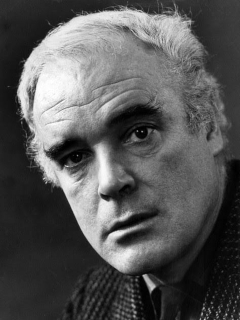
Patrick George McGee, Northern Irish actor and director of stage and screen known professionally as Patrick Magee, is born on March 31, 1922, in Armagh, County Armagh, Northern Ireland. He is known for his collaborations with Samuel Beckett and Harold Pinter, as well as creating the role of the Marquis de Sade in the original stage and screen productions of Marat/Sade. He also appears in numerous horror films and in two Stanley Kubrick films, A Clockwork Orange and Barry Lyndon.

McGee is born into a middle-class family at 2 Edward Street in Armagh. The eldest of five children, he is educated at St. Patrick’s Grammar School, Armagh. He changes the spelling of his surname to Magee when he begins performing, most likely to avoid confusion with another actor.

Magee’s first stage experience in Ireland is with Anew McMaster’s touring company, performing the works of William Shakespeare. It is here that he first works with Pinter. He is then brought to London by Tyrone Guthrie for a series of Irish plays. He meets Beckett in 1957 and soon records passages from the novel Molloy and the short story From an Abandoned Work for BBC Radio. Impressed by “the cracked quality of Magee’s distinctly Irish voice,” Beckett requests copies of the tapes and writes Krapp’s Last Tape especially for the actor. First produced at the Royal Court Theatre in London on October 28, 1958, the play stars Magee and is directed by Donald McWhinnie. A televised version is later broadcast by BBC Two on November 29, 1972.

In 1964, Magee joins the Royal Shakespeare Company, after Pinter, directing his own play, The Birthday Party, specifically requests him for the role of McCann. In 1965 he appears in Peter Weiss‘s Marat/Sade, and when the play transfers to Broadway he wins a Tony Award. He also appears in the 1966 RSC production of Staircase opposite Paul Scofield.

Magee’s early film roles include Joseph Losey‘s The Criminal (1960) and The Servant (1963), the latter an adaptation scripted by Pinter. He also appears as Surgeon-Major James Henry Reynolds in Zulu (1964), Séance on a Wet Afternoon (1964), Anzio (1968), and in the film versions of Marat/Sade (1967) and The Birthday Party (1968). He is perhaps best known for his role as the victimised writer Frank Alexander, who tortures Alex DeLarge with Ludwig van Beethoven‘s music, in Stanley Kubrick’s film A Clockwork Orange (1971). His other role for Kubrick is as Redmond Barry’s mentor, the Chevalier de Balibari, in Barry Lyndon (1975).

McGee also appears in Young Winston (1972), The Final Programme (1973), Galileo (1975), Sir Henry at Rawlinson End (1980), The Monster Club and Chariots of Fire (1981) but is most often seen in horror films. These include Roger Corman‘s The Masque of Red Death (1964), and the Boris Karloff vehicle Die, Monster, Die! (1965) for AIP; The Skull (1965), Tales from the Crypt (1972), Asylum (1972), and And Now the Screaming Starts! (1973) for Amicus Productions; Demons of the Mind (1972) for Hammer Film Productions; and Walerian Borowczyk‘s Docteur Jekyll et les femmes (1981).

Patrick McGee dies of a heart attack at his flat in Fulham, London on August 14, 1982, at the age of 60, according to obituaries in The Herald and The New York Times. On July 29, 2017, a blue plaque is unveiled in Edward Street, Armagh to mark Patrick McGee’s birthplace.


Leave a comment

Death of Patrick McGee, Actor & Director

patrick-mcgee

Patrick George McGee, Northern Irish actor and director of stage and screen known professionally as Patrick Magee, dies from a heart attack at his flat in Fulham, London on August 14, 1982. He is known for his collaborations with Samuel Beckett and Harold Pinter, as well as creating the role of the Marquis de Sade in the original stage and screen productions of Marat/Sade. He also appears in numerous horror films and in two Stanley Kubrick films, A Clockwork Orange and Barry Lyndon.

McGee is born into a middle-class family in Armagh, County Armagh, Northern Ireland on March 31, 1922. He is the first born of five children and is educated at St. Patrick’s Grammar School, Armagh.

McGee’s first stage experience in Ireland is with Anew McMaster’s touring company, performing the works of William Shakespeare. It is here that he first works with Pinter. He is then brought to London by Tyrone Guthrie for a series of Irish plays. He meets Beckett in 1957 and soon records passages from the novel Molloy and the short story From an Abandoned Work for BBC Radio. Impressed by “the cracked quality of Magee’s distinctly Irish voice,” Beckett requests copies of the tapes and writes Krapp’s Last Tape especially for the actor. First produced at the Royal Court Theatre in London on October 28, 1958, the play stars McGee and is directed by Donald McWhinnie. A televised version is later broadcast by BBC Two on November 29, 1972.

In 1964, McGee joins the Royal Shakespeare Company, after Pinter, directing his own play, The Birthday Party, specifically requests him for the role of McCann. In 1965 he appears in Peter Weiss‘s Marat/Sade, and when the play transfers to Broadway he wins a Tony Award. He also appears in the 1966 RSC production of Staircase opposite Paul Scofield.

McGee’s early film roles include Joseph Losey‘s The Criminal (1960) and The Servant (1963), the latter an adaptation scripted by Pinter. He also appears as Surgeon-Major James Henry Reynolds in Zulu (1964), Séance on a Wet Afternoon (1964), Anzio (1968), and in the film versions of Marat/Sade (1967) and The Birthday Party (1968). He is perhaps best known for his role as the victimised writer Frank Alexander, who tortures Alex DeLarge with Ludwig van Beethoven‘s music, in Stanley Kubrick’s film A Clockwork Orange (1971). His other role for Kubrick is as Redmond Barry’s mentor, the Chevalier de Balibari, in Barry Lyndon (1975).

McGee also appears in Young Winston (1972), The Final Programme (1973), Galileo (1975), Sir Henry at Rawlinson End (1980), The Monster Club and Chariots of Fire (1981) but is most often seen in horror films. These include Roger Corman‘s The Masque of Red Death (1964), and the Boris Karloff vehicle Die, Monster, Die! (1965) for AIP; The Skull (1965), Tales from the Crypt (1972), Asylum (1972), and And Now the Screaming Starts! (1973) for Amicus Productions; Demons of the Mind (1972) for Hammer Film Productions; and Walerian Borowczyk‘s Docteur Jekyll et les femmes (1981).

Patrick McGee dies from a heart attack at his flat in Fulham, London on August 14, 1982, at the age of 60, according to obituaries in The Herald and The New York Times. On July 29, 2017, a blue plaque is unveiled in Edward Street, Armagh to mark Patrick McGee’s birthplace.