seamus dubhghaill

Promoting Irish Culture and History from Little Rock, Arkansas, USA


Leave a comment

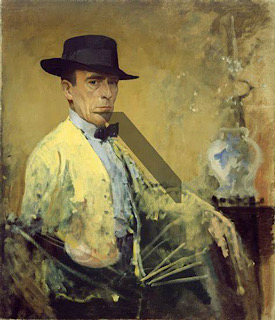
Death of Leo Whelan, Portrait & Genre Painter

(Michael) Leo Whelan, portrait and genre painter, dies from leukemia on November 6, 1956, at the Mater private nursing home in Dublin.

Whelan is born on January 17, 1892, at 20 St. George’s Villas, Fairview, Dublin, one of two sons and three daughters of Maurice Whelan, a draper, of County Kerry ancestry, and Mary Whelan (née Cruise), from County Roscommon. The family subsequently moves to 65 Eccles Street, where his parents operated a small hotel. Educated at Belvedere College, Dublin, he then attends the Dublin Metropolitan School of Art (DMSA) (1908–14), where he is a student of William Orpen, who has a huge influence on his artistic style. His fellow students at the school include Patrick Tuohy and Séan Keating.

Whelan is awarded many prizes in the Royal Dublin Society (RDS) Taylor art competitions, including one in 1912 for a portrait of his sister Lena, entitled On the Moors, rendered in a strongly academic technique. In 1916, he wins the Taylor scholarship for the Royal Hibernian Academy (RHA) schools for his finest early work, The Doctor’s Visit, an adroitly executed composition of contrasting shadows and light. Typical of many of his genre interiors, the painting depicts a room in the family home, with relatives as models: Whelan’s mother sits by the bed watching over his ill cousin, while his sister, dressed in a Mater hospital nurse’s uniform, is in the background opening the door for the doctor. The subtly evoked atmosphere of restrained emotion foreshadowed a hallmark of his mature style.

Whelan exhibits annually at the RHA for forty-five years (1911–56), averaging six works per year. He is elected an RHA associate in 1920, becoming a full member in 1924. He participates in the Exposition d’art irlandais at the Galerie Barbazanges in Paris in 1922. A visiting teacher at the RHA schools in 1924, he also teaches in the DMSA for a time. He has studios at 64 Dawson Street (1914–27) and 7 Lower Baggot Street (1931–56). Beginning in the 1910s, he receives regular commissions for portraits, constituting his primary source of income. Having become the family’s main breadwinner following his parents’ deaths in the 1920s, he concentrates most of his production on this lucrative activity, portraying numerous leading figures in the spheres of politics, academia, religion, society, medicine, and law.

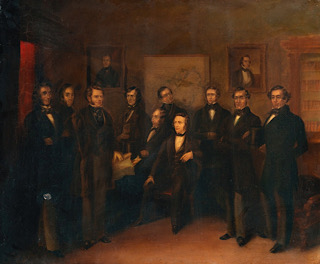
Coming from a family of militant nationalist sympathies, in 1922 he begins a large group portrait, GHQ Staff of the Pre-Treaty IRA, including Michael CollinsRichard MulcahyRory O’ConnorLiam Mellows and nine others, composed from individual studies of the men rendered during clandestine sittings in his home and studio. The painting, which he leaves unfinished, is in McKee Barracks, Dublin. He receives special praise for his portraits of John Henry Bernard, Provost of Trinity College Dublin (TCD) and of Louis Claude Purser, TCD vice-provost. The latter is awarded a medal at the 1926 Tailteann Games. He exhibits seventeen paintings at the Royal Society of Portrait Painters, London, of which he is a member, and shows two works at the Royal Academy of Arts, London. His 1929 portrait of John McCormack, one of his major patrons, is presented by the tenor’s family some fifty years later to the National Concert Hall, Dublin.

Situated securely in the academic tradition, in most of his portraits Whelan favours a sombre, restricted palette, with the sitter placed, in grave demeanour, against a monotone background with few accessories. In a 1943 interview he asserts that twentieth-century portraiture suffers from the drabness of modern costume, for which the artist must compensate by careful rendition of the subject’s hands. He tends to depart from his prevailing portrait style when painting women, whom he characteristically depicts in meticulously observed interiors, a notable example being his portrait of Society hostess Gladys Maccabe (c.1946; NGI).

Whelan’s commercial concentration on portraiture notwithstanding, he expresses his true talent in genre compositions, especially kitchen interiors, in which he emulates the technique of the Dutch painter Johannes Vermeer. Two of the most accomplished of these depict his sister Frances in the basement kitchen of the family home: The Kitchen Window (1927; Crawford Art Gallery, Cork) demonstrates a particularly skillful use of light, while Interior of a Kitchen (1935) is notable for the dexterous handling of objects of varied shapes and textures. His genre works include both urban and rural scenes, with a distinctive interest in portraying occupations and other activities. Gypsy (1923), an Orpenesque composition of a shawled woman in a west-of-Ireland landscape with a caravan in the background, receives wide contemporary critical acclaim. Jer (c.1925), depicting a man seated by the fire in a cottage interior, is reproduced in J. Crampton Walker’s Irish Art and Landscape (1927). The Fiddler (c.1932), a naturalistic, sensitively characterised study, is first shown at an Ulster Academy exhibition at Stranmillis, Belfast. A Kerry Cobbler is reproduced in Twelve Irish Artists (1940), introduced by Thomas Bodkin, as among the works denoting the development of a distinctively Irish school of painting.

In 1929, Whelan designs the first Irish Free State commemorative stamp, a portrait of Daniel O’Connell for the centenary of Catholic emancipation. Commissioned by the Thomas Haverty trust to paint an incident from the life of Saint Patrick for the 1932 Eucharistic Congress, he executes The Baptism by St. Patrick of Ethna the Fair and Fedelmia the Ruddy, Daughters of the Ard Rí Laoghaire, a work highly conservative in style. He rapidly completes an oil study of the papal legate, Lorenzo Lauri, also for the Eucharistic Congress. He is represented in the art competitions at the 1932 Summer Olympics in Los Angeles. His depiction of Saint Brigid, shown at the Academy of Christian Art exhibition (1940), becomes a familiar image owing to the wide circulation of reproductions.

Whelan’s political portraits are influential in creating a strong, assured image of the newly formed Irish state, and thus retain an historical significance. His posthumous portrait, The Late General Michael Collins, exhibited at the RHA in 1943 and now held in Leinster House, is an iconic, heroic image of the fallen leader. His portraits of Arthur Griffith and Kevin O’Higgins – commissioned posthumously, as is the Collins, by Fine Gael – also hang in Leinster House, while that of John A. Costello, exhibited at the RHA in 1949, is now held in the King’s Inns, Dublin. He paints two presidents, Douglas Hyde and Seán T. O’Kelly, both works currently in Áras an Uachtaráin. A portrait of Éamon de Valera, painted in 1955 when the sitter is Leader of the Opposition, is in Leinster House. In 1954, he designs a second commemorative stamp, picturing a reproduction of a portrait bust of John Henry Newman, to mark the centenary of the Catholic University of Ireland.

Whelan is elected an honorary academician of both the Ulster Academy of Arts (1931), and the Royal Ulster Academy (1950). He becomes a member of the United Arts Club in 1934. As a representative of the RHA, he sits on the board of governors of the National Gallery of Ireland for many years, and is on the advisory committee of the Municipal Gallery of Modern Art. Unmarried, he resides until his death at the Eccles Street address, with two sisters who continue to manage the family hotel. He dies on November 6, 1956, from leukemia at the Mater private nursing home in Dublin. He is buried in Glasnevin Cemetery.

(From: “Whelan, (Michael) Leo,” by Carmel Doyle, Dictionary of Irish Biography, http://www.dib.ie, October 2009)


Leave a comment

Birth of Timothy McCarthy Downing, Solicitor & Politician

Timothy McCarthy Downing, solicitor and an Irish Liberal Party and Home Rule League politician, is born at Kenmare, County Kerry, on May 11, 1814.

Downing is the second son of Eugene Downing, a local merchant, and his wife, Helena, daughter of Timothy McCarthy of Kilfadamore, County Kerry. They have two other sons and two daughters. He is apprenticed in 1830 to his elder brother, Francis Henry, who practises as a solicitor at Killarney. Once admitted as a solicitor himself in 1836, he moves to Skibbereen, County Cork, where he practises until the mid-1860s, making from his practice a large fortune. By the mid-1870s he owns 4,067 acres in Cork and Kerry valued at £1,413.

Downing is prominent locally in public affairs, supporting the repeal campaign of Daniel O’Connell and the temperance campaign of Fr. Theobald Mathew. He is the first chairman of Skibbereen town commissioners, from 1862 to 1879. He later helps James Stephens and Michael Doheny escape to France in 1849. After Jeremiah O’Donovan Rossa and other members of the Phoenix National and Literary Society are arrested on December 5, 1858, he acts as their solicitor. His chief clerk, Mortimer Moynahan, a member of the society, unwittingly takes on as an assistant a man who proves to be an informer.

Downing involves himself in the National Association of Ireland, the political pressure group formed by the Catholic Archbishop of Dublin, Paul Cullen, and succeeds in getting tenant-right added to its demands in March 1865. He is elected as one of the two MPs for County Cork on November 30, 1868, and is reelected without a contest on February 5, 1874. Nominally a liberal, he draws his main support from the Catholic bishops and most of the parish clergy and, more significantly, from the tenant farmer class. The farmers’ interests he vigorously pursues in parliament and outside.

After the passing of William Ewart Gladstone‘s first land act, Downing plays a prominent part in the formation of the Home Rule League under the leadership of Isaac Butt. He is always a moderate on the home-rule issue – he opposes the pledging of home-rule MPs always to act together and later the obstructive tactics of fellow home-rulers Joseph Gillis Biggar and Charles Stewart Parnell. He is one of the nine members of the standing committee of Butt’s Irish Parliamentary Party (1874–79) and proves a stalwart of Butt particularly in disputes with Parnell. It is he who draws to the attention of the House of Commons the condition of tenants on the Buckley estate in the foothills of the Galtee Mountains at Skeheenarinky in County Tipperary in March 1877. In Butt’s absence Downing introduces an Irish land tenure bill on February 6, 1878, which is, however, quickly defeated.

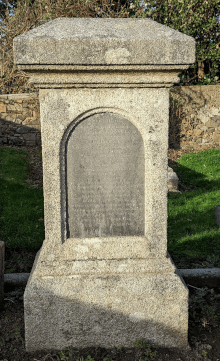
Downing dies January 10, 1879, at his residence, Prospect House, Skibbereen, a deputy lieutenant of County Cork. The cortège that follows his body to the Old Caheragh Graveyard, Skibbereen, for burial is said to be four miles long. In Emmet Larkin‘s judgement, “it was not altogether unlikely, if he had survived, that he would have eventually succeeded Butt as chairman of the Irish party.”

In 1837, Downing marries Jane, youngest daughter of Daniel McCarthy of Ave Hill, Dromore, County Cork, and with her has four sons and three daughters. His younger brother, Washington, is a parliamentary reporter and later the Rome correspondent for The Daily News of London, and husband of Mary McCarthy Downing.

(From: “Downing, Timothy McCarthy” by C.J. Woods, Dictionary of Irish Biography, http://www.dib.ie, October 2009)


Leave a comment

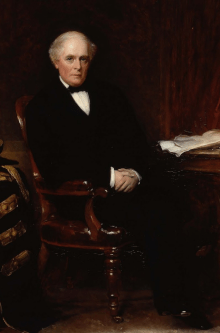
Birth of Abraham Brewster, Judge & Lord Chancellor of Ireland

Abraham Brewster PC (Ire), Irish judge and Lord Chancellor of Ireland, is born in Ballymutra House in Ballynultagh Townland, County Wicklow, on April 10, 1796.

Brewster is the son of William Bagenal Brewster, of Ballinulta, County Wicklow, by his wife Mary, daughter of Thomas Bates. He receives his earlier education at Kilkenny College, then proceeds to Trinity College Dublin (TCD) in 1812, taking his B.A. degree in 1817, and long after, in 1847, his M.A. degree.

Brewster is called to the Irish bar in 1819, and, having chosen Leinster for his circuit, soon acquires the reputation of a sound lawyer and a powerful speaker. Lord Plunket honours him with a silk gown on July 13, 1835. Notwithstanding the opposition of Daniel O’Connell, who dislikes him, he is appointed Law Adviser to the Lord Lieutenant of Ireland on October 10, 1841, and is Solicitor-General for Ireland from February 2, 1846, until July 16. By the influence of his friend Sir James Graham, First Lord of the Admiralty, he is Attorney-General for Ireland and privy councilor from January 10, 1853, until the fall of the Aberdeen ministry on February 10, 1855.[1]

In 1854, Brewster is appointed to the Royal Commission for Consolidating the Statute Law, a royal commission to consolidate existing statutes and enactments of English law.

Brewster is very active in almost all branches of his profession after his resignation, and his reputation as an advocate may be gathered from the pages of the Irish Law and Equity Reports, and in the later series of the Irish Common Law Reports, the Irish Chancery Reports, and the Irish Jurist, in all of which his name very frequently appears. Among the most important cases in which he takes part are the Mountgarrett case in 1854, involving a peerage and an estate of £10,000 a year, the Carden abduction case in July of the same year, the Yelverton case in 1861, the Egmont will case in 1863, the Marquess of Donegall‘s ejectment action and lastly, the great will cause of Fitzgerald v. Fitzgerald, in which Brewster’s statement for the plaintiff is said to be one of his most successful efforts.

On Edward Smith-Stanley becoming prime minister, Brewster succeeds Francis Blackburne as Lord Justice of Appeal in Ireland in July 1866, and Lord Chancellor of Ireland the following March. As Lord Chancellor, he sits in his court for the last time on December 17, 1868, when Benjamin Disraeli‘s government resigns. He then retires from public life.

There are only three or four judgments delivered by him in print, either in the Court of Appeal or the Court of Chancery (Ireland). His judicial manner is quiet, but with what is called “a touch of serviceable fierceness” which keeps order in Court. He is highly regarded by his colleagues. Even the bitter-tongued Jonathan Christian, who despises most of his fellow judges, defers to Brewster.

Brewster dies at his residence, 26 Merrion Square South, Dublin, on July 26, 1874, and is buried in the family vault at Tullow, County Carlow, on July 30. By his marriage in 1819 with Mary Ann, daughter of Robert Gray of Upton House, County Carlow, who dies in Dublin on November 24, 1862, he has issue one son, Colonel William Bagenal Brewster, and one daughter, Elizabeth Mary, wife of Mr. Henry French, both of whom die in the lifetime of their father. His estates are inherited by Elizabeth’s son, Robert French-Brewster, who adopts his grandfather’s surname. A nephew, Edward Brewster, studies under Abraham Brewster and becomes a lawyer and politician in New South Wales. Edward’s brother, John Grey Brewster, also emigrates to Australia, where he becomes a prosperous grazier and company director, retiring to England in later years where he dies in 1897.

(Pictured: Right Honourable Abraham Brewster photographed by Thomas Cranfield, 1861)


Leave a comment

Death of Sir Dominic Corrigan, 1st Baronet, Irish Physician

Sir Dominic John Corrigan, 1st Baronet, an Irish physician known for his original observations in heart disease, dies in Dublin on February 1, 1880, following a stroke. The abnormal “collapsing” pulse of aortic valve insufficiency is named Corrigan’s pulse after him.

Corrigan is born in Thomas Street, Dublin, on December 2, 1802, the son of a dealer in agricultural tools. He is educated in St. Patrick’s College, Maynooth, which then has a department for secular students apart from the ecclesiastical seminary. He is attracted to the study of medicine by the physician in attendance and spends several years as an apprentice to the local doctor, Edward Talbot O’Kelly. He studies medicine in Dublin later transferring to Edinburgh Medical School where he receives his degree as MD in August 1825.

Corrigan returns to Dublin in 1825 and sets up a private practice at 11 Ormond Street. As his practice grows, he moves to 12 Bachelors Walk in 1832, and in 1837 to 4 Merrion Square West. Apart from his private practice, he holds many public appointments; he is a physician to St. Patrick’s College, Maynooth, the Sick Poor Institute, the Charitable Infirmary Jervis Street (1830–43) and the House of Industry Hospitals (1840–66). His work with many of Dublin’s poorest inhabitants leads to him specialising in diseases of the heart and lungs, and he lectures and publishes extensively on the subject. He is known as a very hard-working physician, especially during the Great Famine. At the 1870 Dublin City by-election he is elected a Liberal Member of Parliament for Dublin City. In parliament he actively campaigns for reforms to education in Ireland and the early release of Fenian prisoners. He does not stand for re-election in 1874. His support for temperance and Sunday closing of pubs apparently antagonises his constituents and alcohol companies.

In 1847, Corrigan is appointed physician-in-ordinary to the Queen in Ireland. Two years later he is given an honorary MD from Trinity College Dublin (TCD). In 1846 his application to become a fellow of the Royal College of Physicians of Ireland (RCPI) is blocked. In 1855 he gets around this opposition by sitting the college’s entrance exam with the newly qualified doctors. He becomes a fellow in 1856, and in 1859 is elected president, the first Catholic to hold the position. He is re-elected president an unprecedented four times. There is a statue of him in the Graves’ Hall of the college by John Henry Foley.

Corrigan is President of the Royal Zoological Society of Dublin, the Dublin Pathological Society, and the Dublin Pharmaceutical Society. From the 1840s he is a member of the senate of the Queen’s University and in 1871 becomes its vice-chancellor. In 1866 he is created a baronet, of Cappagh and Inniscorrig in the County of Dublin and of Merrion Square in the City of Dublin, partly as a reward for his services as Commissioner of Education for many years. He is a member of the board of Glasnevin Cemetery and a member of the Daniel O’Connell Memorial Committee. Armand Trousseau, the French clinician, proposes that aortic heart disease should be called Corrigan’s disease.

Corrigan marries Joanna Woodlock, the daughter of a wealthy merchant, and sister of the Bishop Dr. Bartholomew Woodlock, in 1827. They have six children, three girls and three boys. His eldest son, Captain John Joseph Corrigan, Dragoon Guards, dies on January 6, 1866, and is interred at the Melbourne General Cemetery, Melbourne, Australia.

Corrigan dies at Merrion Square, Dublin, on February 1, 1880, having suffered a stroke the previous December. He is buried in the crypt of St. Andrew’s Church, Westland Row, Dublin. His grandson succeeds him to the baronetcy.

The Corrigan Ward, a cardiology ward in Beaumont Hospital, Dublin, is named in his honour. Part of his family crest is also part of the Beaumont Hospital crest.


Leave a comment

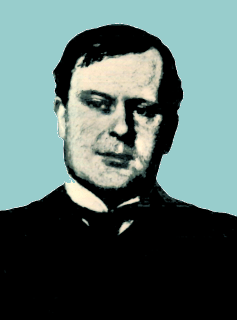
Death of D. P. Moran, Journalist, Activist & Theorist

David Patrick Moran (Irish: Dáithí Pádraig Ó Móráin), better known as simply D. P. Moran, Irish journalist, activist and cultural-political theorist, dies on January 31, 1936. He is known as the principal advocate of a specifically Gaelic Catholic Irish nationalism during the early 20th century. Associated with the wider Celtic Revival, he promotes his ideas primarily through his journal, The Leader, and compilations of his articles such as the book The Philosophy of Irish Ireland.

Moran is born in Manor, a townland in Waterford, the youngest of twenty children born to James Moran, a builder, and Elizabeth Moran (née Casey). One of his brothers goes on to serve on the defense team of Patrick O’Donnell.

Moran is educated at Castleknock College, near Dublin, before working as a journalist in London, where he is a member of the Irish Literary Society. His brand of nationalism and concept of the decolonisation of Ireland is of a homogeneous Irish-speaking and Roman Catholic nation, promoting the revival of the Irish language and of Gaelic games in Irish cultural life. He often employes disparaging terms (West Brits, shoneens, sourfaces) in reference to Unionists and/or non-Catholics.

Despite the failure of the 1893 Home Rule Bill and the division of the Irish Parliamentary Party (IPP) in 1891, nationalists take heart from Douglas Hyde‘s 1892 speech, entitled “The Necessity for De-anglicising Ireland.” Moran builds upon this thesis and provides a wider ideology for enthusiasts, particularly after the re-unification of most of the nationalist parties from 1900.

In his 1905 text The Philosophy of Irish-Ireland, Moran argues that to be Irish requires:

  • the use of the Irish language
  • membership in the Roman Catholic Church
  • an anti-materialist outlook on life
  • the playing of only Gaelic games

Though a sponsor of the use of Irish, he never becomes fluent in the language himself. He emphasises the use of English in 1908–09 as “an active, vigilant, and merciless propaganda in the English language.” In the longer term, when Irish becomes again the language of the people, its use enables a de facto censorship of any foreign and unwelcome ideas written in English.

While Moran argues that the idea of “the Gael” is one that can assimilate others, he also feels that it will be hard if not impossible for members of the Church of Ireland who support the British Empire to ever qualify as Irish, being “resident aliens.” This extends to Anglo-Irish literature. He rejects the Abbey Theatre and questions Yeats‘ genius. He once speaks out against the influence Britain has over Irish Universities, stating, “We are all Palemen now.” In the matter of religious differences, Daniel O’Connell had said in 1826 that “the [Roman] Catholics of Ireland are a nation.” Moran moves beyond that, affirming in 1901 that “…the Irish Nation is de facto a Catholic nation.” He is virulent in his opposition to female suffrage.

Moran’s articles frequently contrast “Belfast” with “Ireland,” yet hope that Belfast can eventually change and assimilate. He feels that Ulster unionists should “… be grateful to the Irish nation for being willing to adopt them.” His paper publishes numerous articles by the future TD Arthur Clery (writing under the pen name “Chanel”), who advocates partition on the grounds that Ulster unionists are a separate nation, but Moran himself disagrees and refuses to concede the legitimacy of a northern Protestant identity.

When Irish republicans initiate the Irish War of Independence in 1919, widescale anti-Catholic rioting breaks out in Belfast in 1920 and 1922. Moran identifies this as being caused by Orangeism, which he describes as “a sore and a cancer” in Ireland. He also alleges that “bigotry on the part of Catholics in the Six Counties is immediately due to Orange bigotry.”

Moran is initially a supporter of the Irish Parliamentary Party, believing that the separatism advocated by Arthur Griffith‘s Sinn Féin is impracticable; however, he opposes John Redmond‘s support of the British World War I effort.

Moran supports the Anglo-Irish Treaty agreed in 1921–22 and sees the partition of Ireland as beneficial for a truly Irish culture in the Irish Free State. This causes a sea-change in his opinions; from now on Northern Ireland can be safely ignored, along with what he sees as the English evils of “free thought, free trade, and free literature.” He claims Irish life and culture has to be protected from foreign influences, including the twin evils of the music hall and the English press. The new jazz music of the 1920s and other imported cultural elements are deprecated as “imported debasement and rot.”

On January 9, 1901, Moran marries Theresa Catherine, daughter of Thomas Francis O’Toole, a former Parnellite mayor of Waterford. They have four sons and one daughter.

Moran dies suddenly at his home in Skerries, Dublin, on January 31, 1936. His daughter, Nuala, who has written for the paper since the early 1920s, generally on artistic and social matters, takes over the running of the paper on his death, though it is then much diminished in size and influence. Nuala, who never marries, retains control of The Leader until it ceases publication in 1971.


Leave a comment

Death of John MacHale, Catholic Archbishop of Tuam

John MacHale, Irish Roman Catholic Archbishop of Tuam and Irish nationalist, dies in Tuam, County Galway on November 7, 1881.

MacHale is born in Tubbernavine, near Lahardane, County Mayo on March 6, 1791, to Patrick and Mary Mulkieran MacHale. He is so feeble at birth that he is baptised at home by Father Andrew Conroy. By the time he is five years of age, he begins attending a hedge school. Three important events happen during his childhood: the Irish Rebellion of 1798, the landing at Killala of French troops, whom the boy, hidden in a stacked sheaf of flax, watches marching through a mountain pass to Castlebar, and a few months later the brutal hanging of Father Conroy on a false charge of high treason.

Being destined for the priesthood, at the age of thirteen, he is sent to a school at Castlebar to learn Latin, Greek, and English grammar. In his sixteenth year the Bishop of Killala gives him a bursarship at St. Patrick’s College, Maynooth. At the age of 24, he is ordained a priest by Daniel Murray, Archbishop of Dublin. In 1825, Pope Leo XII appoints him titular bishop of Maronia, and coadjutor bishop to Dr. Thomas Waldron, Bishop of Killala.

With his friend and ally, Daniel O’Connell, MacHale takes a prominent part in the important question of Catholic emancipation, impeaching in unmeasured terms the severities of the former penal code, which had branded Catholics with the stamp of inferiority. During 1826 his zeal is omnipresent. He calls on the Government to remember how the Act of Union in 1800 was carried by William Pitt the Younger on the distinct assurance and implied promise that Catholic emancipation, which had been denied by the Irish Parliament, should be granted by the Parliament of the Empire.

Oliver Kelly, Archbishop of Tuam, dies in 1834, and the clergy selects MacHale as one of three candidates, to the annoyance of the Government who despatches agents to induce Pope Gregory XVI not to nominate him to the vacant see. Disregarding their request, the pope appoints MacHale Archbishop of Tuam. He is the first prelate since the Reformation who has received his entire education in Ireland. The corrupt practices of general parliamentary elections and the Tithe War cause frequent rioting and bloodshed and are the subjects of denunciation by the new archbishop, until the passing of a Tithes bill in 1838. He also leads the opposition to the Protestant Second Reformation, which is being pursued by evangelical clergy in the Church of Ireland, including the Bishop of Tuam, Killala and Achonry, Thomas Plunket.

The repeal of the Acts of Union 1800, advocated by O’Connell, enlists MacHale’s ardent sympathy and he assists the Liberator in many ways, and remits subscriptions from his priests for this purpose. In his zeal for the cause of the Catholic religion and of Ireland, so long downtrodden, but not in the 1830s, he frequently incurs from his opponents the charge of intemperate language, something not altogether undeserved. In his anxiety to reform abuses and to secure the welfare of Ireland, by an uncompromising and impetuous zeal, he makes many bitter and unrelenting enemies, particularly British ministers and their supporters.

The Great Famine of 1846–47 affects his diocese more than any. In the first year he announces in a sermon that the famine is a divine punishment on his flock for their sins. Then by 1846 he warns the Government as to the state of Ireland, reproaches them for their dilatoriness, and holds up the uselessness of relief works. From England as well as other parts of the world, cargoes of food are sent to the starving Irish. Bread and soup are distributed from the archbishop’s kitchen. Donations sent to him are acknowledged, accounted for, and disbursed by his clergy among the victims.

The death of O’Connell in 1847 is a setback to MacHale as are the subsequent disagreements within the Repeal Association. He strongly advises against the violence of Young Ireland. Over the next 30 years he becomes involved in political matters, particularly those involving the church. Toward the end of his life, he becomes less active in politics.

MacHale attends the First Vatican Council in 1869. He believes that the favourable moment has not arrived for an immediate definition of the dogma of papal infallibility. Better to leave it a matter of faith, not written down, and consequently he speaks and votes in the council against its promulgation. Once the dogma had been defined, he declares the dogma of infallibility “to be true Catholic doctrine, which he believed as he believed the Apostles’ Creed“. In 1877, to the disappointment of the archbishop who desires that his nephew should be his co-adjutor, Dr. John McEvilly, Bishop of Galway, is elected by the clergy of the archdiocese, and is commanded by Pope Leo XIII after some delay, to assume his post. He had opposed this election as far as possible but submits to the papal order.

Every Sunday MacHale preaches a sermon in Irish at the cathedral, and during his diocesan visitations he always addresses the people in their native tongue, which is still largely used in his diocese. On journeys he usually converses in Irish with his attendant chaplain and has to use it to address people of Tuam or the beggars who greet him whenever he goes out. He preaches his last Irish sermon after his Sunday Mass, April 1881. He dies in Tuam seven months later, on November 7, 1881, and is buried in the cathedral at Tuam on November 15.

A marble statue perpetuates his memory on the grounds of the Cathedral of the Assumption of the Blessed Virgin Mary, Tuam. MacHale Park in Castlebar, County Mayo and Archbishop McHale College in Tuam are named after him. In his birthplace the Parish of Addergoole, the local GAA Club, Lahardane MacHales, is named in his honour. The Dunmore GAA team, Dunmore MacHales, is also named after him.


4 Comments

Death of Edward Pennefather, Barrister & Lord Chief Justice of Ireland

Edward Pennefather, PC, KC, Irish barrister, Law Officer and judge of the Victorian era, who holds office as Lord Chief Justice of Ireland, dies on September 6, 1847, in Dunlavin, County Wicklow.

Pennefather is born at Darling Hill, Knockevan, County Tipperary, on October 22, 1773, the second son of William Pennefather of Knockevan, member of the Irish House of Commons for Cashel, and his wife Ellen Moore, daughter of Edward Moore, Archdeacon of Emly. He goes to school in Clonmel and graduates from Trinity College Dublin. He is called to the Irish Bar in 1795. He lives at Rathsallagh House, near Dunlavin, County Wicklow.

His brother, Richard Pennefather, has a longer and more successful career as a judge. Appointed a Baron of the Court of Exchequer in 1821, he serves for nearly 40 years and is held in universal regard. With the general support of the profession, he remains on the Bench until shortly before his death at eighty-six, by which time he is blind. Edward and Richard, “the two Pennefathers,” are leading practitioners in the Court of Chancery (Ireland).

Pennefather is generally regarded as more gifted, a master of the law of equity and also a skilled libel lawyer. In 1816, he is one of the lead counsels in the celebrated libel case of Bruce v. Grady, which arises from the publication of a scurrilous poem called “The Nosegay,” written by a barrister, Thomas Grady, about his former friend, the notably eccentric banker George Evans Brady of Hermitage House, Castleconnell, County Limerick. The quarrel is said to arise from a dispute over money which Bruce had loaned to Grady. The plaintiff claims £20000 but the jury awards £500.

Pennefather is made a King’s Counsel by 1816. He is very briefly Attorney-General for Ireland in 1830 and is made Third Serjeant-at-law (Ireland) in the same year. He becomes Second Serjeant and First Serjeant in the two following years. He is Solicitor-General for Ireland in the first Peel ministry in 1835 and again in the second Peel ministry in 1841. In the latter year, he is appointed Lord Chief Justice of the Queen’s Bench for Ireland and holds the position until he resigns on health grounds in 1846.

According to Elrington Ball, Pennefather is considered to be one of the greatest Irish advocates of his time, and one with few rivals in any age, but he does not live up to expectations as a judge, due largely to his age and increasing ill-health. As a judge he is remembered mainly for presiding at the trial of Daniel O’Connell in 1843 for sedition, where his alleged bias against the accused damages his reputation: he is accused of acting as prosecutor rather than judge, and his summing-up is described as simply an extra speech for the prosecution. Further damage to his reputation is done by the majority decision of the House of Lords quashing the verdict in the O’Connell case: while many of the errors were the fault of the prosecution, the Law Lords do not spare Pennefather for his conduct of the proceedings, and in particular for his summing-up. The Law Lords comment severely that the course of the trial, if condoned, will make a mockery of trial by jury in Ireland.

The related trial of Sir John Gray descends into farce when the Attorney-General, Sir Thomas Cusack-Smith, who is noted for his hot temper, challenges one of the defence counsel, Gerald Fitzgibbon, to a duel, for having allegedly accused him of improper motives. Pennefather tells the Attorney-General severely that a man in his position has no excuse for such conduct, whereupon the Attorney-General agrees to let the matter drop. The public notes with interest that Fitzgibbon’s wife and daughter are present in Court during the contretemps.

Following a long illness, Pennefather dies in Dunlavin, County Wicklow, on September 6, 1847. He is buried in Christ Church Cemetery, Delgany, County Wicklow.

In January 1806, Pennefather marries Susannah Darby, eldest daughter of John Darby of Leap Castle, County Offaly, and his wife Anne Vaughan, and sister of John Nelson Darby, one of the most influential of the early Plymouth Brethren. They have ten children, including Edward, the eldest son and heir; Richard, Auditor General of Ceylon; Ellen, who marries James Thomas O’Brien, Bishop of Ossory, Ferns and Leighlin, and Dorothea, who marries in 1850, as his second wife, James Stopford, 4th Earl of Courtown, and has three sons. Two of Dora’s sons, General Sir Frederick Stopford, commander at the Landing at Suvla Bay, and Admiral Walter Stopford, become famous.


Leave a comment

Birth of John Gray, Physician, Journalist & Politician

Sir John Gray JP, Irish physician, surgeon, newspaper proprietor, journalist and politician, is born in Claremorris, County Mayo, on July 13, 1815. He is active both in municipal and national government for much of his life and has nationalist ideals, which he expresses as owner of the Freeman’s Journal, chairman of the Dublin Corporation Water Works Committee between 1863 and 1875, and Member of Parliament in the House of Commons of the United Kingdom of Great Britain and Ireland for Kilkenny City from 1865 until his death.

Gray is the third son of John and Elizabeth Gray of Mount Street. He is educated at Trinity College Dublin and obtains the degree of M.D. and Master of Surgery at the University of Glasgow in 1839. Shortly before his marriage in the same year, he settles in Dublin and takes up a post at a hospital in North Cumberland Street. He is admitted as a licentiate of the Royal College of Physicians in due course.

Gray is publicly minded and contributes to periodicals and the newspaper press. In 1841, he becomes joint proprietor of the Freeman’s Journal, a nationalist paper which is then published daily and weekly. He acts as political editor of the Journal for a time, before becoming sole proprietor in 1850. As owner, he increases the newspaper’s size, reduces its price and extends its circulation.

Gray enters politics at a relatively young age and attaches himself to Daniel O’Connell‘s Repeal Association. As a Protestant Nationalist, he supports the movement for the repeal of the Acts of Union with Britain. In October 1843, he is indicted with O’Connell and others in the Court of the Queen’s Bench in Dublin on a charge of sedition and “conspiracy against the queen.” The following February, he, together with O’Connell, is condemned to nine months imprisonment, but in early September 1844 the sentence is remitted on appeal. The trial has a strong element of farce, as the hot-tempered Attorney-General for Ireland, Sir Thomas Cusack-Smith, challenges Gray’s counsel, Gerald Fitzgibbon, to a duel, for which he is sternly reprimanded by the judges. From then on Gray is careful to distance himself from the advocacy of violence in the national cause, though he is sympathetic to the Young Ireland movement without being involved in its 1848 rebellion. Through the growing influence of the Freeman’s Journal, he becomes a significant figure in Dublin municipal politics. He is also active in national politics during an otherwise quiet period of Irish politics up until 1860. With the resurgence of nationalism after the famine, he helps to organise the Tenant’s League founding conference in 1850, standing unsuccessfully as the League’s candidate for Monaghan in the 1852 United Kingdom general election.

Later Gray originates and organises the “courts of arbitration” which O’Connell endeavours to substitute for the existing legal tribunals of the country. Following O’Connell’s death, in 1862 he inaugurates an appeal for subscriptions to build a monument to O’Connell on Sackville Street (now O’Connell Street). Independent from O’Connell, he continues to take a prominent part in Irish politics and in local affairs.

In municipal politics, Gray is elected councillor in 1852 and alderman of Dublin Corporation and takes an interest in the improvement of the city. As chairman of the committee for a new water supply to Dublin, he actively promotes what becomes the “Vartry scheme.” The Vartry Reservoir scheme involves the partial redirection and damming of the River Vartry in County Wicklow, and the building of a series of water piping and filtering systems (and related public works) to carry fresh water to the city. This work is particularly important in the improvement of conditions in the city, and to public health, as it improves sanitation and helps reduce outbreaks of cholera, typhus and other diseases associated with contaminated water. On the opening of the works on June 30, 1863, he is knighted by the Earl of Carlisle, then Lord Lieutenant of Ireland. Partially in recognition of these efforts, he is later be nominated for the position of Lord Mayor of Dublin for the years 1868–69, but he declines to serve.

In national politics, the Liberal government at the time is keen to conciliate an influential representative of the moderate nationalists to support British Liberalism and who will resume O’Connell’s constitutional agitation. In an unusual alliance with the Catholic Archbishop of Dublin, Paul Cullen, a man devoted to O’Connell’s memory, Gray’s newspaper exploits this shift in government policy. It supports the archbishop’s creation, the National Association of Ireland, established in 1864 with the intention of providing a moderate alternative to the revolutionary nationalism of the Fenians. The Freeman’s Journal adopts the aims of the Association as its own: it advocates the disestablishment of the Anglican Church of Ireland, reform of the land laws, educational aspirations of Irish Catholicism and free denominal education.

In the 1865 United Kingdom general election Gray is elected MP for Kilkenny City as a Liberal candidate. In this capacity he campaigns successfully at Westminster and in Ireland for the reforms also advocated in his paper. His newspaper’s inquiry into the anomalous wealth of the established church amidst a predominately Catholic population contributes considerably to William Ewert Gladstone‘s Irish Church Act 1869. He helps to furnish the proof that Irish demands are not to be satisfied by anything other than by radical legislation. He fights for the provision in the new Landlord & Tenant (Ireland) Act 1870 for fixity of tenure, which Gladstone eventually concedes. The Act’s other weaknesses, however, result in its failure to resolve the “land question,” the accompanying coercion, the disappointment with Gladstone’s handling of the university question and national education, causing Gray to deflect from the Liberals and become mistrusted in Britain. In the 1874 United Kingdom general election he is re-elected as a Home Rule League MP for Kilkenny, joining its Home Rule majority in the House of Commons, and holds his seat until his death the following year.

Gray dies at Bath, Somerset, England, on April 9, 1875. His remains are returned to Ireland, and he is honoured with a public funeral at Glasnevin Cemetery. Almost immediately afterwards public subscriptions are sought for the erection in O’Connell Street, of a monument to Gray. The monument is completed in 1879 and is dedicated to the “appreciation of his many services to his country, and of the splendid supply of pure water which he secured for Dublin.” His legacy also includes his contributions to the passage of the Irish Church and Land Bills, his advocacy for tenant’s rights and his support of the Home Rule movement.

Gray marries Mary Anna Dwyer of Limerick in 1839, and they have five children, three sons and two daughters. One of his sons, Edmund Dwyer Gray, takes over the management of the Freeman’s Journal. Edmund also follows his father into politics, eventually becoming MP for Dublin St. Stephen’s Green, Lord Mayor of Dublin (1880–1881), and a supporter of Charles Stewart Parnell. Edmund John Chisholm Dwyer-Gray, Edmund Dwyer Gray’s son and John Gray’s grandson, becomes Premier of Tasmania.

(Pictured: Statue to Sir John Gray on Dublin’s O’Connell Street, designed by Thomas Farrell and unveiled on June 24, 1879. Photo credit: Graham Hickey)


Leave a comment

Death of Sir Thomas Farrell, Irish Sculptor

Sir Thomas Farrell, Irish sculptor, dies at his home, Redesdale House, Stillorgan, County Dublin, on July 2, 1900.

Farrell is born in 1827 in Mecklenburgh Street (later called Railway Street) in Summerhill, Dublin, one of six sons of Terence Farrell, sculptor, and Maria Farrell (née Ruxton). He trains as a sculptor in his father’s workshops. In 1842 he enters the modelling school of the Royal Dublin Society, where he is awarded the prize for “Original design in clay” the following year. He is awarded premiums by the Royal Irish Art Union in 1844 and 1846. As a student he becomes acquainted with the neoclassical sculpture of John Flaxman and John Hogan. His first commission is a monument to Archbishop Daniel Murray in St. Mary’s Pro-Cathedral in Dublin.

One of the first works that make Farrell prominent is the bas-relief representing the last charge at Waterloo, designed for the Wellington Monument in the Phoenix Park. His work is accepted after public competition. Another of his early works is his memorial to Captain John McNeil Boyd in St. Patrick’s Cathedral, Dublin. He enters the competition for the monument to Daniel O’Connell in 1864, but the commission is awarded to John Henry Foley.

His statue of William Smith O’Brien, the Young Ireland leader, formerly at the head of D’Olier Street, is now in O’Connell Street, as is another statue by him, that of Sir John Gray, the surgeon and politician who is instrumental in giving Dublin its water supply.

Throughout his career, Farrell remains actively involved in the Royal Hibernian Academy (RHA). He is elected directly as a full member in 1860 rather than undergoing an initial phase of associate membership. He exhibits almost annually with the academy until his death. He holds a number of posts, including professor of sculpture and treasurer, before being elected president in 1893, being the first sculptor to be so honoured. His achievements are recognised with a knighthood in May 1894.

Farrell dies at his residence, Redesdale House, in Stillorgan, County Dublin, on July 2, 1900. He is a shy, retiring man, and his death is not announced to the public for three days, in keeping with his wishes to avoid any sort of elaborate display on his behalf. Intensely private, he never marries and lives a life immersed in his work. Contemporary accounts describe him as constantly dissatisfied with his work despite consistent public approval for it.


Leave a comment

Death of Andrew O’Connor, American Irish Sculptor

Andrew O’Connor, American Irish sculptor whose work is represented in museums in the United States, Ireland, Britain and France, dies in Dublin on June 9, 1941.

O’Connor is born on June 7, 1874, at Worcester, Massachusetts, the eldest of three sons and two daughters of Andrew O’Connor, a stonecutter from Lanarkshire, Scotland, who becomes a professional sculptor, and Marie Anne O’Connor (née McFadden), of County Antrim. Educated in Worcester public schools, at the age of 14 he becomes apprenticed to his father, helping him to design monuments for cemeteries. He is employed in the early 1890s on sculptural work for the World’s Columbian Exposition (Chicago World’s Fair), being active in the studio of William Ordway Partridge, and assisting Daniel Chester French on his colossal Statue of the Republic, a landmark of the 1893 Columbian exposition.

Moving to London (1894–98), O’Connor works on bas-reliefs in the studio of the painter John Singer Sargent, who uses him as a model for his mural Frieze of Prophets for the Boston Public Library. His first independent work, Sea Dreams, a relief of a head, is exhibited at the Royal Academy of Arts in 1896. Returning to the United States (1898–1903), he becomes a studio assistant of French, through whom he receives his first public commission, for the Vanderbilt Memorial Doors for St. Bartholomew’s Episcopal Church, Manhattan, New York, a project completed in 1902 to wide critical acclaim. He also executes the tympanum and lateral friezes.

Around 1900, O’Connor marries an artist’s model named Nora, by whom he has a daughter. In 1902, he hires as studio model Jessie Phoebe Brown from New Jersey and of County Down parentage. The following year he elopes with her to Paris, where they marry and have four sons, the youngest of whom, Patrick O’Connor, becomes an artist and gallery curator. Jessie continues for many years as his primary model, sitting for the heads of both female and male figures, O’Connor coarsening the features for the latter.

During his years in Paris (1903–14), O’Connor is influenced by the work of Auguste Rodin, whom he befriends. Among his pupils in Paris is the American sculptor and heiress Gloria Vanderbilt Whitney. He continues to fulfil numerous commissions for funerary and public monuments in the United States, an example of the former being the Recuillement in Sleepy Hollow Cemetery, near Tarrytown, New York. From 1906 he exhibits annually at the Salon in Paris, where he is the first foreigner to win a second-class medal, for his bronze statue of Gen. Henry Lawton. Included in his only exhibition at the Royal Hibernian Academy (1907) is a bronze relief of the prophet Nehemiah adapted from a panel of the Vanderbilt doors. The relief is subsequently included in his one-man show at the Galerie Hébrard, Paris in 1909.

In 1909, O’Connor wins a competition open to sculptors of Irish descent to execute a monument to Commodore John Barry, the County Wexford-born “father of the American navy,” for Washington, D.C. His design includes a frieze depicting events in Irish history, flanked by a group of three nude Irish emigrants entitled Exile from Ireland, and another group representing the Genius of Ireland, which includes a female figure of the “Motherland.” Probably owing to opposition from the Barry family to the depiction of their ancestor as a rough-and-ready sailor, the commission is not completed. His marble statue of Gen. Lew Wallace (author of Ben-Hur: A Tale of the Christ), a plaster of which is exhibited at the Salon in Paris in 1909, is placed by the state of Indiana in the National Statuary Hall in the United States Capitol, Washington, D.C. Another marble, Peace by Justice, is commissioned as a gift from the United States to the Peace Palace in The Hague in 1913.

O’Connor returns with his family to the United States on the outbreak of World War I, and sets up a studio in Paxton, Massachusetts. In 1918, his standing statue of the youthful Abraham Lincoln is placed outside the Illinois State Capitol at Springfield, Illinois. He later presents a marble head of Lincoln to the American ambassador’s residence, Phoenix Park, Dublin. His memorial in Chicago to President Theodore Roosevelt (1919) is commissioned as a tribute to Roosevelt’s associations with the Boy Scouts of America. The design of four standing scouts, modelled on O’Connor’s sons, is exhibited at the Philadelphia Art Alliance in 1920. He becomes an associate of the National Academy of Design, New York in 1919. In the early 1920s he executes an equestrian statue of the Marquis de Lafayette for South Park, at Mount Vernon, Baltimore, Maryland.

Returning to Paris in the mid-1920s, O’Connor becomes the first foreigner to win a gold medal at the Salon des Artistes in 1928, for the marble sculpture Tristan and Iseult, now held in the Brooklyn Museum, New York. The French government makes him a Chevalier of the National Order of the Legion of Honour in 1929. In 1926 he had exhibited a plaster group, Monument aux morts de la Grande Guerre, at the Salon in Paris. The sculpture is requested in 1932 by the people of Dún Laoghaire, County Dublin, as a memorial to Christ the King, O’Connor obligingly altering the interpretation of his iconography. Imposed on a “Tree of life” are three figures of Christ, representing in turn “Desolation,” “Consolation” and “Triumph.” Cast in bronze, throughout World War II the statue remains hidden in Paris to avoid its being melted down for the valuable metal. Transported to Dún Laoghaire in 1949, due to clerical opposition to its unconventional iconography, it is not at first erected, but for years lay on its side in a garden in Rochestown Avenue until its eventual unveiling in 1978 as Triple Cross in Haigh Terrace, where it stands in Moran Park. His other chief work in Ireland is a bronze statue of Daniel O’Connell in the Bank of Ireland, College Green, Dublin. Inspired by Rodin’s famous Monument to Balzac, the work is executed at his studio in a converted stable at Leixlip Castle, County Kildare in 1931–32.

During the 1930s, O’Connor lives and works in London and Ireland, where he has residences at Glencullen House, County Wicklow, and 77 Merrion Square, Dublin. He dies at the latter address on June 9, 1941, and is buried in Glasnevin Cemetery. His own bronze relief, Le feu sacré, marks the grave. A portrait painting, executed by his son Patrick in 1940, is in Dublin City Gallery The Hugh Lane, which also holds twenty-six sculptures presented by O’Connor late in his life, and posthumously by his family. The collection includes a marble self-portrait bust of 1940, a bronze of the Lafayette cast by the gallery in 1984 from a reduced plaster model presented by the artist, and a bronze group entitled The Victim, on view in Merrion Square Park, from an uncommissioned and uncompleted war memorial conceived by O’Connor under the general title Le Débarquement. The National Gallery of Ireland has the Desolation maquette for the Triple Cross. A centenary exhibition of his work is held at Trinity College Dublin in 1974. His widow dies in Dublin in 1974.

(From: “O’Connor, Andrew” by Lawrence William White and Carmel Doyle, Dictionary of Irish Biography, http://www.dib.ie, October 2009)